The 2025 Travis Audubon Shorebird Class visited the Hornsby Bend ponds on 9/7/25. We found 11 shorebird species in the morning. After class Lance and I returned to the ponds and found 3 more species: Snowy Plover, Baird’s Sandpiper and flyover Upland Sandpiper. (I regretted that the class missed these 3 species!!)
During class a student asked about the Genus Calidris (of which the 5 peeps are a part). So I printed out a list of the 24 species world wide comprising the genus. (see below).
On a dark day when the shorebirds were distant, we weren’t able to get very close views of many of the shorebirds. Therefore, I’ve included some recent photos of the species we saw along with several others along with my commentary. (scroll down to bottom).
I’ve removed the videos from the PDF versions of my presentations due to size. The Plover Review and Quiz were put together by my Co-teacher Eric Stager for previous year’s classes. I believe the photos in those files are by Joseph Kennedy and/or Greg Lavety.
Class 2 2 Plover Review (by Eric Stager)
Class 2 3 Plover Quiz (by Eric Stager)
9/7/25 Field Trip 2 Shorebird Scorecard
9/7/25 Ebird Checklist by Lance Felber
Field Trip 2 Photos
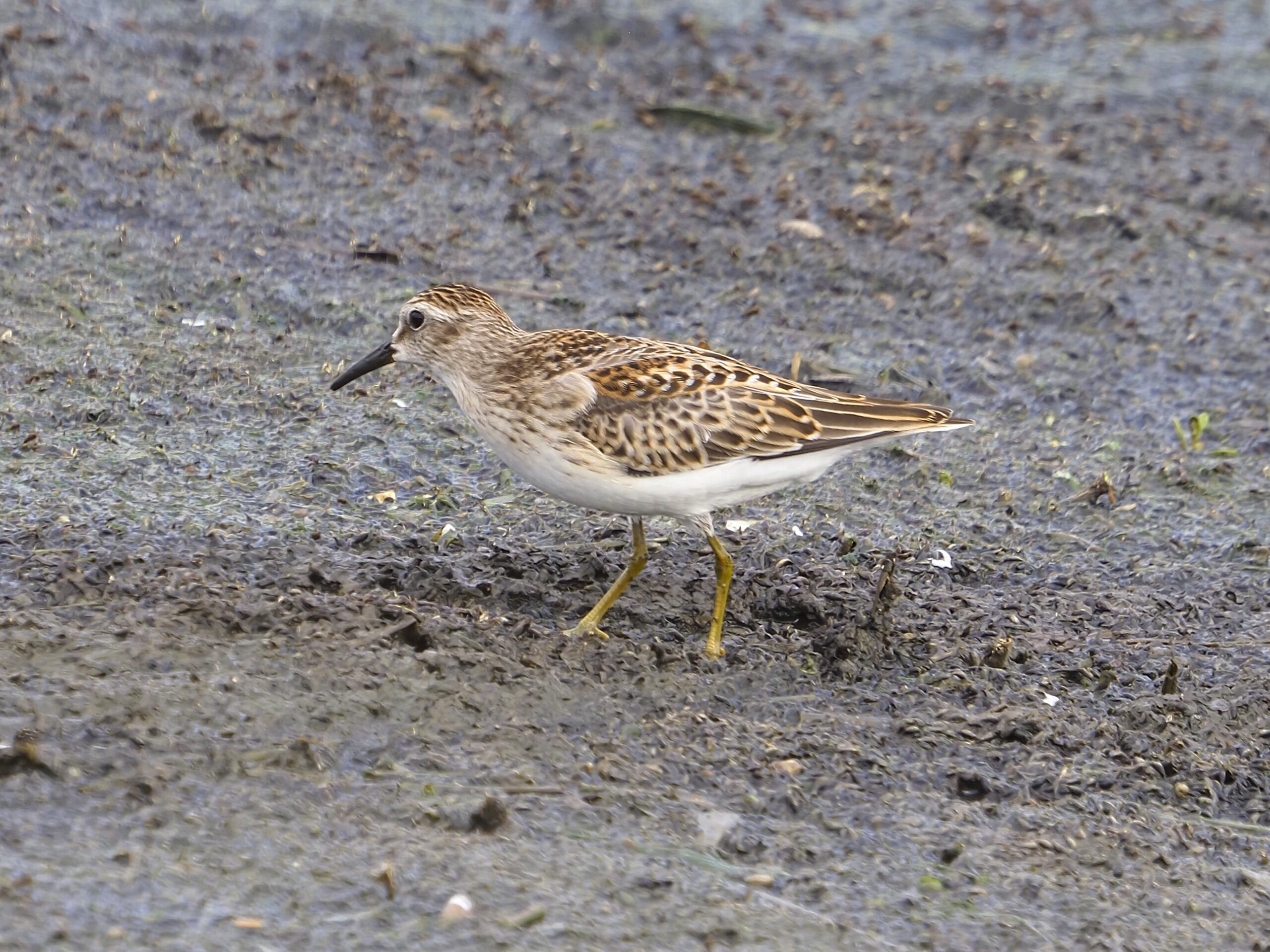
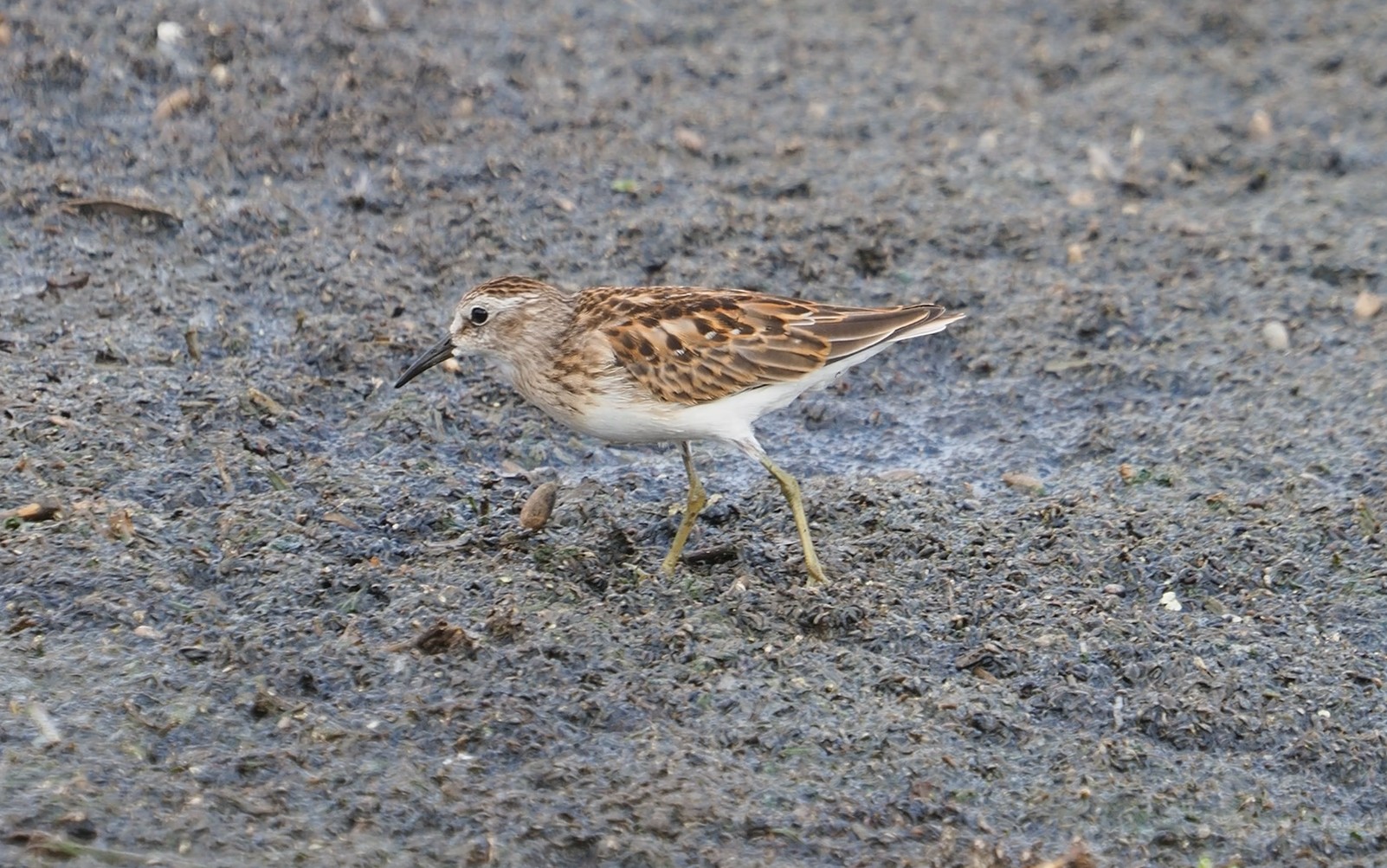
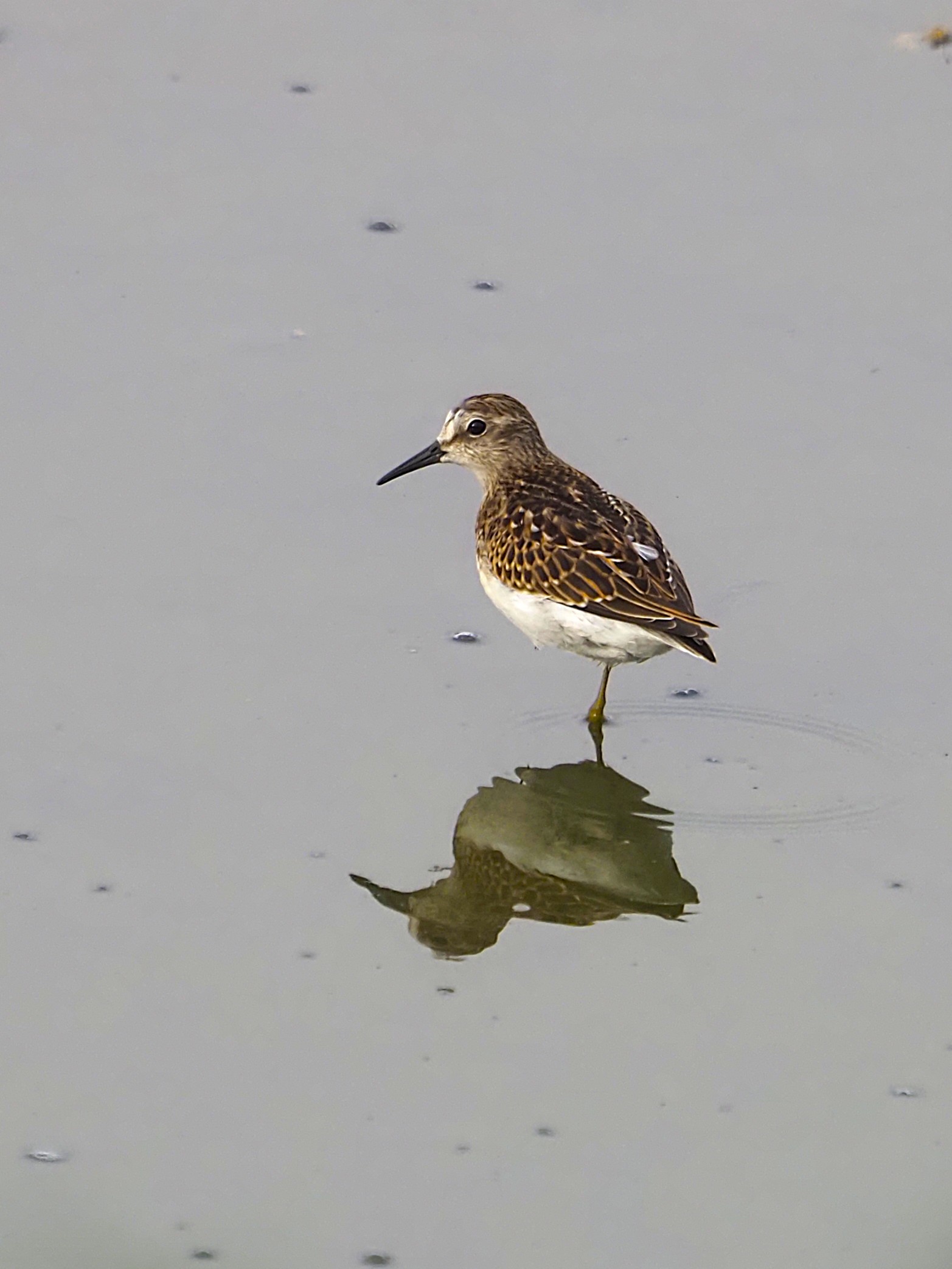
Here we have several views of recently seen Least Sandpiper — get to know the structure: thin-tipped, slightly down-curved bill, dove-like head, big eye. You can also note the yellow legs, but the structure will nail the ID even when the legs are muddy or the light is bad. The first & third photos are juvenile Least. I’m on the fence about the 2nd photo (facing left with darker back feathers); my best calculated guess is that it is a juvenile Least that is moving into basic (non-breeding) plumage, but it may be an adult.
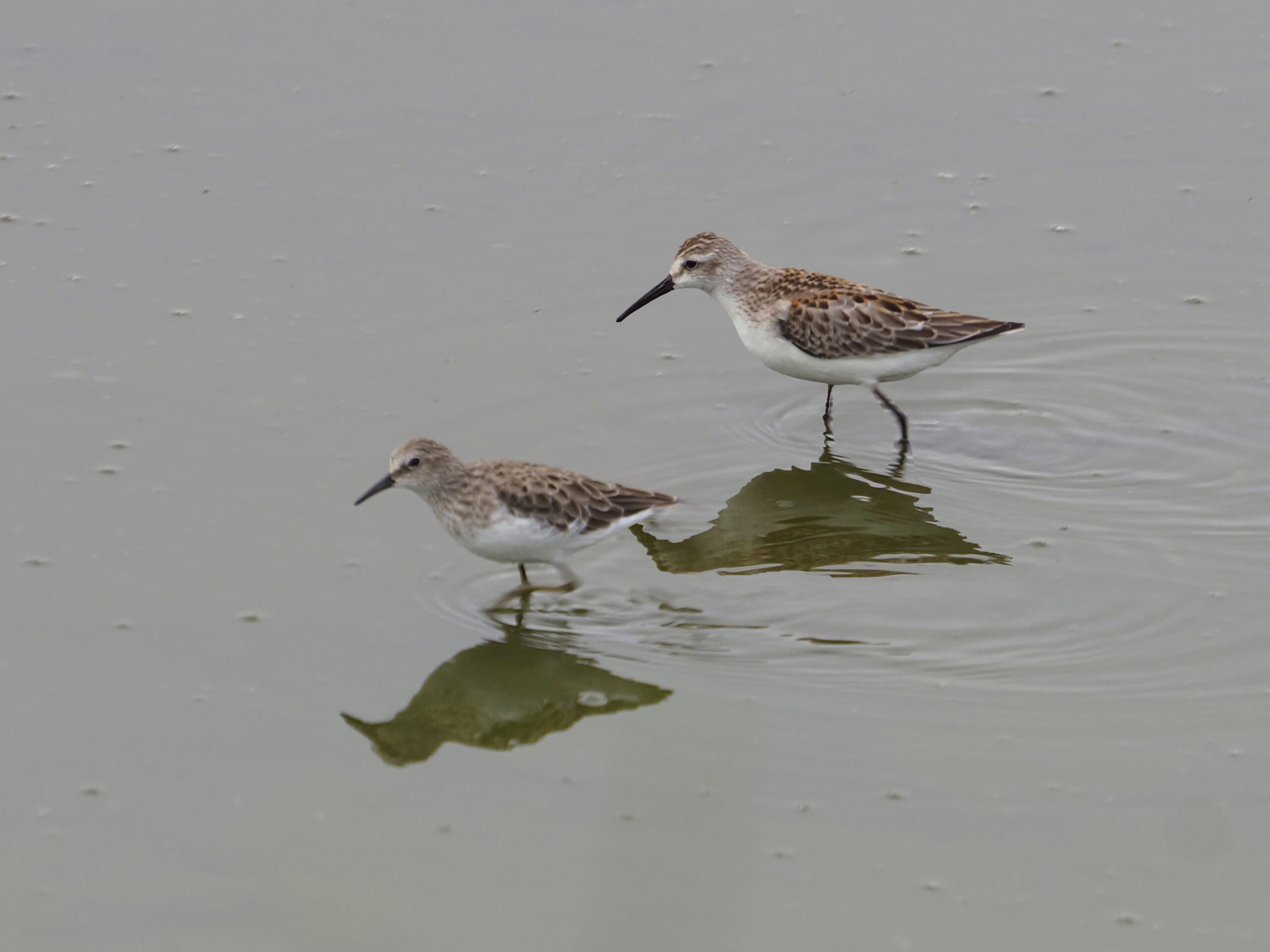
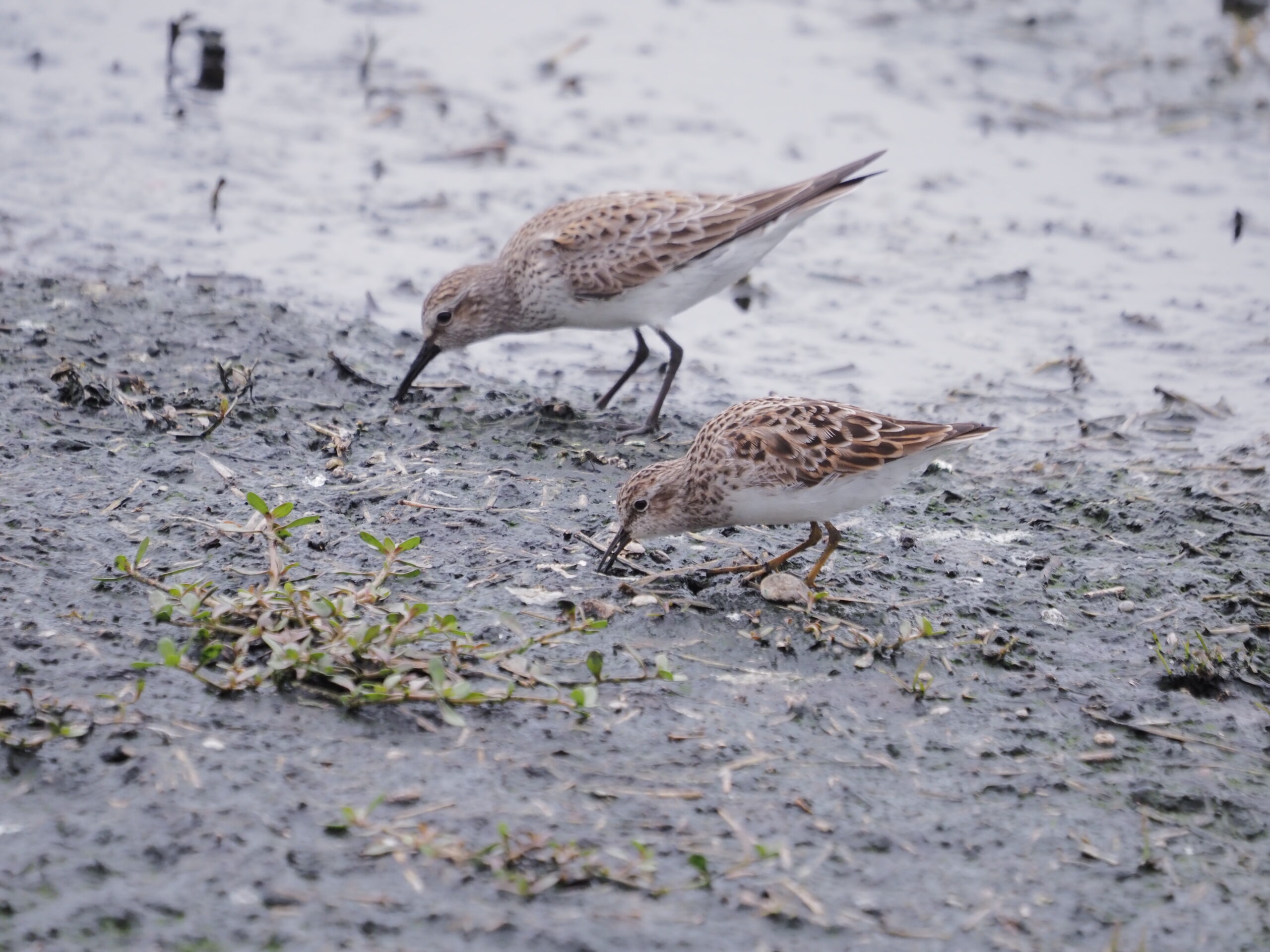
Once you really know the Least, you can start comparing everything else to it. Here’s a comparison of a Least in basic with a juvenile Western Sandpiper. Note the much larger down-turned bill. This is a classic Western — no ambiguity due to a small bill. This is probably a female due to this long bill. Also note that the Western is slightly larger and longer in the back end than the Least. The Western has black legs.
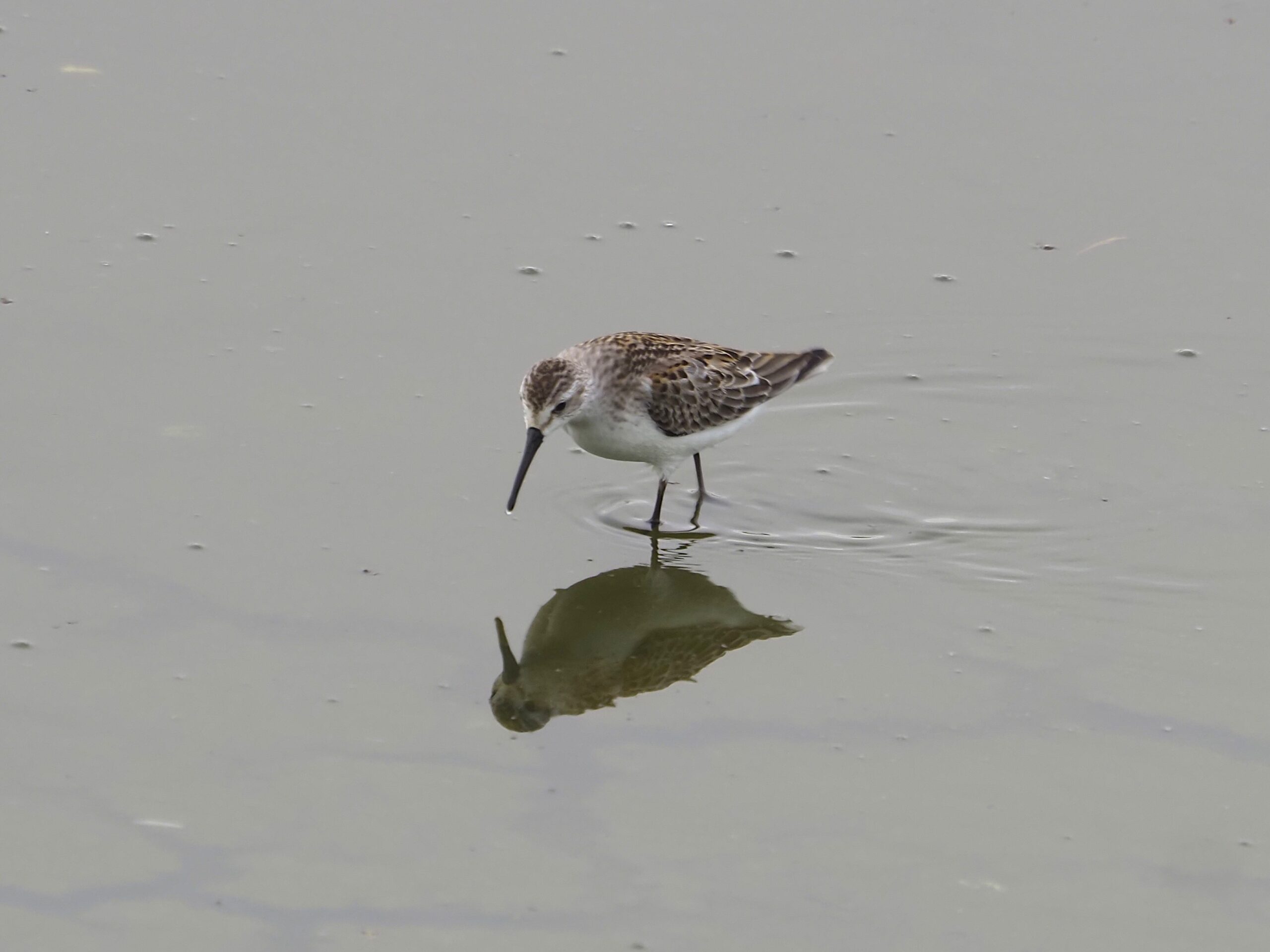
Next we compare the Least to a Semipalmated Sandpiper. The Semipalmated’s bill is relatively straight, certainly straighter than the Least. It is also broader at the base. The Semipalmated has black legs and usually has a noticeable eye-ring, which you can see if you zoom in.
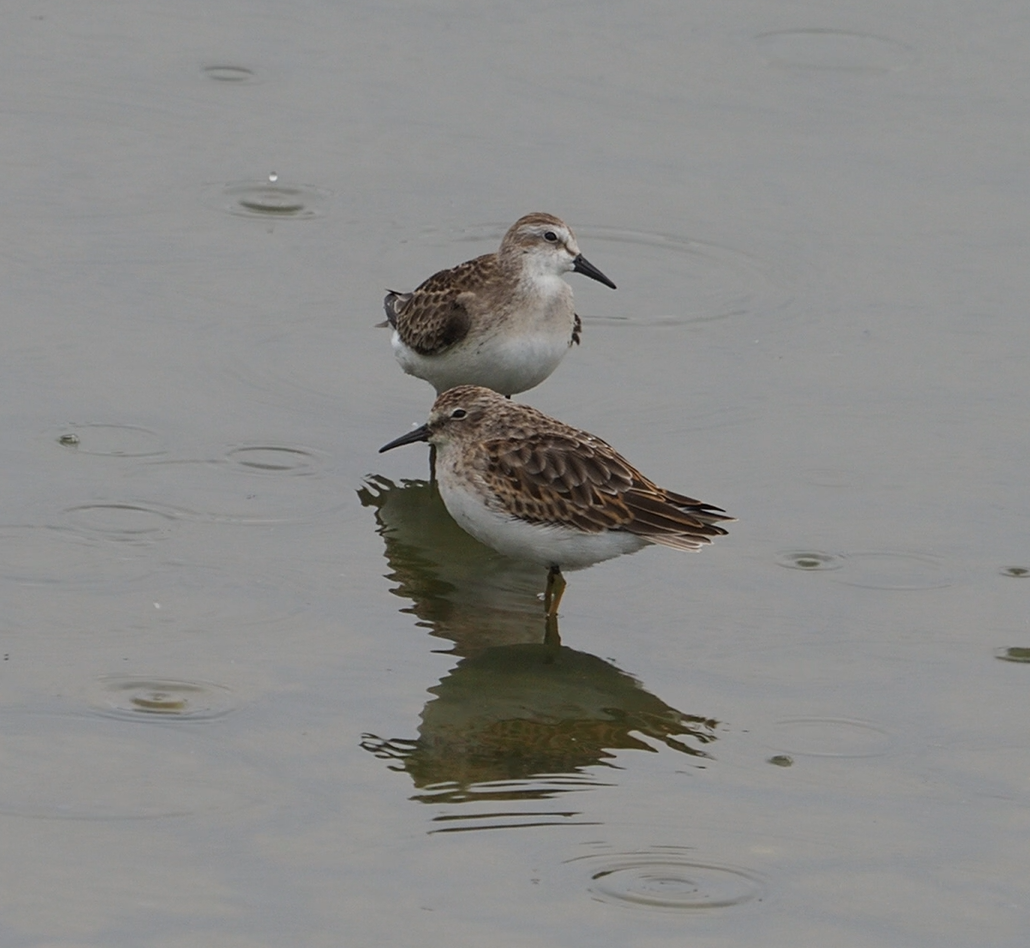
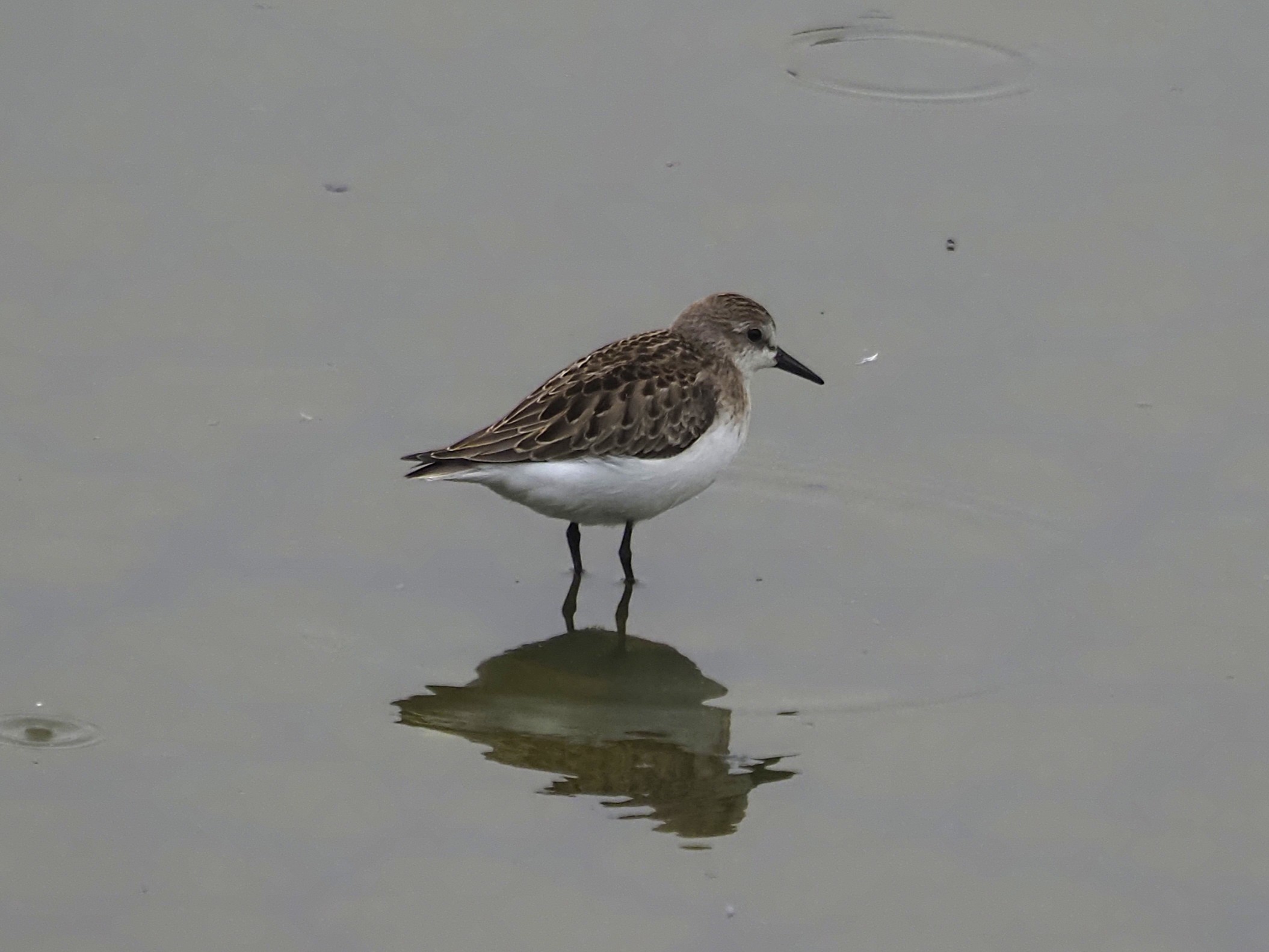
Although we didn’t find one in the morning, Lance and I had 1 Baird’s Sandpiper in the afternoon on 9/7/25. Here are some additional comparison shots with Least. Note that this is a long-winged peep — the primaries extend well past the tail. Note the horizontal feeding posture of the Baird’s.
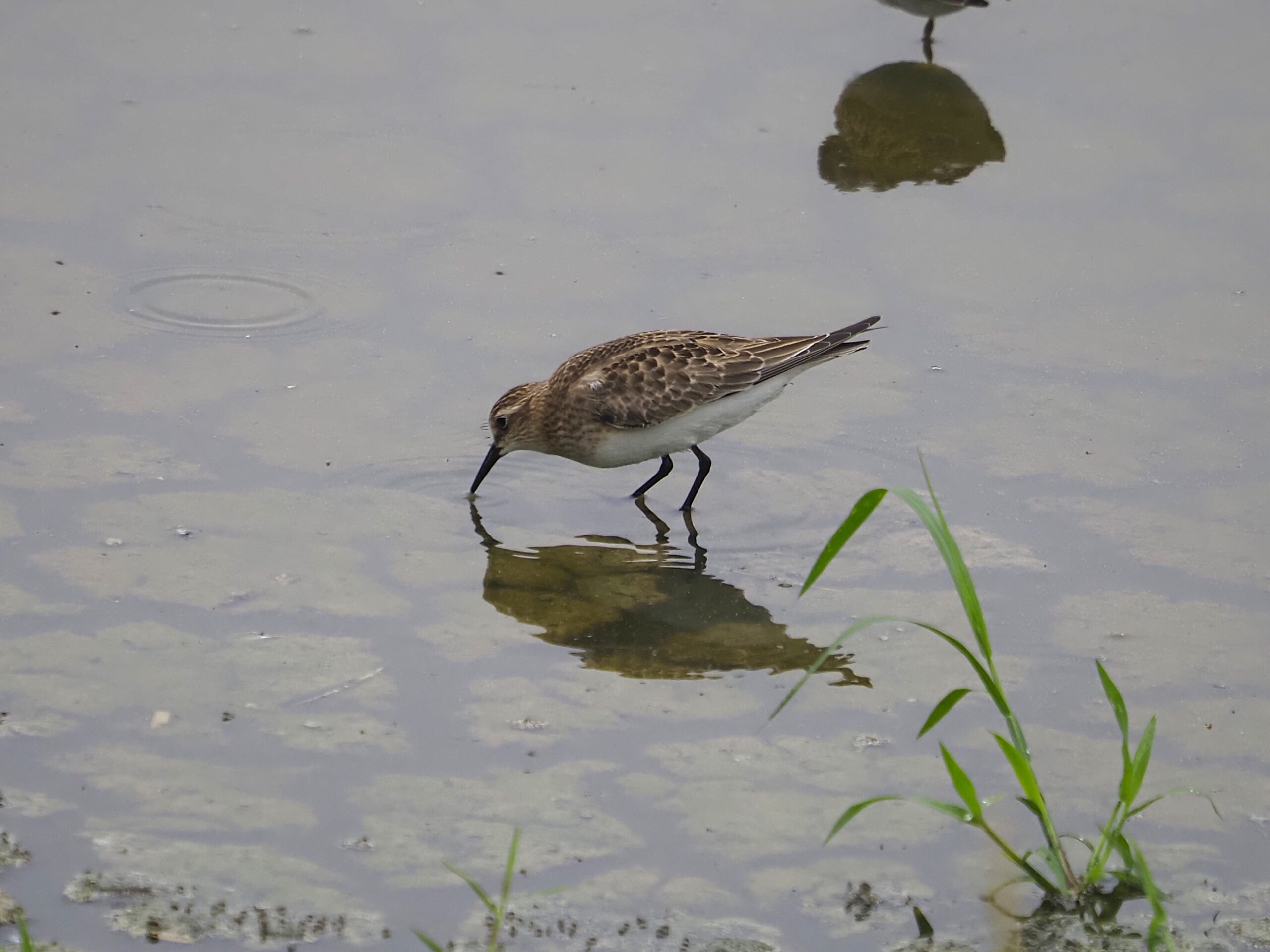
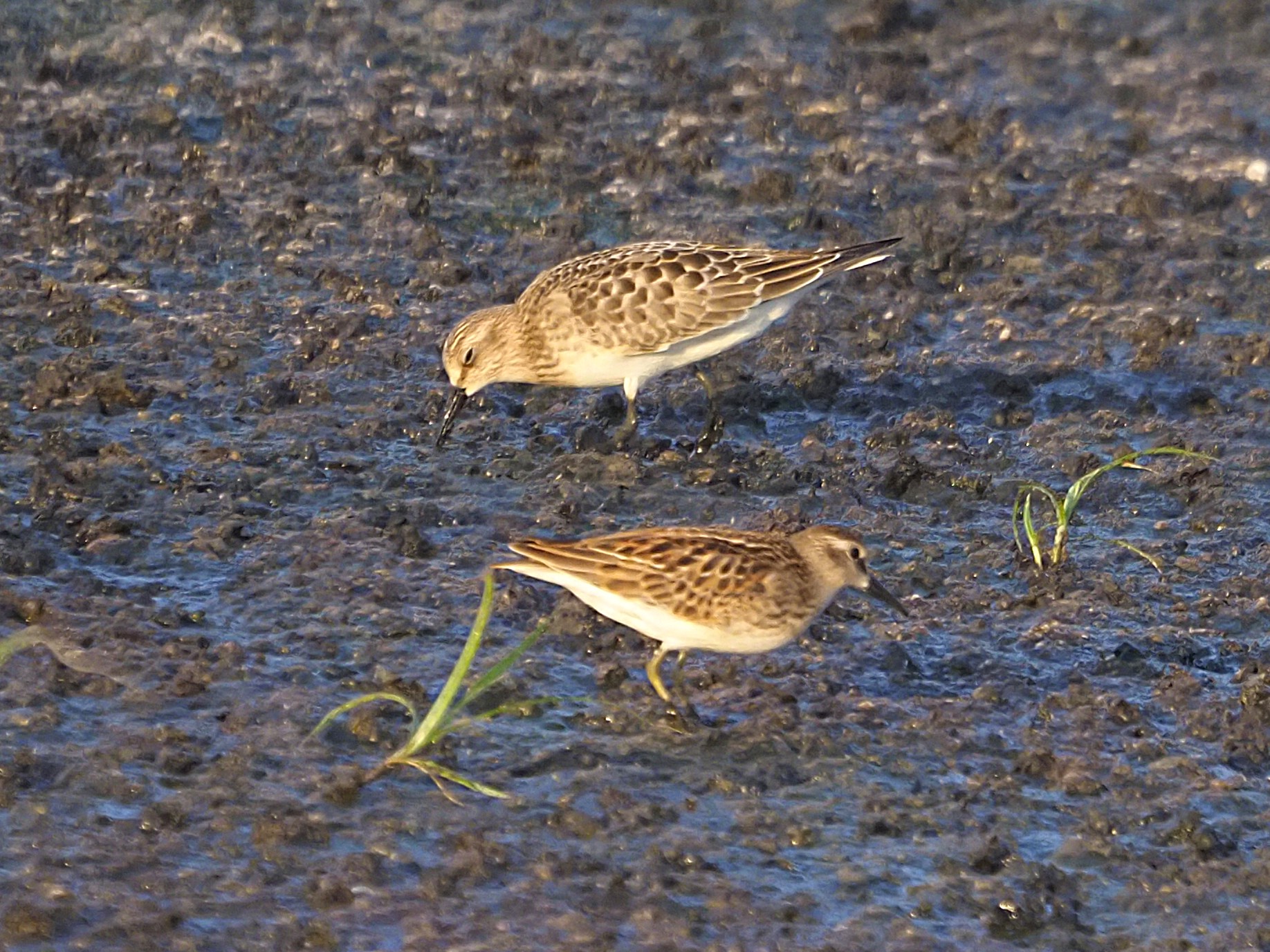
Although we don’t see White-rumped (generally) in fall migration, here’s a comparison of White-rumped and Least from the spring migration. White-rumped is the other long-winged peep and it is also noticeably larger than the Least. Don’t forget the feeding postures — the Least is crouched, while the White-rumped is diagonal to the ground.
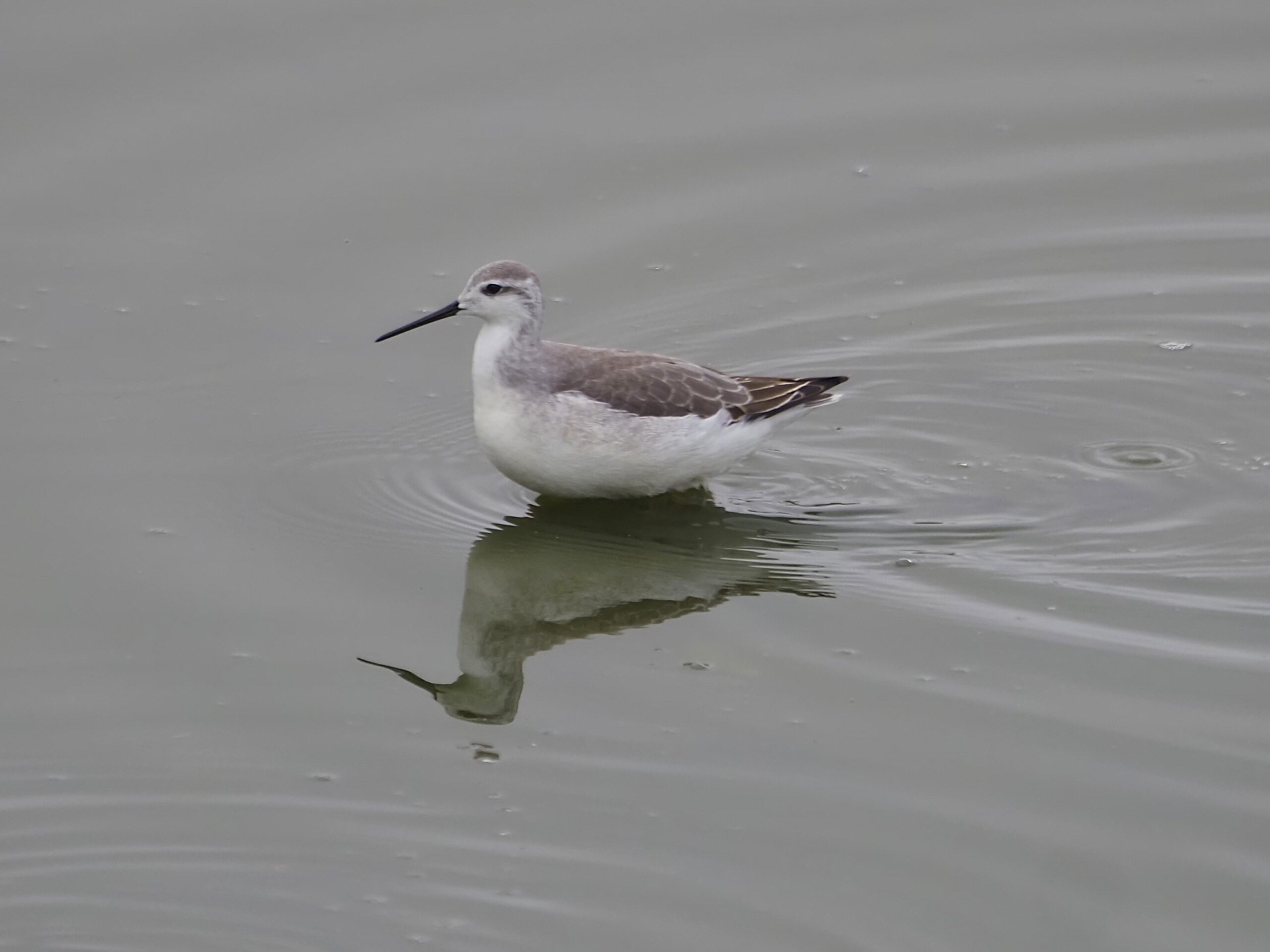
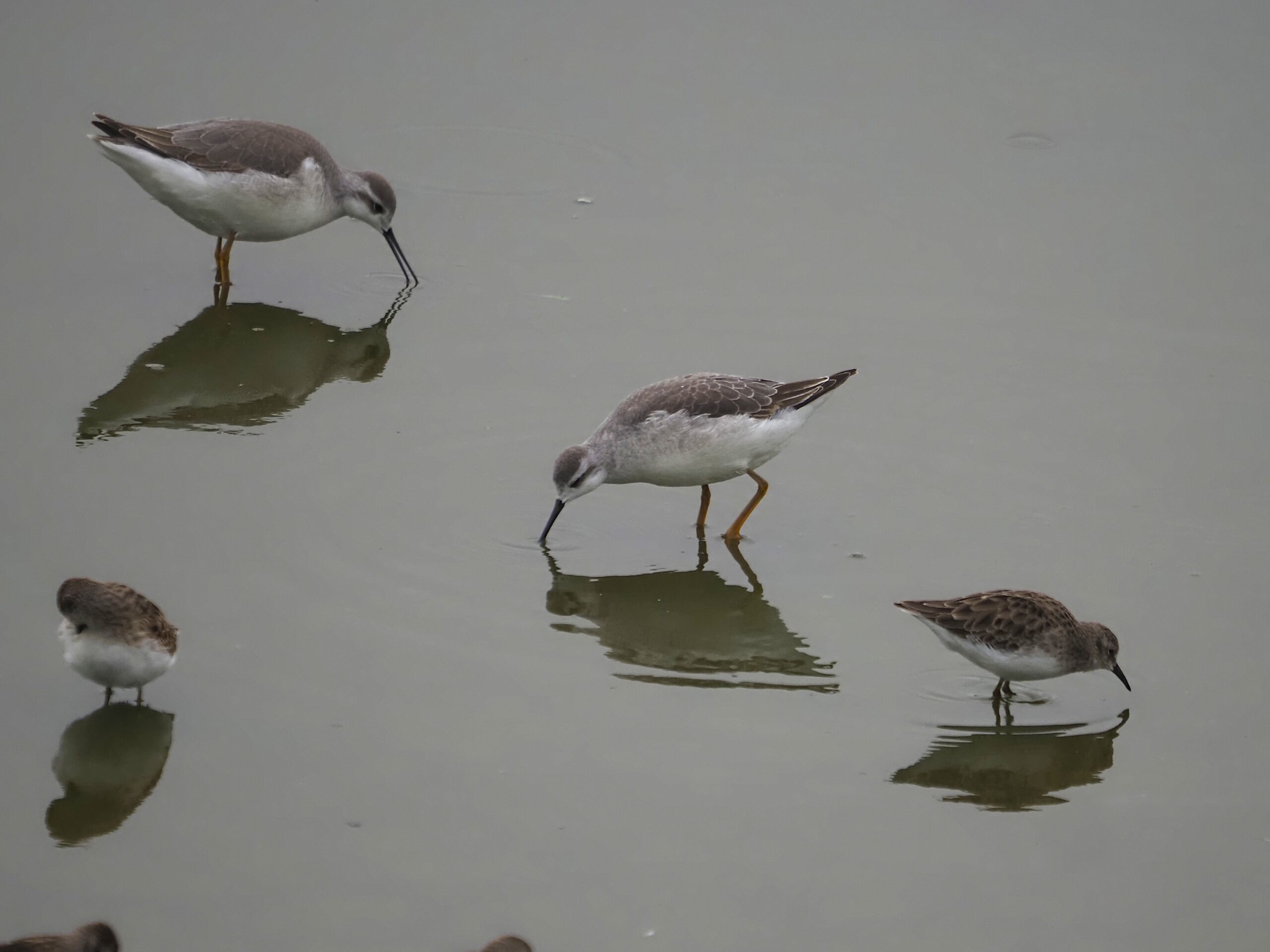
Another shorebird we got distant looks of is the Wilson’s Phalarope which is by far the most common phalarope in Texas during spring & fall migration, and occasionally winter. One of these appears to be an adult (in back in second pix) and the other a a juvenile based on the white outlined feathers of the back. Note the very thin bill, the overall gray and white colors and that they often swim.
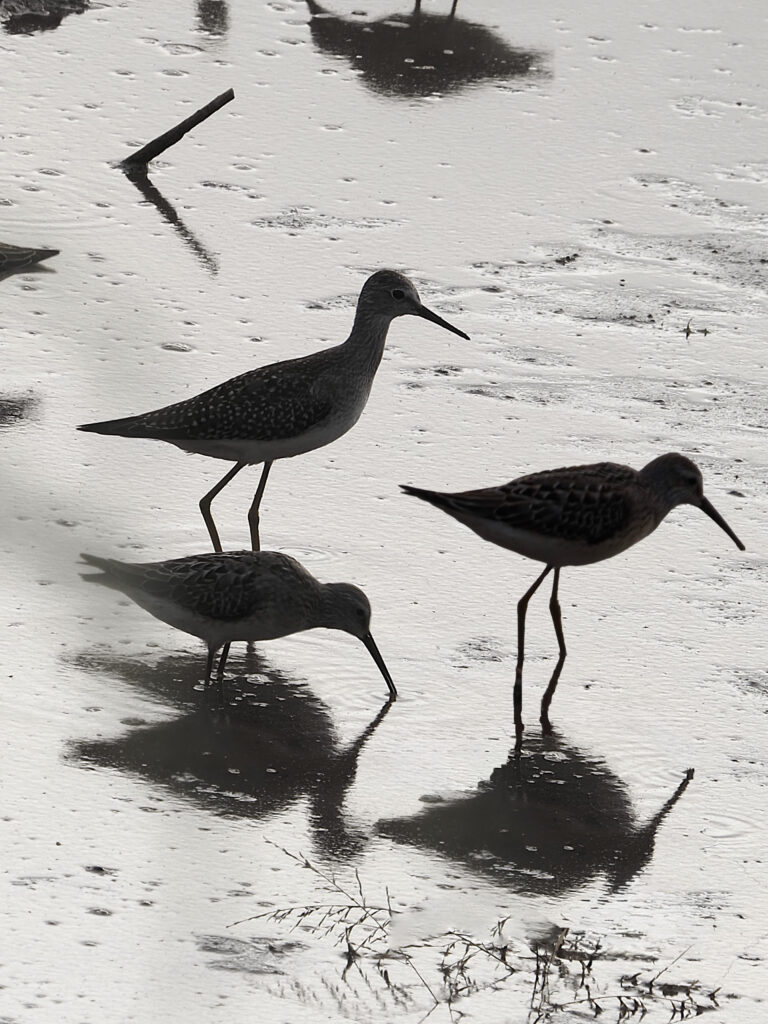
Here’s a recent silhouette shot of Lesser Yellowlegs compared to the slightly smaller Stilt Sandpiper. The bill of the Yellowlegs is straight, while that of the Stilt Sandpiper down-curves slightly. The Stilt Sandpiper is the smaller of the two.
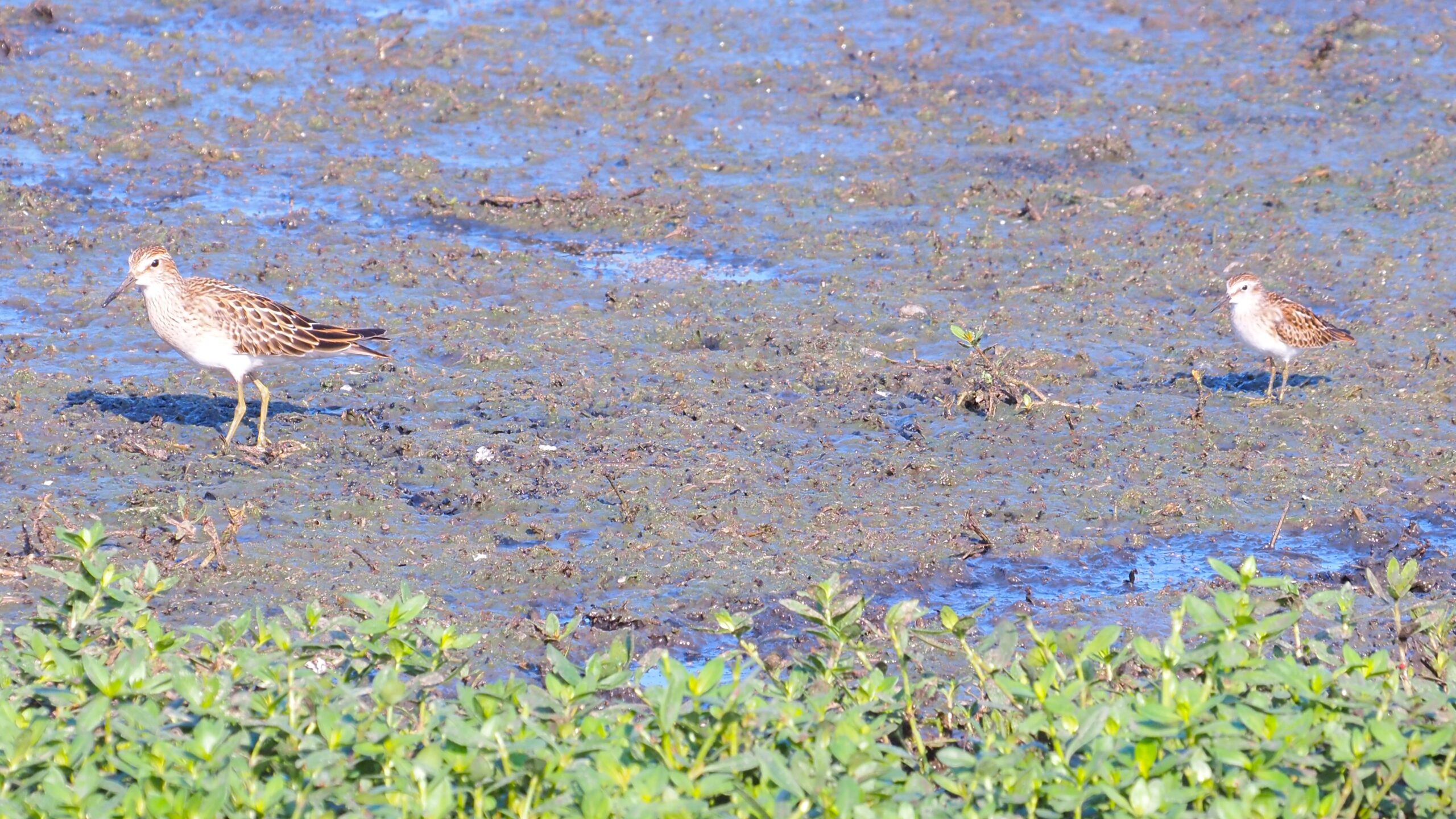
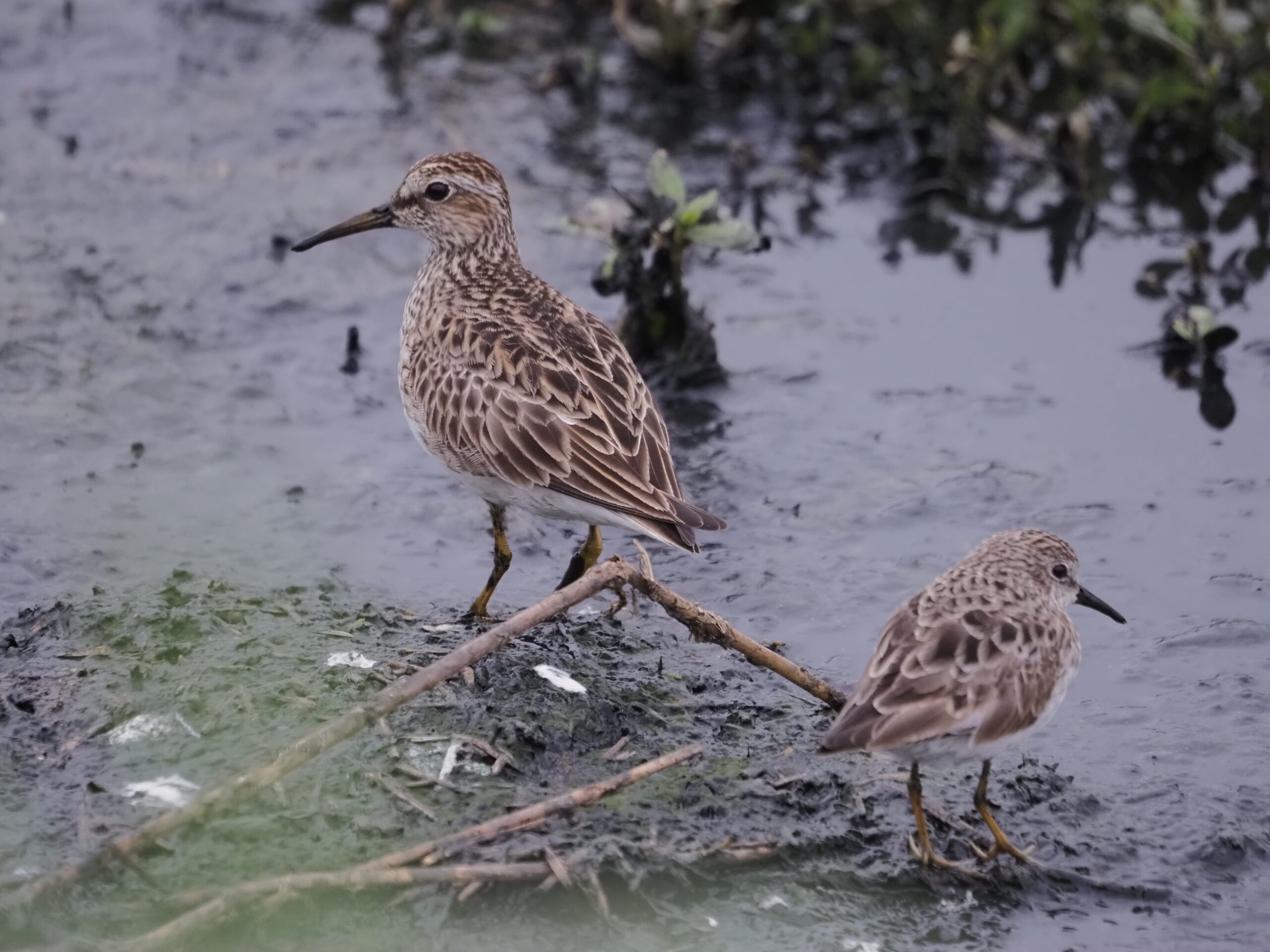
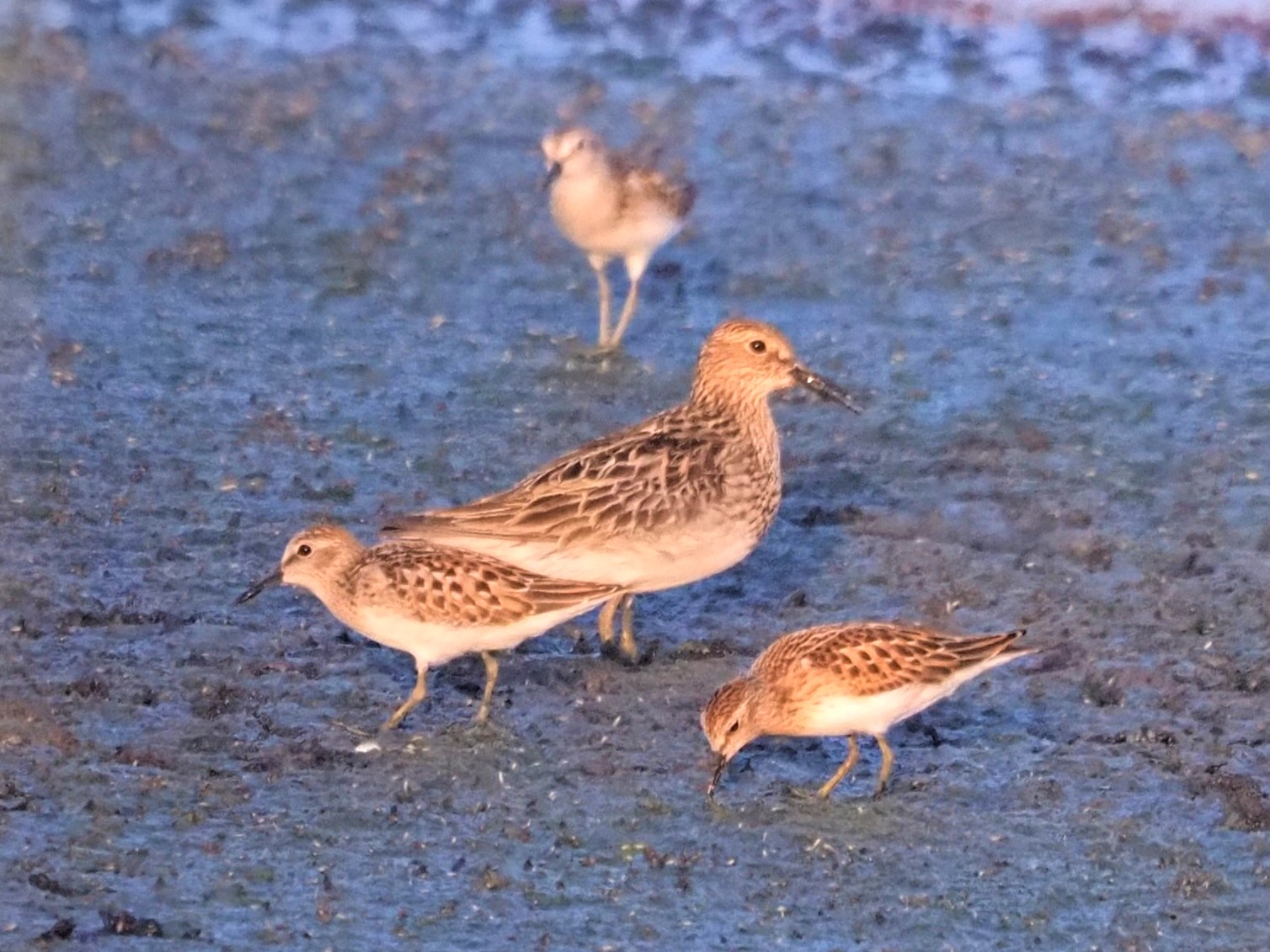
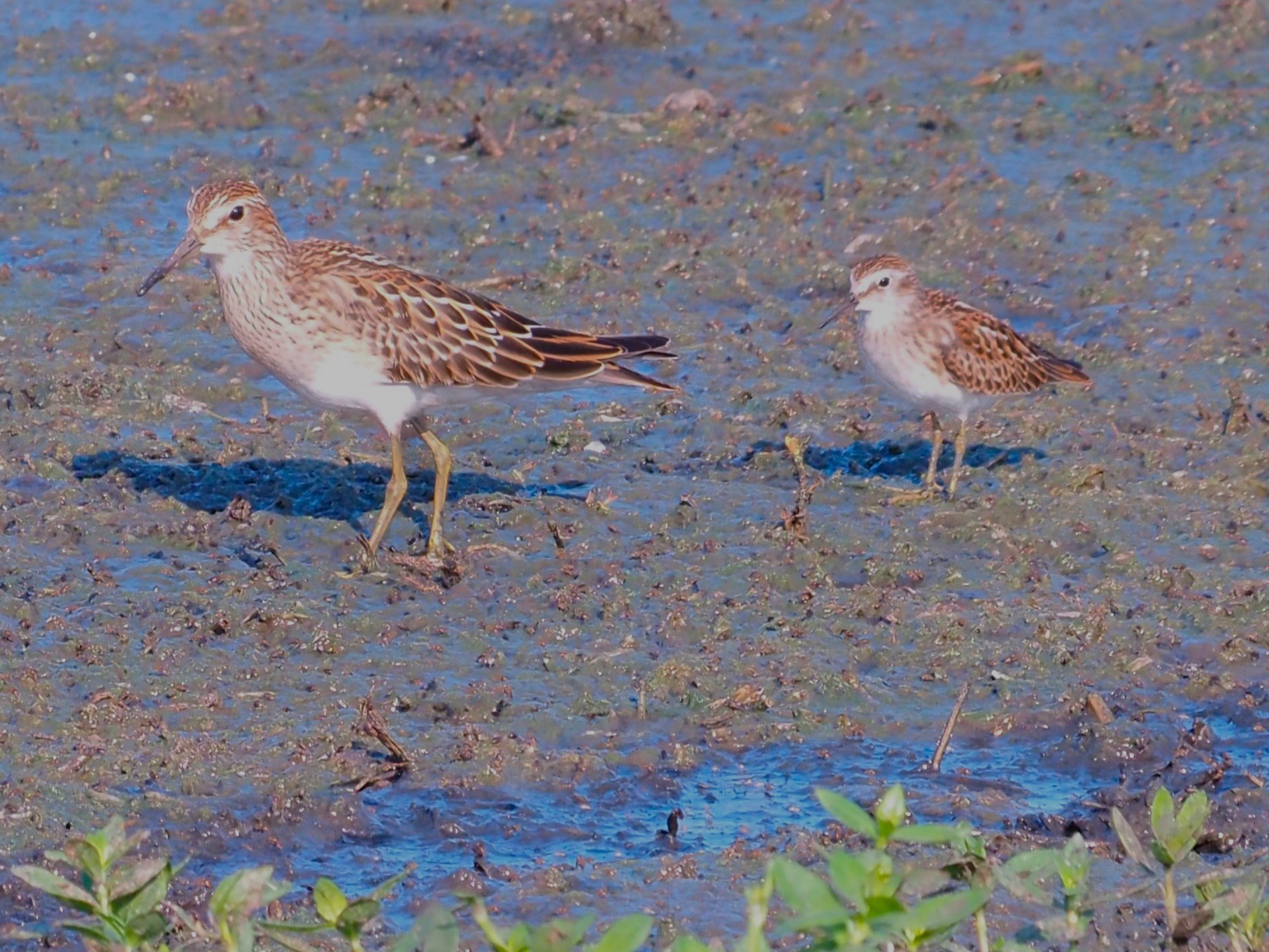
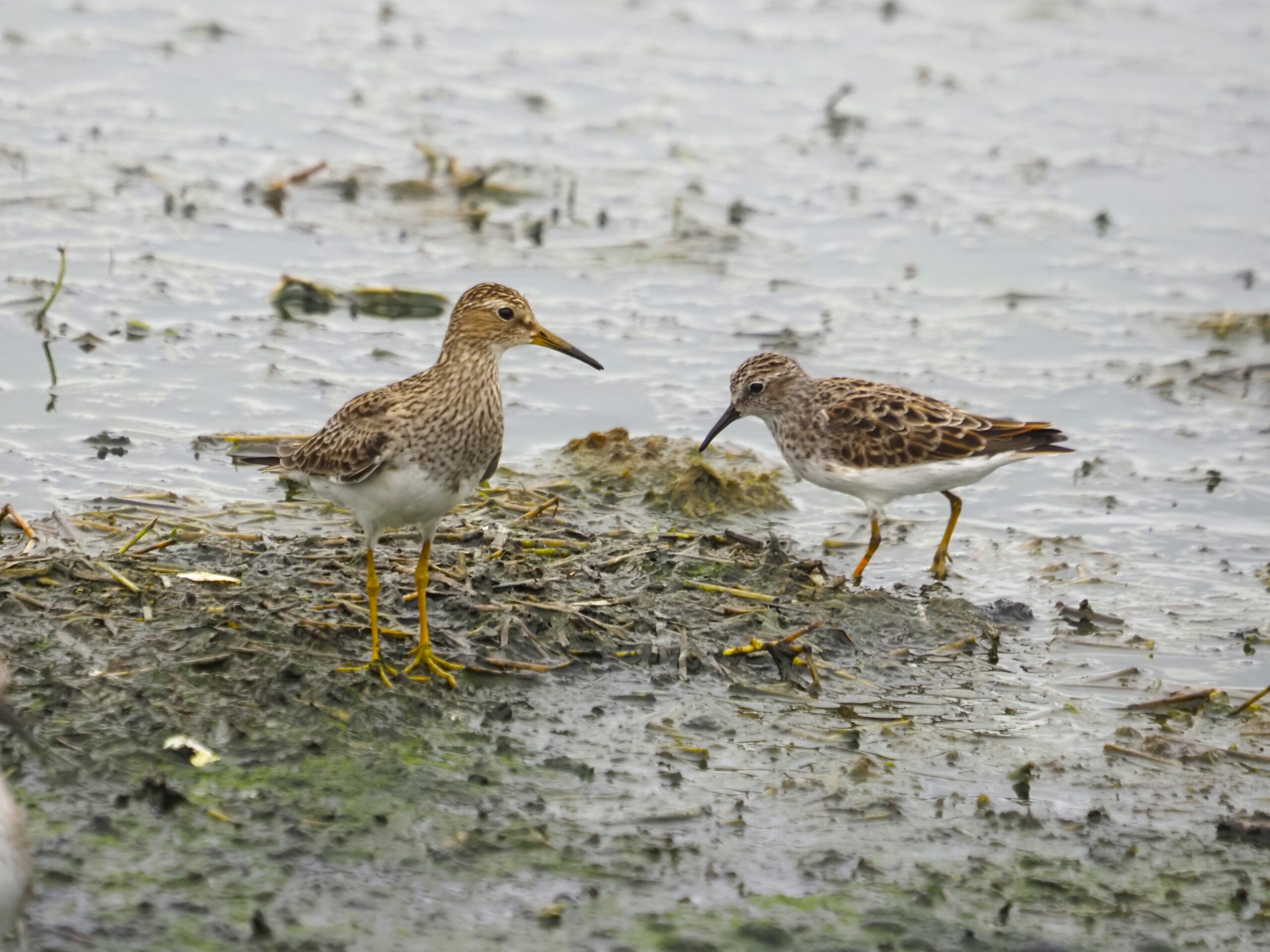
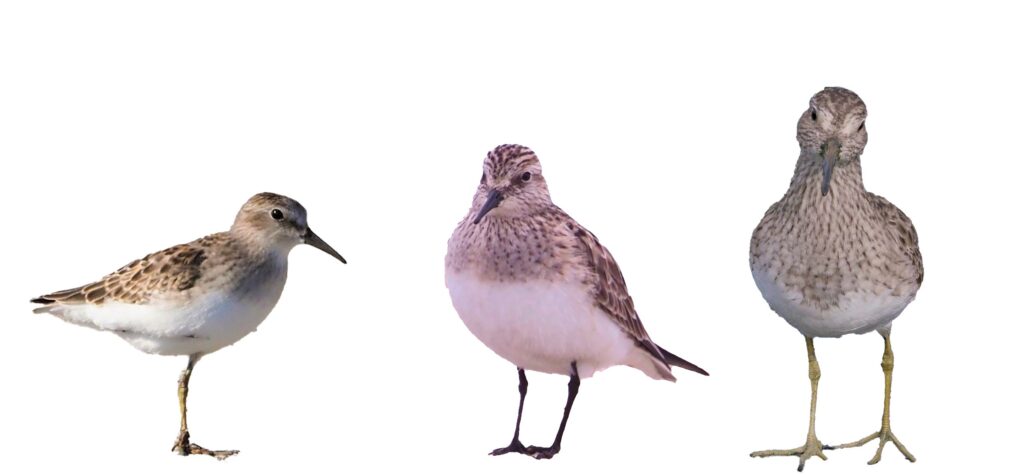
Next up is the Pectoral Sandpiper which we saw many of on 9/7/.25. It is one of the more brown shorebirds. Note how the brown streaks of the upper breast are sharply demarcated from the white of the belly and lower breast. Also note that the brown streaks extend further down the breast than the Least or the Baird’s. Finally, note the Pectoral is 2 to 3 times larger than the Least. If you get a good enough view you can see the 2-toned bill color of the Pectoral and its long, lanky legs. The last photo was shown in class and compares the 3 brownest shorebirds: Least, Baird’s & Pectoral.