The 2026 Travis Audubon Shorebird Class visited the Hornsby Bend ponds on 3/29/26 & 4/5/26. We found x shorebird species
Class 2 1 Plover Review (by Eric Stager)
4/5/26 Field Trip 2 Shorebird Scorecard
4/5/26 Ebird Checklist by Lance Felber
Field Trip 2 Photos
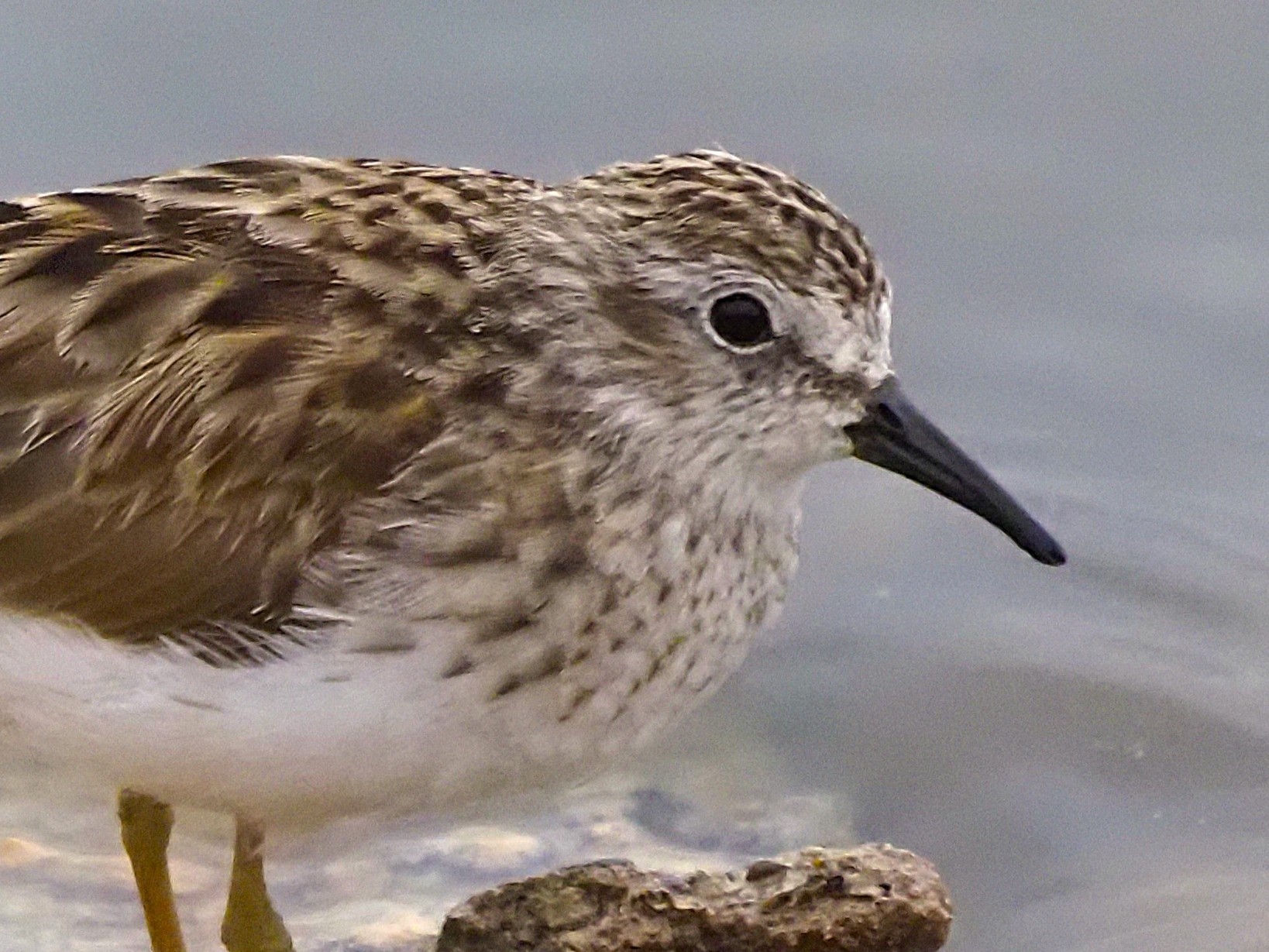
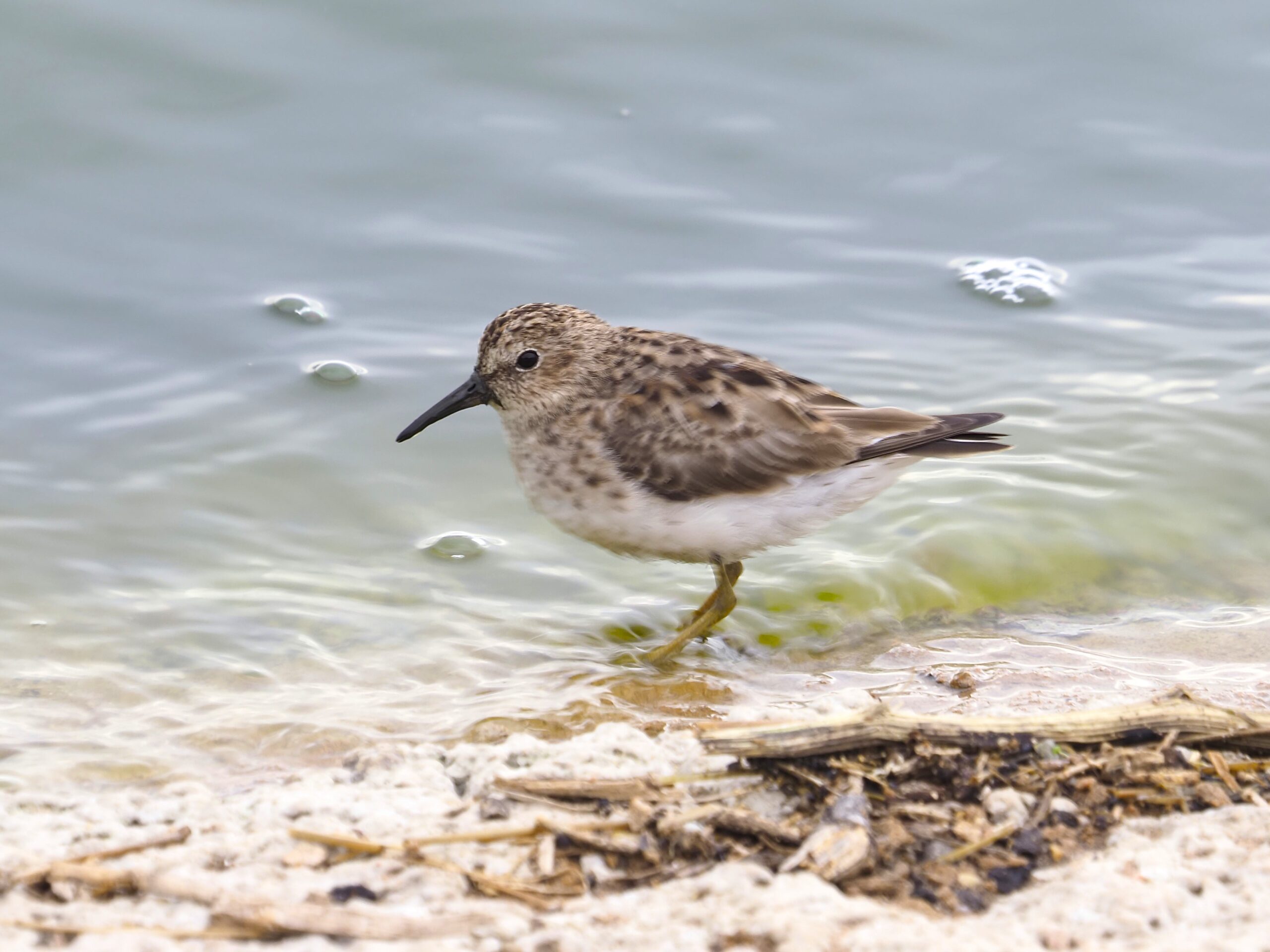
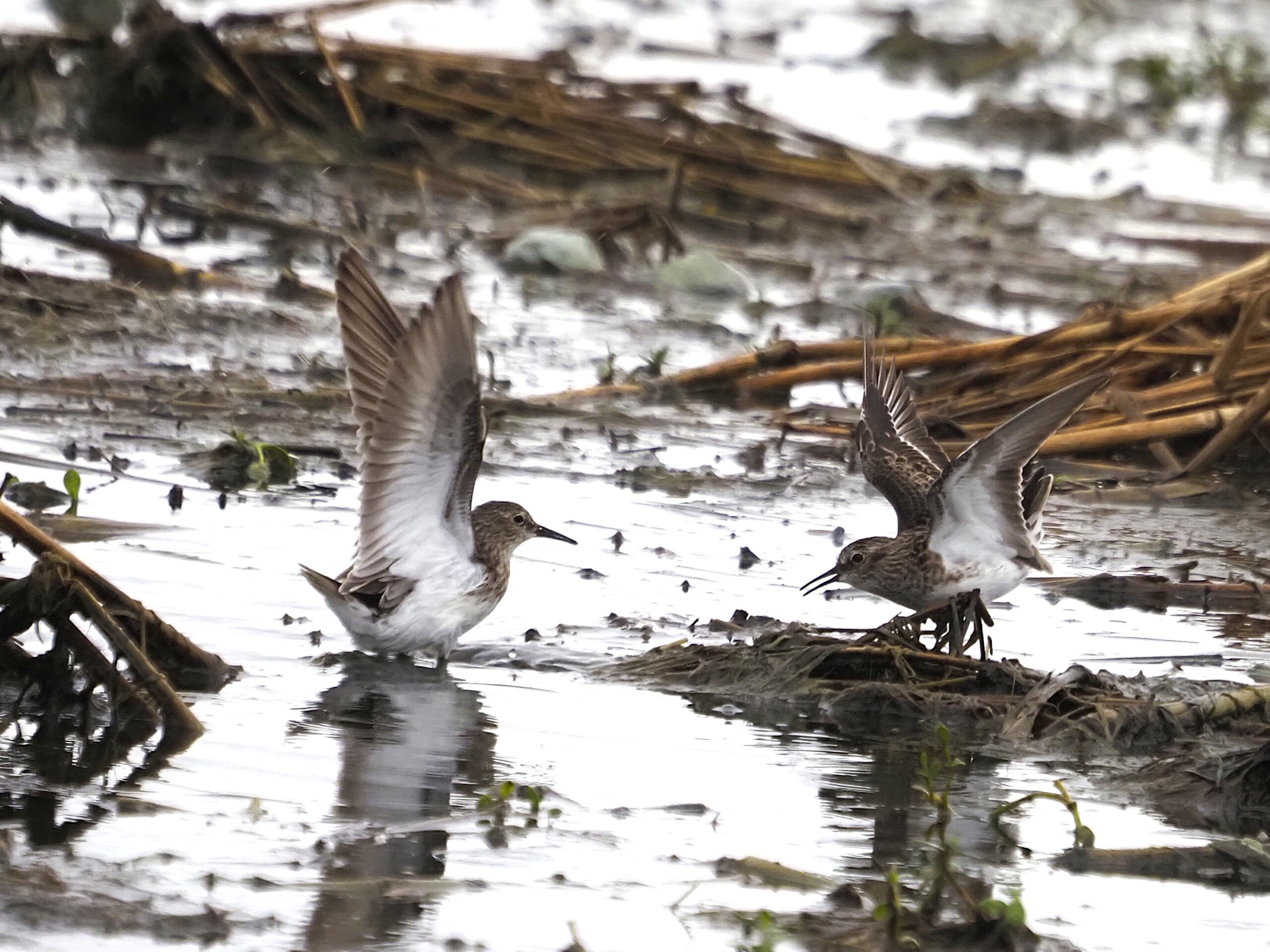
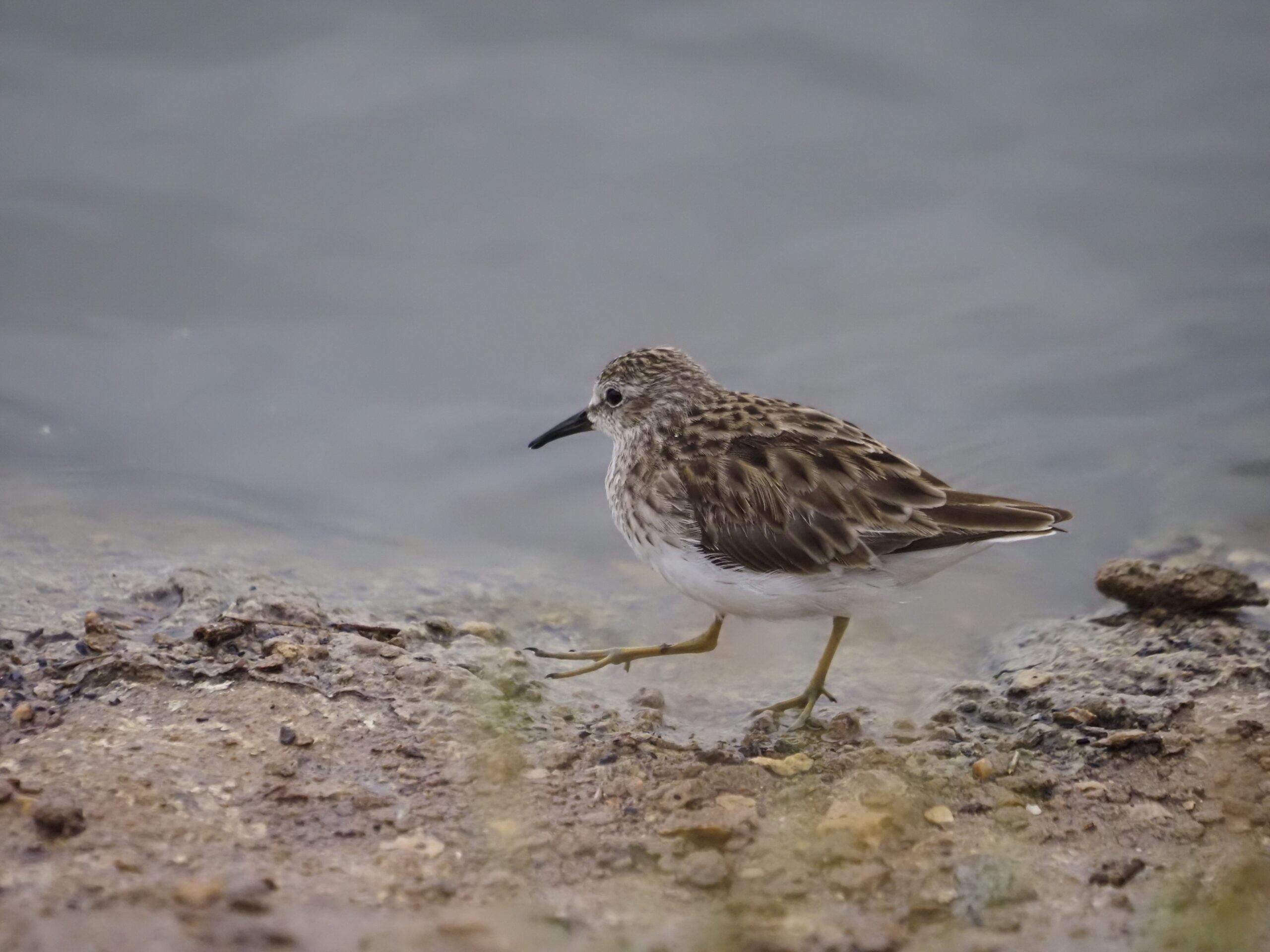
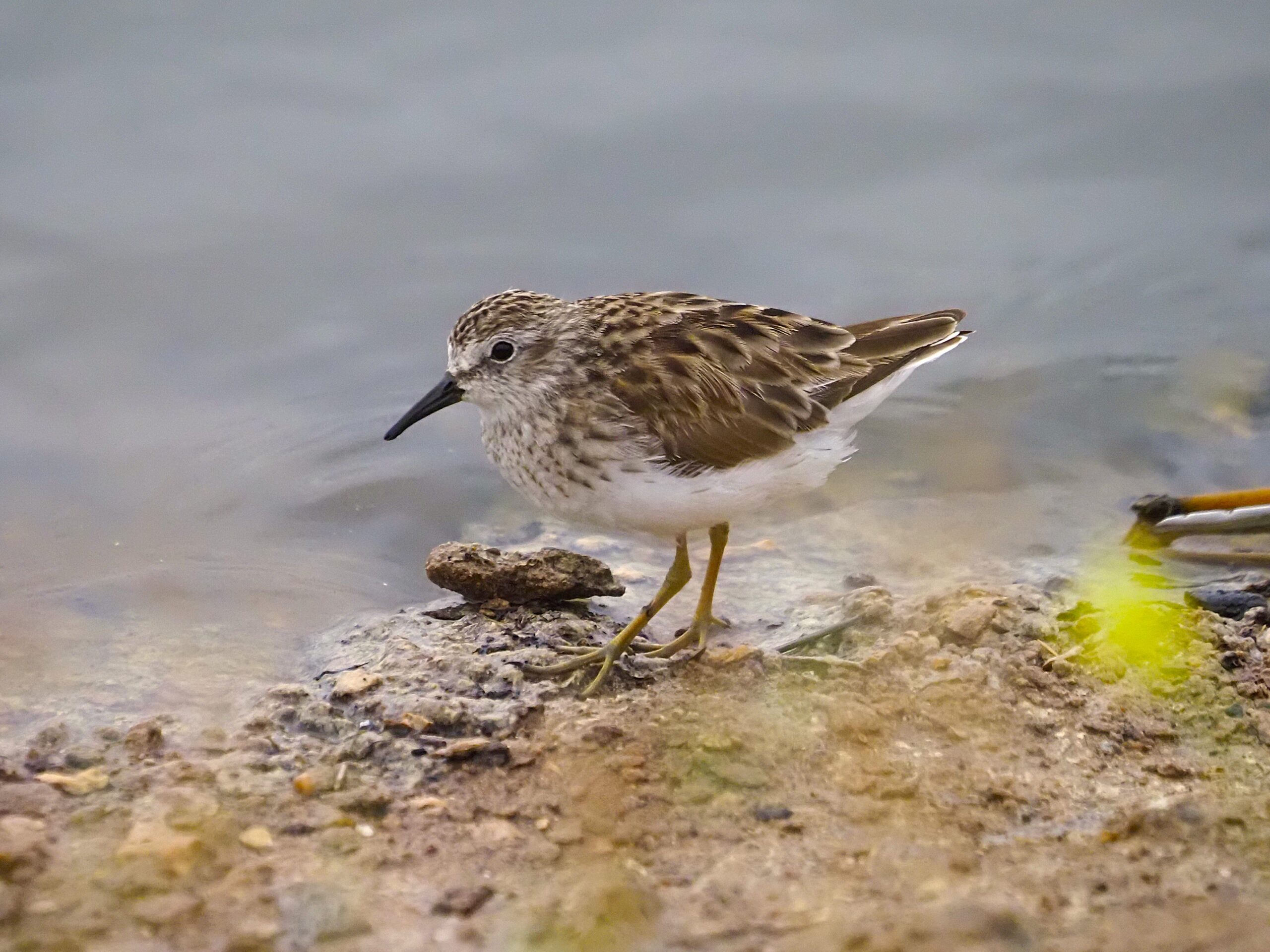
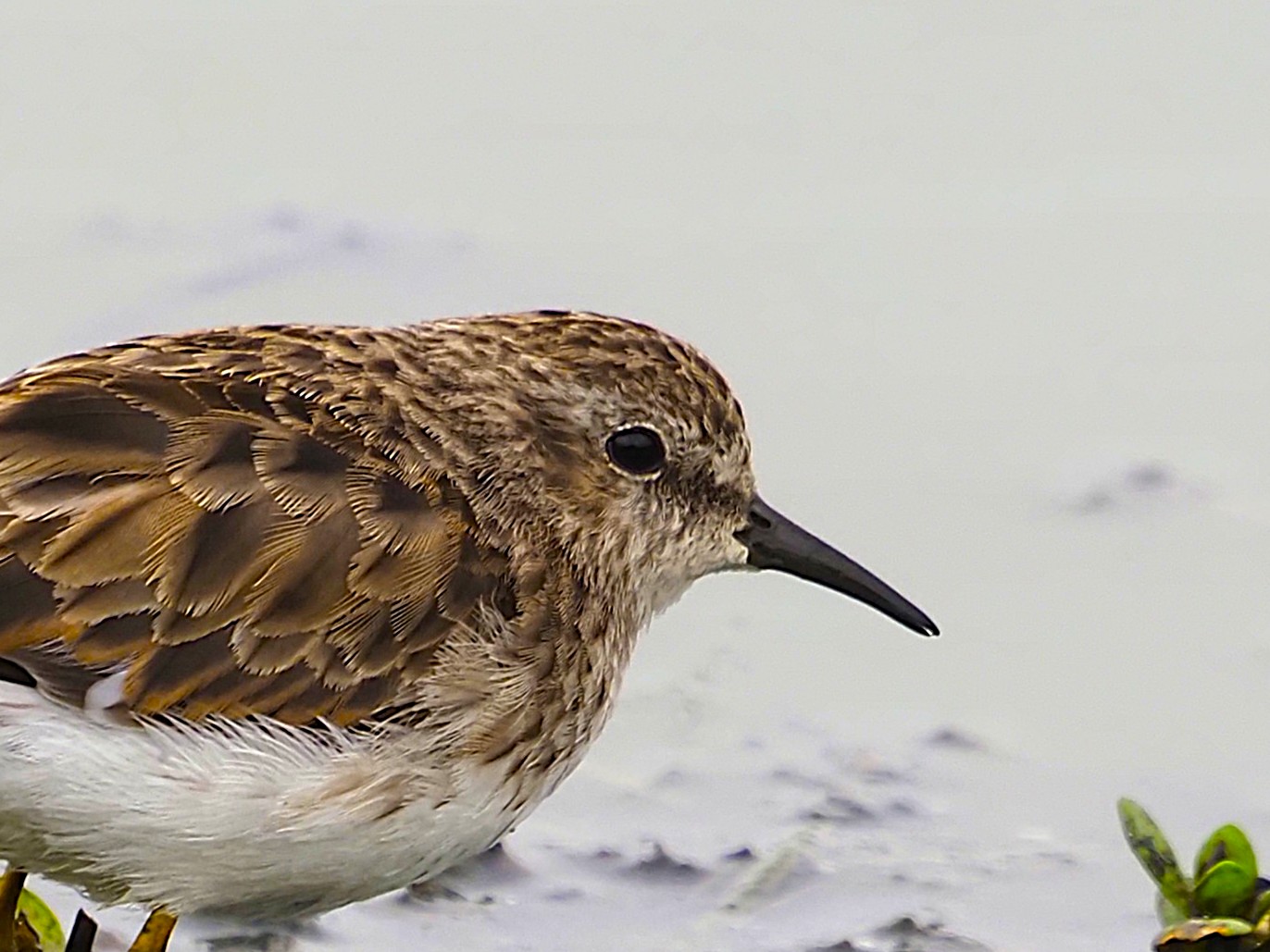
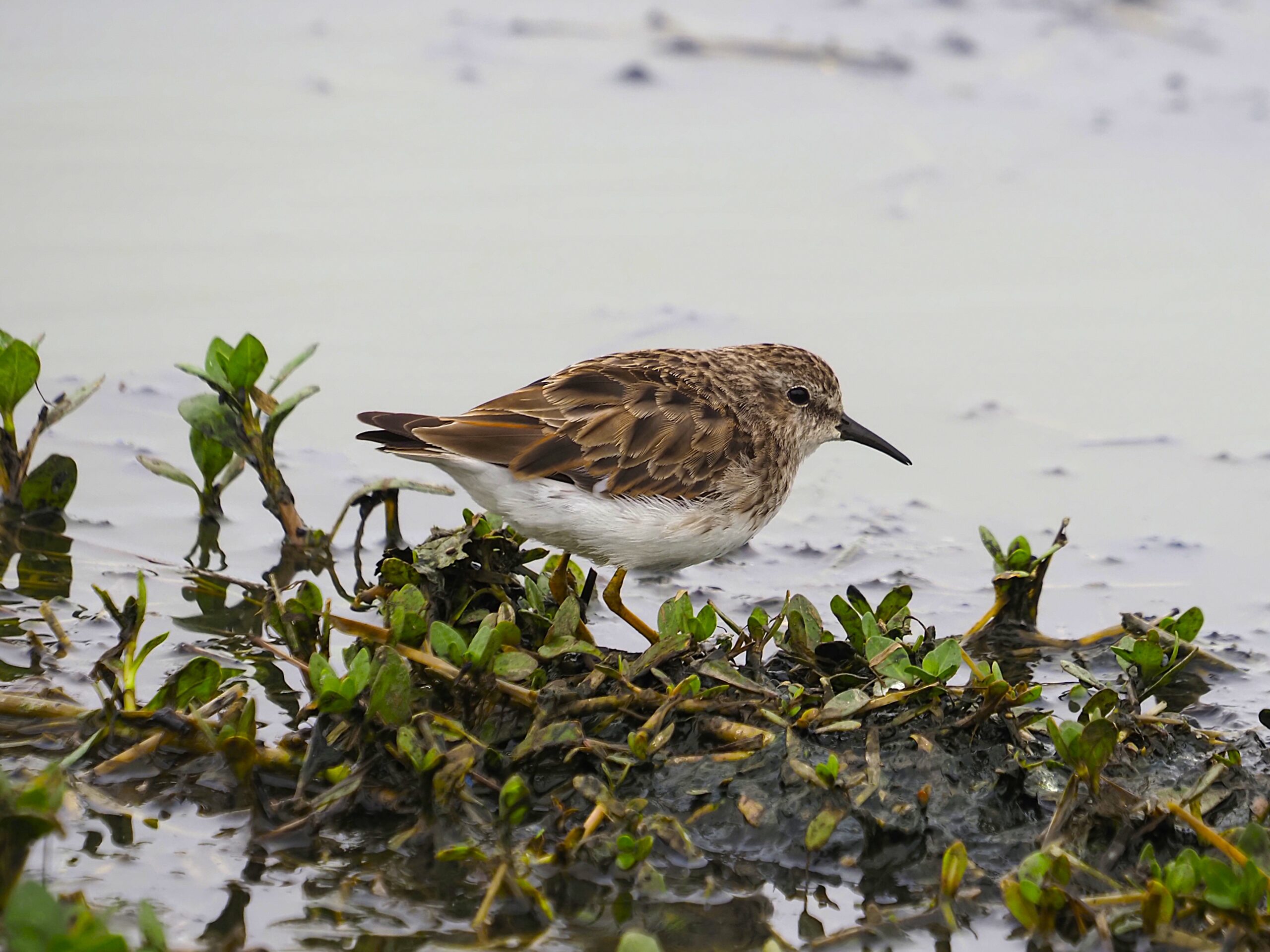
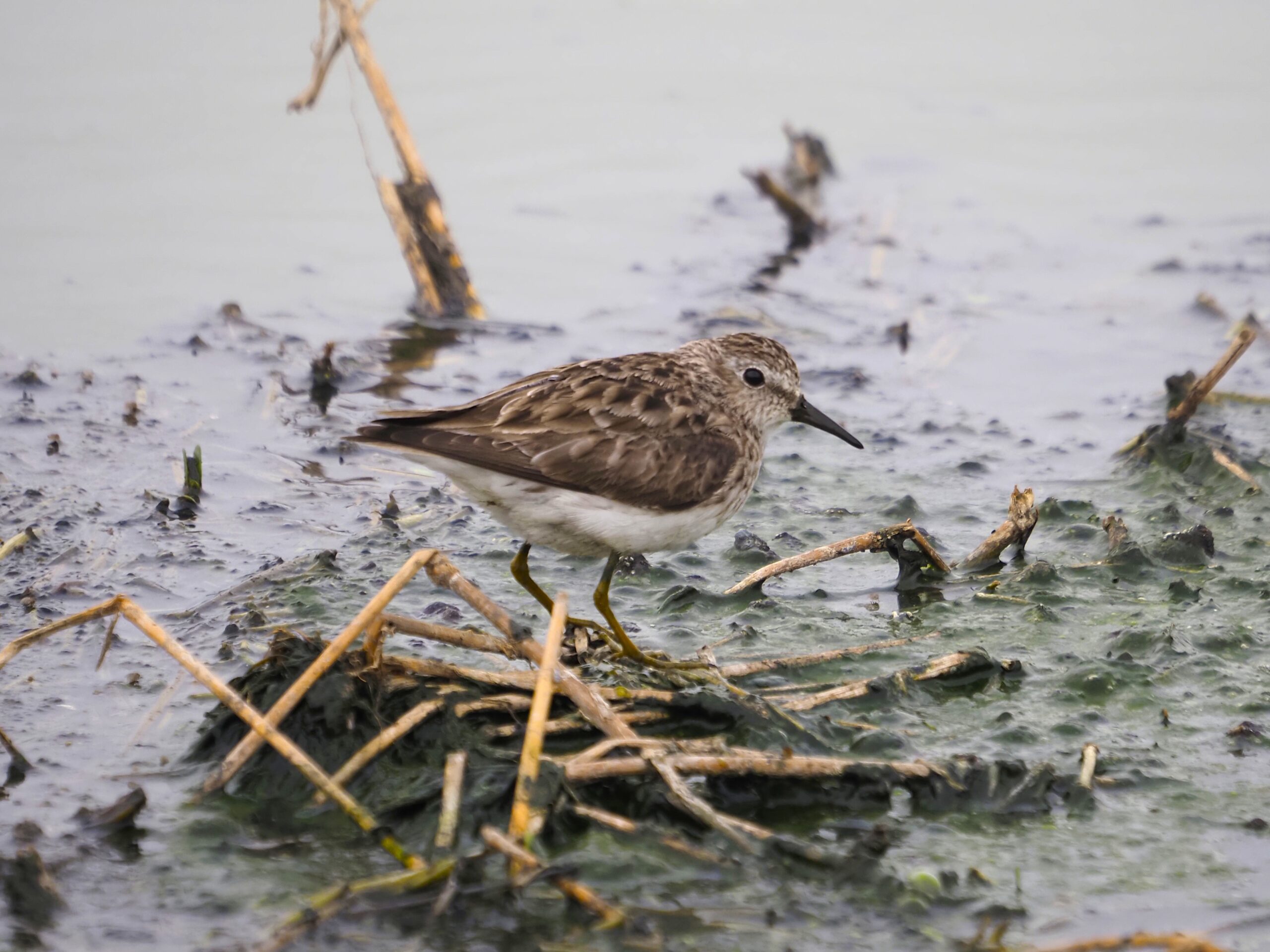
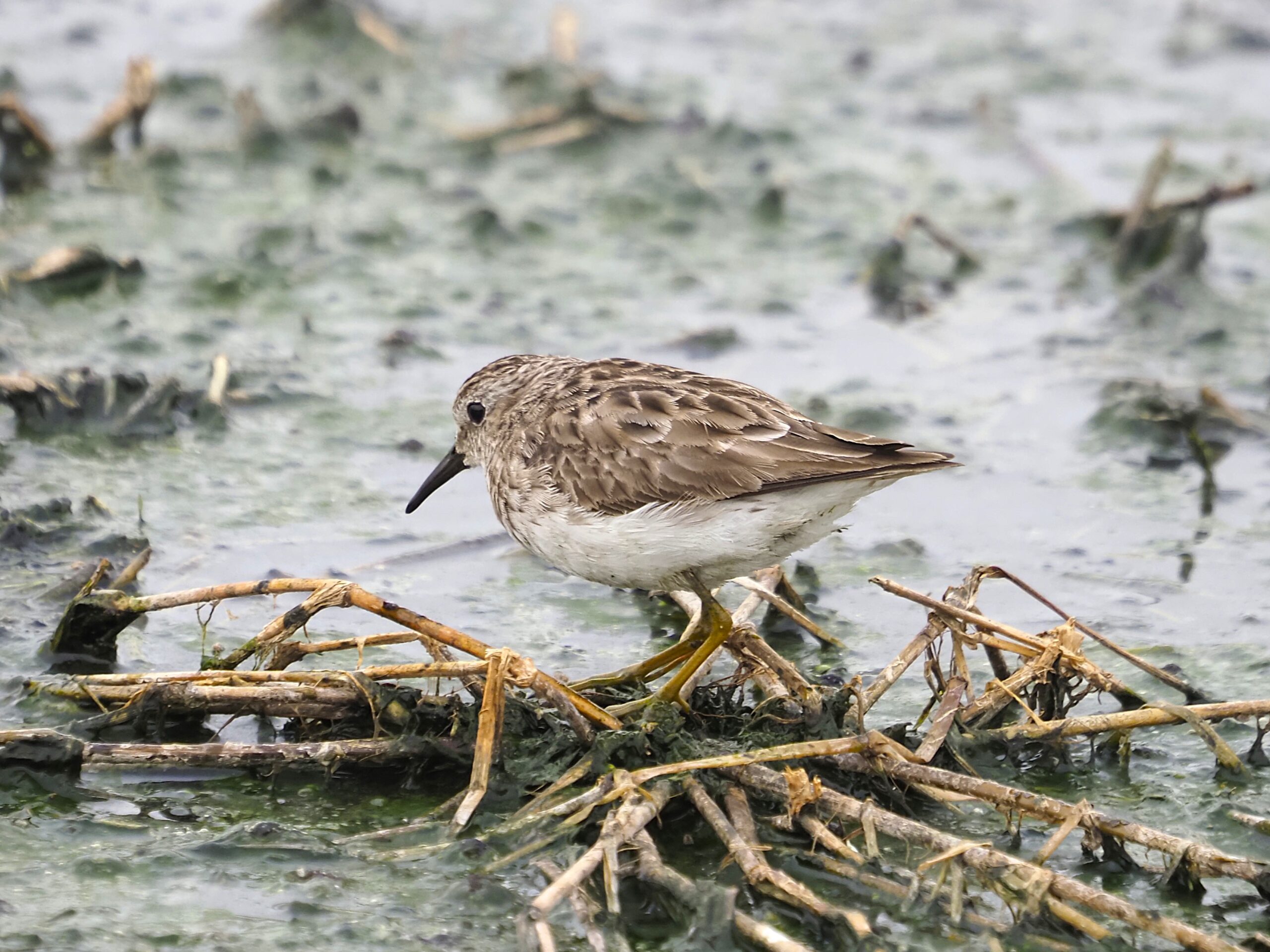
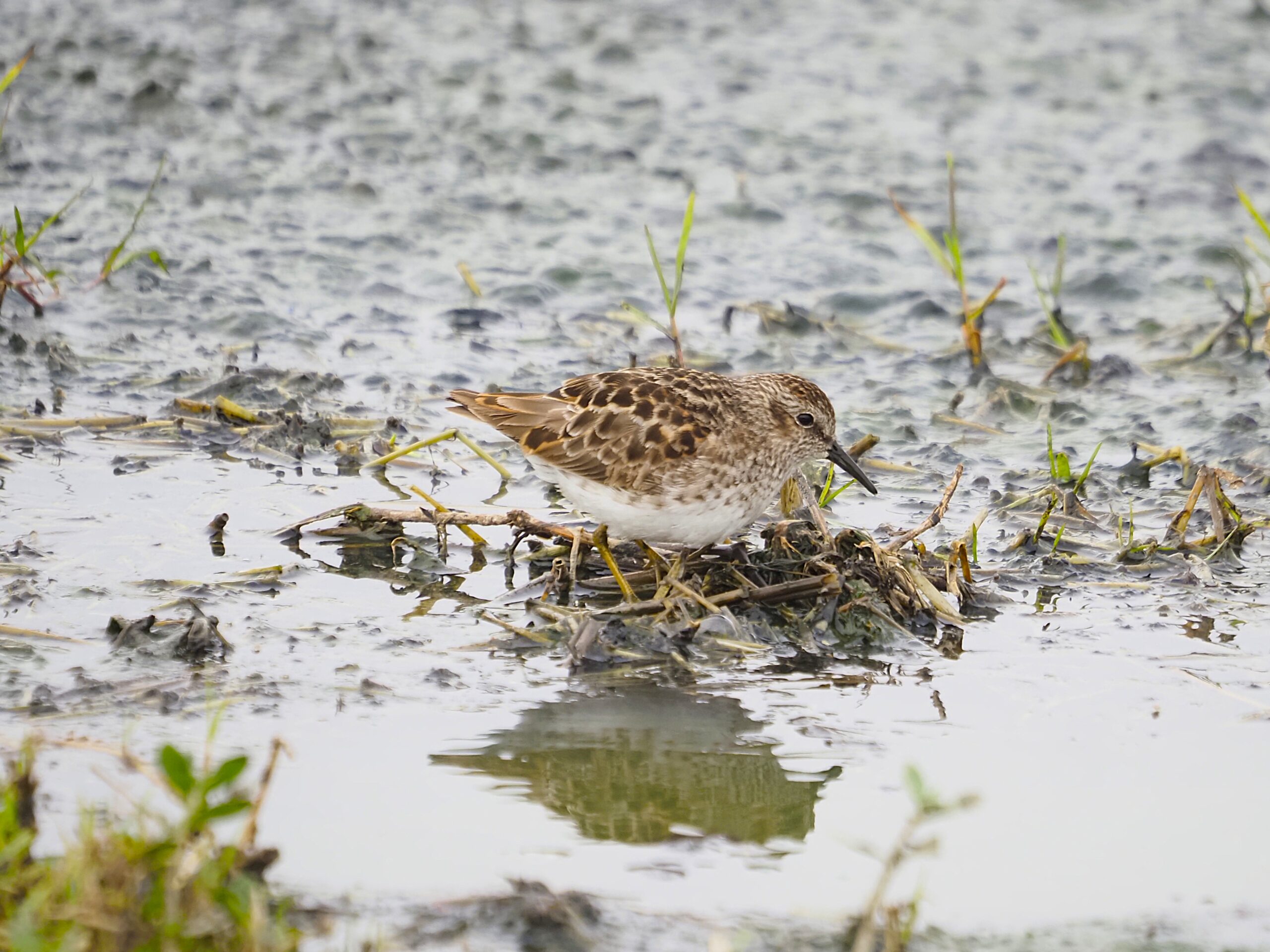
I’d say well over 90% of the sandpipers we saw on our 2 spring field trips (FTs) were Least. Here we have several views of recently seen Least — get to know the structure: thin-tipped, slightly down-curved bill, dove-like head, big eye. You can also note the yellow legs, but the structure will nail the ID even when the legs are muddy or the light is bad. Based on the time of year and the abraded, disheveled and unevenly-sized feathers of the back we can tell that these birds are just starting their molt into alternate plumage.
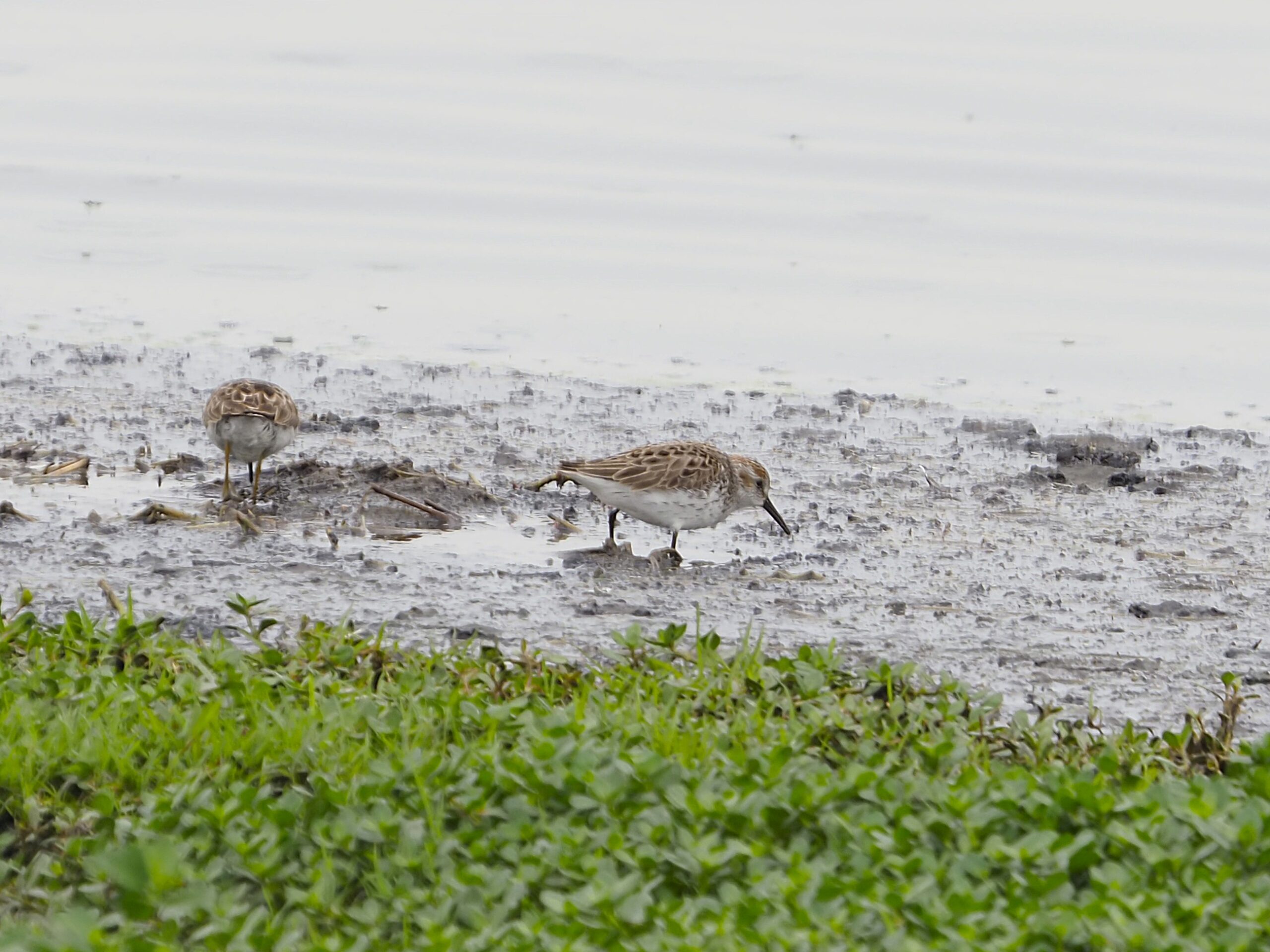
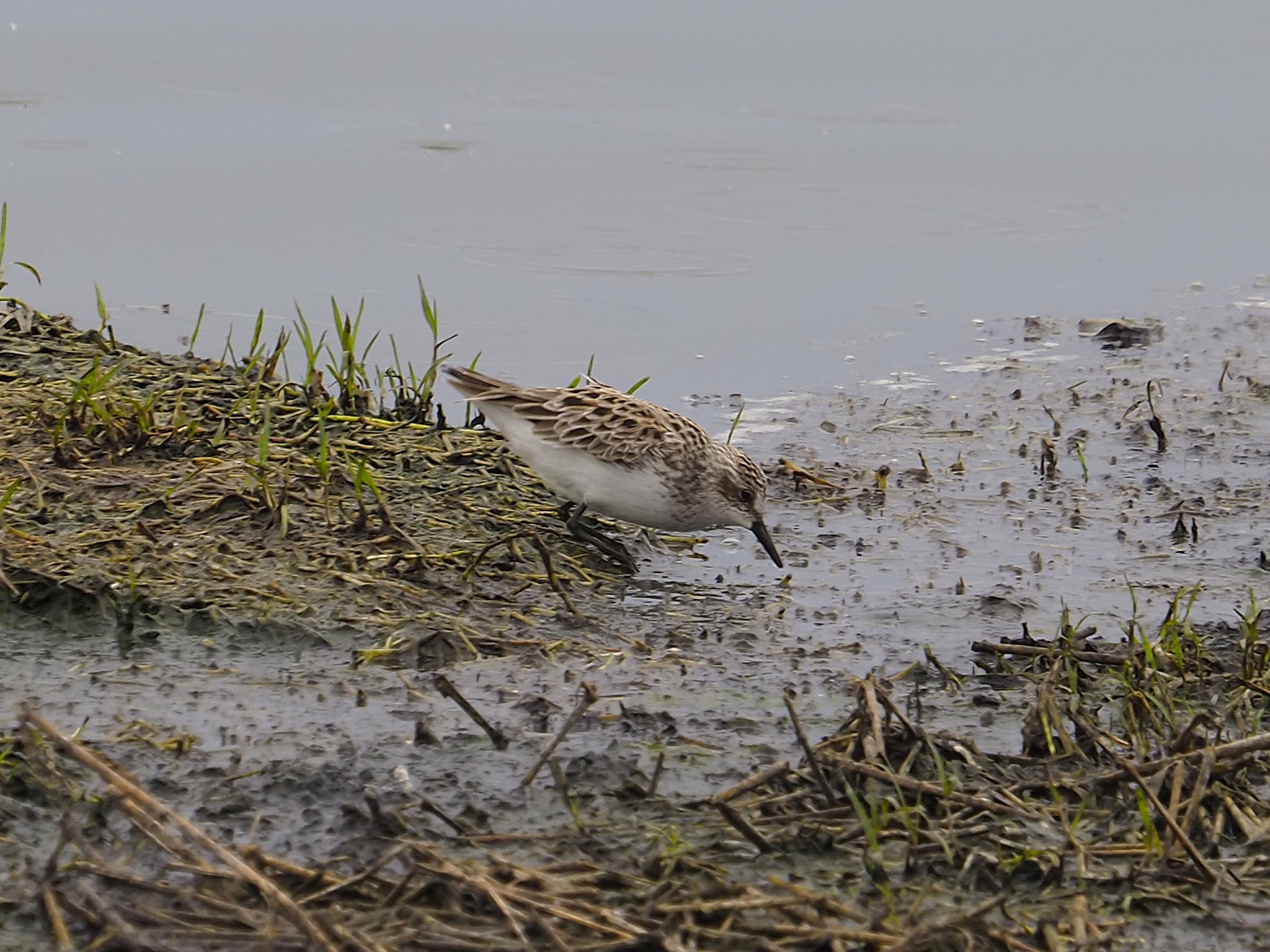
Once you really know the Least, you can start comparing everything else to it. Here are distant views of a Western and a Semipalmated. We got the Semipalmated during the class field trip, then I went out after class and found this Western. This particular Western has a moderate length bill, but it is longer than a Least and is slightly downturned. Note also the triangular marks on the breast and flanks. The Semipalmated (likely the same bird we saw on the FT) has a few marks on its breast, but not on the flanks and the bill is very straight, with no hint of a downturn, and fairly short.
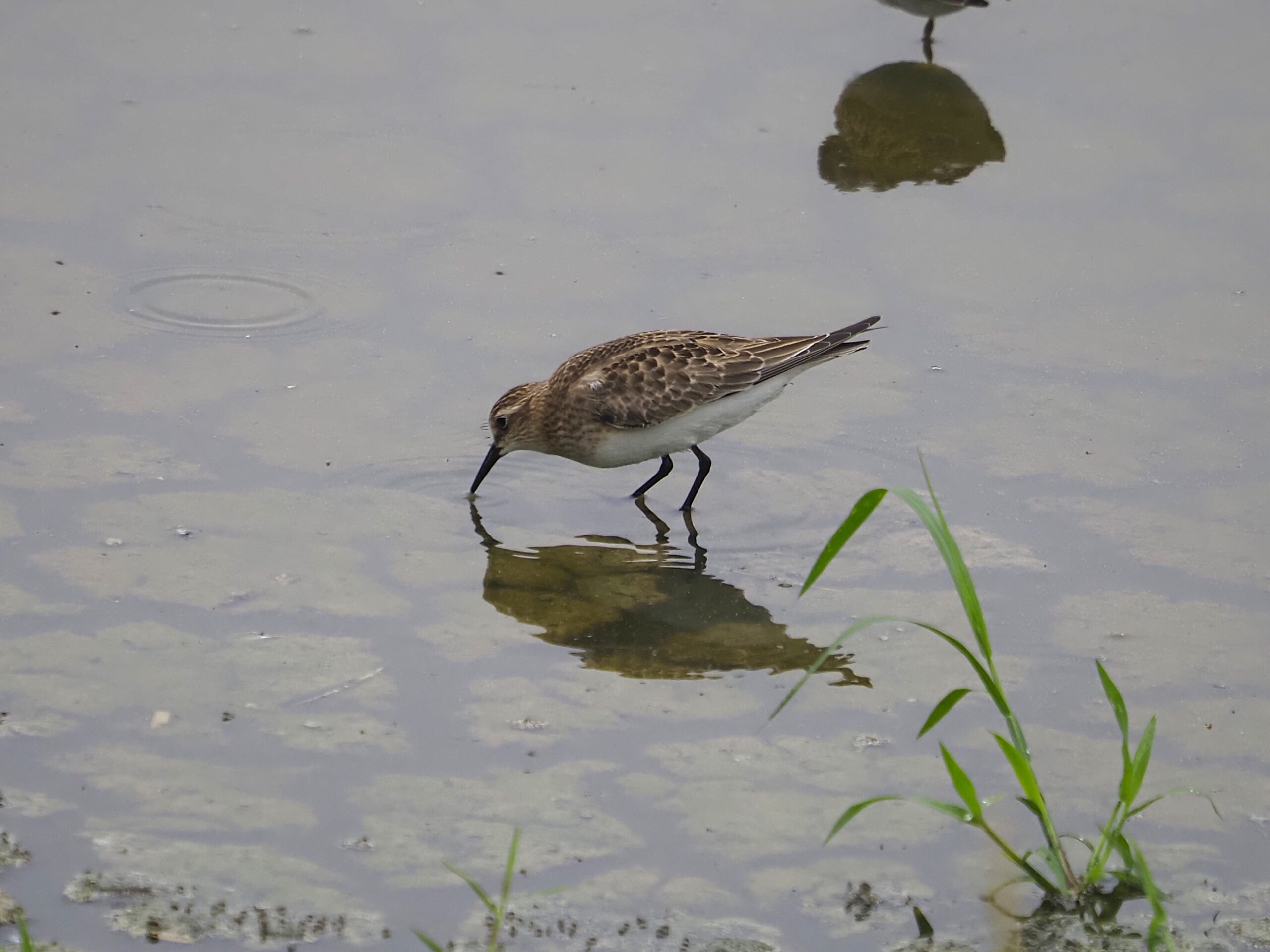
Although we didn’t find one on the FT 2, I had 1 Baird’s Sandpiper in the afternoon. The pictures below are from the fall of 2025. Note that the Baird’s is a long-winged peep — the primaries extend well past the tail. Also note the horizontal feeding posture. The Baird’s is compared to a Least in one photo.
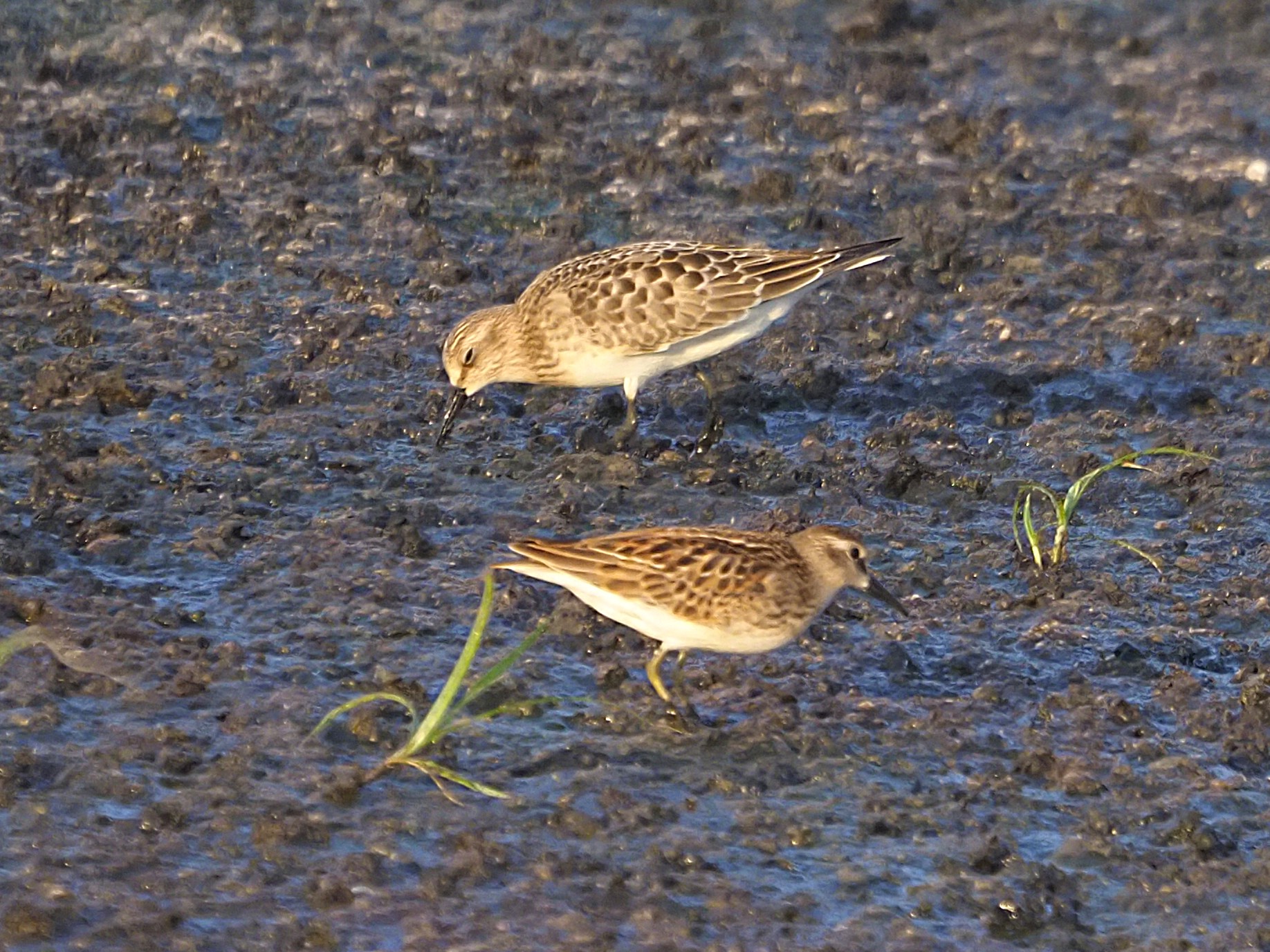
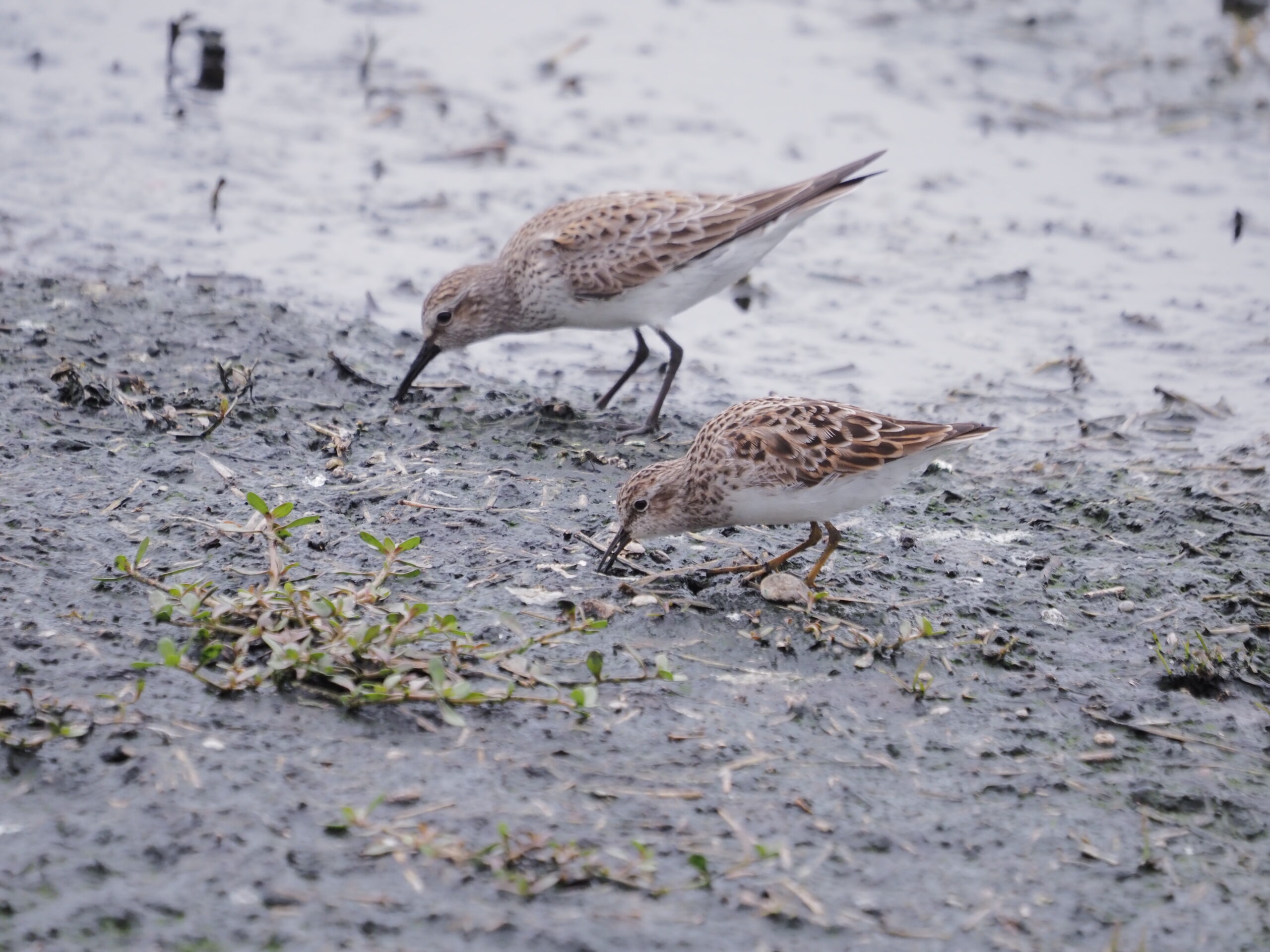
Although we haven’t seen a White-rumped yet this spring, I’m expecting them any day now and on into May. Here’s a comparison of White-rumped and Least from last spring migration. White-rumped is the other long-winged peep and it is also noticeably larger than the Least. Don’t forget the feeding postures — the Least is crouched, while the White-rumped is diagonal to the ground.
Another shorebird we got distant looks of is the Wilson’s Phalarope which is by far the most common phalarope in Texas during spring & fall migration, and occasionally winter. These are one of the very “frosty” shorebirds I’ve been telling ya’ll to look for when scanning the mud at Hornsby. Two of the photos show birds in both alternate and basic plumage. Note the very thin bill, the overall gray and white colors and that they often swim.
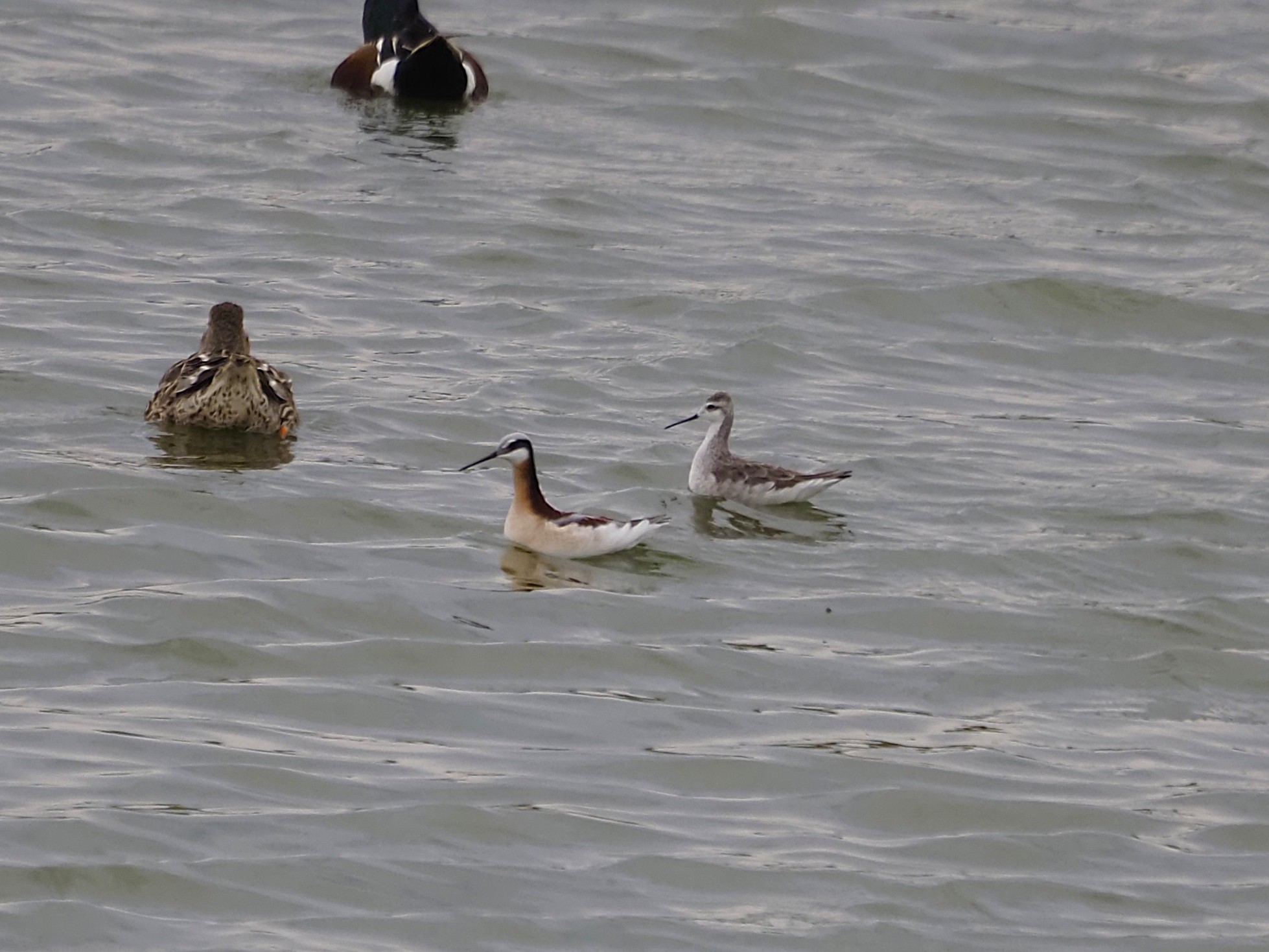
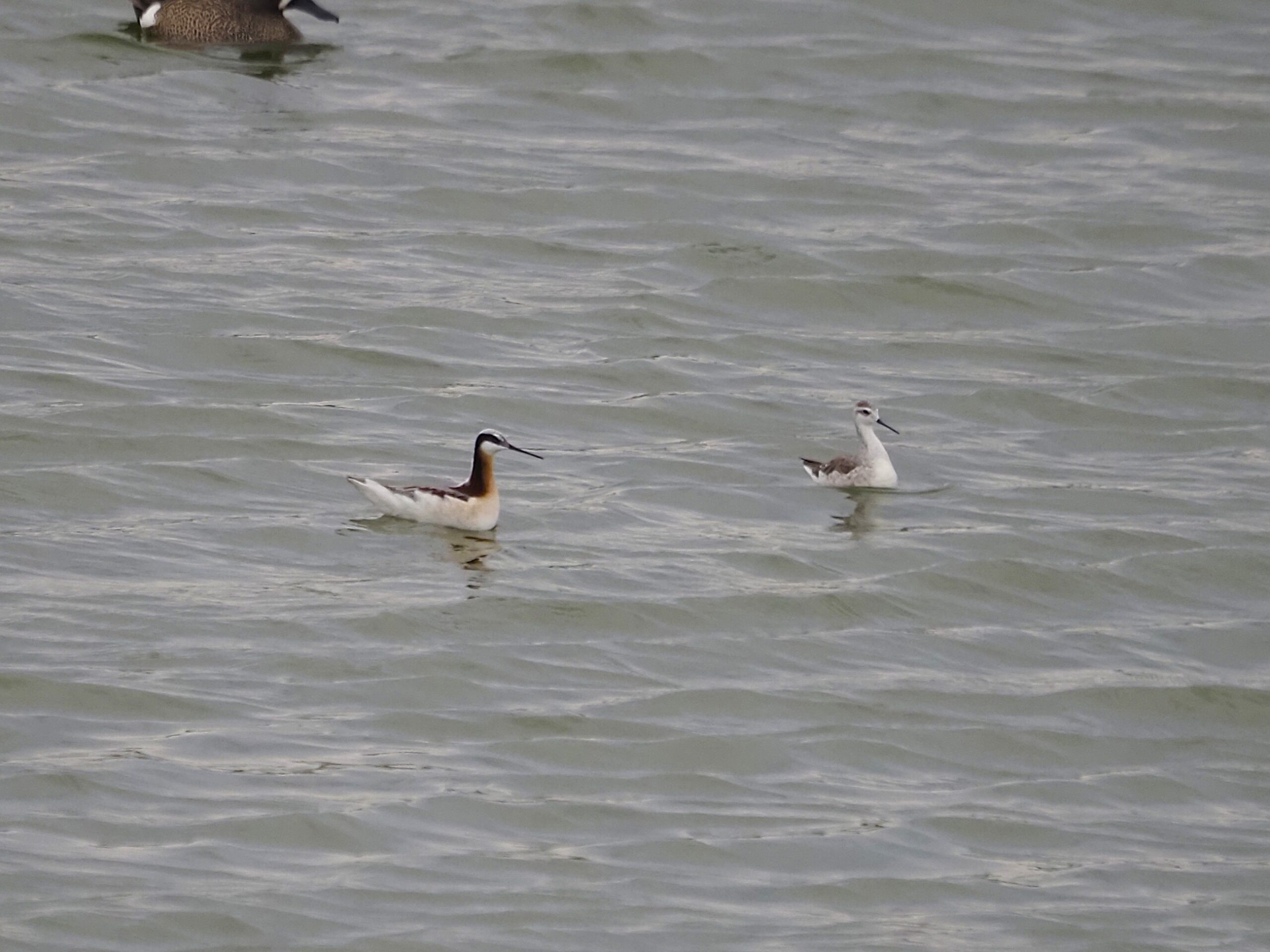
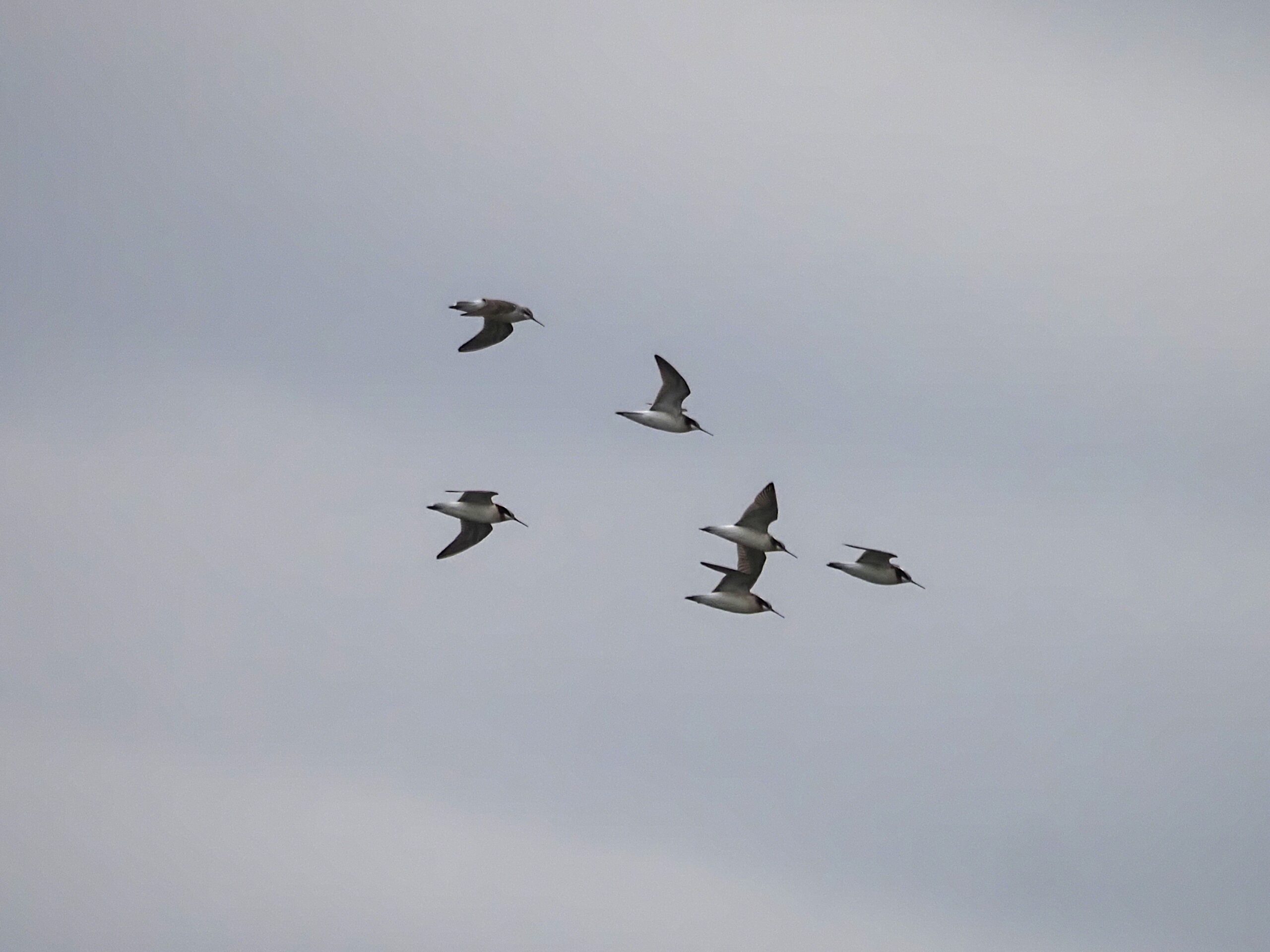
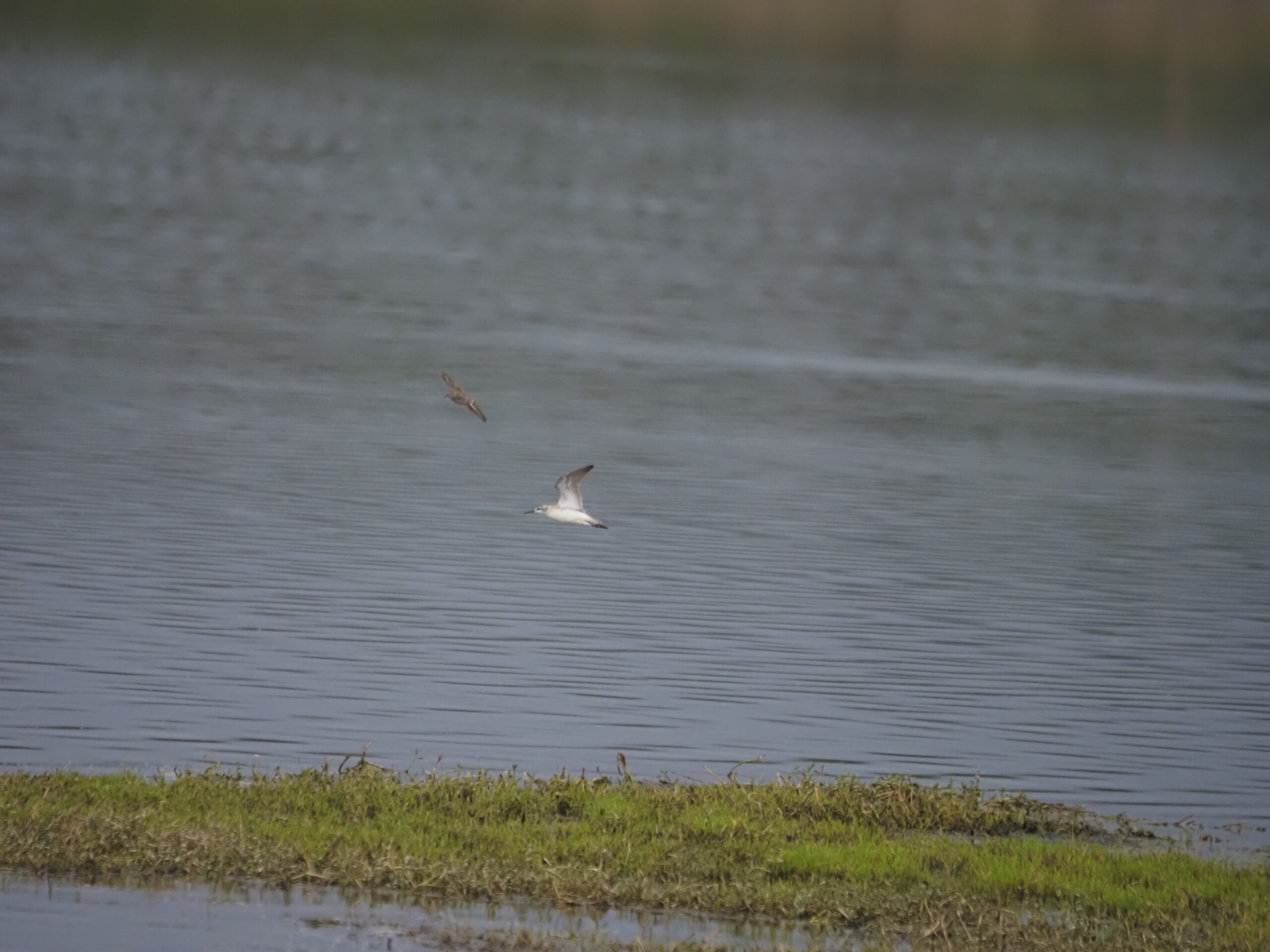
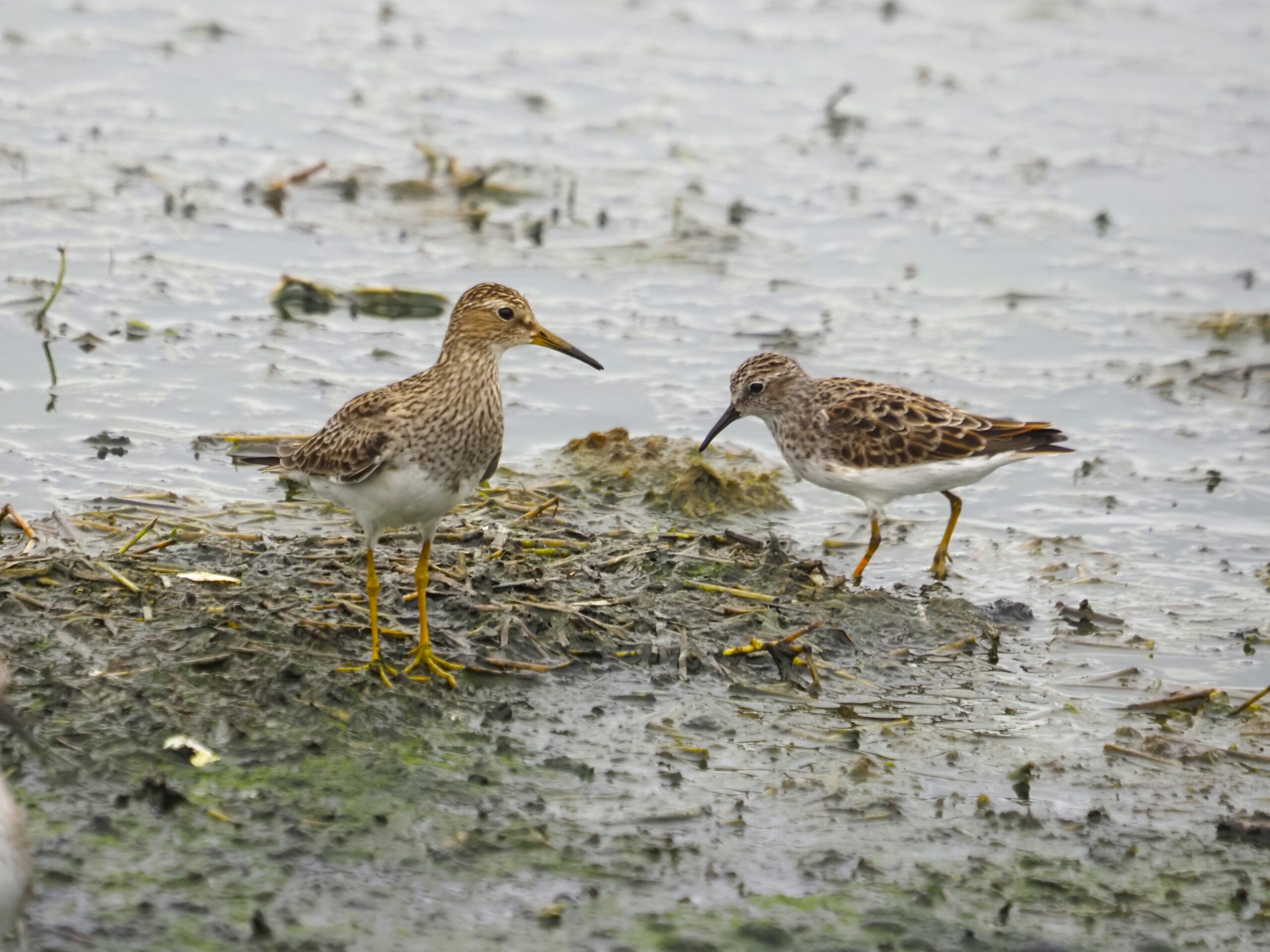
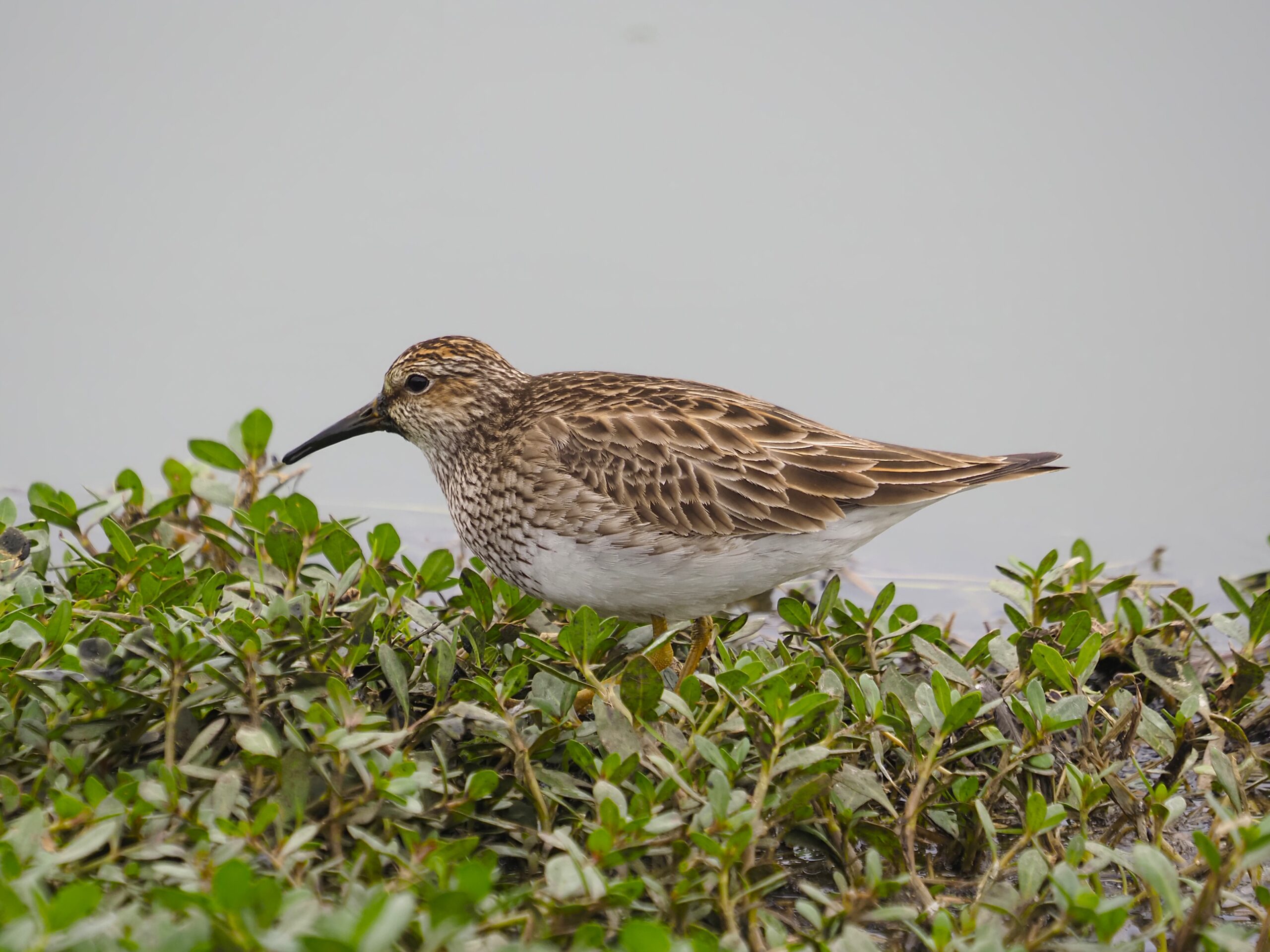
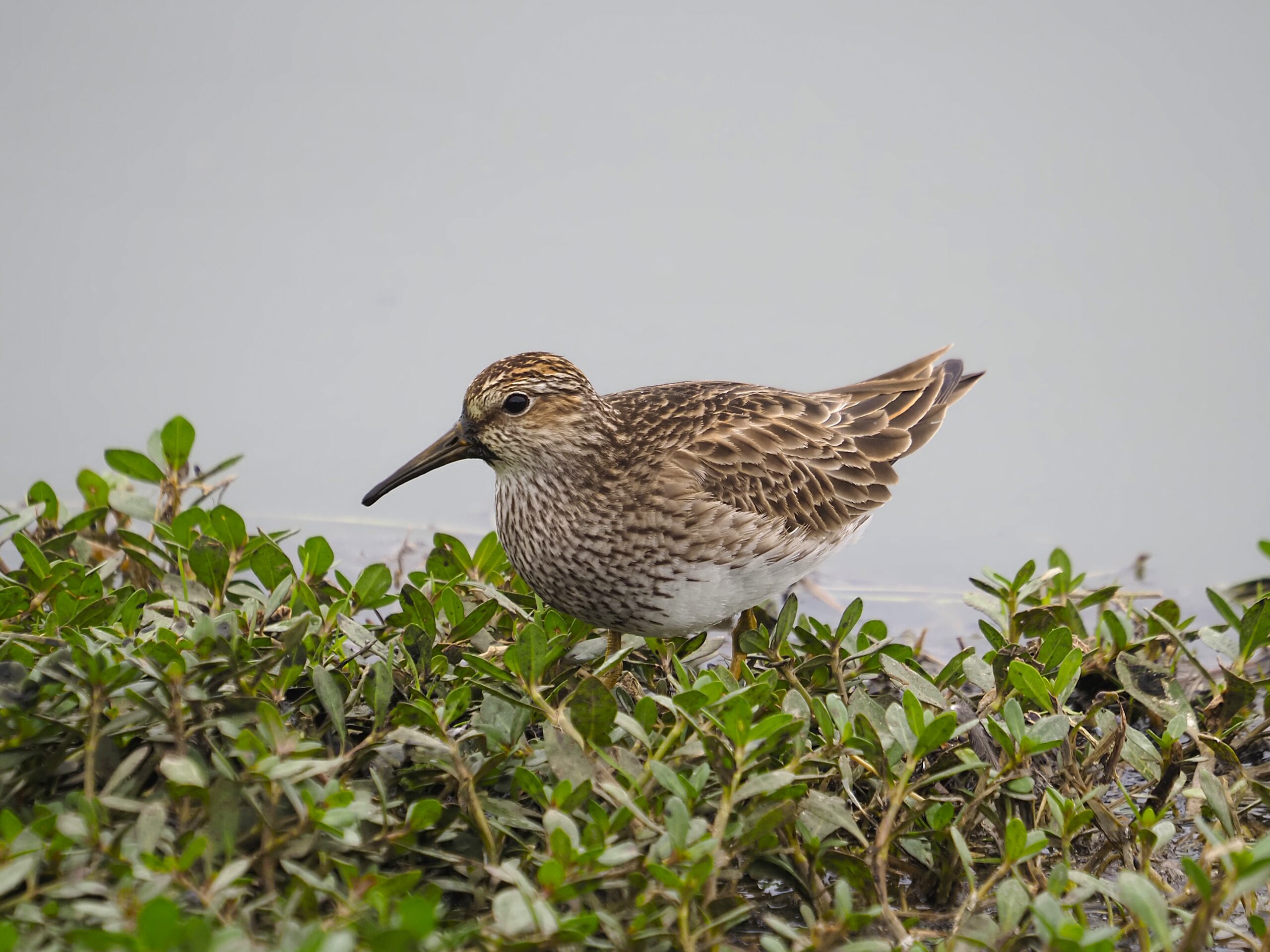
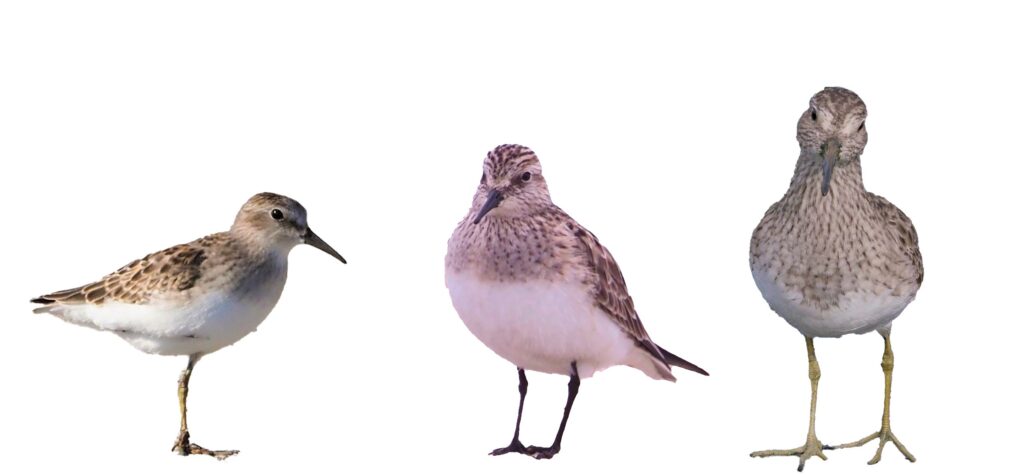
Next up is the Pectoral Sandpiper of which we’ve seen many on both FTs. It is one of the browner shorebirds. Note how the brown streaks of the upper breast are sharply demarcated from the white of the belly and lower breast. Also note that the brown streaks extend further down the breast than the Least or the Baird’s. Finally, note the Pectoral is 2 to 3 times larger than the Least. If you get a good enough view you can see the 2-toned bill color of the Pectoral and its long, lanky legs. The last photo was shown in class and compares the 3 brownest shorebirds: Least, Baird’s & Pectoral.
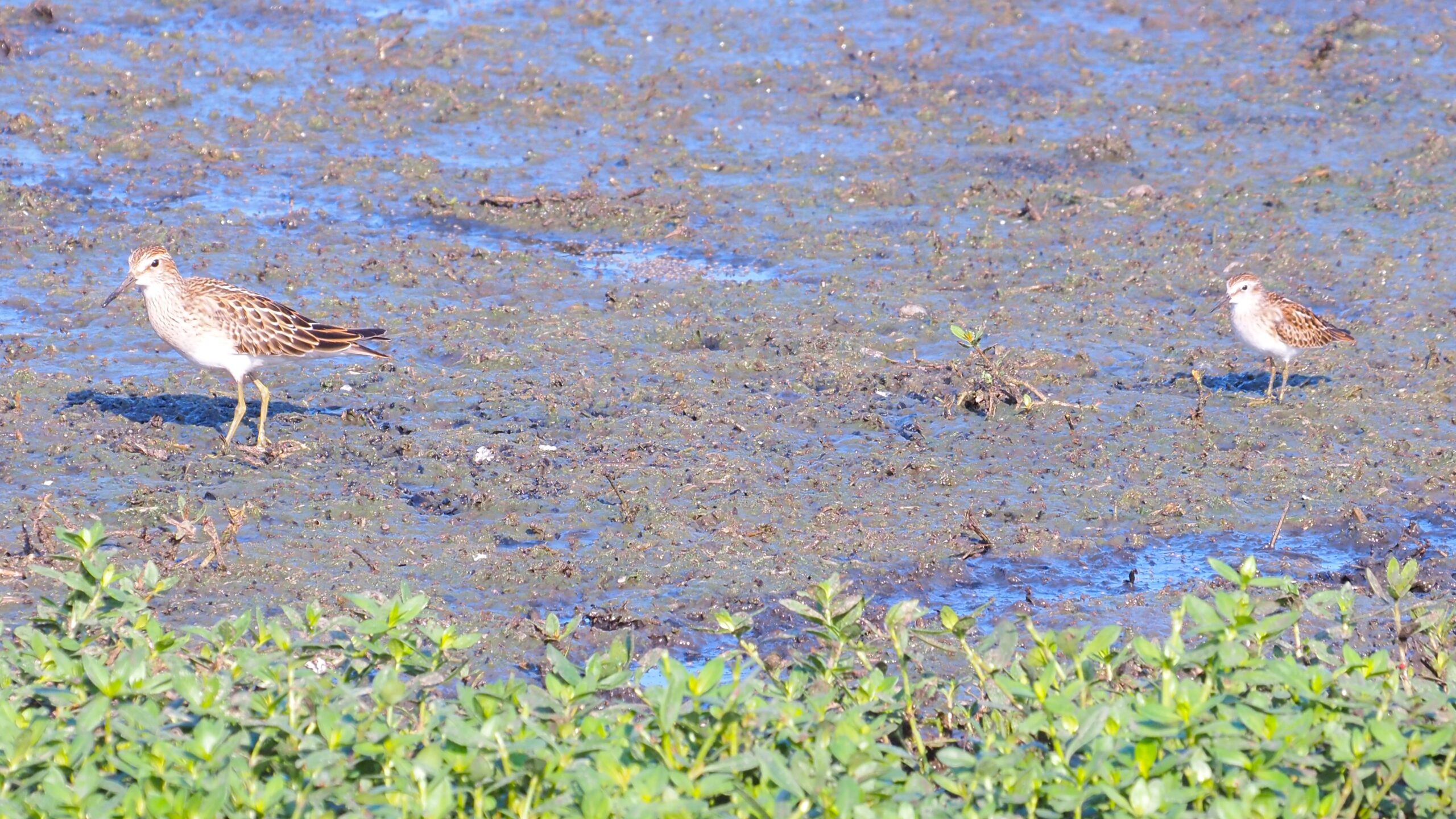
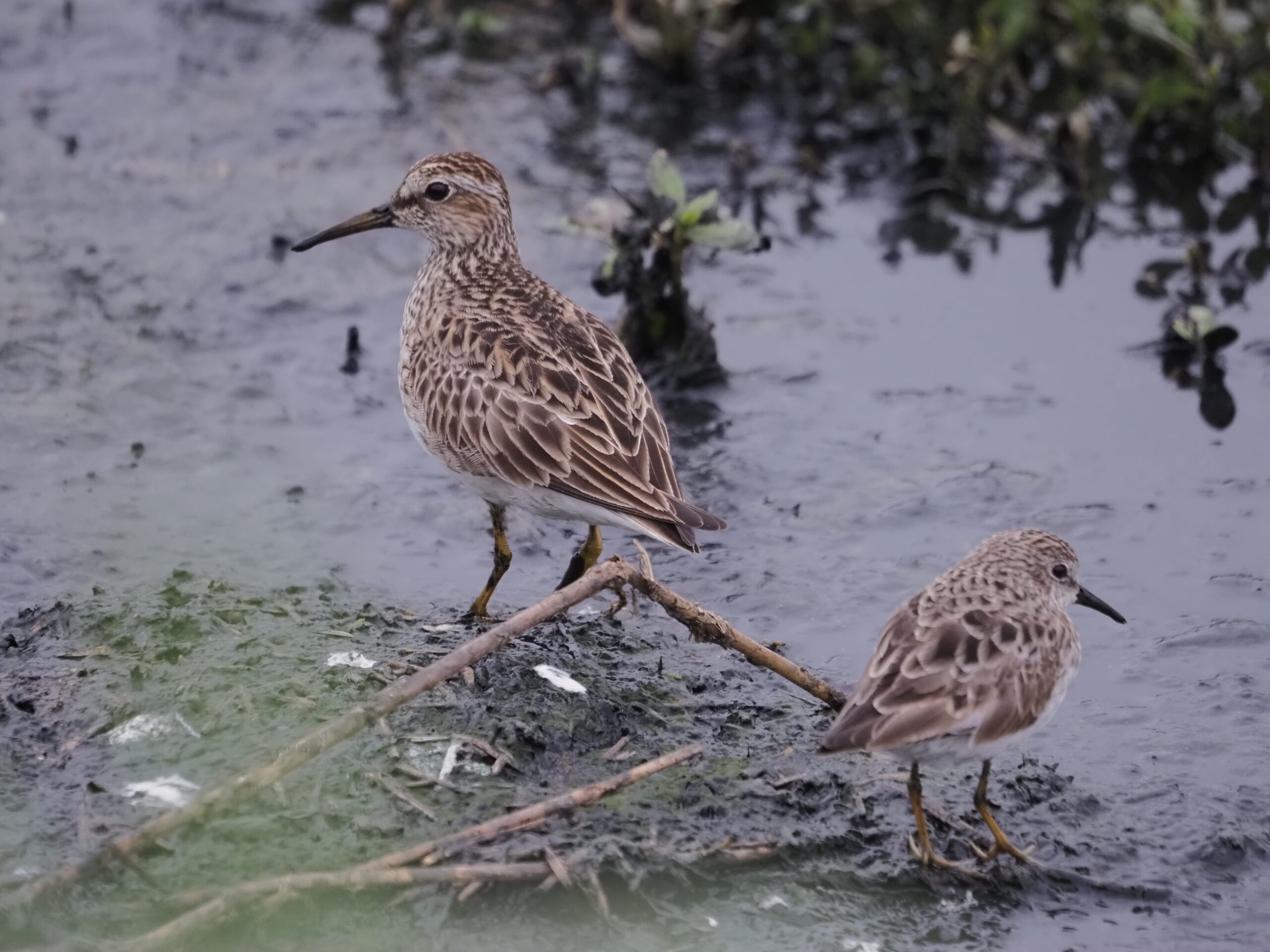
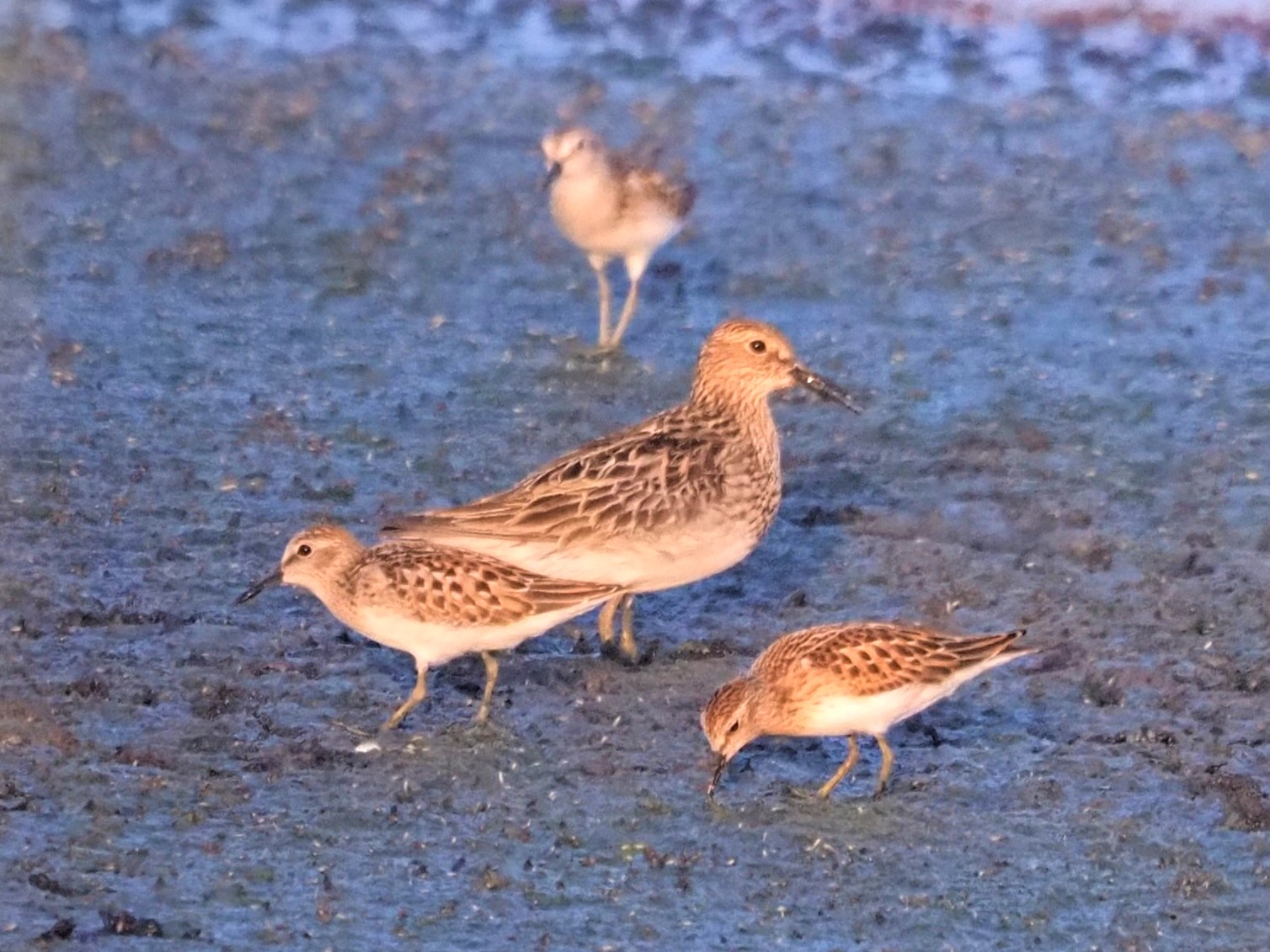
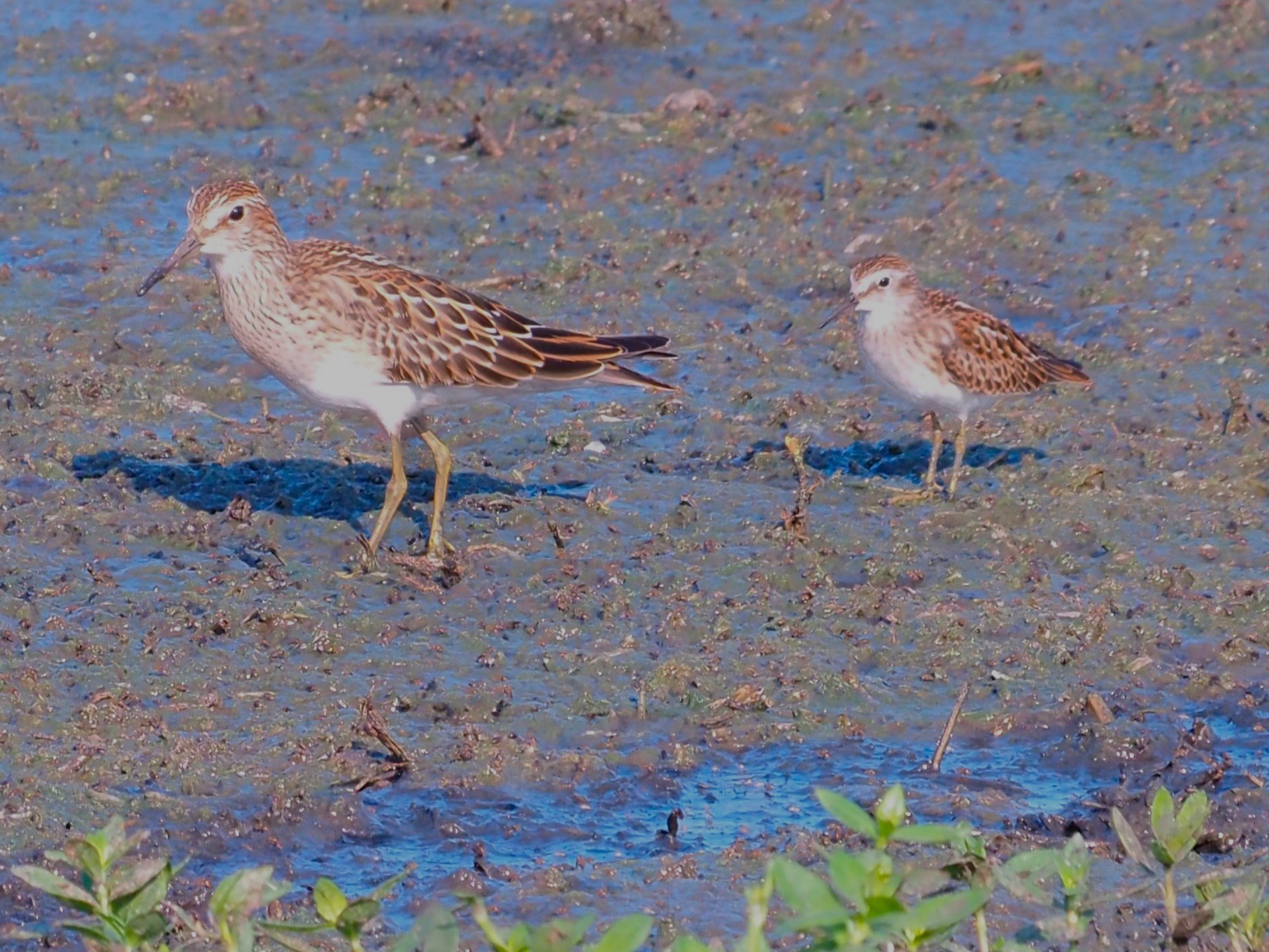
Here are a few other shorebirds I think most of the class saw. I’ll let you ID them.
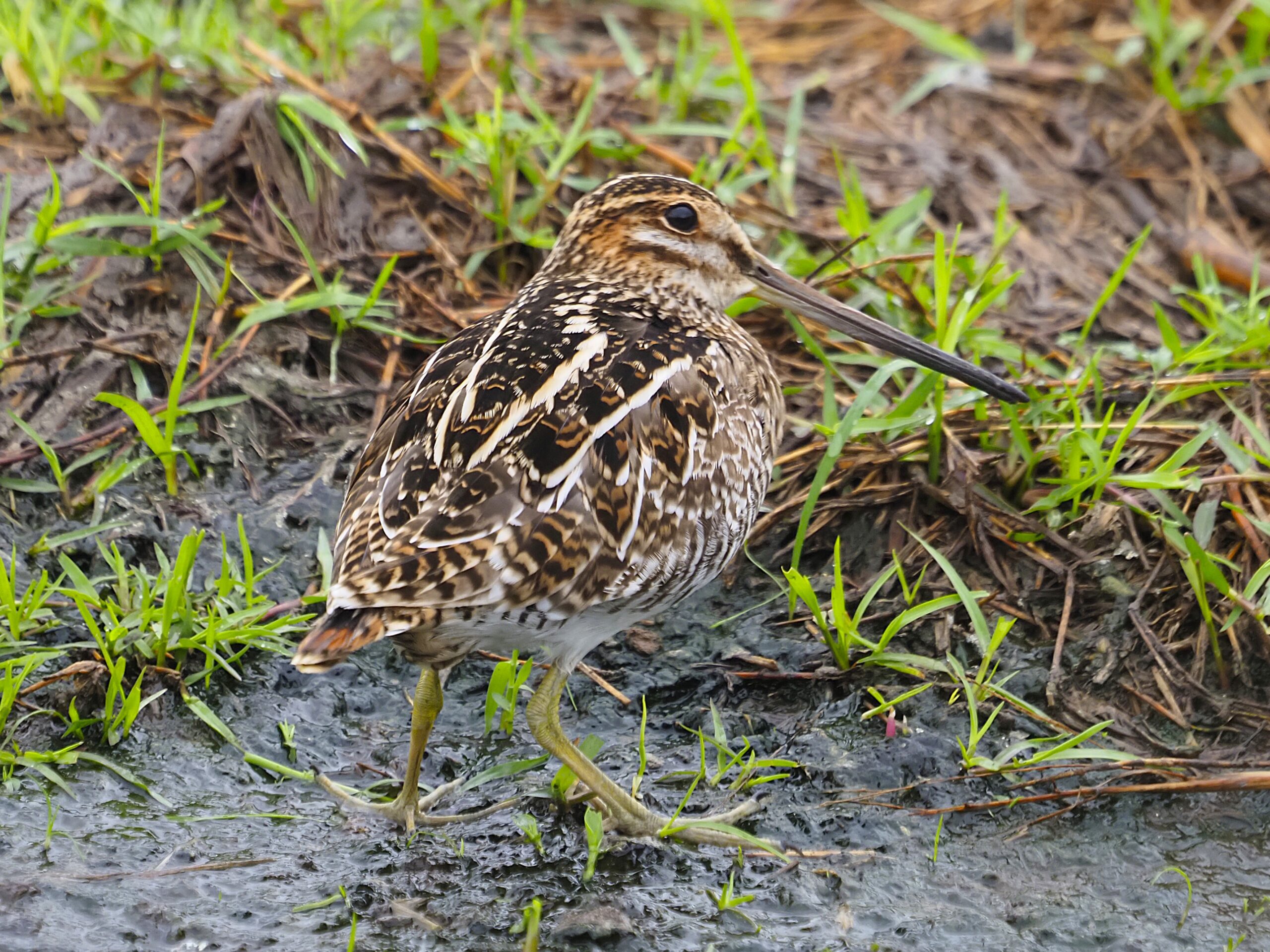
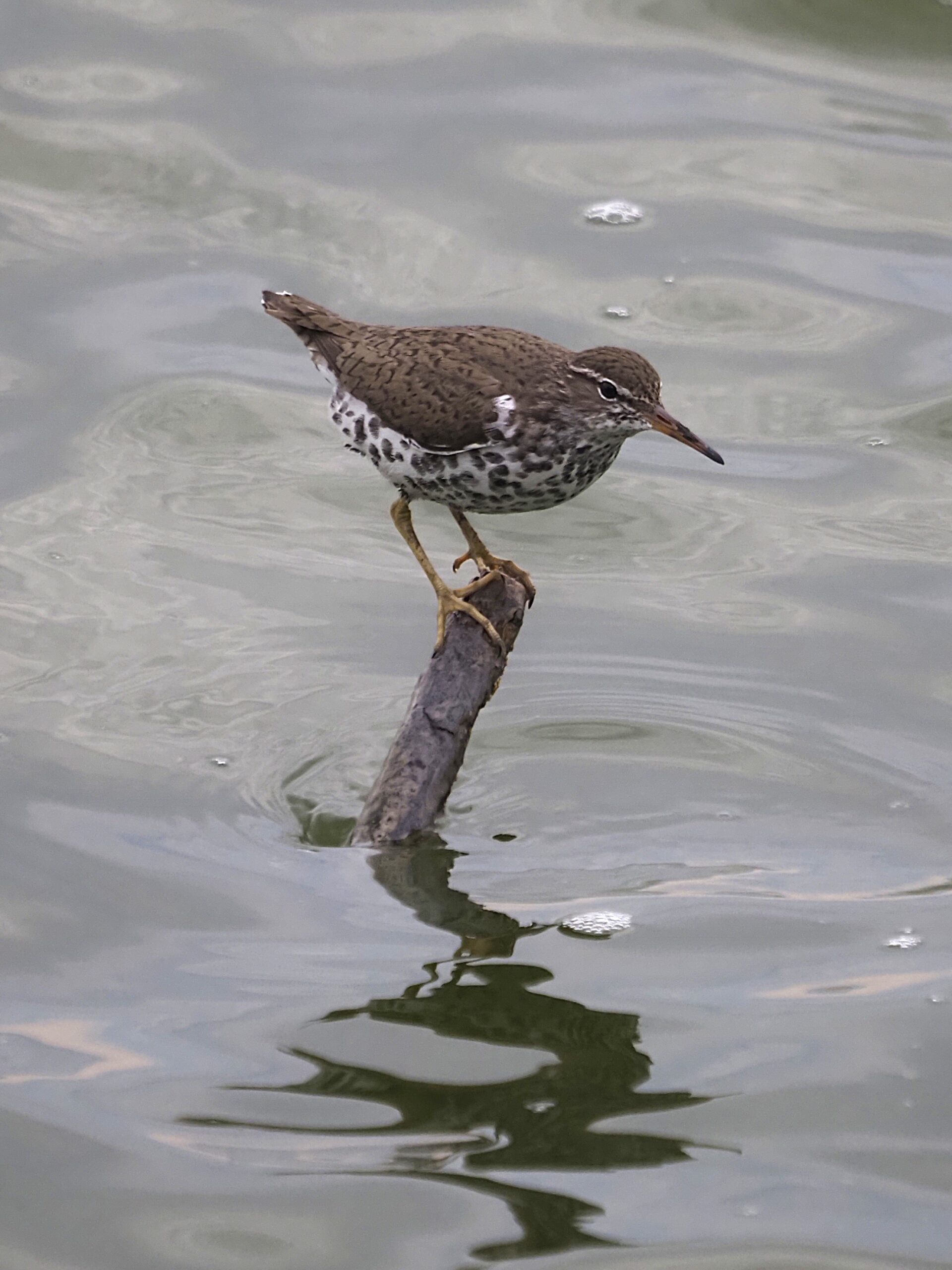
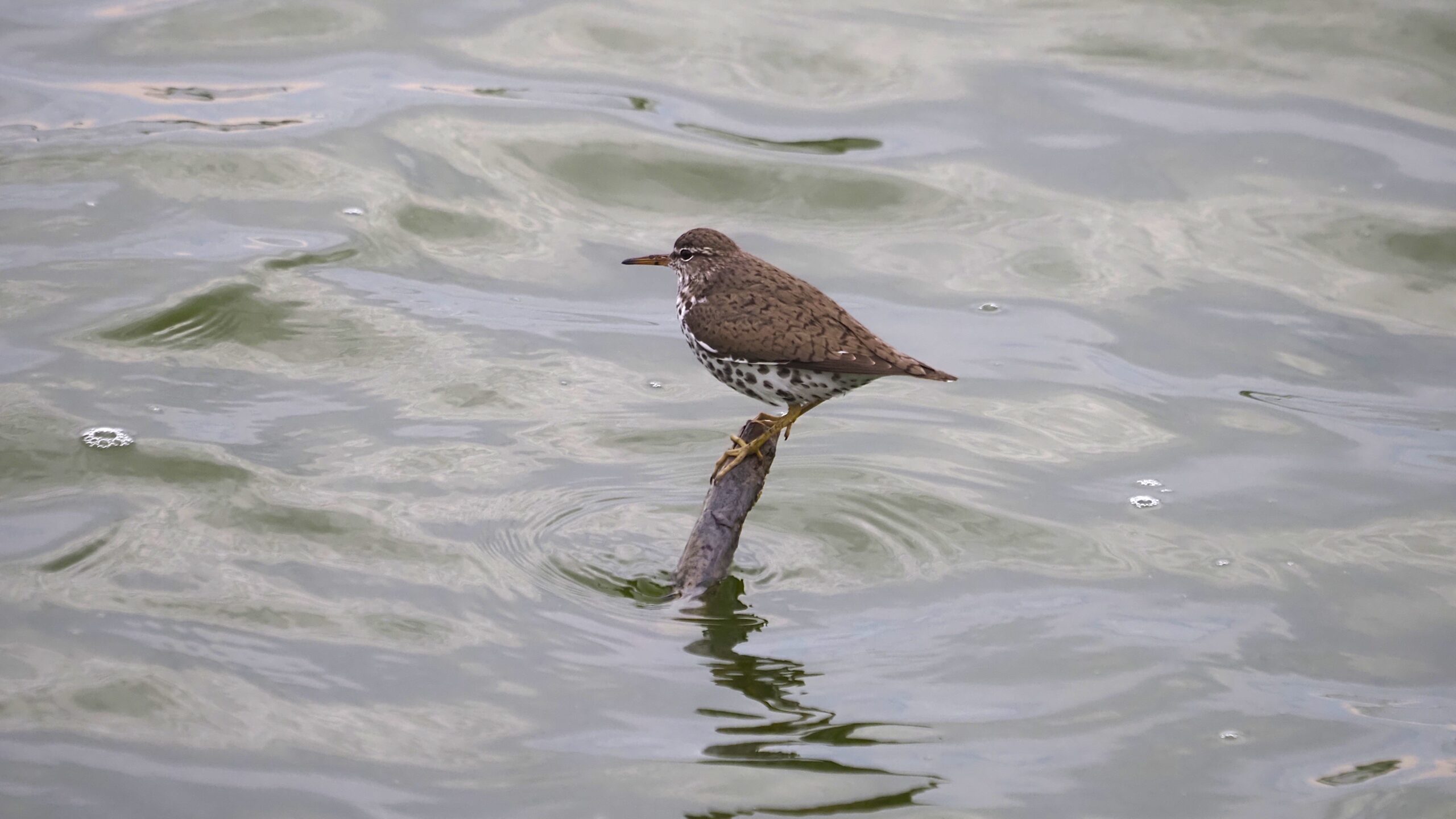
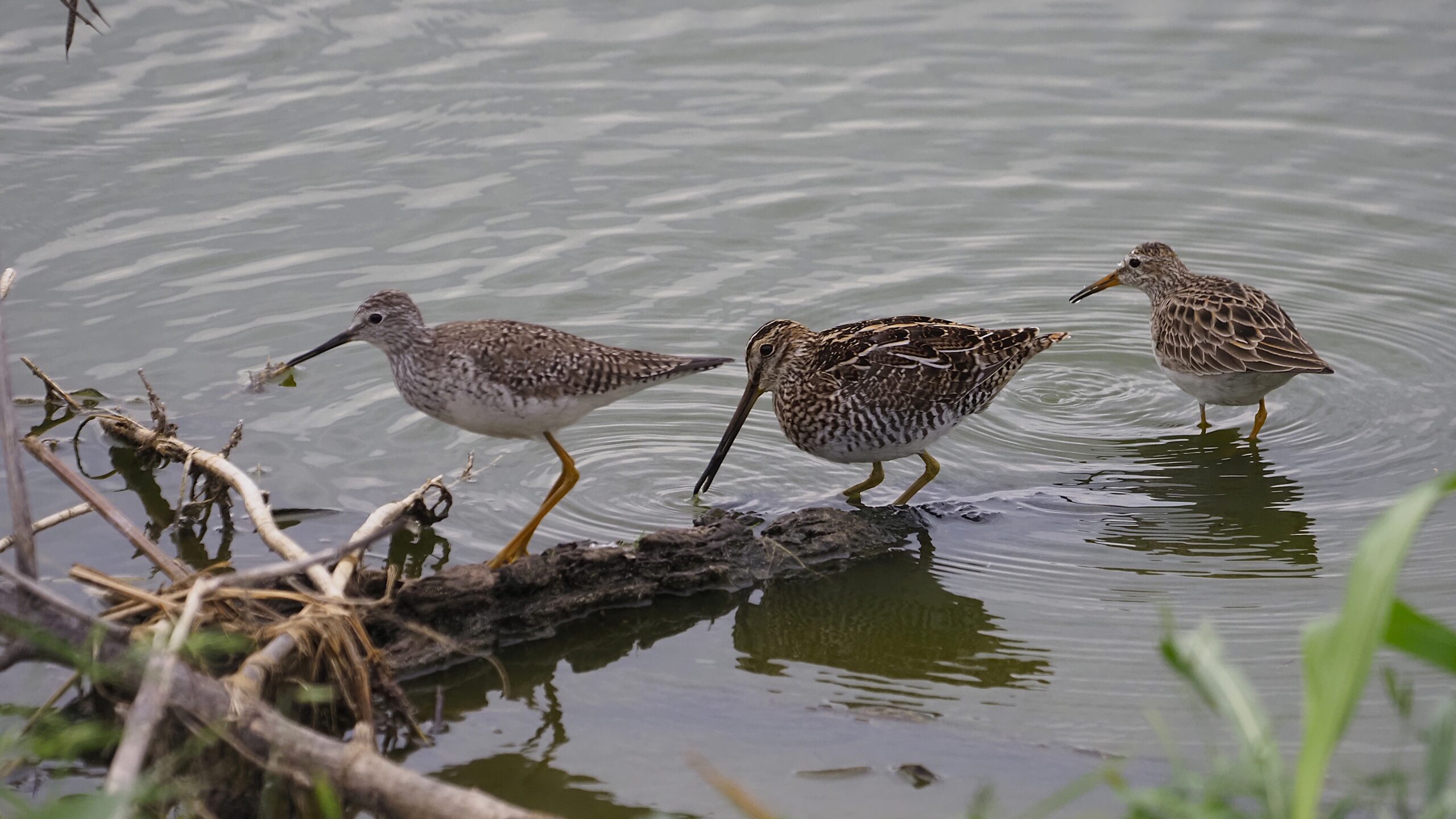
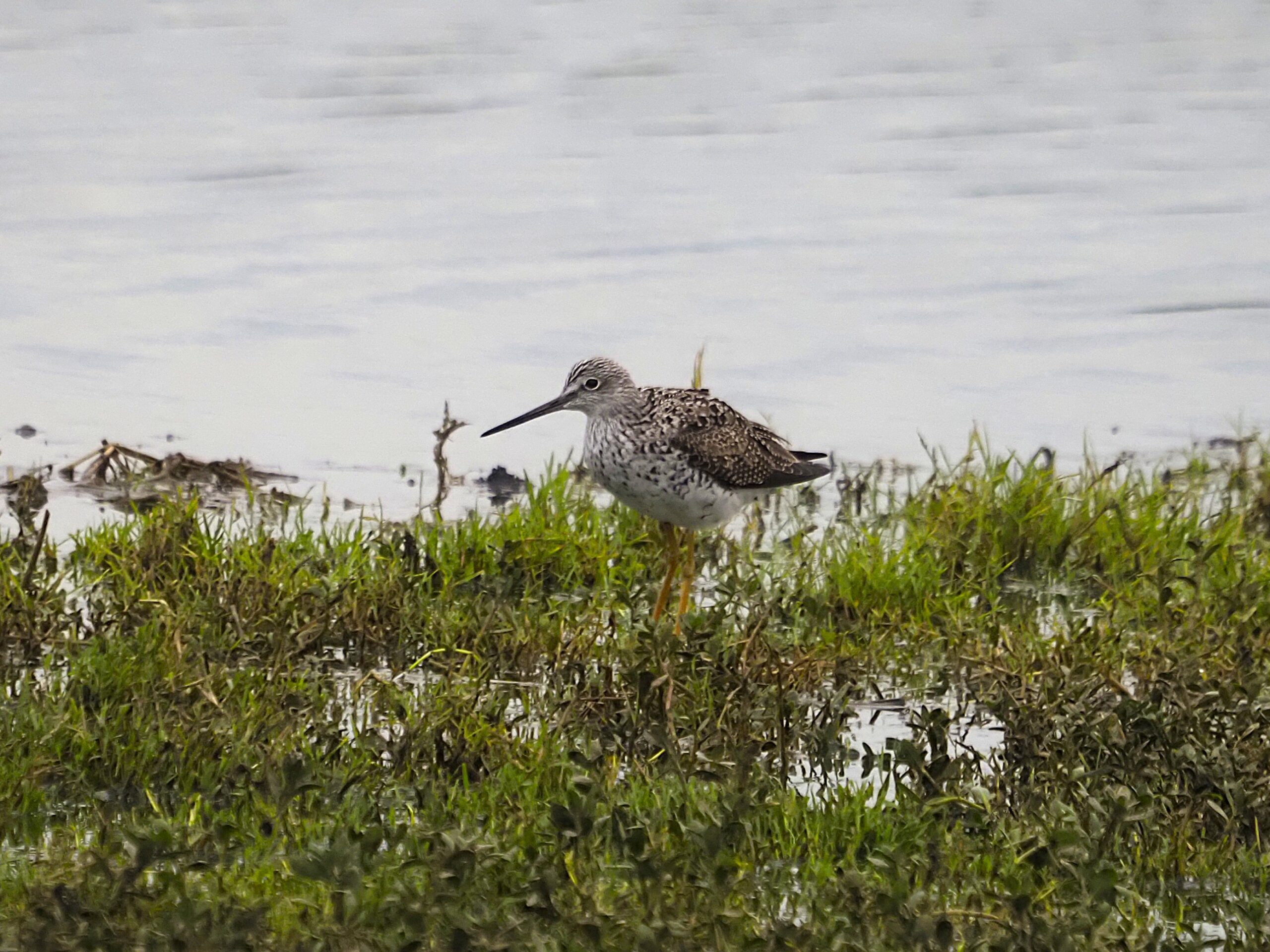
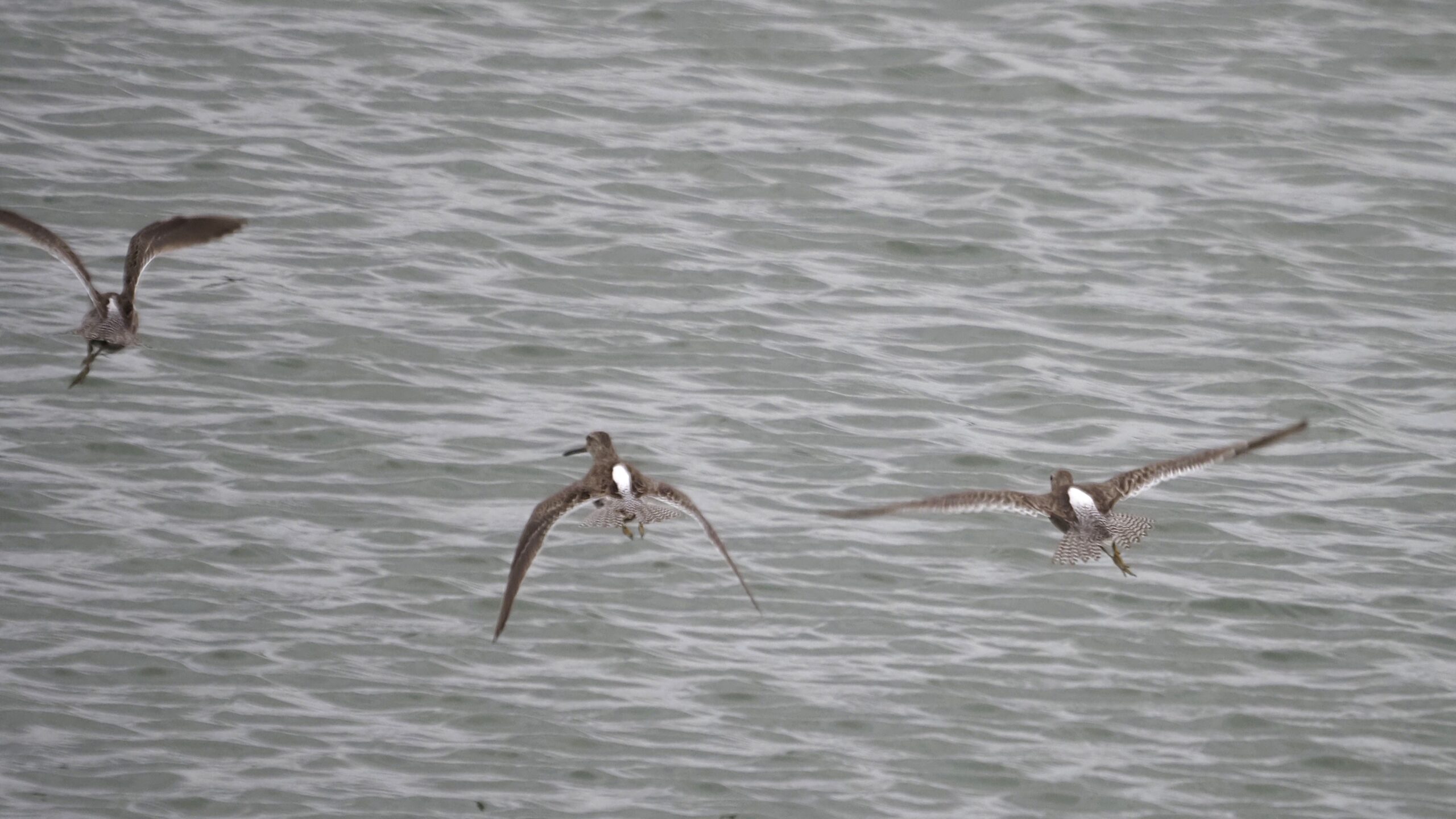
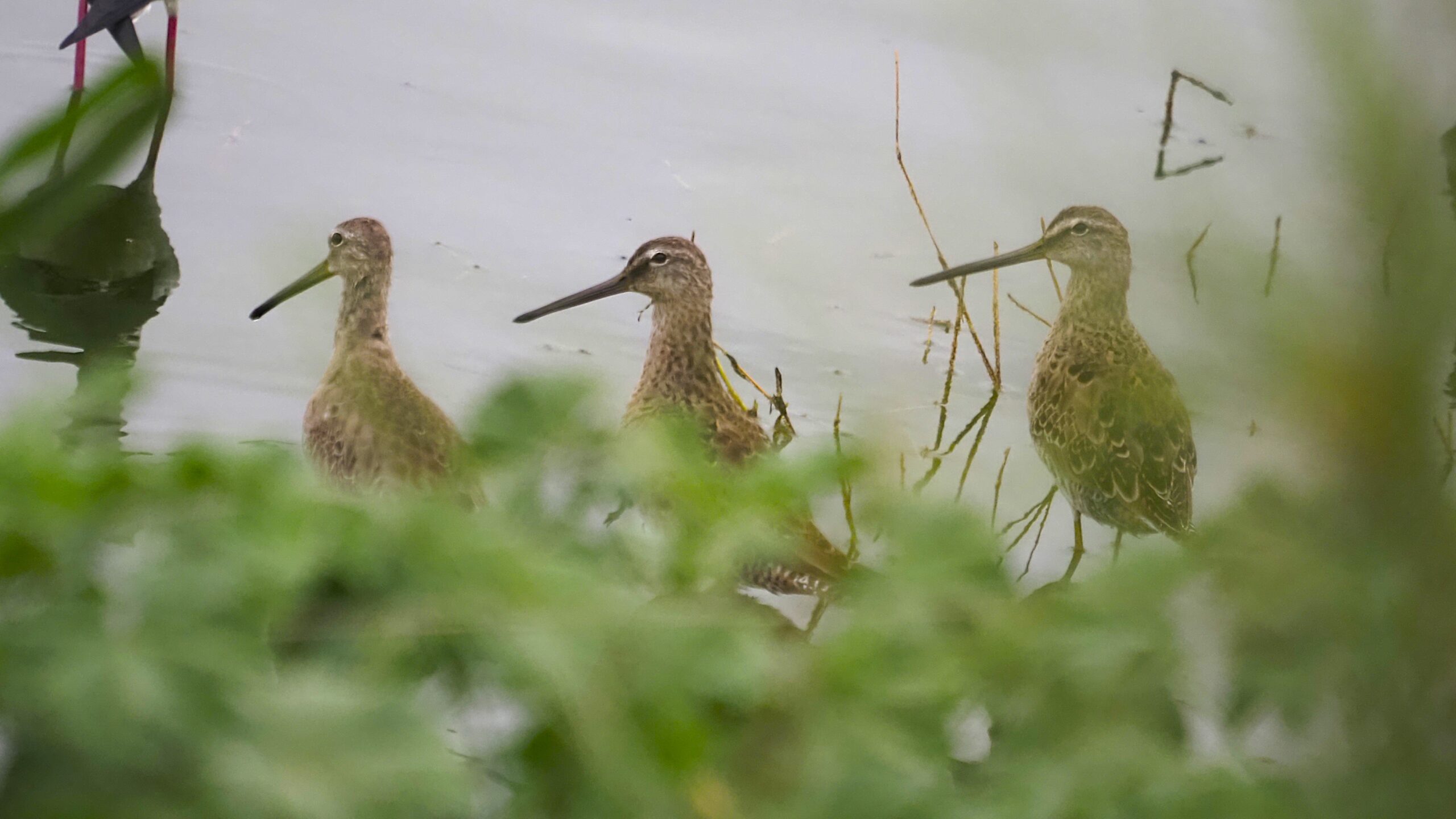
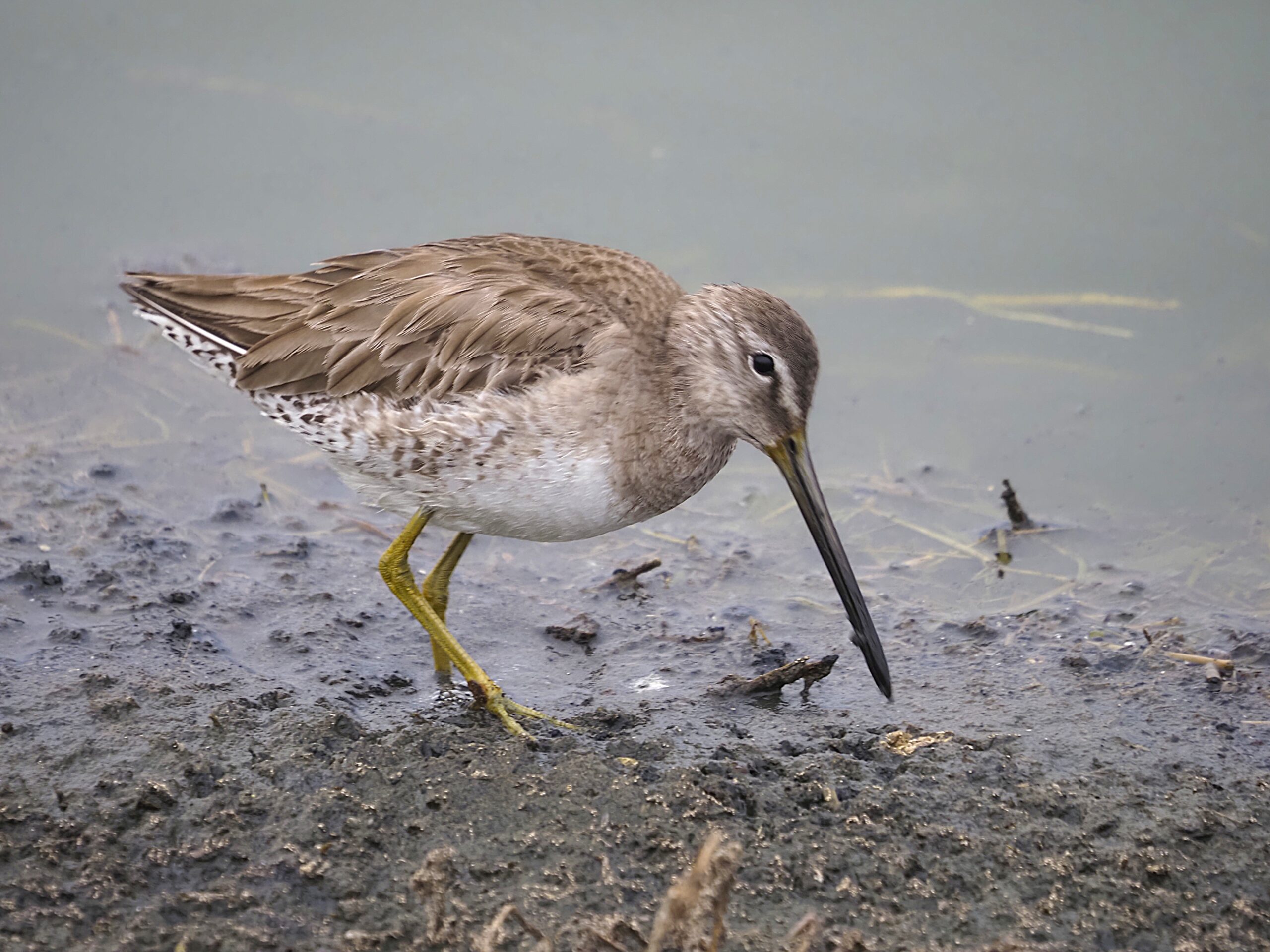
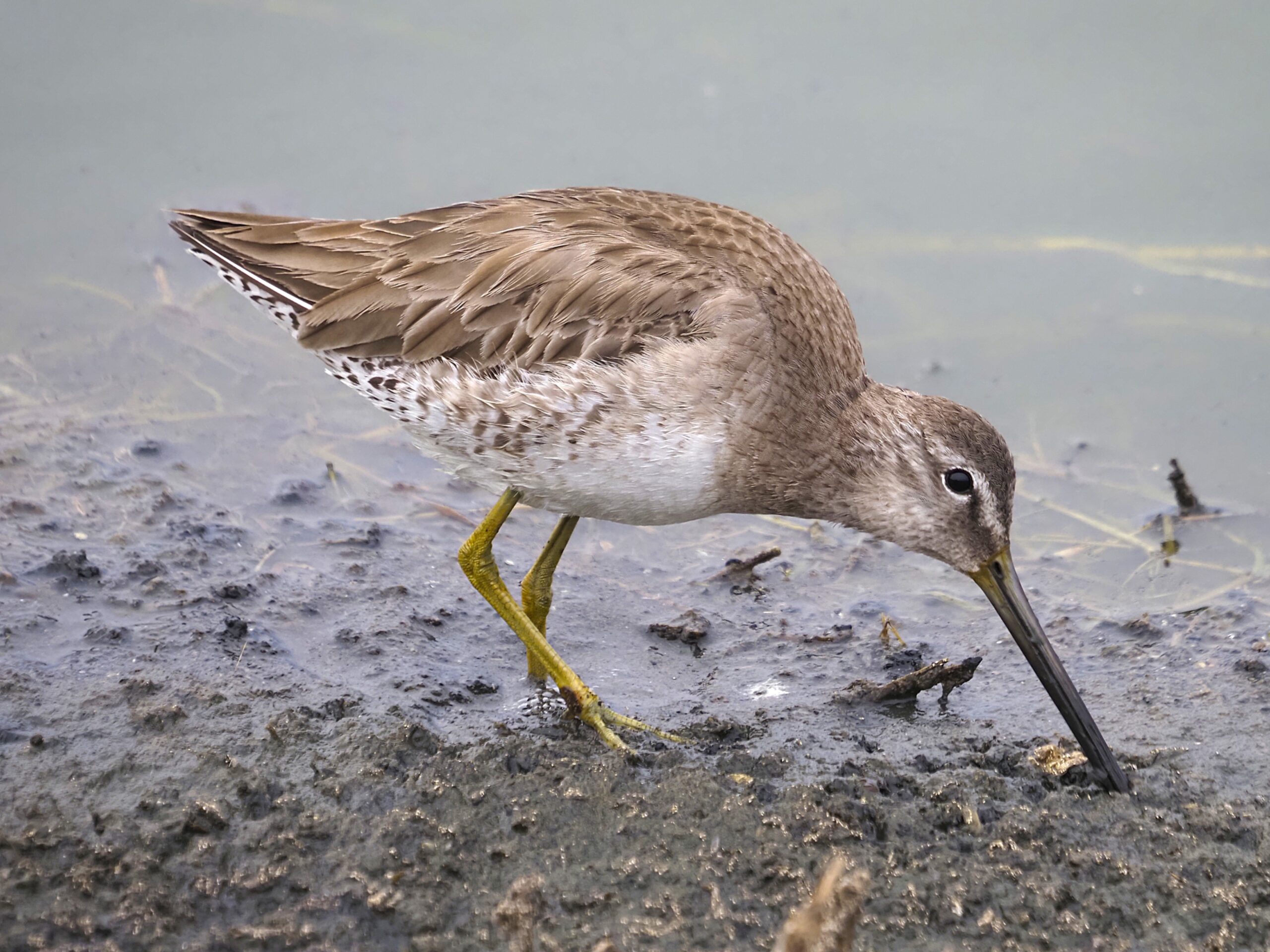
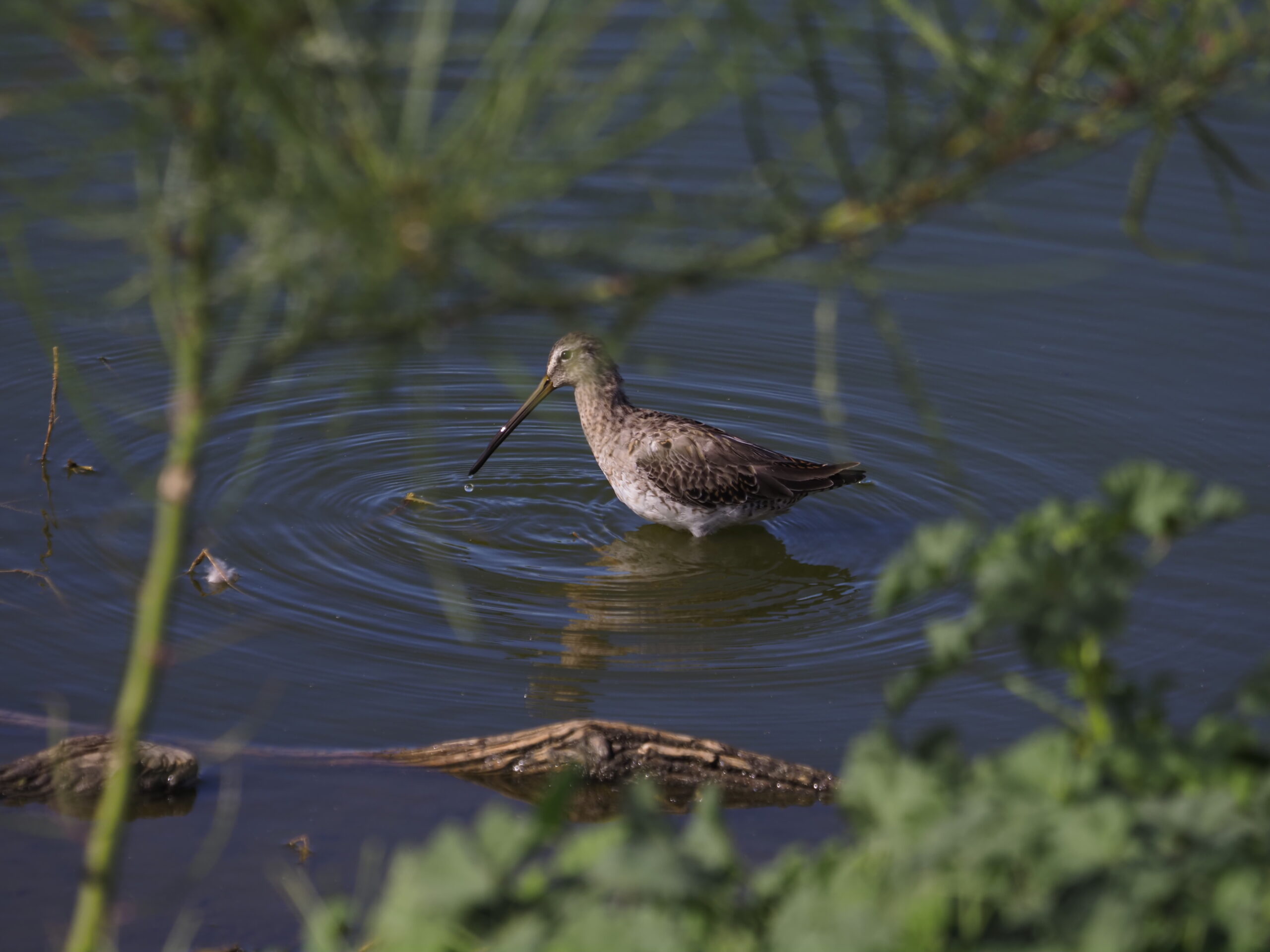
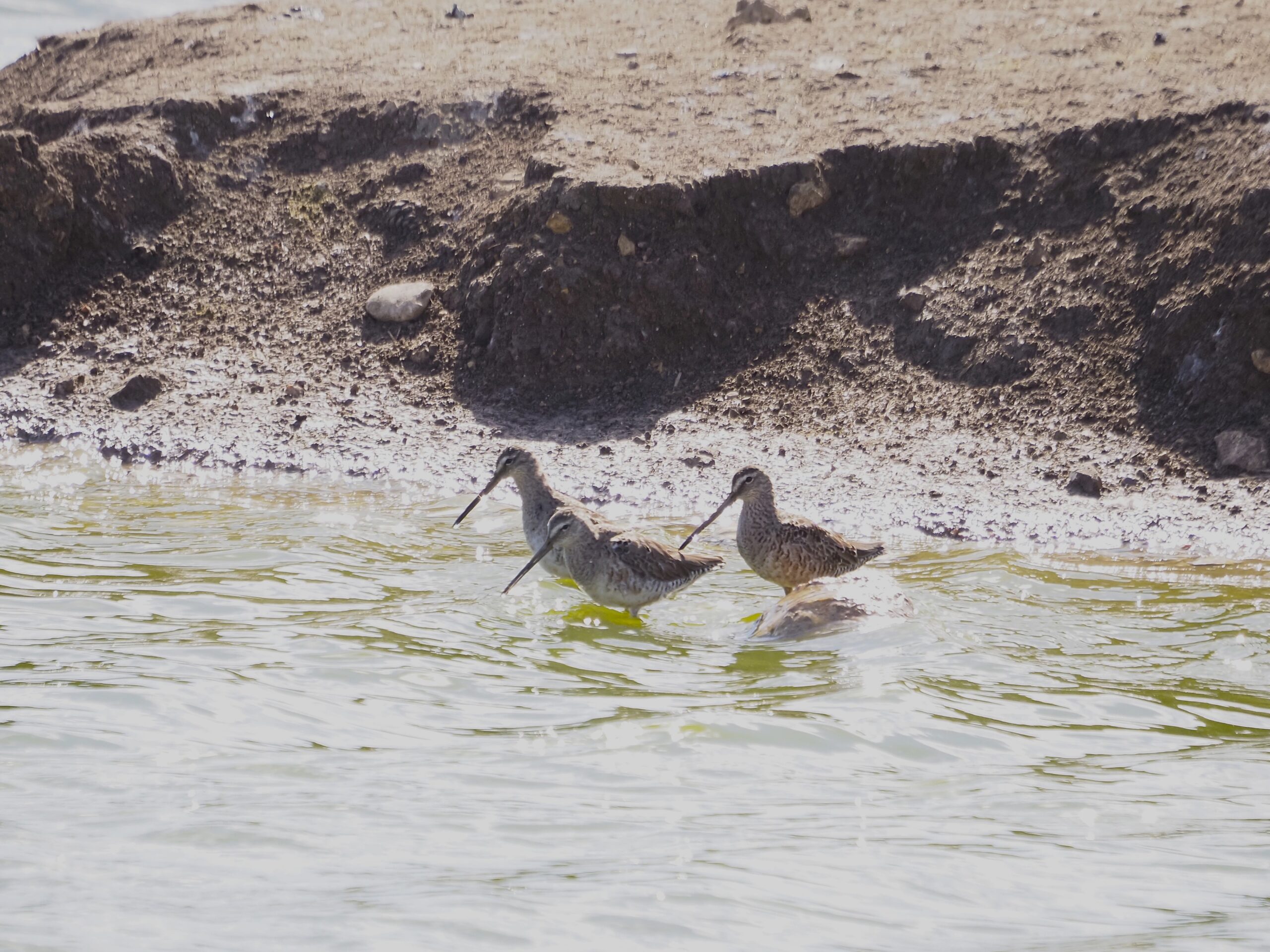
There have been about 4 Long-billed Dowitchers at Hornsby each of the last few days.
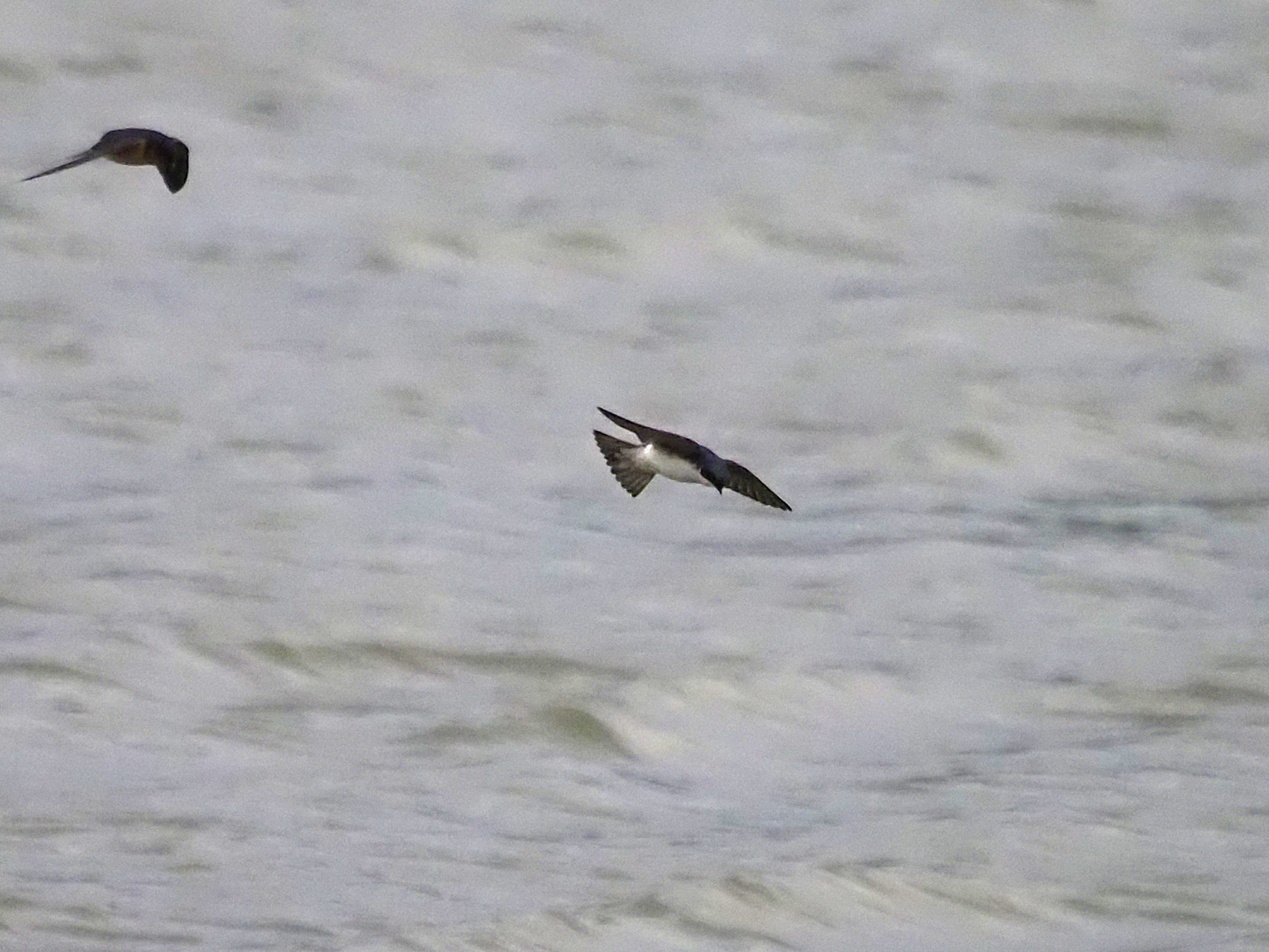
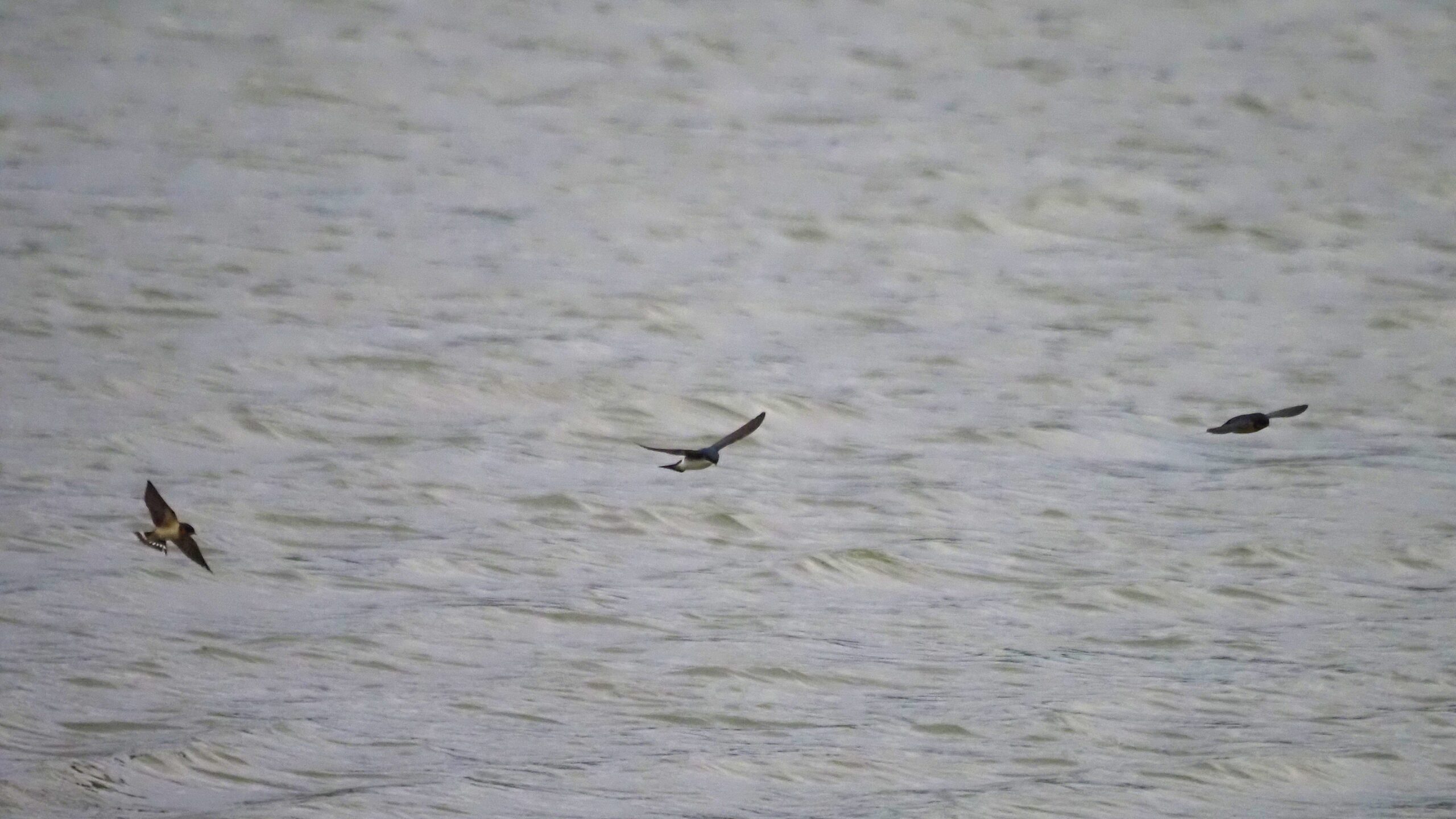
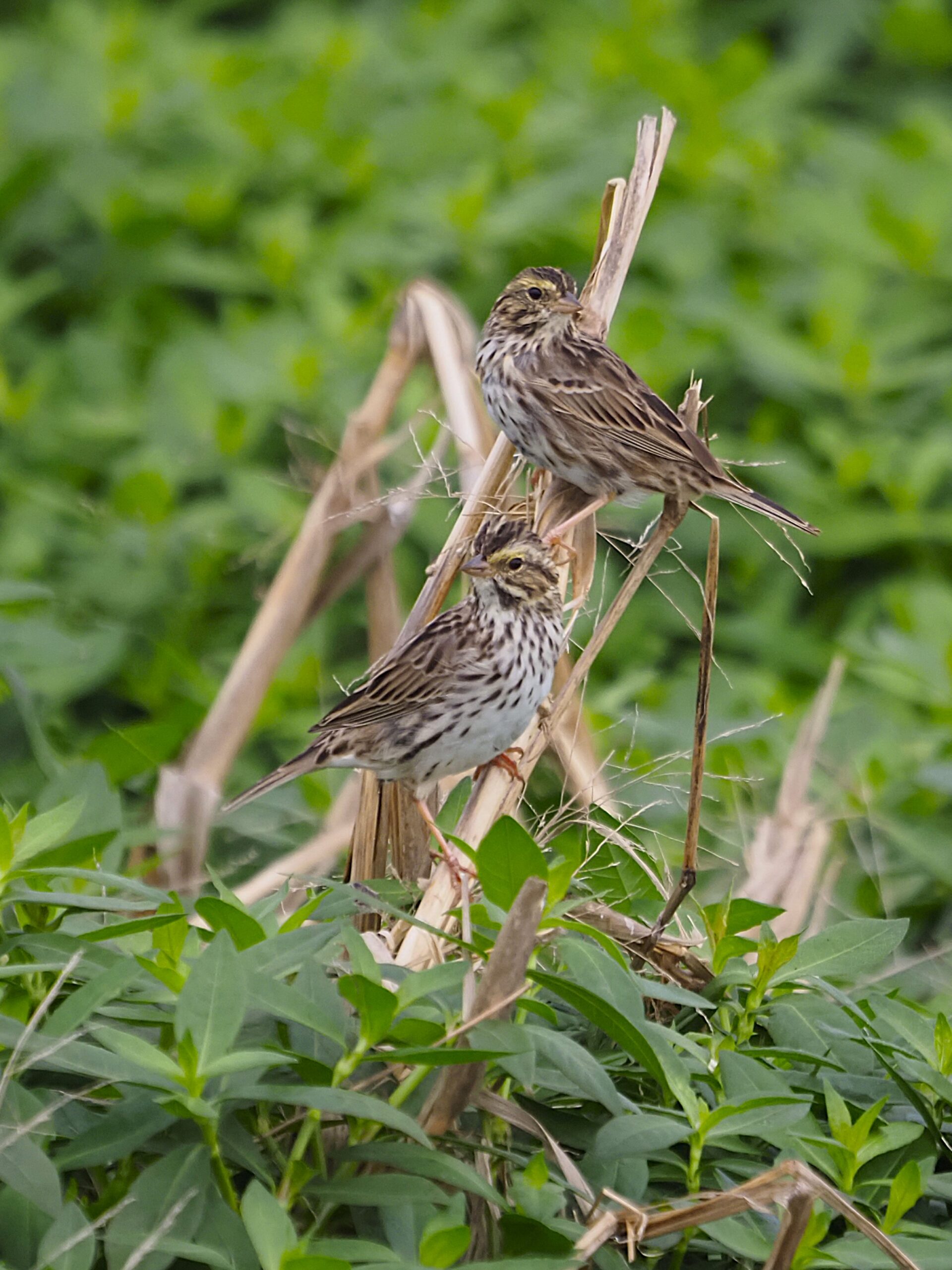
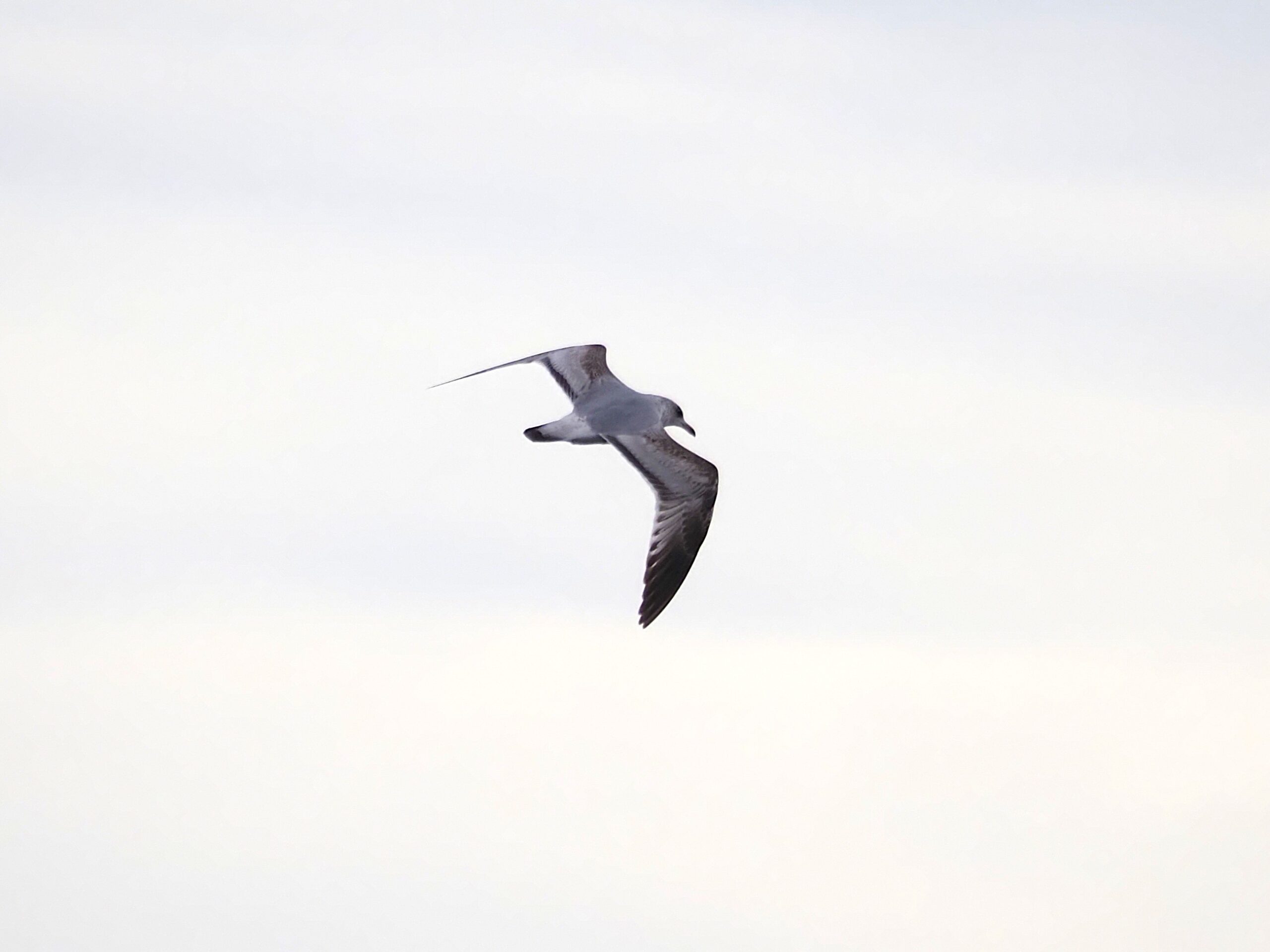
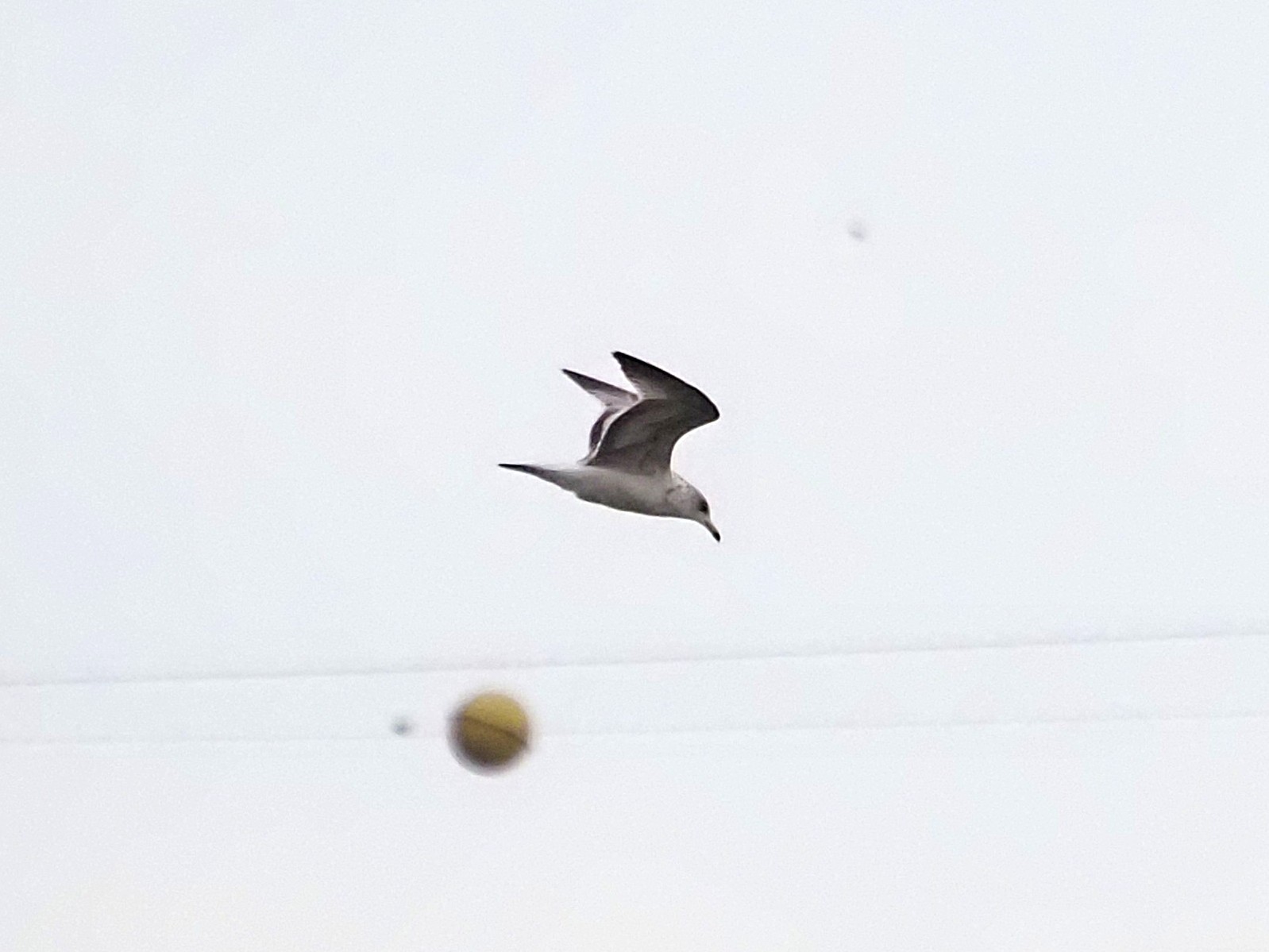
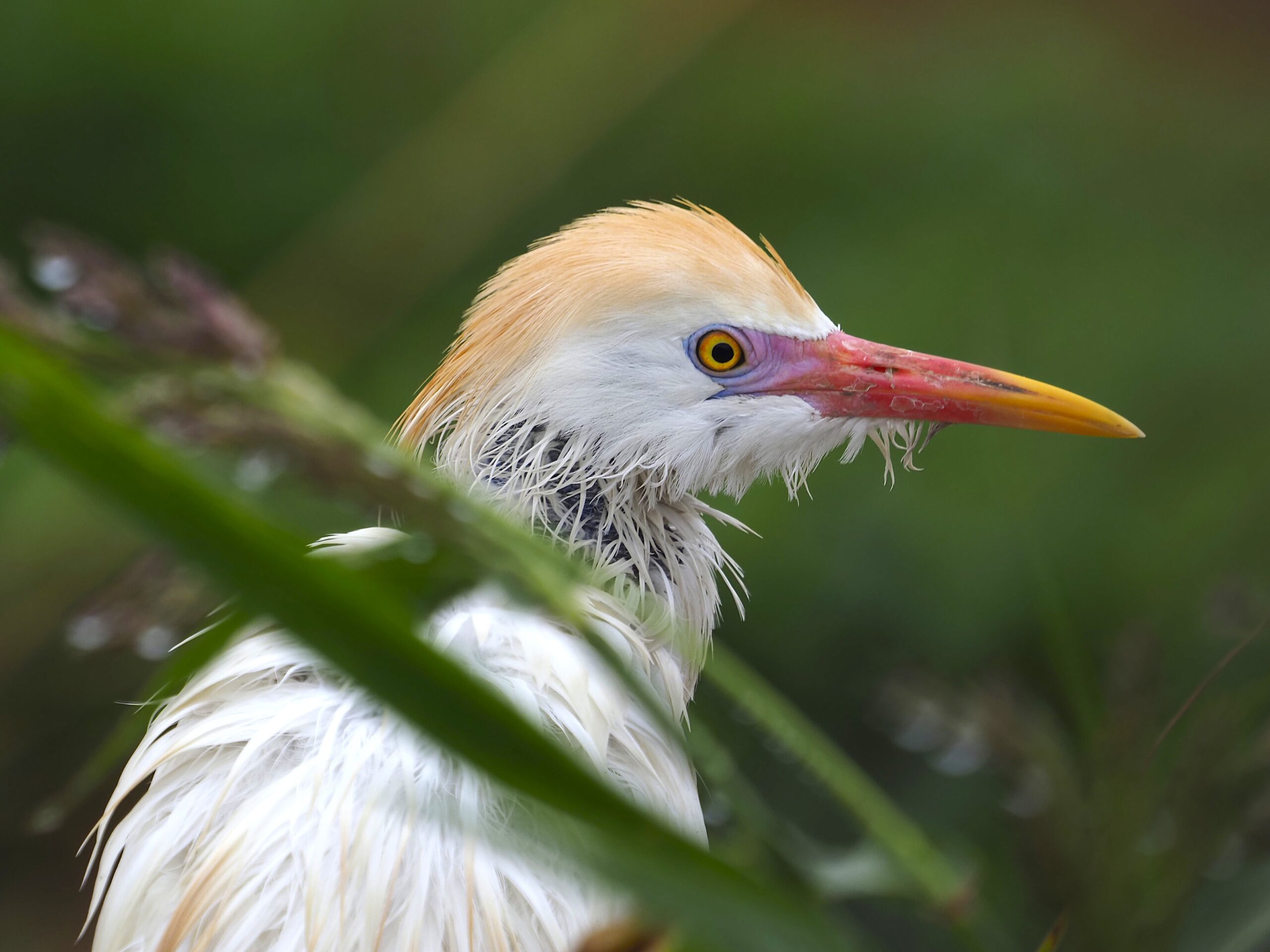
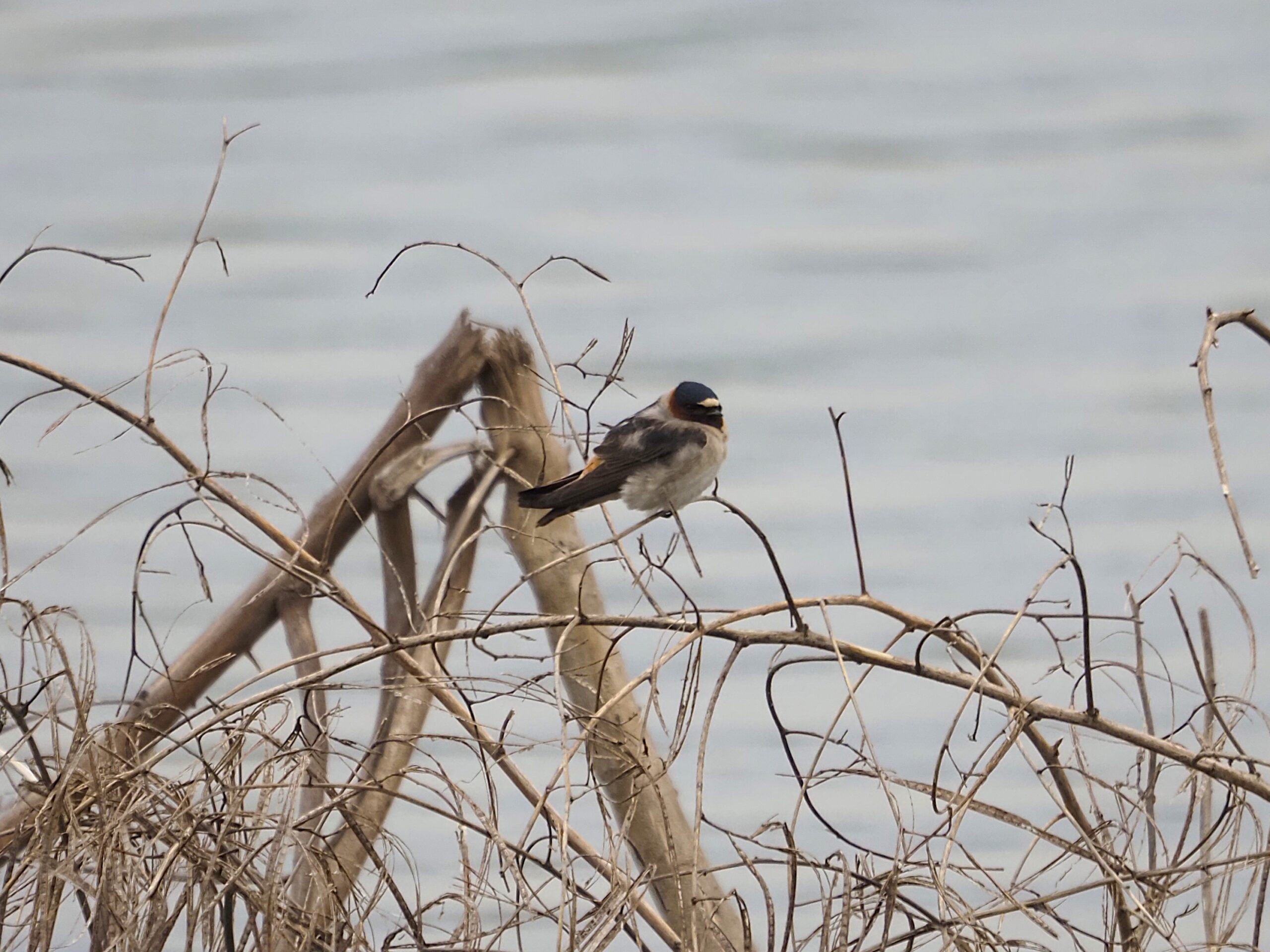
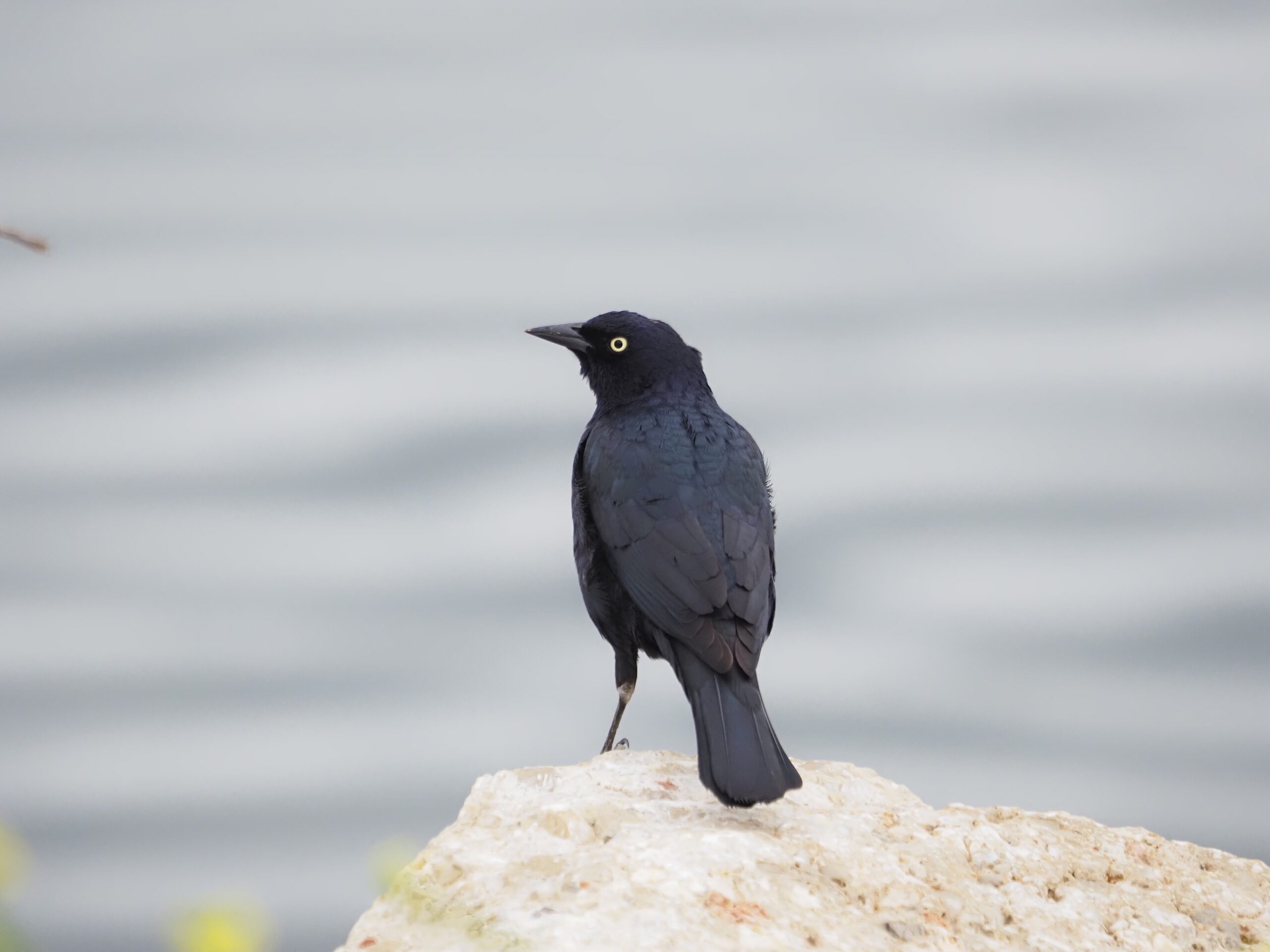
And finally, here are a few non-shorebirds we enjoyed during the FT, including Tree and Cliff Swallows, Western Cattle Egret in high breeding colors, Brewer’s Blackbird, Savannah Sparrow and Ring-billed Gull. This Ring-bill is going into its 1st Summer — we can see that the back and greater covert feathers have been replaced from its juvenile plumage.