Gull-billed Tern (“Mr Bill”)
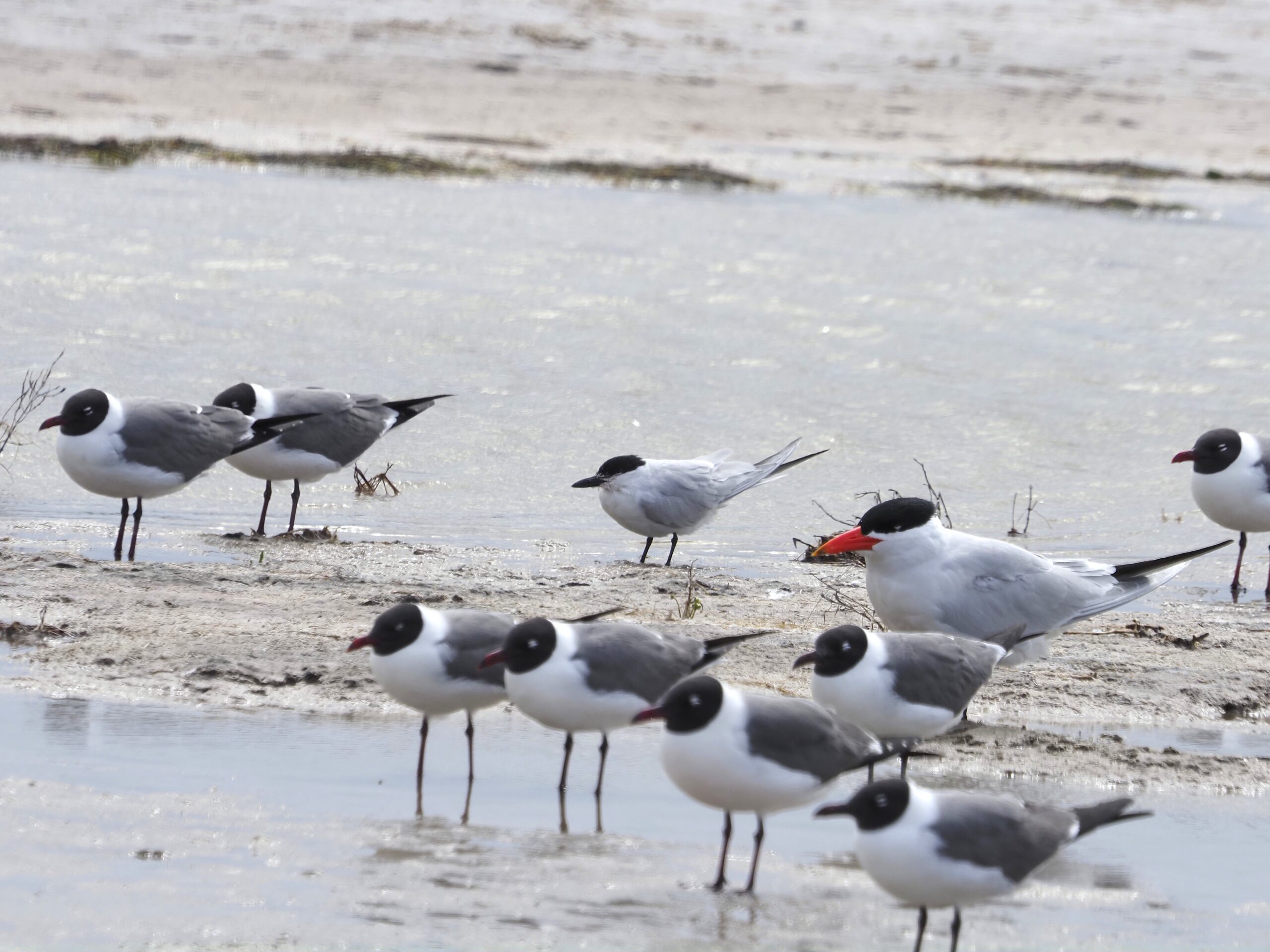
The Gull-billed Tern is much smaller than the Sandwich, but slightly larger than Forster’s and Common. It’s named for its bill which is short (for a tern), thick and black. The Gull-billed is uncommon, but regular on the Texas Coast where it frequents sand flats and grassy marshes year-round, swooping low to snatch prey from the water or ground surface.
In alternate plumage the Gull-billed shows a black head, with very little crest. It is whiter and has proportionately longer legs than other terns.




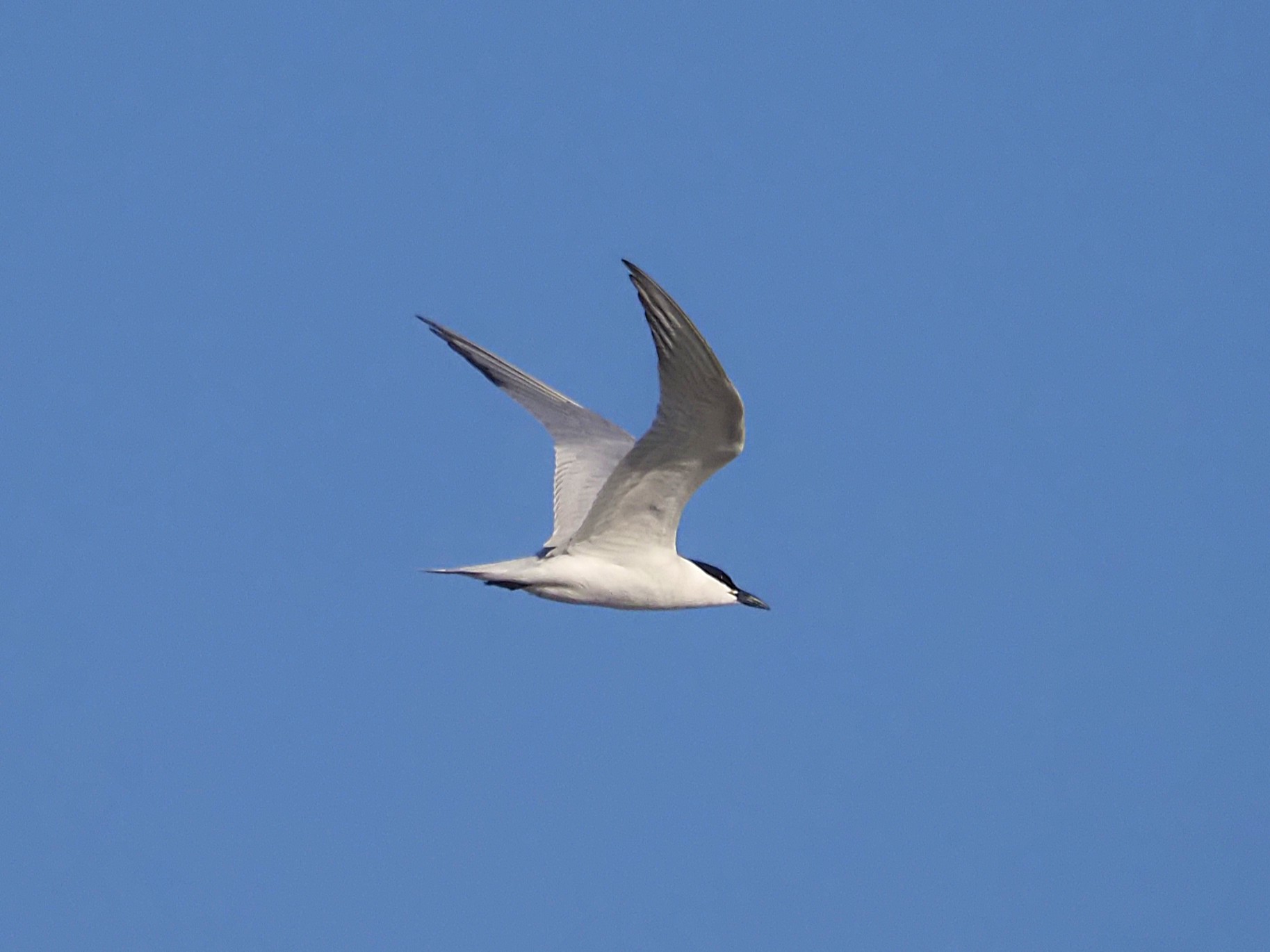
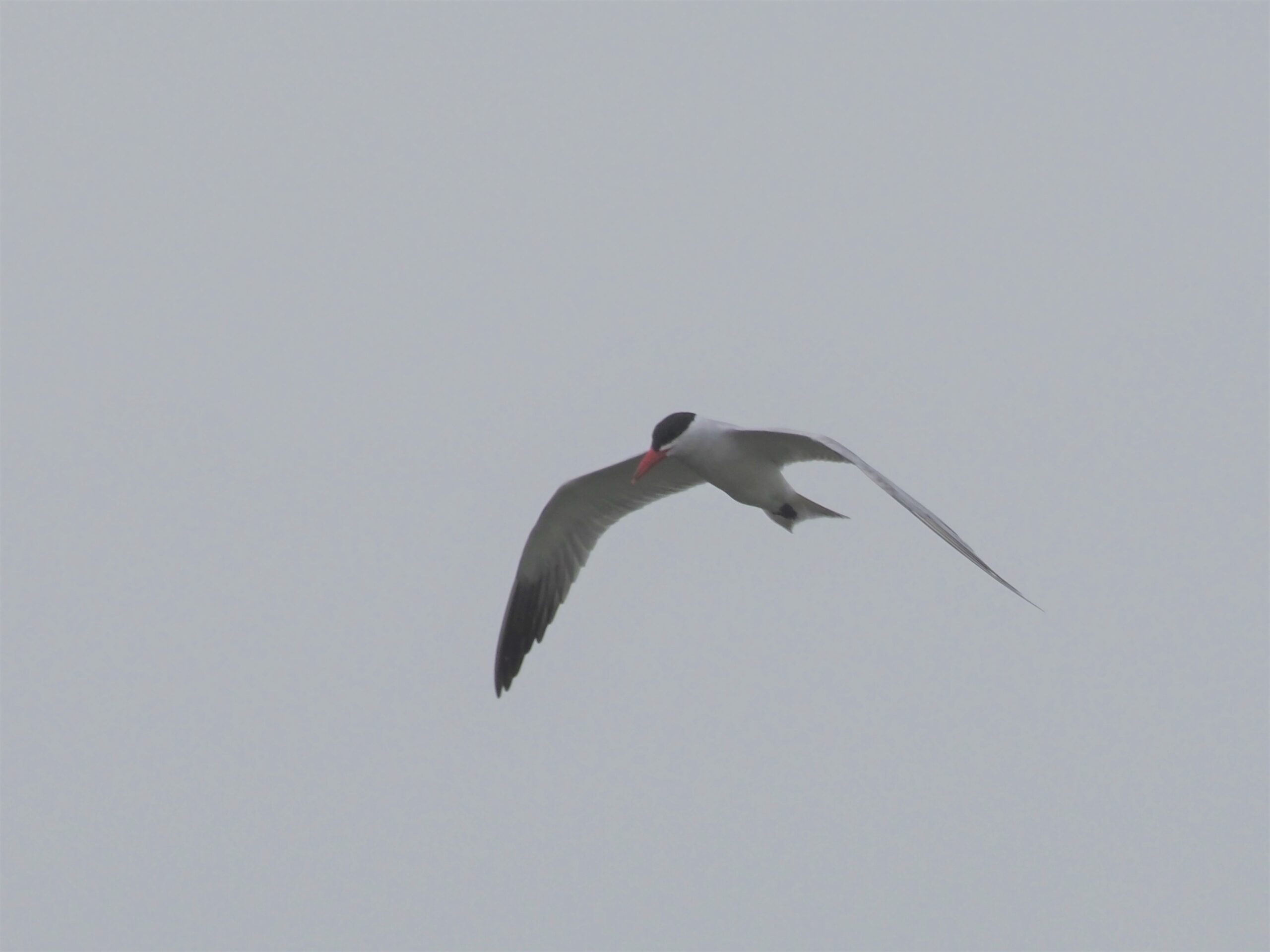
In flight the Gull-billed is pale backed, short-necked and shows a black stubby bill.

In alternate plumage the Gull-billed sports a spiffy black cap which hides the eye, and crips pale plumage elsewhere.


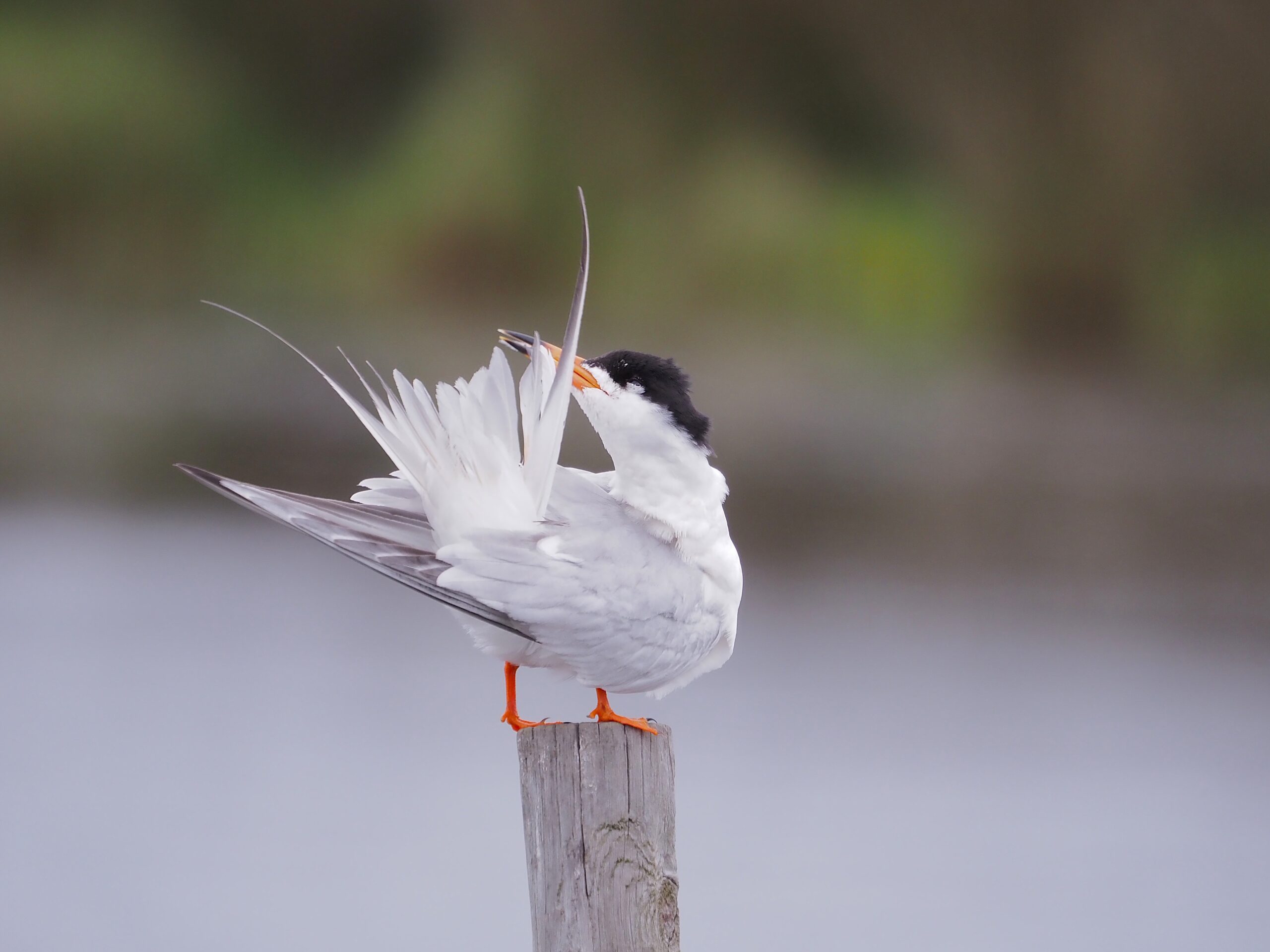
Forster’s Tern (“the Pirate”)
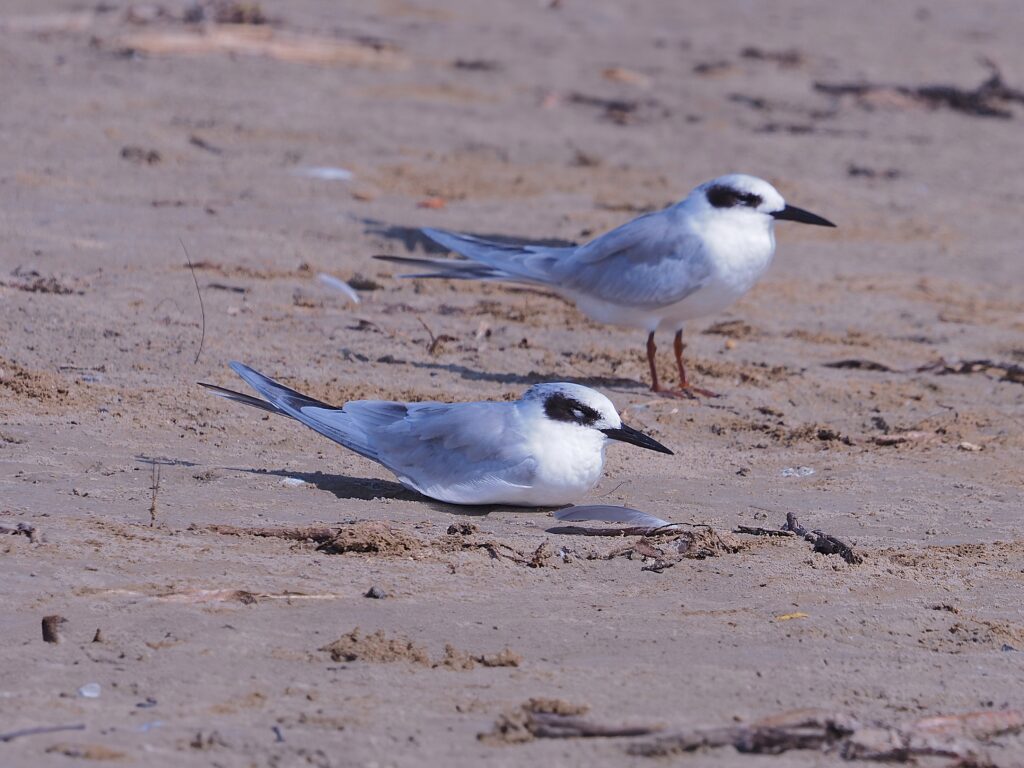
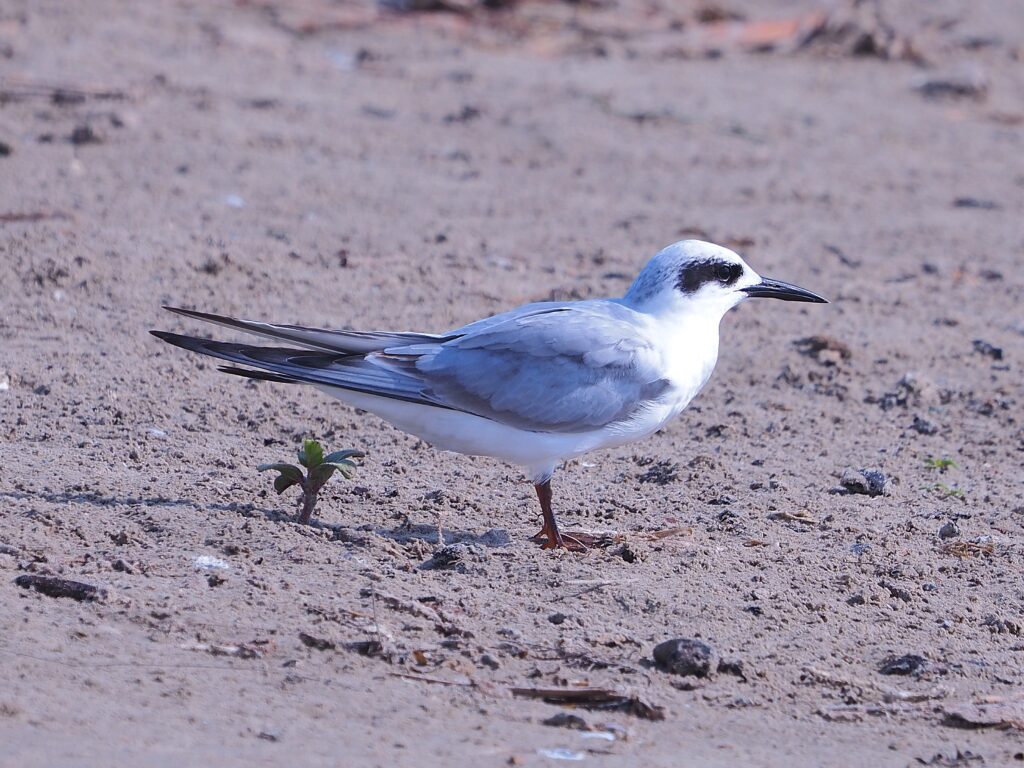
The Forster’s Tern is a year round denizen of the Texas Coast and is common in winter at inland lakes as well. I’ve dubbed it “the pirate” for the “eye-patch” it wears in basic plumage.
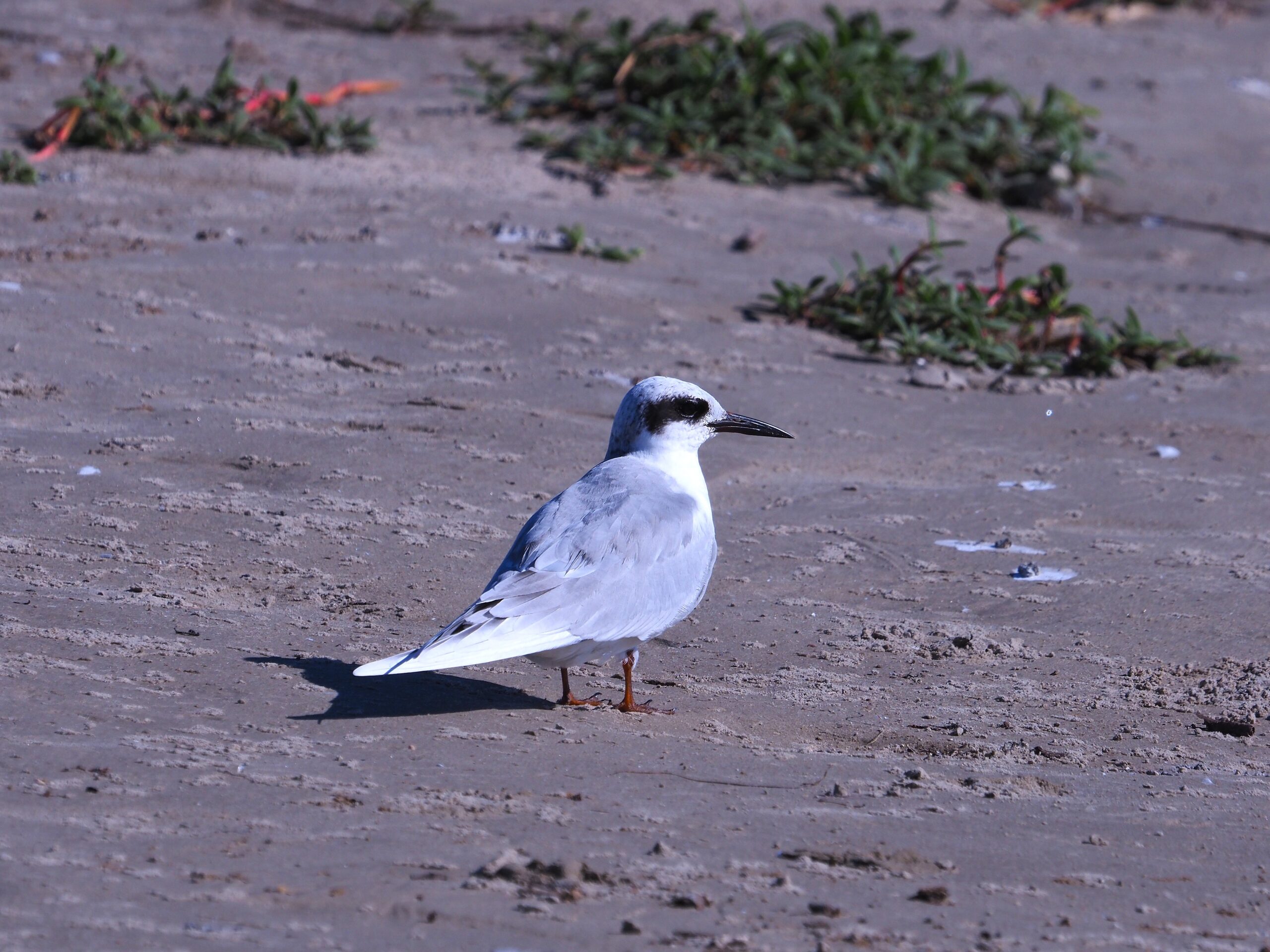
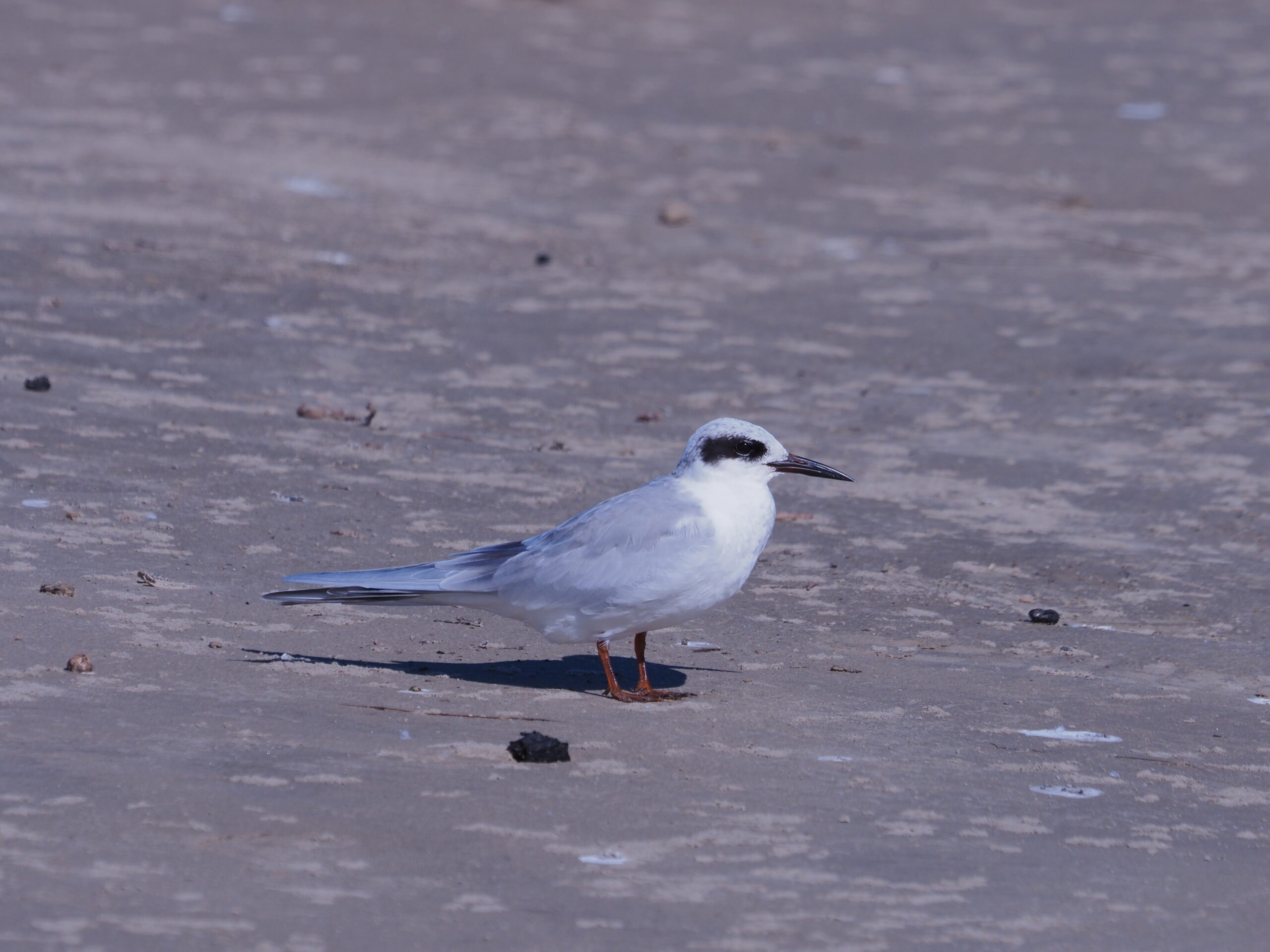
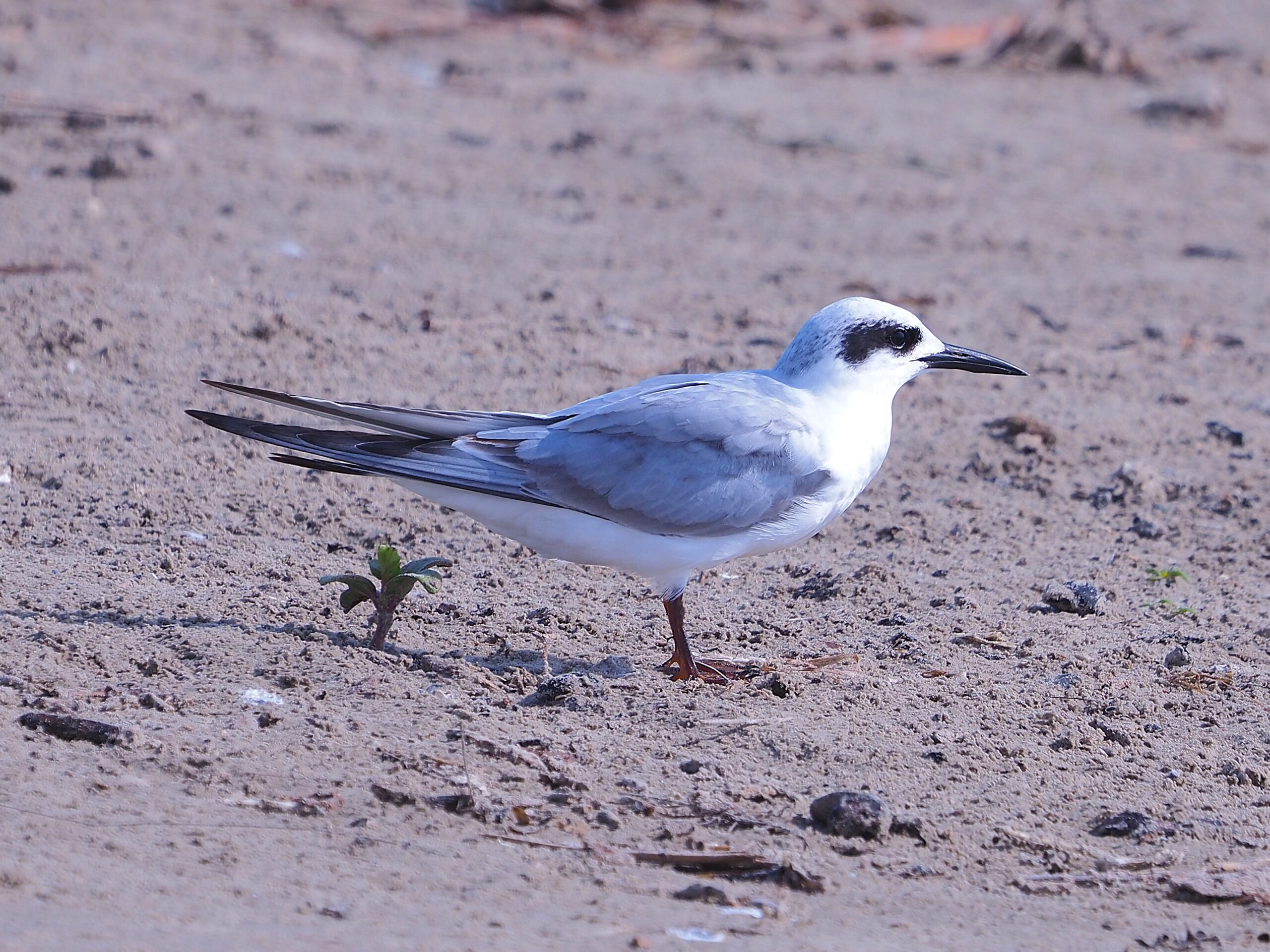

With its bright orange & black bill, orange legs, black cap and long streamer tail the Forster’s in alternate plumage is spectacular when seen well!! Note that the streamer tail usually extends past the primaries, if fully in-tact.




Common Tern (“common carpel”)
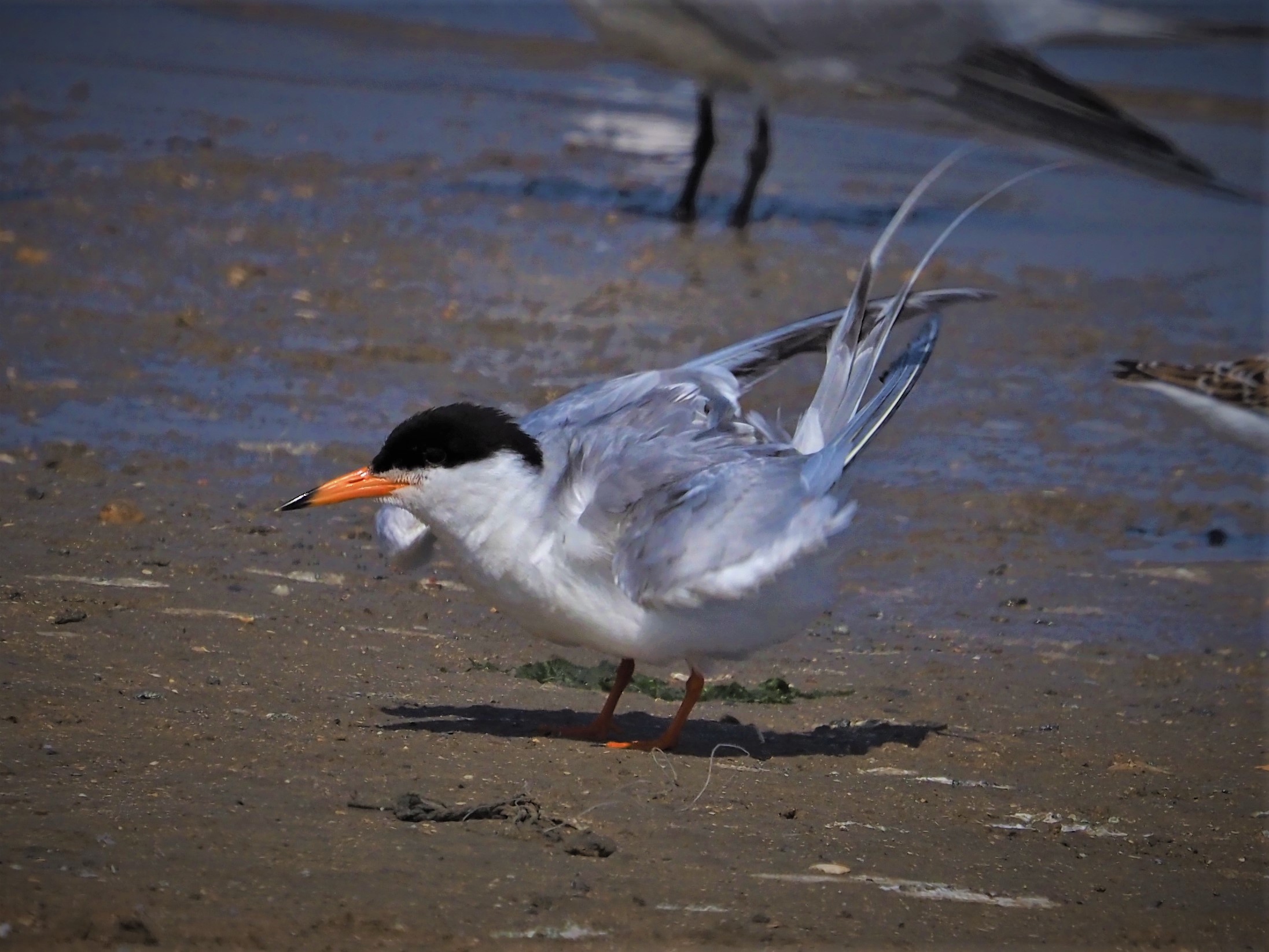
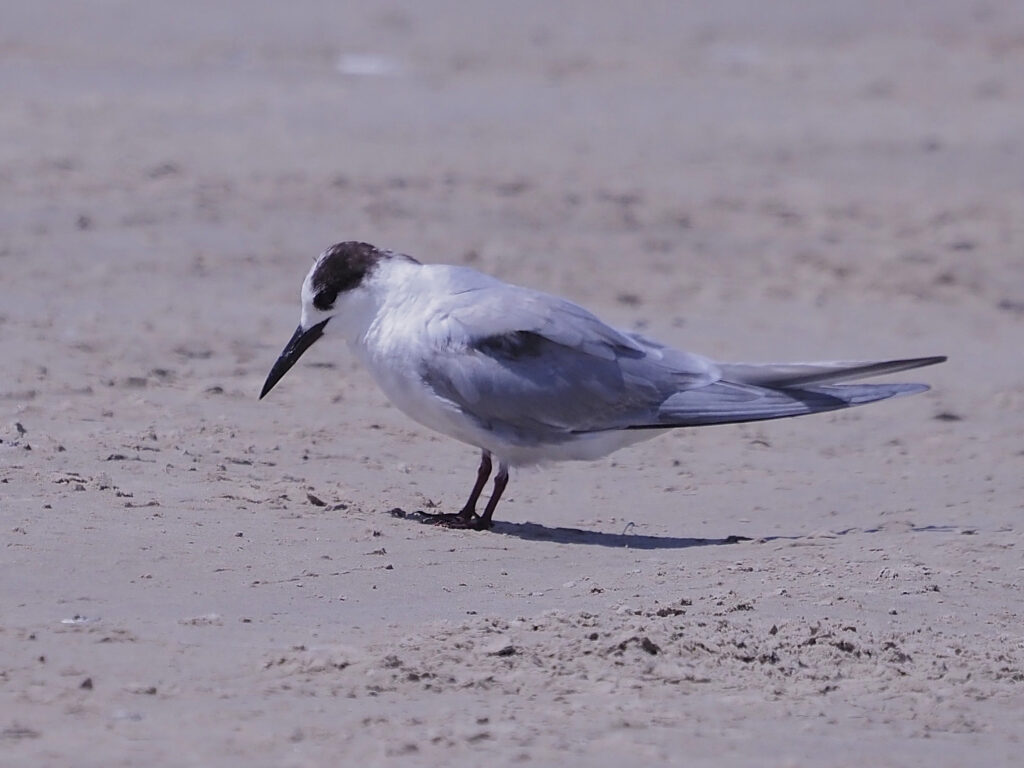
The Common Tern is a fall and spring migrant on the Texas Coast, and a few over-winter as well. At some locations during migration it can be the most numerous medium tern. I’m calling it the “Common Carpel” because in basic plumage it usually shows a dark carpel bar where the upper-wing bends into the body.
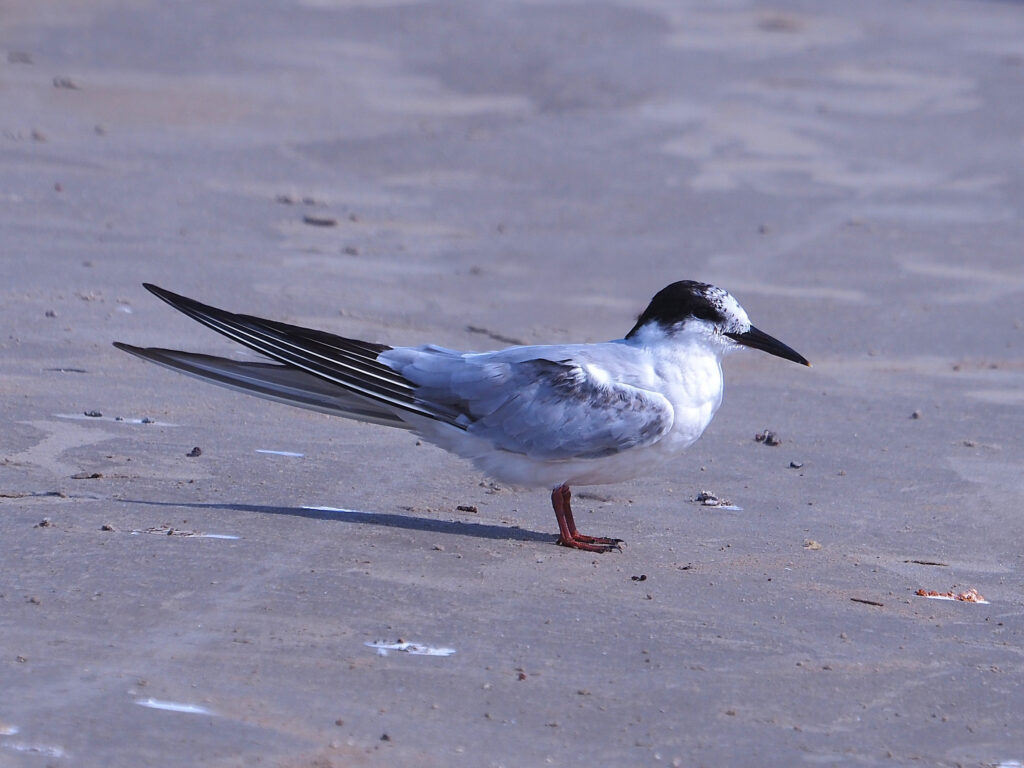
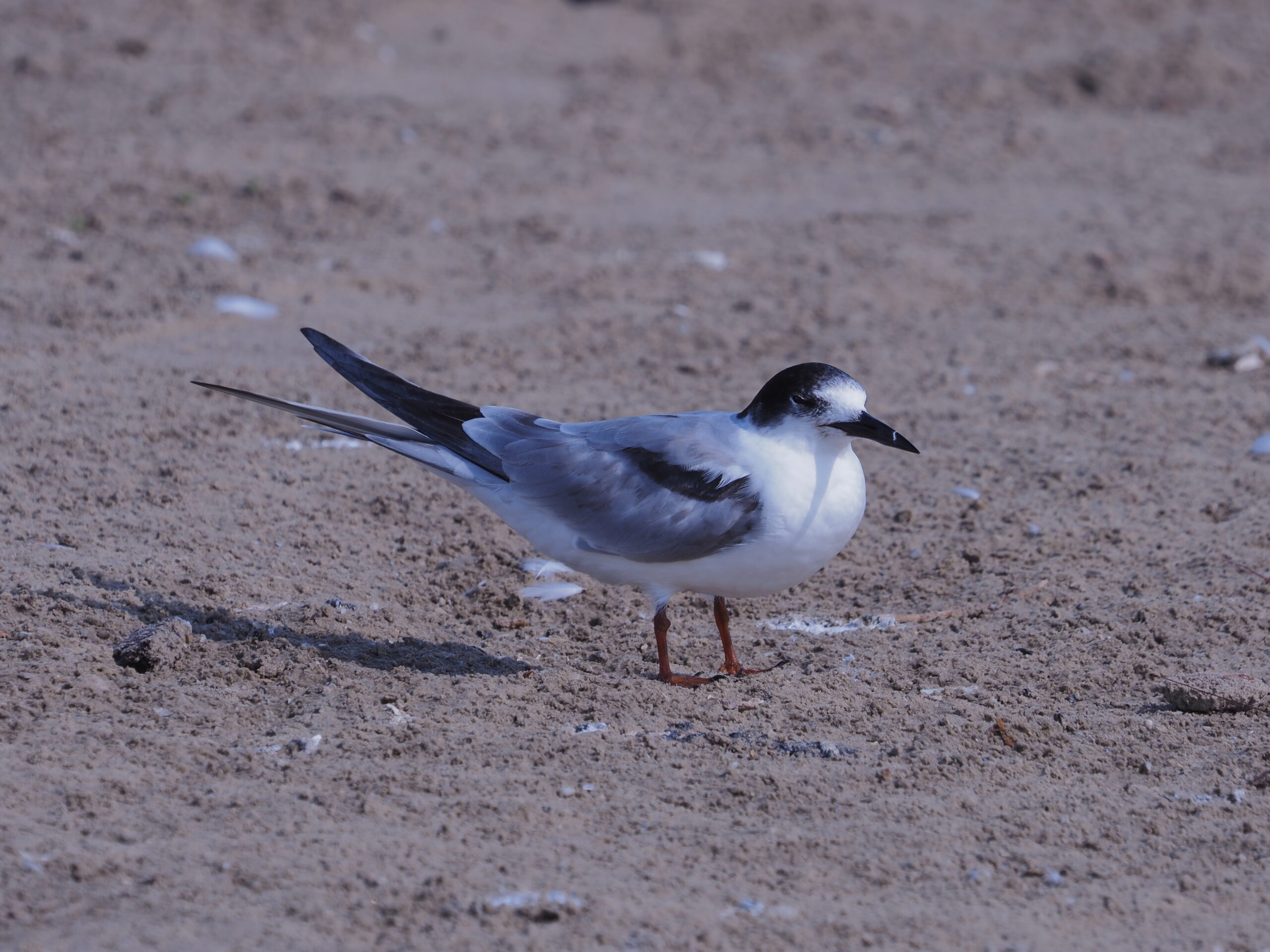


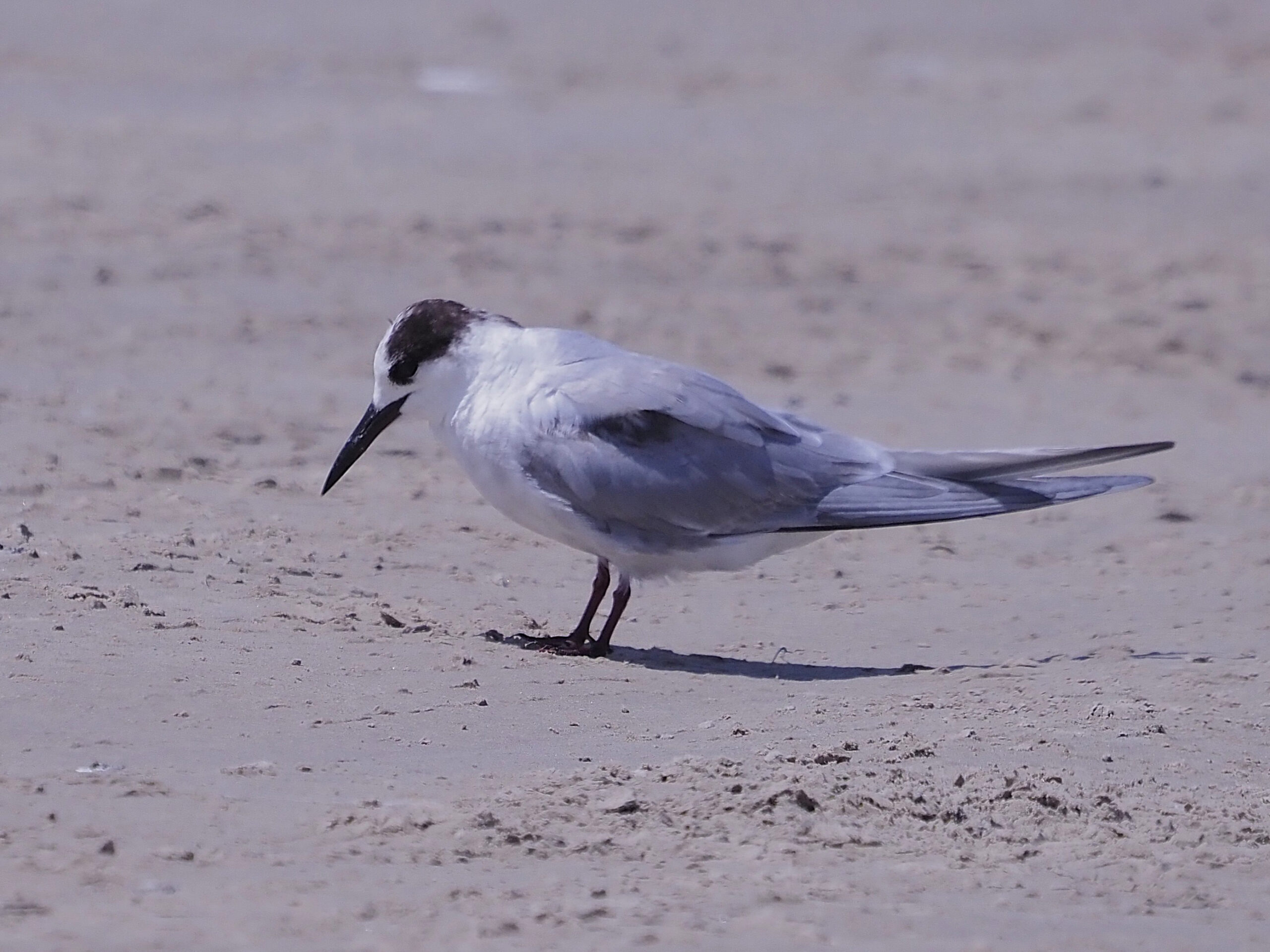
In alternate plumage the Common has a black cap, red & black-tipped bill (sometimes appears black & black-tipped) and a grayish body.
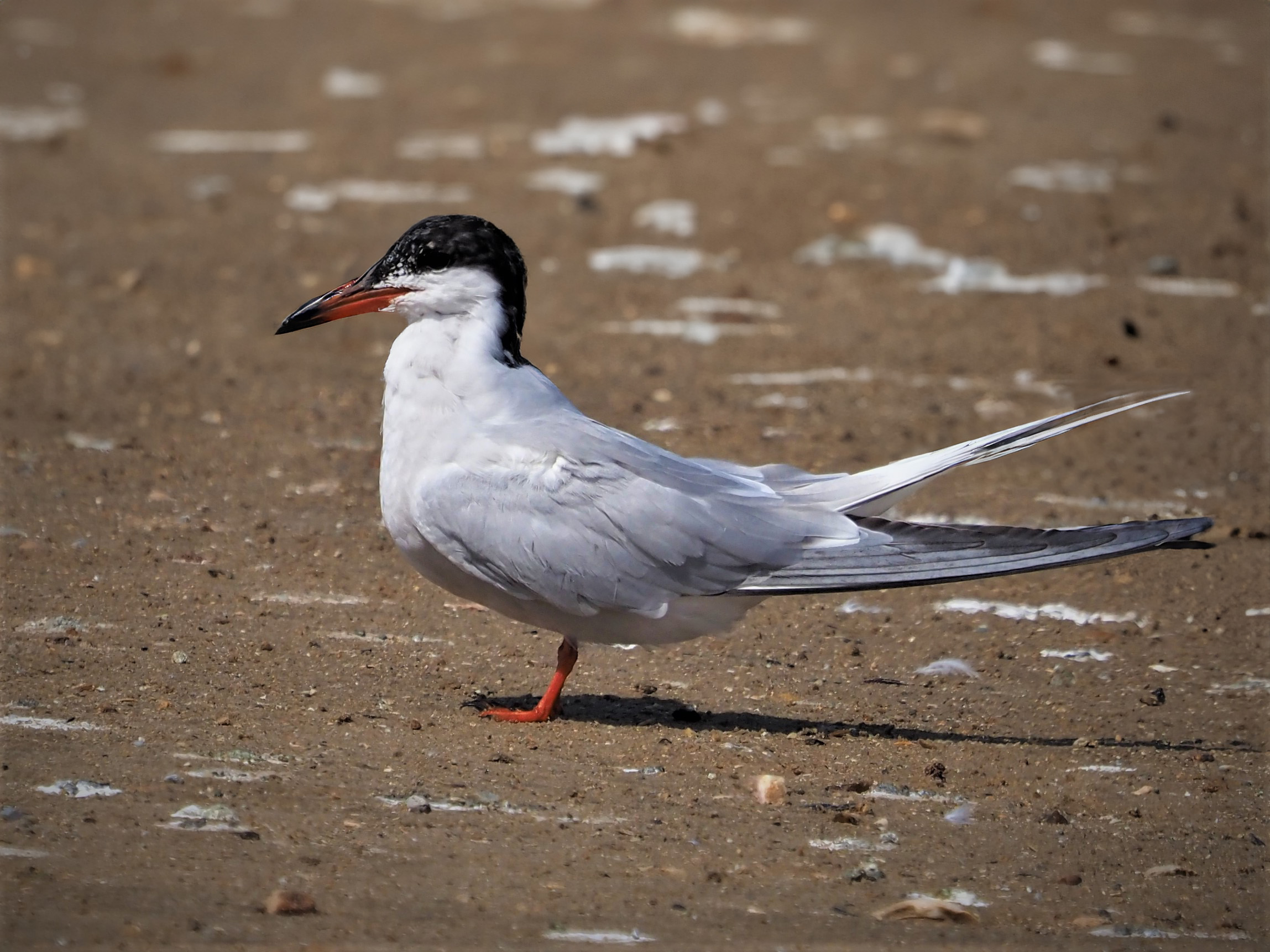
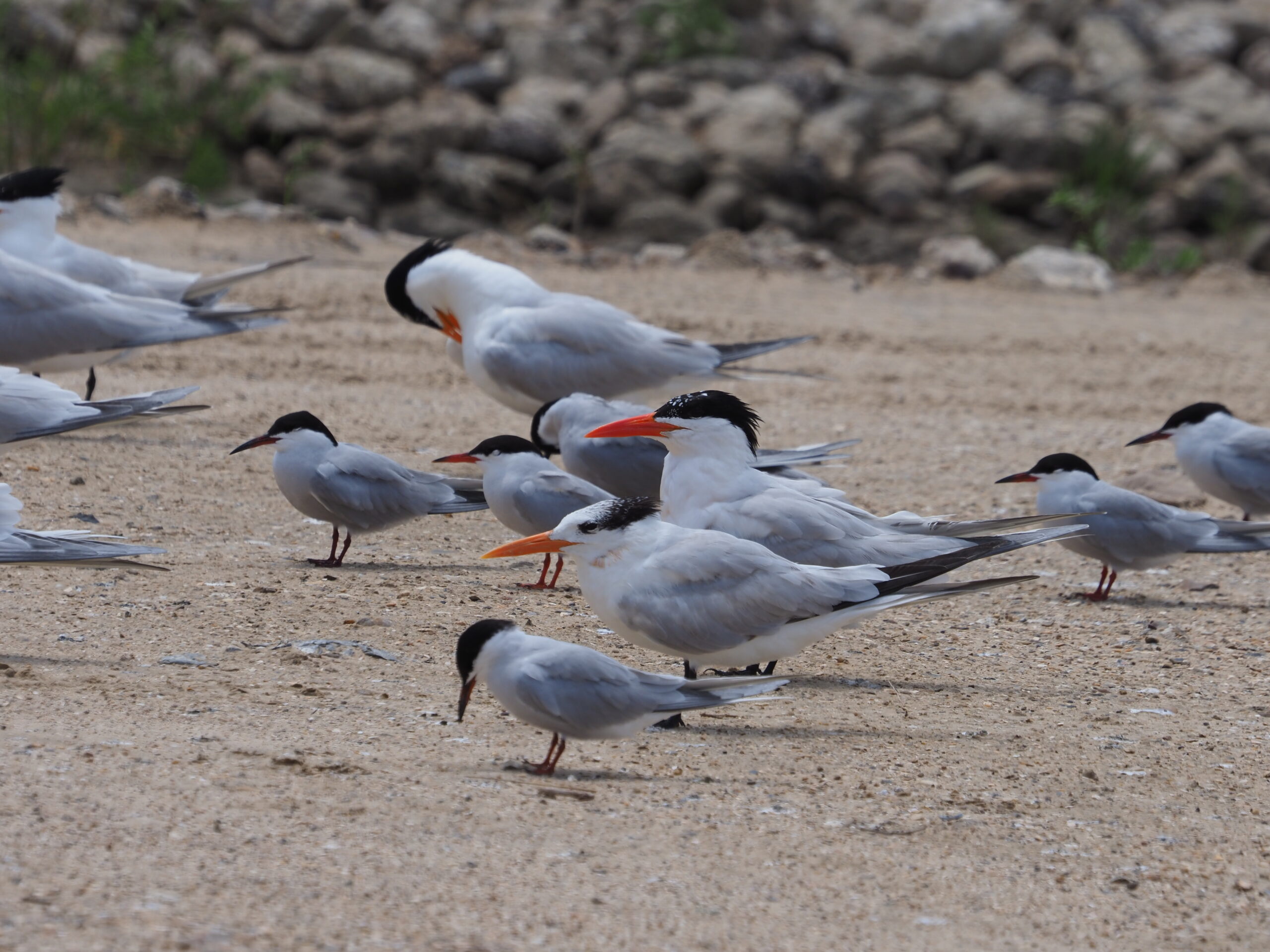

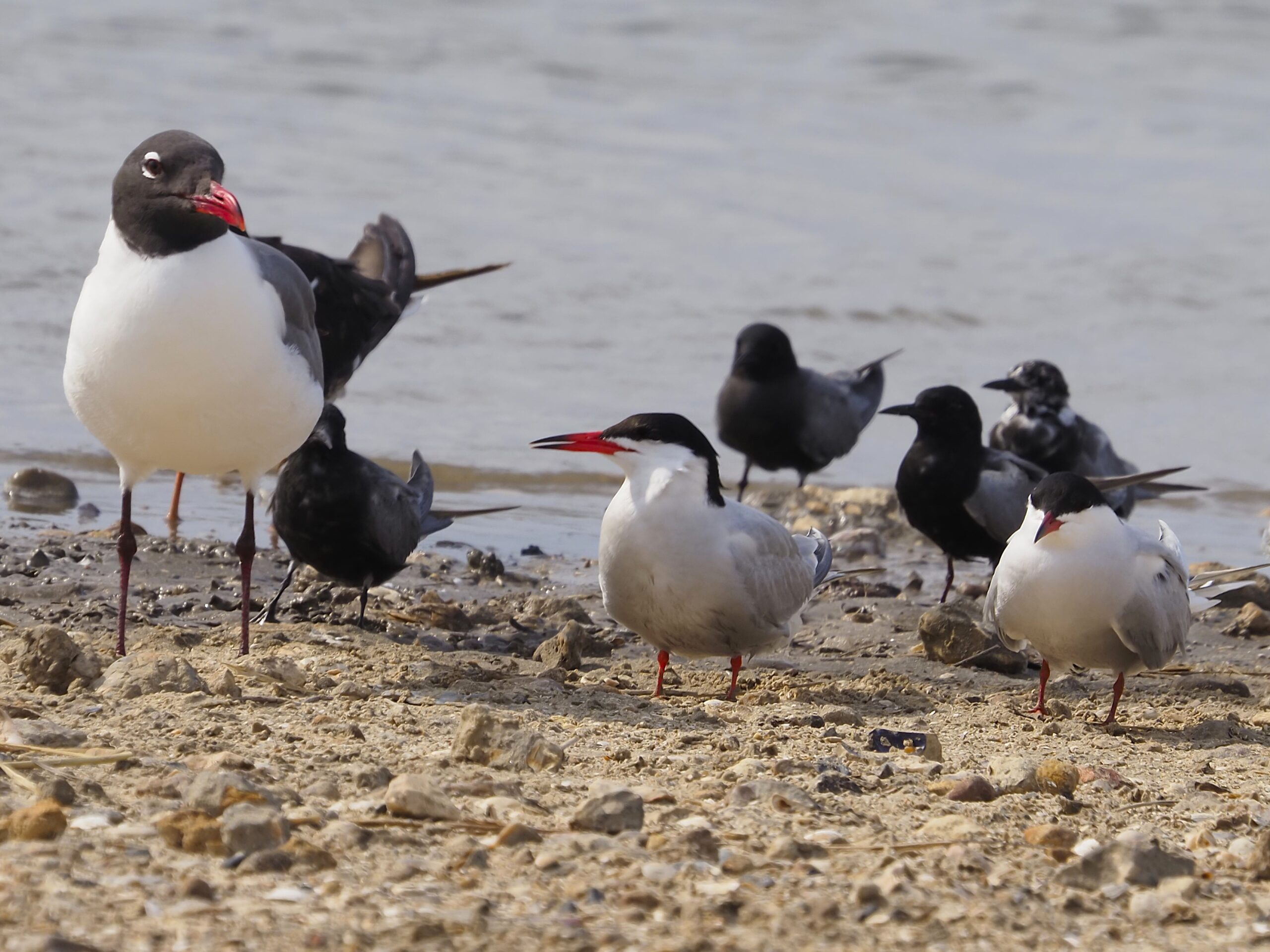


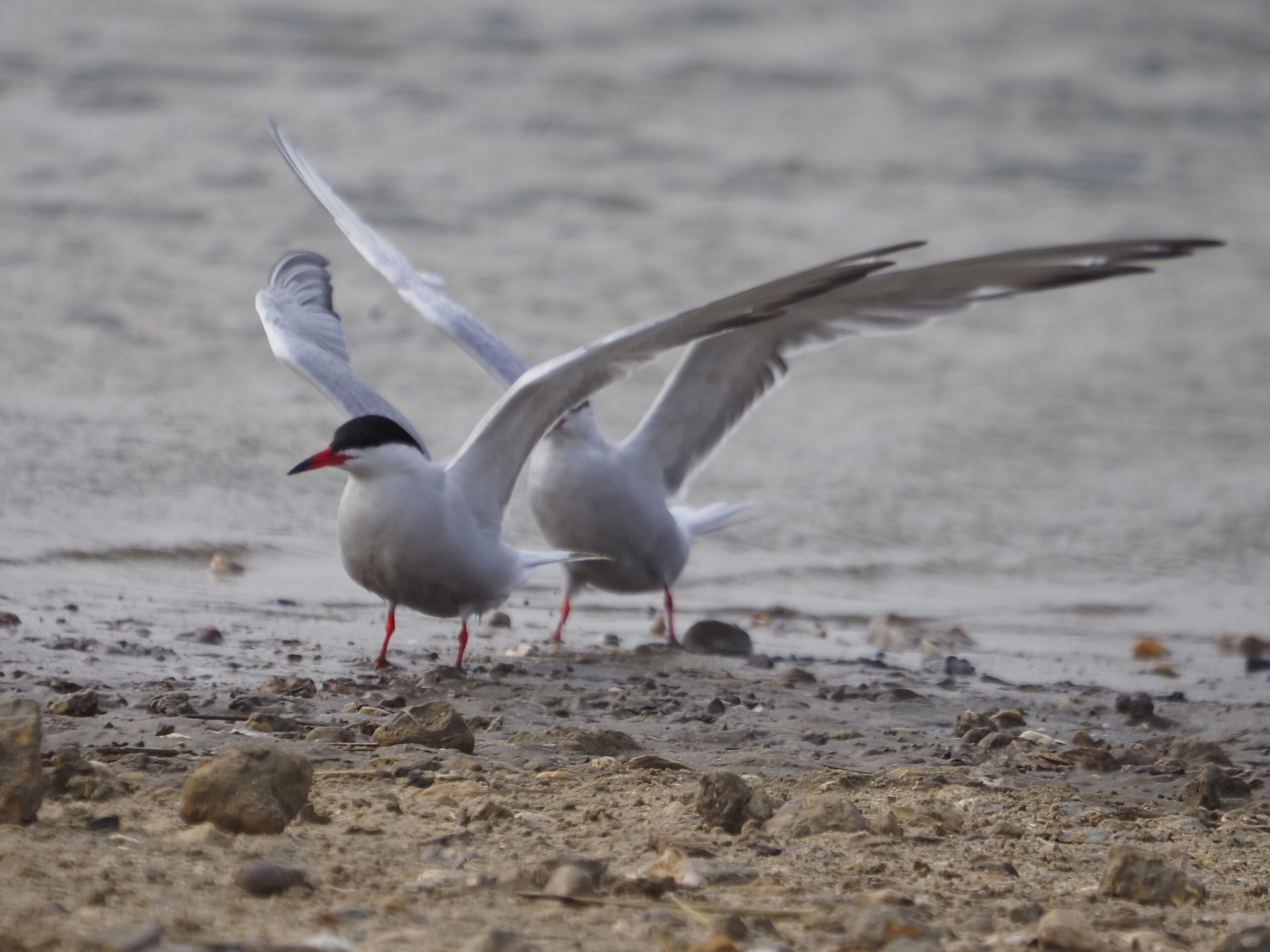
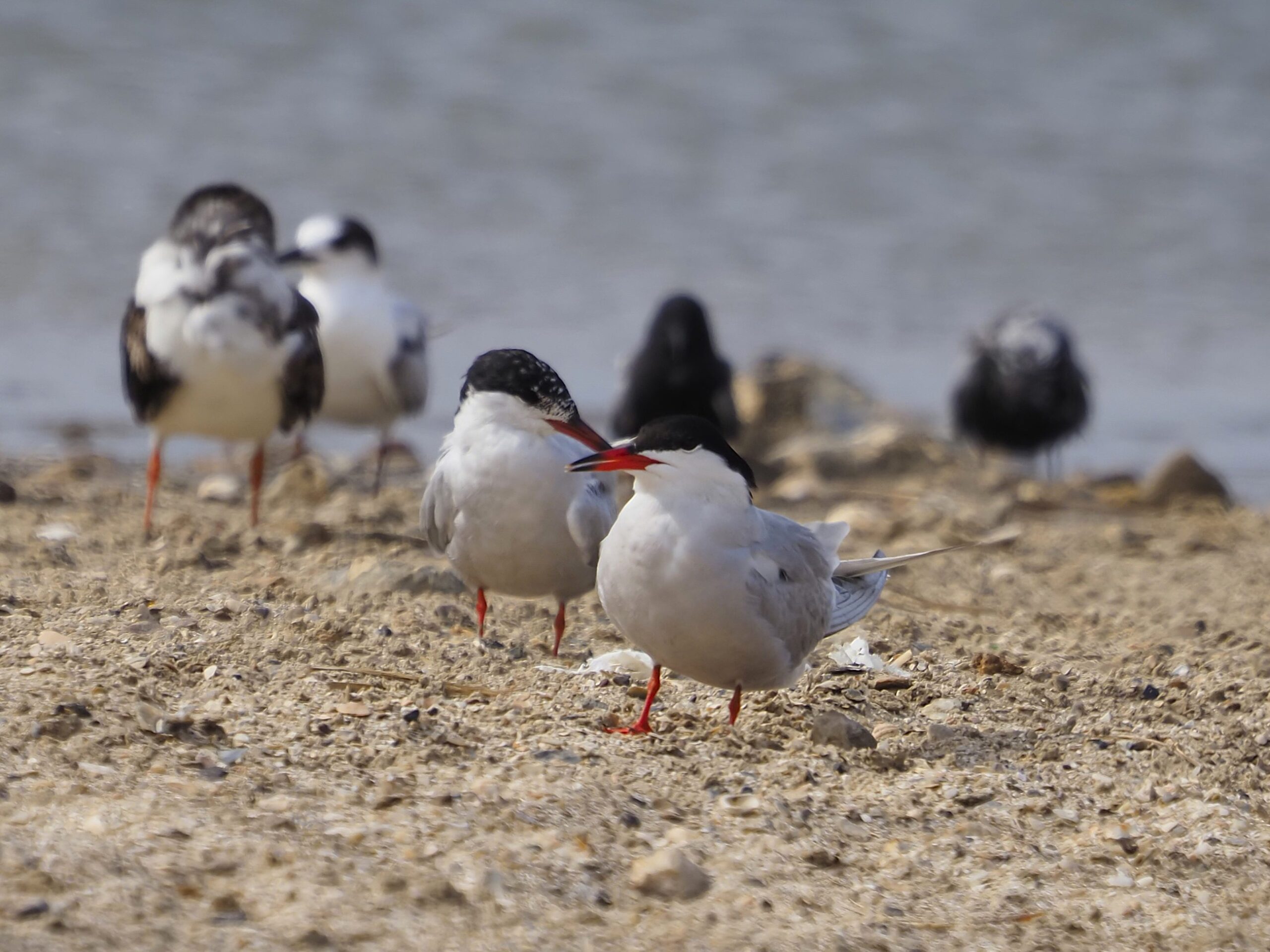
With good looks, the Common may be identified in flight based on its black cap, gray body, black-appearing bill, shorter tail and, depending on season, black carpel bars.

Forster’s Vs Common
The Forster’s and Common are the 2 most difficult terns to distinguish. It’s important to consider the time of year and which plumage the bird is in when deciding between these two.
In basic plumage the two are readily separated by the black on the head and nape. In basic plumage the Forster’s sports an “eye-patch” — dark feathers which surround the eye, but do not continue on the hind-crown and nape. While on the Common in basic plumage the black includes the hind-crown and nape.
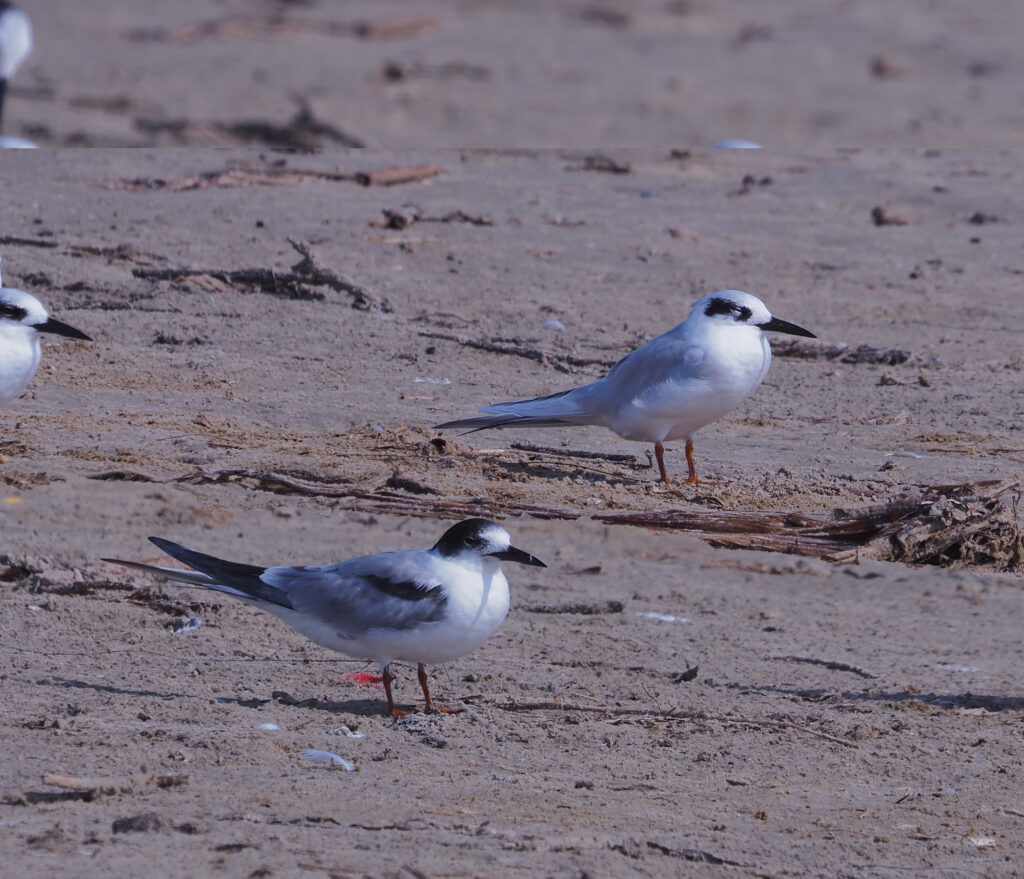
The two are can be more difficult to identify in alternate plumage.

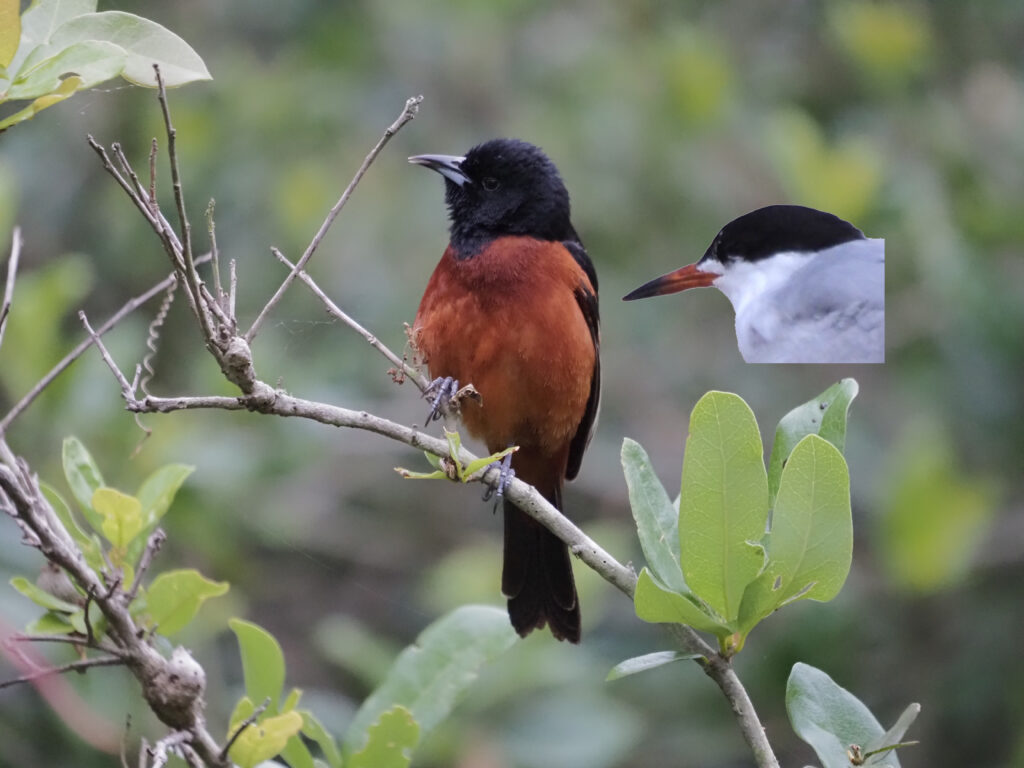
The bill color on alternate terns can be ambiguous, but in general the Forster’s is orange (analogous to the Baltimore Oriole), while I call the bill color of the Common “burnt-red” (analogous to the Orchard Oriole). When transitioning from basic to alternate the Forster’s bill can also appear burnt-red, so care must be taken with this field mark.



Forster’s vs Common — In-Flight
At inland lakes in winter the Forster’s is the default tern of any size. In basic the “pirate eye-patch” is often visible. The 2-toned appearance of the upper wings, with grayer secondaries and tertials and paler primaries is often cited as an in-flight fieldmark, however, I find this to often be absent or to be difficult to see on a distant, flying bird. So I consider the “pirate eye-patch” to be the more reliable field mark for the Forster’s in basic plumage.




A medium tern in basic with a black hind-crown & nape can be safely identified as a Common. (No photos as yet).
In alternate plumage the Common usually shows more black in the primaries.