
As indicated in the Swallows Summary Table, the swallows of North America can be identified in 3 groups based on their coloration: rusty swallows, drab swallows and green swallows.
Rusty Swallows
The rusty swallows are the Barn Swallow, Cliff Swallow and Cave Swallow. Each has an underlying rustiness on the head, rump or undersides. Although the amount of rustiness varies individually, these species are never as bright white as some of the other swallows.
Barn Swallow

The Barn is present in most of North America during the summer months. The rustiness is mostly confined to the undersides. Although some individuals can have cream-colored undersides, they are never as stark white as the Tree or Bank Swallows. In the fall it is not uncommon to see young molting birds with patches of white on the back.

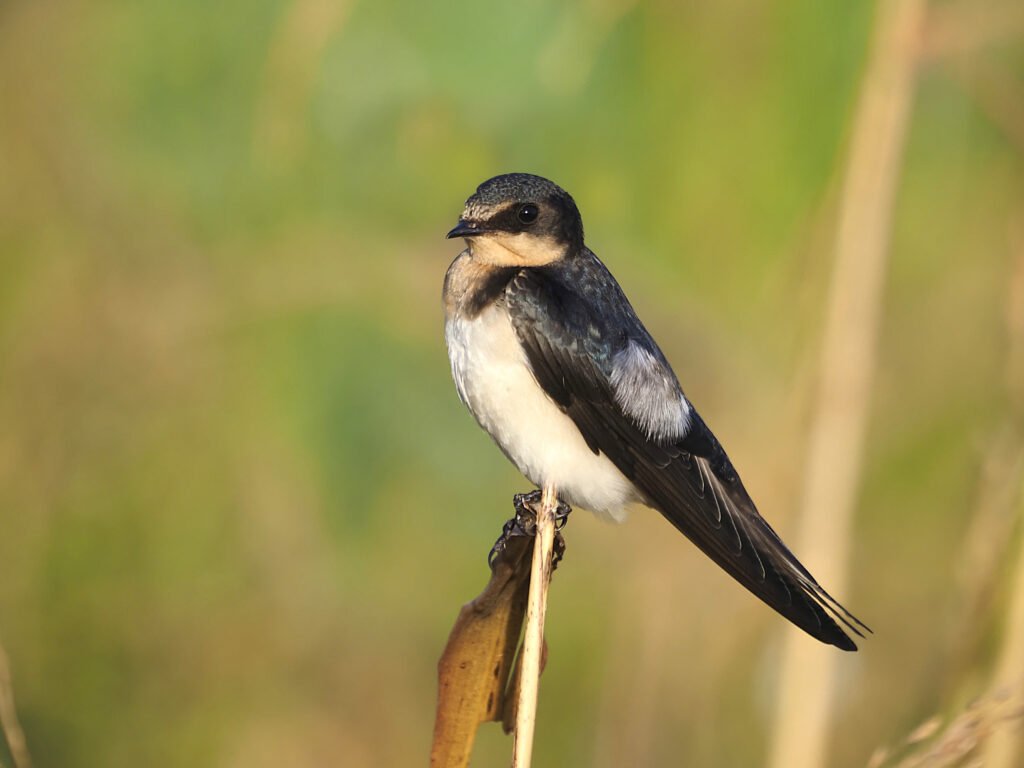
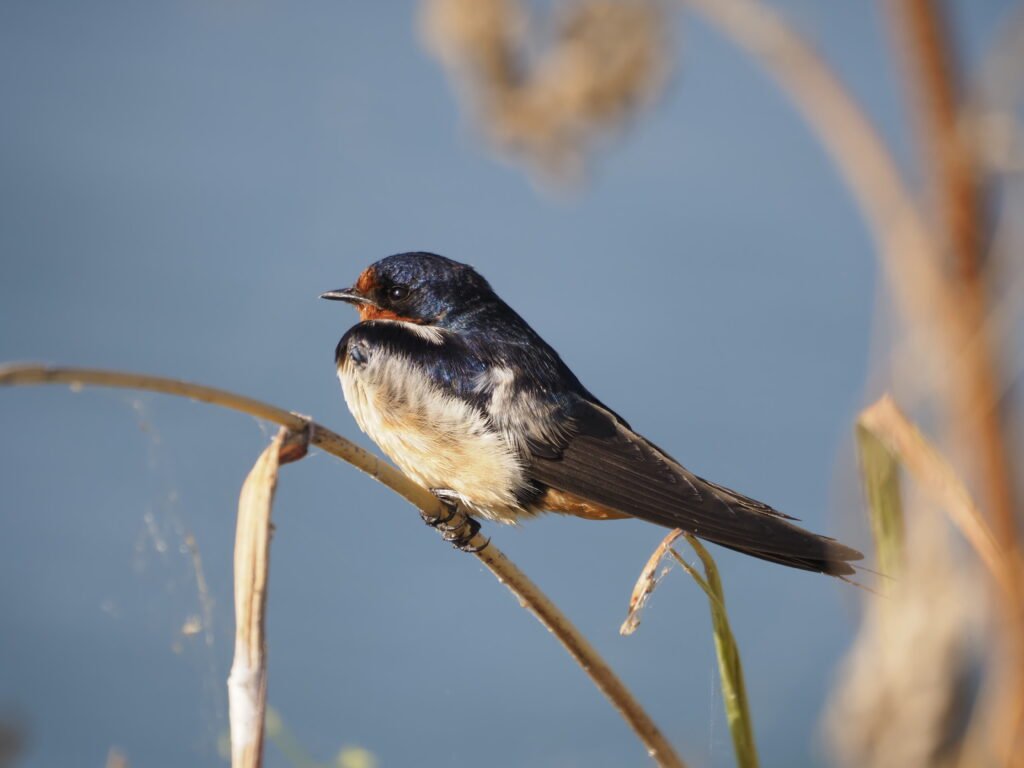



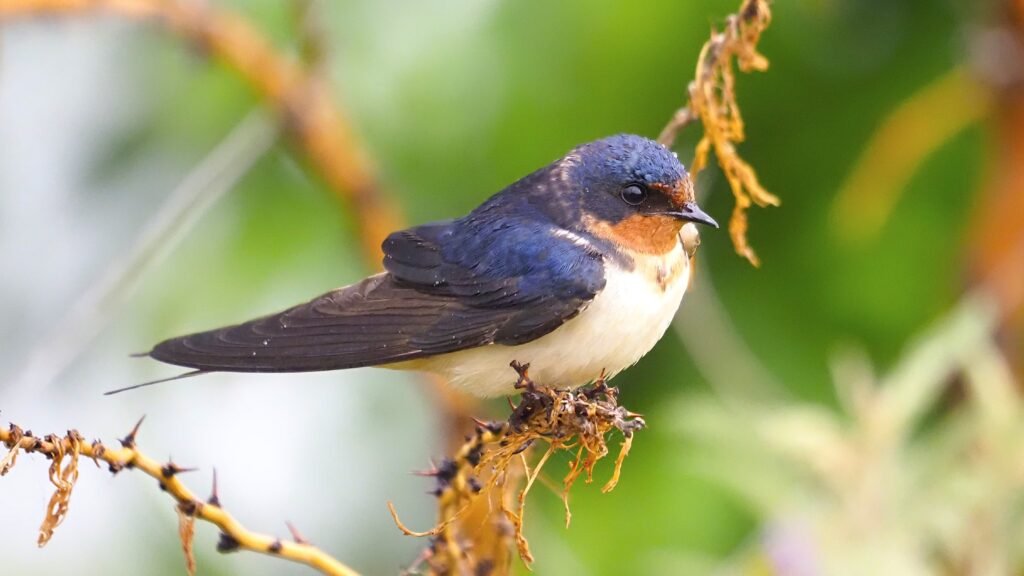
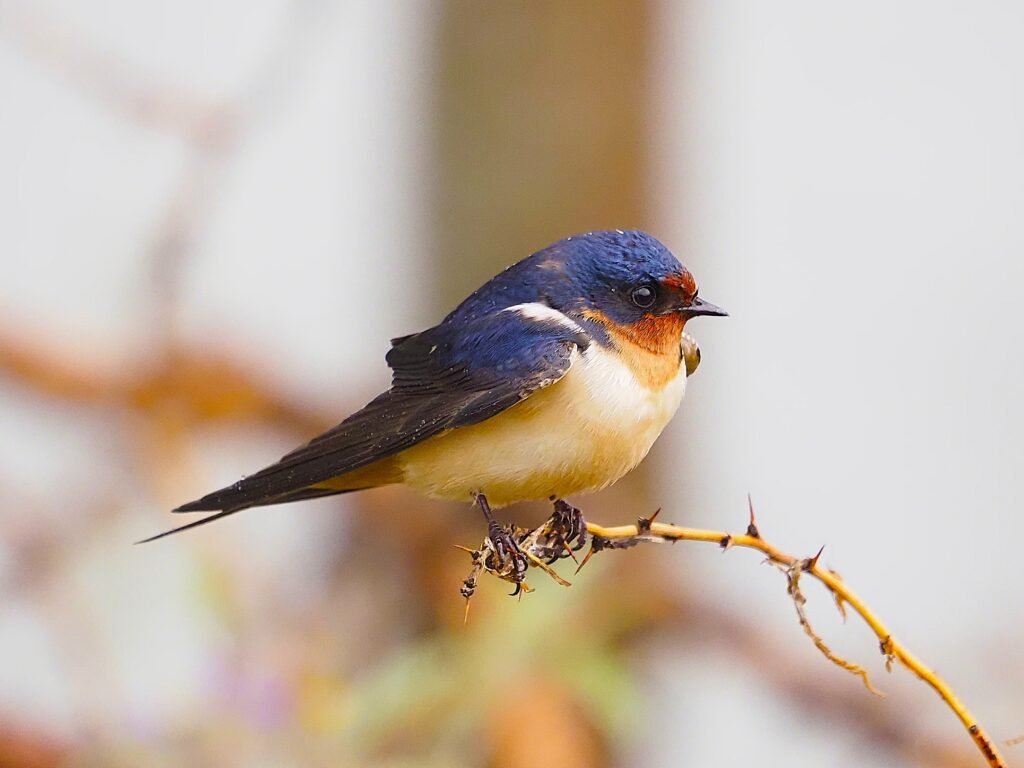
The Barn is identified in flight by its long, forked tail and bluish-black upper parts. White spots on the spread tail can be seen on adults.


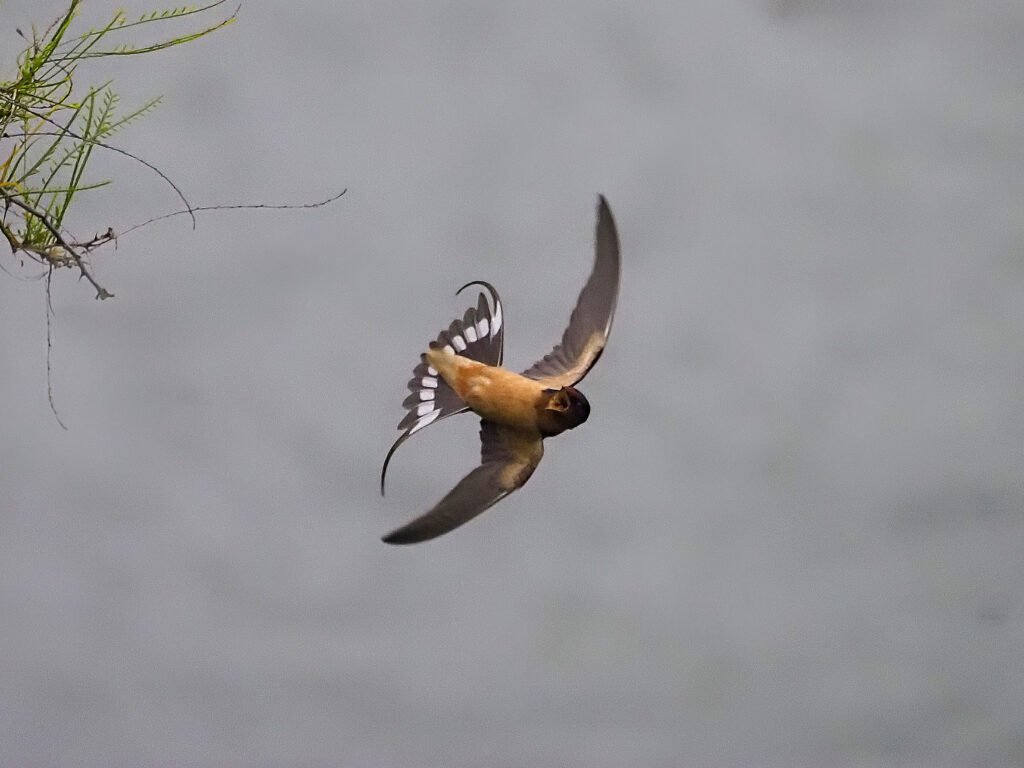

Leucistic Barn Swallow
This leucistic Barn was present for a few days at Hornsby in July of 2023.


Cliff Swallow
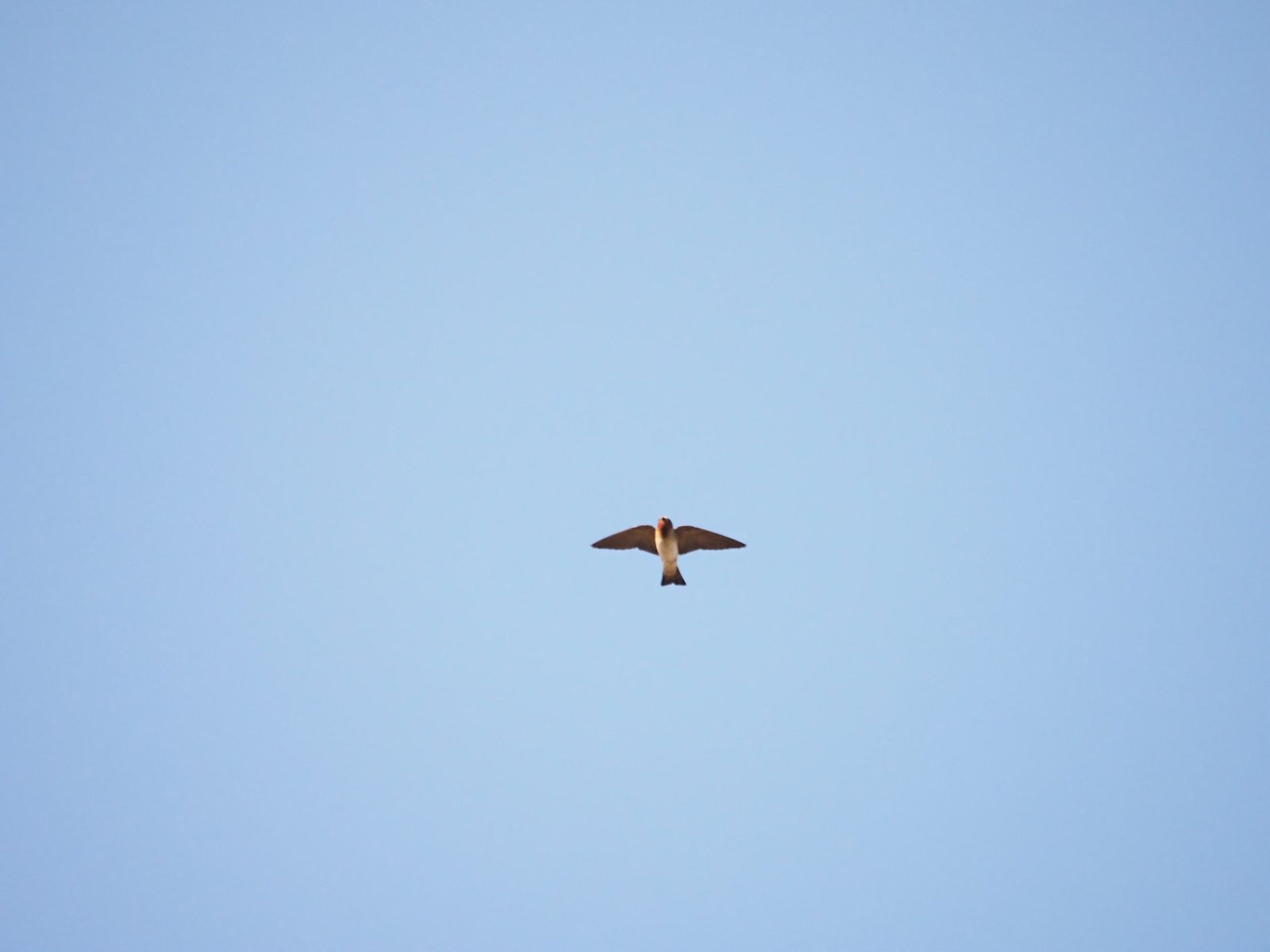
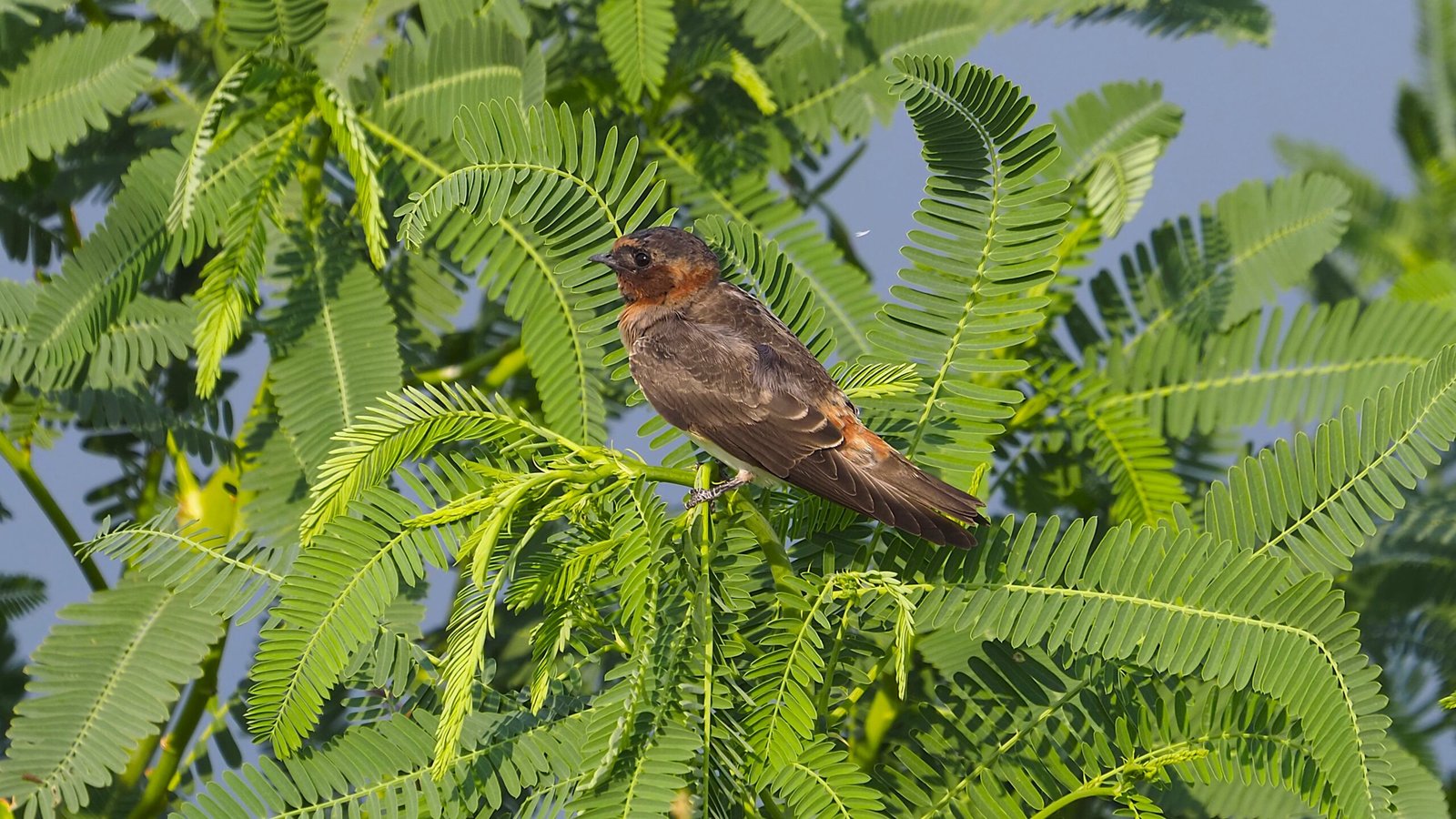
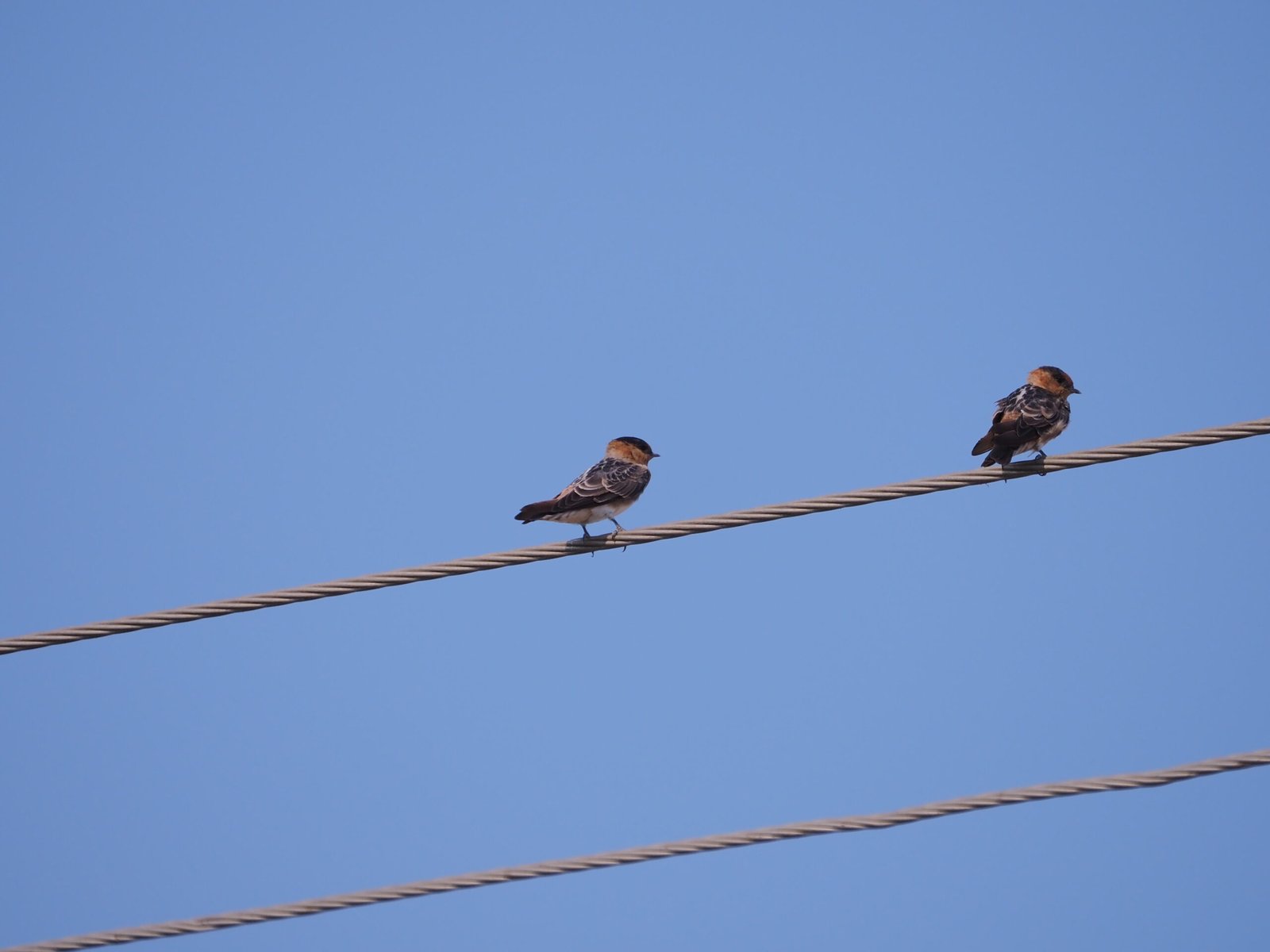
Separating the Cliff and Cave Swallows is complicated by the variation in plumage, especially in the fall when many young birds are present and are molting. Birders should concentrate on three areas to differentiate between Cliff and Cave: the forehead, rump and throat. As shown below, the Cliff has a pale forehead, and a dark (even black) throat. An often cited mnemonic for the Cliff ‘s forehead color is “the white cliffs of Dover”. The rump of Cliff is less richly colored than that of Cave. These ID points are summarized in the table below. The best field mark when birds are in flight overhead is the dark (Cliff) or light (Cave) throat. (ID of swallows in flight is discussed further below.)
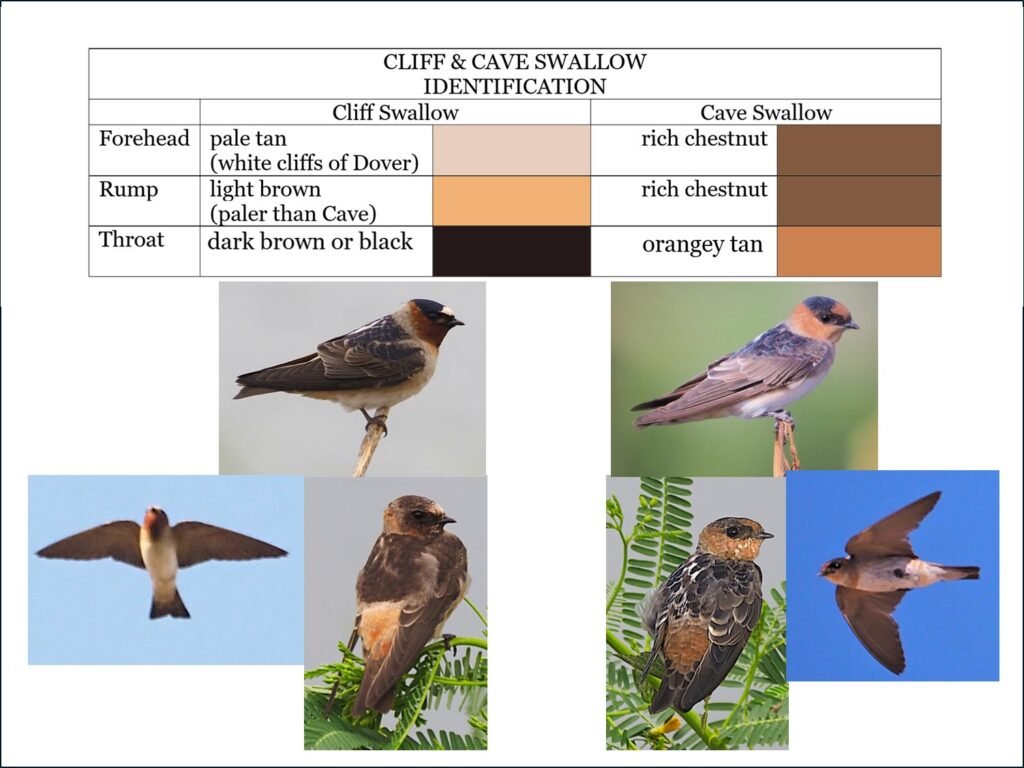
In the photo below, the paler, more buff-colored rump of the Cliff (right) can be seen, versus the browner rump of the Cave (left). Also note the throat color of each species below.

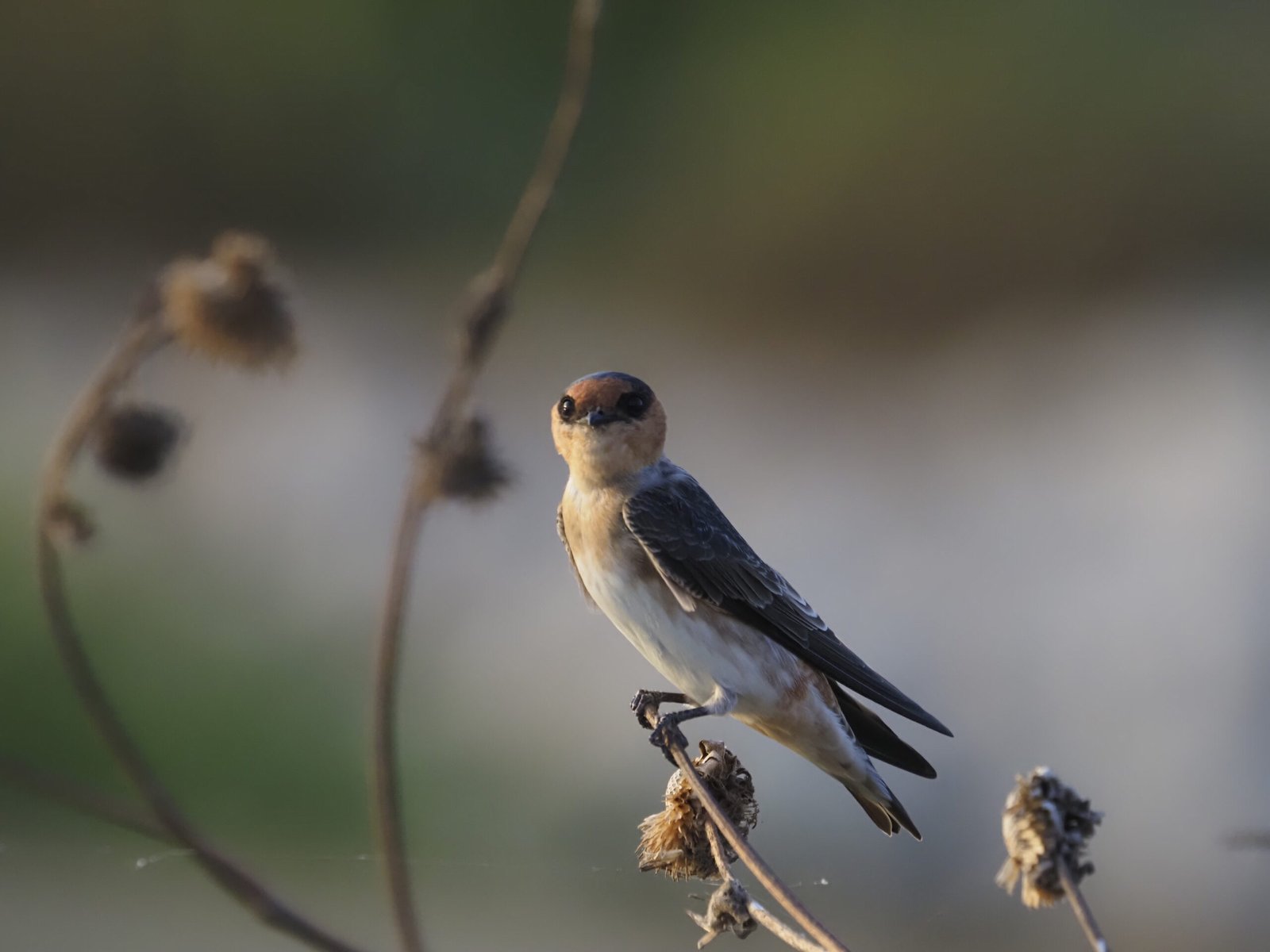
Another field mark between Cliff and Cave is the contrast on the neck and back of the heads: Cave has a high contrast transition from the head cap to the orangey-tan neck and nape, while the Cliff’s transition in this area is less distinct.

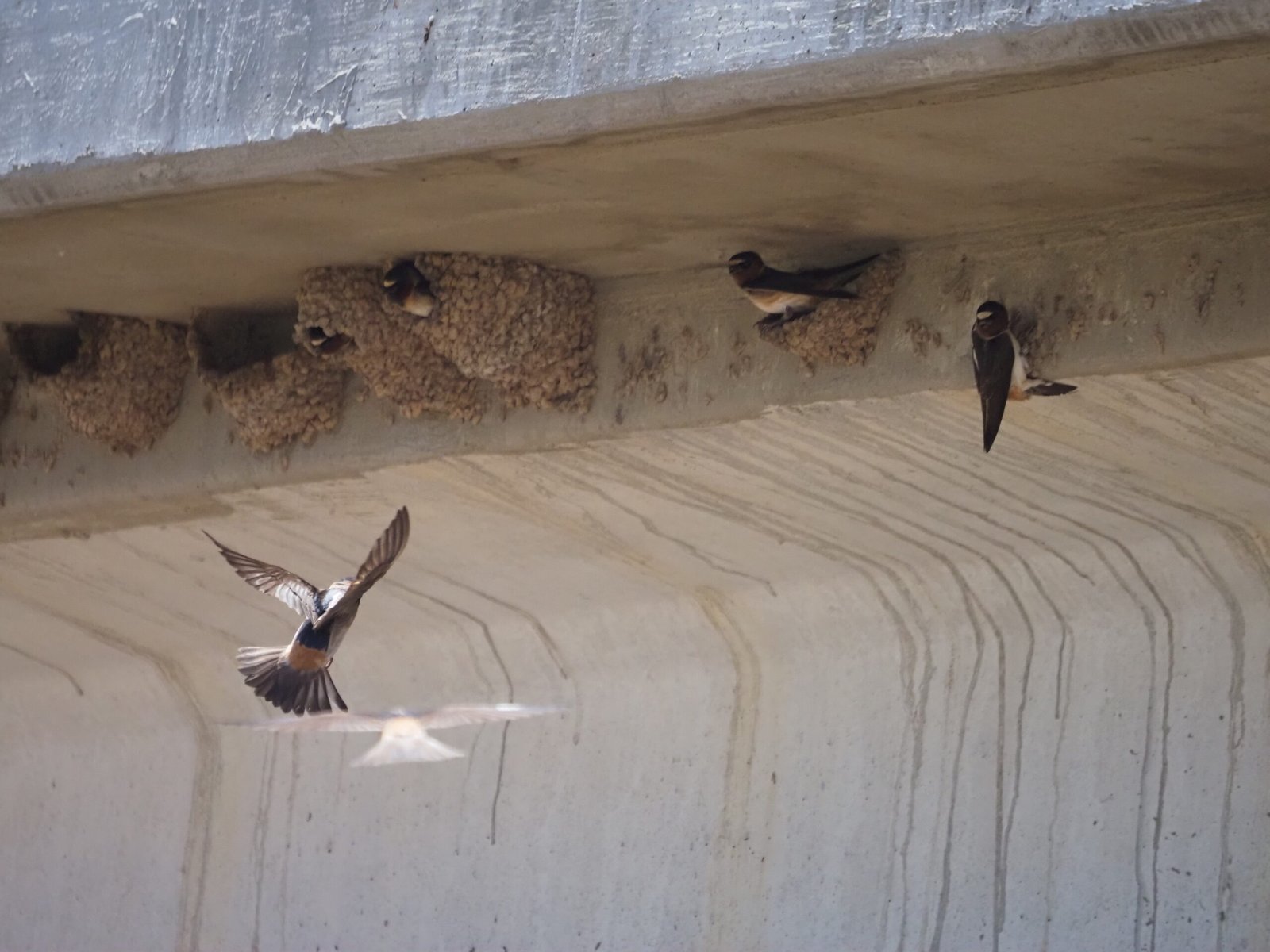
Additional photos of the Cliff Swallow and it’s nests are shown in the gallery below. Ironically, the nest of the Cliff is reminiscent of a cave, while that of the Cave Swallow is more cup-like.



Cave Swallow
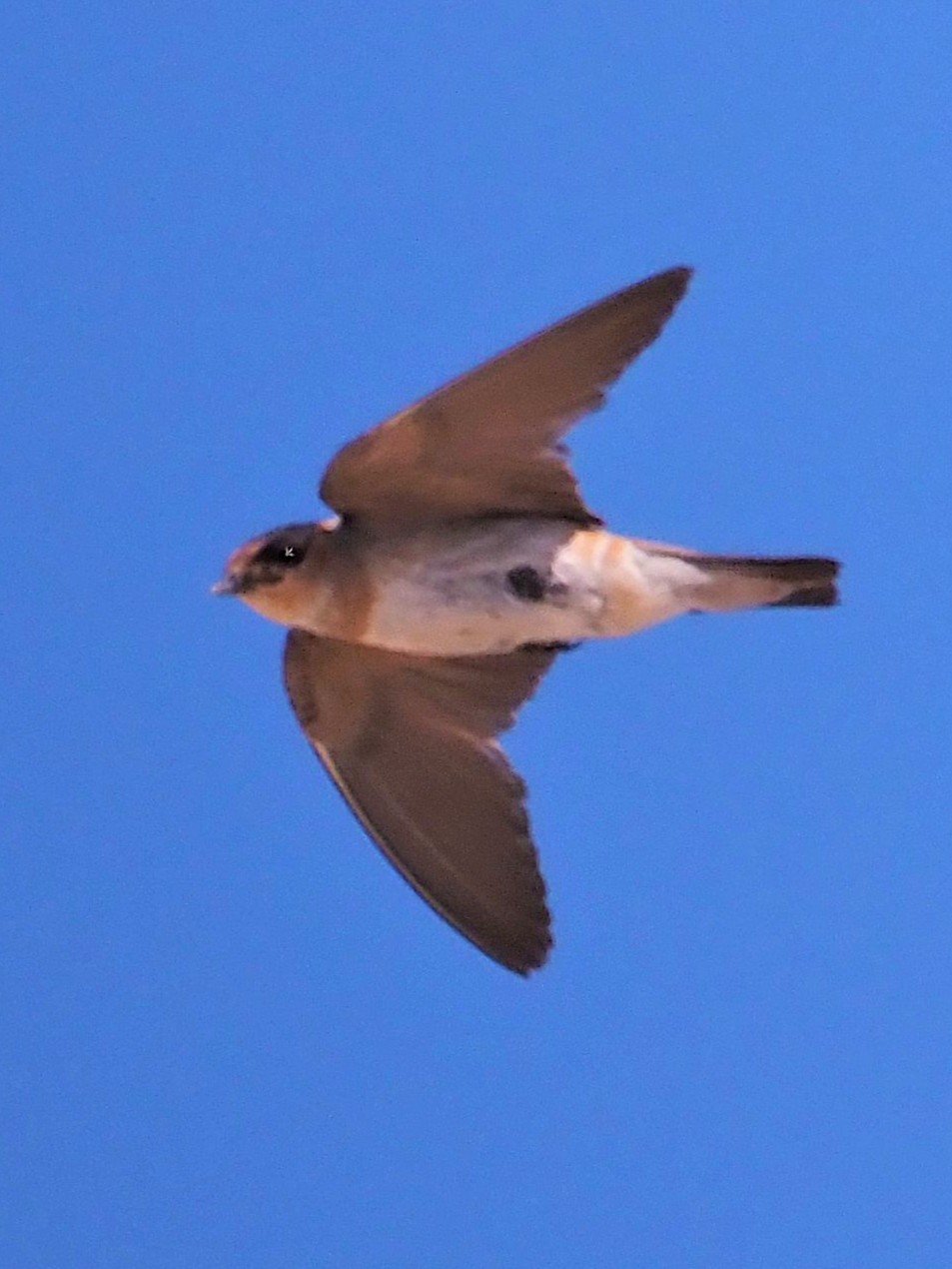
Prior to about the mid-1970s the range of the Cave was somewhat restricted in Texas, being found in the Del Rio, Comstock, Langtry, Rocksprings vicinity of the state. However, since that time there has been “…a phenomenal expansion of the range of the Cave Swallow in Texas.” (Cave Swallow Range Continues to Expand, Palmer, Paul C., 1988). The distribution of the Cave now includes all of the state with the exception of the upper Panhandle. This expansion appears to be associated with the species utilization of highway bridges and culverts for nesting, when previously it had been restricted to caves (it was thought). Although Tree Swallow is present in deep south Texas in winter, Cave is the only swallow likely to be found in Central Texas to the Coast in winter.
In contrast to the Cliff, the Cave shows a rich chestnut forehead, a darker brown rump and a paler tan throat.






Drab Swallows (N. Rough-winged, Bank, Purple Martin)
Northern Rough-winged Swallow


Bank Swallow


Purple Martin


Green Swallows (Tree, Violet-green)
Tree Swallow


Violet-green Swallow


Comparisons


