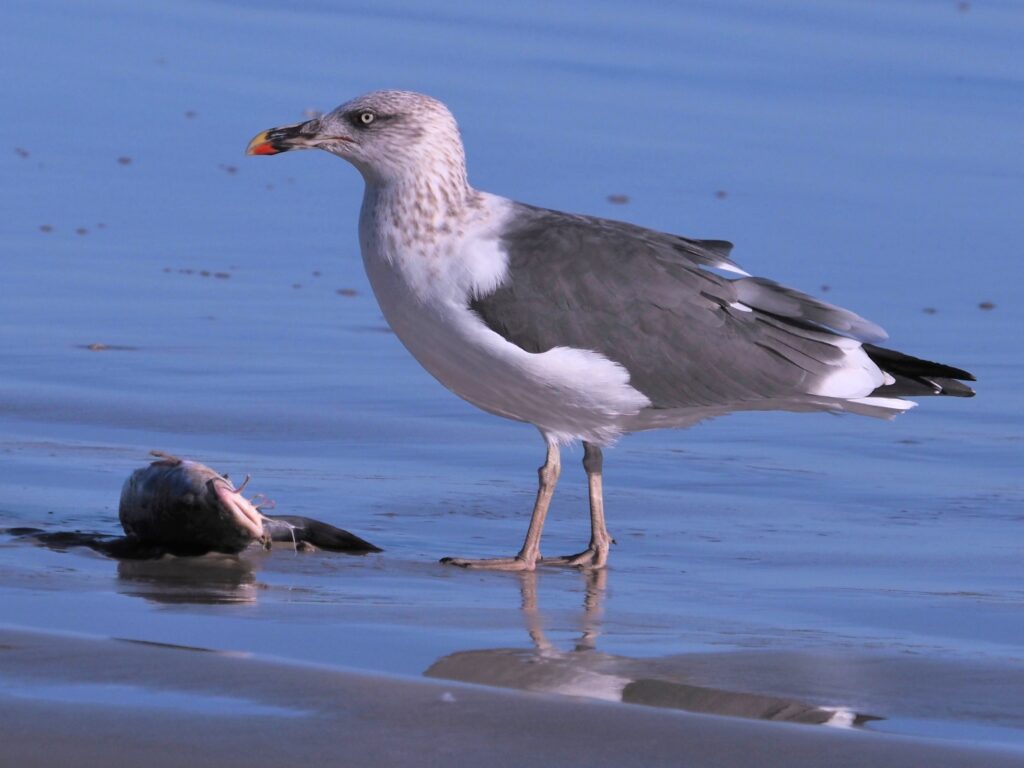
The Lesser Black-backed Gull (LBBG) breeds in Europe, Iceland, Greenland and parts of Asia, and was first identified in North America in 1934. Since the 1990s it has established a winter presence in North America such that it is a somewhat common sighting where gulls gather. There are at least 5 recognized subspecies, with the graellsii thought to be the default in North America. When identifying a large dark backed gull in Texas (larger than Laughing), think first of the LBBG.
Structure
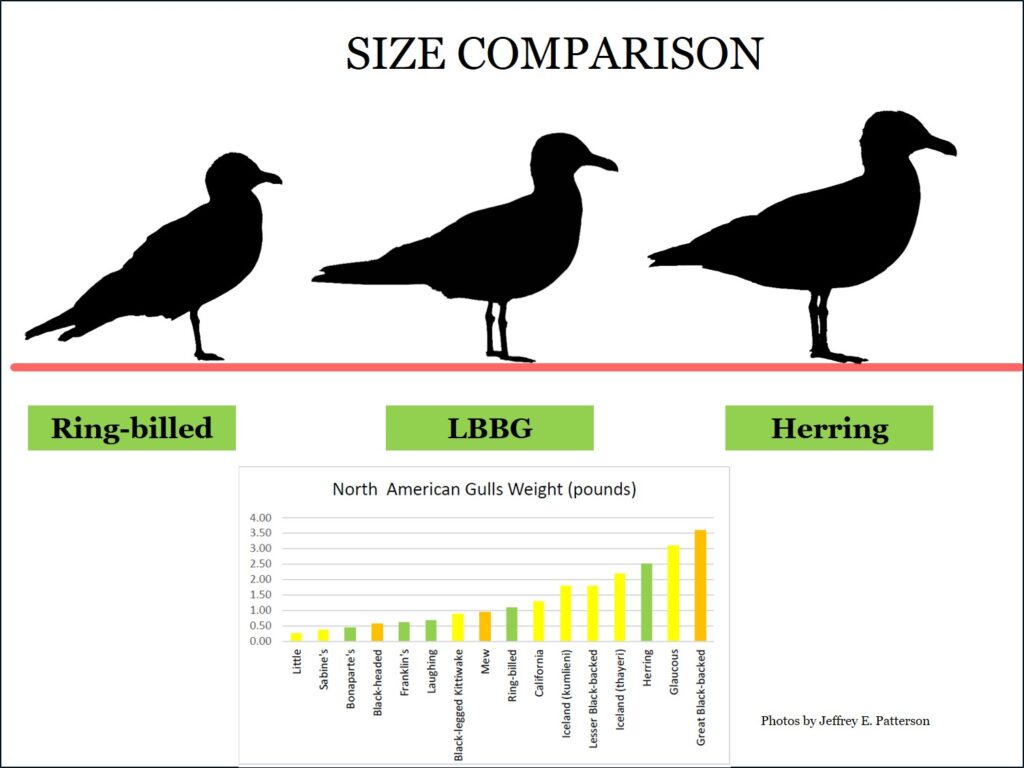
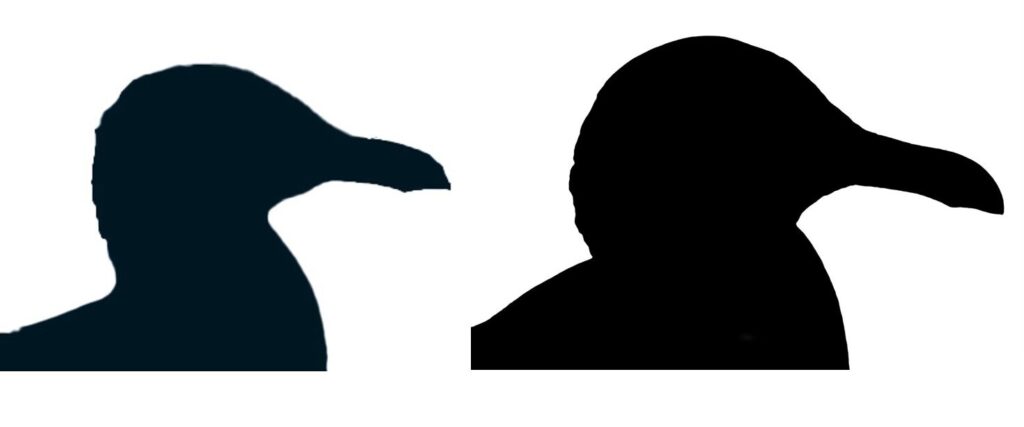
The LBBG is smaller and slimmer than the Herring and larger and bulkier than the Ring-billed. As can be seen in the silhouettes below, compared to Herring the LBBG sports a long, attenuated back-half (behind the legs), with long primary projection. The Herring is larger, more truncated in the back half and is bulkier in the belly and behind the legs. The Ring-billed is smaller and daintier, with a rounded head and smaller bill. These structural differences become more important when assessing immature gulls.
In the comparison photo below, note how light the LBBG’s (on the left) back color appears — only slightly darker than theRing-billed and Herring. This is discussed further below under “Adult Back Color”. (Also note that this is a composite photo, but that the Ring-billed and LBBG are from the same photo).
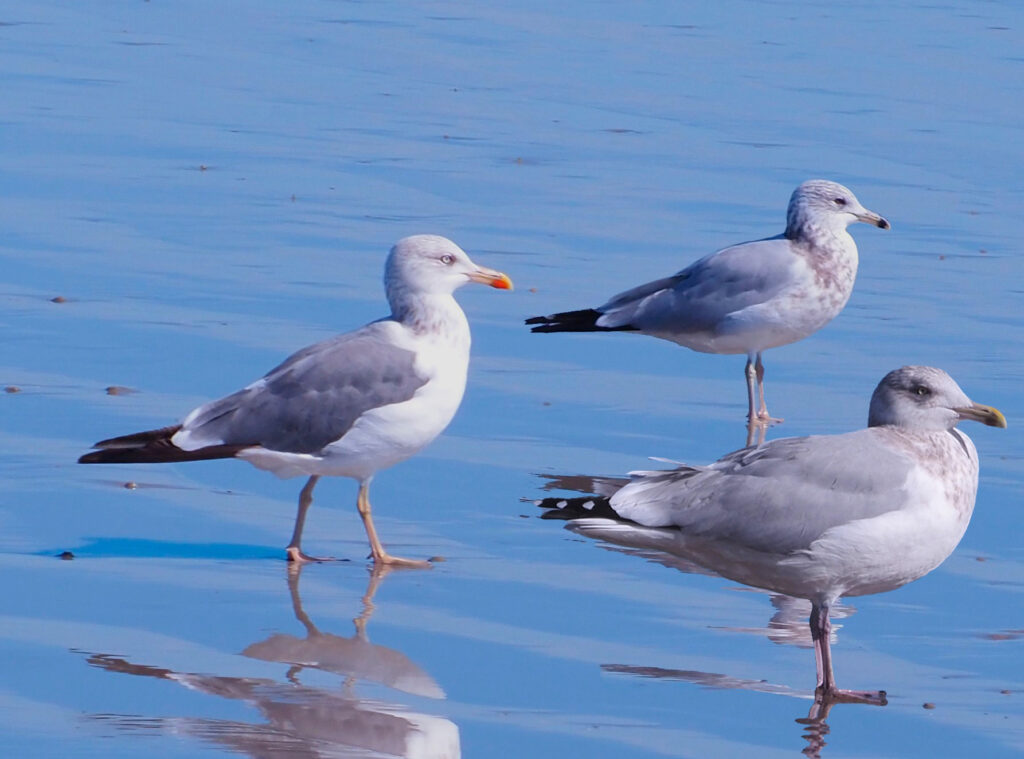
The relative size and structure of the LBBG are compared with Ring-billed, Herring and Laughing in the next group of photos.
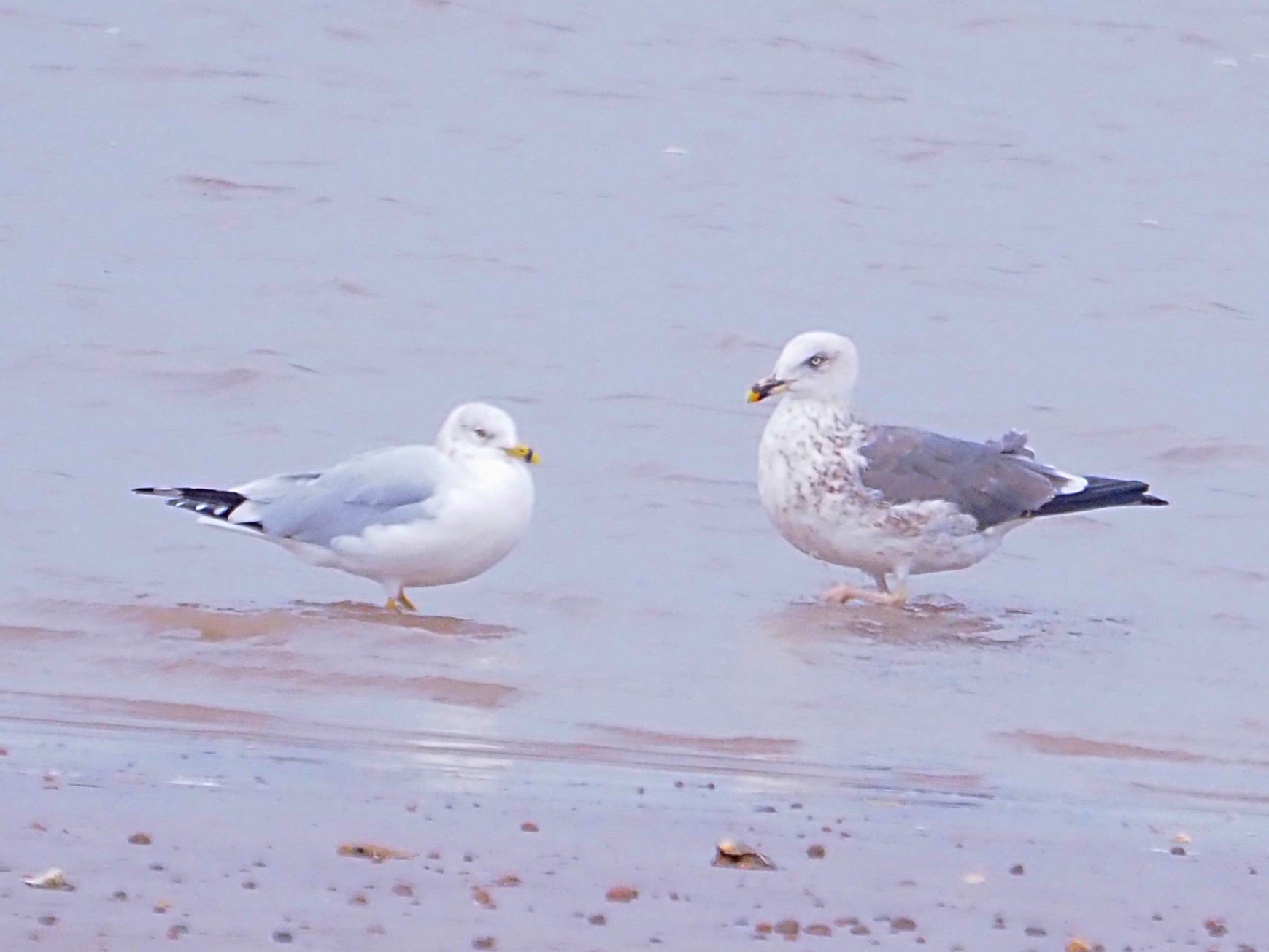
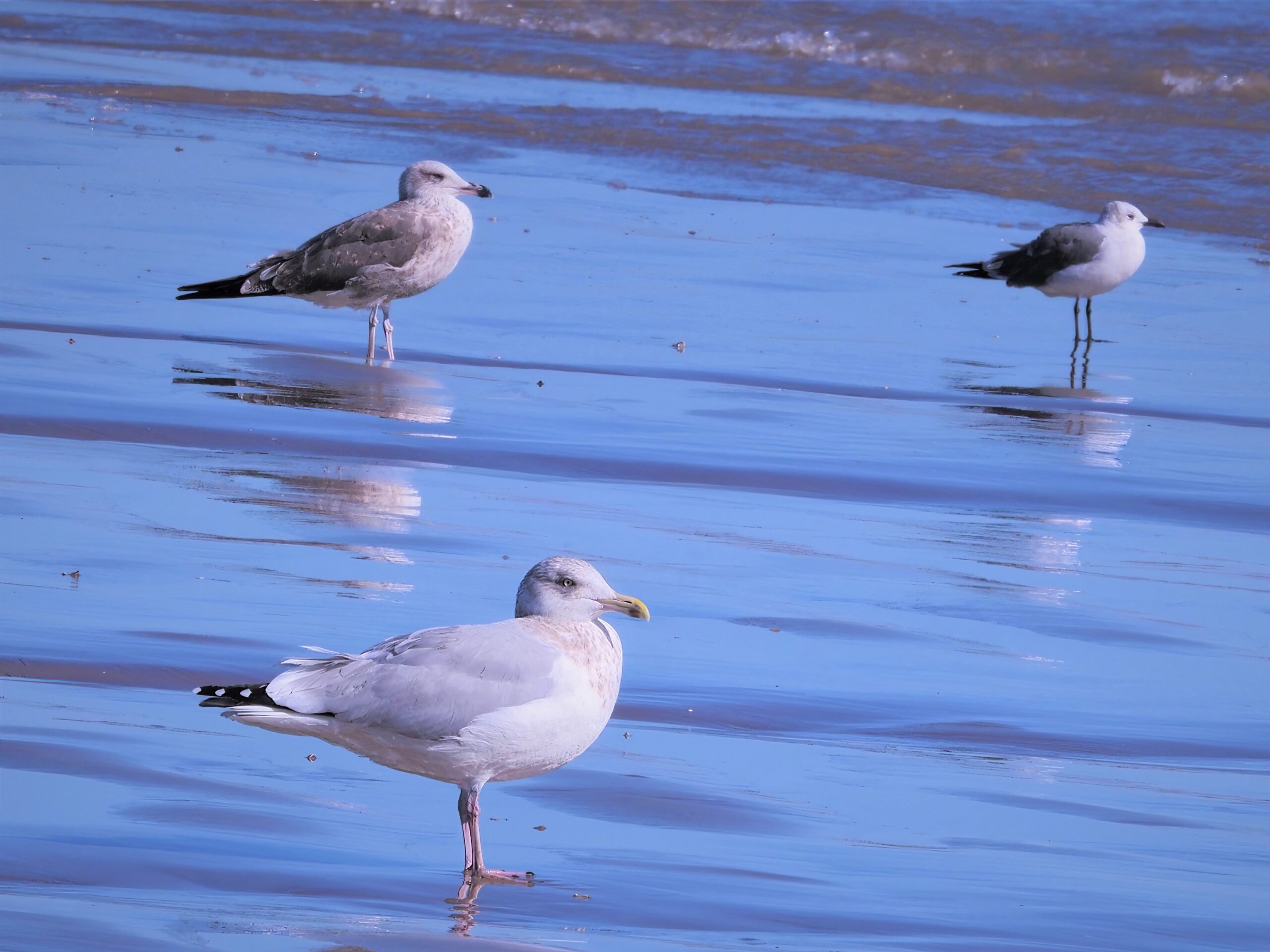
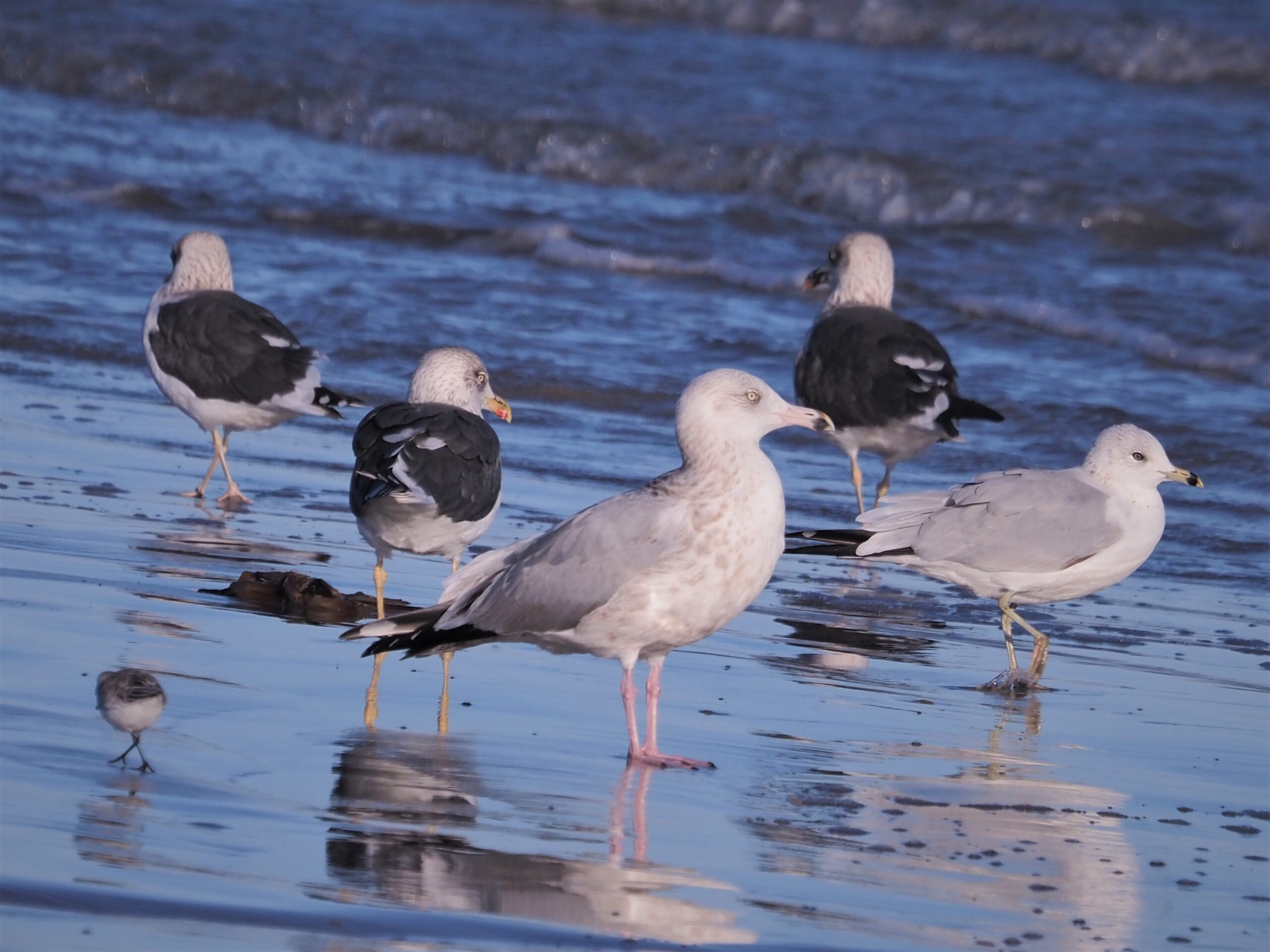
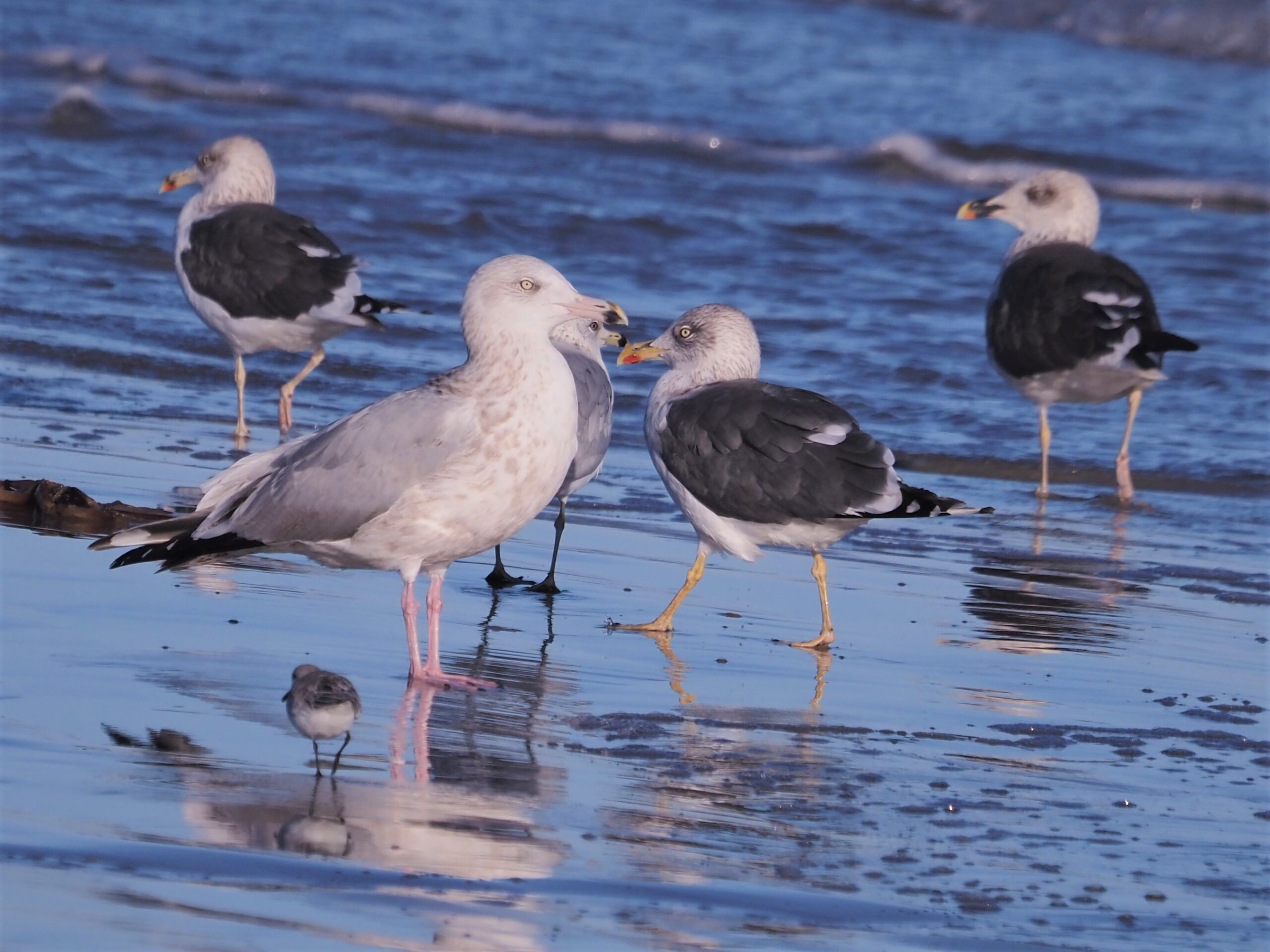
The Bill & Head
In LBBG (left in the photo below) the bill is shorter and thinner than that of Herring, with slightly less hook at the tip and slightly less gonydeal angle. The LBBG bill has been described as “bullet-like”, and this seems to be particularly noticeable in sub-adult birds.
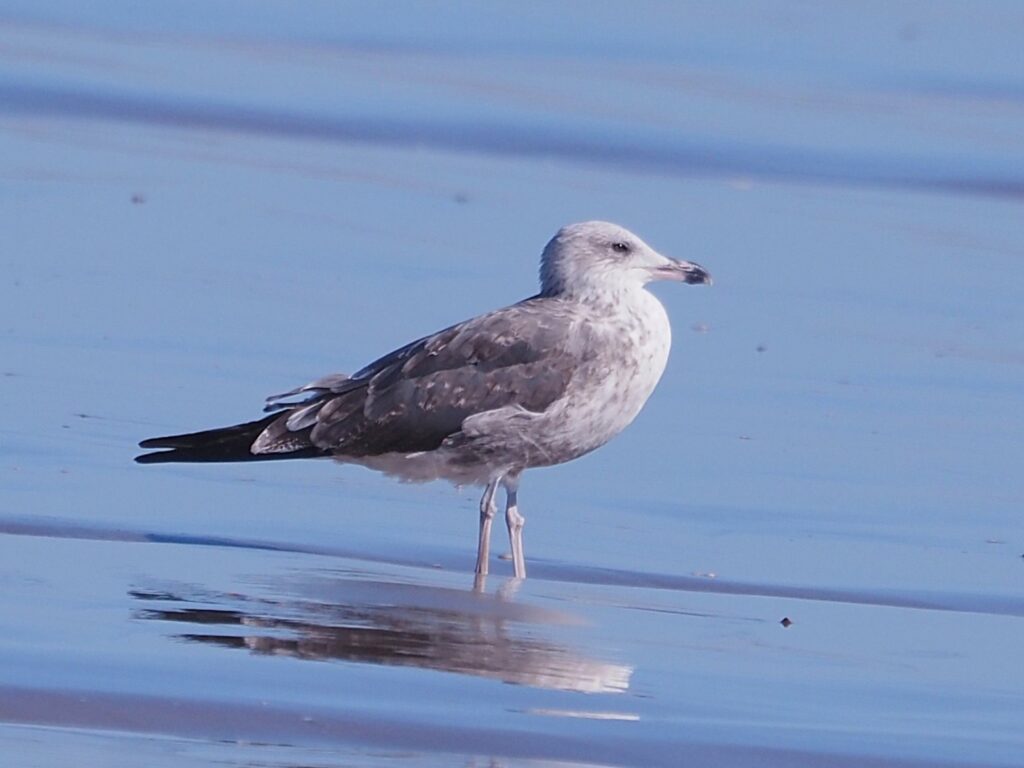
The head in the LBBG is usually more arrowhead-shaped, than round or square, as in the sub-adult below (left). This characteristic seems more pronounced in sub-adult LBBGs – adult LBBGs usually seem to have more filled-out heads.
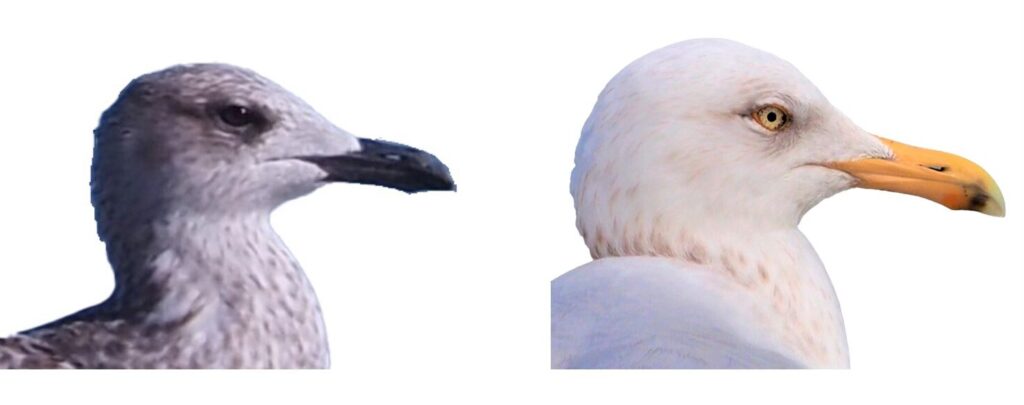
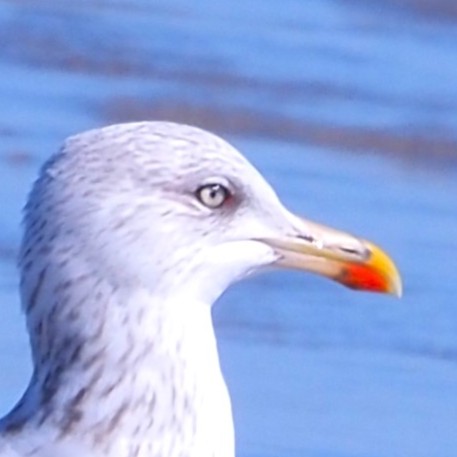
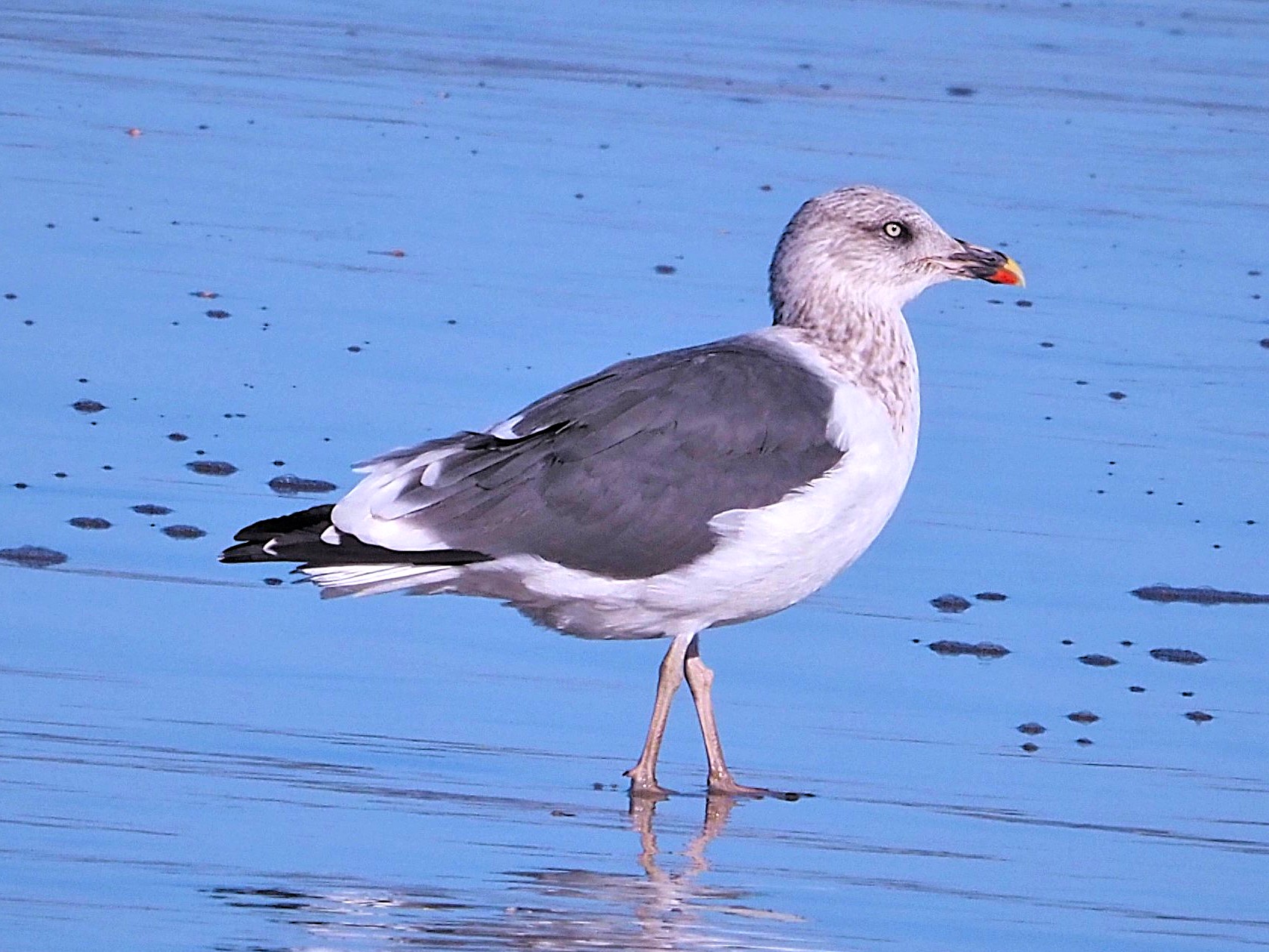
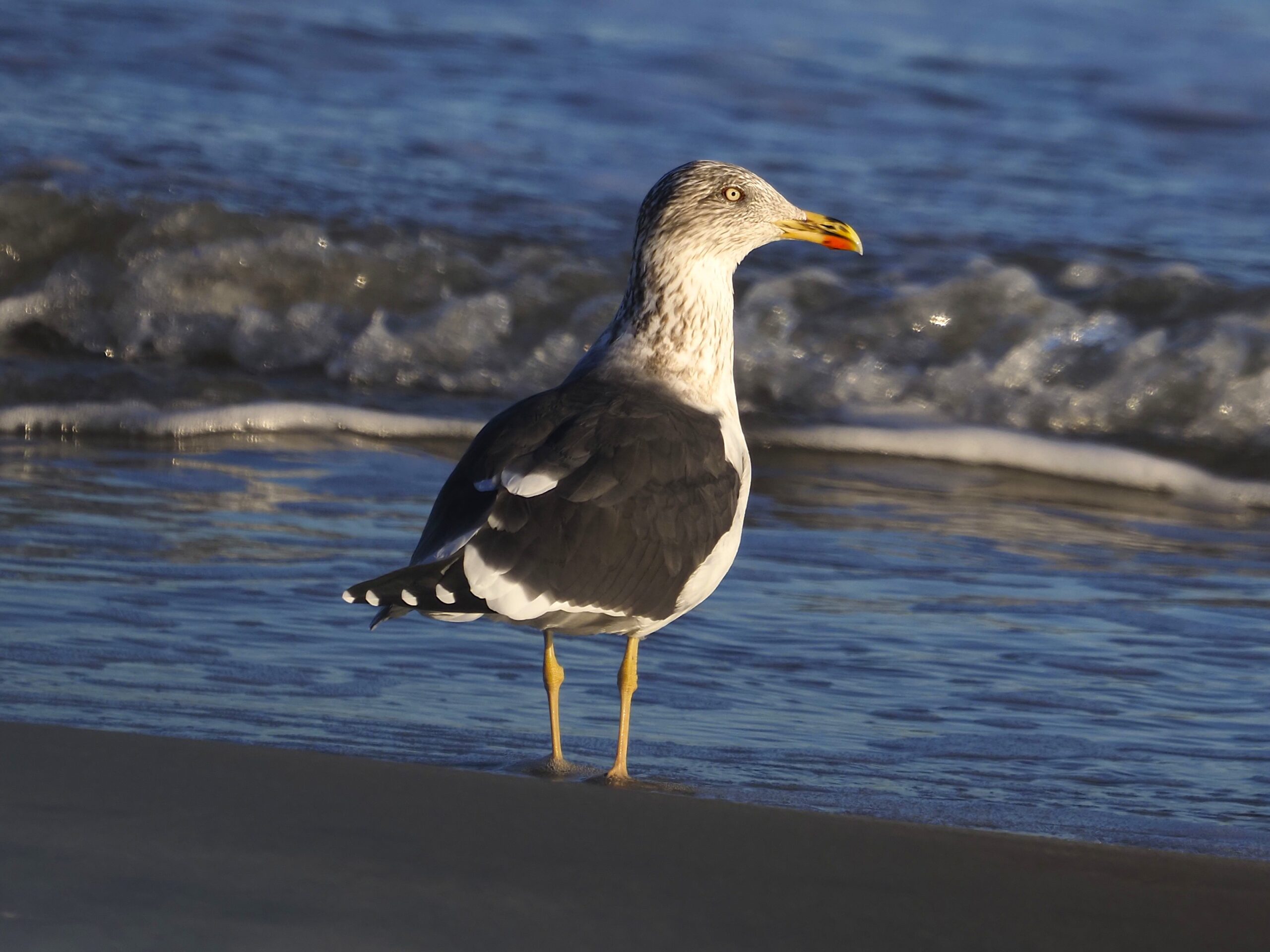
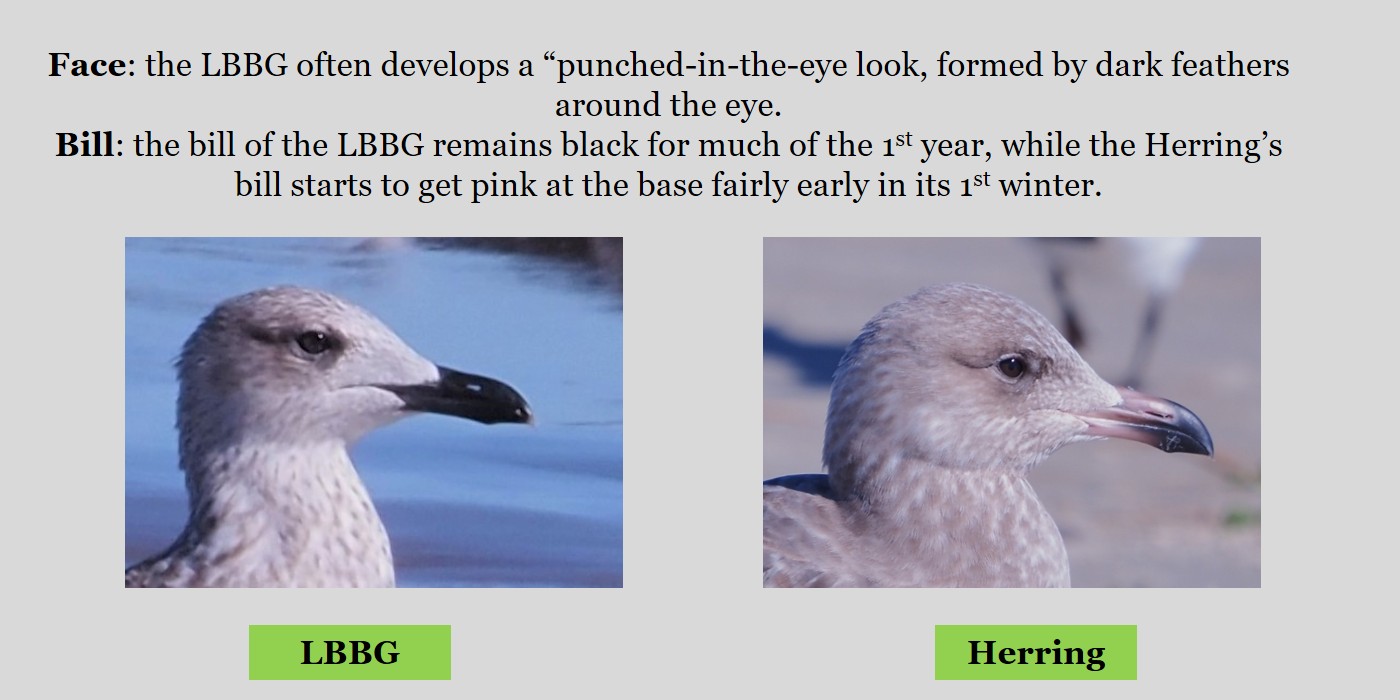
The bills of 4 adult LBBGs (pictured below) are yellow with a red gonydeal spot, but sometimes in basic there are large patches of black and red elsewhere on the bill as well. In alternate the gape and orbital ring take on a red or red-orange color. In basic these colors fade and the head shows streaks which can be quite dense. The eye in adults is yellow and winter adult (and sub-adult) LBBGs often have a “punched-in-the-eye” look formed by dark feathers around the eye.
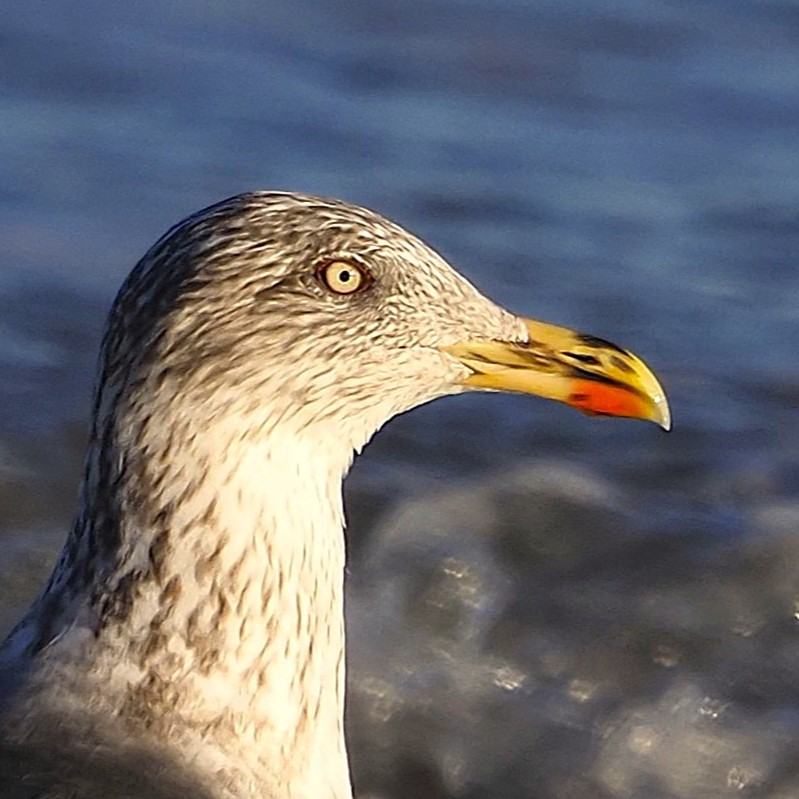
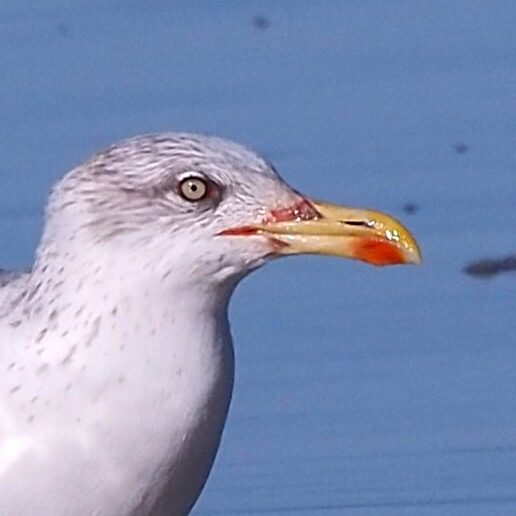
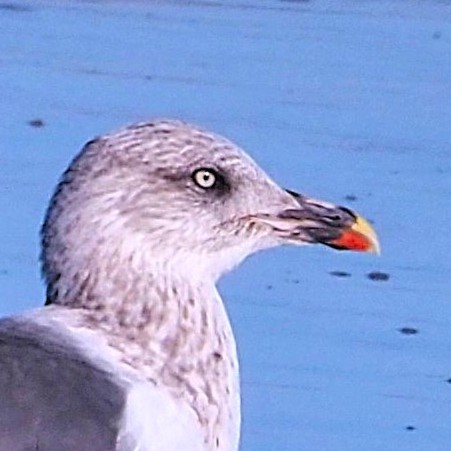
The typical LBBG structure is shown in the adult and 3rd-year gulls below. The LBBG has long, slender wings which jut out well-beyond the tail when perched. The body often has a chesty appearance as in the sub-adult below. Adults often seem to be more filled-out in the belly, but not as much as Herring.
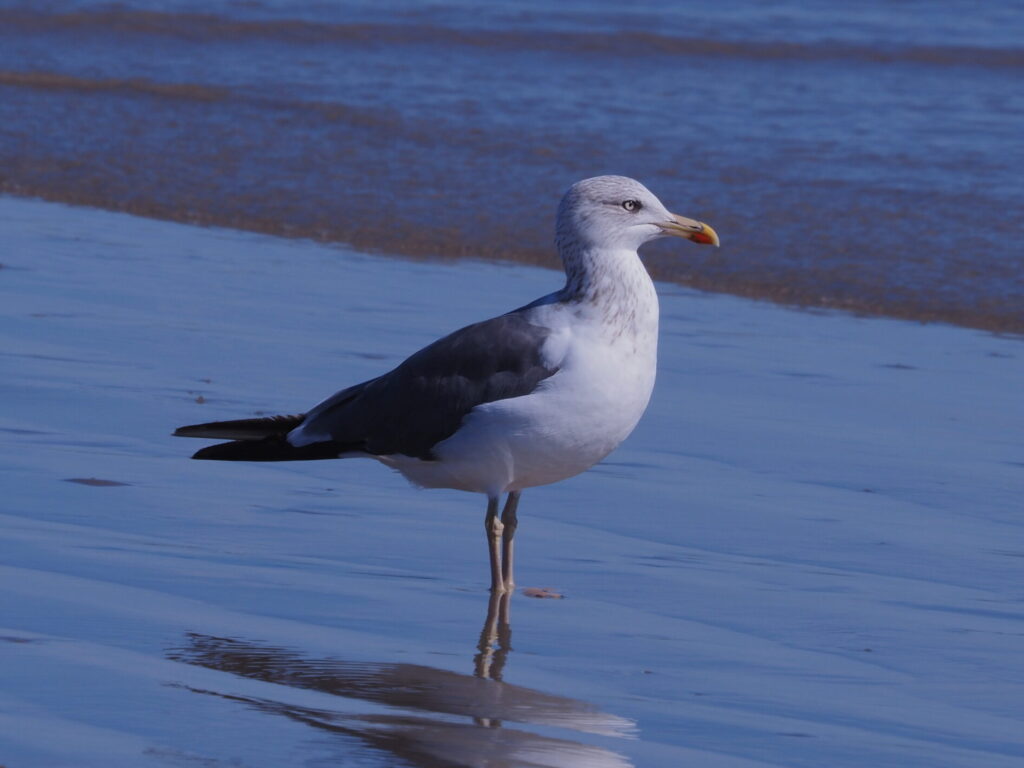
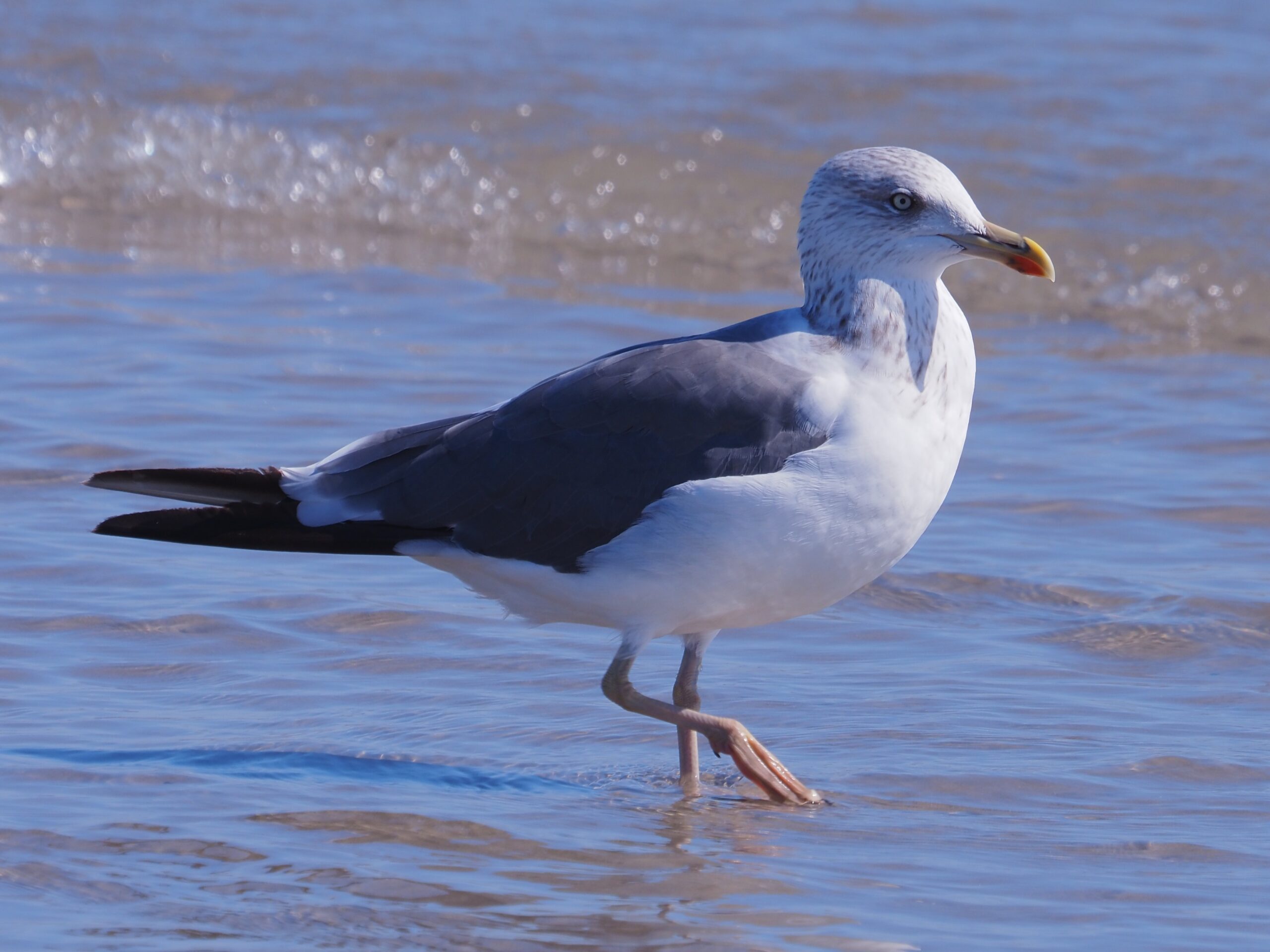
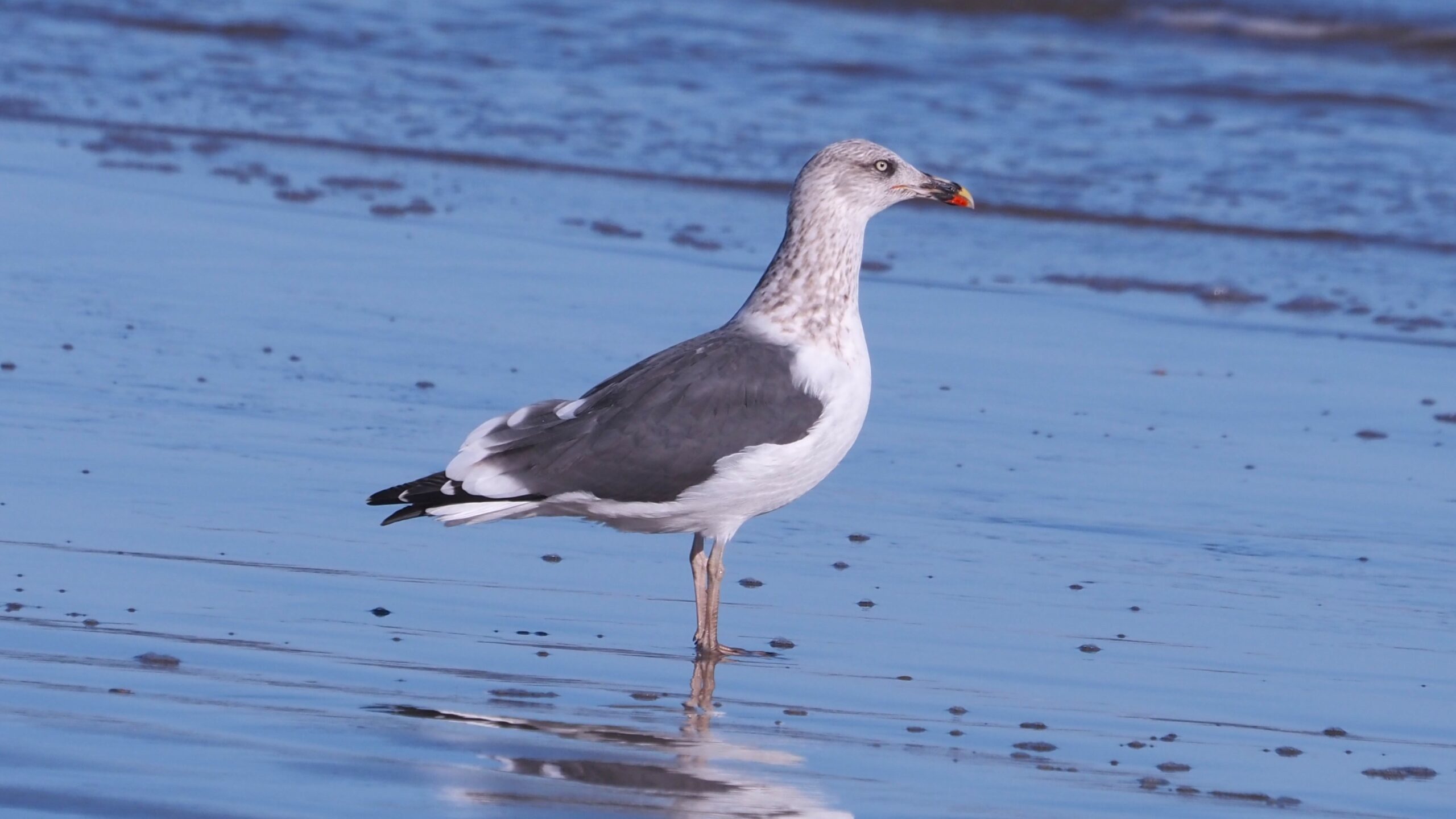
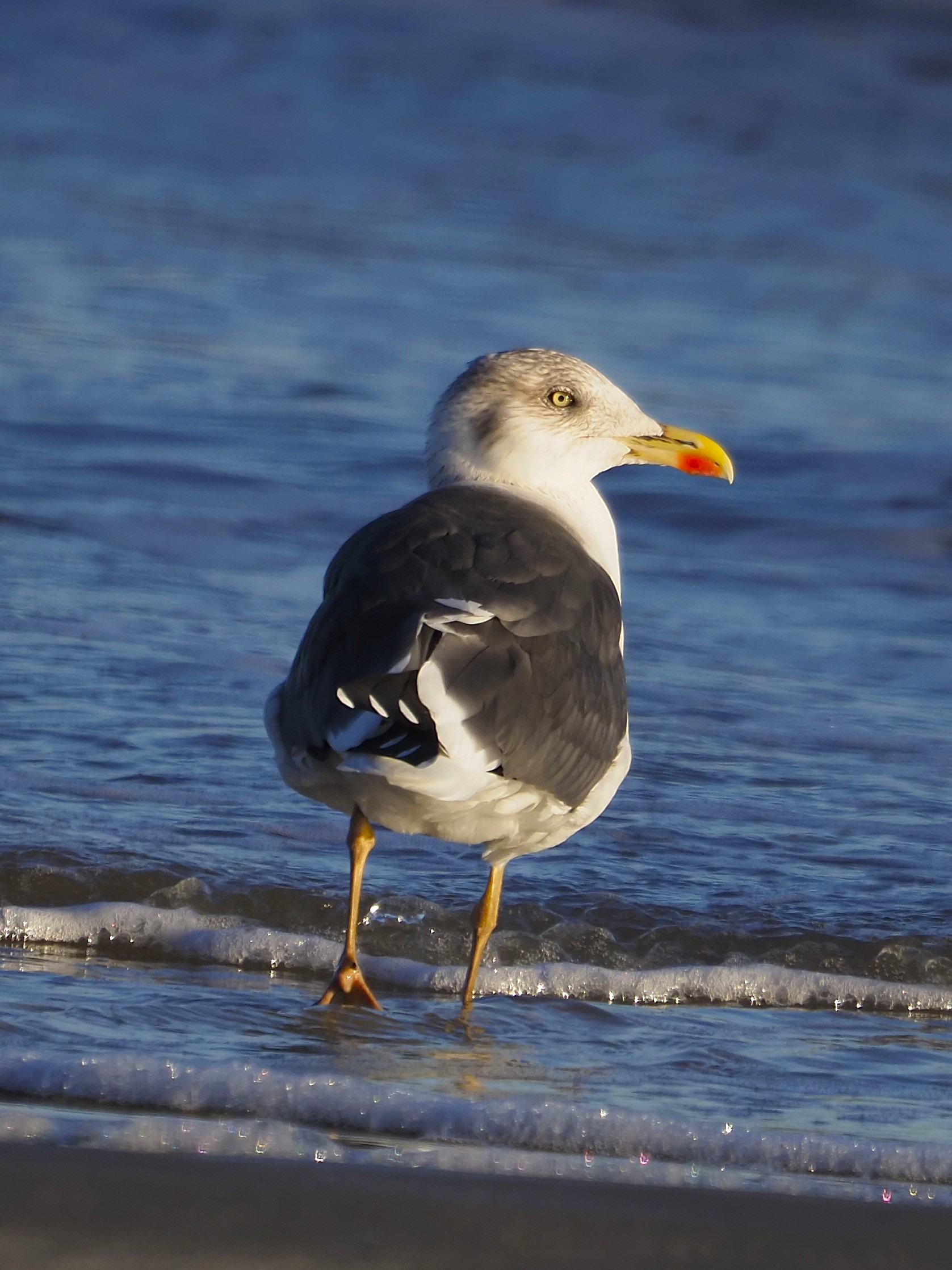
Additional photos of adult LBBGs are shown below.
In-Flight
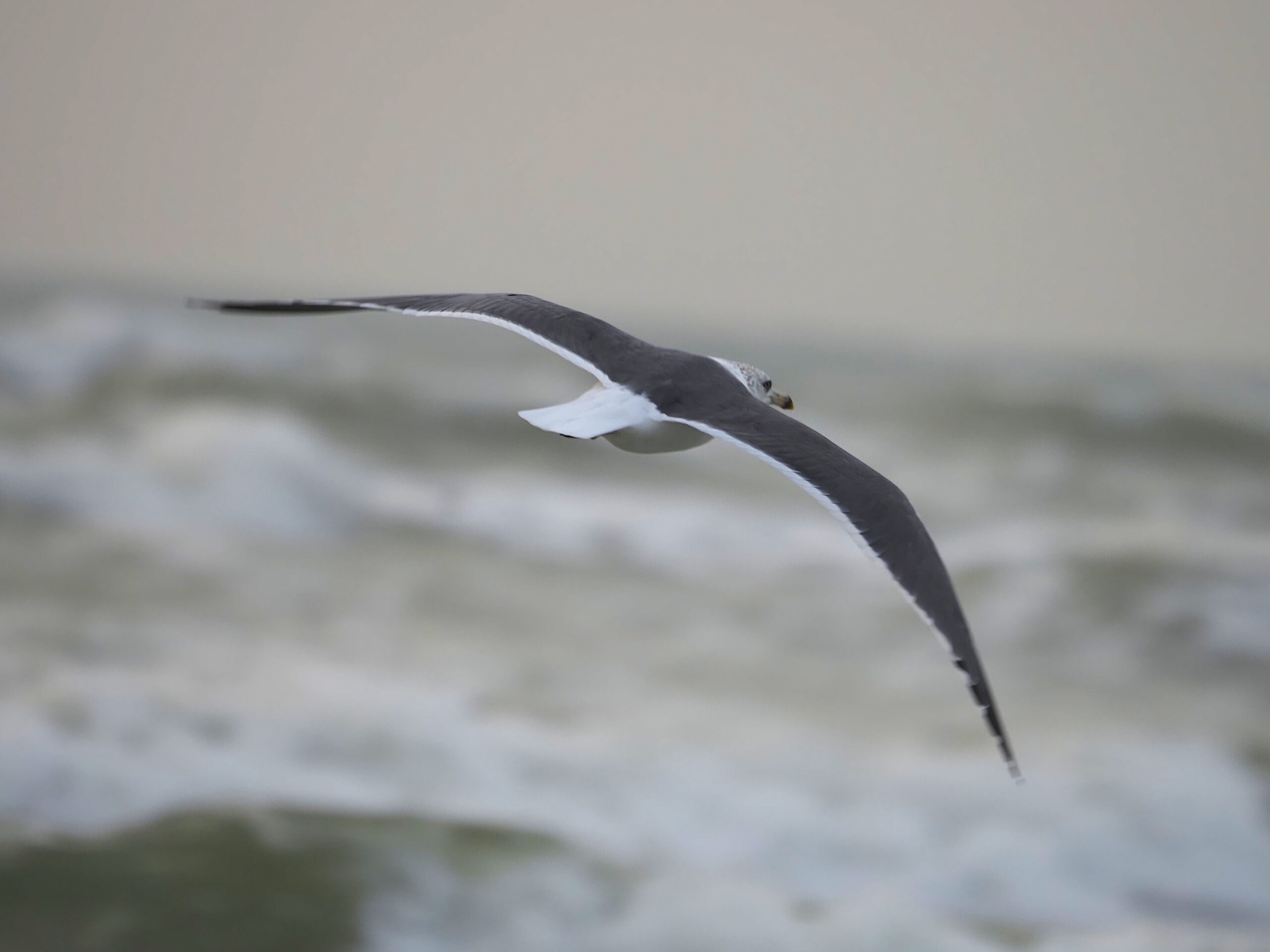
In-flight the adult LBBG shows a black-and-white (or black-and-gray) pattern reminiscent of an inverse Swainson’s Hawk with black, or at least dusky, primaries and secondaries and white underwing coverts (covering the base of the secondaries and primaries). As below, the pink legs and feet are also sometimes evident in flying gulls.
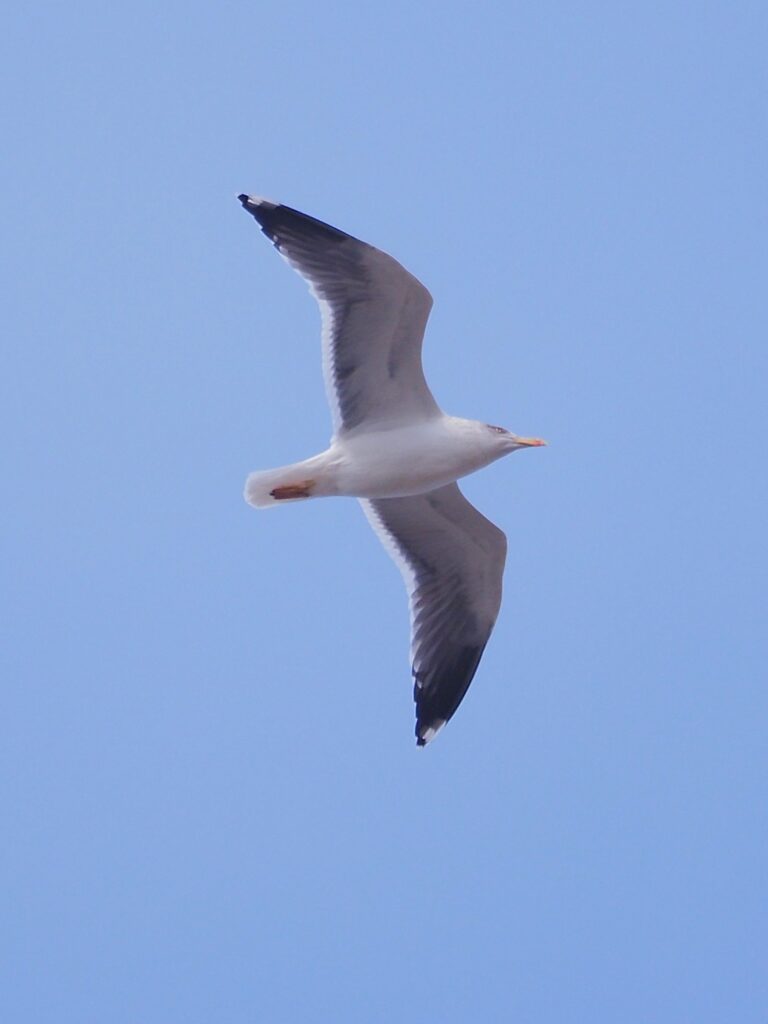
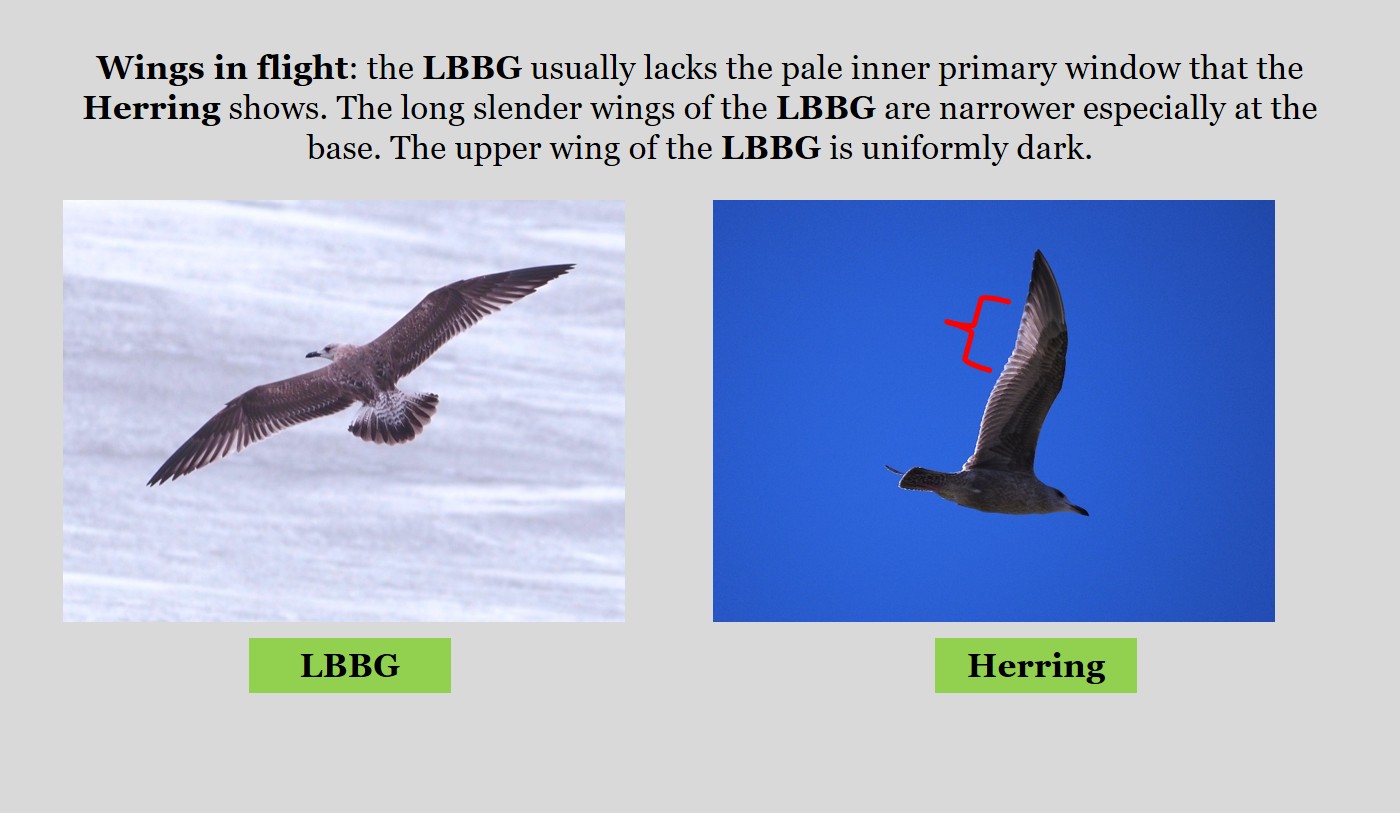
The LBBG has long, narrow wings; narrower, especially at the base, than those of Herring, giving somewhat of an impression of a Laughing.
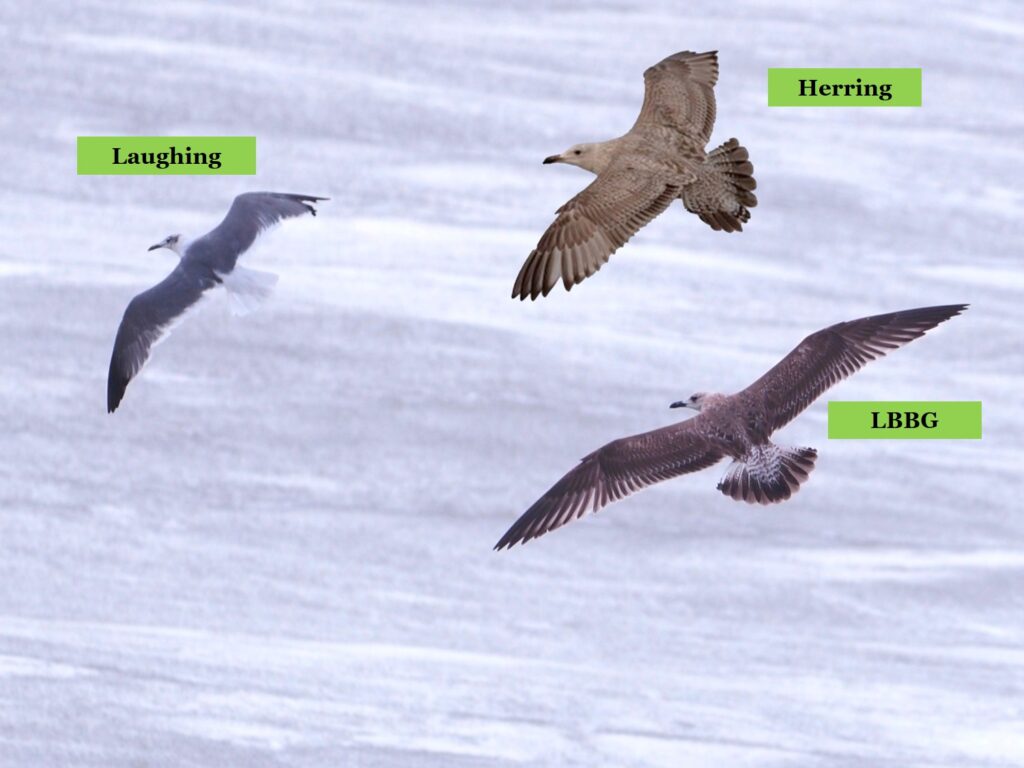
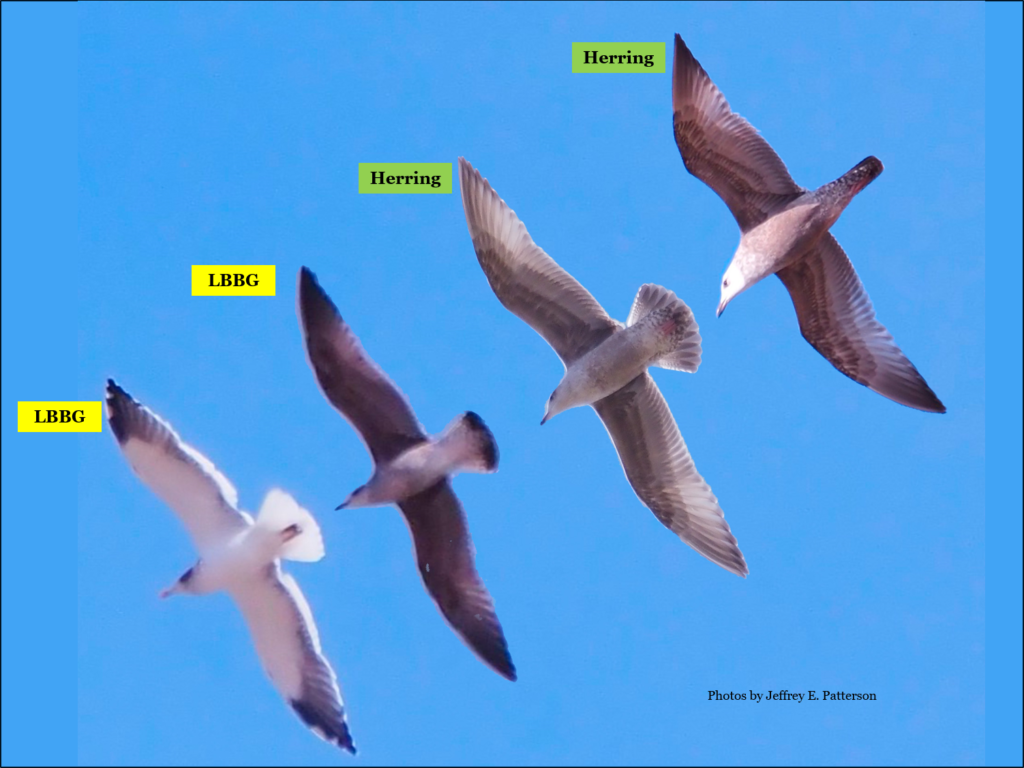
As shown below, the ventral side of immature LBBGs can be quite dark. Also note the pale “windows” on the inner primaries of the sub-adult Herring which the LBBG usually lacks.
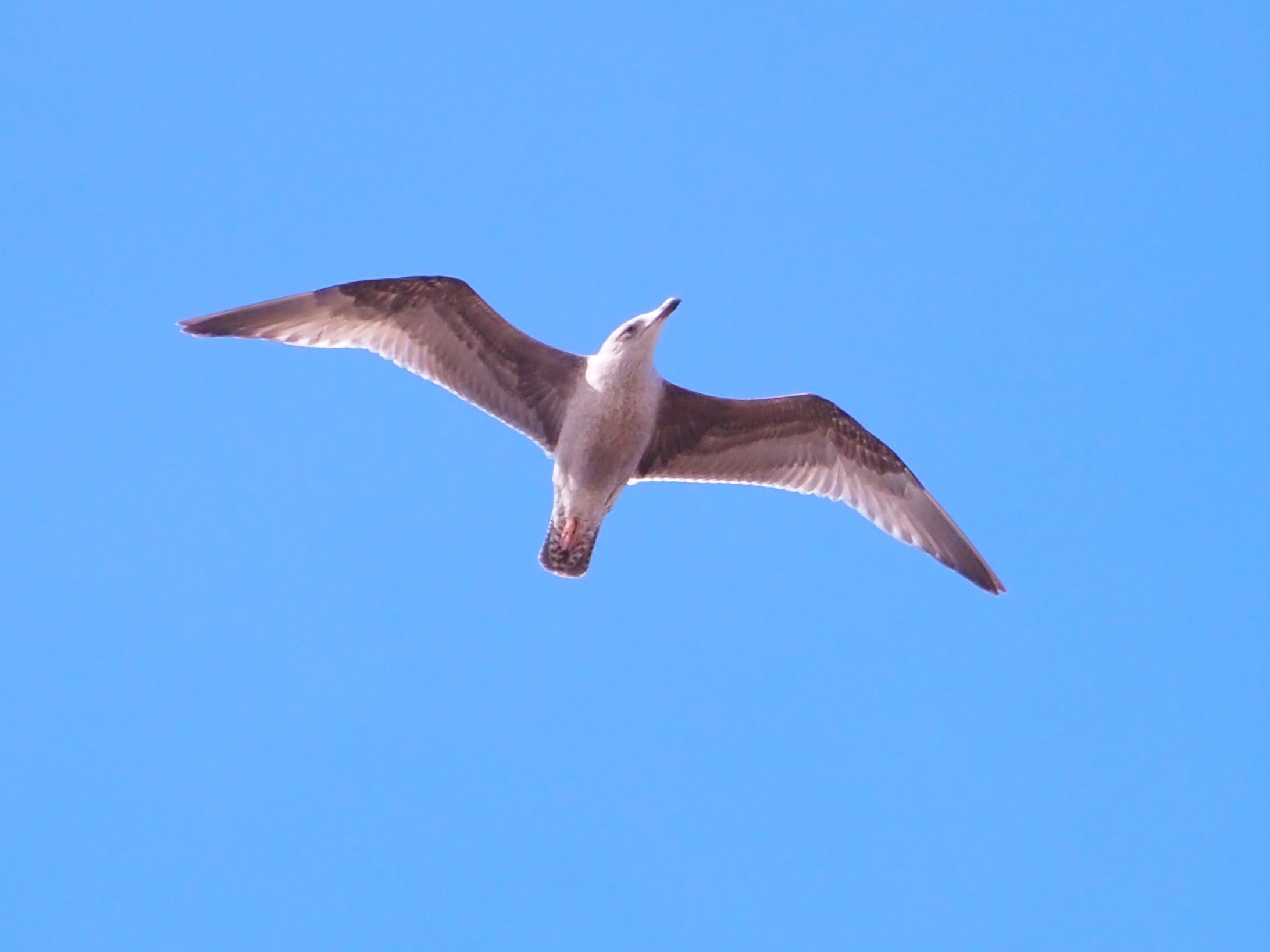
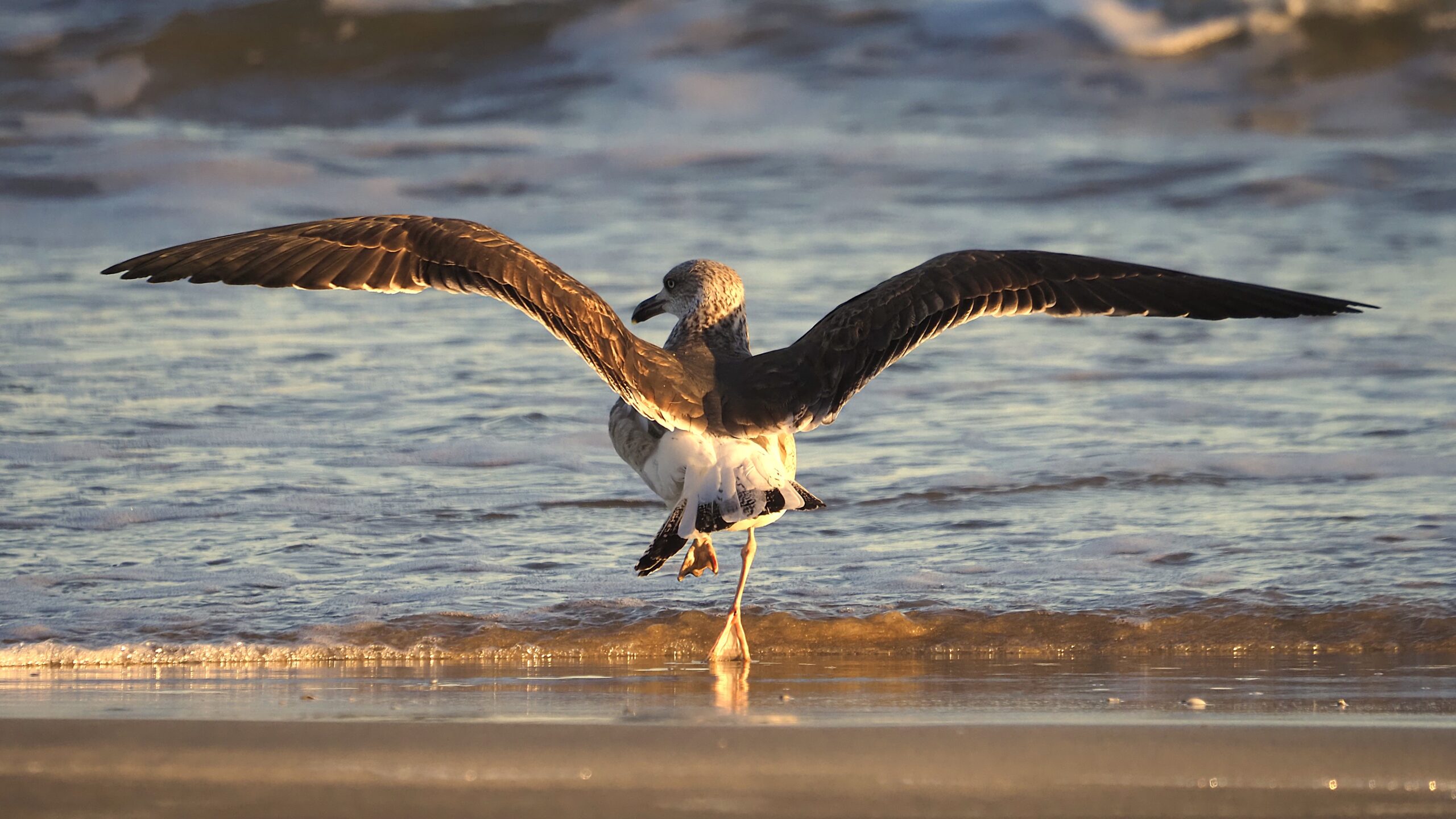
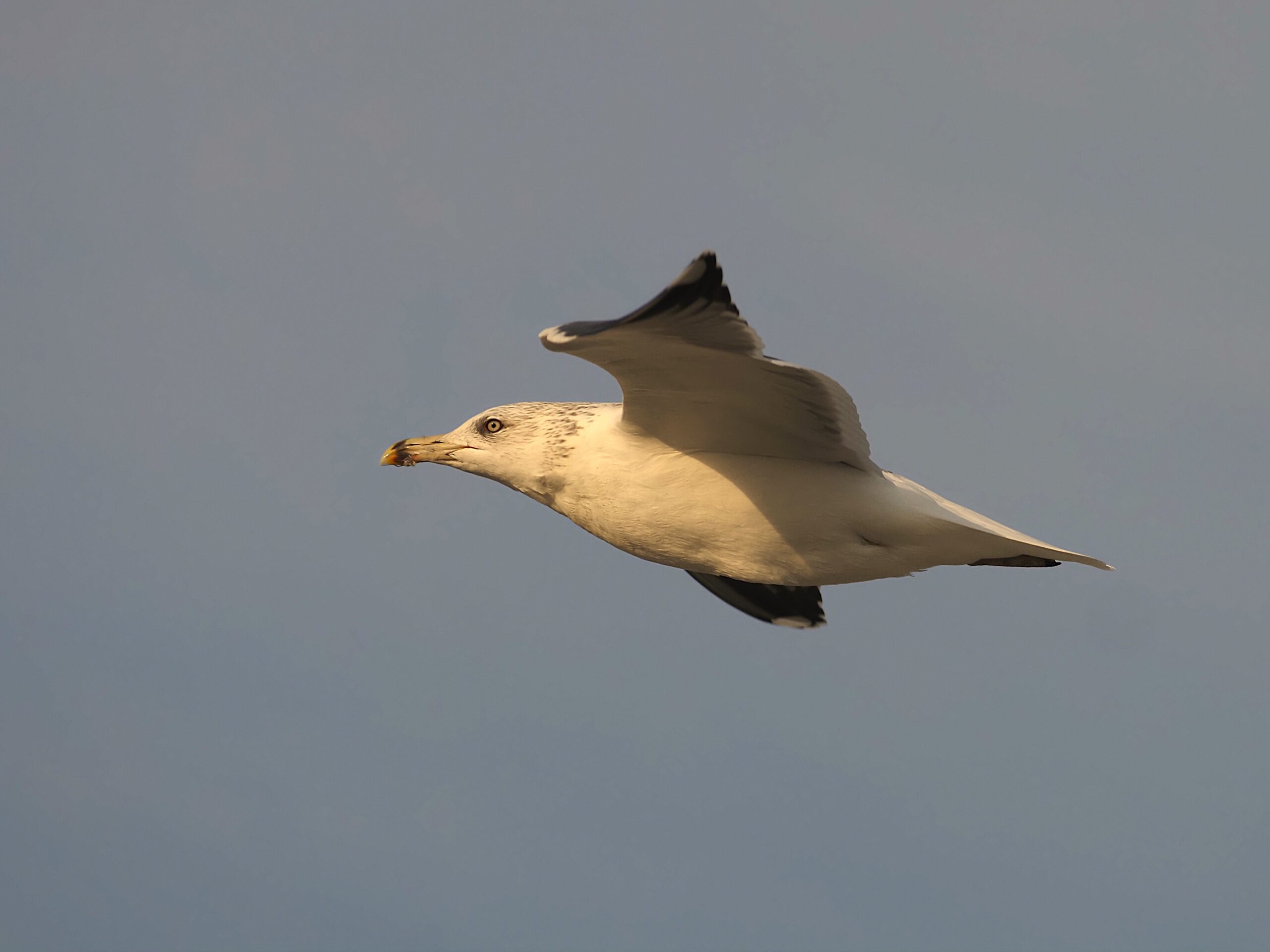
Additional flight photos of LBBG are shown below.
Identification of Sub-adult Gulls
Like most large gulls, LBBGs are progressively less-tricky to identify as they age; the juvenile and 1st winter gulls are the most difficult, and the adult is the most straight-forward.
The identification of all gulls should start with relative size and structure. If possible, compare the unknown gull to a gull of known species. Next, review the structural clues of candidate species and compare them to that of the unknown gull, as well as to known gulls. Finally, look for plumage characteristics appropriate for the age of the gull as well as the date of the observation.
1st Year LBBG vs Herring
Juvenile and 1st winter LBBGs can often be identified by their size and structure in comparison to known species such as the adult Herrings pictured below. (Both juvenile and 1st winter can be considered sub-adult plumages). Note that the LBBGs are smaller, more slender, more attenuated in the rear-half and have a more flattened, arrowhead-shaped head. Sub-adult LBBGs are pictured with adult Herrings in both photos below.
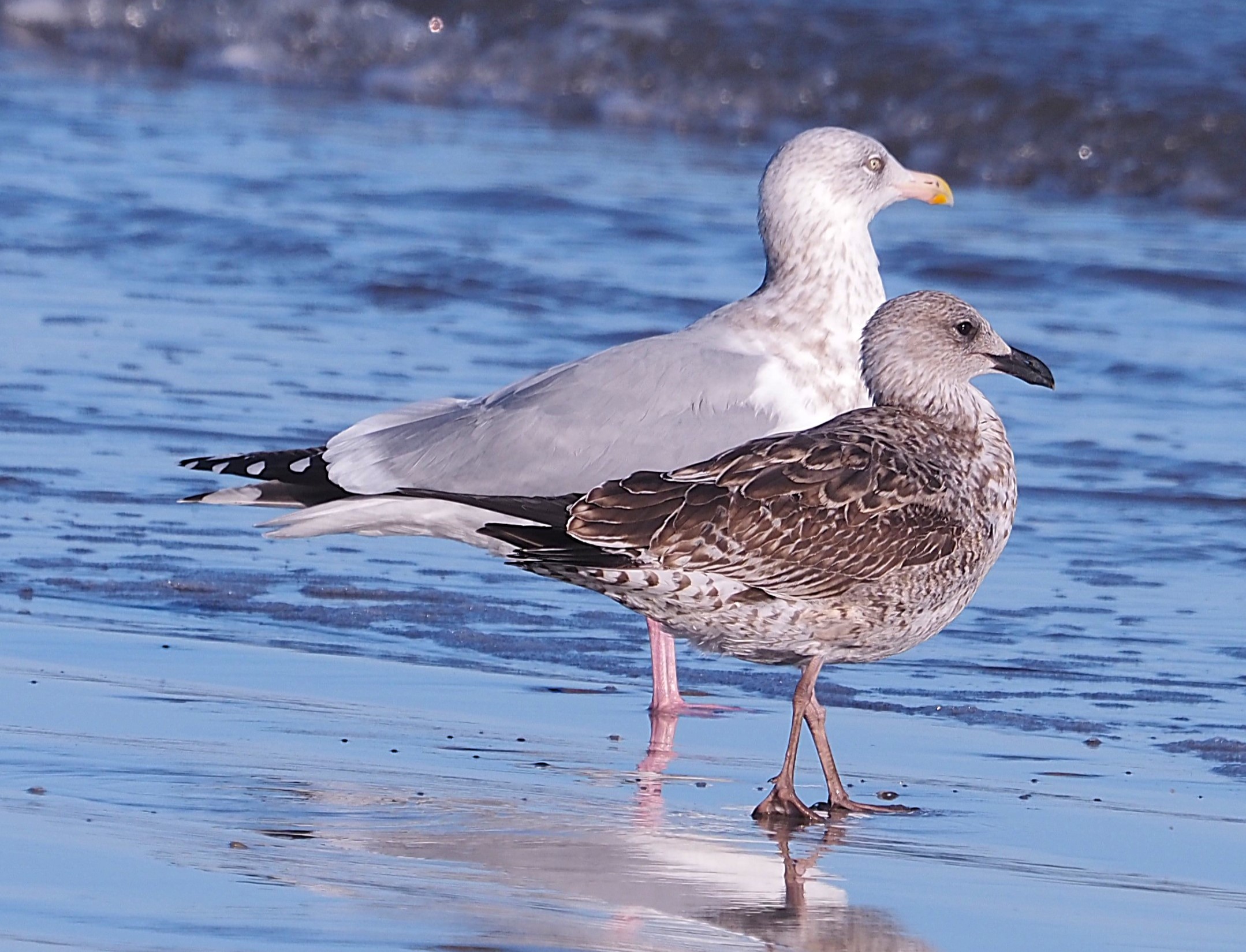
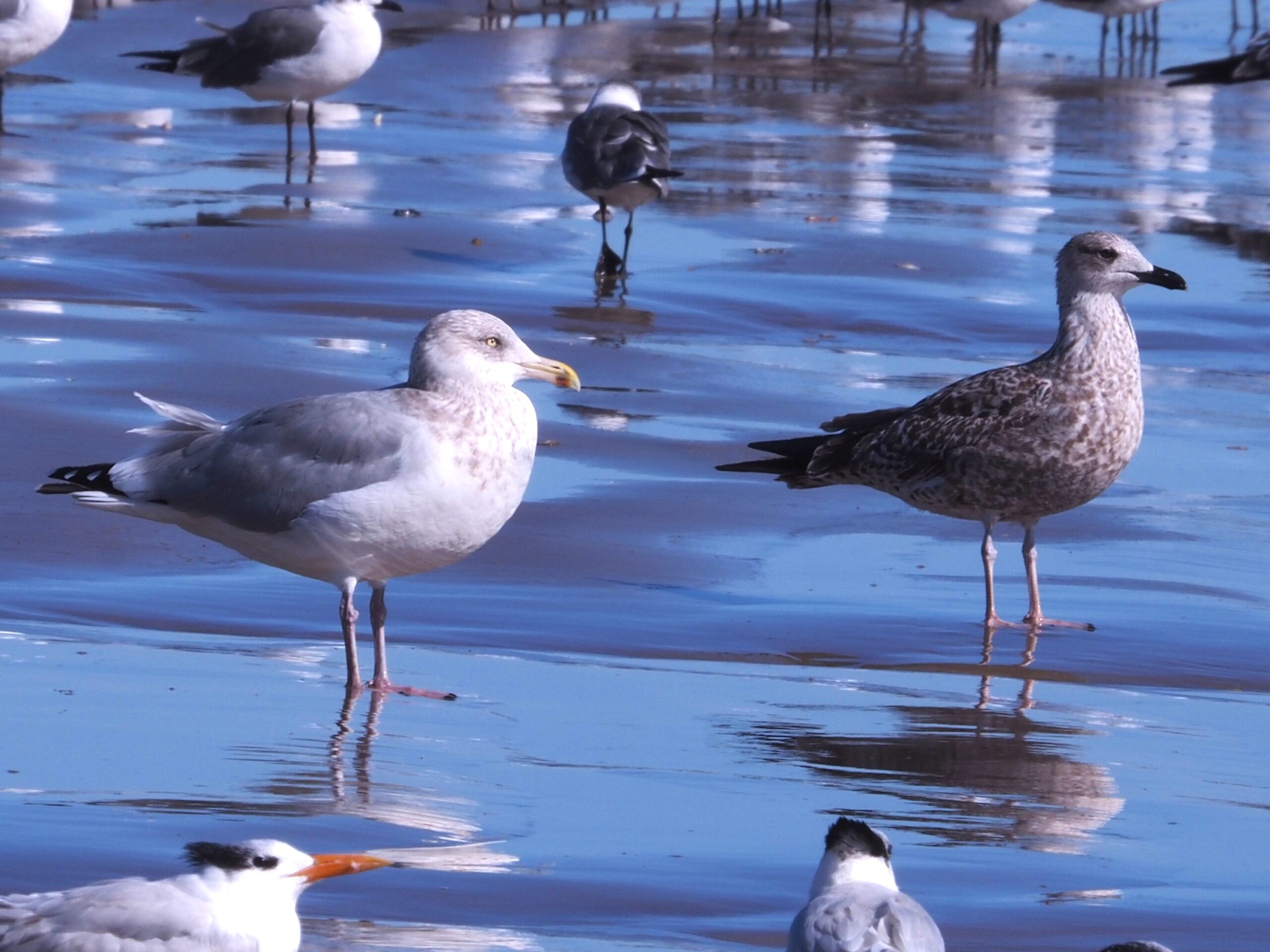
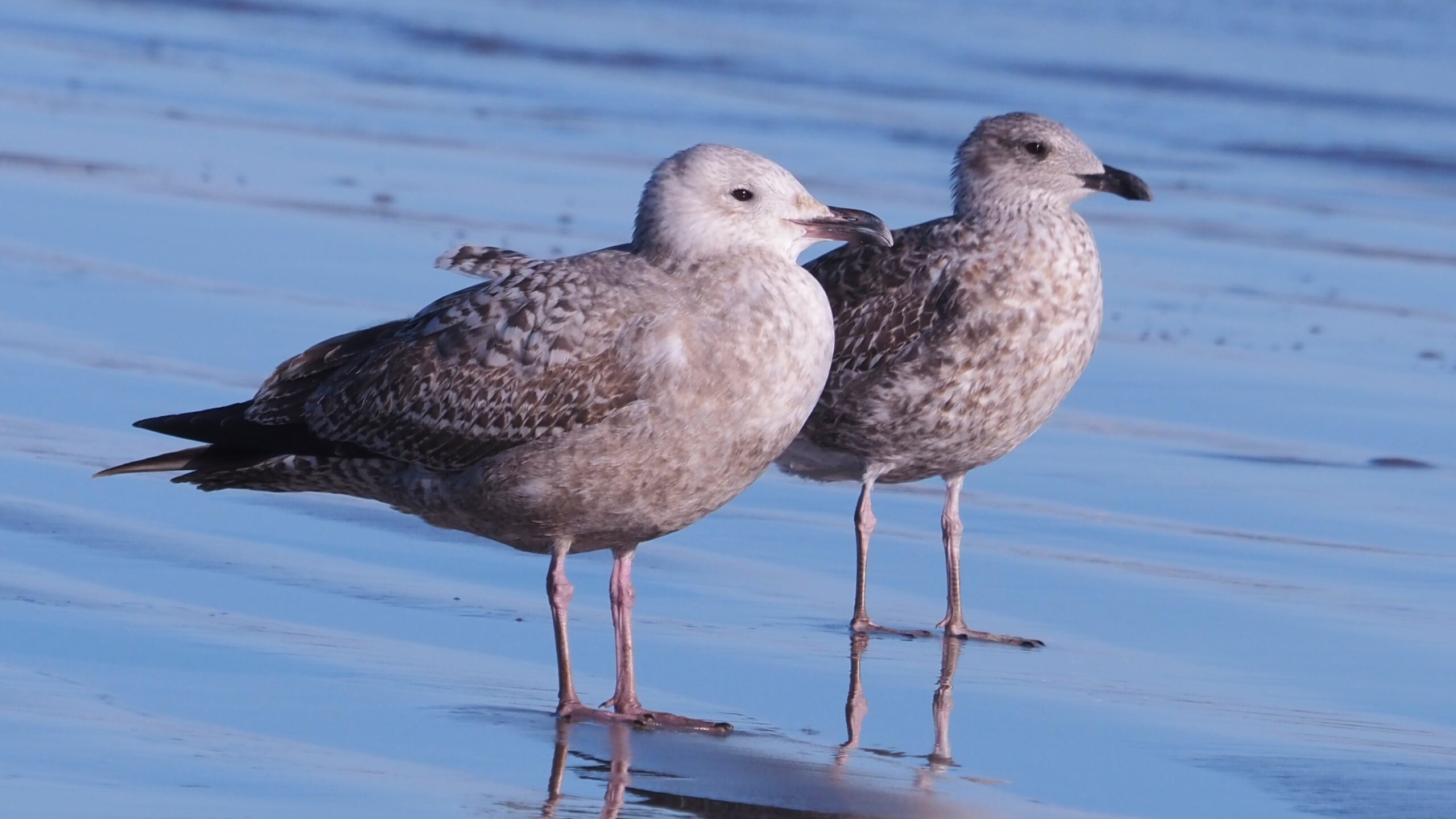
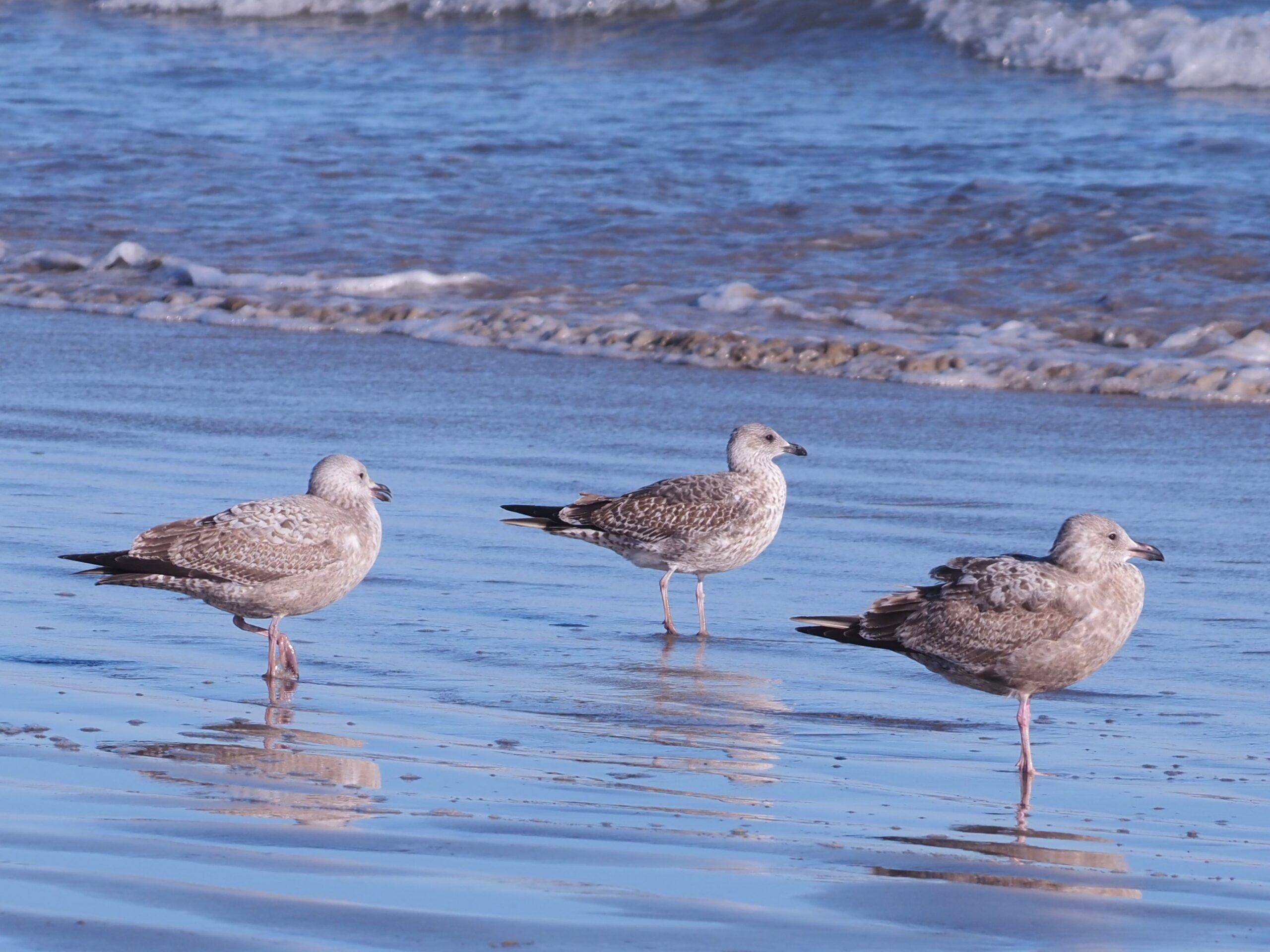
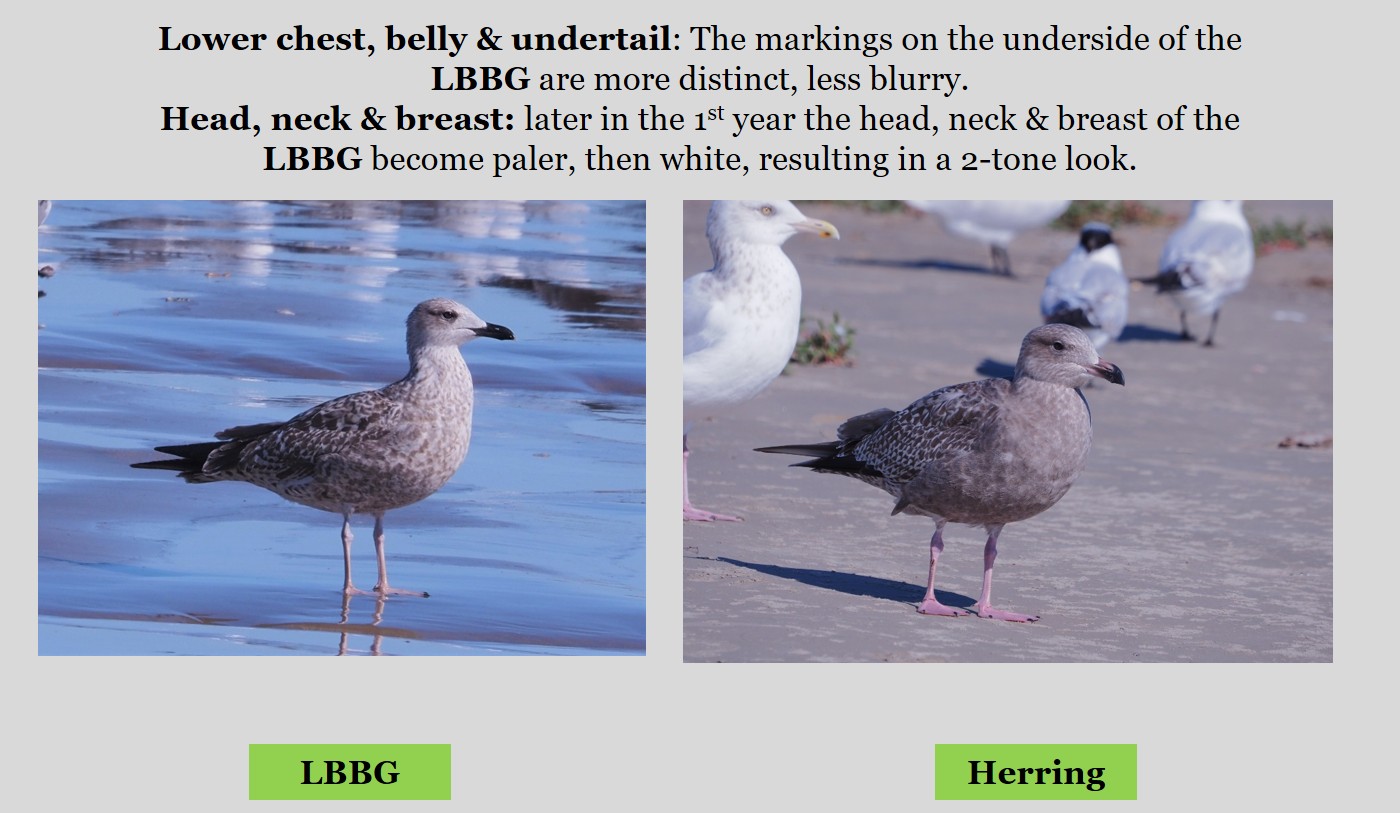
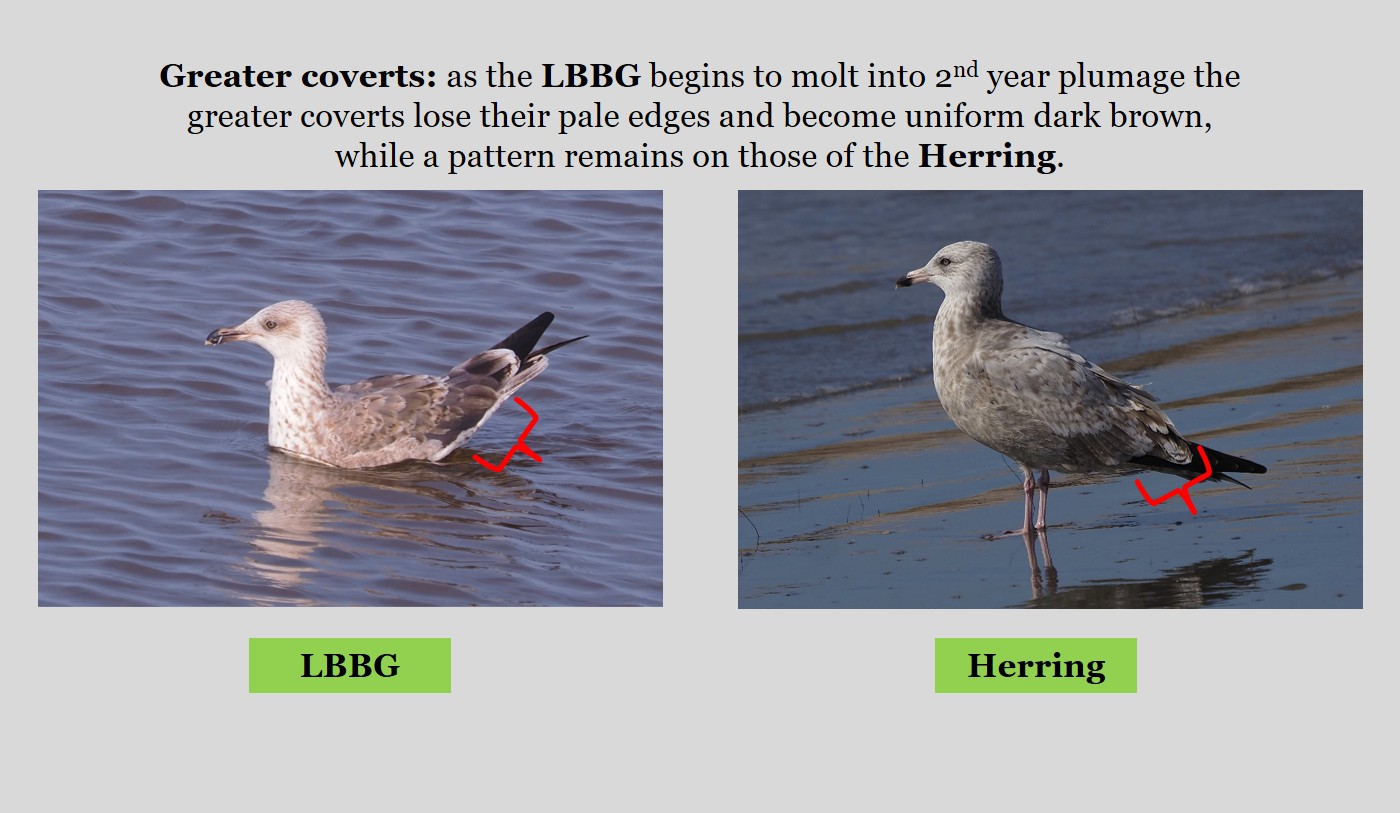
A single 1st year LBBG is pictured with one or more 1st year Herring below. Since their adult back feathers are quite dark, LBBGs are not as tricky to identify once their adult hues begin to emerge in their 1st winter and beyond. In addition to the leaner, more long-winged structure, the LBBG’s all black bill stands-out at this age; the Herring’s bills are beginning to get pink at the base (the bill of Herring sometimes begin to change color as early as September). Note that each of the gulls pictured below has scapulars that stand out, in both color and in-relief, from the surrounding feathers. These scapulars have recently emerged, indicating the molt from juvenile to 1st basic plumage (aka 1st winter) is in progress. The Herring’s scapulars are paler than their wing coverts, while the individual scapular feathers of the LBBG have a darker gray fringe, with a large brown center. The LBBG usually has more distinct markings on the underside than the Herring, which could be called “blurry”.
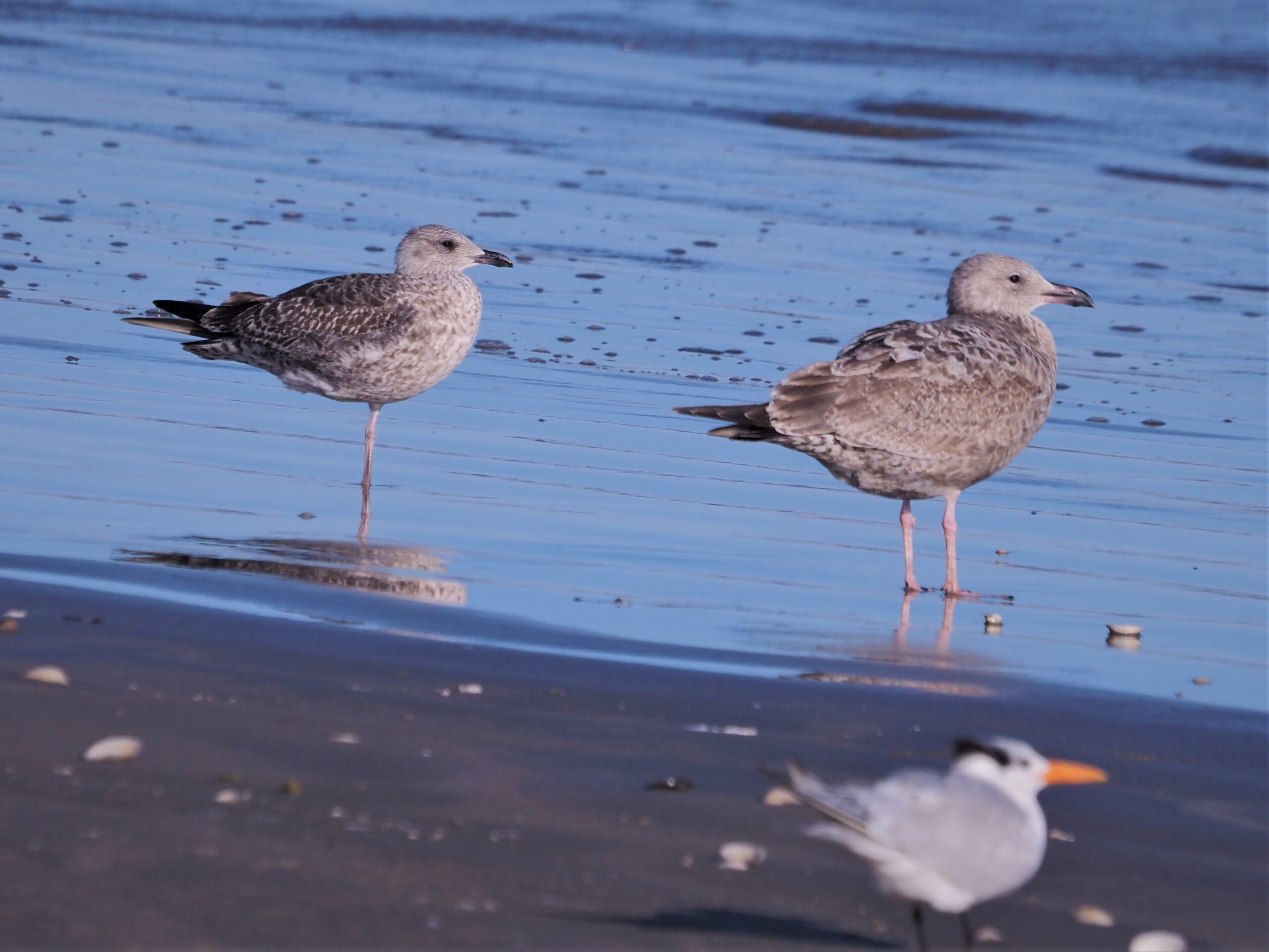
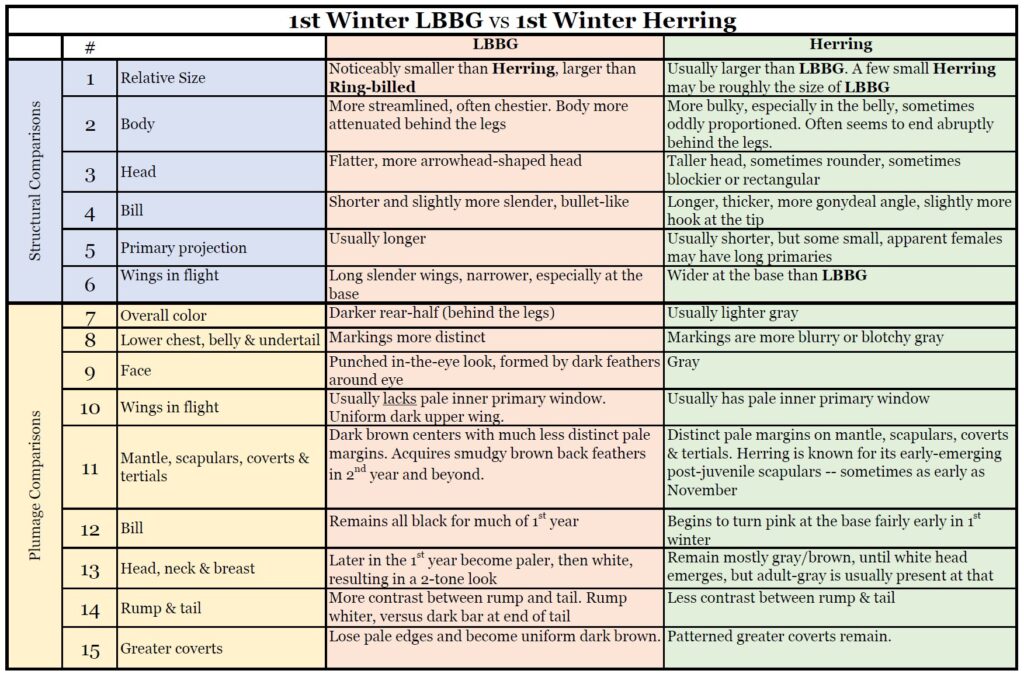
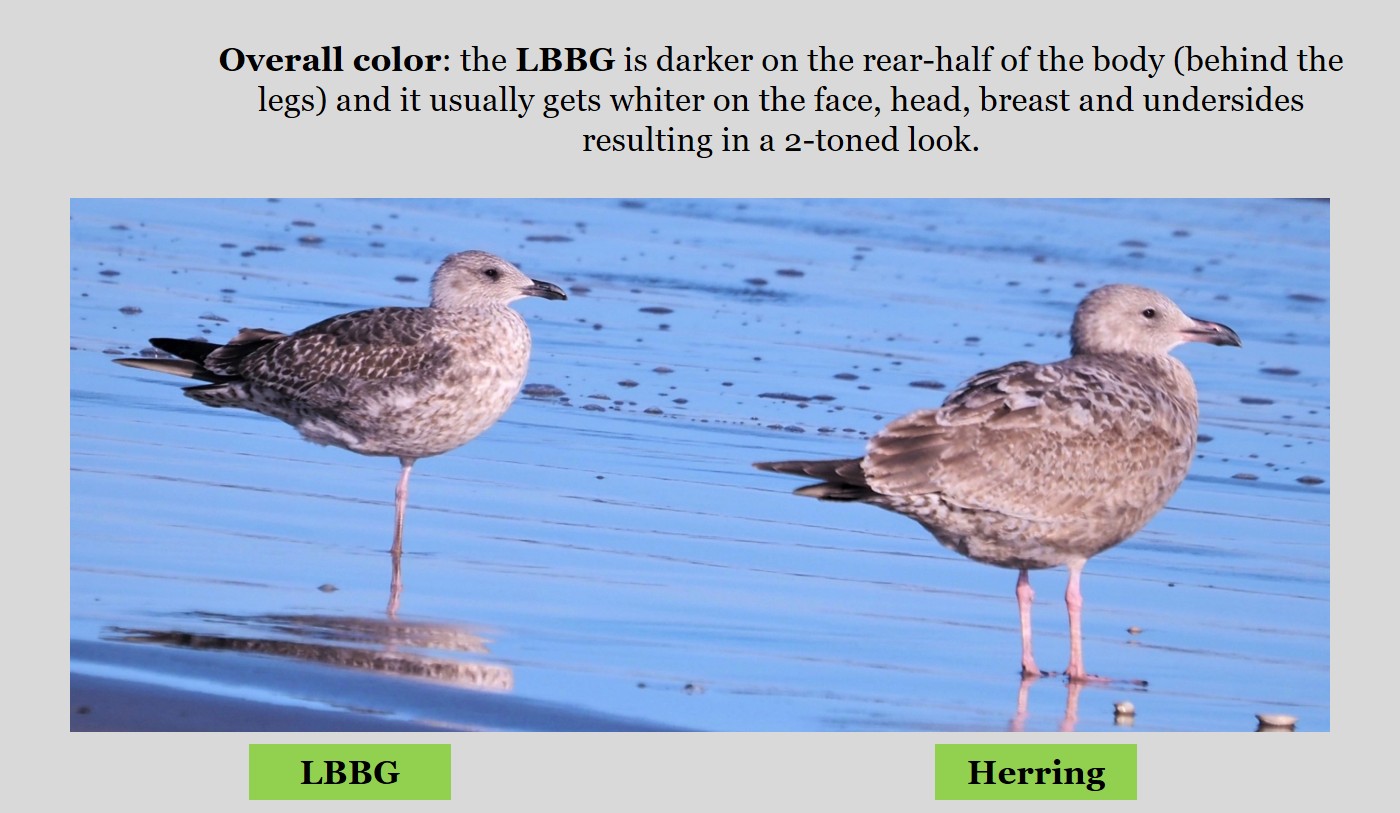
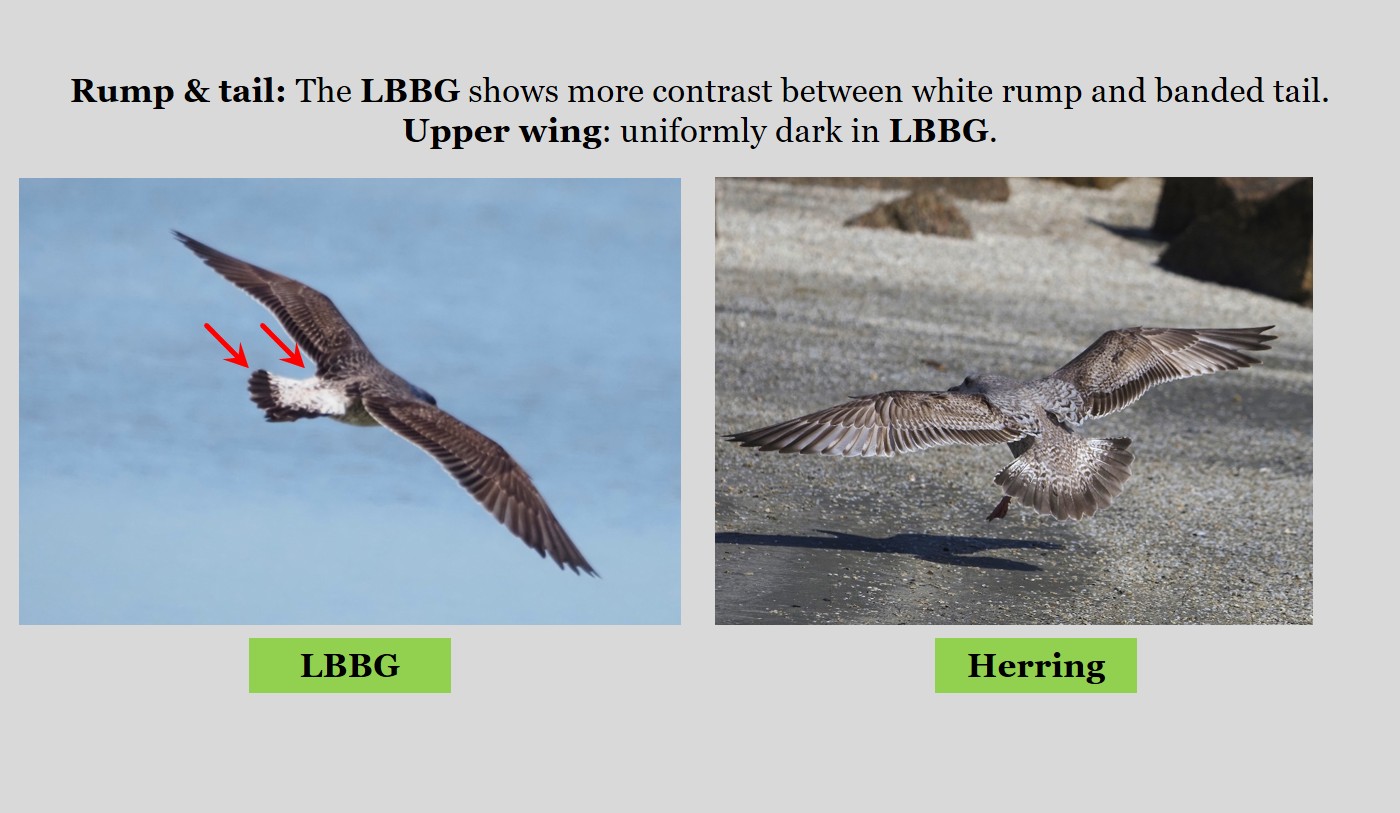
The table below summarizes some important field marks in determining 1st year LBBG vs 1st year Herring. Comparisons for each point are made in the photos following the table.
Sub-Adult LBBG
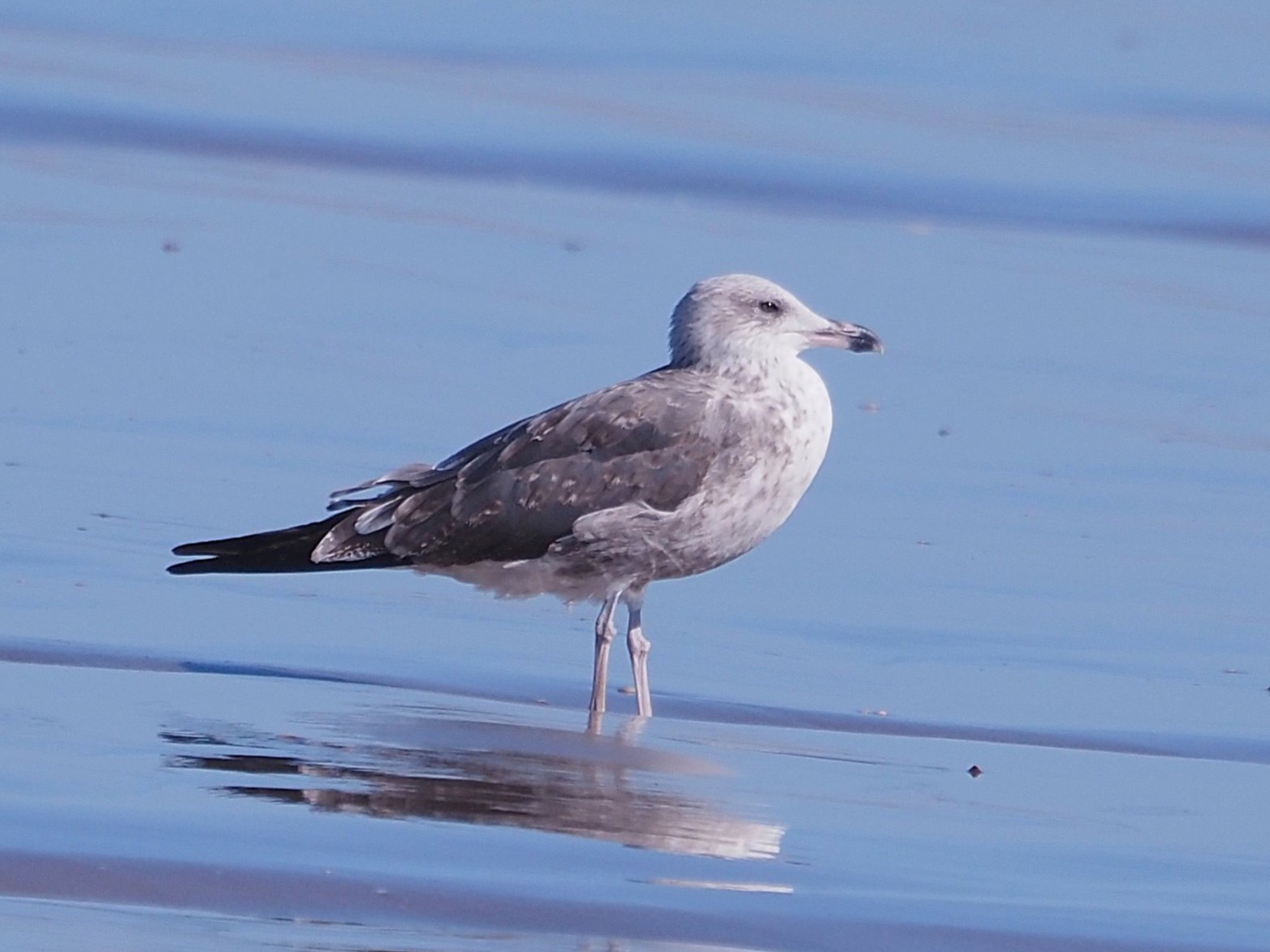
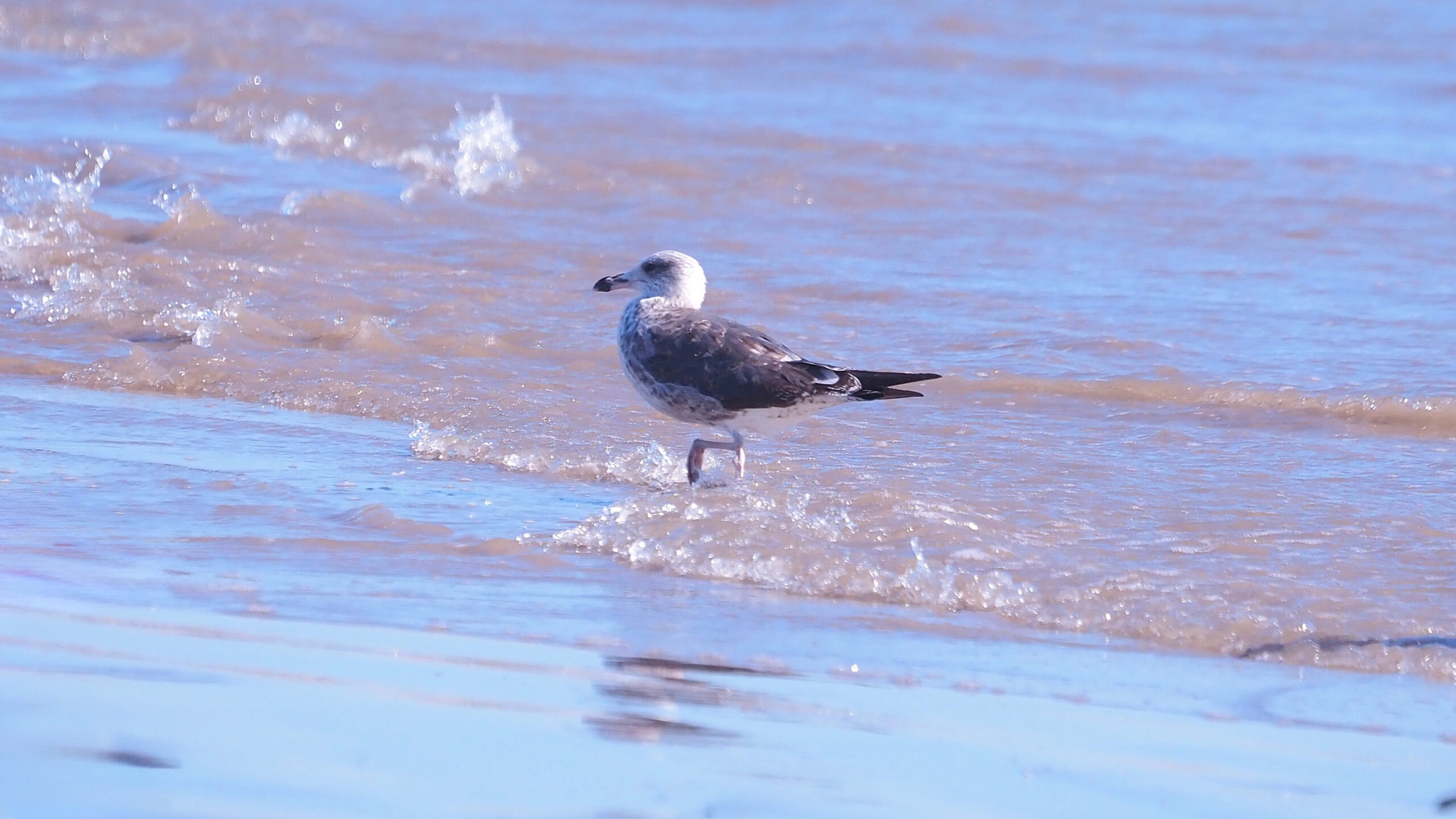
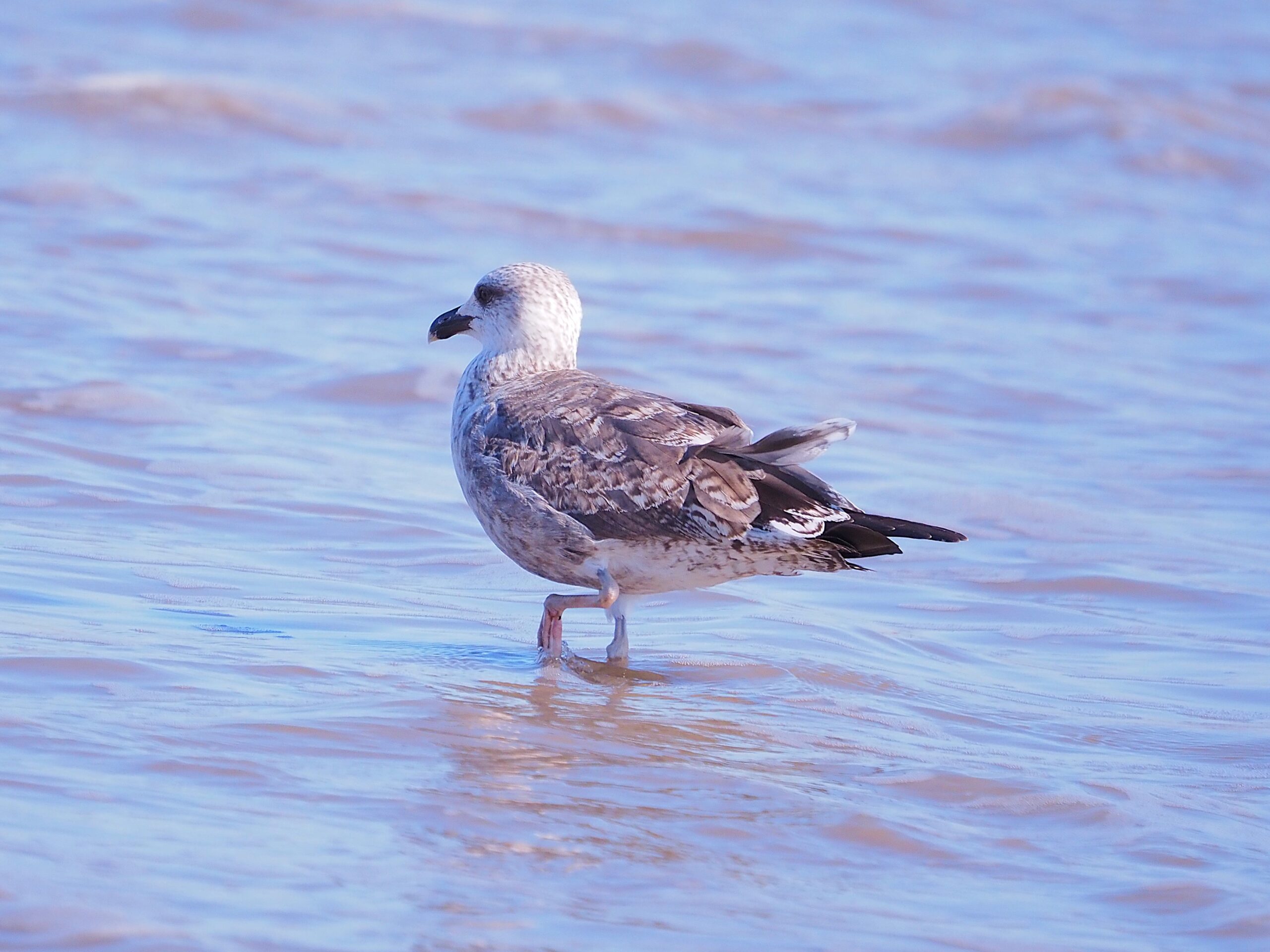
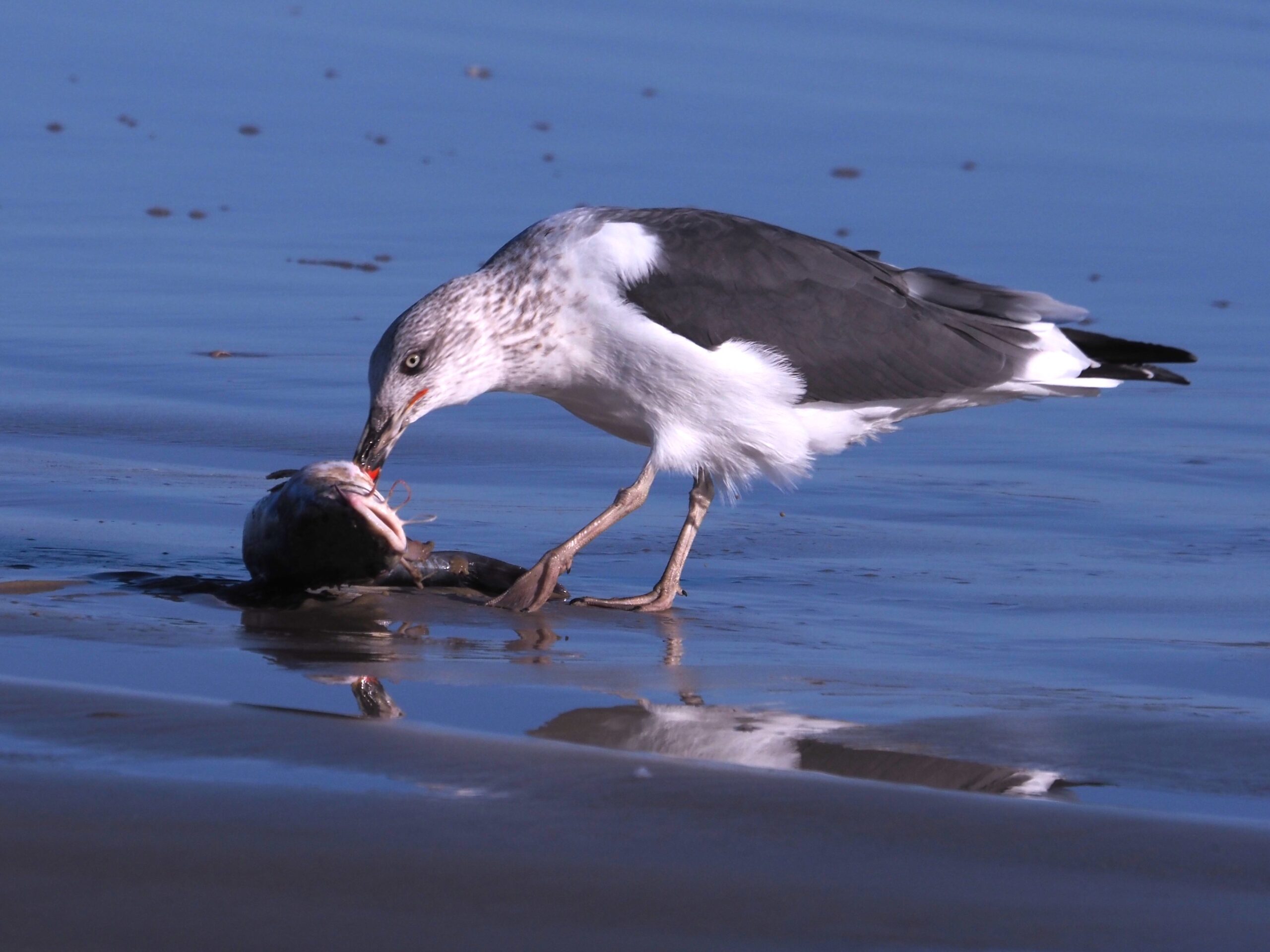
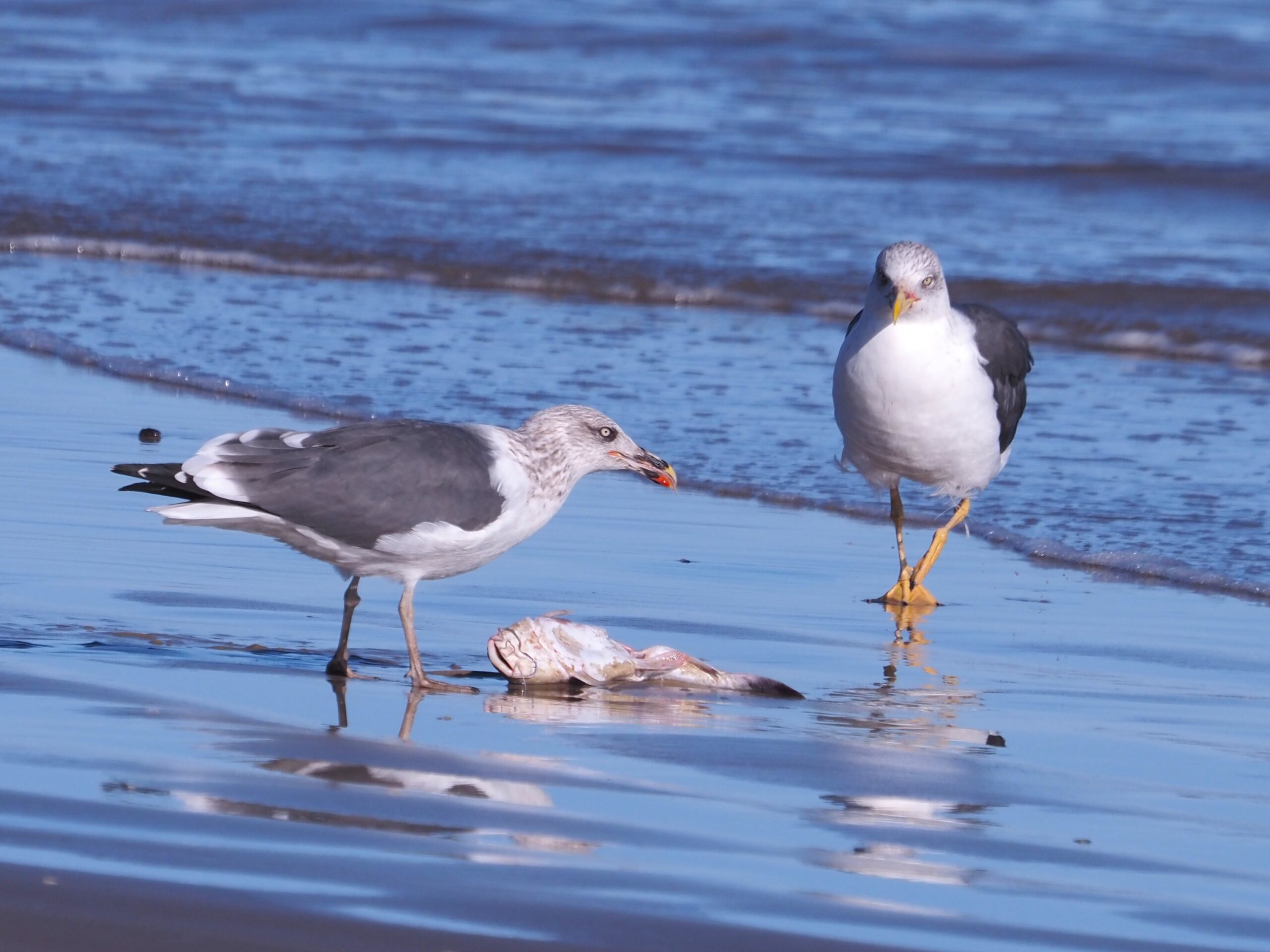
The darkening of the back of LBBGs continues as the gull grows into adulthood making identification easier at this age. Second and third (possibly 4th in the last photo) winter LBBGs are shown below.
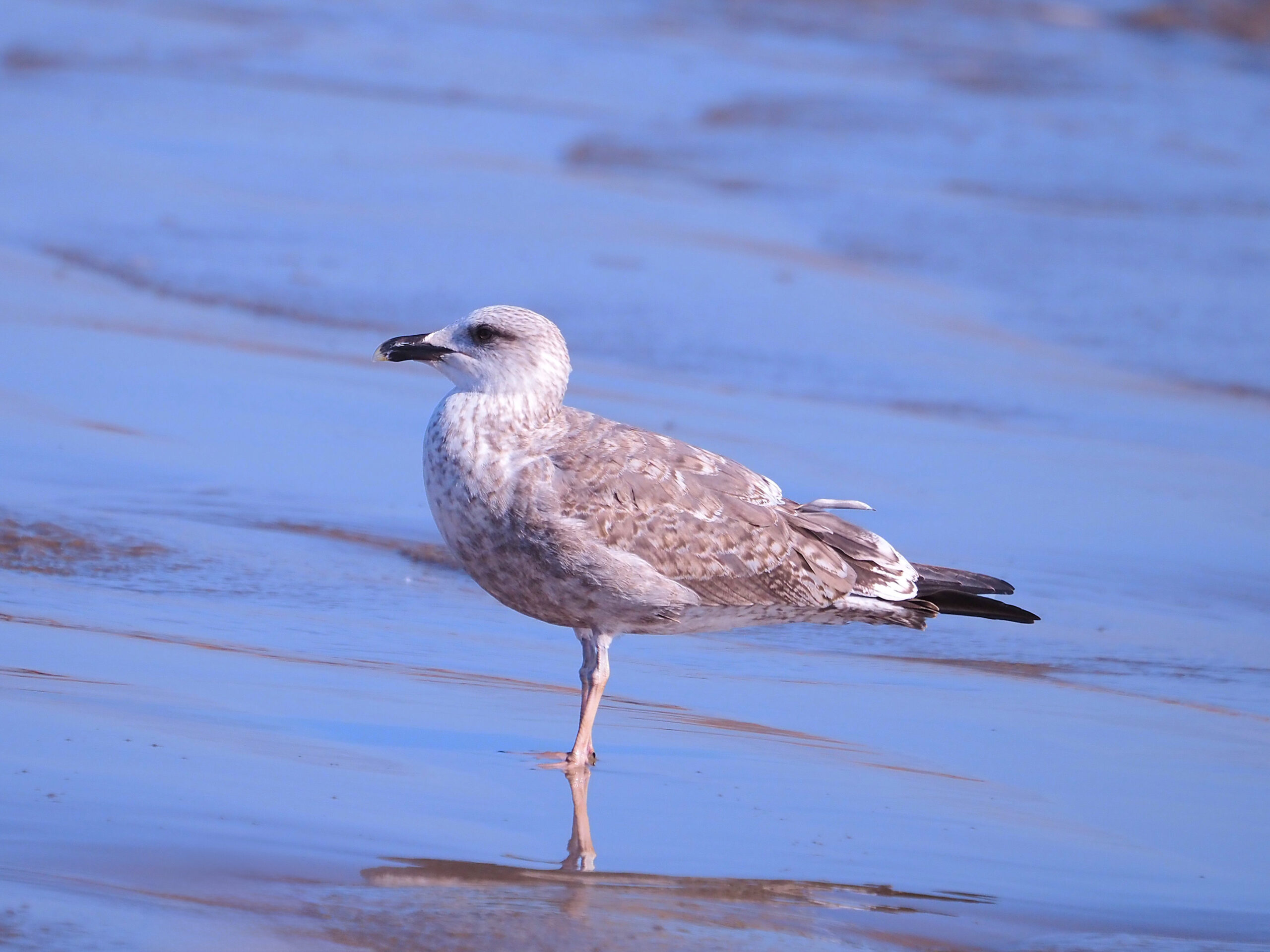
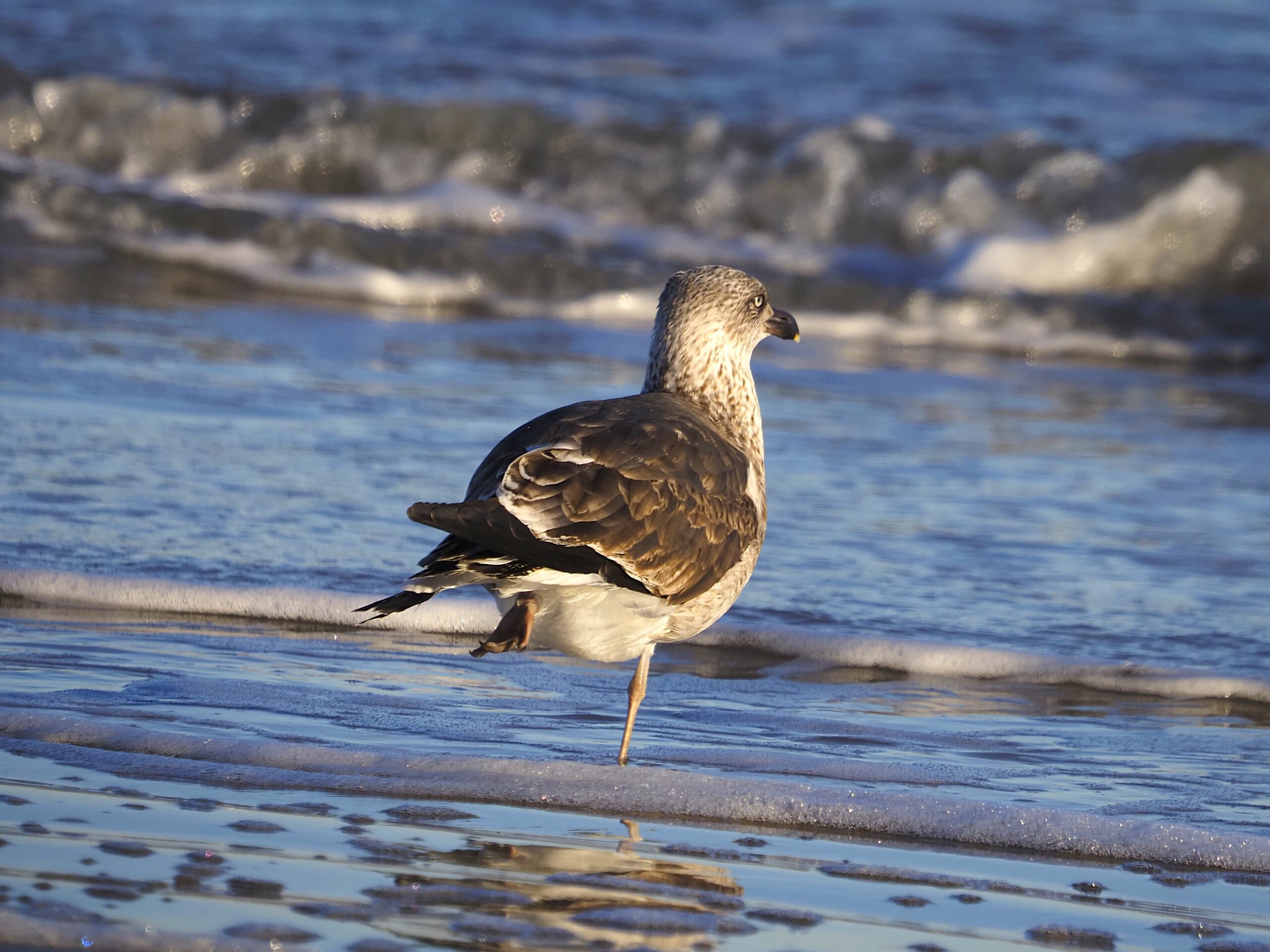
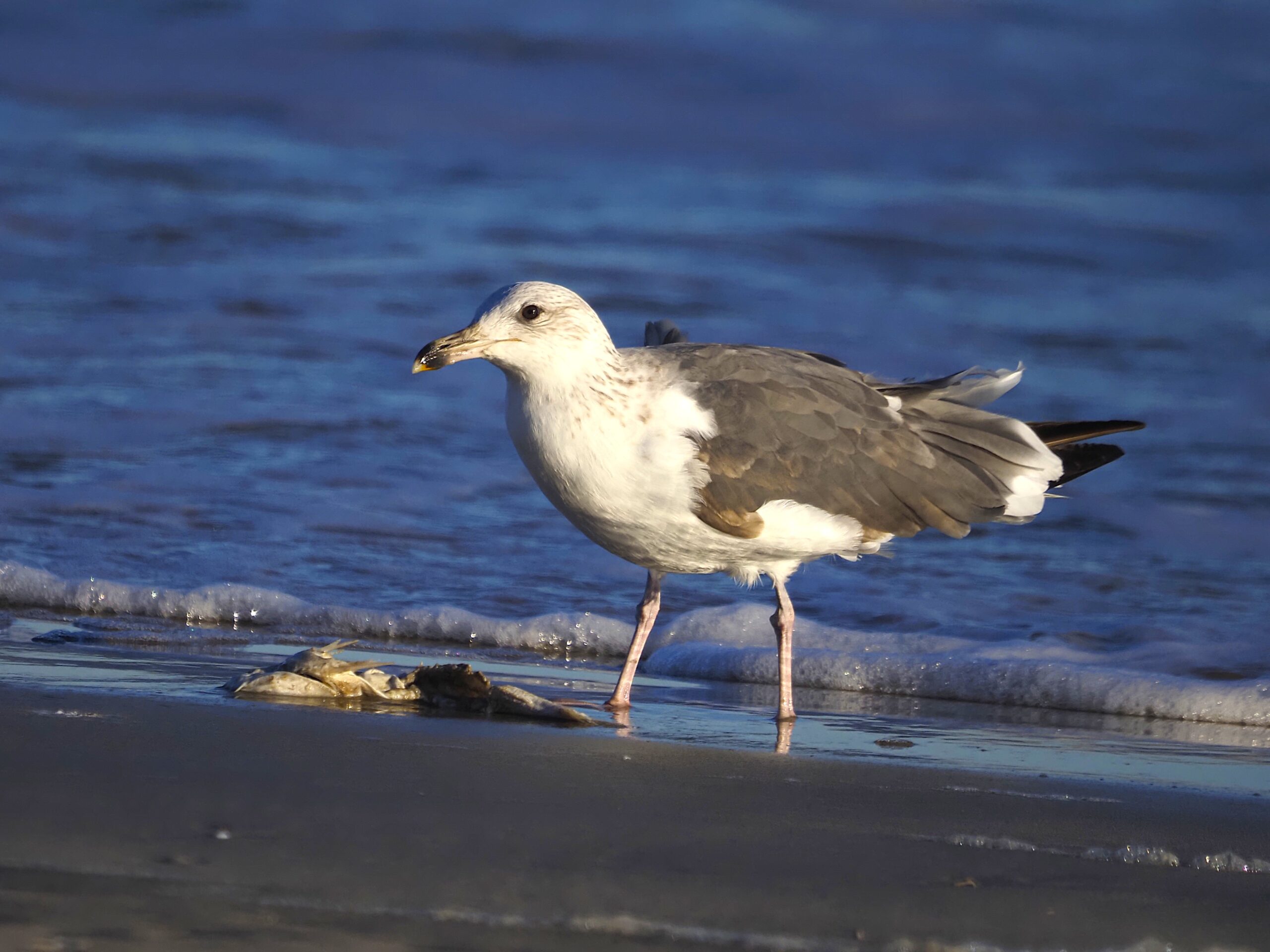
Adult Plumage
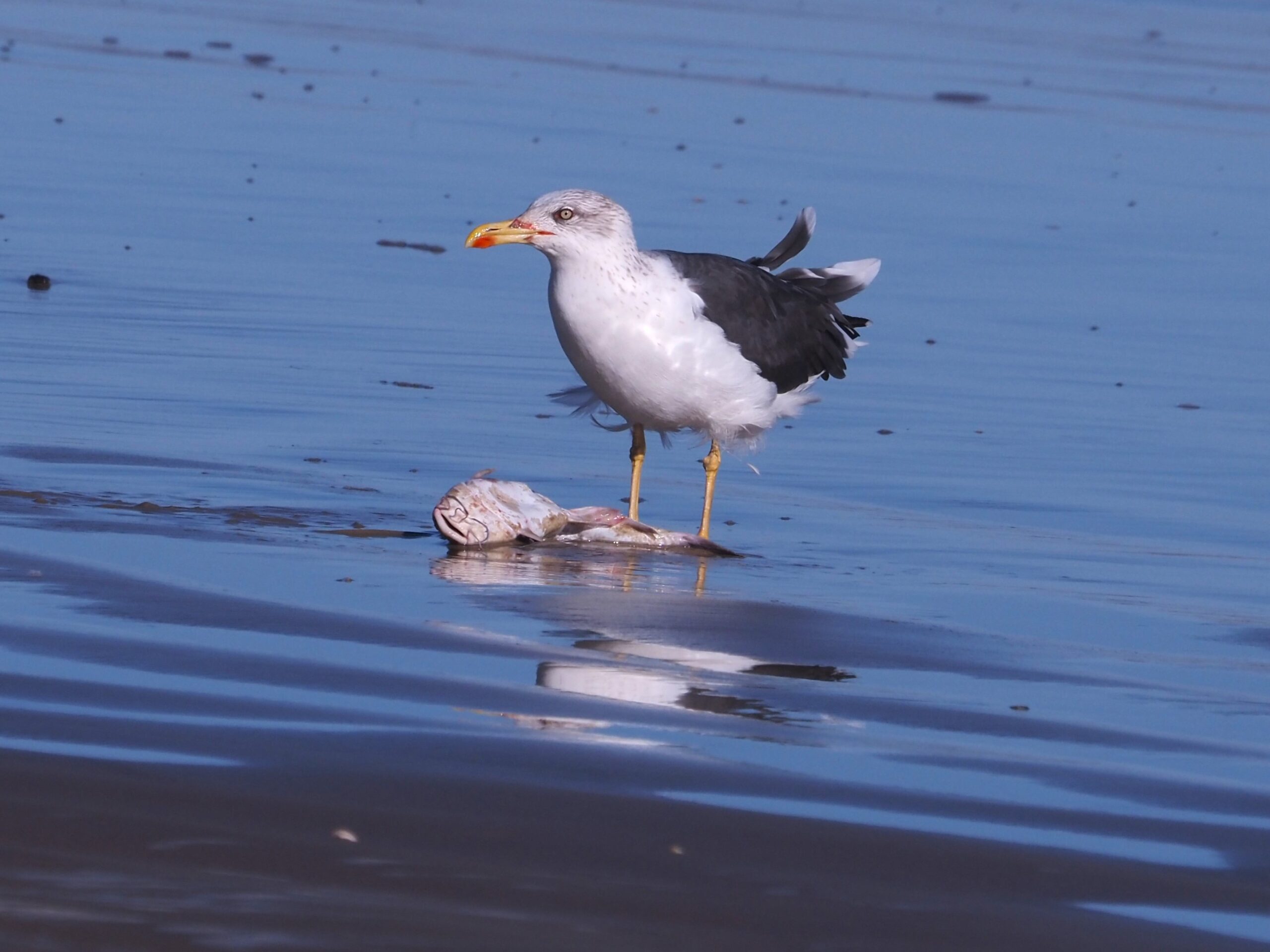
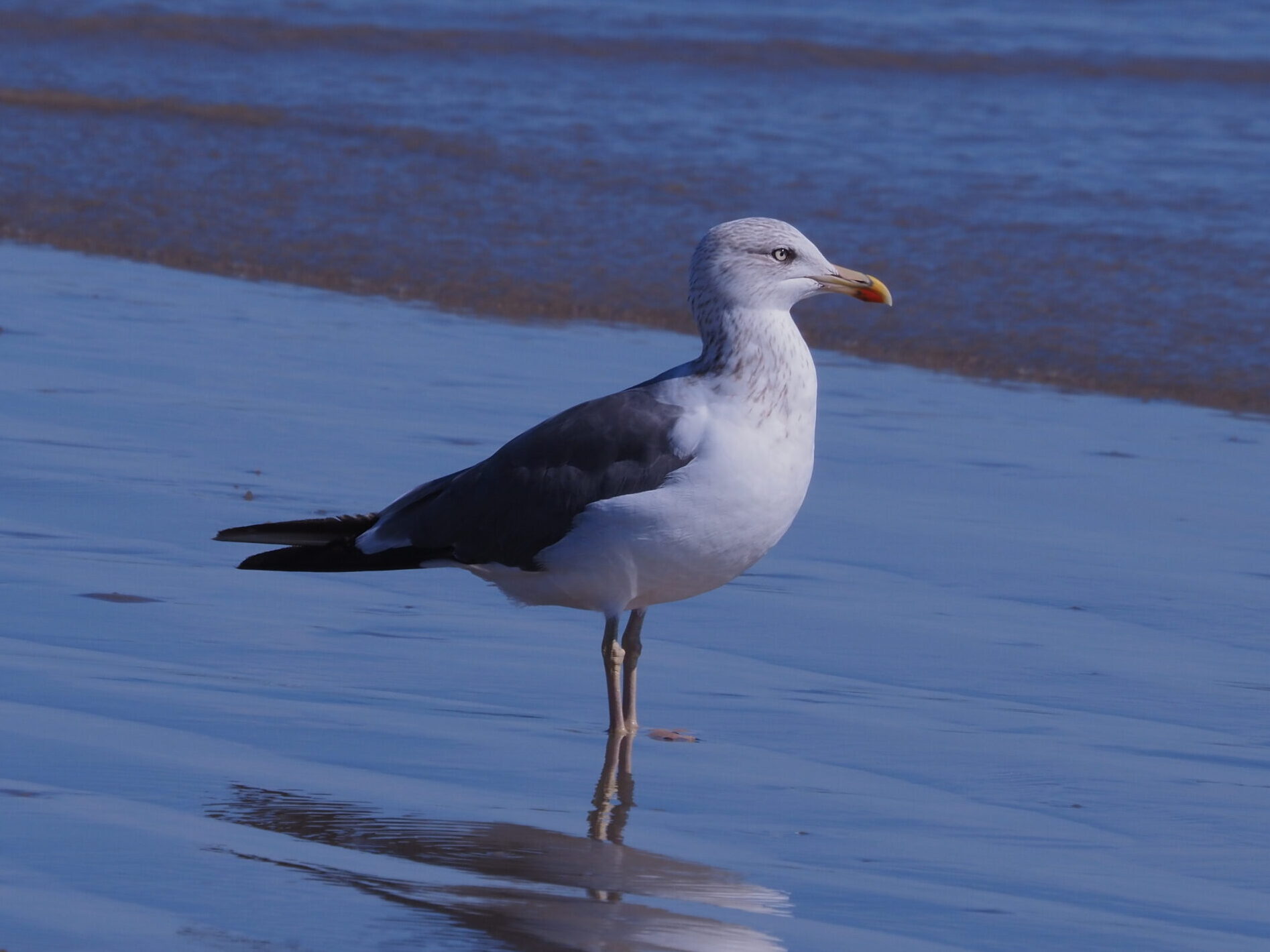
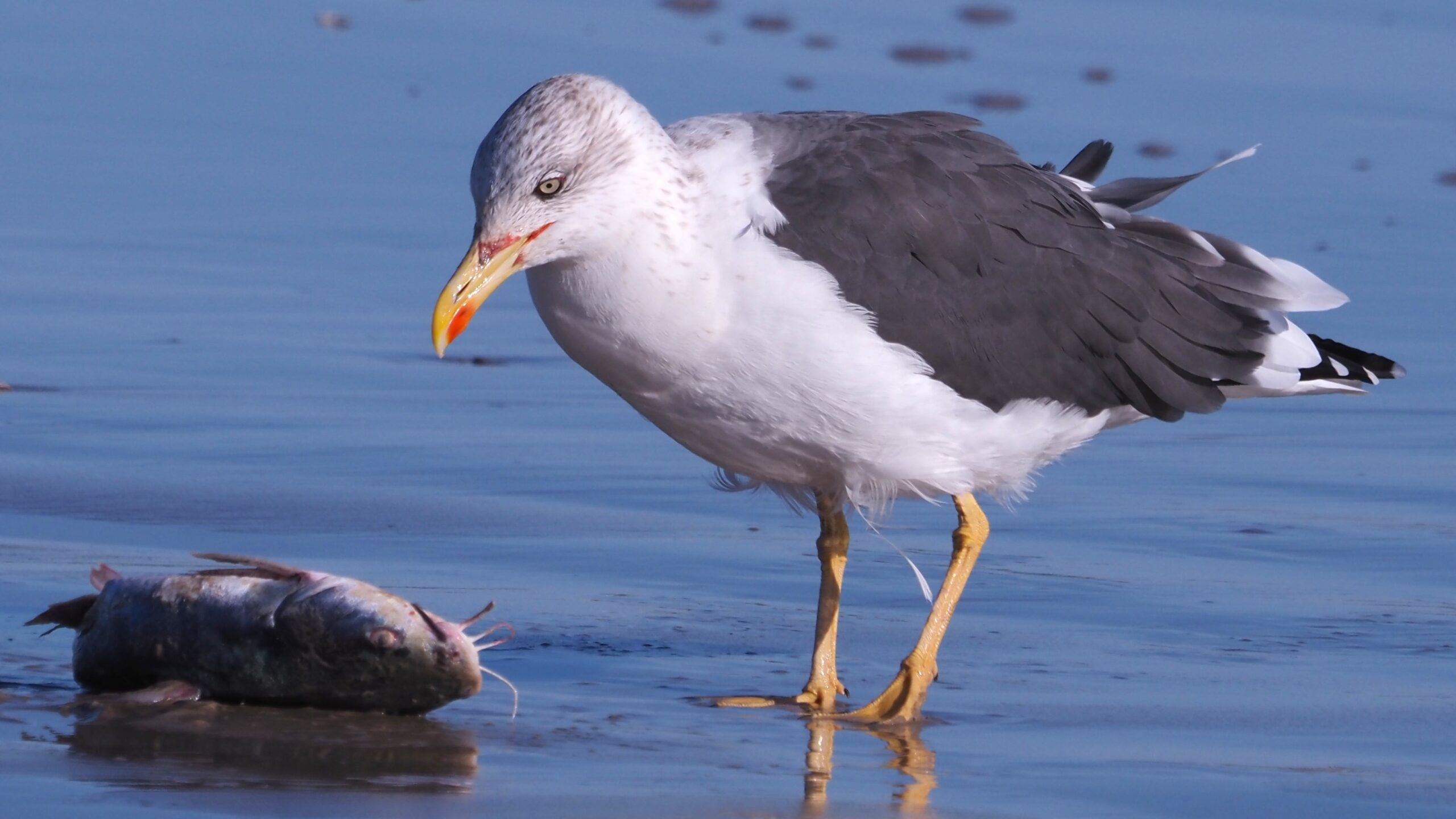
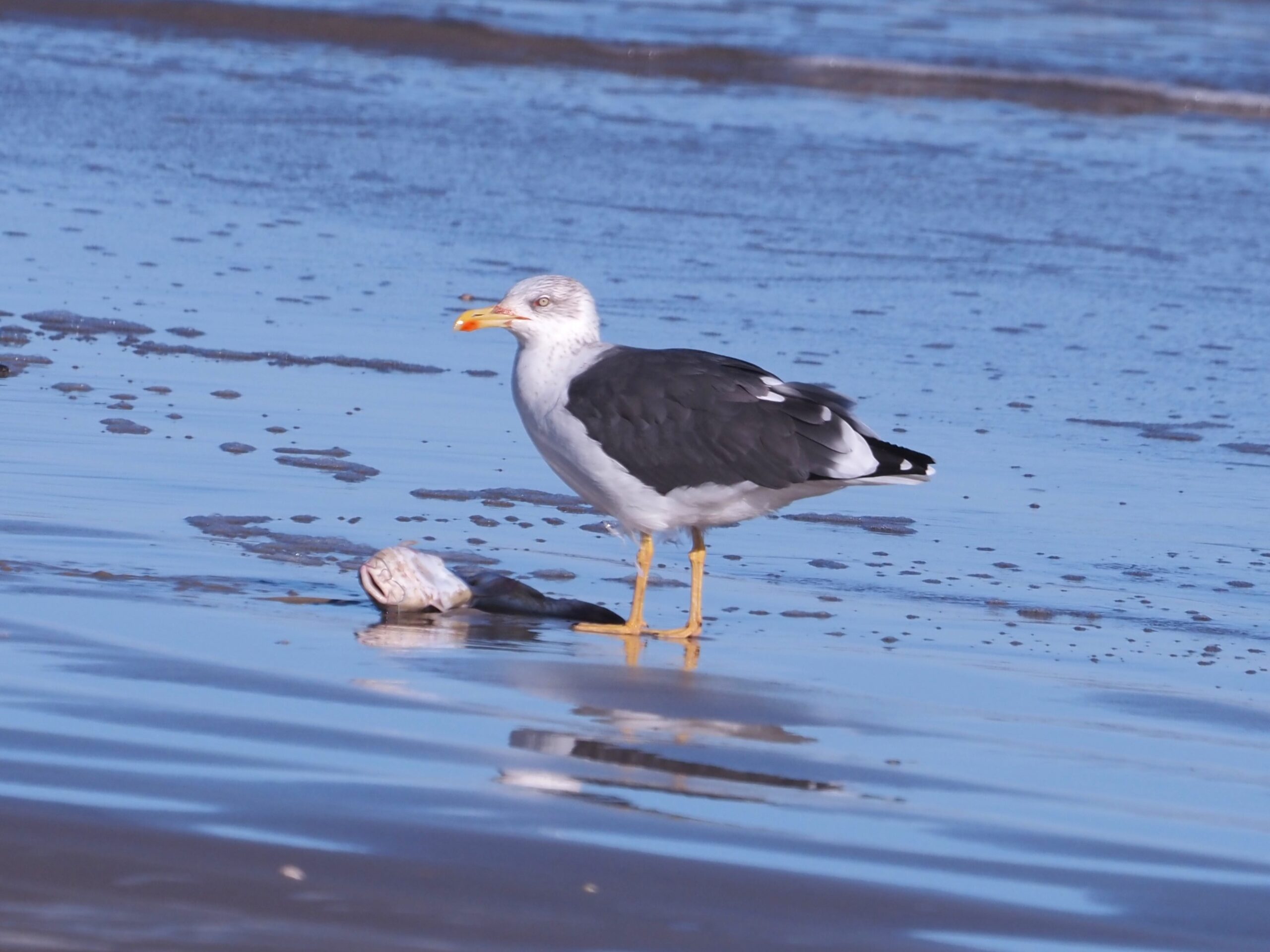
Adult LBBGs are shown below and since they are only in Texas in winter (generally) most of my photos are of basic plumage.
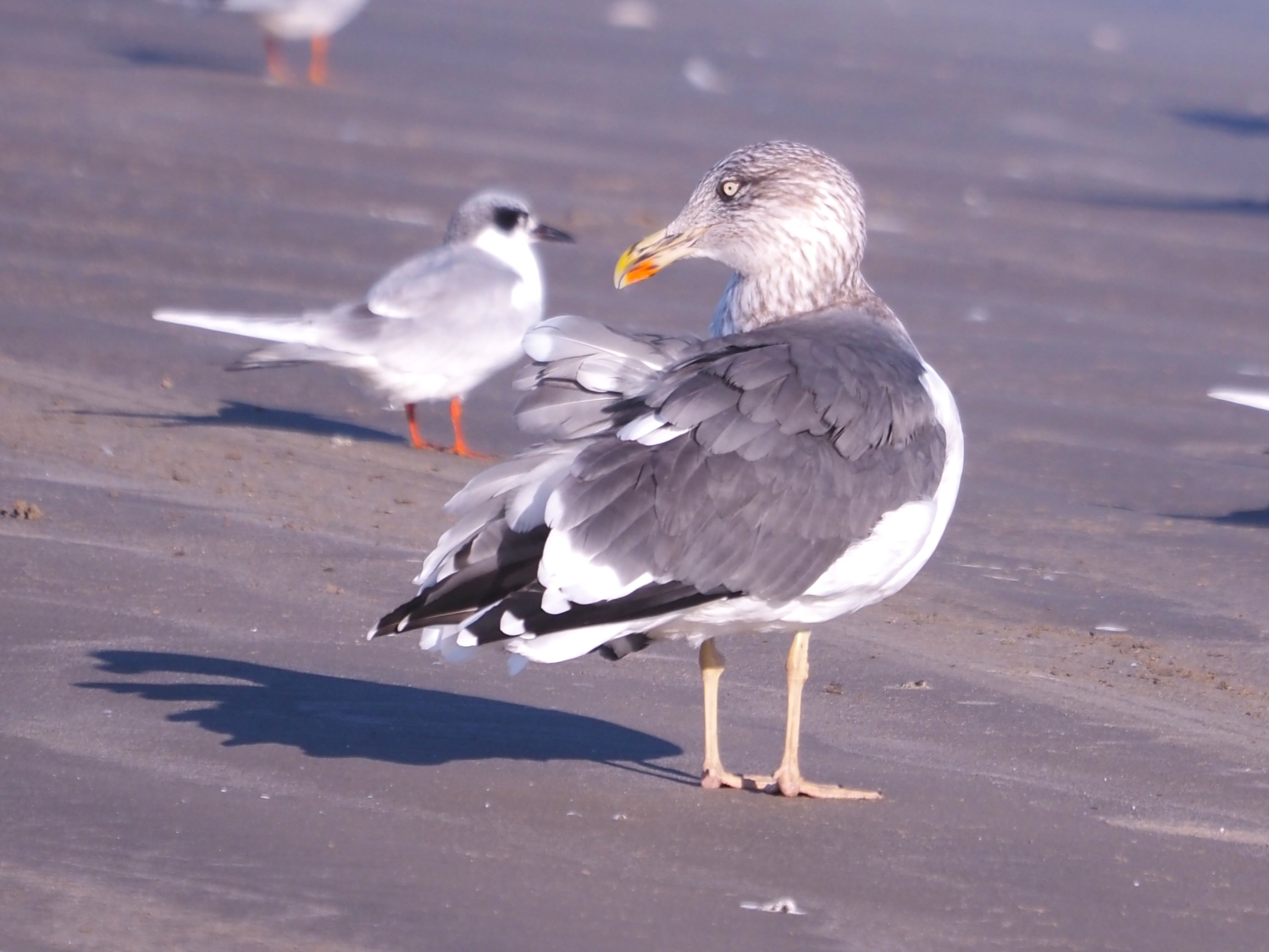
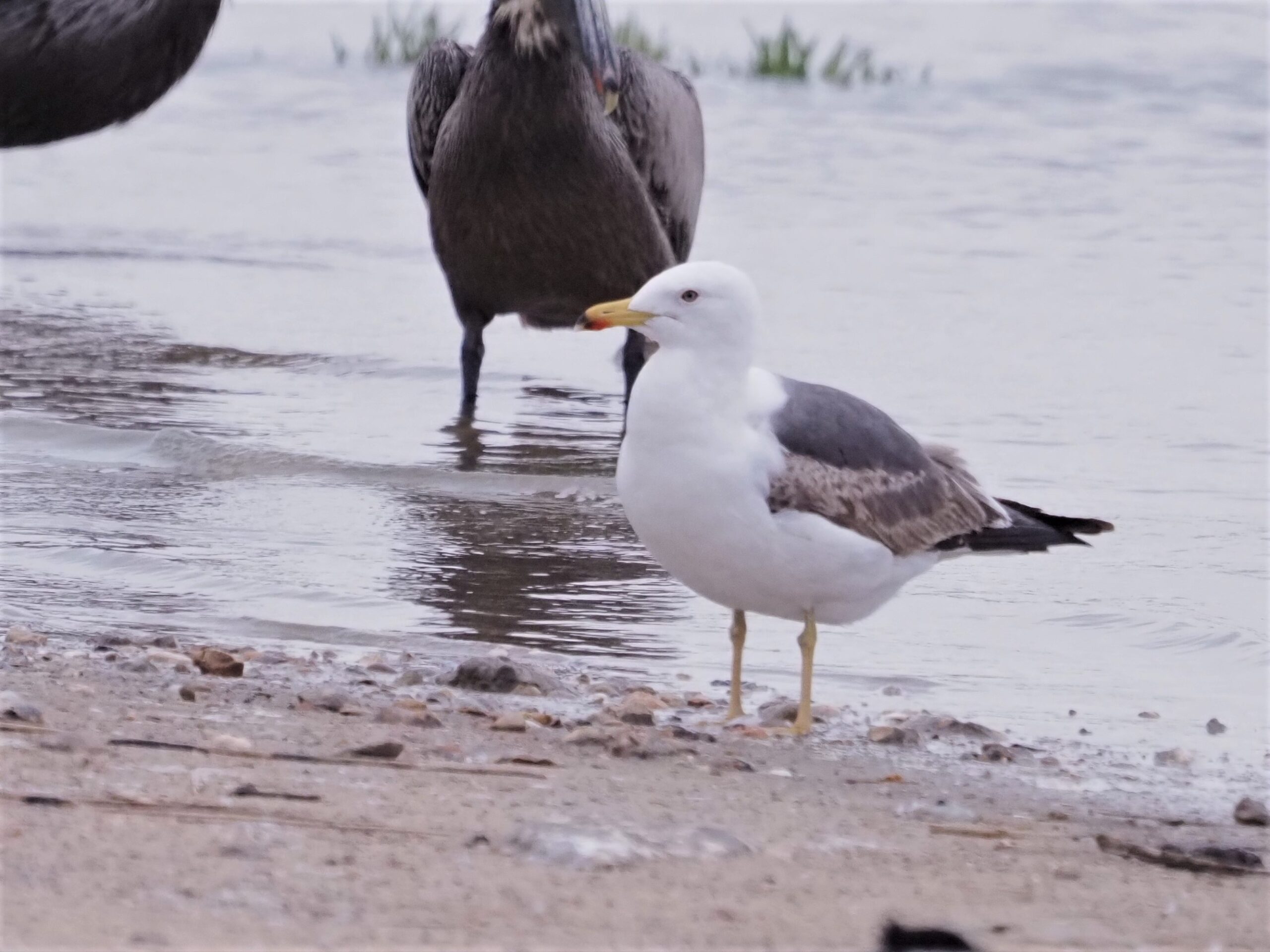
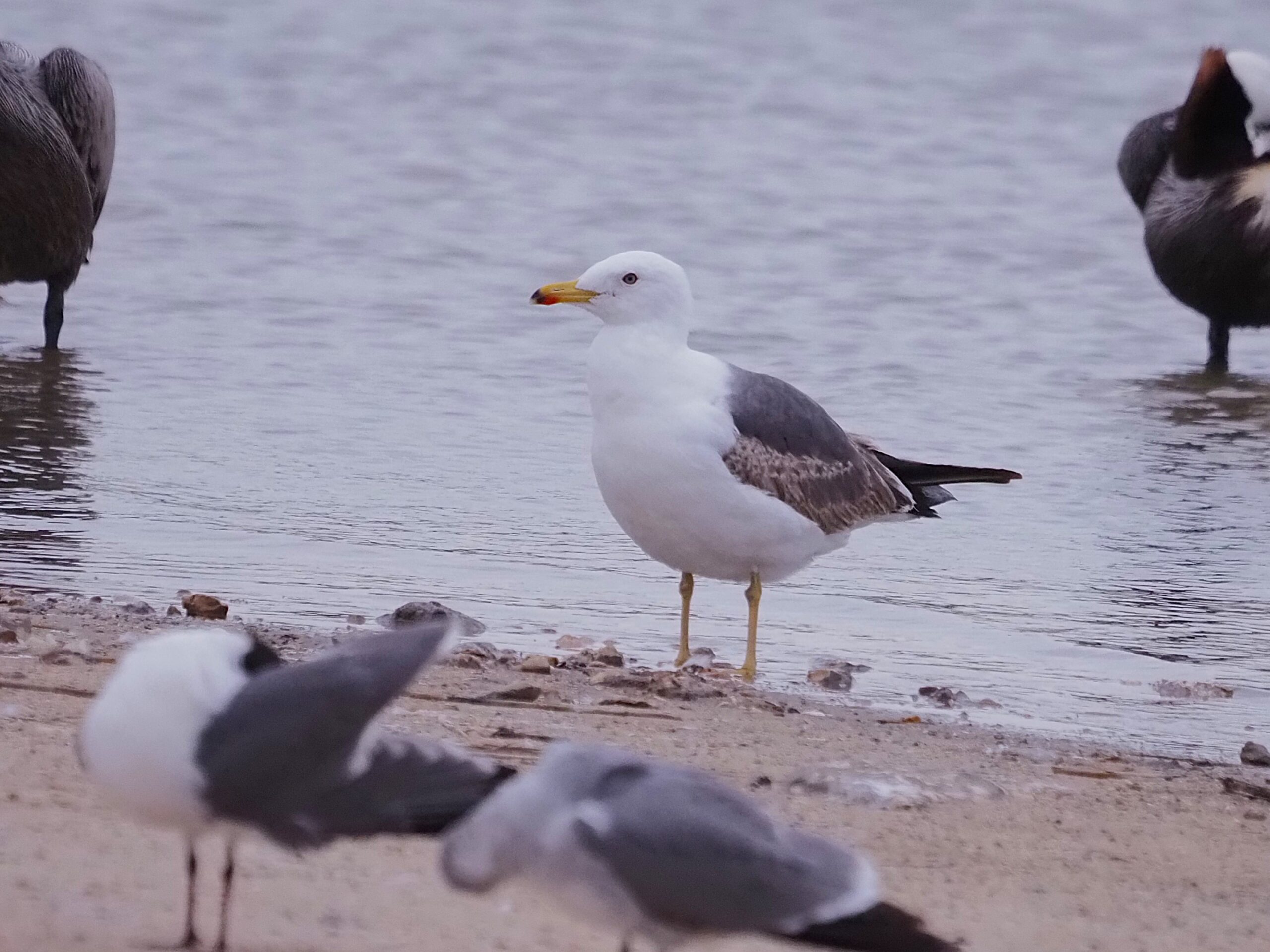
The 3rd cycle gull shown in the series of photos below is the closest I’ve found to an LBBG in alternate plumage in Texas (Rollover Pass, Bolivar Peninsula, 4/26/23). The head is stark white, with no sign of streaking on the hind-neck and head, or black feathers near the eye. However, the old feathers of the wing coverts are obvious as is the lack of white spots on the primaries.
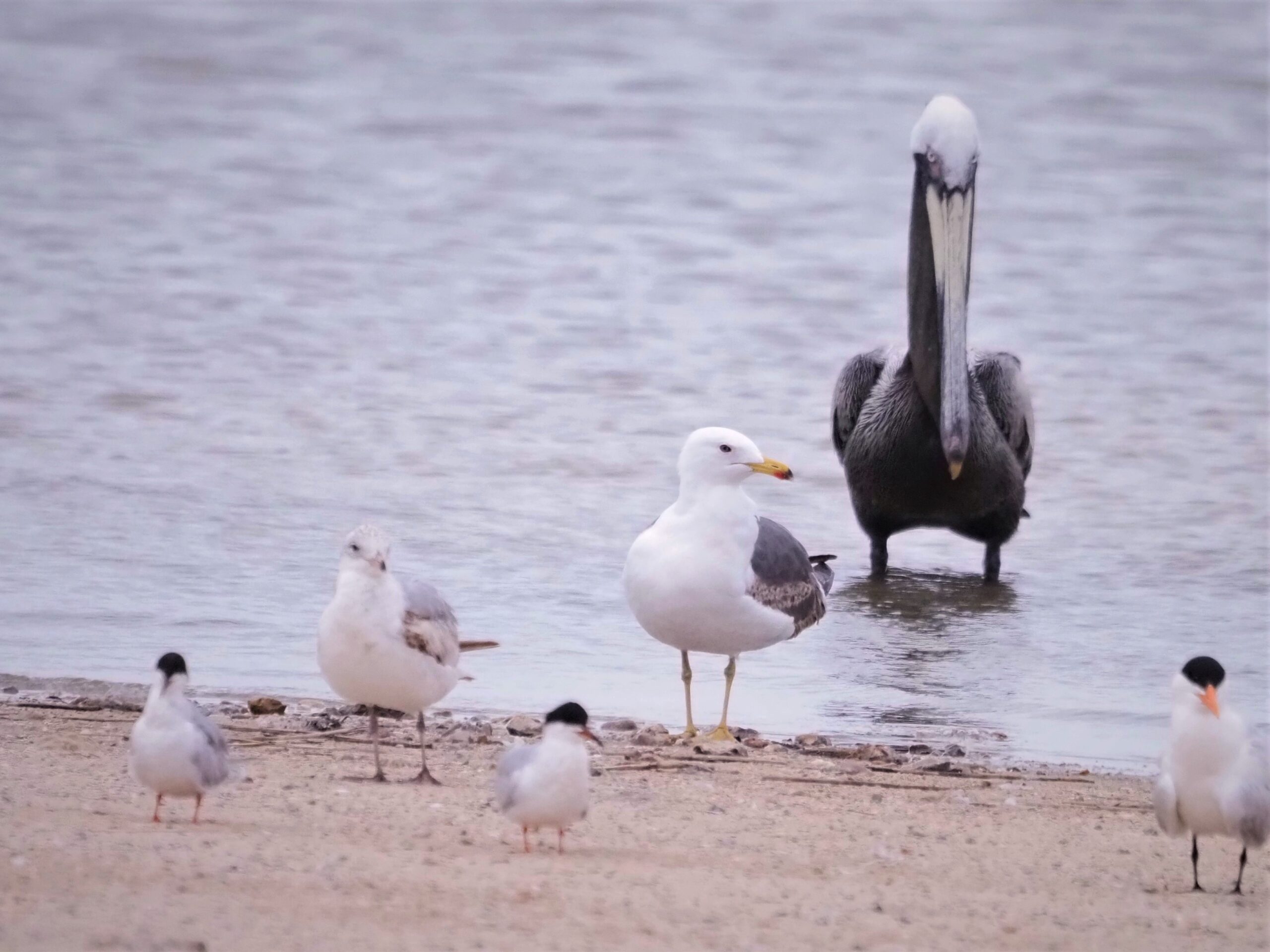
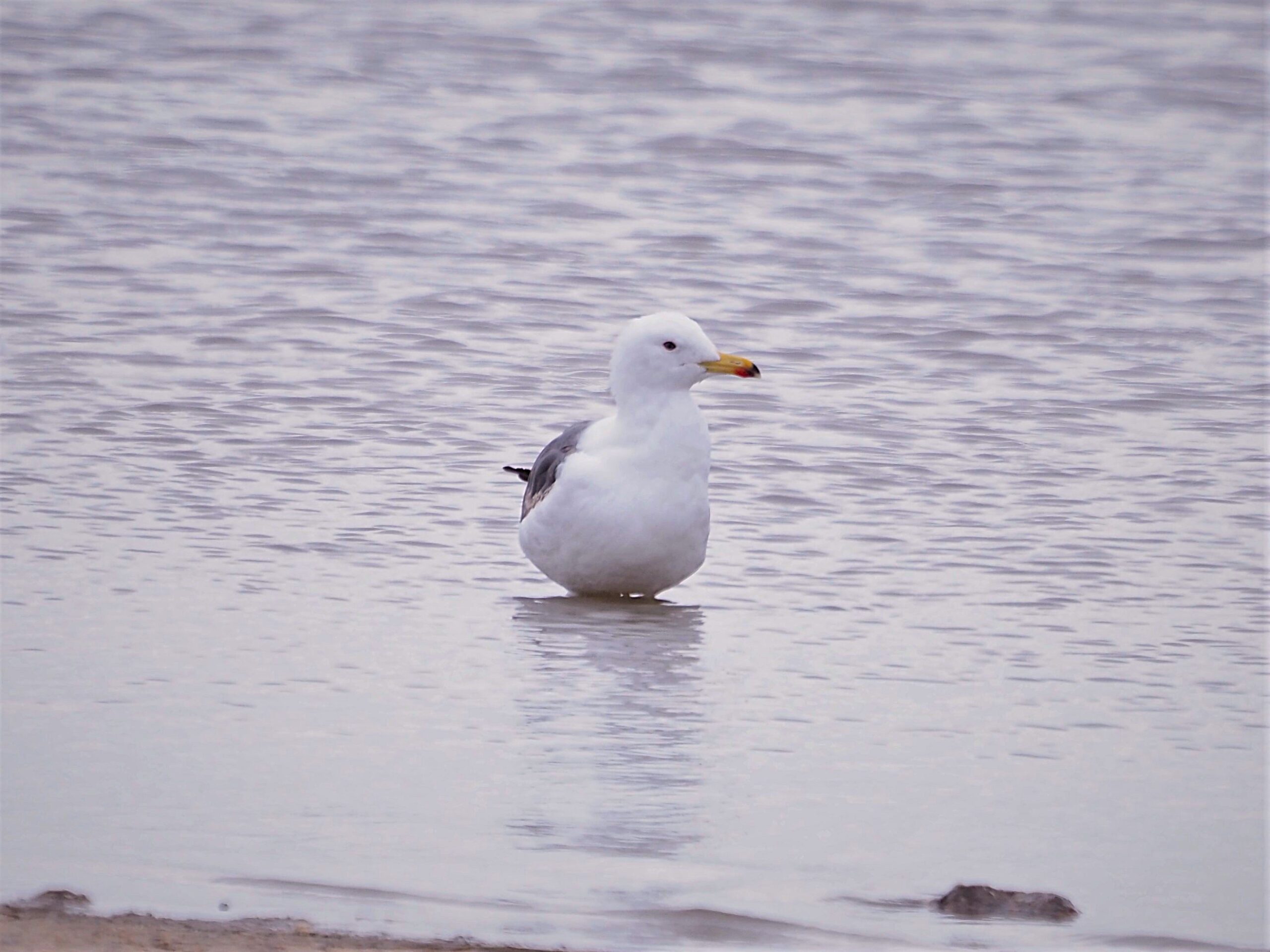
Somewhat surprisingly, the LBBG shown below appears to be in adult alternate plumage even though the photo was taken in January (1/24/25, Bryan Beach, Texas).
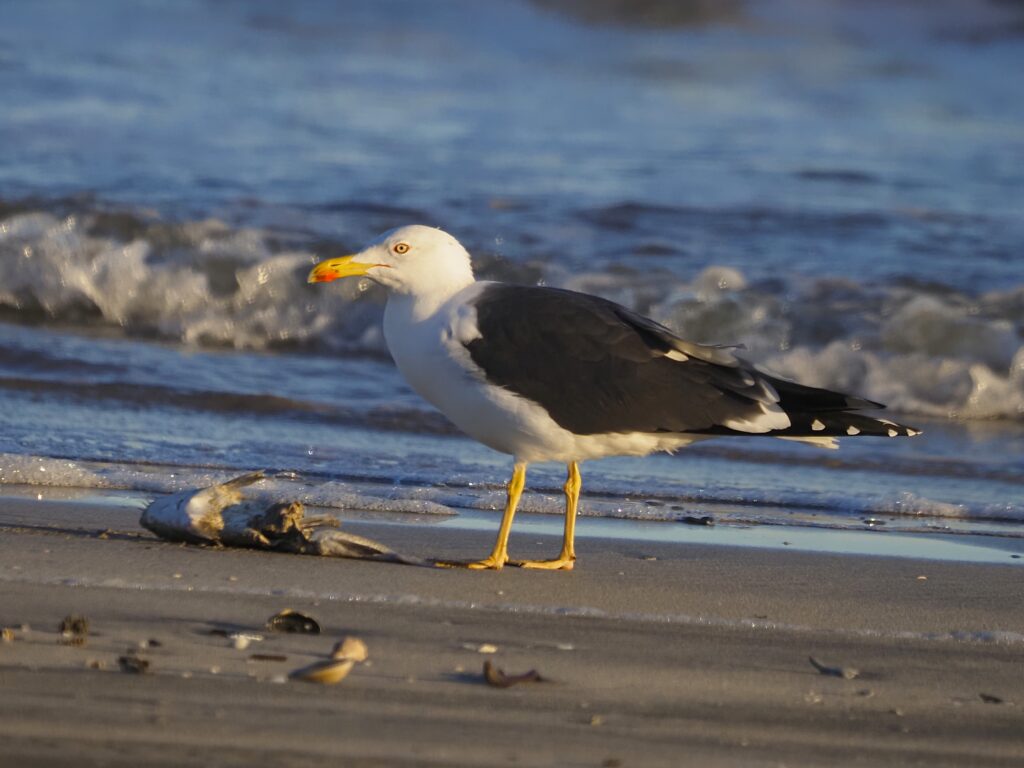
Adult Back Color
Like many large gulls, structure and plumage varies amongst individuals. The back color, or rather the intensity-of-the-black, on the upper parts varies in adult LBBGs. The back hue of the graellsii subspecies varies from quite dark black (similar to the black primaries) to charcoal-gray (contrasting with the black primaries).
In other subspecies, such as intermedius, and in other gull species, the primaries and back are of similar hue. So making a comparison between the back hue and the primaries is a good habit to get into when viewing large, dark-backed gulls. This practice may help to identify dark-backed, out-of-range rarities like Slaty-backed Gull, Kelp Gull or Great Black-backed Gull.
Note that the intermedius subspecies has yet to be satisfactorily documented in North America (see The Gull Guide: North America by Amar Ayyash). Without evidence from banding studies, dark-backed LBBGs in North America are assumed to represent variation in the graellsii subspecies.
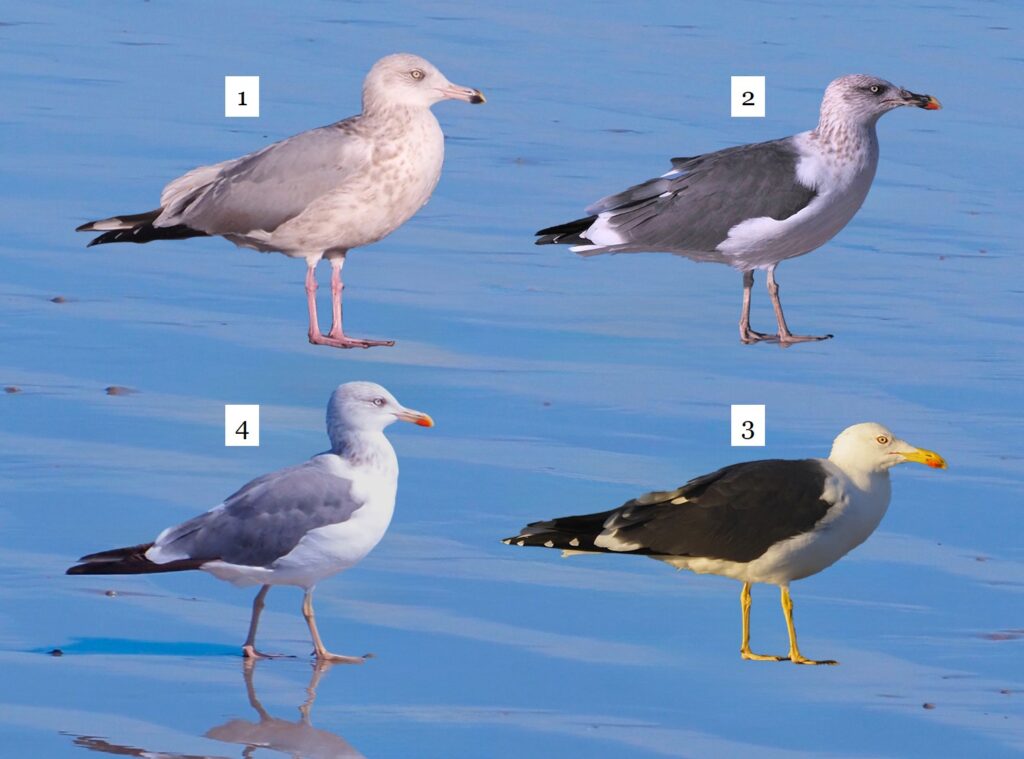
In the composite photo below, a Herring (gull 1) is compared with three LBBGs (gulls 2-4). As demonstrated by these 4 photos, lighting conditions and camera settings are important considerations when assessing back color of gulls in photos. Lighting conditions must also be considered in the field with the naked eye.
It’s also worth noting that gull 4 is slightly smaller, has a rounder head and perhaps longer wings than gull 2. These are characteristics of female gulls, so gull 4 is likely a female LBBG. The size, shorter primary projection, and larger, anvil-shaped head suggest that gull 2 and possibly 3 are males.