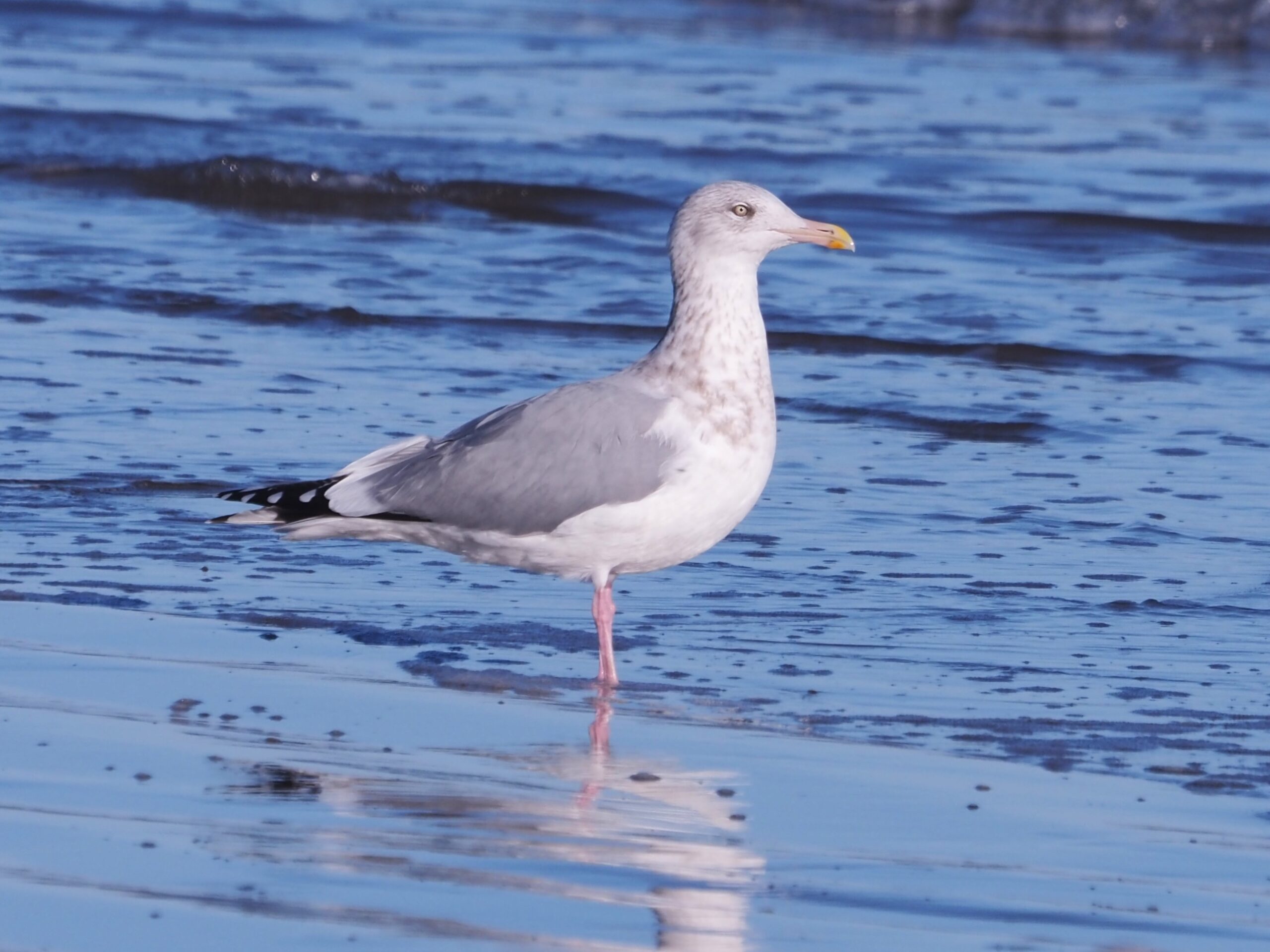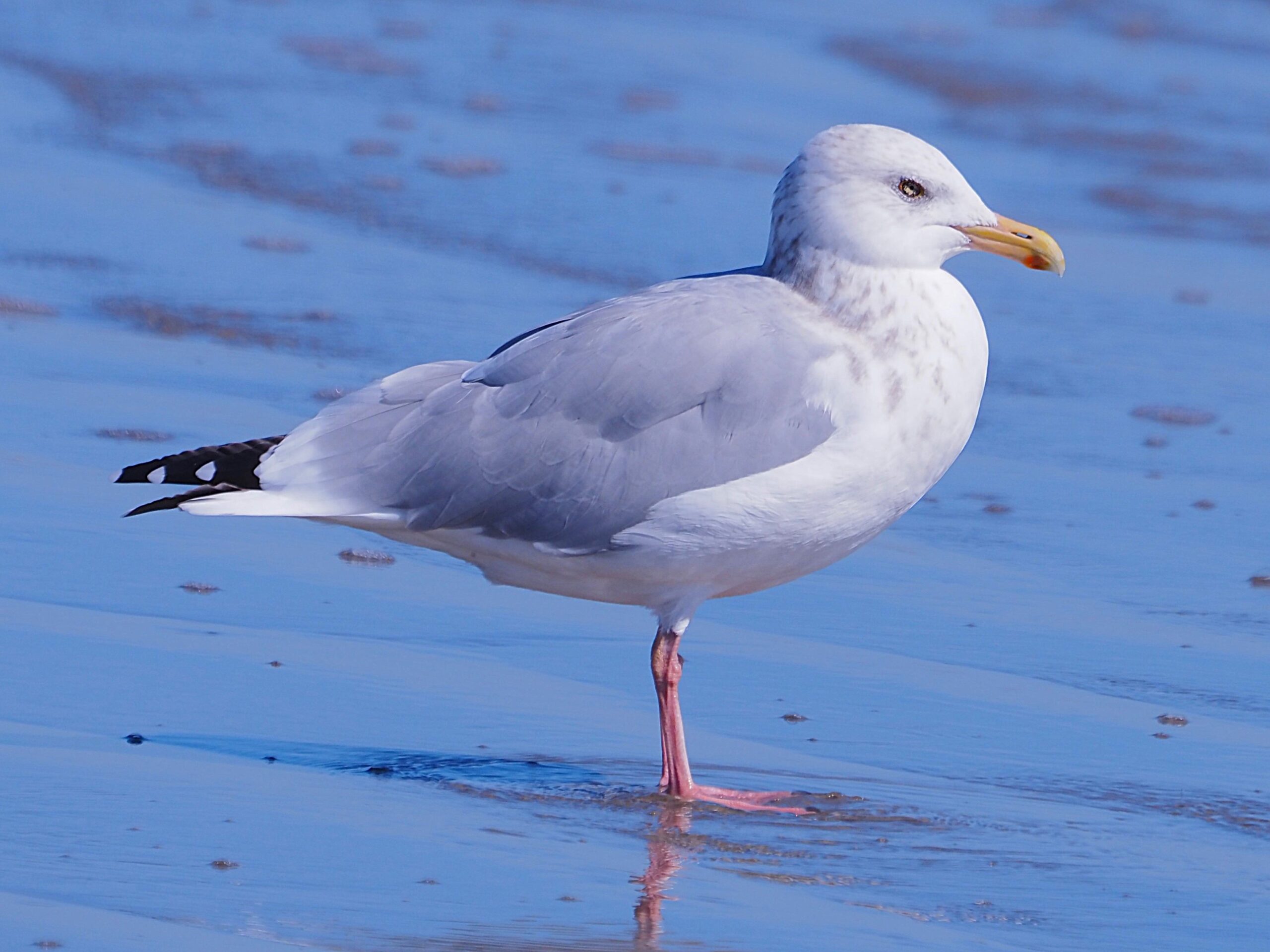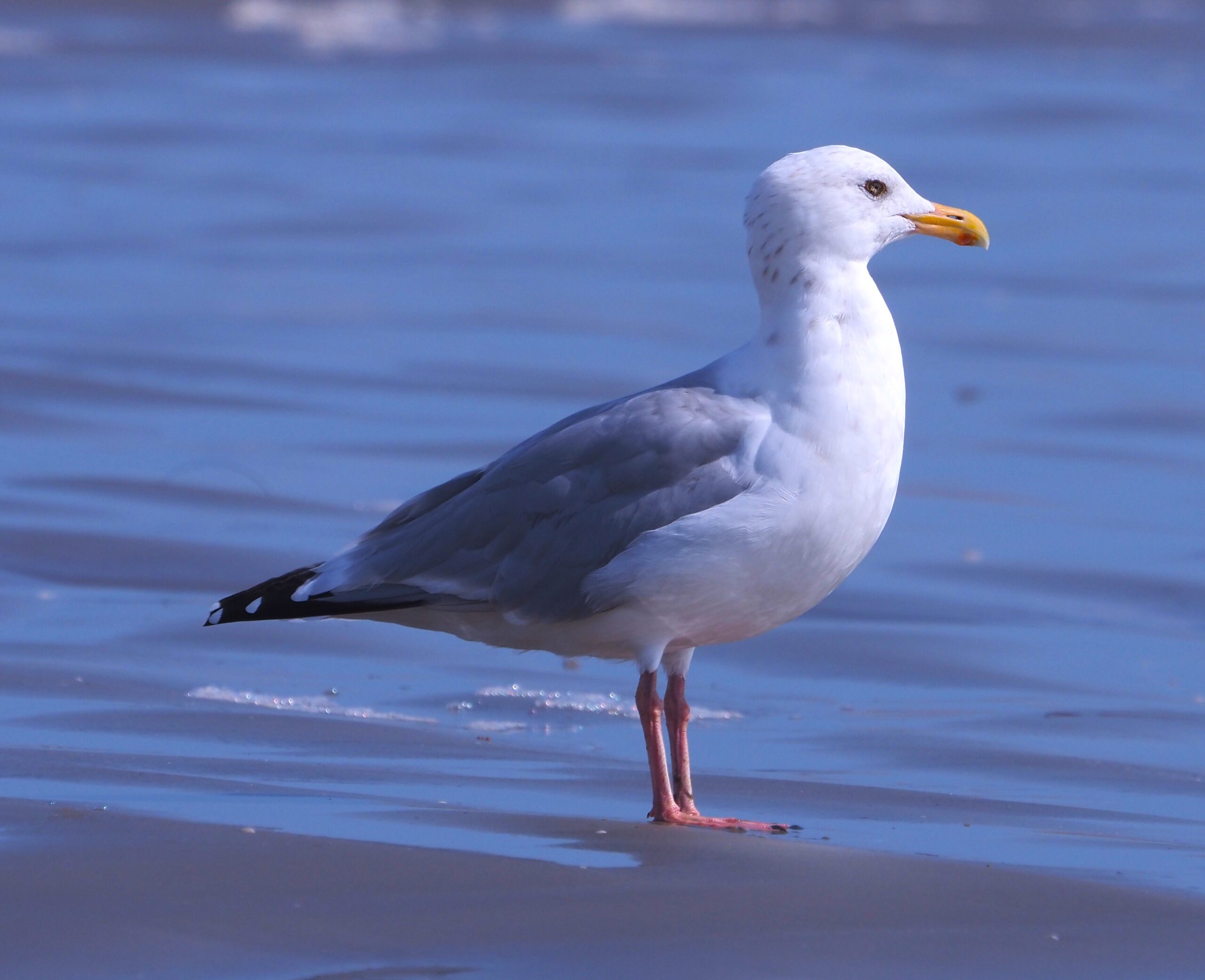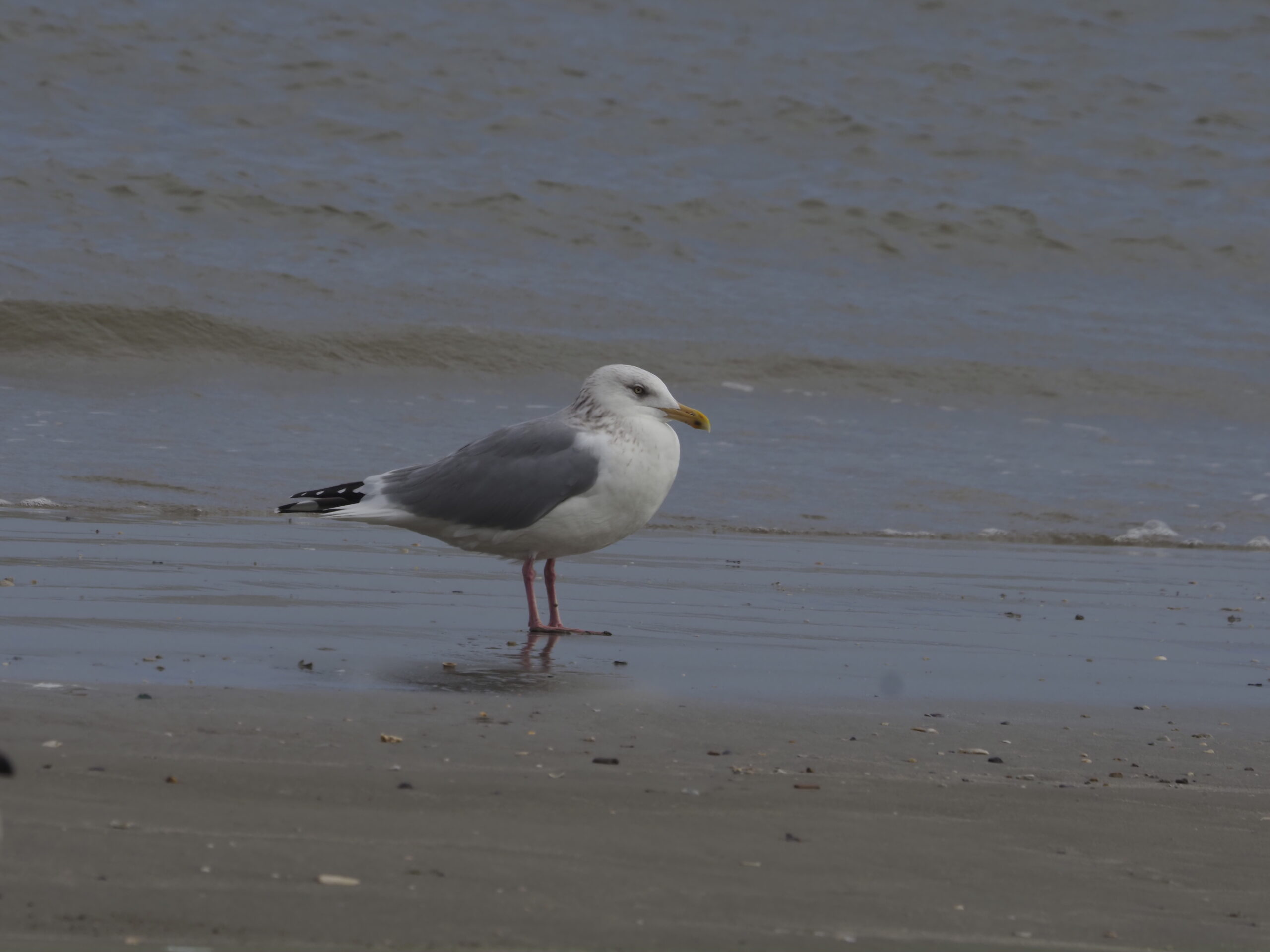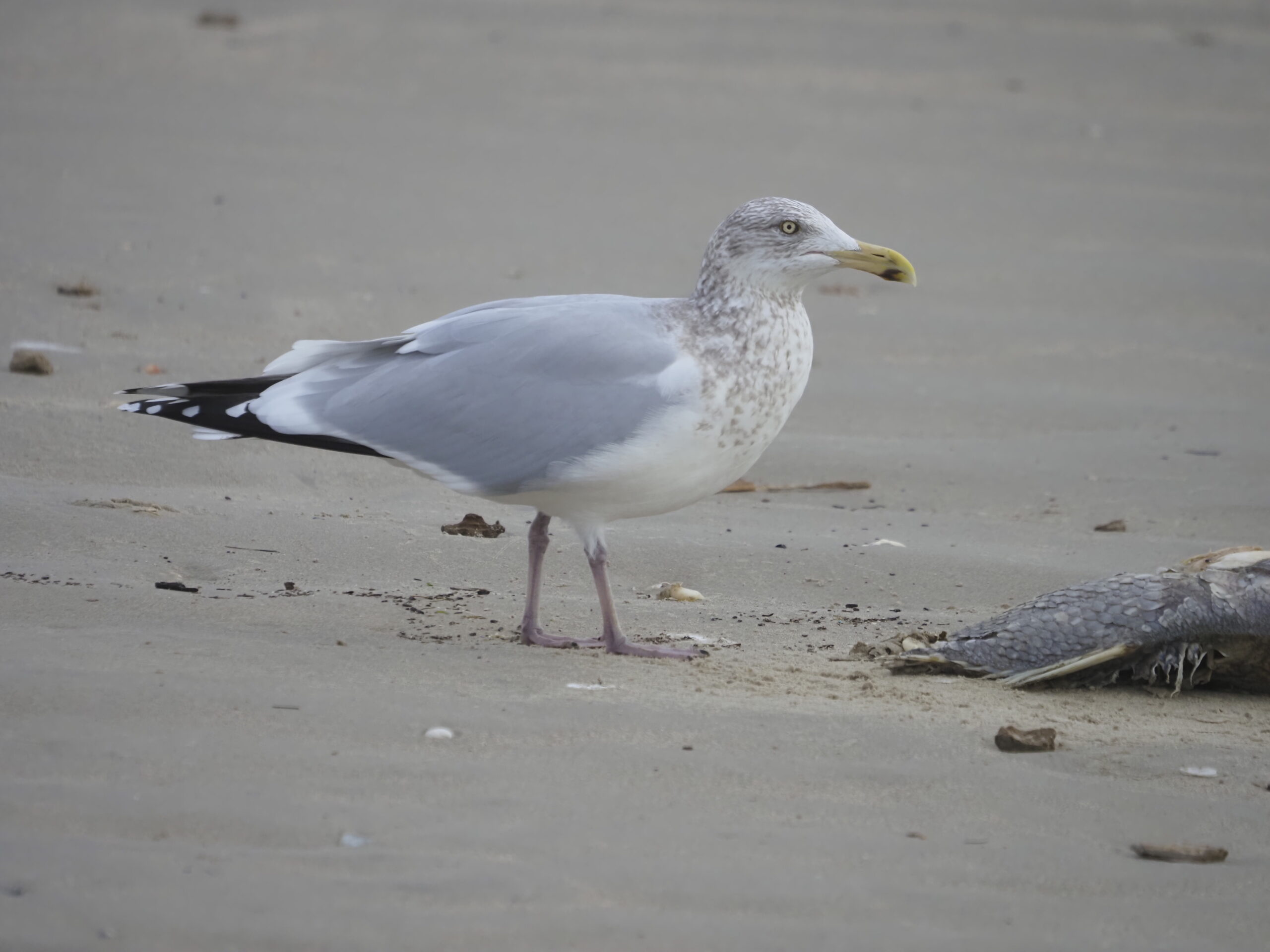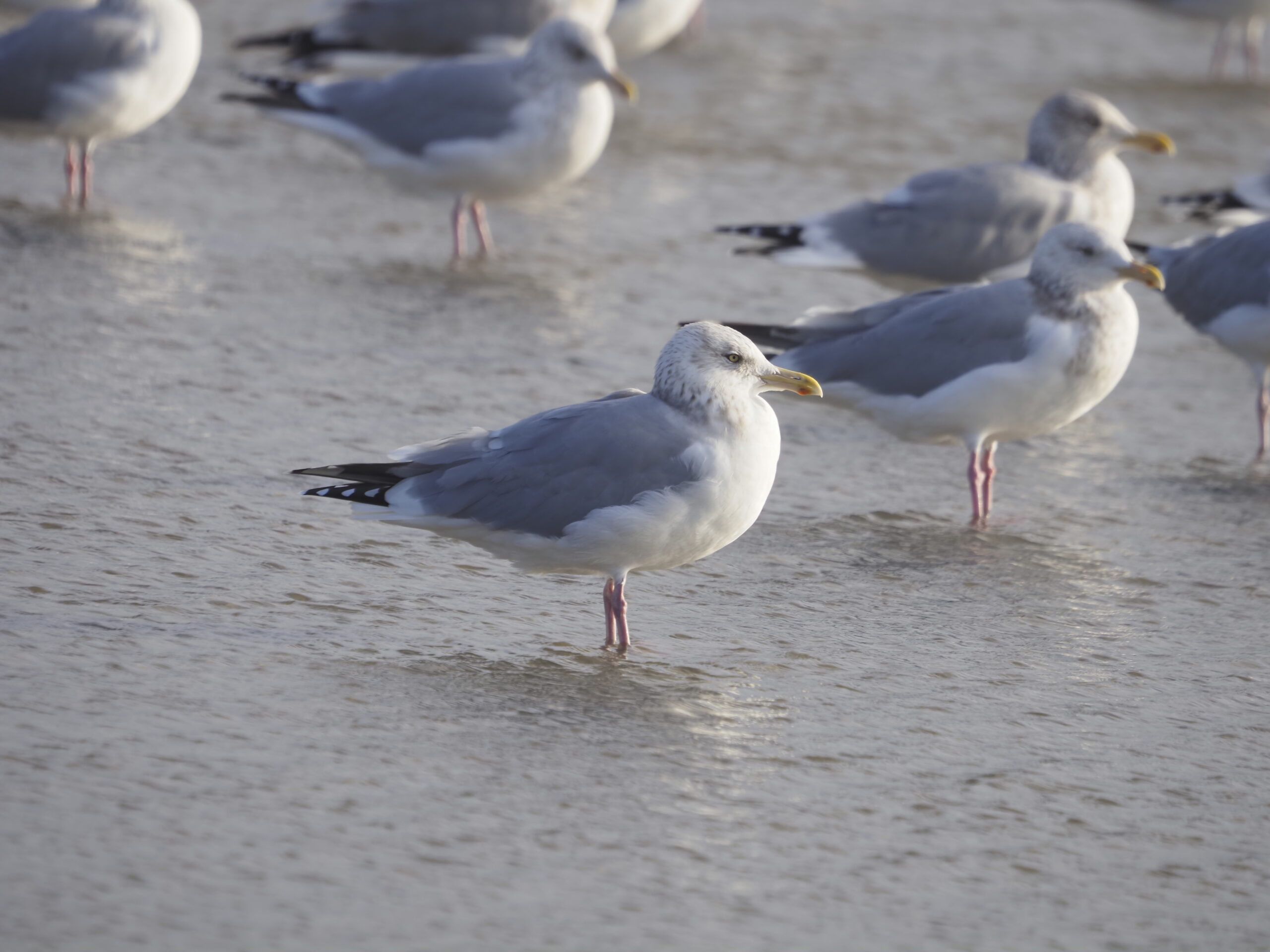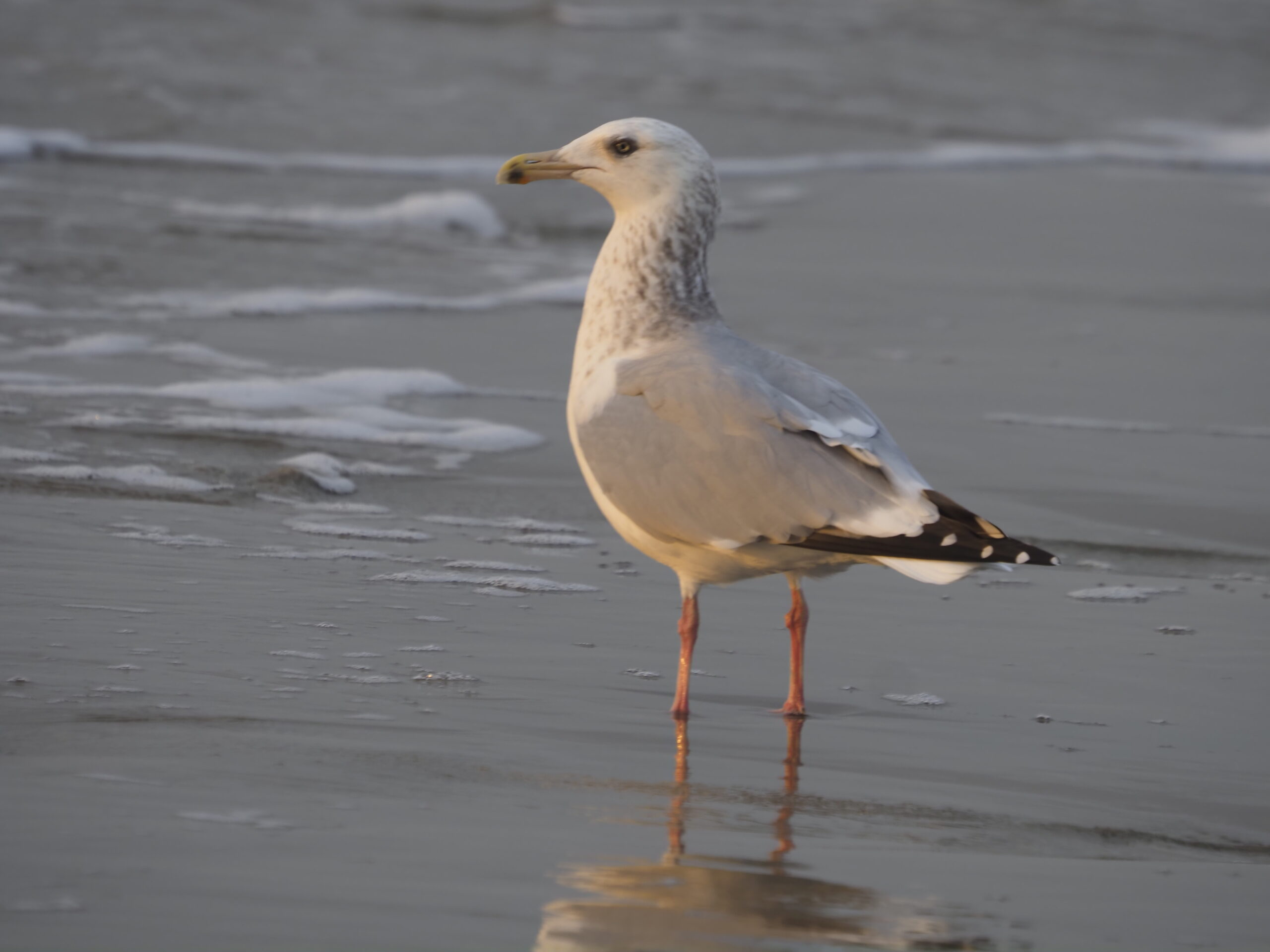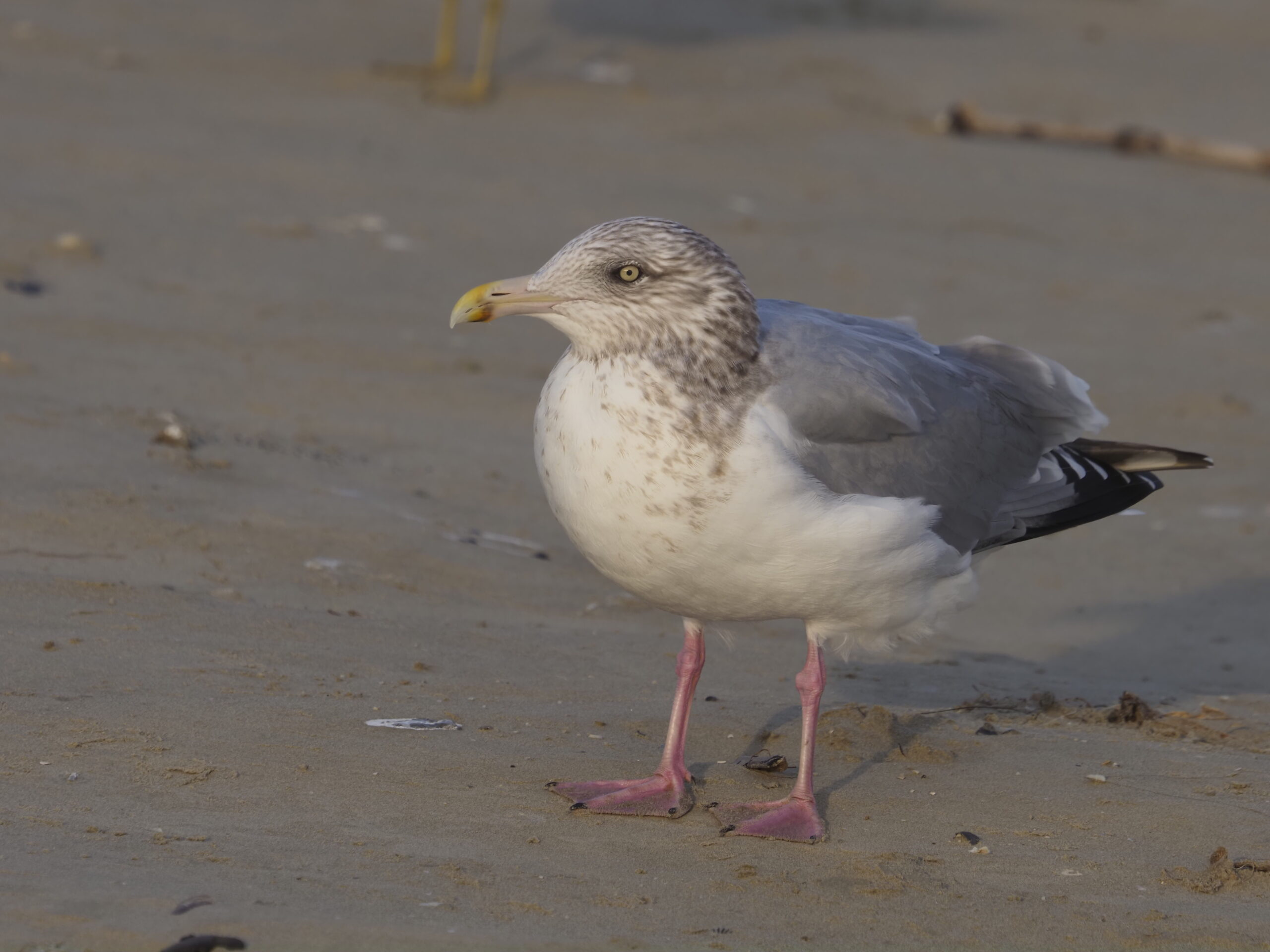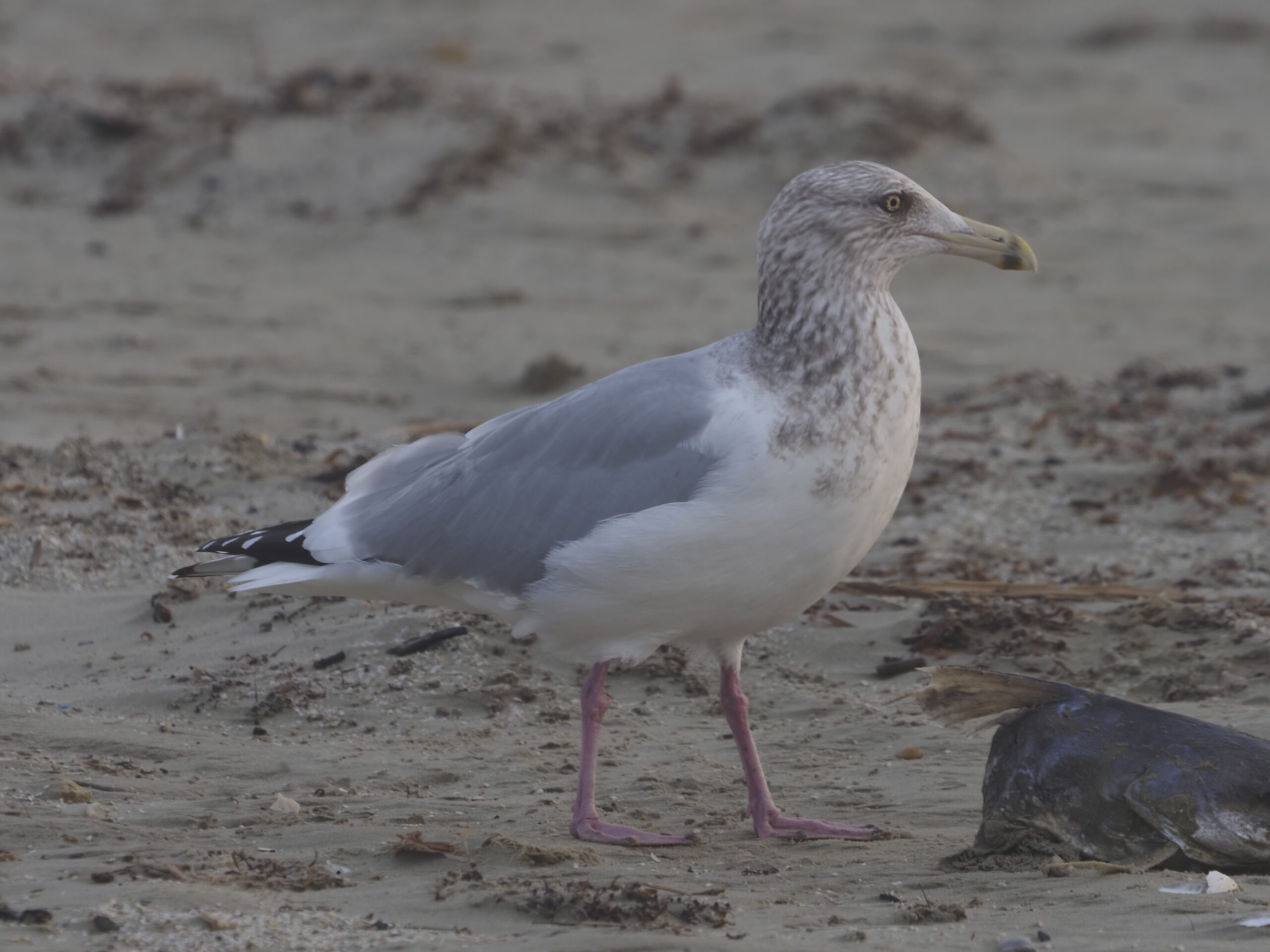
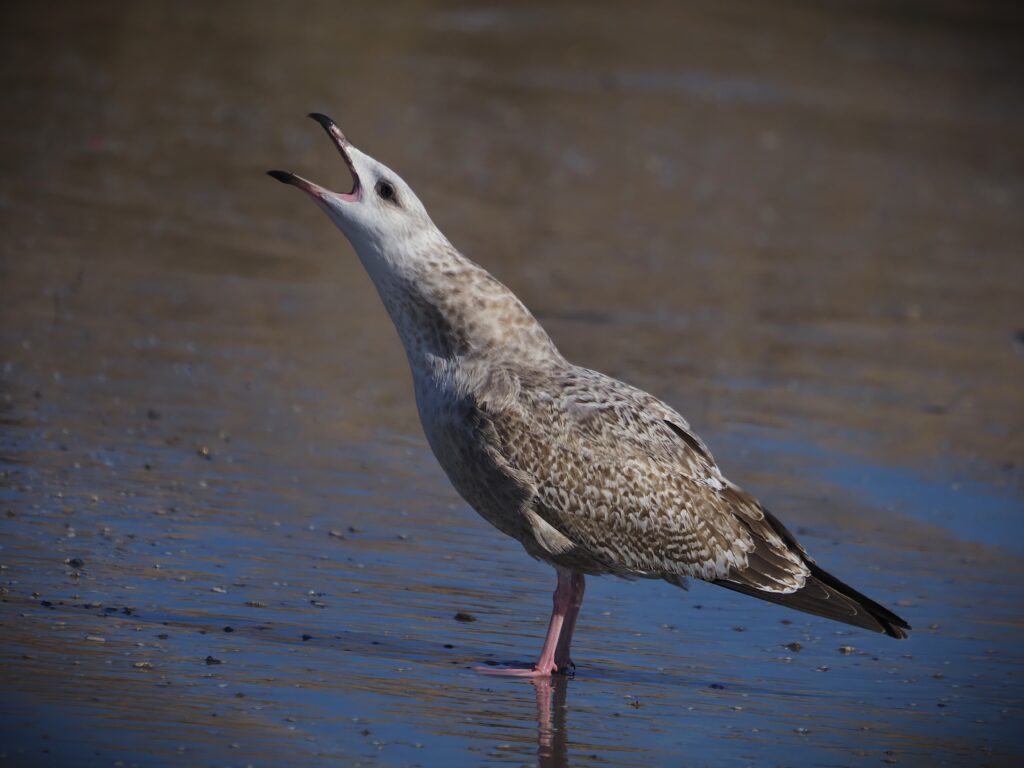
The Herring Gull is by far the most numerous large gull in Texas each winter, and a few bleached birds are also present in the summer. Therefore, the Herring should be considered first when identifying large, white-headed gulls — in Texas (and many other places) it is the default large gull.
Unfortunately, the Herring is likely the most variable gull in the world. So a student of gulls would be wise to thoroughly learn the structure and plumage and variable qualities of the Herring. When identifying other large gulls, their characteristics can be compared and contrasted with those of the Herring.
Relative-Size and Structure
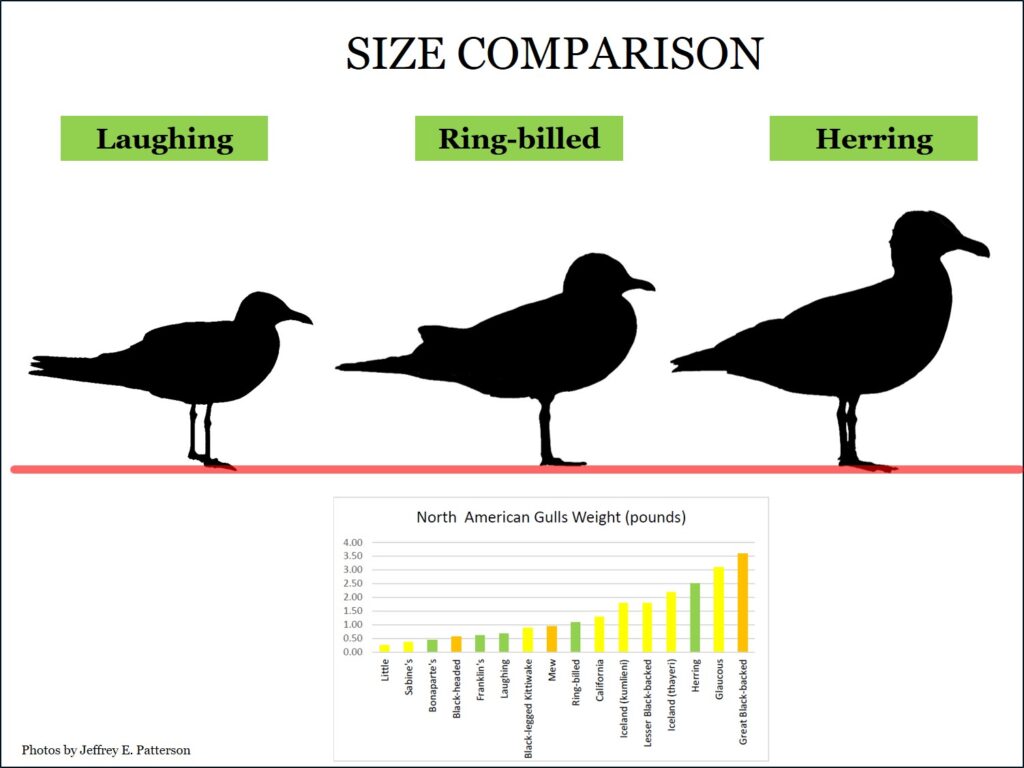
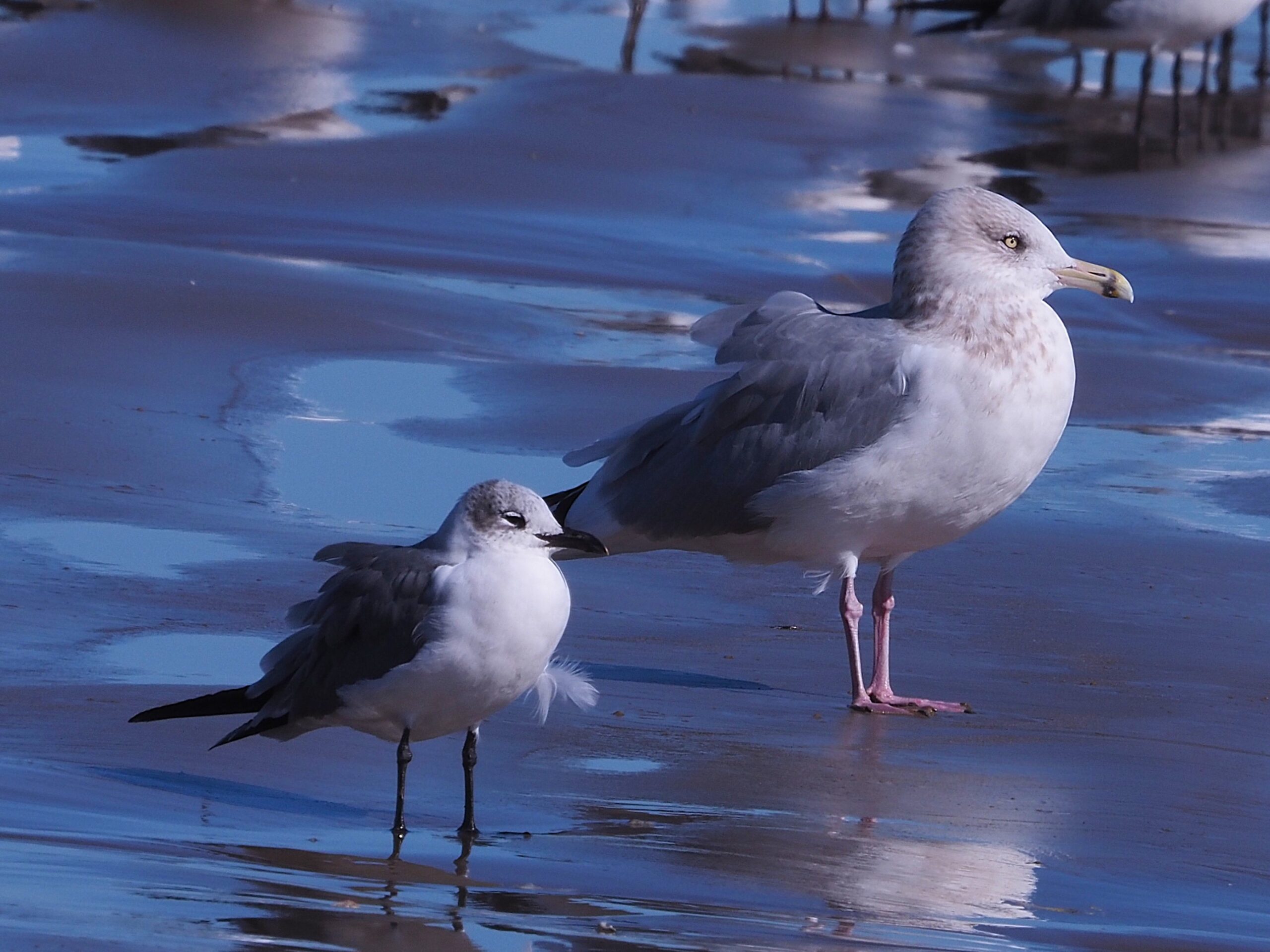
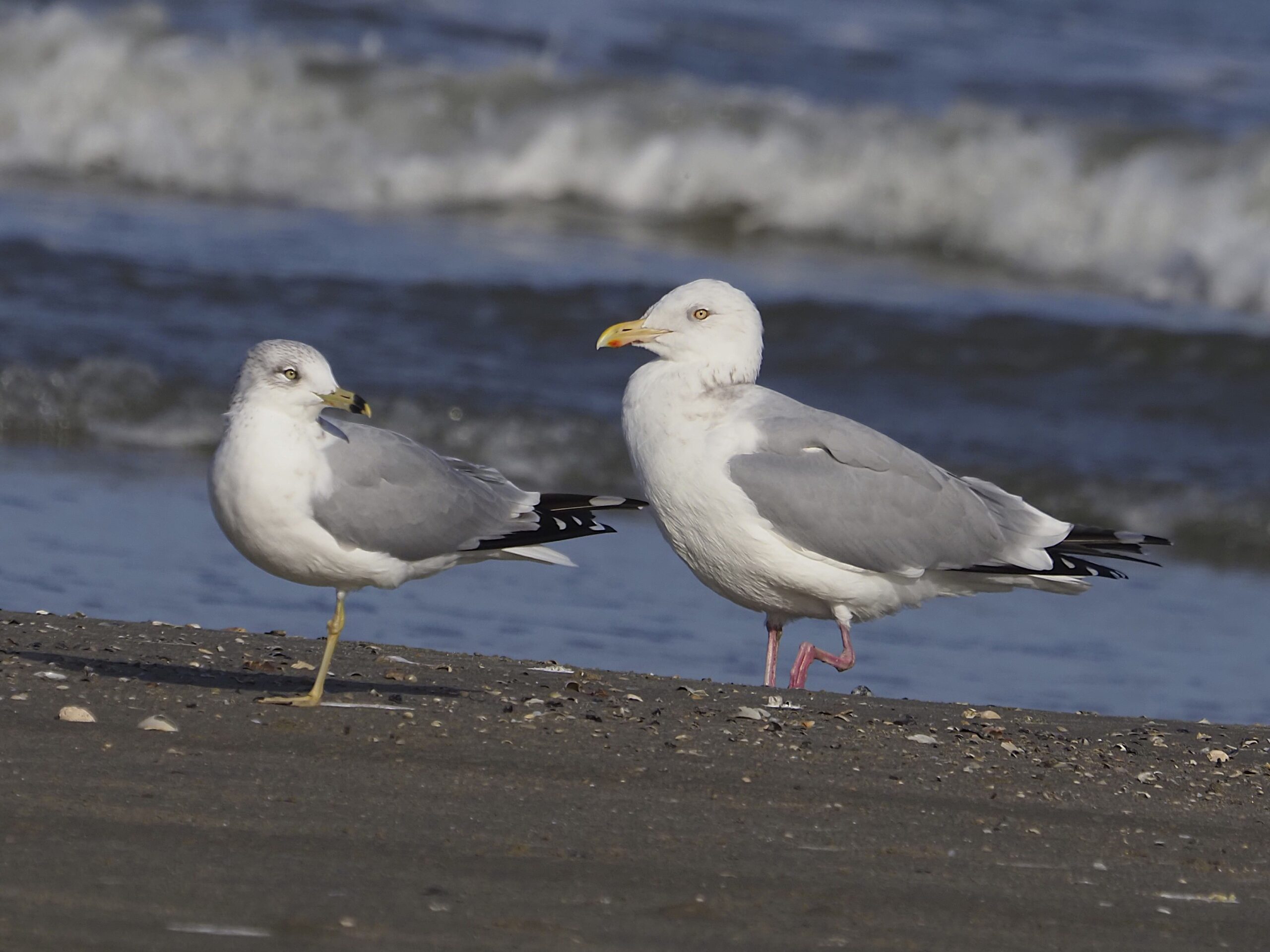
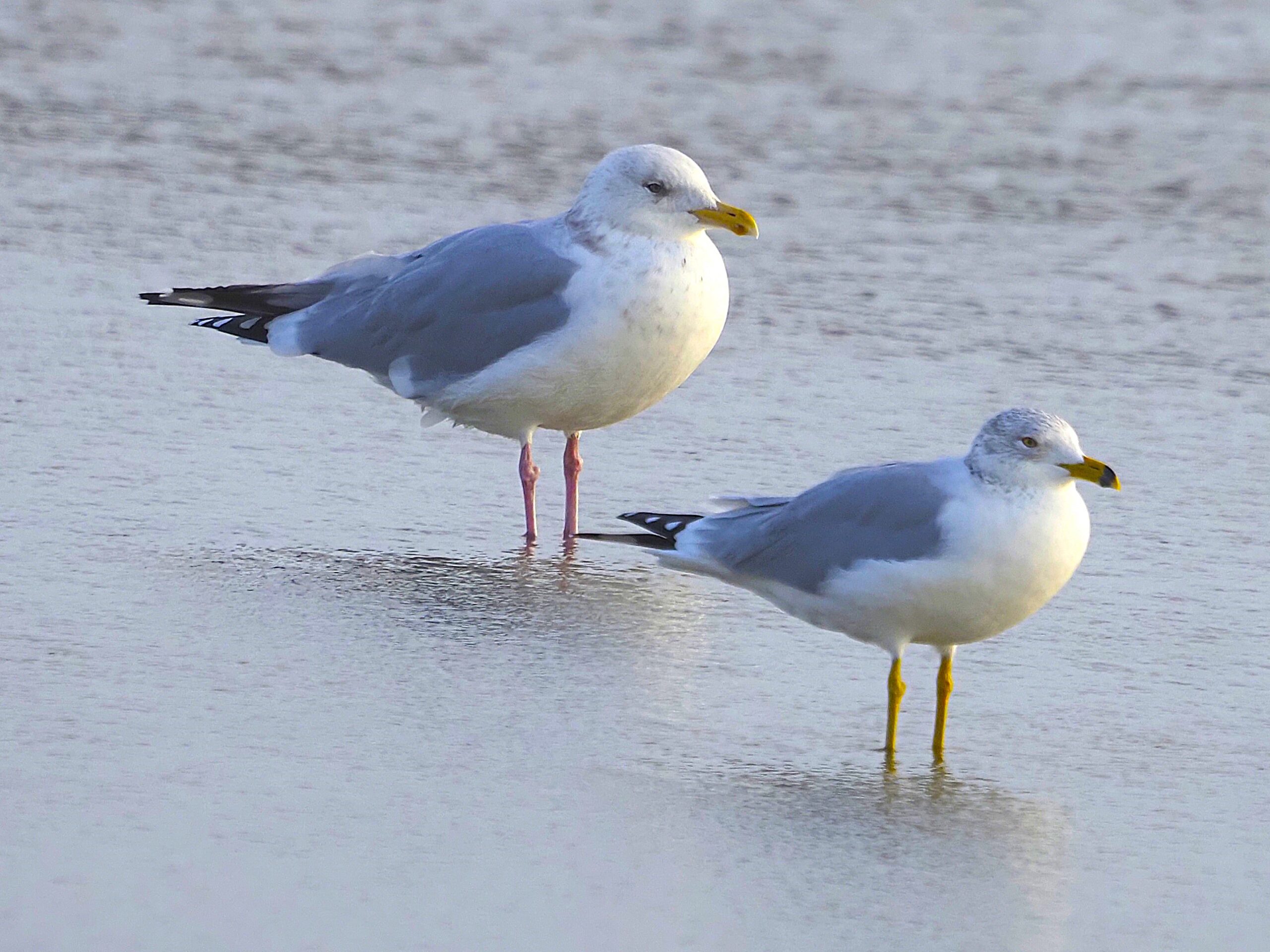
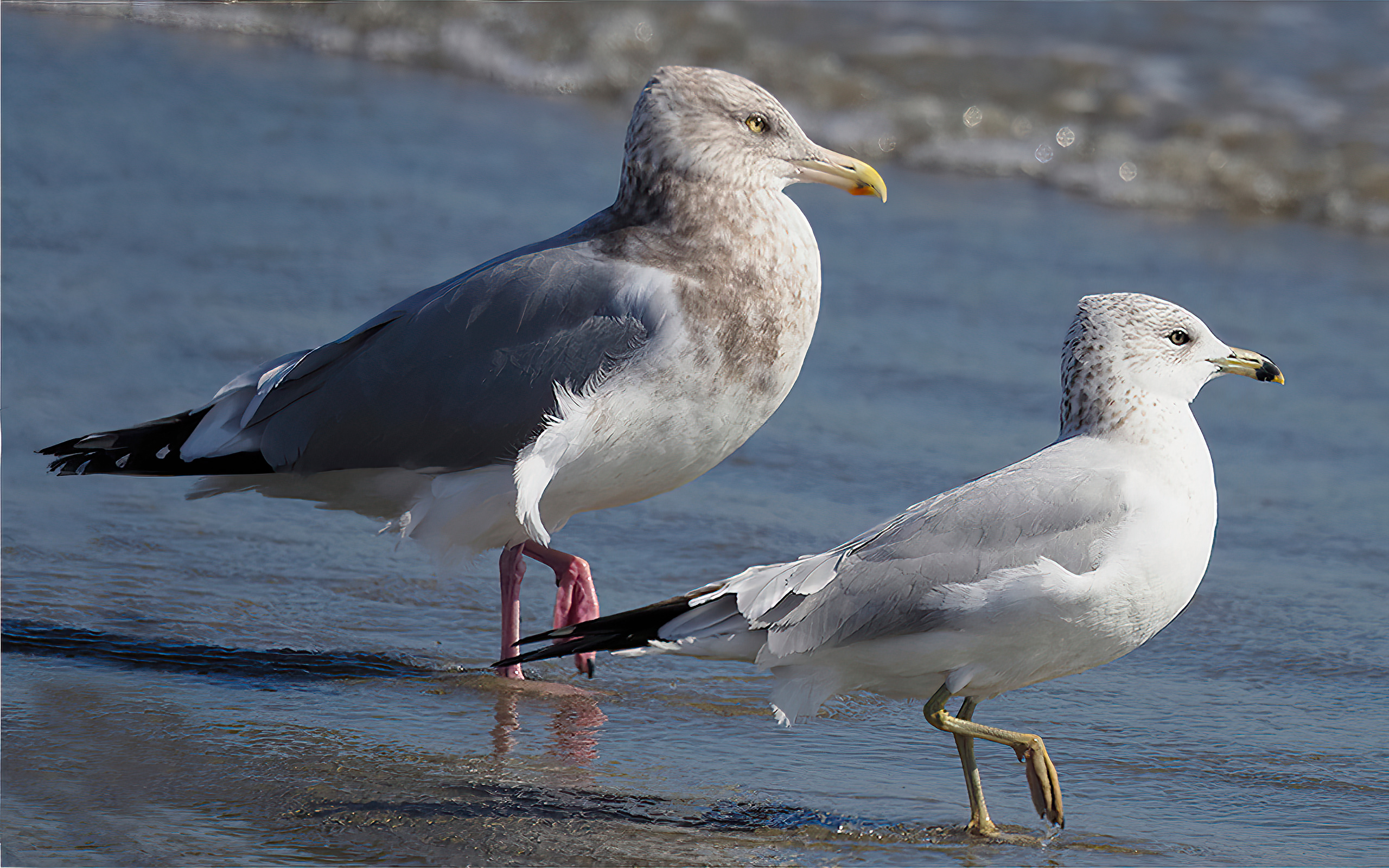
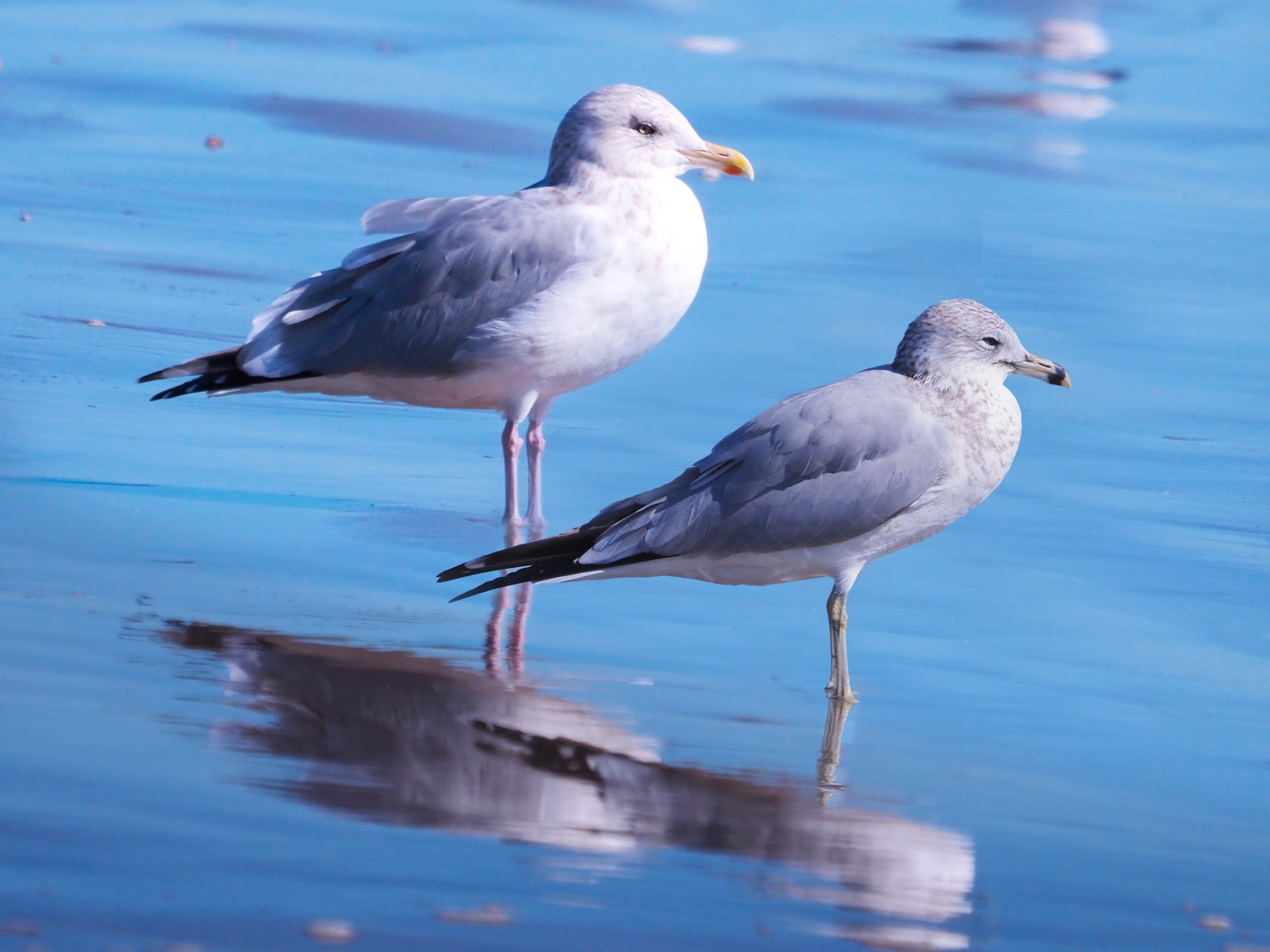
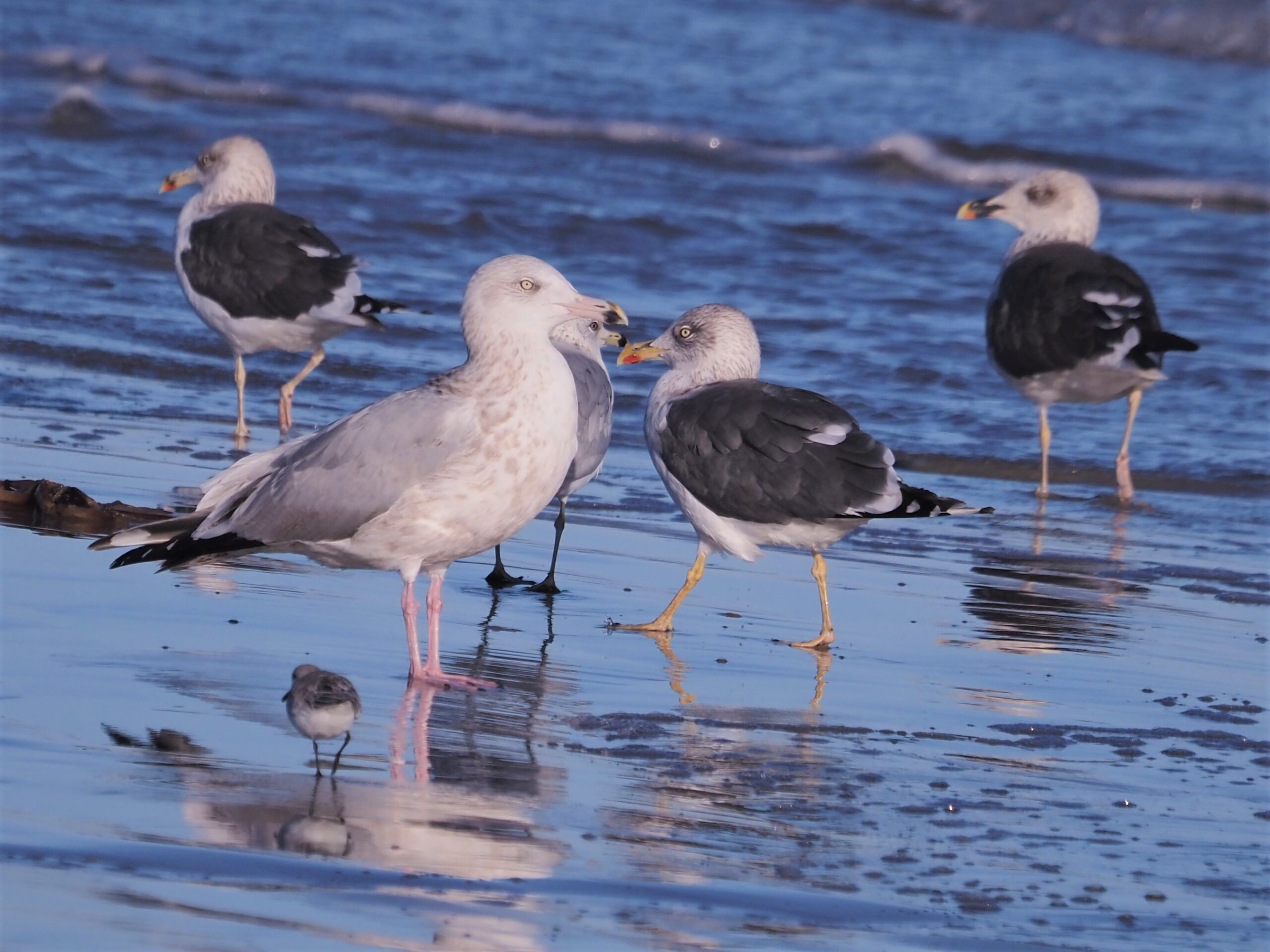
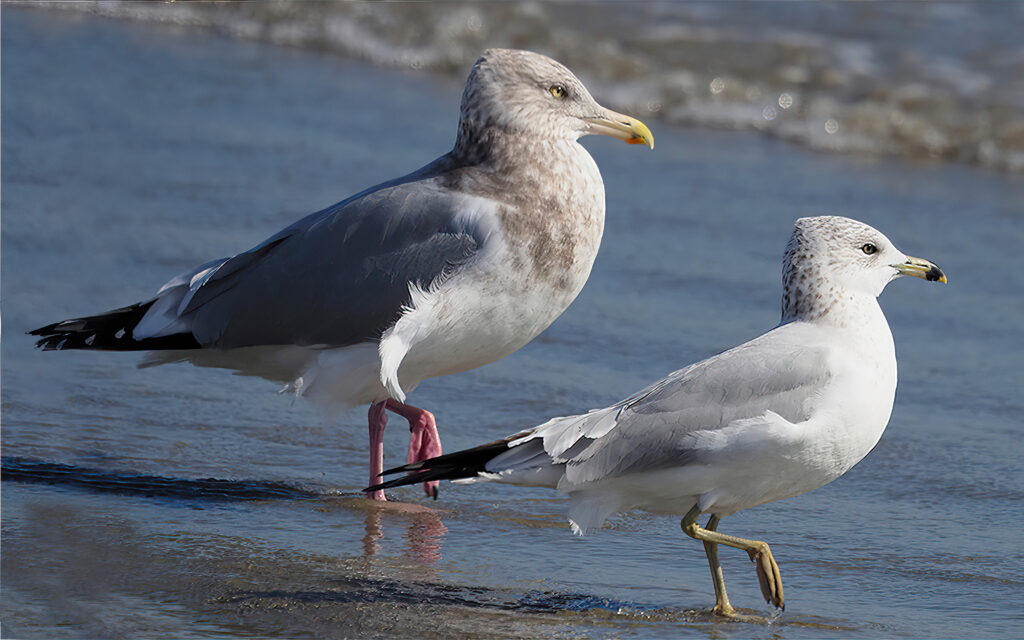
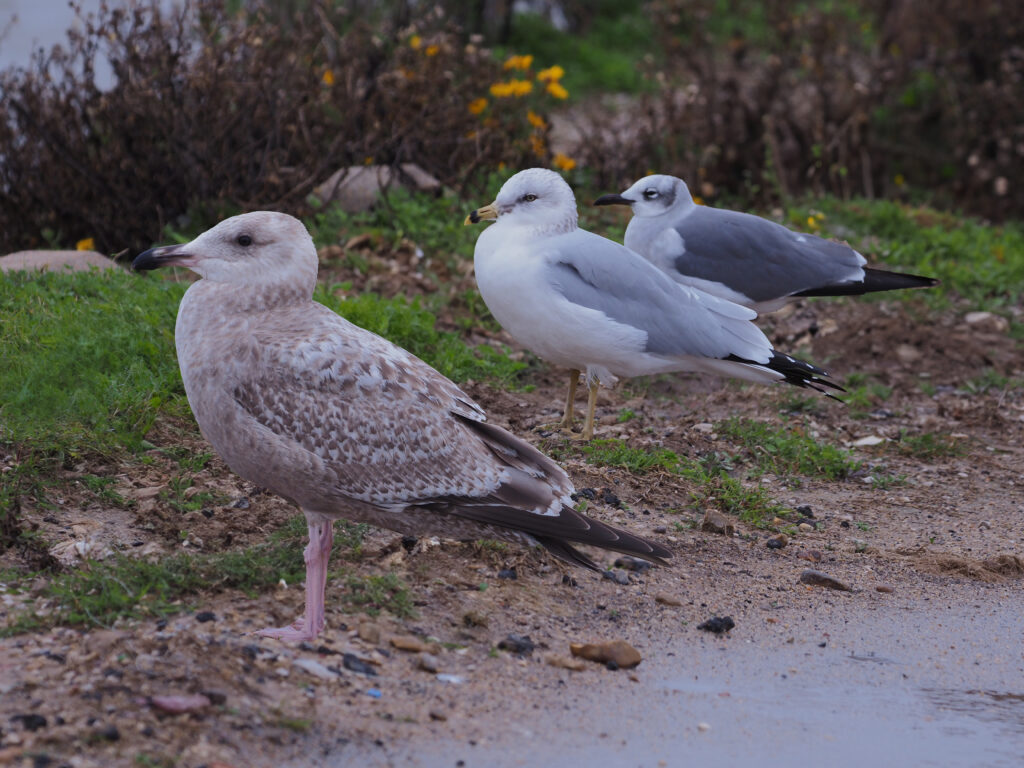
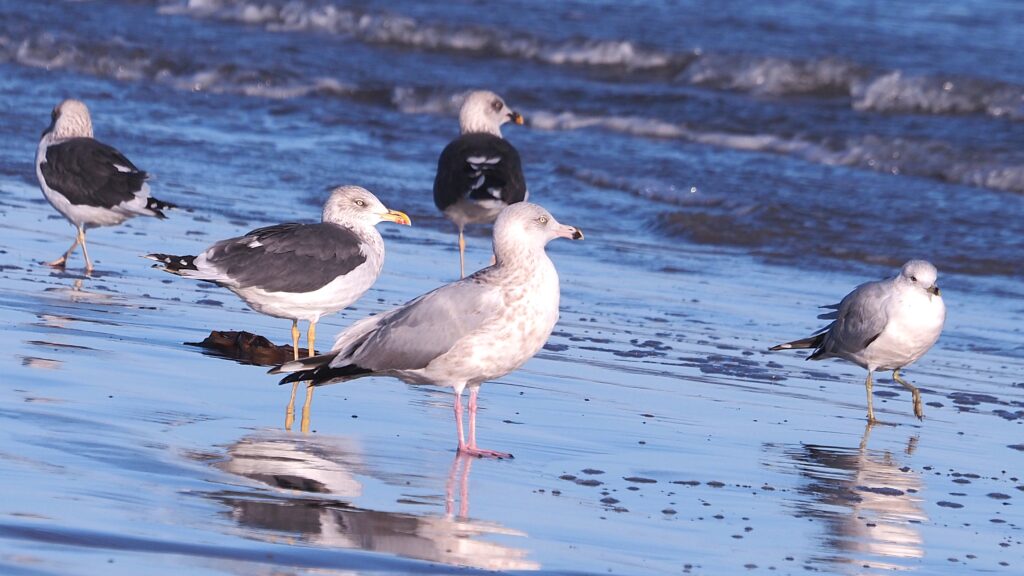
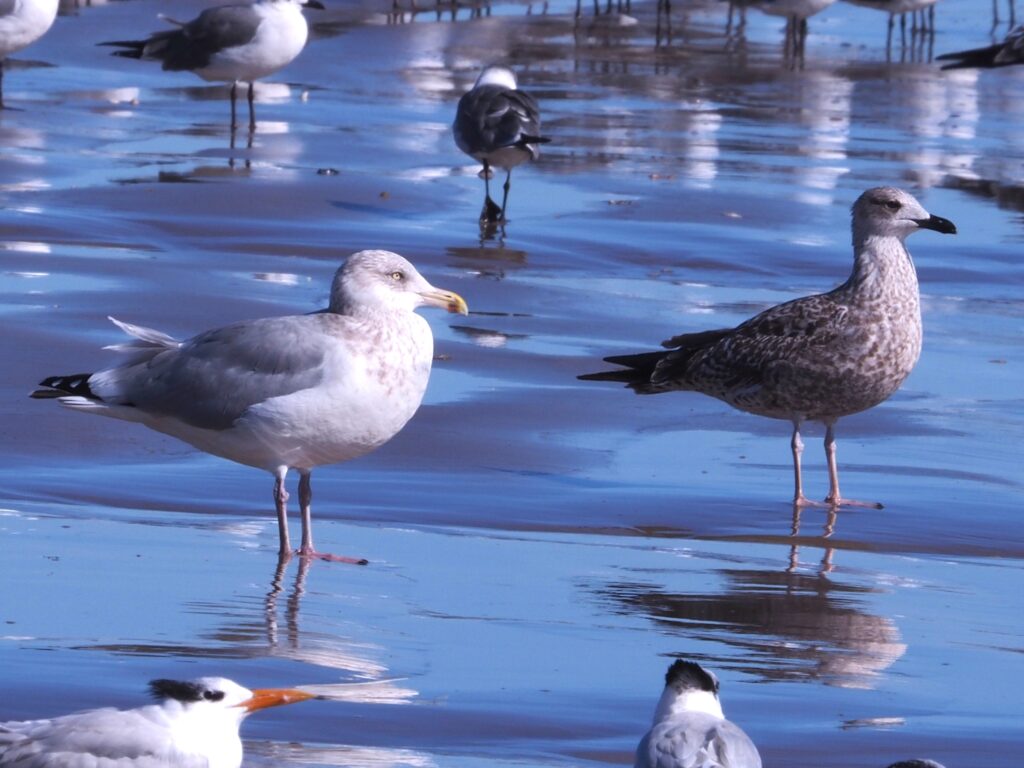
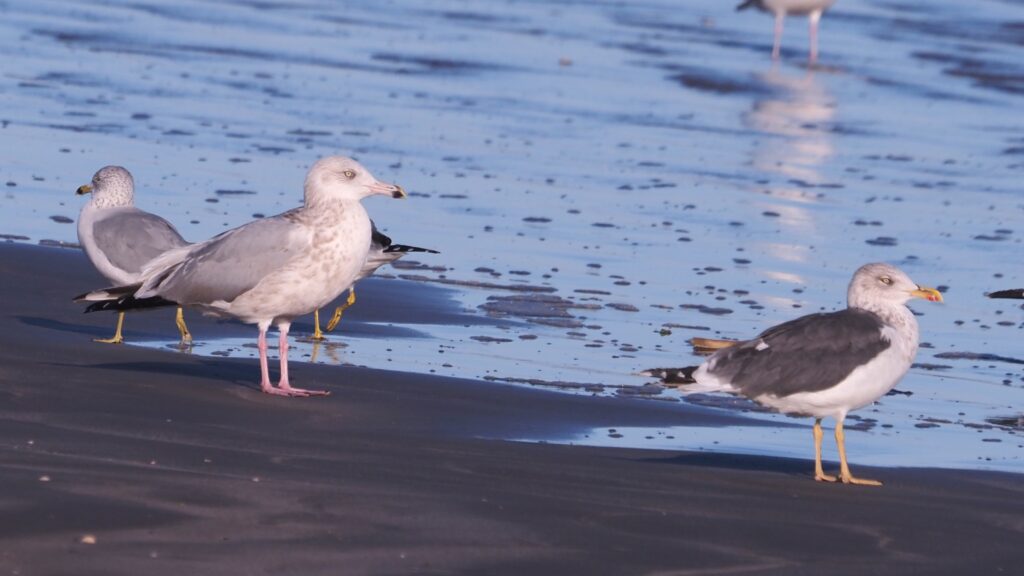
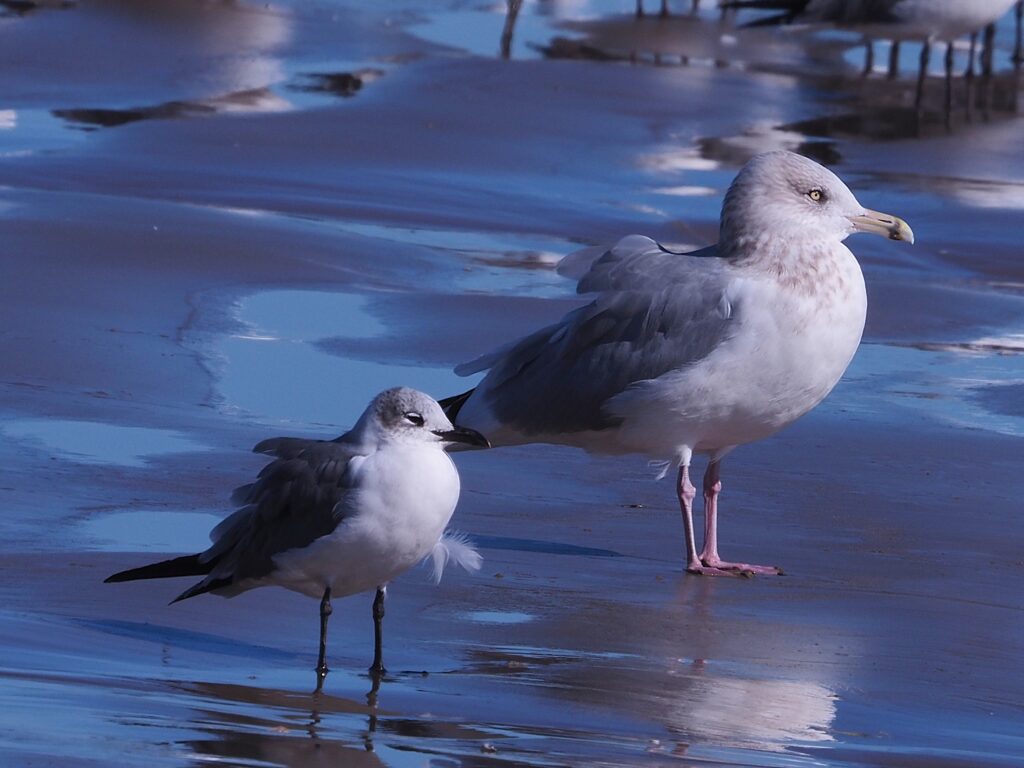
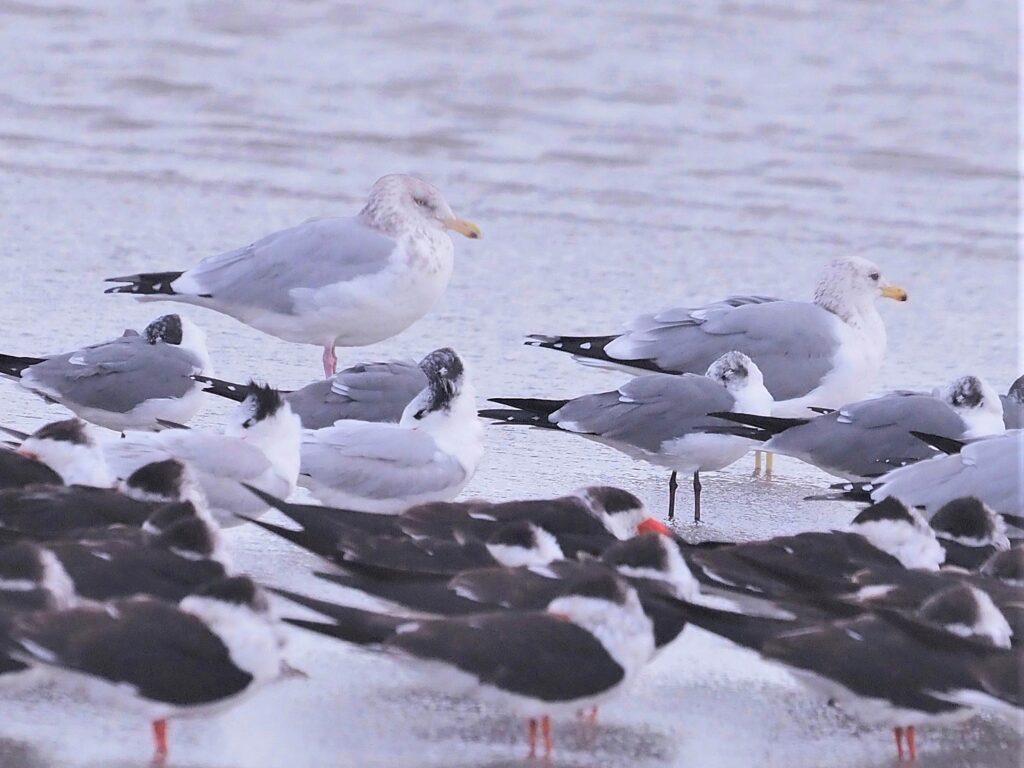
The photos below show the relative-size and structure of the Herring in comparison to other gulls commonly seen in Texas. The largest gulls in each photo are Herring.
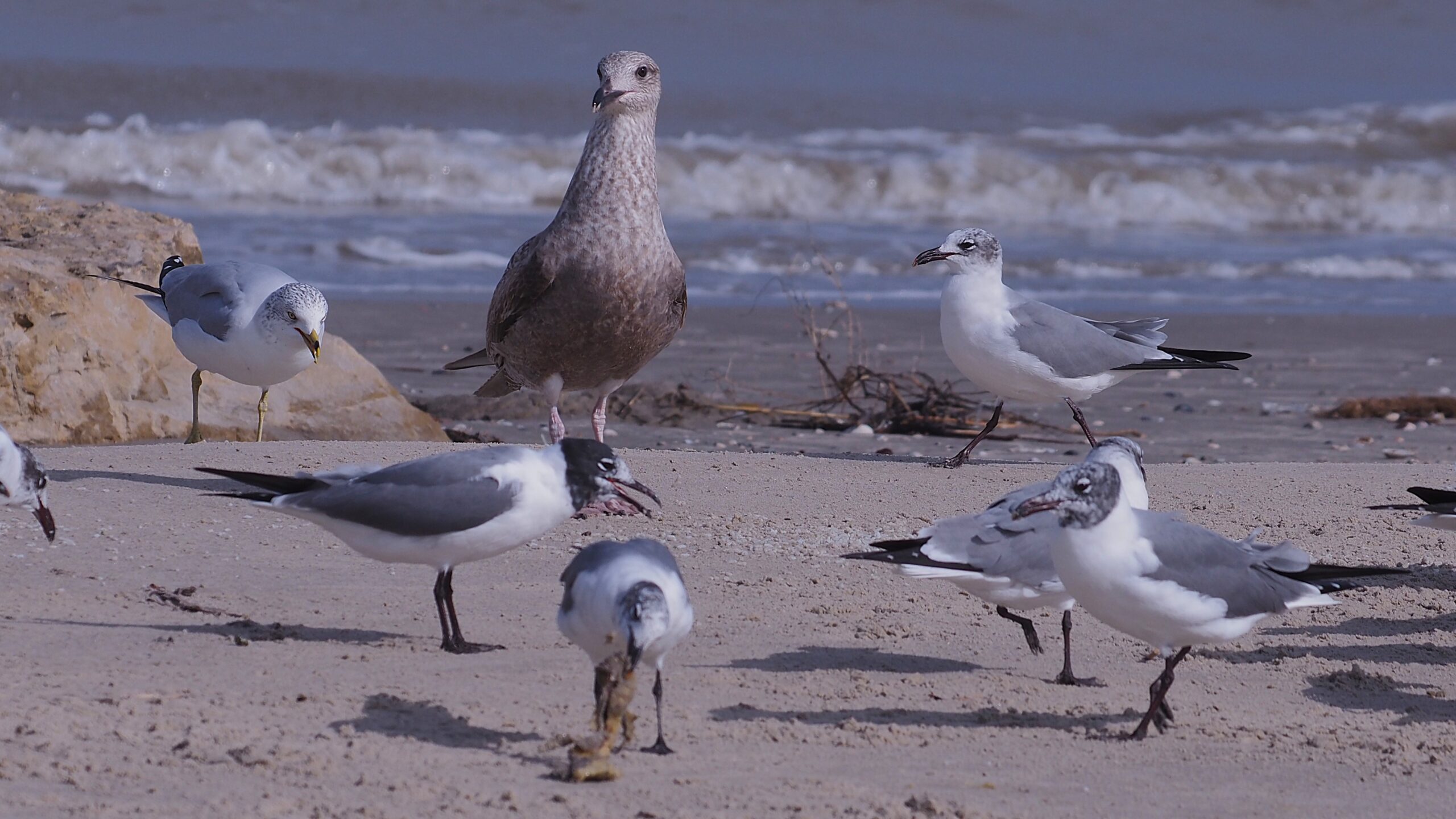
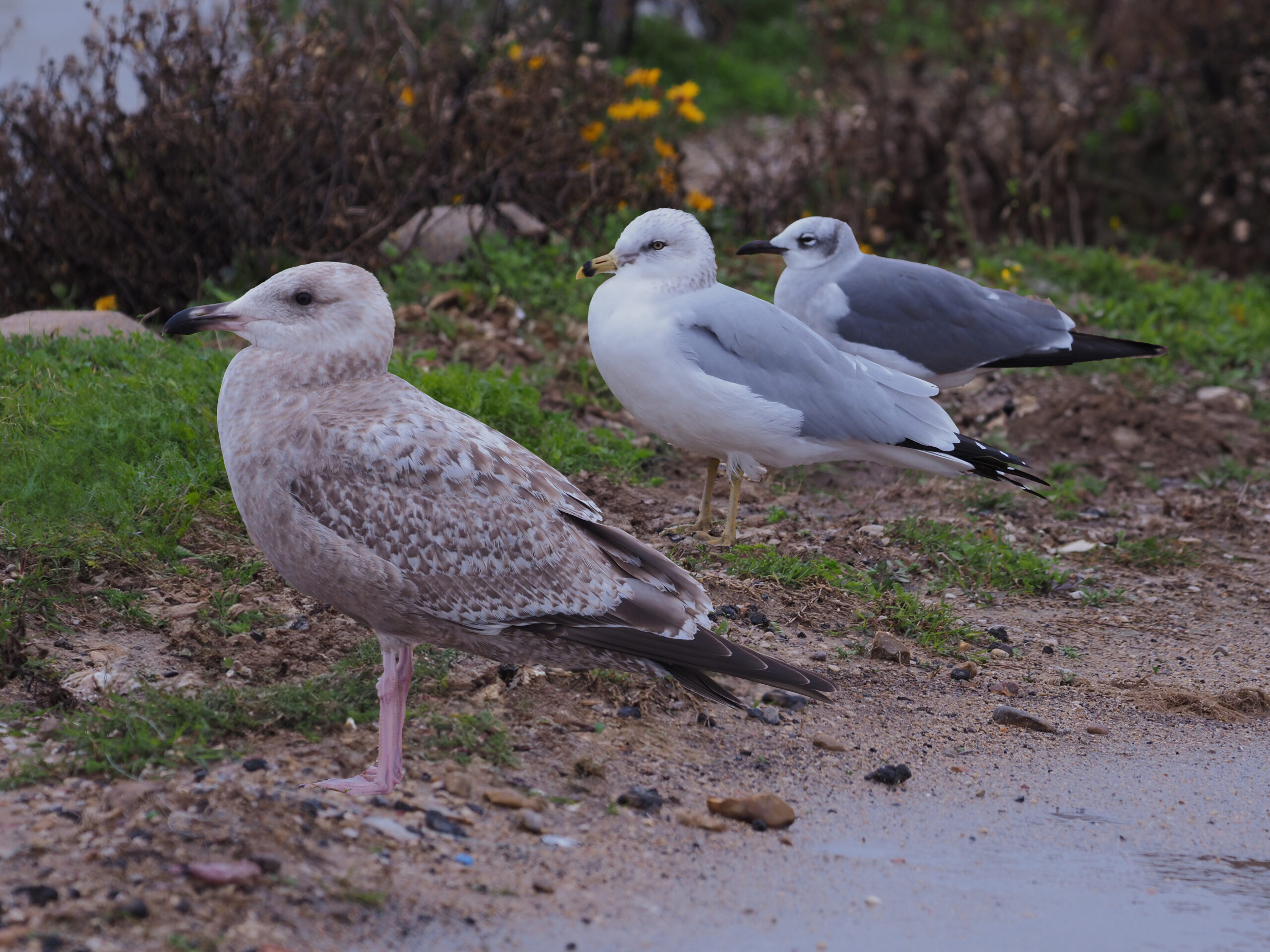
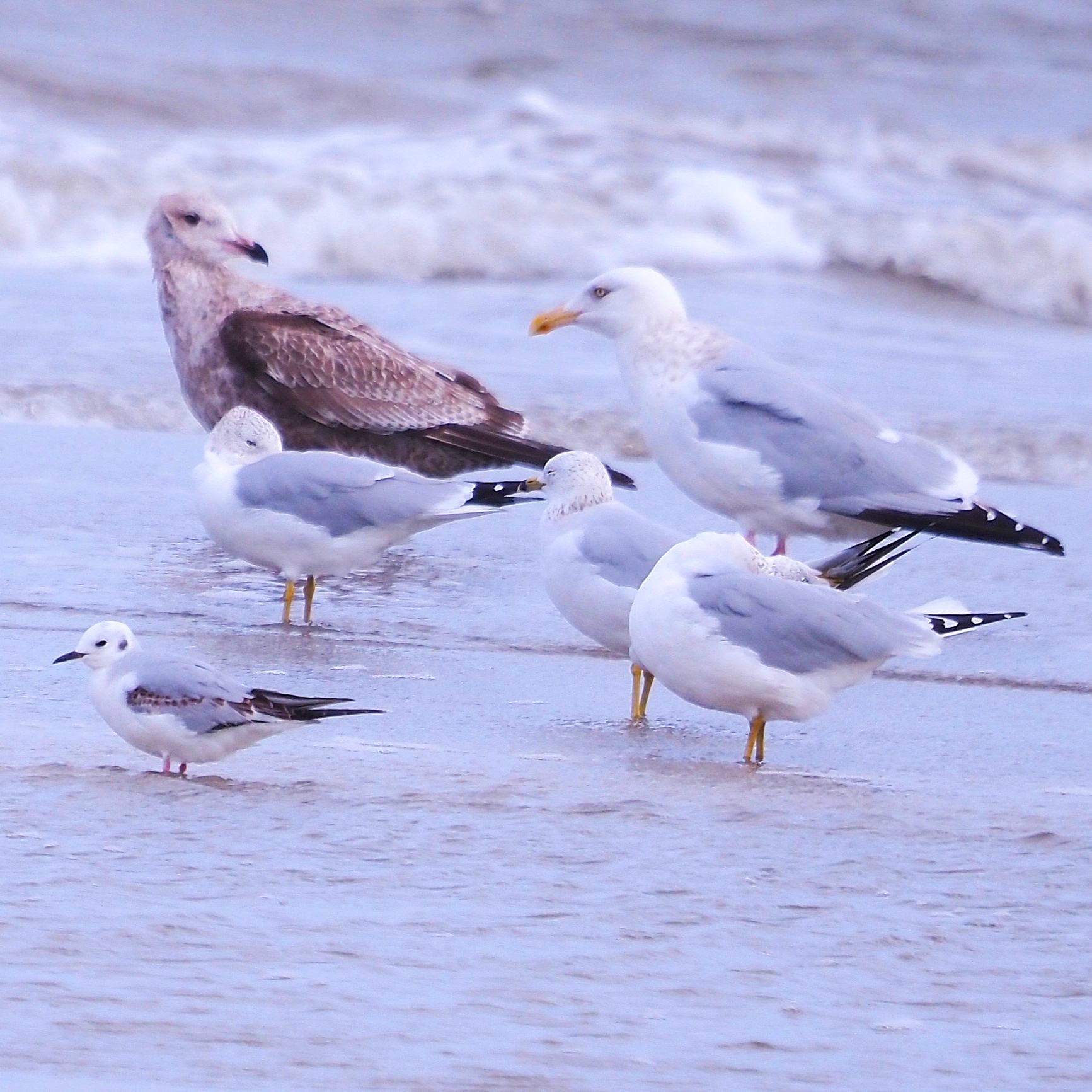
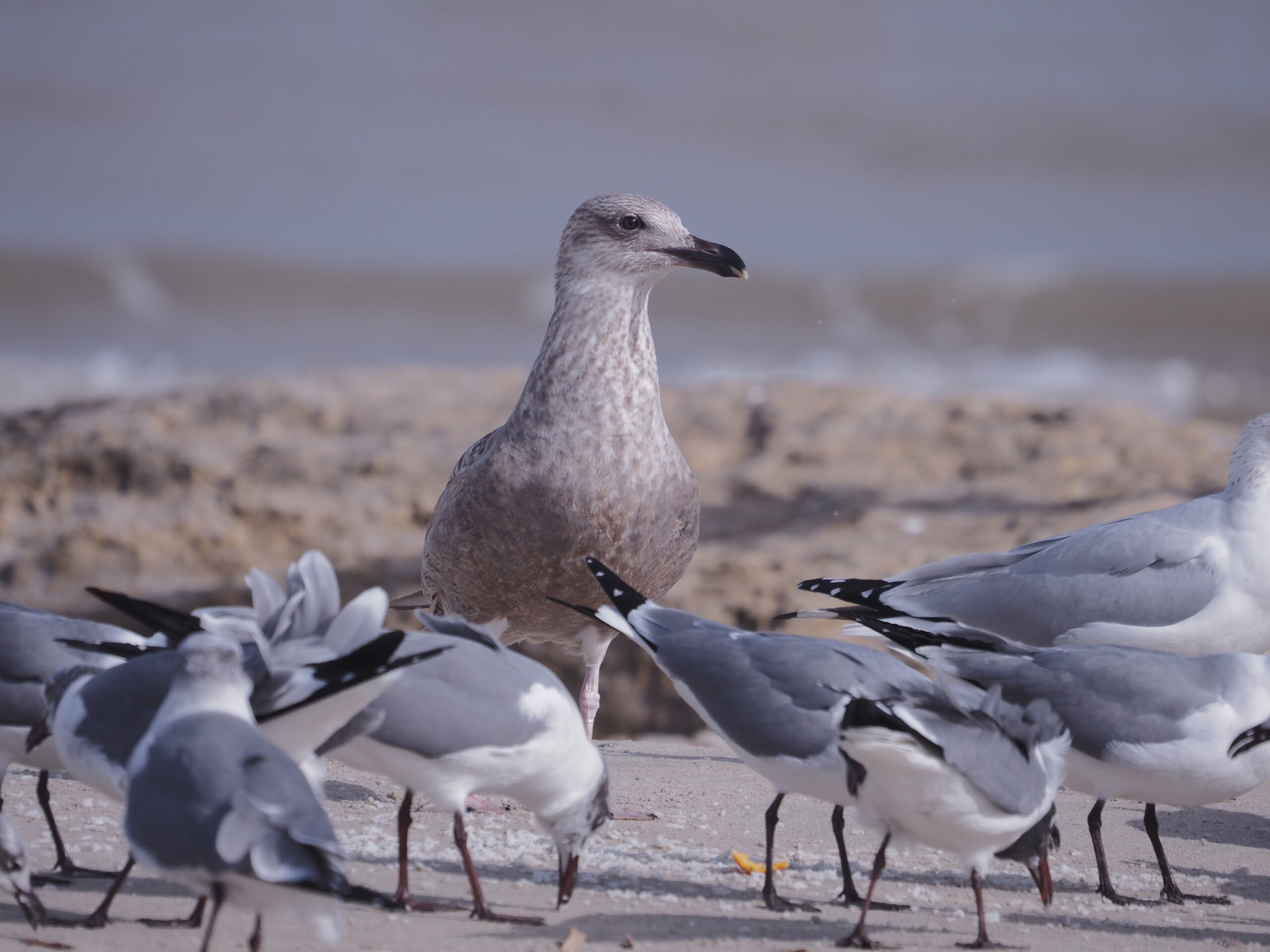
Bill & Head Structure
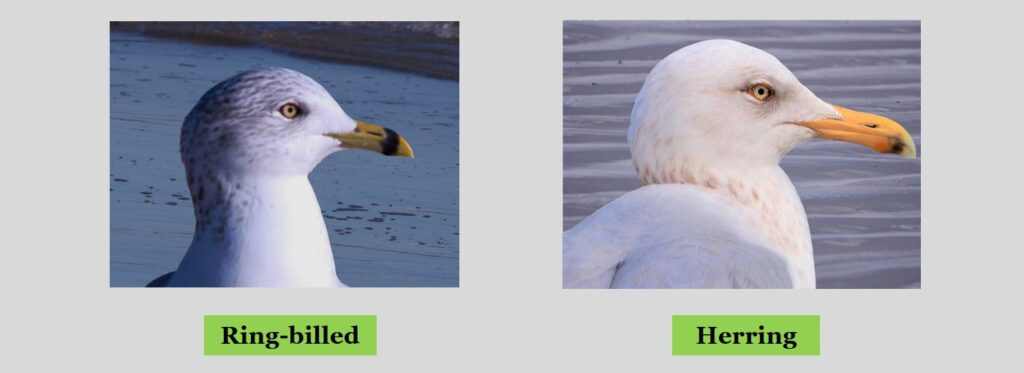
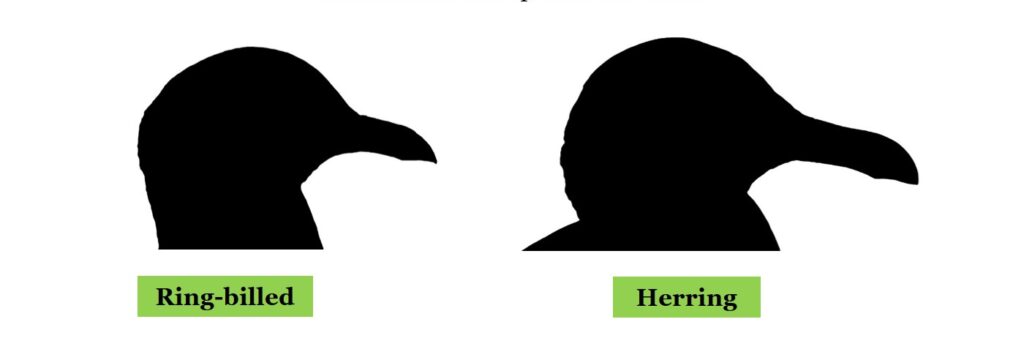
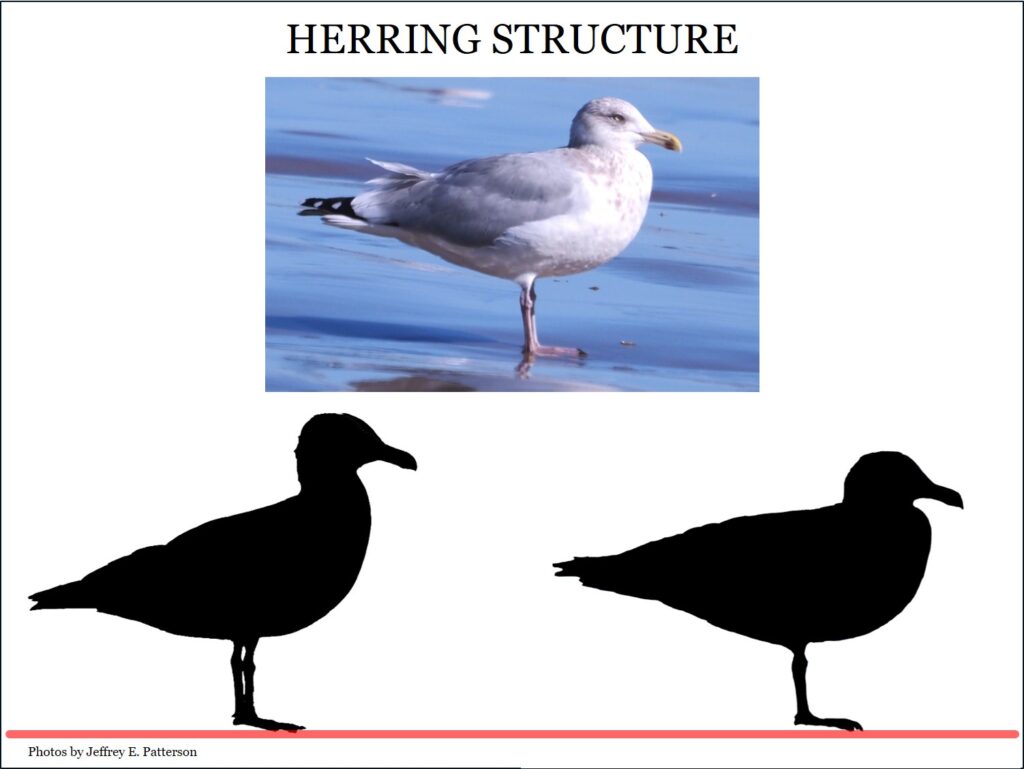
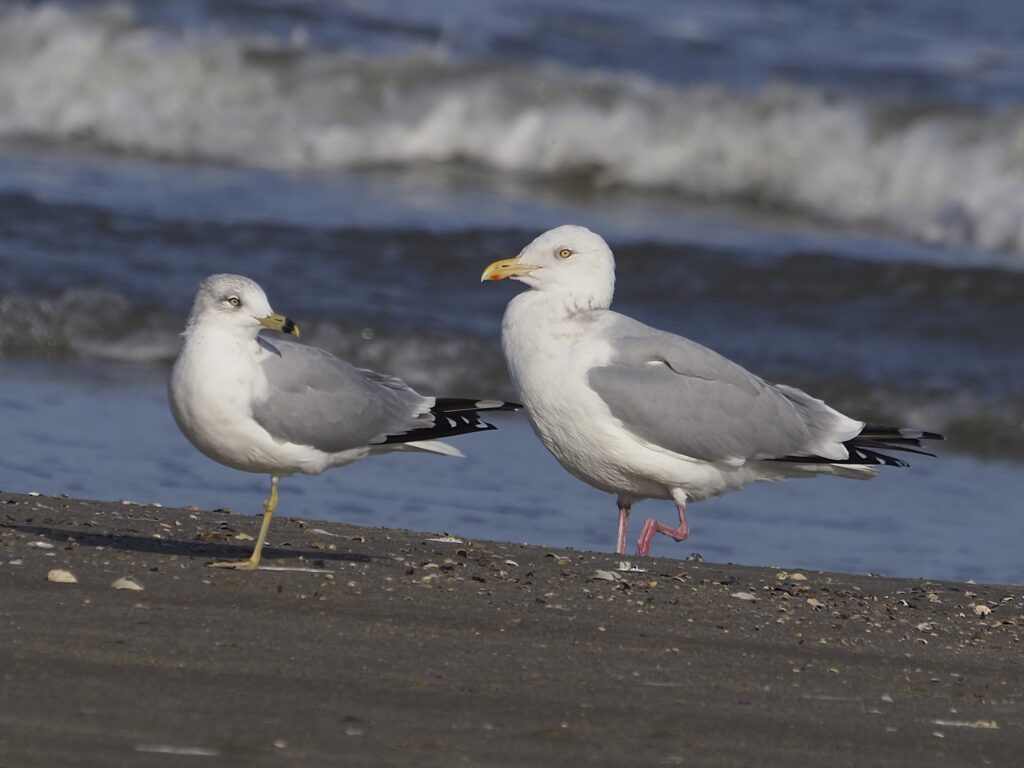
The “classic” structure of the Herring’s bill and head are compared with those of Ring-billed below. The head is somewhat rectangular-shaped, with a long snout, which seems to stretch out into the bill. The bill and snout have been described as resembling “pulled-taffy”. In comparison with Ring-billed, the Herring’s head is larger, less-round and more “pulled out” at the bill. The bill is long and seems to droop just a bit due to the sharply-hooked tip and the gonydeal angle. The bill is proportionately longer and thicker than Ring-billed and the snout is more “pulled-out”.
Body Structure
The photos below depict the “classic” body structure of the Herring. (I describe this as “classic” because in my mind it is the most frequent structure I’ve encountered, and it is a starting point to consider variations).
The Herring usually has a bulky body with pink legs situated in the middle. The rear-half (behind the legs) seems to come to an abrupt end, rather than being “stretched-out” or attenuated like the Ring-billed or LBBG. The primary projection (beyond the tail) is relatively short. Often the weight seems distributed to the belly, more than the chest.
Variability in Size and Structure
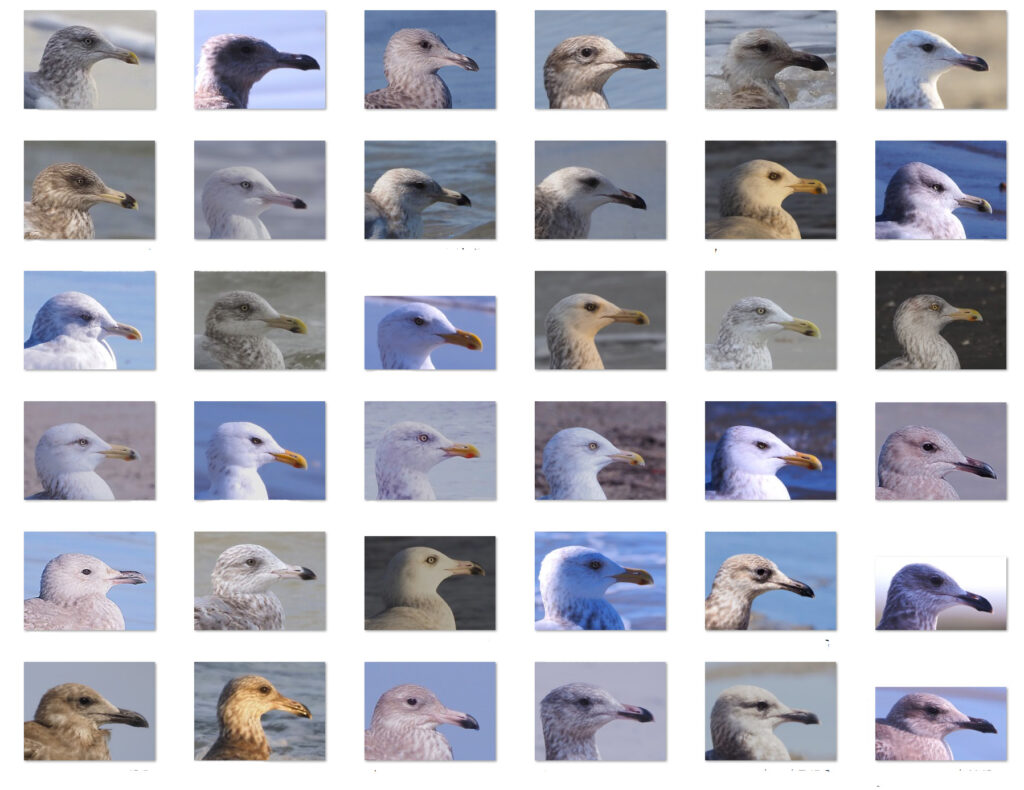
A number of variations in head and bill structure are shown in the composite photo below. When reviewing these photos, notice differences in head and bill shape and size. Some heads are blockier, some are rounder, some are flatter. Others are peaked in back, others taller. Some foreheads are steep, while others are not.
There is also a wide variety in the shape and size of bills: some are longer, some shorter. Some have bulbous ends. While others are more hooked and droopy, some are thinner or are more parallel-sided.
A final thing to notice is how the position of the eye relative to the rest of the head varies. Some are closer to the top of the head, others are lower, while others are further from the forehead.
The size and body shape (weight distribution, length of primary projection, attenuation of back half, etc.) of Herrings are also subject to variability as can be seen in the silhouettes below. Some have bulkier chests, while others appear slightly beer-bellied. Some have fairly long primaries (possibly females), while the “classic” Herring shape shows moderate primary projection.
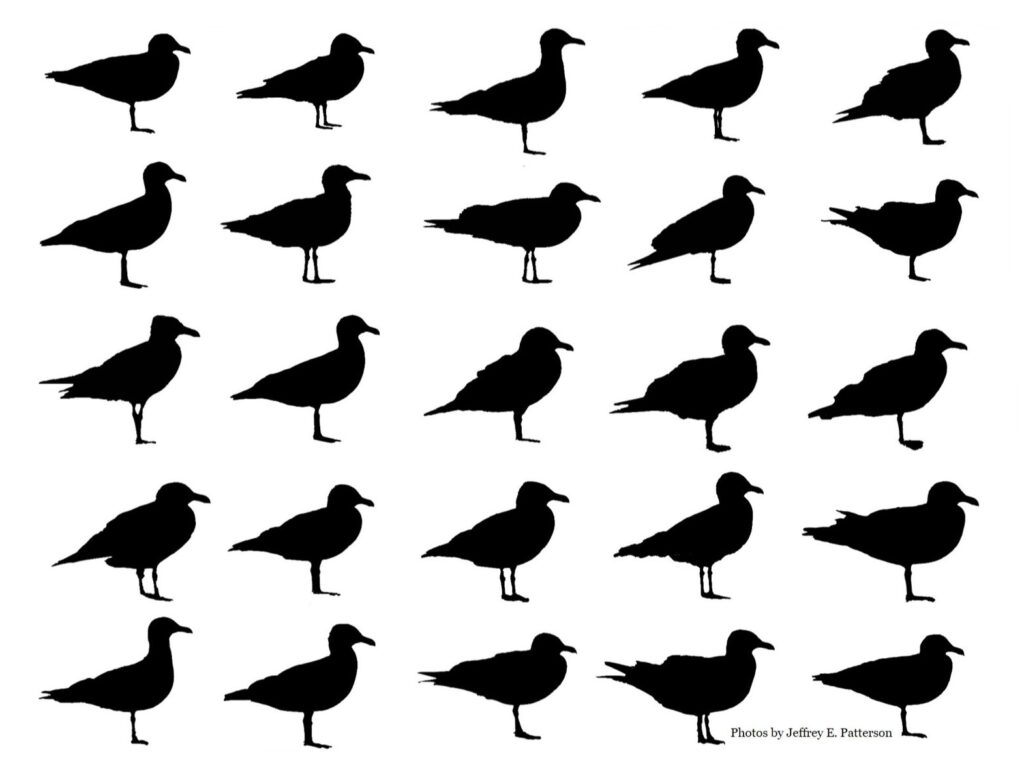
Though it is difficult to tell in the silhouettes above, the size of the Herring is also quite variable. In gulls, males are larger, with larger bills and blockier heads. Females are smaller, have more rounded heads, smaller bills and longer wings. Always compare the size of an unknown gull with that of known gulls (especially Ring-billed, Laughing and LBBG). Many Herring are considerably larger than Ring-billed, while for others the size-difference is less pronounced, but usually still noticeable. Size can also be compared to other Herring. The structure and size of the Herring is compared with several gull species below.
A discussion of all this variability may lead the reader to fear that Herrings are un-identifiable. But remember that if it is a large, white-headed gull in Texas (of any age and plumage), it should initially be assumed to be a Herring — until proven otherwise. Along with size-comparisons and paying attention to structure, remembering that the Herring has pink legs, yellow eyes, and pale-gray backs can eliminate many gull species.
Plumage
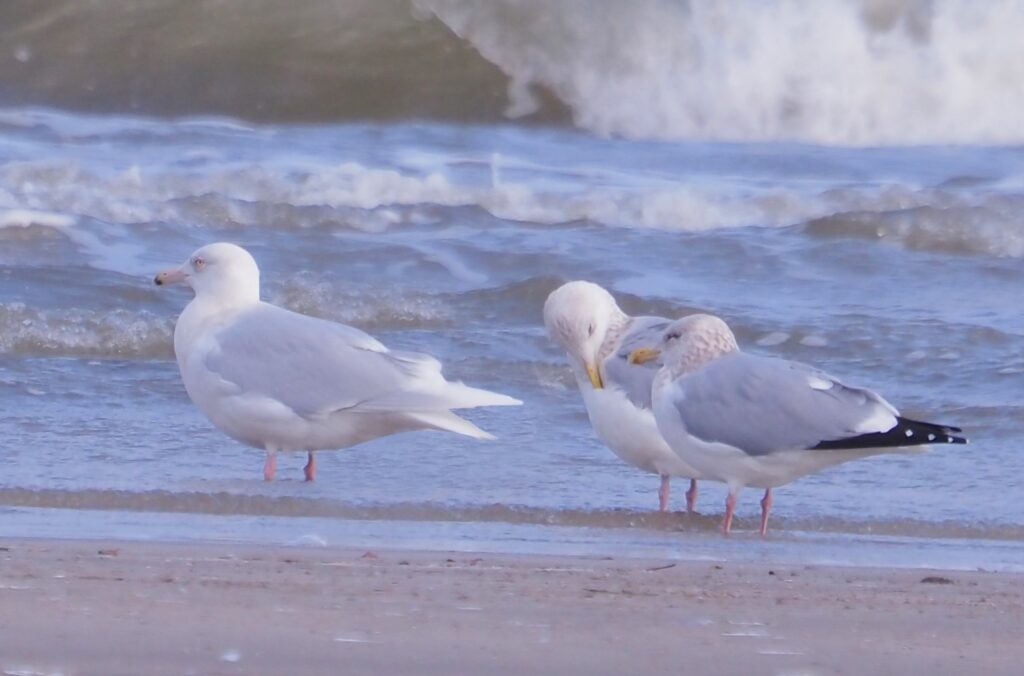
Adult Herring are amongst the paler gull species. Their backs are virtually the same shade of gray as Ring-billed and are noticeably lighter than most other gulls. The Glaucous is the only other semi-regularly occurring gull that is lighter in back color than the Herring. This difference in back color may be the first clue to identify a number of out-of-range (for Texas) gulls like (California, Little, Iceland (sometimes), Short-billed, etc).
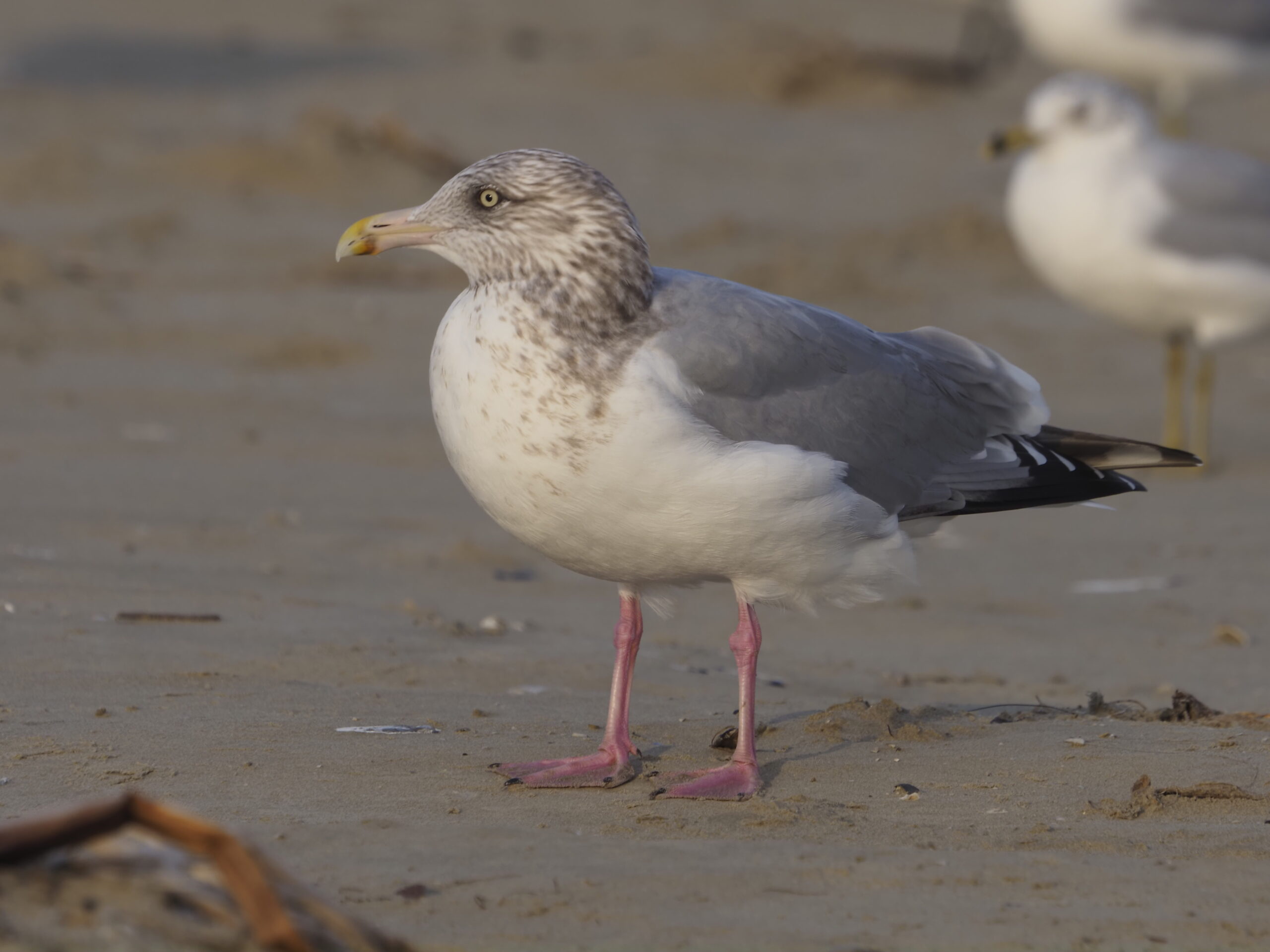
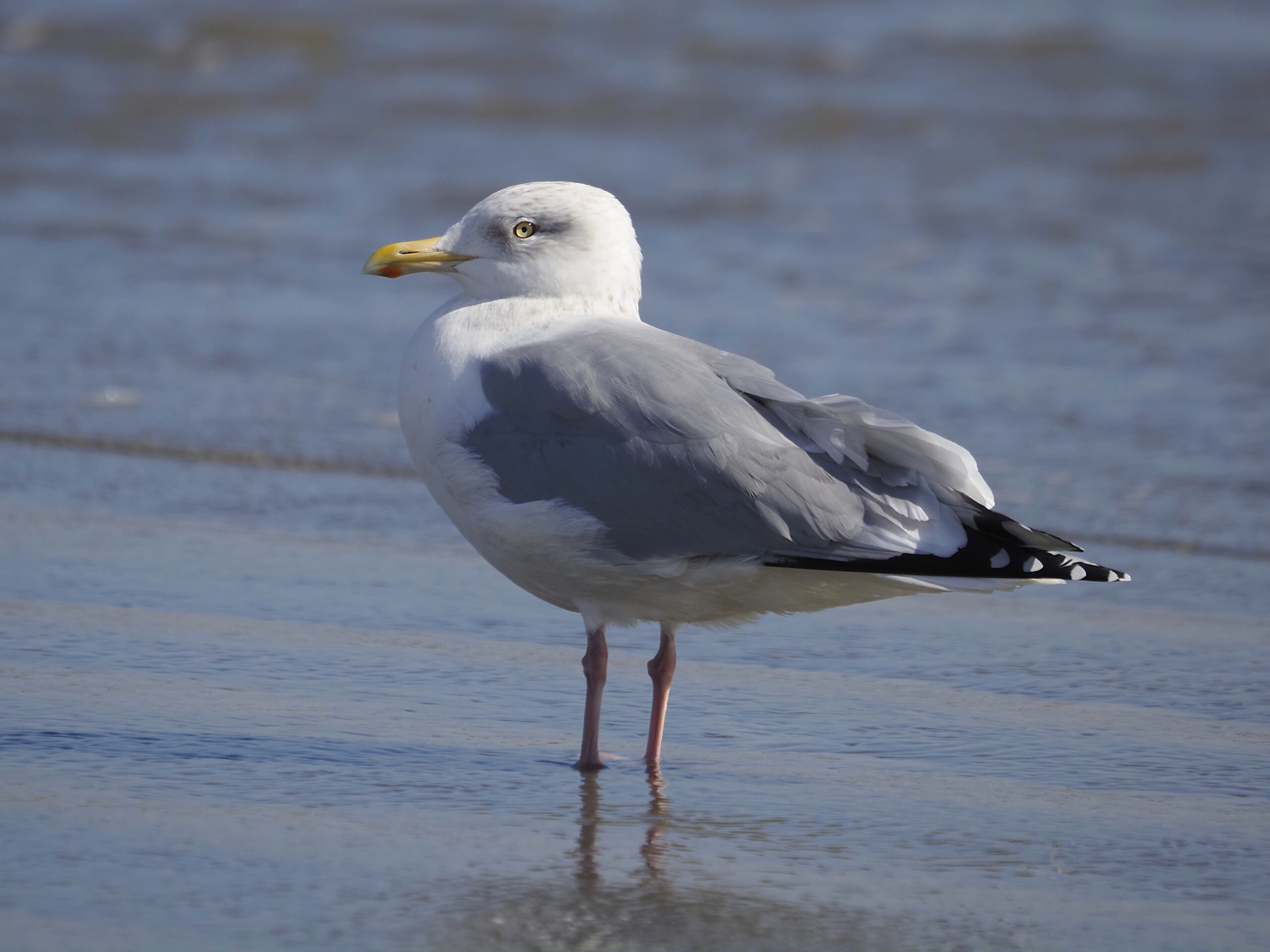
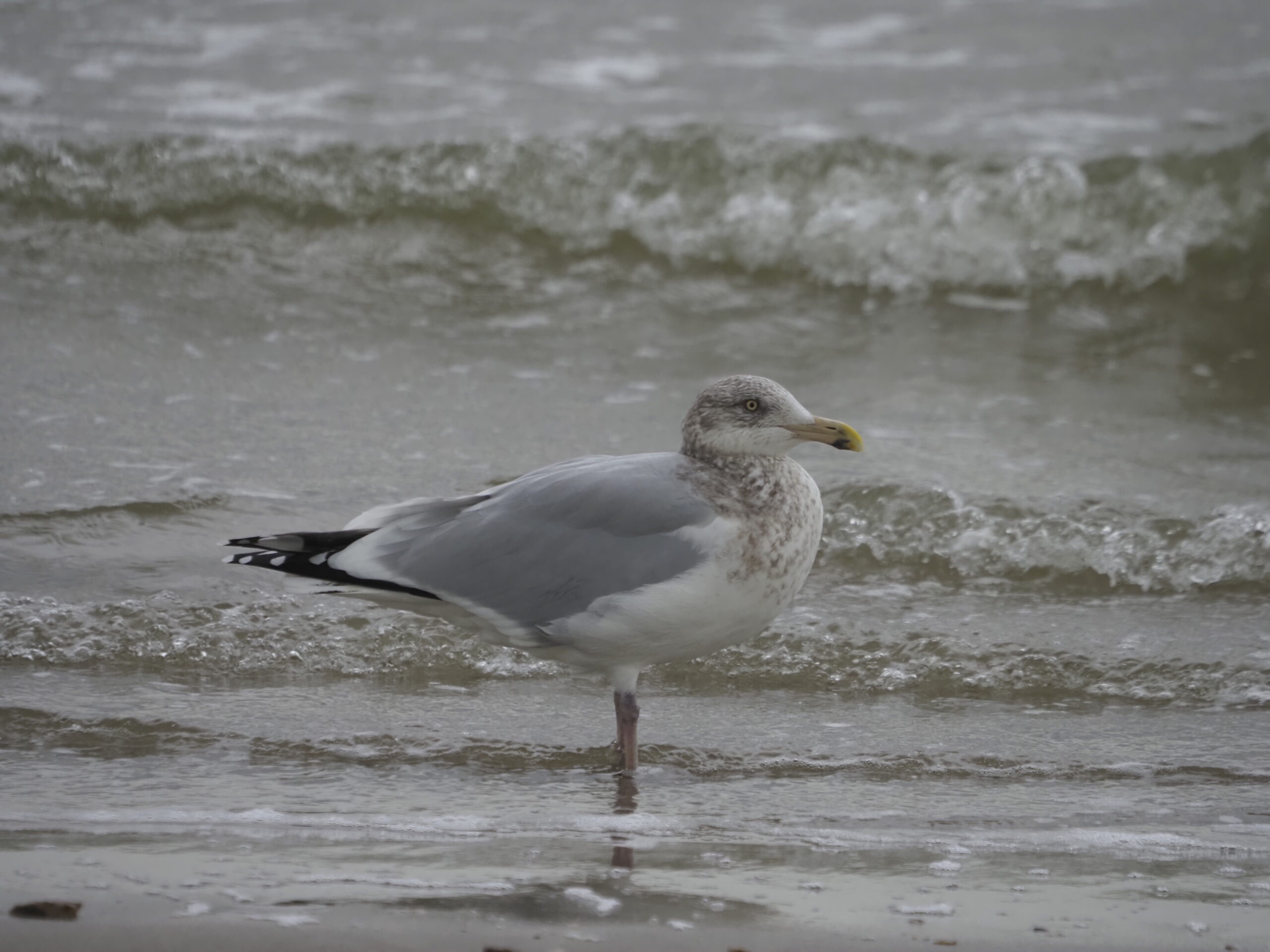
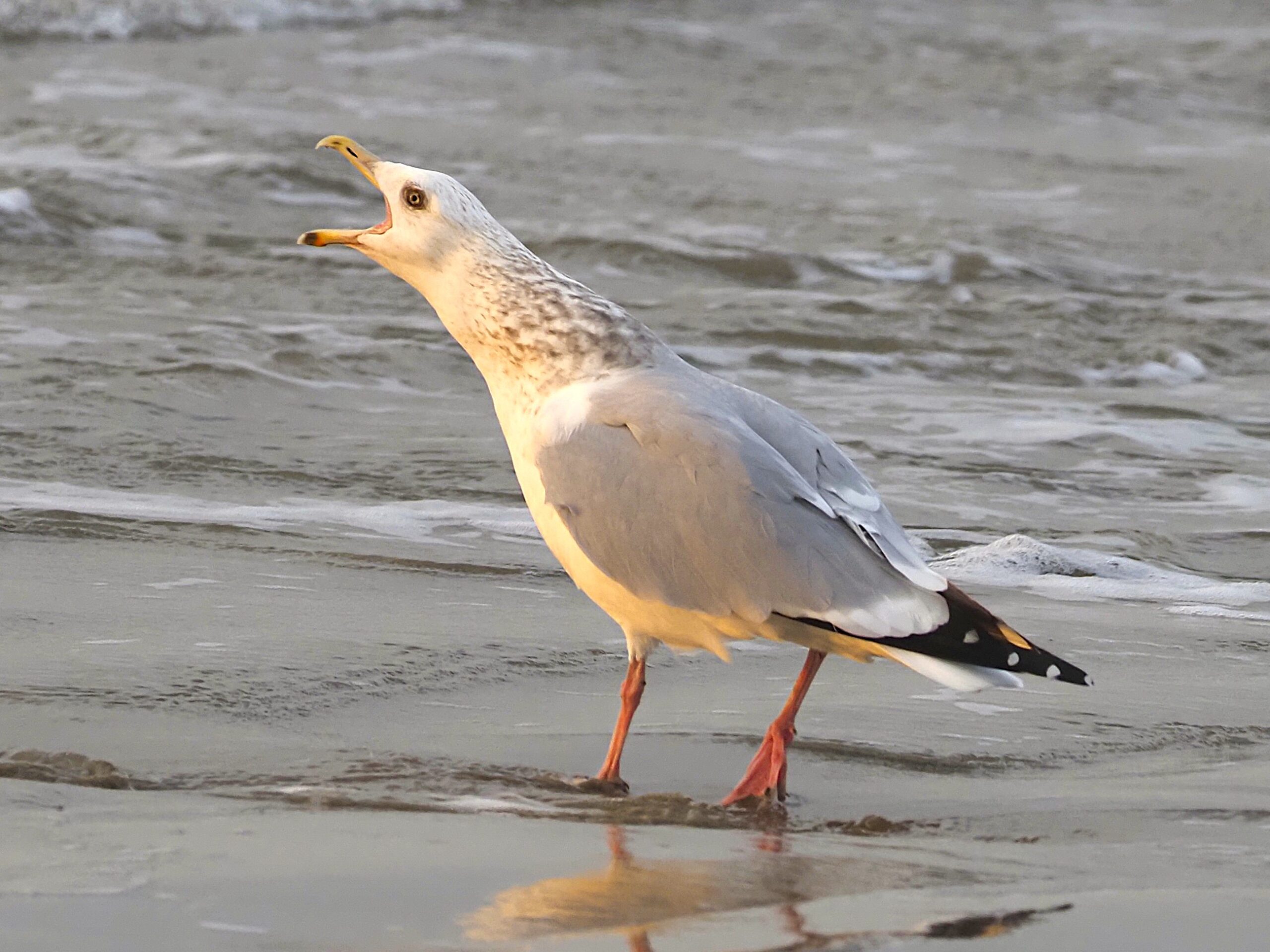
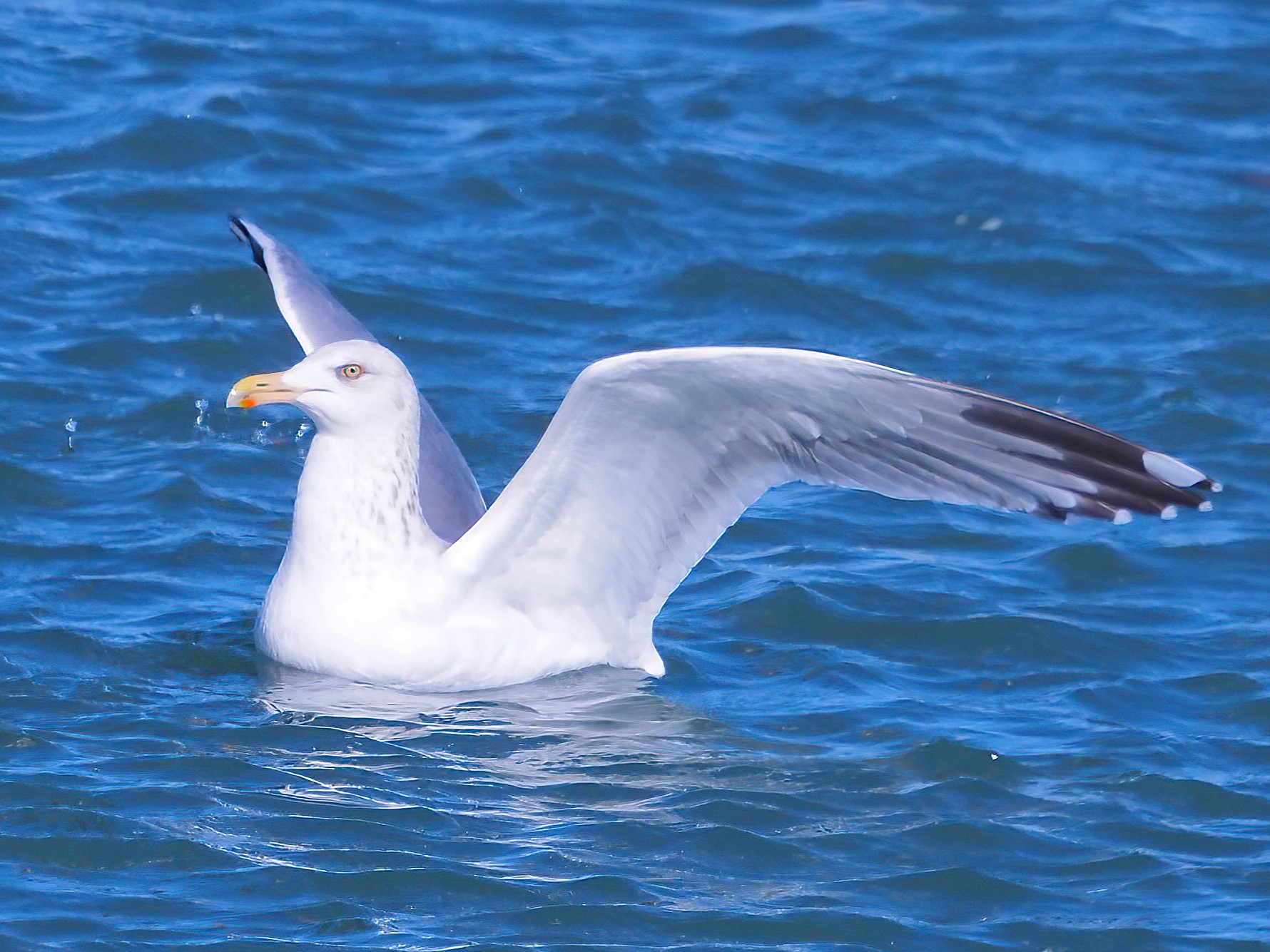
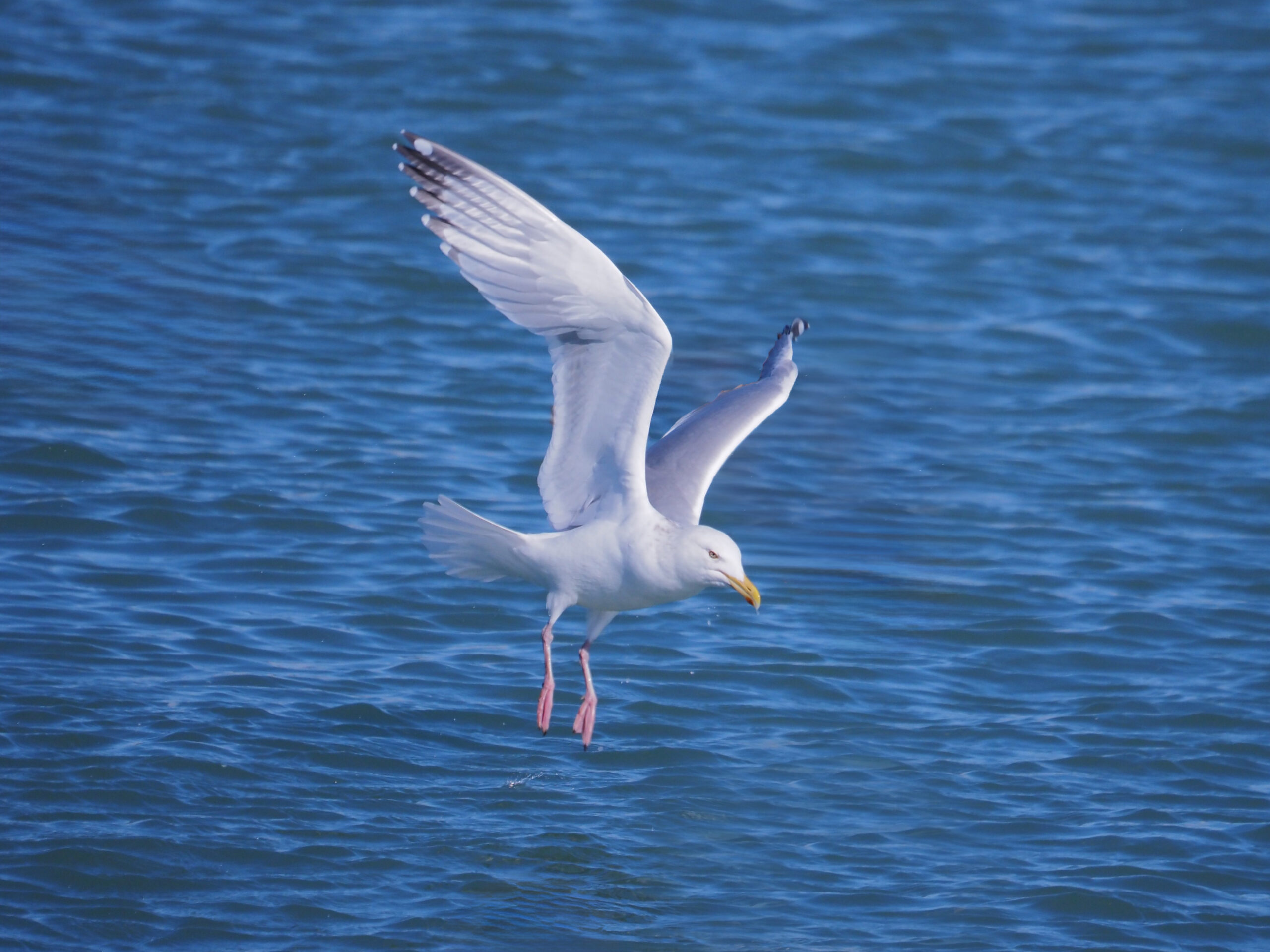
The undersides of adult Herring are white and the primary tips are black with white spots in full adults. The legs are pink, bill yellow with a red spot, eye is yellow and the orbital ring is red.
As shown in the group of photos below the amount of streaking on the head, neck and breast in basic (non-breeding) plumage is variable. Each of these photos was taken in January.
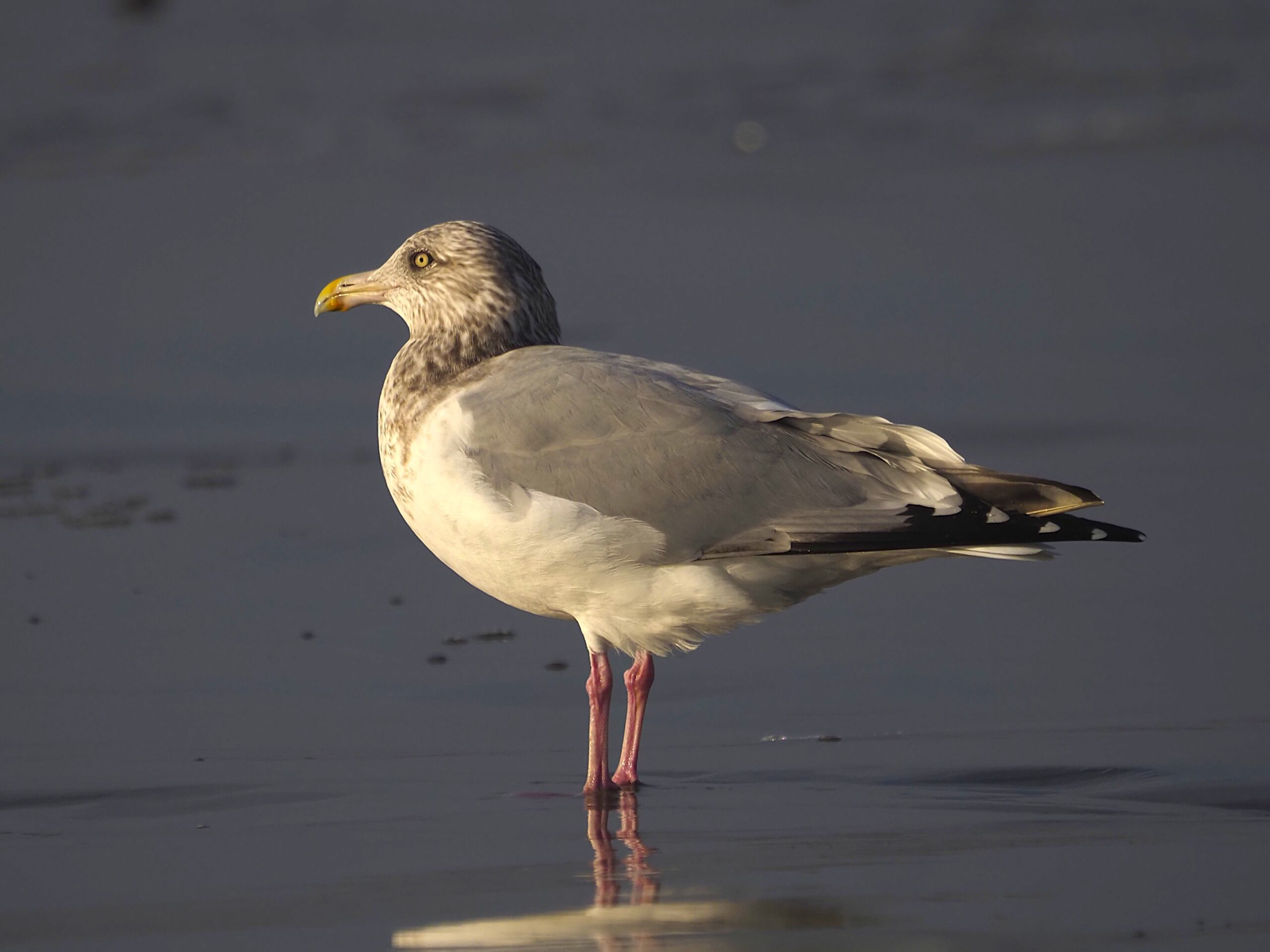
The plumage of adult Herring are compared to other species in the photos below.
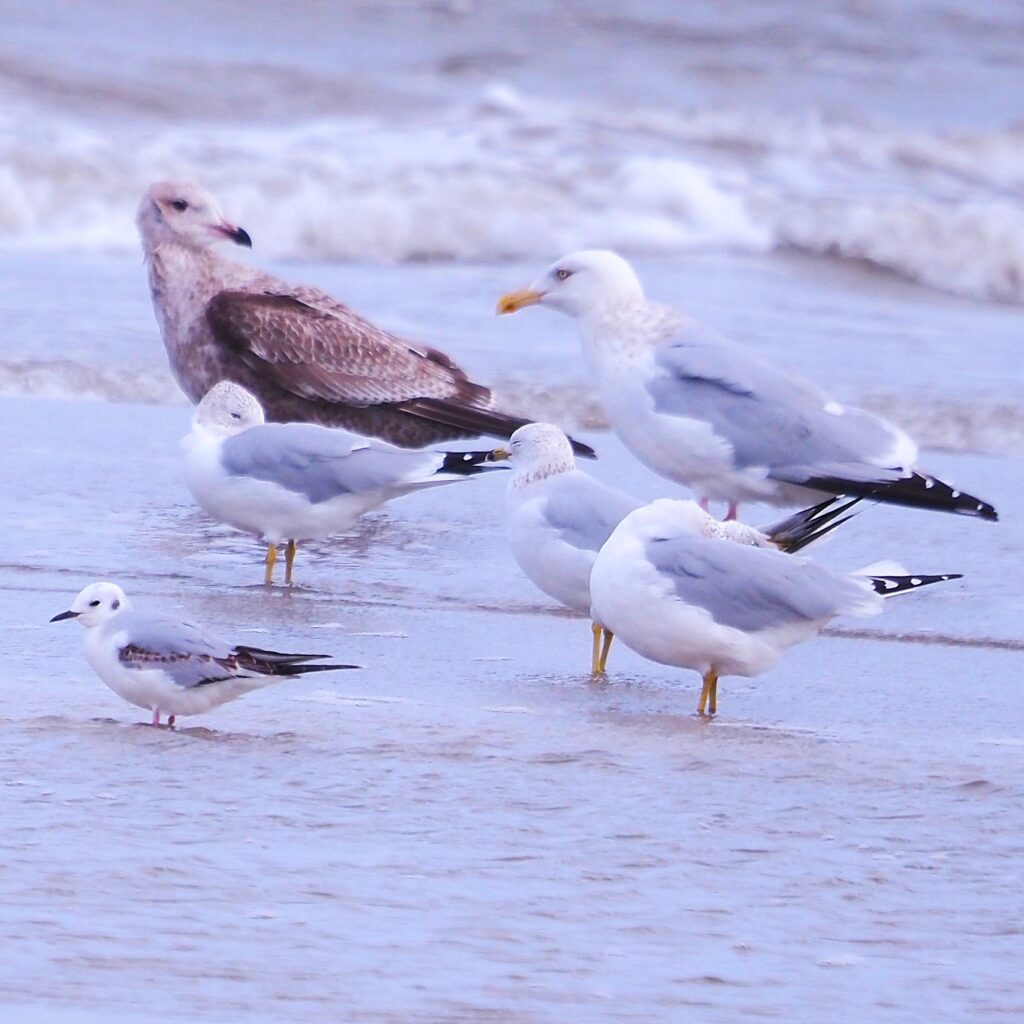
In-Flight
Like the Ring-billed, the adult Herring has black primary tips with white apical spots. However, the Ring-billed shows a higher contrast transition from white to black at the primary tips, while the Herring’s transition is low contrast gray to black. With practice these 2 common gulls can also be distinguished in-flight by the speed at which they flap their wings; the Herring is somewhat deliberate, slightly ponderous as it flaps, while the Ring-billed is slightly quicker and perhaps lighter. As can be seen in the photos below, the Herring also has thicker wings, especially at the wing-base, than the Ring-billed.
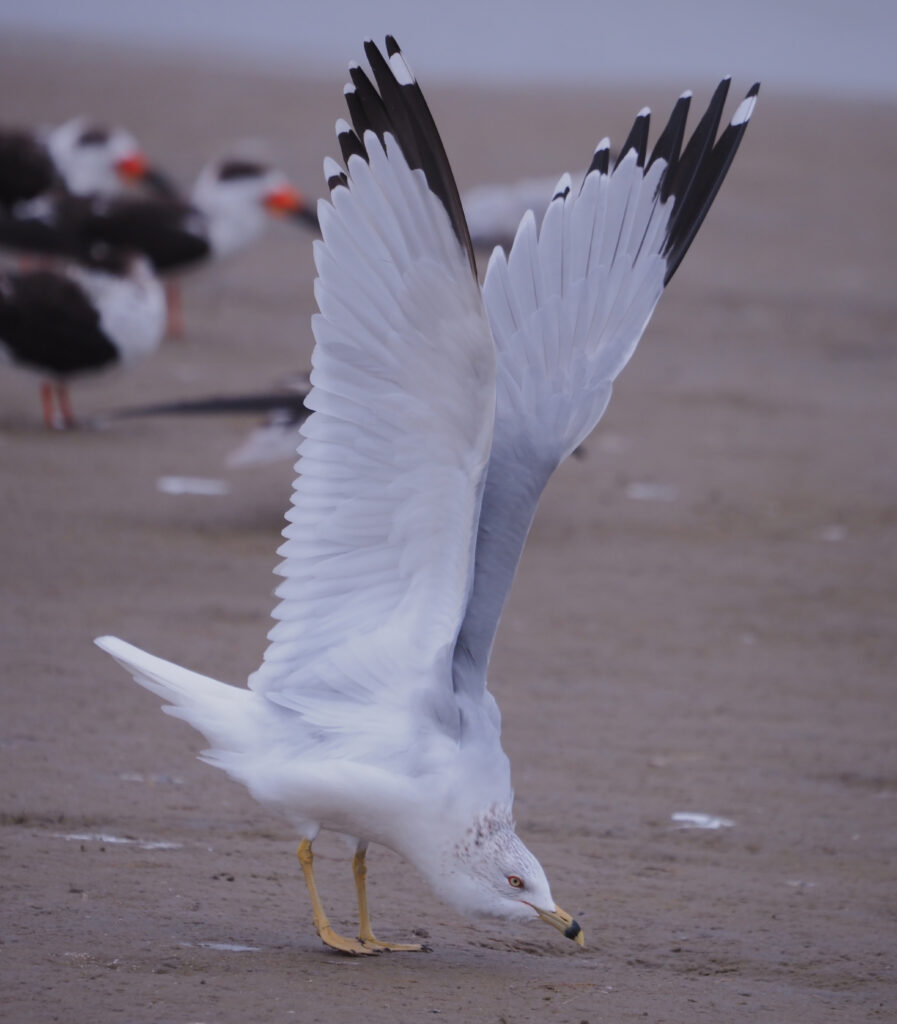
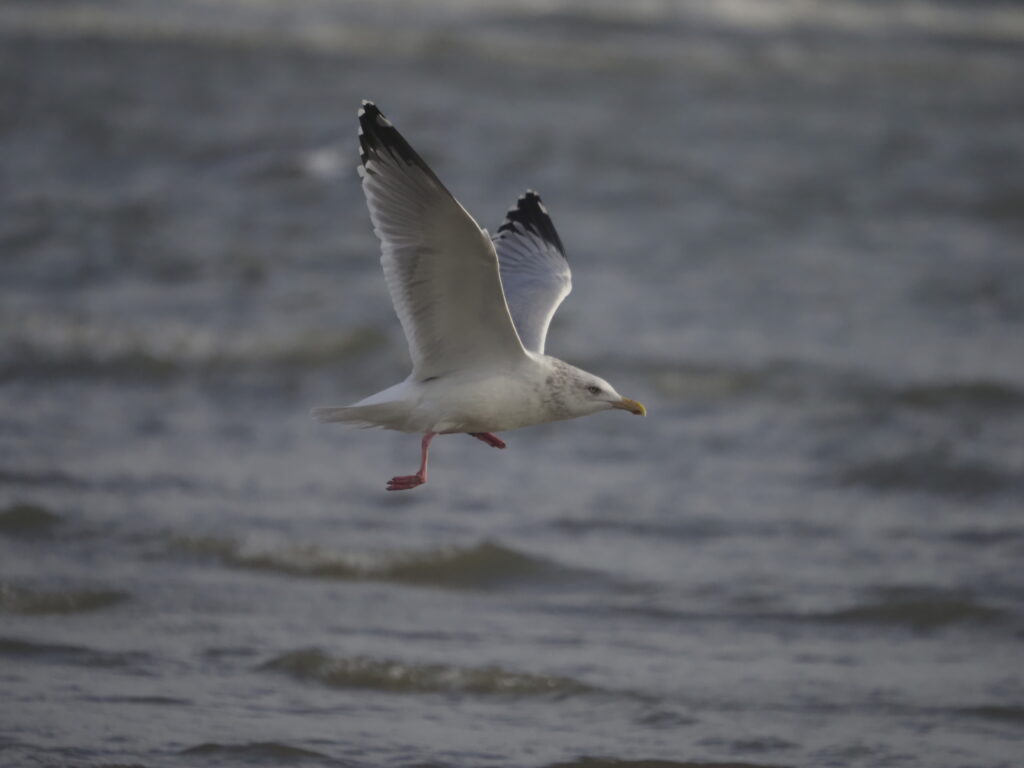
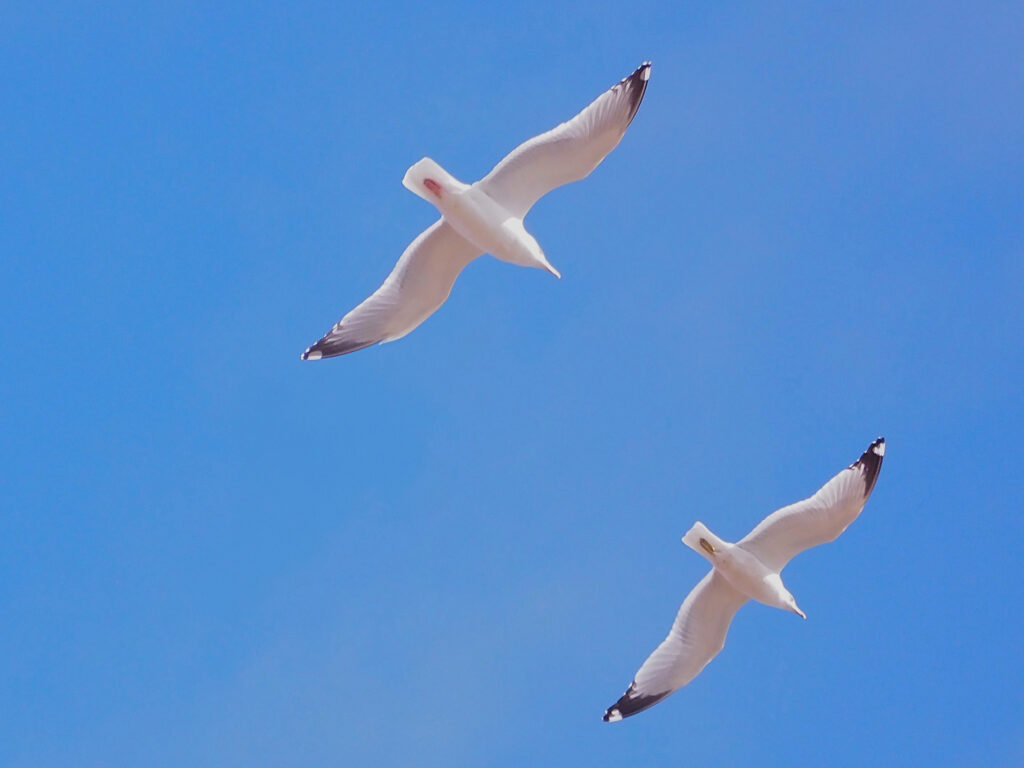
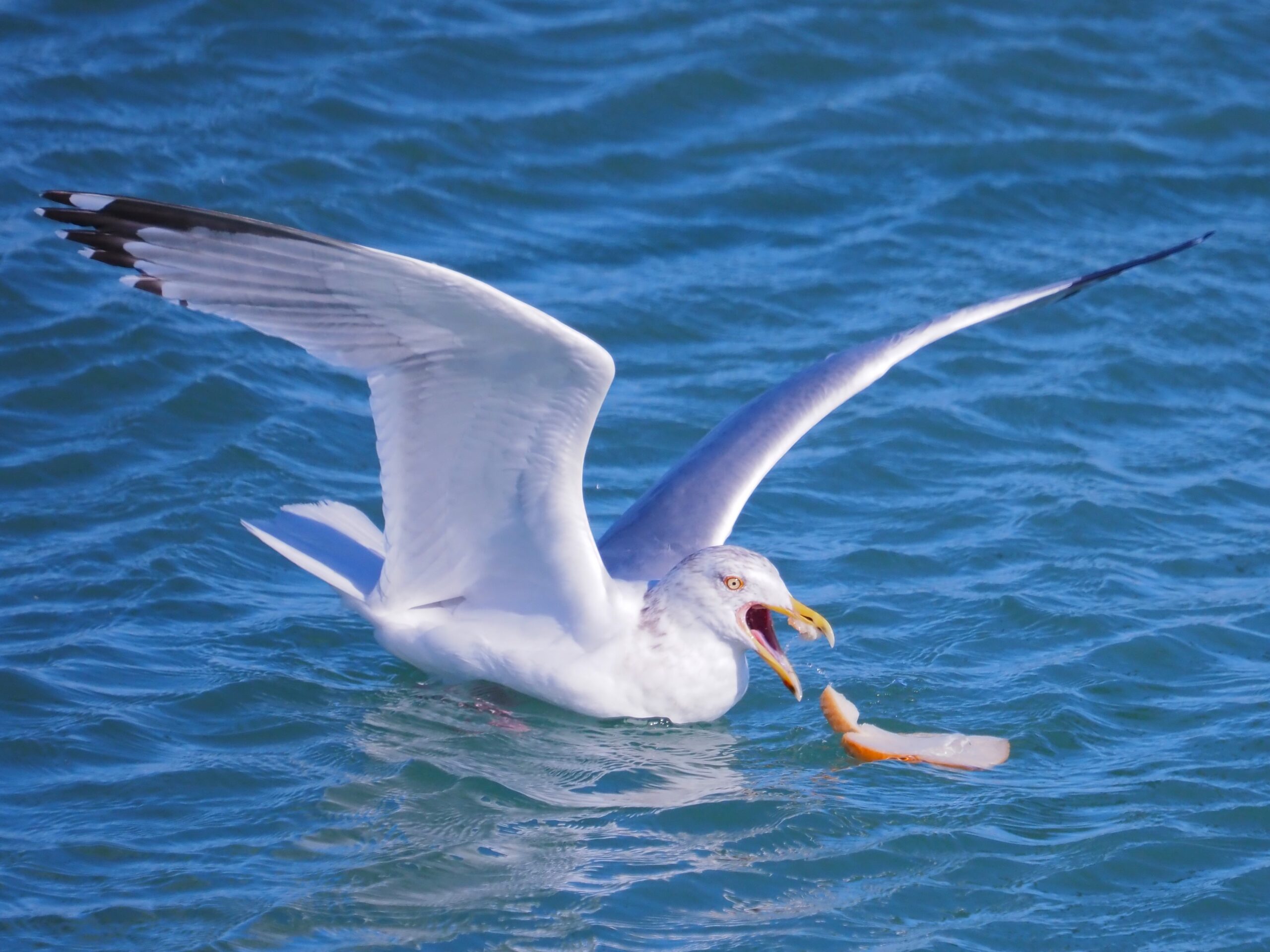
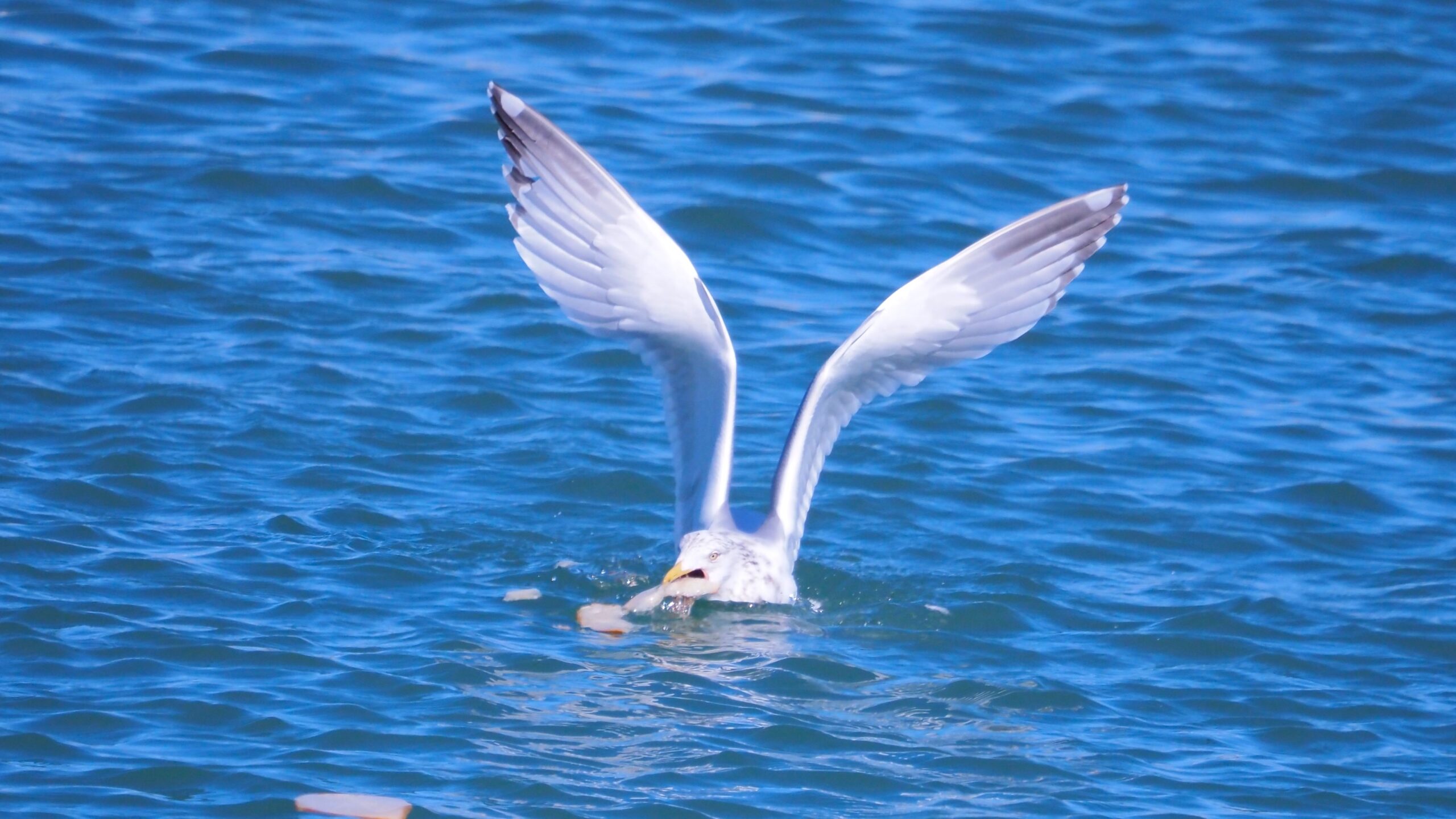
Additional flight photos of adult Herring are shown below.
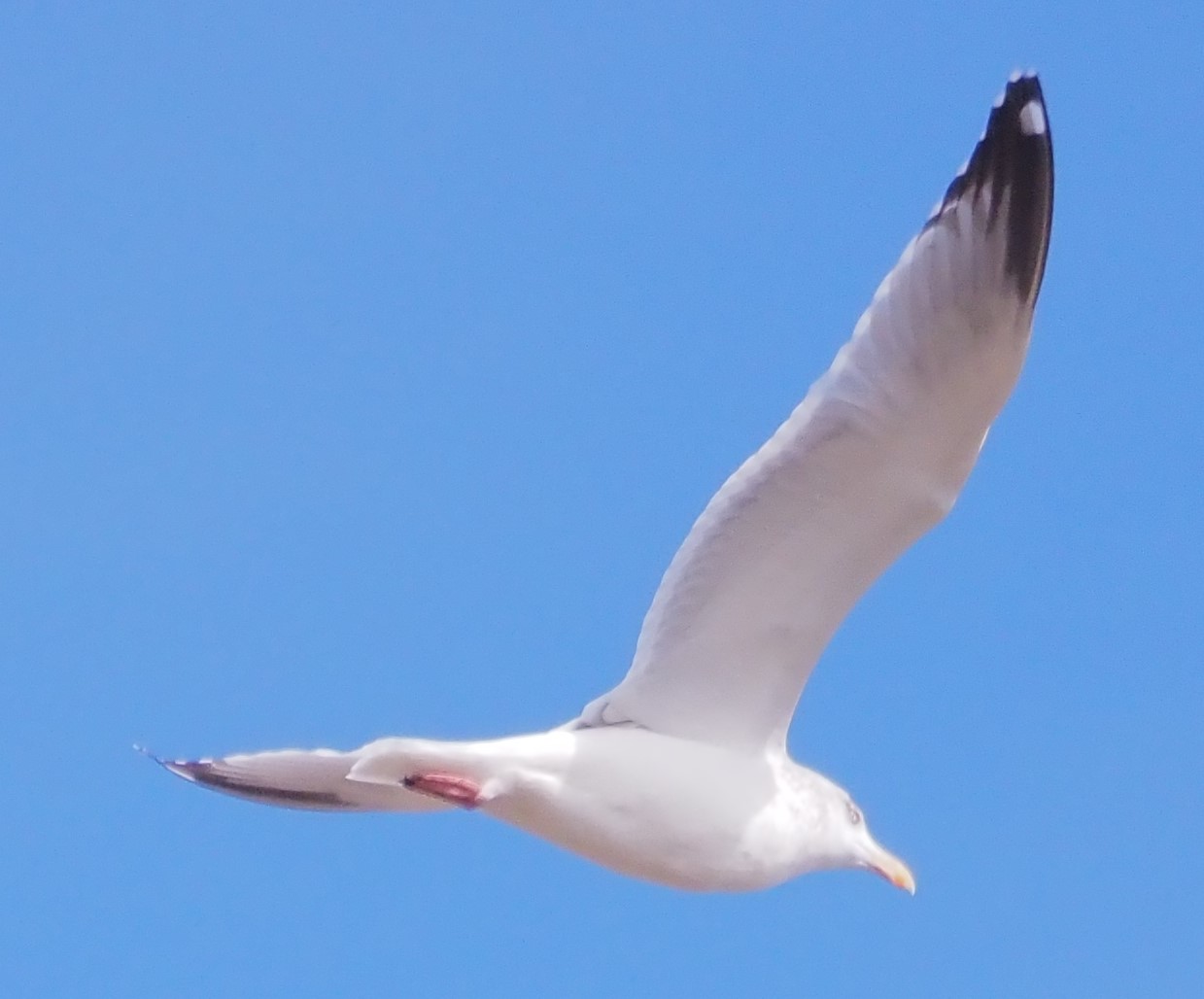
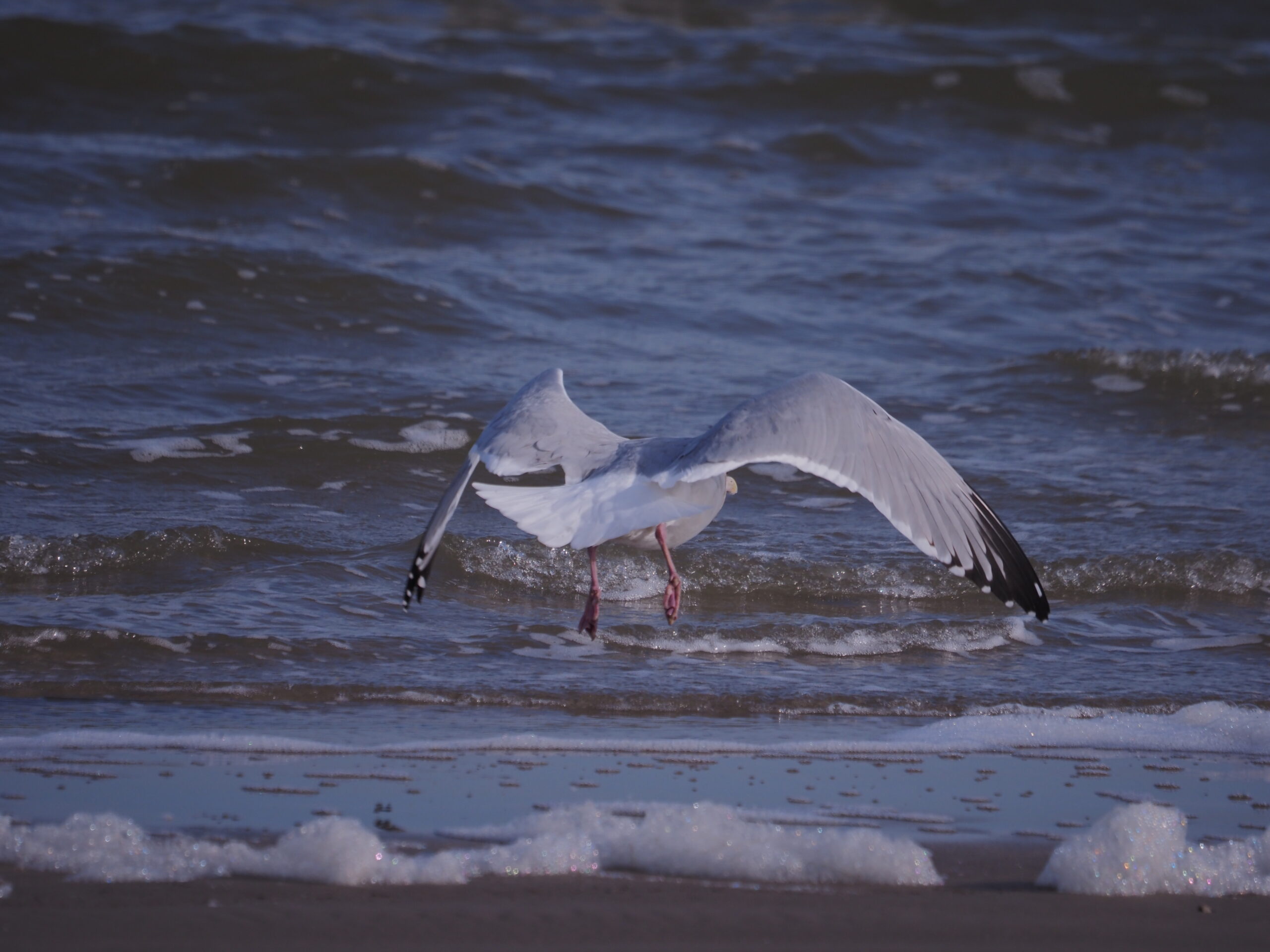
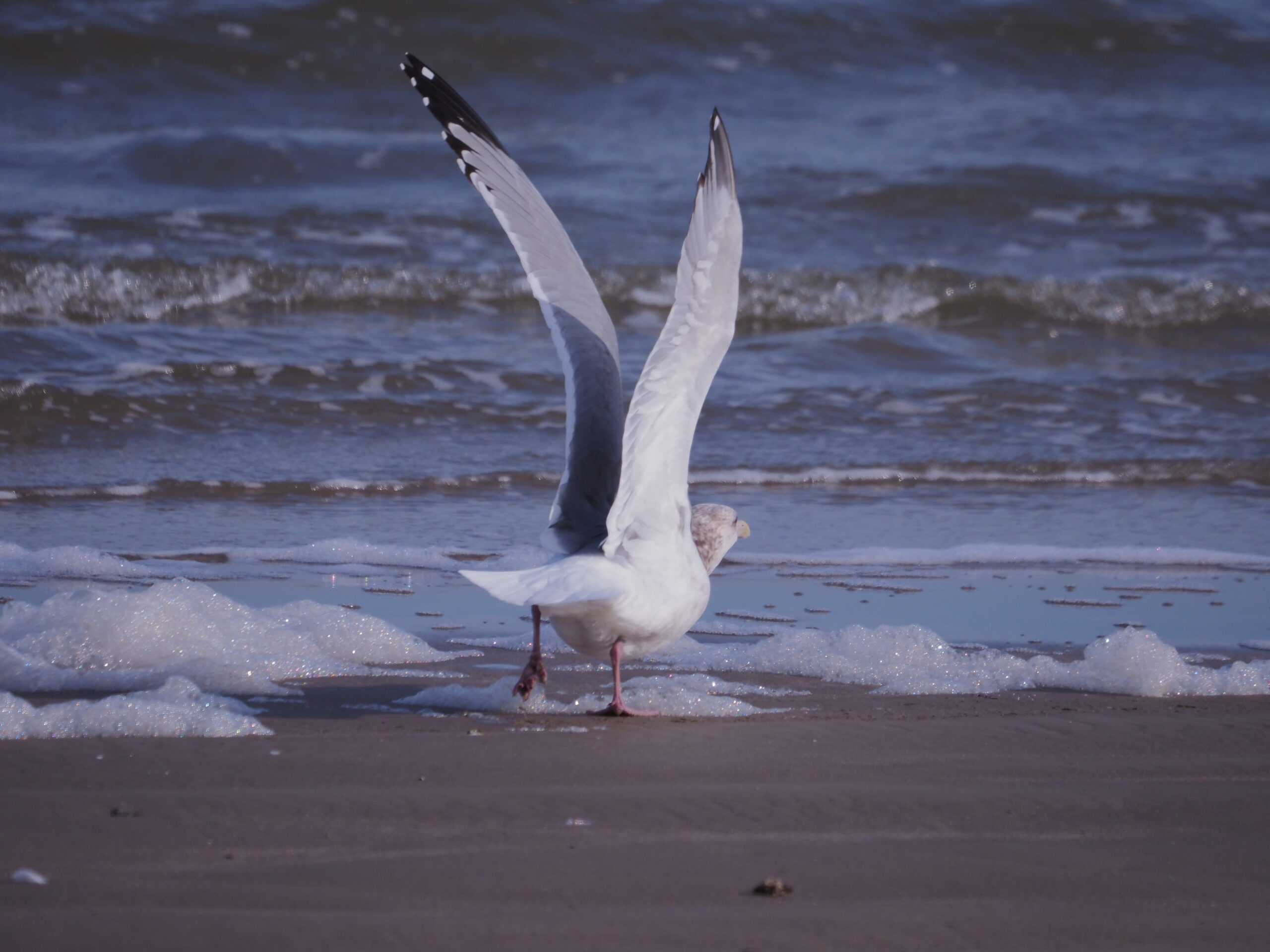
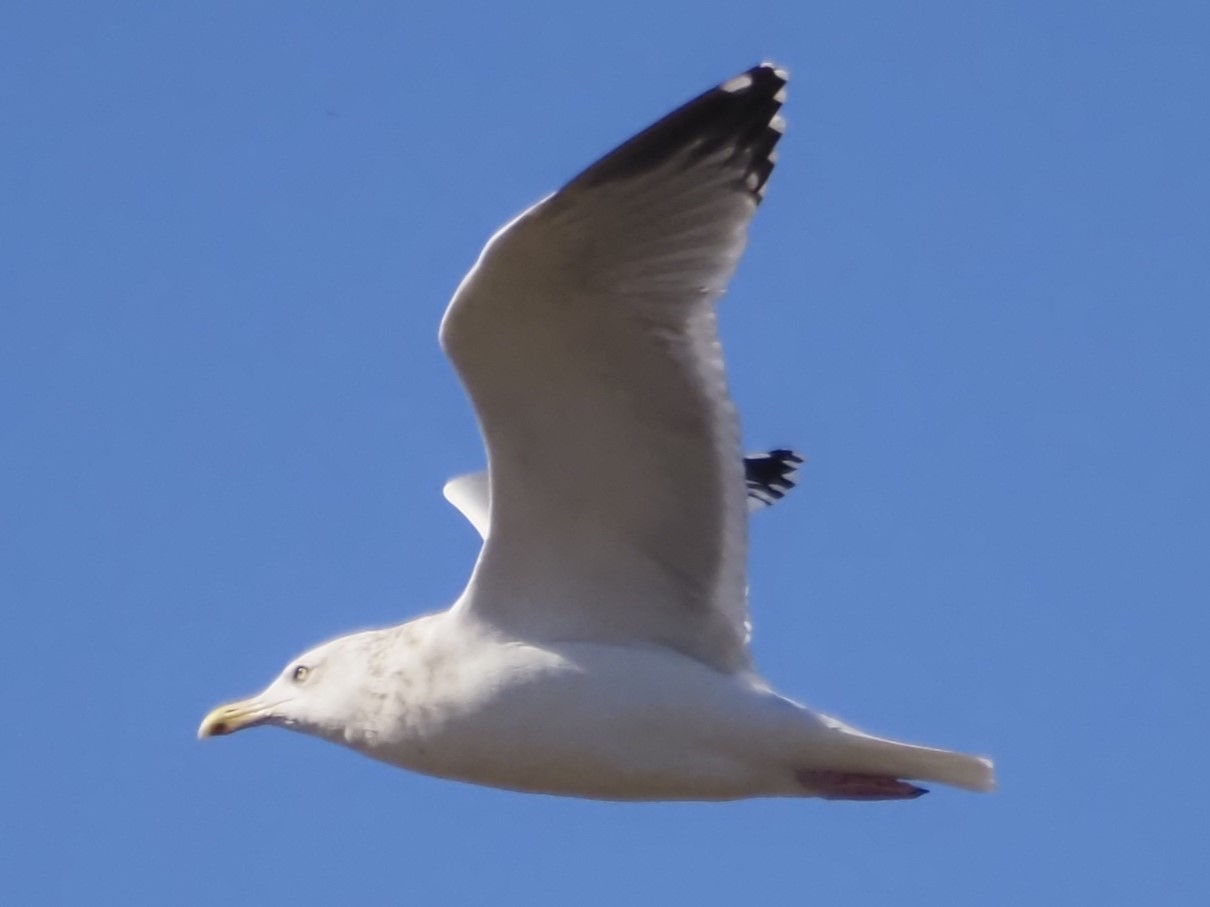
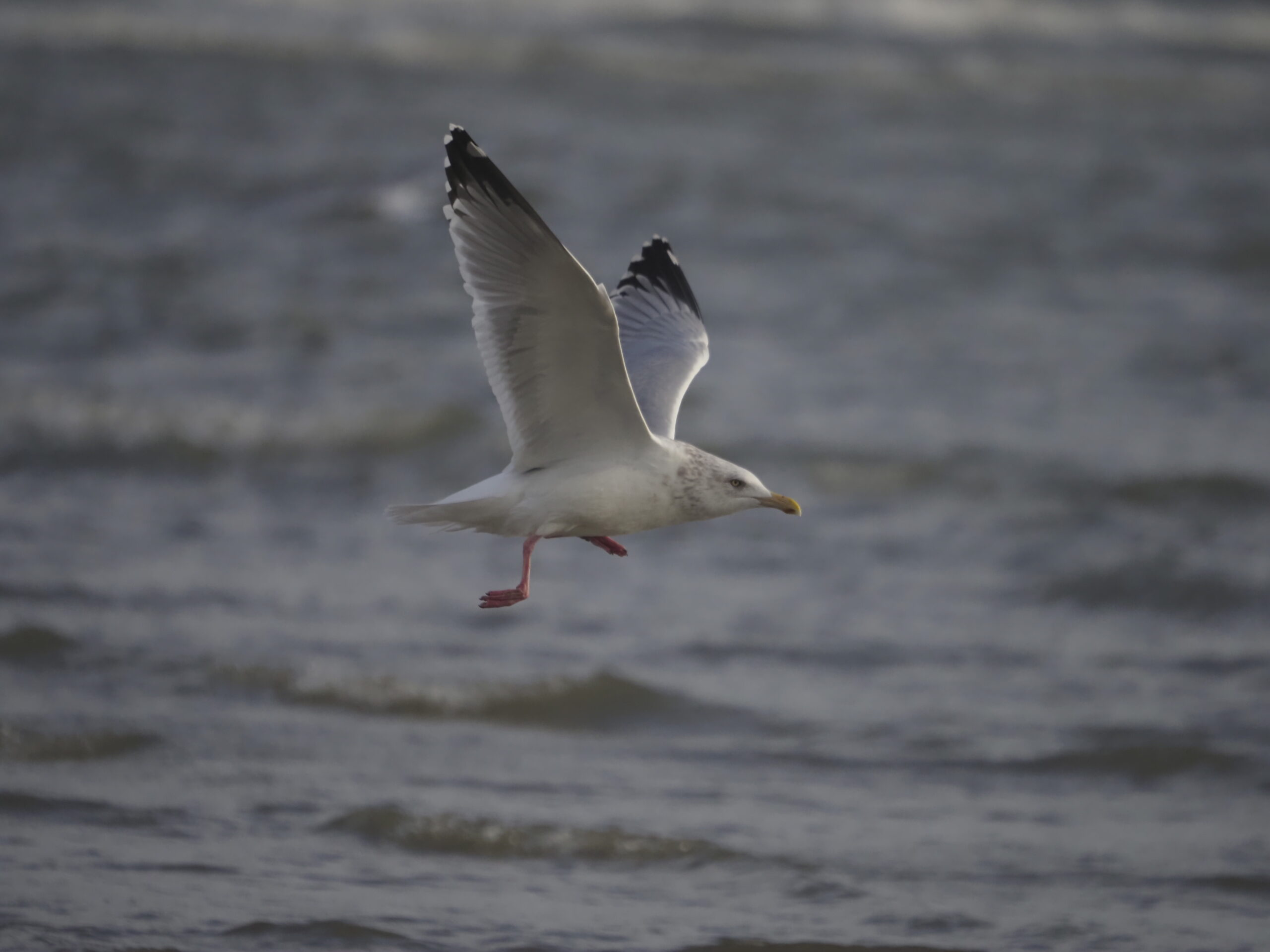
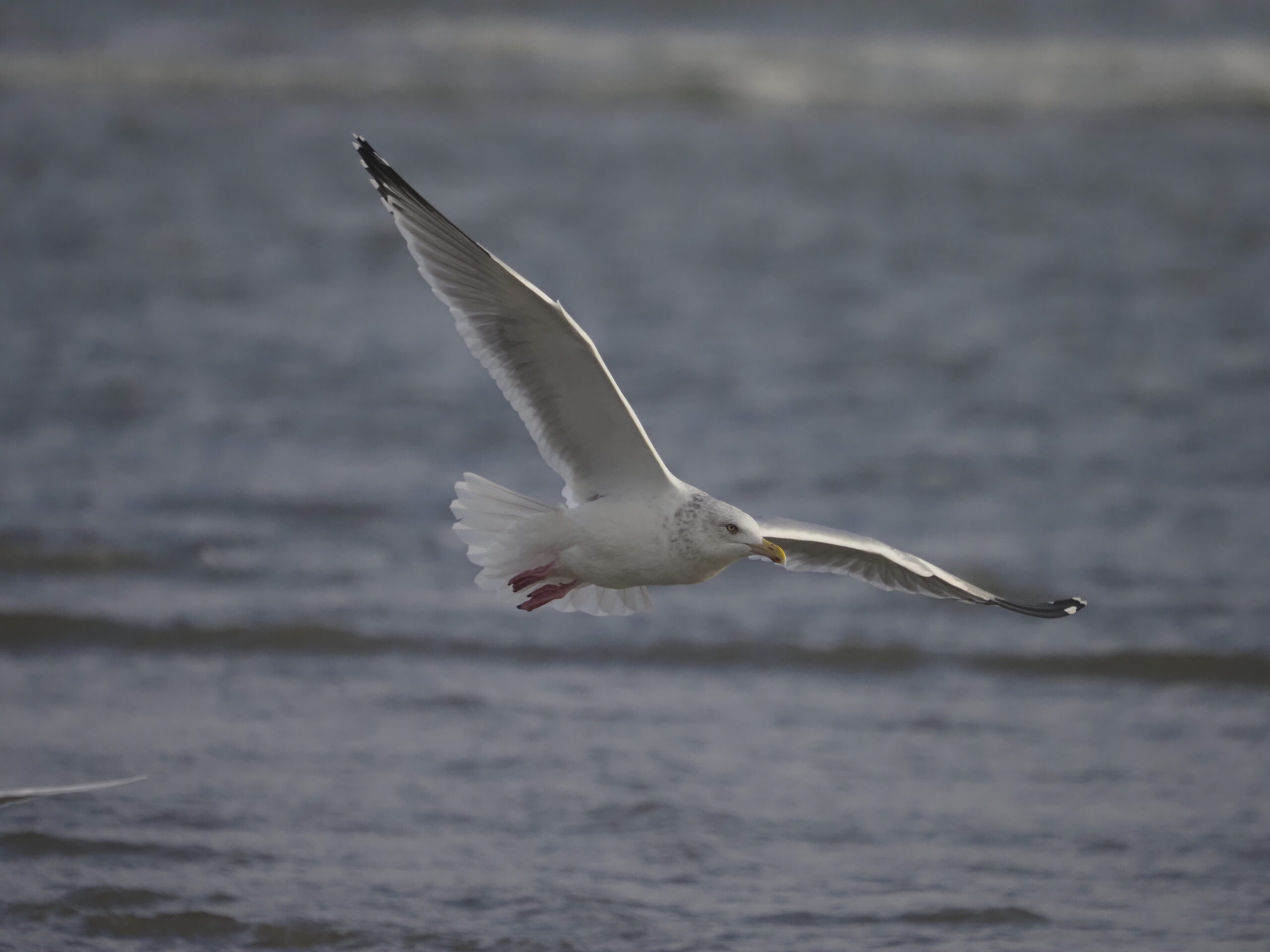
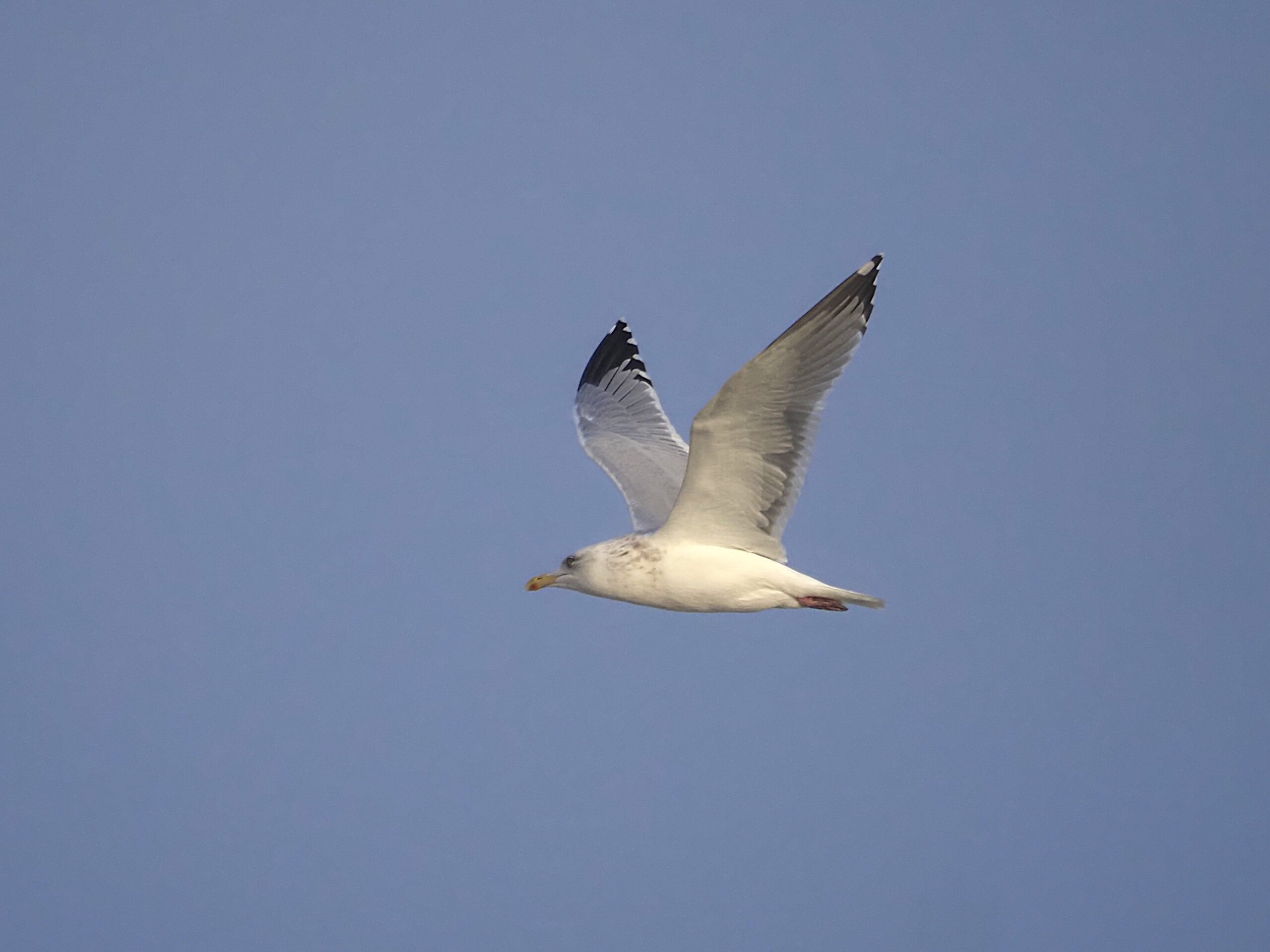
The Herring’s plumage is also subject to regional variation. Some have less black and/or less intense black in the wingtips as shown below on these Herrings present at the Gull Frolic of February 2024 — put on by the Illinois Ornithological Society.
1st Year Herring
If gulls in general are considered one of the most difficult groups of birds to identify, the immature Herring may be the most difficult gull to regularly identify. However, Jeff’s Gulls Rule is in play for 1st Year Herring as well as adults — “if it’s a big-un, think Herring first”.
Aside from this possibly unsatisfying default position, Juvenile and 1st year Herring should be identified initially by structure and relative-size, then followed up with plumage details. The structure and size discussed above for Adult Herring also applies to immature and sub-adults.
1st Year Herring In-Flight
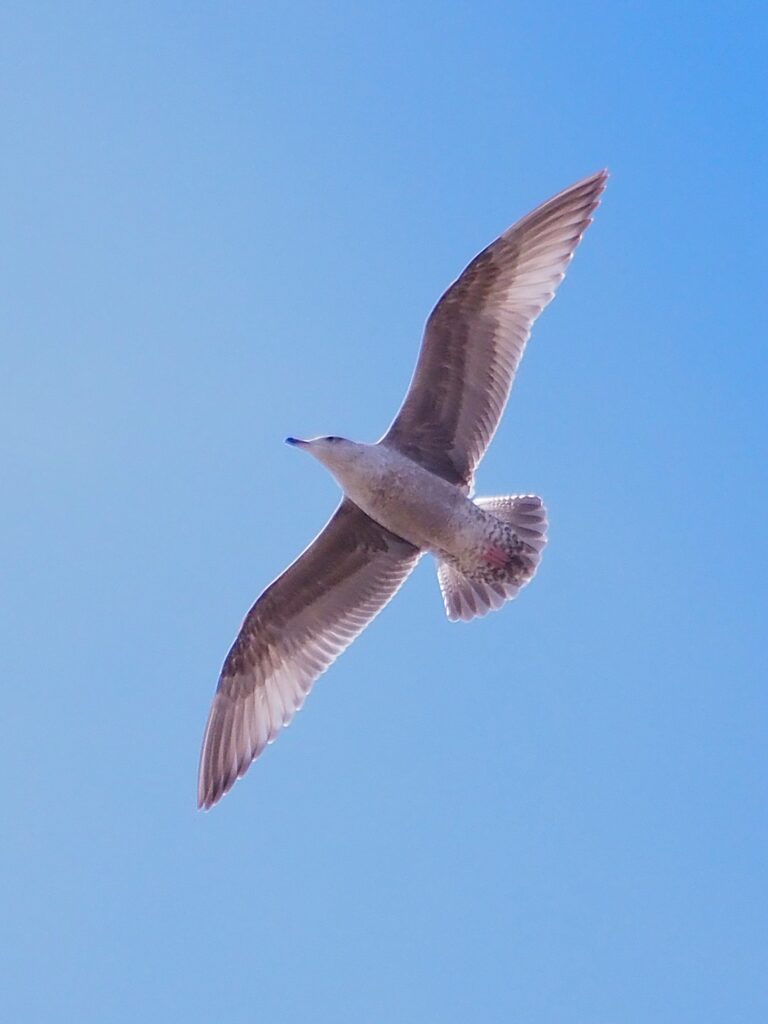
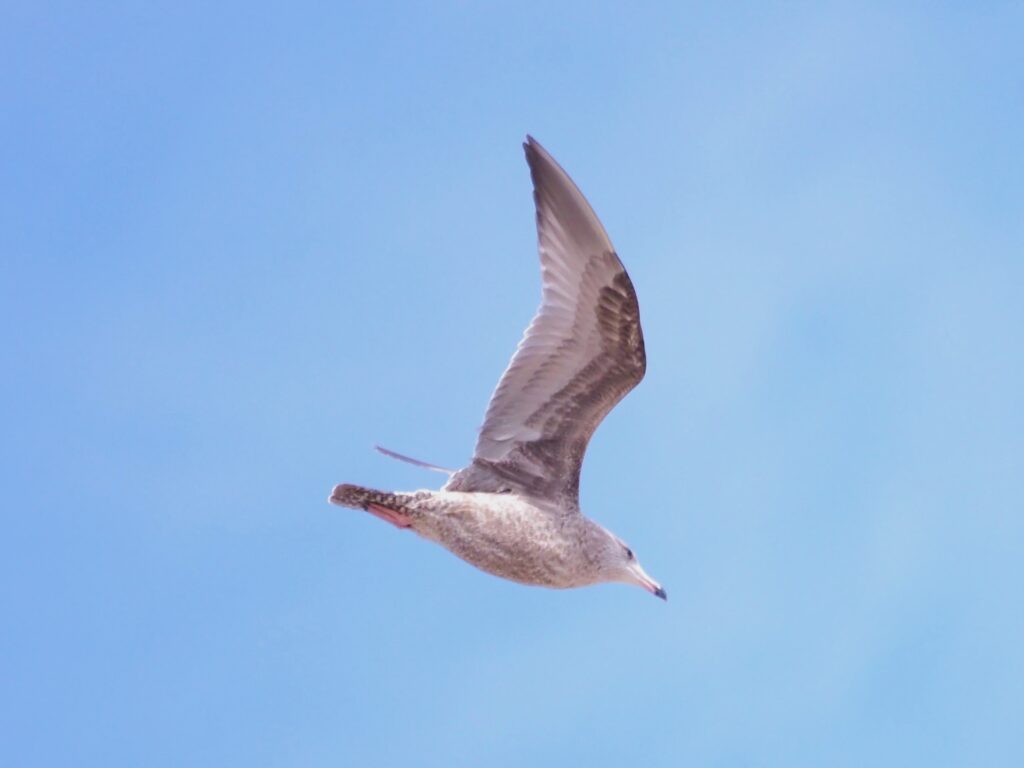
As pictured below, in flight the 1st year Herring is famous for its “inner-primary windows” which other large 1st year gulls usually lack. Recall that the primaries are the 10 wing feathers most distant from the body, and that they are numbered 1-10 starting at the inner most — so the inner-primaries are numbers 1-5.
1st Year Herring Plumage
Most adult gulls, including Herring, undergo a complete molt of feathers during approximately August to September. All feathers are molted at this time.
At hatching (usually in July and August) Herrings have downy chick plumage. But they rapidly acquire their first flight plumage in a few weeks, and fledge at 5-6 weeks of age (around August or September). This first flight plumage can be called “juvenile plumage”.
1st year gulls are nearly always in transition; their appearance changes over time due to 1) wear & fading of feathers and 2) molt – new feathers replacing old feathers. Juveniles undergo a slow & incomplete body molt (partial molt) during October-March, but the flight feathers are not molted during this period.
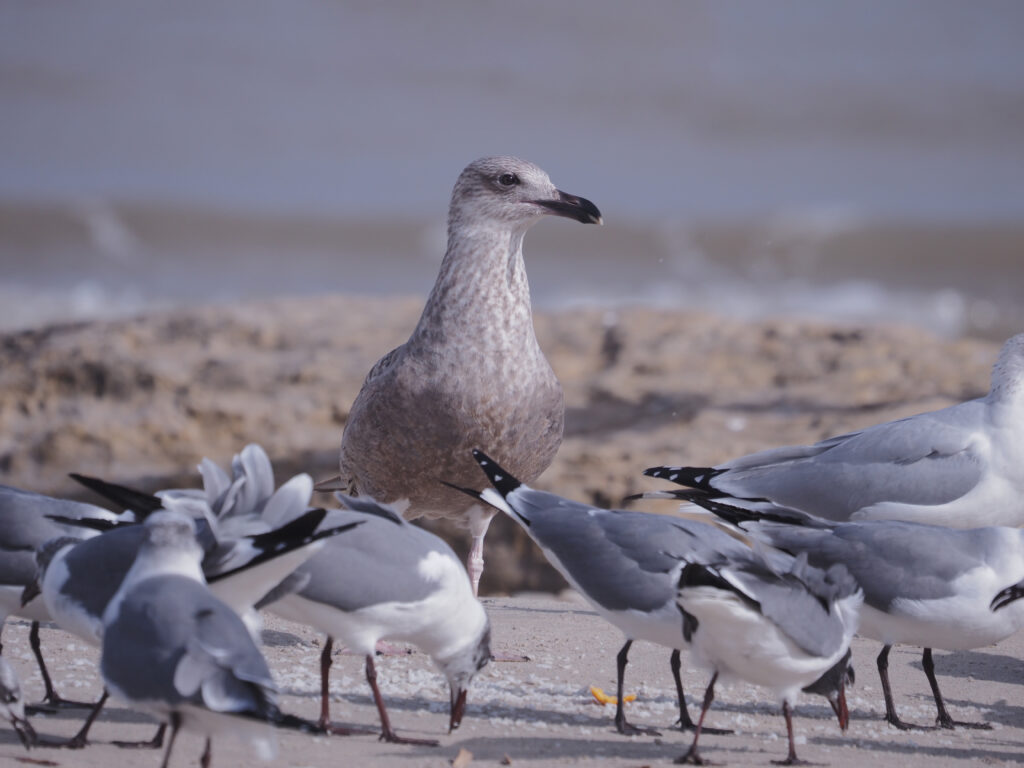
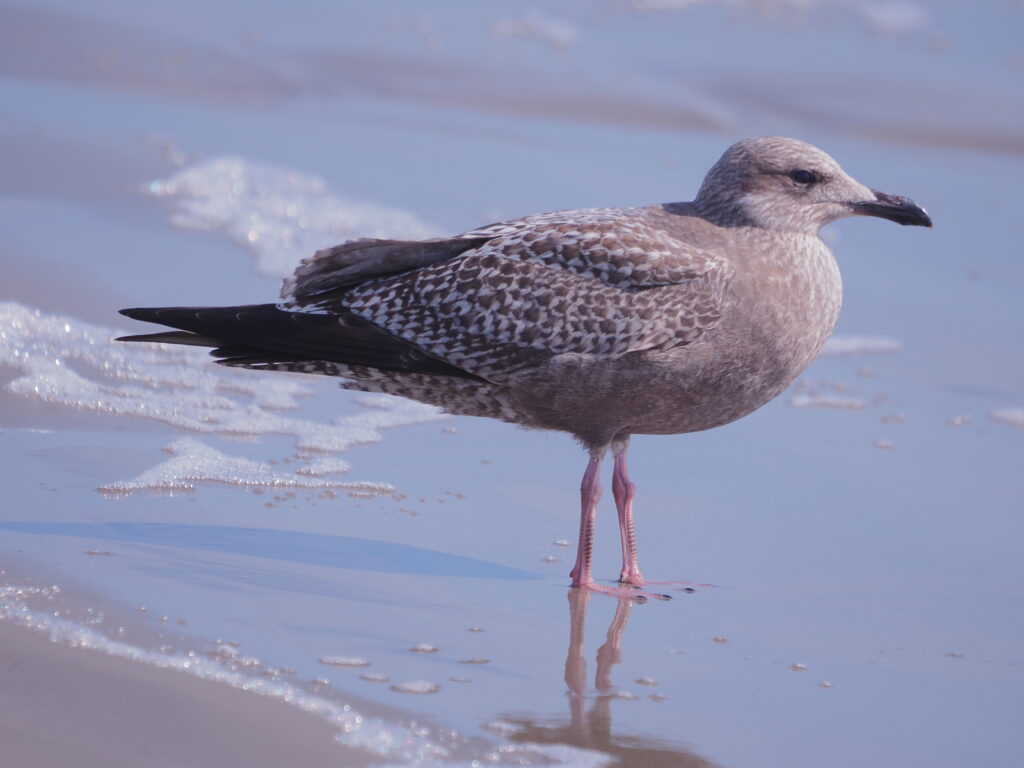
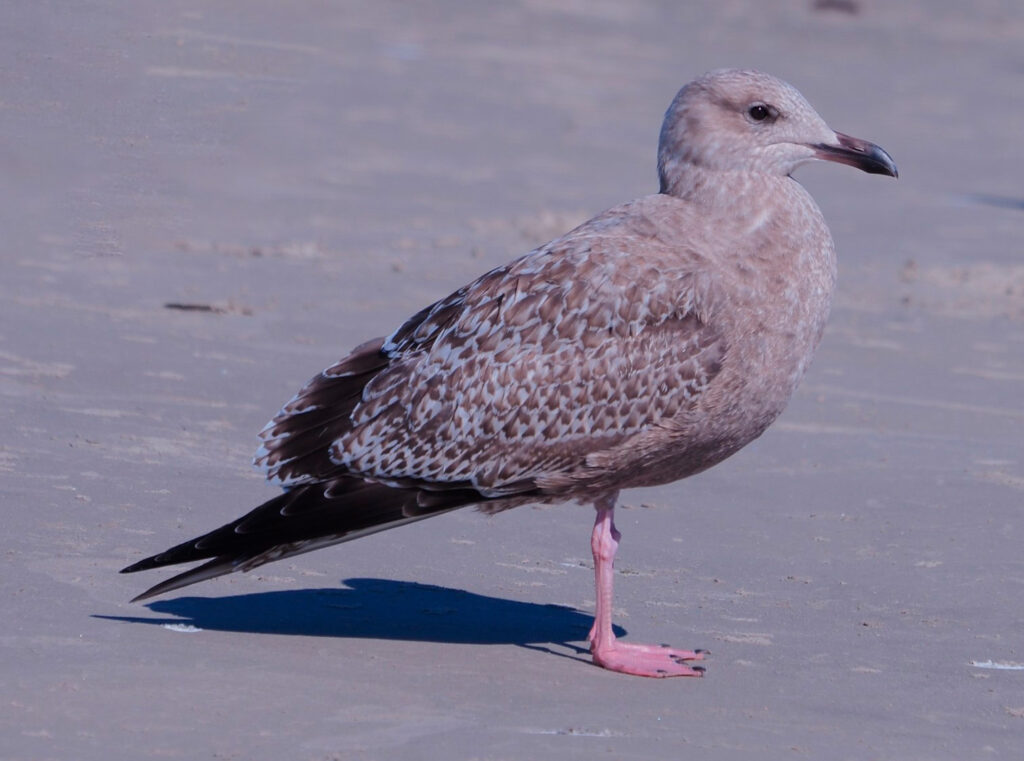
The Herring pictured below is in juvenile plumage (photographed 10/26/23 on the Texas Coast). This is the youngest-appearing Herring I have photographed in Texas. Notice that all the feathers are in good condition, show neat patterns and that there is no hint of paler feathers in the mantle or scapulars which would indicate molt into 2nd generation flight feathers (1st winter plumage). Also note the overall gray/brown coloration and the entirely black bill.
Juvenile plumage is held until October or November in Herring when some of the first feather groups to be replaced are the mantle and scapulars. Herring are amongst the earliest gulls to replace these feathers, so pale mantle and scapular feathers are a good field mark to recognize in 1st year Herrings. Other gulls (e.g. Iceland) retain their juvenile mantle and scapular feathers much later, sometimes into late spring.
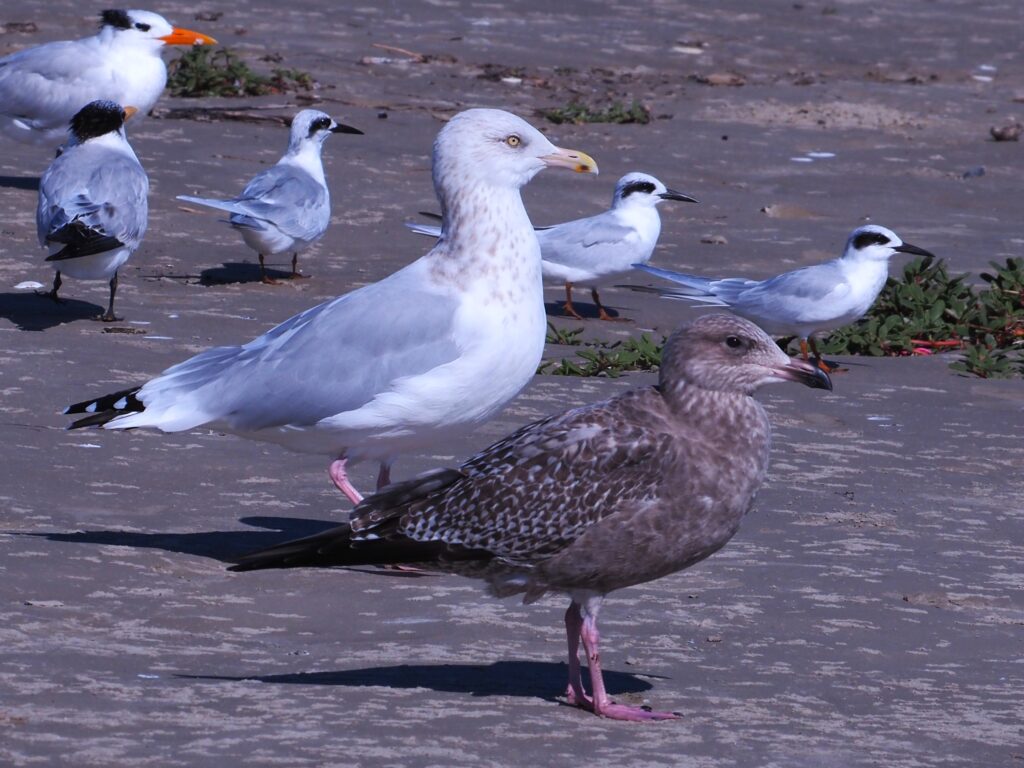
The 2 young Herring pictured below are just beginning to replace a few feathers in their mantles and scapulars, and notice that the base of the bill is just beginning to turn pink-ish.
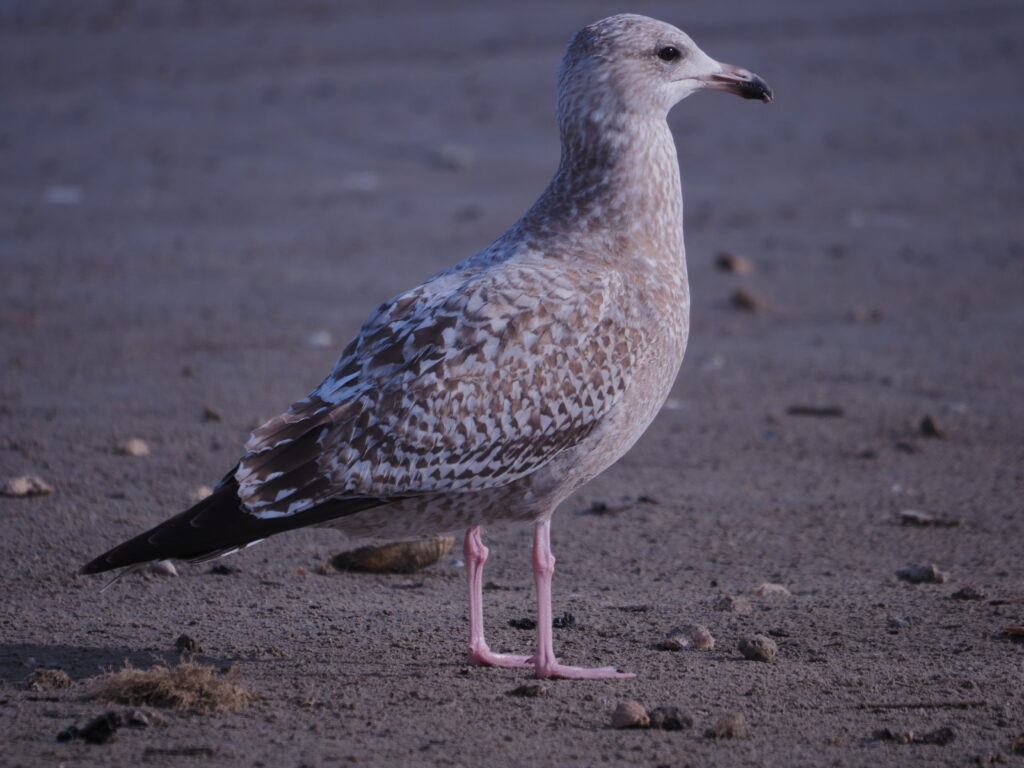
More mantle and scapular feathers have been replaced and the bill is more pink-ish on the individual below photographed in January. However, notice that the wing coverts remain neat and well-patterned.
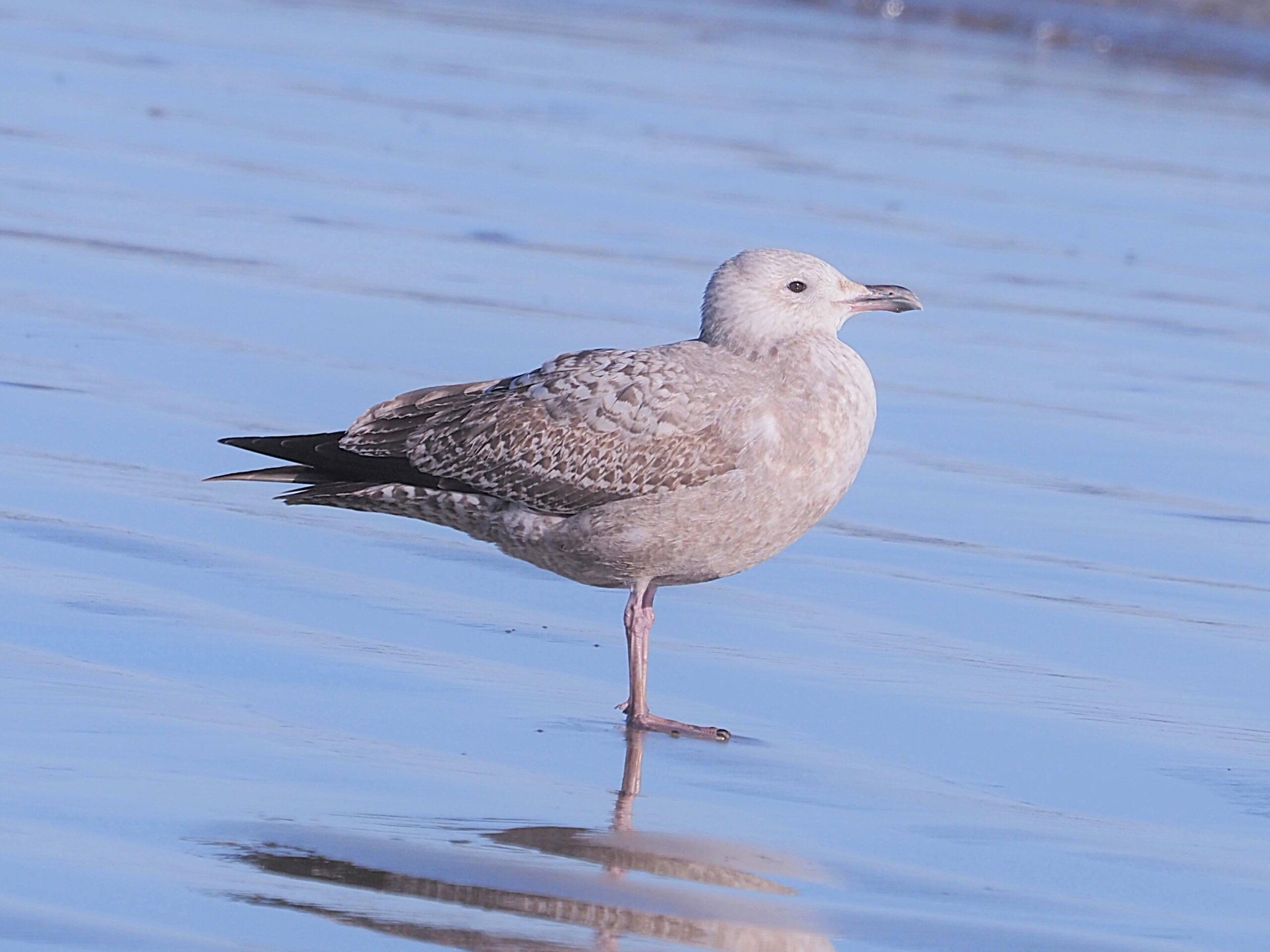
The next group of photos shows young Herring that have almost entirely replaced their mantle and scapulars with 1st winter plumage. Note that these feathers are paler, grayer and more pristine than the browner wing coverts (which have not yet been replaced). 1st year Herring during October-March often have a 2-tone look (as below) with paler mantle and scapulars and browner wing coverts.
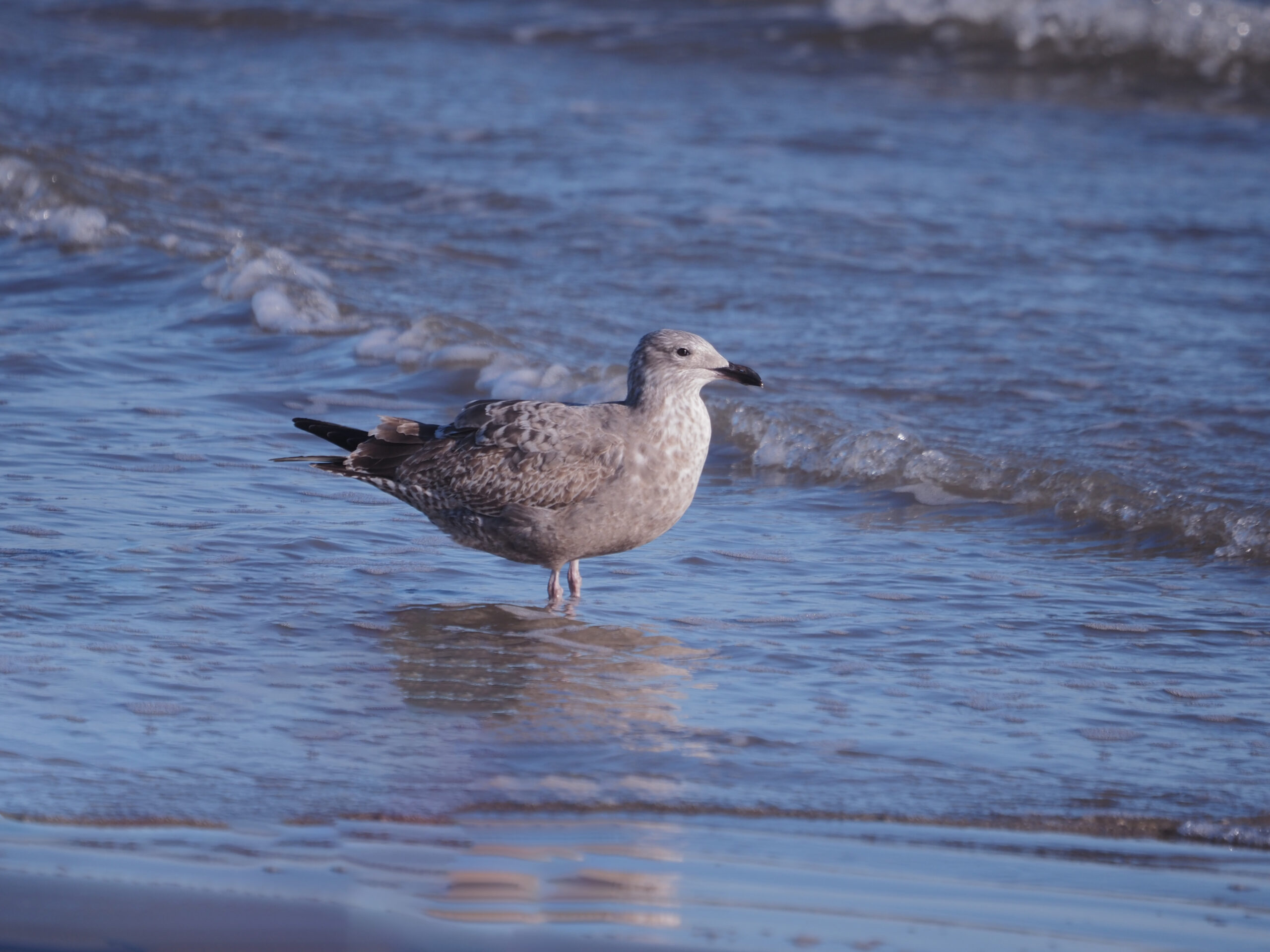
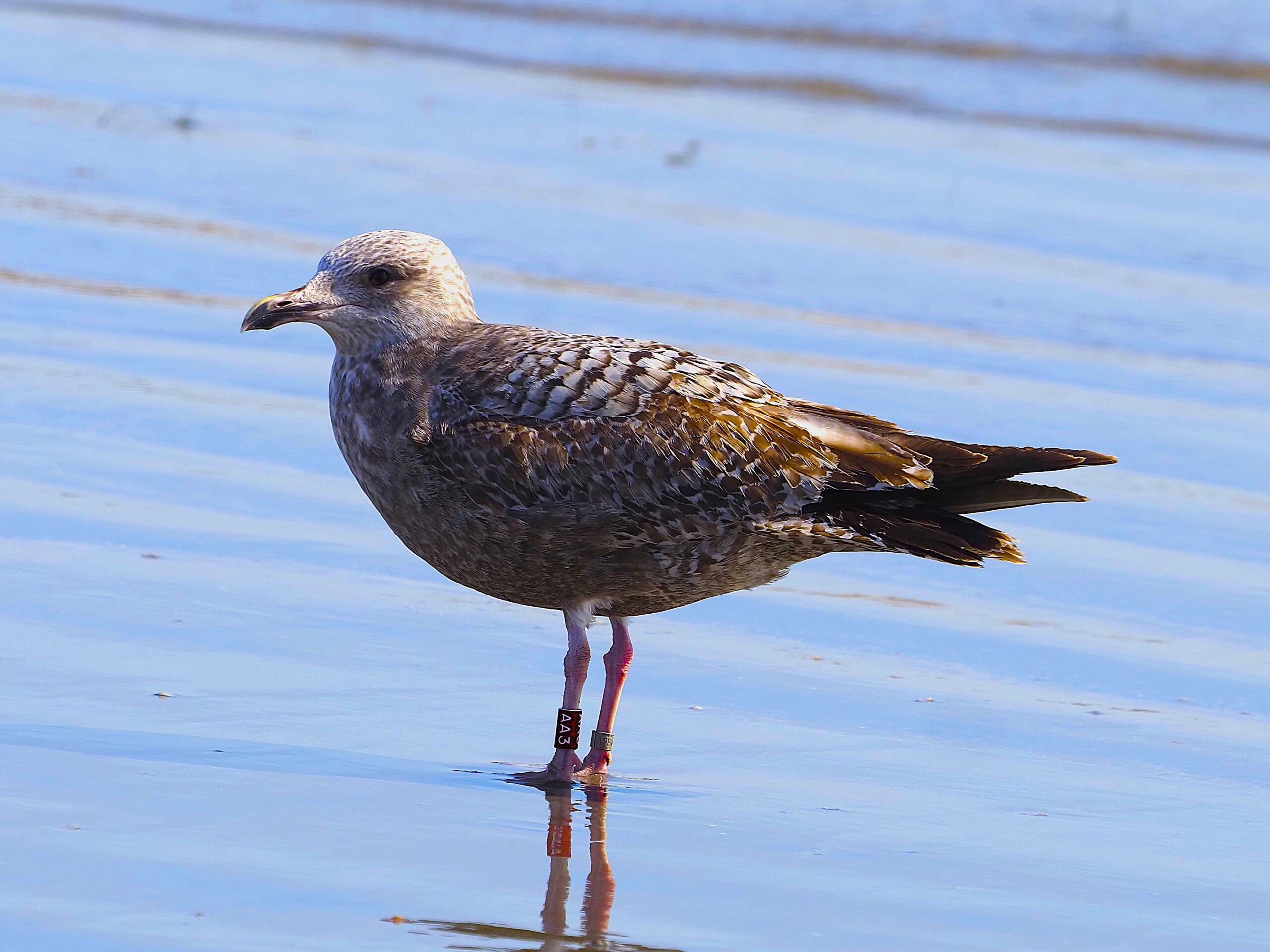
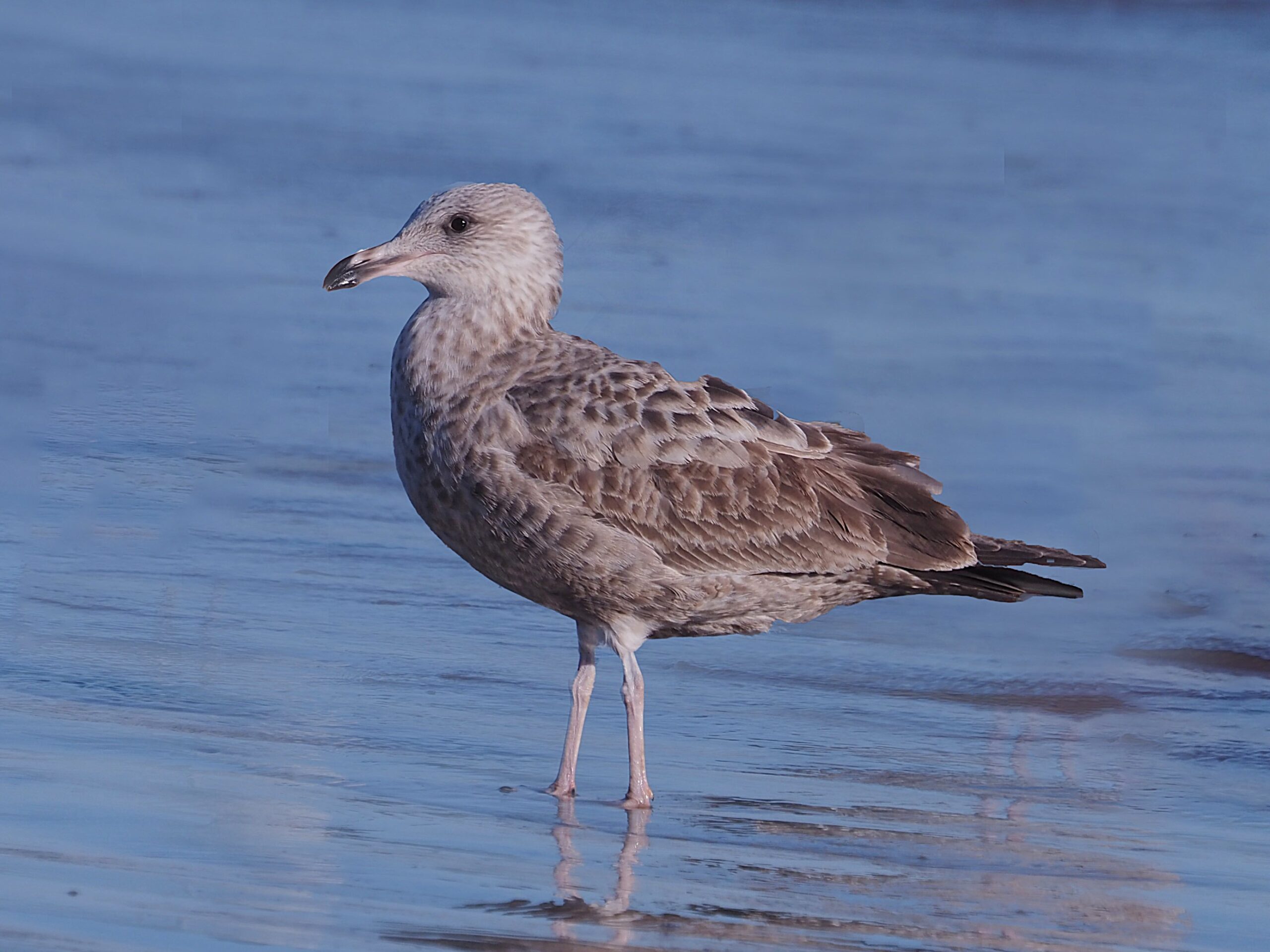
The flight feathers (coverts, tertials, secondaries, primaries) of Herrings are not molted until late summer of the 1st year, thus they can be quite worn by late spring and summer. The photo below shows a Herring in April of its 1st year. The mantle and scapulars appear to be fully replaced with 2nd generation feathers — they are cleaner, whiter and crisper. The browner wing coverts have not been replaced, and are beginning to show wear. A molting feather is about to fall out on the belly. The head and upper breast are much whiter than this bird would have been in juvenile plumage and the bill is about 1/2 pink-ish.
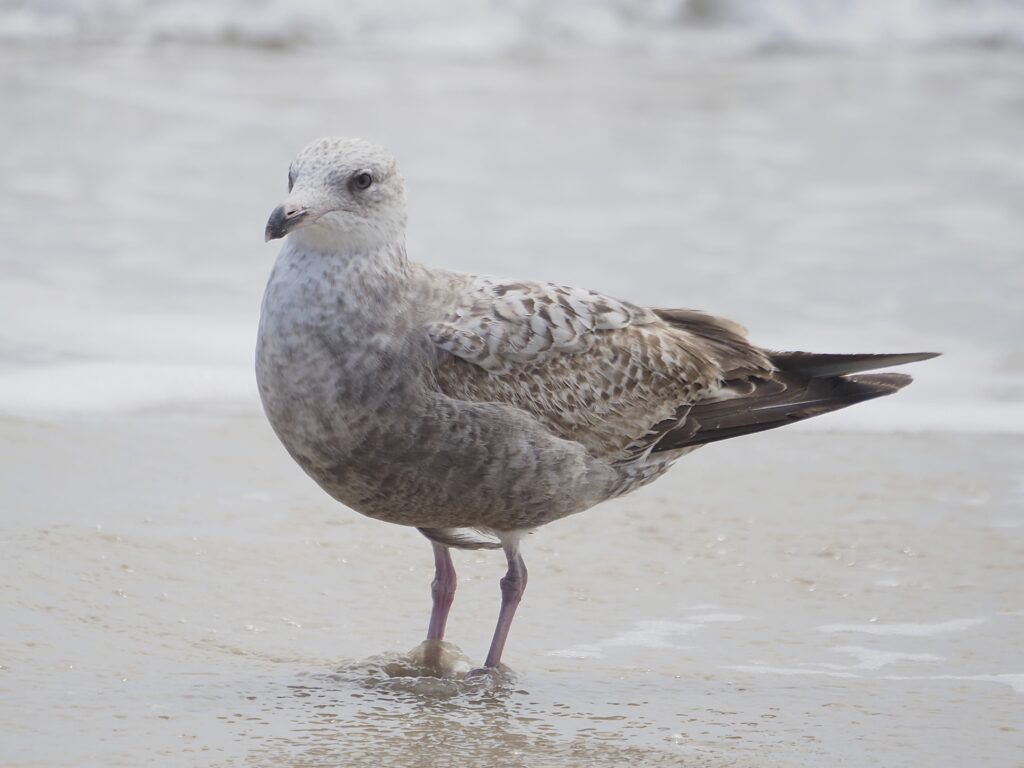
Molt and wear are even more advanced in the Herring below photographed in late April (4/30/22) and the head is mostly white. Much of the bill is still black rather than pink-ish, which seems to be due to individual variation.
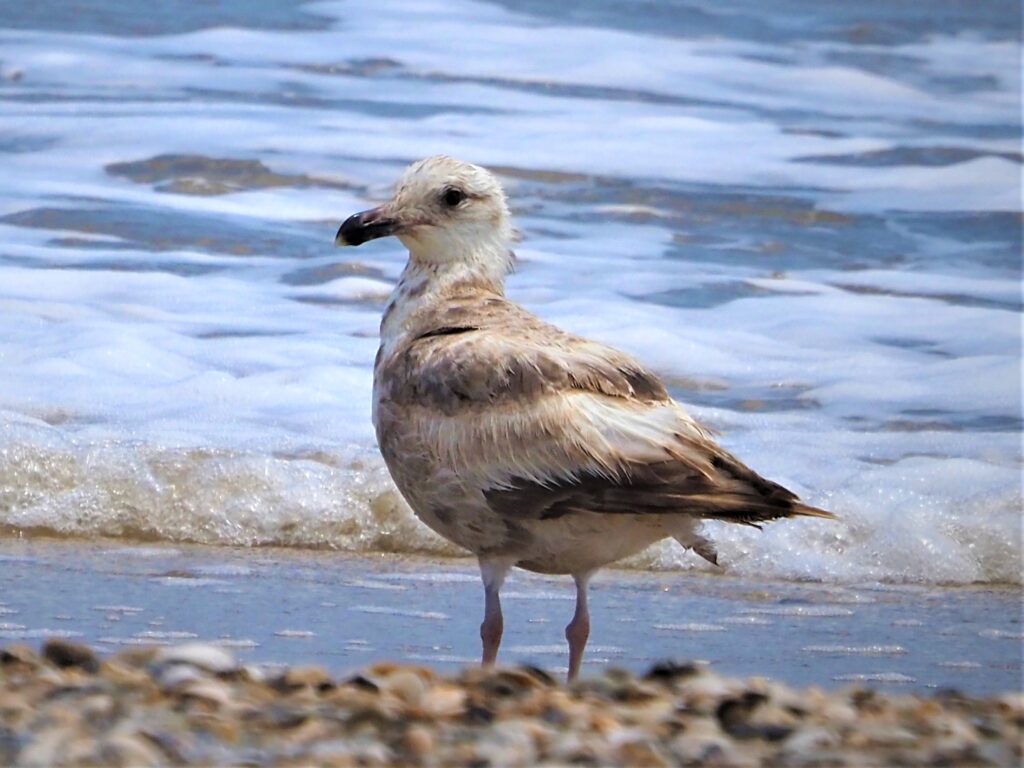
Like adults, 1st year Herrings undergo a complete molt (all feathers, including flight feathers) during August – September (~ 1 year after hatching). After that, they are on an adult schedule though they are not full adults until their 4th year.
The Herring pictured below is in its 2nd year (or 2nd cycle). Note the new and incoming scapular feathers are pale gray– the color they will be as an adult. There is extensive white, interspersed with brown on the undersides and head. The eye is somewhat dusky, not yet fully yellow, but heading in that direction. The legs are pale pink-ish. Much of the bill is pale yellow, but the tip is still black. The black primaries have no white apical marks.
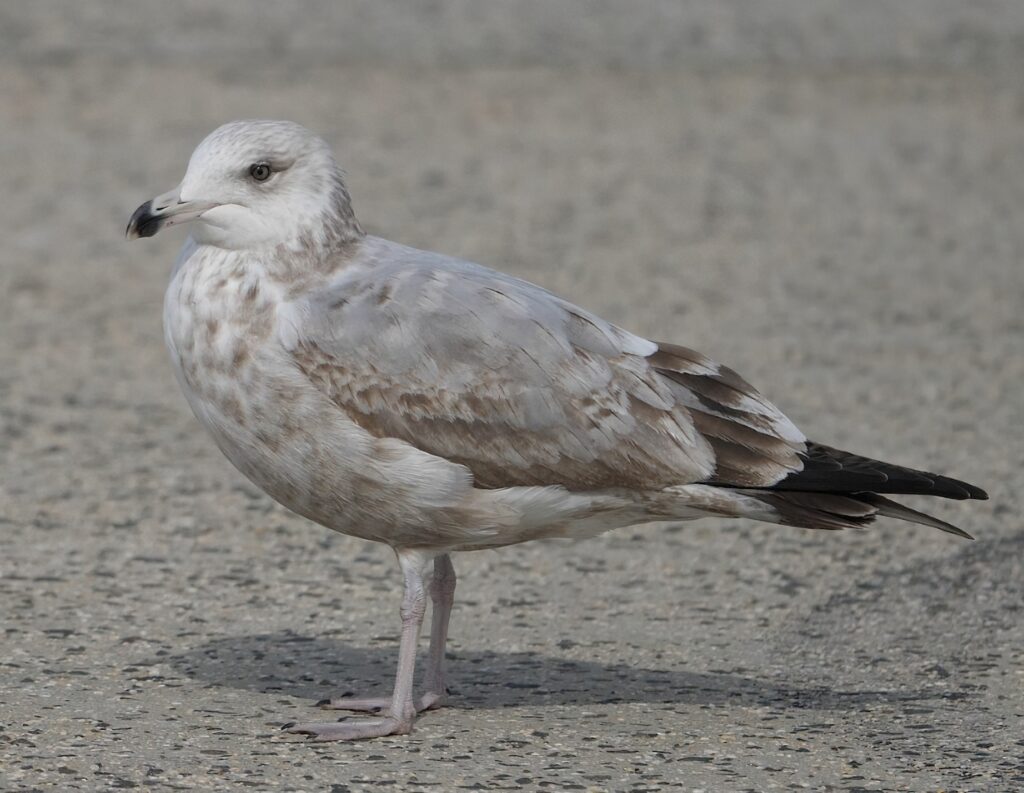
Additional 2nd year Herring are shown below.
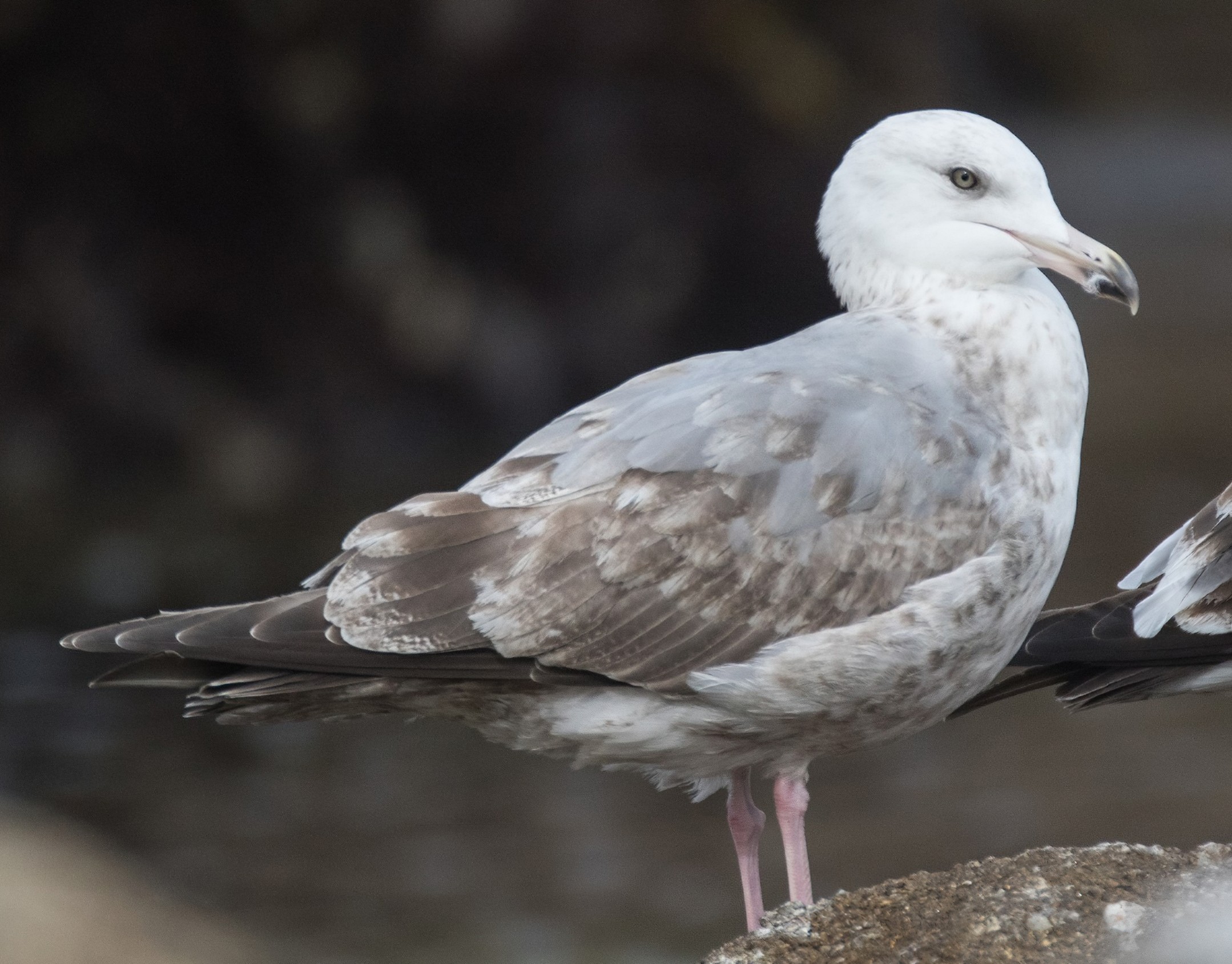
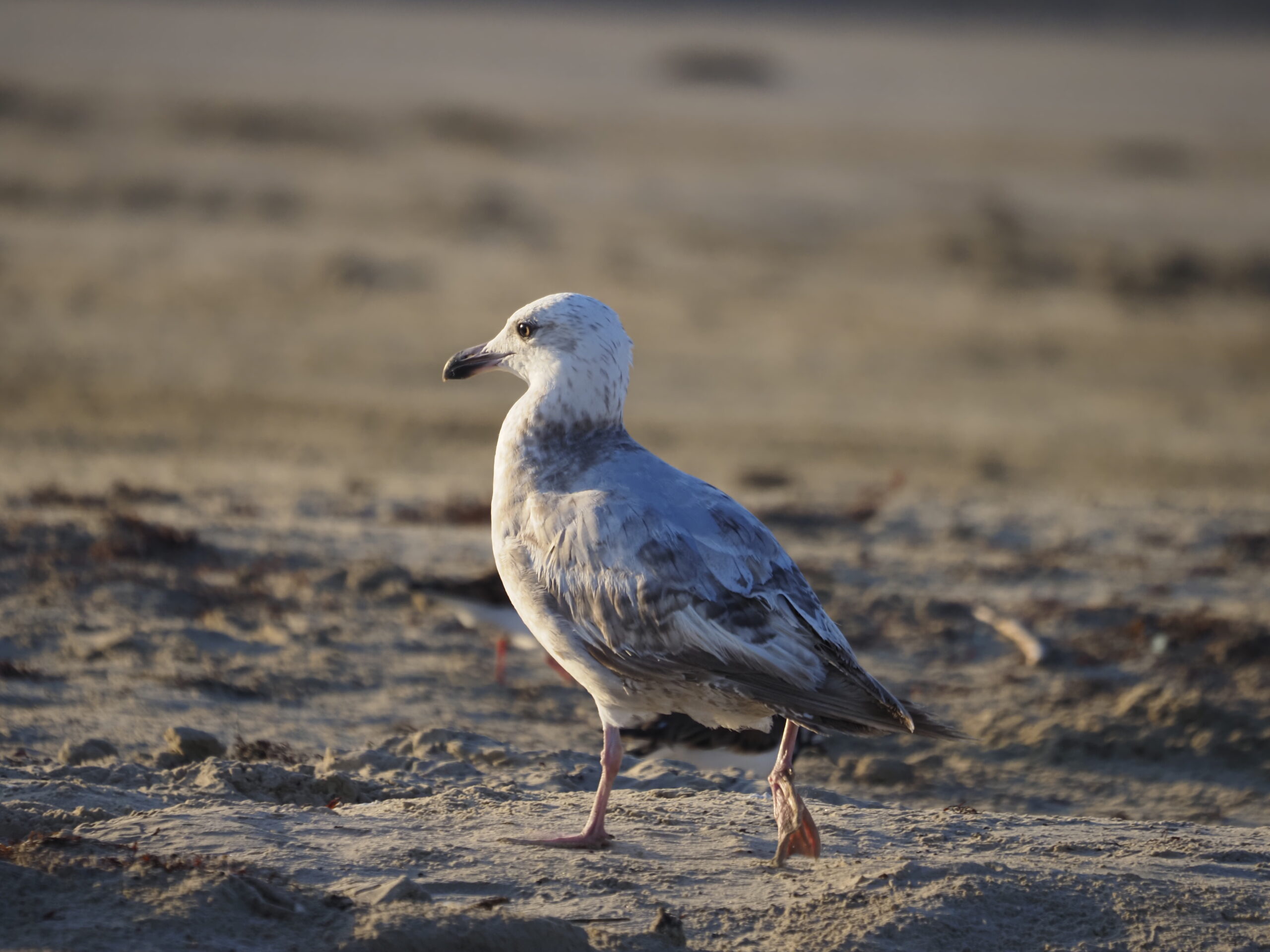
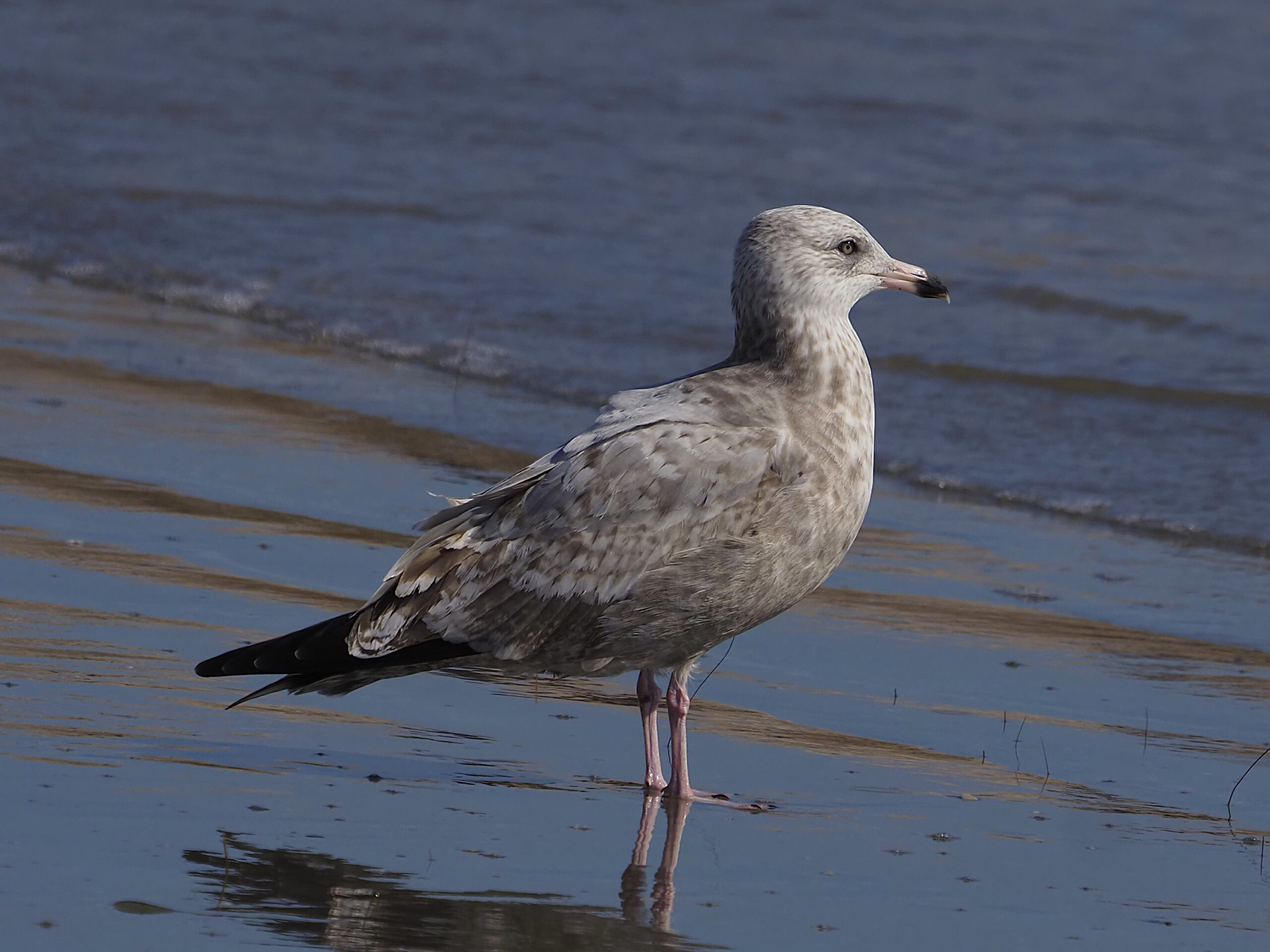
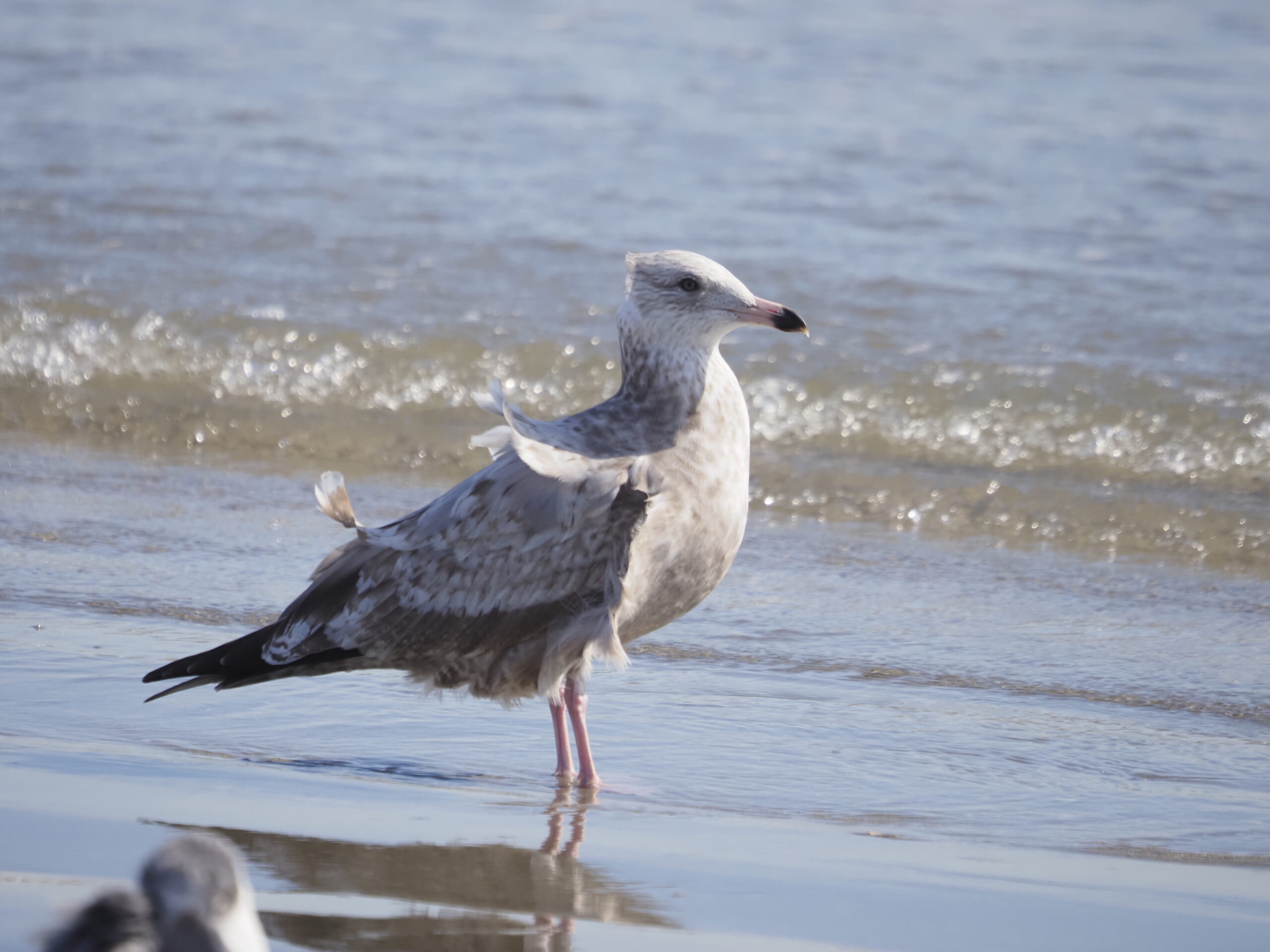
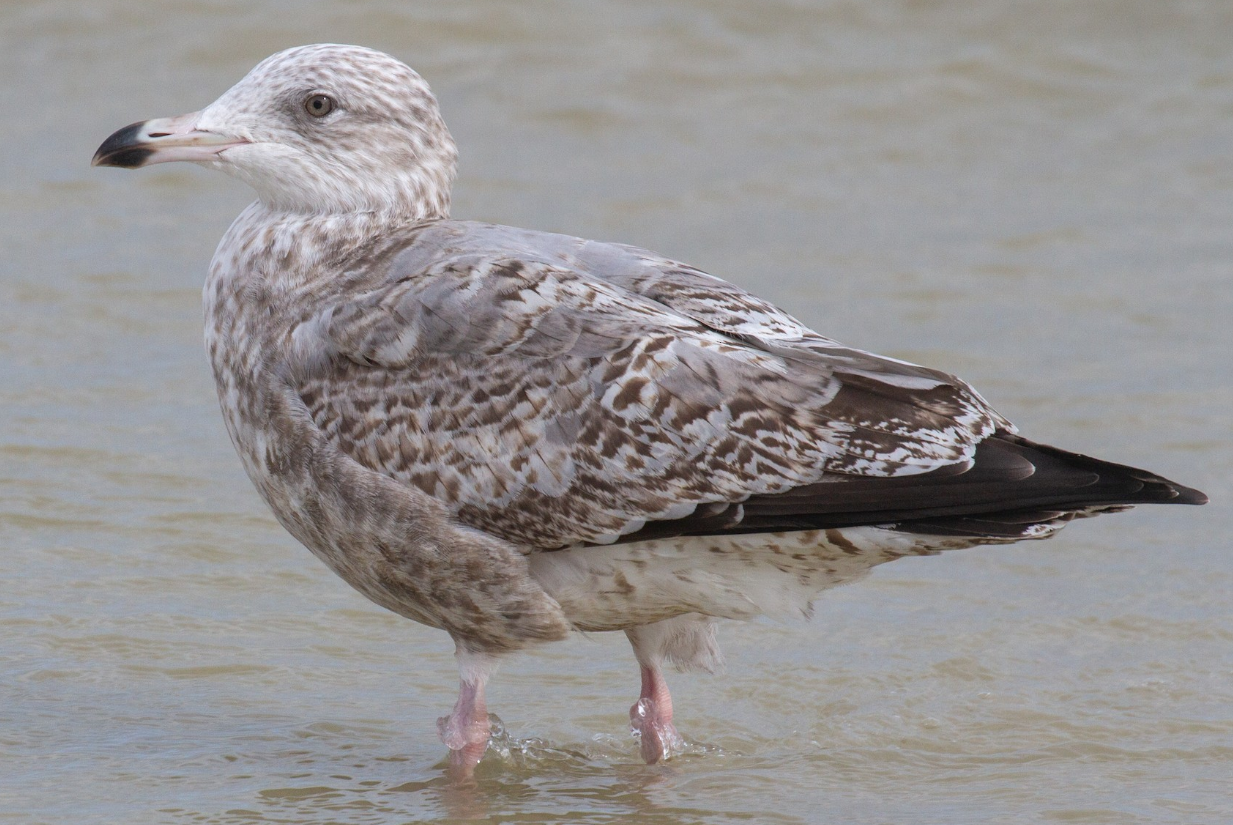
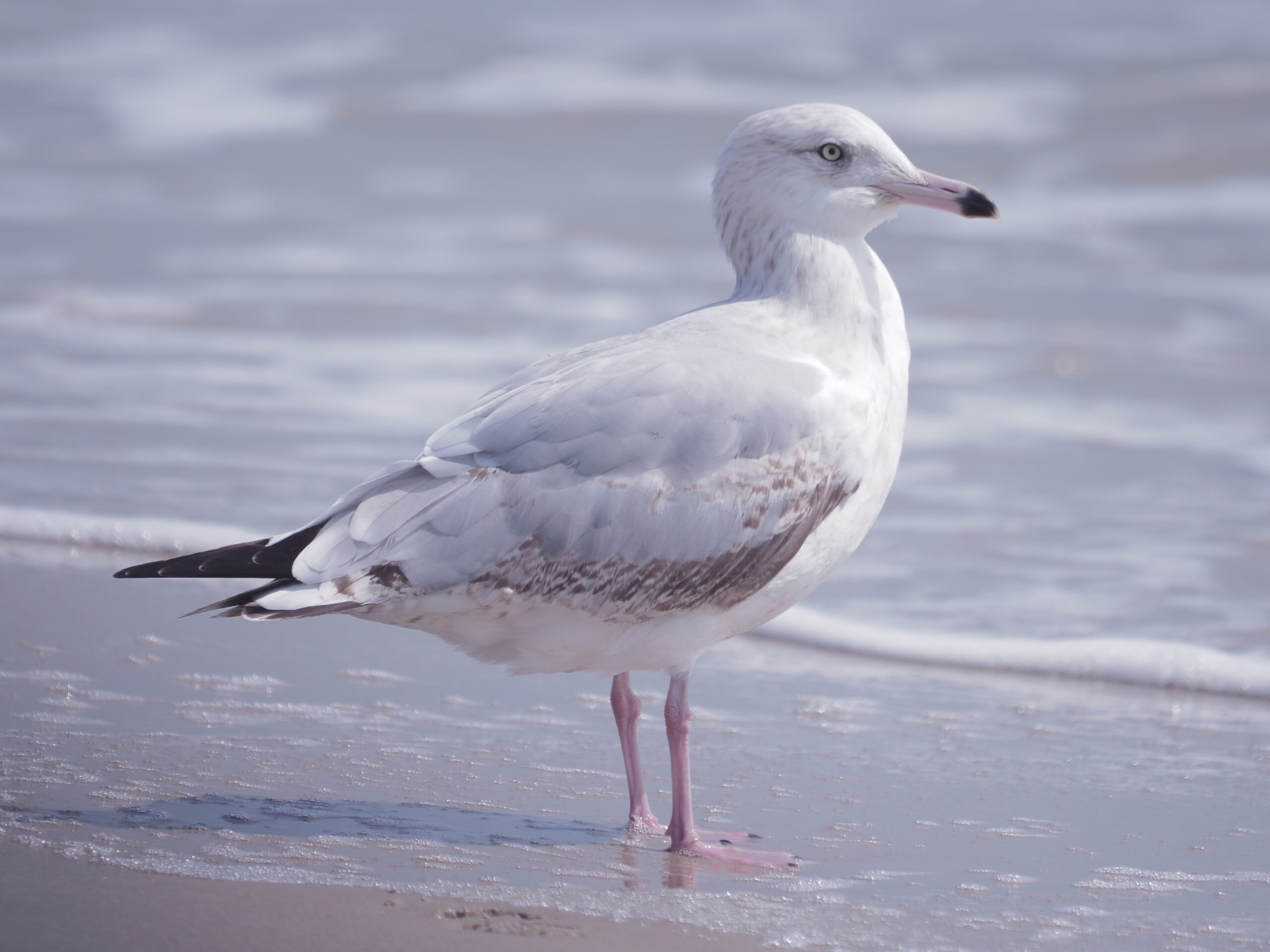
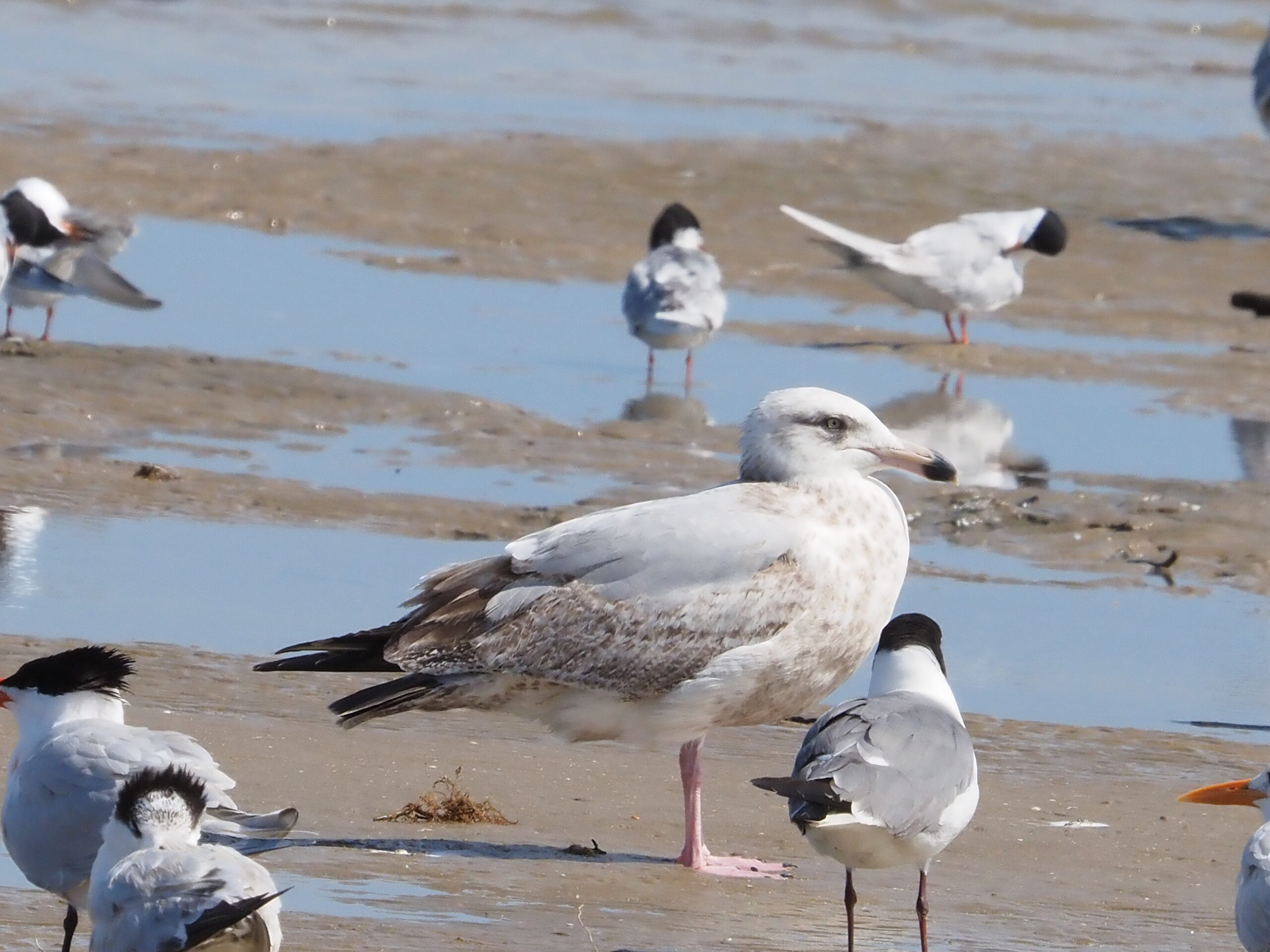
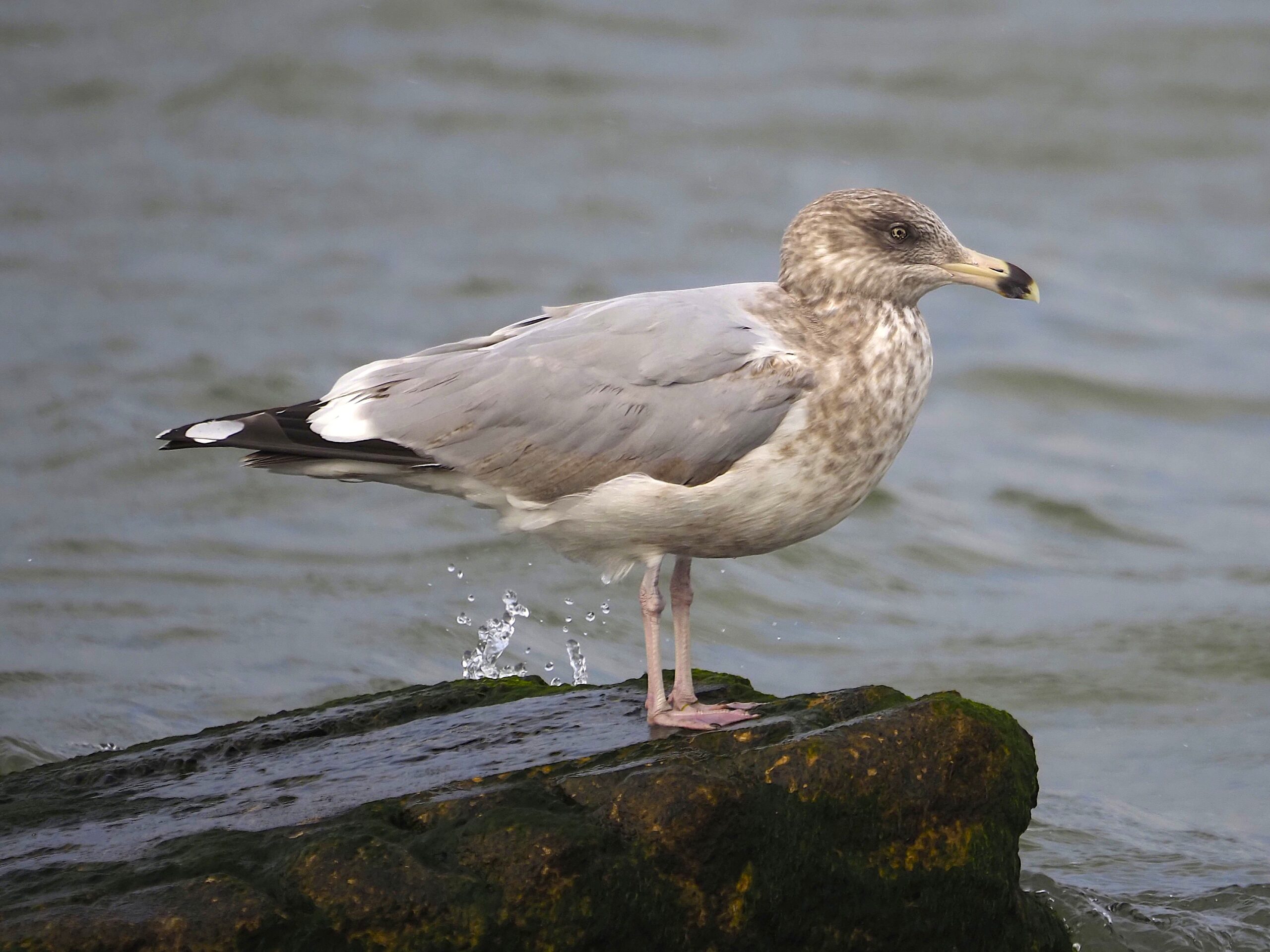
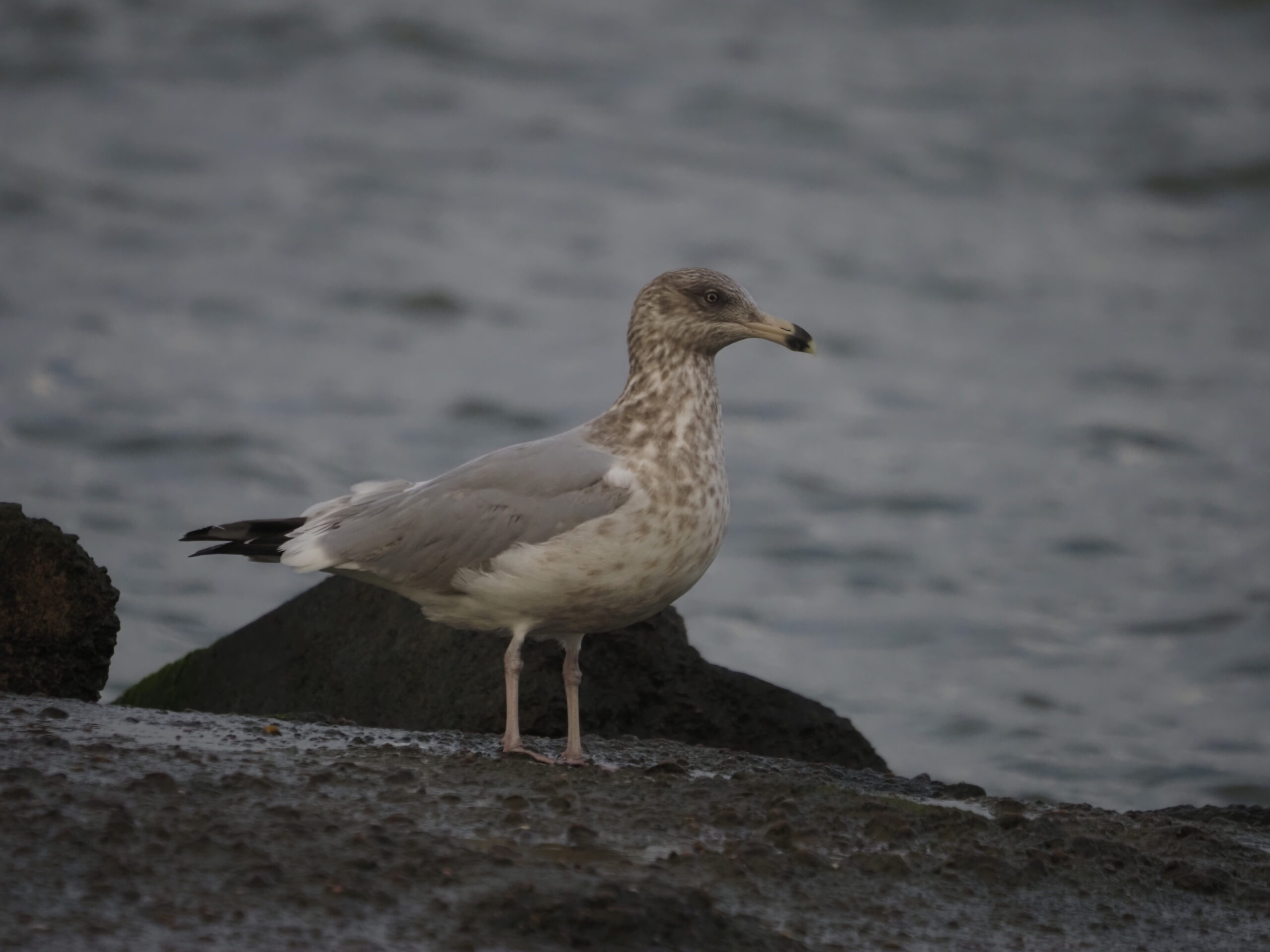
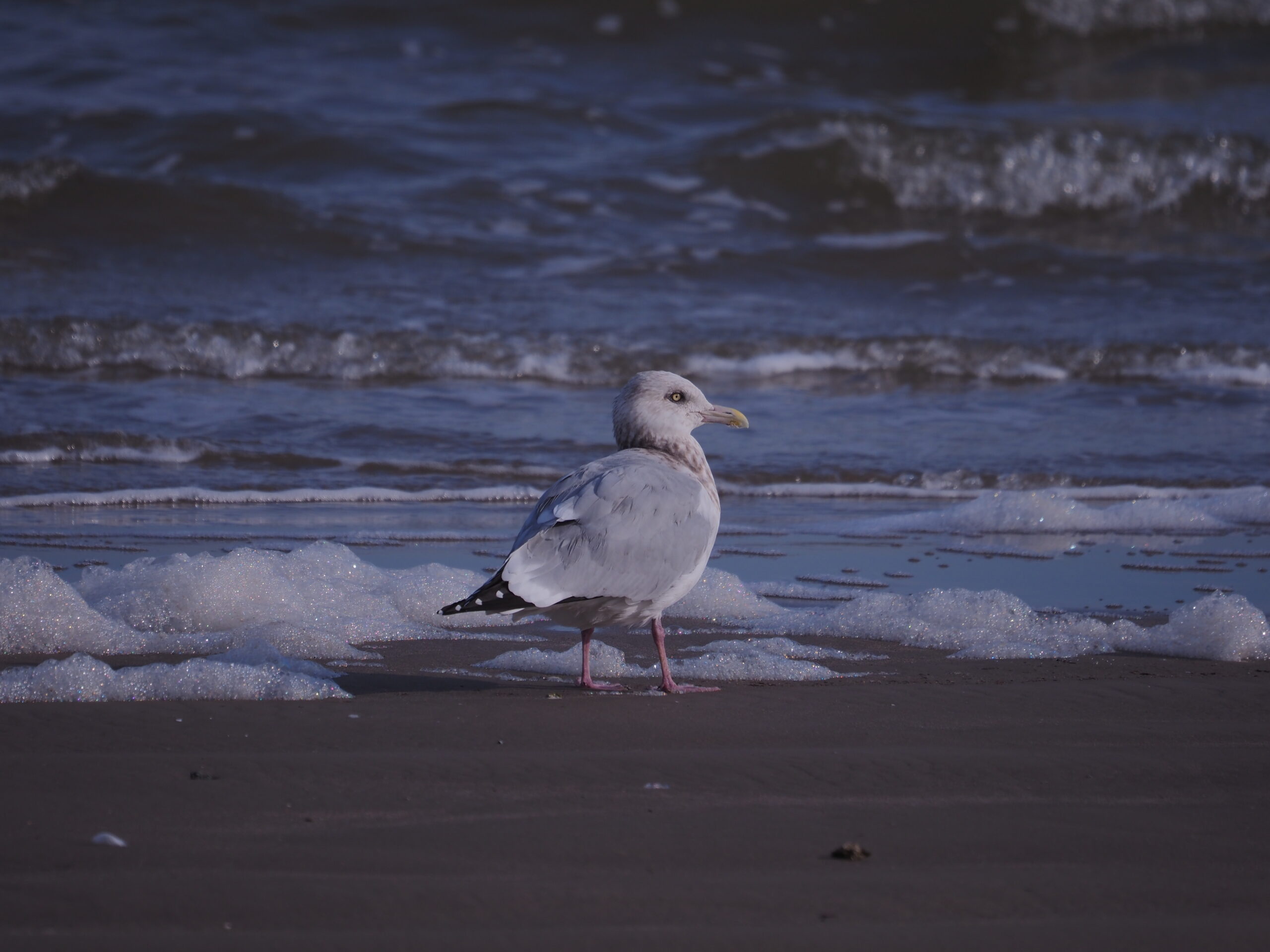
By the 3rd year the Herring are beginning to look much like the adults. However in the photos below, note the brown remaining in the wing coverts, the black remaining on the bill, the pale pink-ish legs, the sometimes extensive mottling on the head, neck and undersides, and in some cases the absence or small size of apical spots.
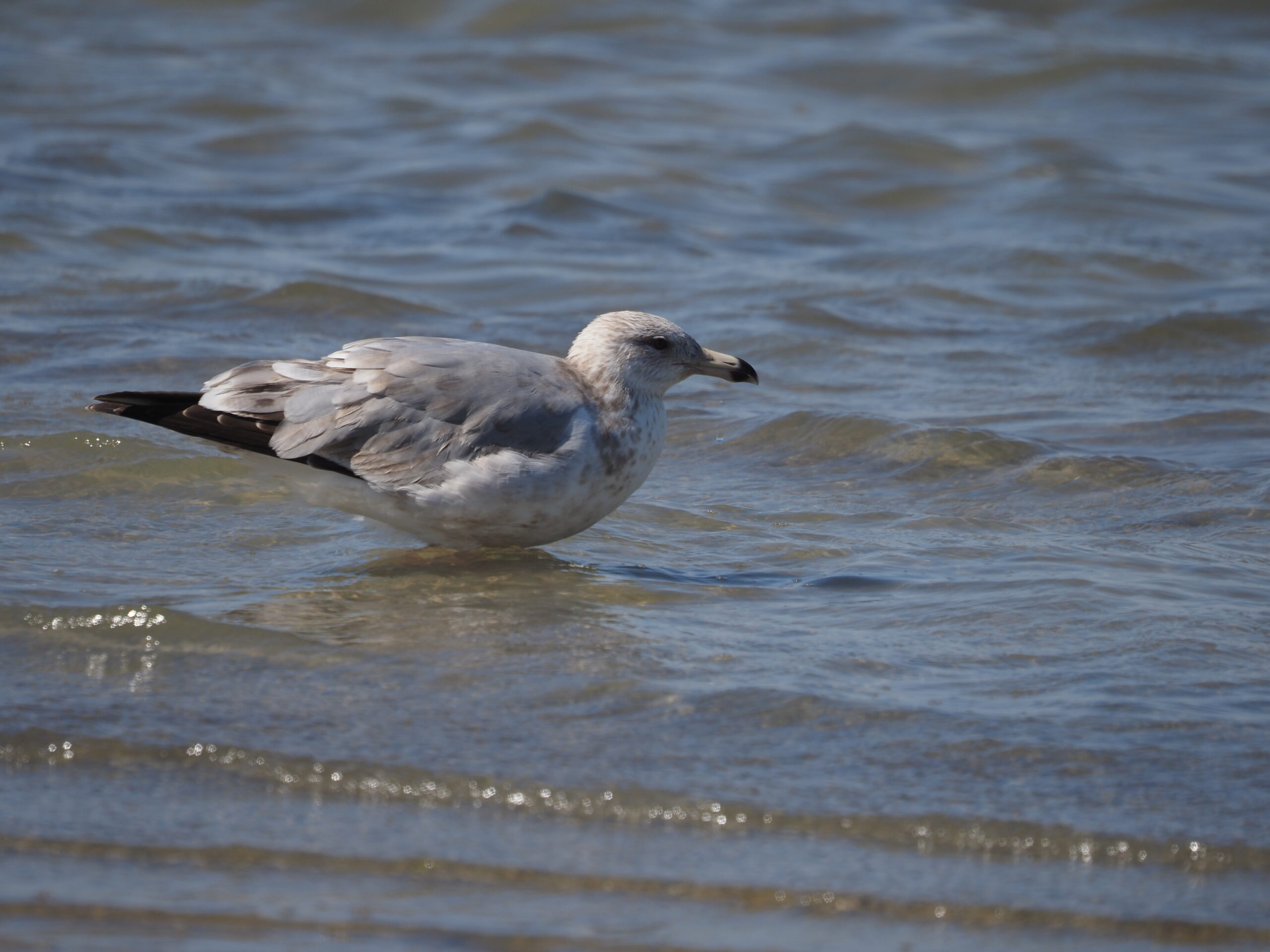
Because the patterns and colors of the feathers change little as adults, molt is much less obvious in adult gulls except when feathers are missing in the open wings. I have no photographs of Herring in alternate plumage (breeding) when the head becomes pure white, the bill is brighter yellow and red, and the orbital ring is a brighter red/orange. Adult Herring in basic (non-breeding) are pictured below. Once again notice the differences in structure from one Herring to the next.