
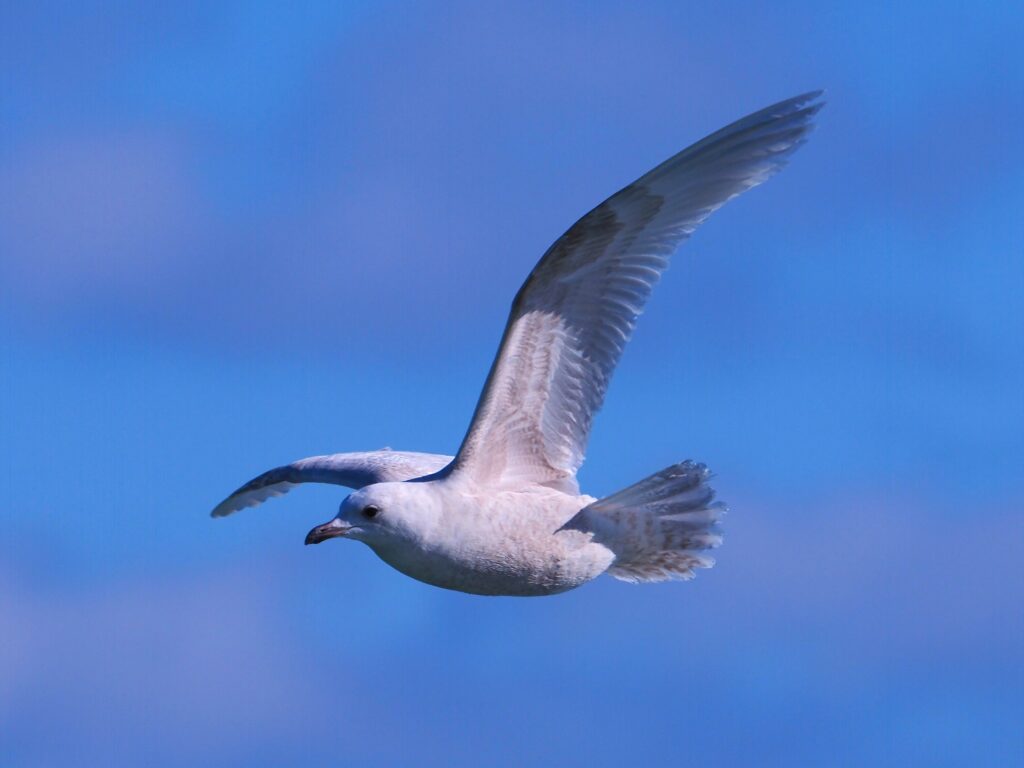
Currently the Iceland Gull consists of 3 subspecies: thayeri, kumlieni and glaucoides. The first 2 are semi-regular in Texas, with sightings of thayeri much more numerous than kumlieni. Glaucoides is primarily a European gull, though there are infrequent sightings in the northeastern US.
From 1917 to 1973 thayeri was considered a subspecies of the Herring Gull, then from 1973 to 2017 it was a full species – the Thayer’s Gull. Since 2017 it has been classified as one of the 3 subspecies of the Iceland Gull. Of the 3 subspecies, sightings of thayeri are the most numerous in Texas and Thayer’s had been removed from the TBRC Review List prior to lumping with the other 2 subspecies. Once the 3 subspecies were lumped in 2017, the kumlieni subspecies was also removed from the Review List because, with the lumping of thayeri enough sightings of Iceland in Texas had been documented. The glaucoides subspecies has not been documented in Texas.
As shown below, the size of the Iceland fits nicely between Herring and Ring-billed.
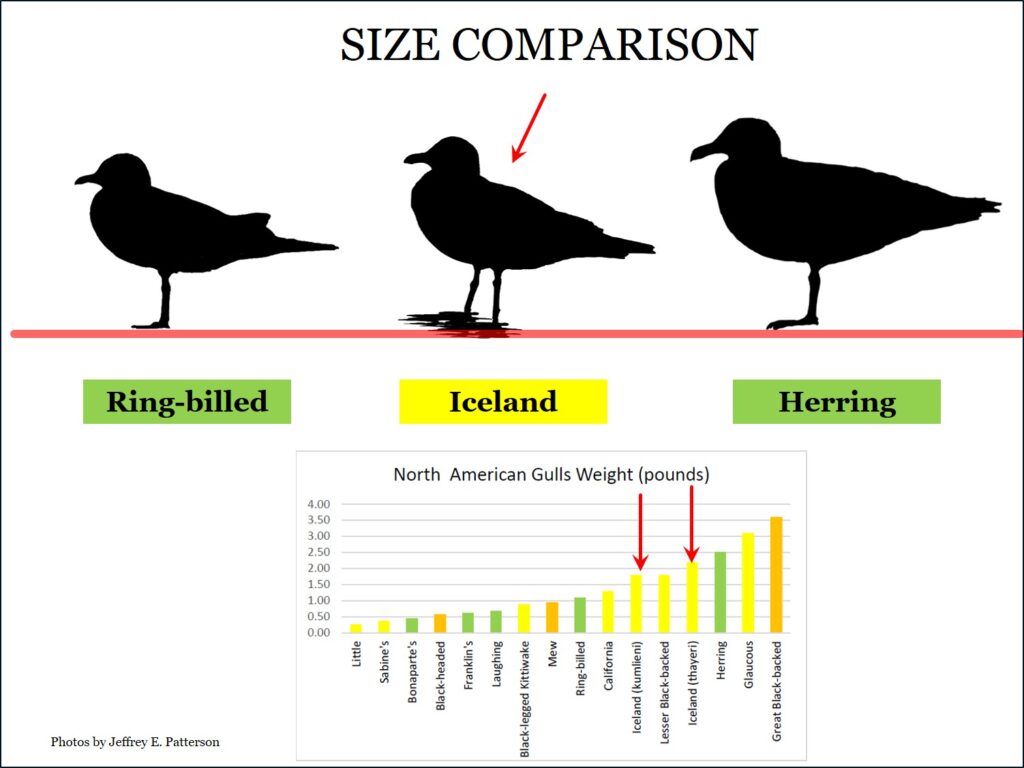
Adult Iceland Gull
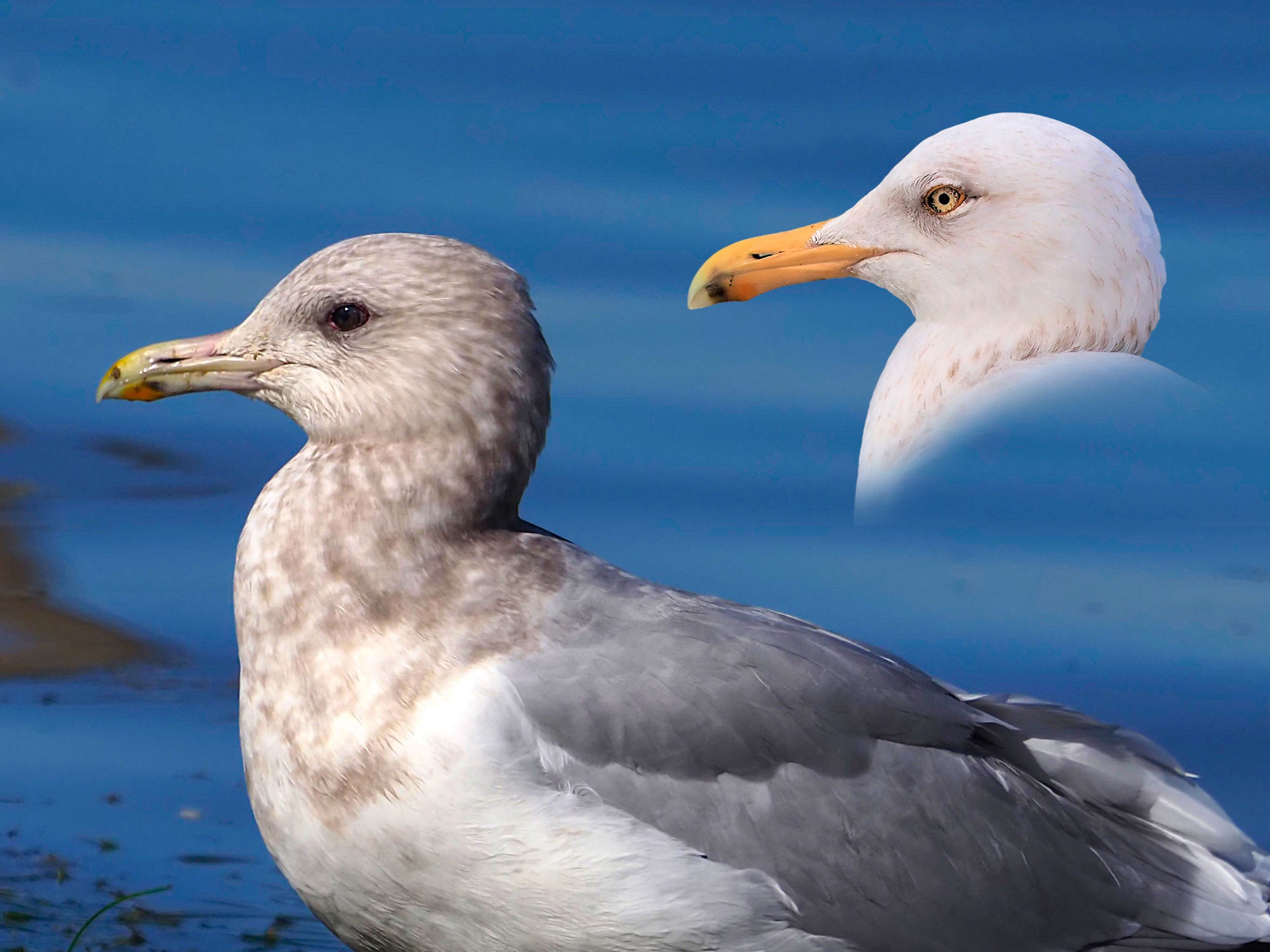
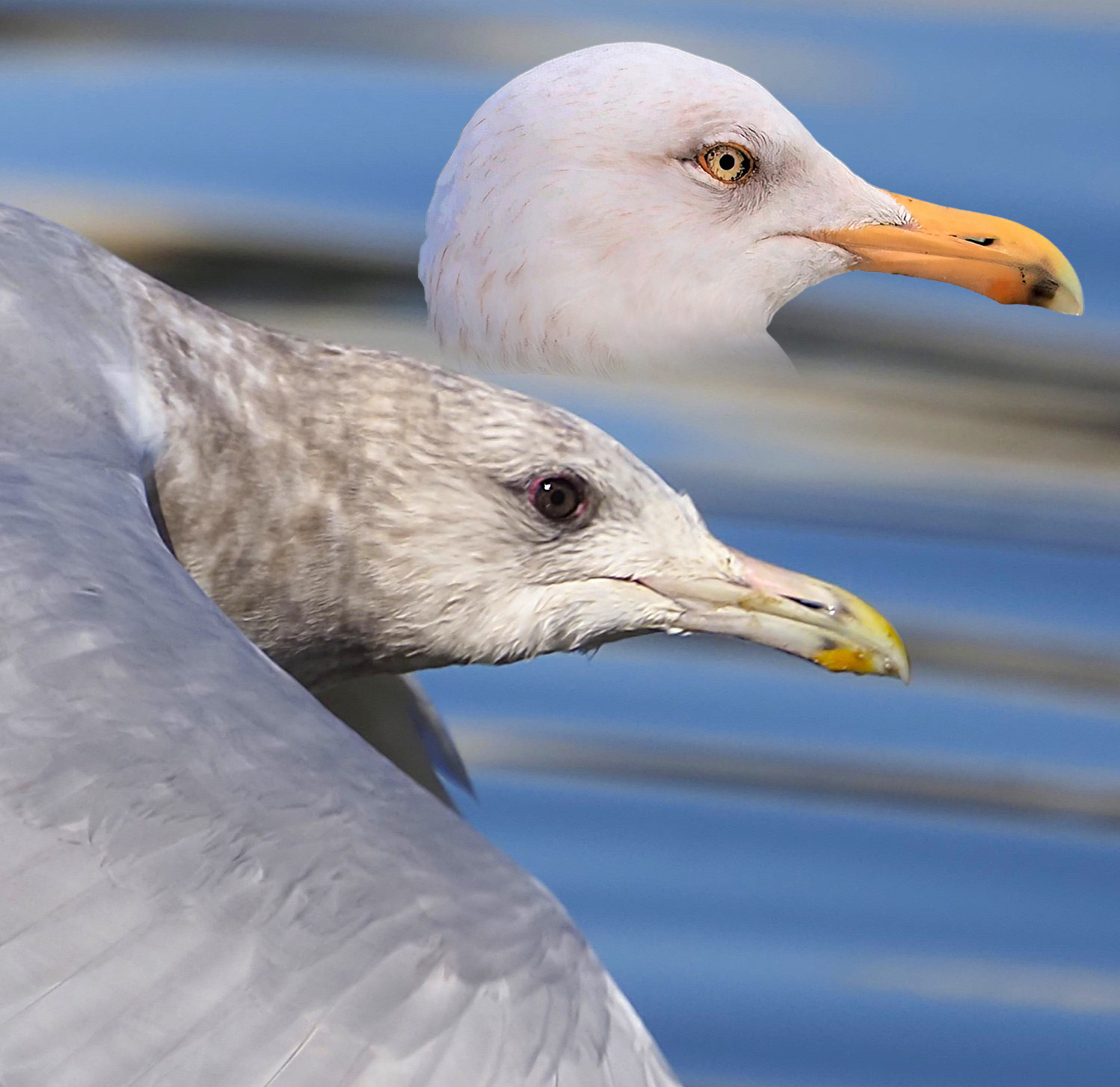
Like the overall size, the bill and head fit nicely between Herring and Ring-billed: shorter and more petite than Herring and slightly larger than Ring-billed (Iceland on the left in both photos Herring on the right).
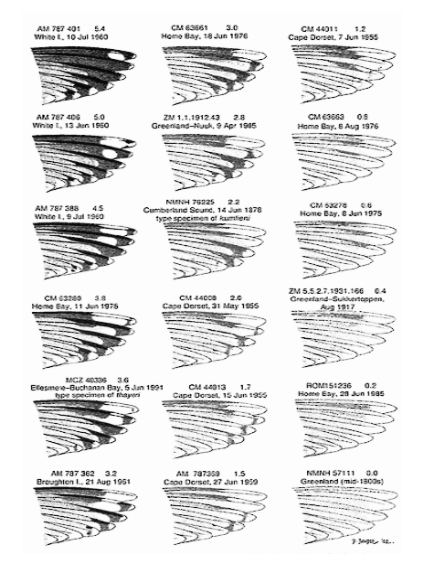
The color of the primary tips in adult gulls is always worth noting. As shown in the figure below, the primary tips of Iceland vary from black to white, with all grades of gray possible (top left to bottom right). Roughly speaking, thayeri has darker primary tips, while glaucoides has whiter ones, and kumlieni’s are in between. However, there is no sharp line demarcating these subspecies.
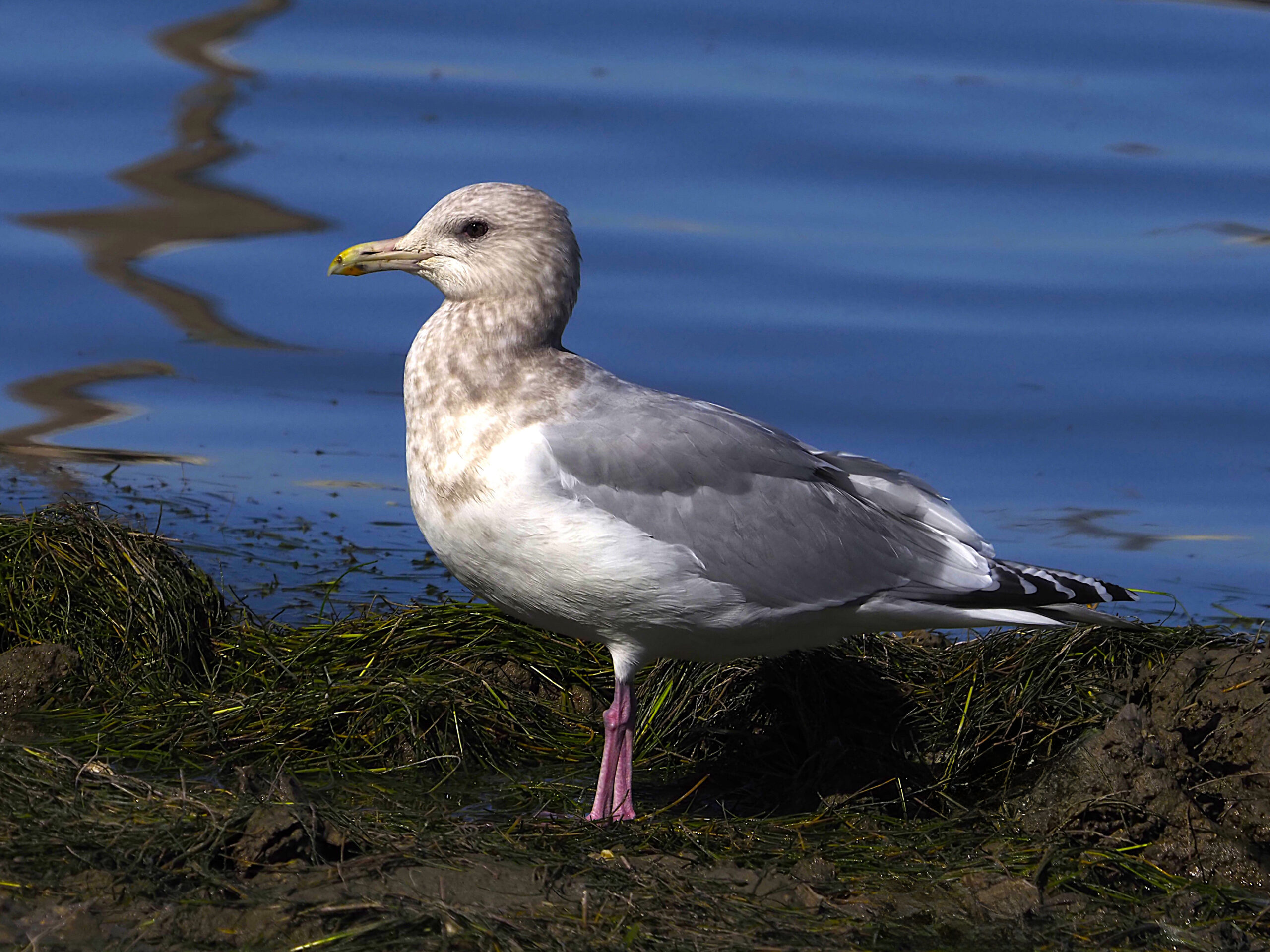
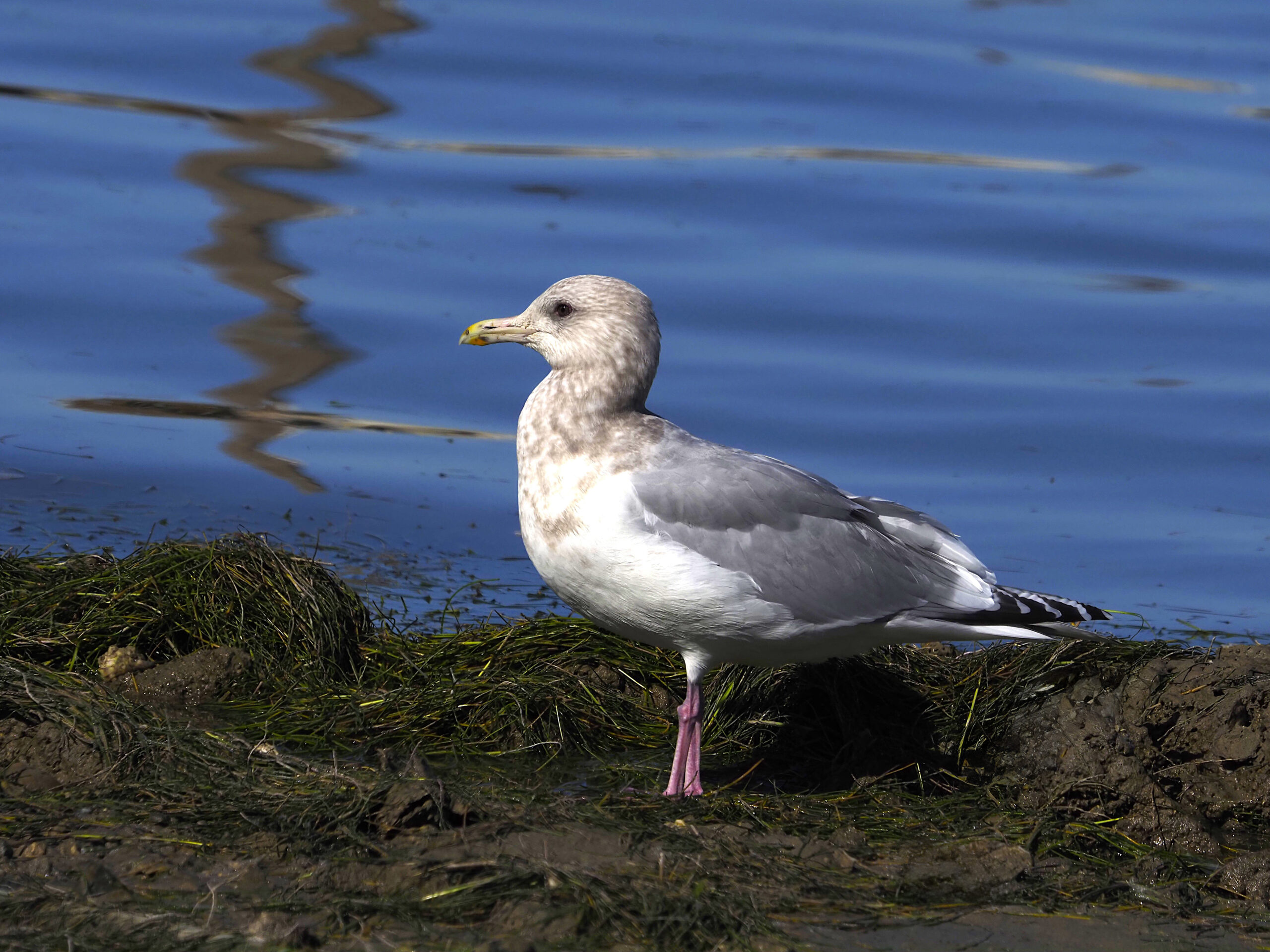
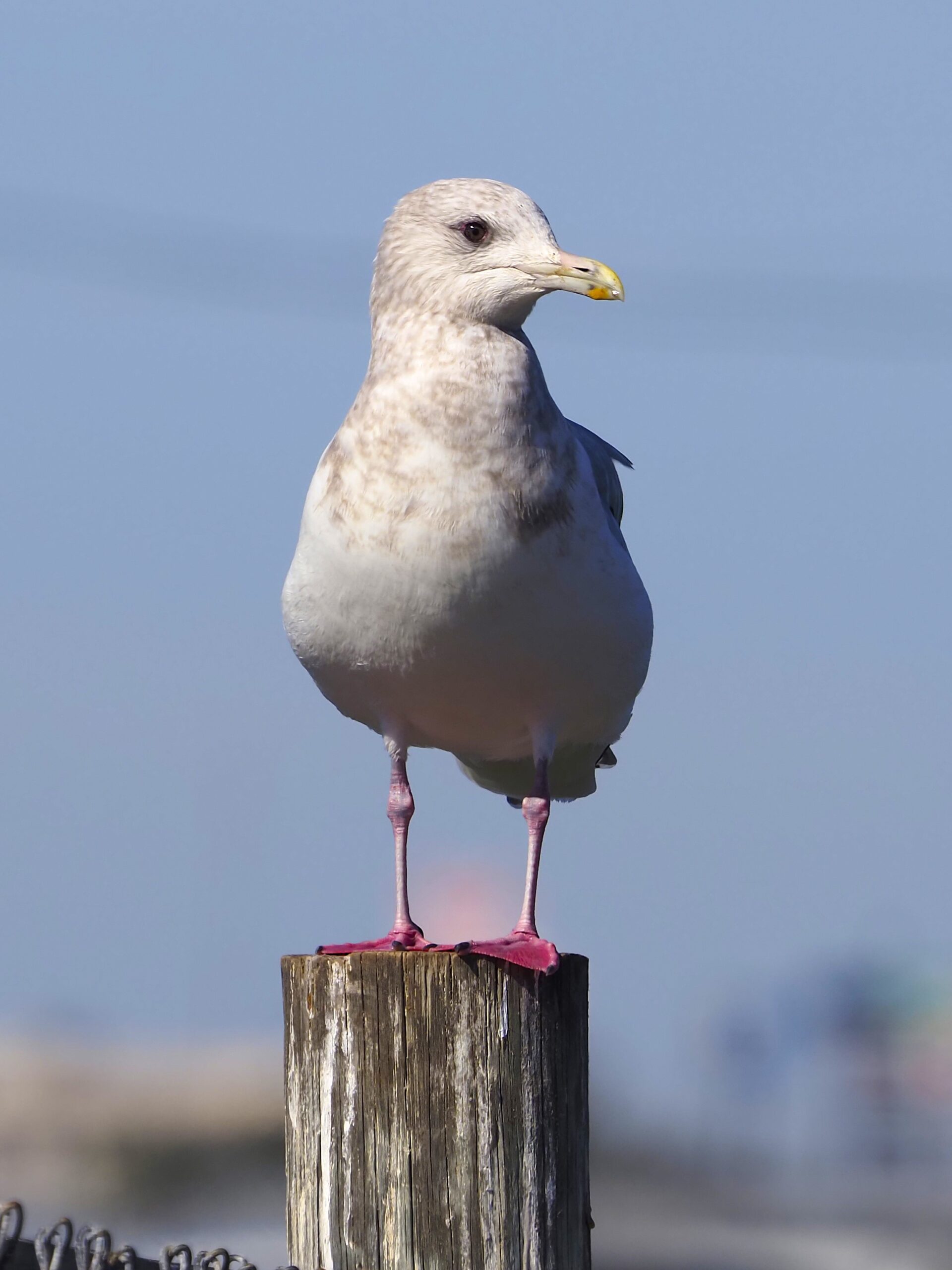
Comparative size, eye color, leg color and primary tip color are the best field marks for adult Iceland. The Iceland’s eyes are usually dark or at least dusky, while the legs are generally a brighter pink than Herring. The adult Iceland pictured below spent several winters at a Corpus Christi bait shop. It exhibits the typical attributes listed above for an adult thayeri (Corpus Christi, December 2024).
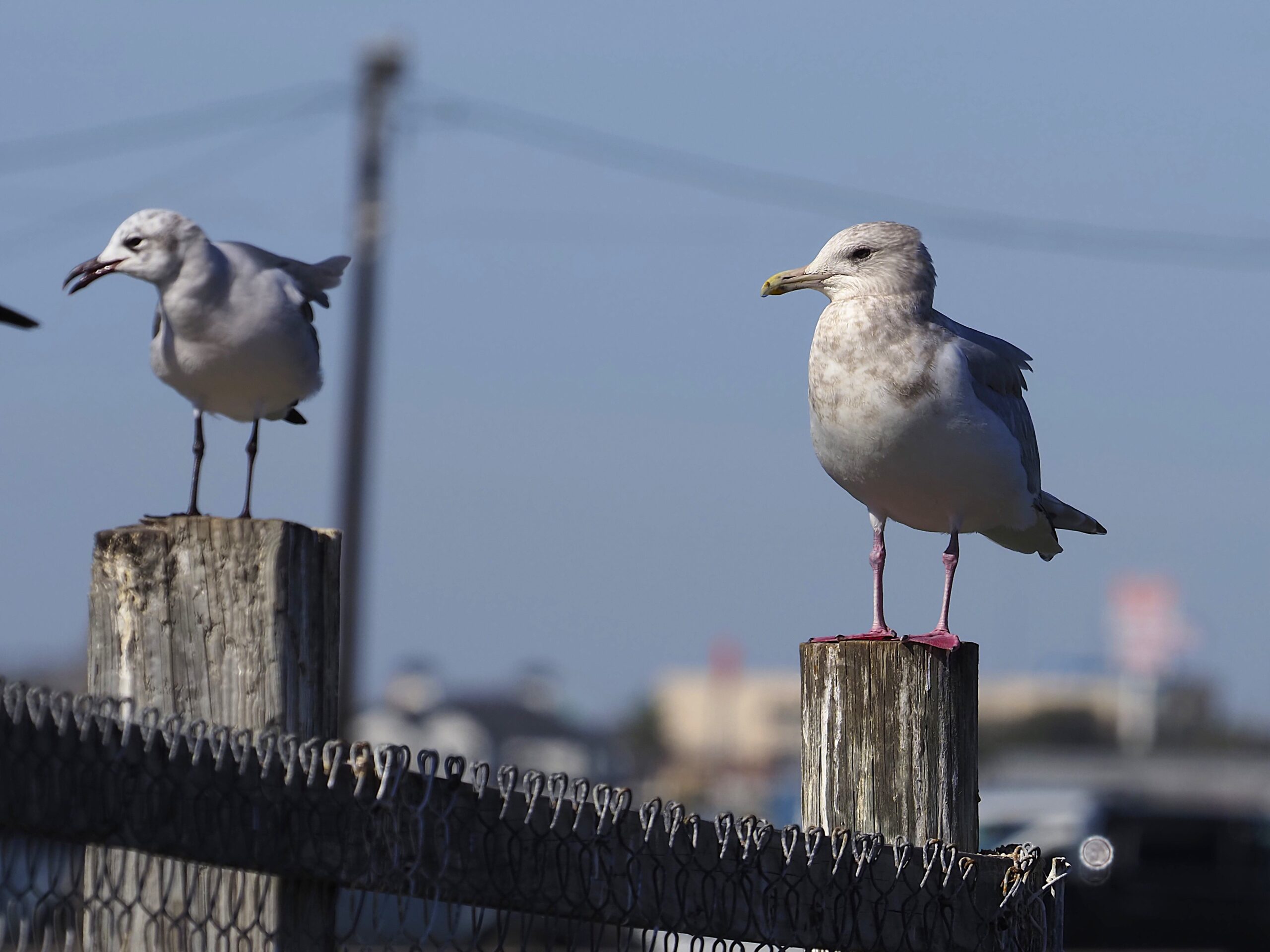
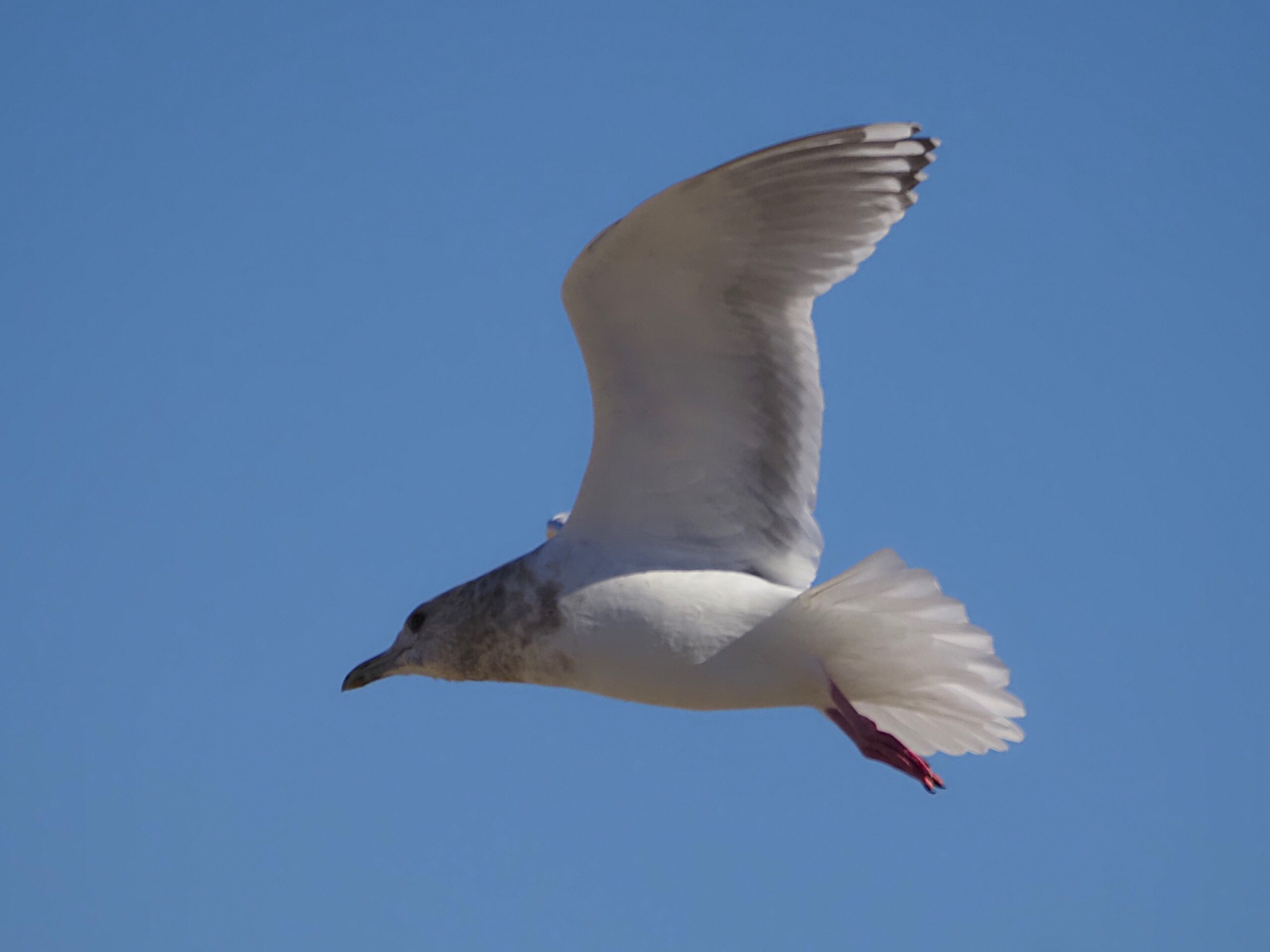
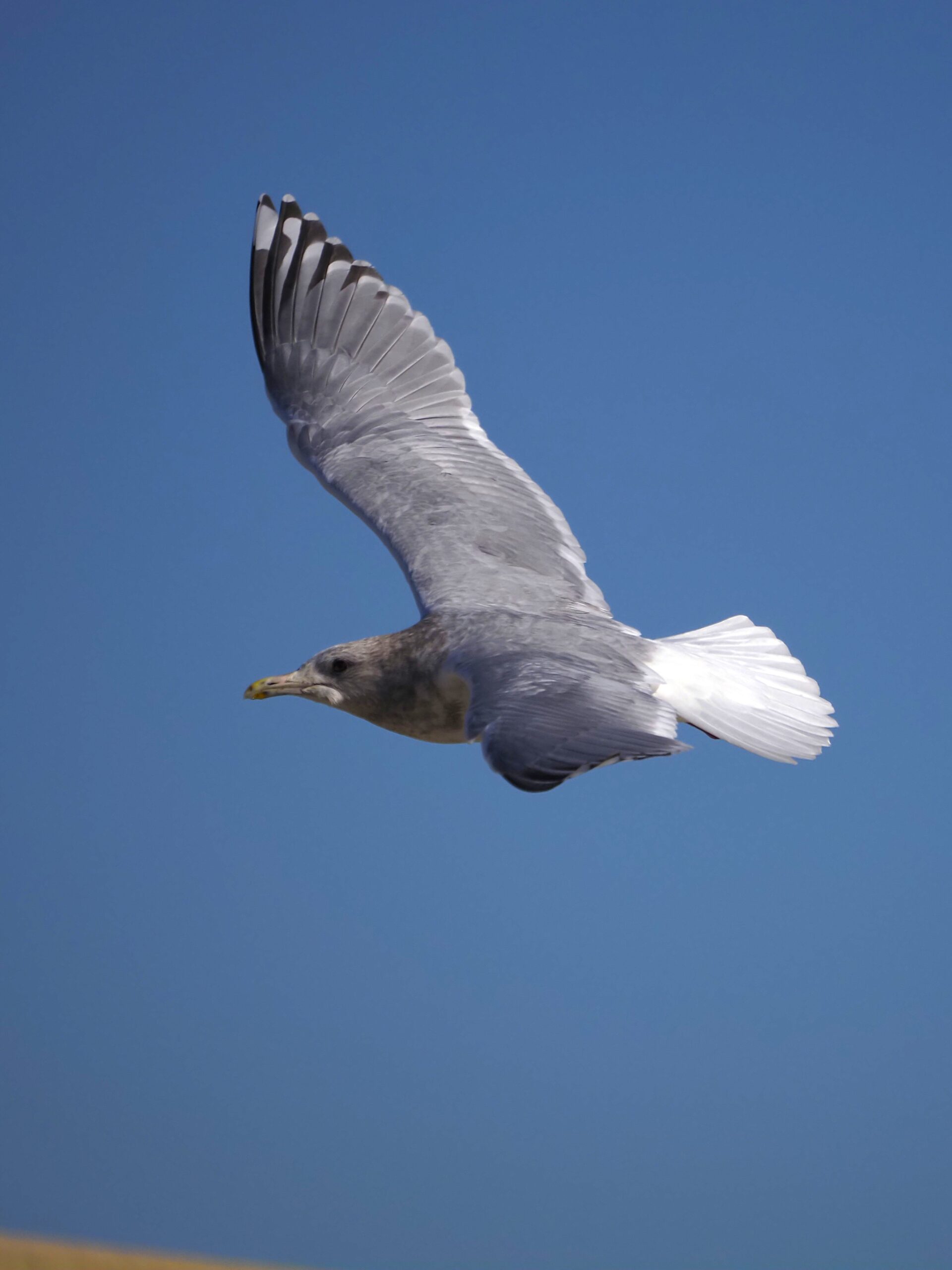
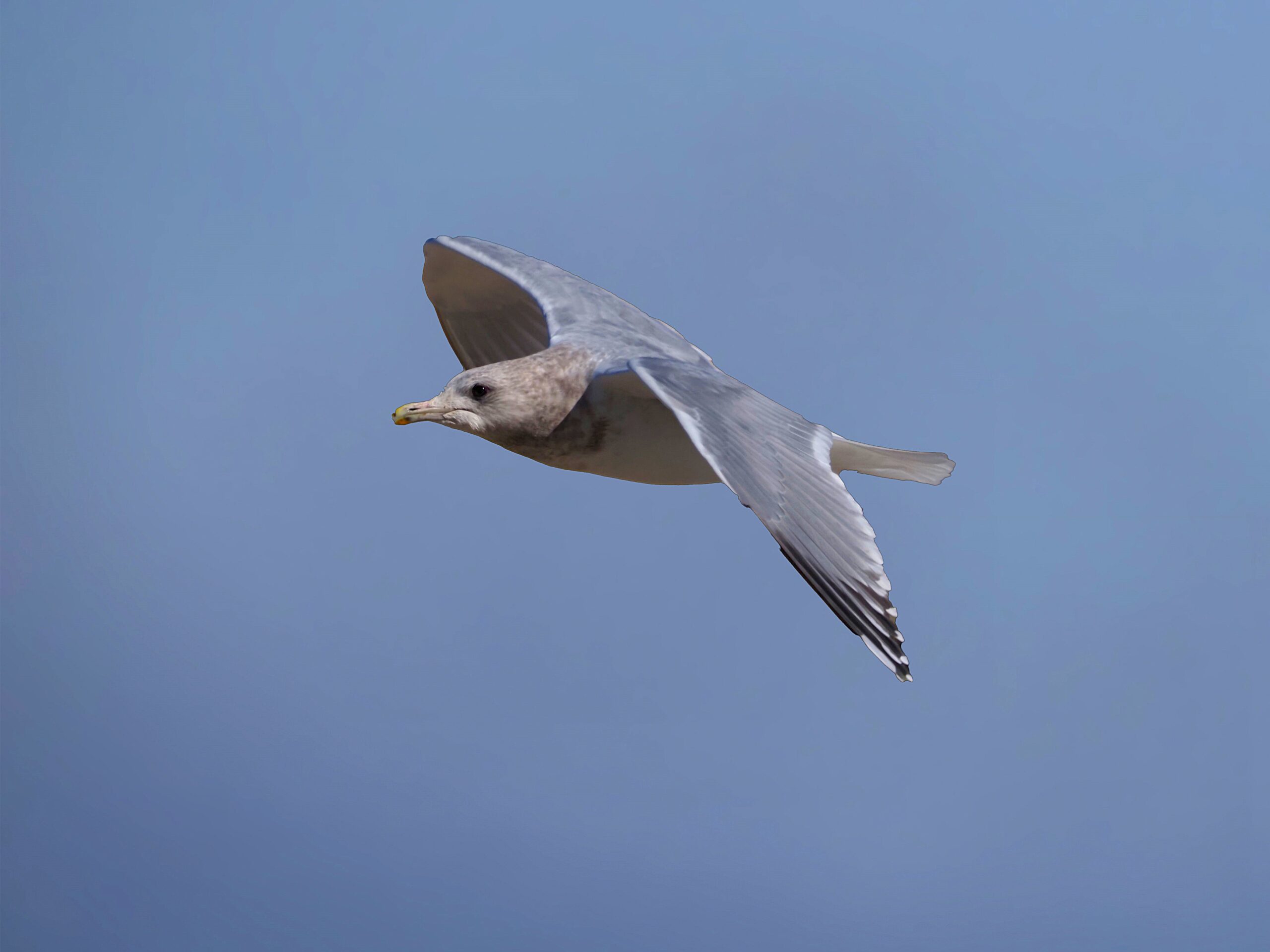
A number of Iceland were present at the Gull Frolic near Chicago which I attended in February 2024. Most Iceland present appeared to be from the kumlieni subspecies, however 1 photo shows an adult thayeri-type with black wingtips.
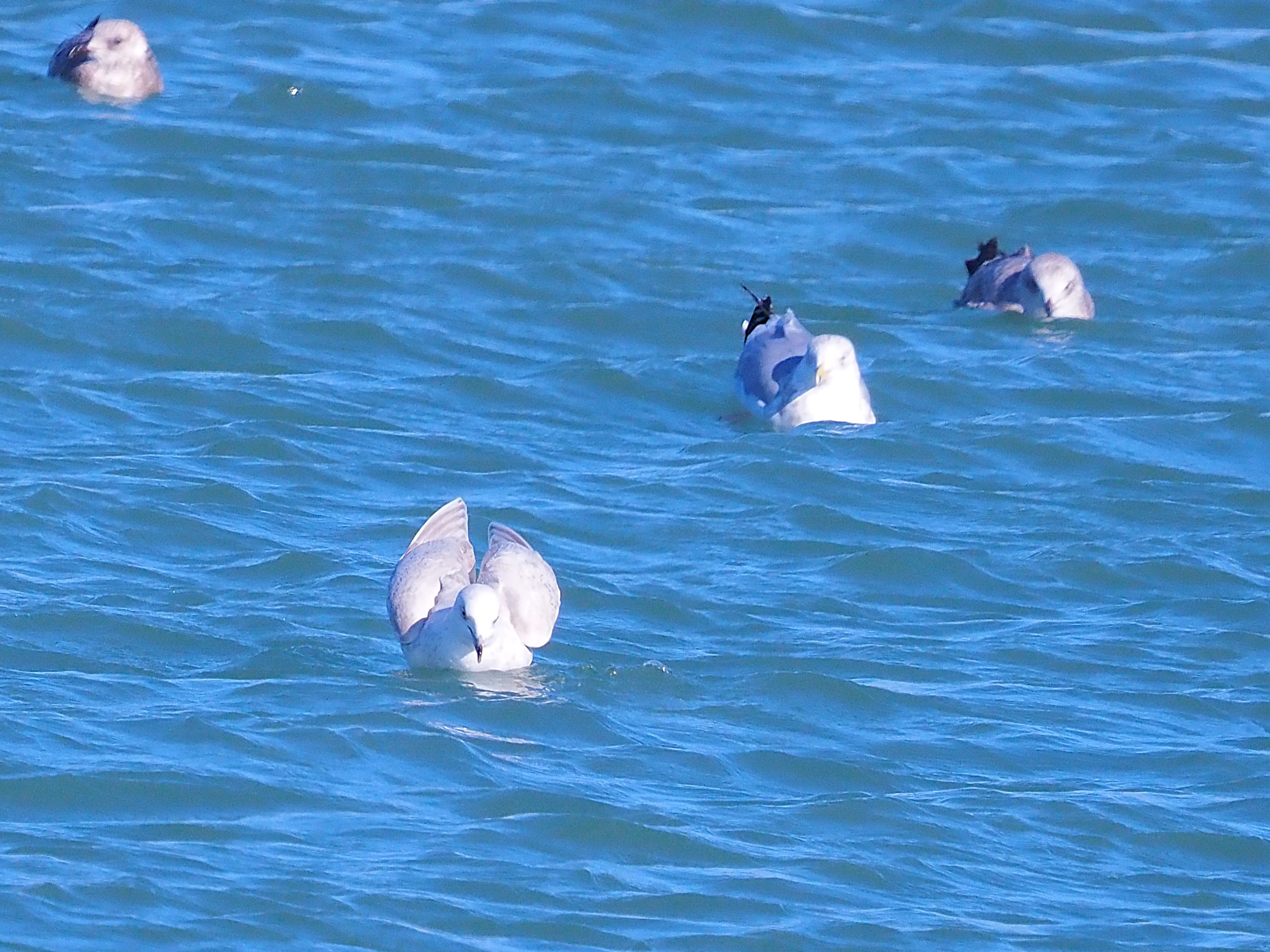
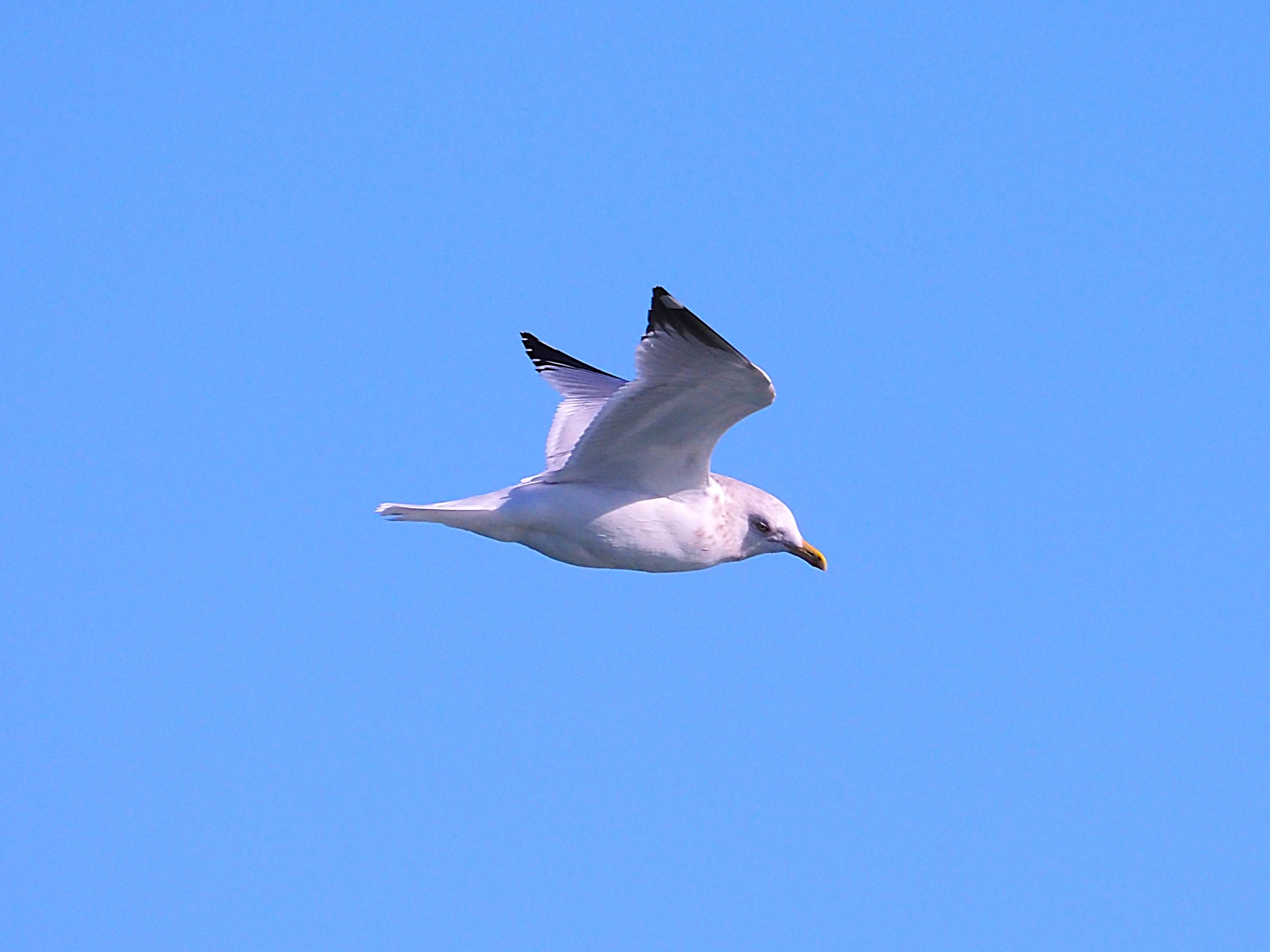


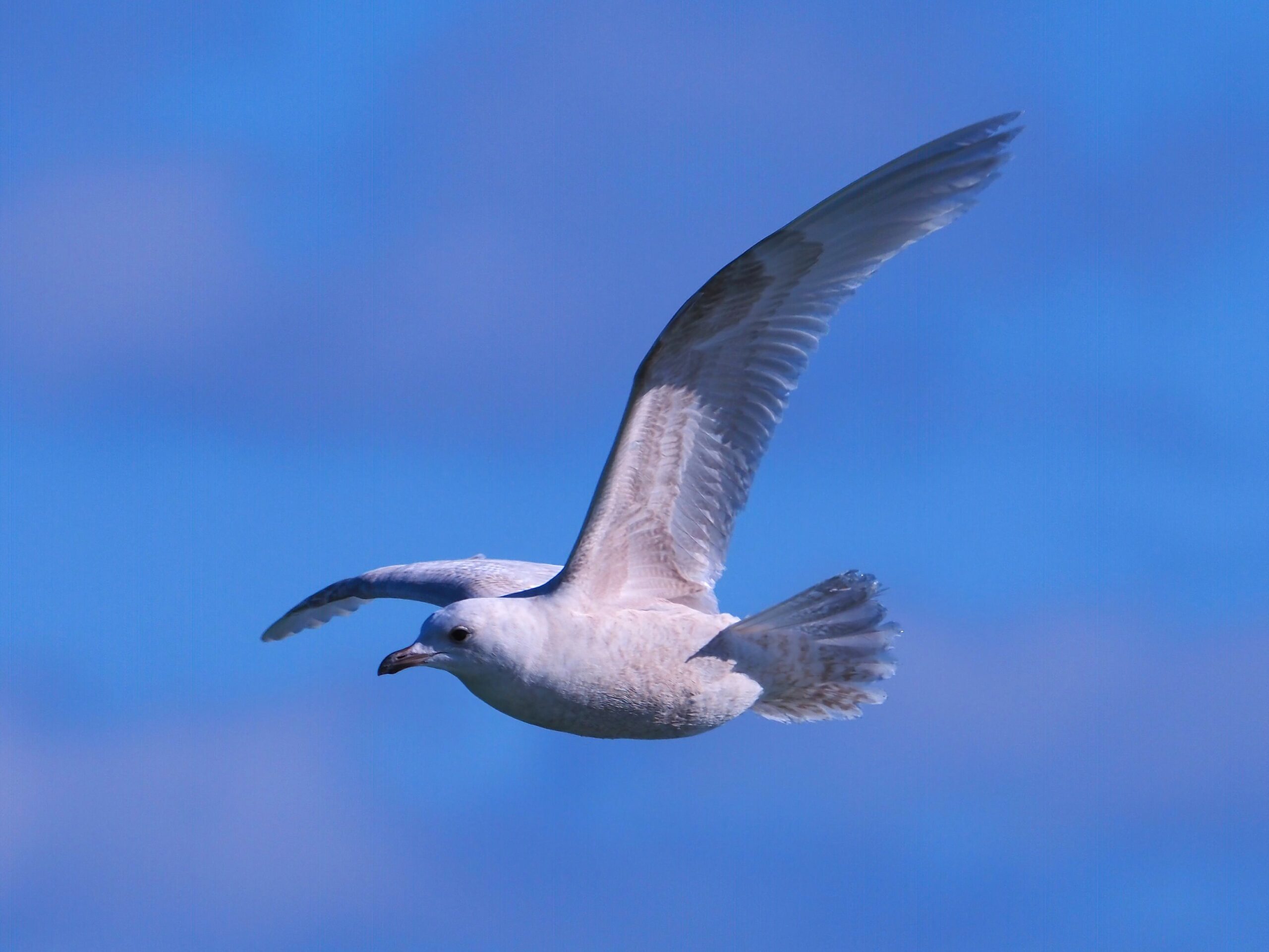
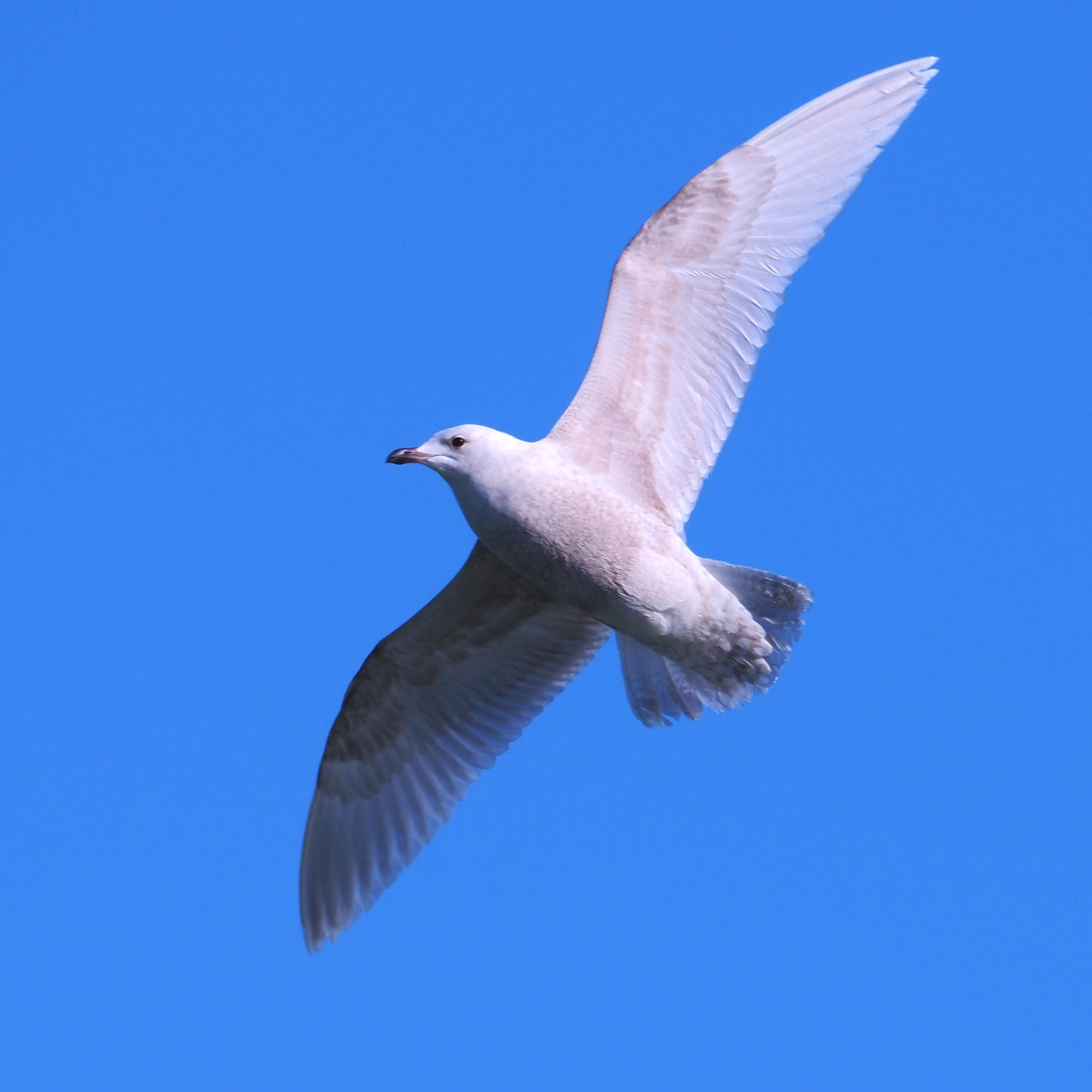
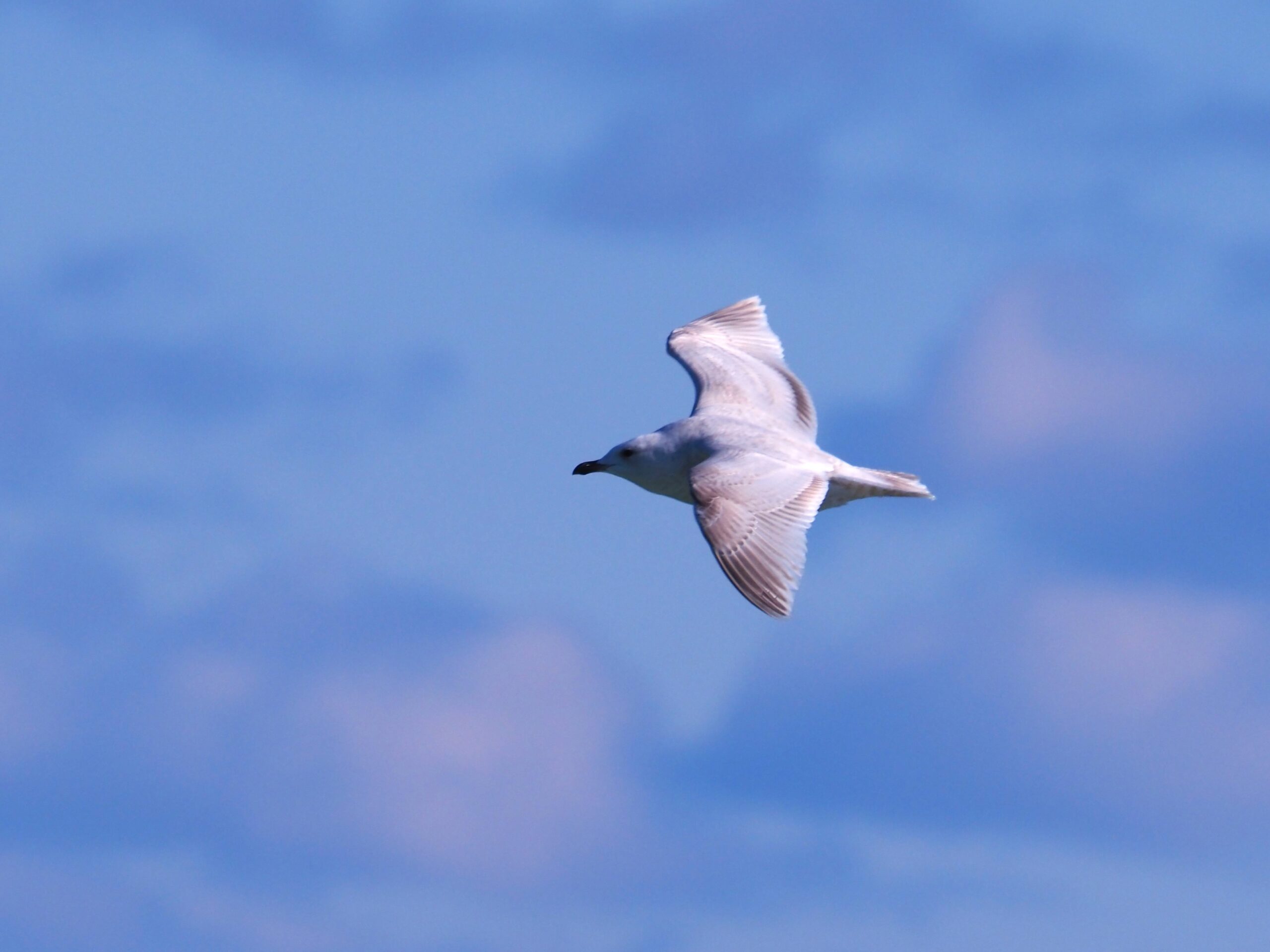
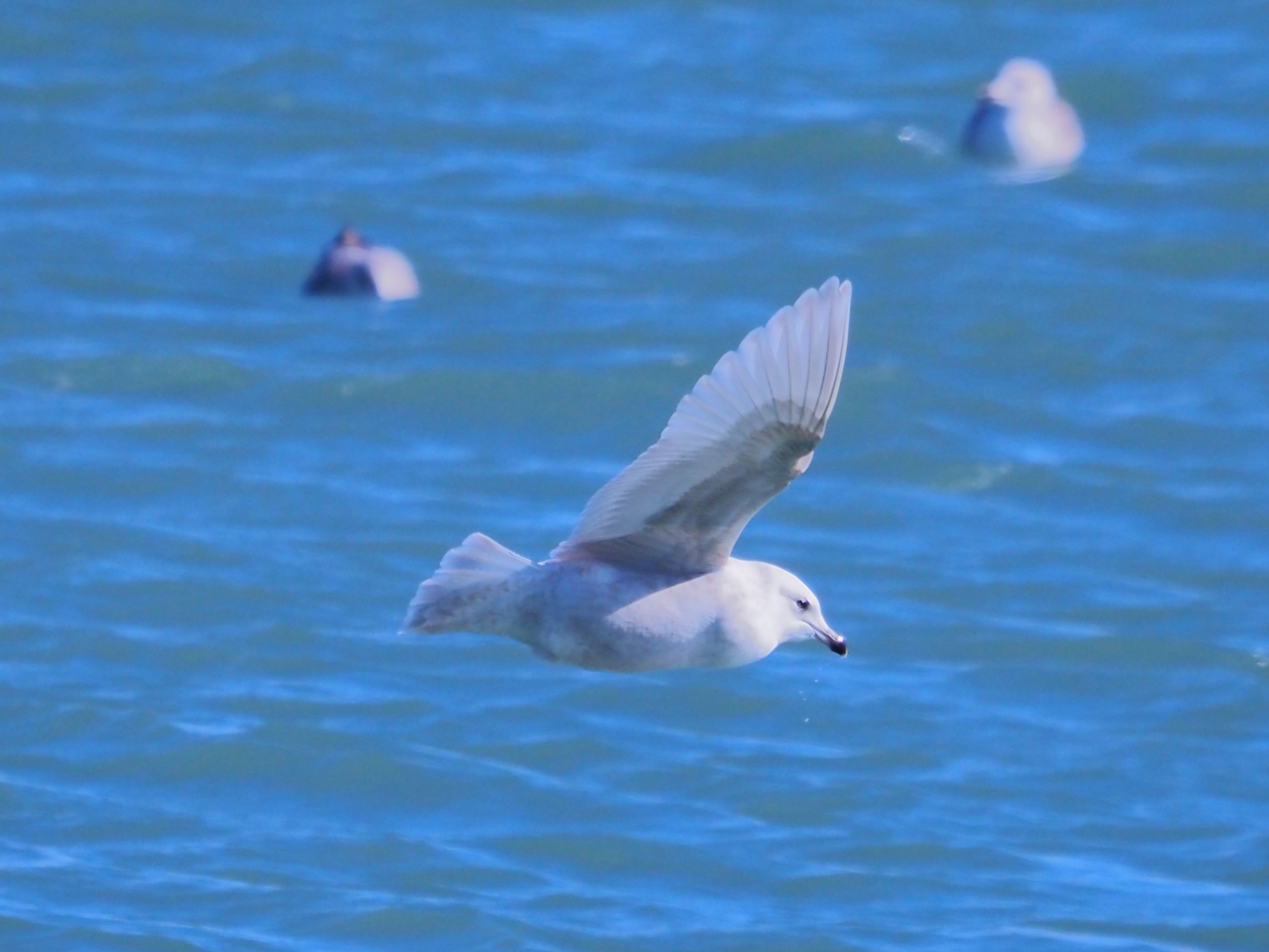

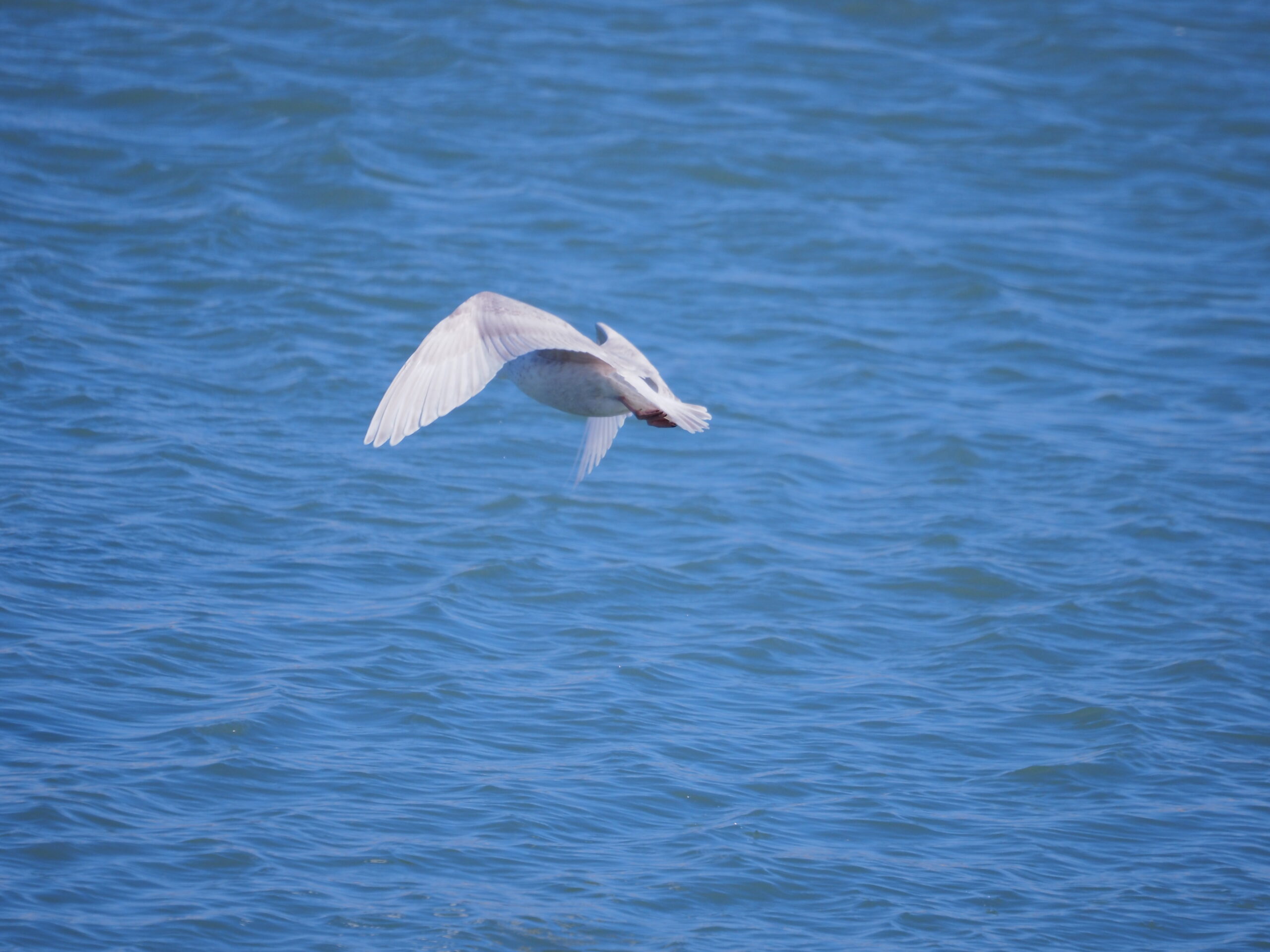
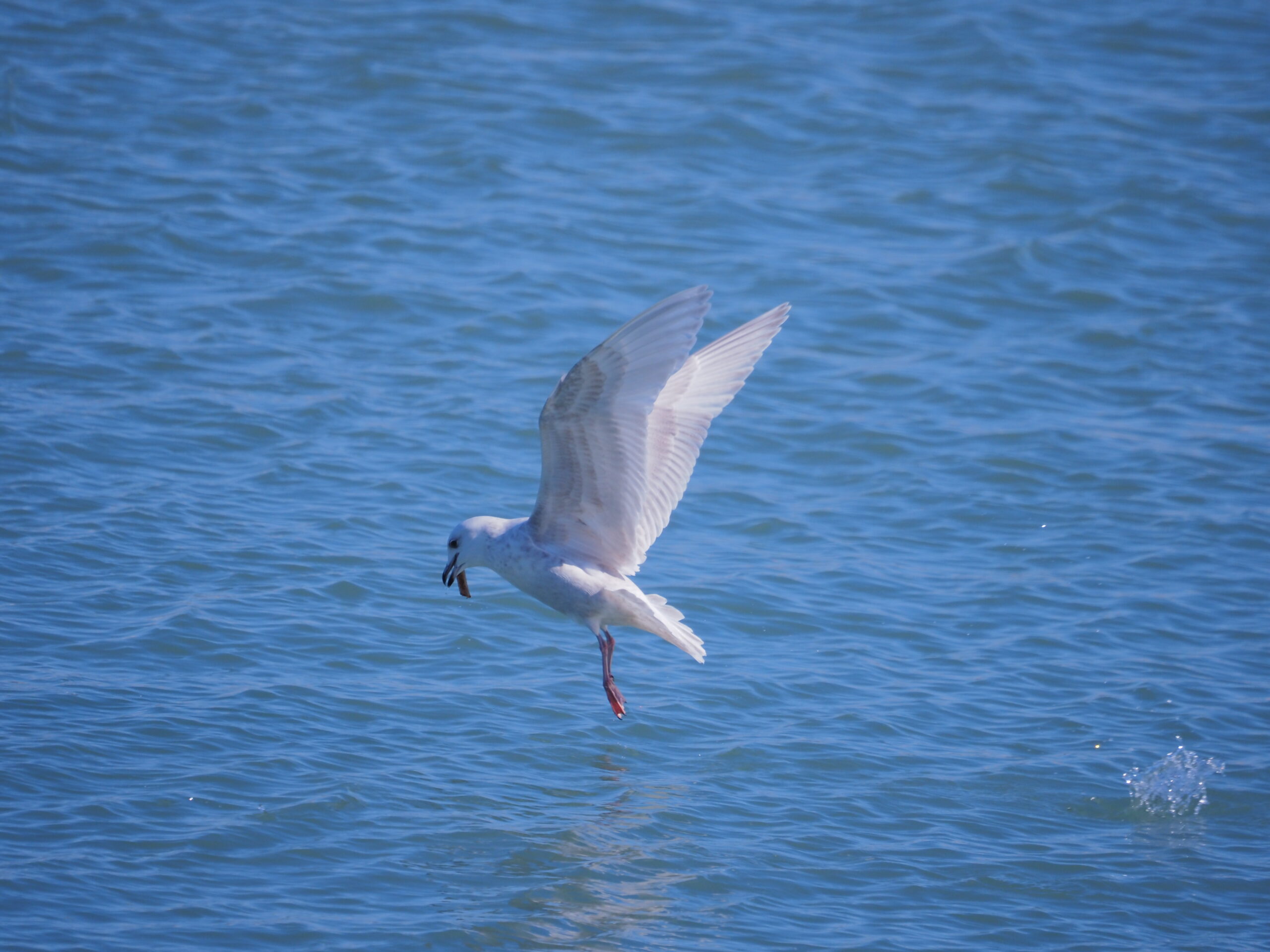
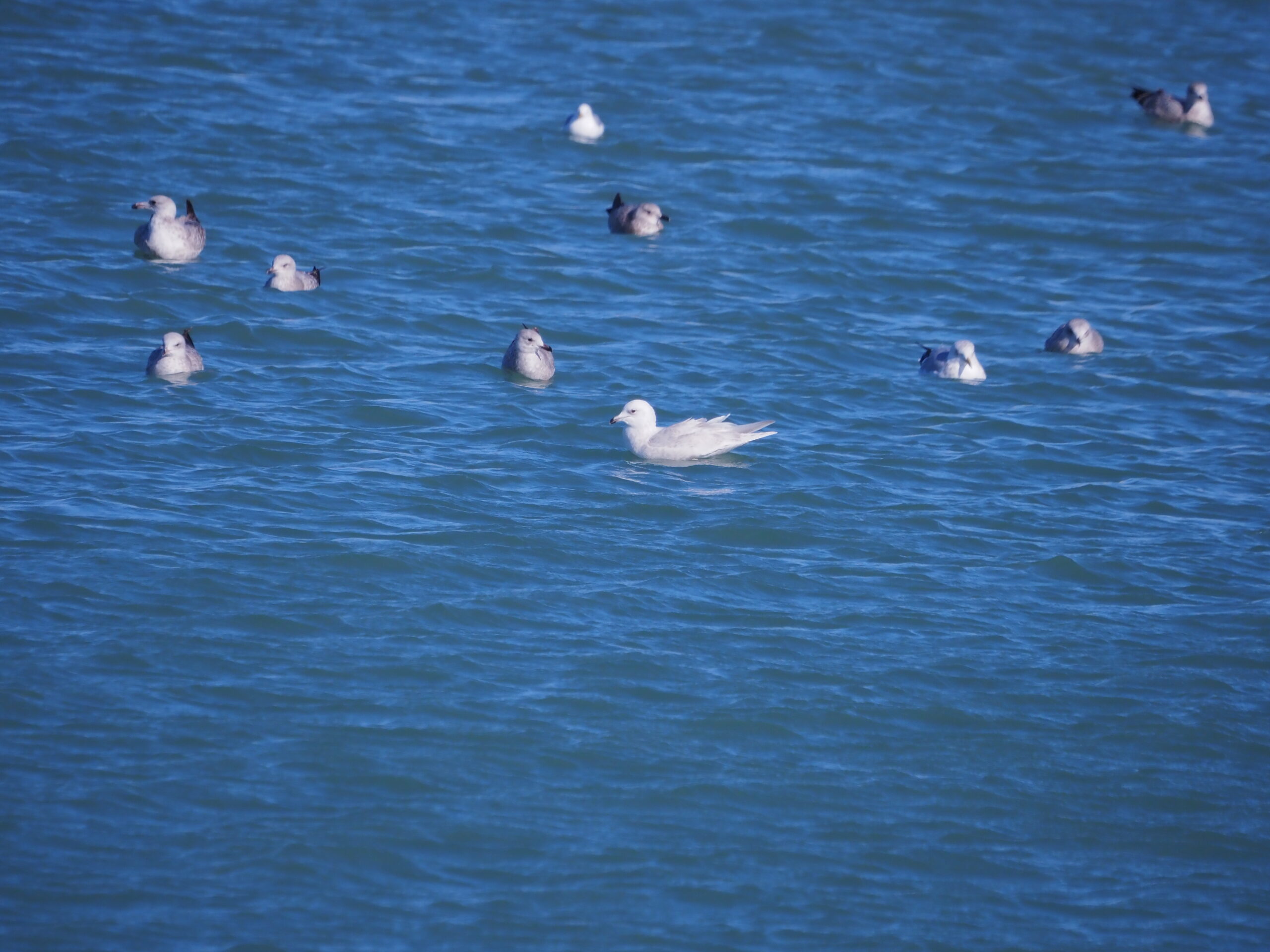
White primaries and pale backs of the Iceland are good things to scan for in gull flocks.
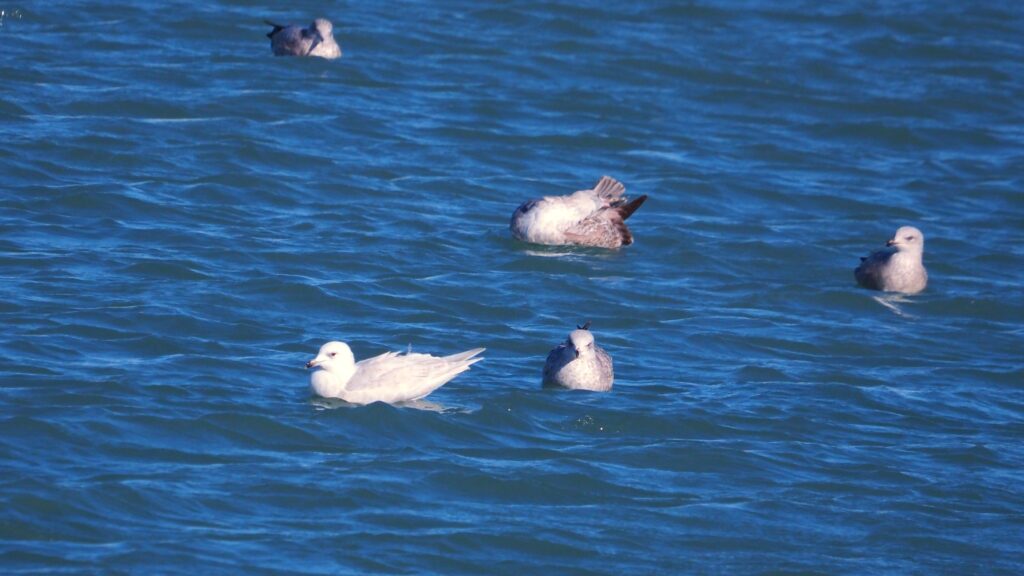
Juvenile and Sub-adult Iceland Gull
Large, white-headed, juvenile and sub-adult gulls from the genus larus are considered very difficult to identify. I recommend focusing first on the relative size and the structure of the gull by comparing it to gulls of known species. Next examine the size and structure of the bill and head.
The precise hue of the back (mantle and scapulars) is an important field mark in both adult and sub-adult gulls. The post-juvenile feathers of gulls begin to emerge during the first or second-year of life. Initially these feathers emerge at the mantle and upper scapulars, so this is the area to check for the presence and color of post-juvenile feathers in sub-adult gulls.
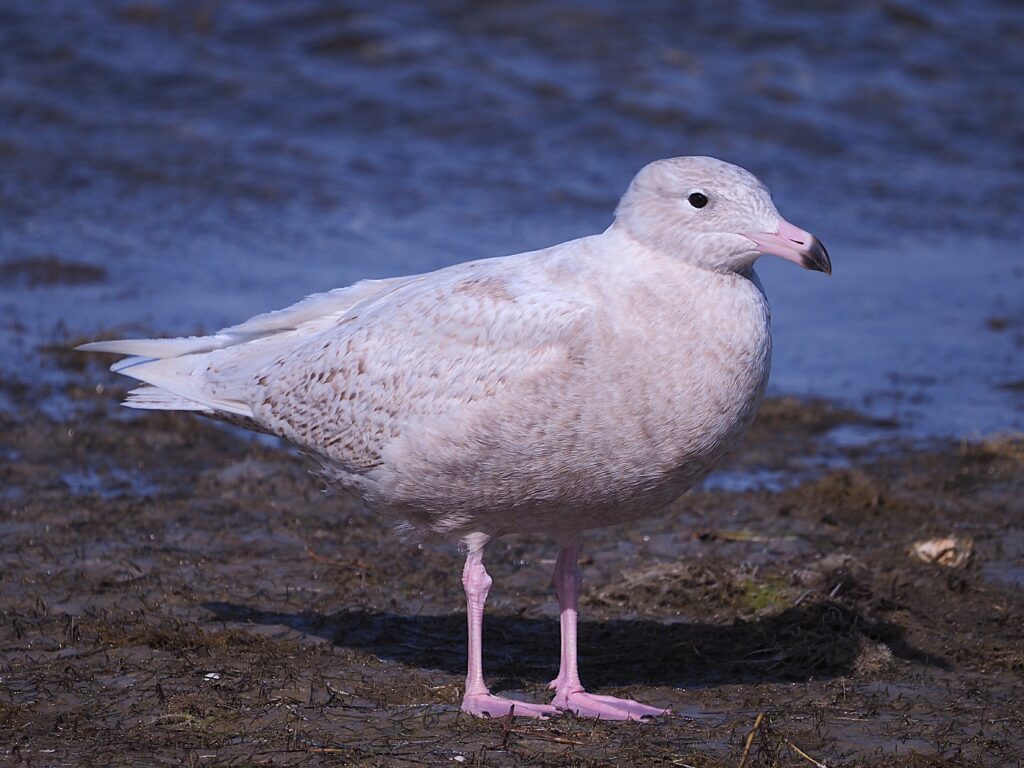
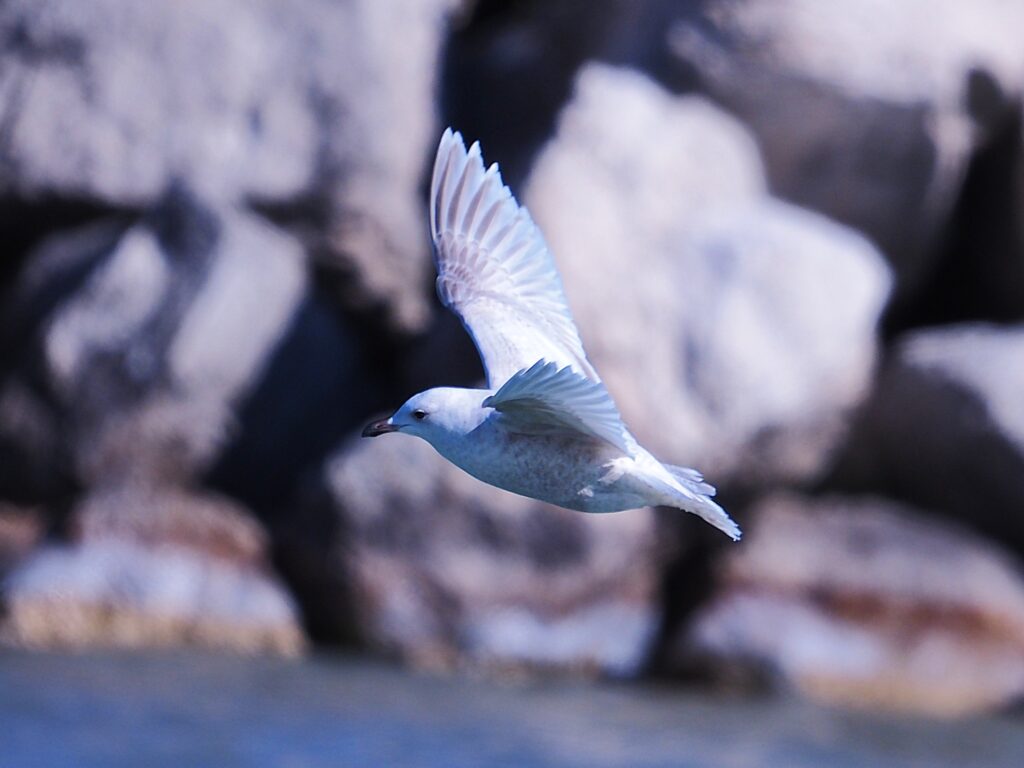
Juvenile Icelands range in color from uniform white, to tan, to uniformly dark gray-brown, with thayeri having richer tones than those of kumlieni. Pale kumlieni (shown below) are distinguished by their pale backs and flight feathers and are fairly easy to distinguish from other gulls based on their color, size and structure.
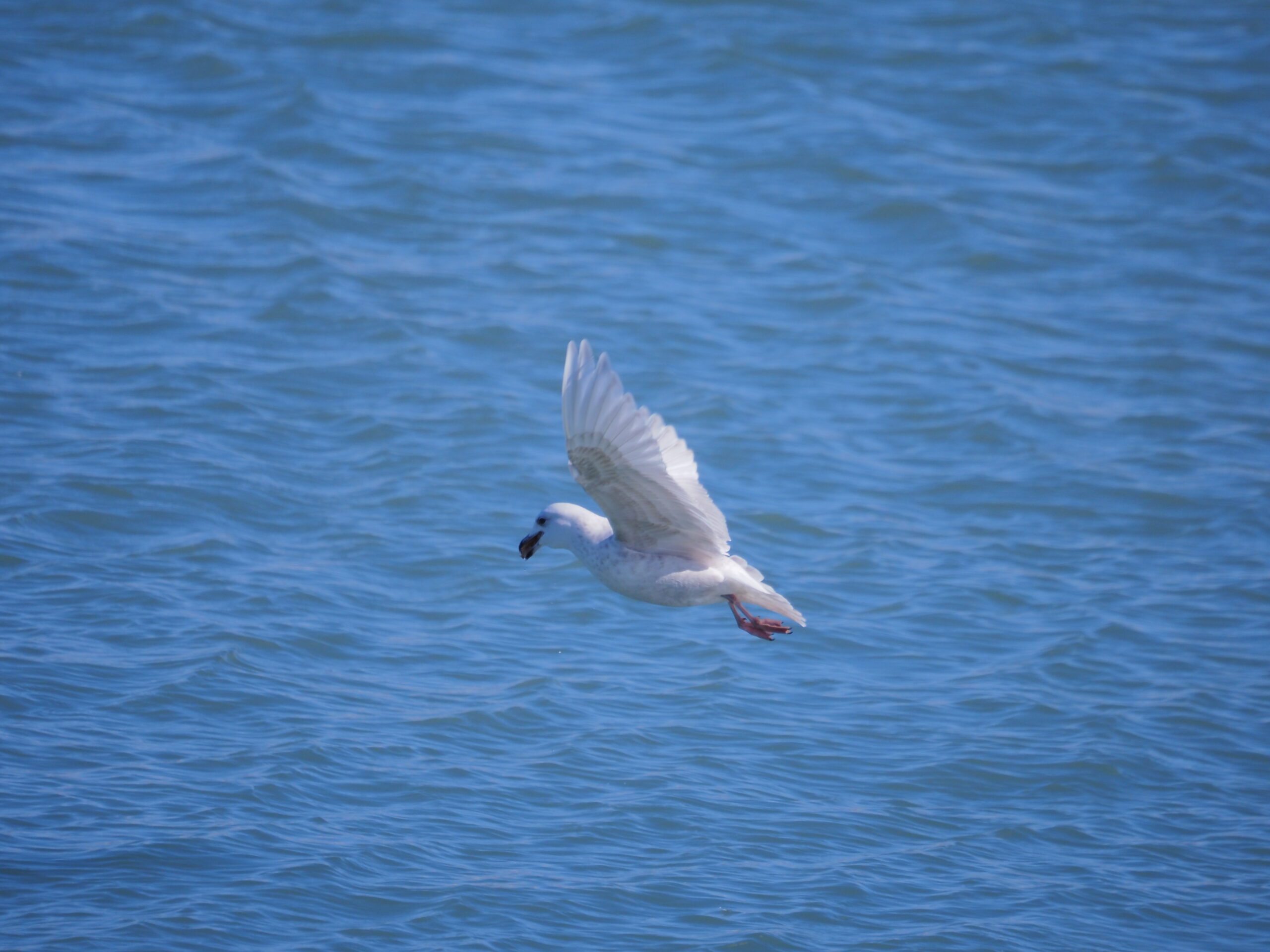
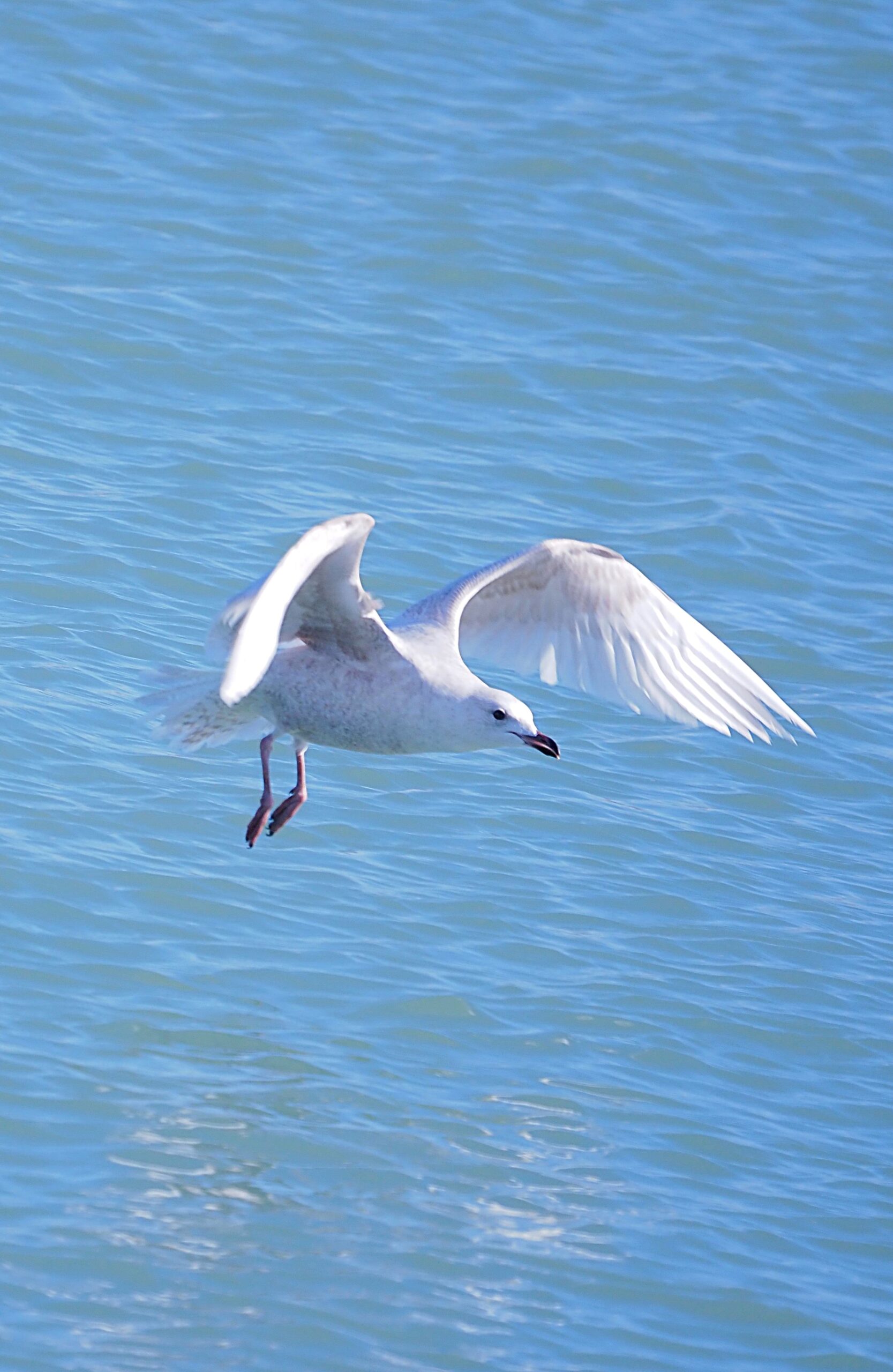
Pale Iceland are smaller than the bulky Glaucous Gull which has a sharper demarcation between pink base and the dark tip of the bill, a more rectangular head and a shorter primary projection (beyond the tail).
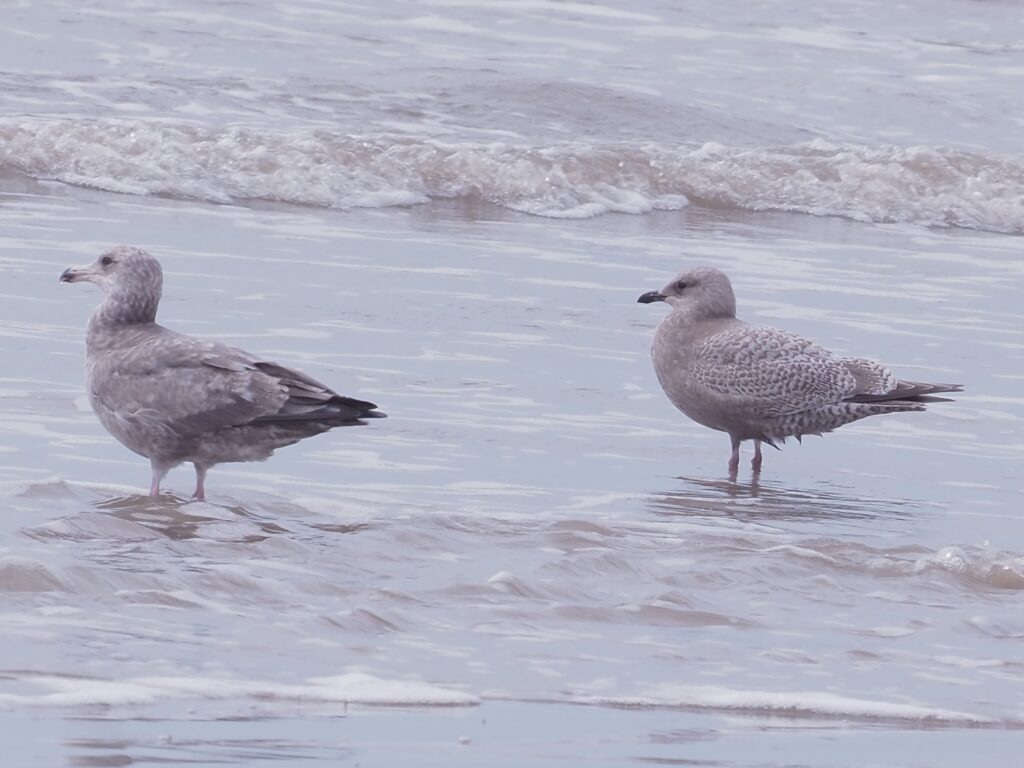
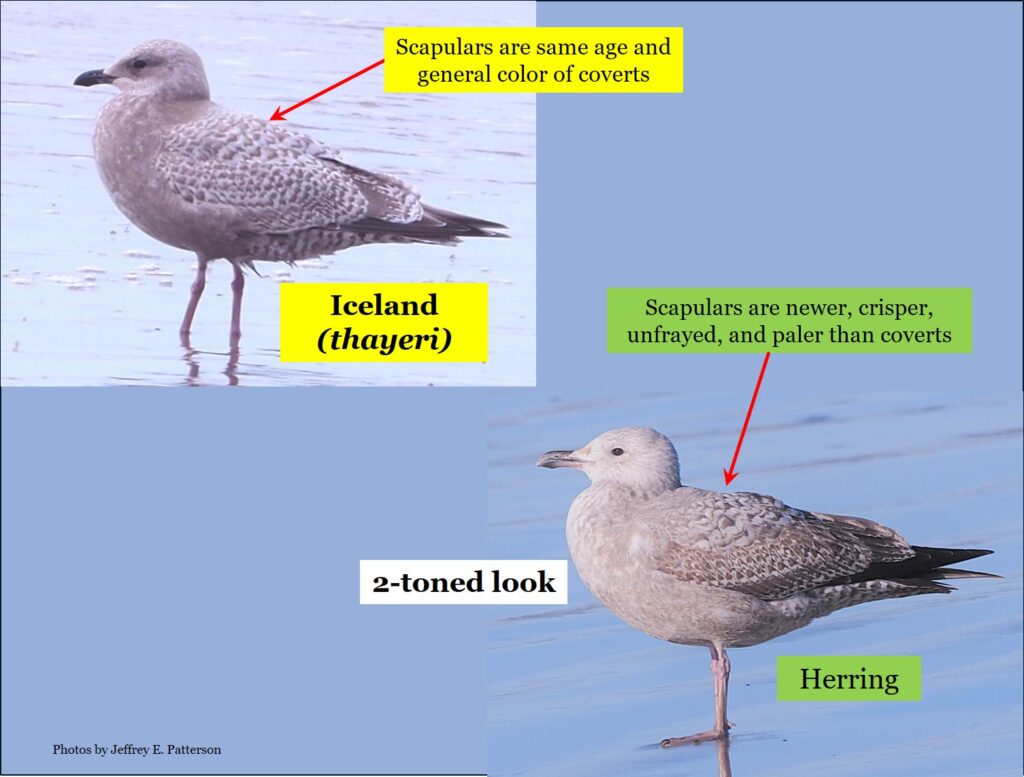
The juvenile thayeri should be compared to the (usually) more numerous Herring. The thayeri has well-patterned plumage (although the pattern is not consistent between individuals). A thayeri is compared to a Herring in the photo below. Note the detailed pattern of the thayeri on the right, compared to the messy appearance of the Herring. Also note the structural differences: the thayeri is plump-breasted and stocky, with a rounder head and shorter and slimmer bill; the Herring is larger, with a more rectangular head, larger and longer bill, and has more bulk in the belly rather than the chest.
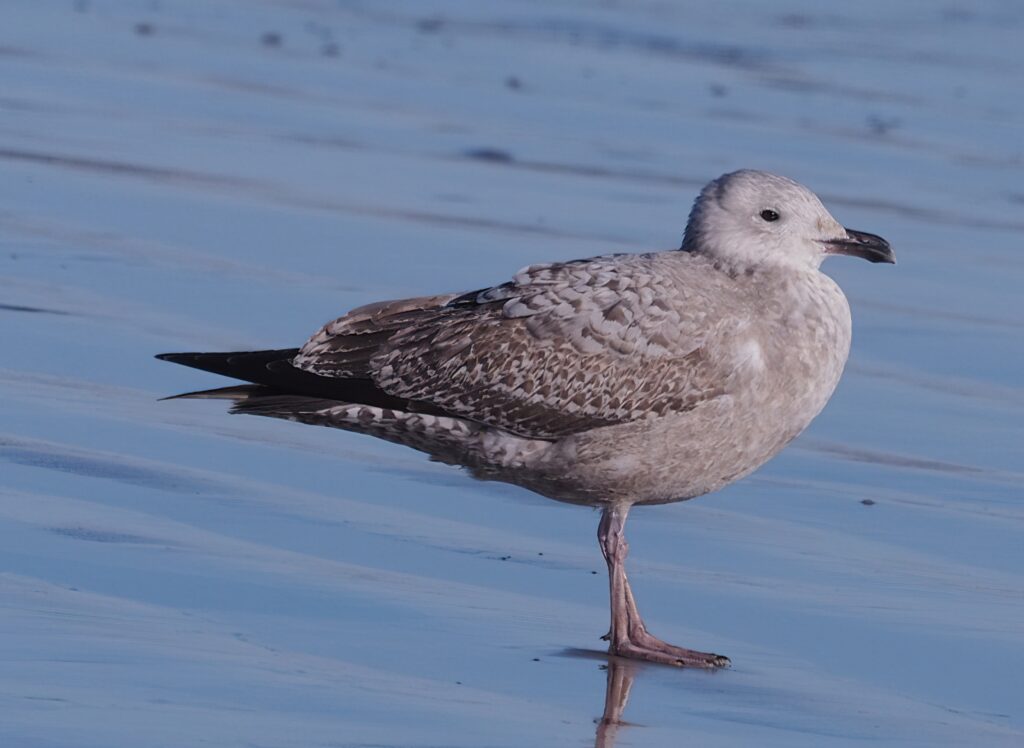
While juvenile Herrings molt their scapulars in early fall to winter, thayeri retains juvenile (1st generation of flight feathers) mantle and scapular feathers well into spring. This contrast in plumage can be readily seen even from a distance; the Herrings appear two-toned as in the individual below [which otherwise shows some similarity to thayeri (patterned-plumage, shorter bill (though too thick in this individual), plumper chest and smaller head)].
Another plumage difference which helps distinguish Herring from thayeri is the wingtip pattern: thayeri has dark outer webs and paler inner webs of the outer primaries. This creates a “venetian blind” effect. The juvenile Herring (right below) by contrast shows completely dark outer primaries.
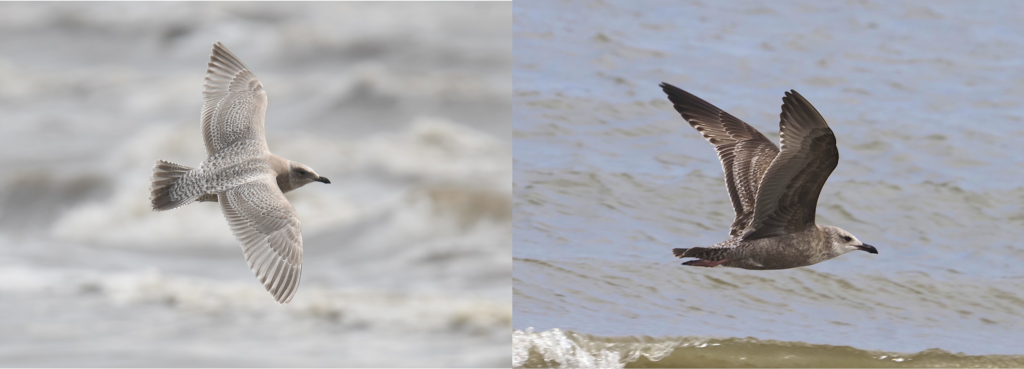
Herring, 1st Year (Galveston, January 2025)