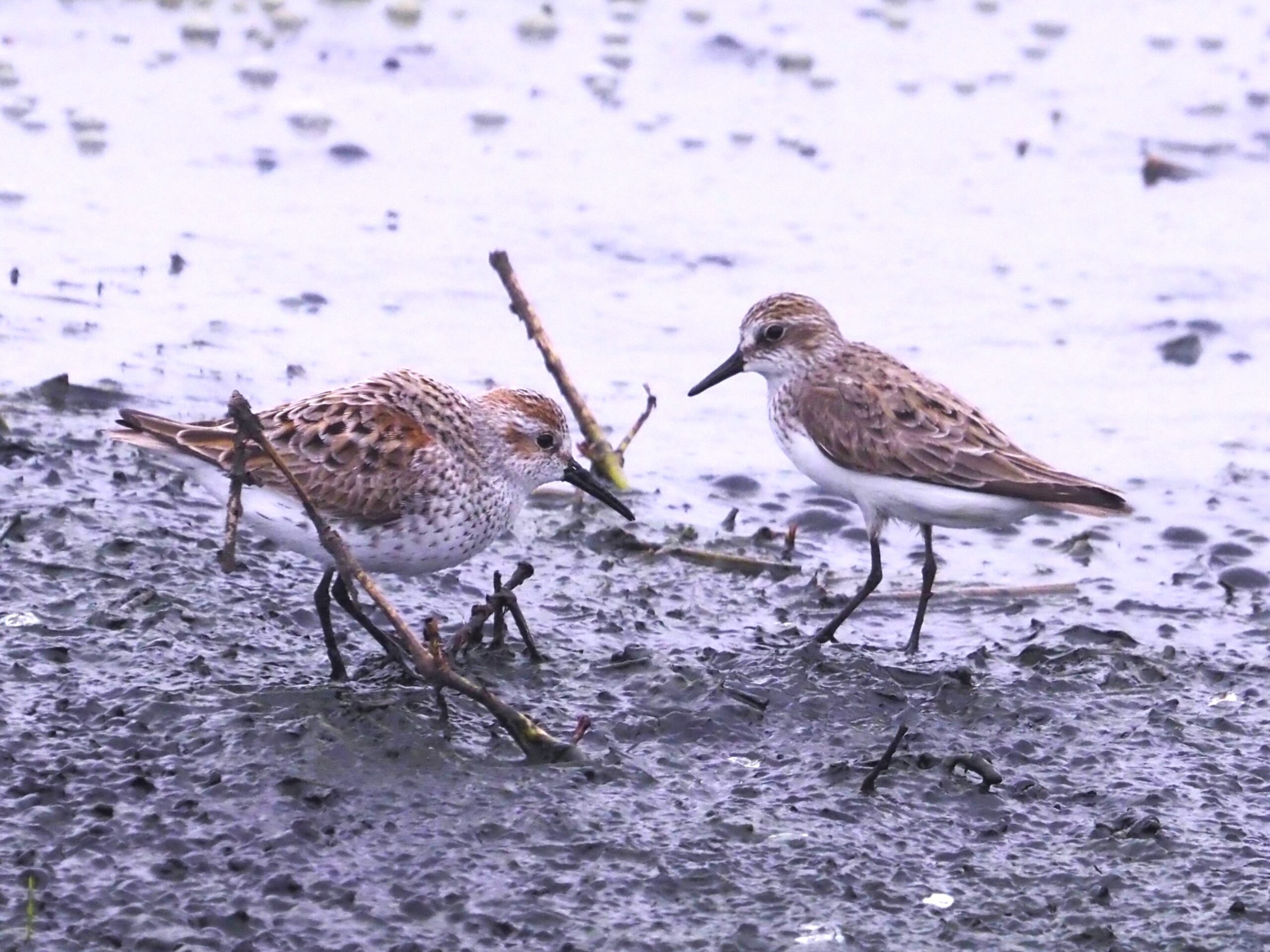
Semipalmated Sandpiper (alternate)
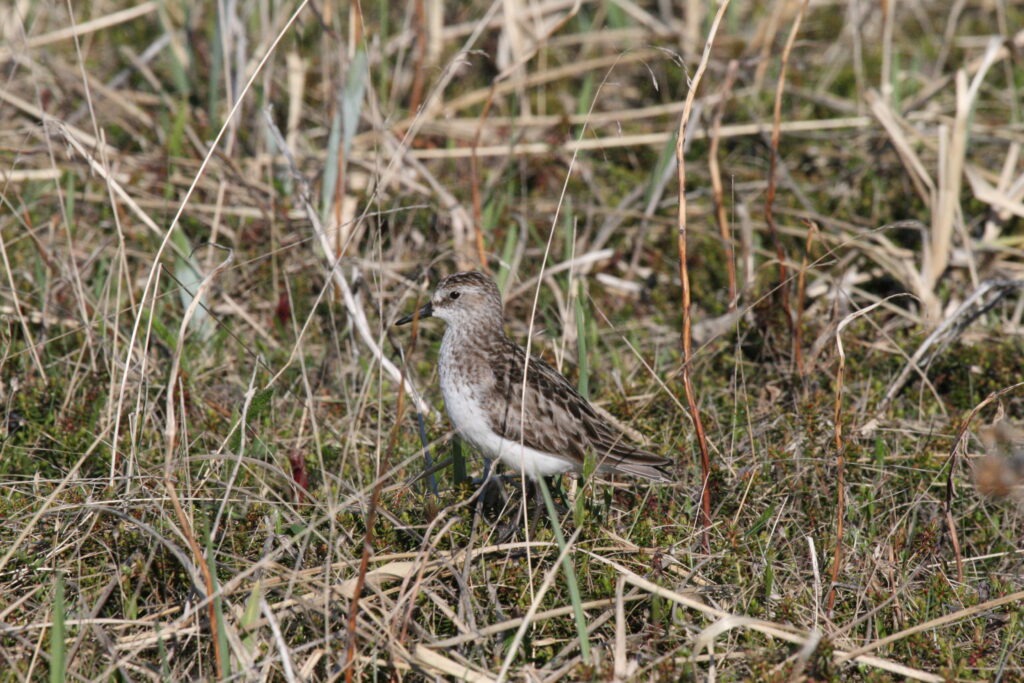
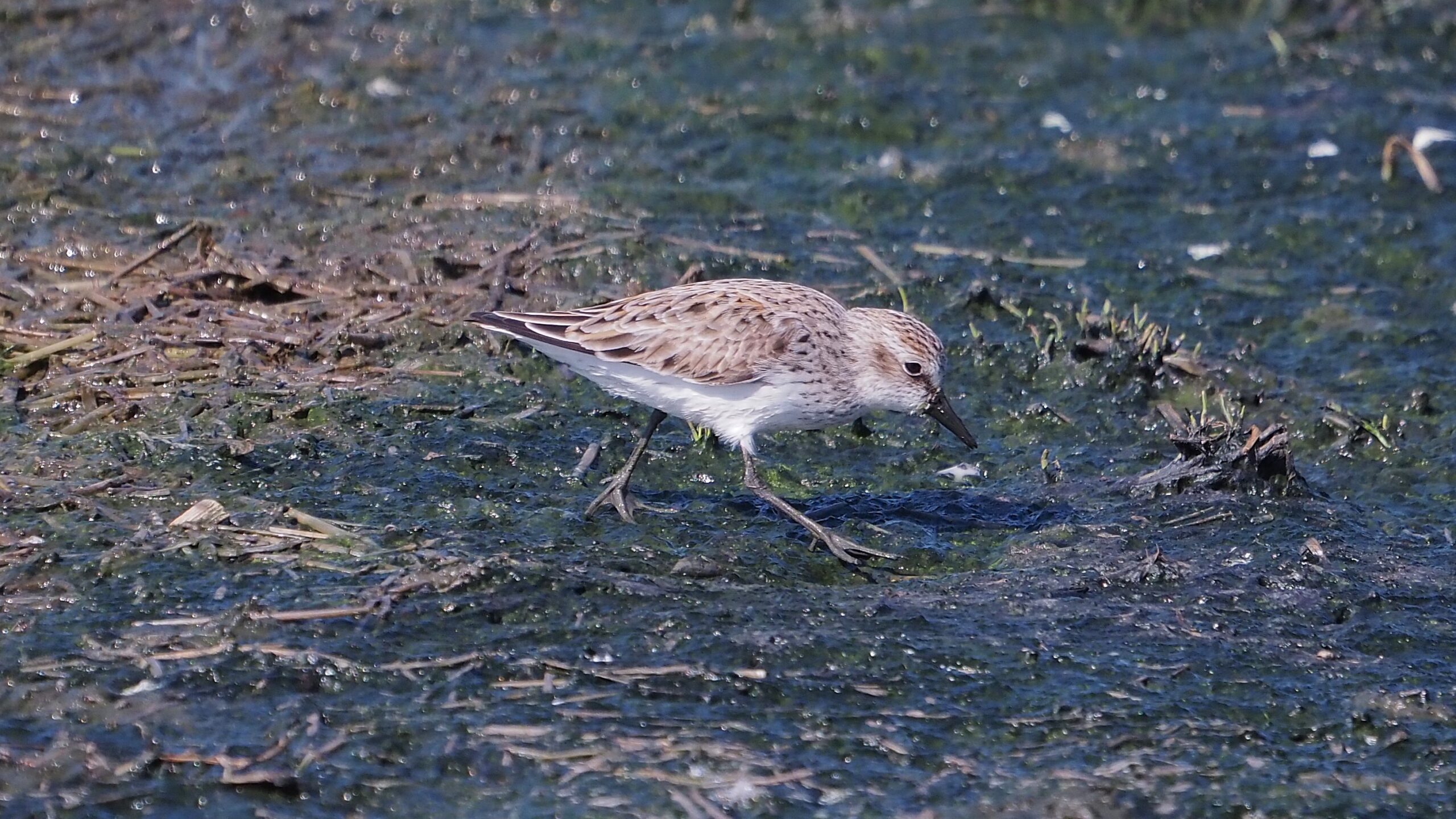
This first image of a Semipalmated Sandpiper was taken on the breeding grounds in Alaska in June.
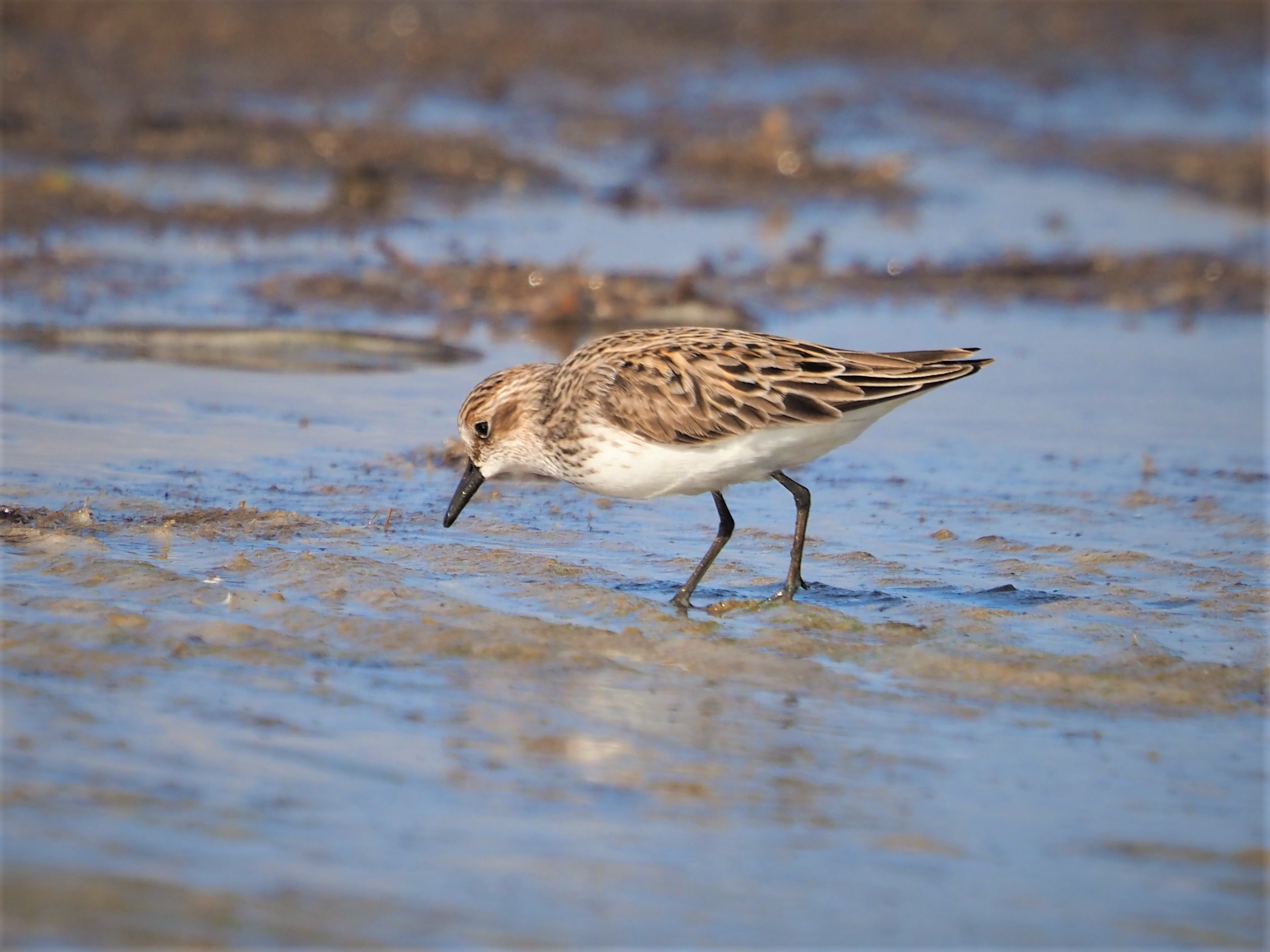
Semipalmated Sandpiper (alternate)
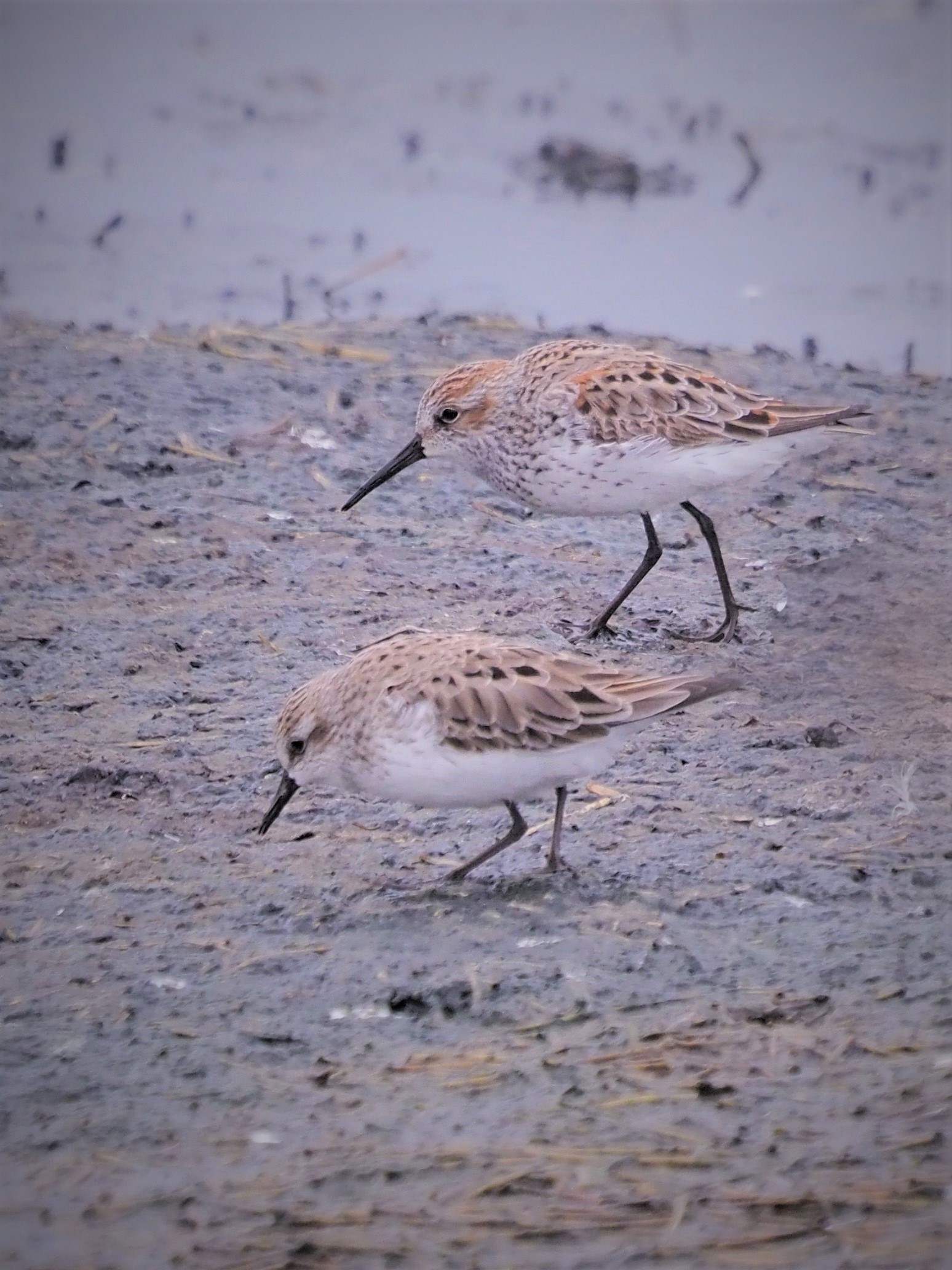
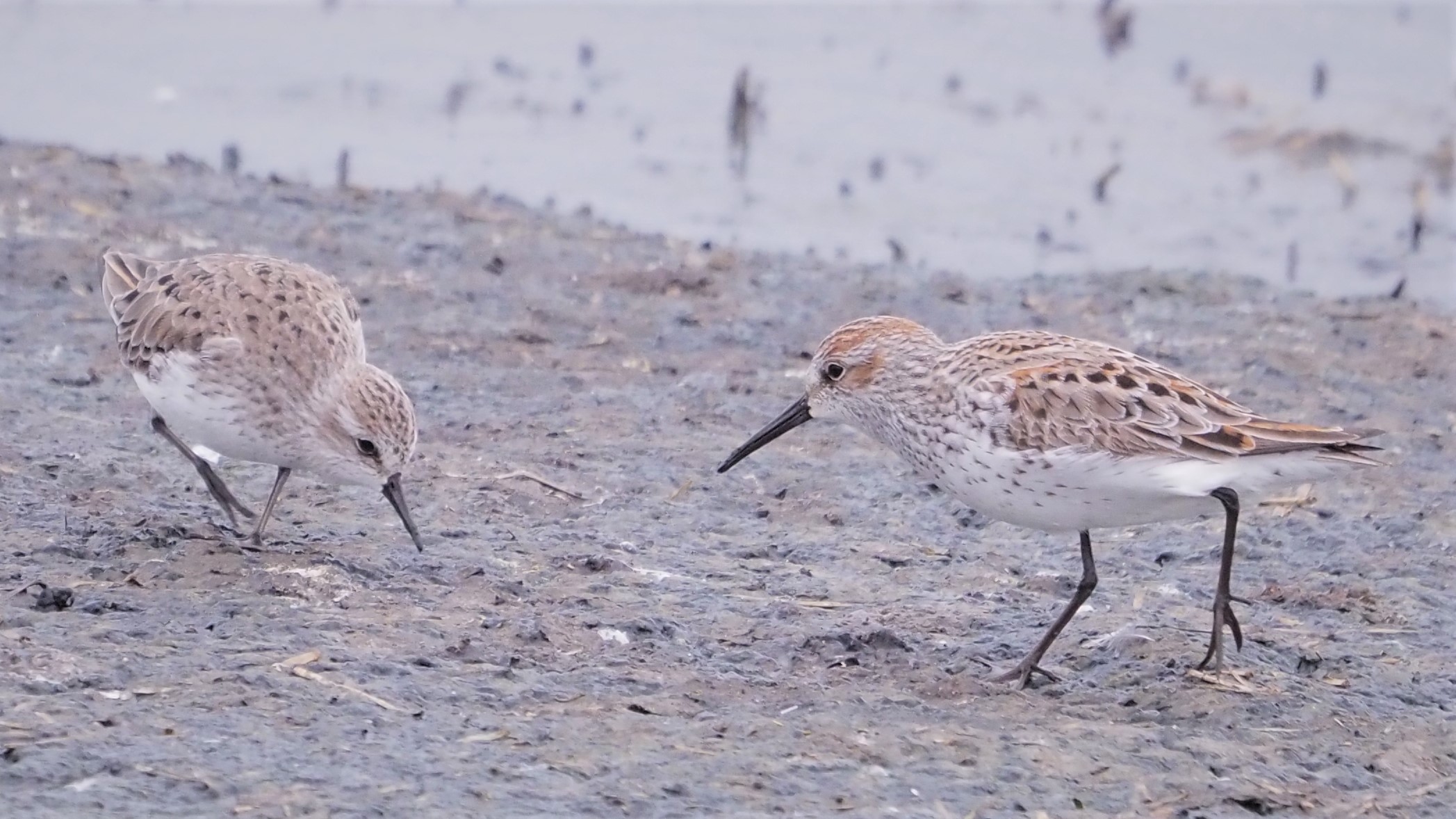
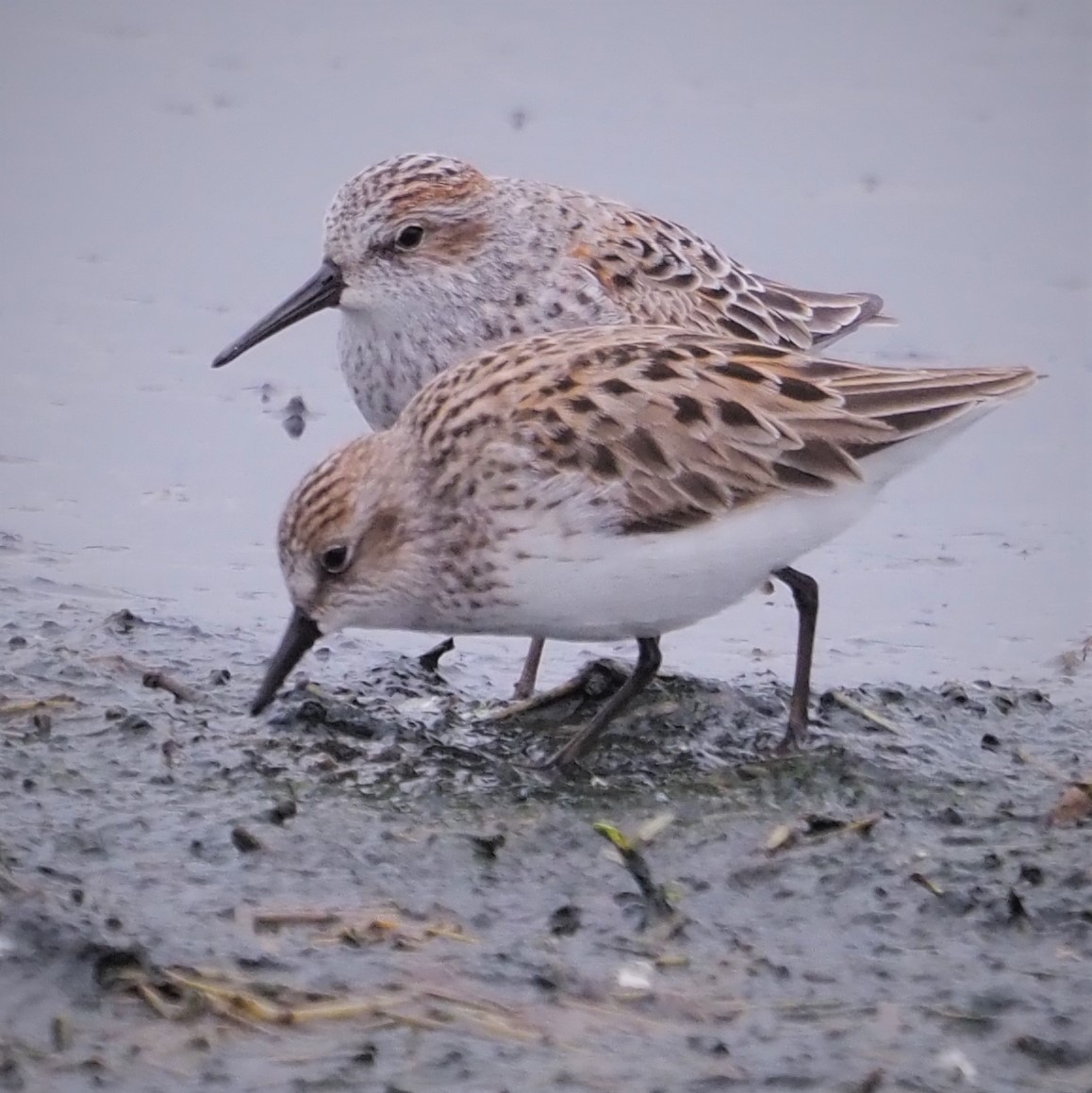
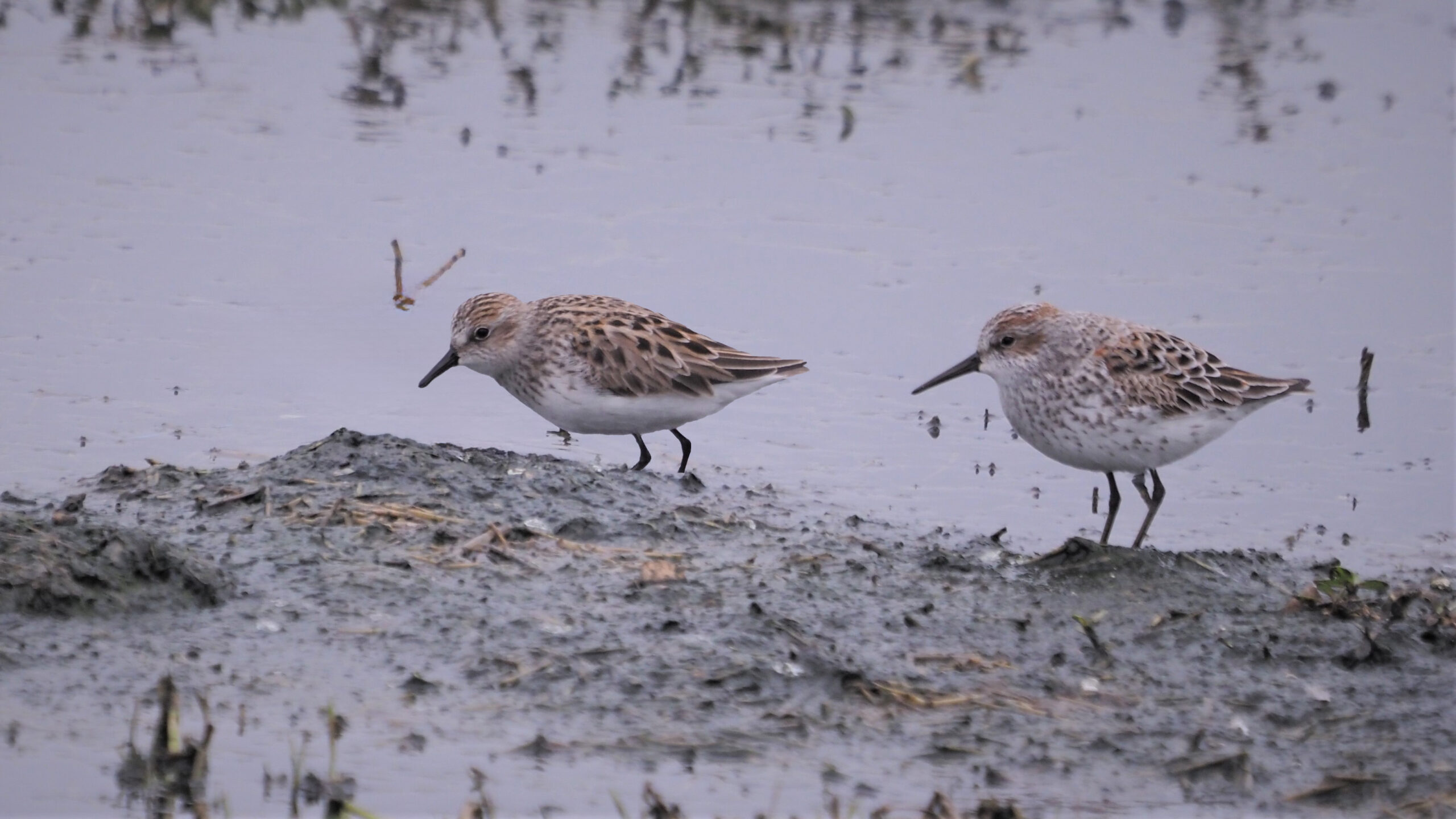
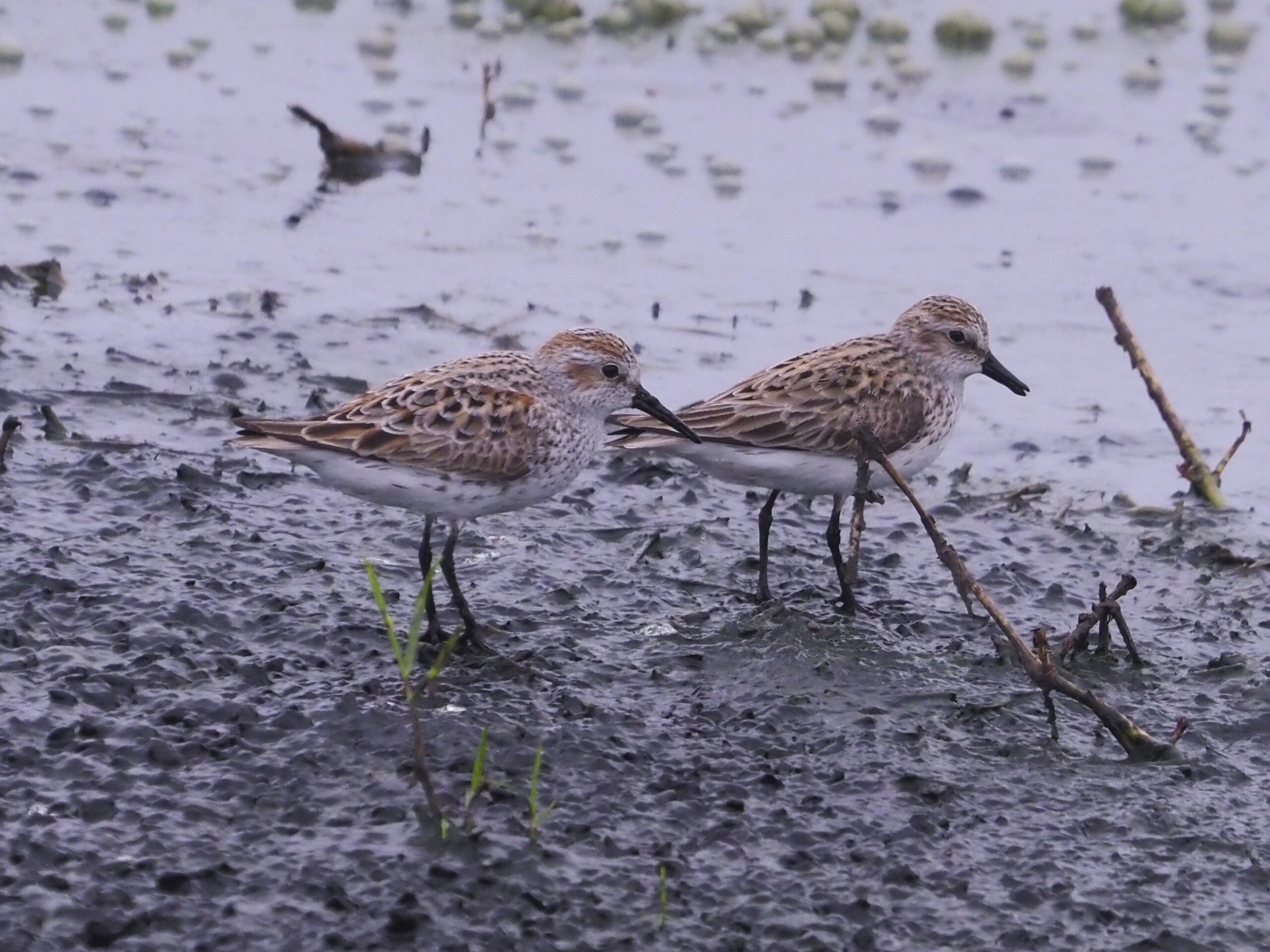
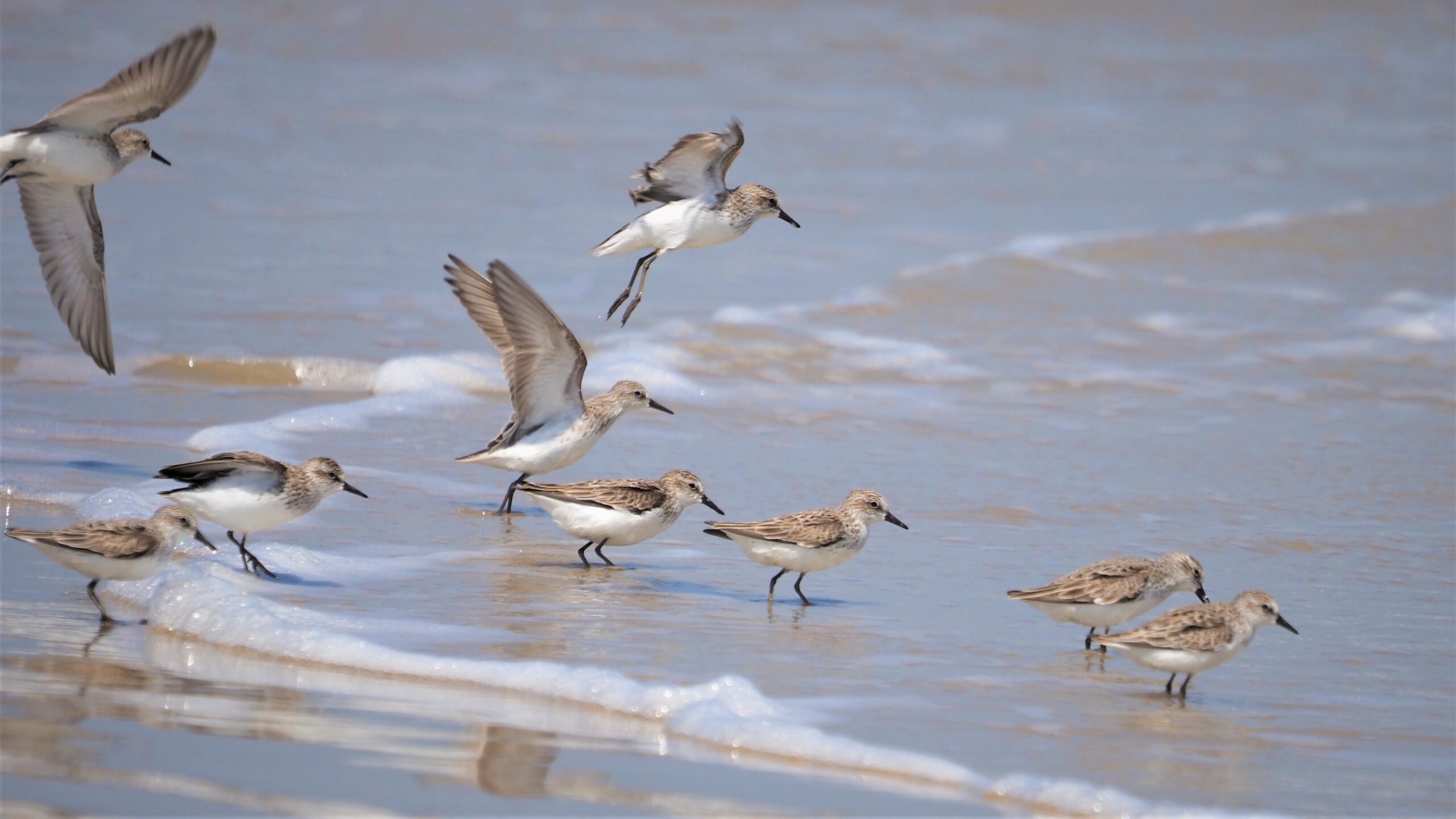
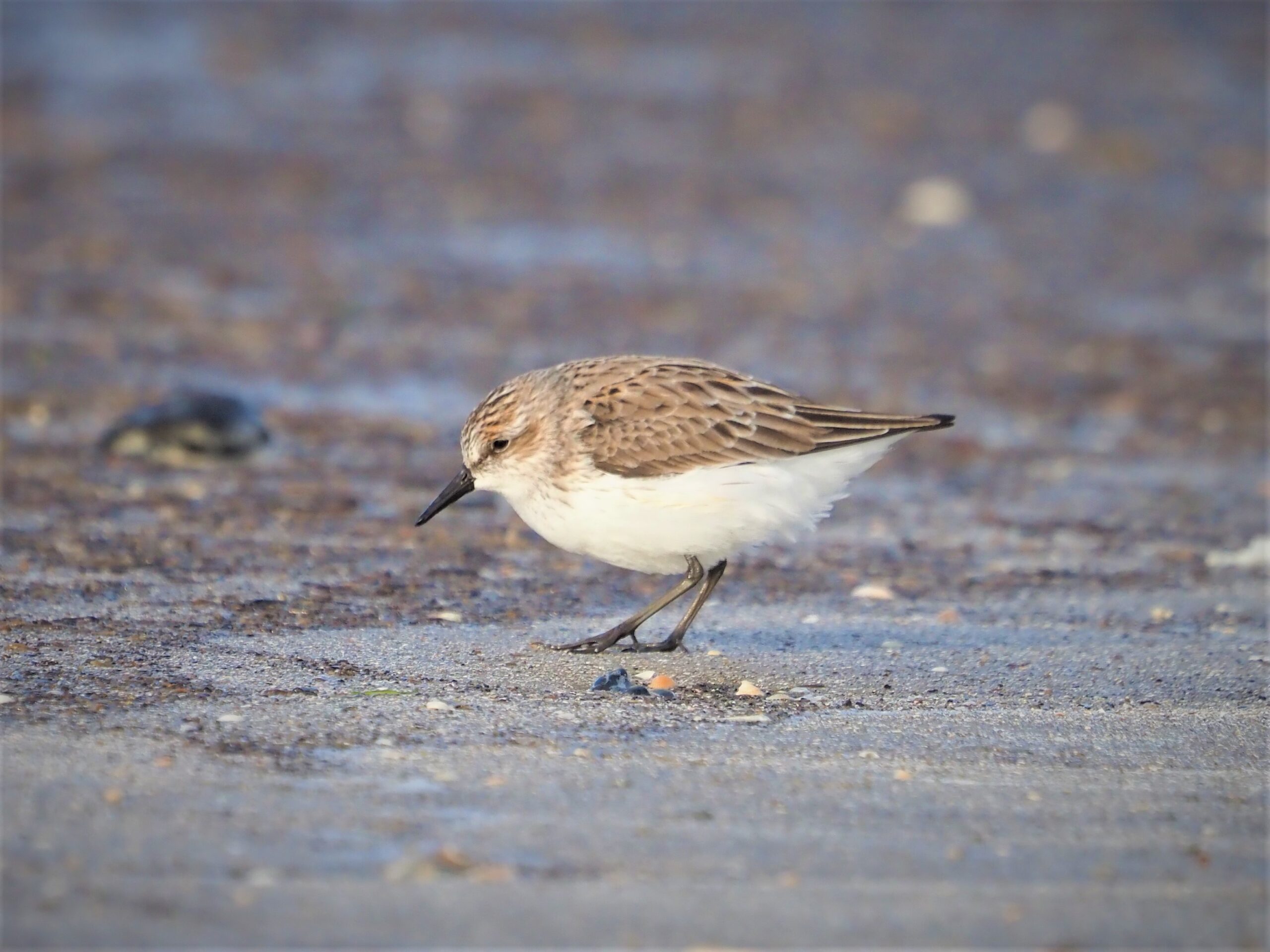
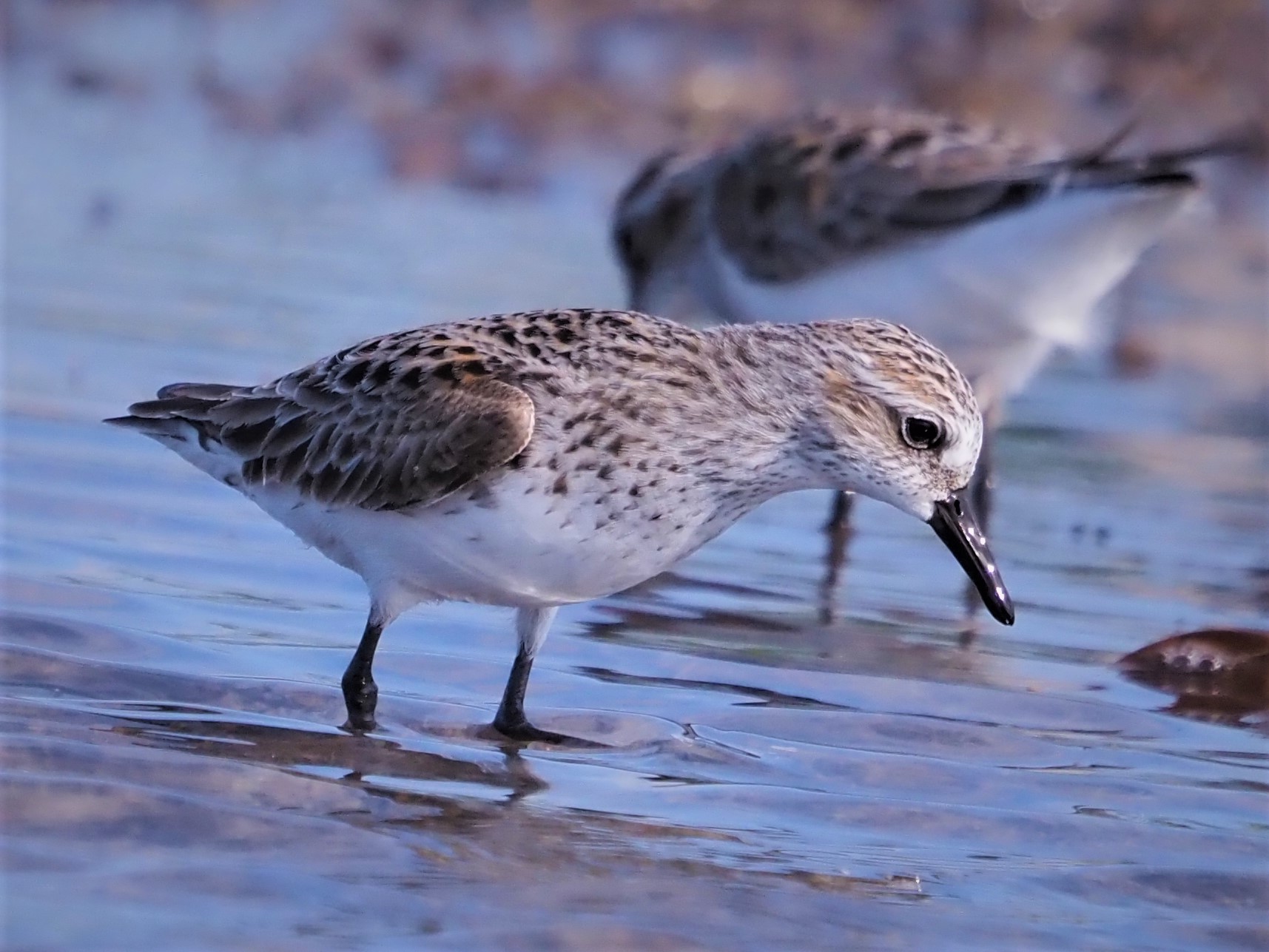
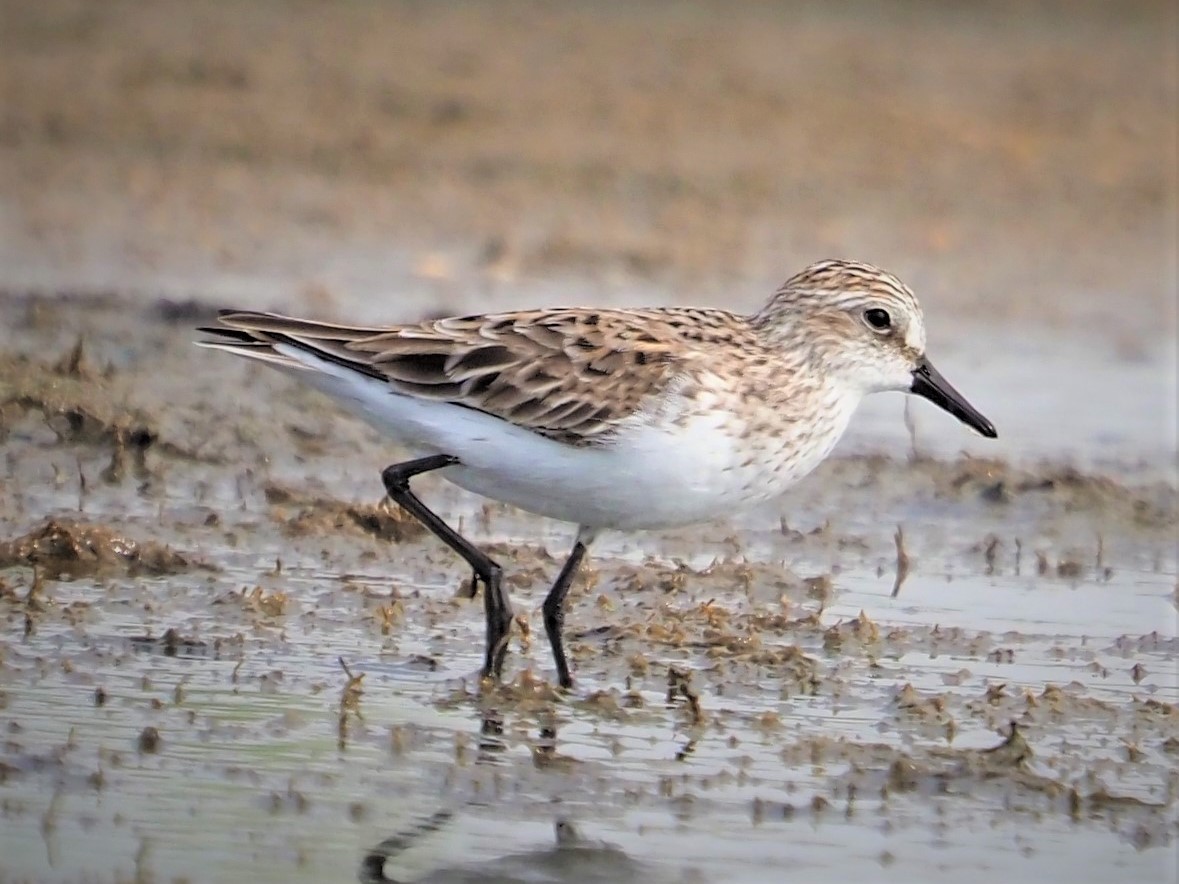
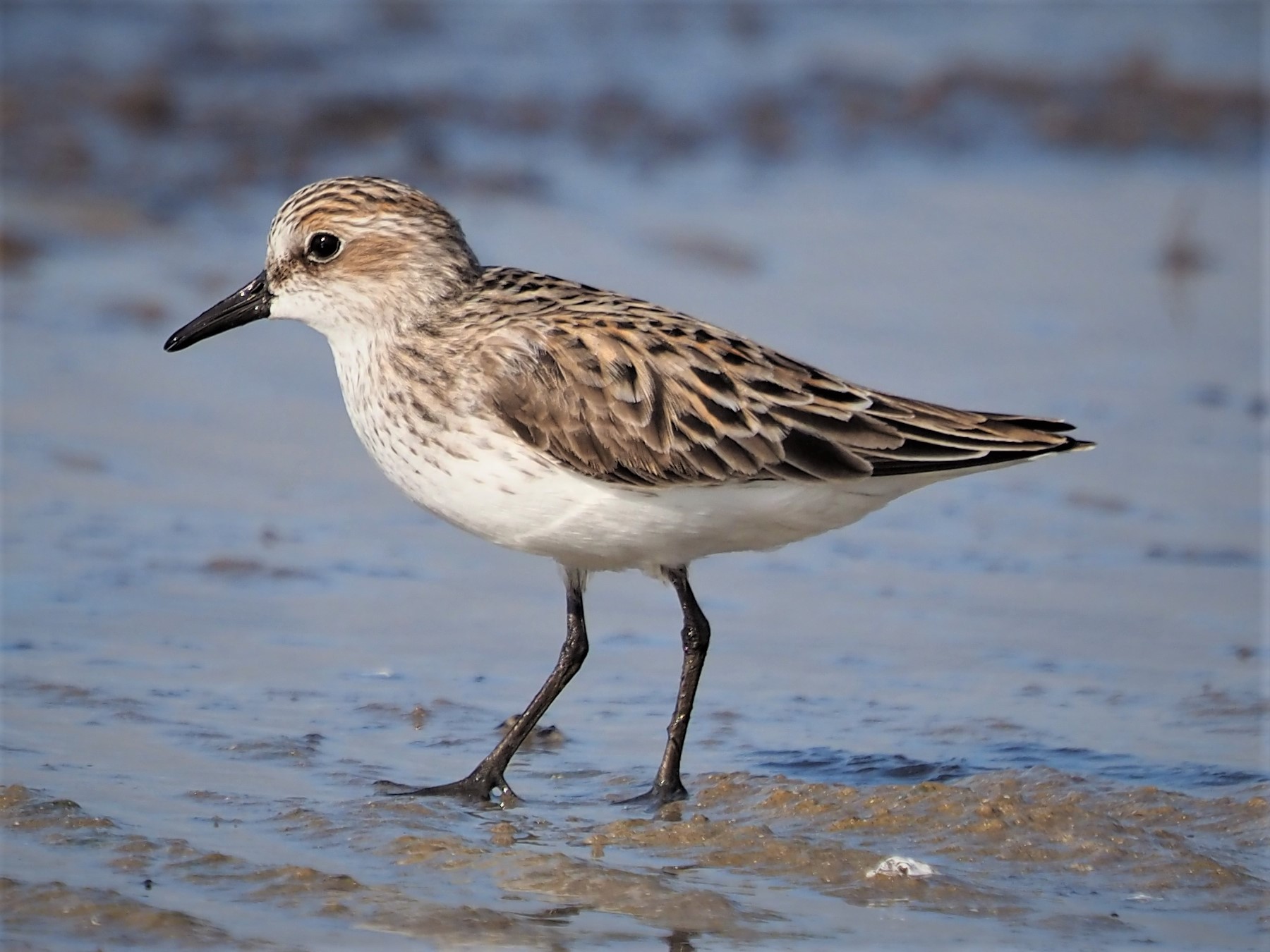
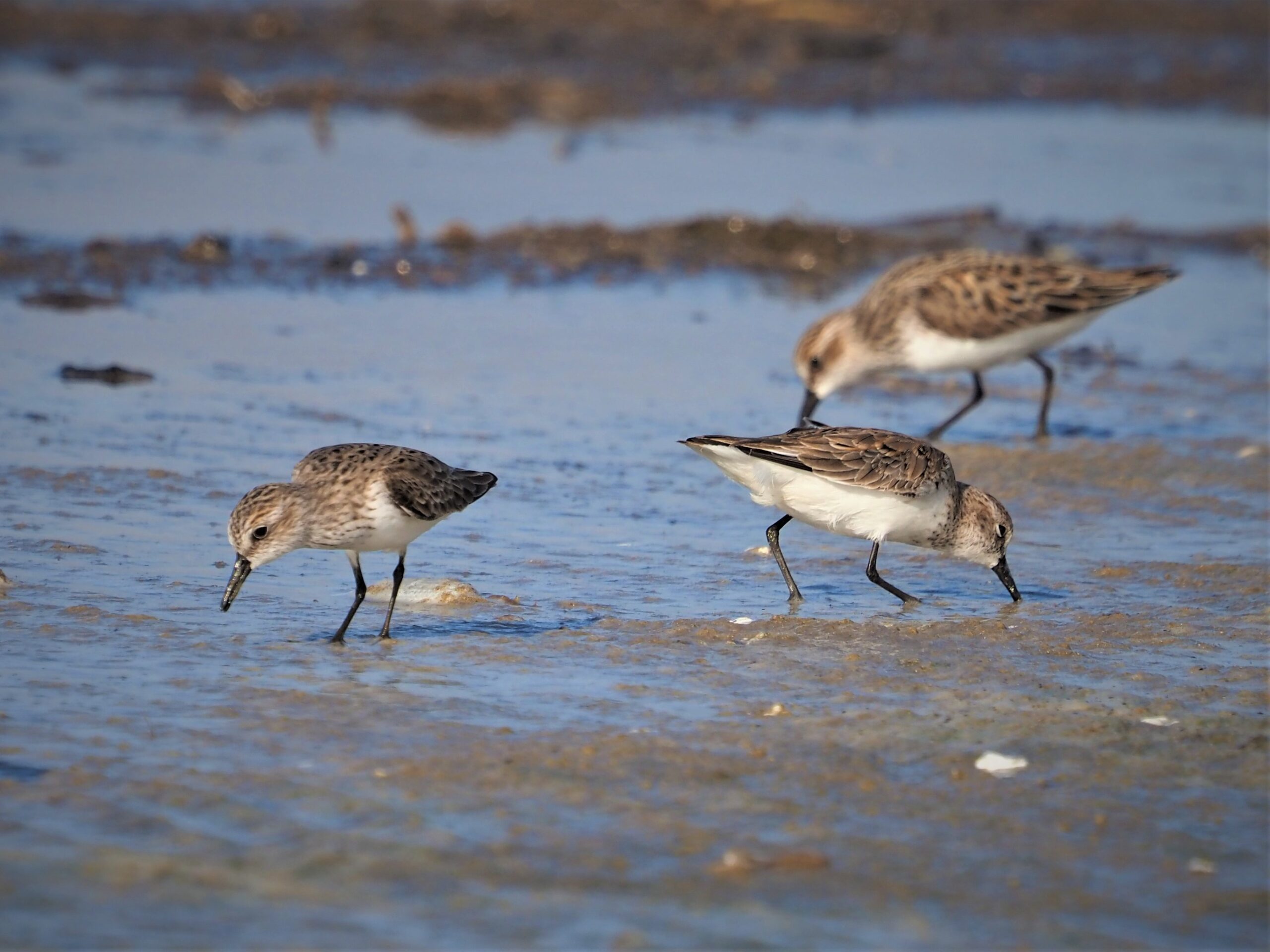
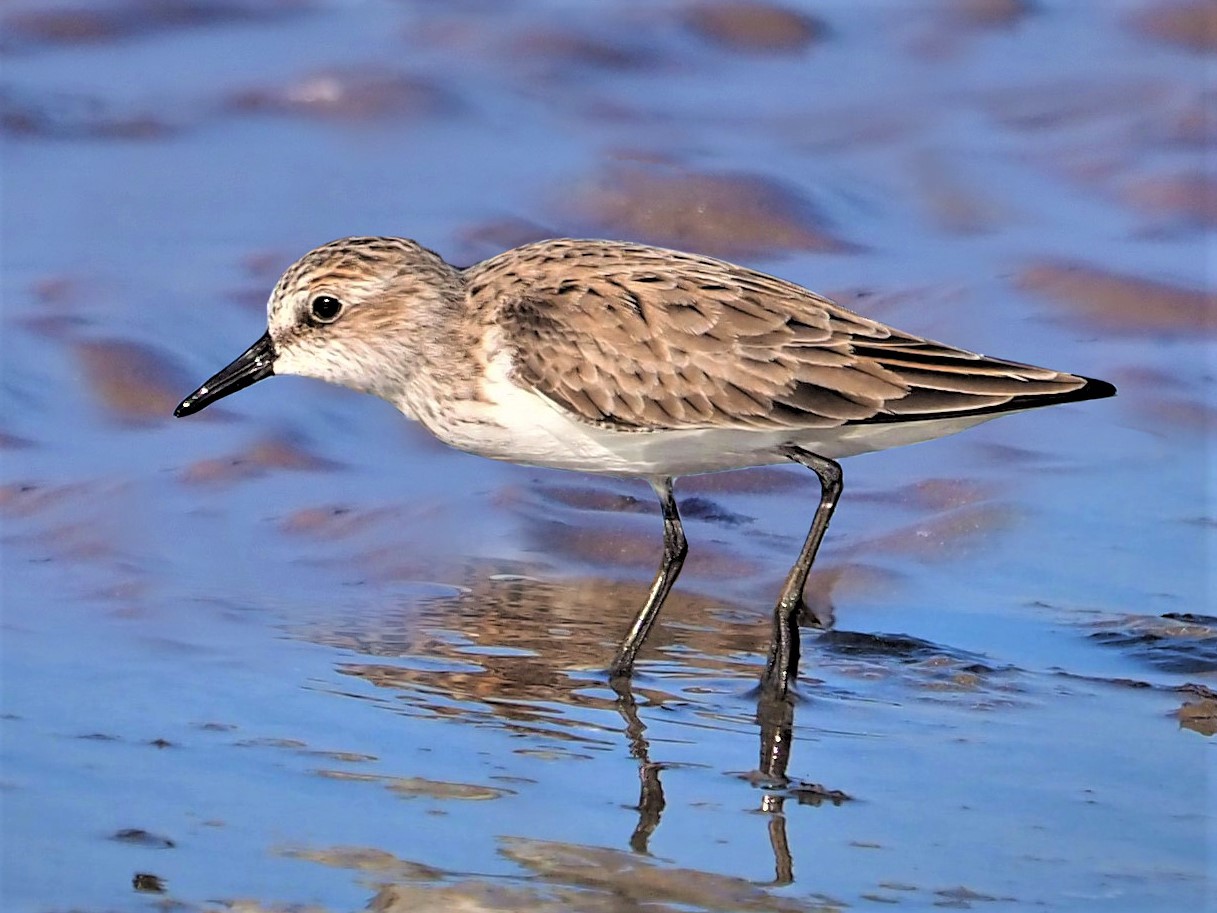
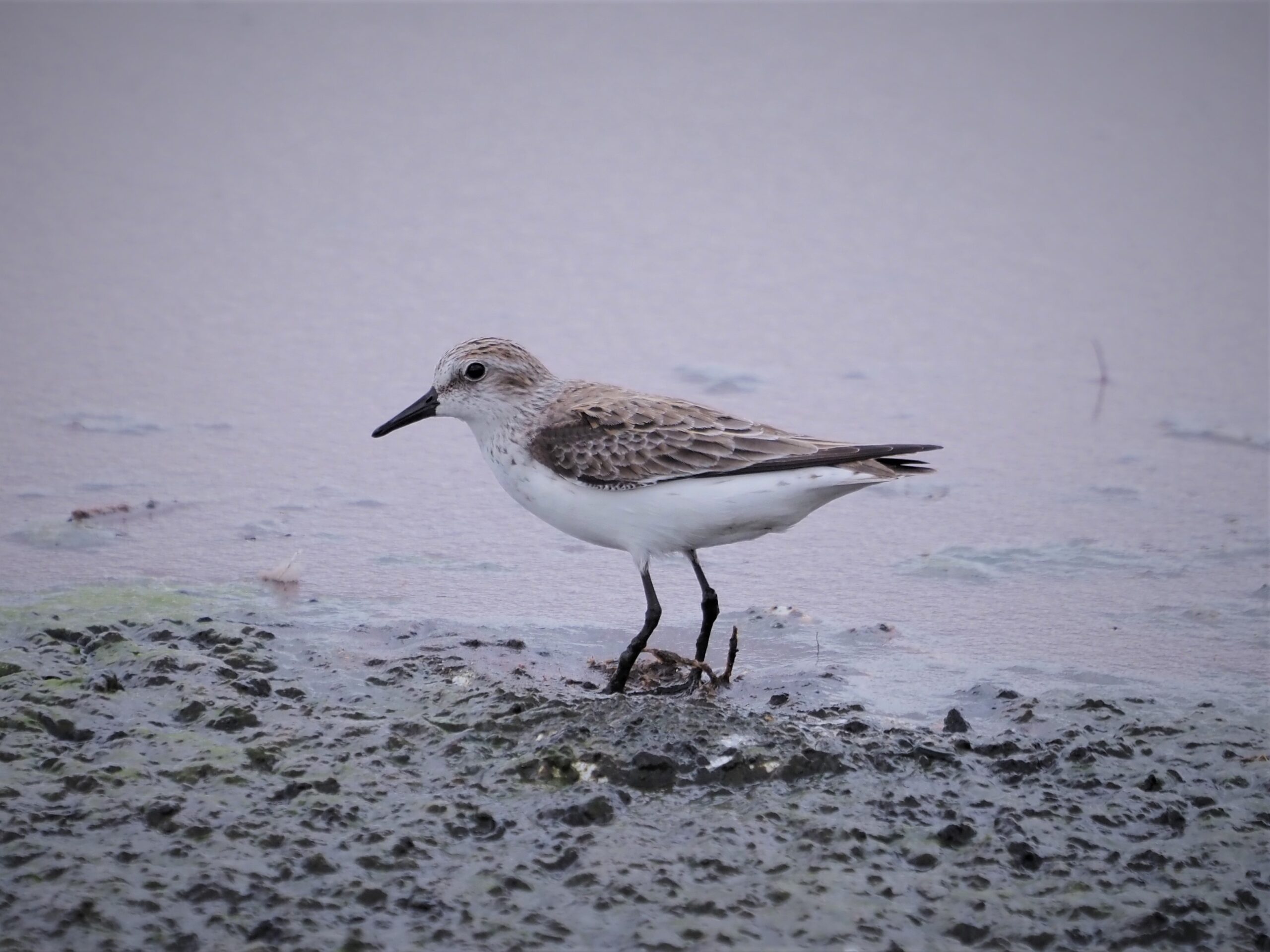
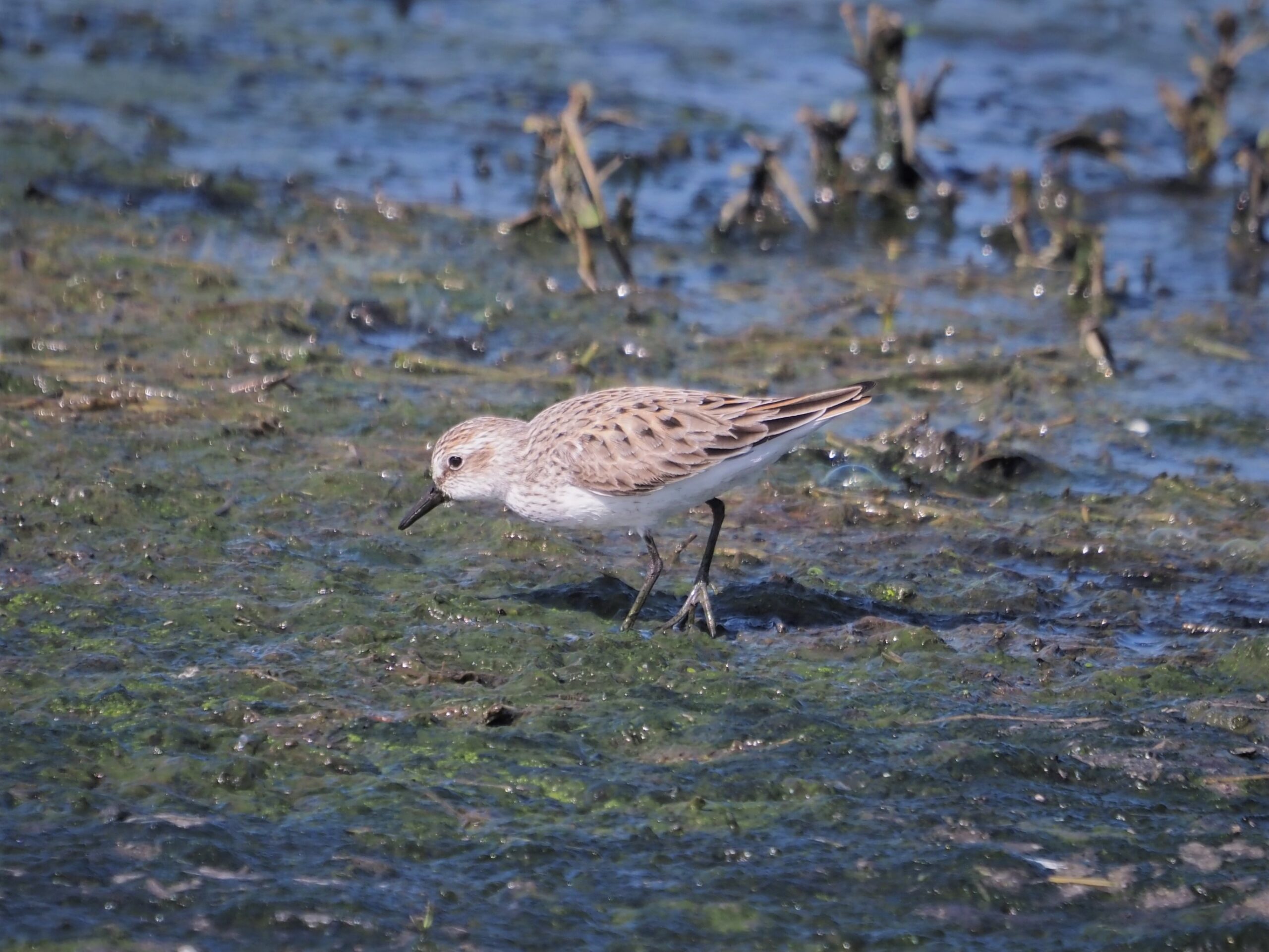
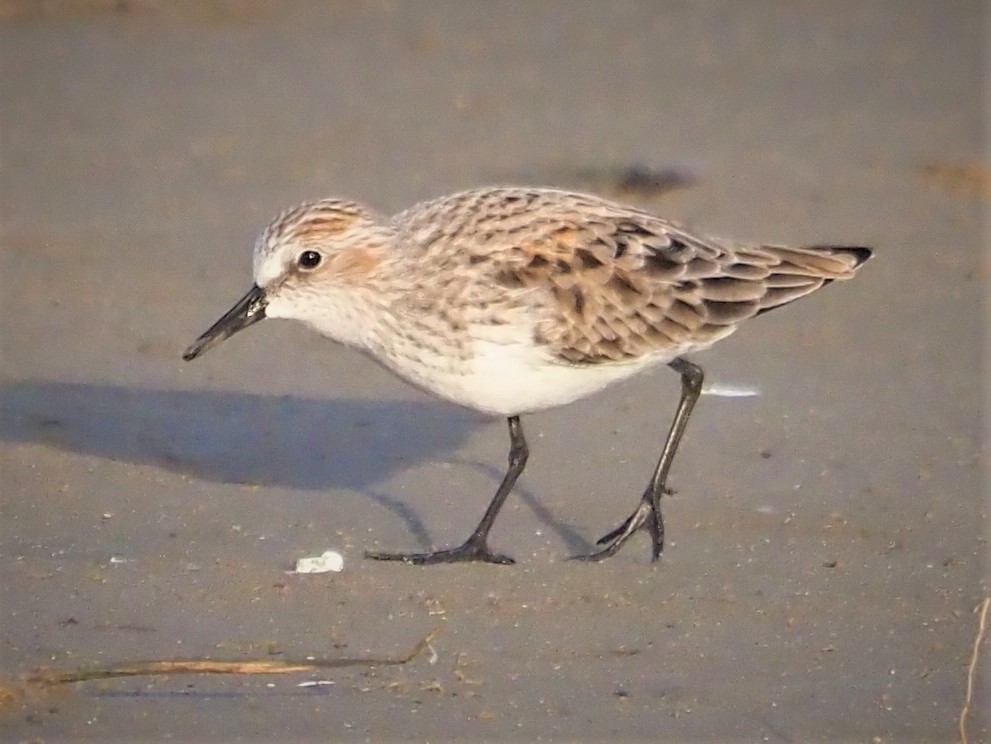
These images of Semipalmated Sandpiper were taken in mid to late April. Note the short and blunt-tipped bill, the thin, but noticeable eye-ring, which seems to make the eye larger and the jet black legs. The Semipalmated is generally “frostier” than the Least.
Semipalmated Sandpiper (worn alternate)
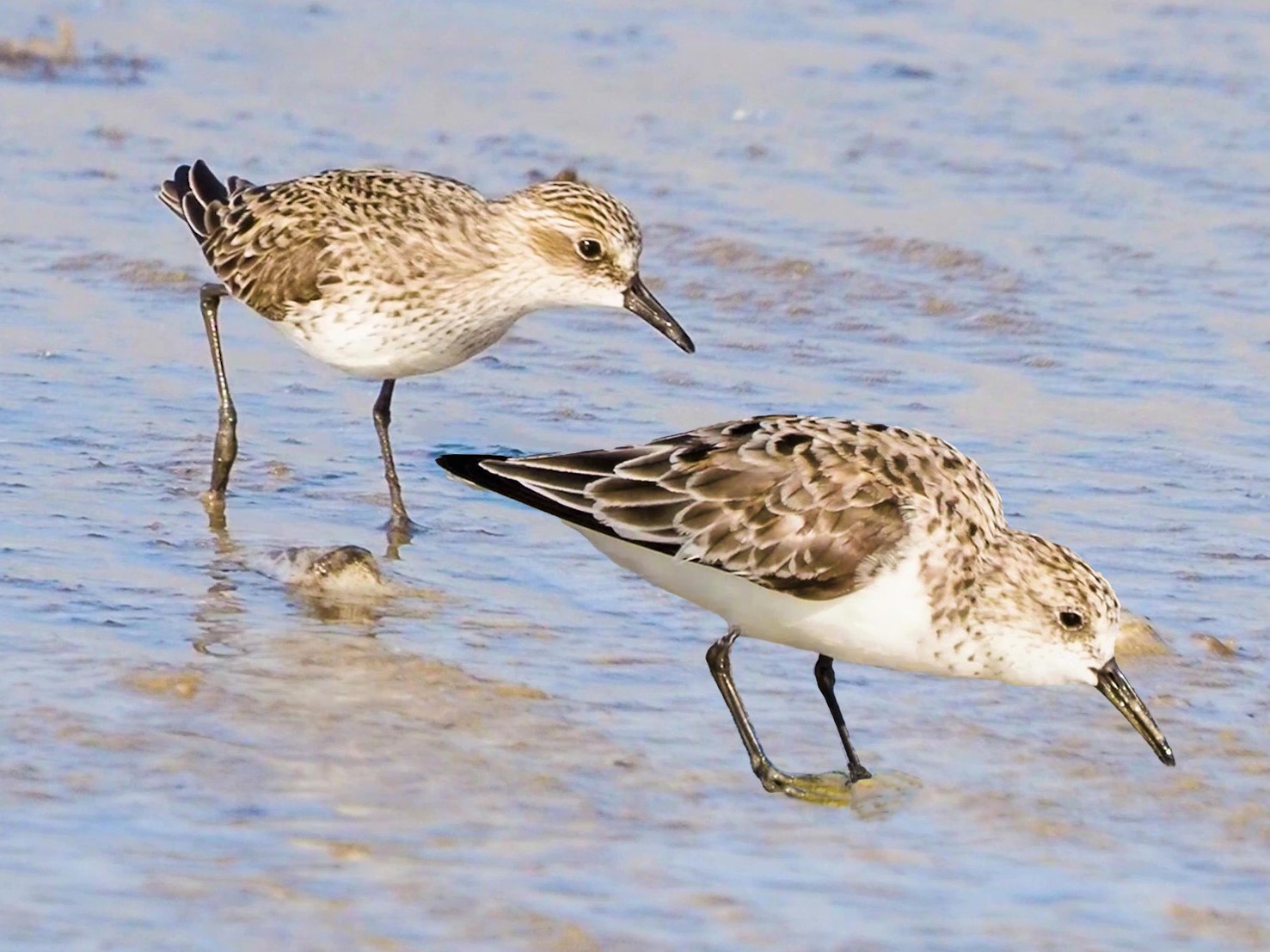
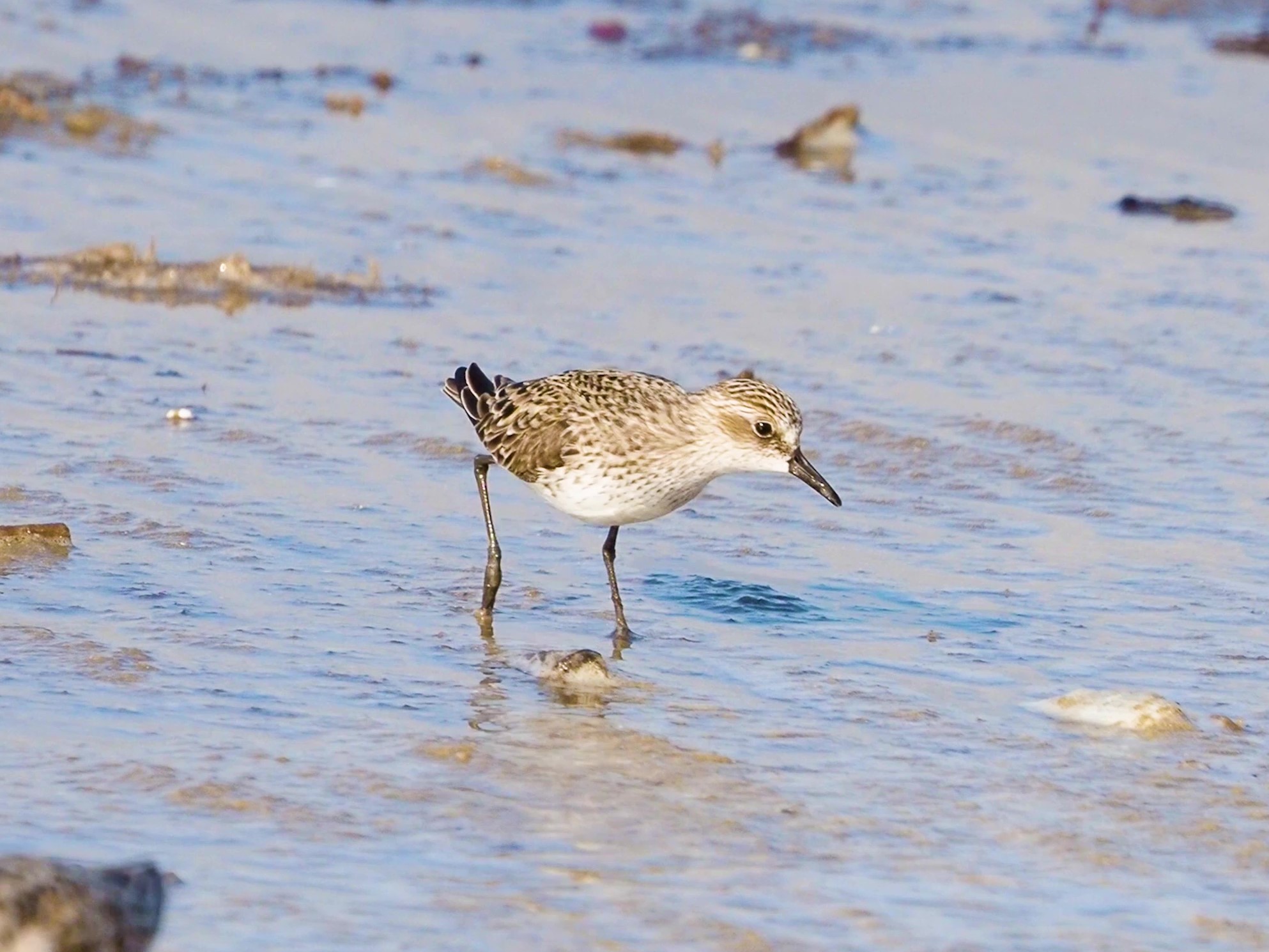
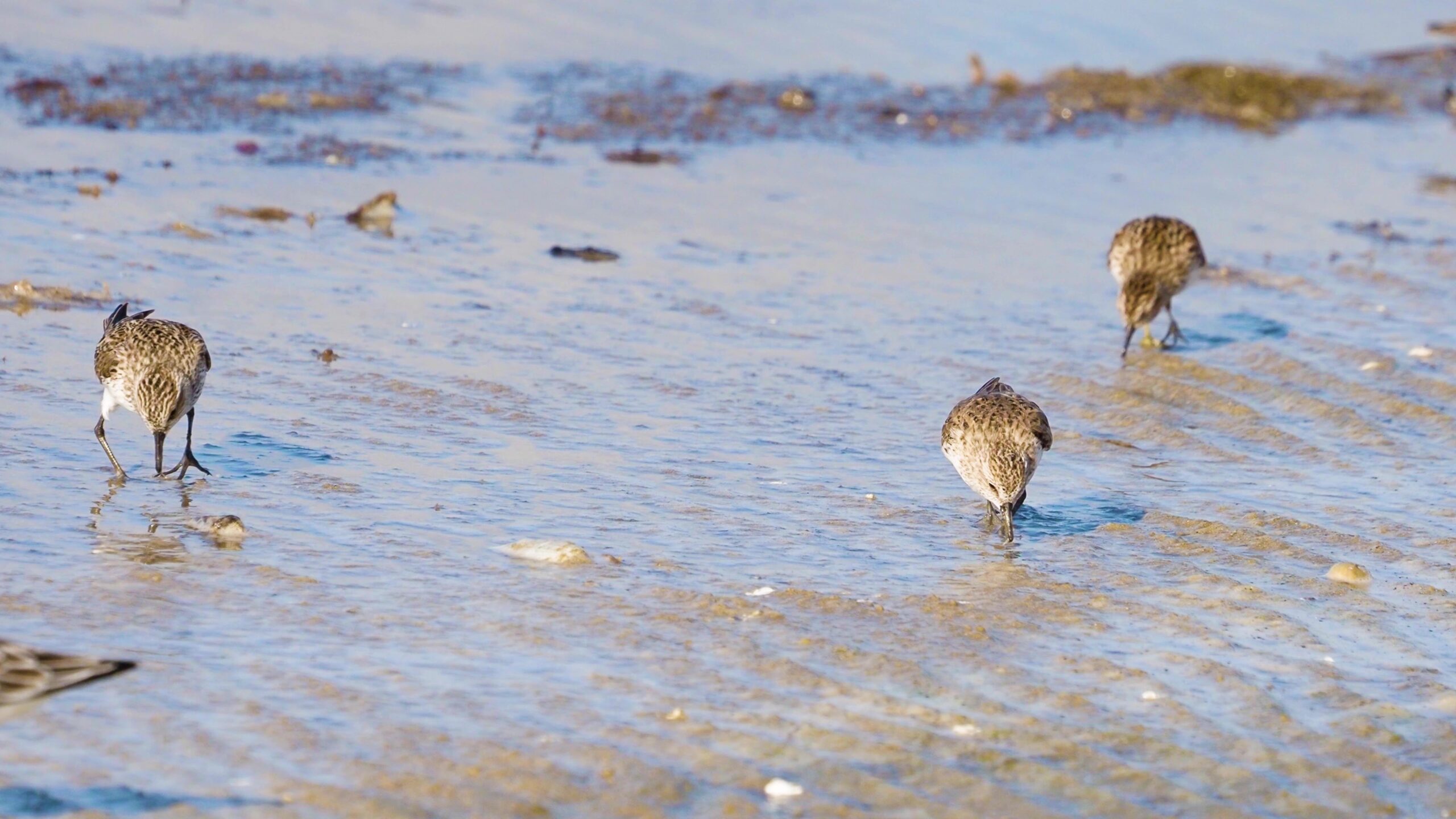
These Semipalmated Sandpipers photographed in August lack the immaculate feather patterns of juvenile shorebirds. These are adult Semipalmated with a Least bringing up the rear in one photo.
Semipalmated Sandpiper (basic)
While the Western acquires basic plumage in early fall, the Semipalmated retains worn alternate plumage until it arrives on its wintering grounds in South America and the Caribbean during November and December. Almost all Semipalmated Sandpipers exit North America during the winter months. Therefore, Semipalmated in basic plumages are seldom seen in North America.
No photos yet.
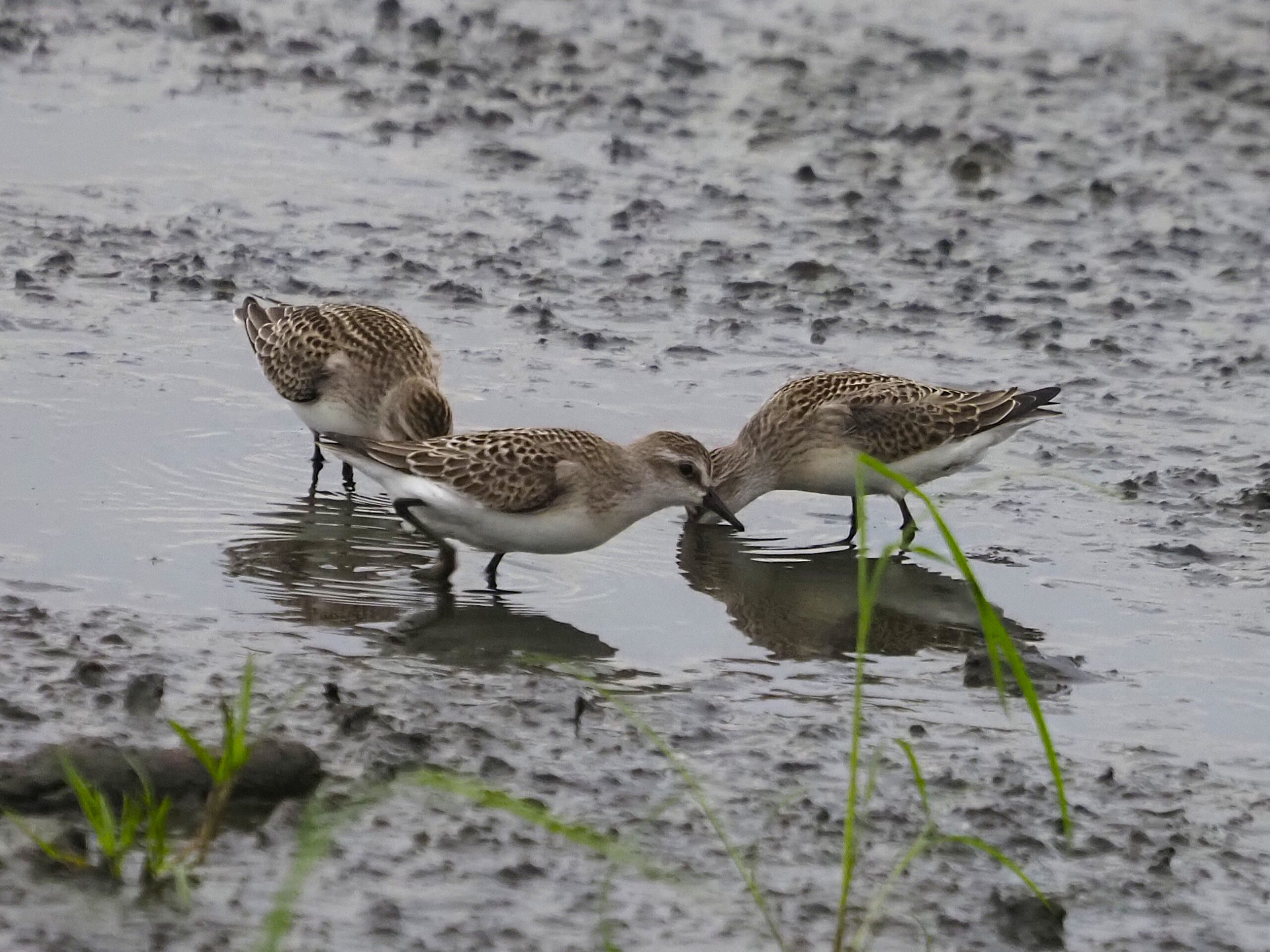
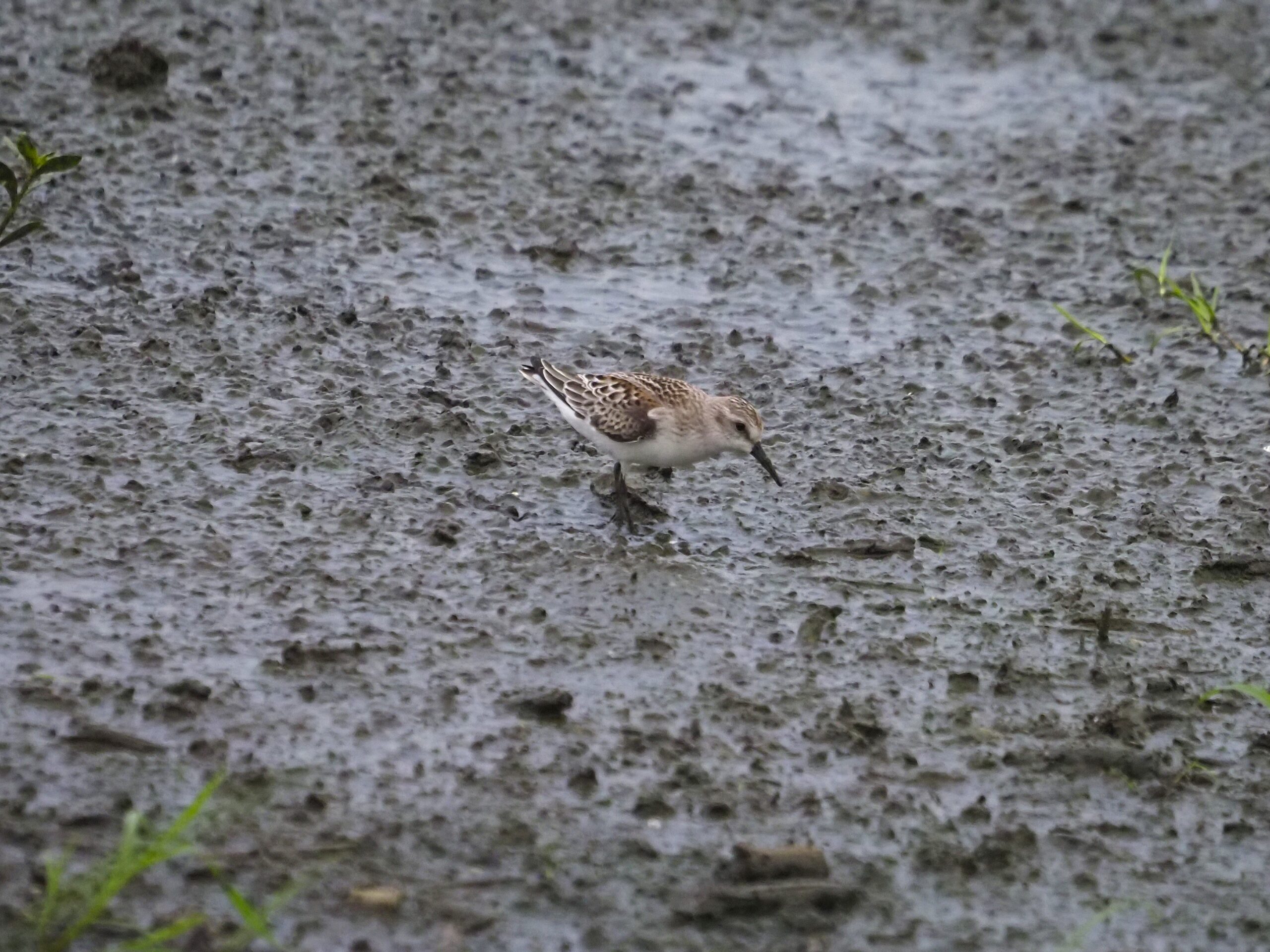
Semipalmated Sandpiper (fall juvenile)
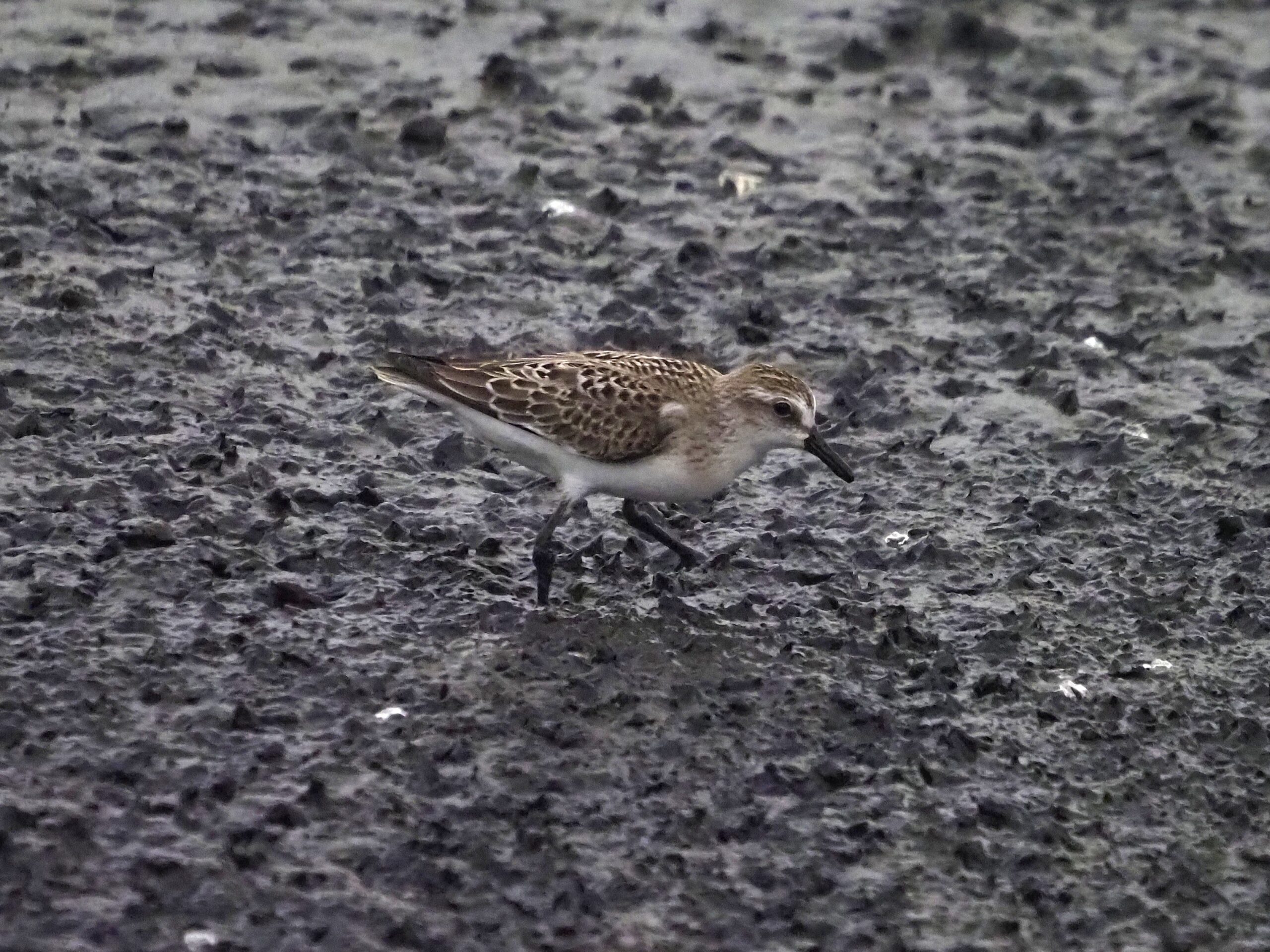
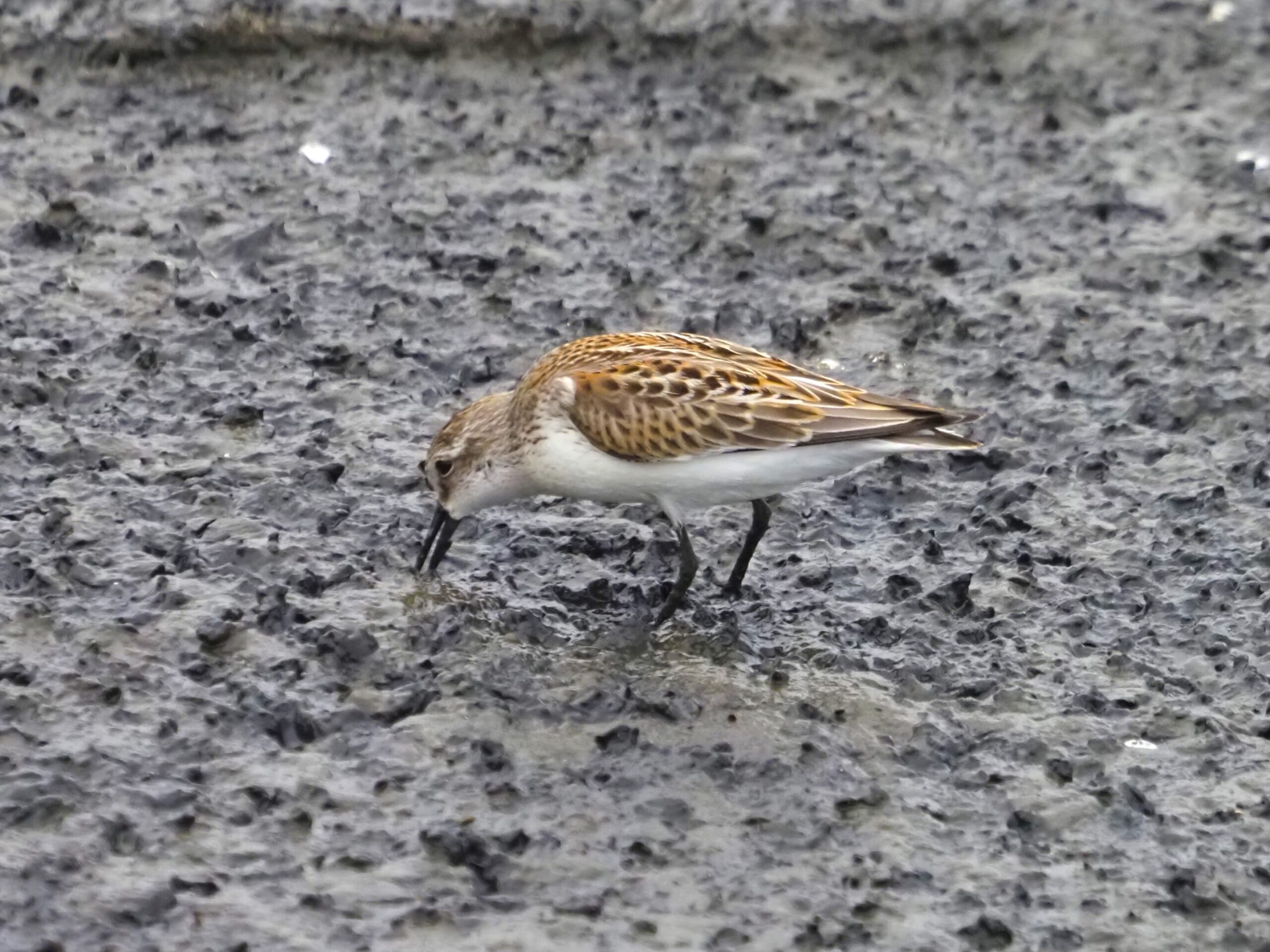
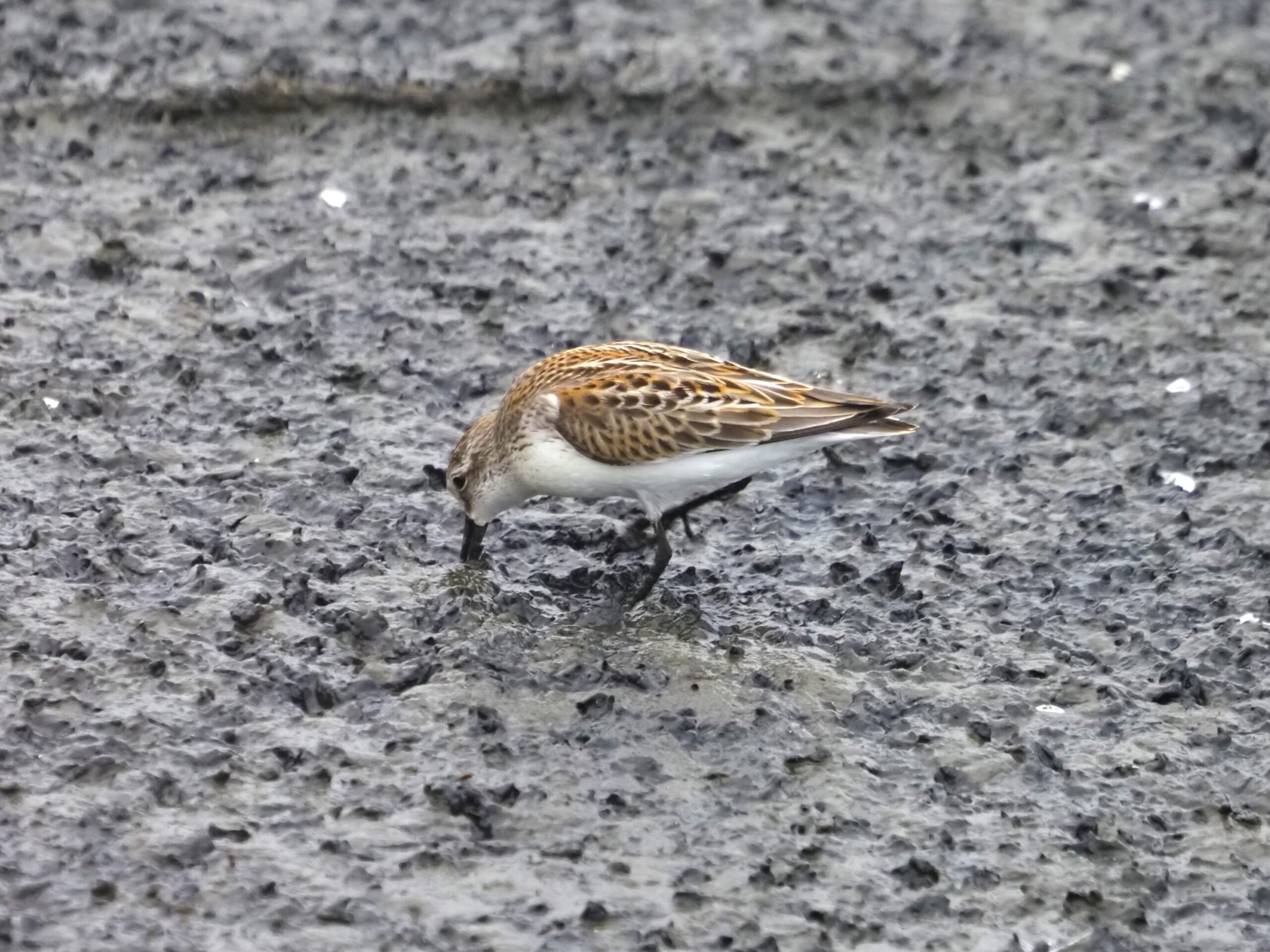
These images of juvenile Semipalmated Sandpipers were taken in September. They show the immaculate feather patterns of juvenile shorebirds, especially in the scapulars, mantel and wing coverts.
Comparisons between Least & Semipalmated Sandpipers
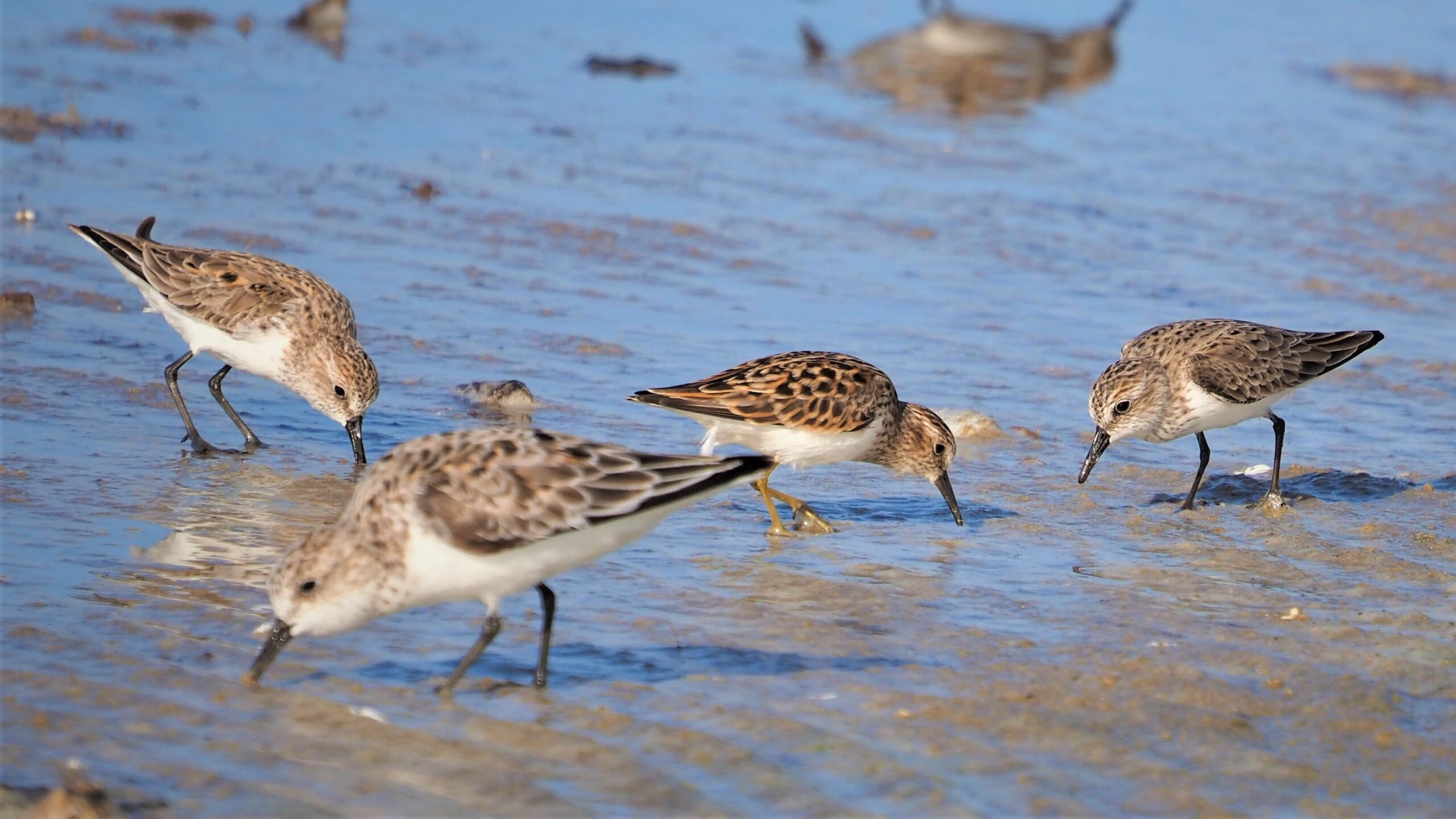
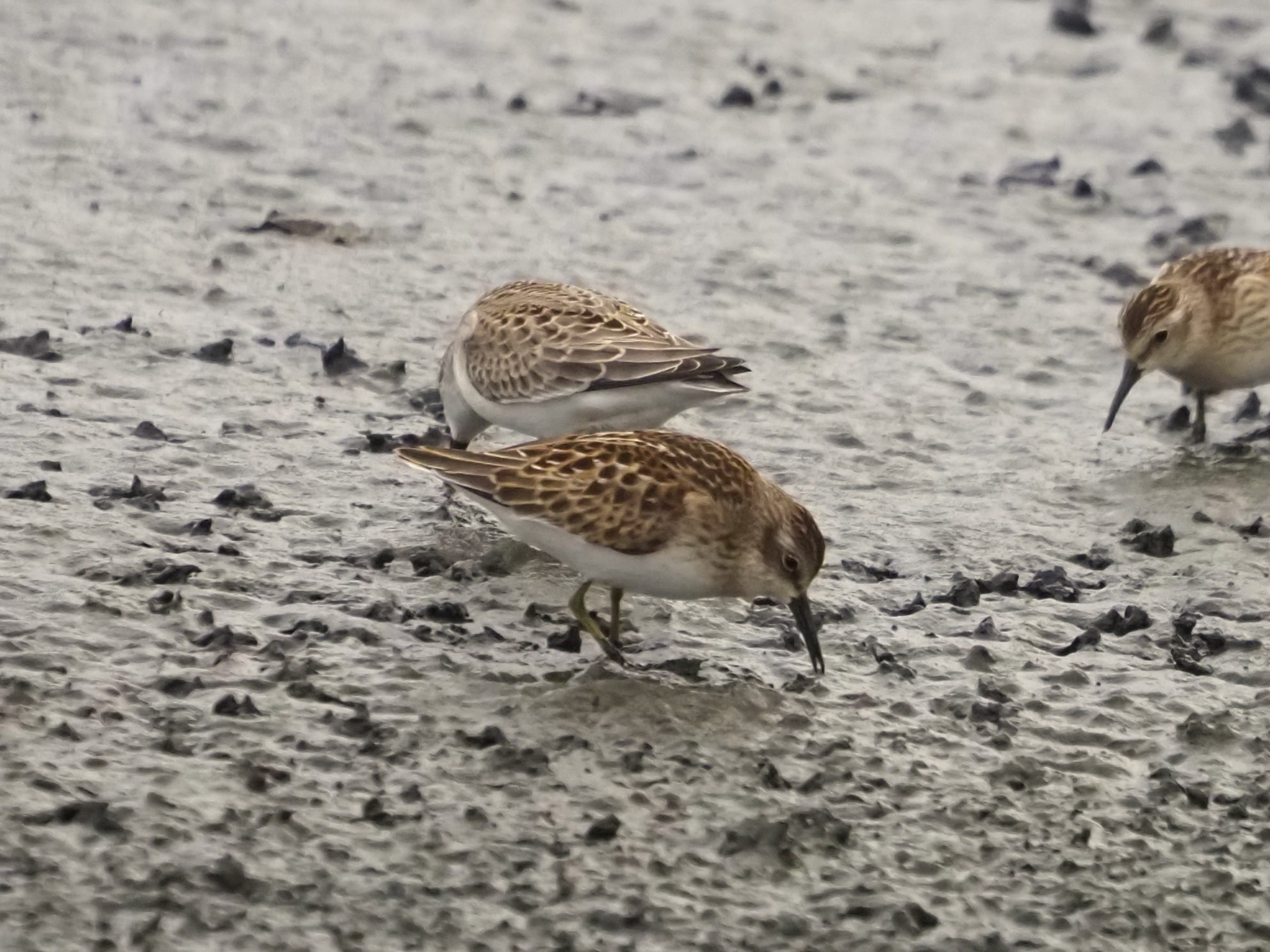
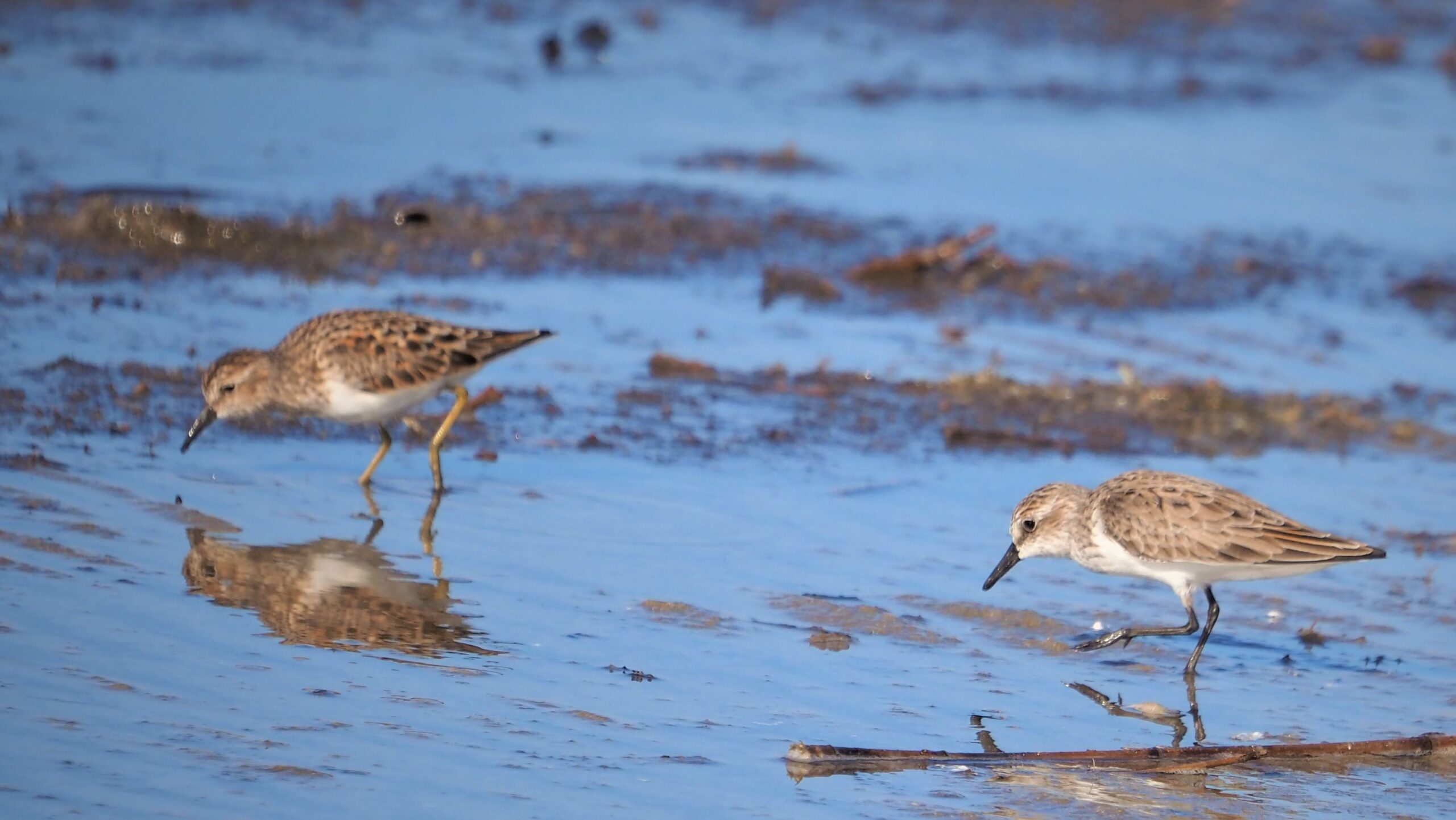
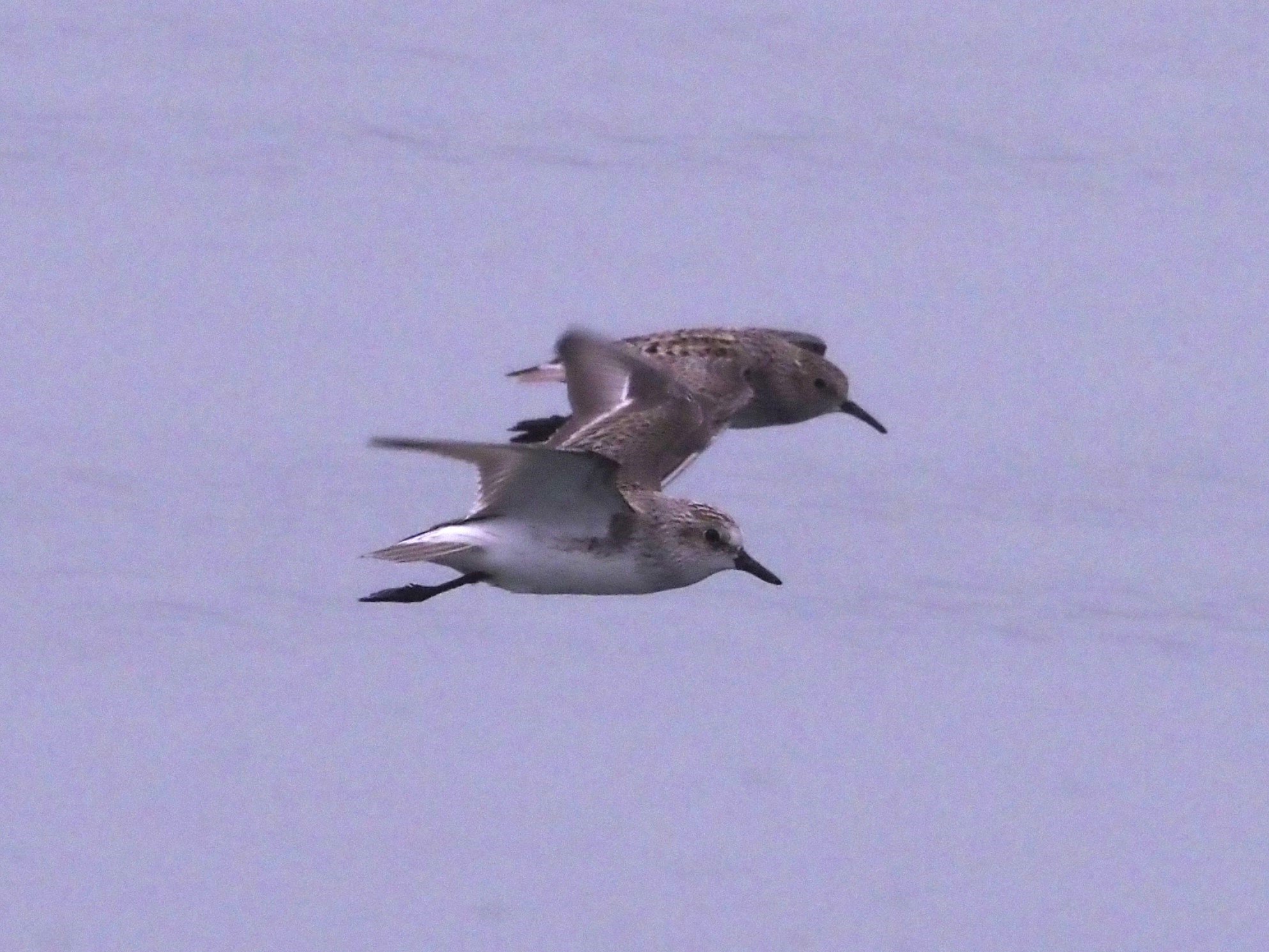
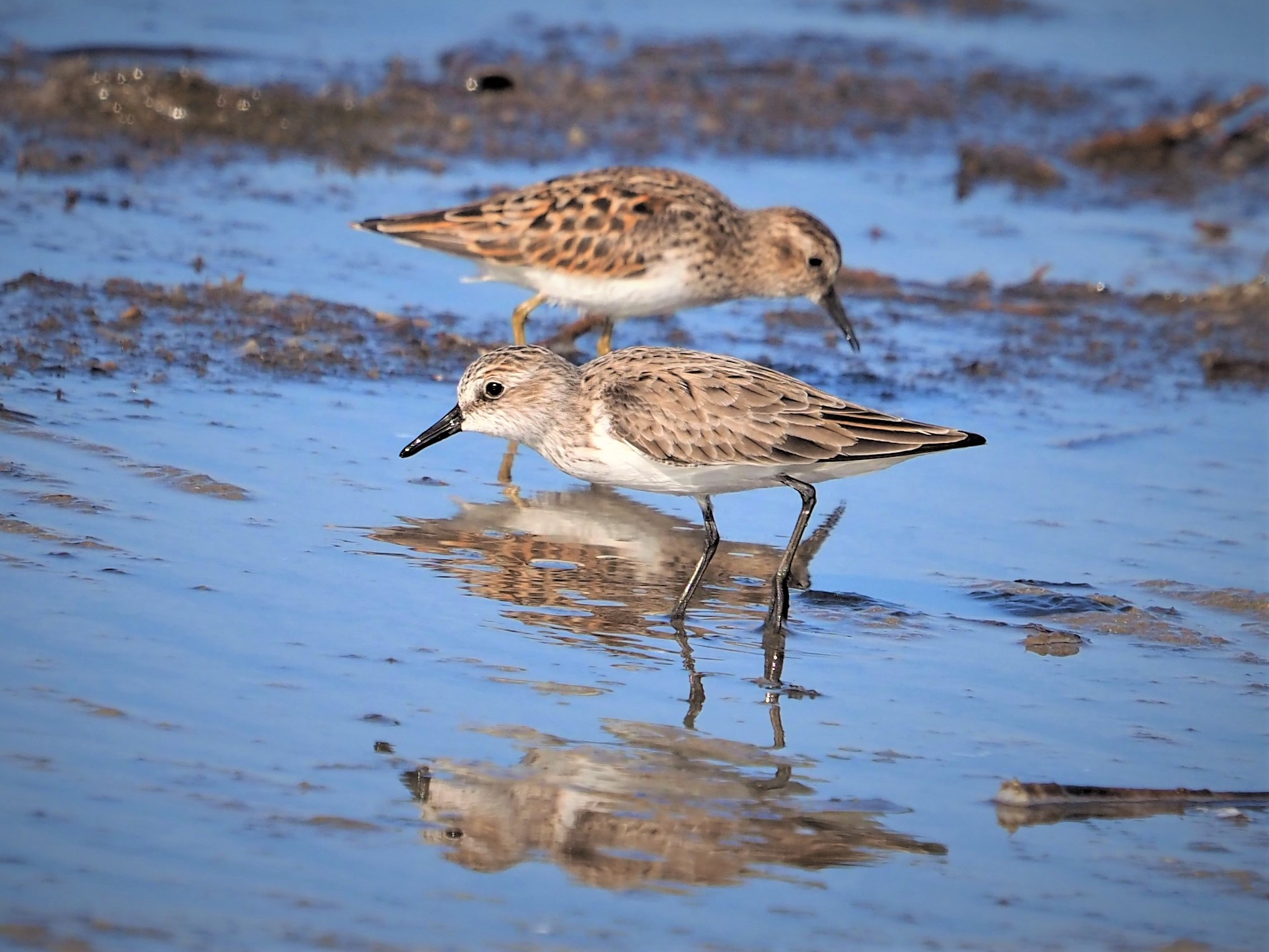
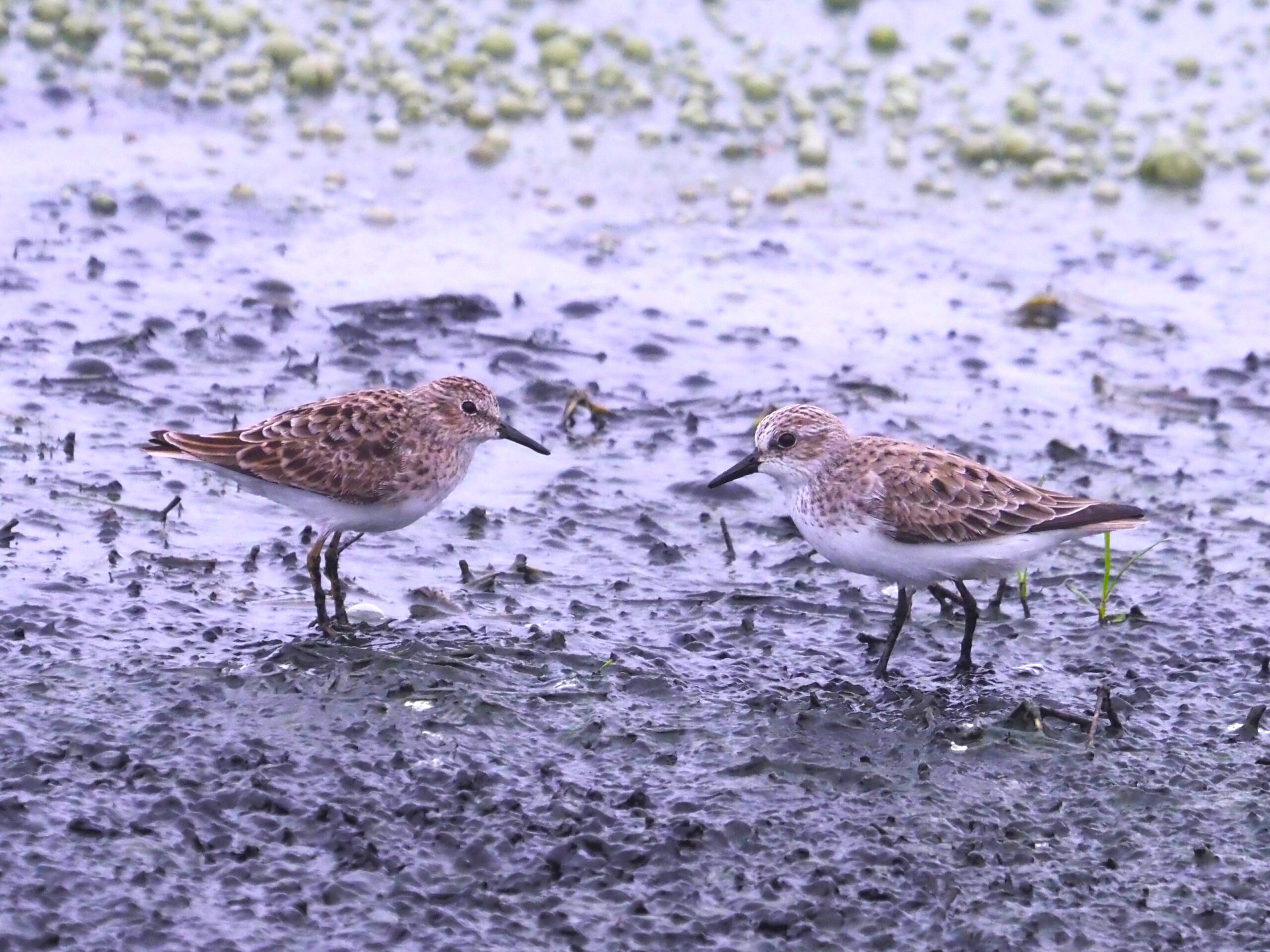
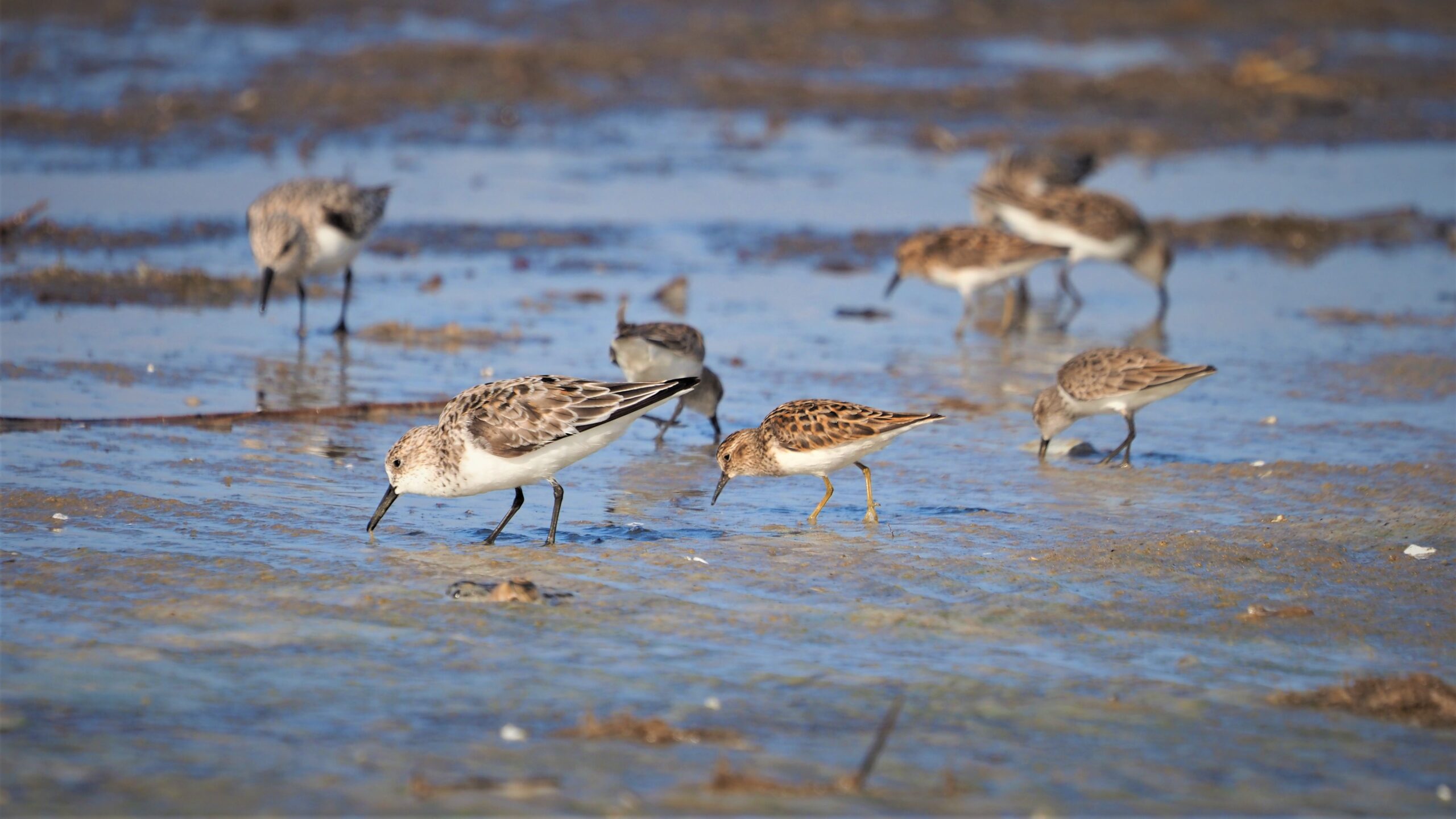
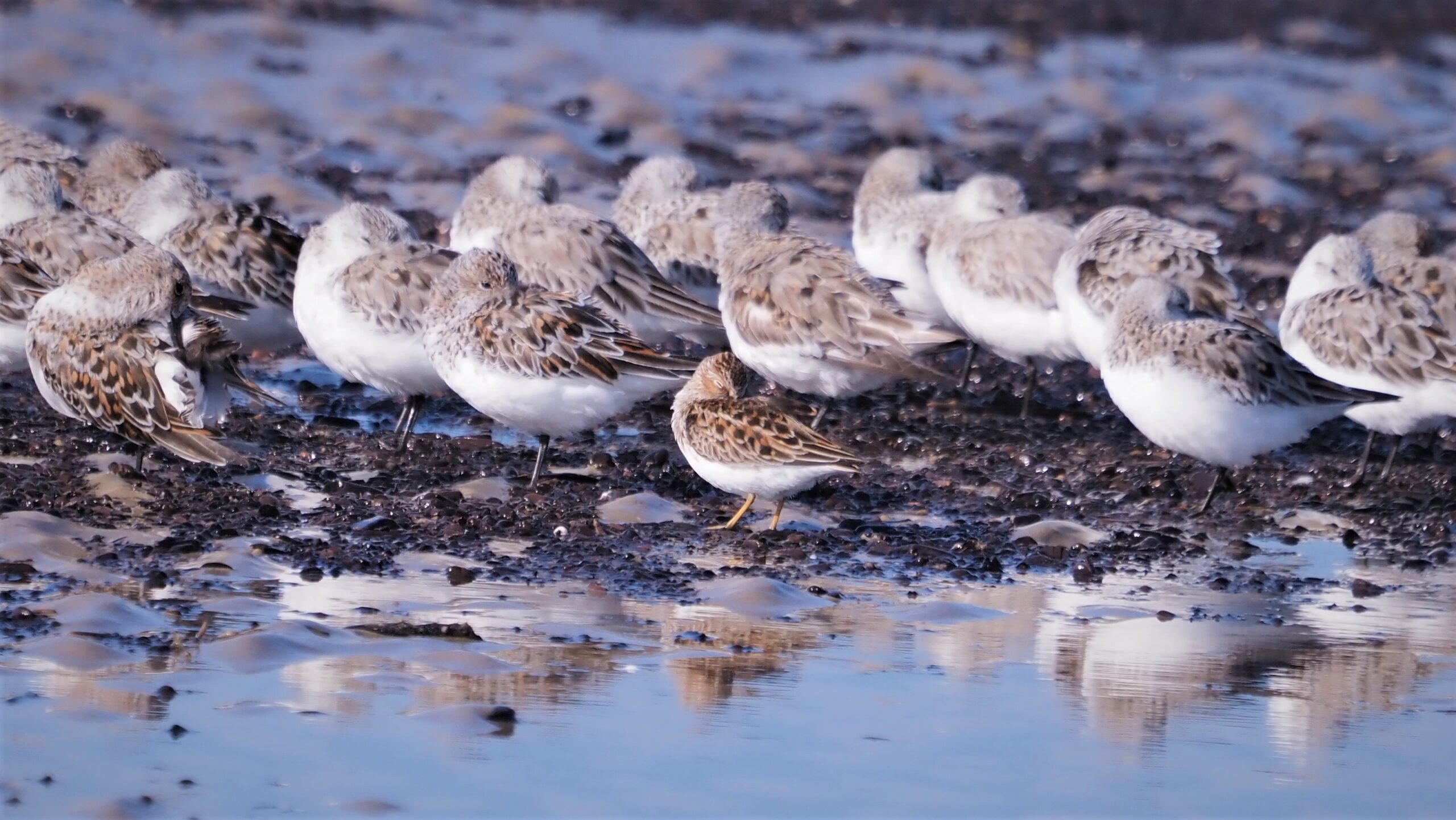
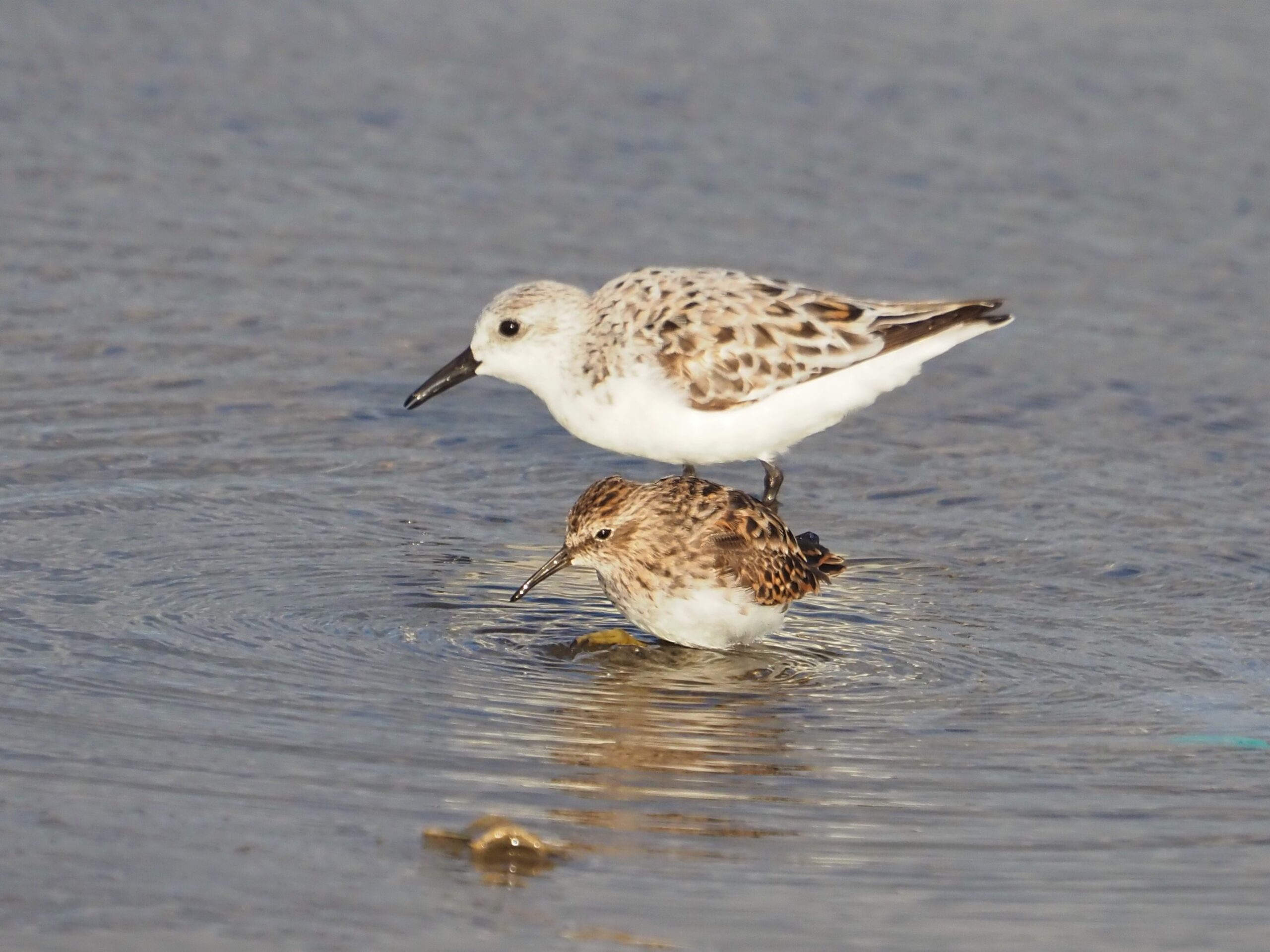
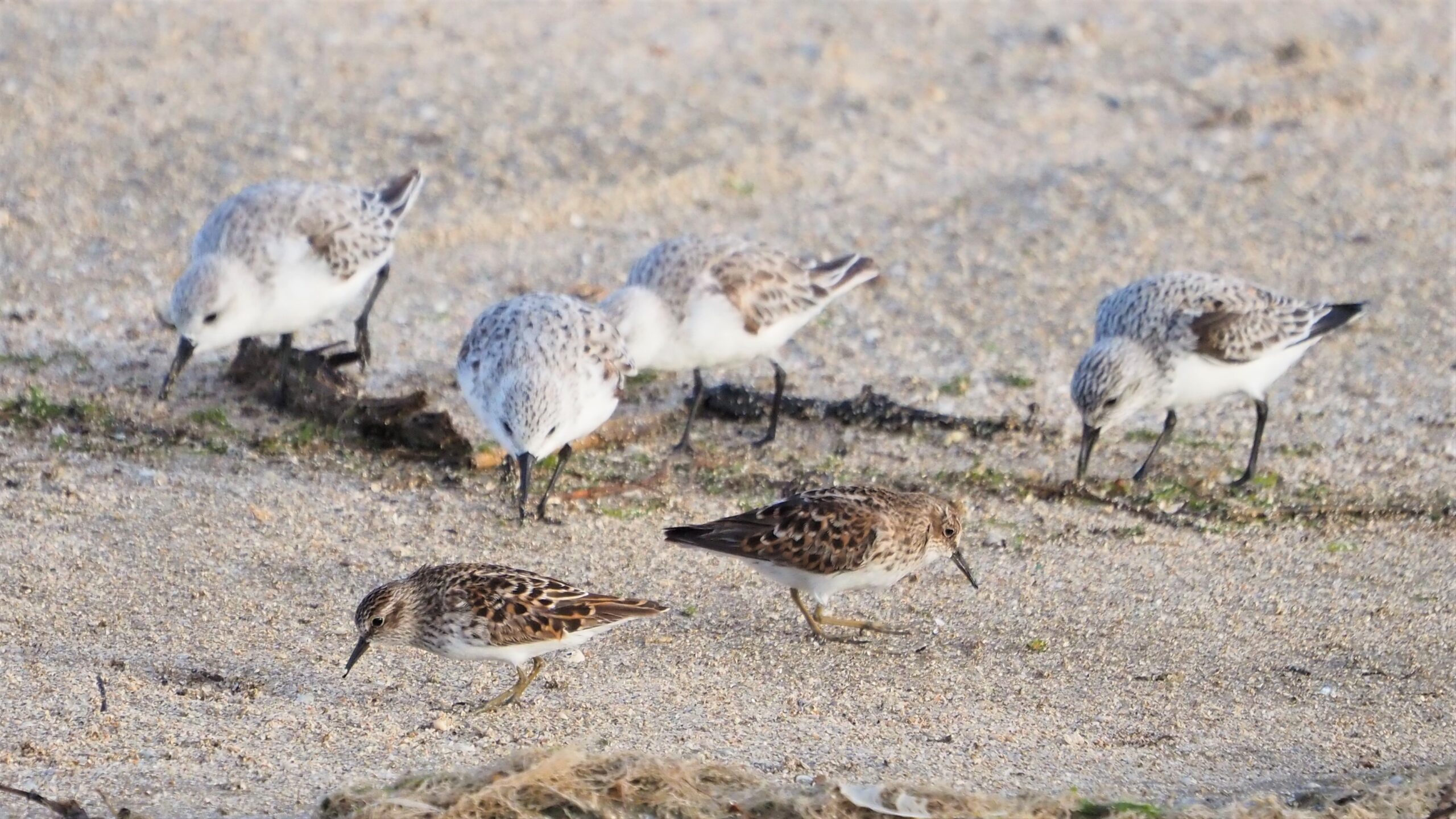
The Least Sandpiper is compared with the Semipalmated Sandpiper below. The Least is a browner bird, while the Semipalmated is usually a “frostier” bird. Also note the straight, blunt-tipped bill of the Semipalmated, while the Least has a slightly decurved and fine-tipped bill. And of course the Least has yellow legs and the Semipalmated (and all other peeps) have black legs. The larger species in some photos is the Sanderling which may superficially resemble the “peeps” but is much larger. The Sanderling is an example of a shorebird with very “frosty” plumage.
Comparison between Least, Semipalmated & Western Sandpipers
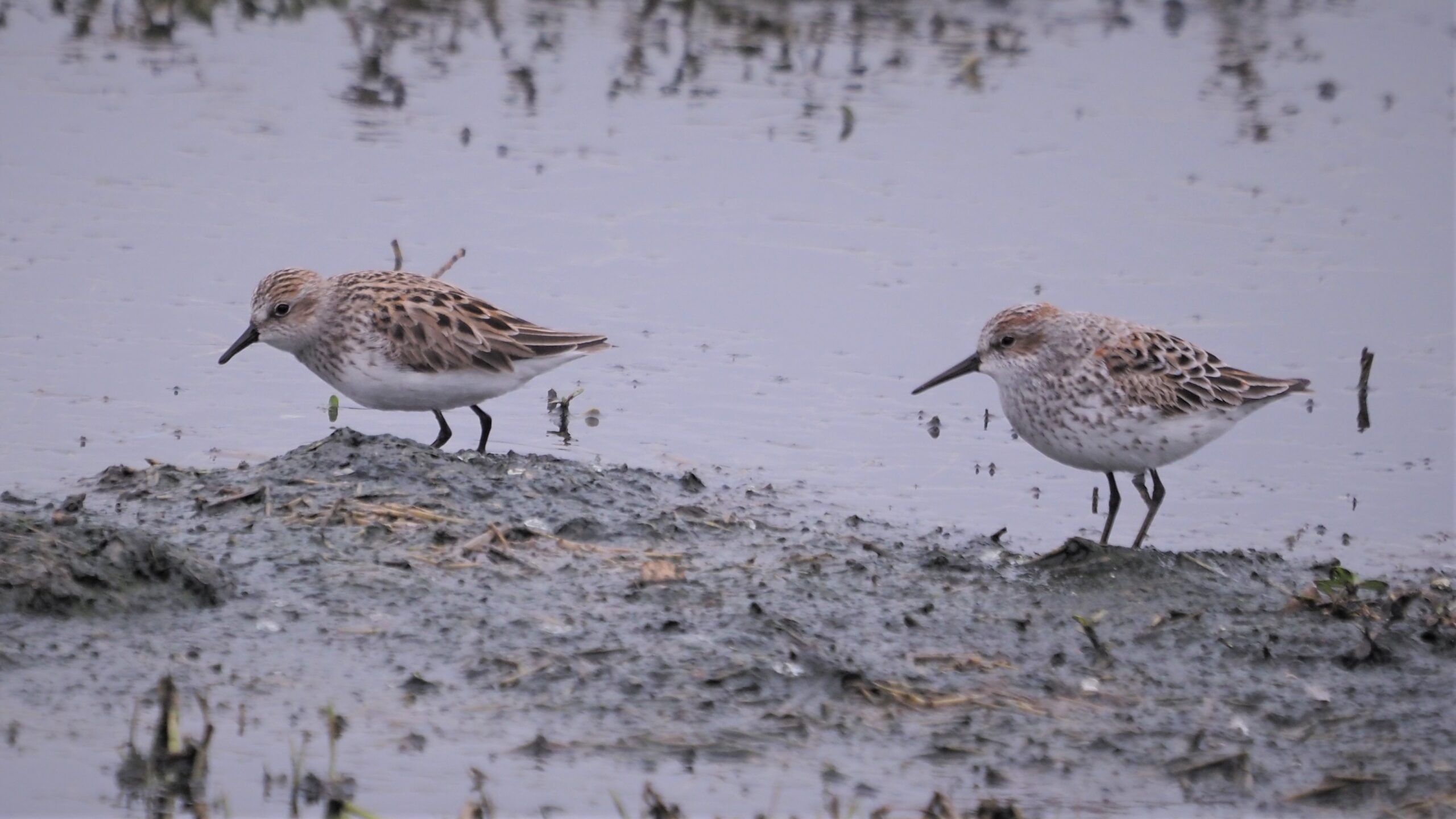
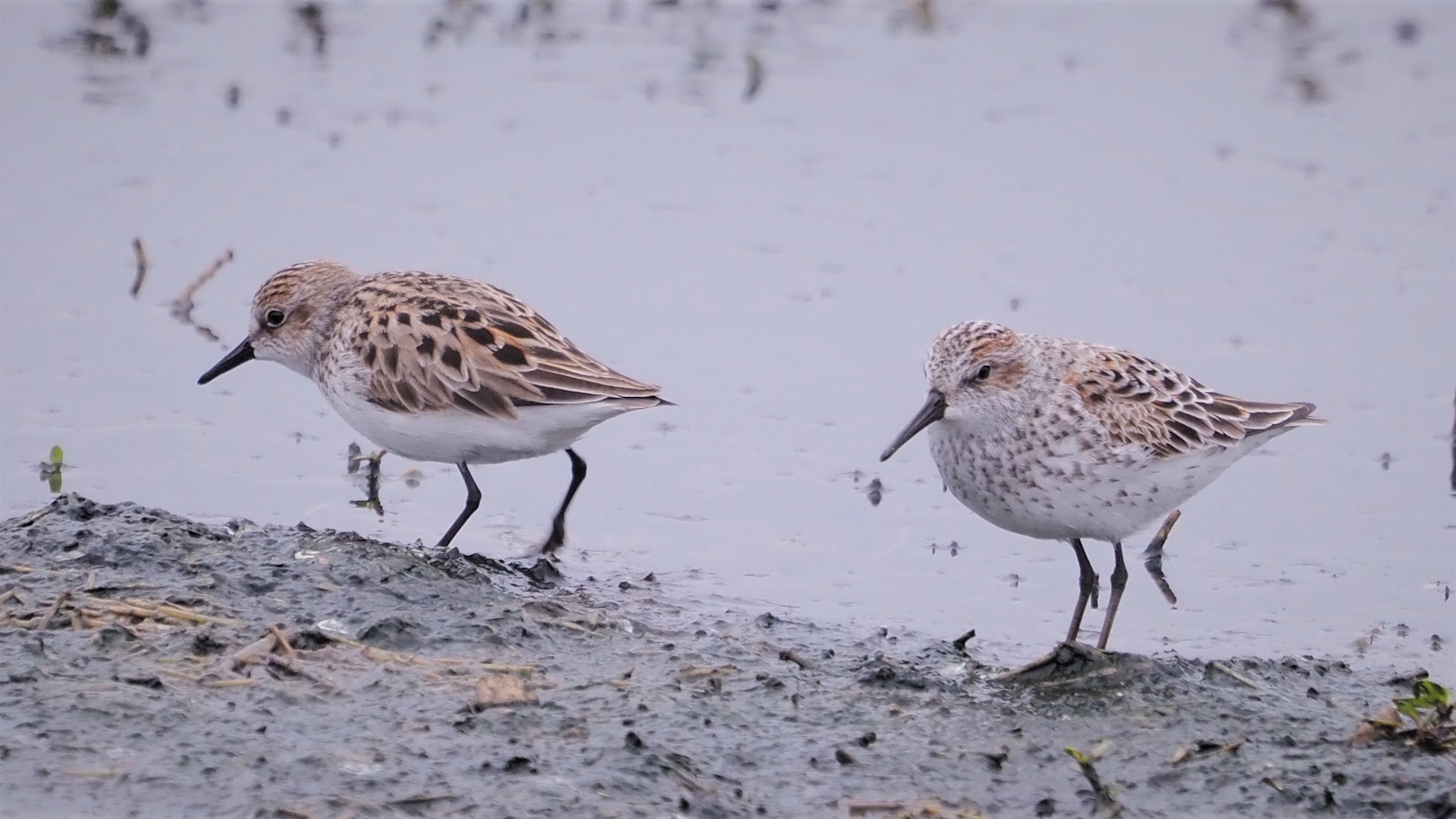
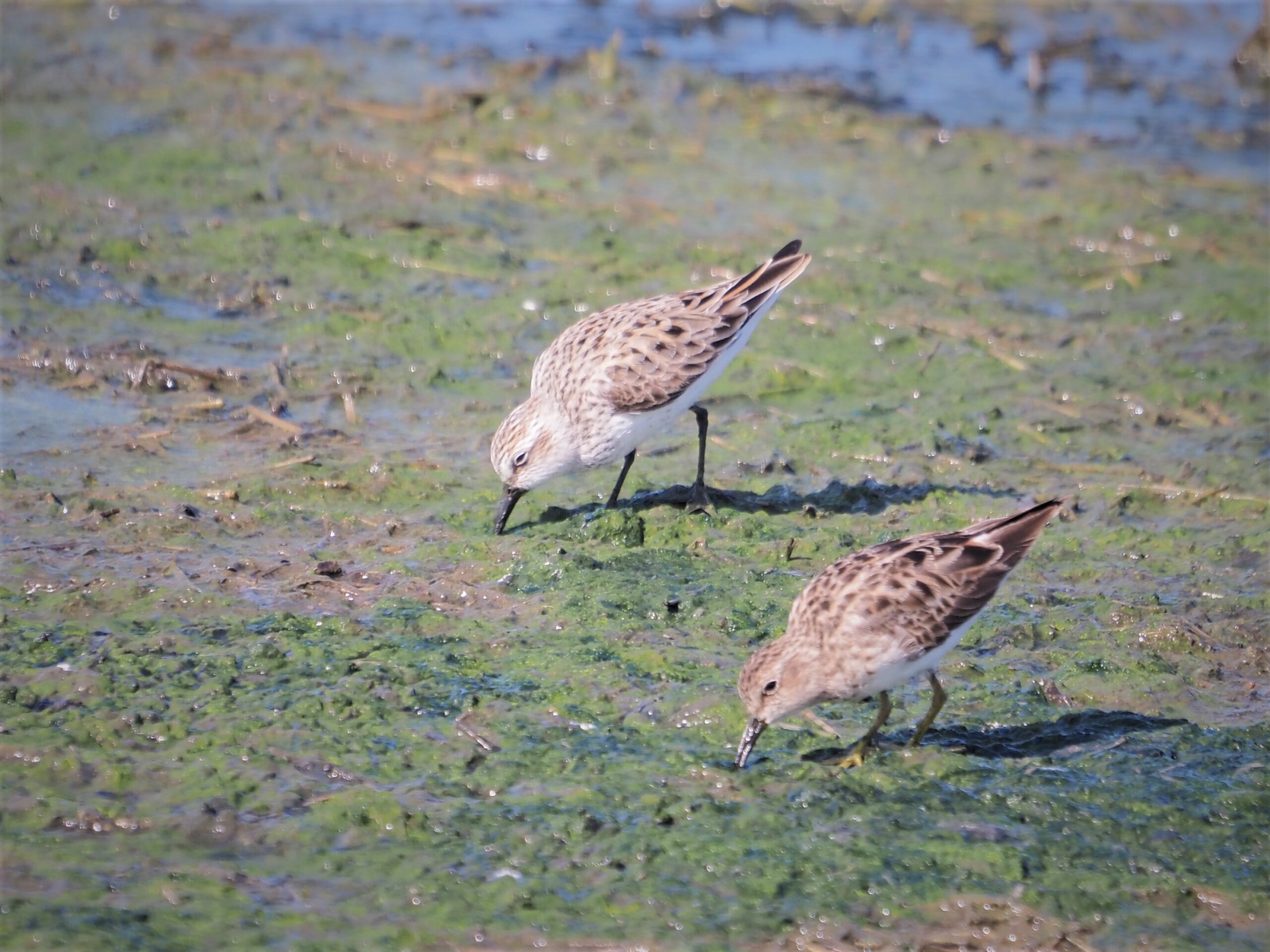
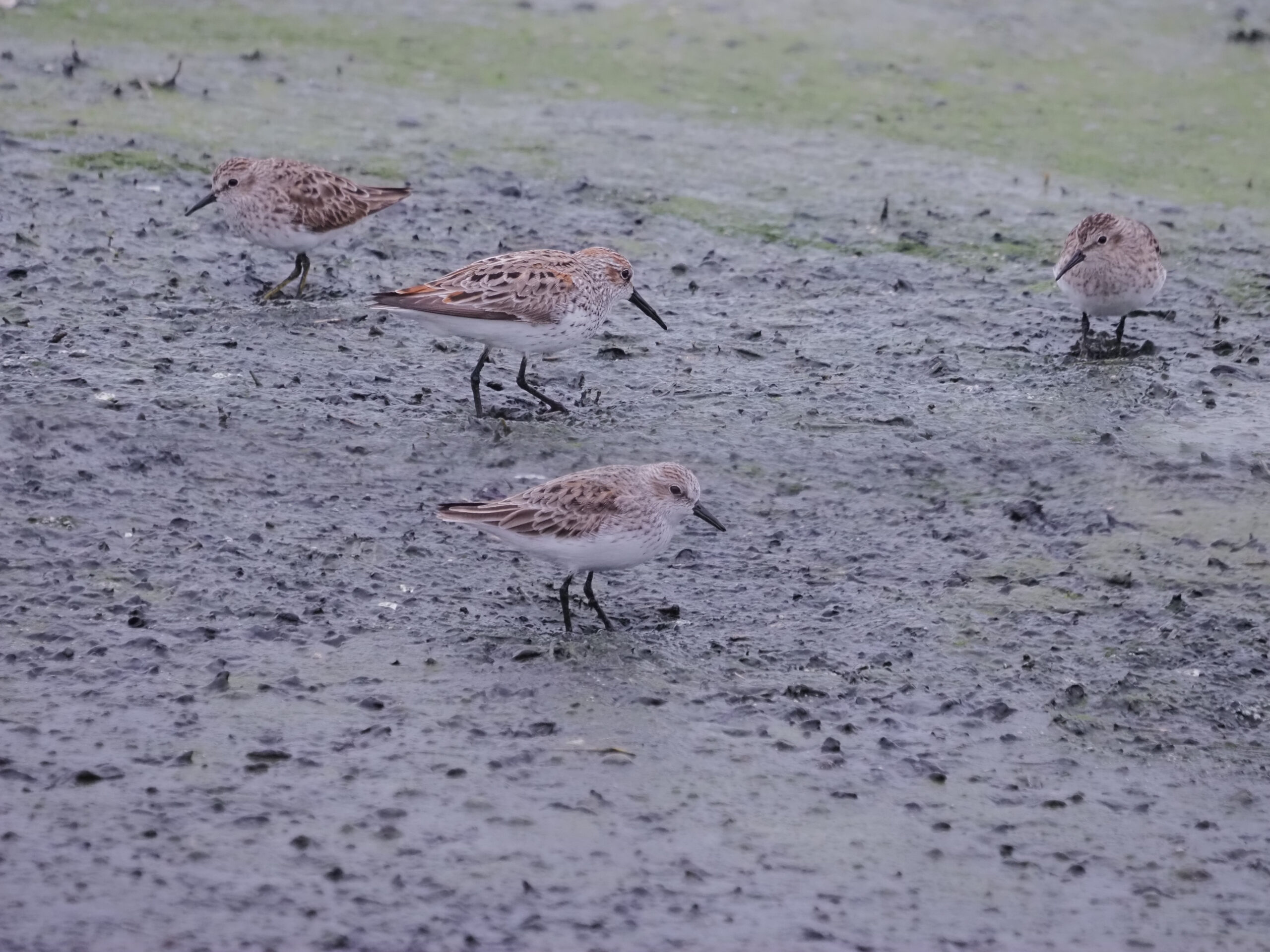
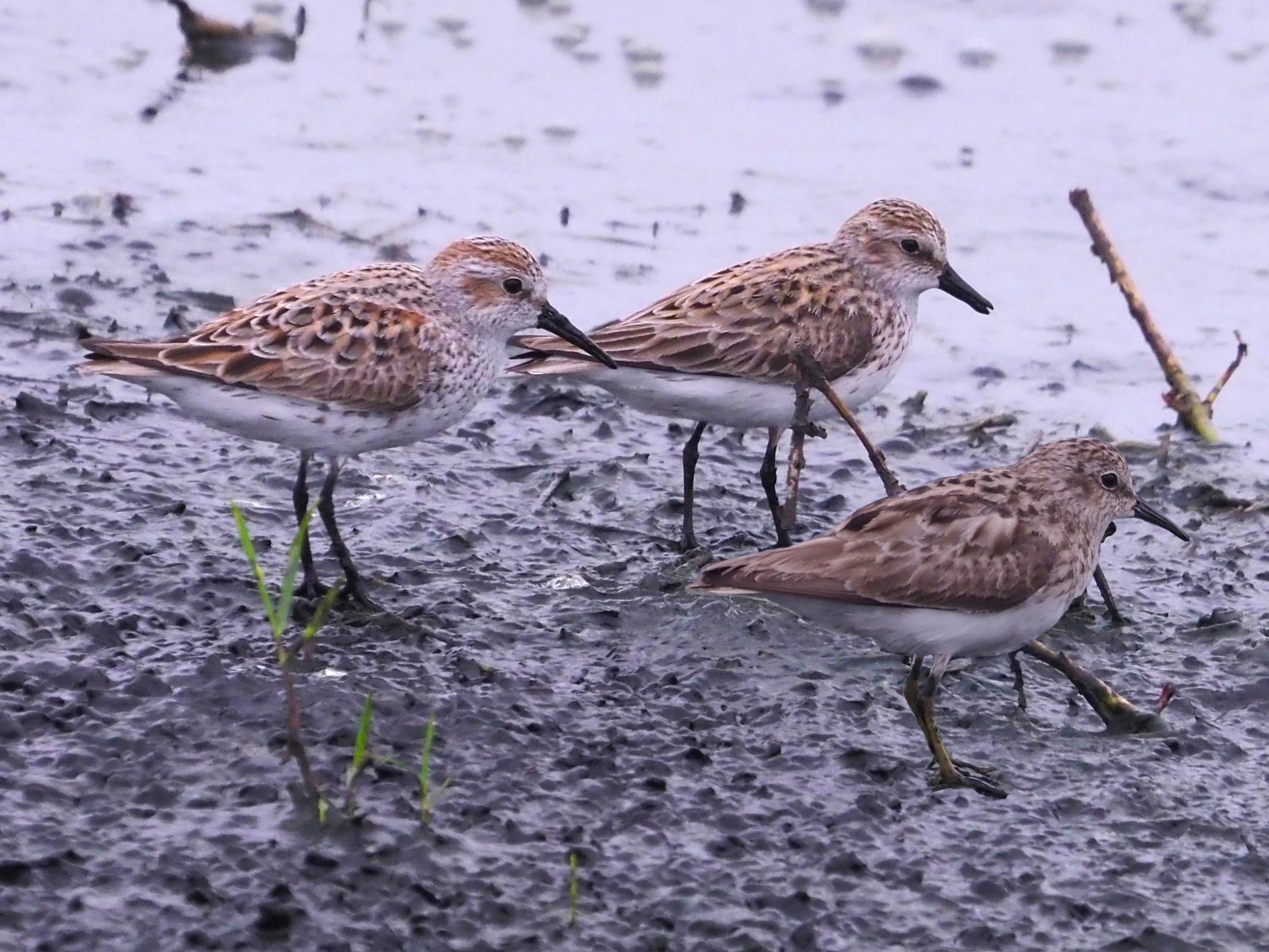
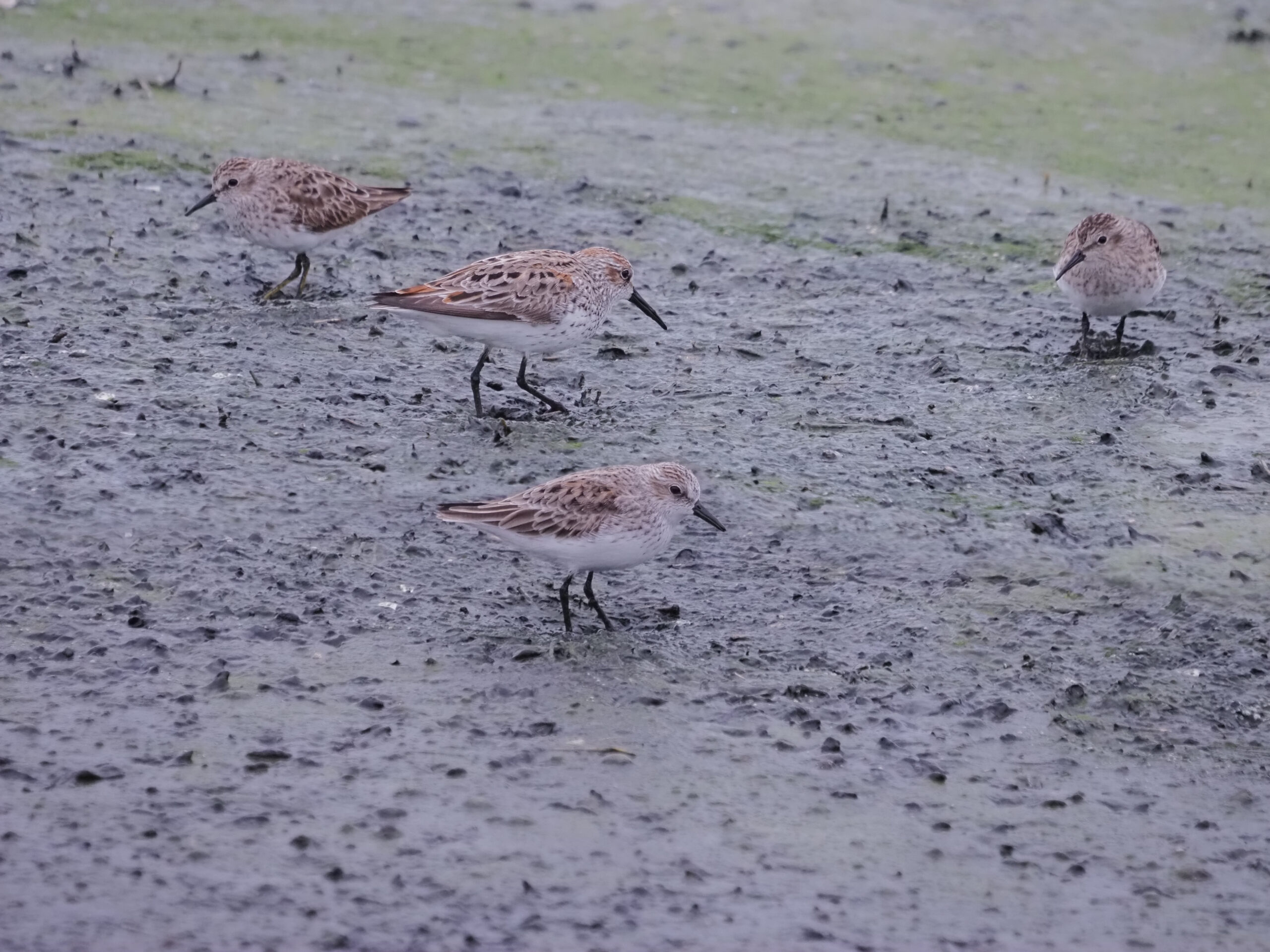
The 3 smallest peeps are compared below. Note the differences in bill shape and length as well as the fact that the Least is browner, while the Semipalmated and Western are frostier, especially the Semipalmated. Also note that the Western is generally the most colorful of the 3 in breeding plumage.
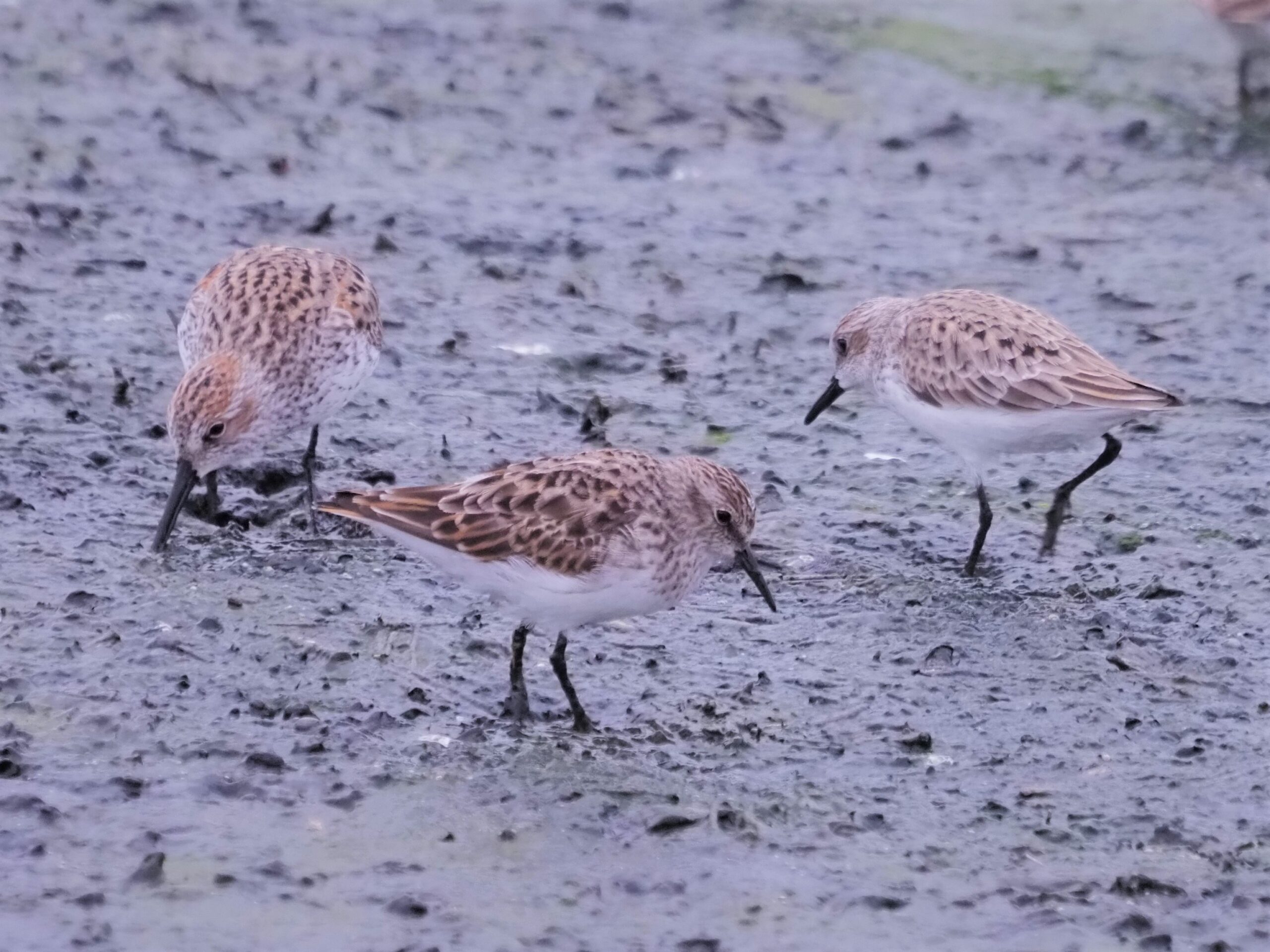
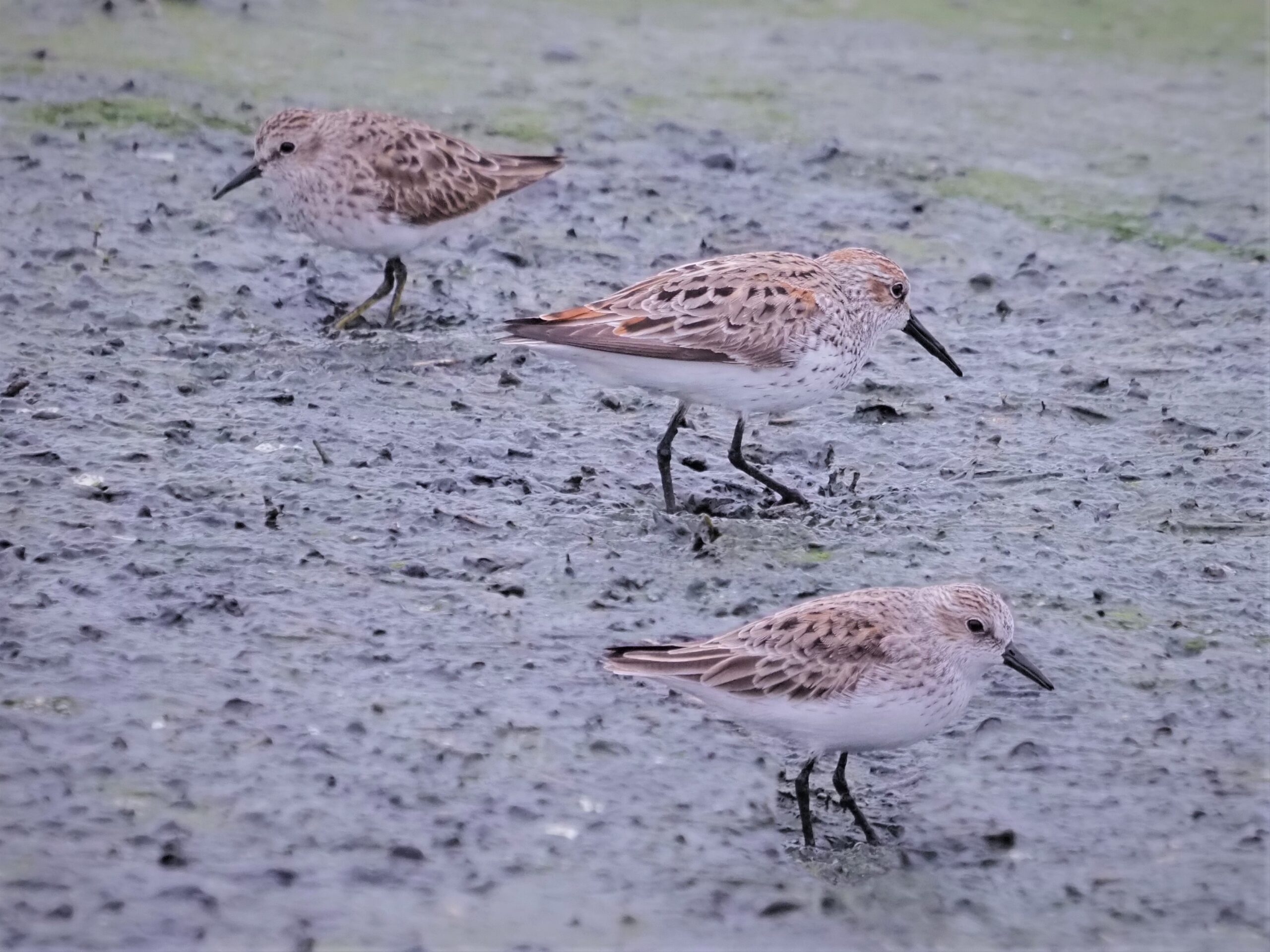
Comparison between Semipalmated and Western Sandpipers