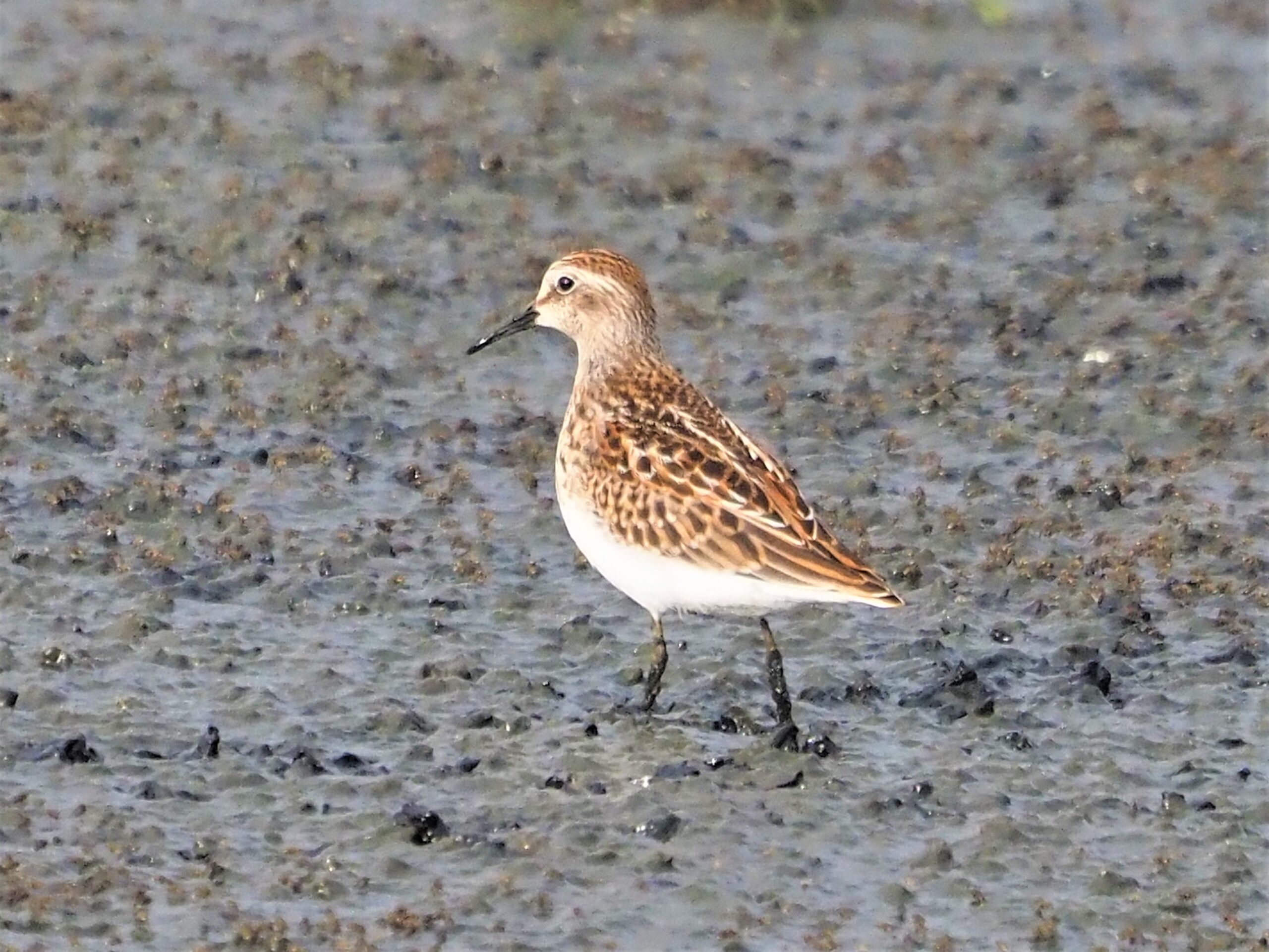
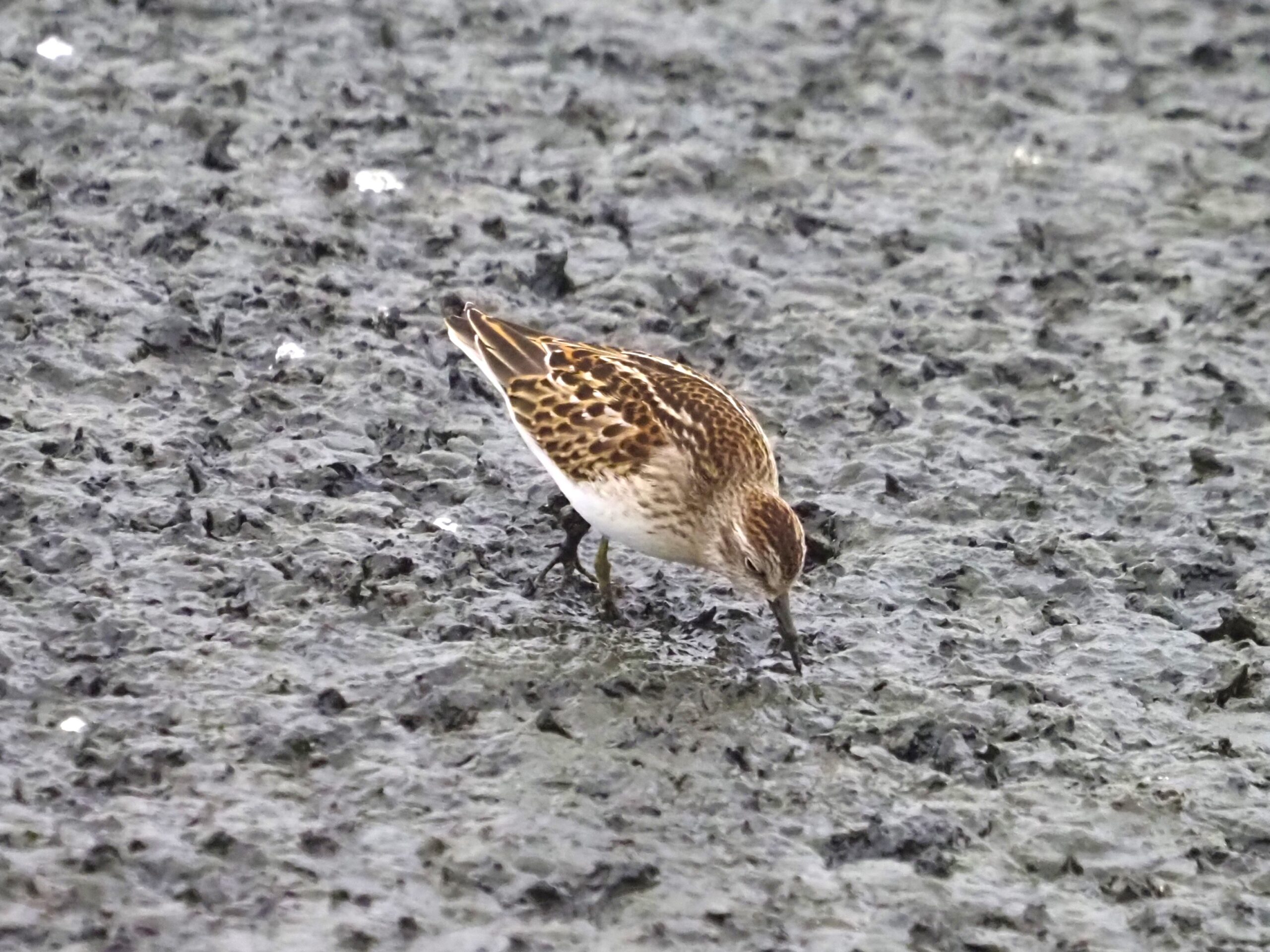
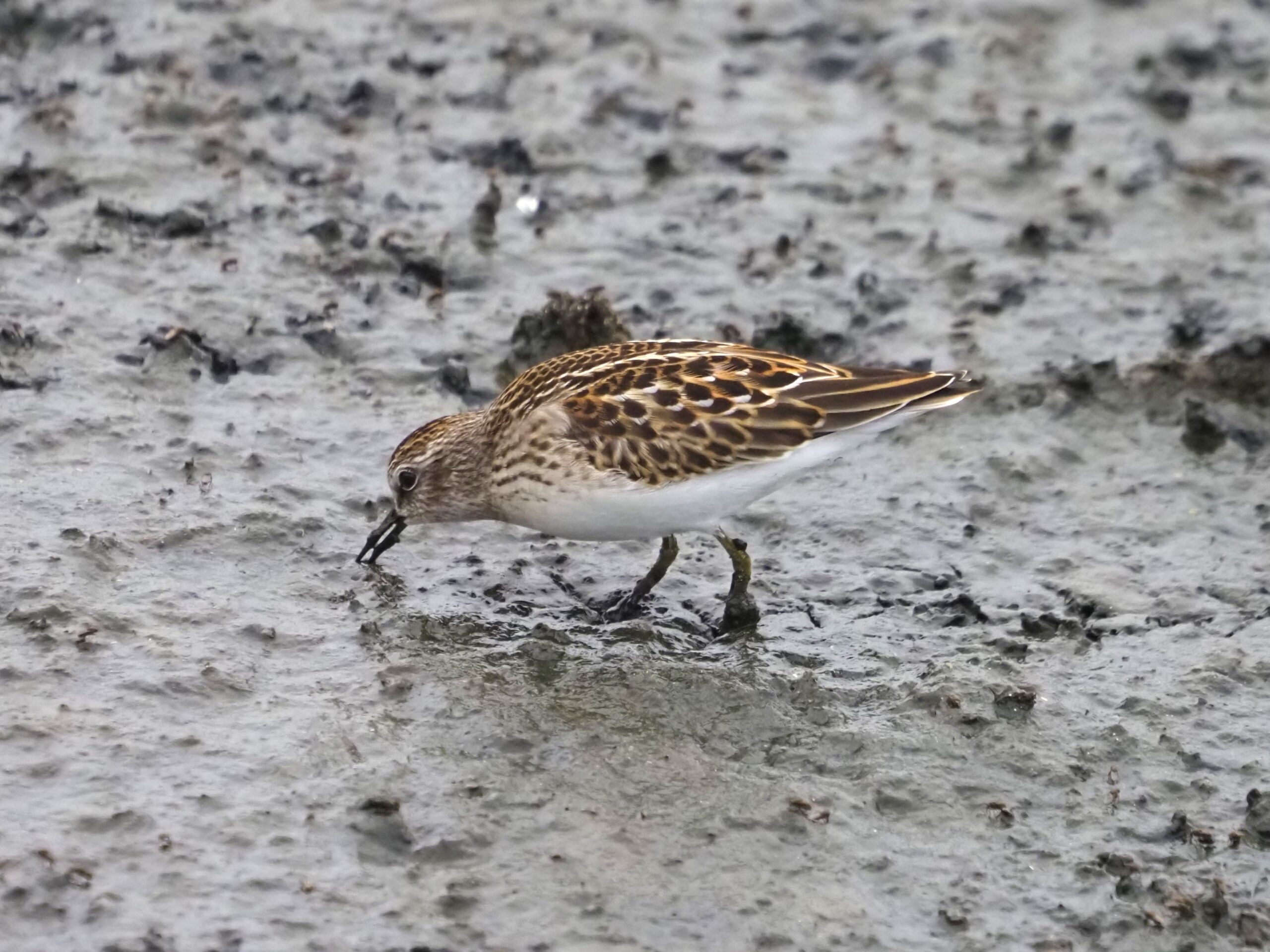
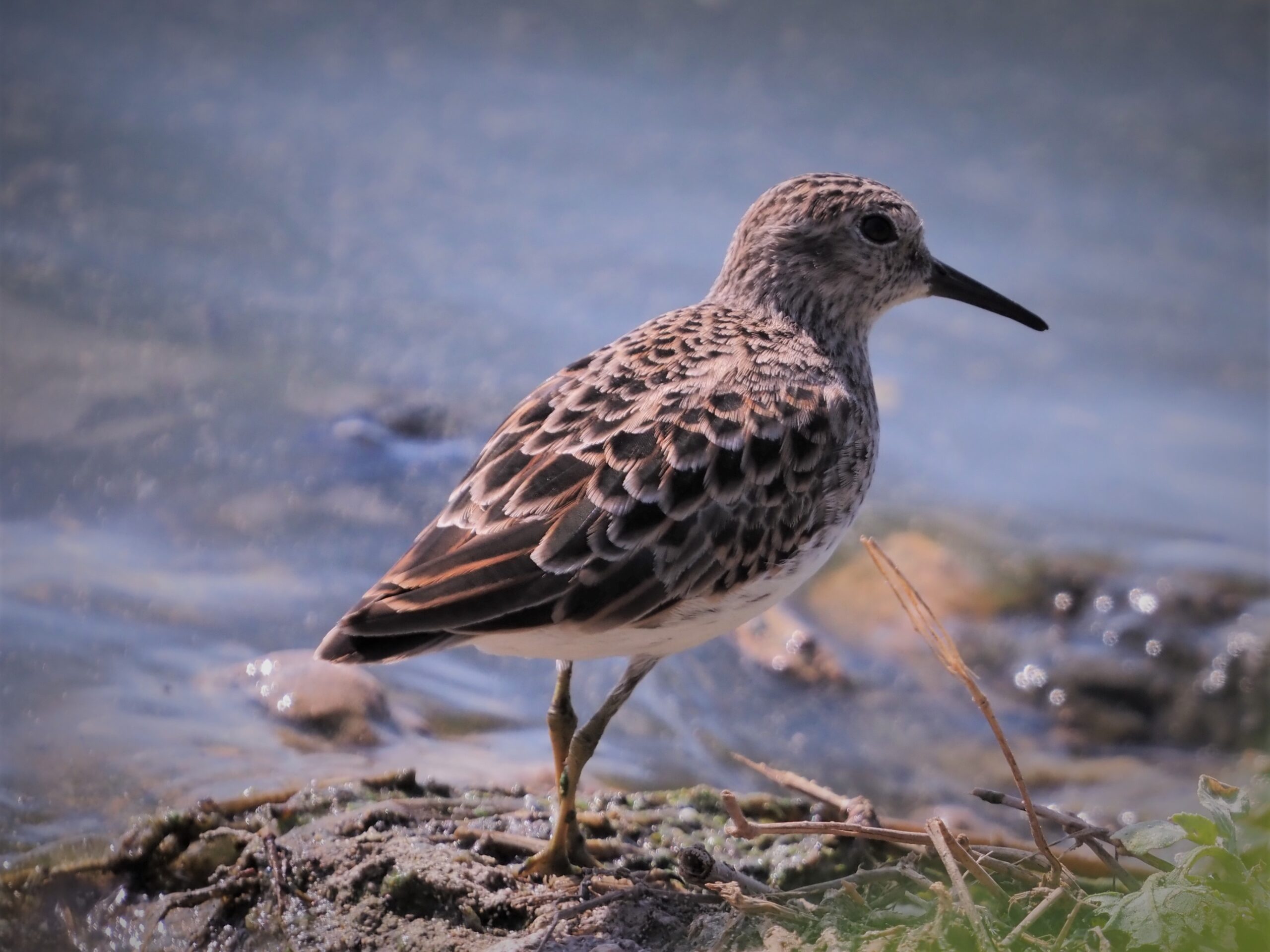
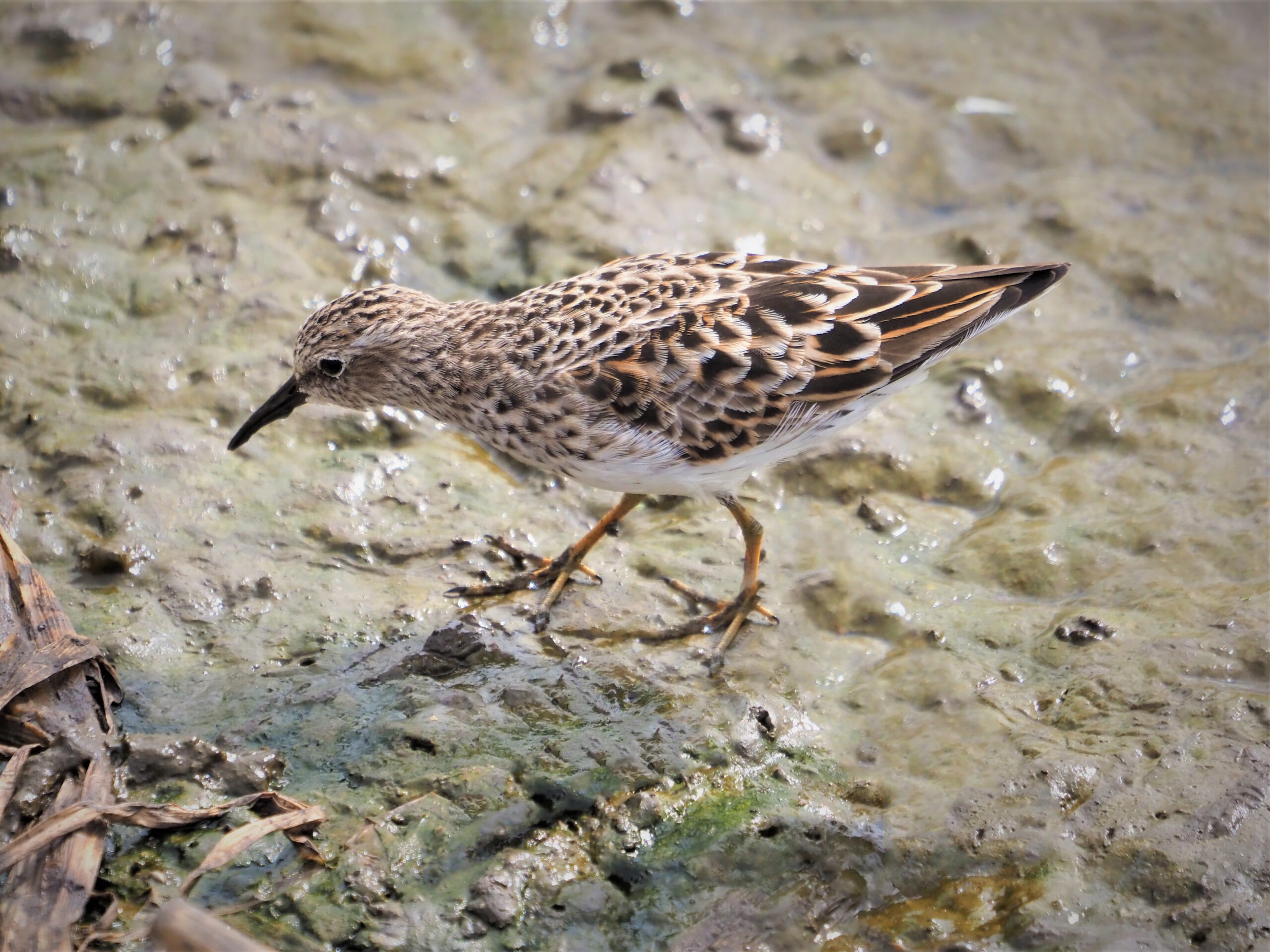
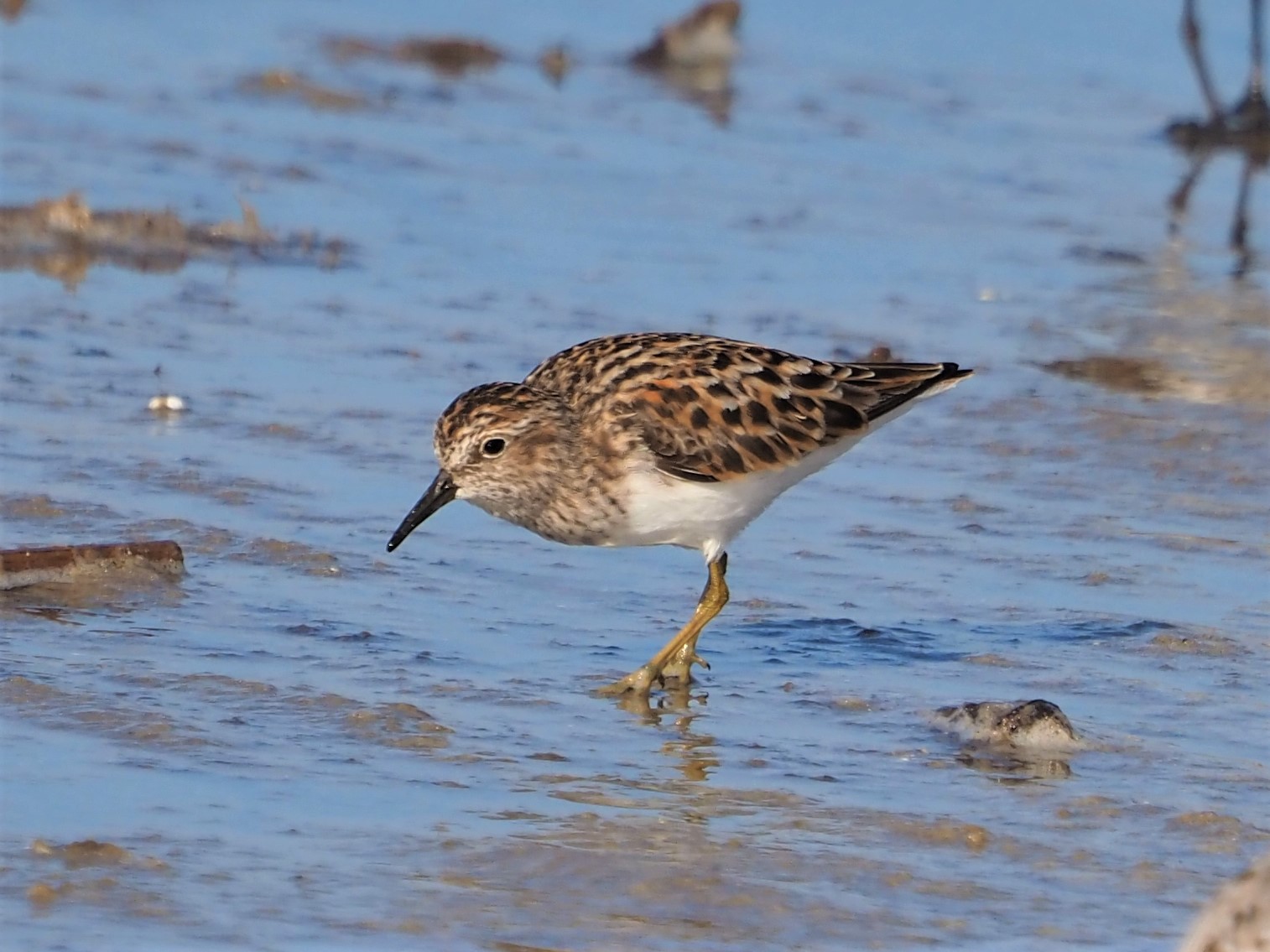
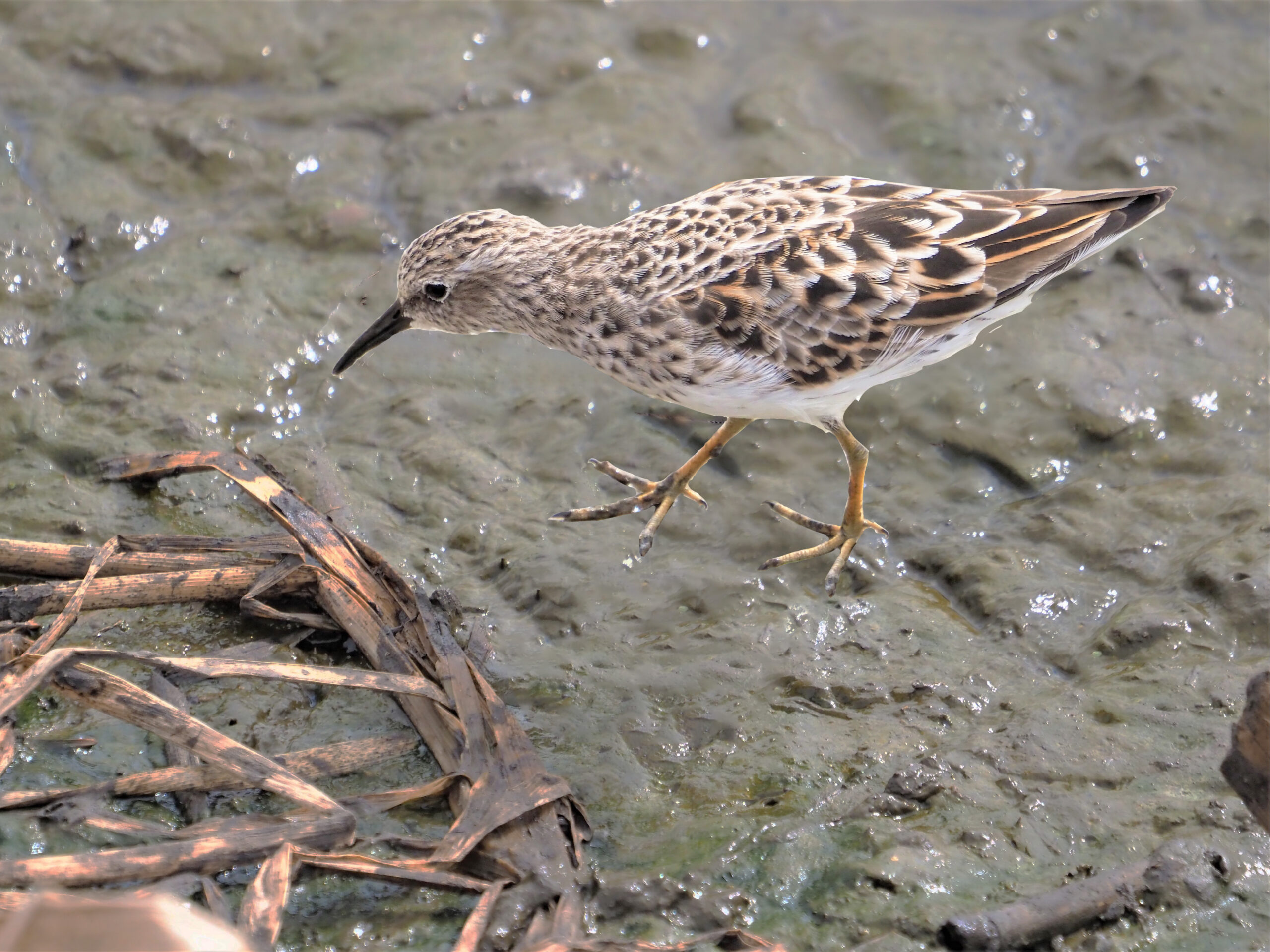
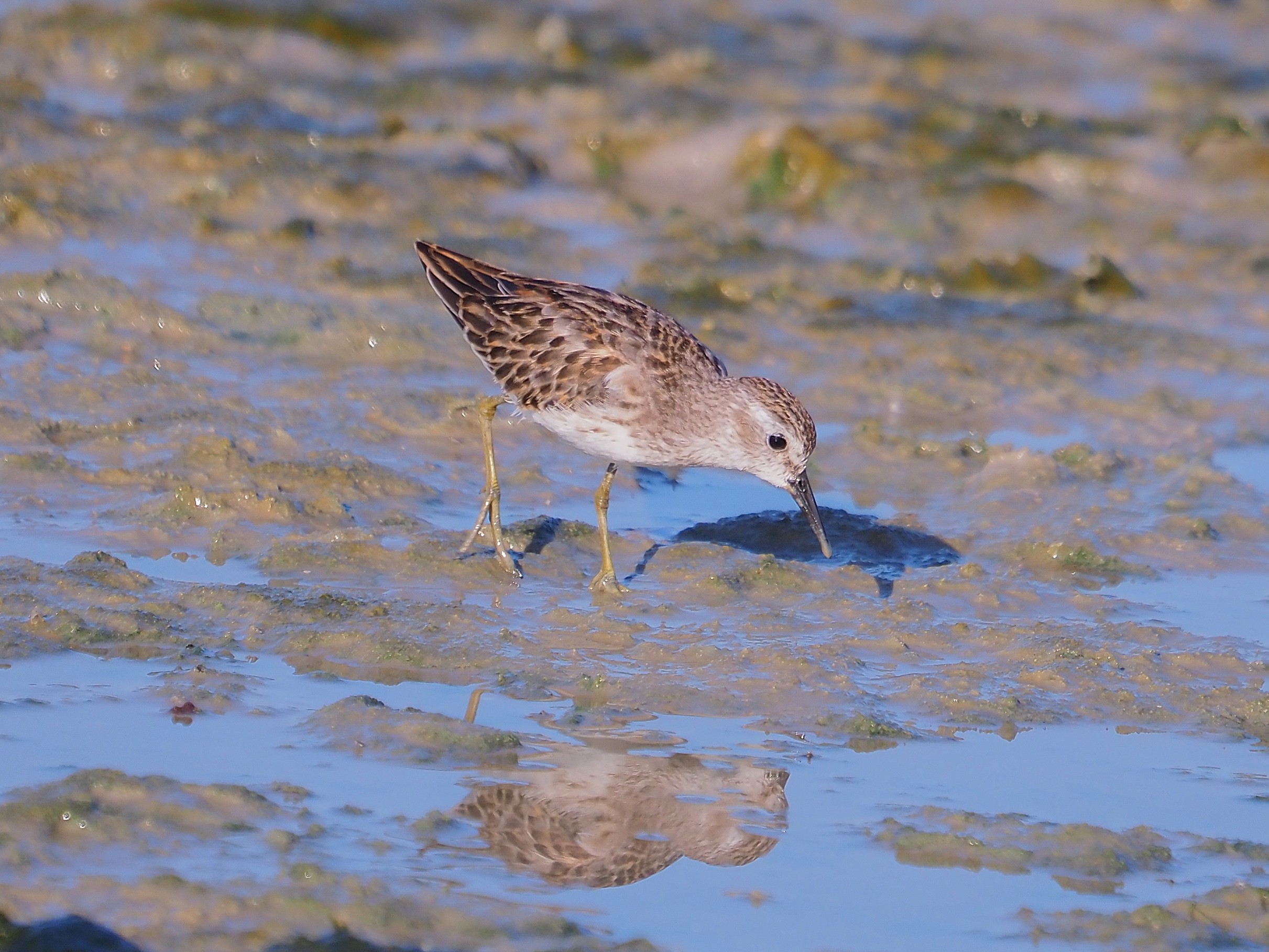
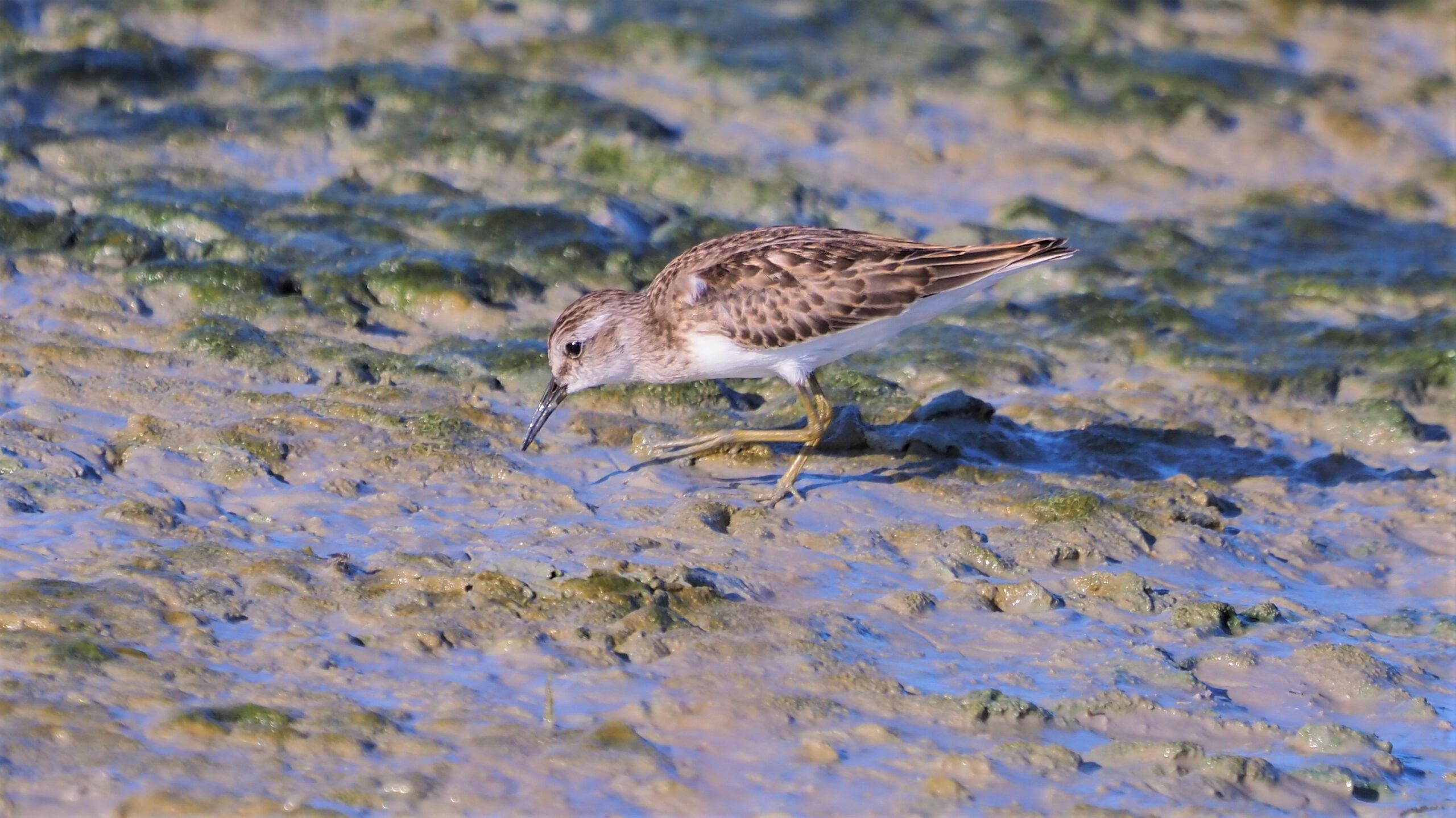
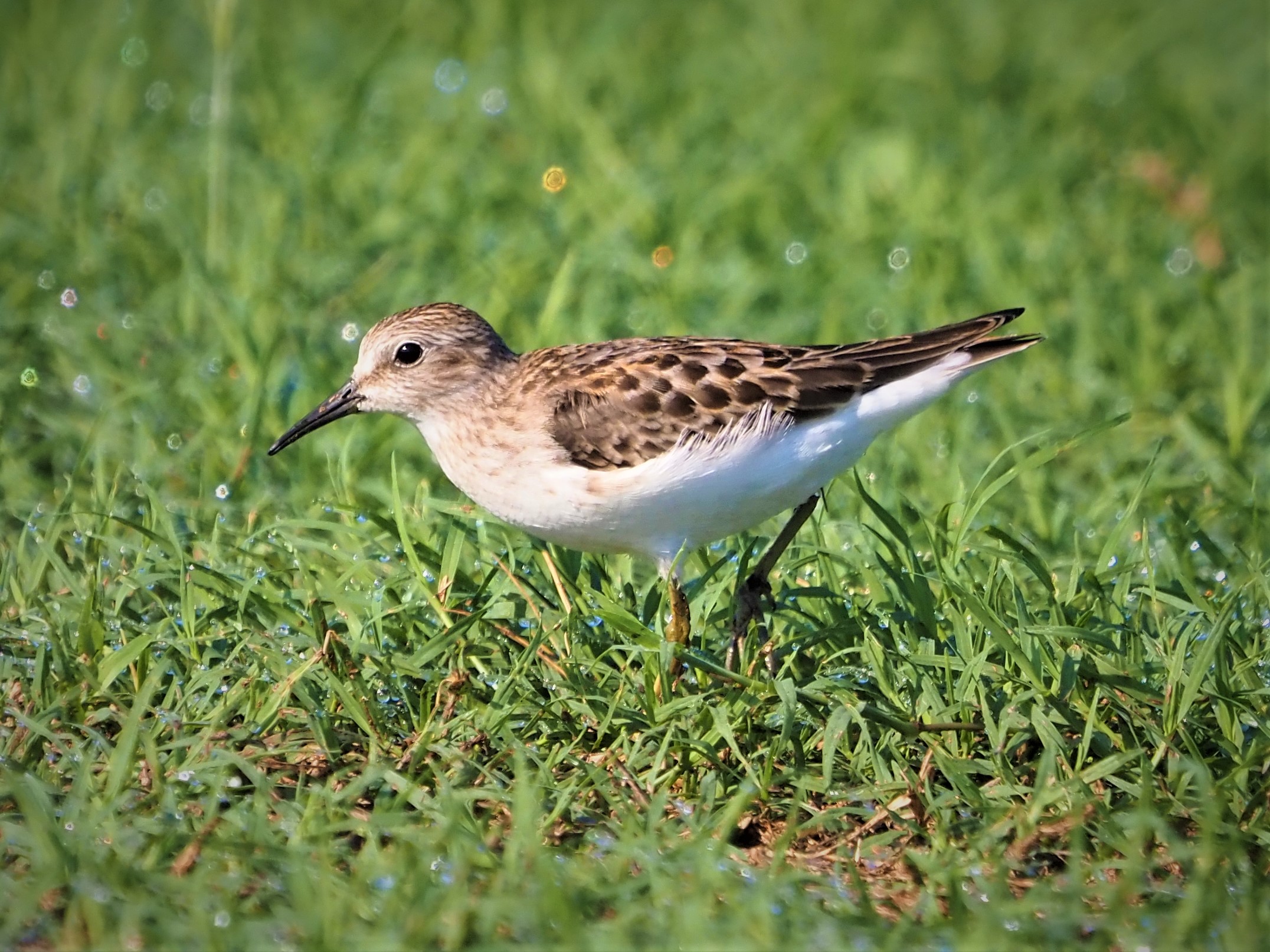
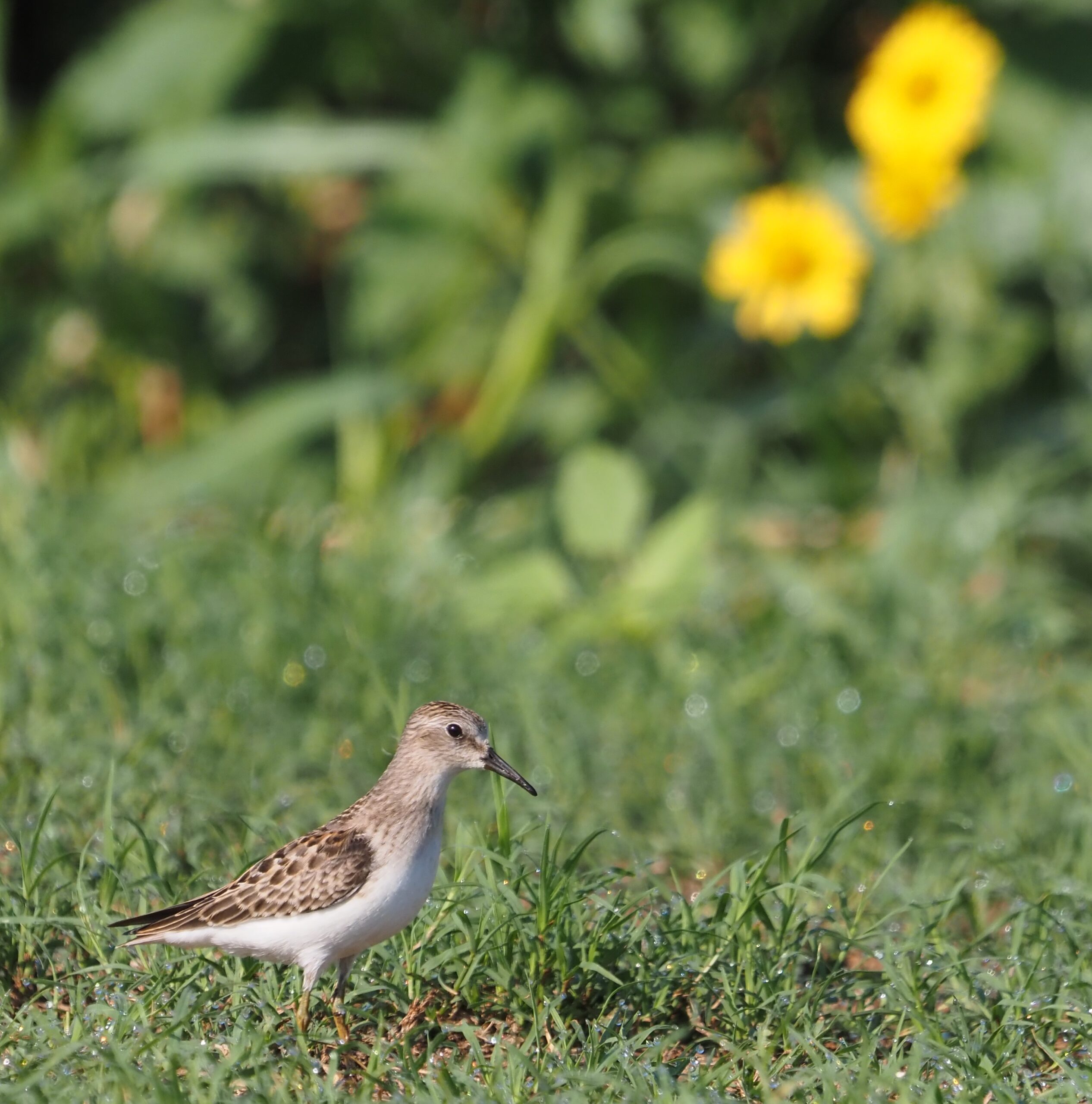
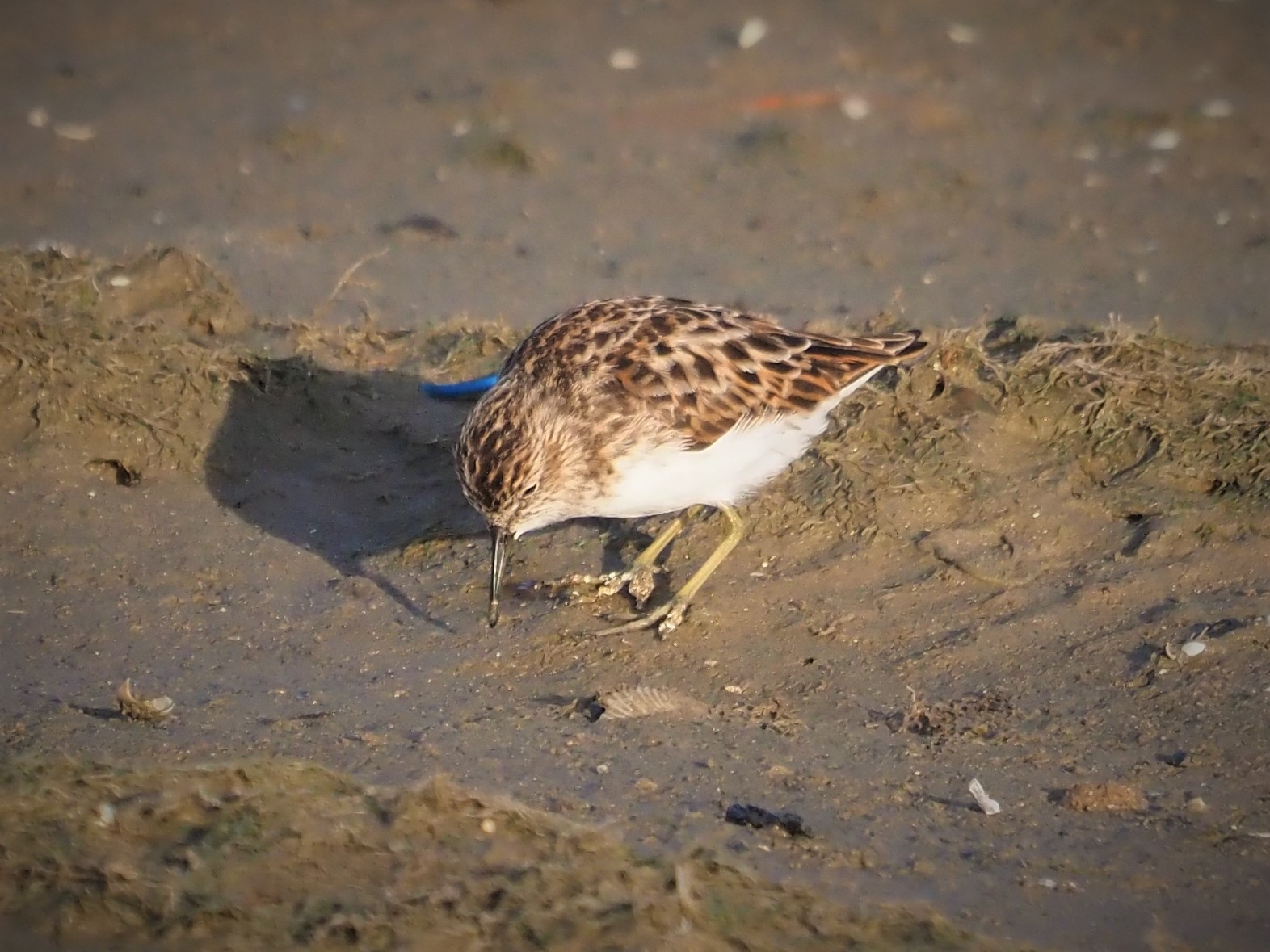
Least Sandpiper (fall juvenile)
These are 1st year Least Sandpipers in August and September. Note the immaculate patterns of the scapulars and coverts and the white and dark brown lines formed by the line up of multiple feathers. Also note the fresh, crisp pale edges, the relatively small feathers of similar size and the overall “scaley” look of the upper part of the birds.
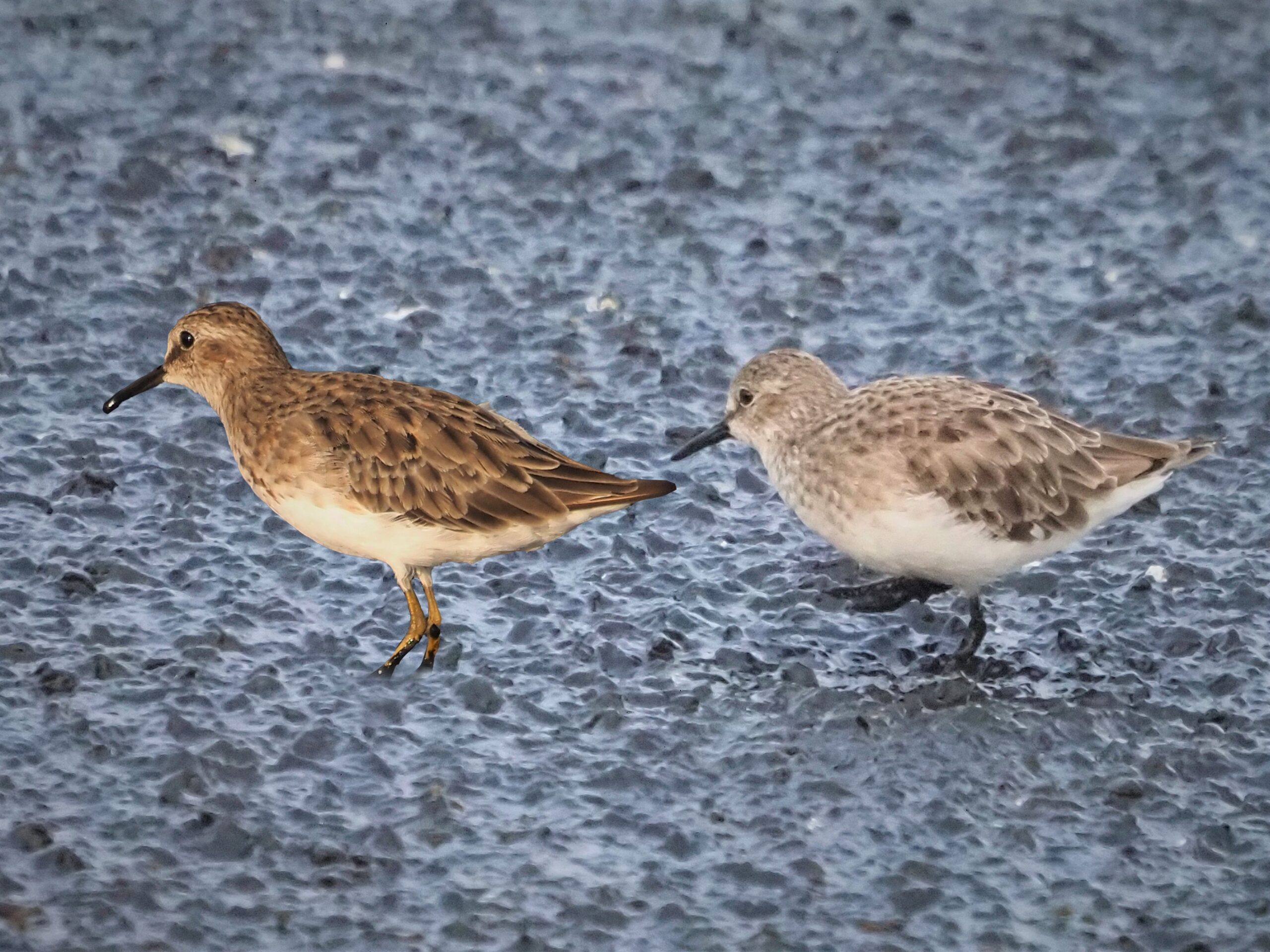
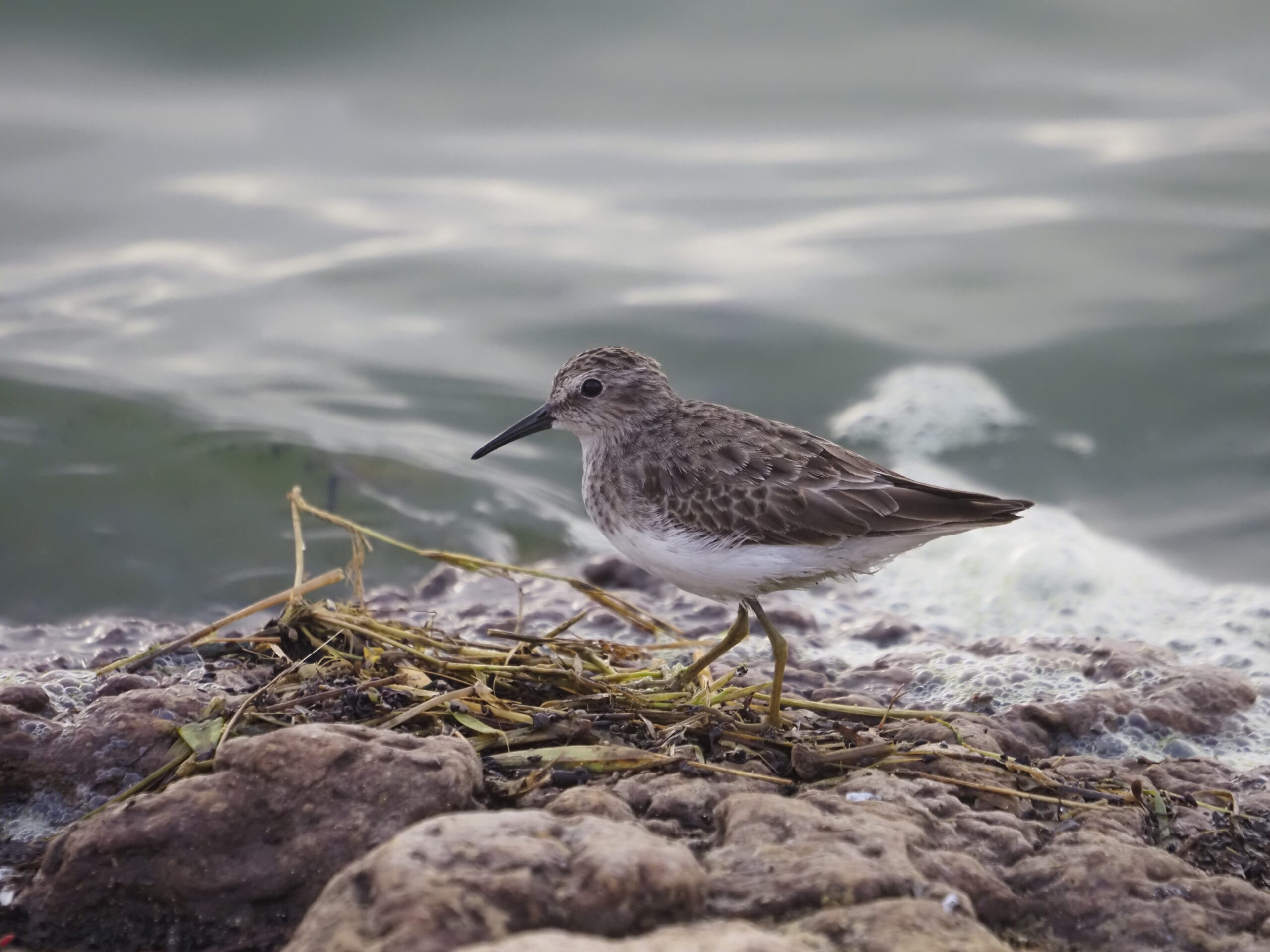
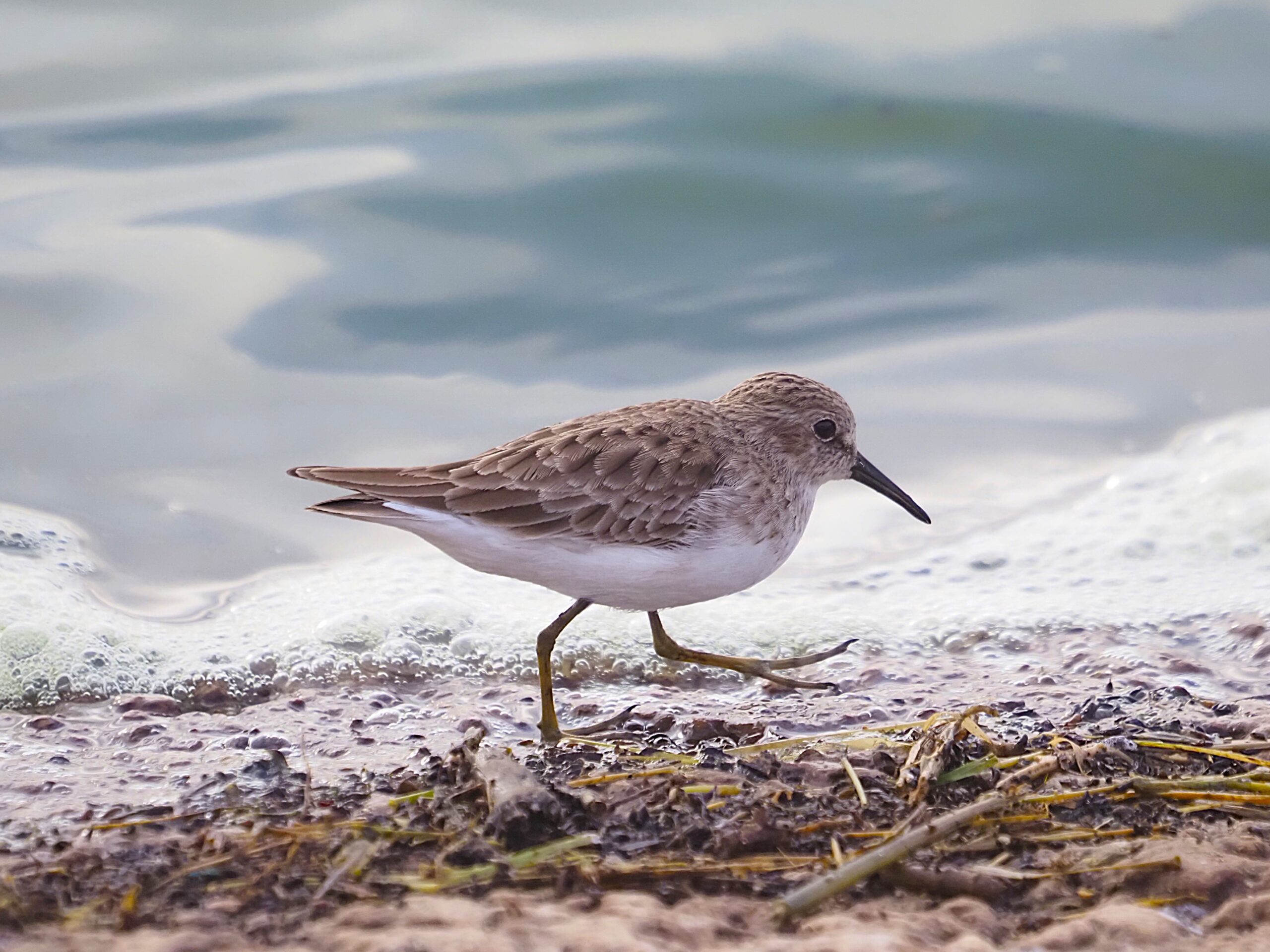
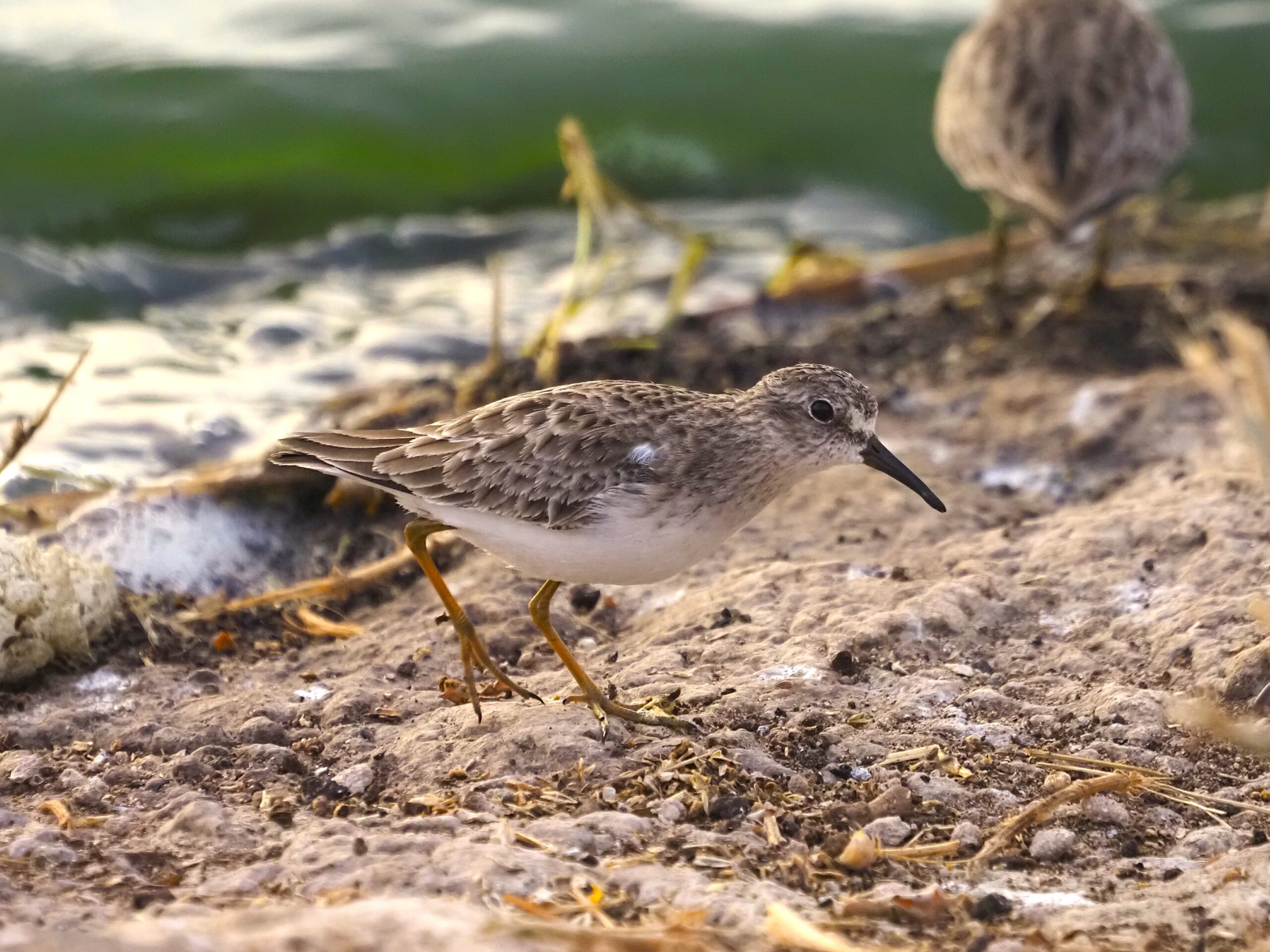
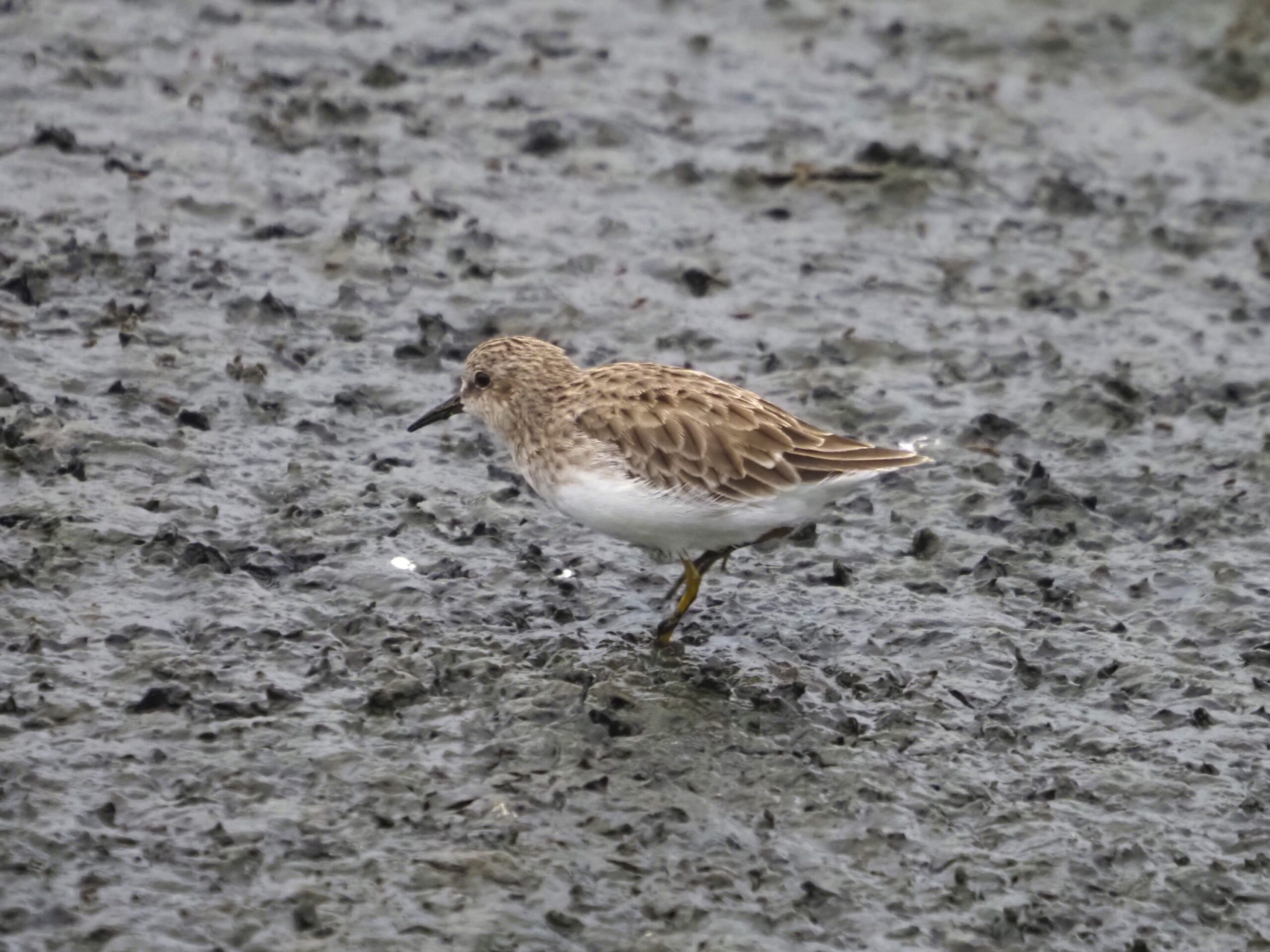
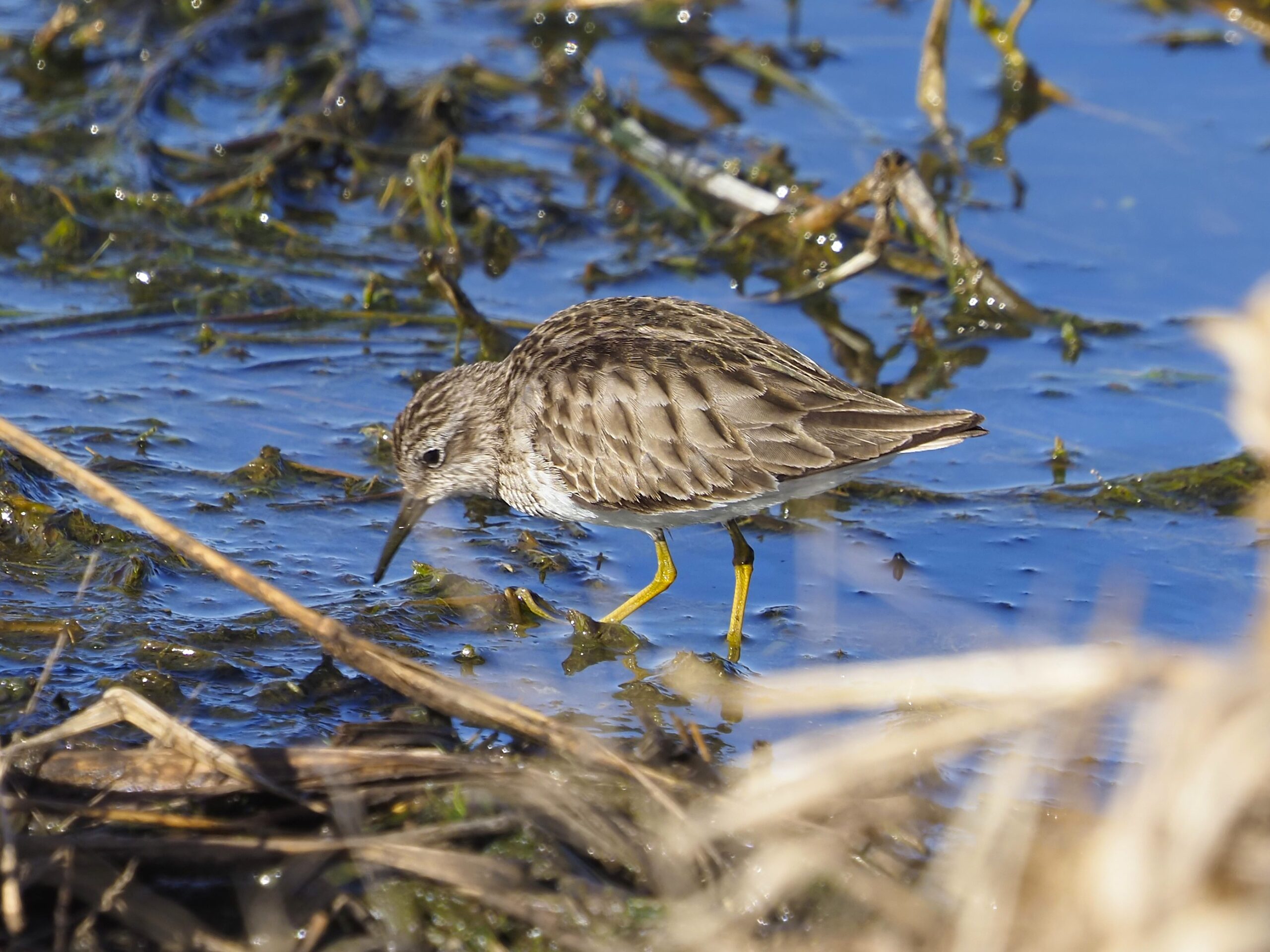
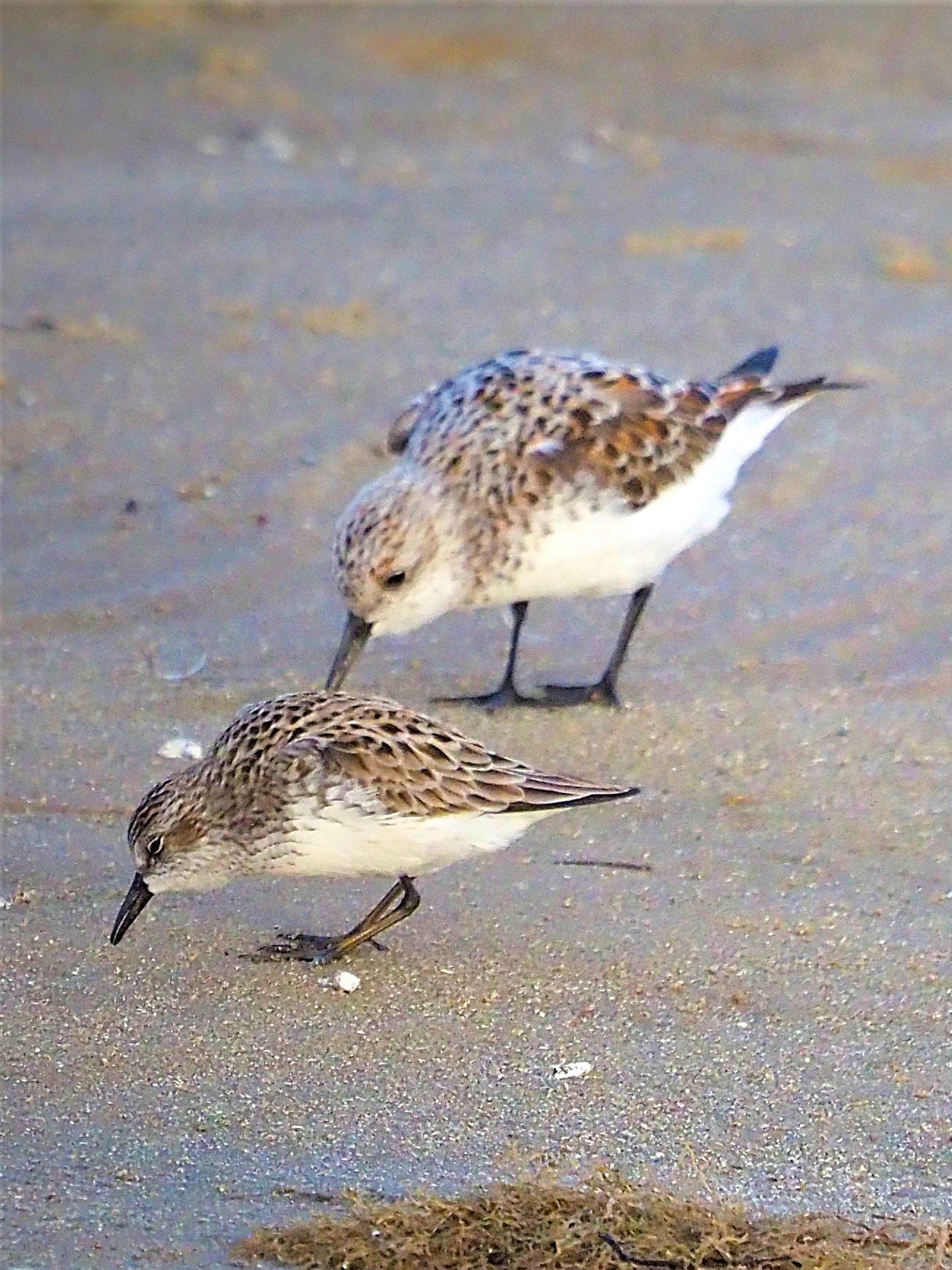
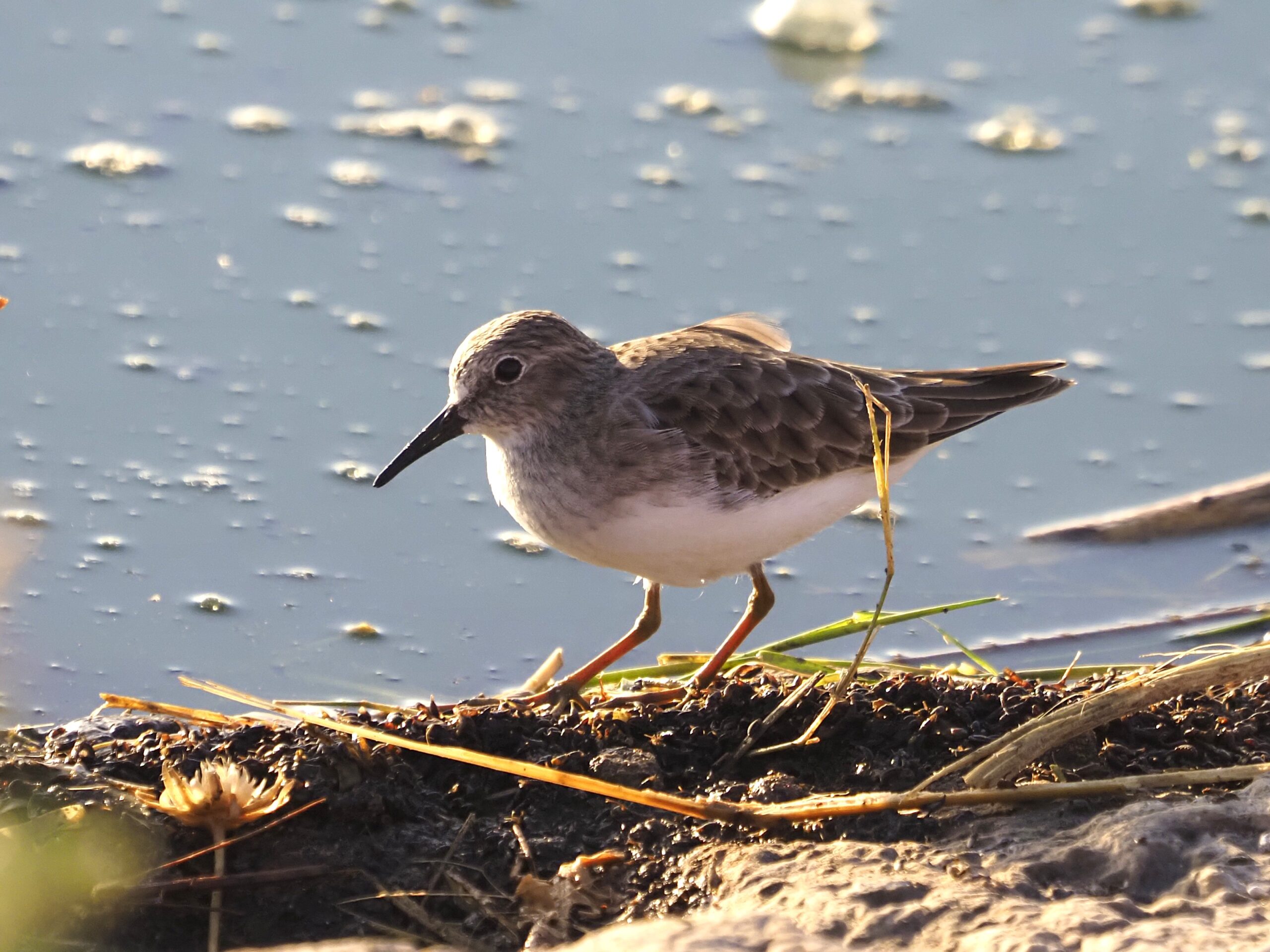
Least Sandpiper (basic)
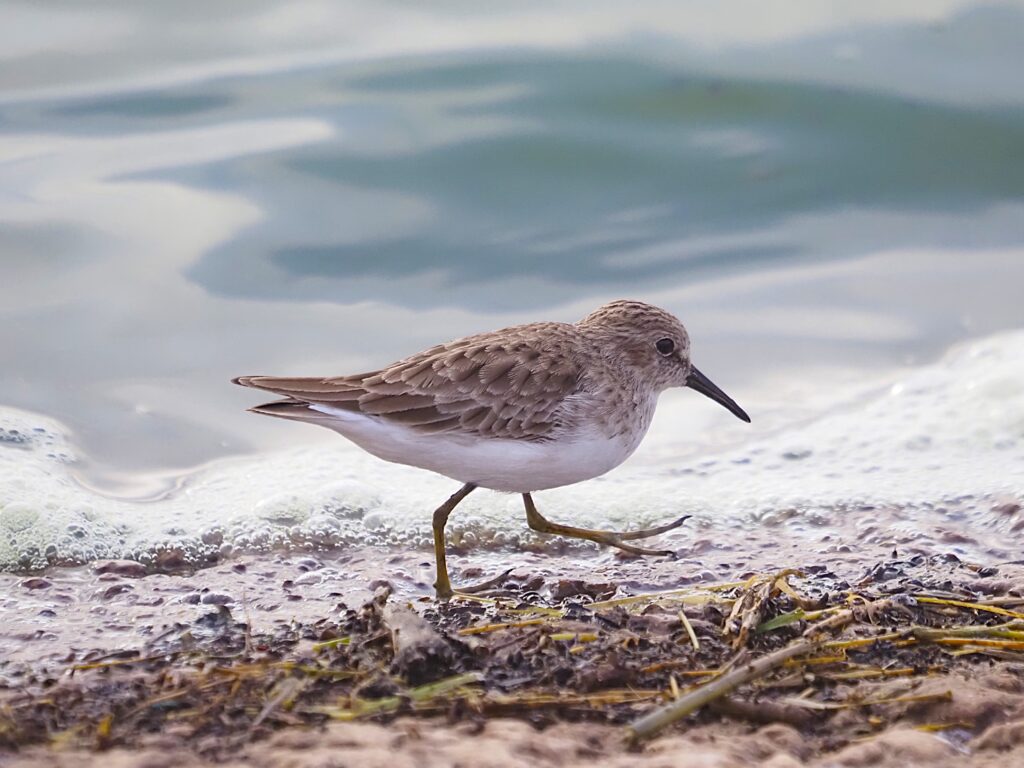
What was formerly called “winter plumage” is now more accurately called “basic plumage“. It is formed by the pre-basic molt and leads to this generally drab plumage present during the northern hemisphere winter months. These photos were taken during October and November. The photo of 2 birds side by side is a composite and illustrates the grayish-brown to brown hues of basic plumage which is dependent on the individual, the lighting conditions, and the photographic settings.
Least Sandpiper (molting to alternate)
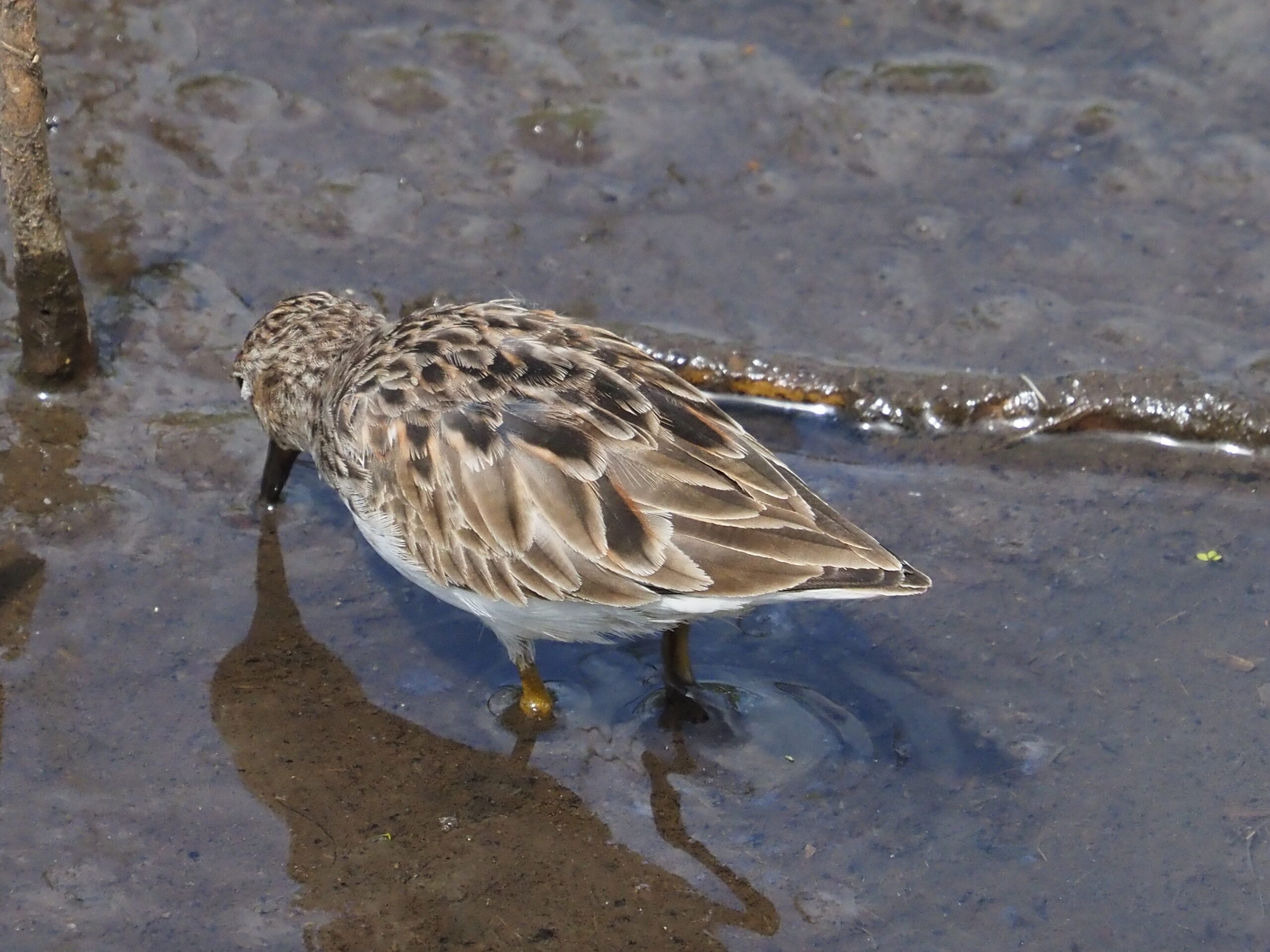
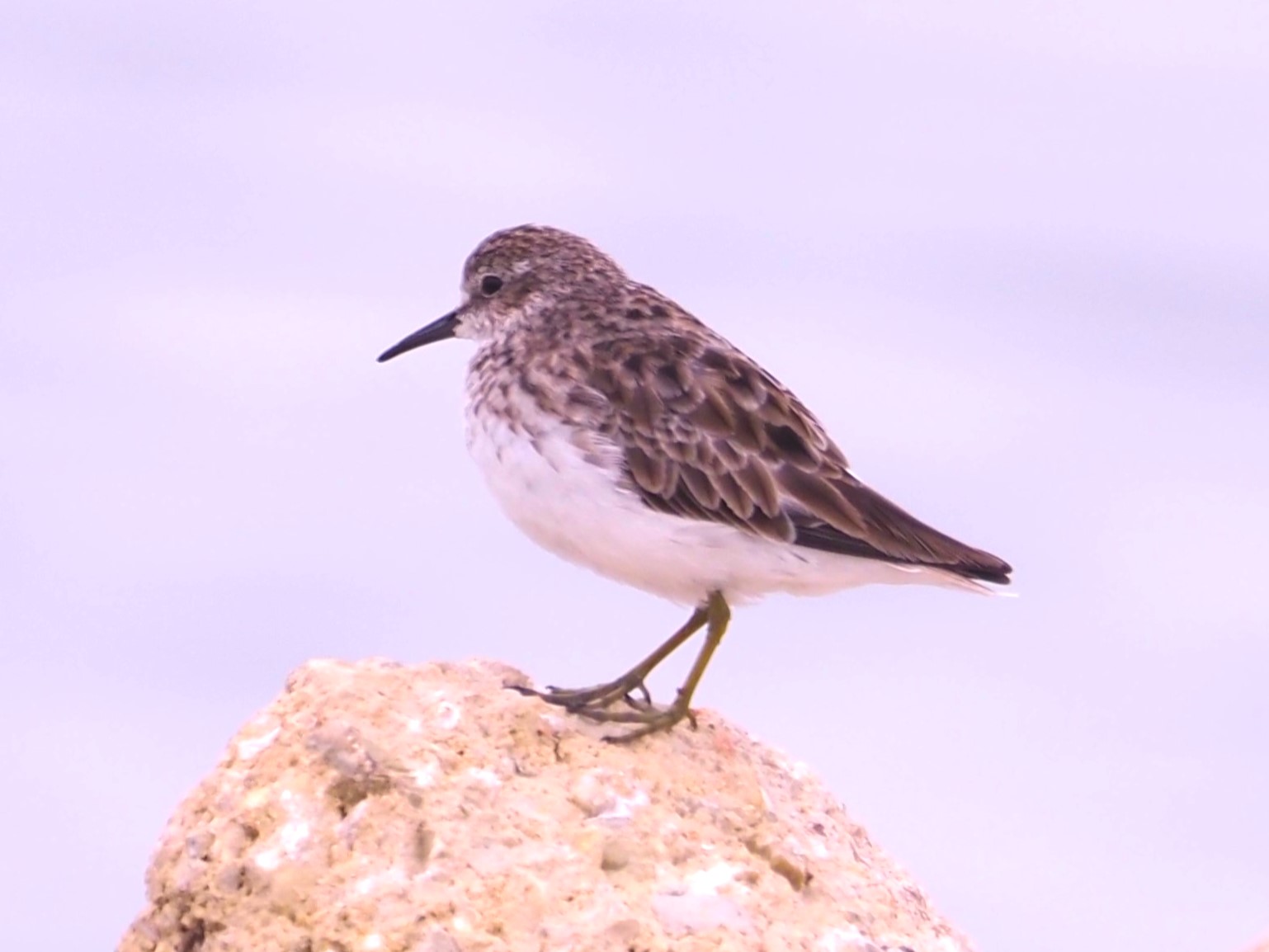
In late March and early April the old basic feathers are being pushed out by new alternate feathers. Note the disheveled look of the upper parts and that the feathers are of a variety of sizes and states of wear, there are very few white and reddish feather edges and many of the feathers have large black or dark brown areas.
Least Sandpiper (alternate)
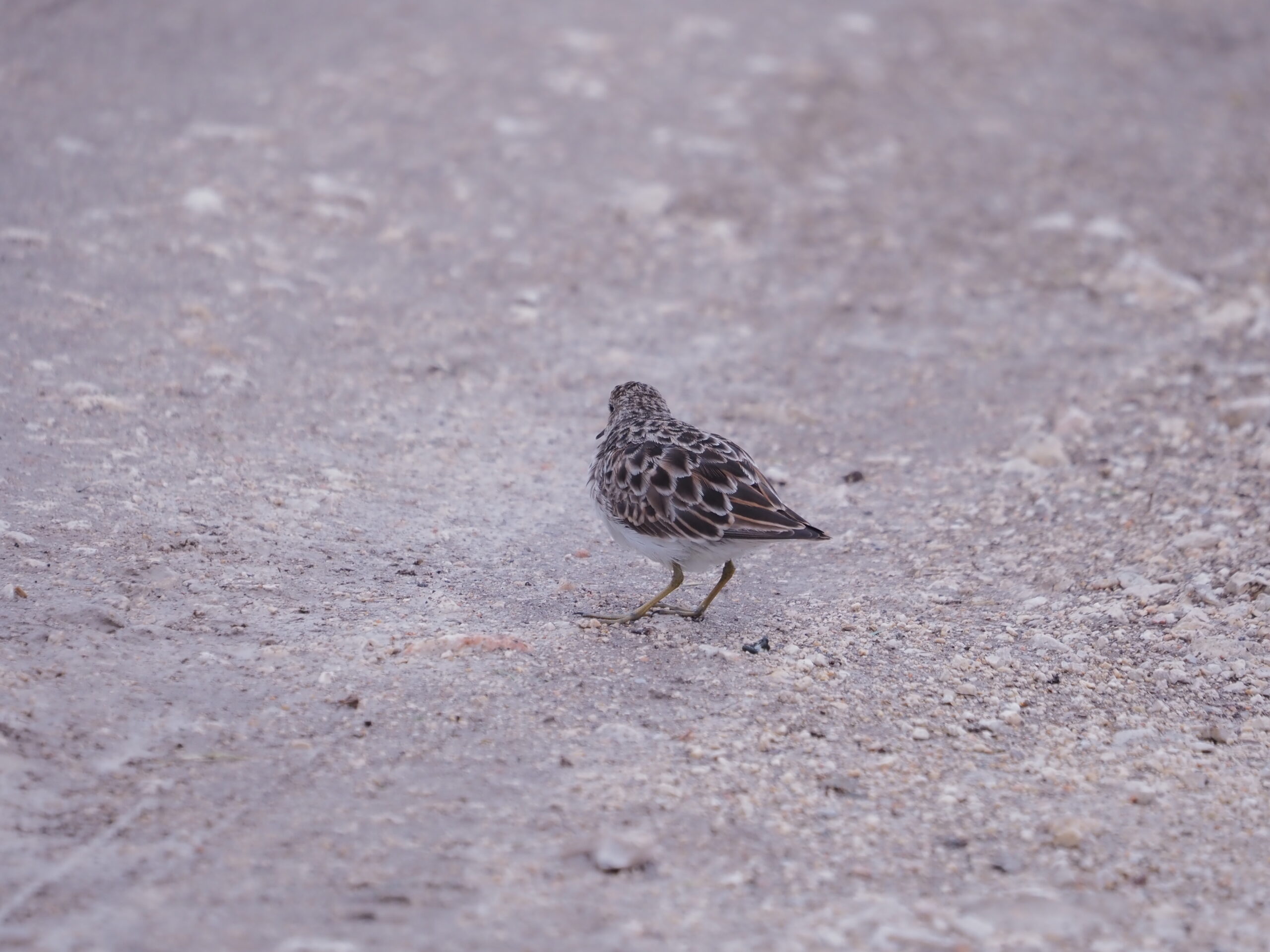
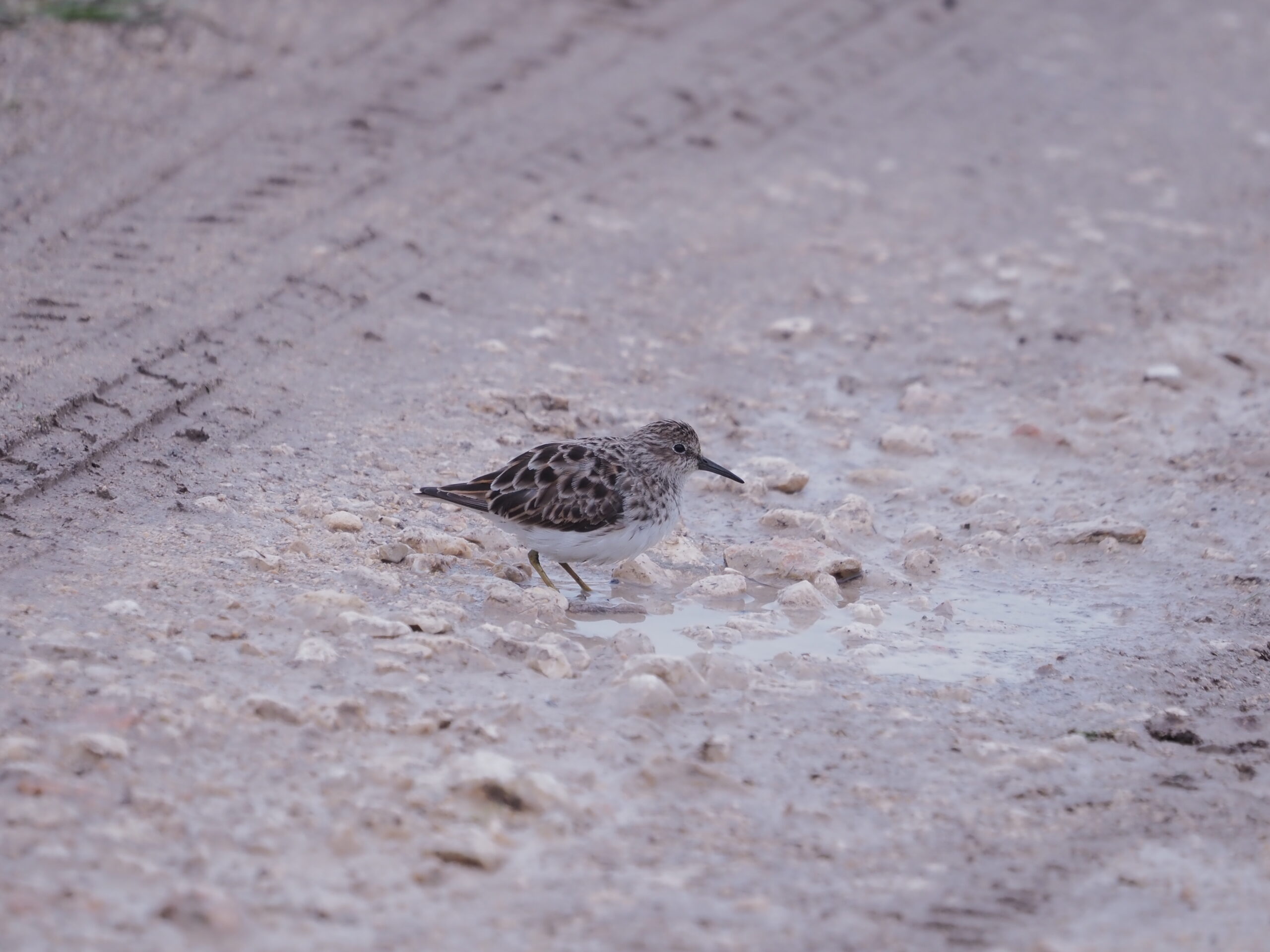
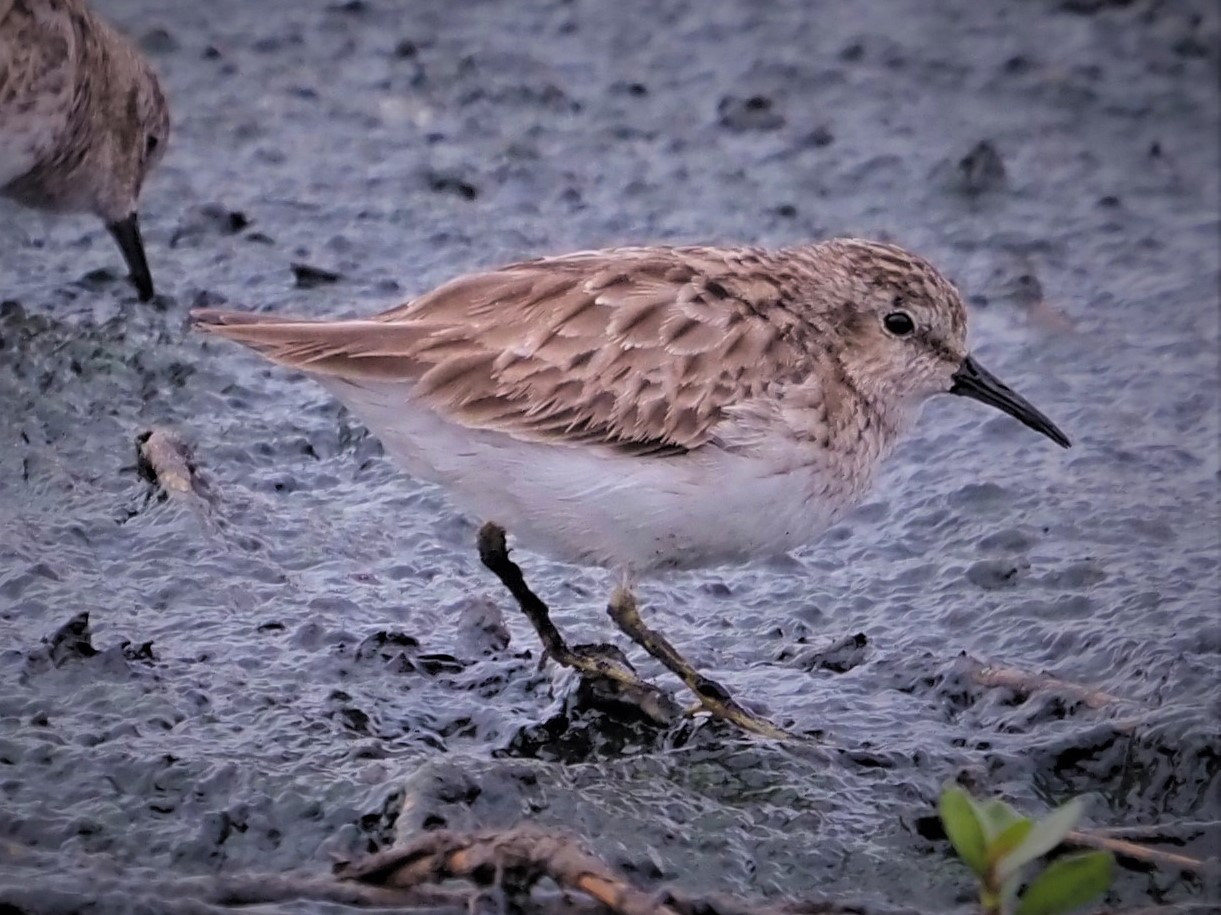
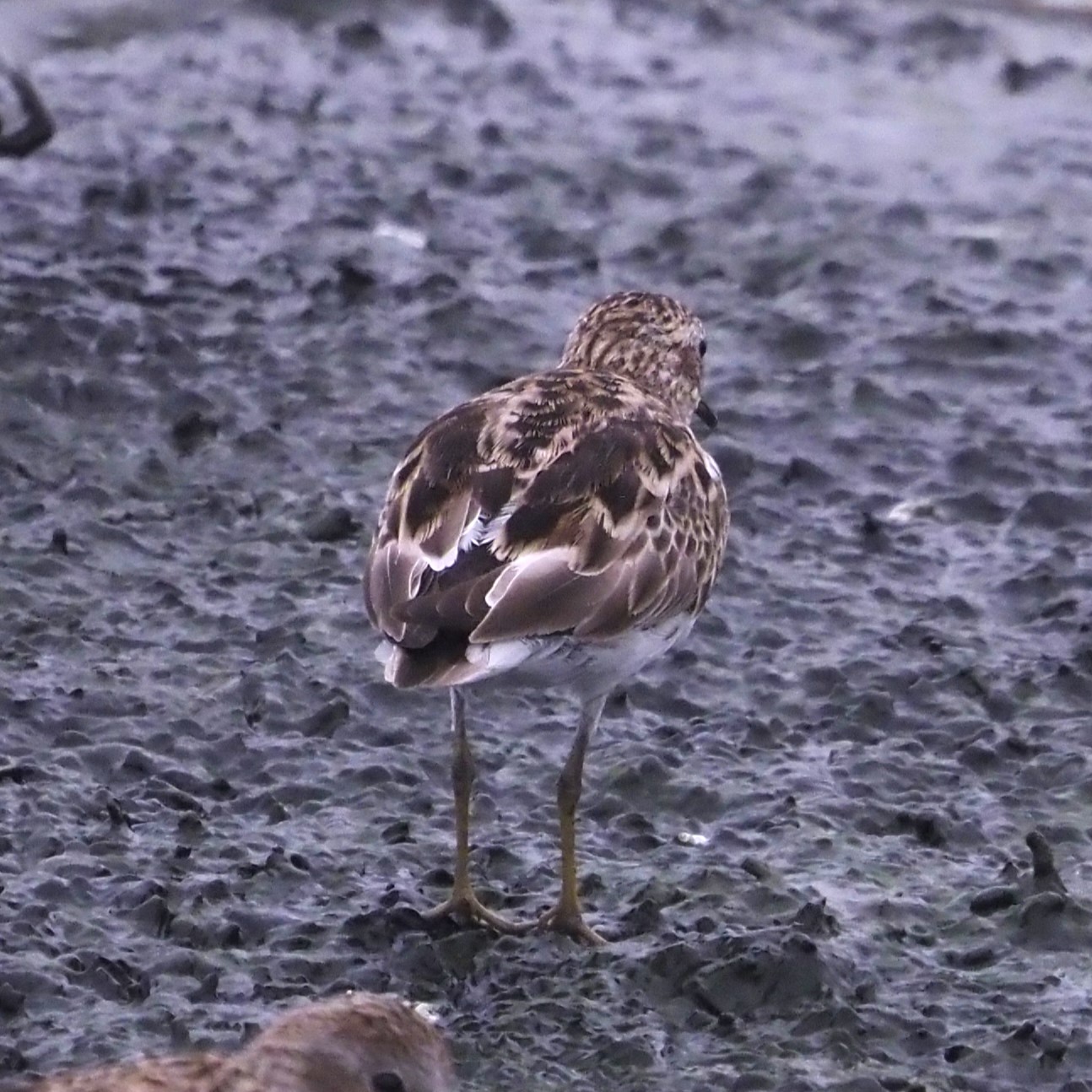
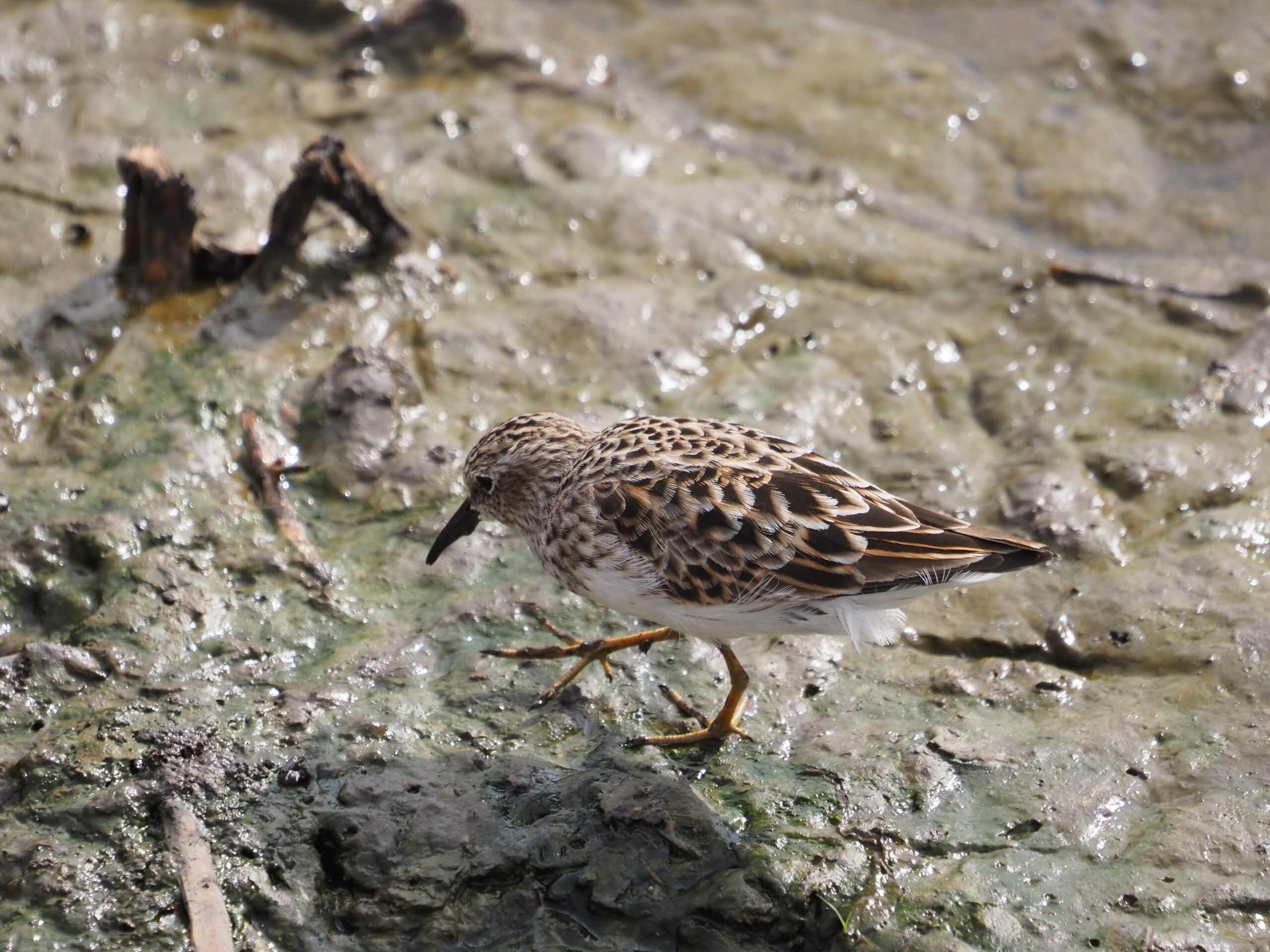
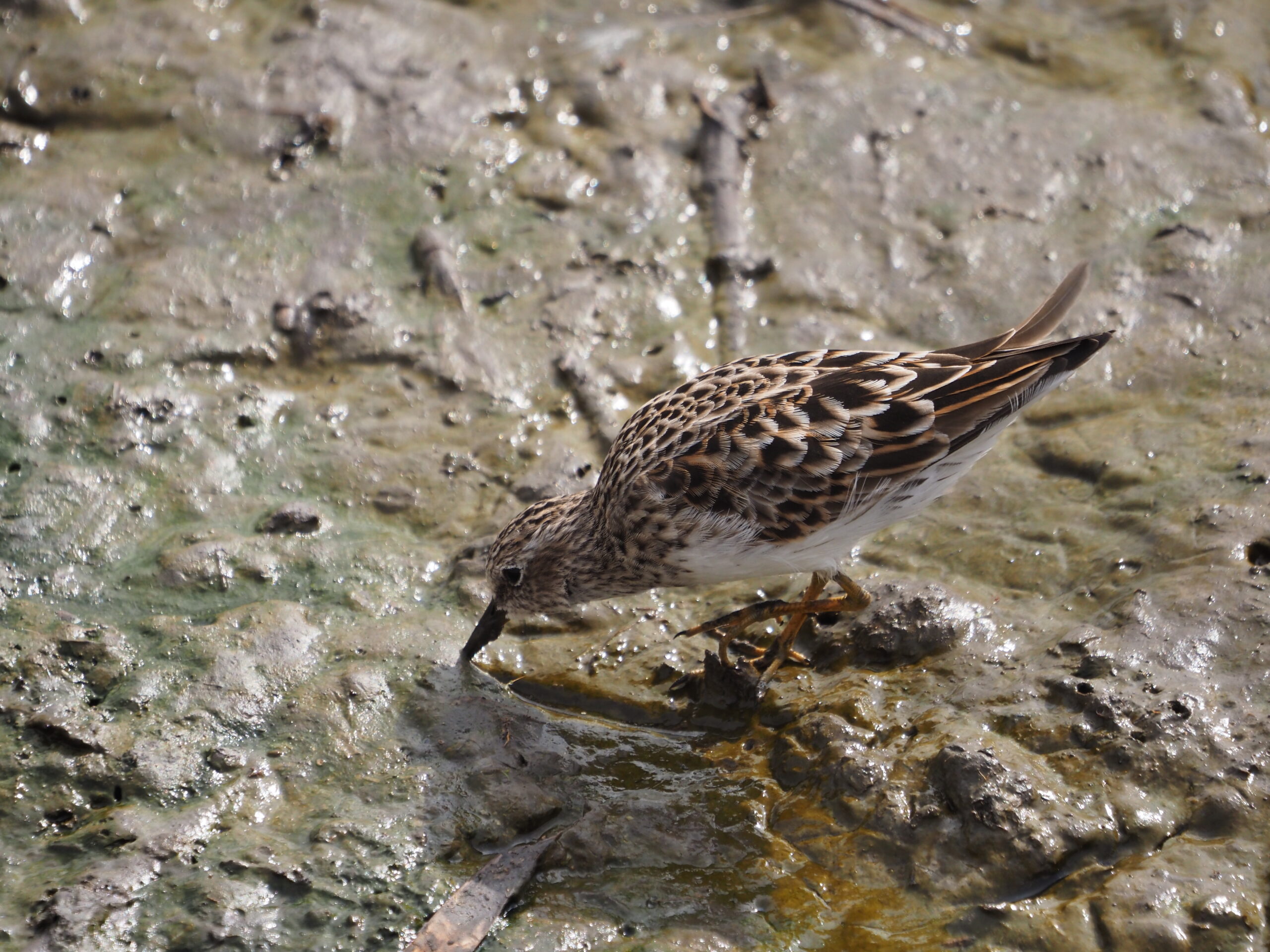
Alternate plumage, formerly called “breeding plumage”, is formed by the pre-alternate molt. It’s purpose is to attract mates and aid in the defense of territories, therefore, it is the brightest and most colorful plumage of shorebirds. These photos were taken in mid to late April.
Least Sandpiper (worn alternate)
By September alternate plumage has faded due to wear and the effects of sun and salt. These are the same alternate plumage feathers acquired in April or so, but they are less colorful and most of the edges (many of them were white) have worn away. Though these photos were taken in September, the wear is not as advanced as in the July photos below.
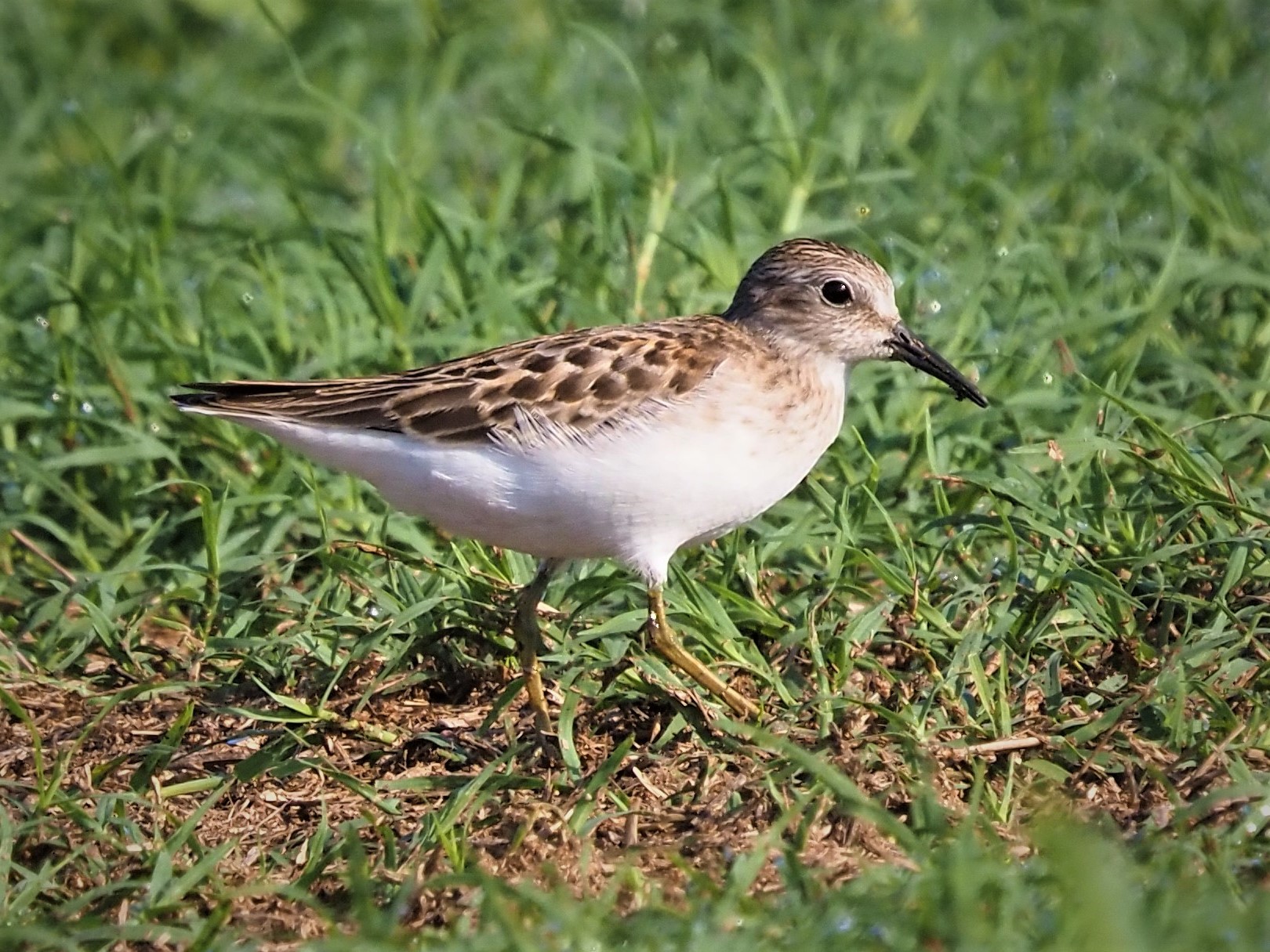
Least Sandpiper (very worn alternate)
These photos, taken in July, illustrate very worn alternate plumage.
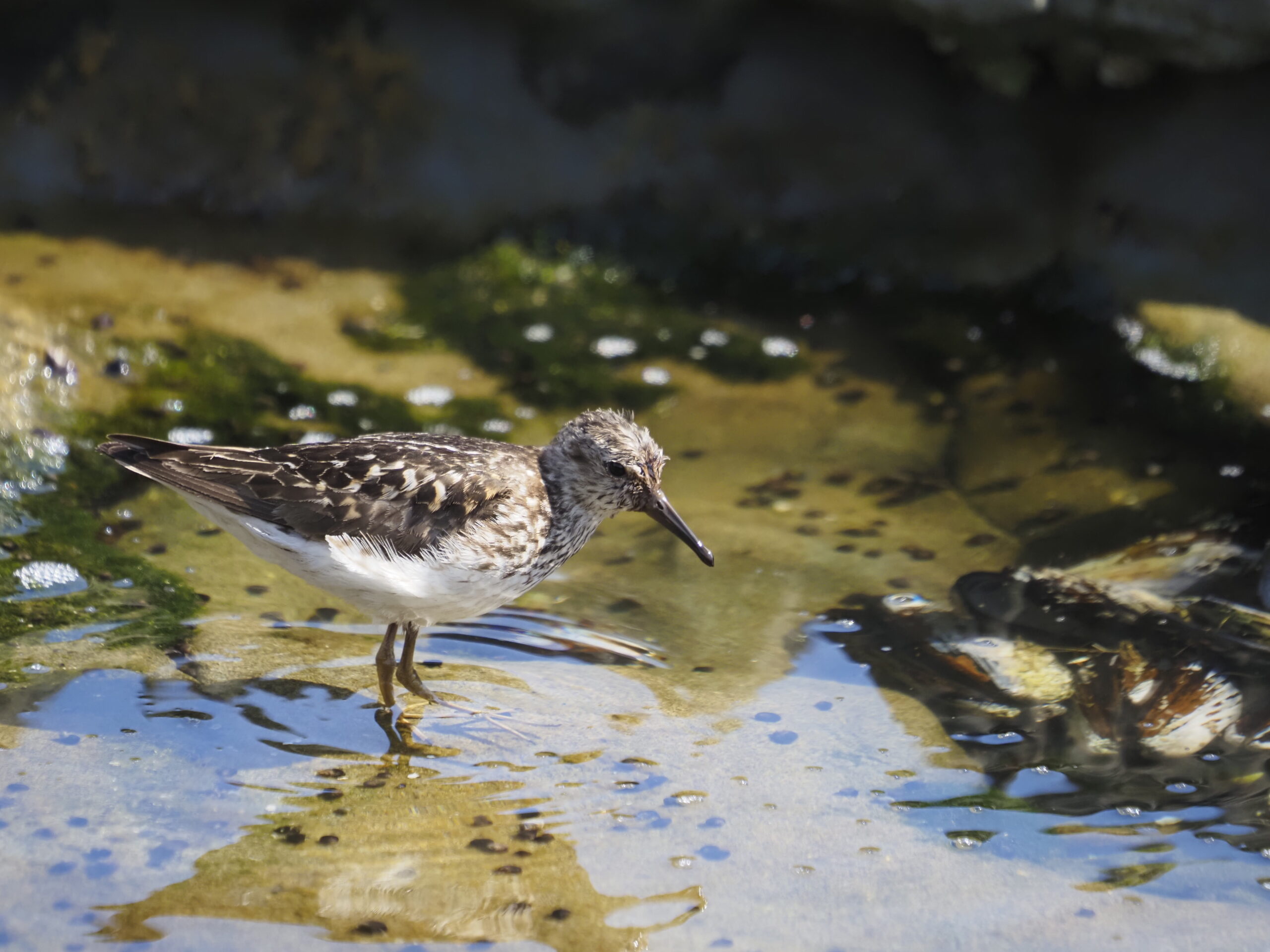
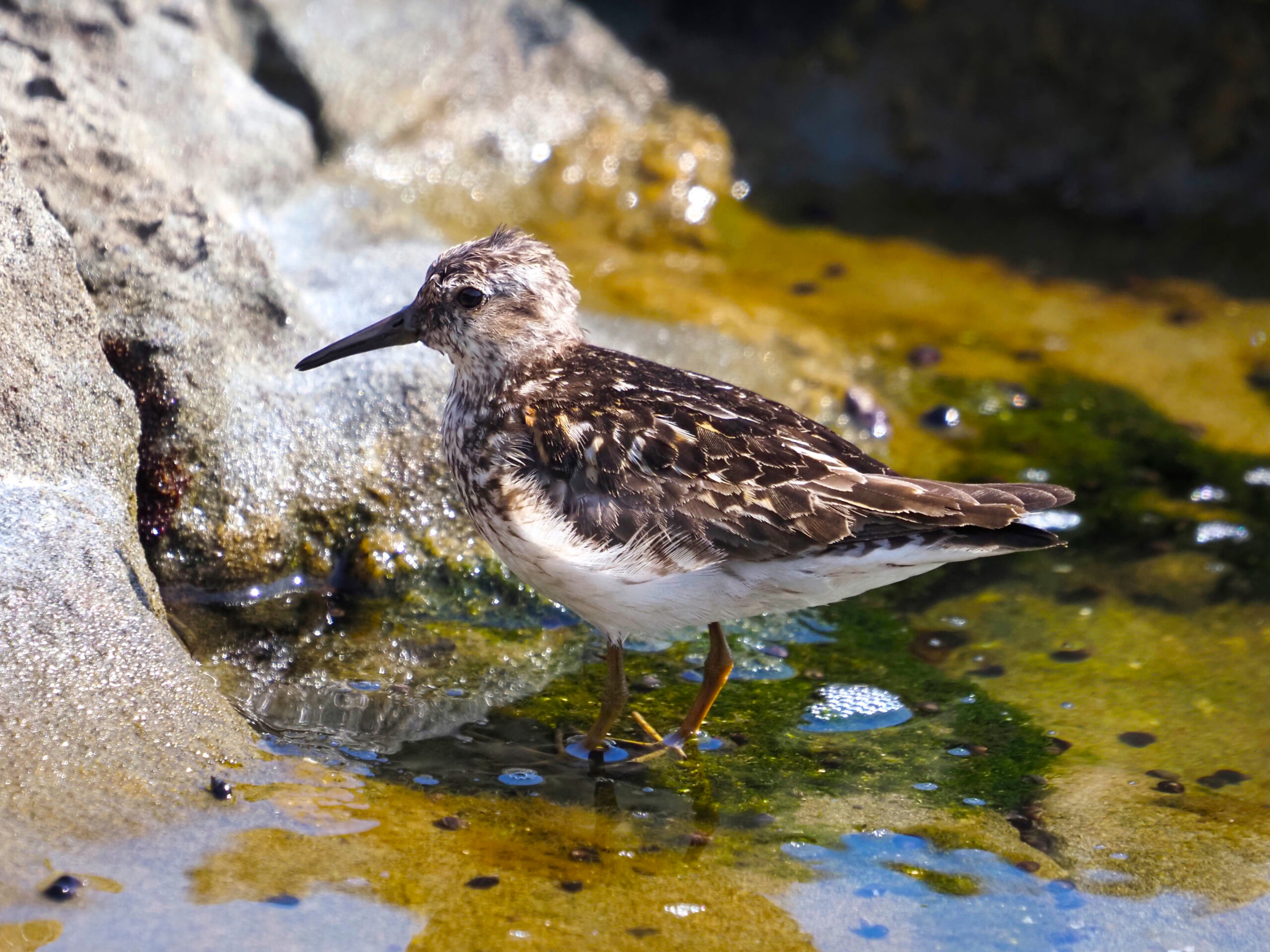
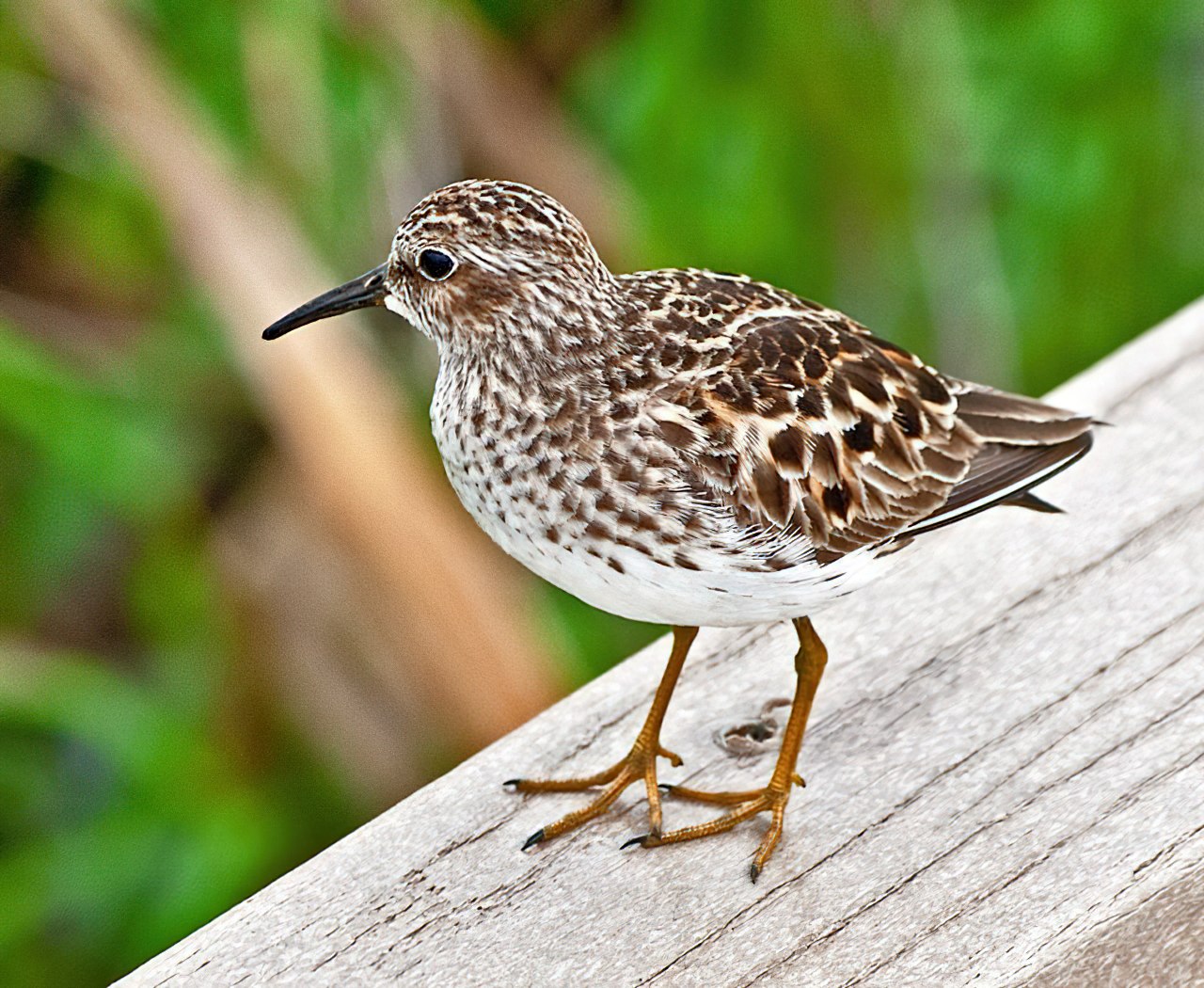
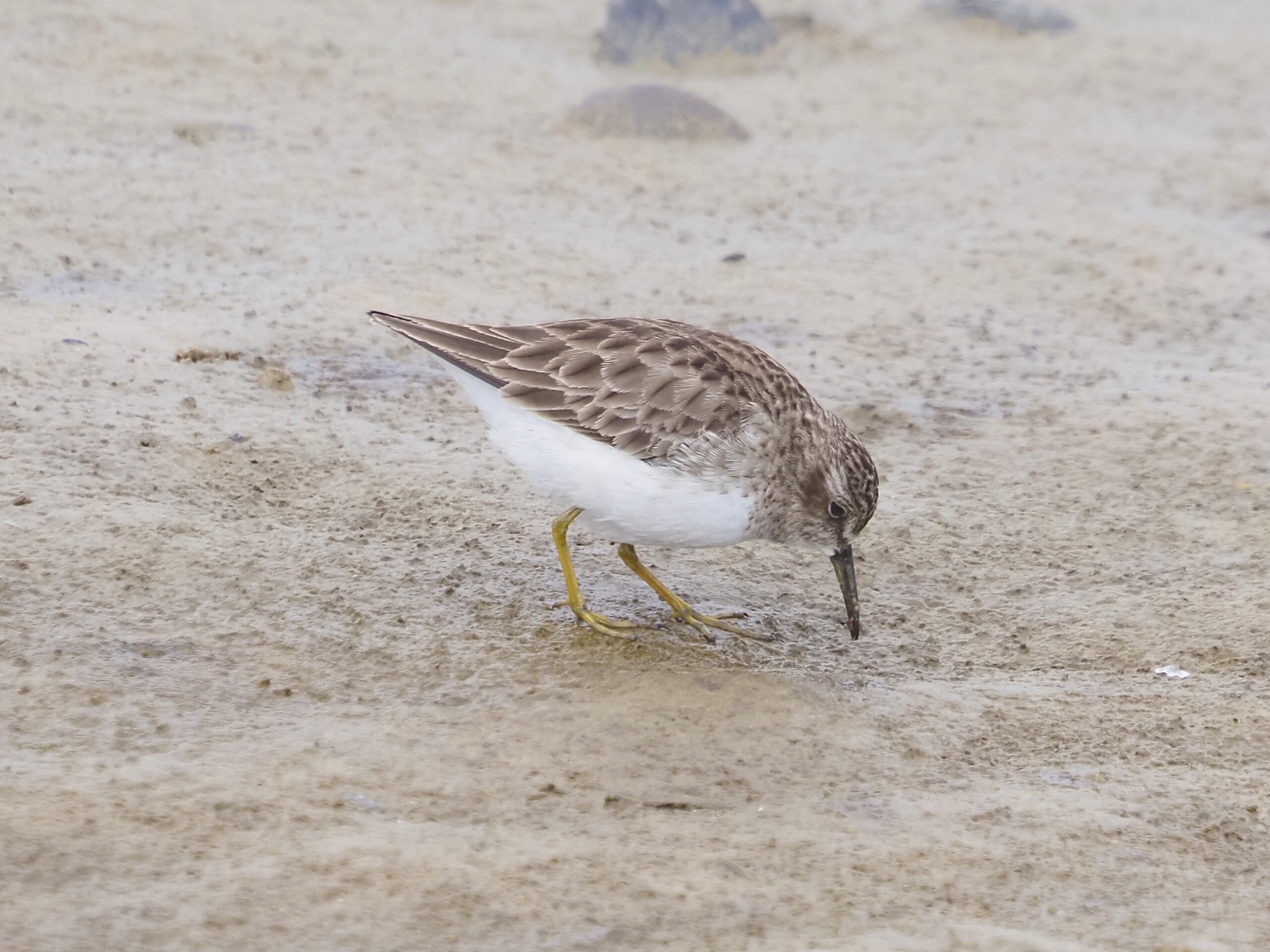
Least Sandpiper (crouch)
These photos illustrate the most distinctive of the feeding postures of Least Sandpiper — the “crouch”. These sandpipers do not always feed in this hunched posture, they frequently feed in a more bent over position (like the larger Dunlin in one photo), but when they do it is an aid in identification. Note the angle formed between the tibia and tarsus. Shorebird Topography.
Comparisons between Least & Semipalmated Sandpipers
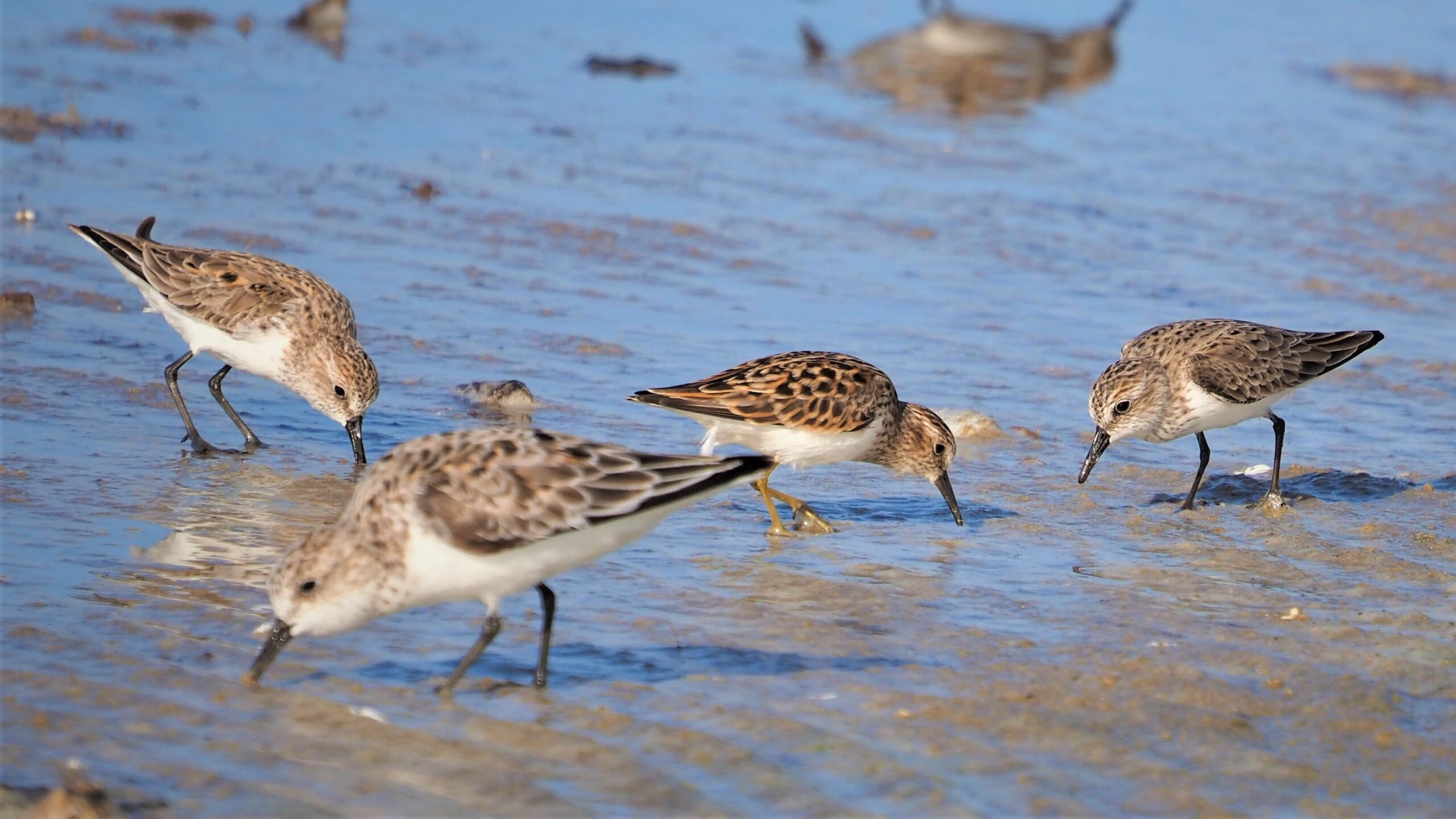
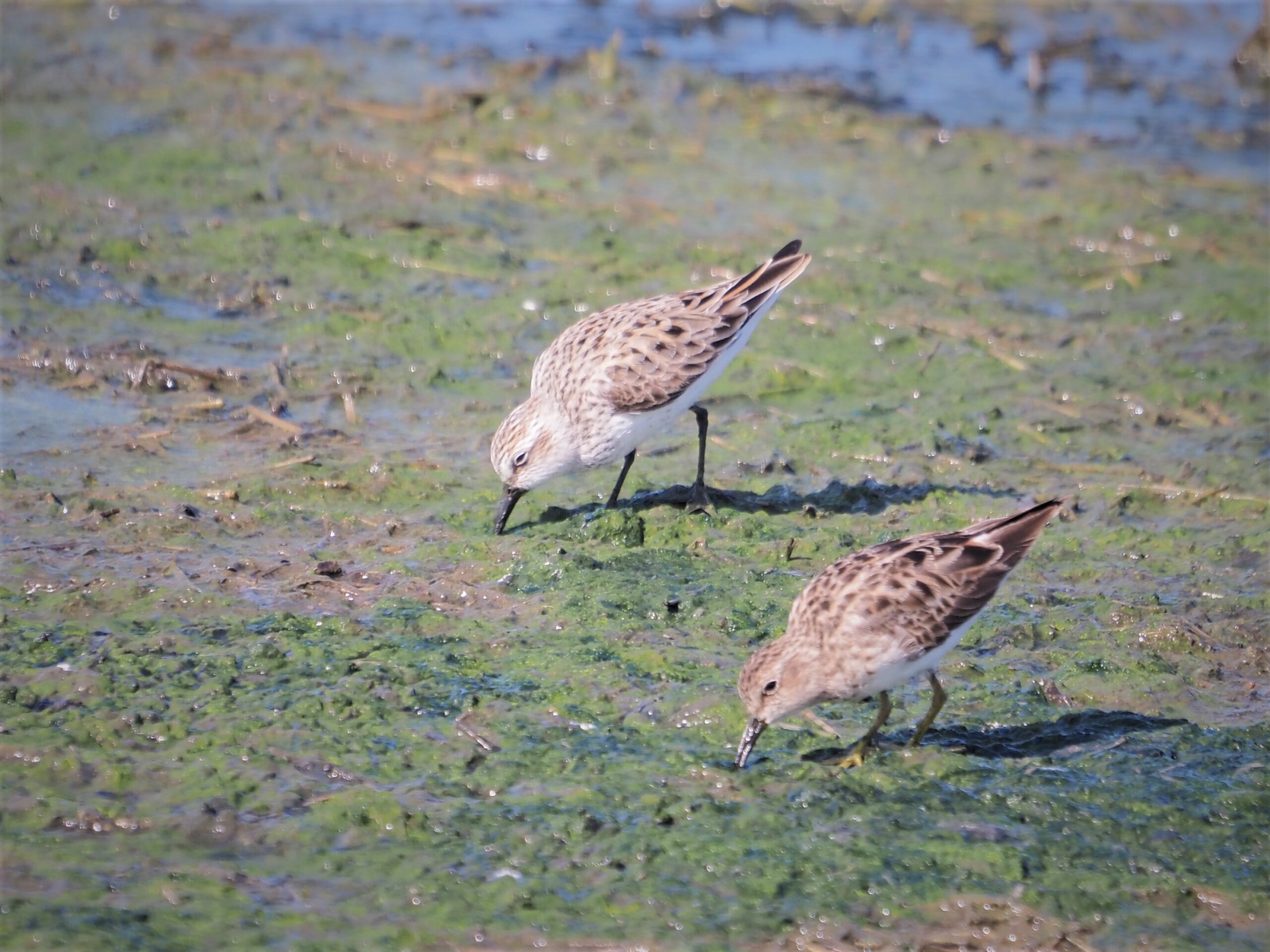
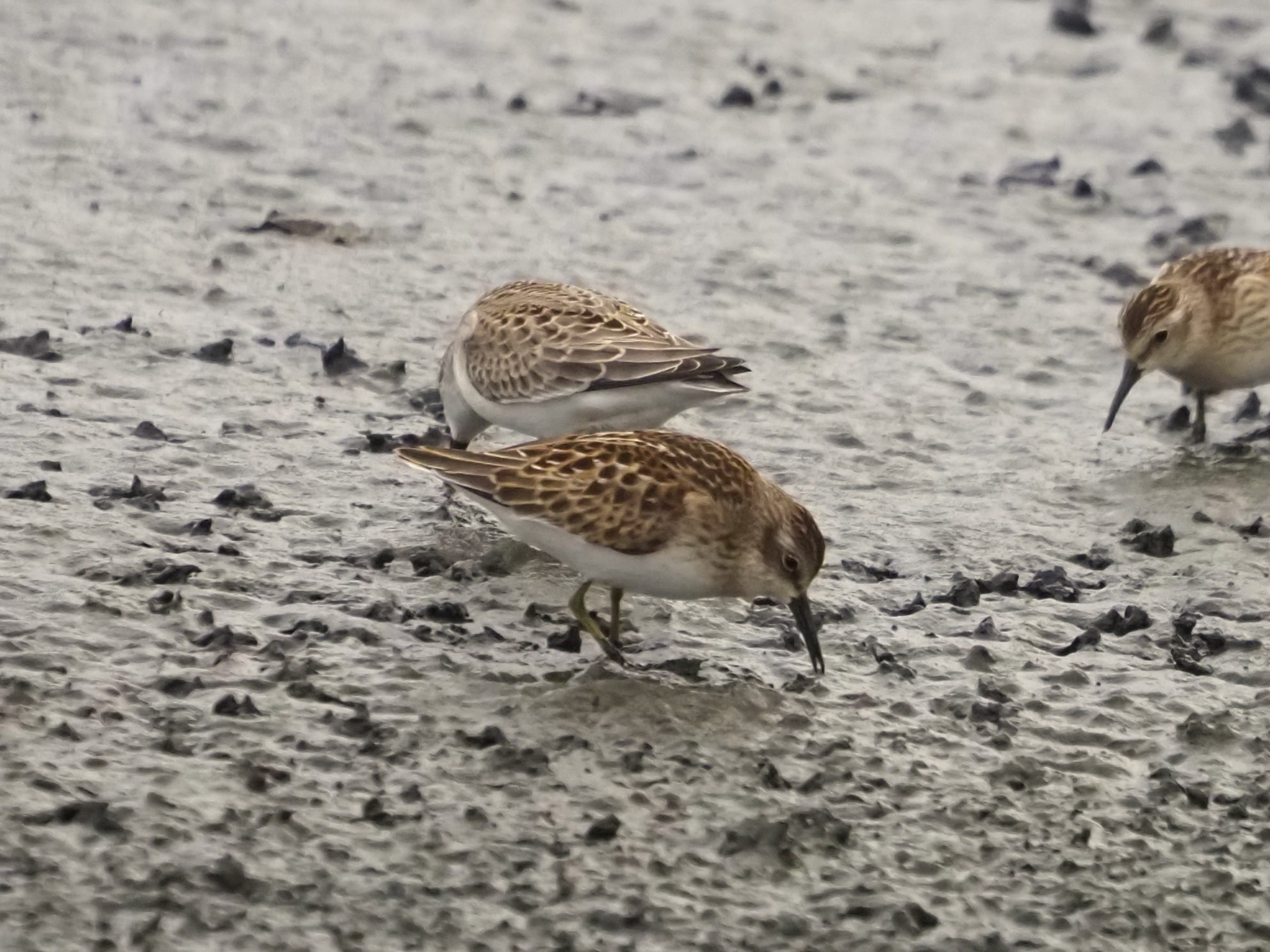
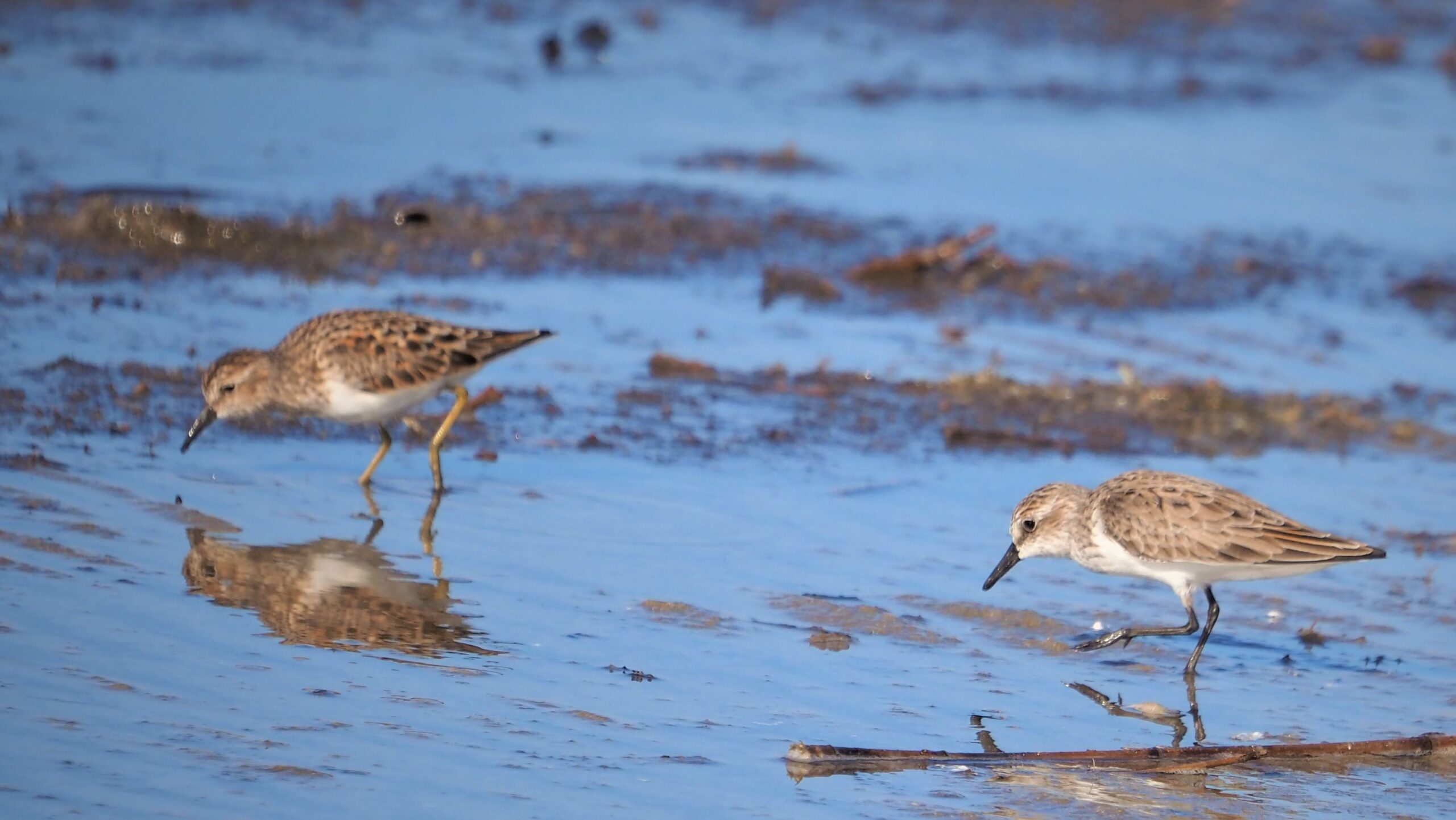
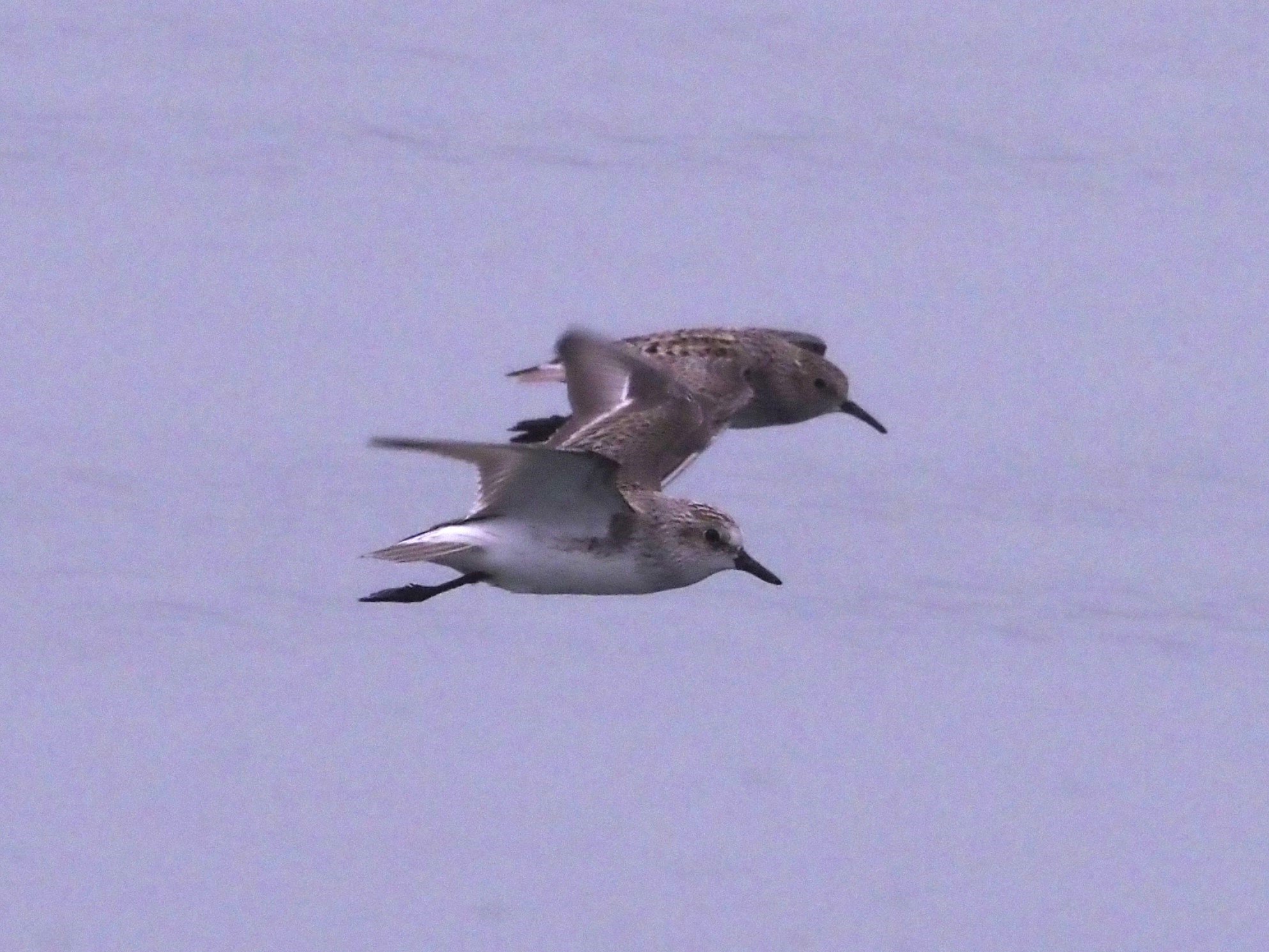
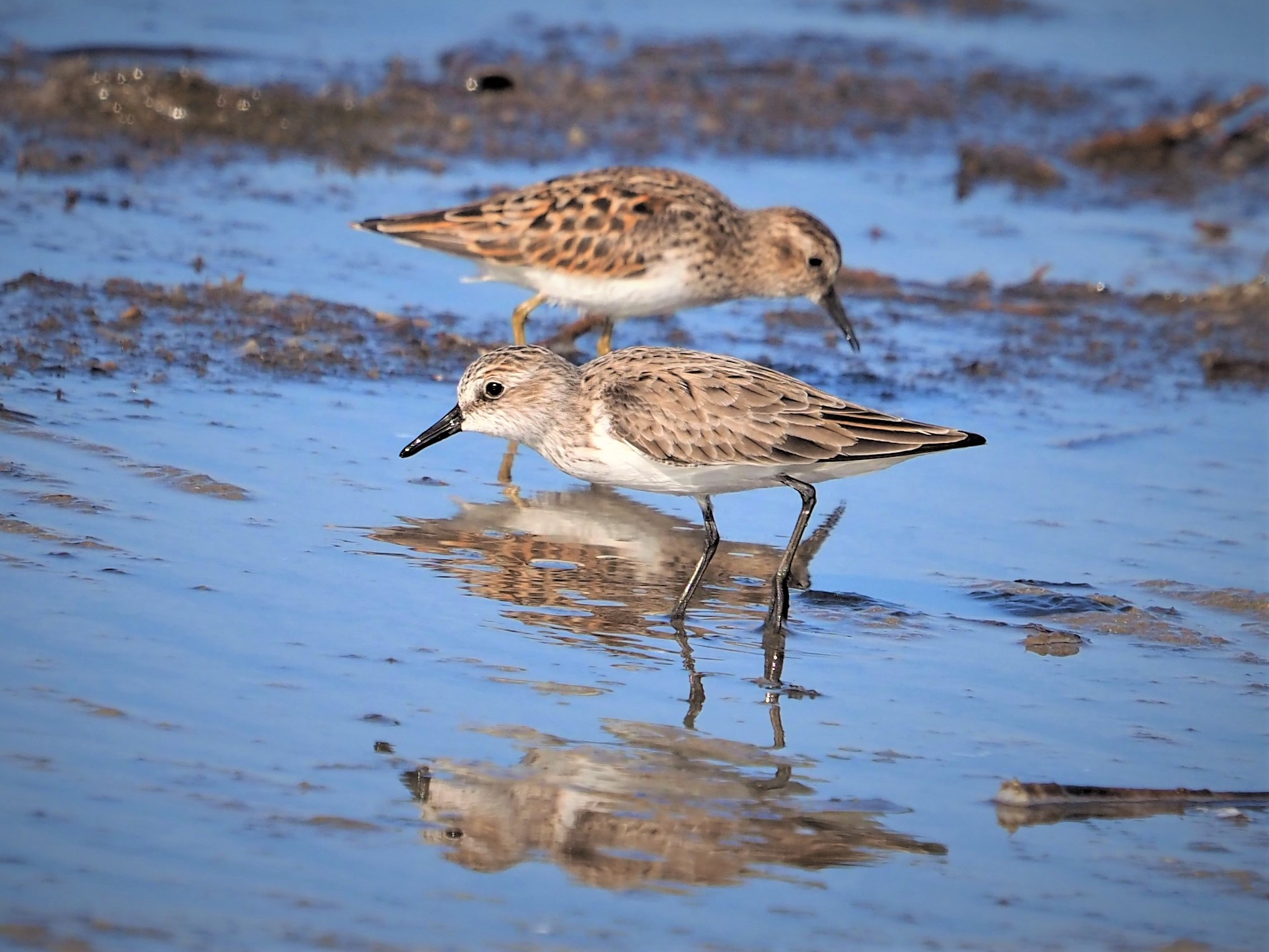
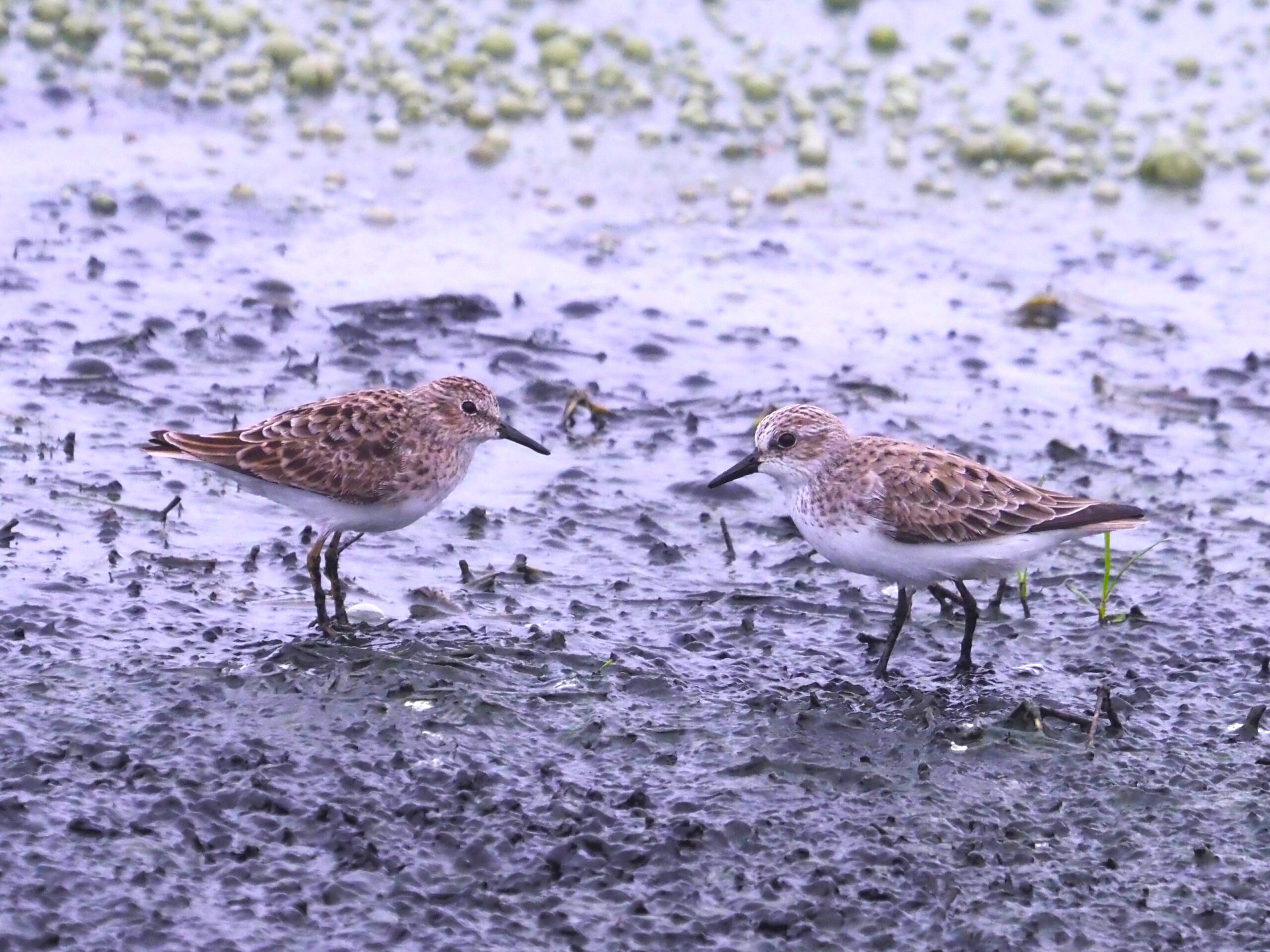
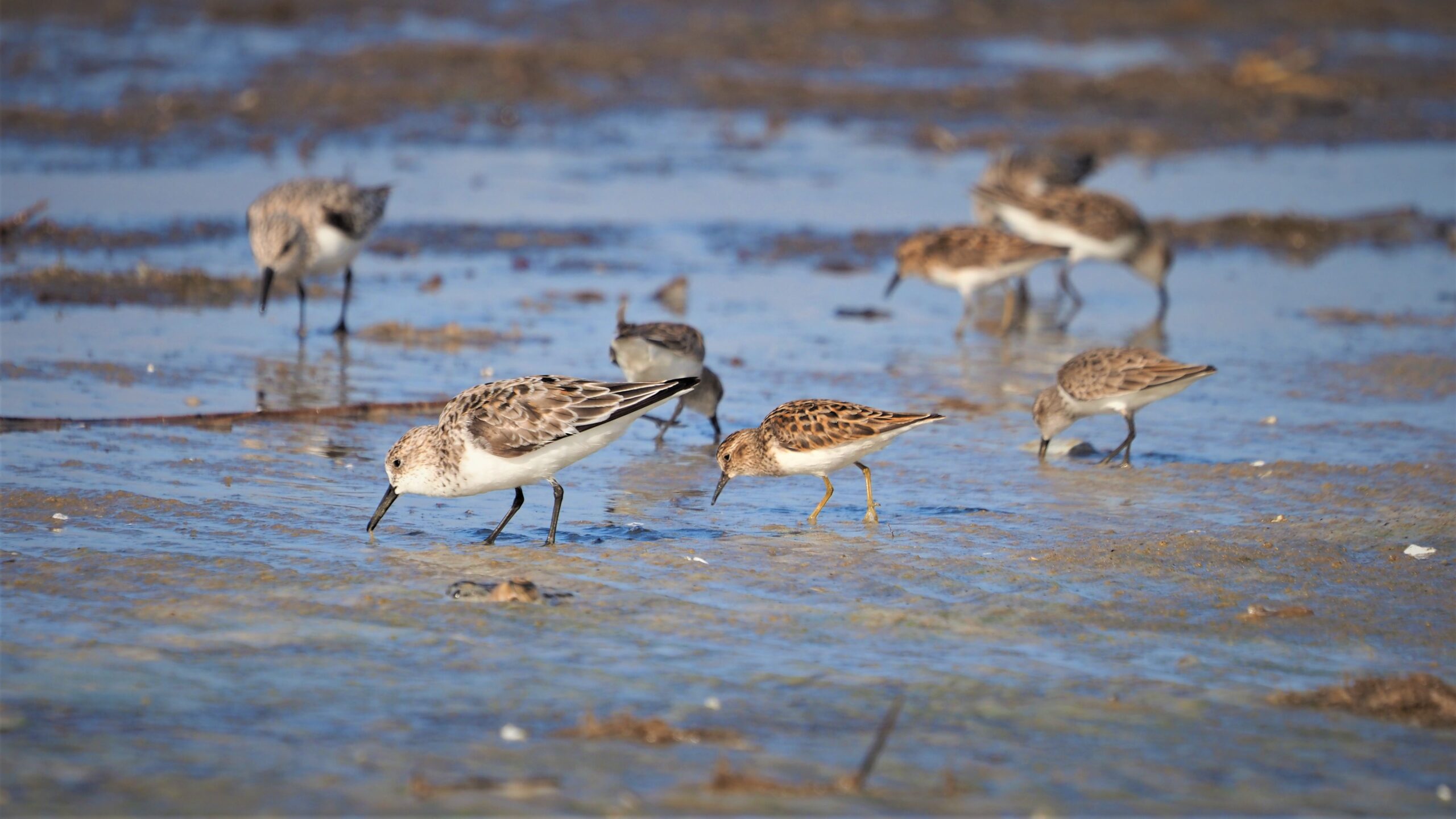
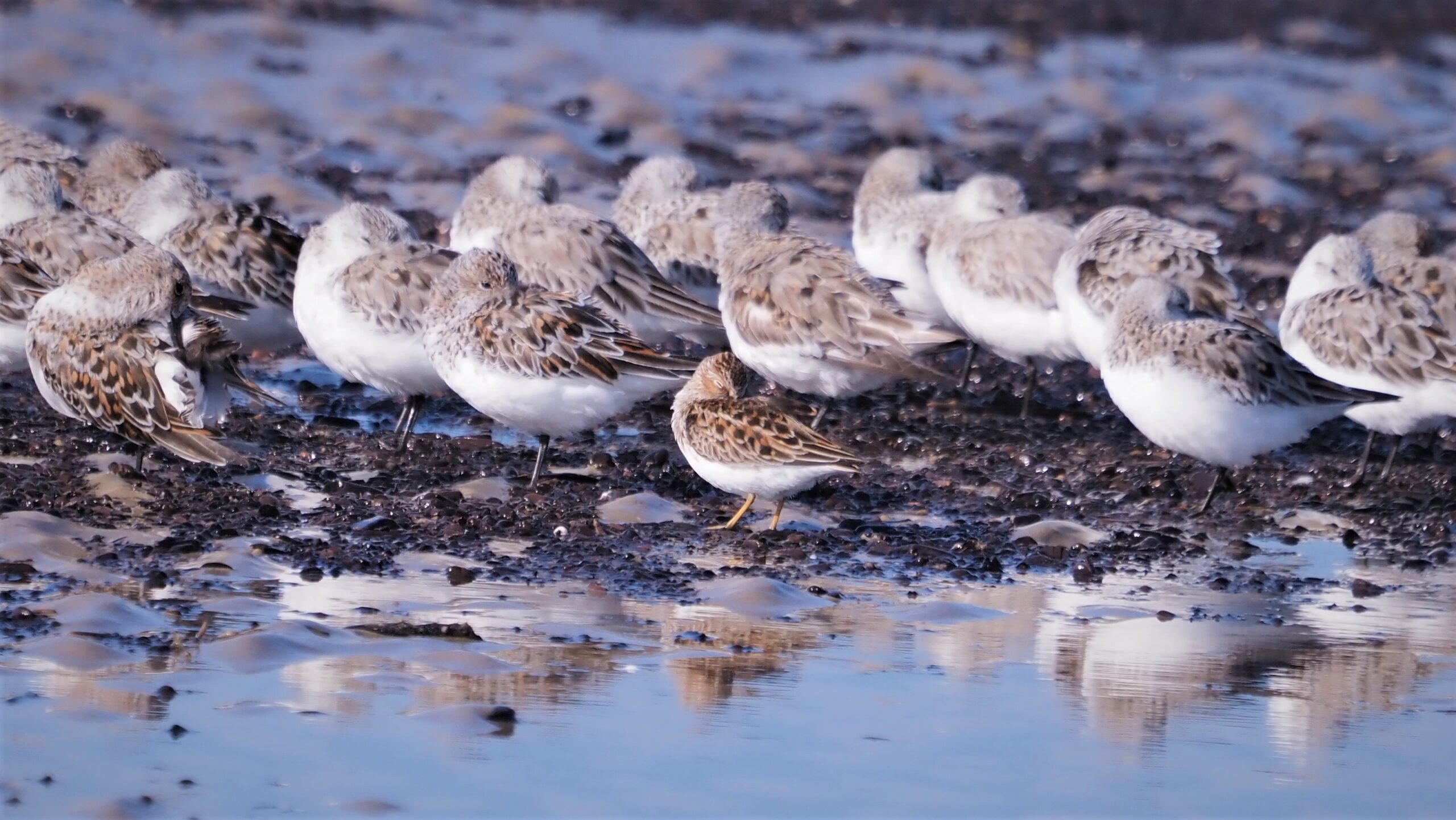
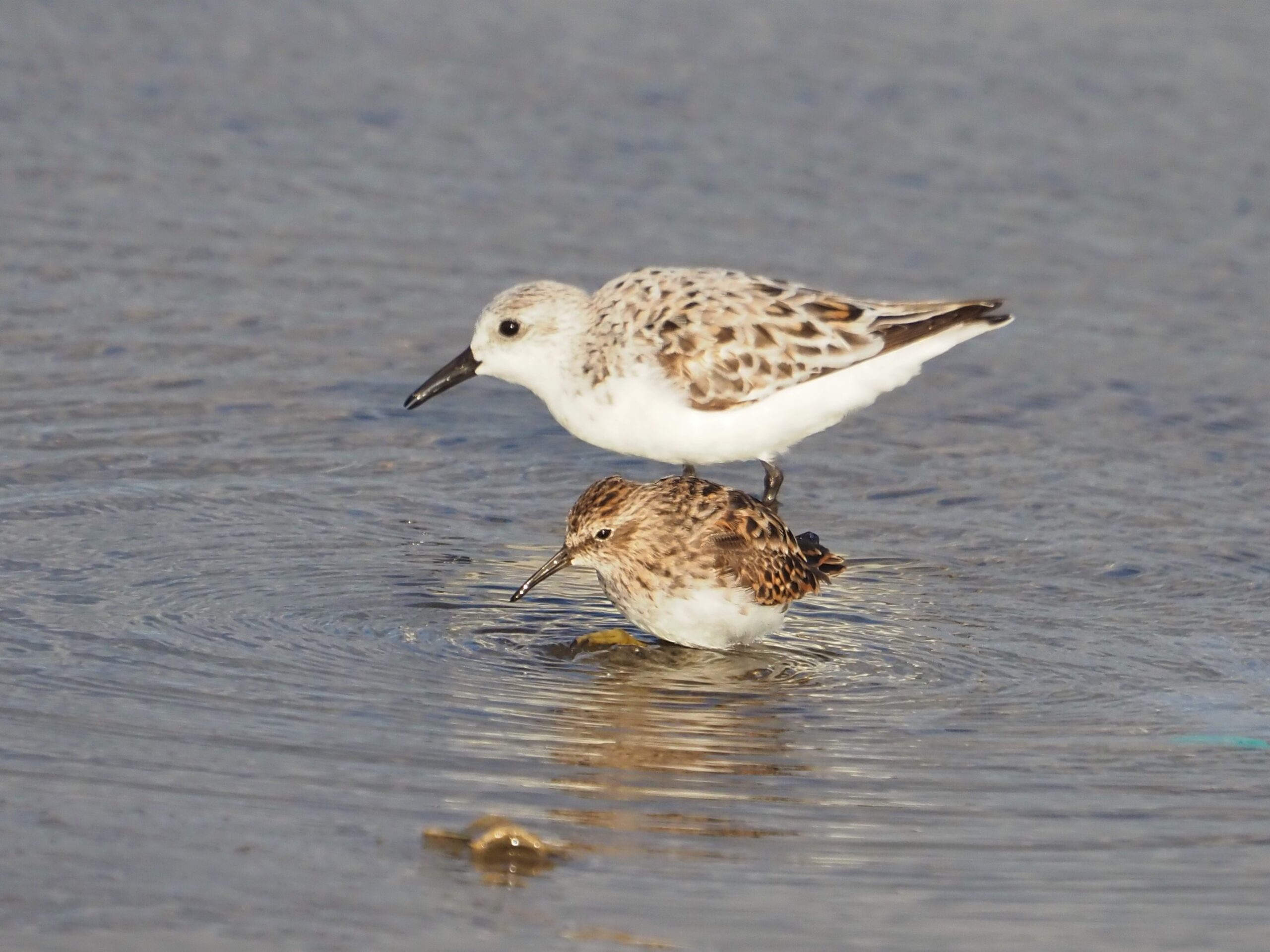
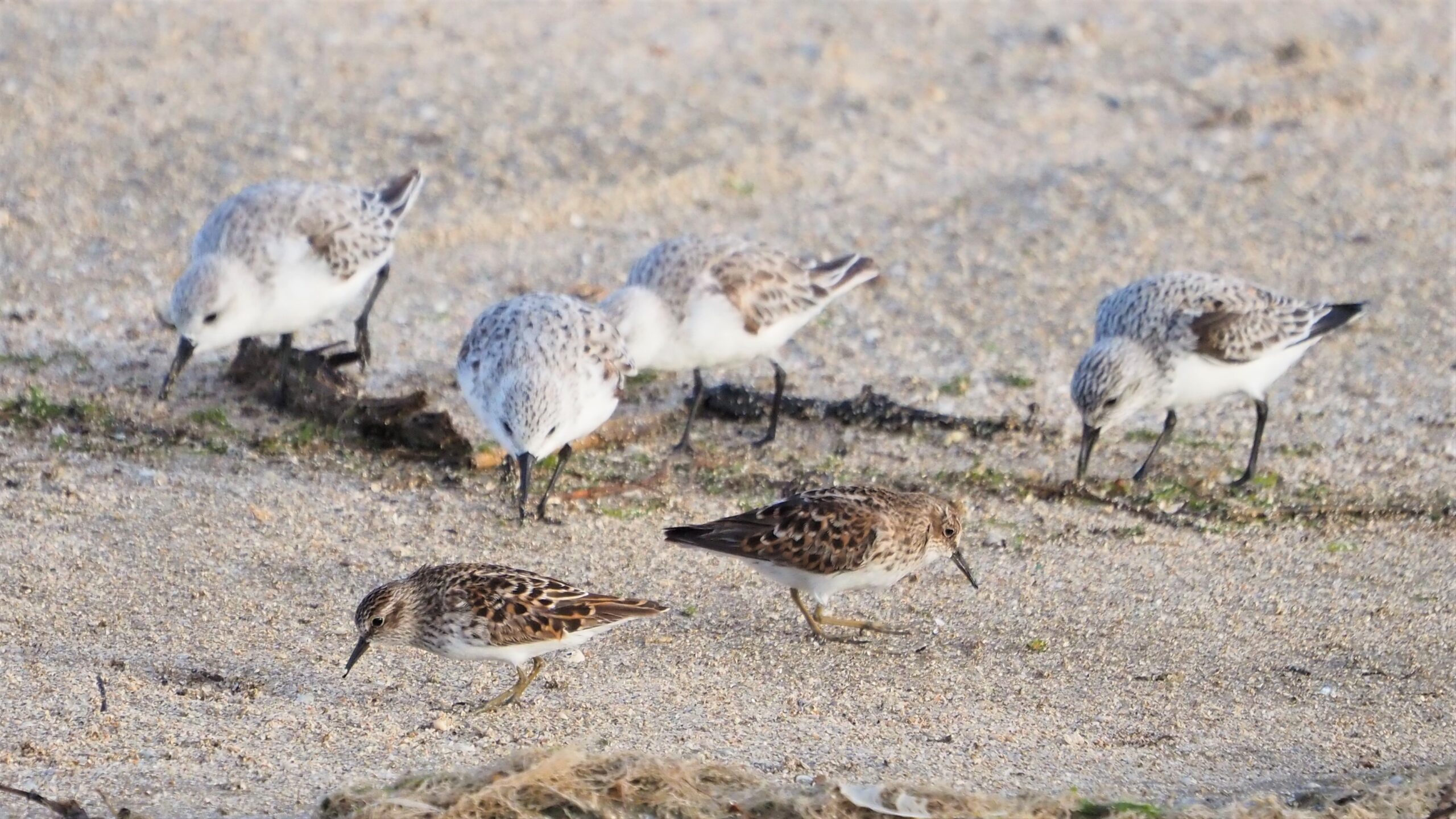
The Least Sandpiper is compared with the Semipalmated Sandpiper below. The Least is a browner bird, while the Semipalmated is usually a “frostier” bird. Also note the straight, blunt-tipped bill of the Semipalmated, while the Least has a slightly decurved and fine-tipped bill. And of course the Least has yellow legs and the Semipalmated (and all other peeps) have black legs. The larger species in some photos is the Sanderling which may superficially resemble the “peeps” but is much larger. The Sanderling is an example of a shorebird with very “frosty” plumage.
Comparisons between Least & Western Sandpipers
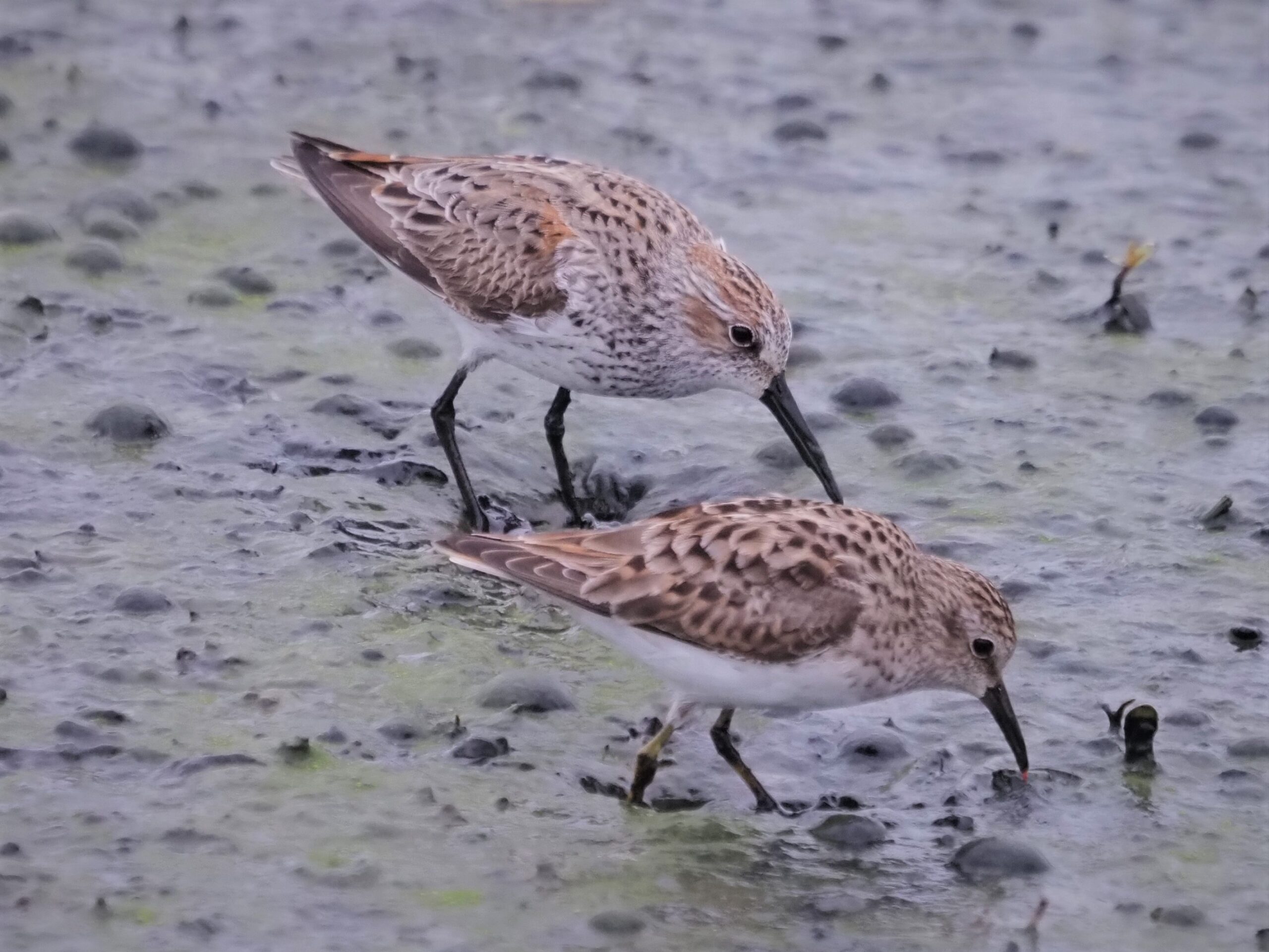
The Least Sandpiper is compared with the Western Sandpiper below. The larger species in 1 photo, which superficially resembles a Western Sandpiper is a Dunlin.
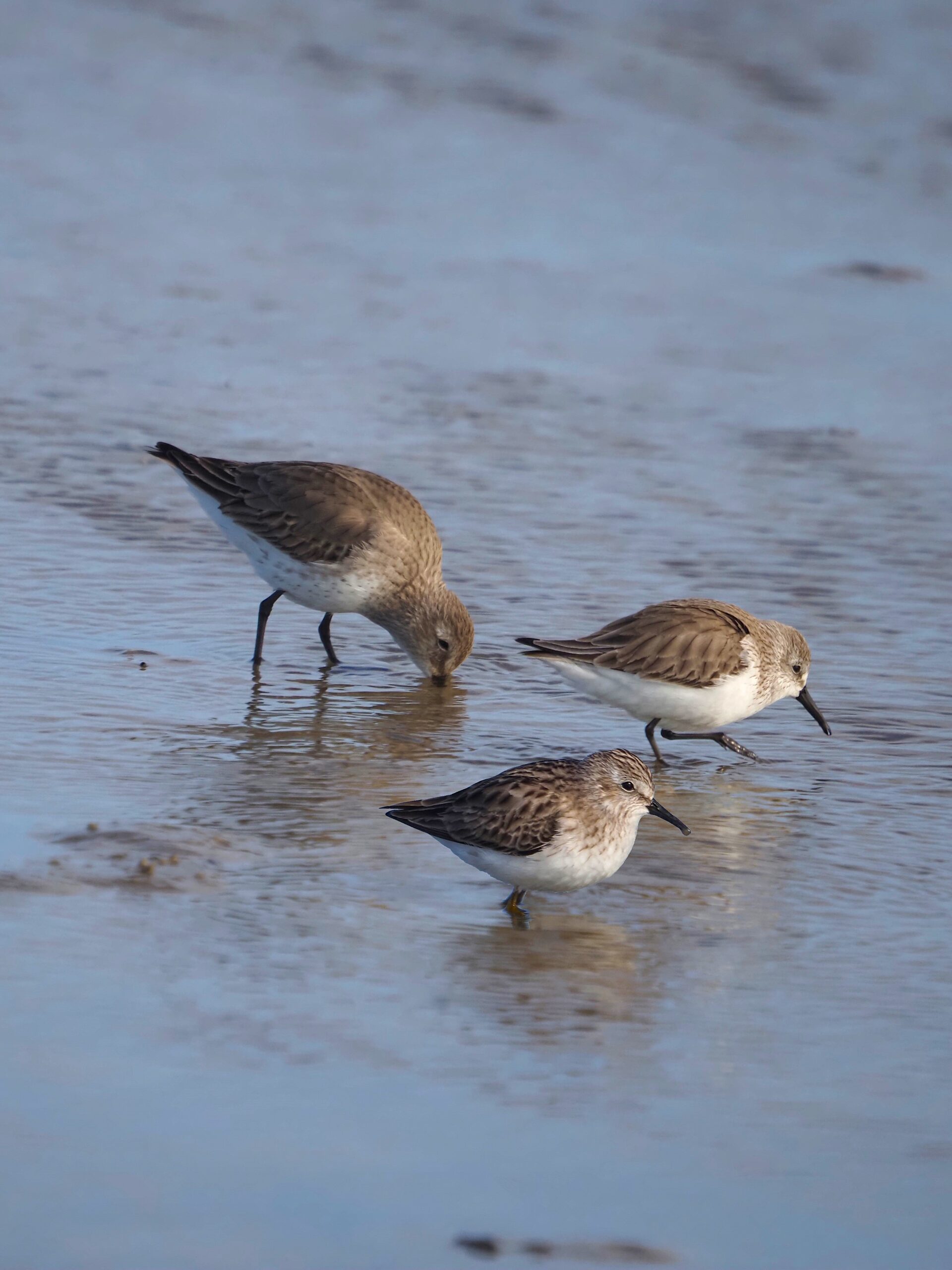
Comparison between Least, Semipalmated & Western Sandpipers
The 3 smallest peeps are compared below. Note the differences in bill shape and length as well as the fact that the Least is browner, while the Semipalmated and Western are frostier, especially the Semipalmated. Also note that the Western is generally the most colorful of the 3 in breeding plumage.
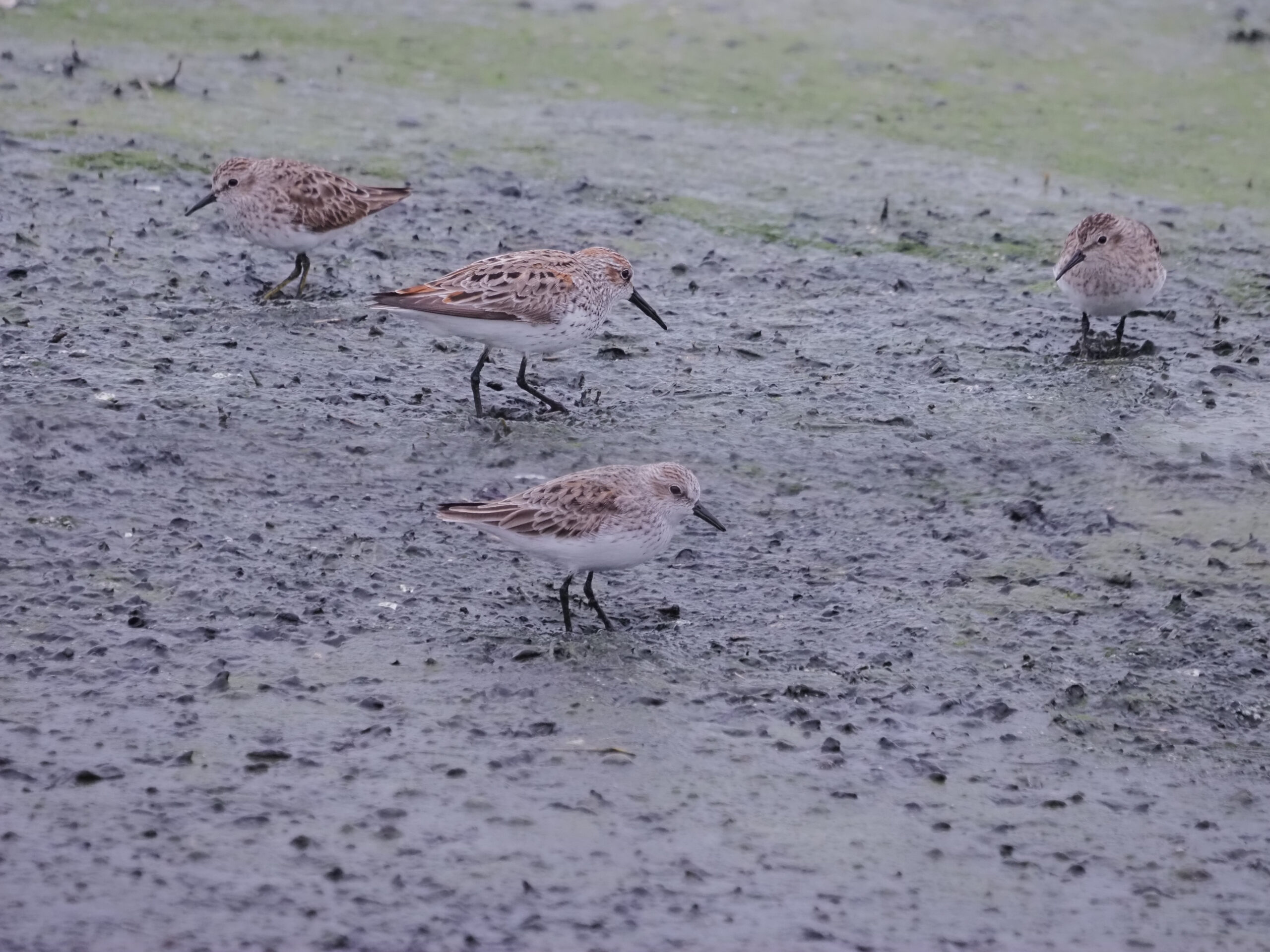
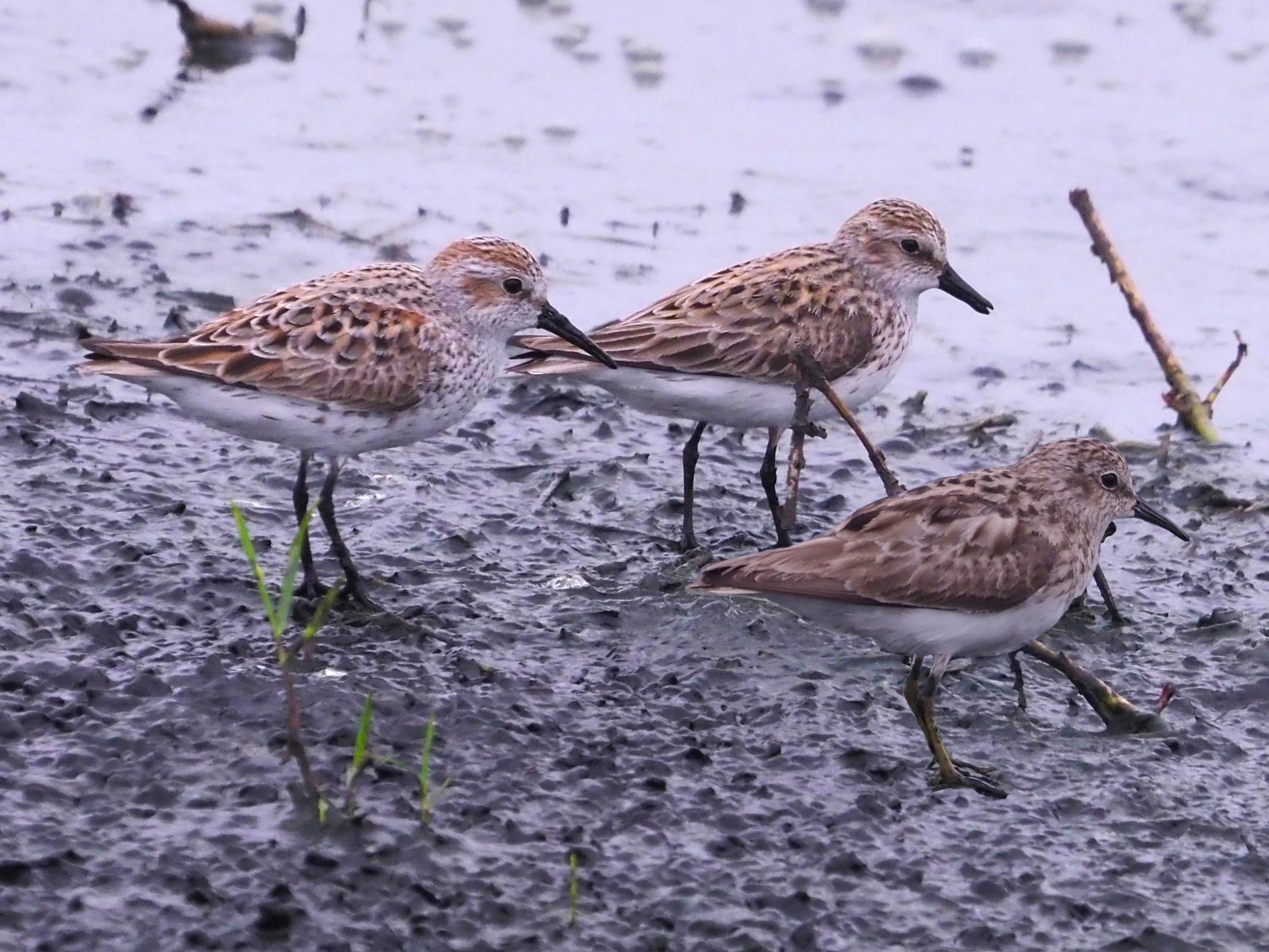
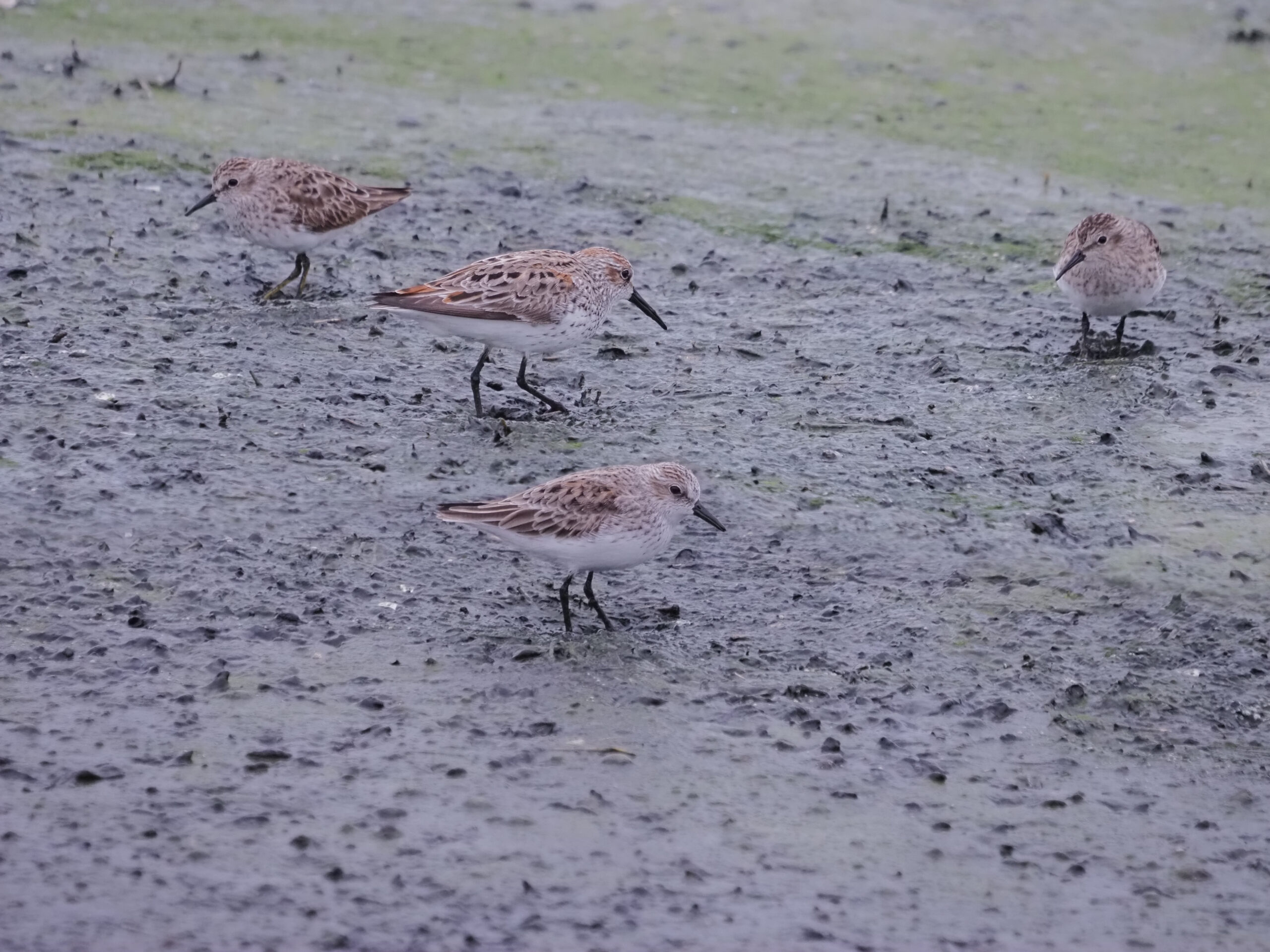
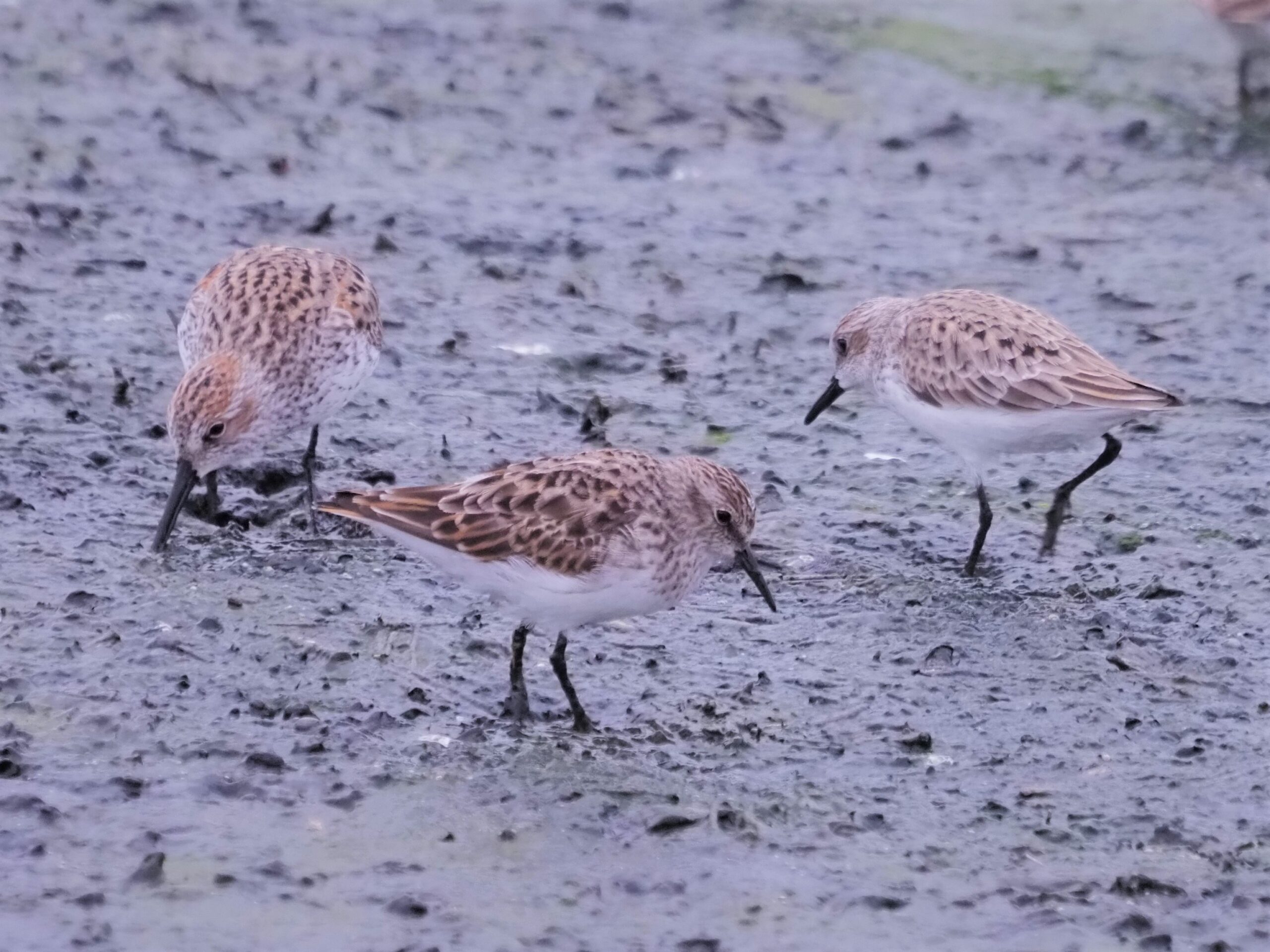
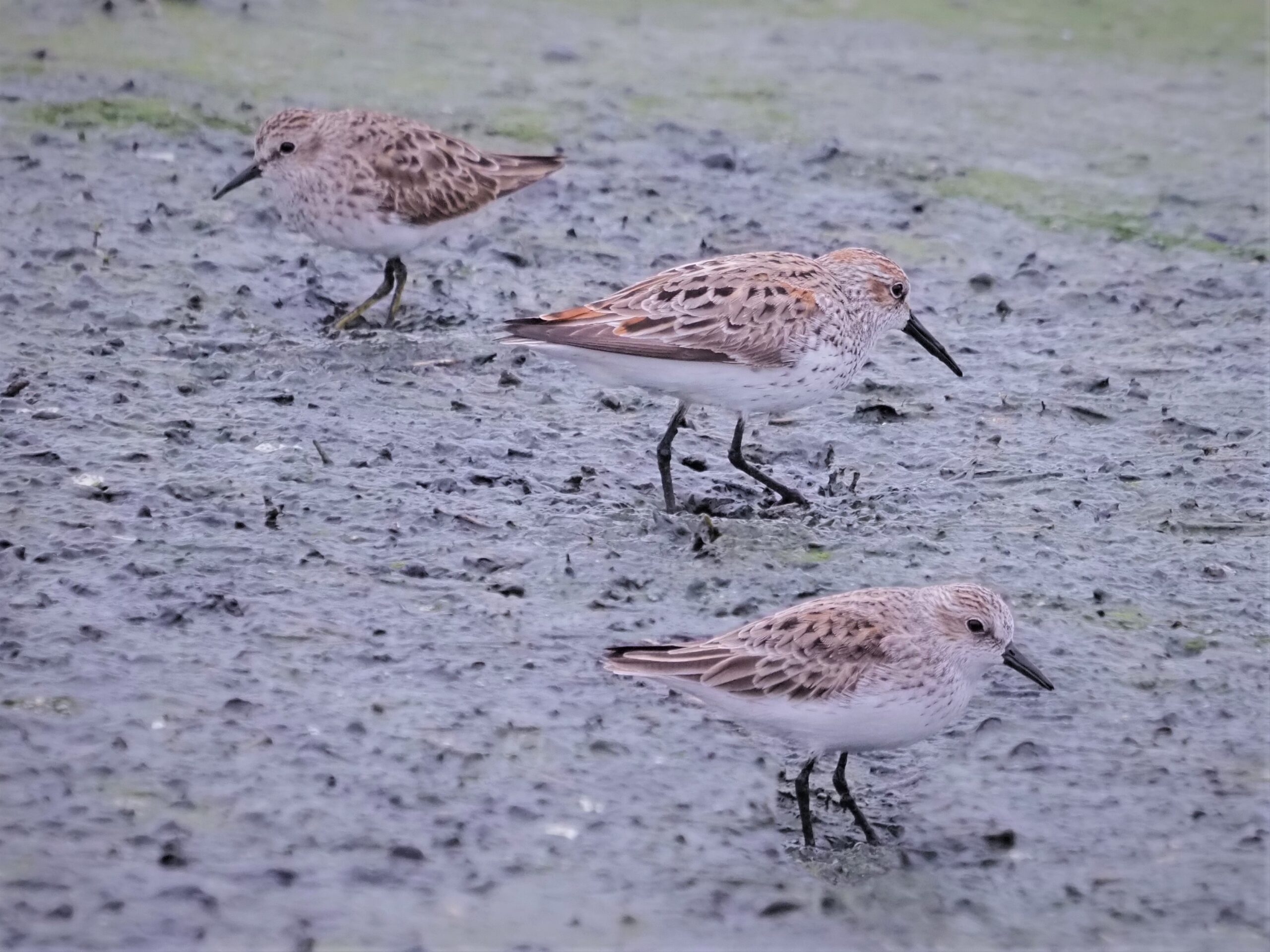
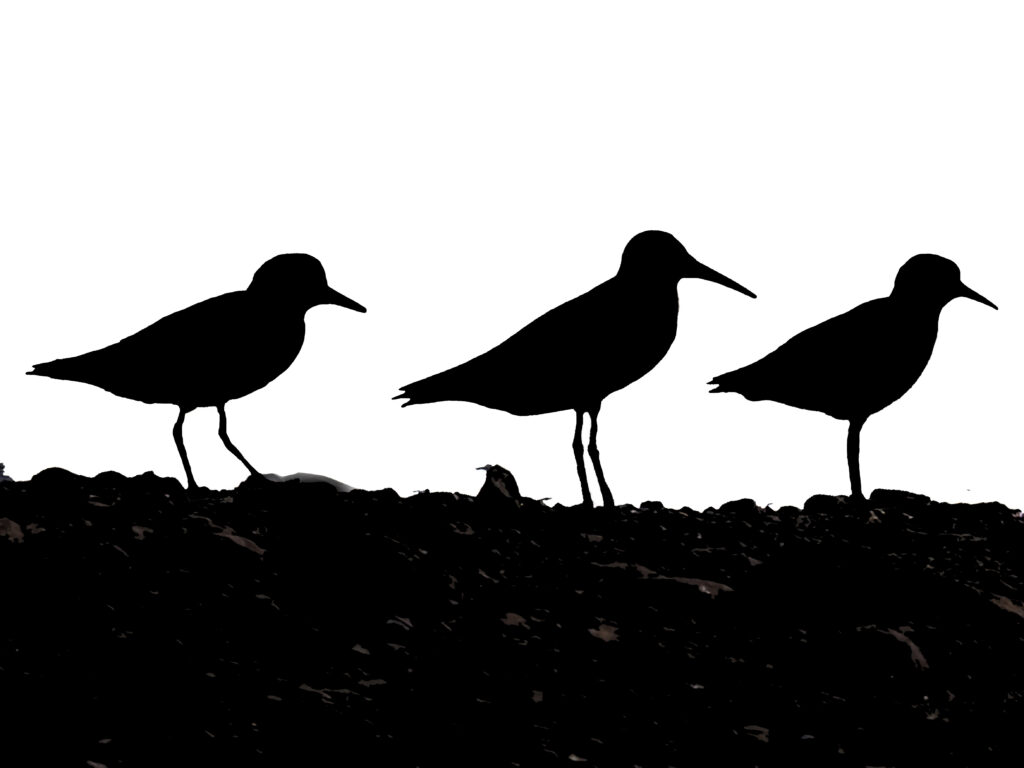
The structure of shorebirds is very important in their identification. The 3 smaller peeps are shown in silhouette below (from left to right: Semipalmated, Western & Least). These shapes of the bill & head are fairly typical: the Semipalmated generally has a rounder head, steeper forehead and shorter, straighter, blunt-tipped bill, while the Western has a longer bill, which droops at the tip, and a blockier, sometimes more rectangular head; lastly the Least has a very dove-like, round head with a shorter, thinner, slightly down-turned, fine-tipped bill.
The bodies of the 3 smallest peeps are also subtly different: the Semipalmated is slightly thicker in the neck and upper chest, with a shorter neck, while the Western is subtly lankier, with usually less bulk in the chest and belly. The legs of the Western are very slightly longer as is the overall body. The Least’s body usually appears more truncated and short-tailed.