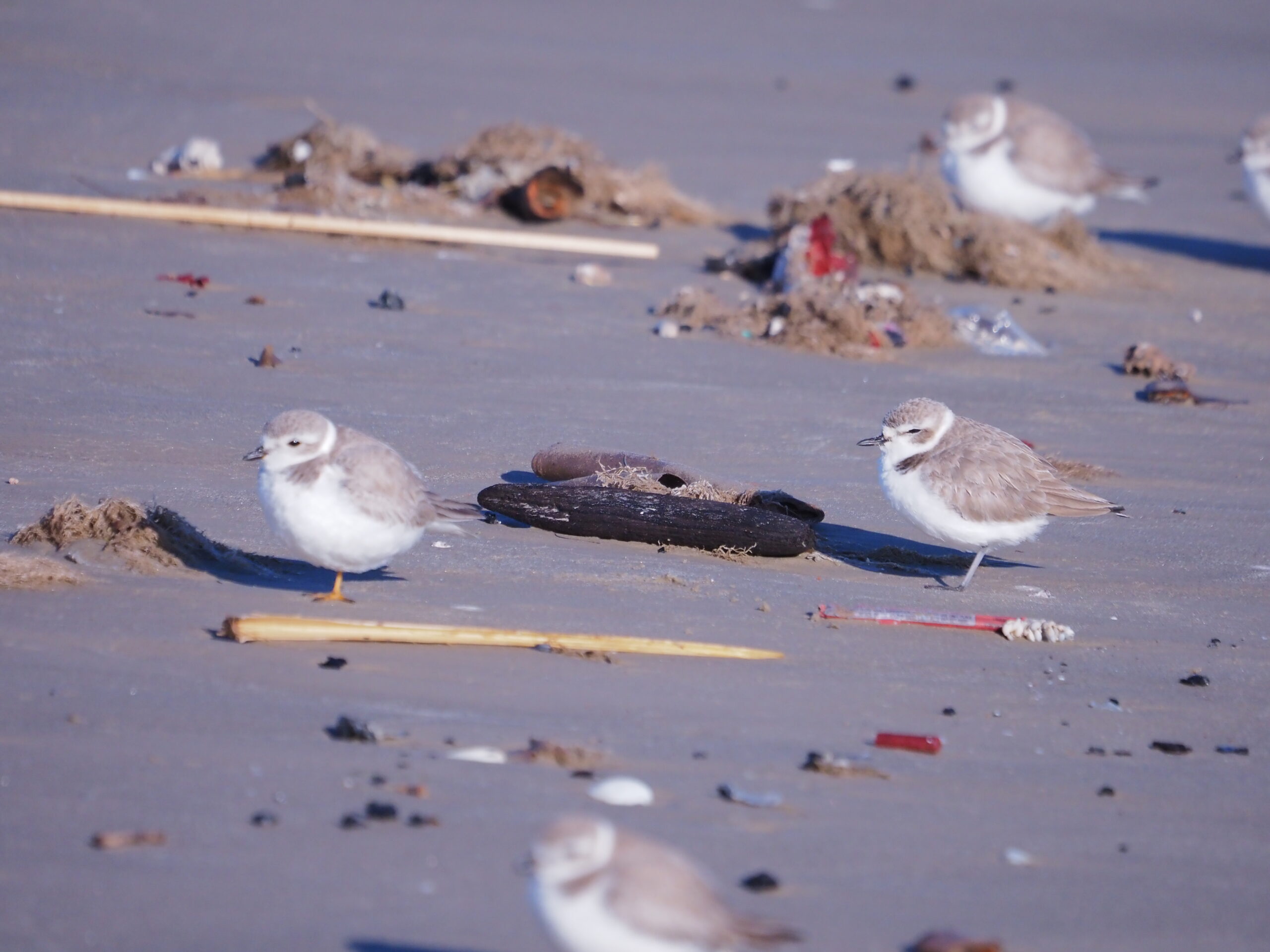
The Ringed Plovers are a beautiful group of birds. They are not difficult to identify if you memorize the bill shape/back color matrix which is detailed below. Plovers are initially identified as plovers by their upright stance, large eyes, and their walk-stop-seize prey method of feeding.
Killdeer
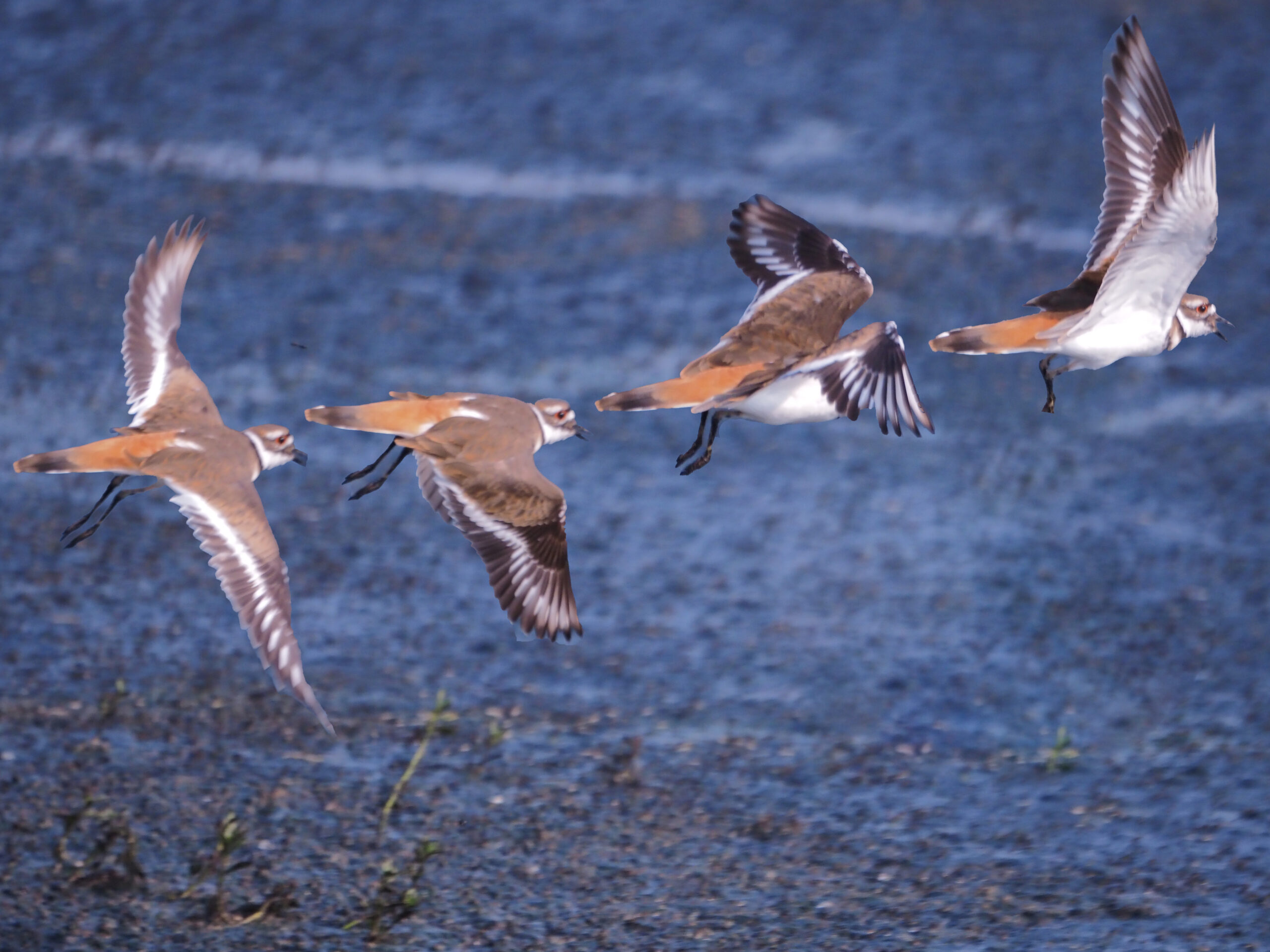
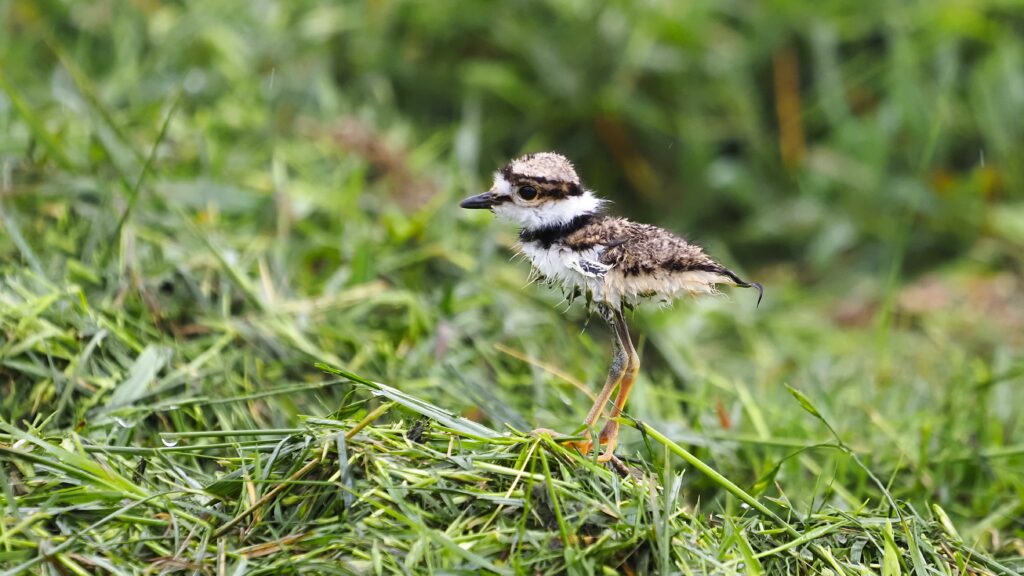
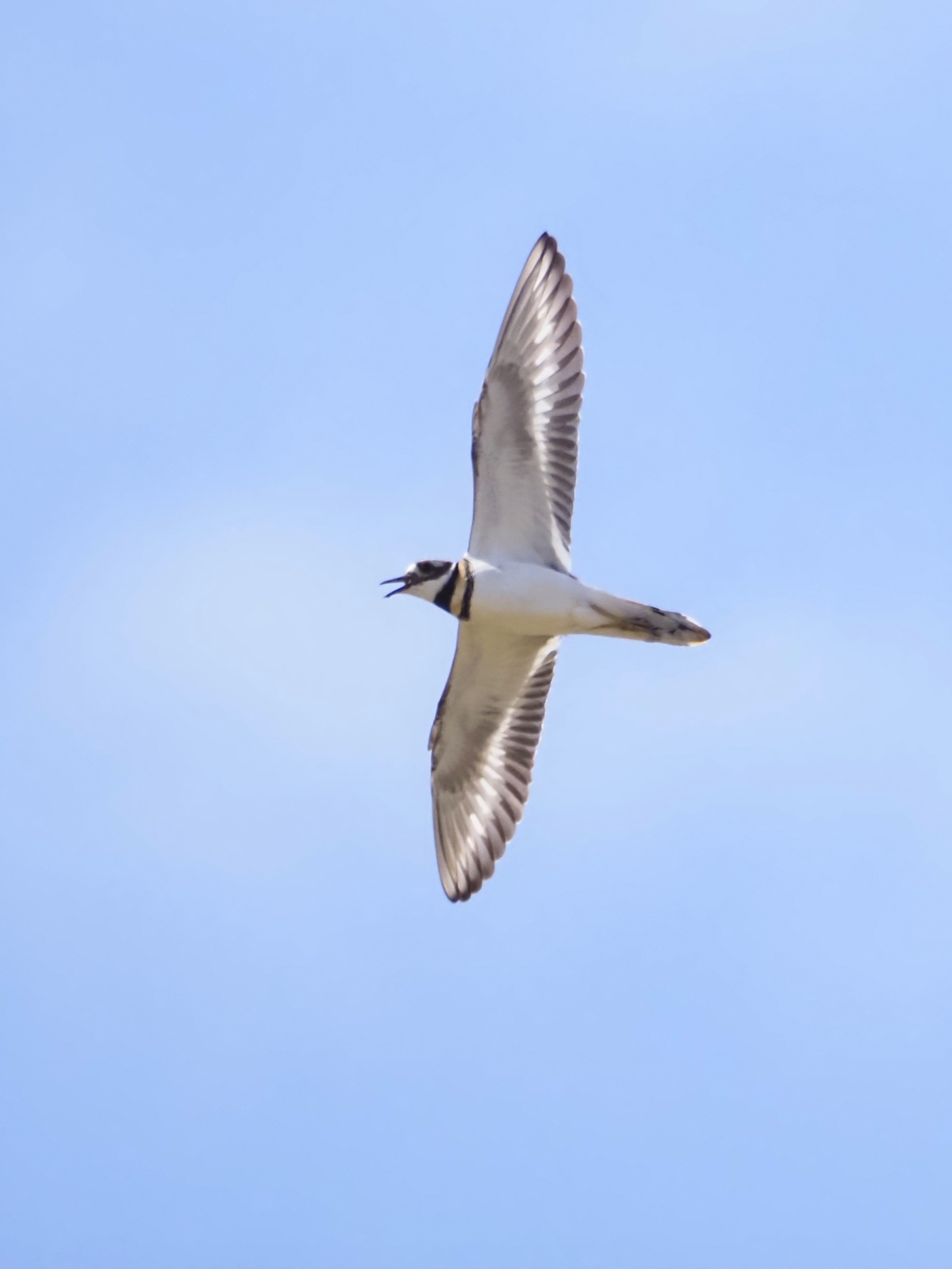
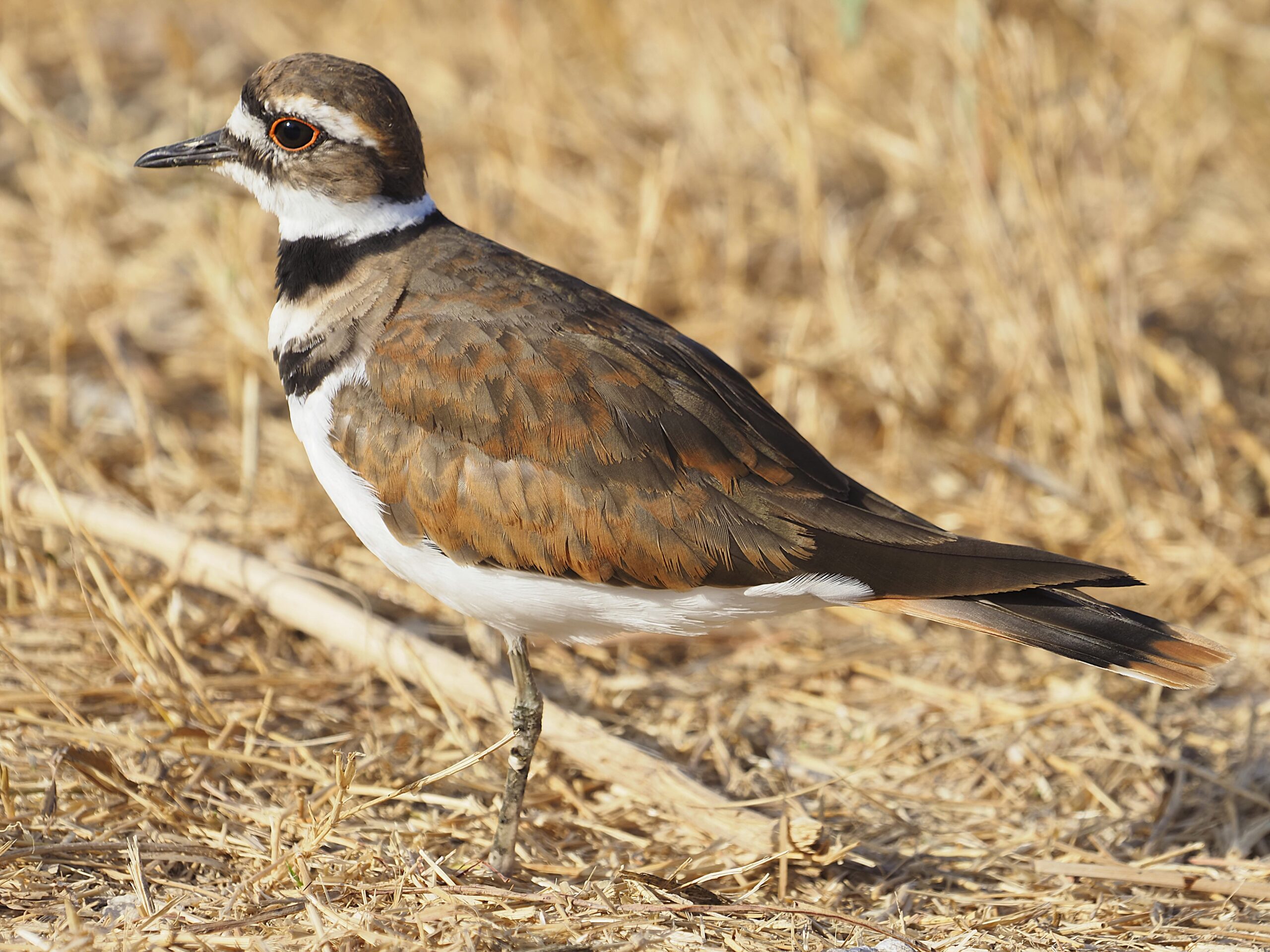
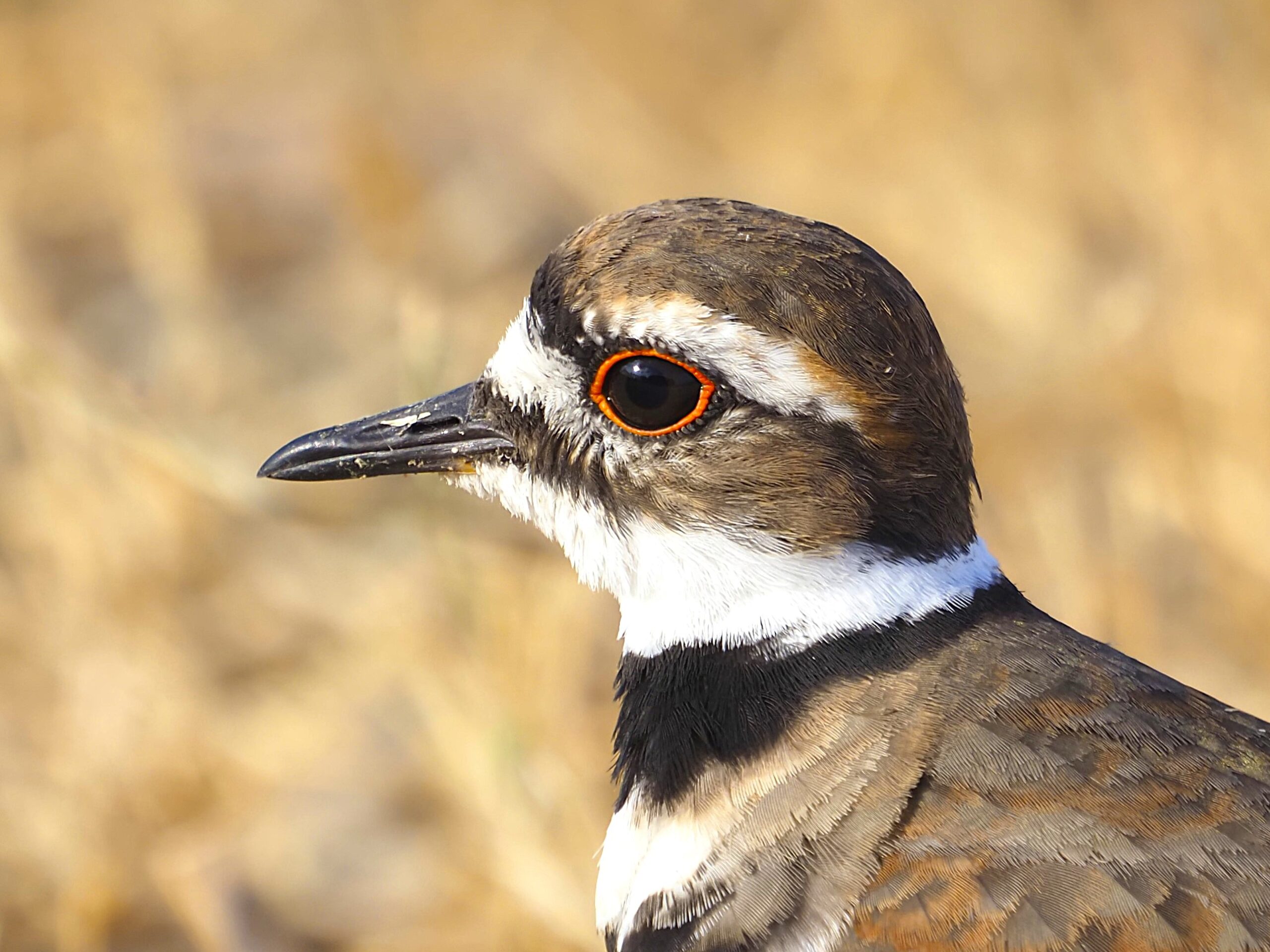
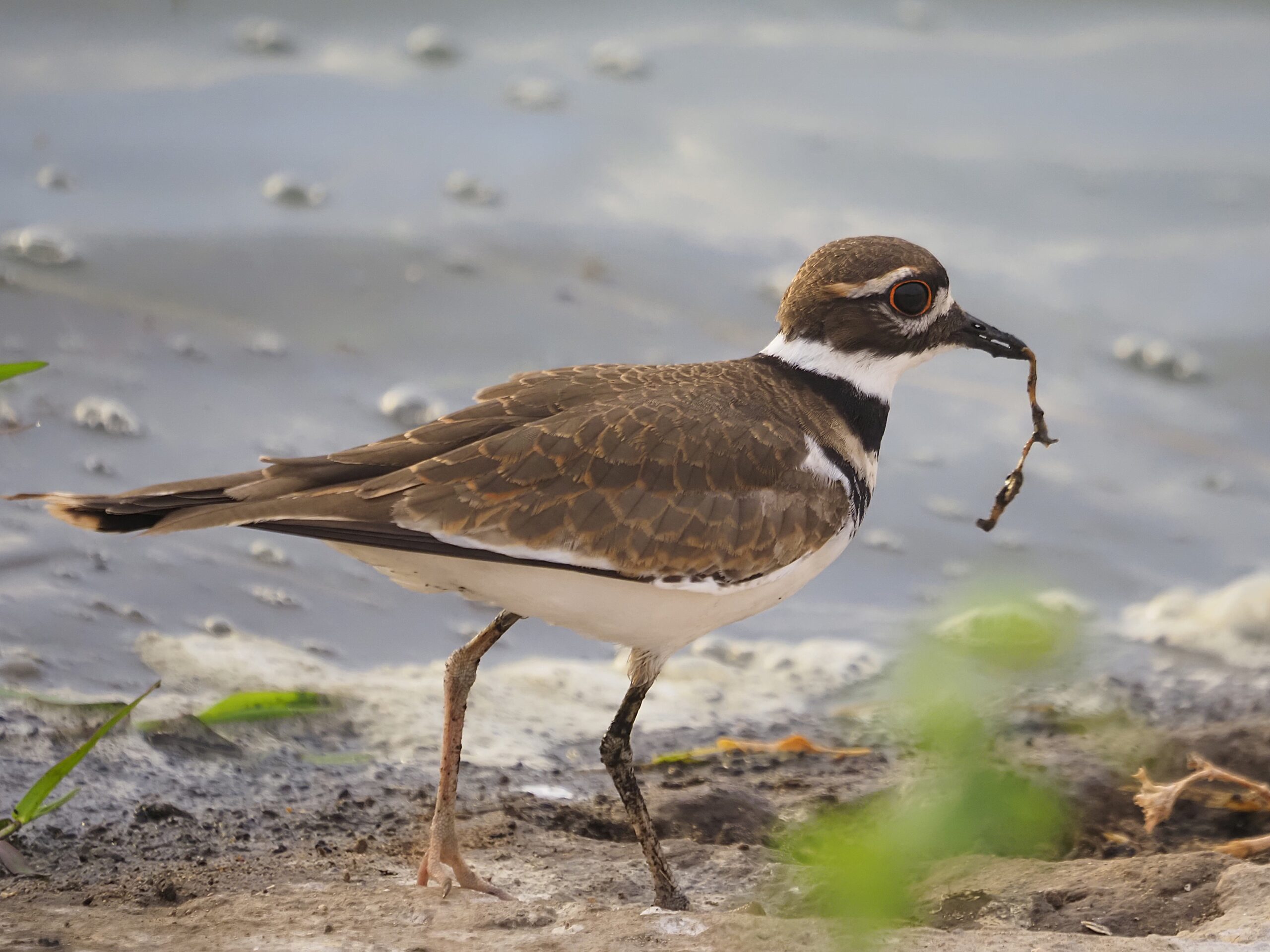
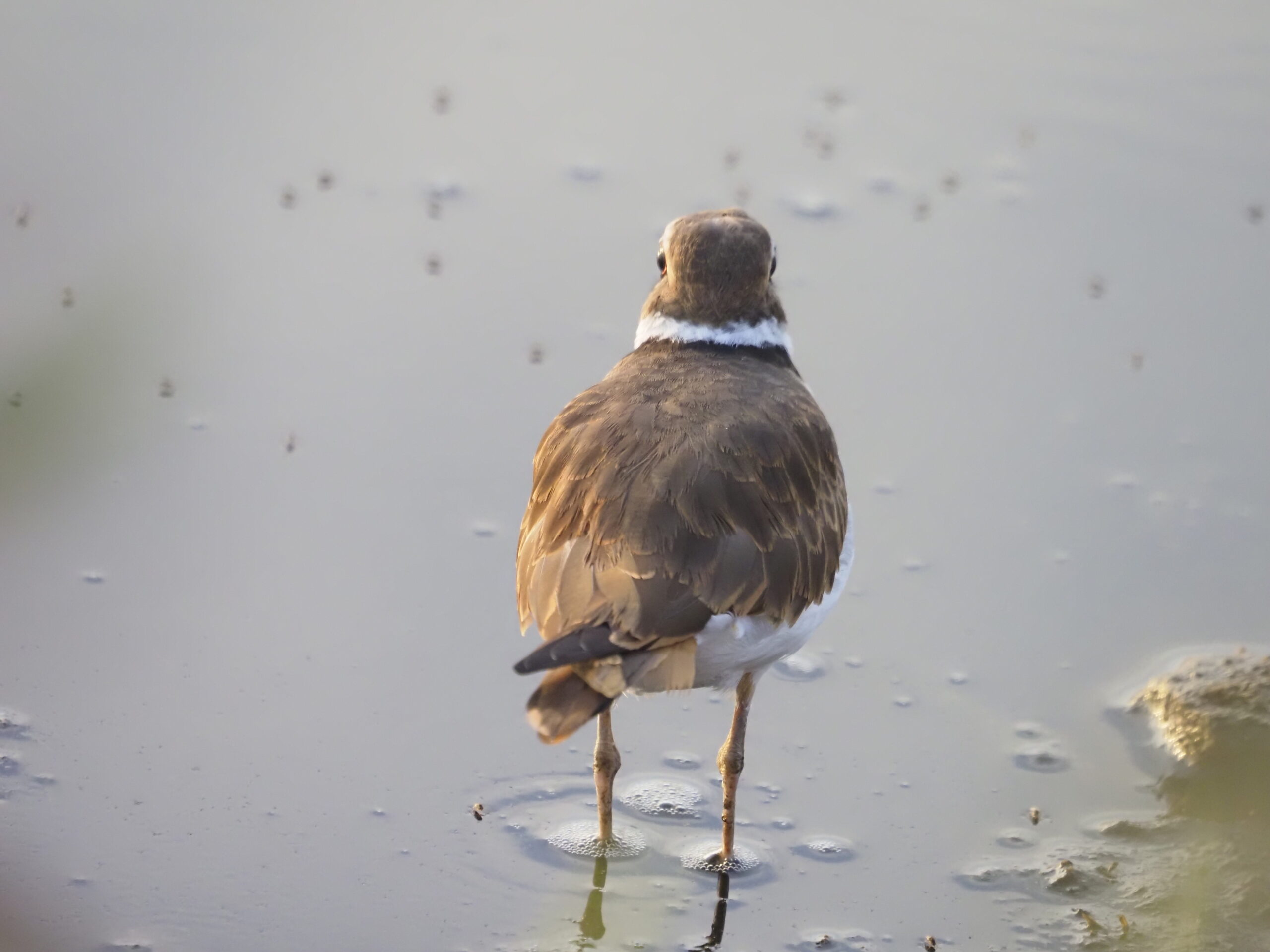
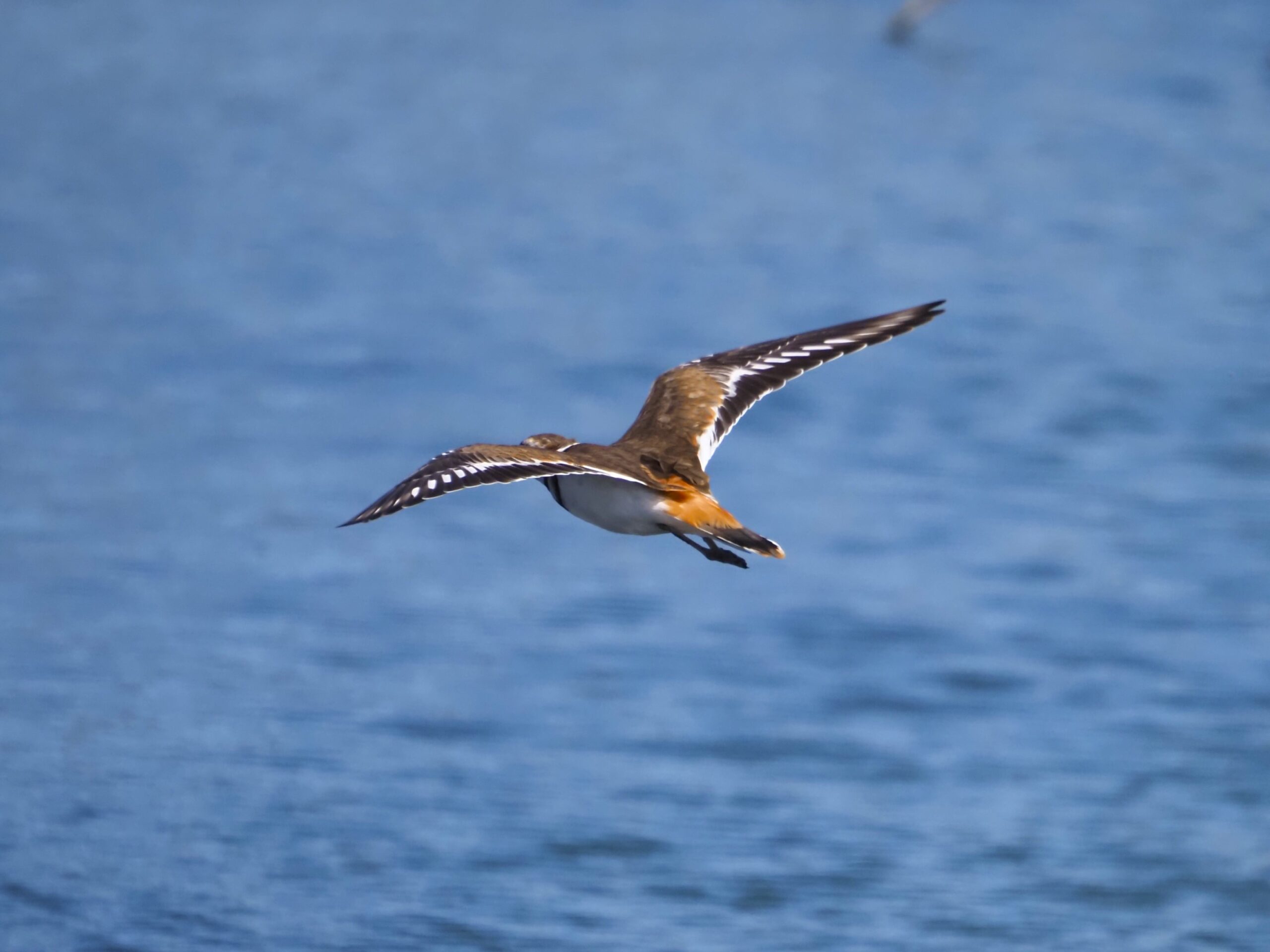
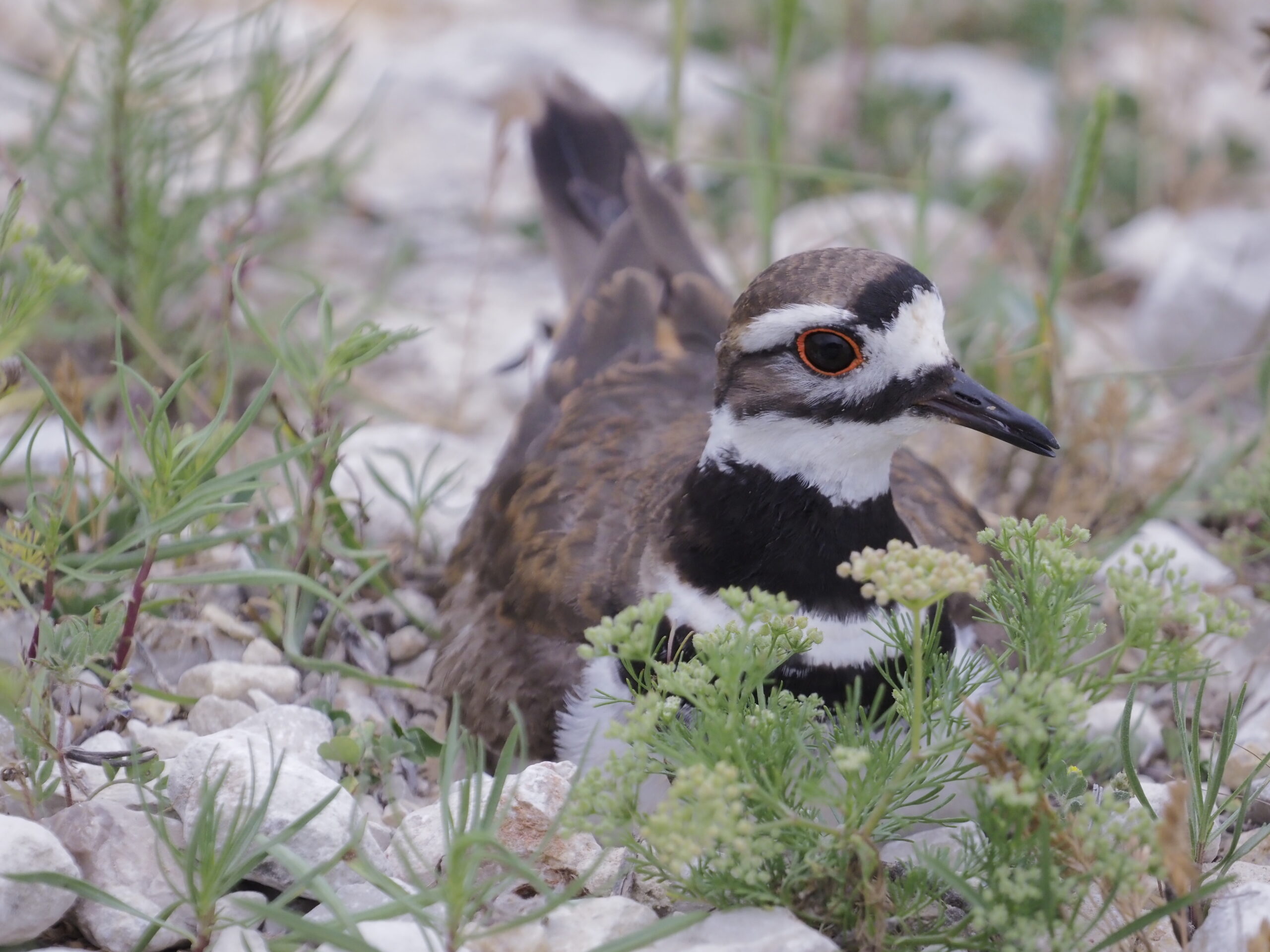
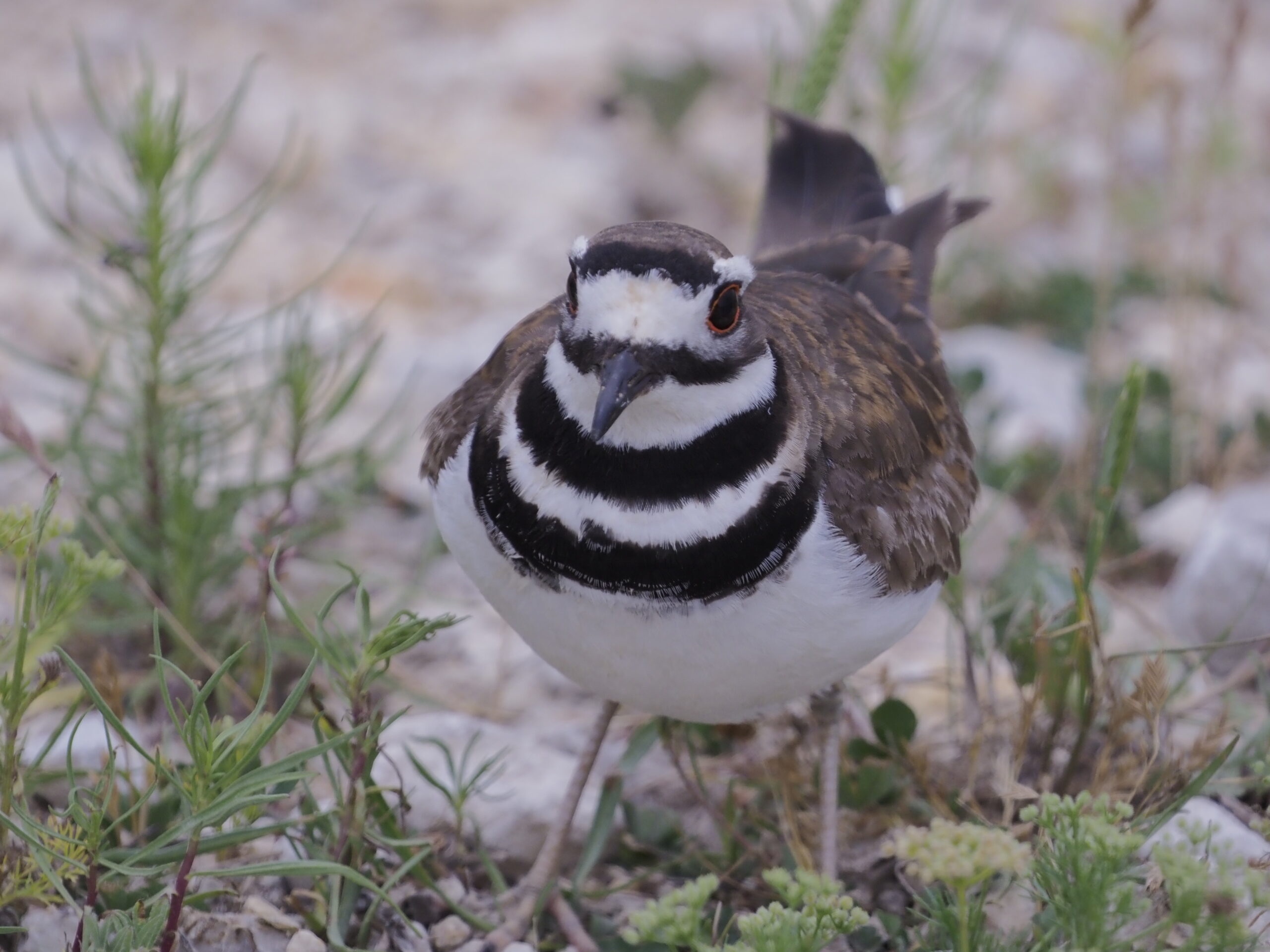
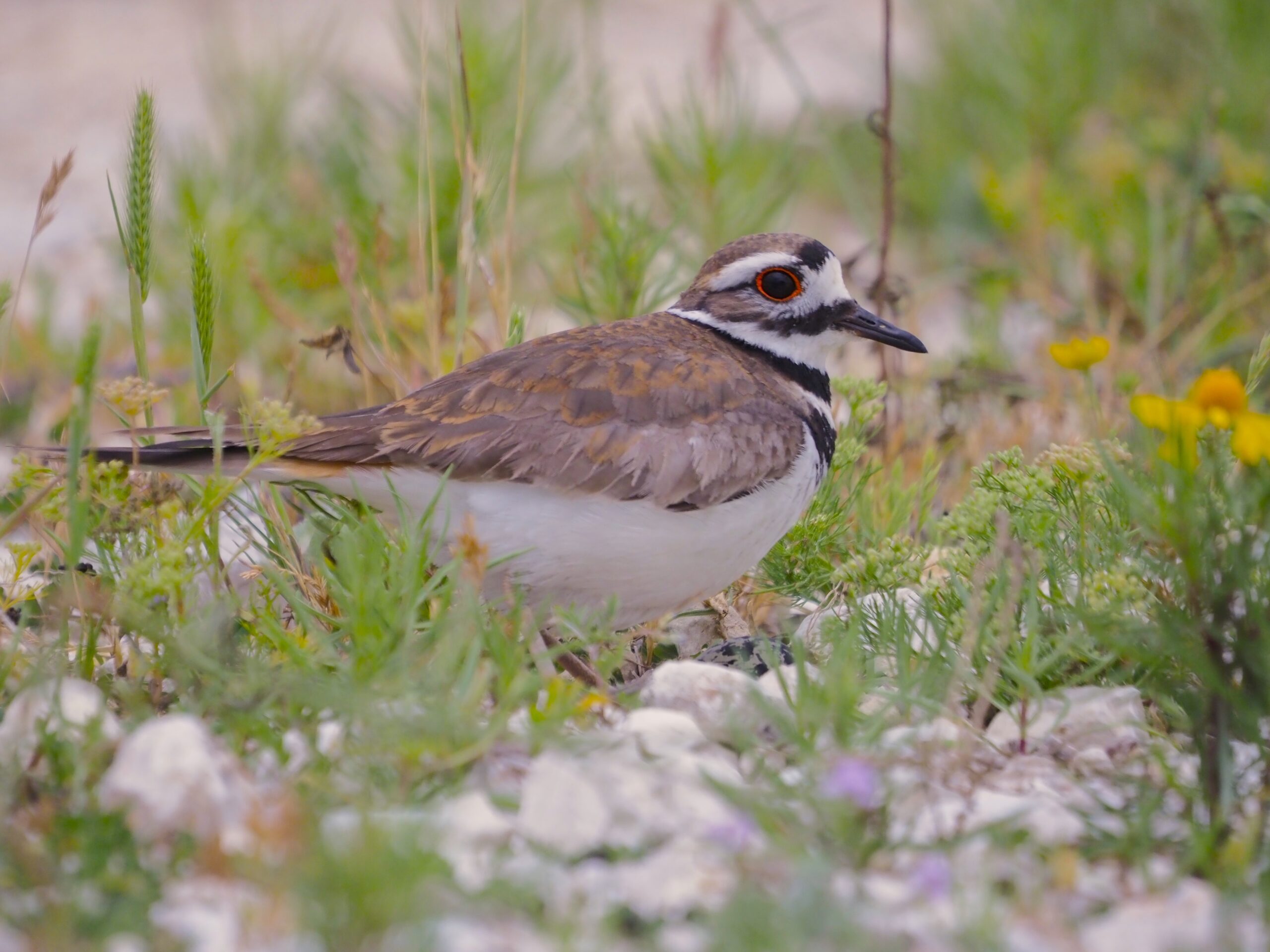
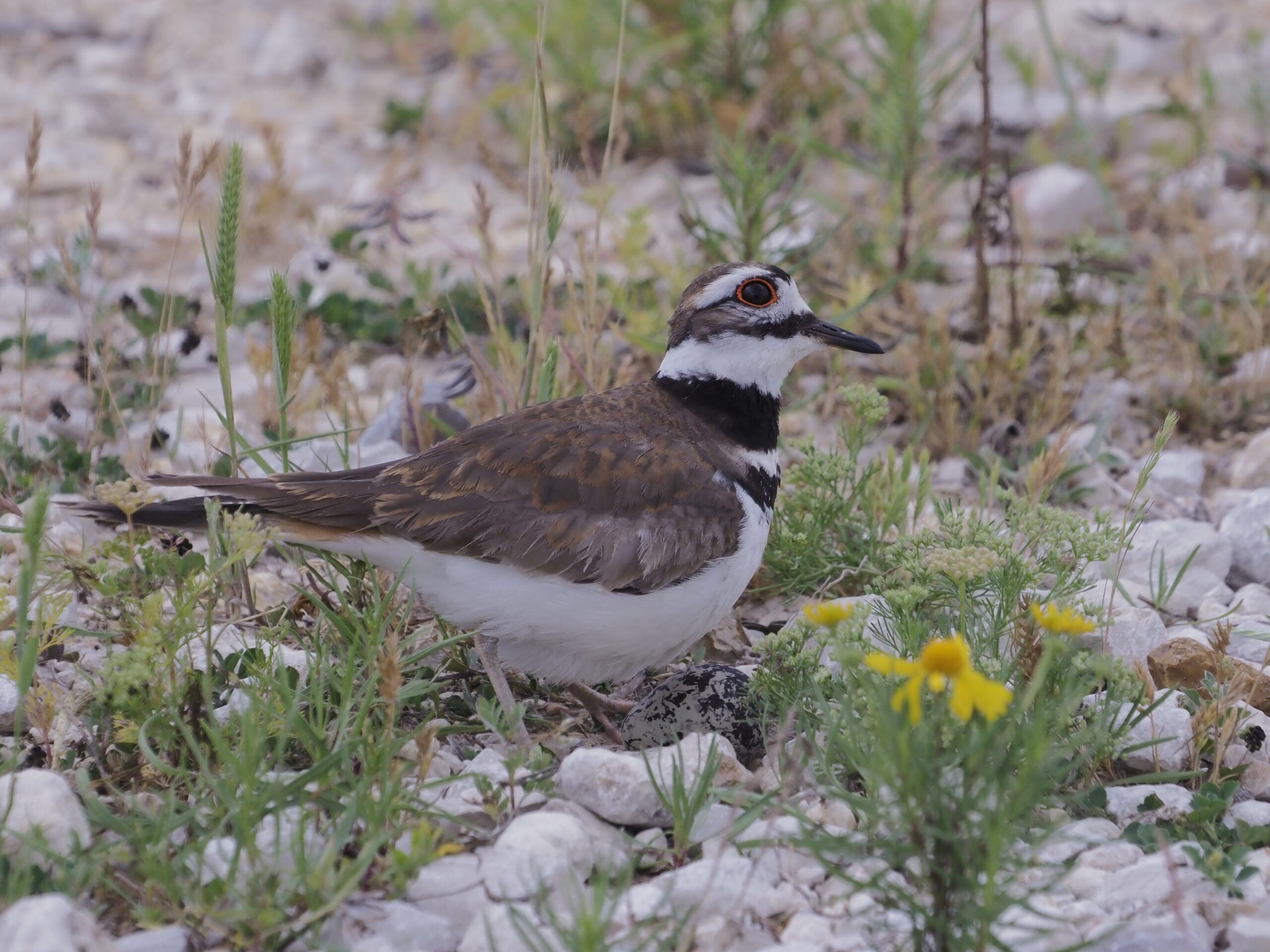
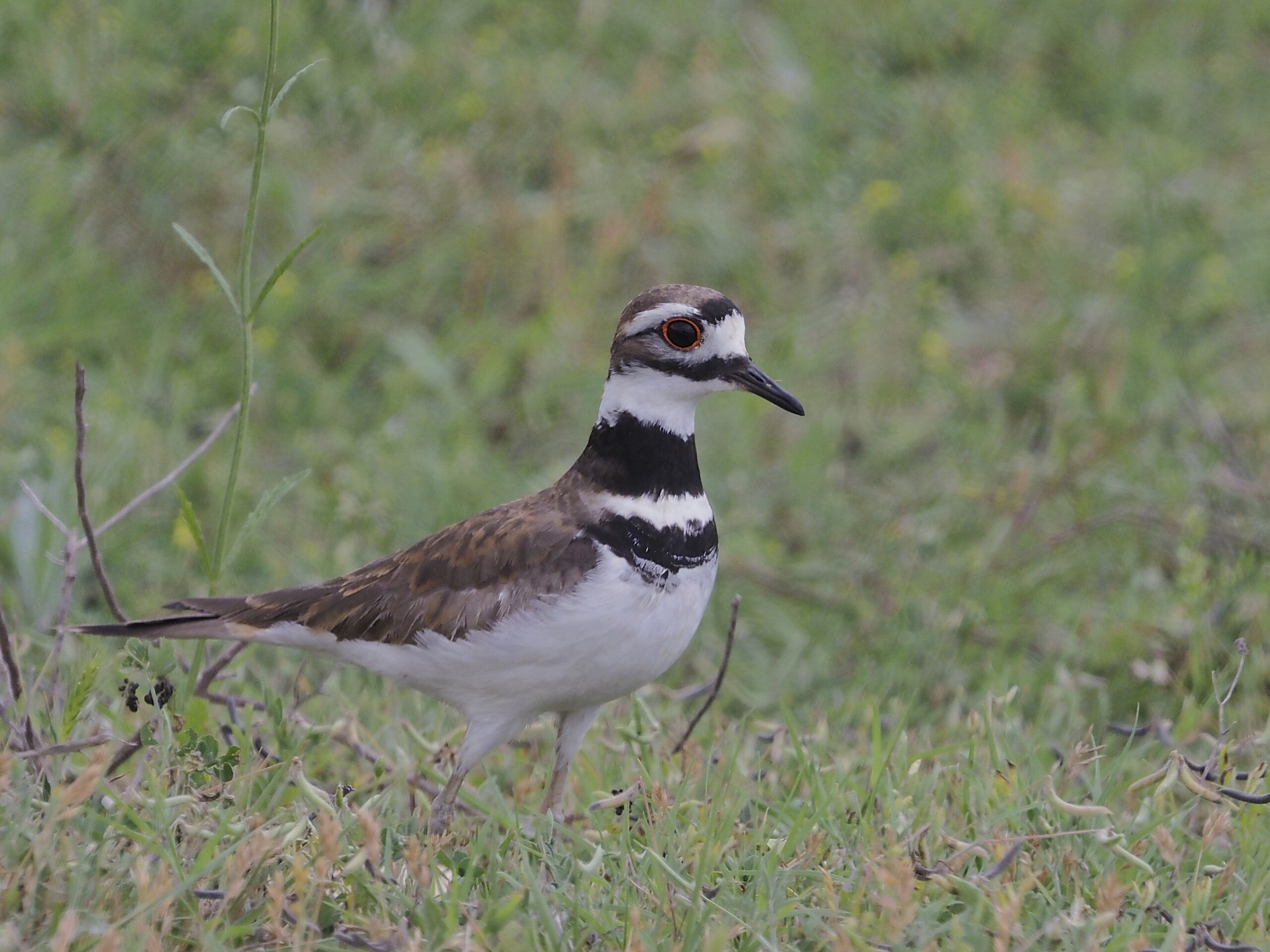
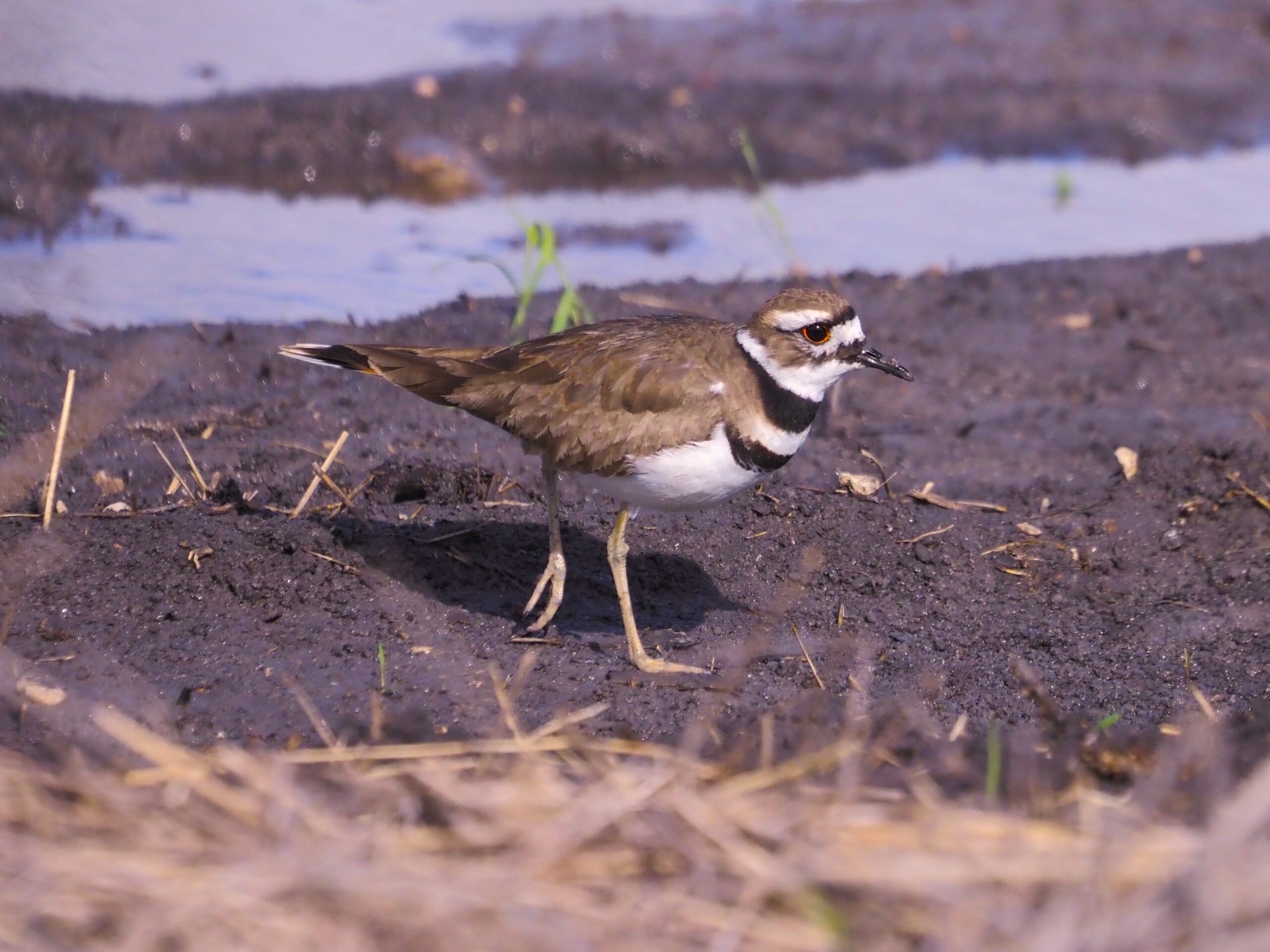
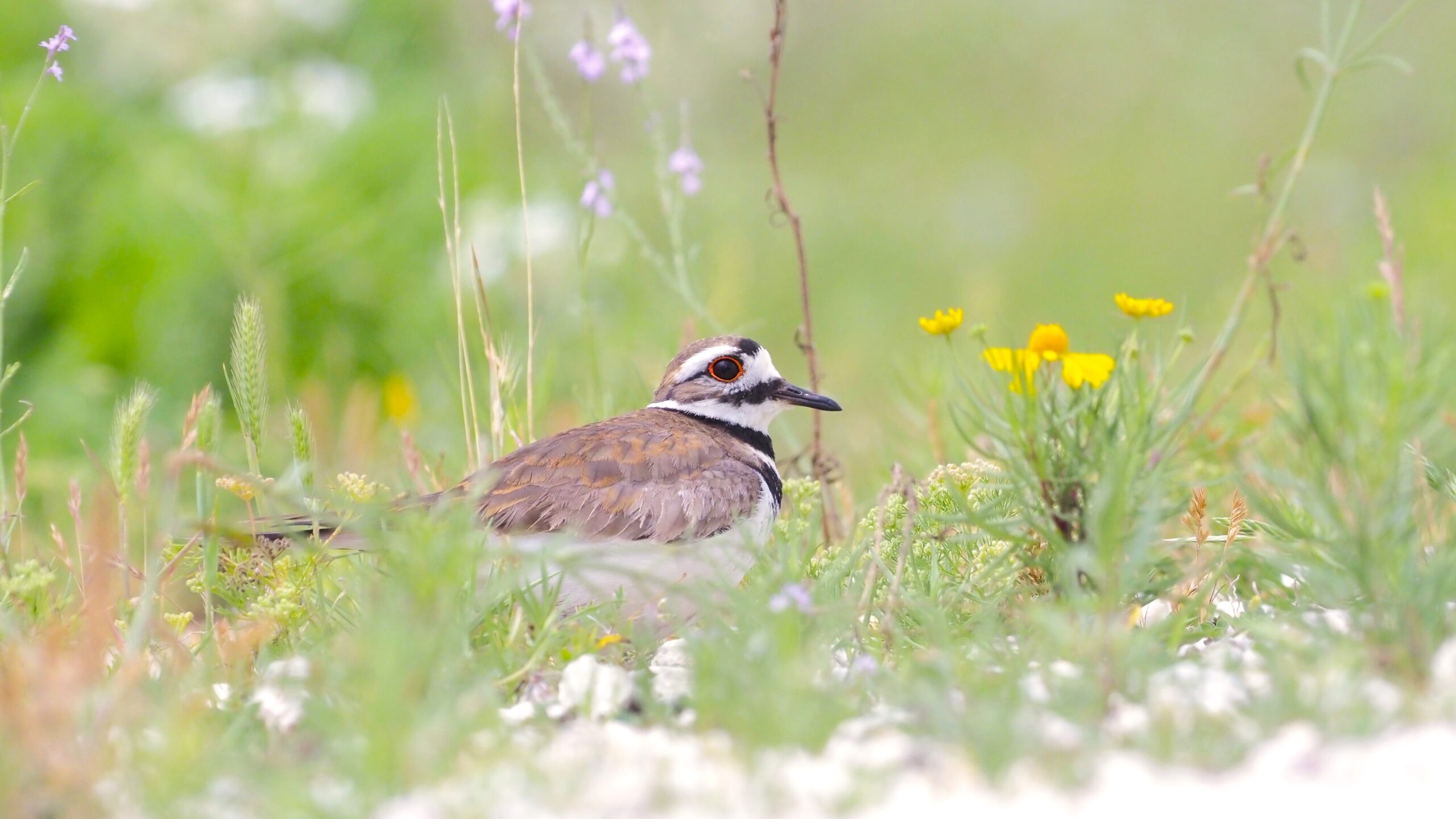
The ubiquitous Killdeer is the only regular large plover in North America that has rings on its breast. It is also the only plover with 2 rings. It can be identified by its frequently offered “keeeelldeeeer” call. In flight it has a cinnamon rump and fairly prominent white wing stripes from both above and below. In springtime be careful of the recently fledged Killdeer chicks which only have 1 ring on their breast.
Small Plover Identification
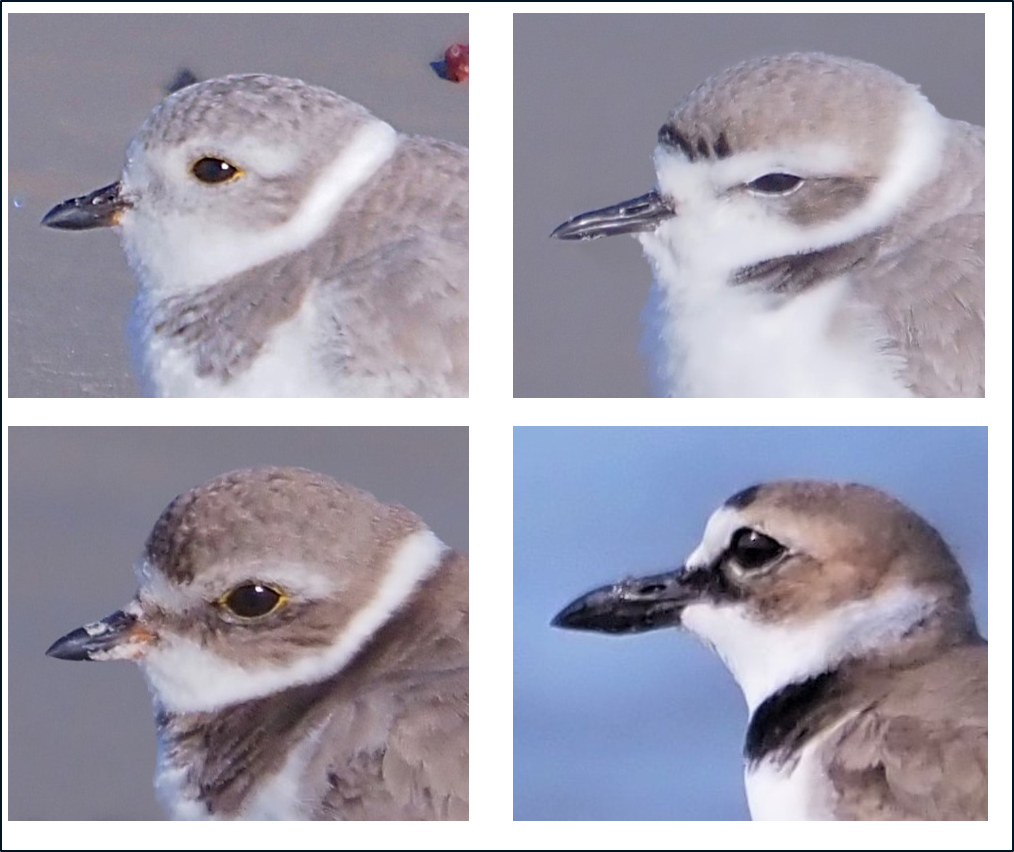
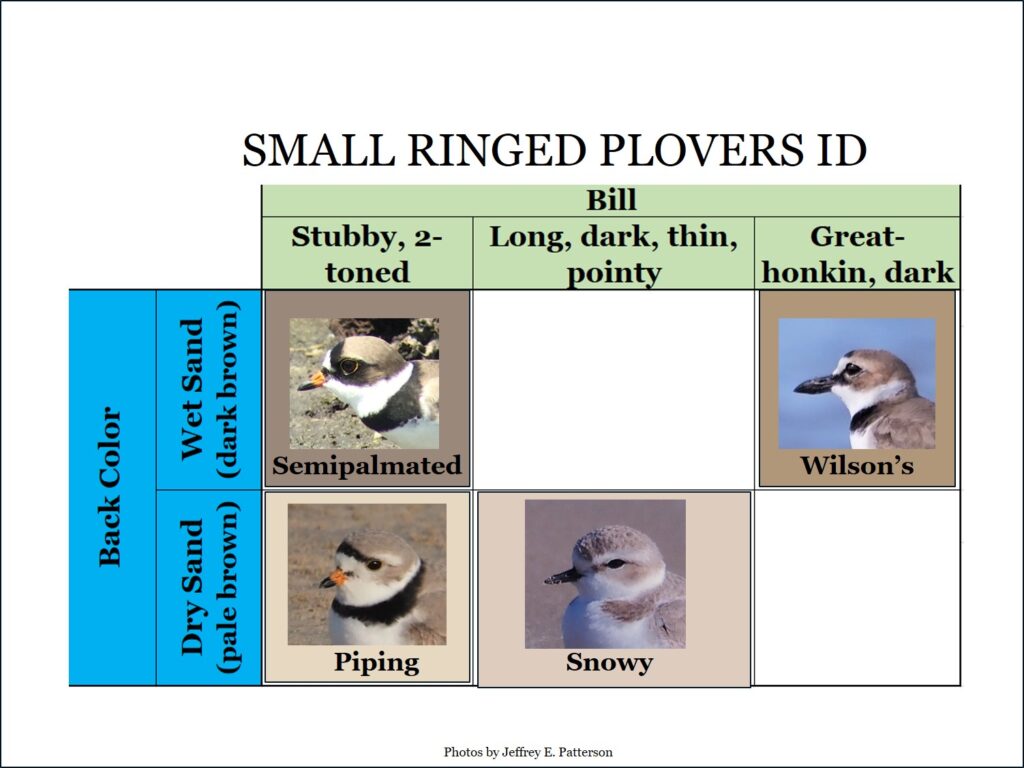
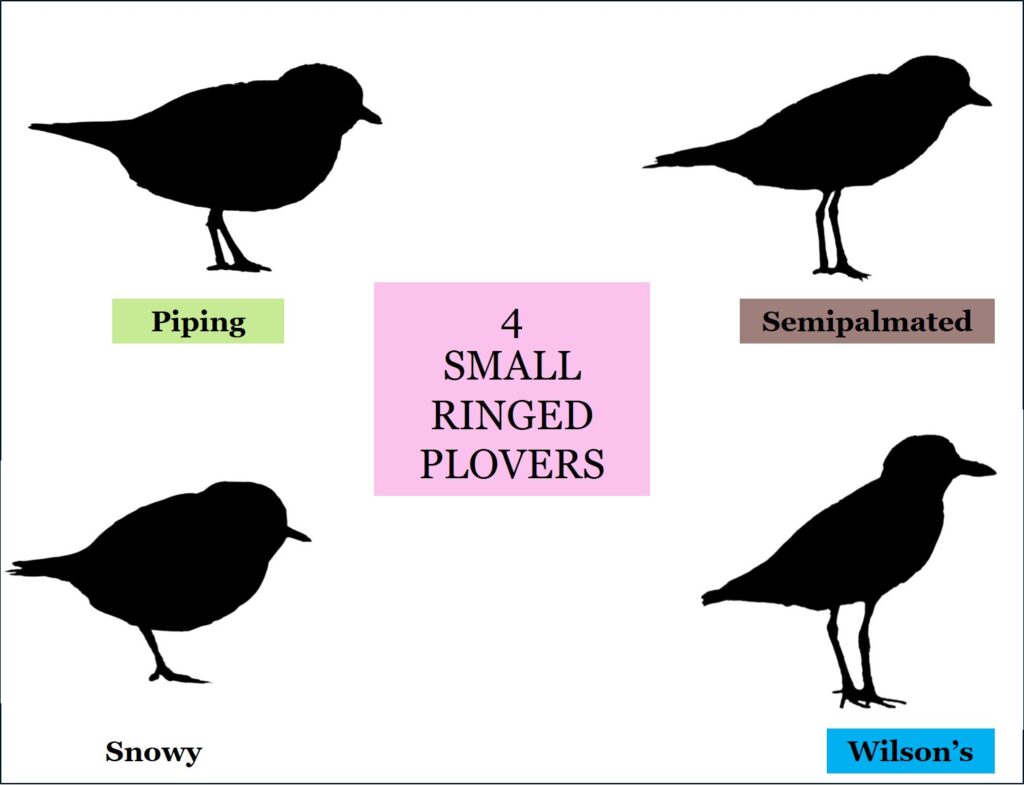
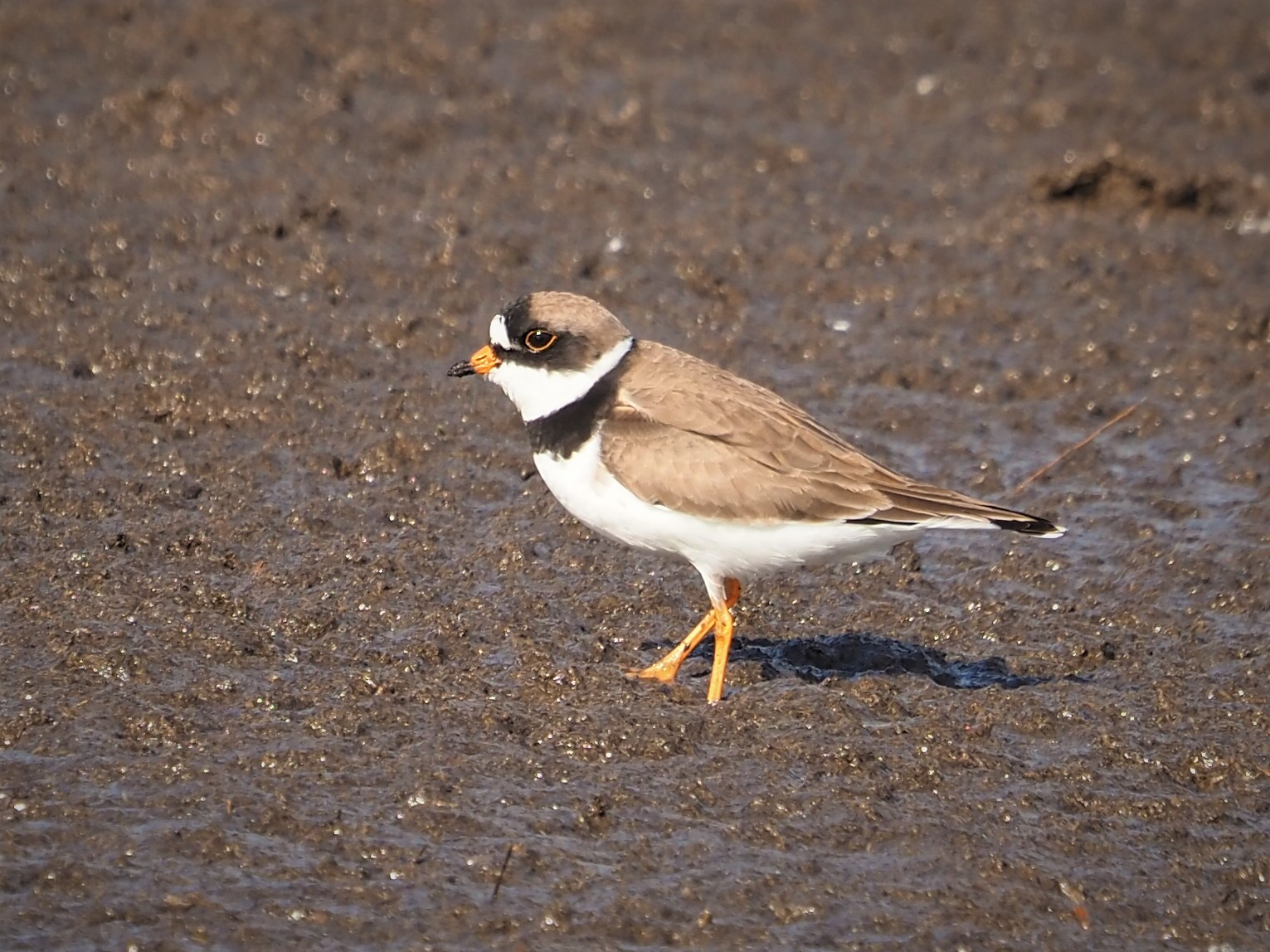
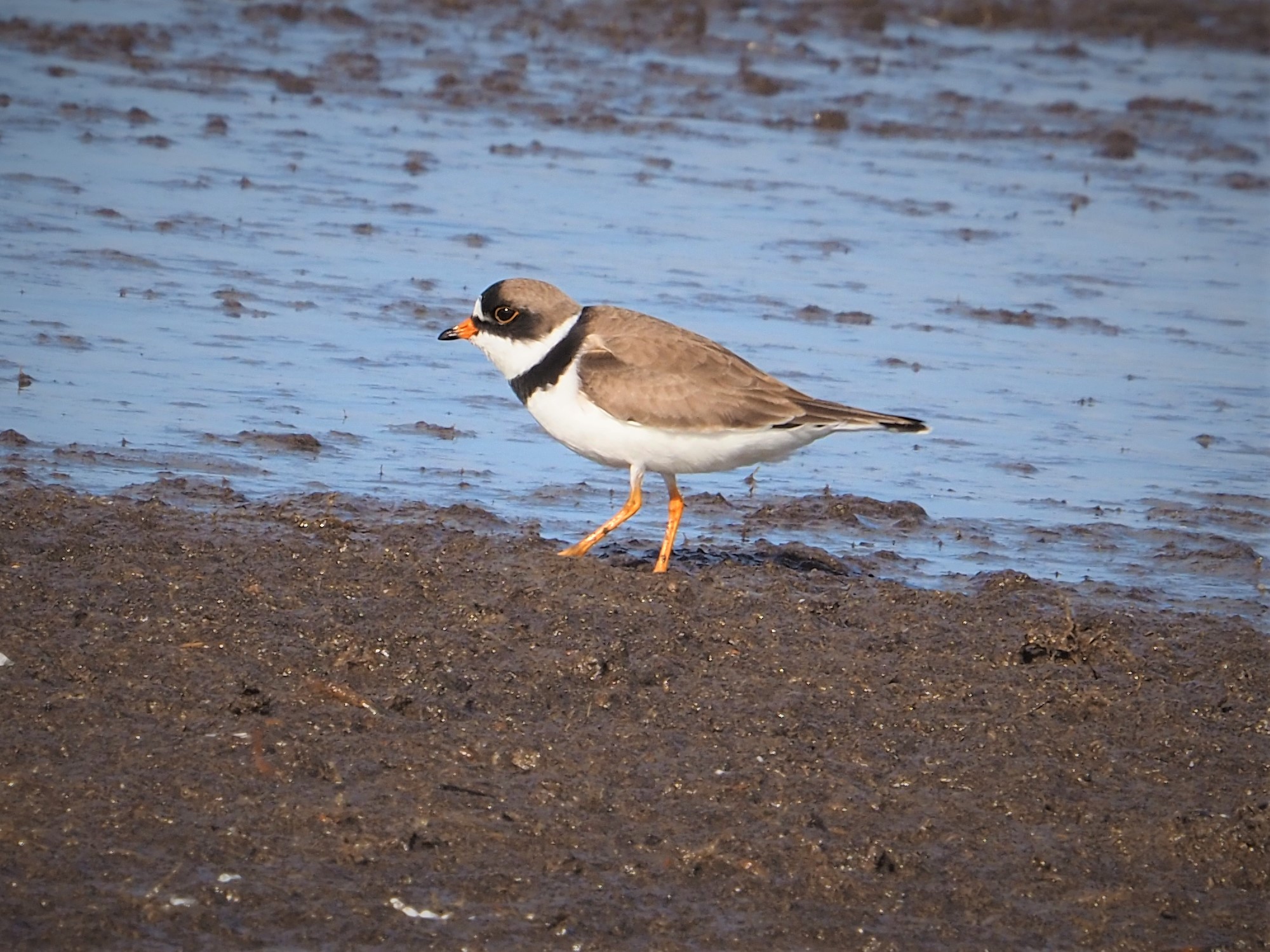
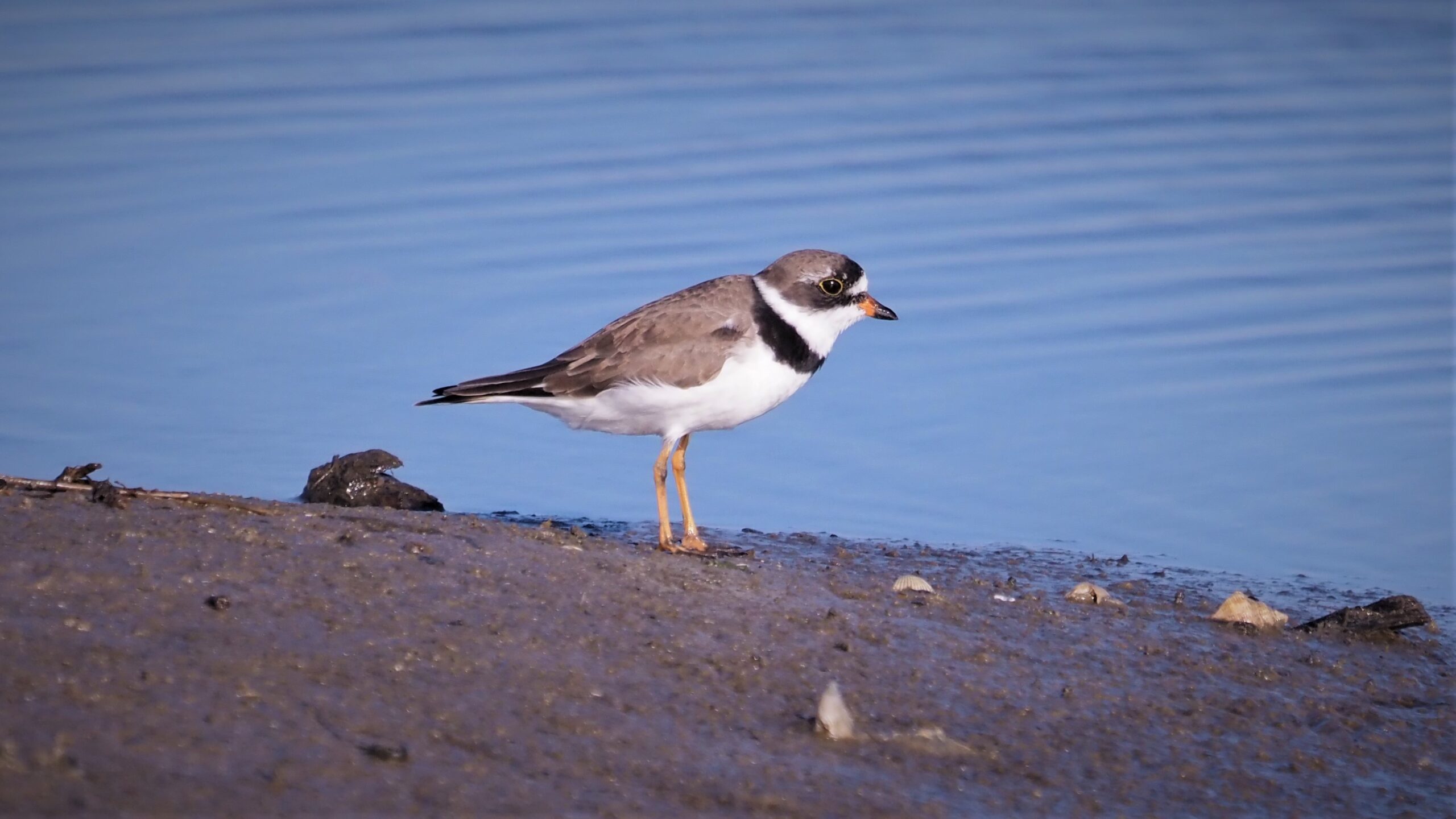
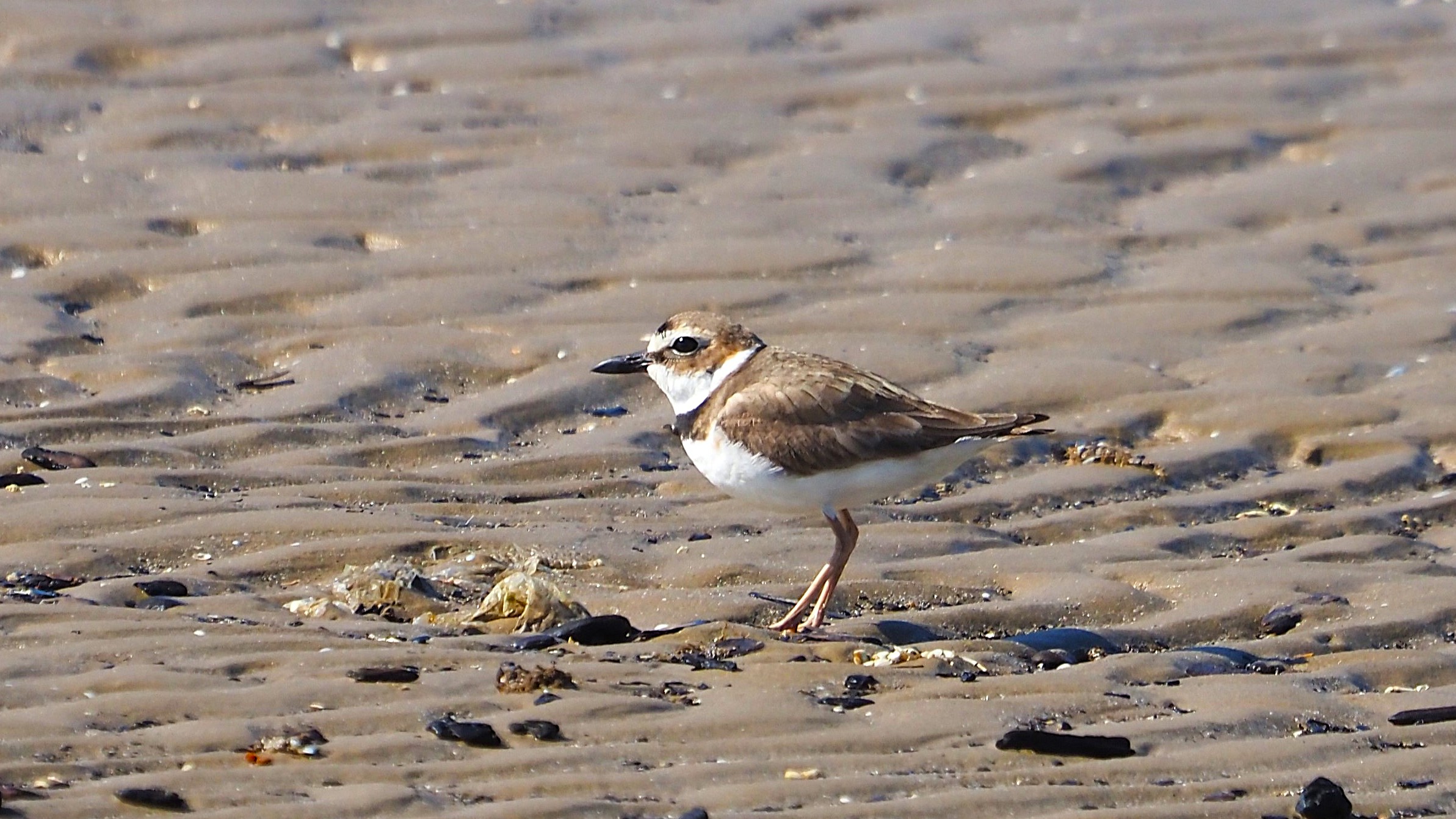
The 4 small ringed plovers (Semipalmated Plover, Piping Plover, Snowy Plover and Wilson’s Plover) can be identified based on the combination of their bill shapes and their back colors (intensity of brown). The leg color and number of bands are sometimes cited as key field marks, but both are variable depending on the season and can be ambiguous. I find them unnecessary.
There are 3 types of bills amongst these plover, which I call:
- Stubby, 2-toned (Piping & Semipalmated),
- Long, thin, pointy (Snowy), and
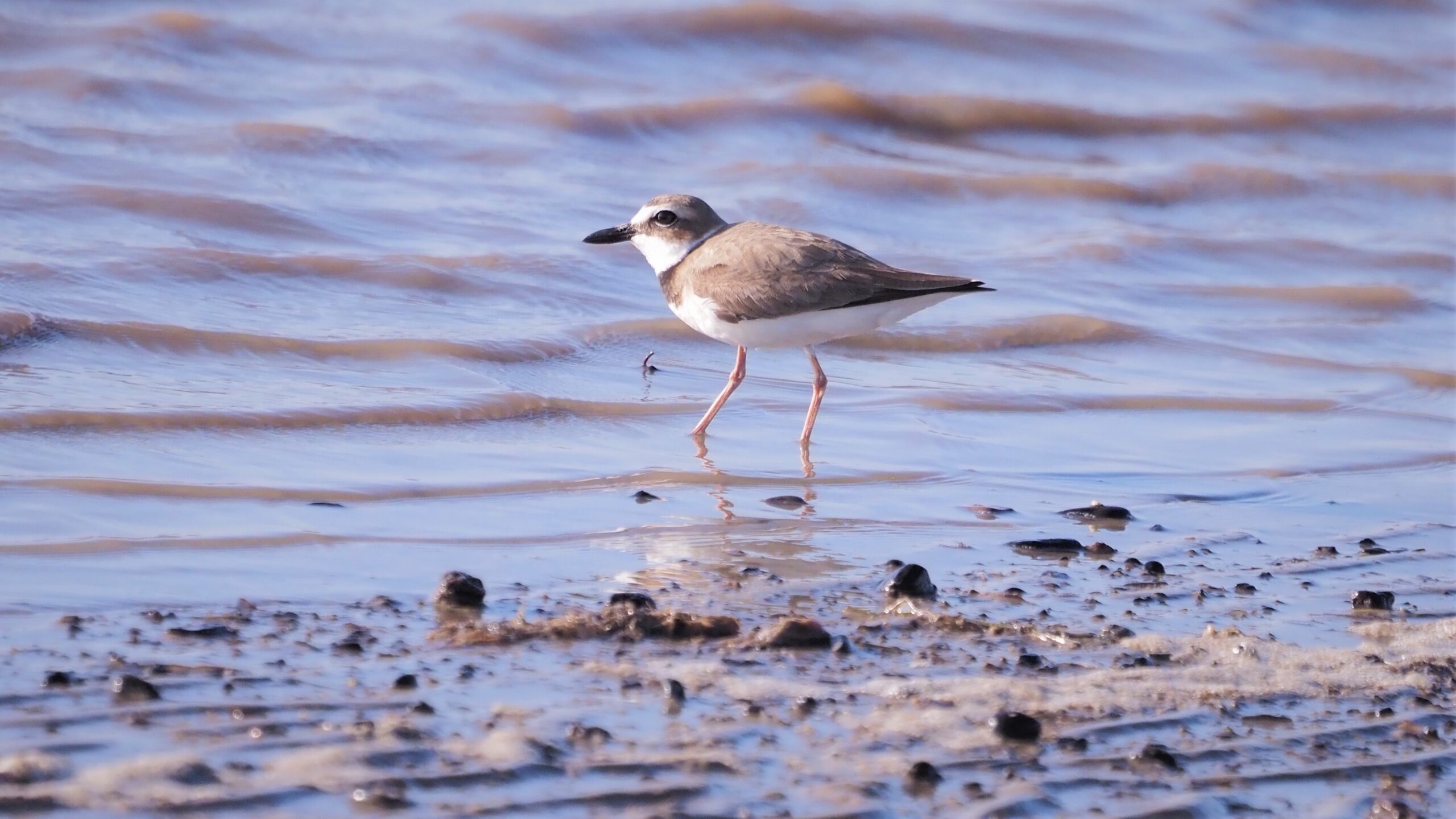
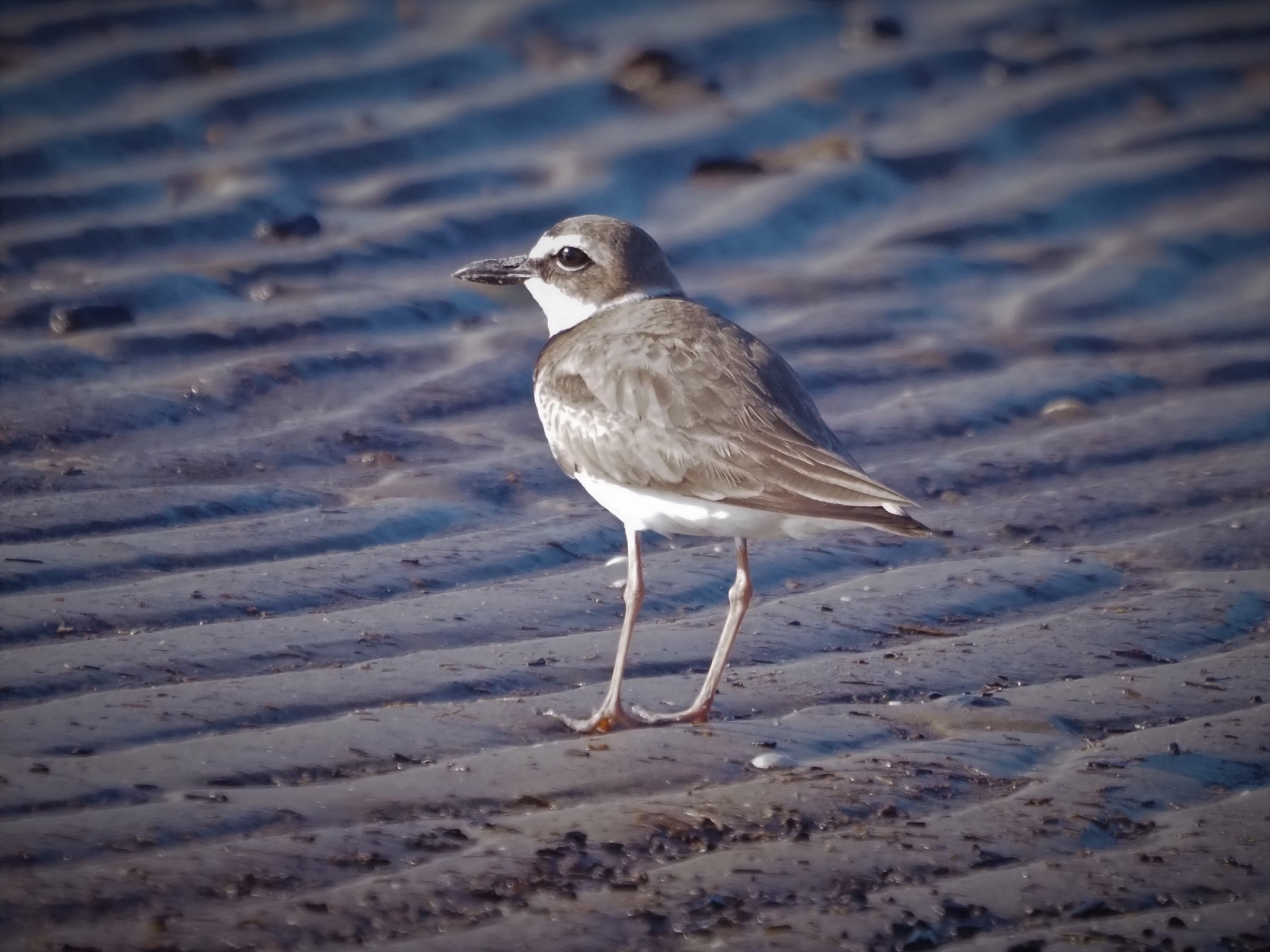
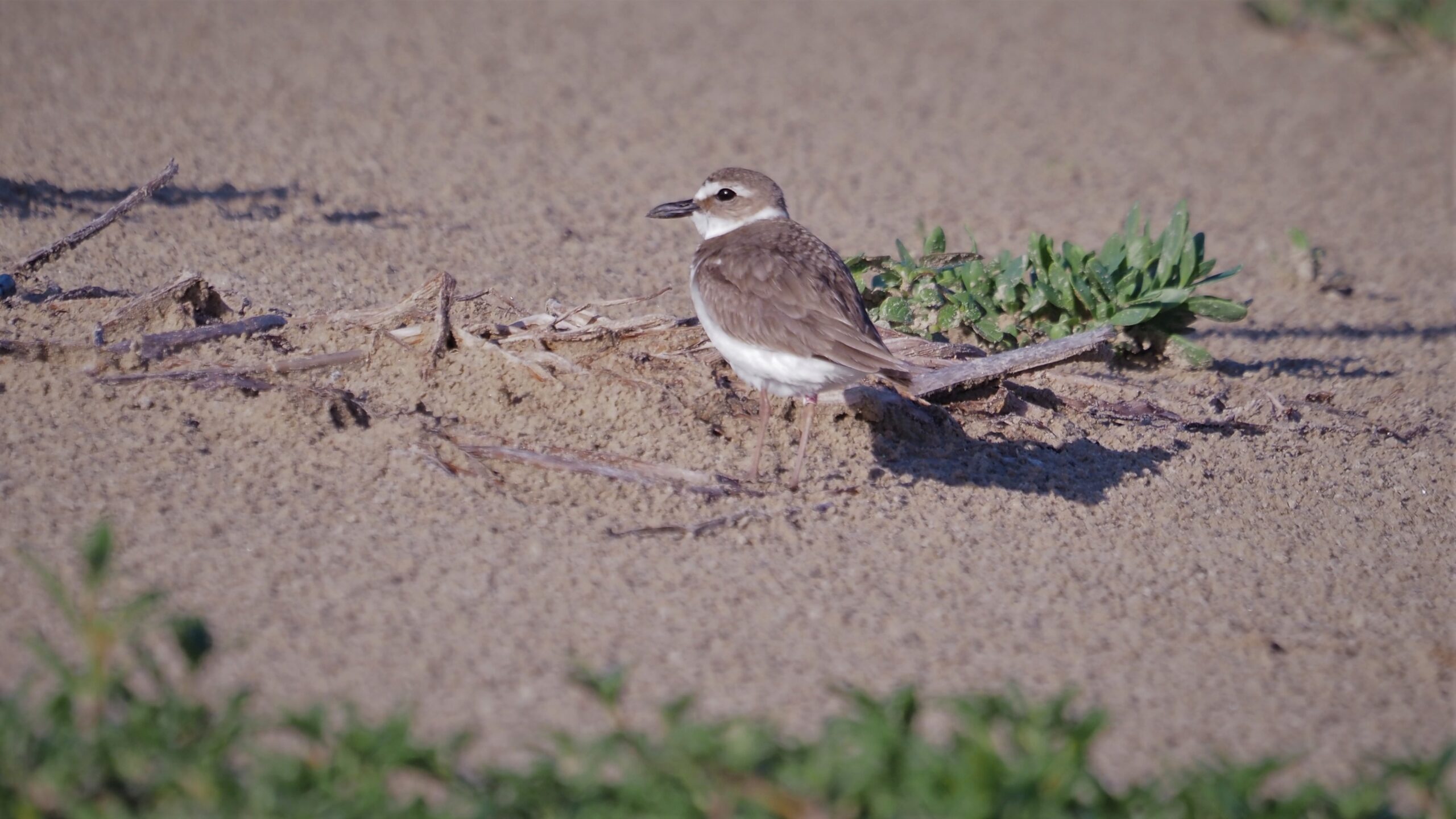
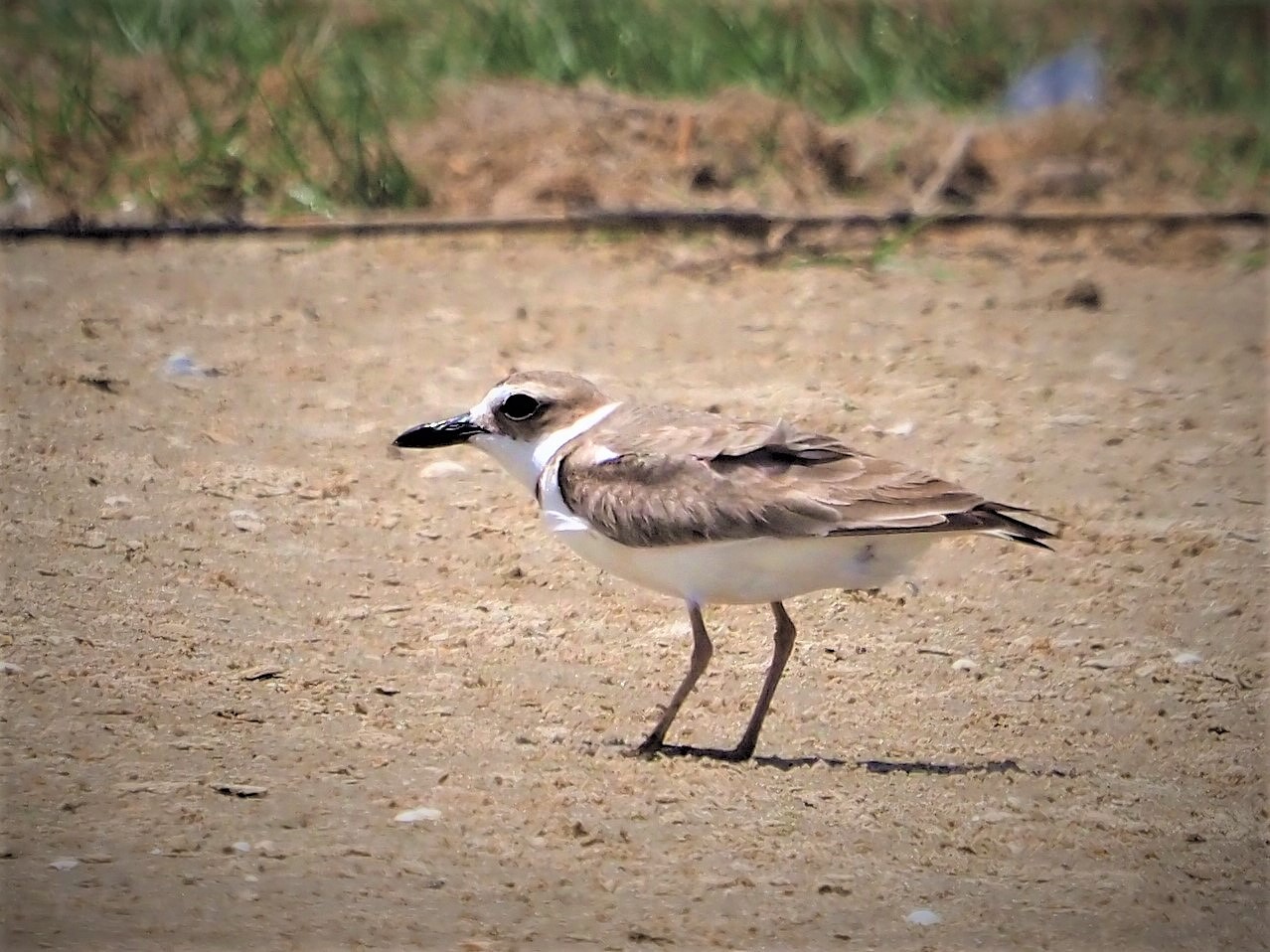
- Great honkin (Wilson’s).
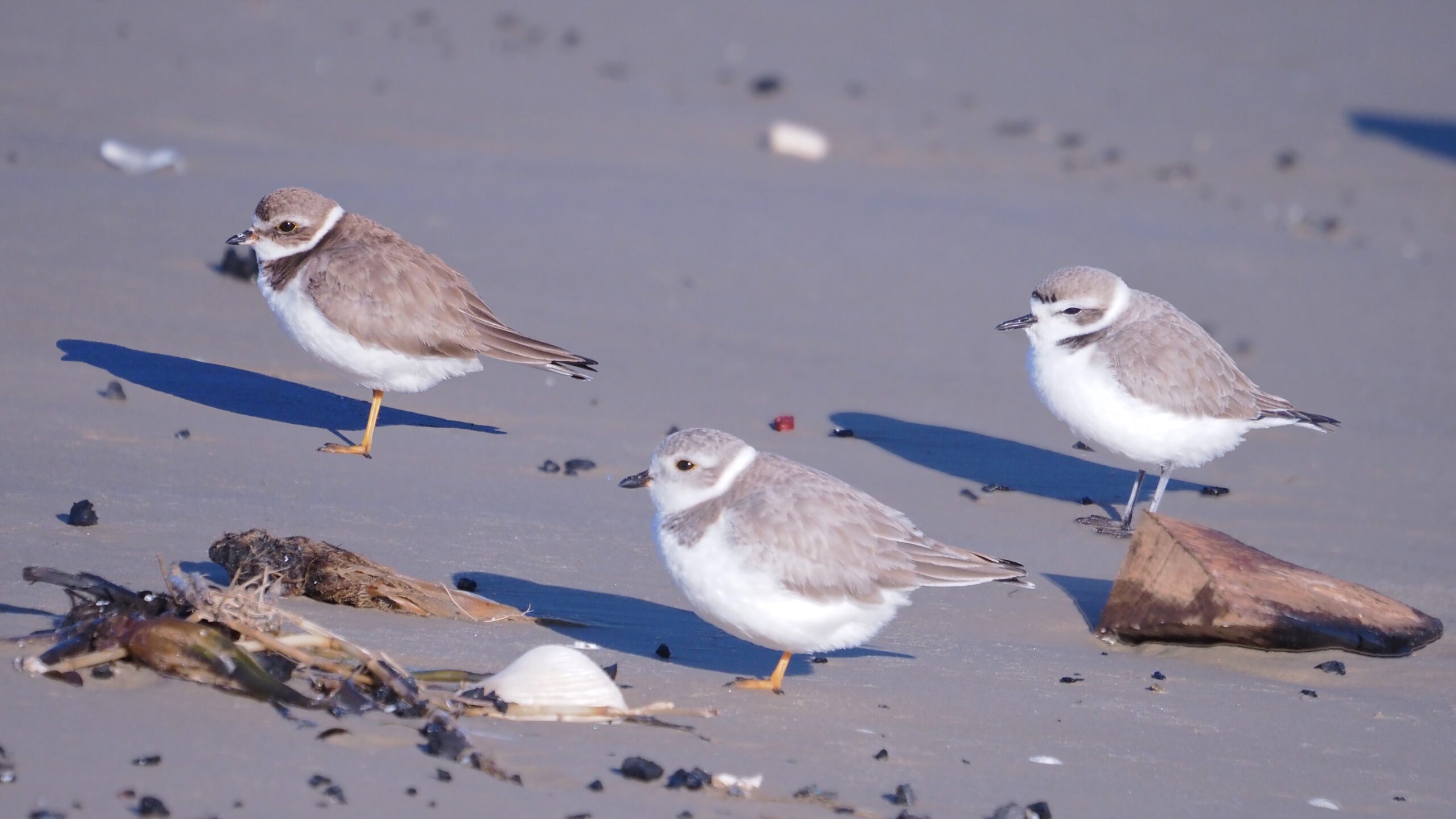
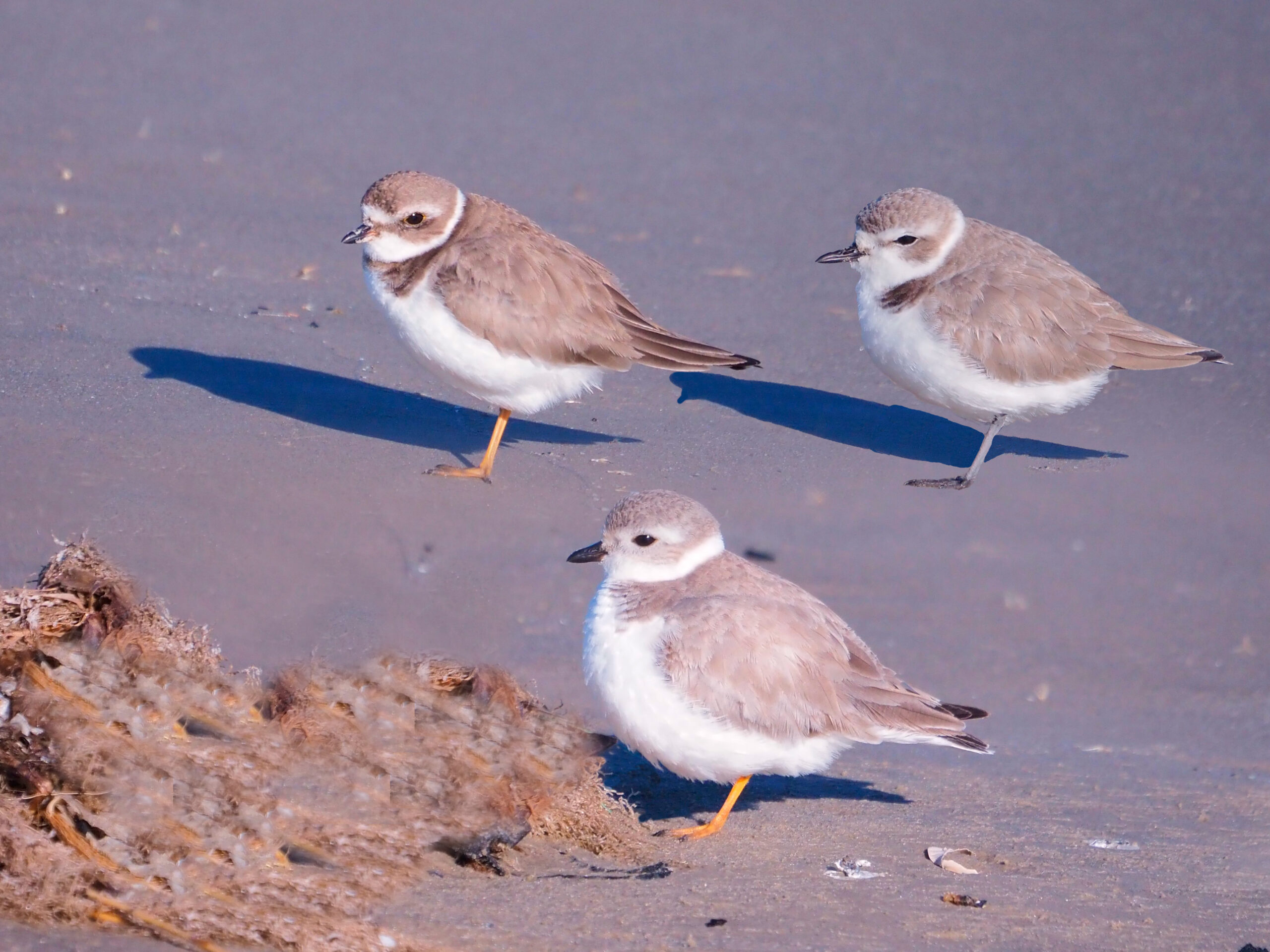
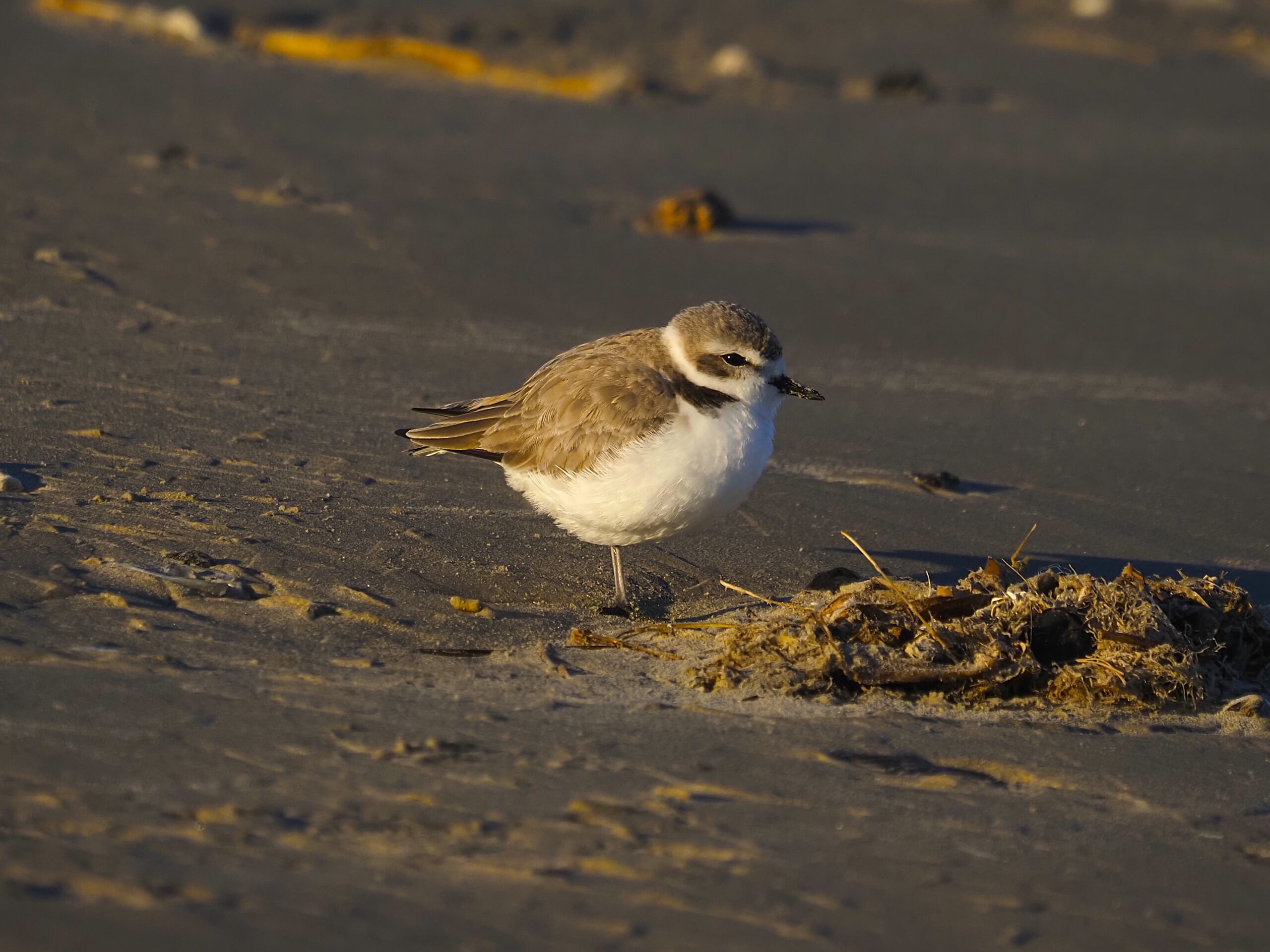
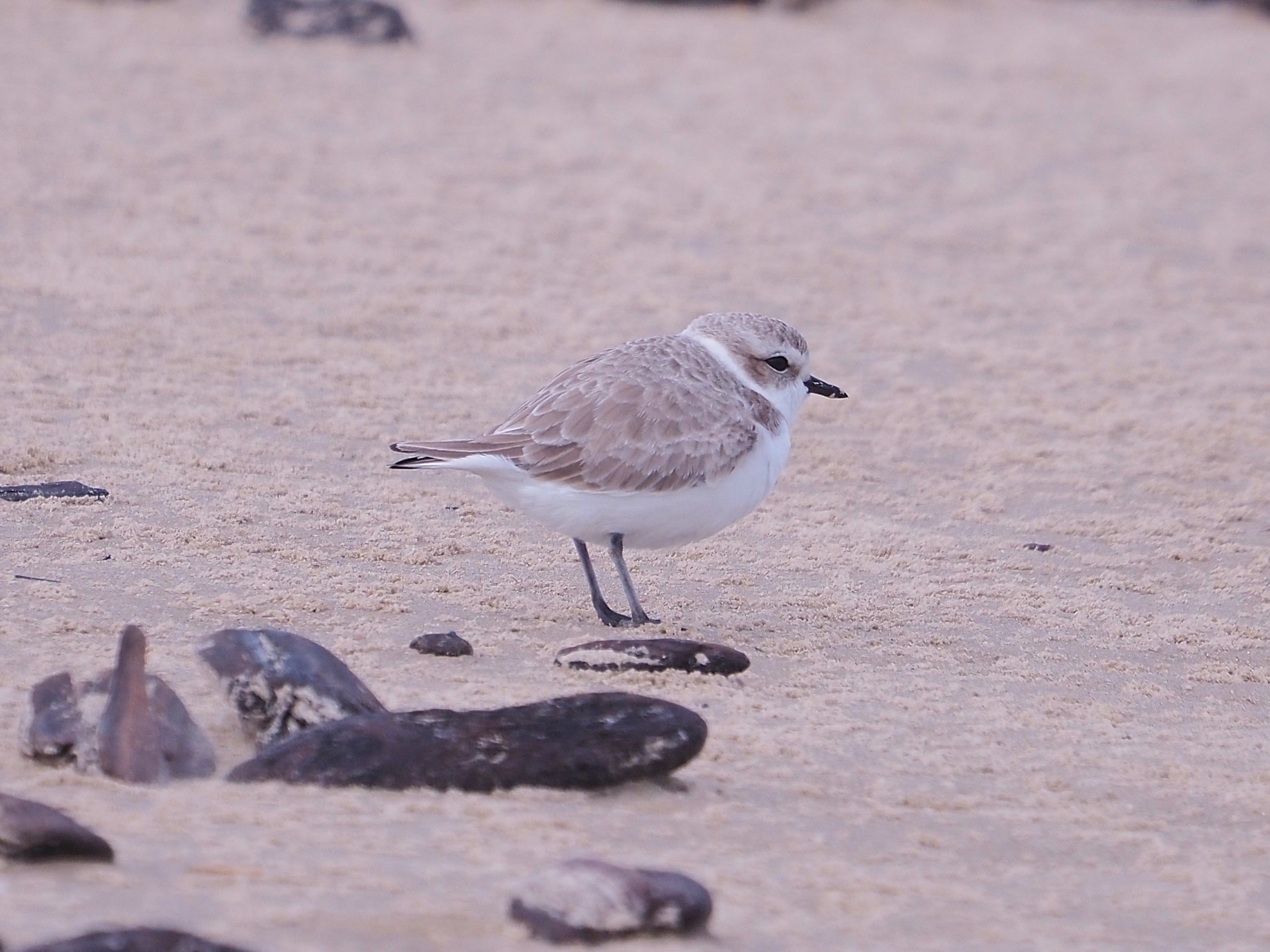
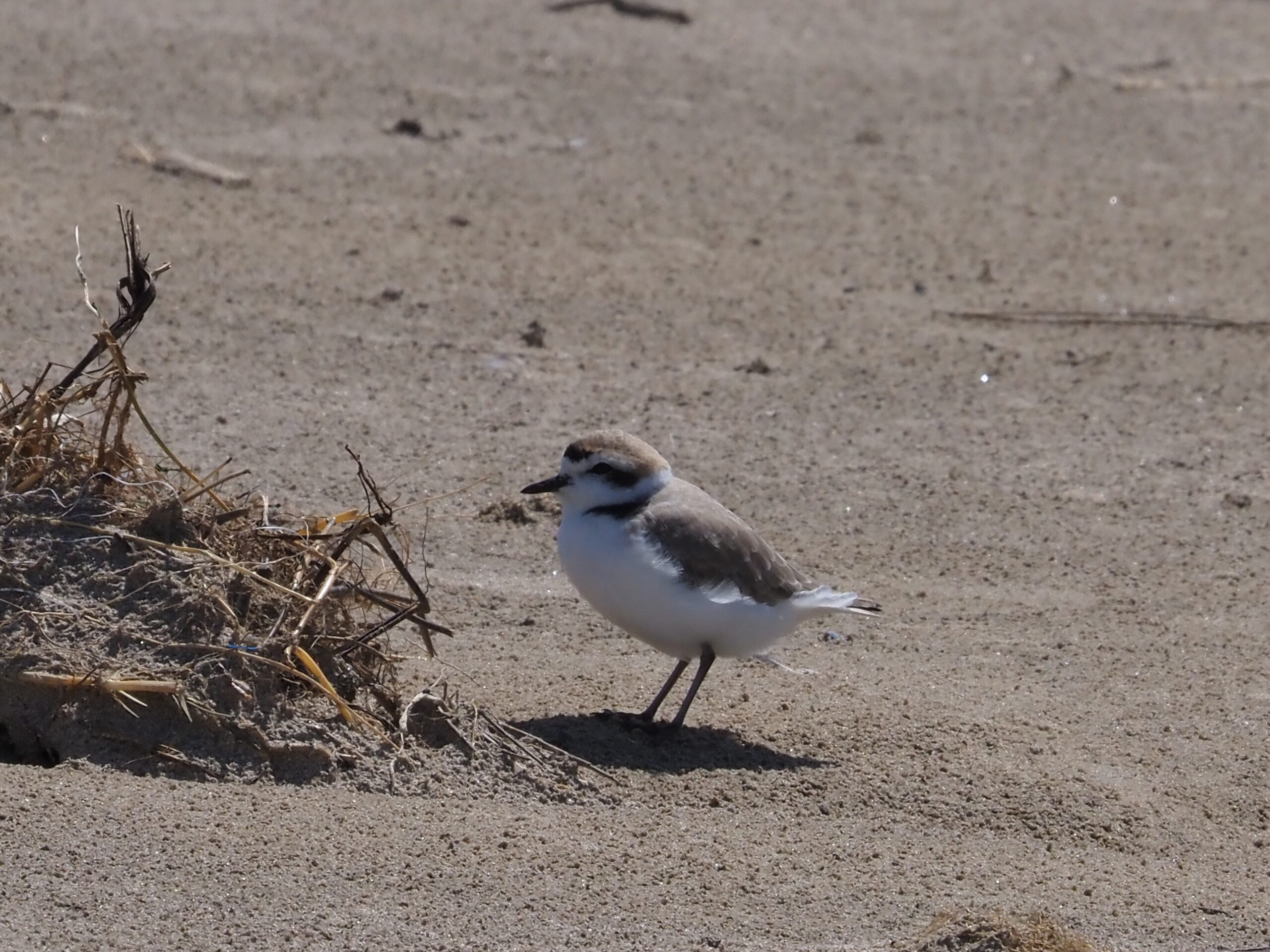
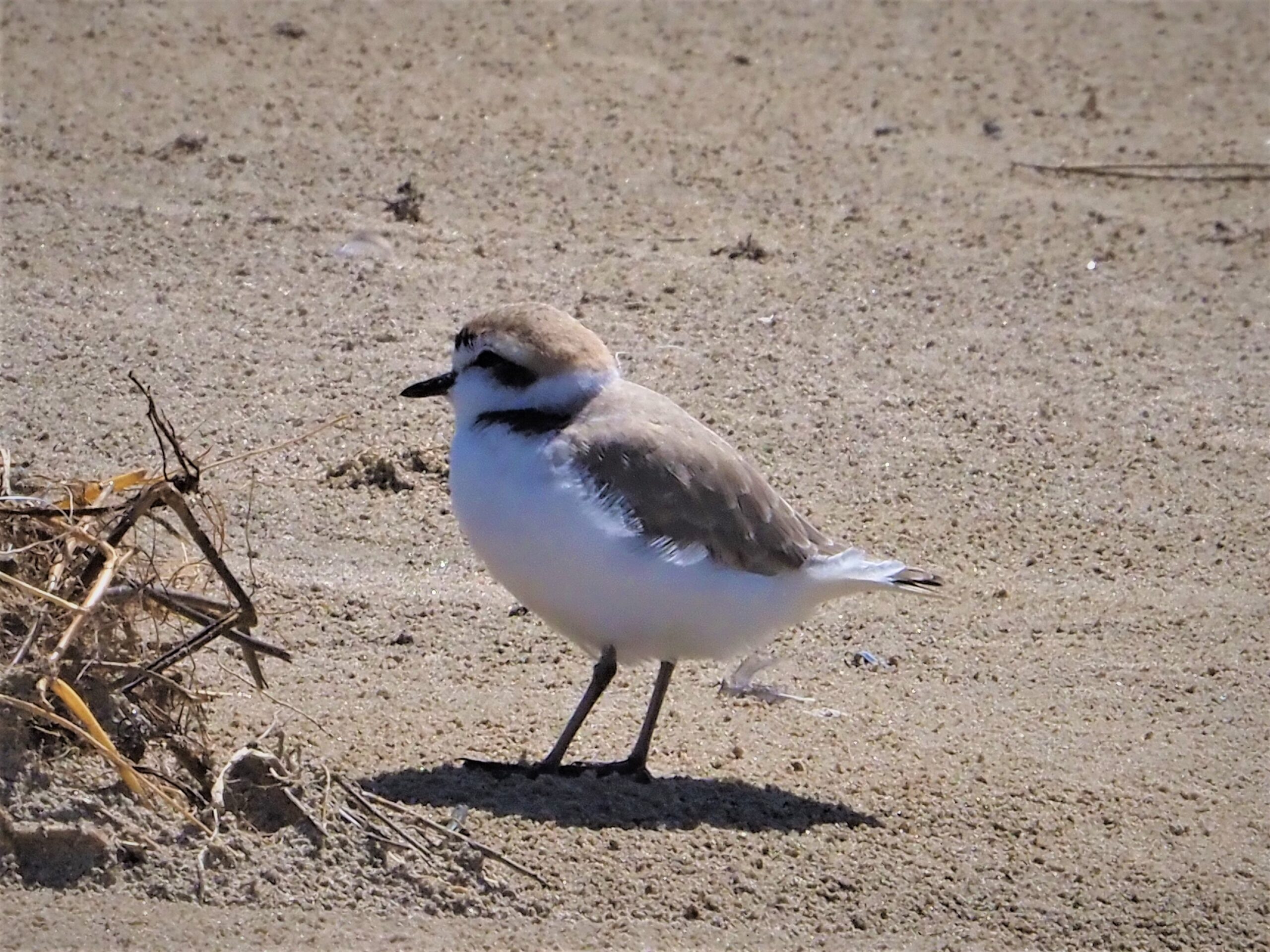
The Wilson’s and Semipalmated can be described as having “wet sand” back colors — meaning a darker brown. The Snowy and Piping have “dry sand” back colors — meaning a lighter brown or tan color. The following table illustrates these identification points.
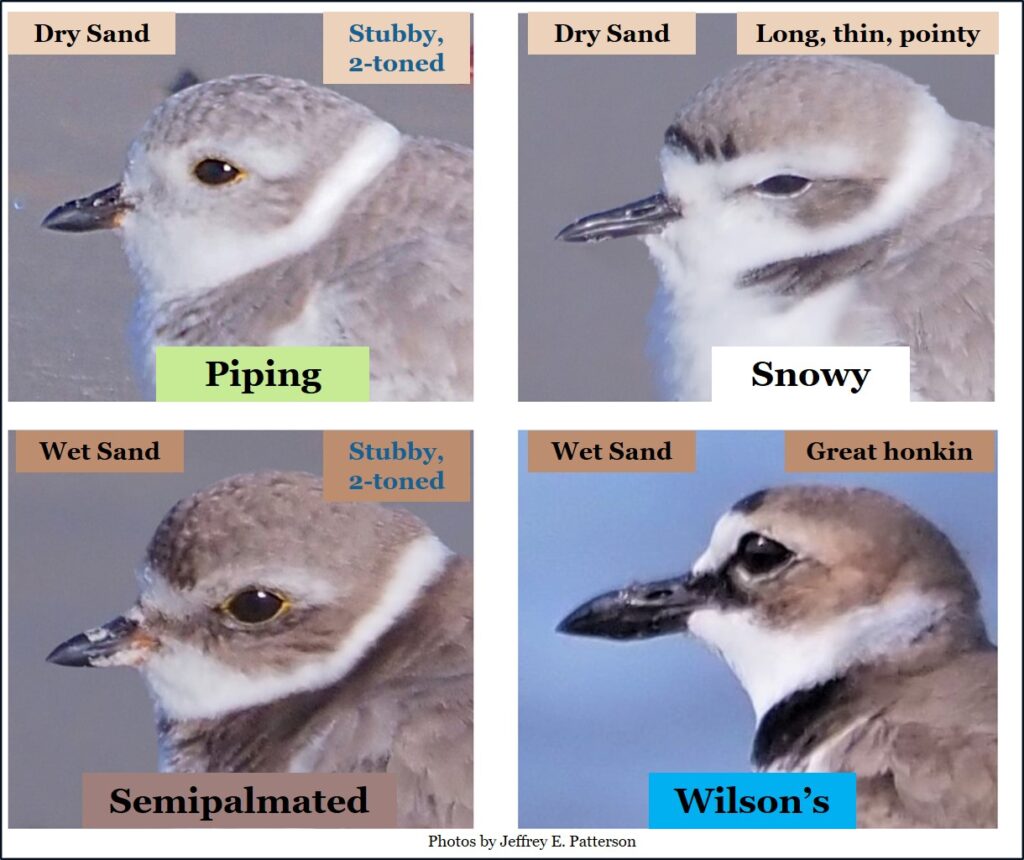
The same information is presented in a slightly different table below.
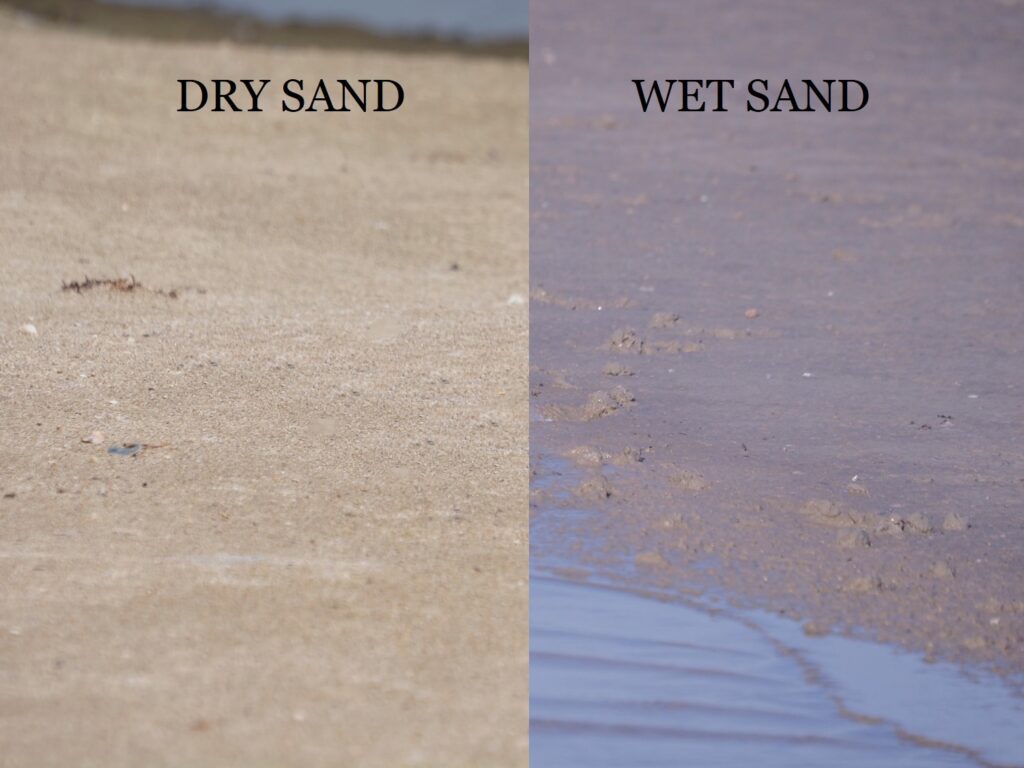
Dry Sand vs Wet Sand
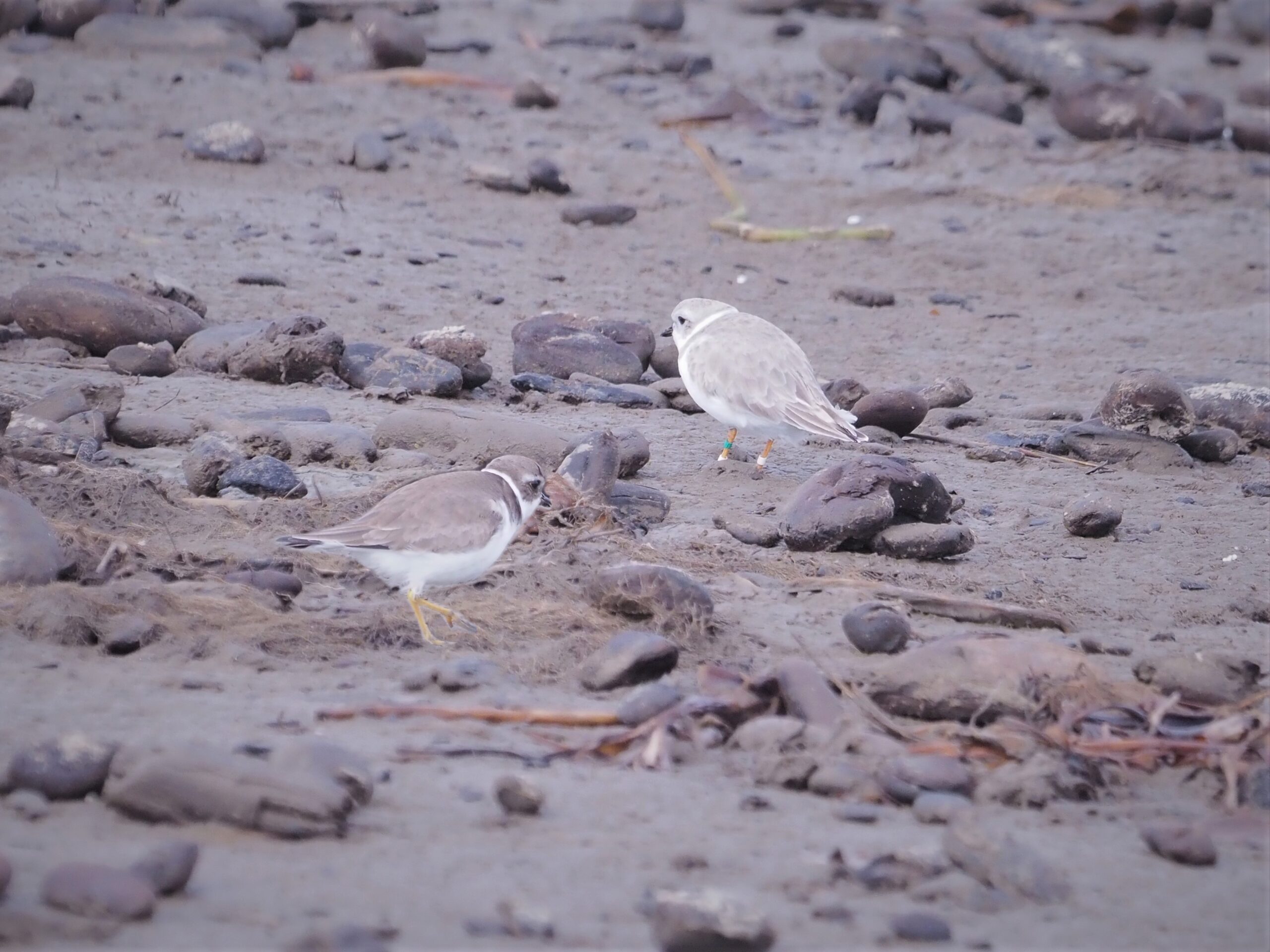
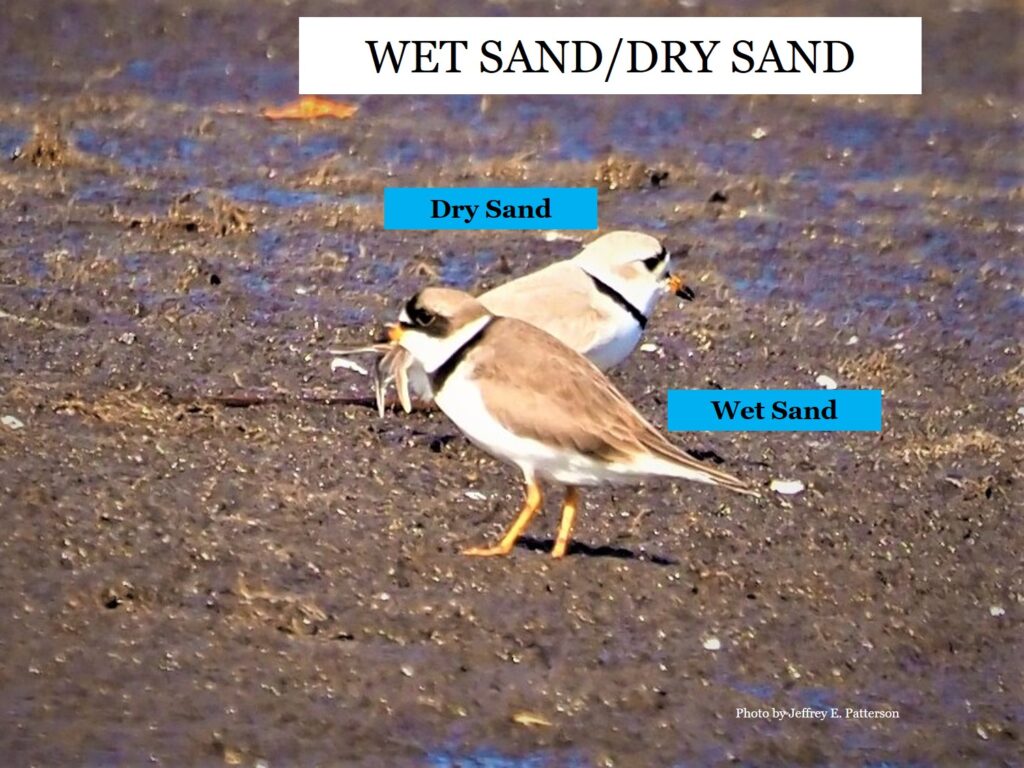
Since these species are often seen on beaches or mudflats the color changes between wet sand and dry sand (or wet mud and dry dirt) can be useful in characterizing their back colors. The difference in color or hue between wet and dry sand are illustrated below with photos of sand and then with 2 of the plovers in the same photo. Bare in mind that colors observed in person are subject to variation, primarily due to the angle and intensity of light on the subject. Likewise photographs can show drastic differences in the same species based on the angle and intensity of light as well as the camera settings.
Structure
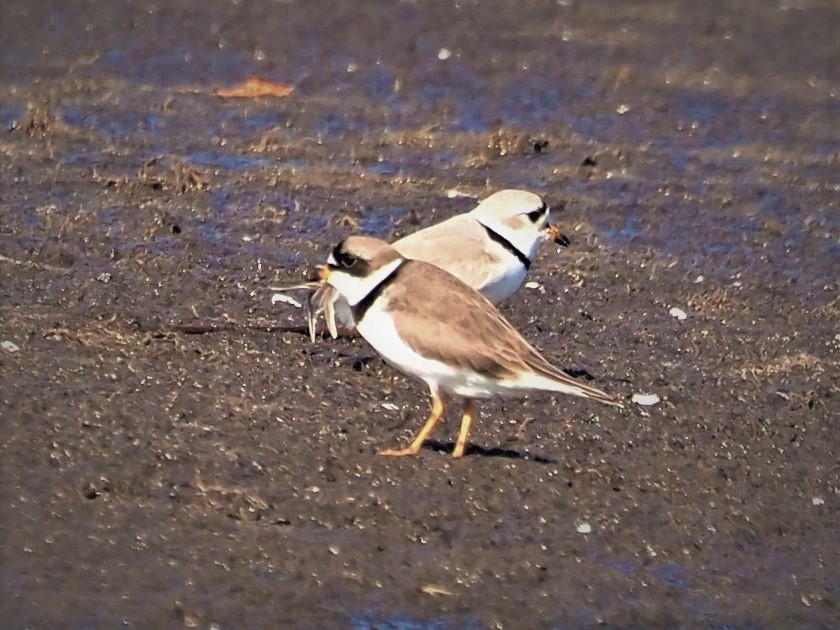
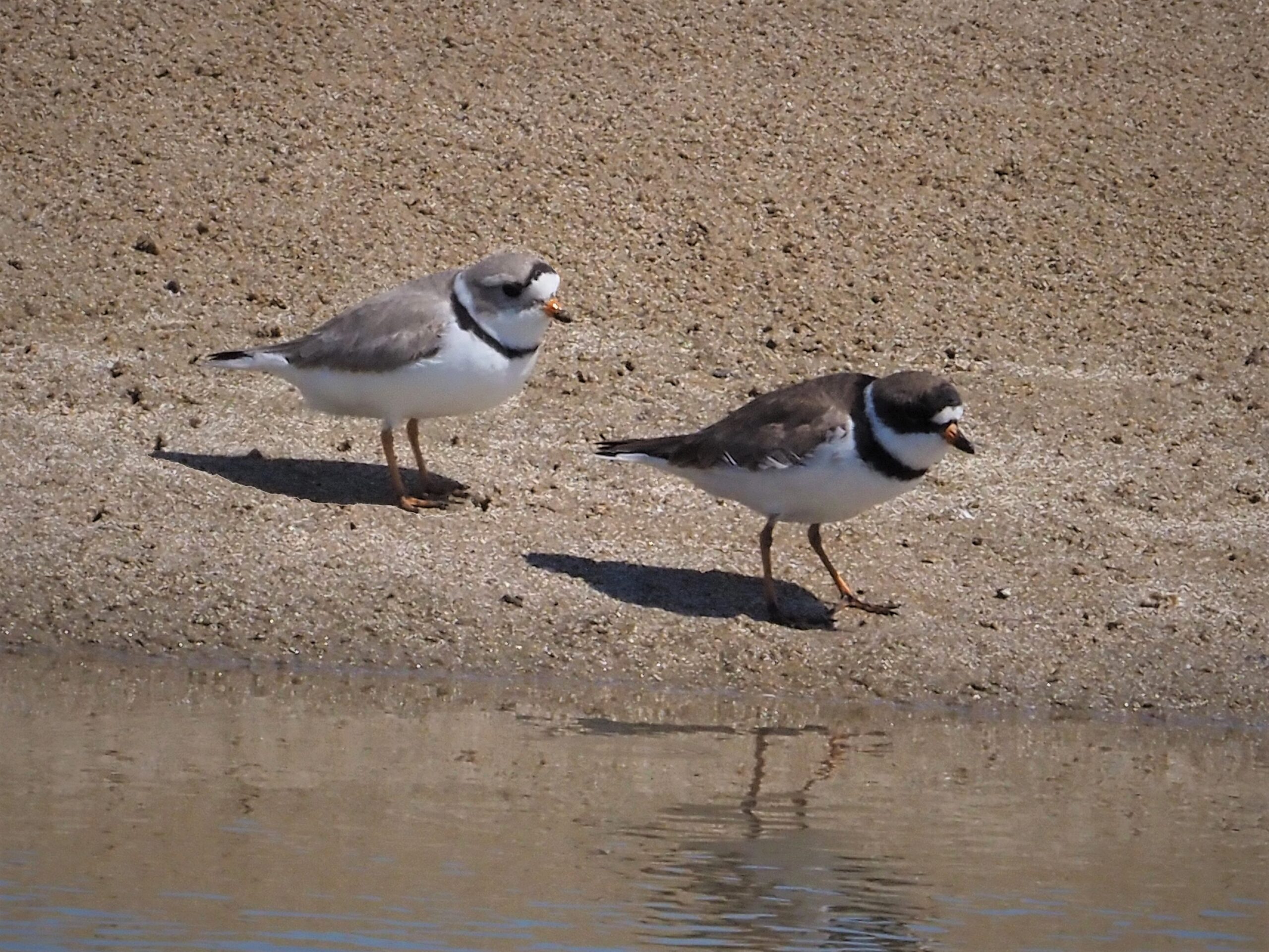
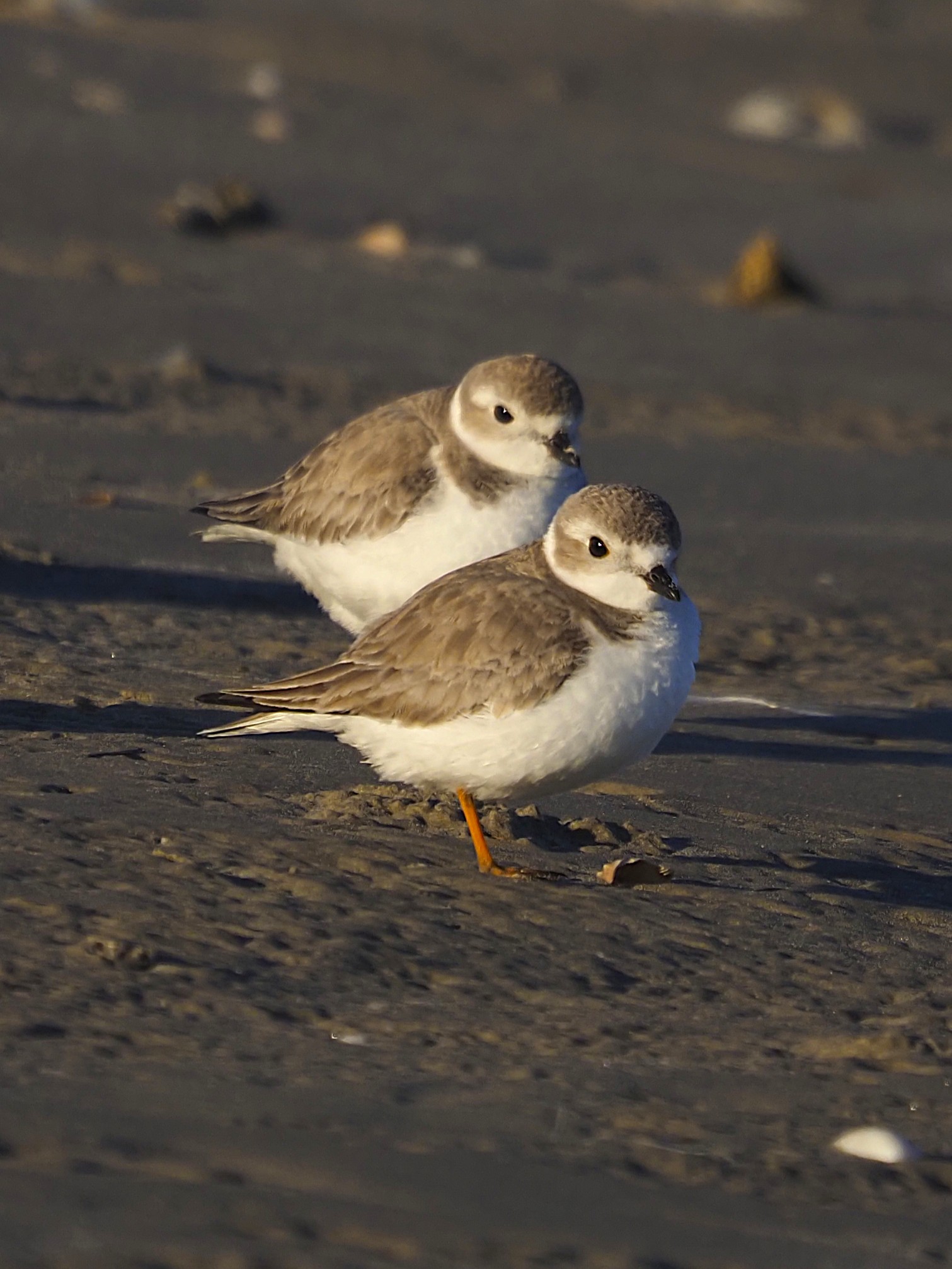
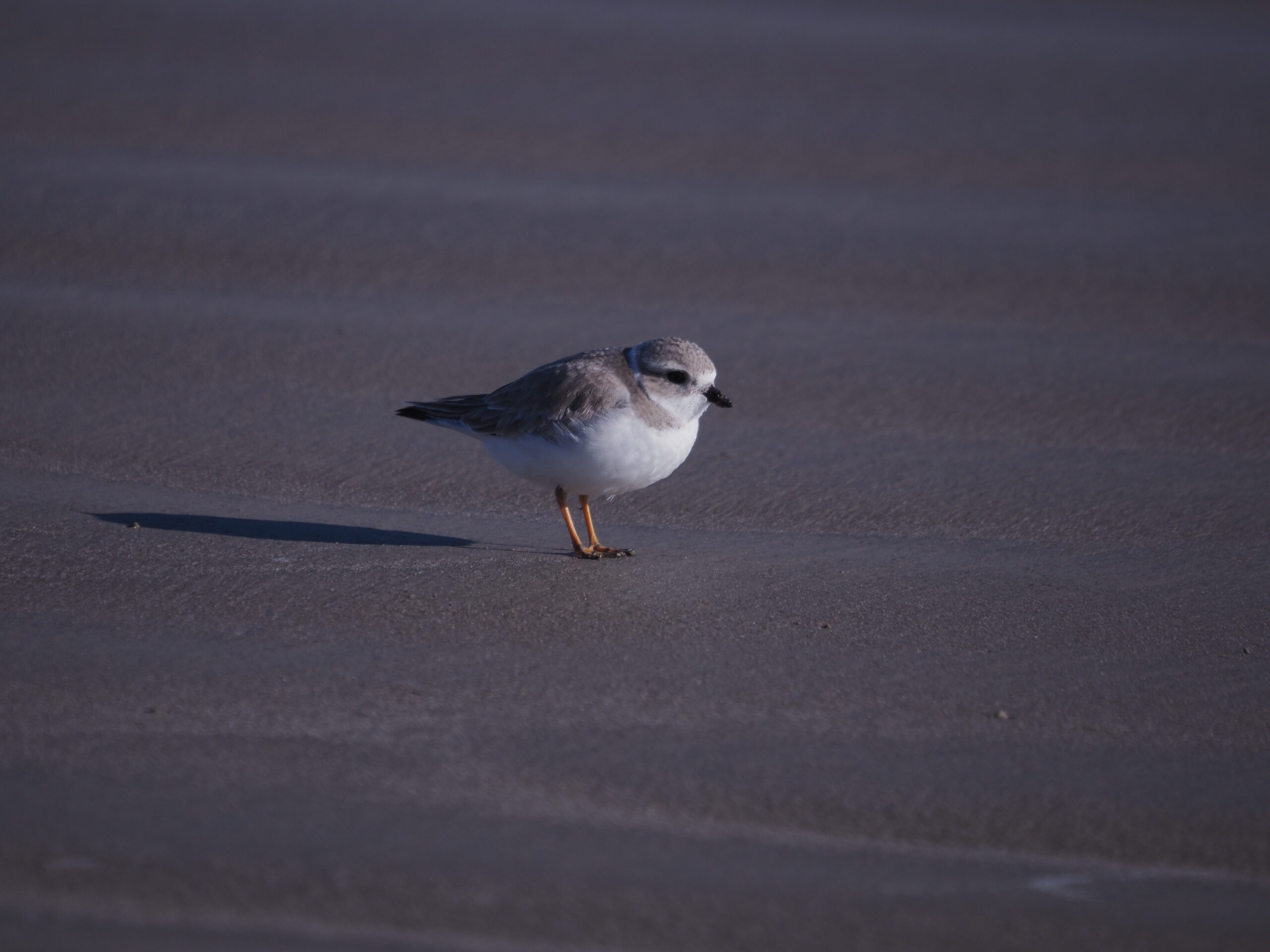
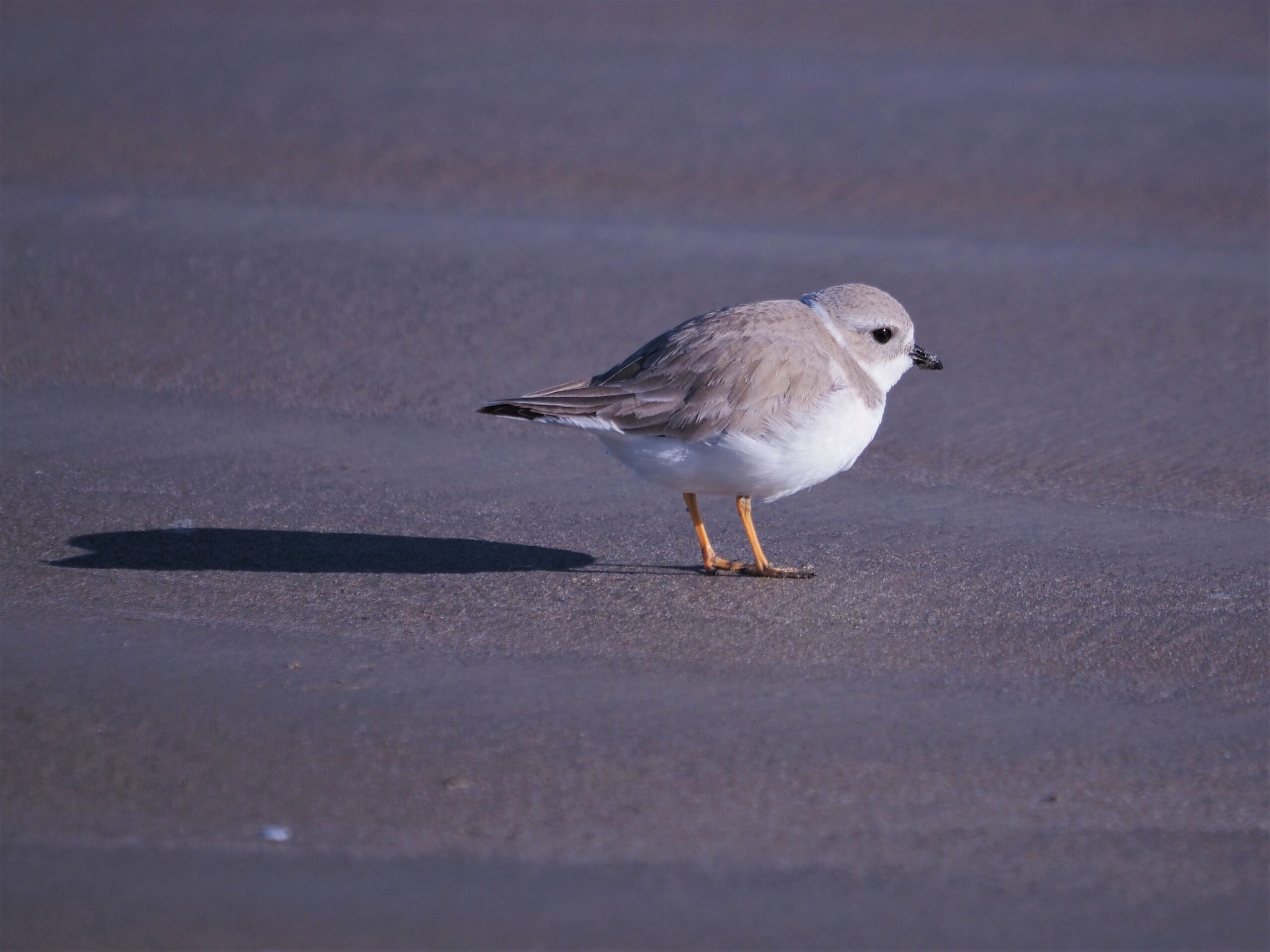
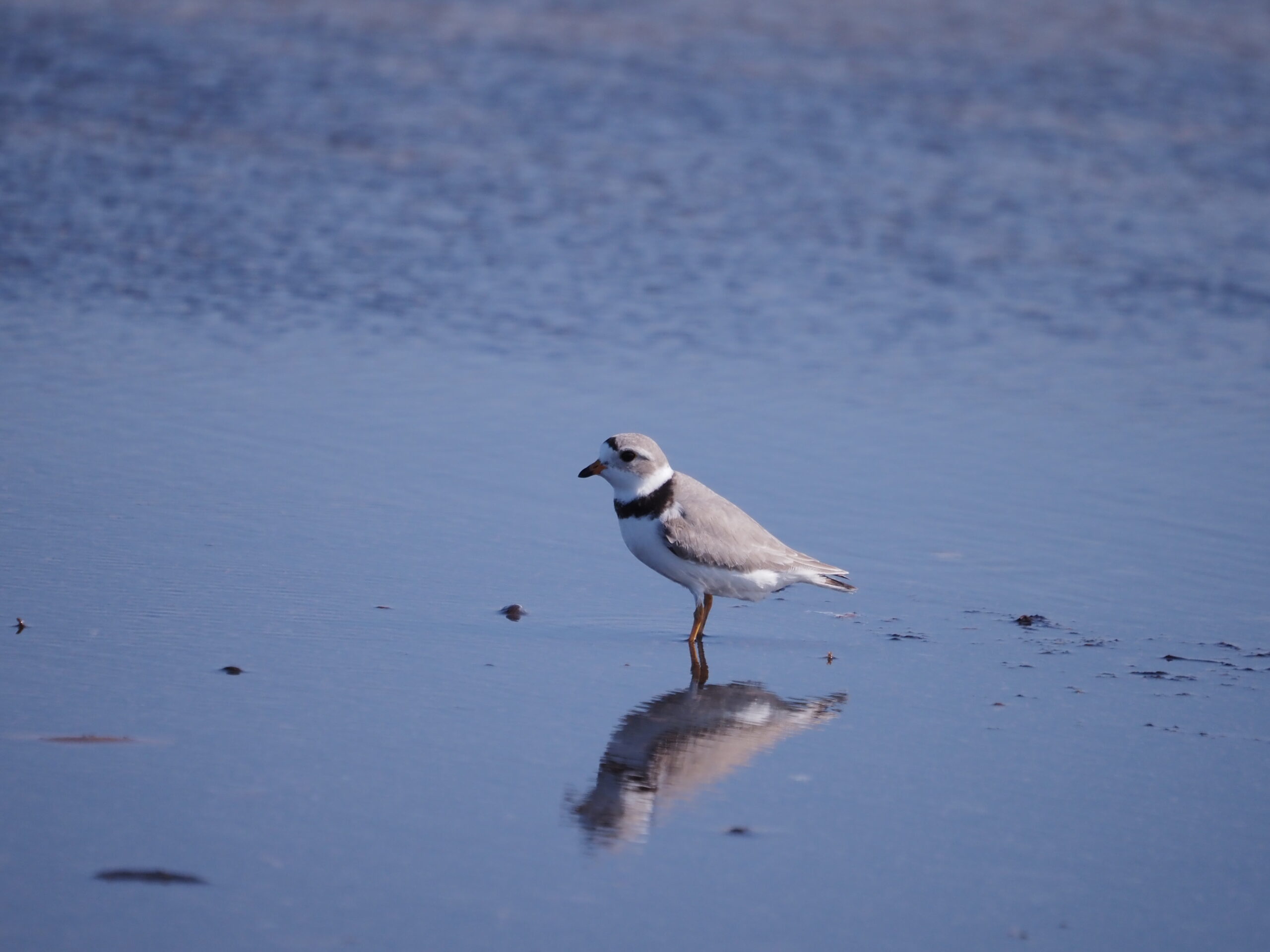
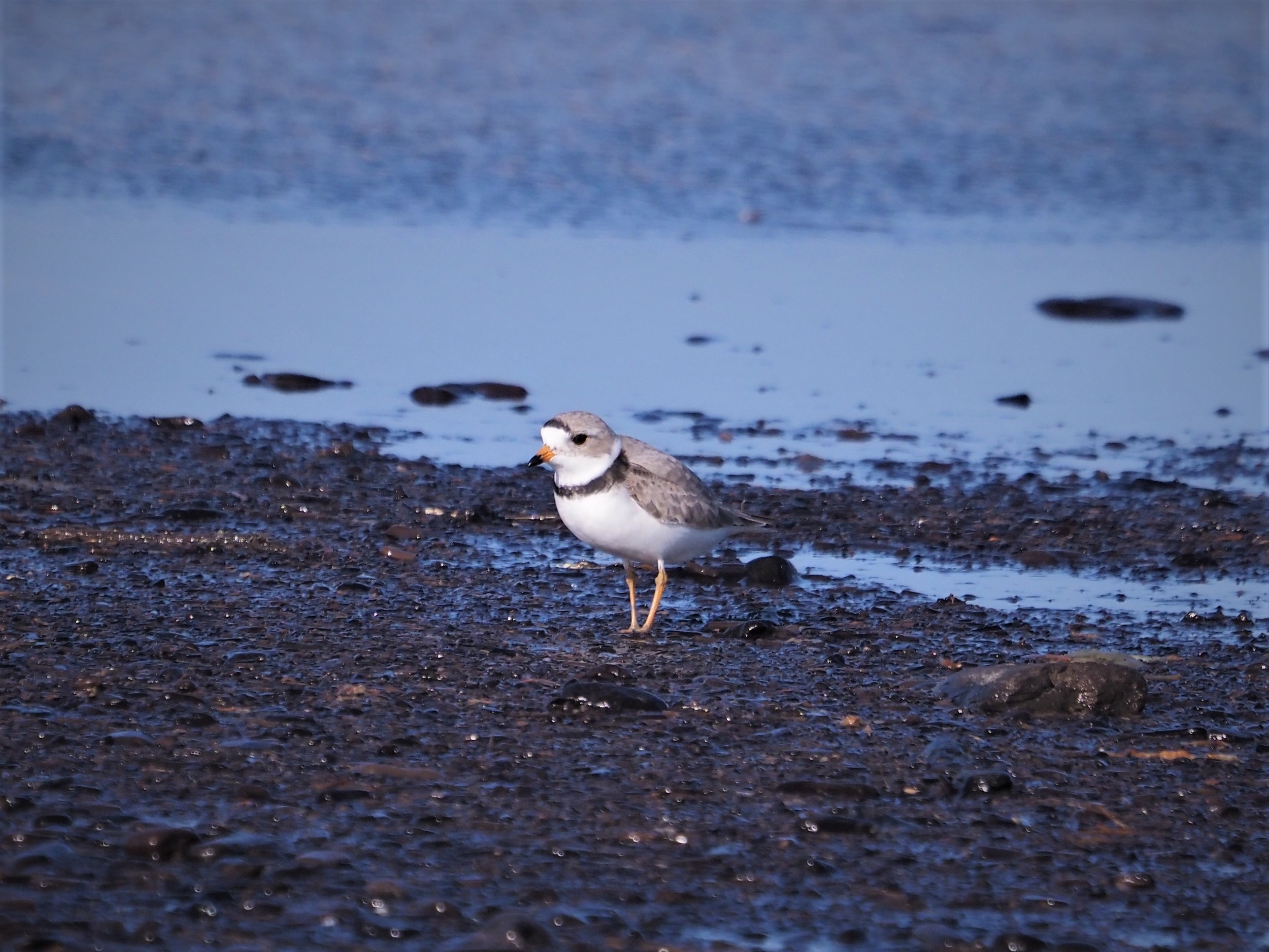
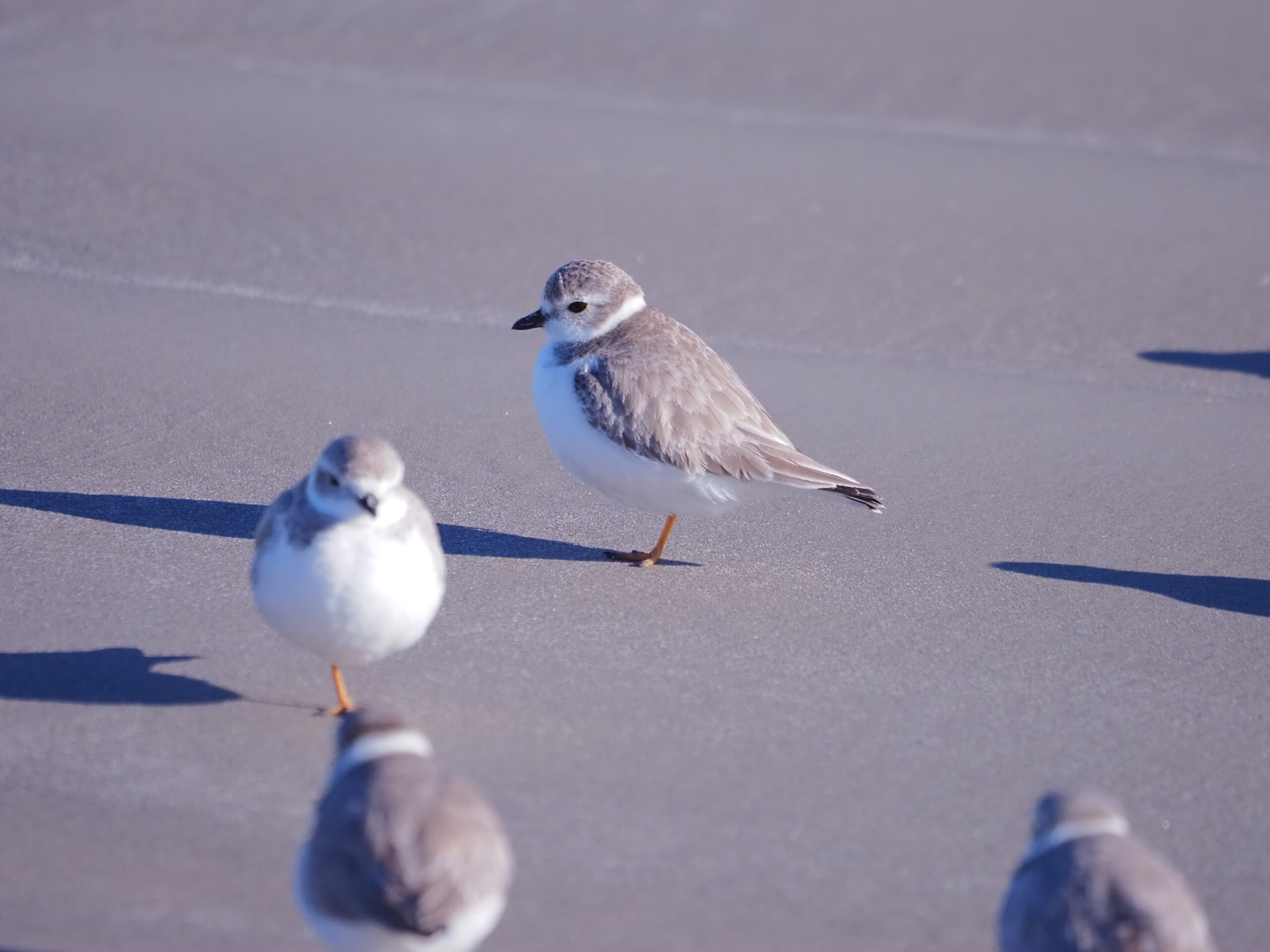
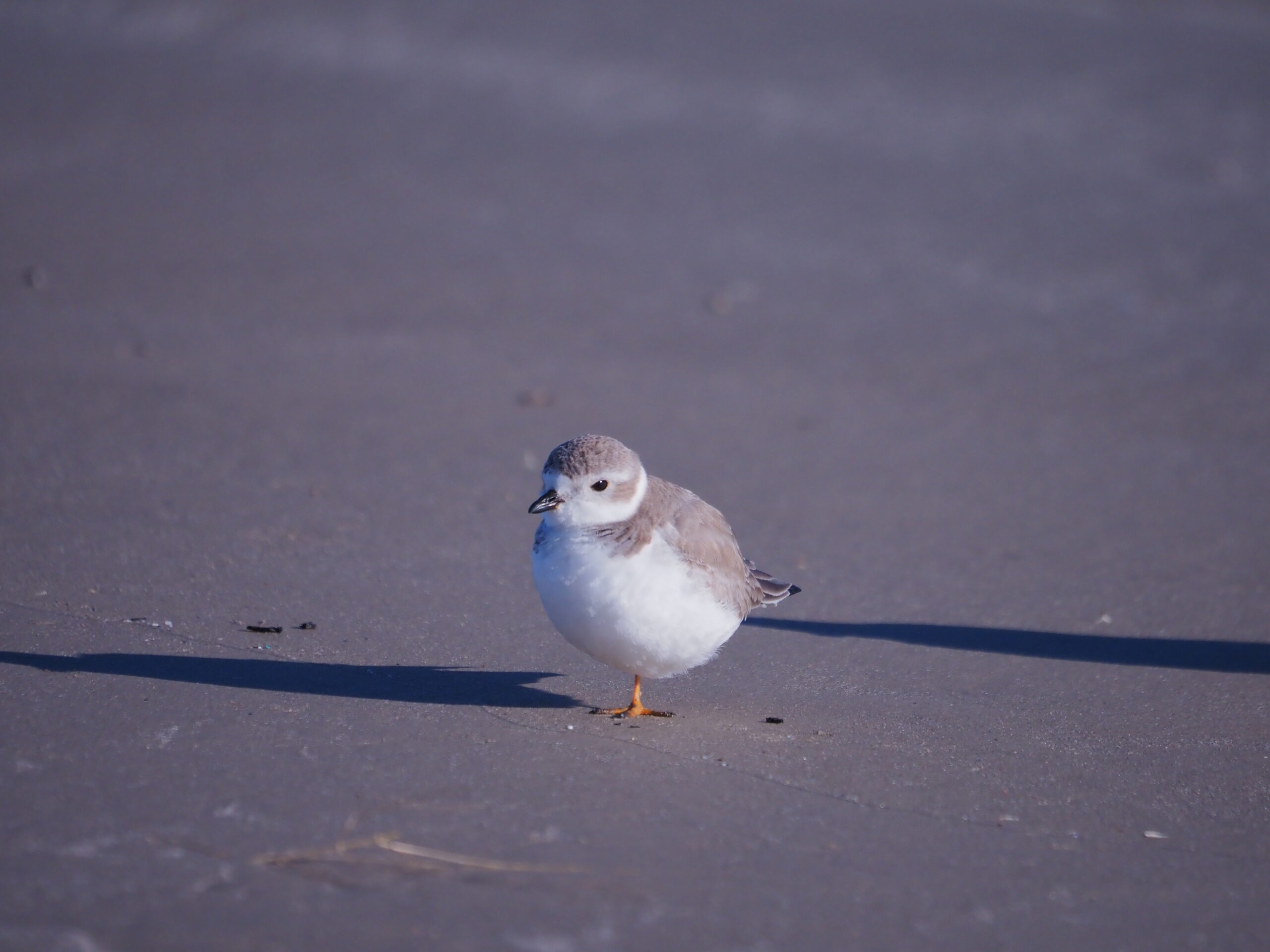
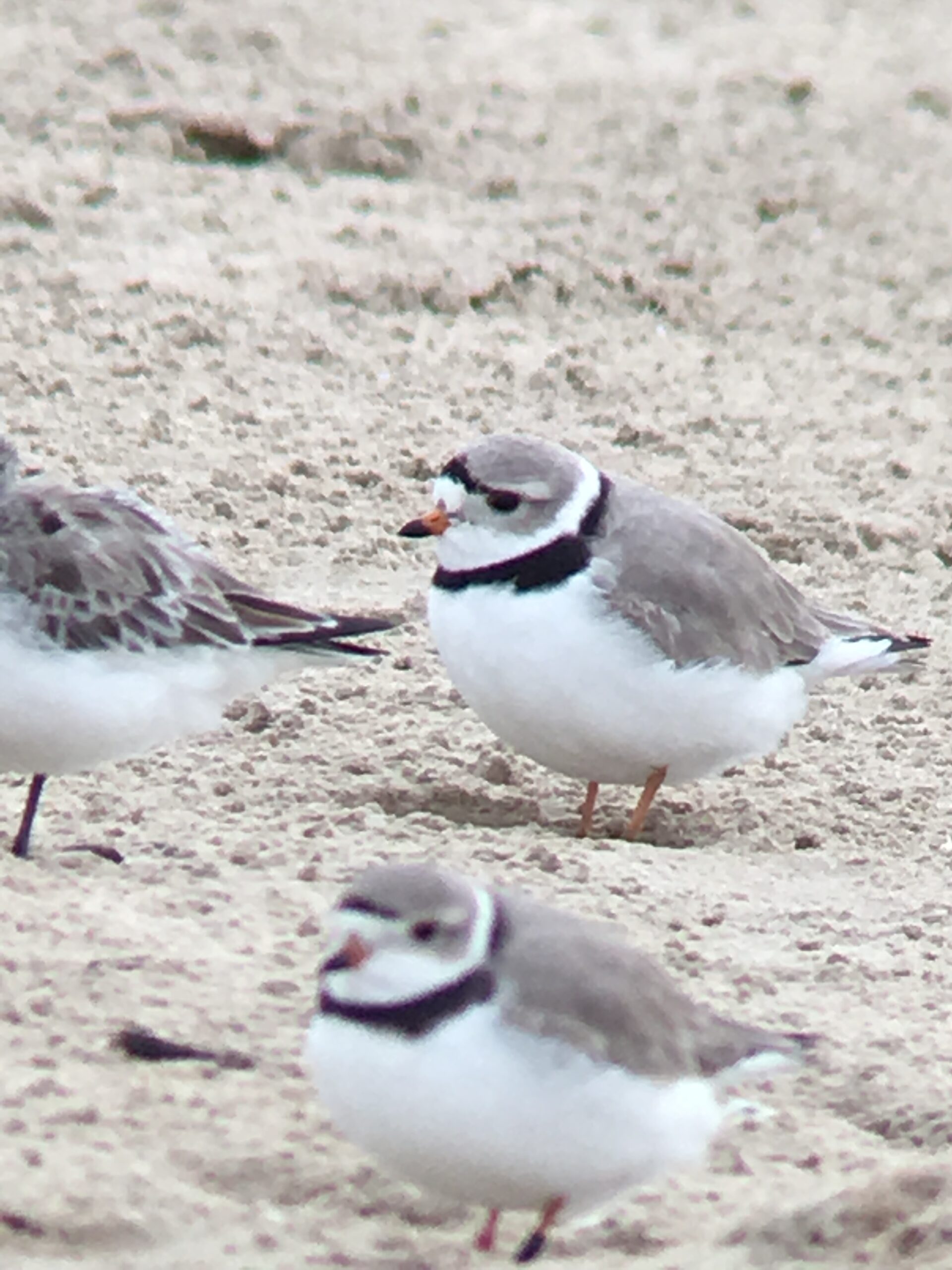
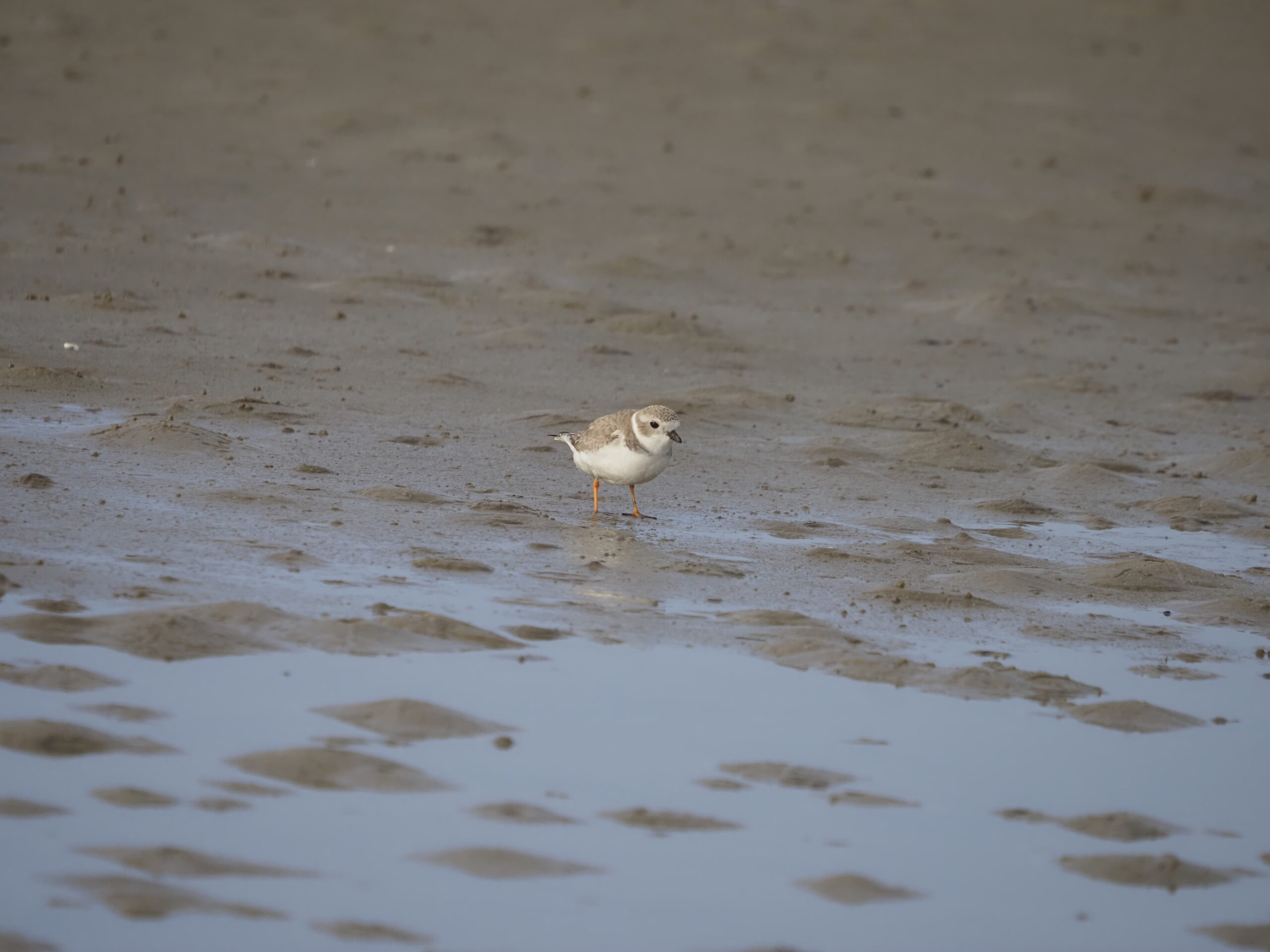
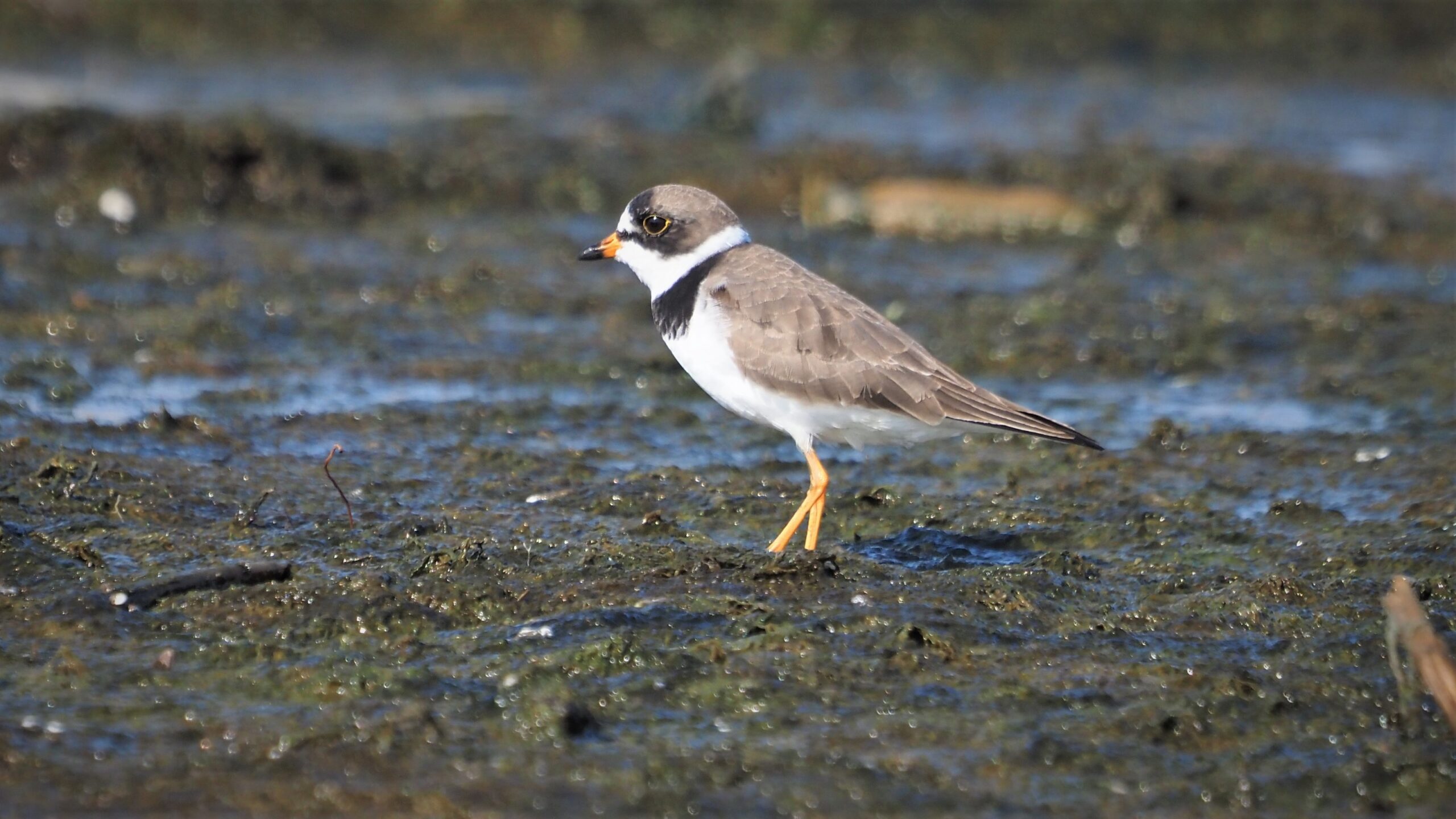
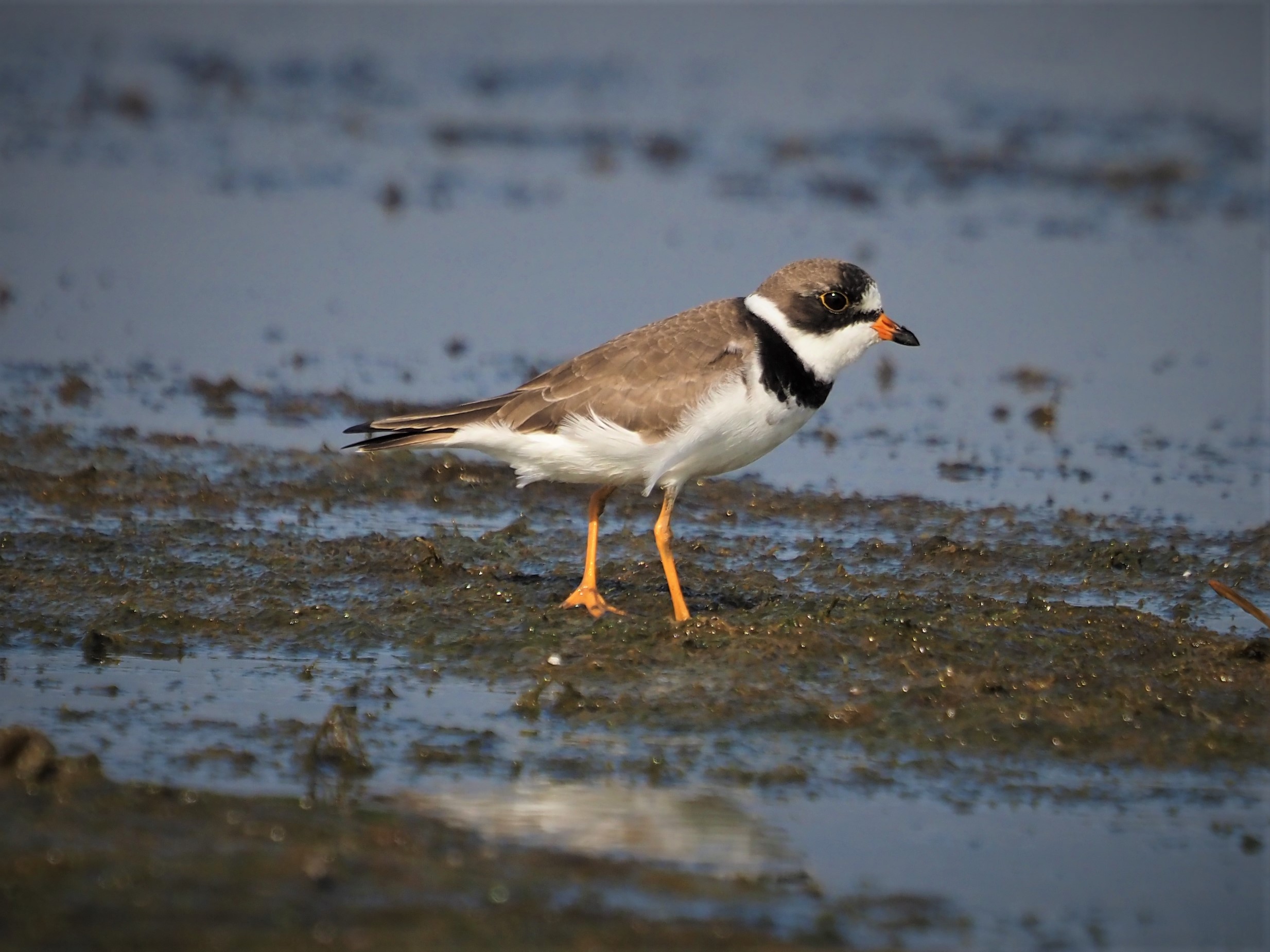
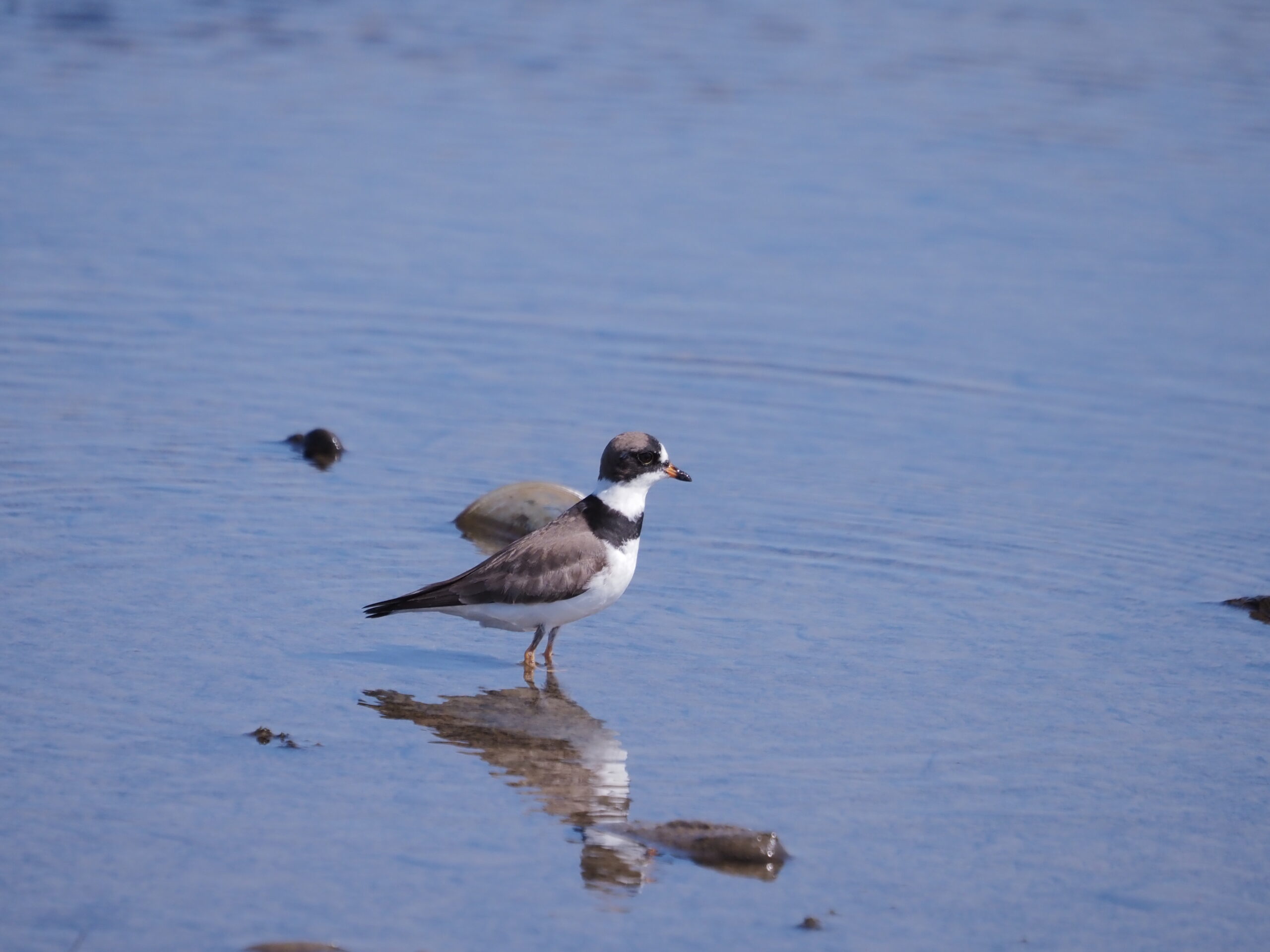
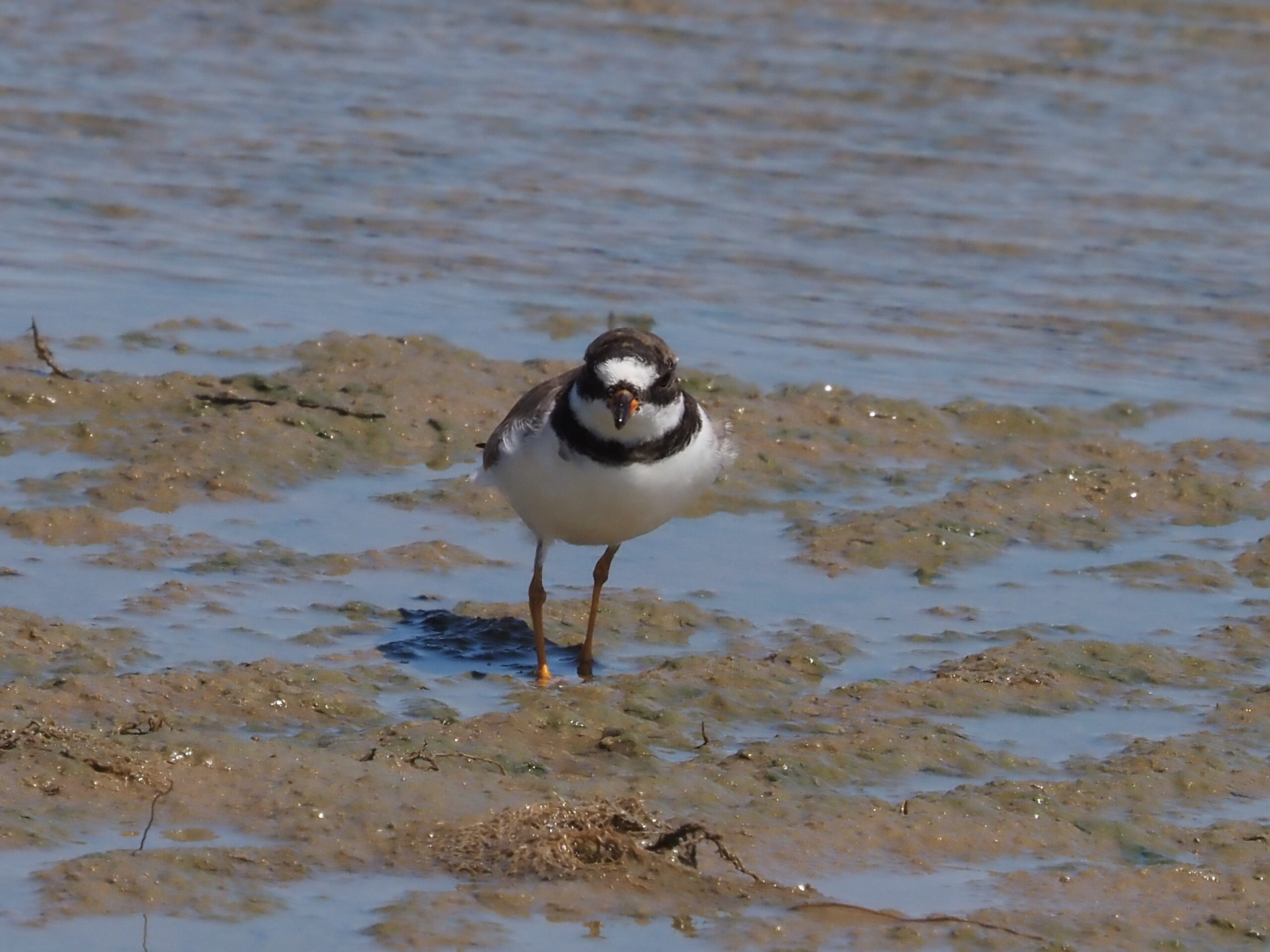
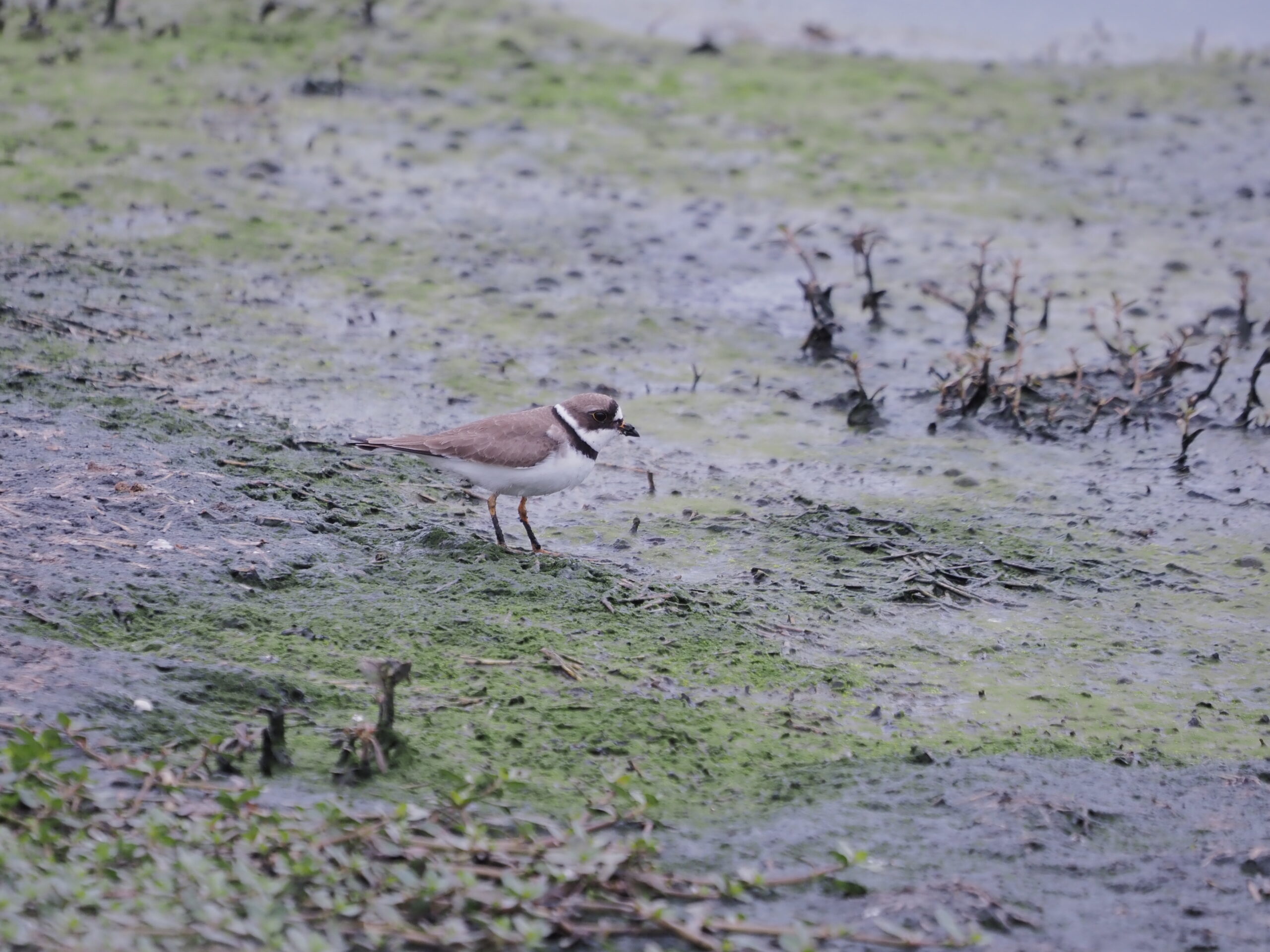
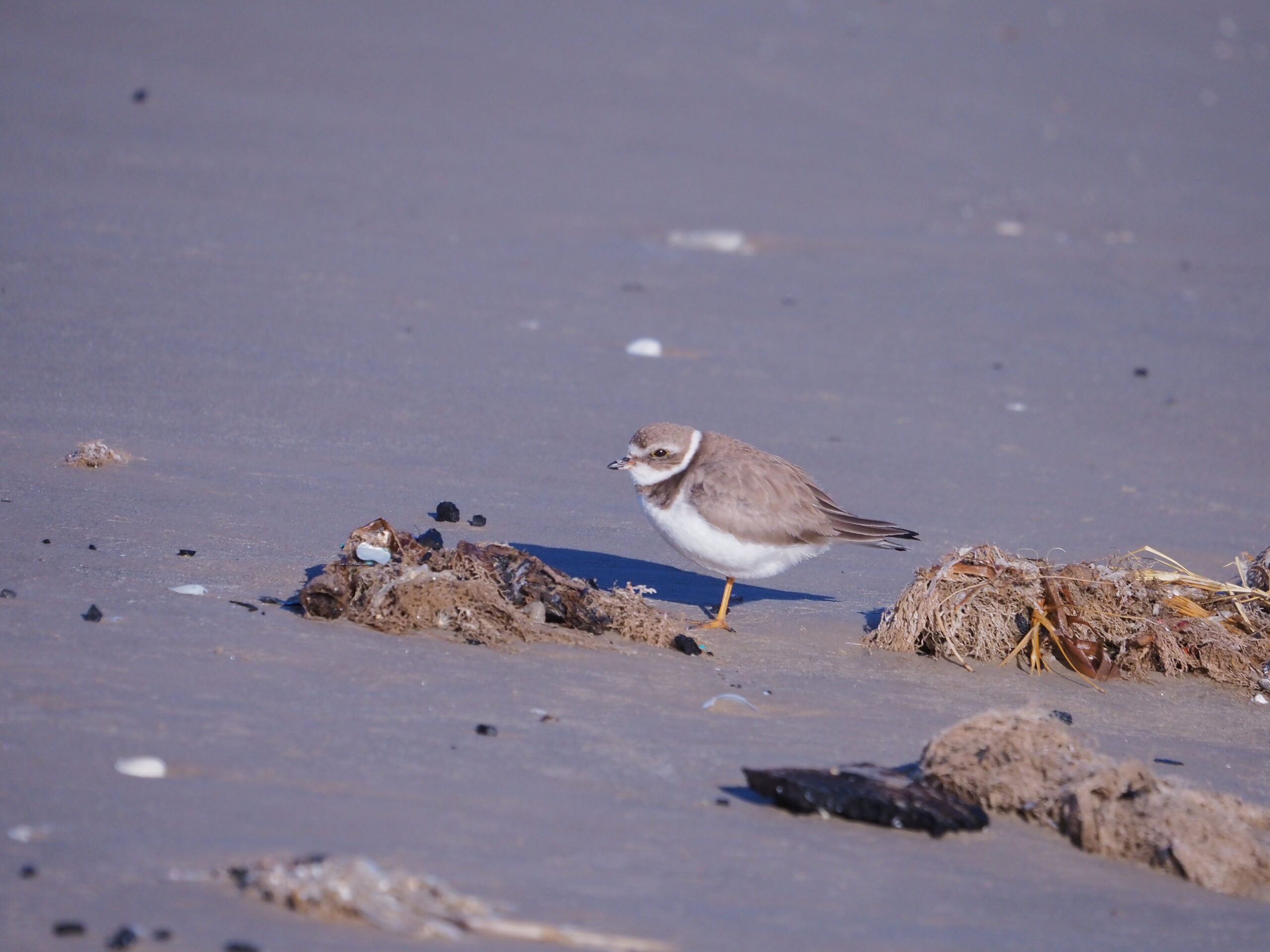
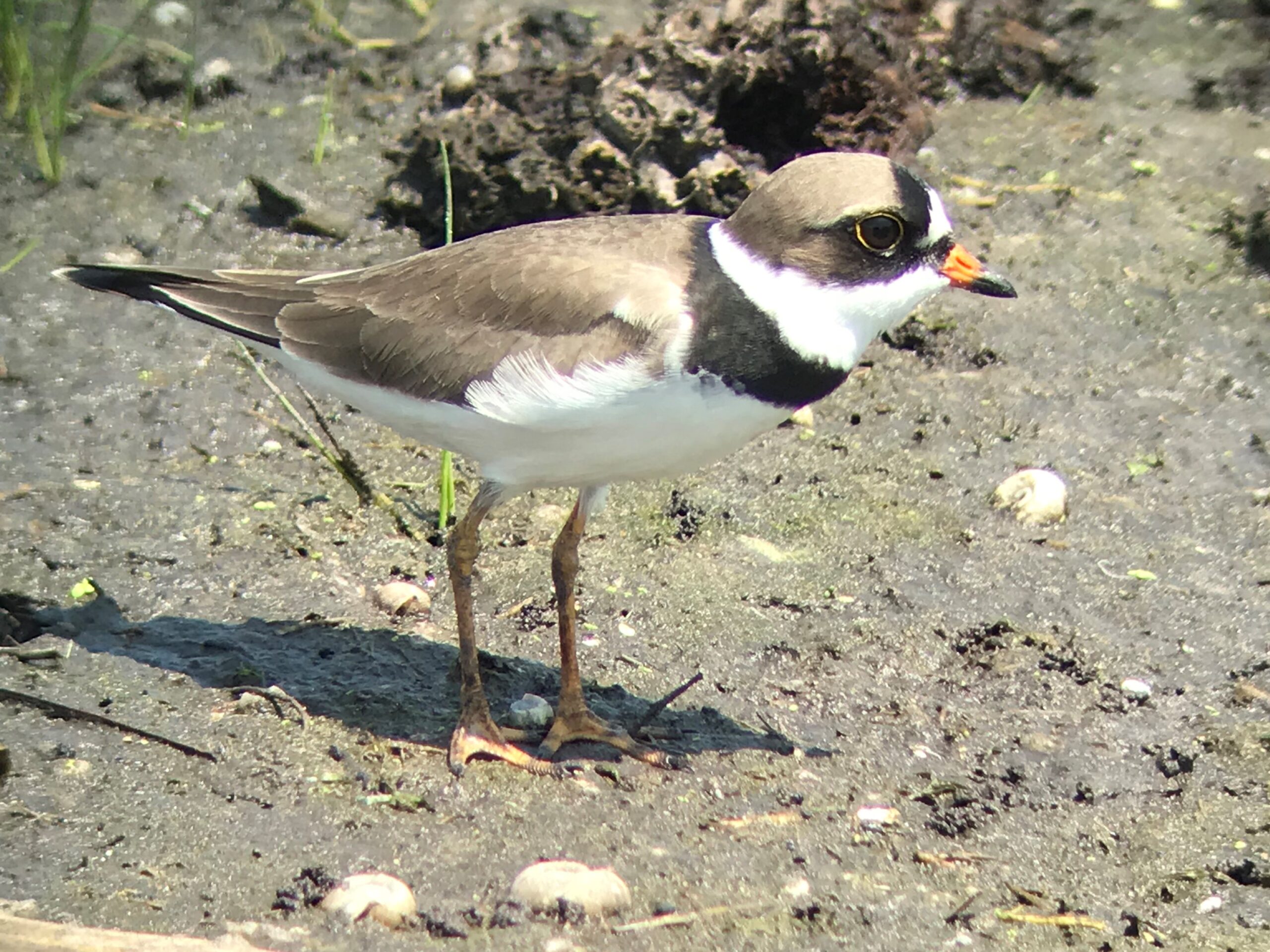
The structure of each species is also distinctive. The Piping is round-bodied, big-headed and has a prominent round eye. The Semipalmated has a slightly smaller head than the Piping and is slightly less-round-bodied and more attenuated, especially in the back half (behind the legs). Both have short, stubby, 2-toned bills in alternate plumage, and the bills of both tend to be black or at least less vibrant yellow or orange in basic plumage.
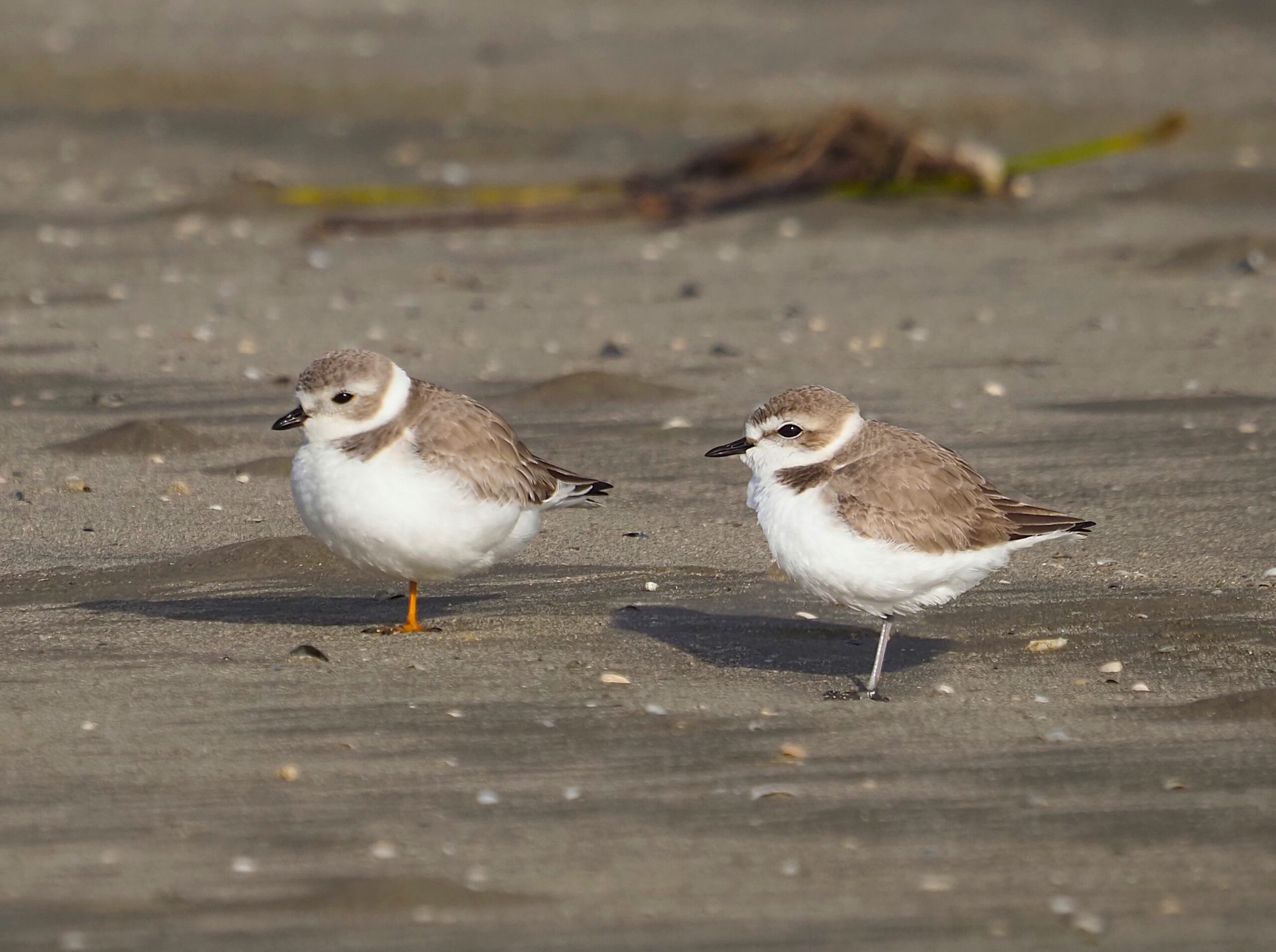
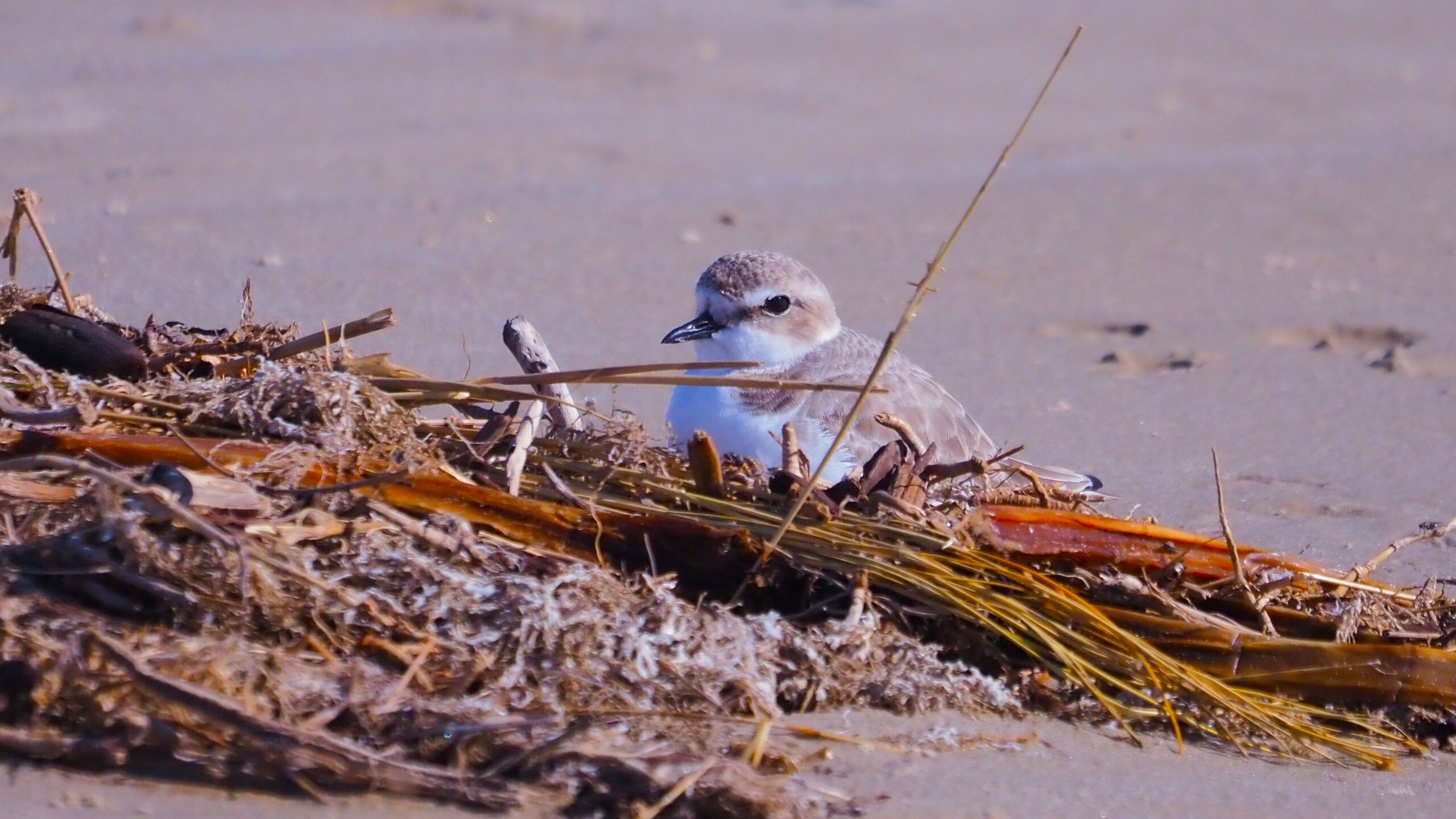
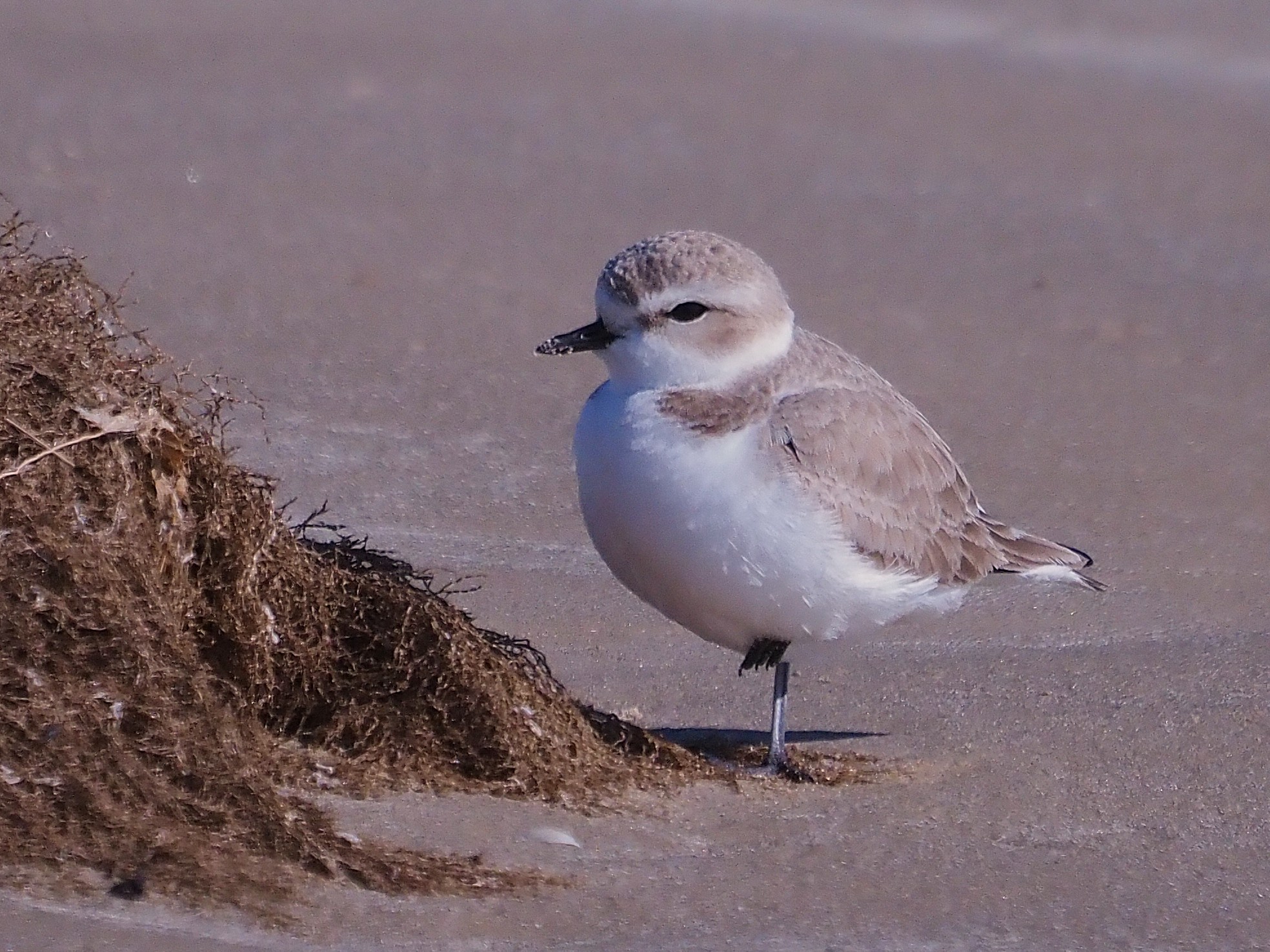
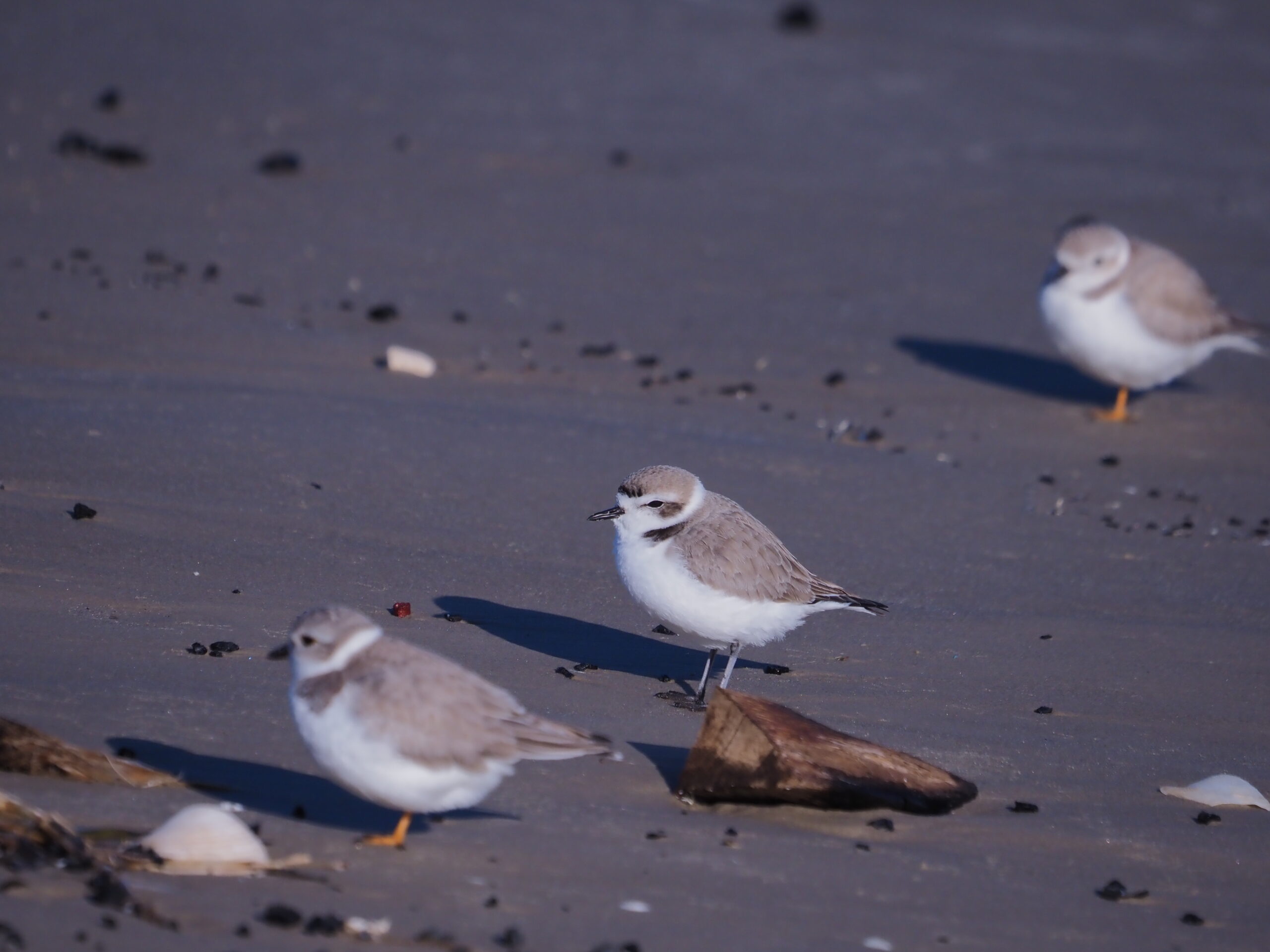
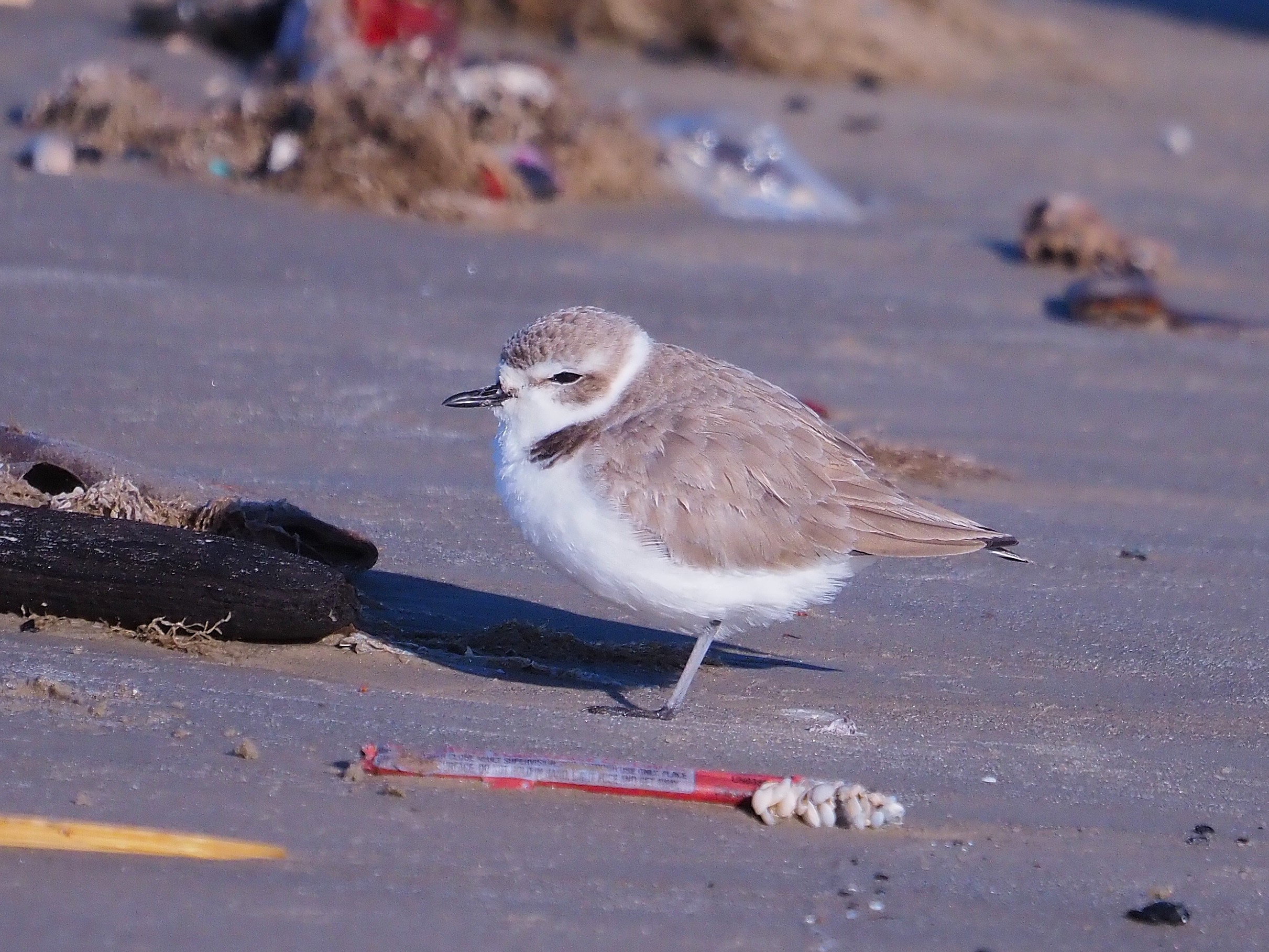
The Snowy is the smallest of the 4 small plovers. It has a large head and often appears to be slightly front-heavy — as if it might tip over forward. The Snowy’s eye is slightly almond-shaped and there is usually a dark “mascara” mark behind the eye. The bill is black, long, thin and pointy (for a plover).
The Wilson’s (that’s “Mr. Wilson” to you) is the largest of the 4 and has a very obvious large dark bill, along with a blocky head and thick neck.
Piping Plover
The Piping Plover is rare in central Texas showing up at Hornsby bend every few years. But it can be found in seasonally varying numbers on the Texas Coast year round. As a “threatened” species it is often found with bands on its legs. The Piping is a pale bird for Hornsby therefore it is usually found by scanning for “frosty” birds amongst the many “brown” shorebirds. (See my discussion on “Brown vs Frosty at Hornsby bend” HERE).
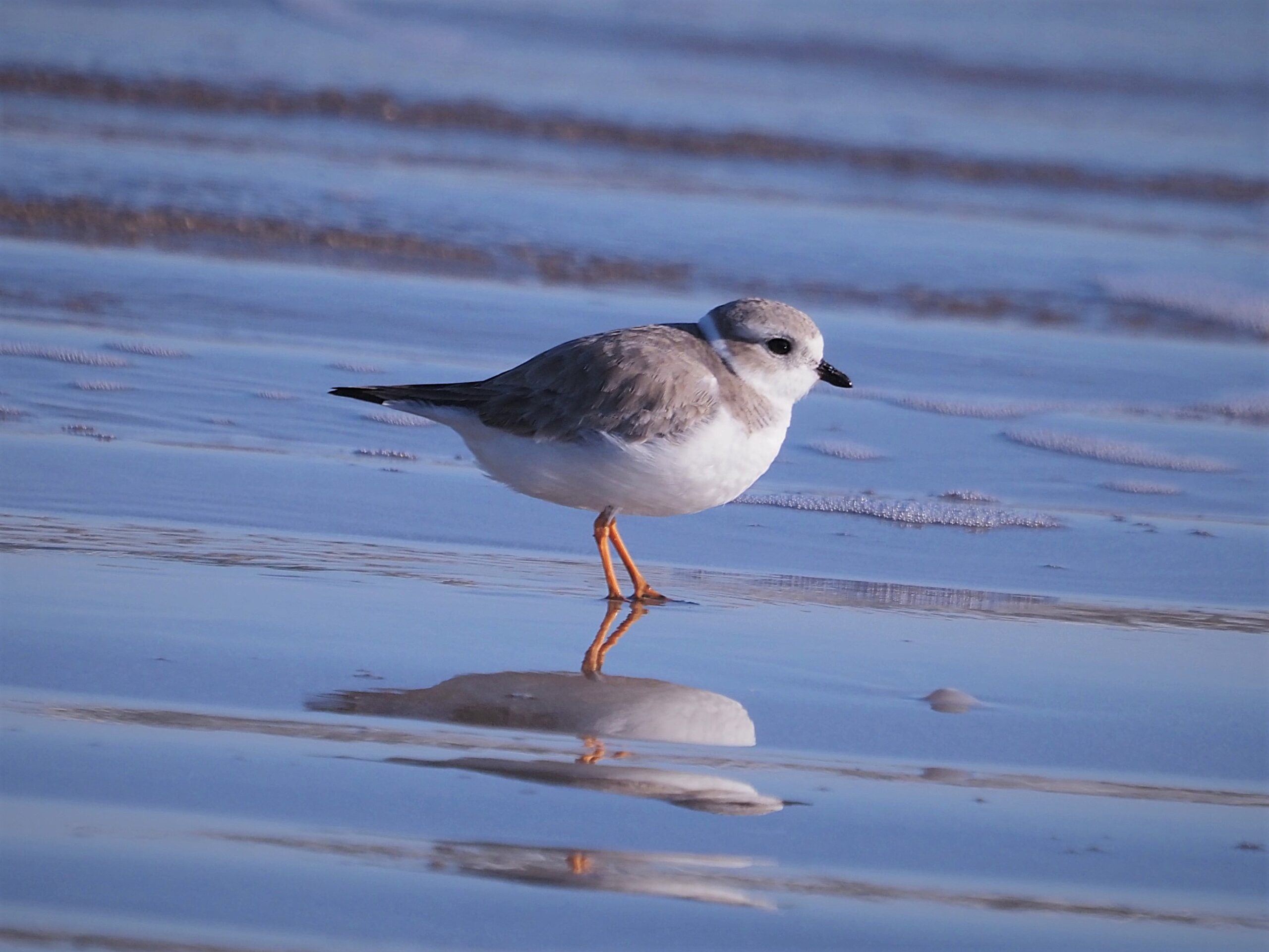
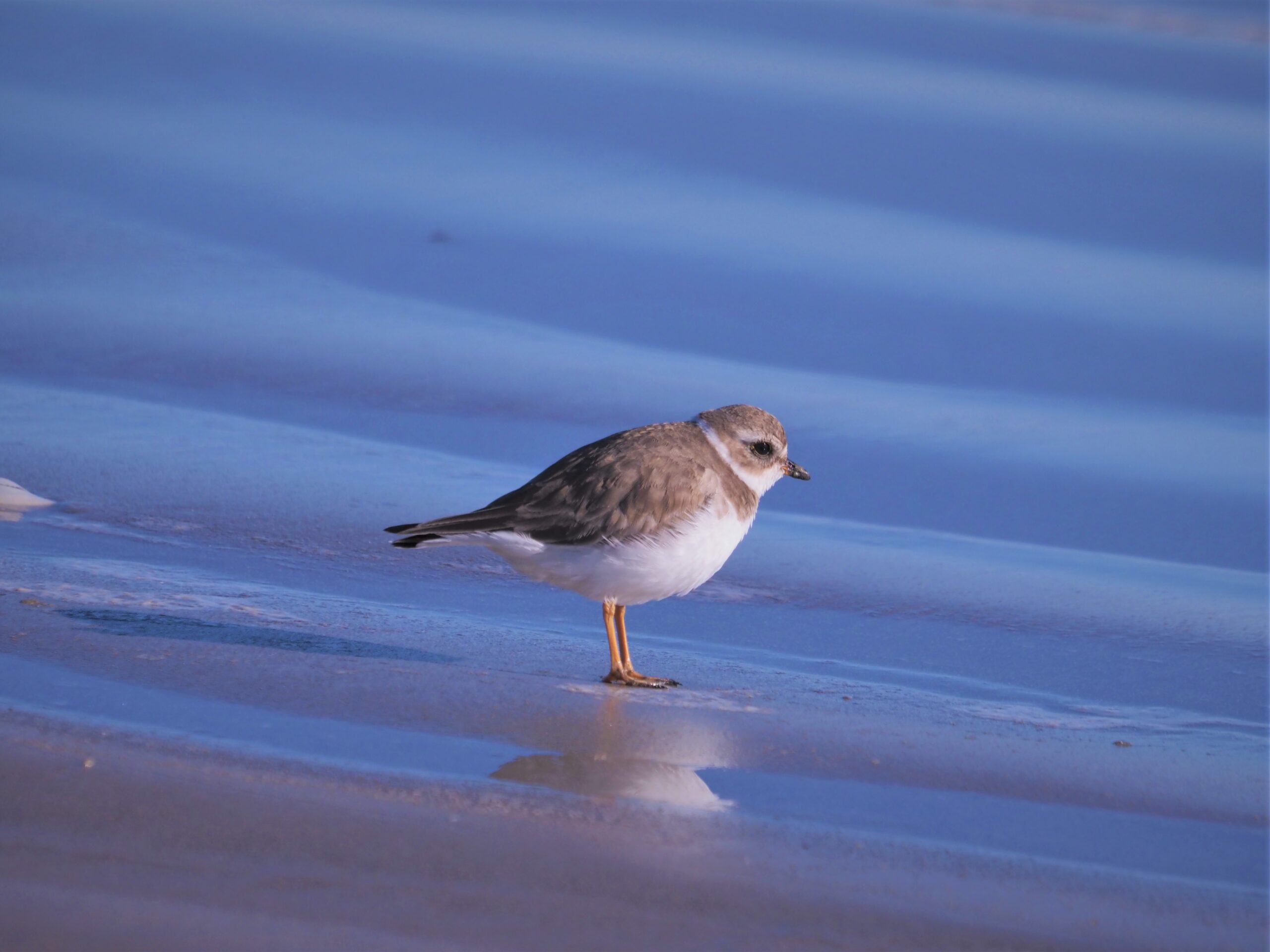
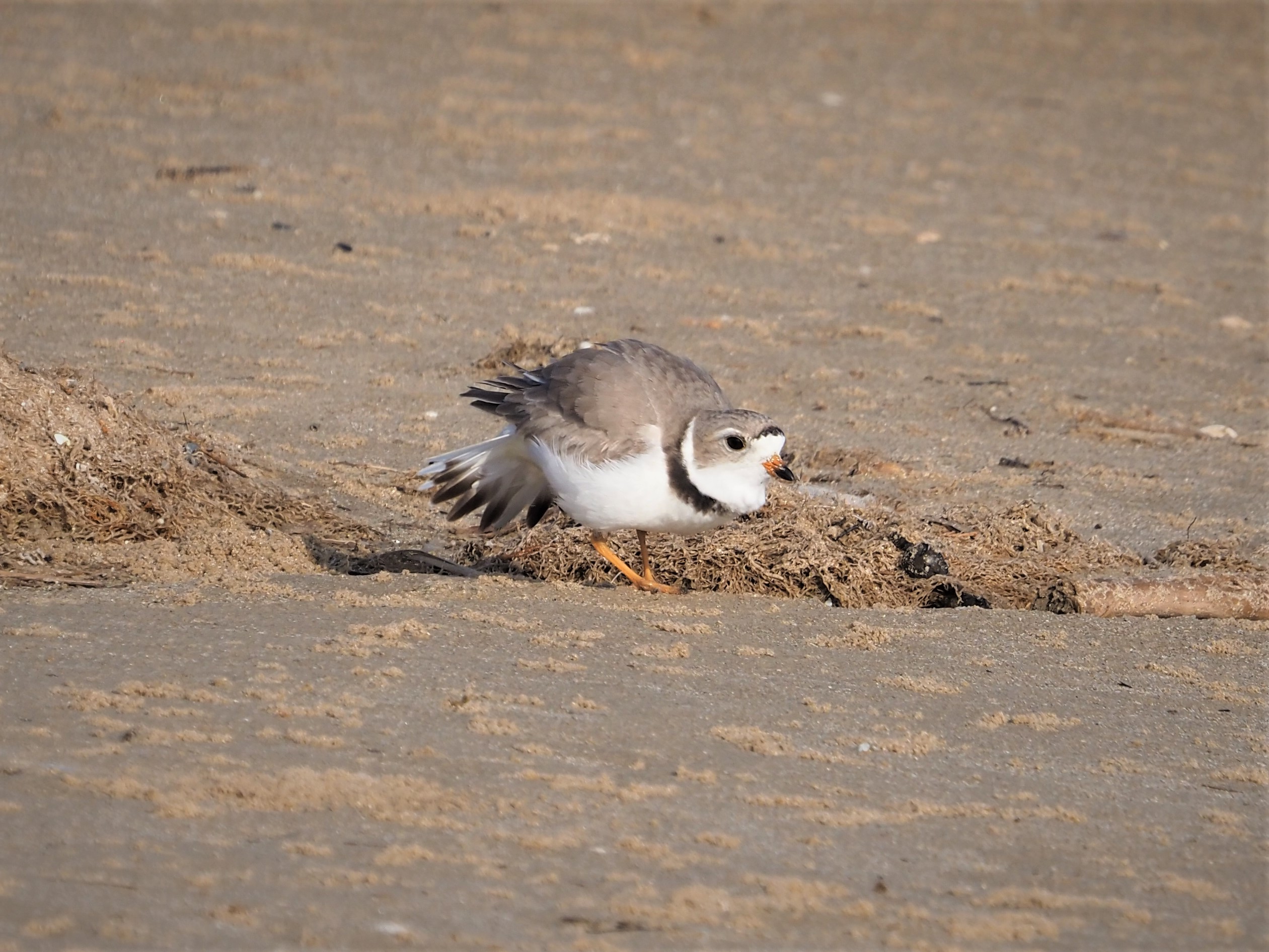
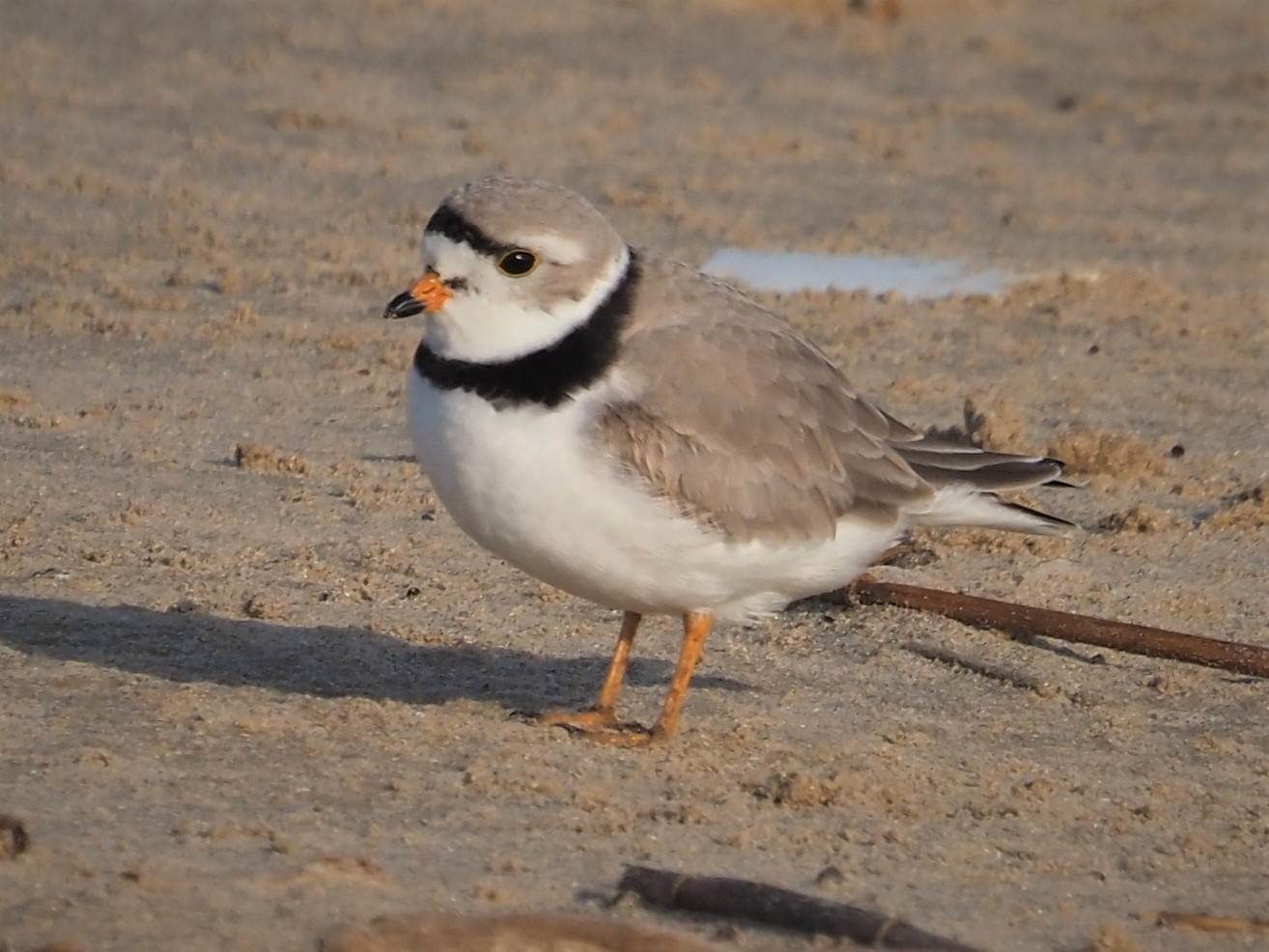
Semipalmated Plover
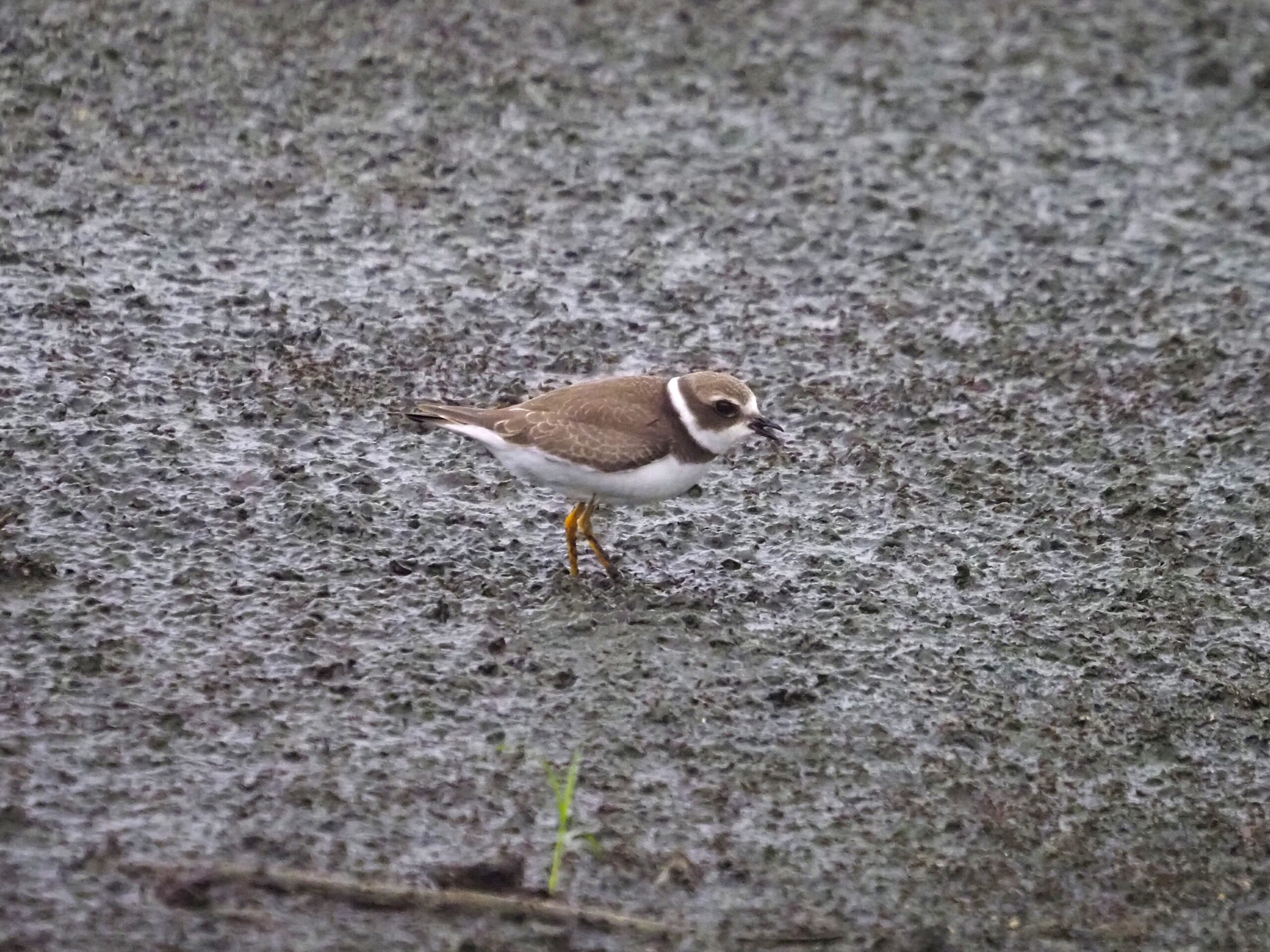
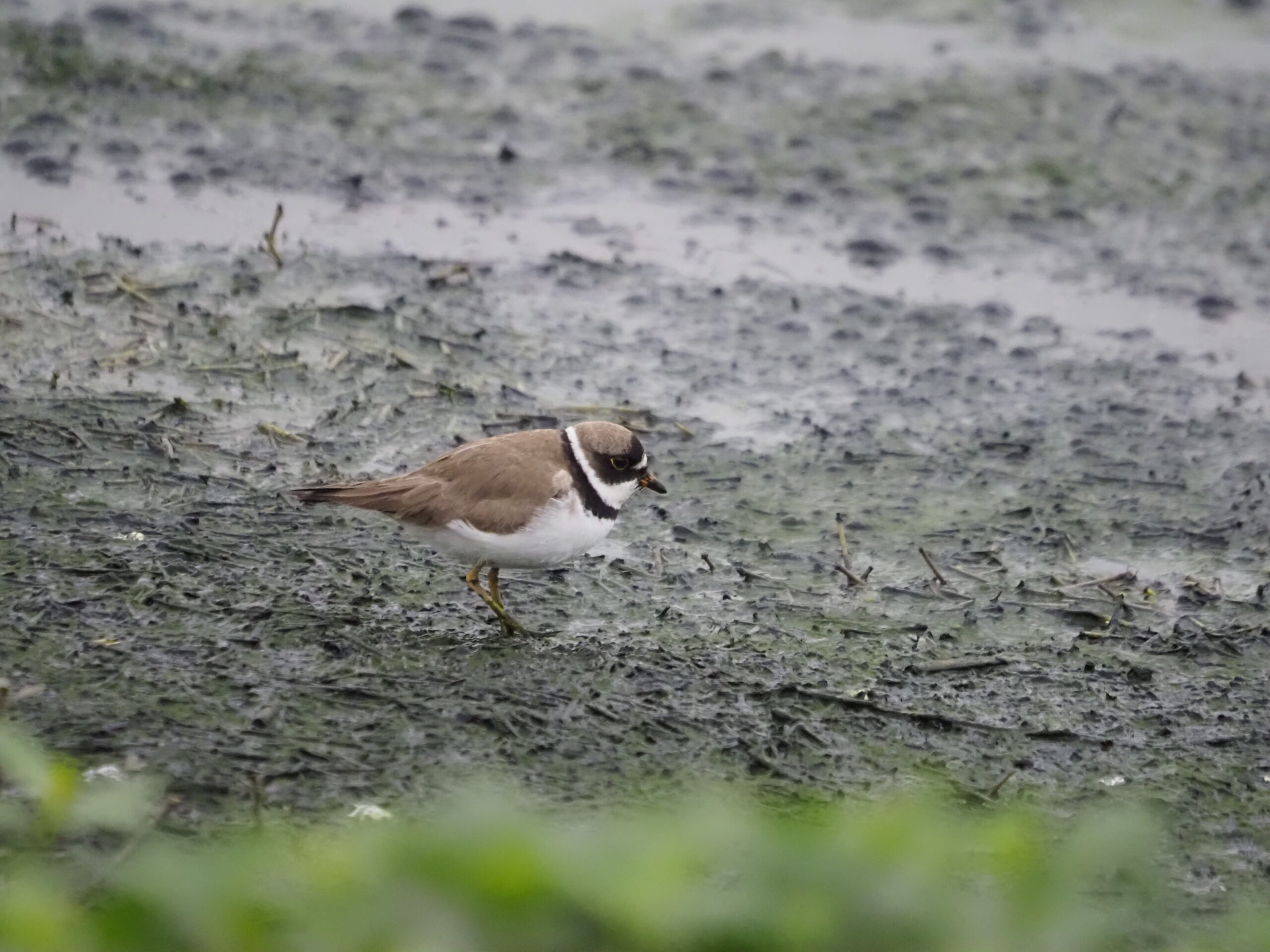
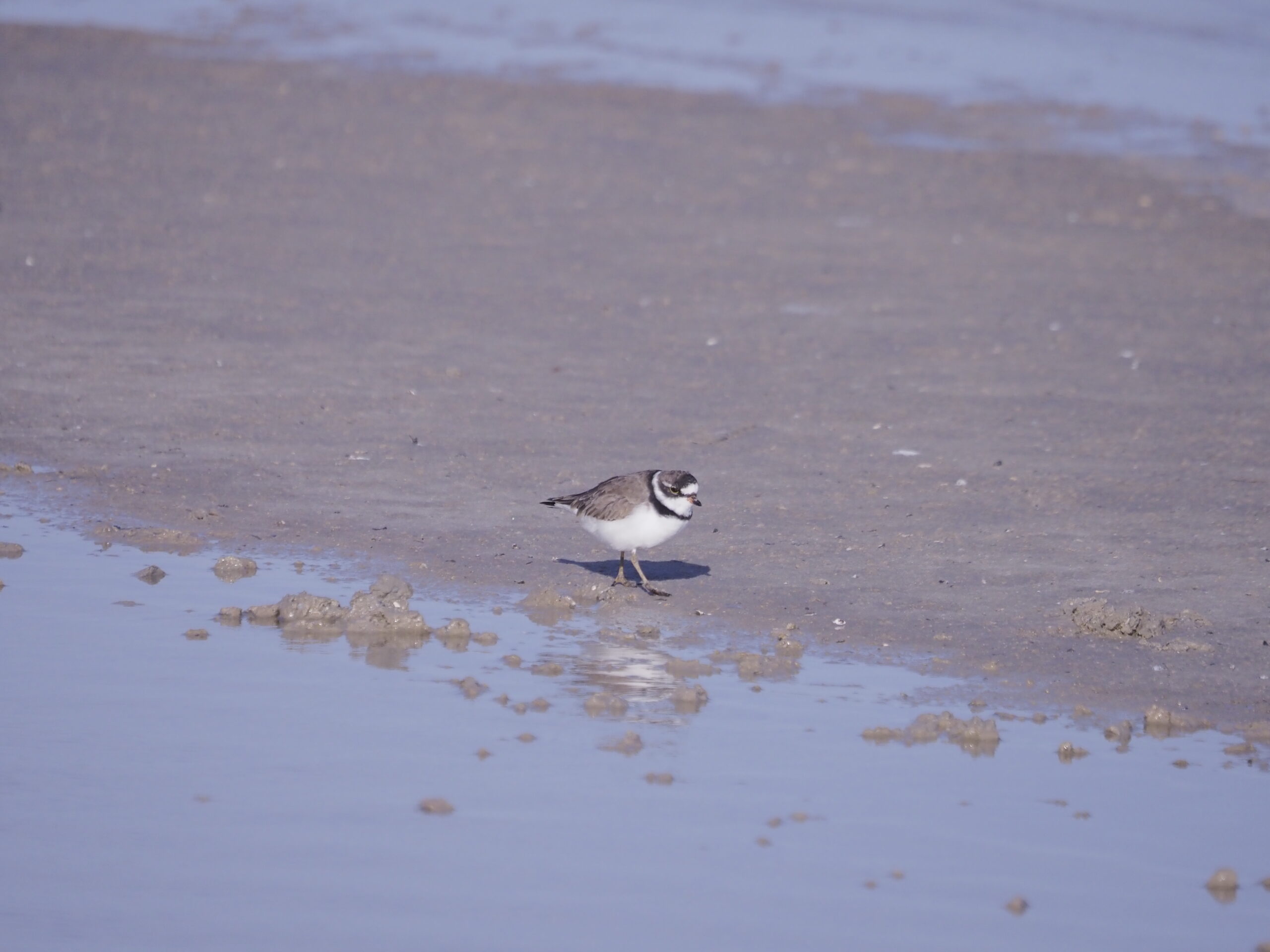
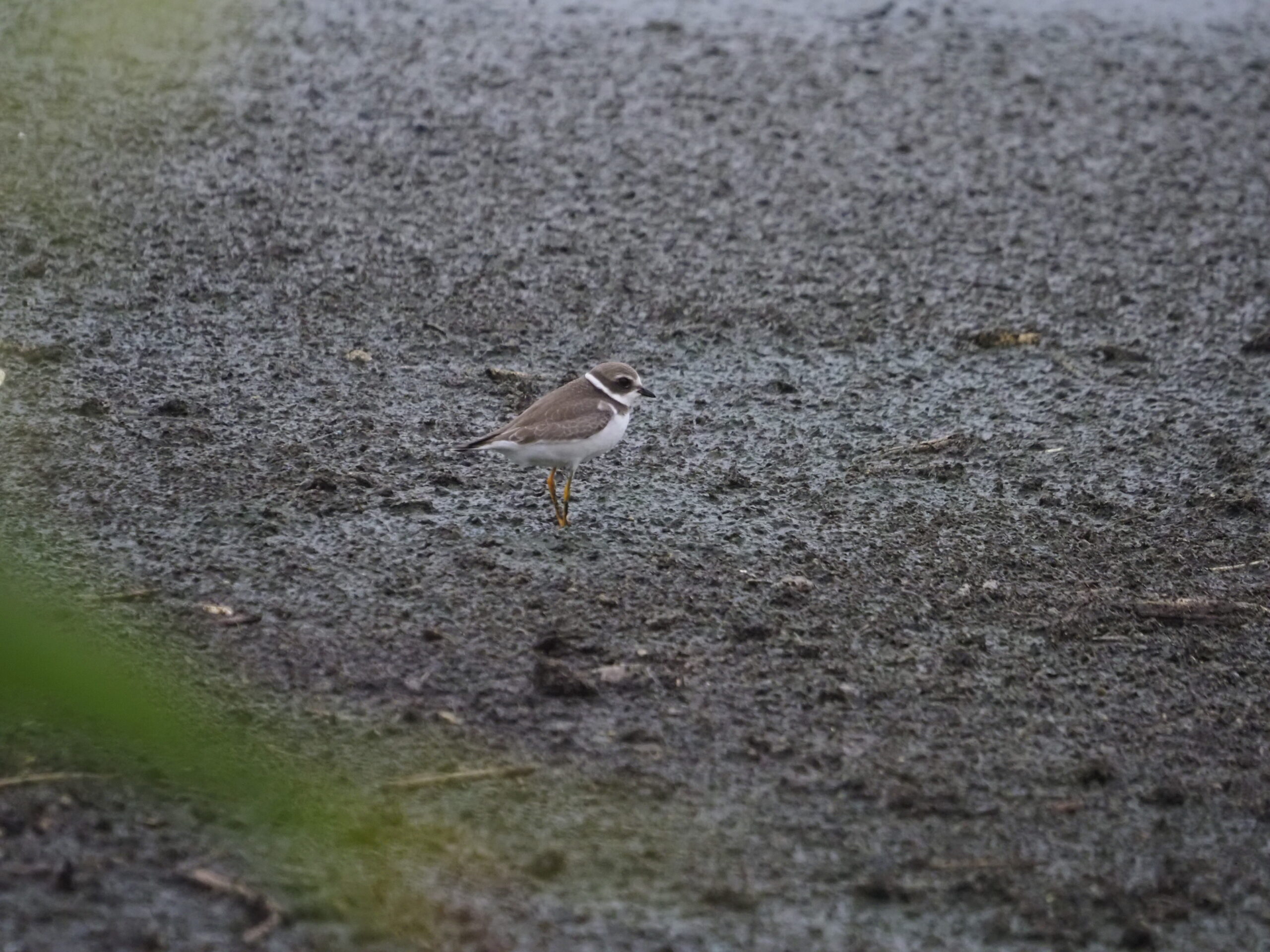
The Semipalmated is a infrequent migrant in Central Texas. It winters on the Gulf Coast and migrates north to breed. It is the most common of the small plovers at Hornsby Bend during spring and fall migration, though it is still infrequent. It can be found at the Texas Coast year round. It has a “wet sand” back color which is similar to the Killdeer.
Snowy Plover
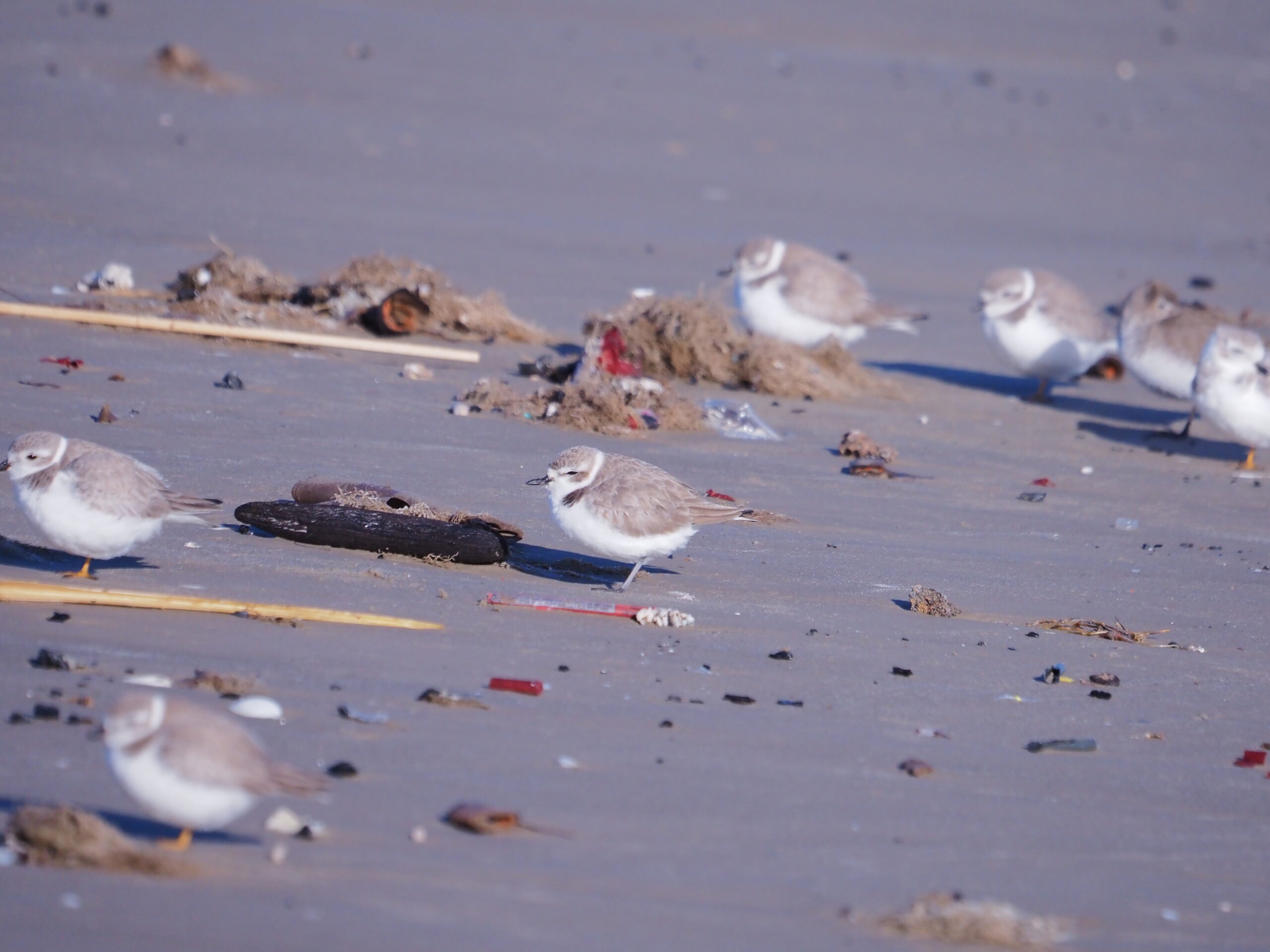
The Snowy is an uncommon but regular migrant at Hornsby Bend, with 1 or 2 birds showing up most years. It is probably the least numerous of the small ringed plovers on the Texas Coast, but is usually present in small numbers year round. The Snowy nests in playas, lakes and other areas of West Texas and the Panhandle as well as in small numbers on the Texas Coast.
Wilson’s Plover
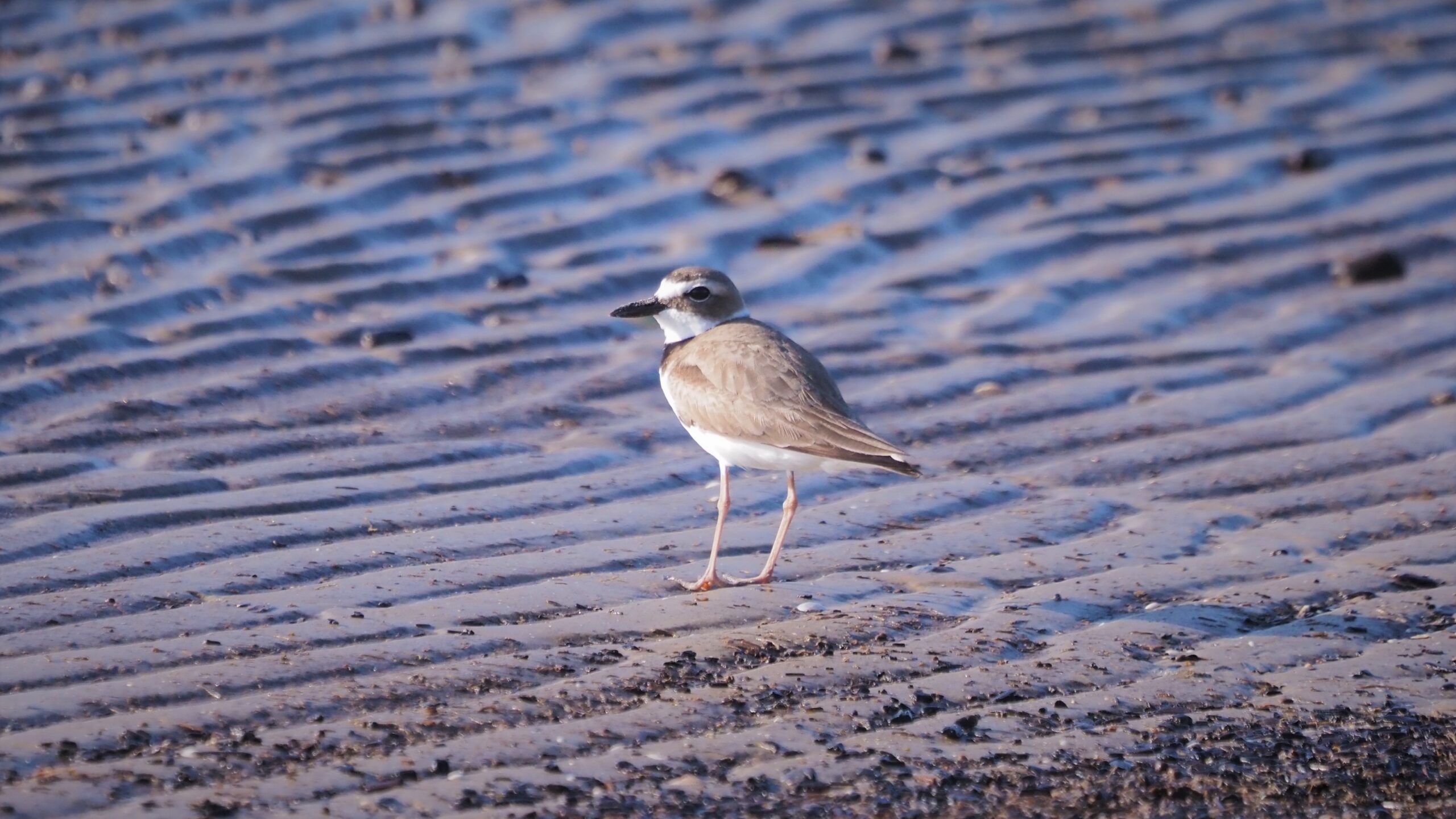
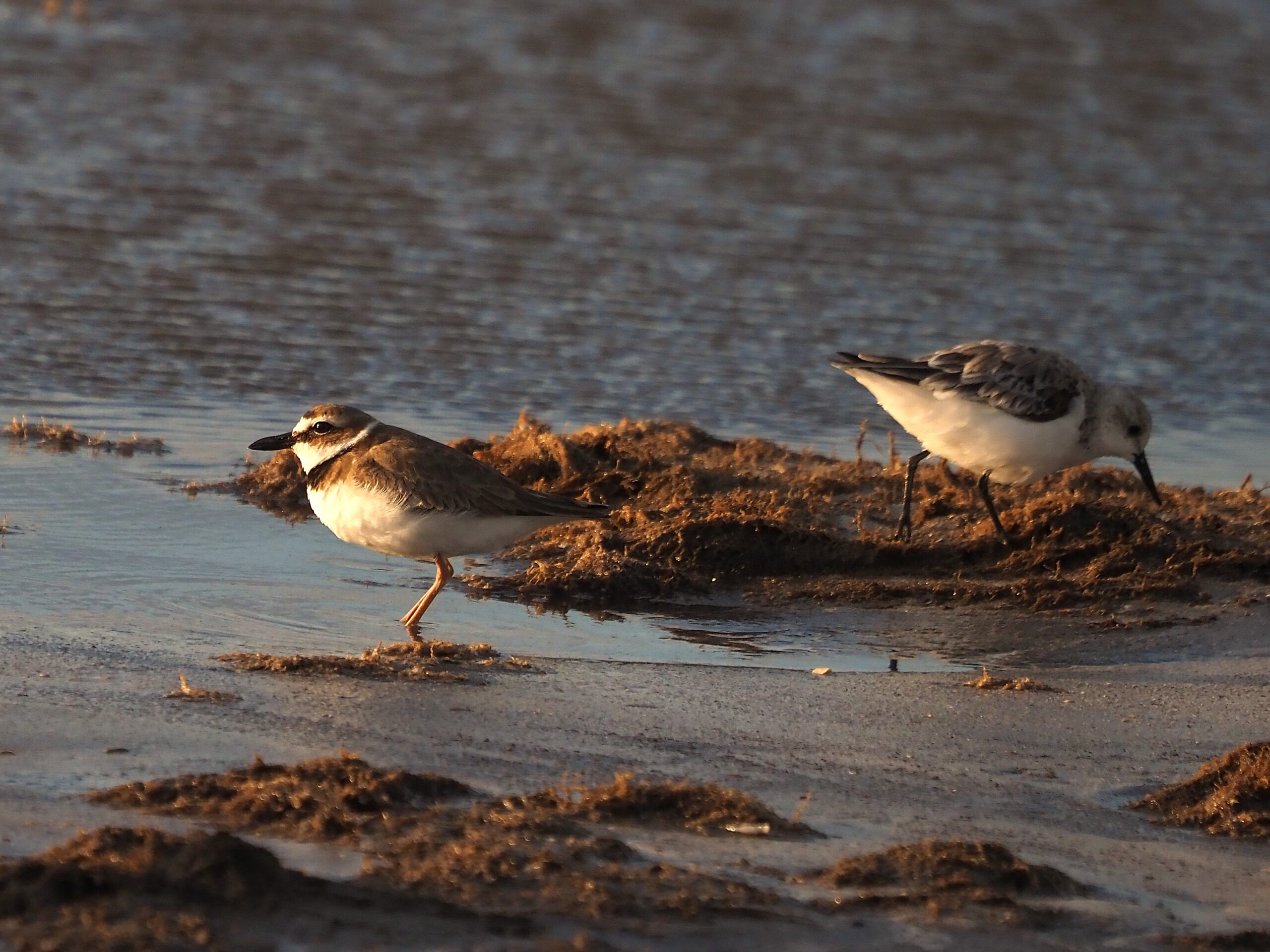
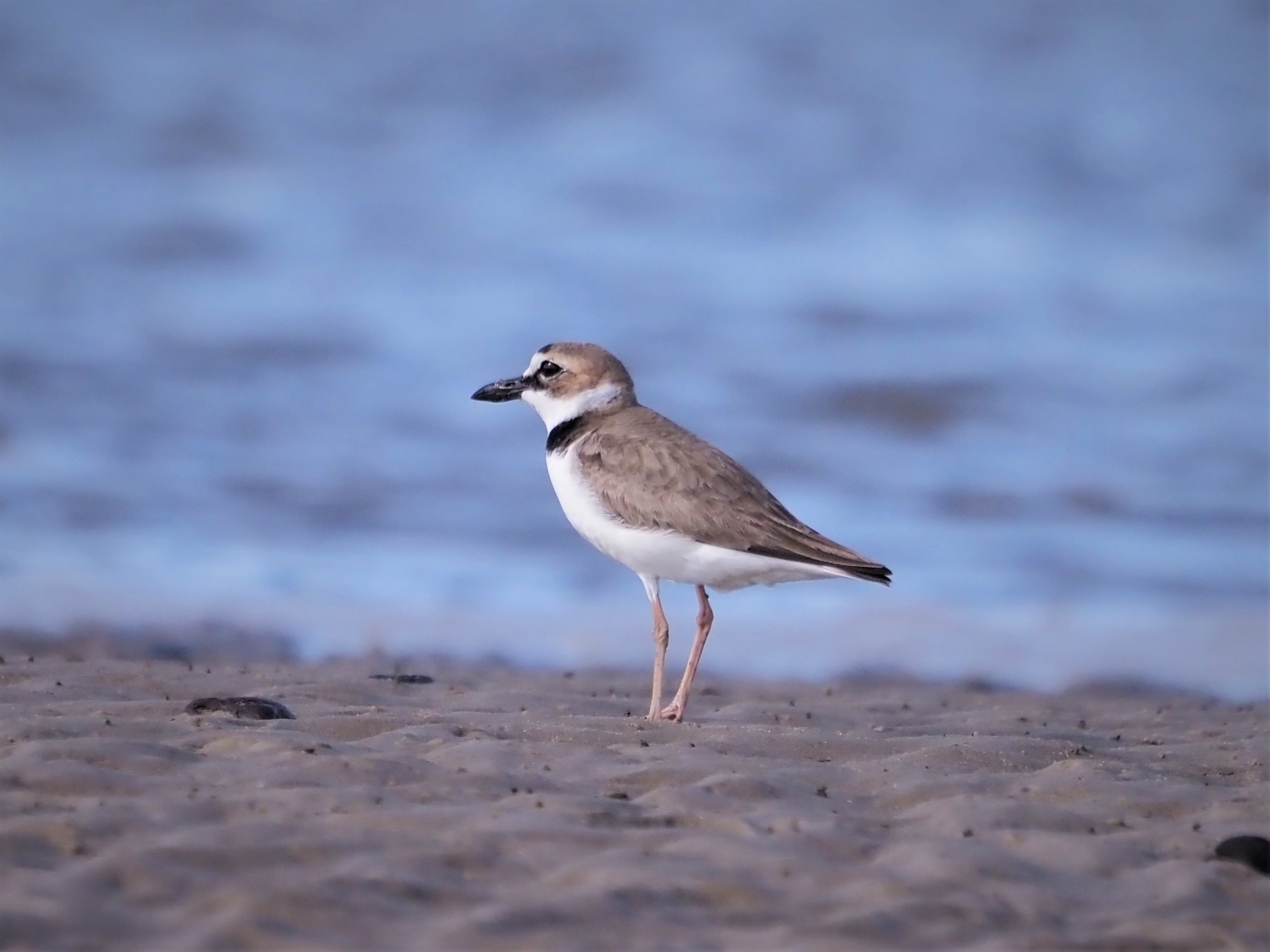
The Wilson’s is strictly a coastal species and regularly nests on the Texas Coast, then migrates south during winter. There is 1 record from September of 1991 at Hornsby for this species. There are no available Ebird records for the Wilson’s at Hornsby.
Comparisons