The primary identification challenge in this group is the American Golden vs the Black-bellied Plover. The identification issues between these species are discussed below.
American Golden Plover
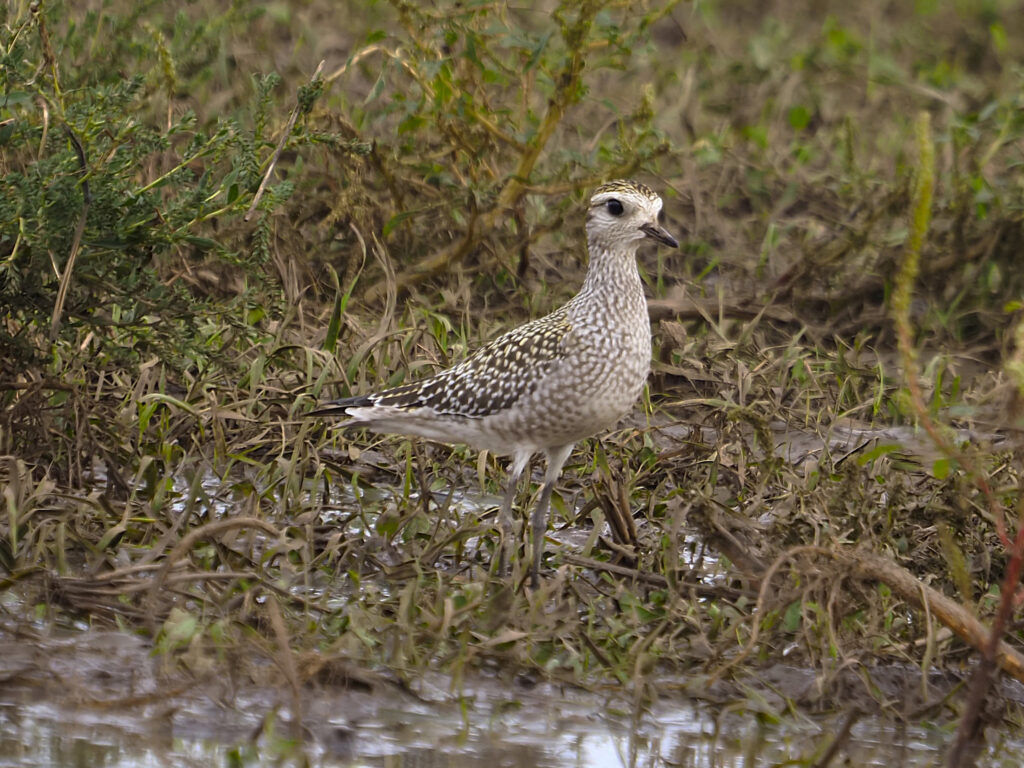
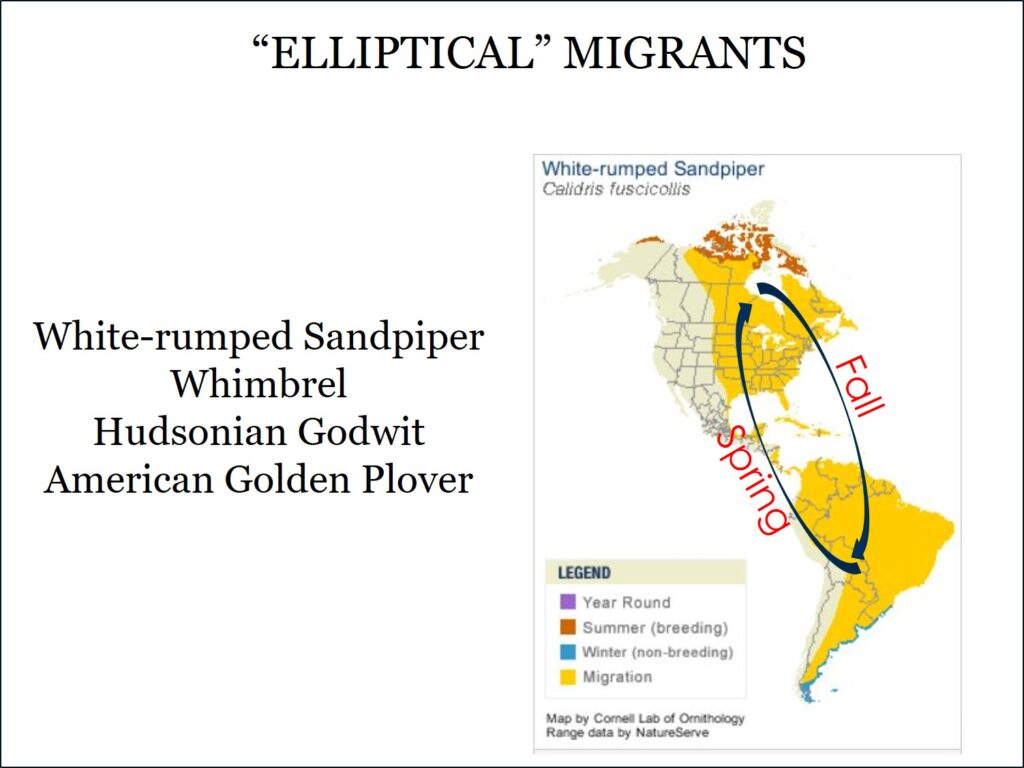
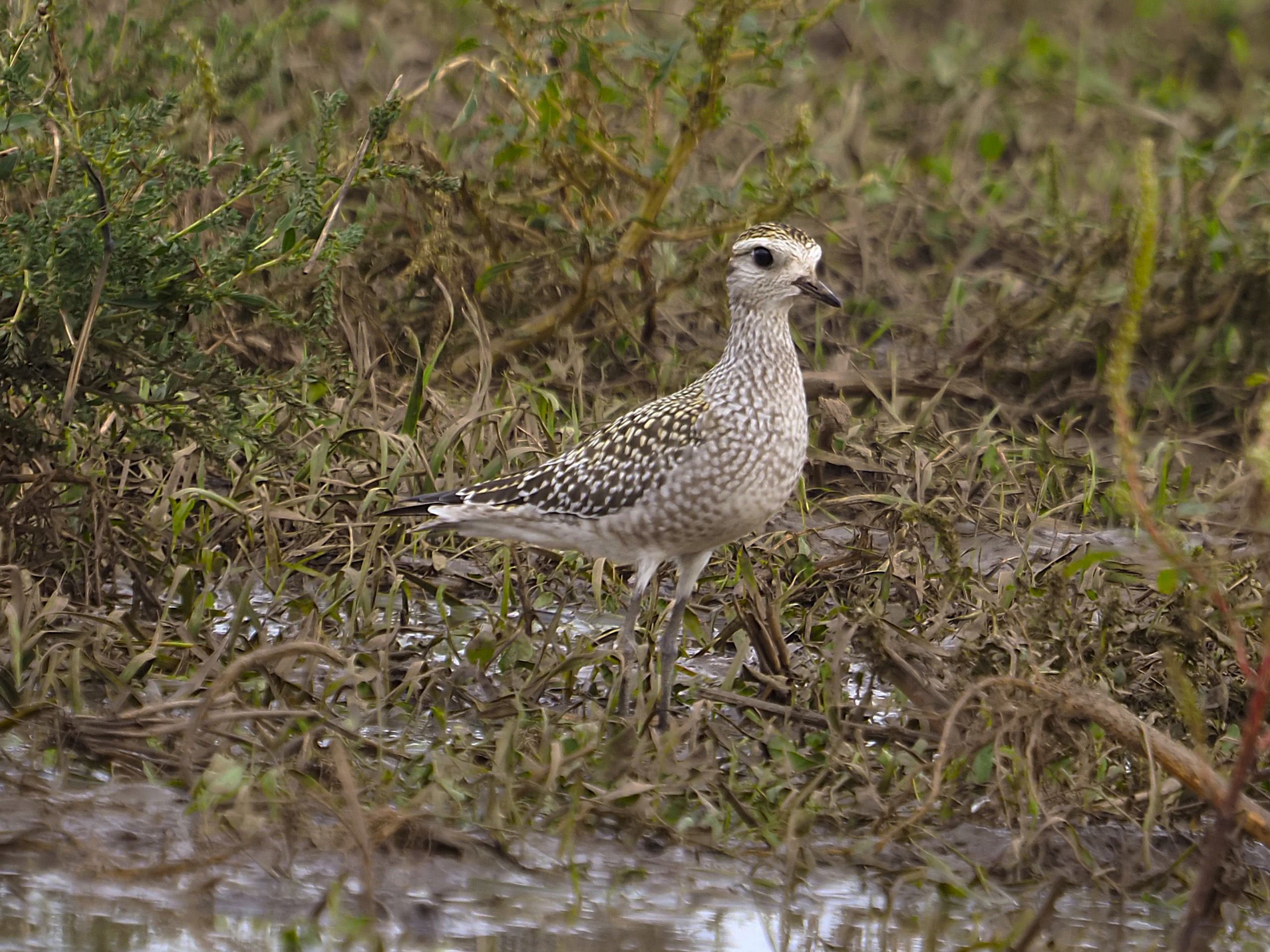
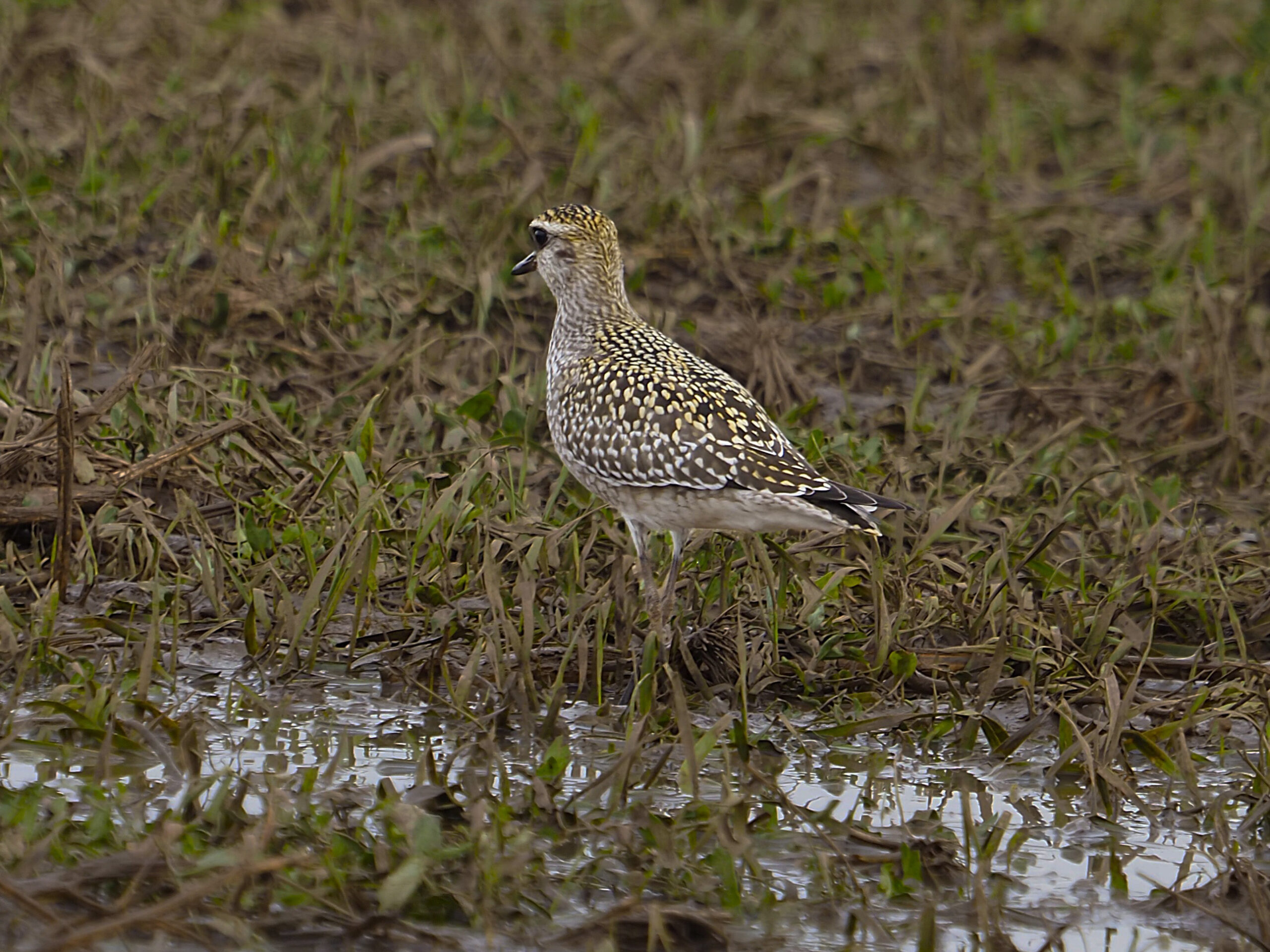
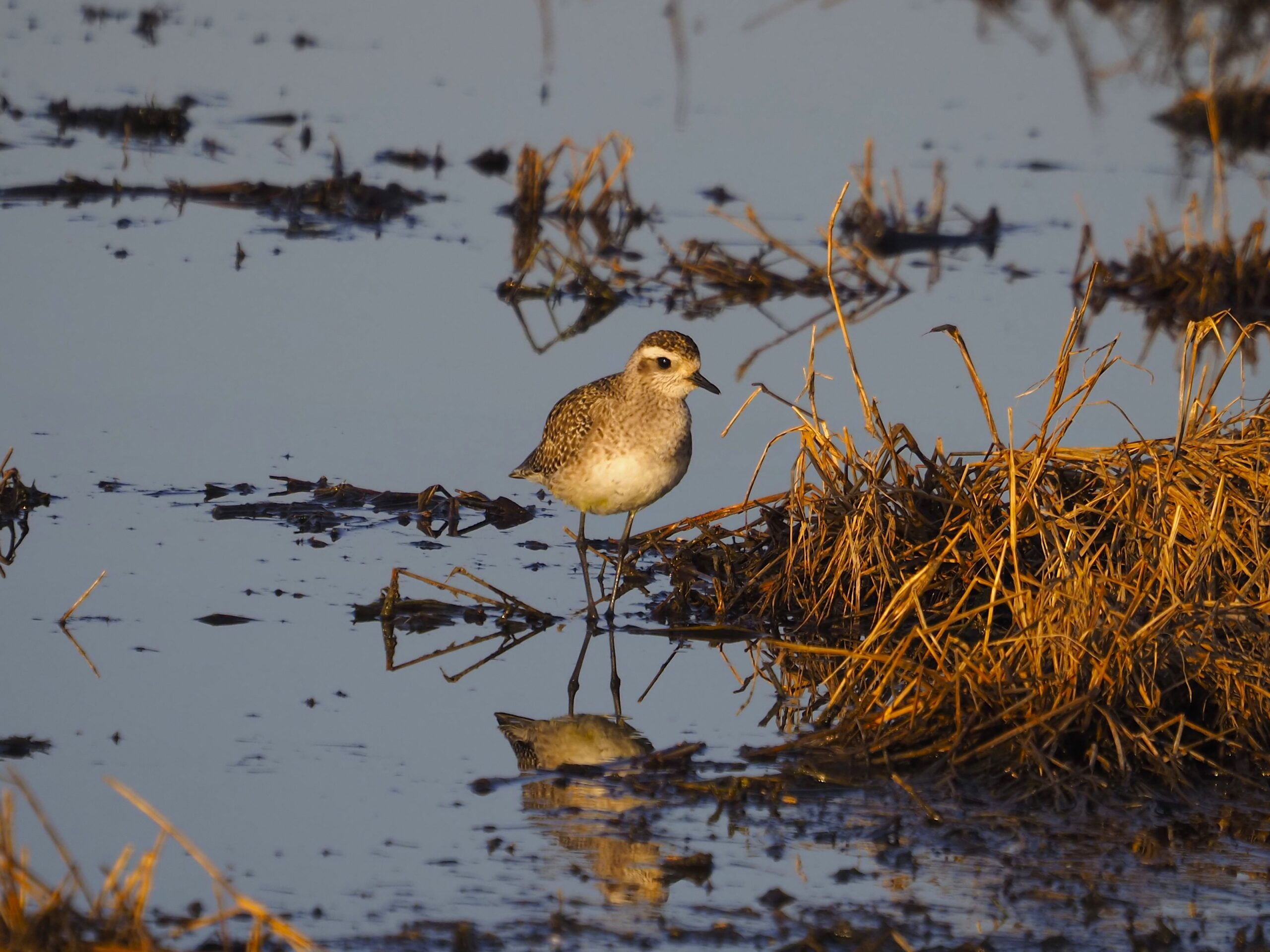
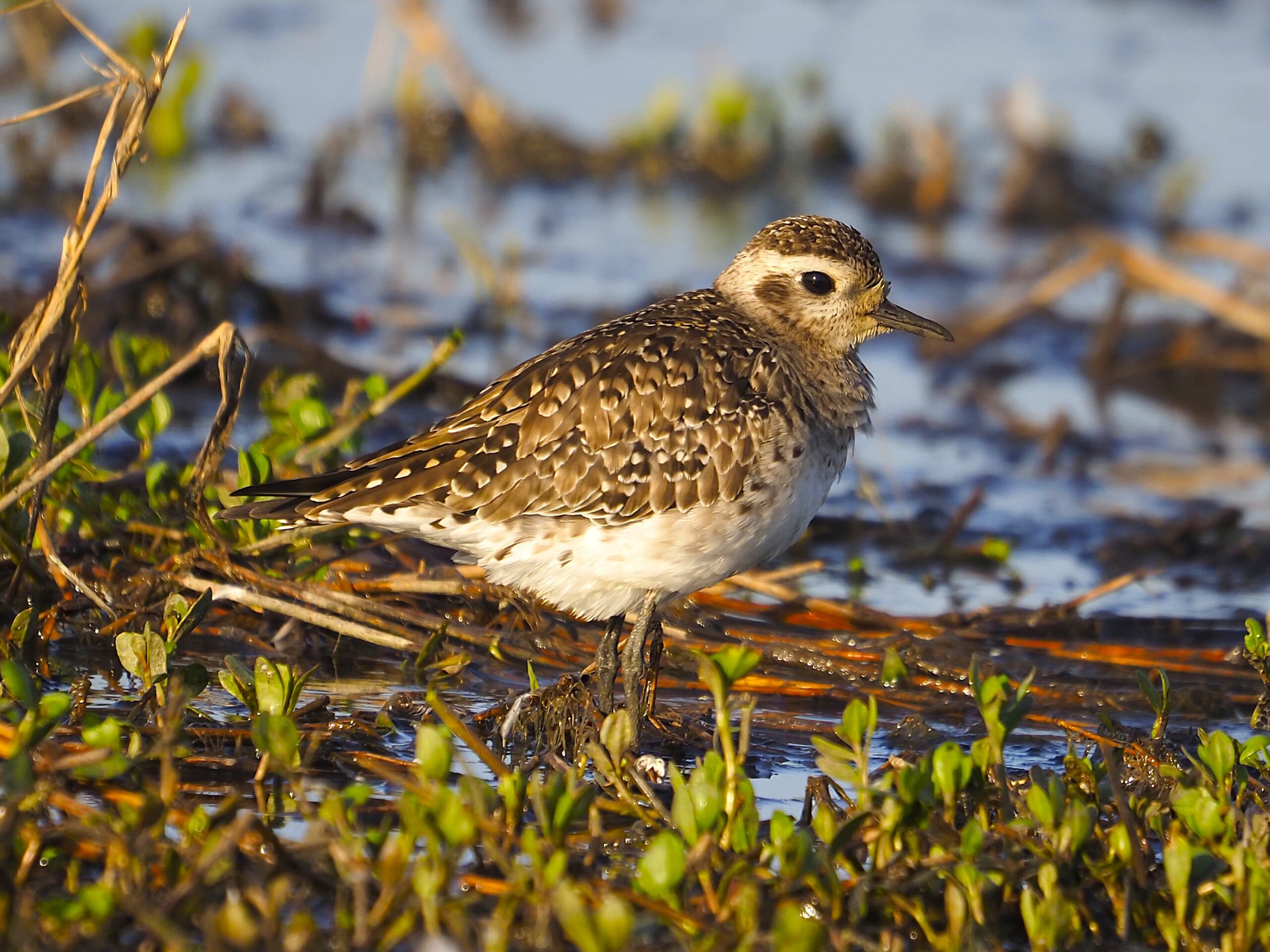
The American Golden Plover is one of the four “elliptical” migrant shorebirds. It is a beautiful bird as it approaches alternate plumage with golden and white spangles on its upper-side. A few American Golden show up at Hornsby and in Central Texas fields with accumulated rainwater each spring. The American Golden is one of the shorebirds which uses an “elliptical” migration path, so spring is the time for them in Texas.
Black-bellied Plover
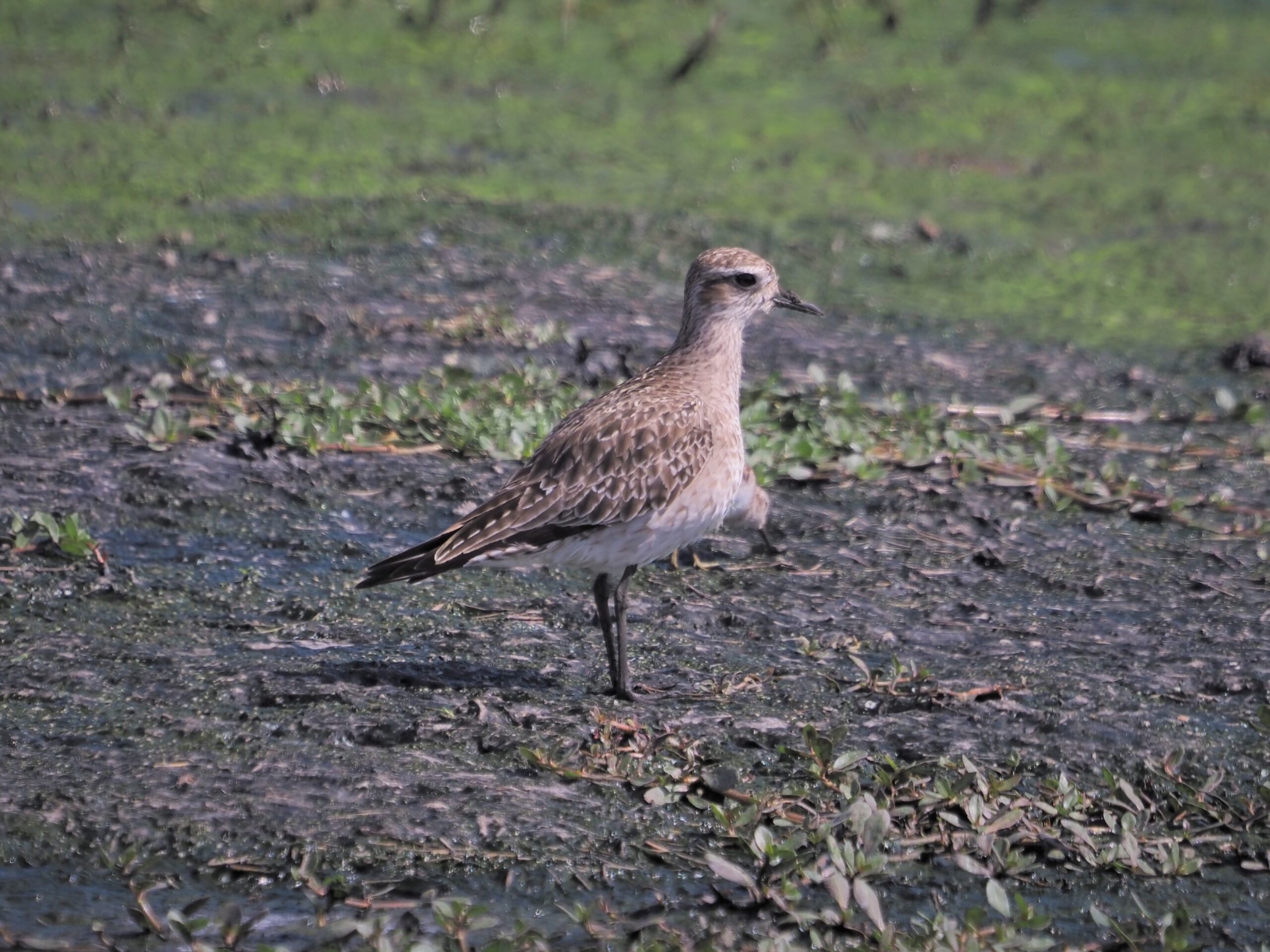
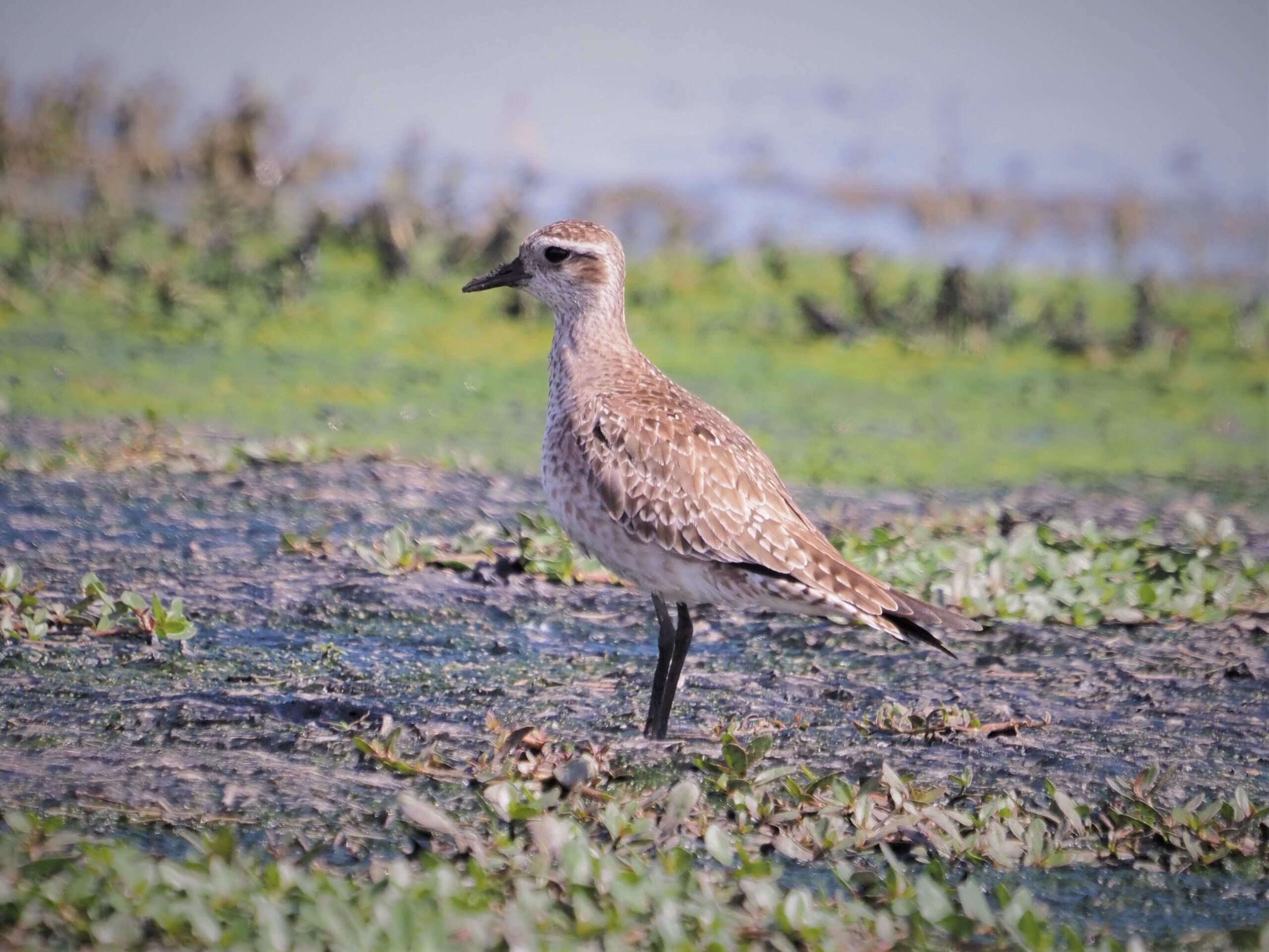
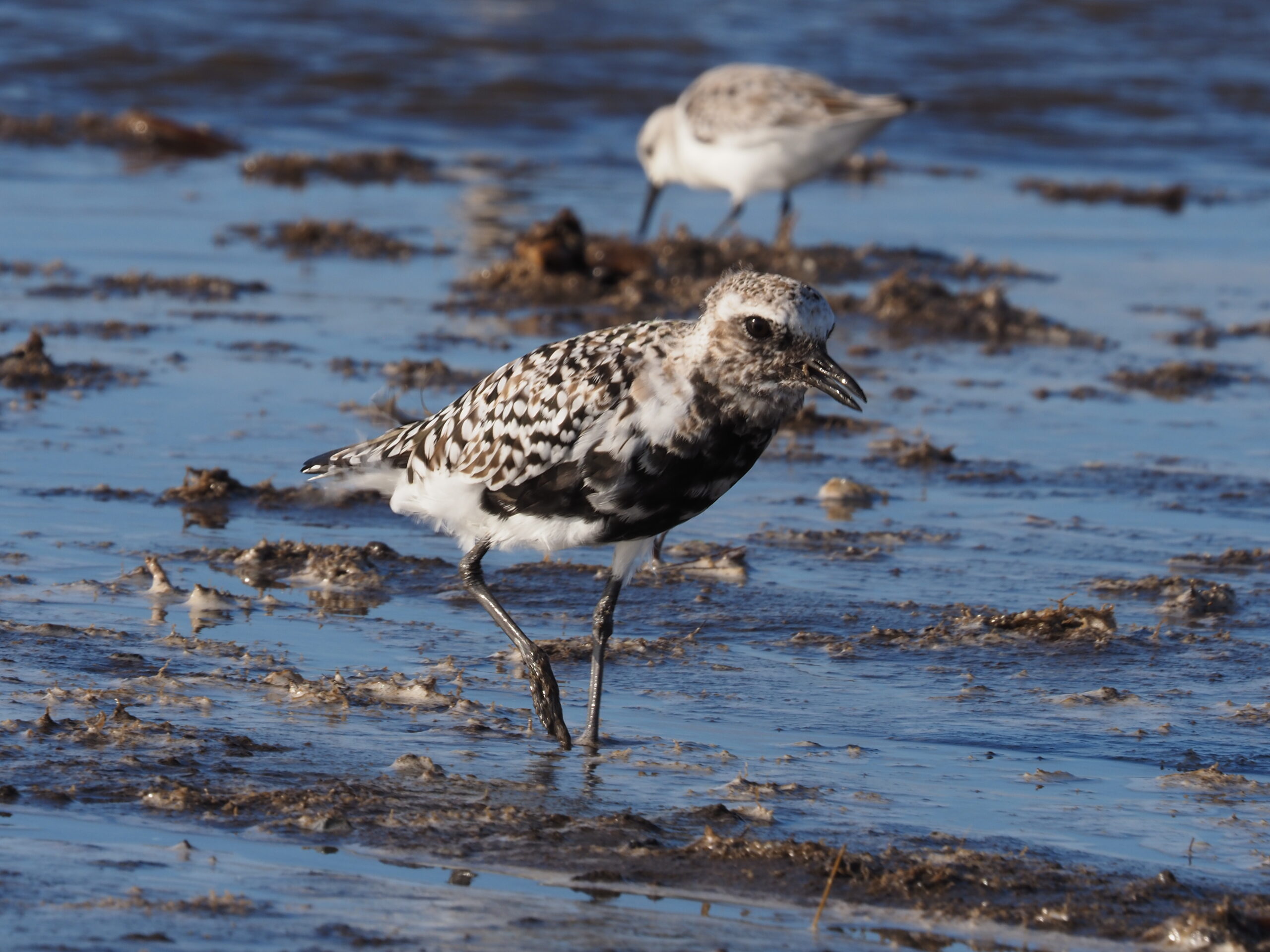
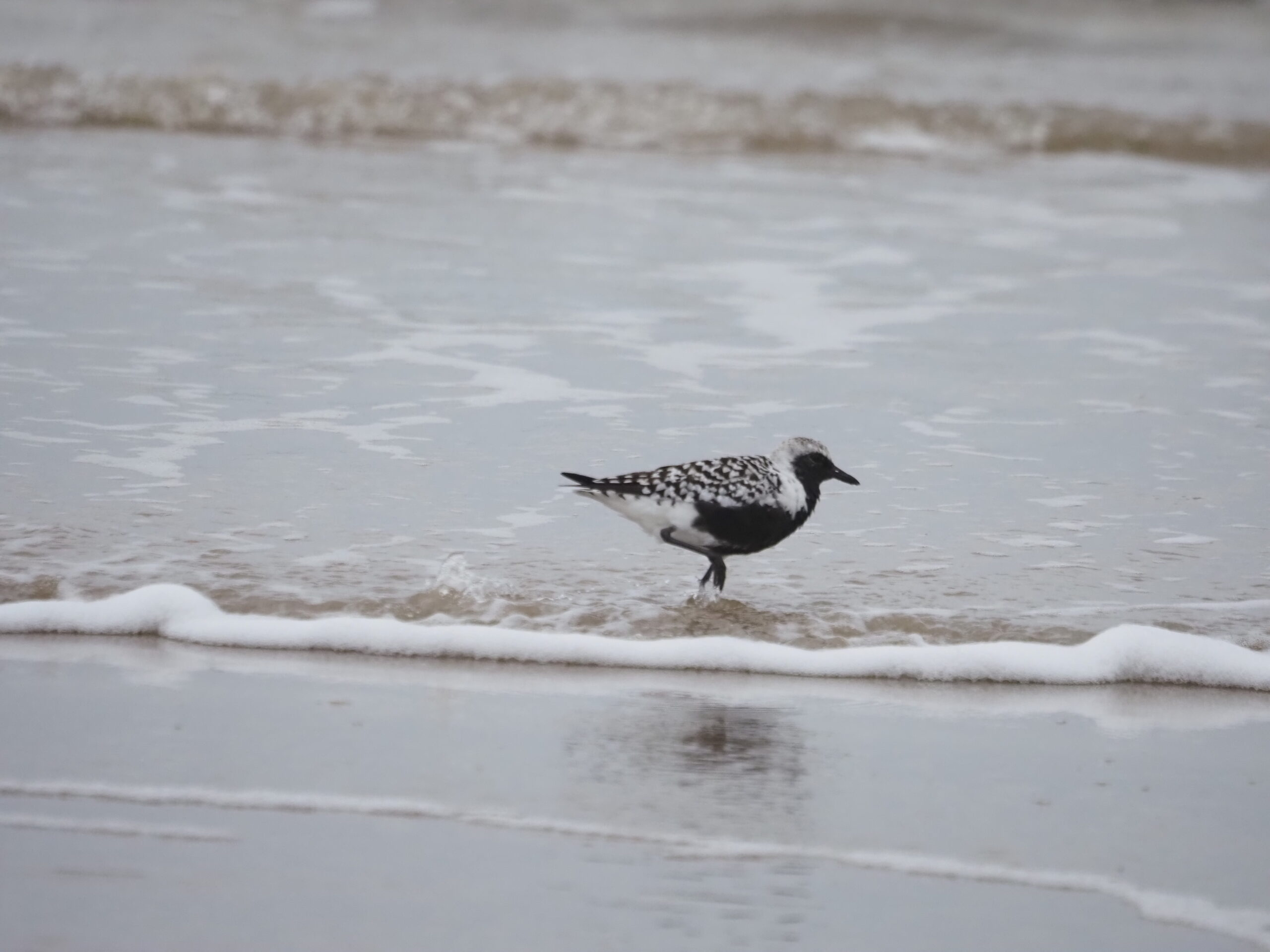
The Black-bellied Plover is a common bird throughout the year on the Texas Coast, where its “peeoooweeee” call is iconic. In spring and fall they can be seen in various stages of very obvious molt when they lose or acquire their black bellies.
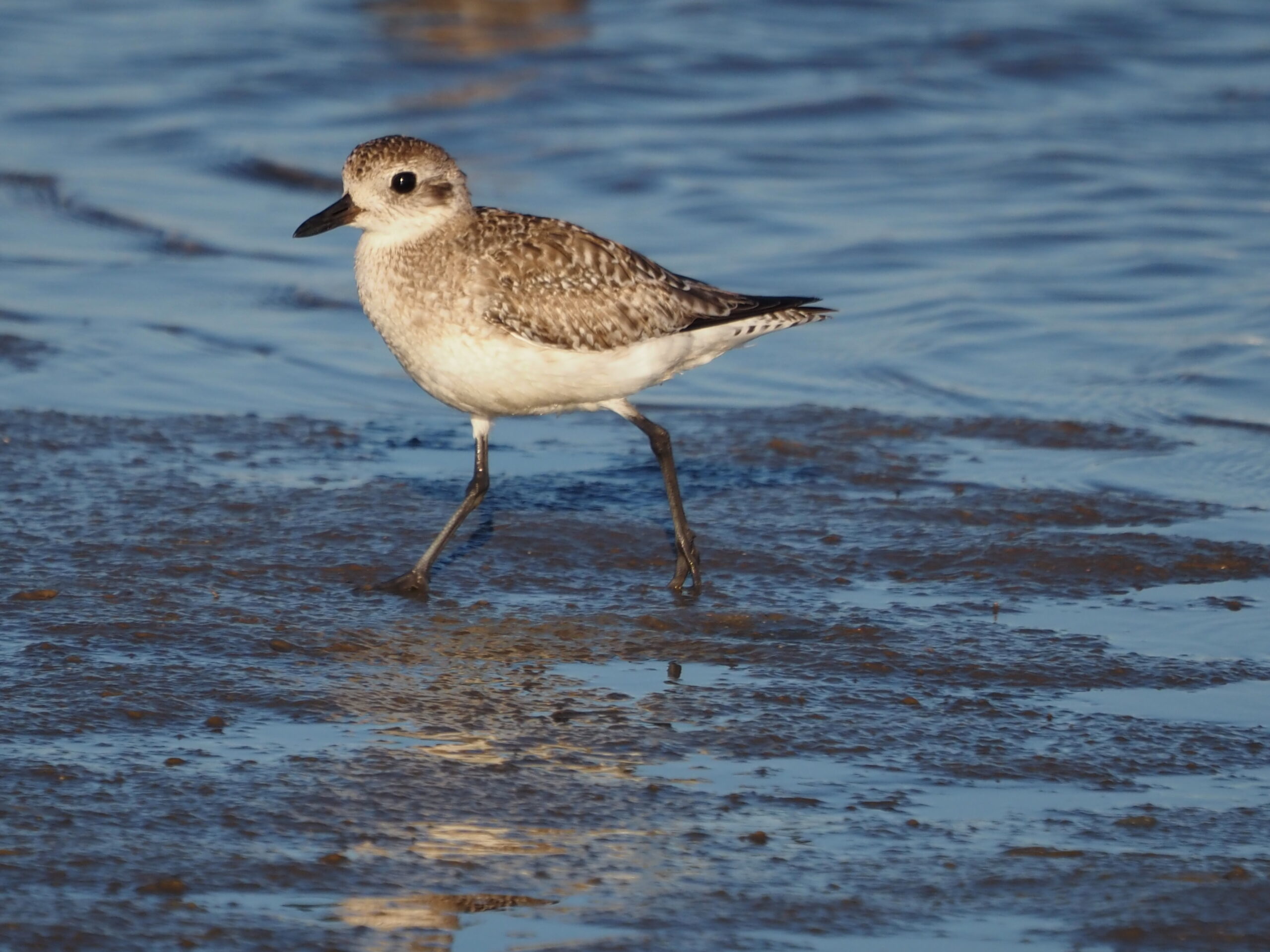
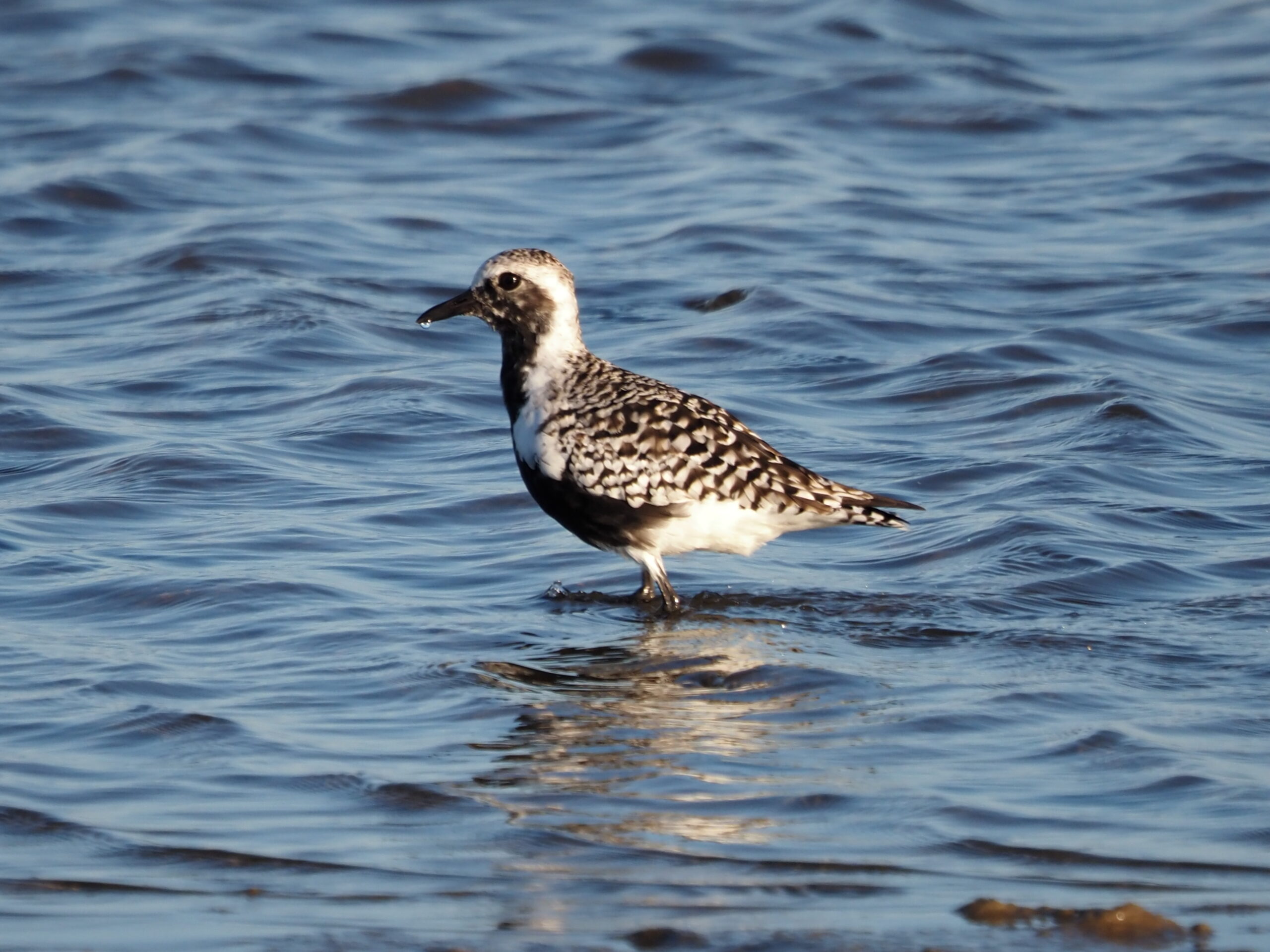
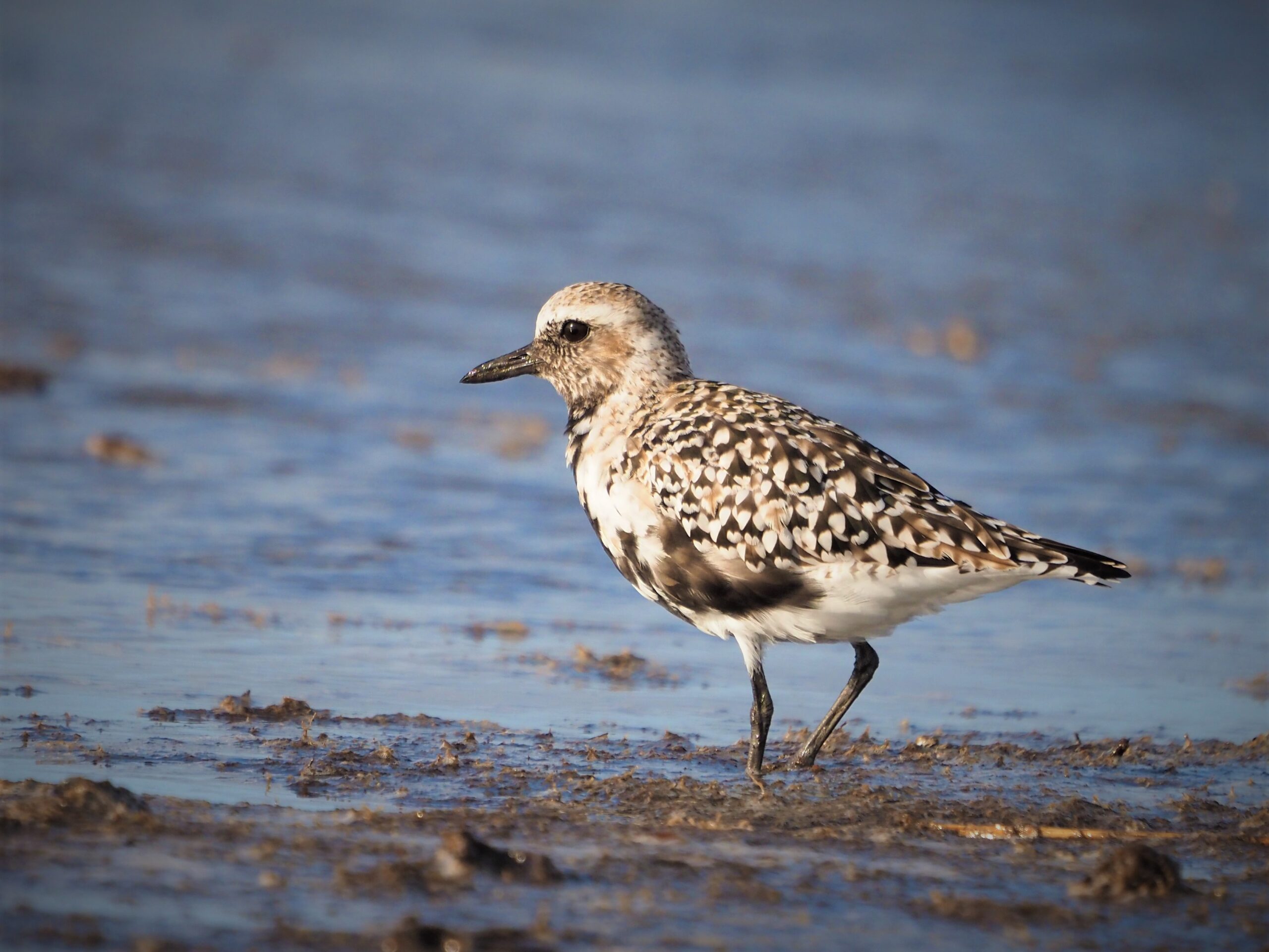
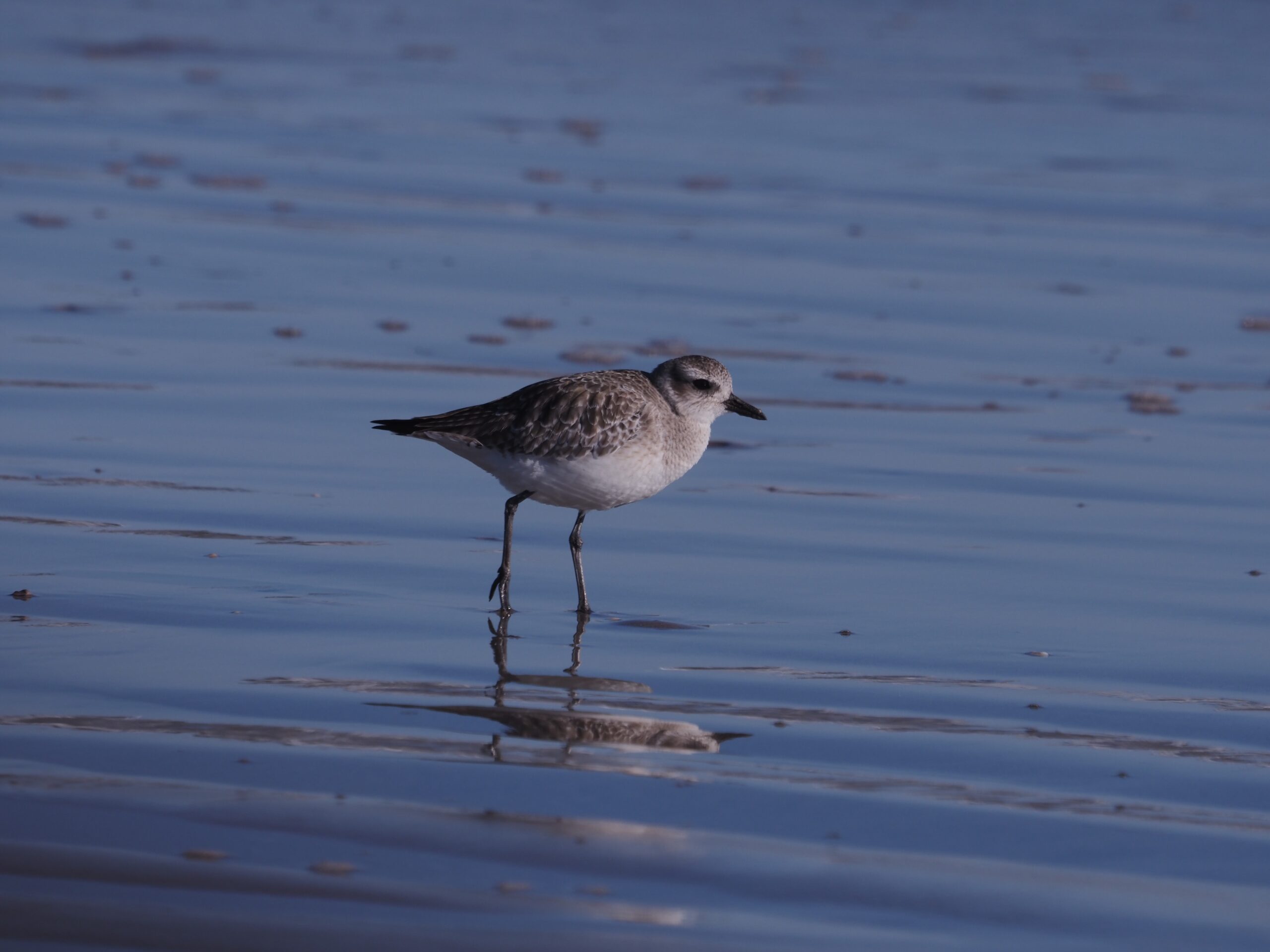
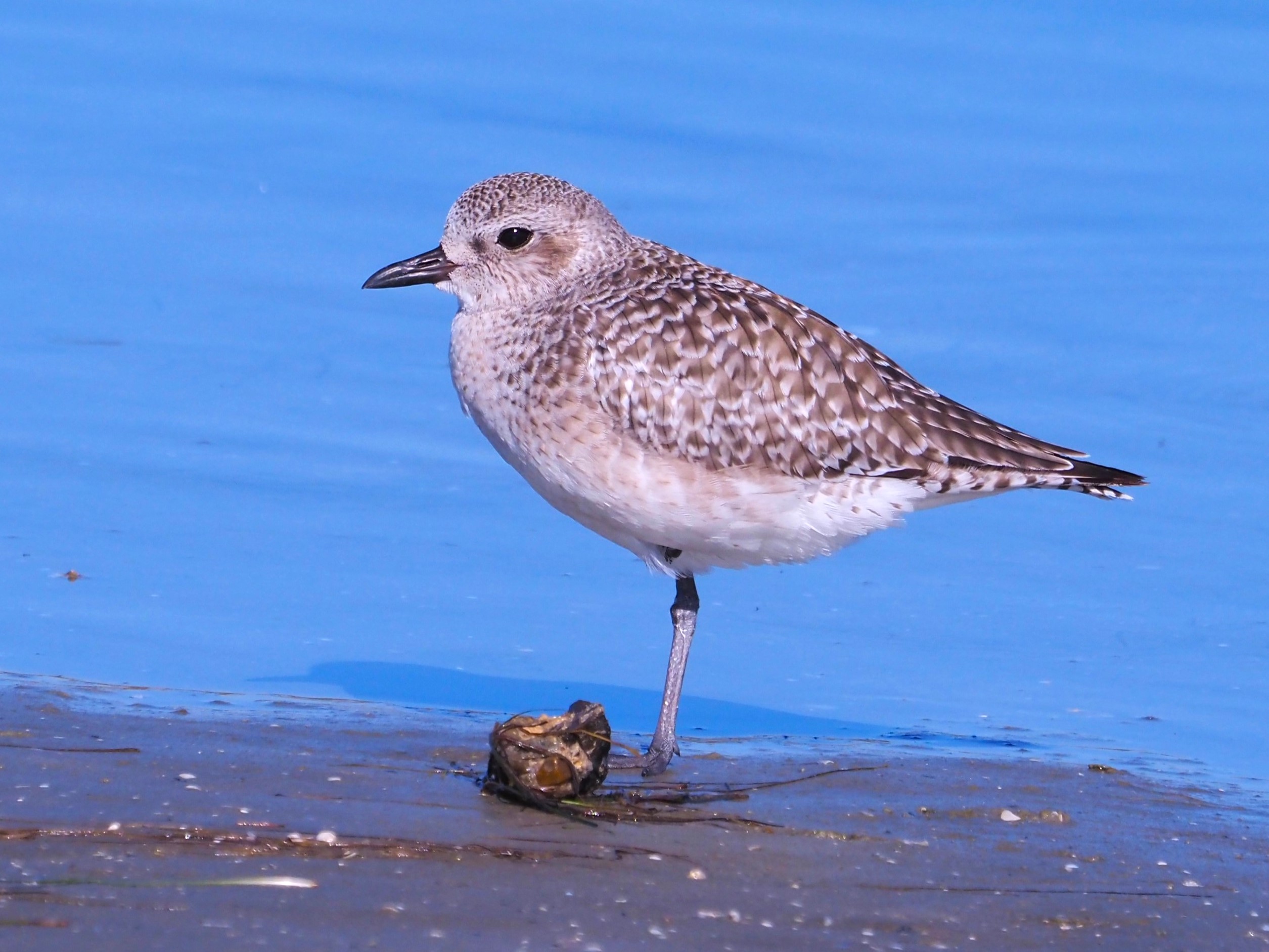
Black-bellied vs American Golden
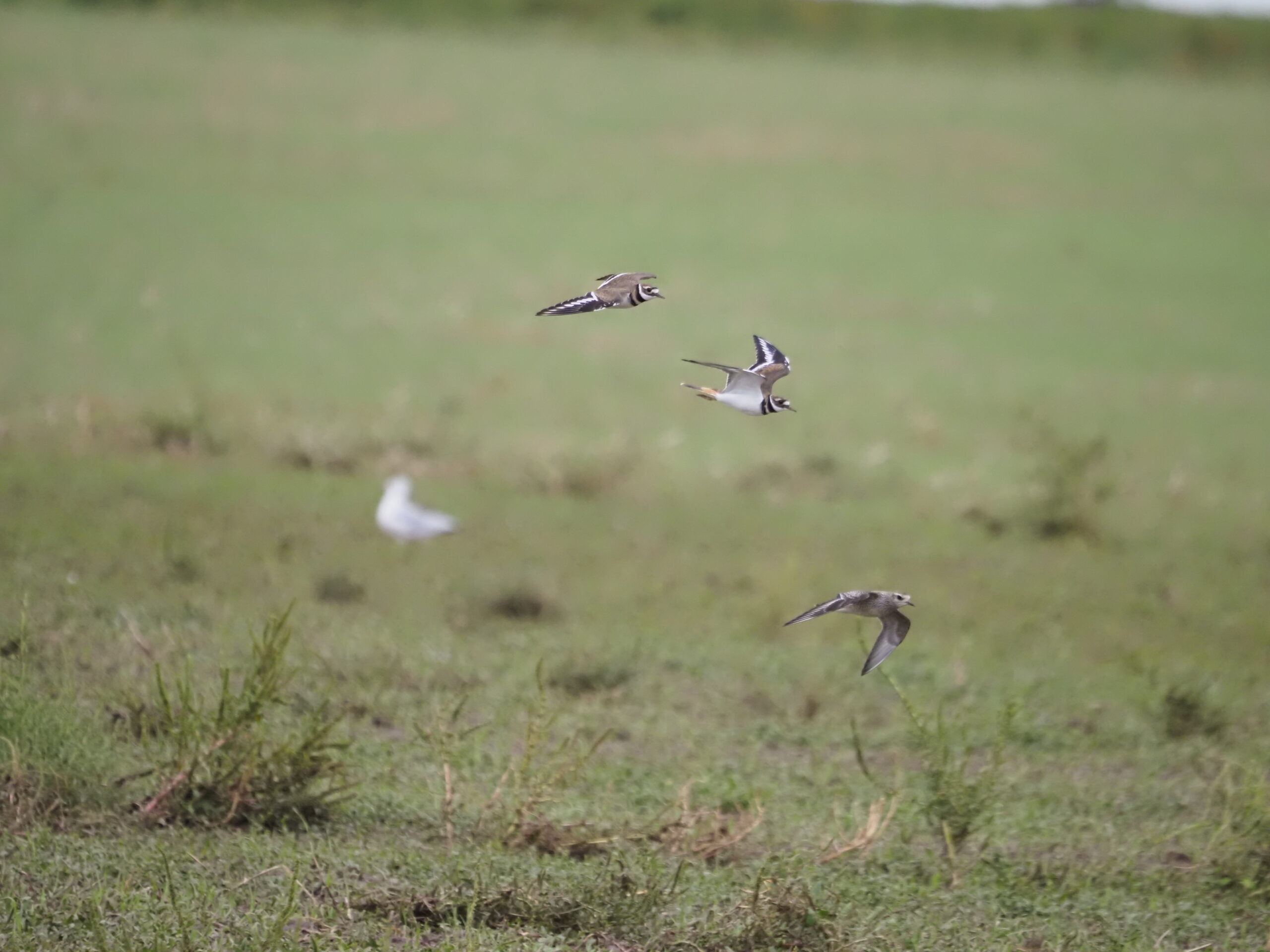
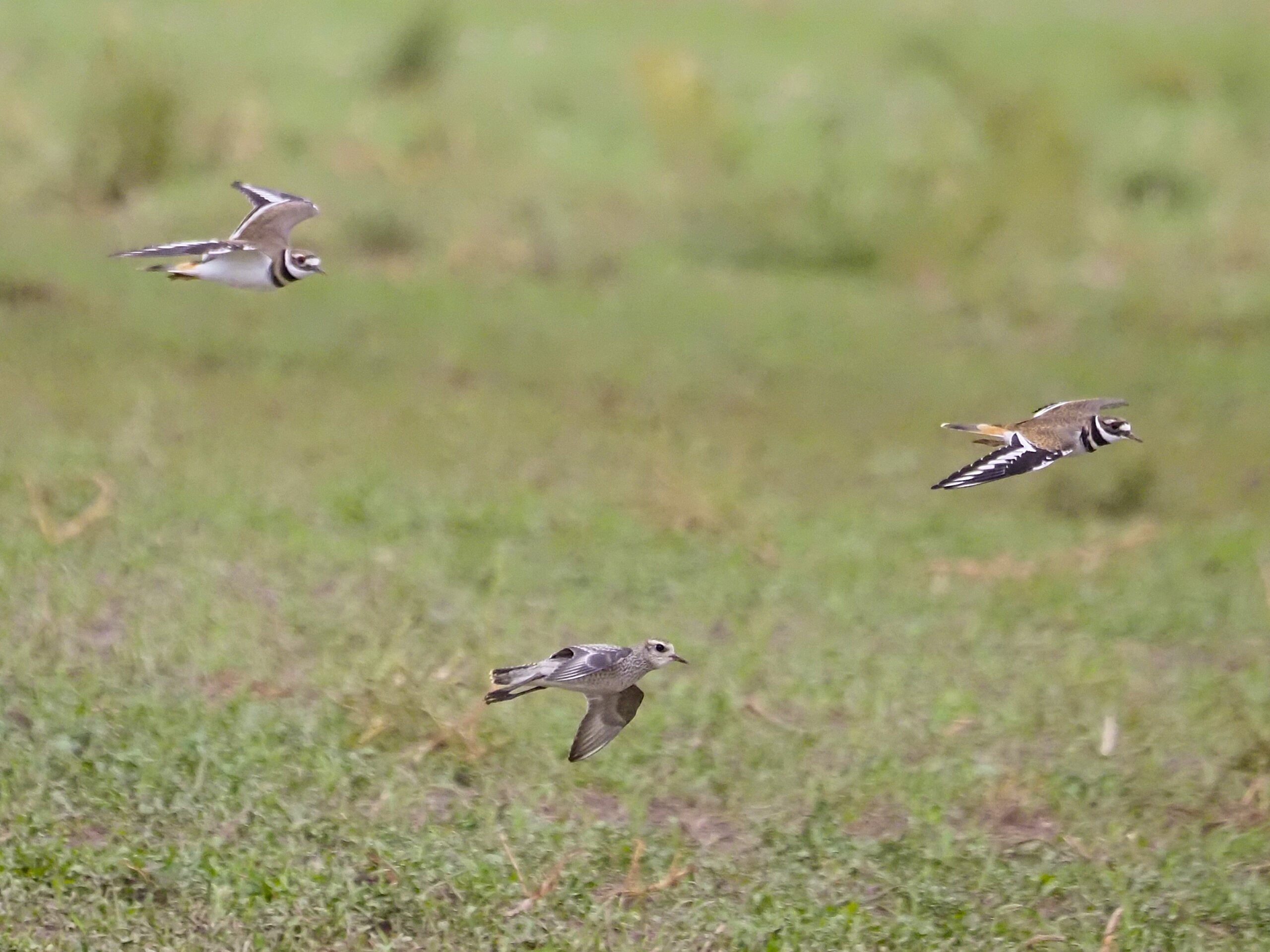
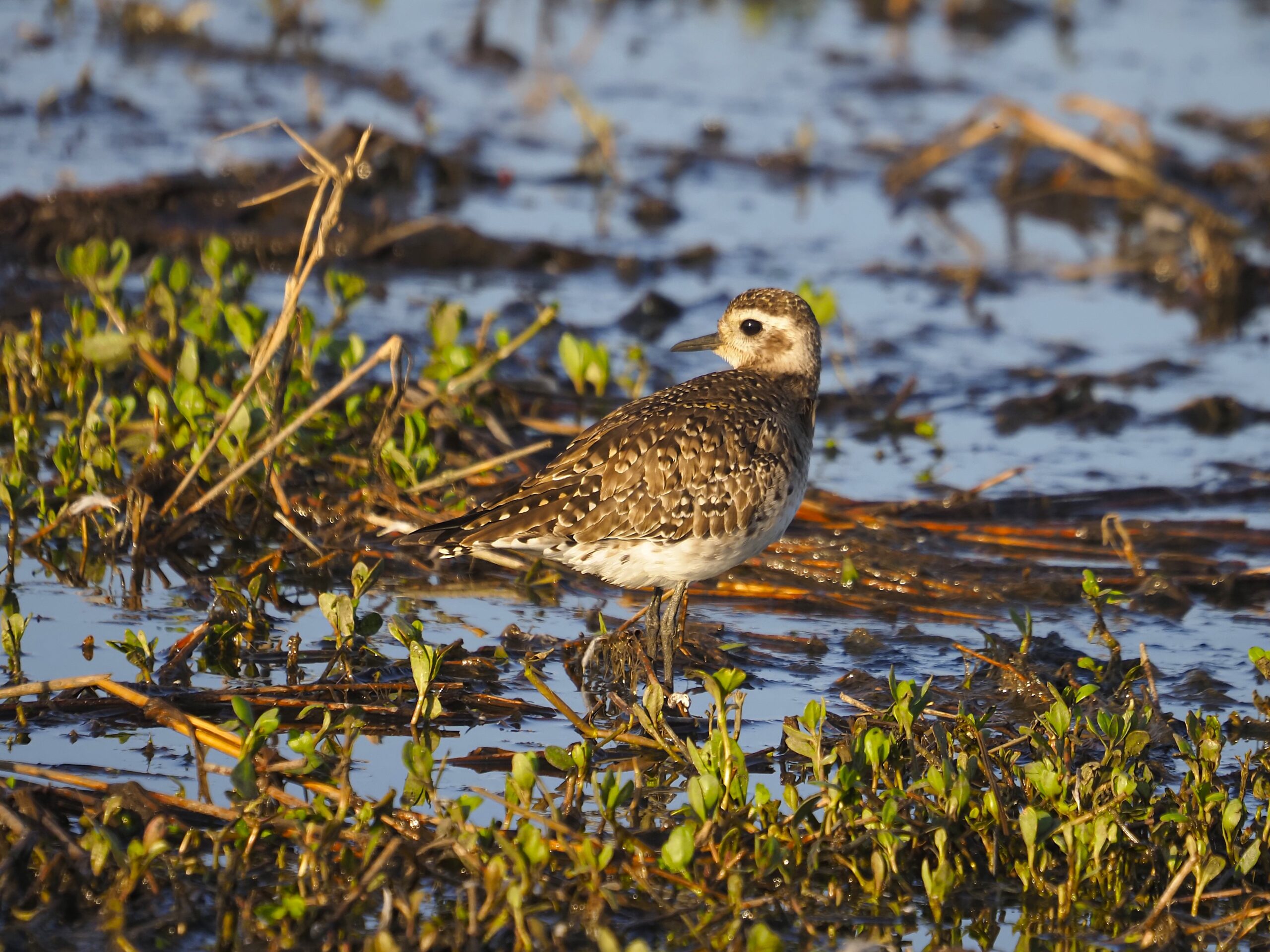
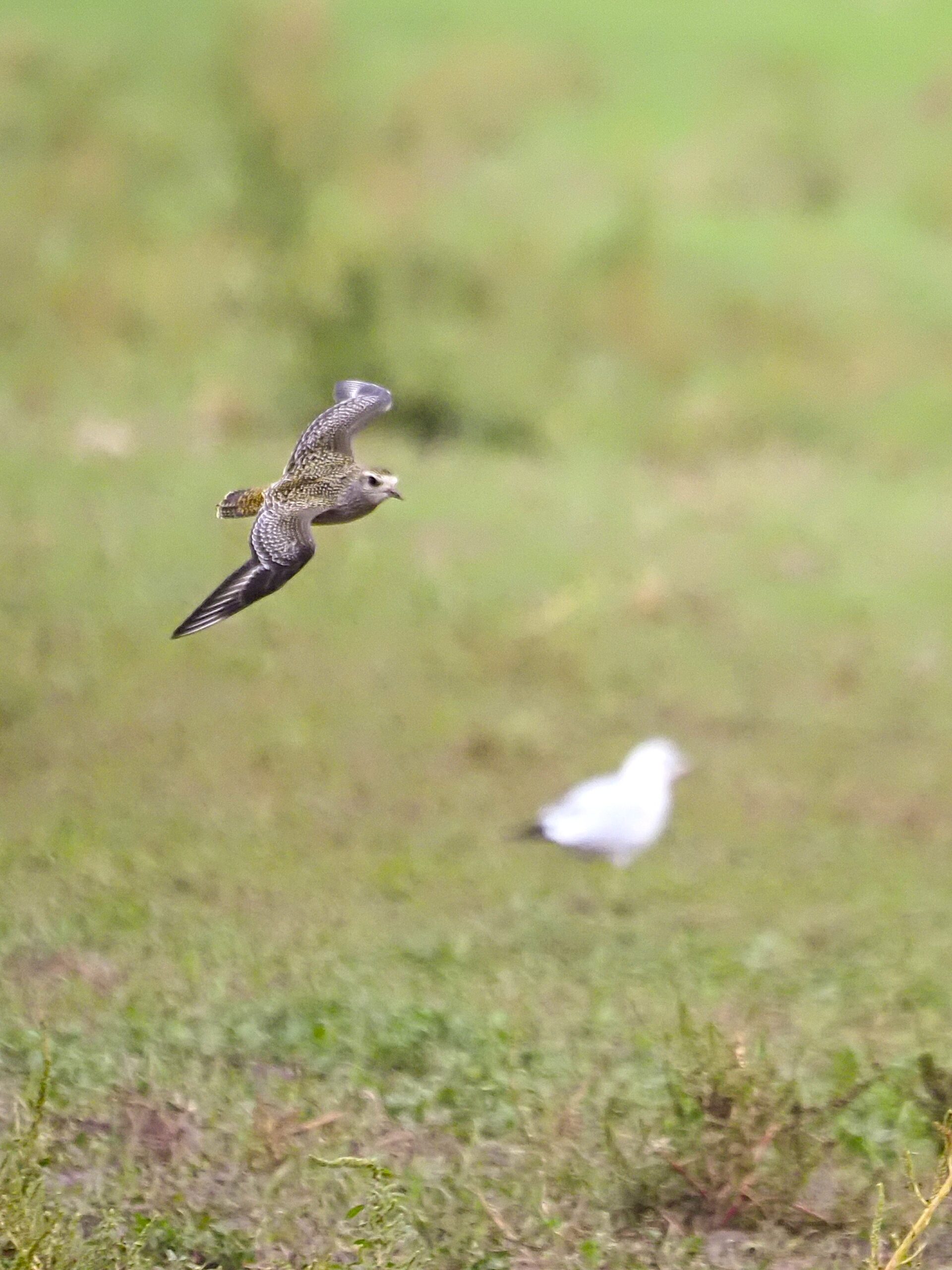
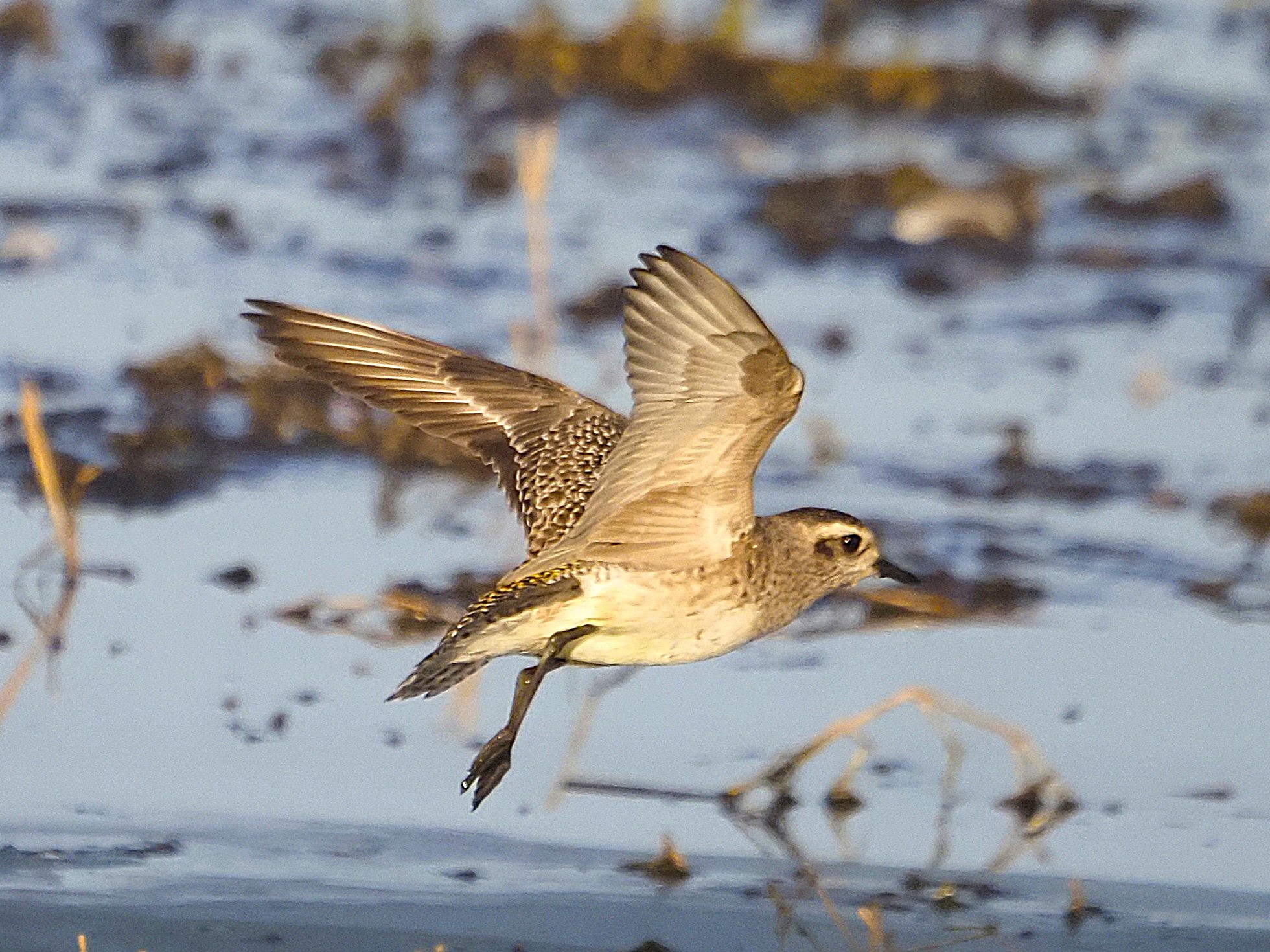
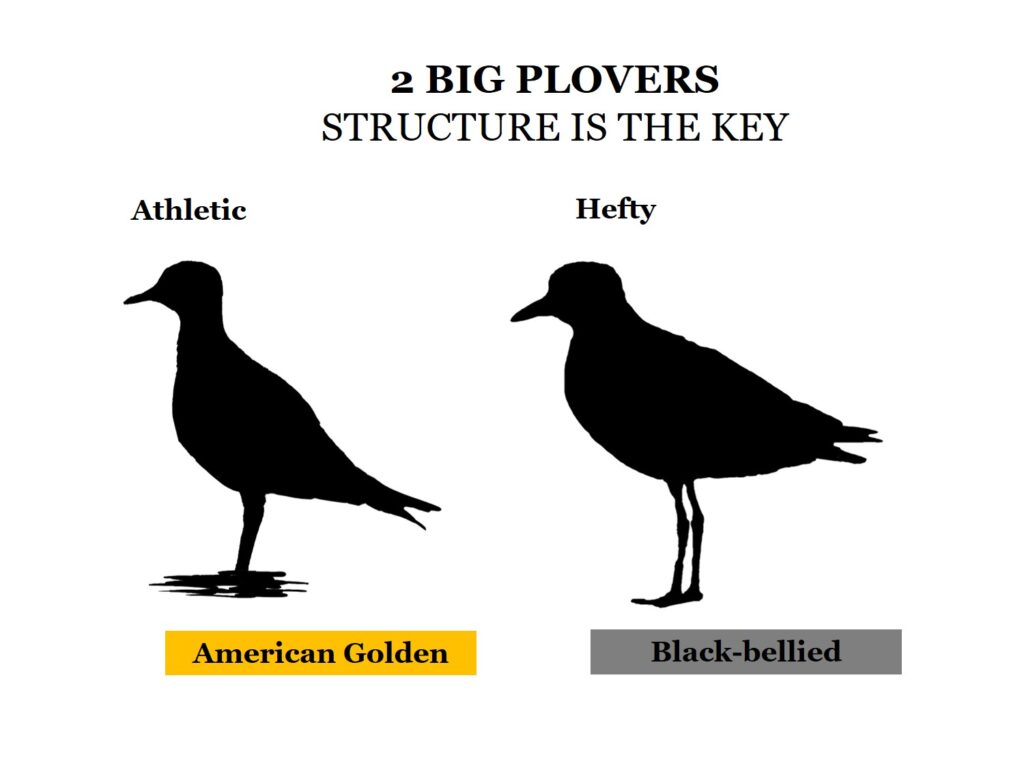
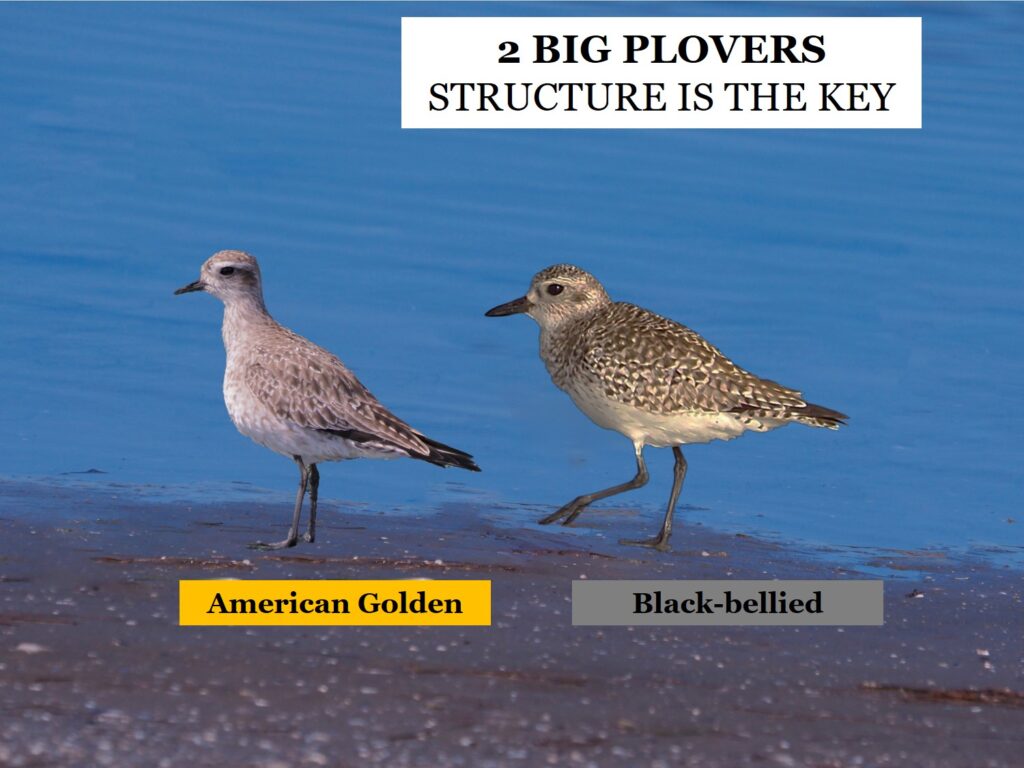
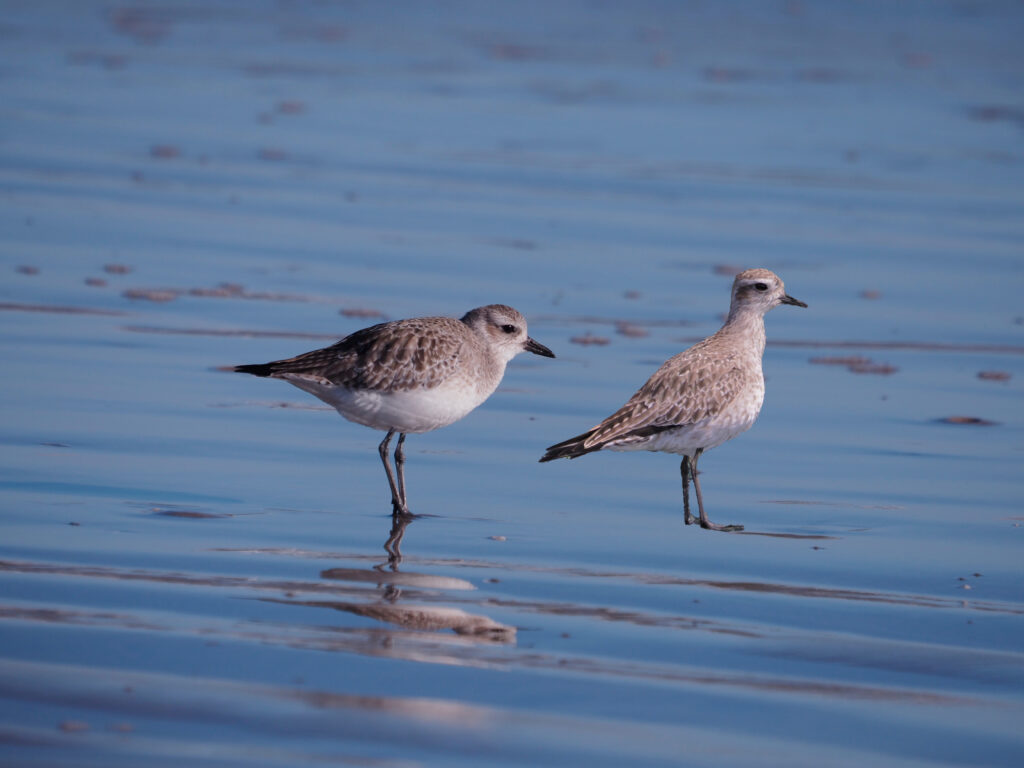
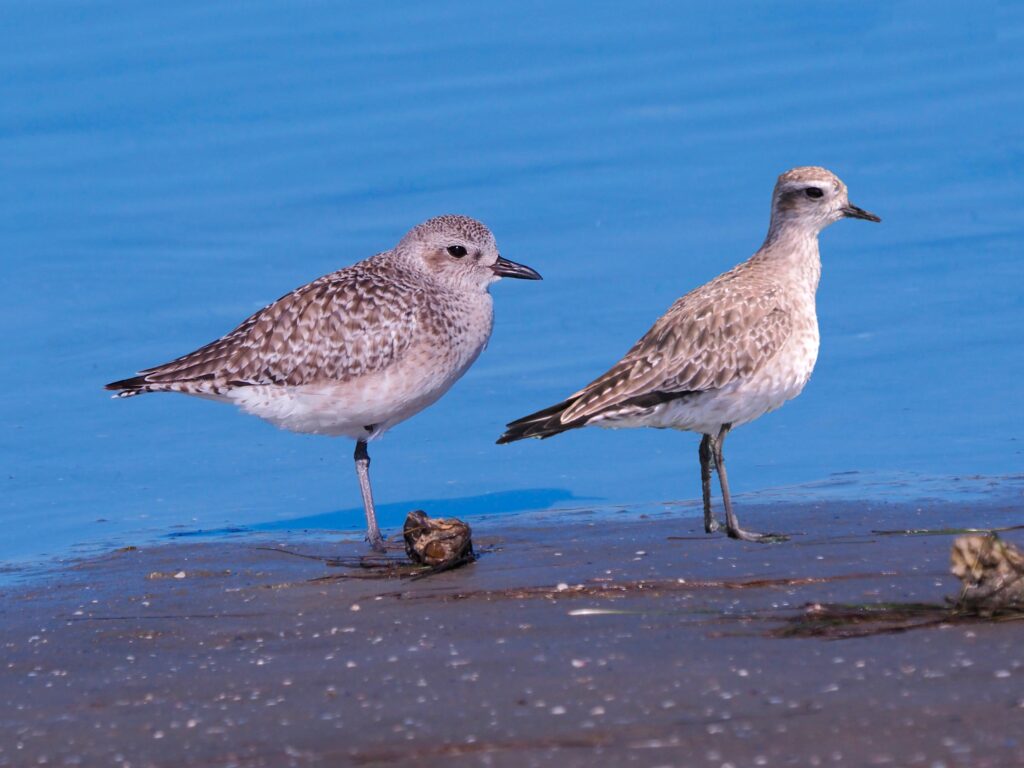
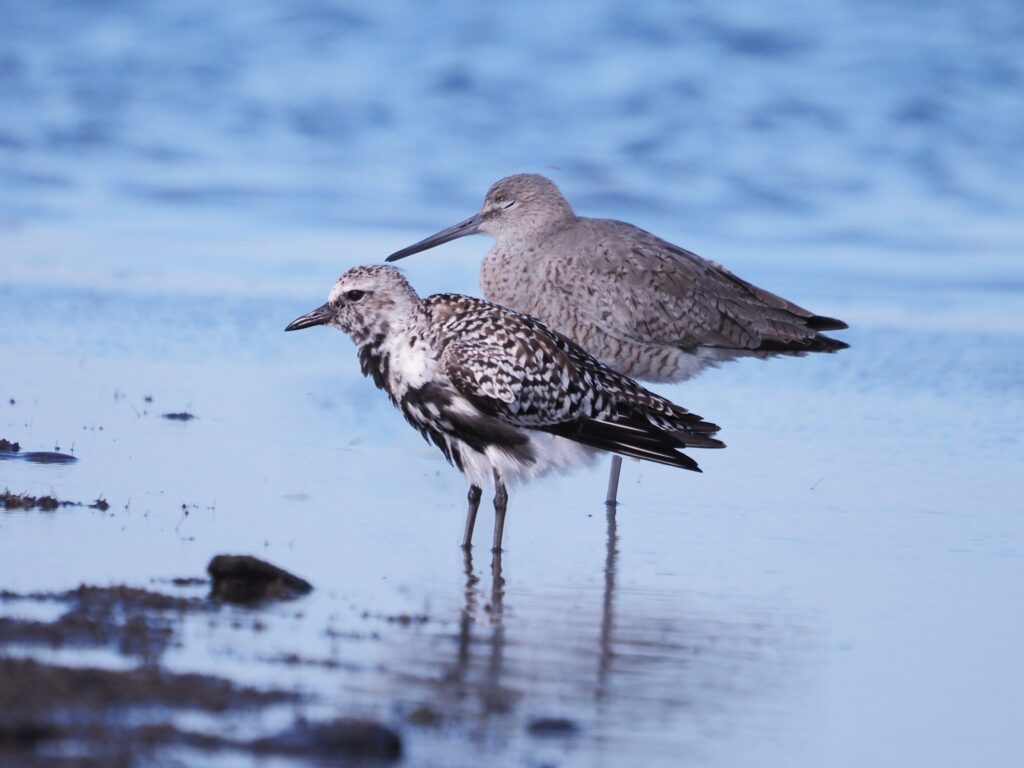
Compared to the American Golden, the Black-bellied Plover is heftier, has a thicker bill, thicker neck, more robust build, and primaries that sit about even with the tail. The 2 species are compared in the photos below. The American Golden has a more attenuated body, thinner bill, smaller, dove-like head and primaries that jut out beyond the tail. It also has a more distinct cap in all plumages. The American Golden has black (in alternate) or dusky (in basic) under-belly and under-tail covets, while the under-belly of the Black-bellied is a stark white in basic, and in alternate the black ends at the legs leaving the under-tail coverts stark white throughout the year. A final plumage difference is the black “armpits” or auxiliaries of the Black-bellied. The auxiliaries are always black on the Black-bellied, whether in basic or alternate. The black of the belly on the American Golden extends into the “armpits” when in alternate plumage, but disappears in basic plumage.
Mountain Plover
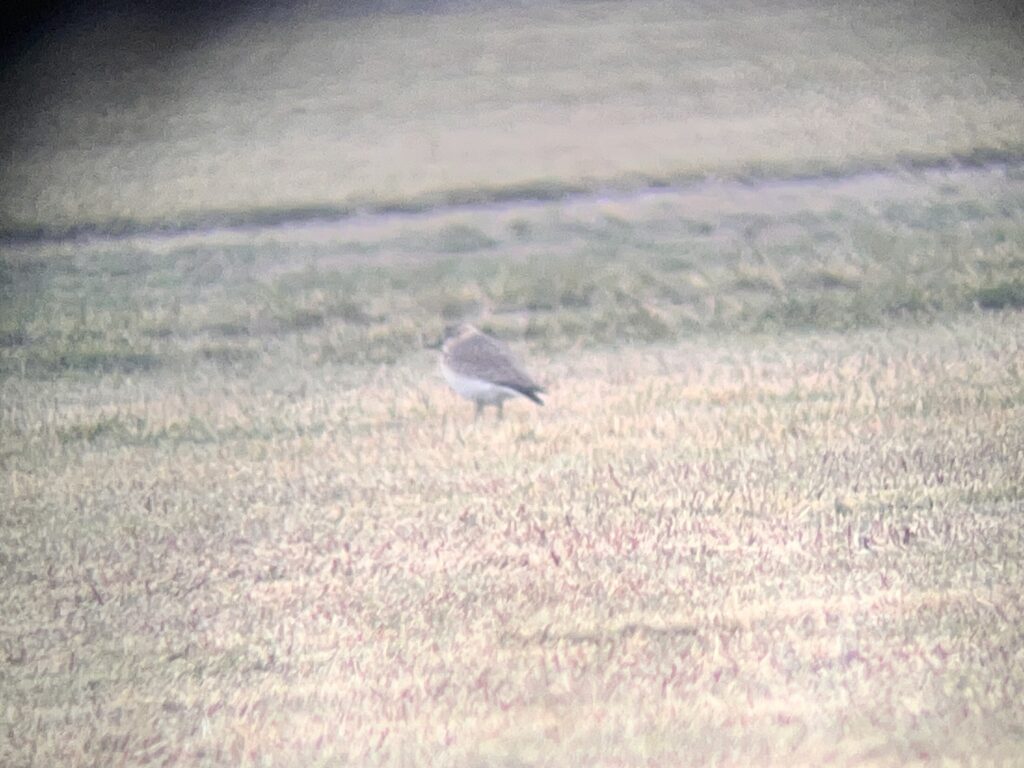
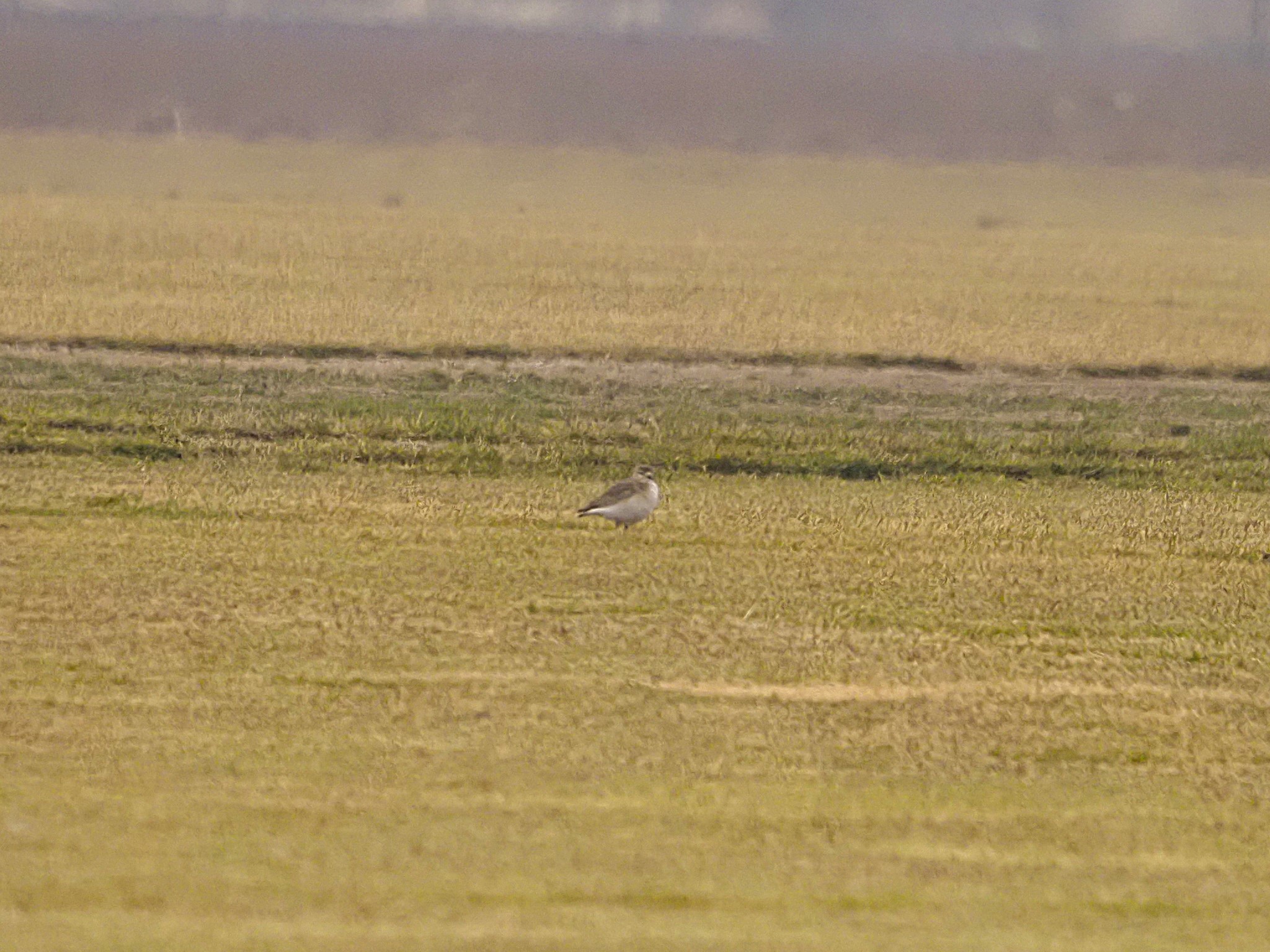
The problem with the Mountain Plover is often not so much identification, but just seeing this “near threatened” species. The Mountain Plover comes to Texas in winter where it usually inhabits large plowed fields and turf farms. This plover is stark white beneath and a fairly unique shade of fawn brown above. Views are often quite distant and the fawn color blends well in these habitats. This species can be a thrill to see in flight as it wheels in tight, fast flying flocks at 10-12 feet above the ground. These flocks almost disappear when the back is to the viewer, and then suddenly reappear as the white underside is revealed during rapid, coordinated turns. The fawn colored upper-parts and white belly of the Mountain Plover are distinctive. They also have a large eye and exhibit the walk-stop-seize prey habits of other plovers.