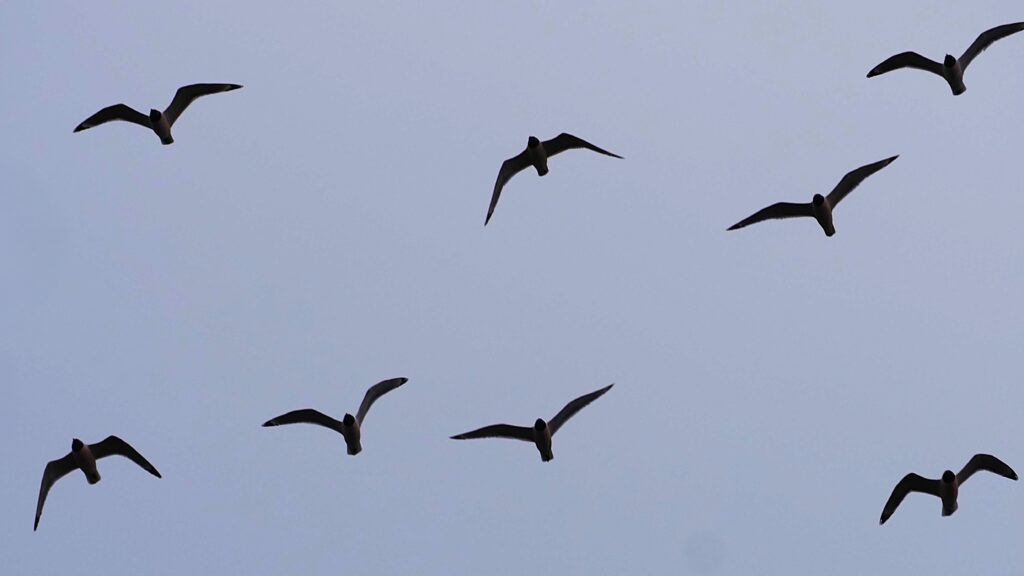
Although a few Franklin’s Gulls are occasionally found in Texas during winter, their migration between the west coast of South America and the Prairie marshes of middle northern North America brings them directly through the state during spring and fall. Their migrations peak about the middle of April and the 1st of November when they are sporadically seen in loose, but defined flocks usually traveling at low altitudes. As shown in the video below, I have witnessed Franklin’s Gulls migrating up and down Interstate 35 five or six times — they seem to use the highway as a navigation aid, following it like they might a river.
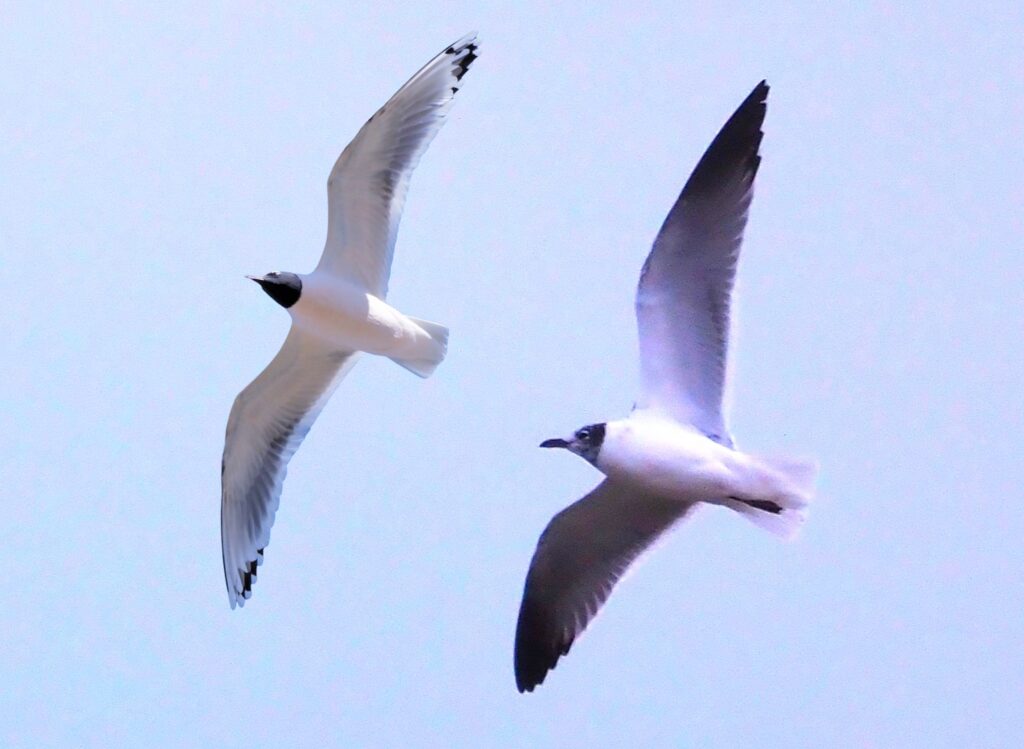
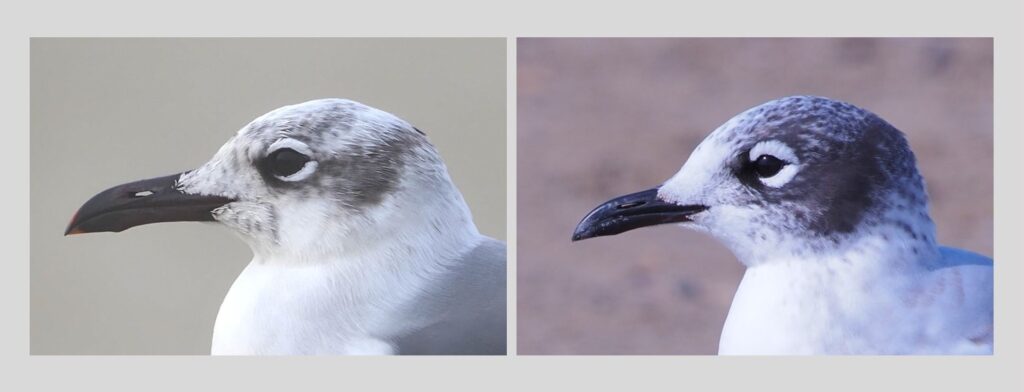
At first glance the Franklin’s resembles the closely-related Laughing. Both have medium-dark backs, black heads in alternate, eye-arcs and often white apical spots on black outer primaries. However, a close comparison reveals differences in both structure and plumage. The Franklin’s is slightly smaller and stockier, with shorter legs, shorter bill, and shorter, more-rounded wings. The face and head of the Franklin’s, and indeed the entire body, is less “stretched-out”, more compact. (Franklin’s on the right in all comparison photos below).
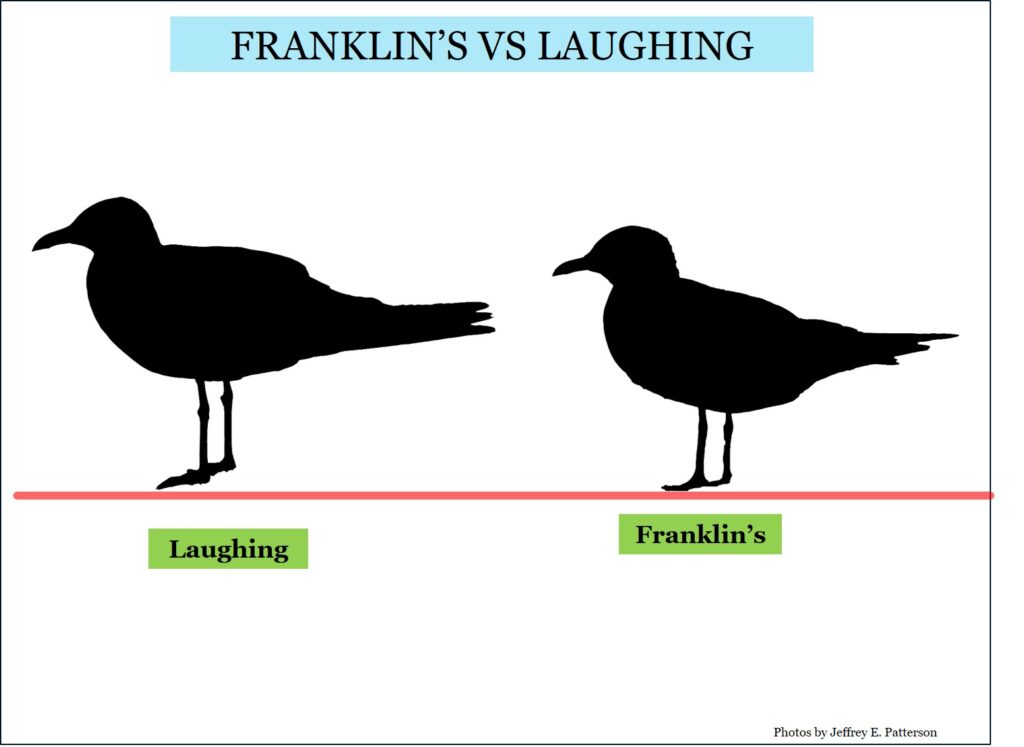
The Franklin’s white eye-arcs are thicker and often, almost meet in the back. Adult Franklin’s nearly always have broad, white apical spots on the primaries, while the smaller ones on the Laughing are sometimes absent.
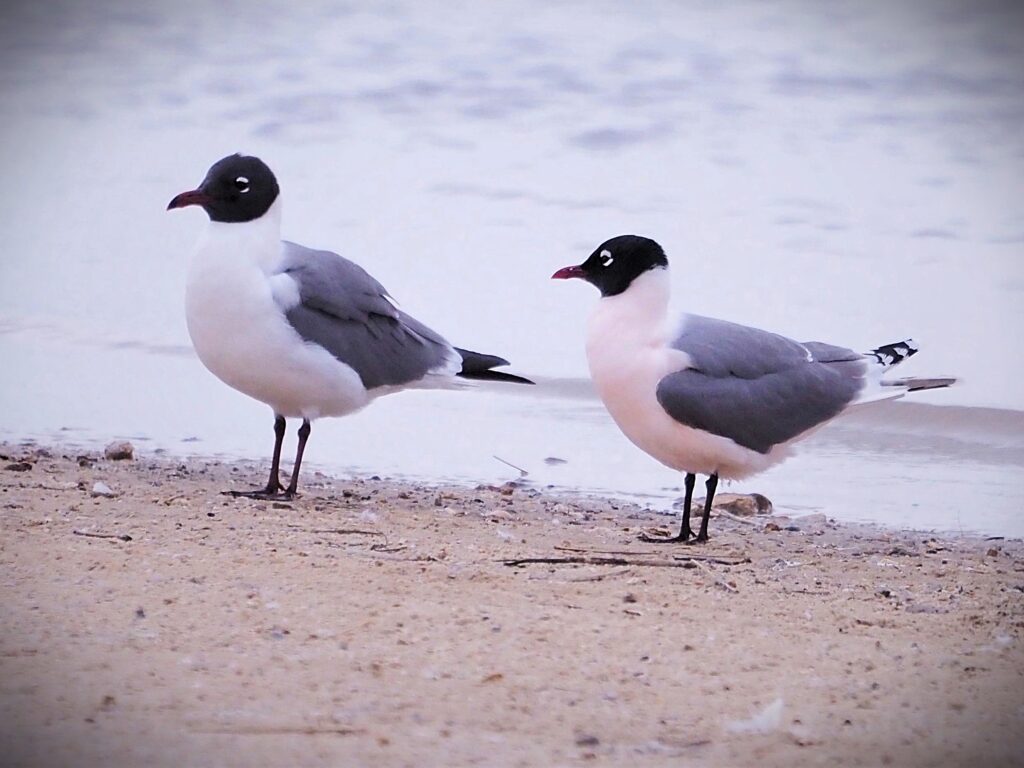
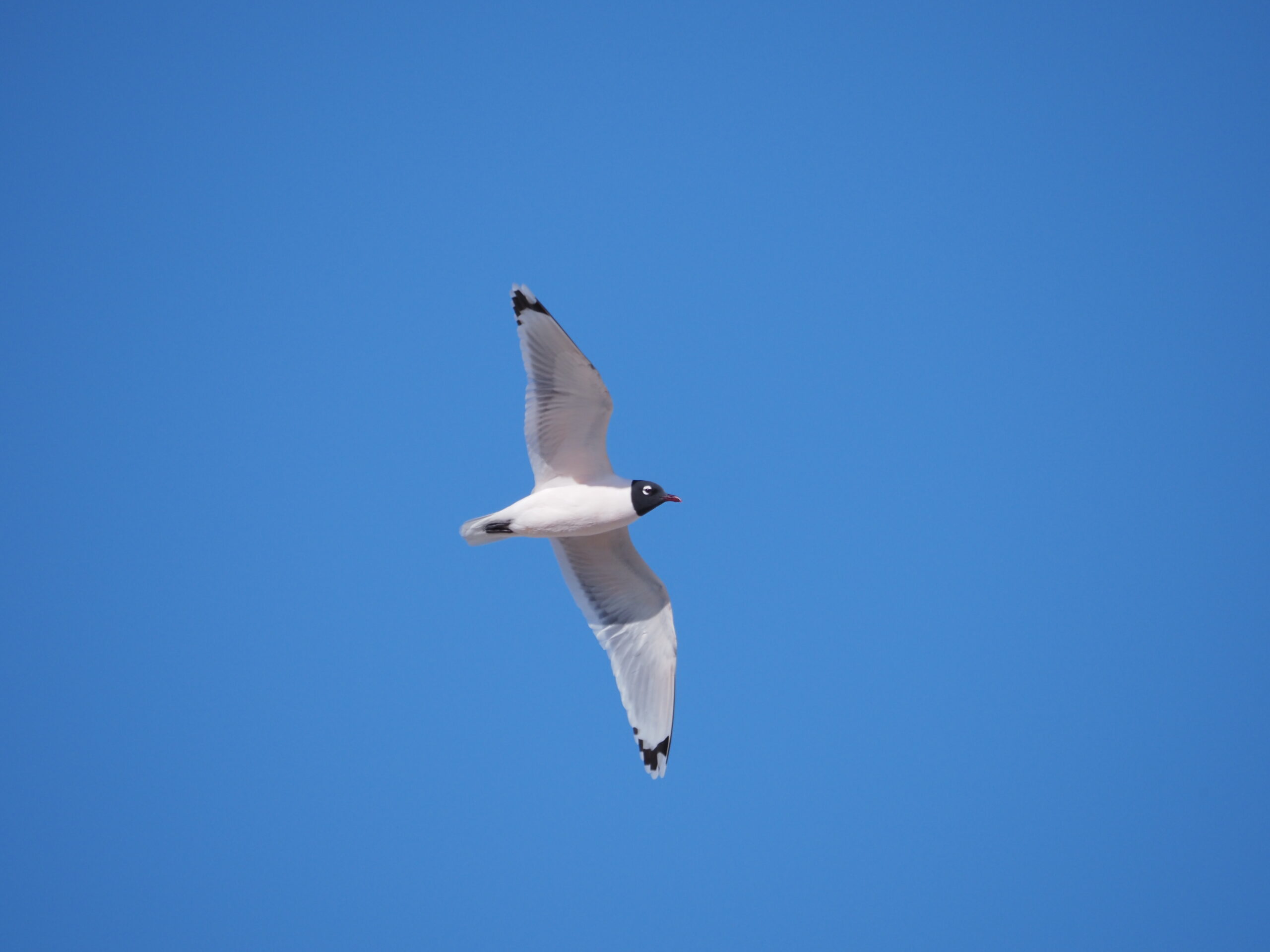
In flight the Franklin’s is easily distinguished from the Laughing by examination of the wingtips. The Laughing has long, pointed, black wingtips, which slowly change to gray, then to white towards the body. But for the primary tips, the Franklin’s ventral wings are all white and the outer primary tips have a white-black-white pattern. The black on the primary tips is minimal compared to that of Laughing.
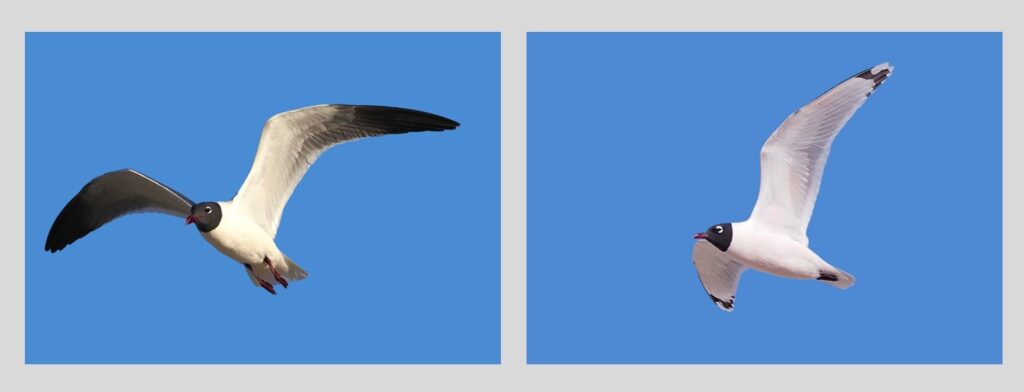
The dorsal wingtip patterns on the two species is similar to the ventral. A white band, then a black band, and white tips (formed by the apical spots) on the Franklin’s and mostly black and pointy on the Laughing.
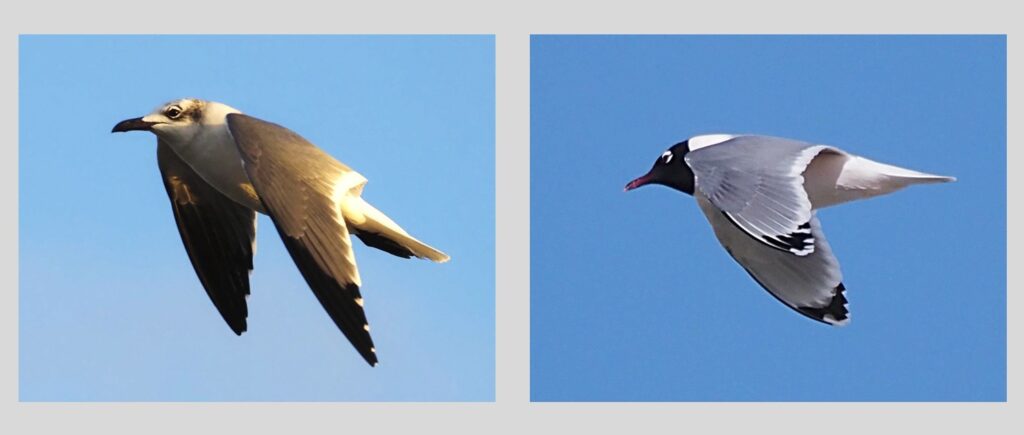
The images below compares the bill and head of Laughing and Franklin’s in basic plumage. Note the shorter, less drooping bill, the rounder head, the bolder eye-arcs, and the more extensive black cap-remnants on Franklin’s.

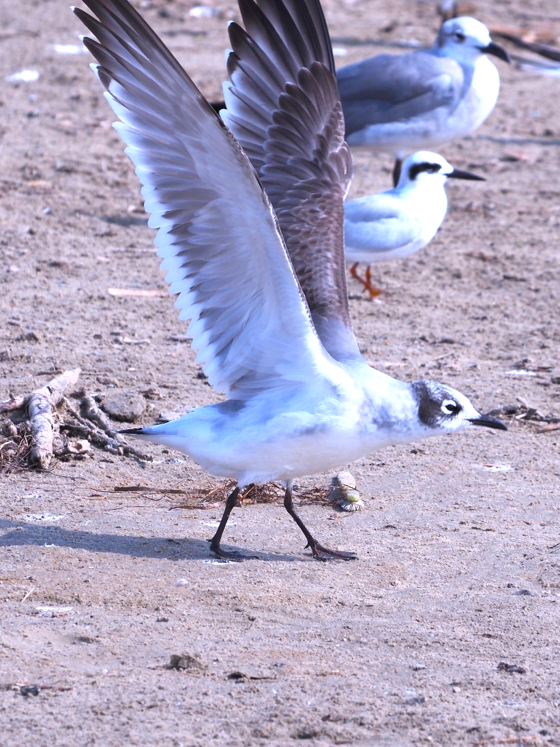
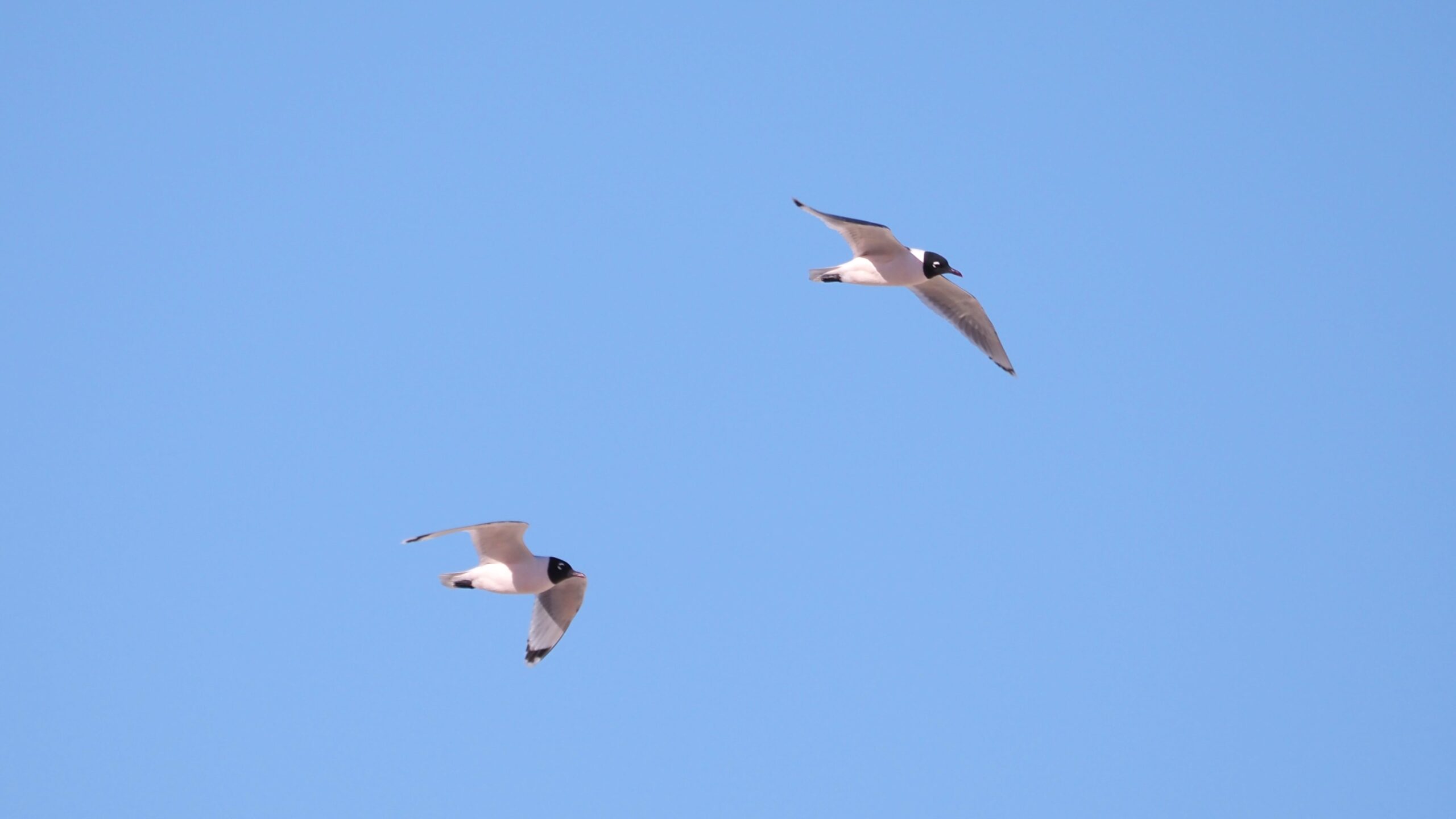
Additional flight photos of Franklin’s are shown below.


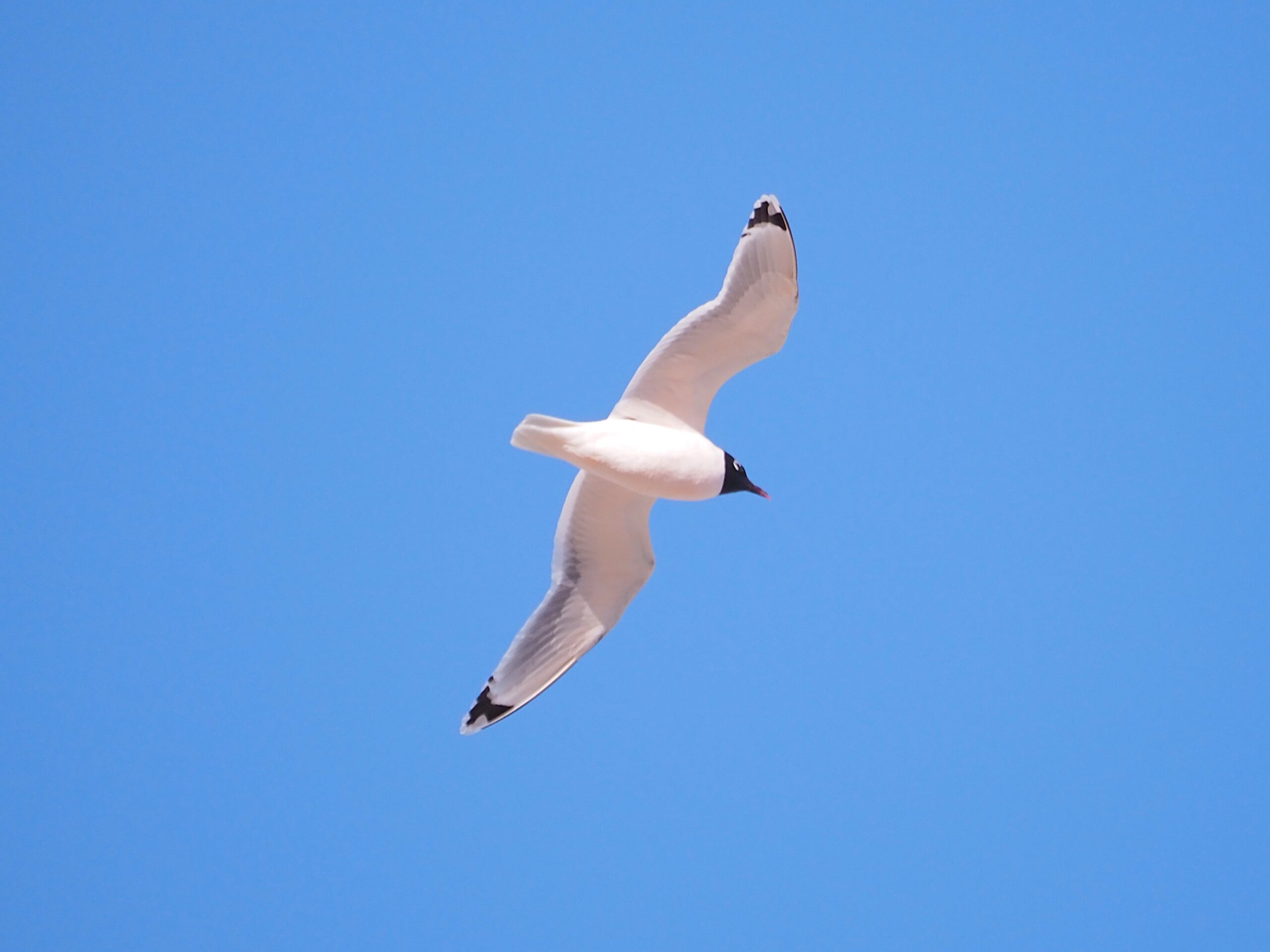
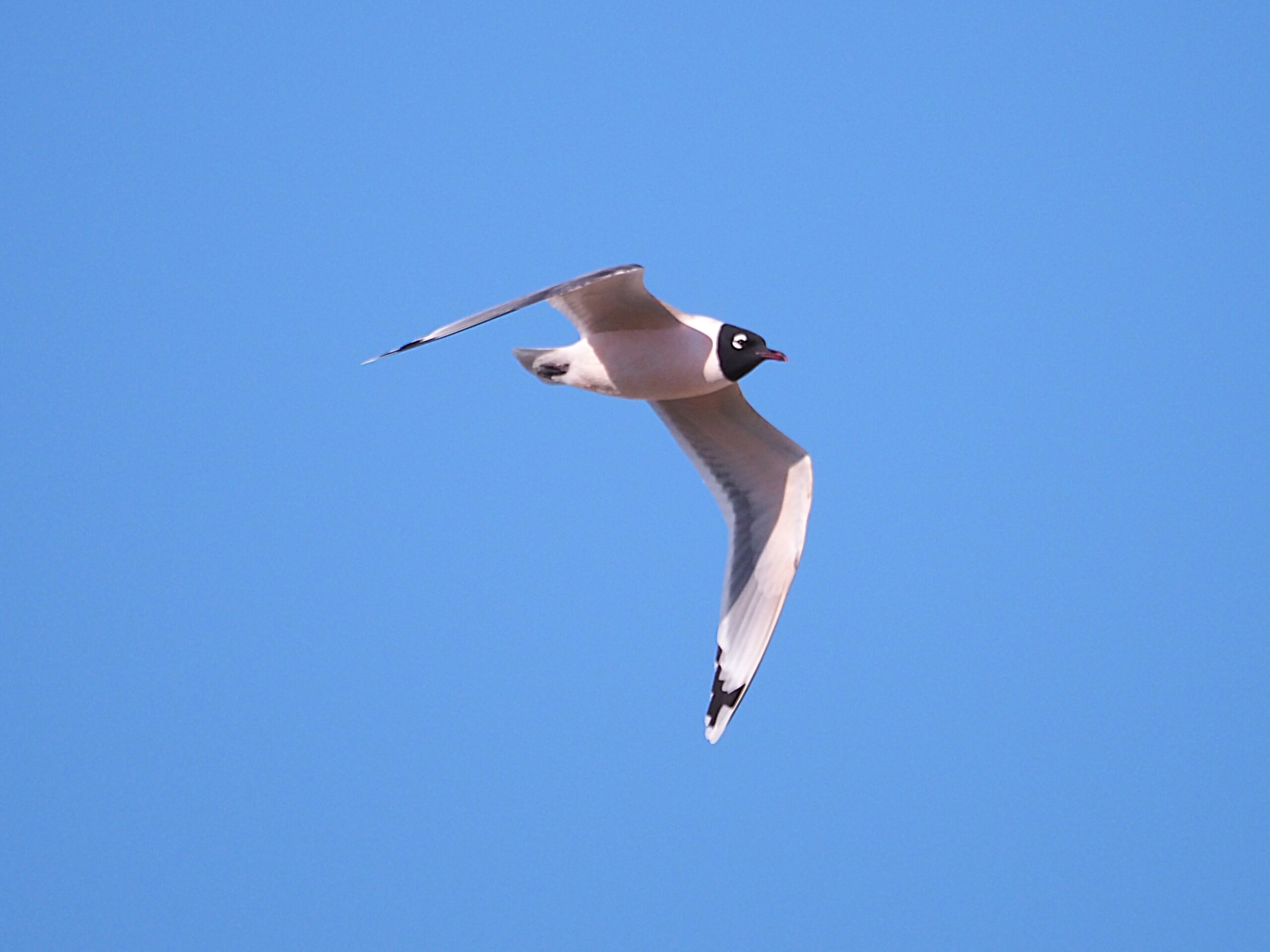

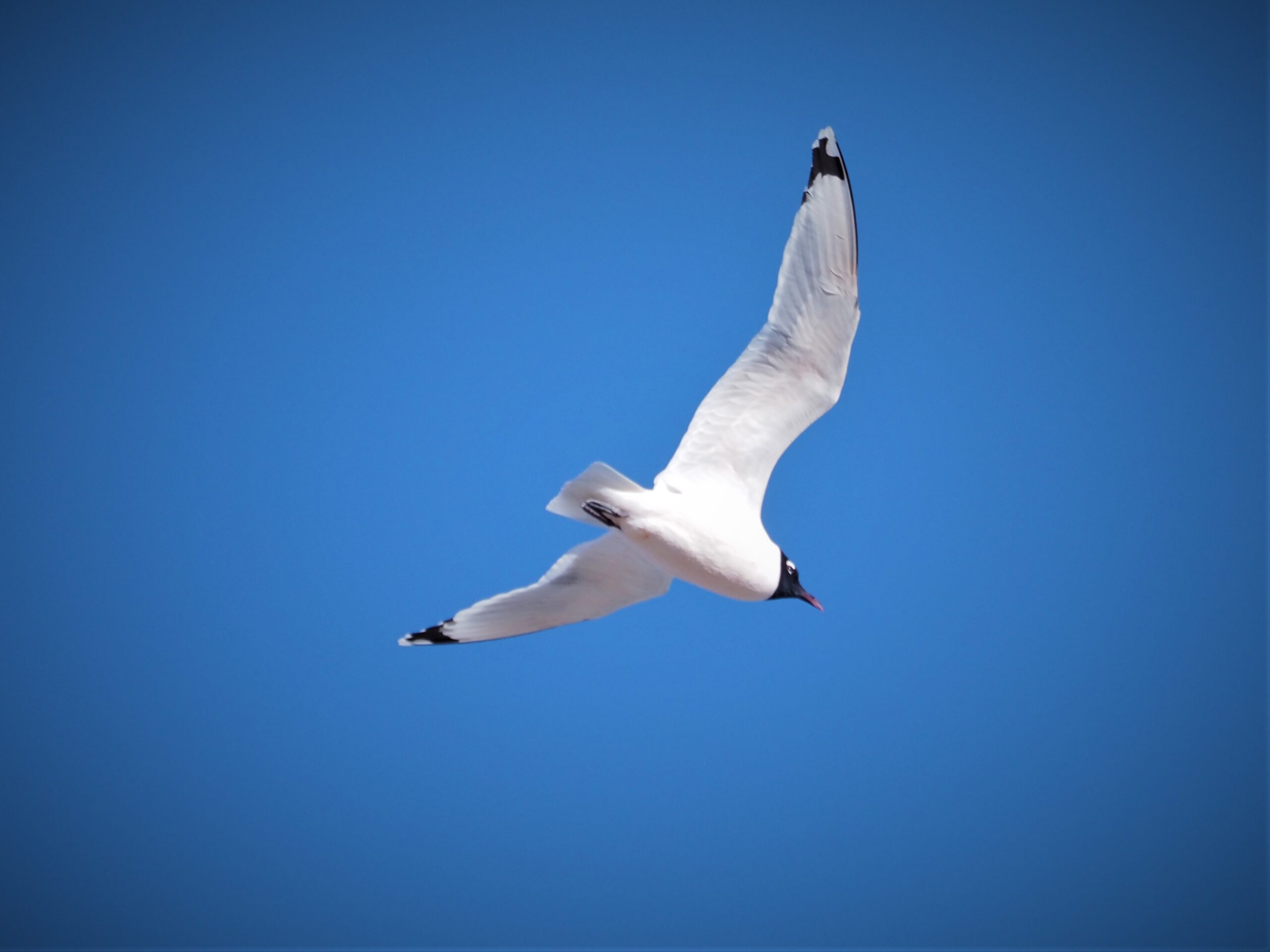
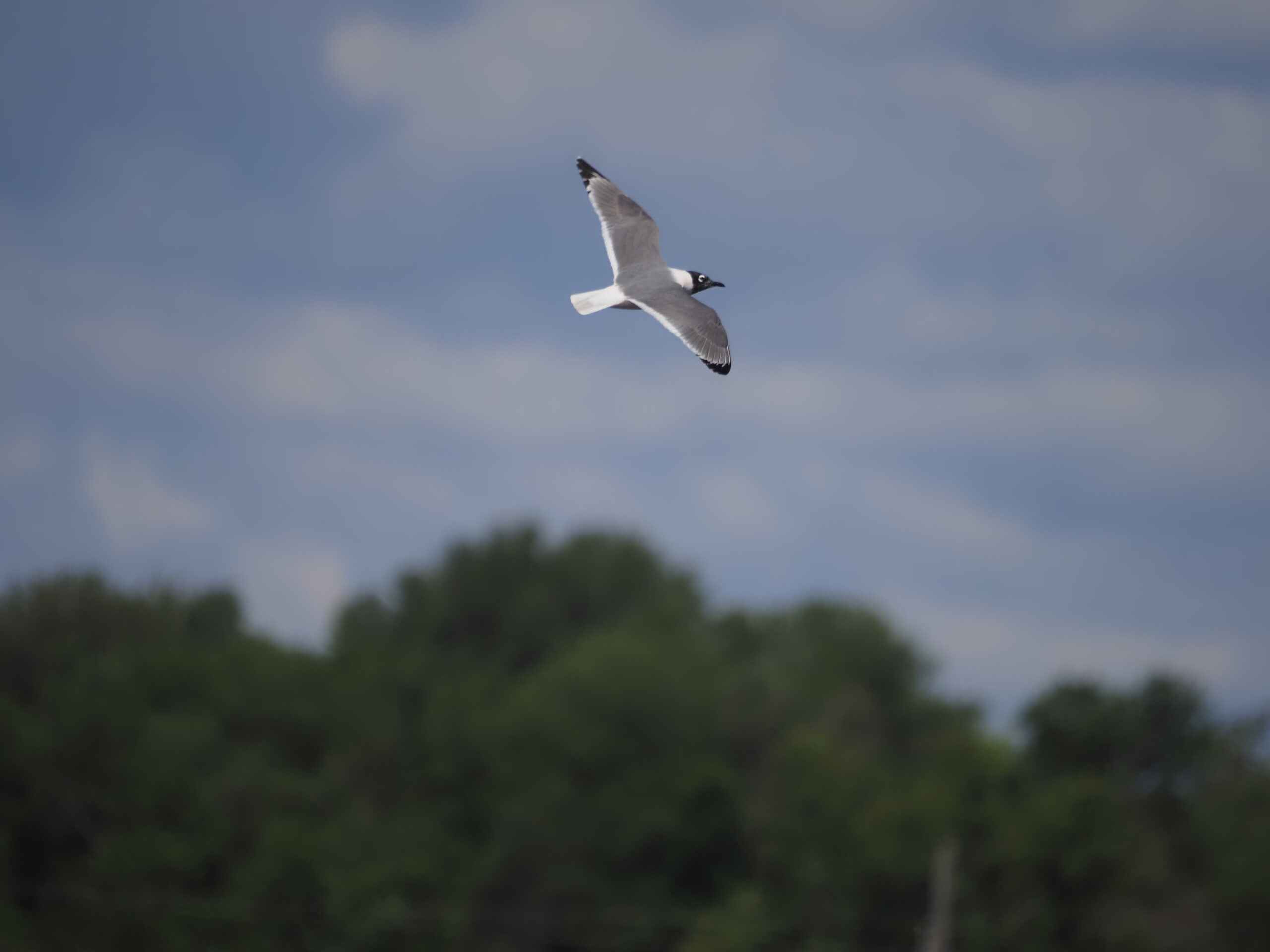
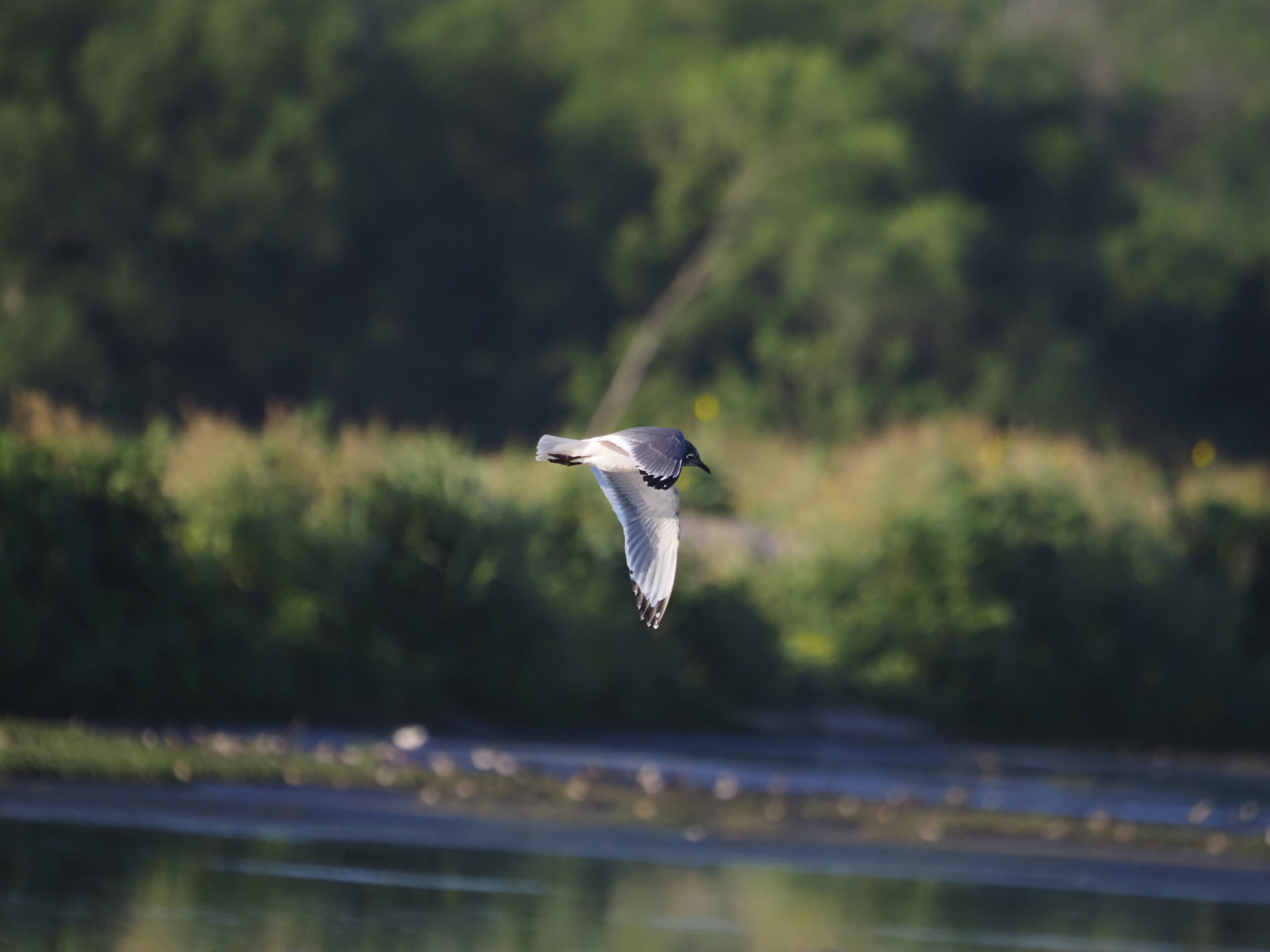
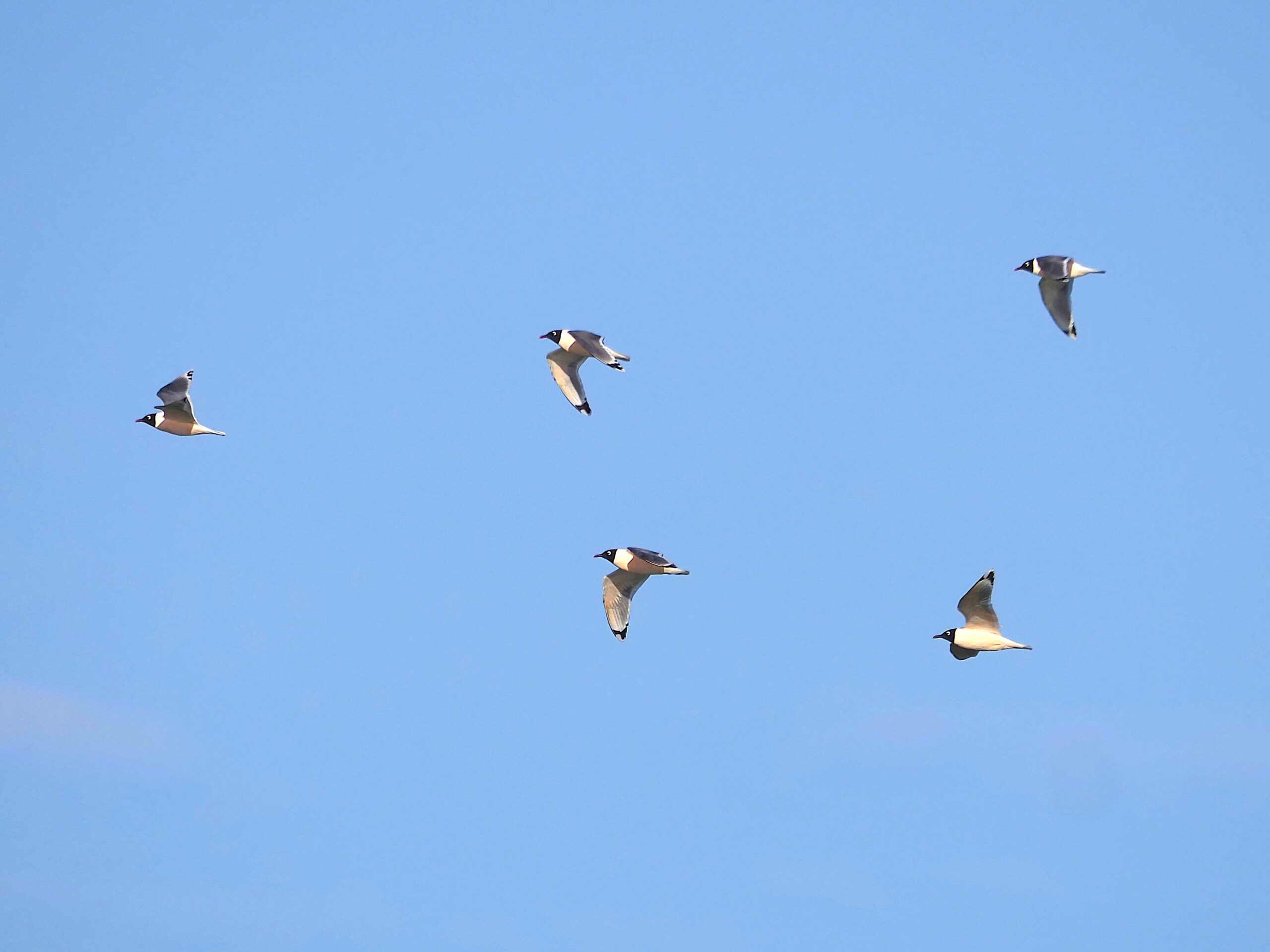
The Franklin’s is shown in alternate (breeding) plumage below, when all plumage features are brighter. The Franklin’s has the full black cap, bold eye-arcs and often deep red bill and legs. Sometimes a pink hue is present on the breast during peak breeding plumage. Note that all the structural features apply no matter the plumage.
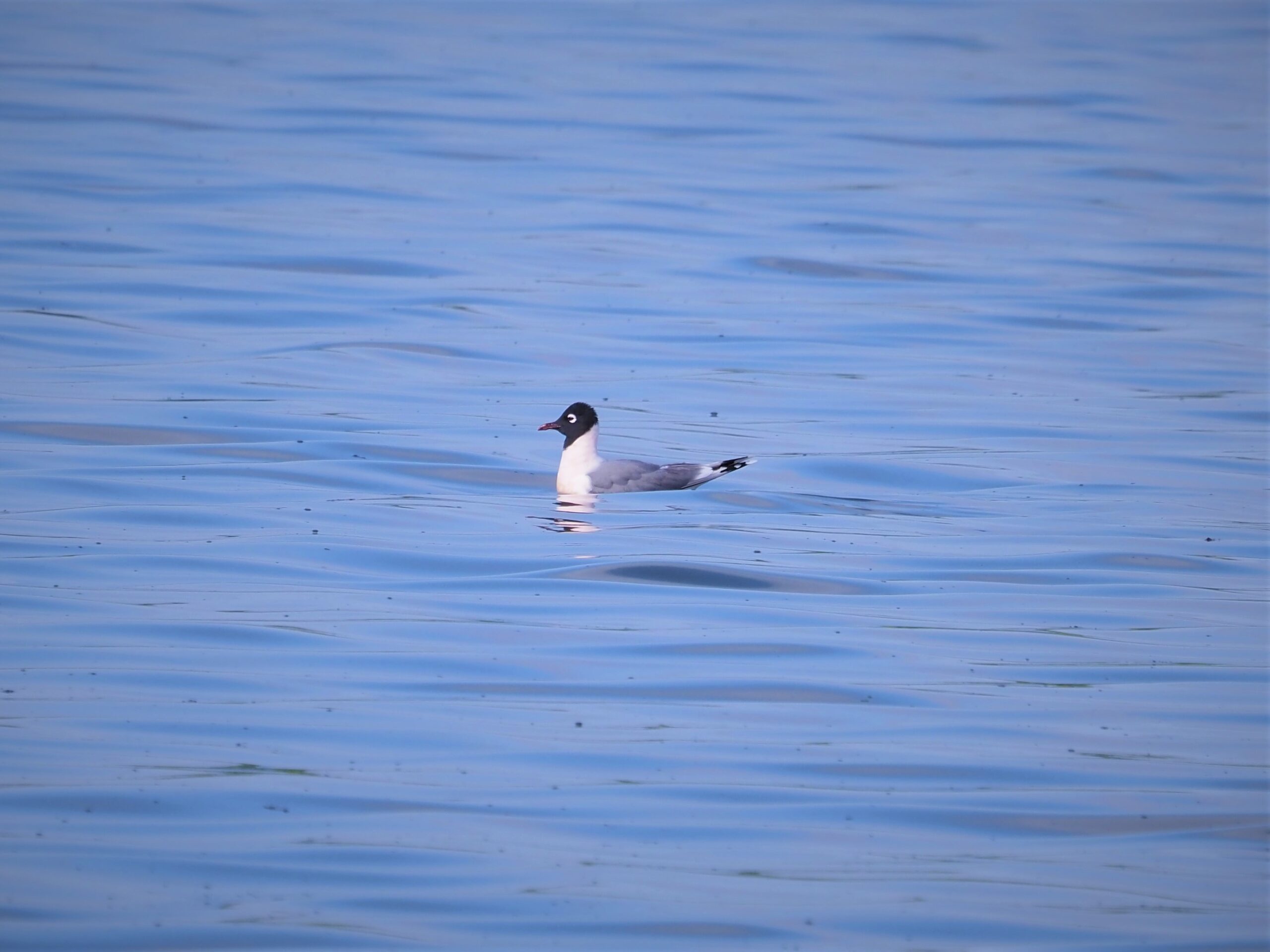
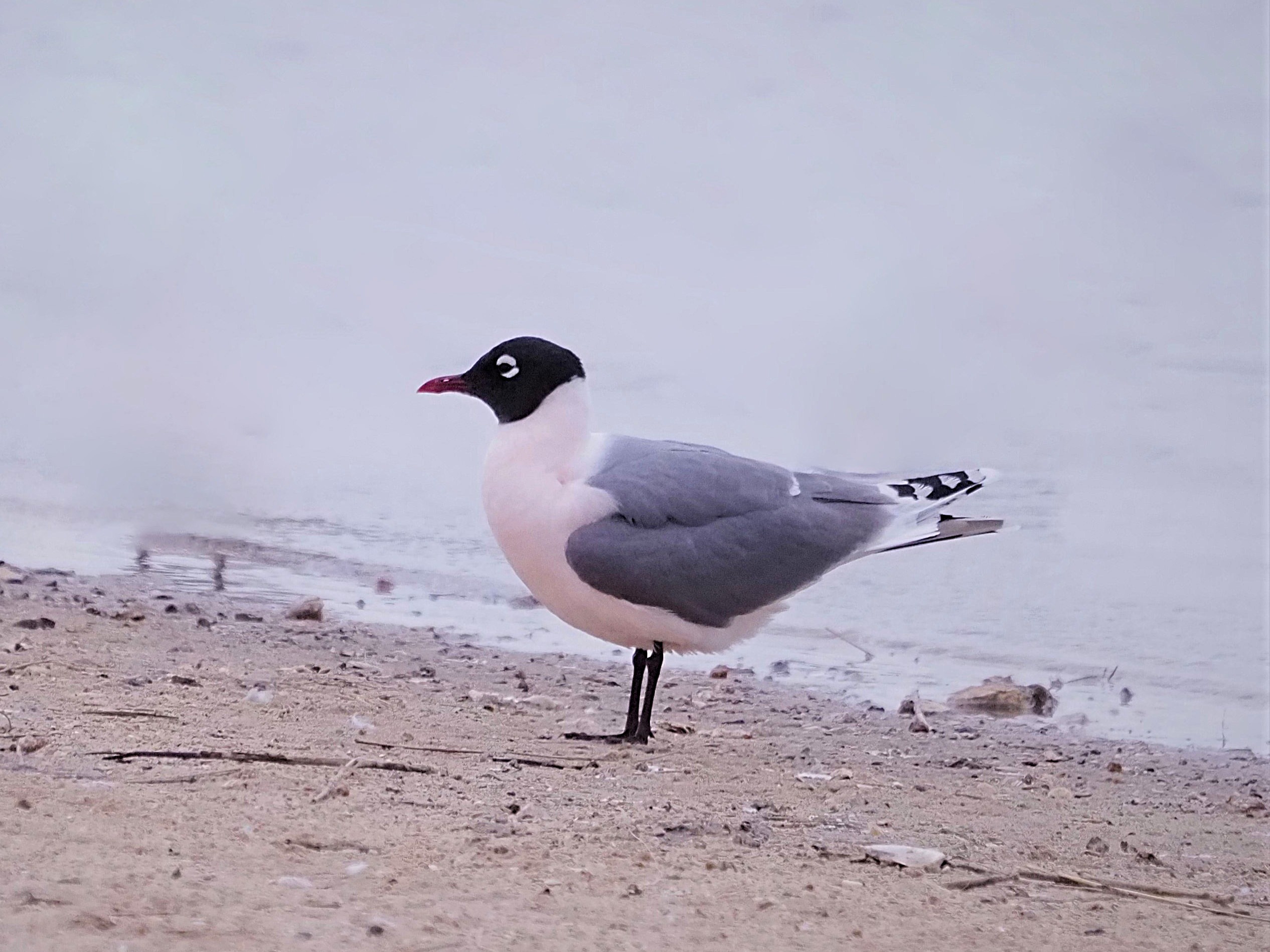
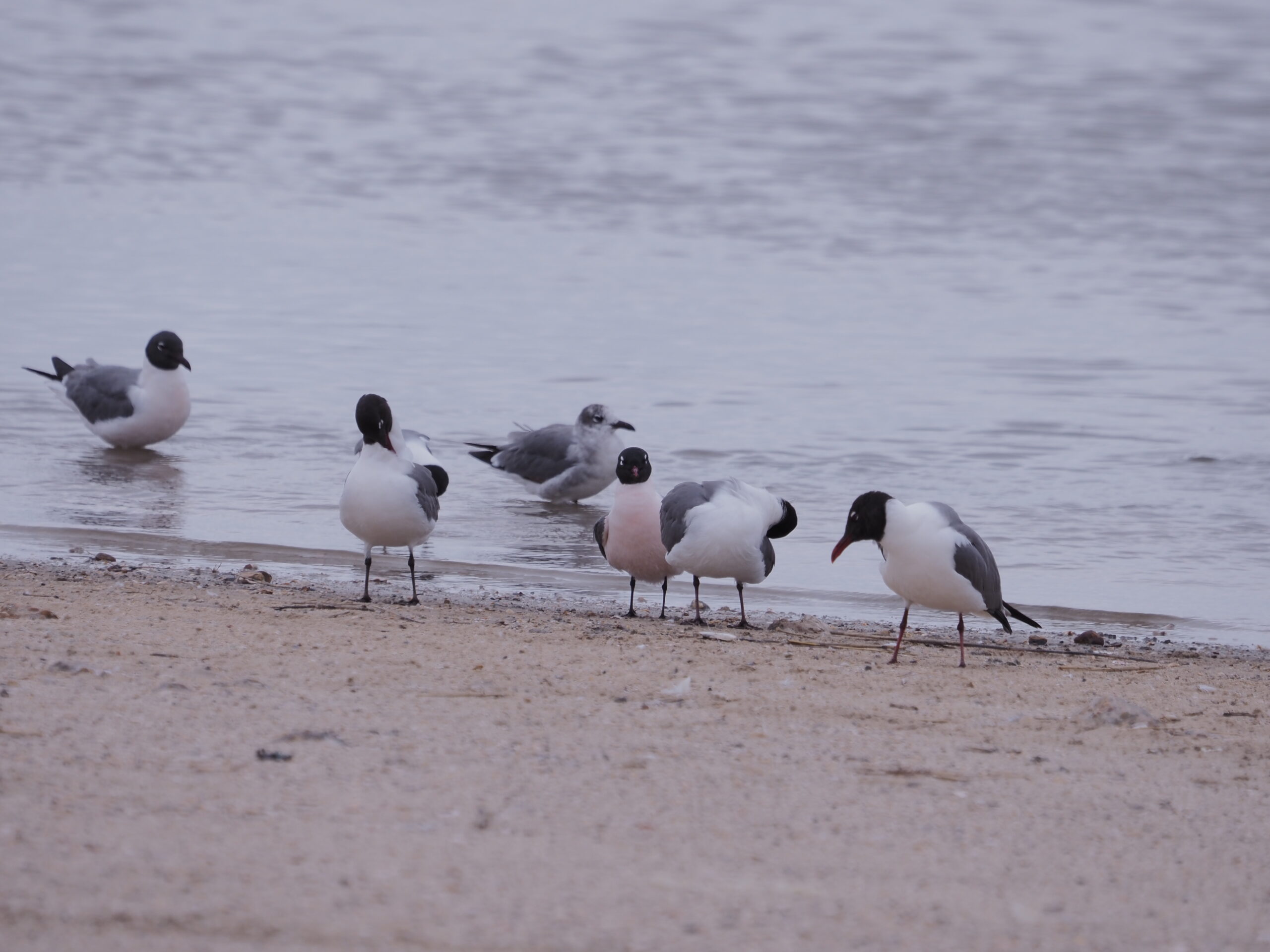
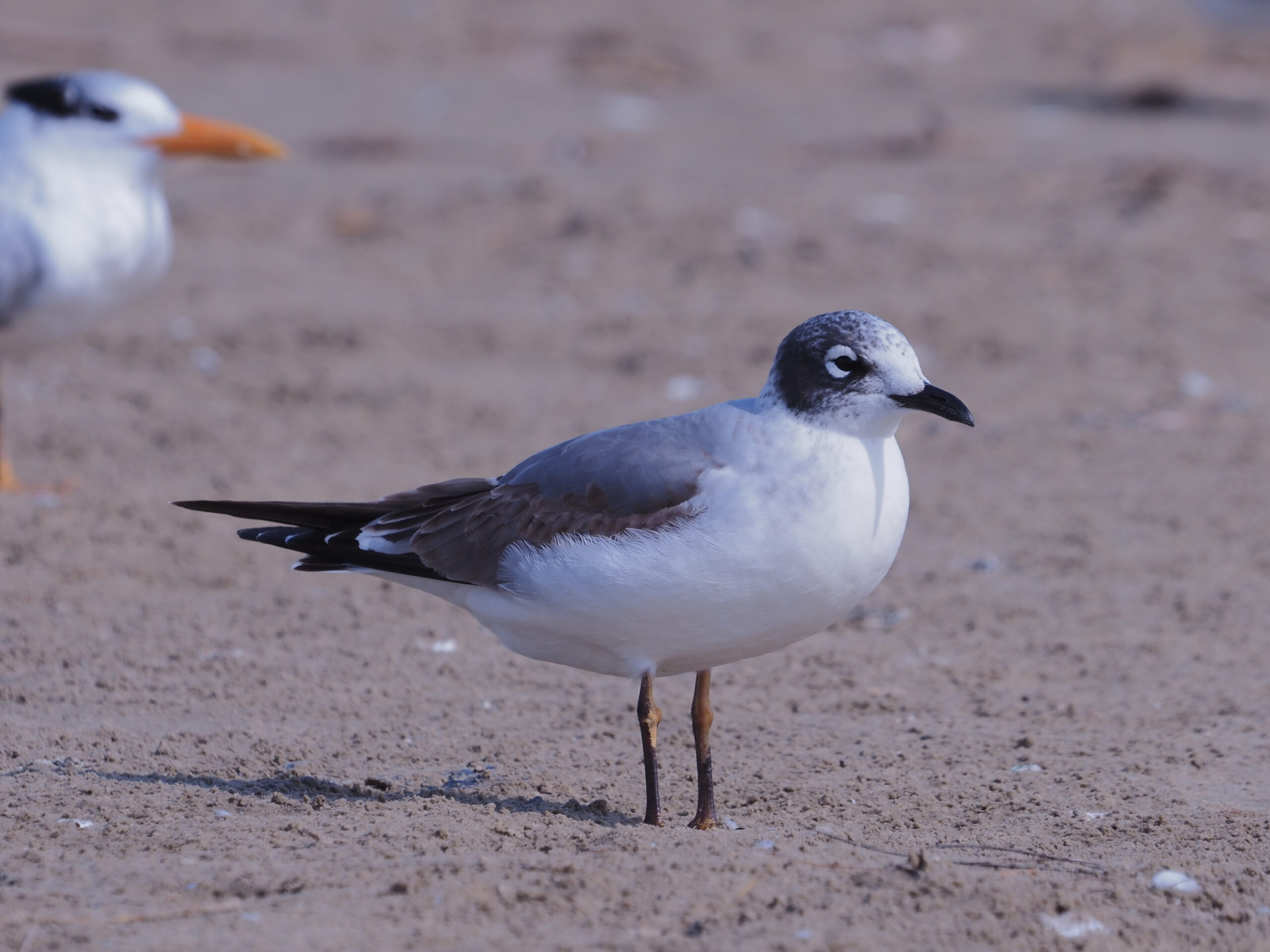
The Franklin’s in basic (non-breeding) plumage is shown below. The Franklin’s usually retains more of the black head than does the Laughing in basic plumage. The eye-arcs are also generally more prominent in this plumage.


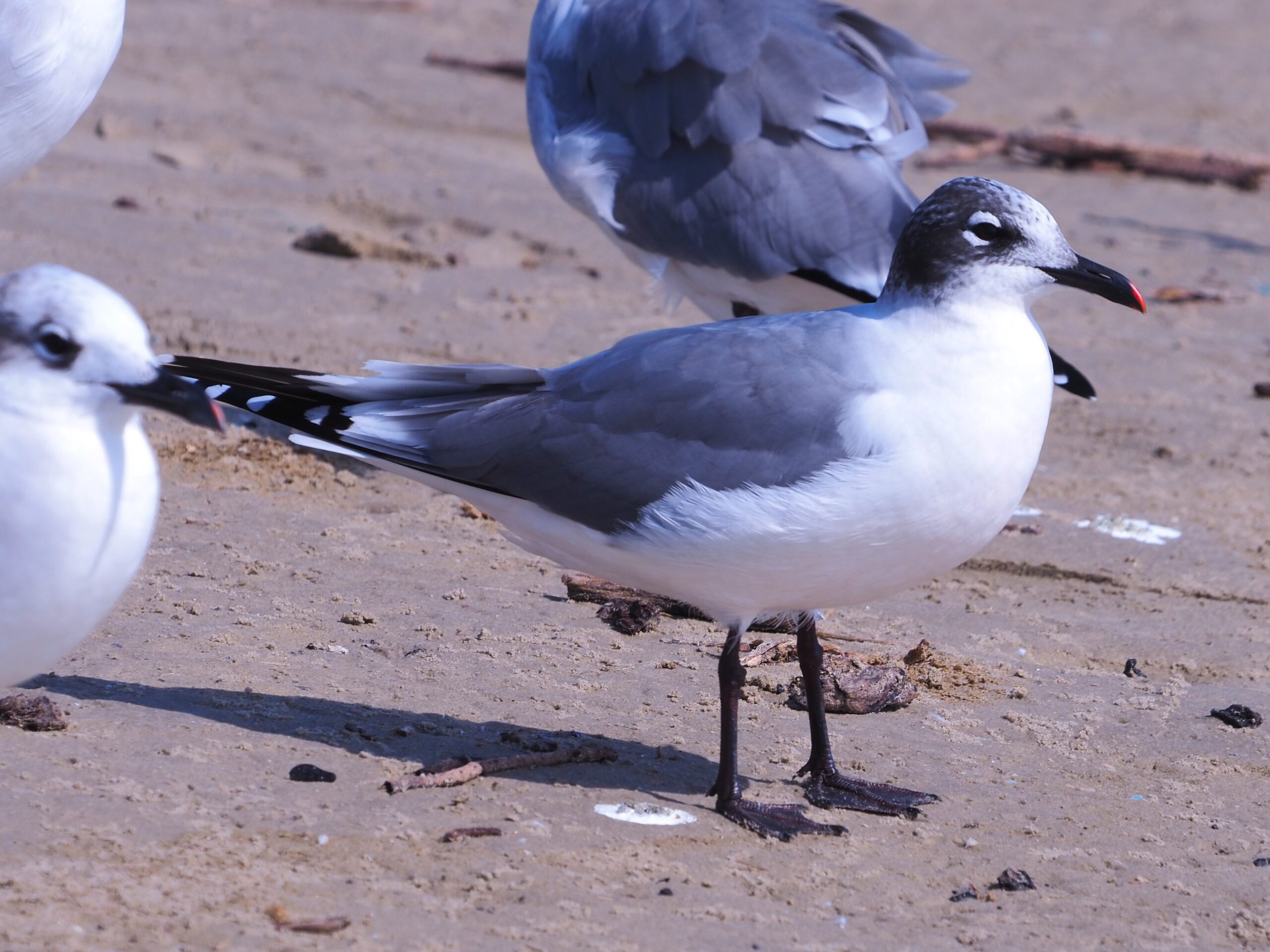

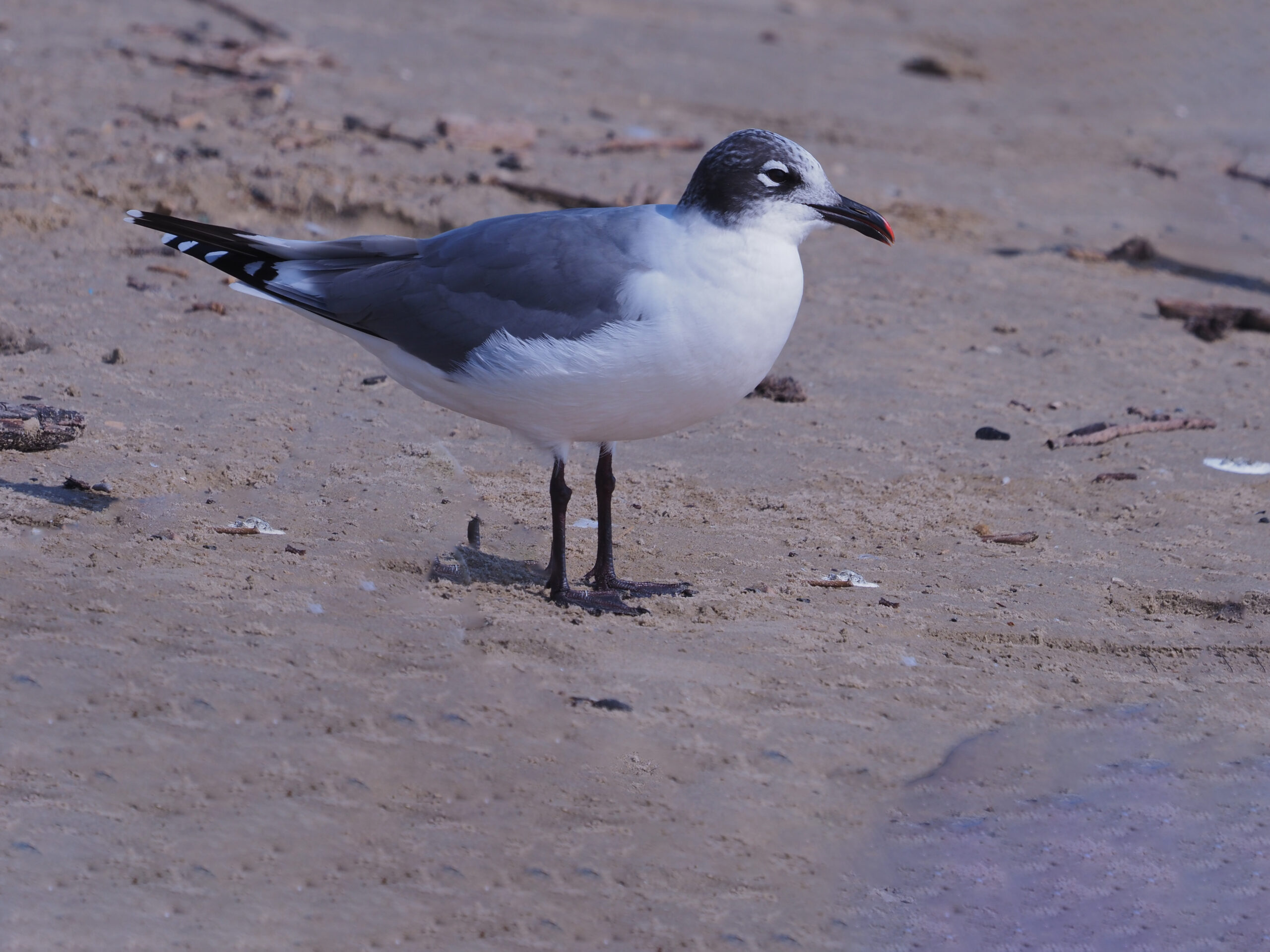
Juvenile and Sub-adult Franklin’s
Because the Franklin’s nests in the Northern US and Canada, I have no photos of recently fledged juveniles. Photos of recently fledged Franklin’s can be found at Cornell’s Macaulay Library.
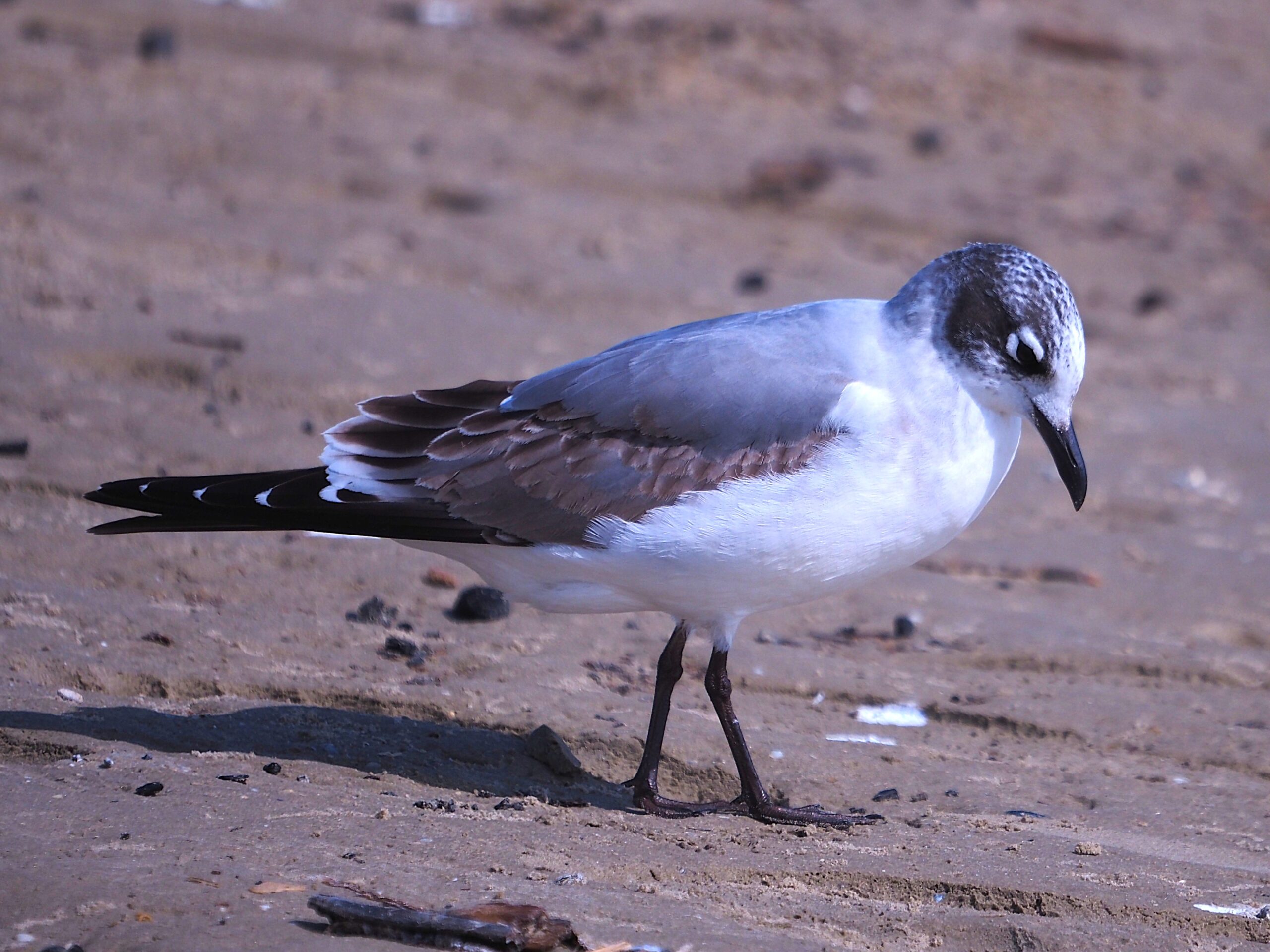
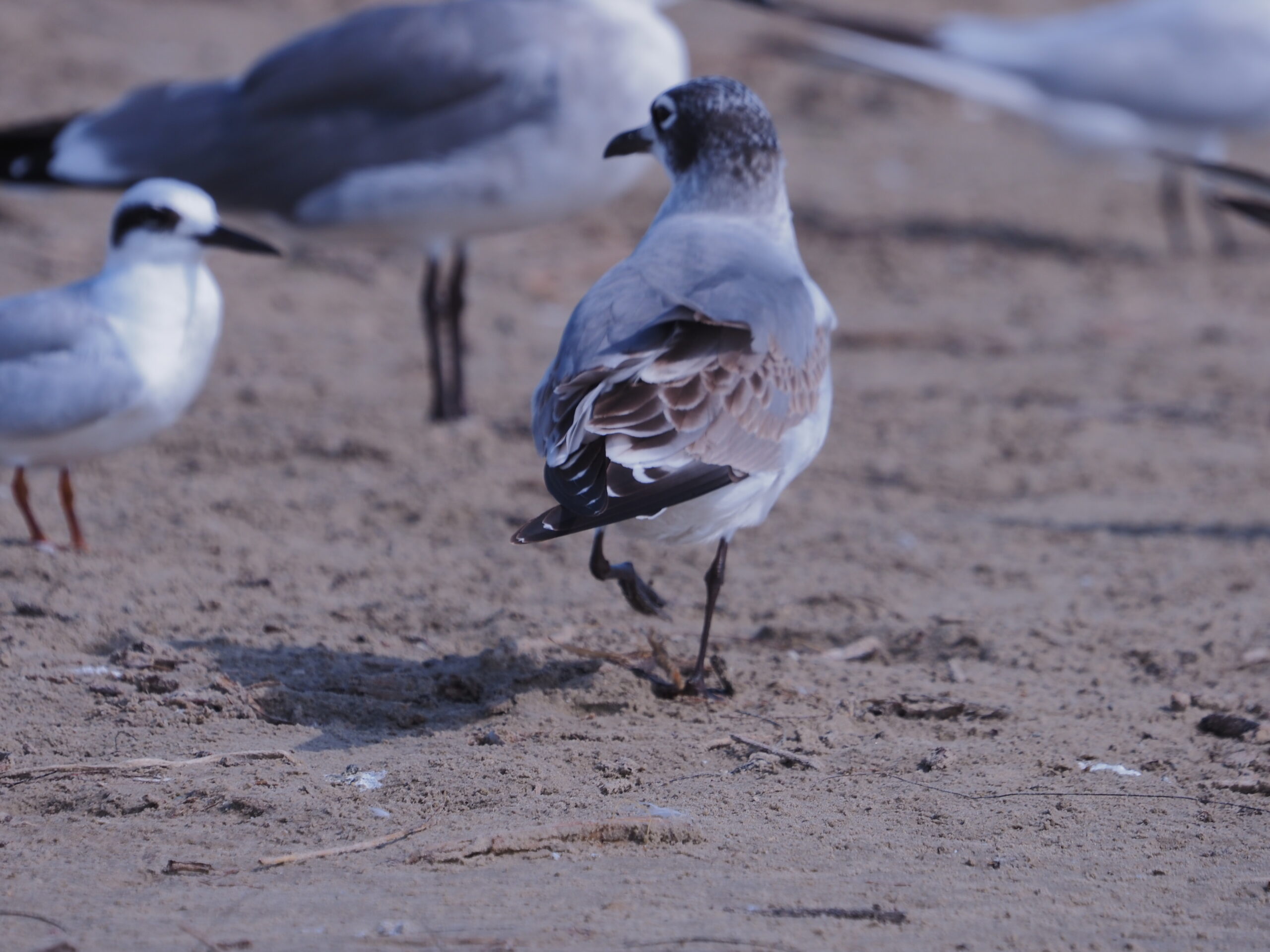
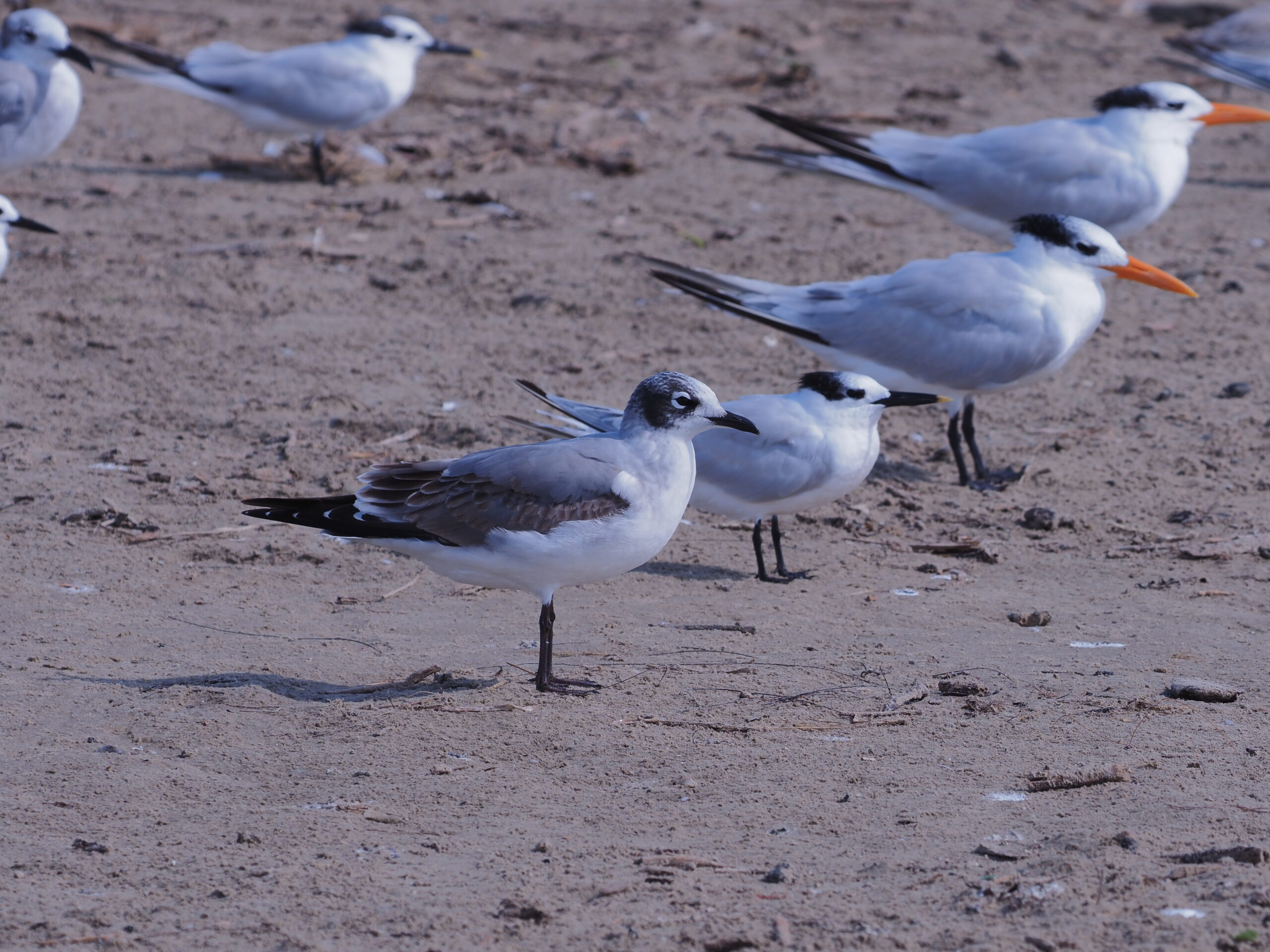
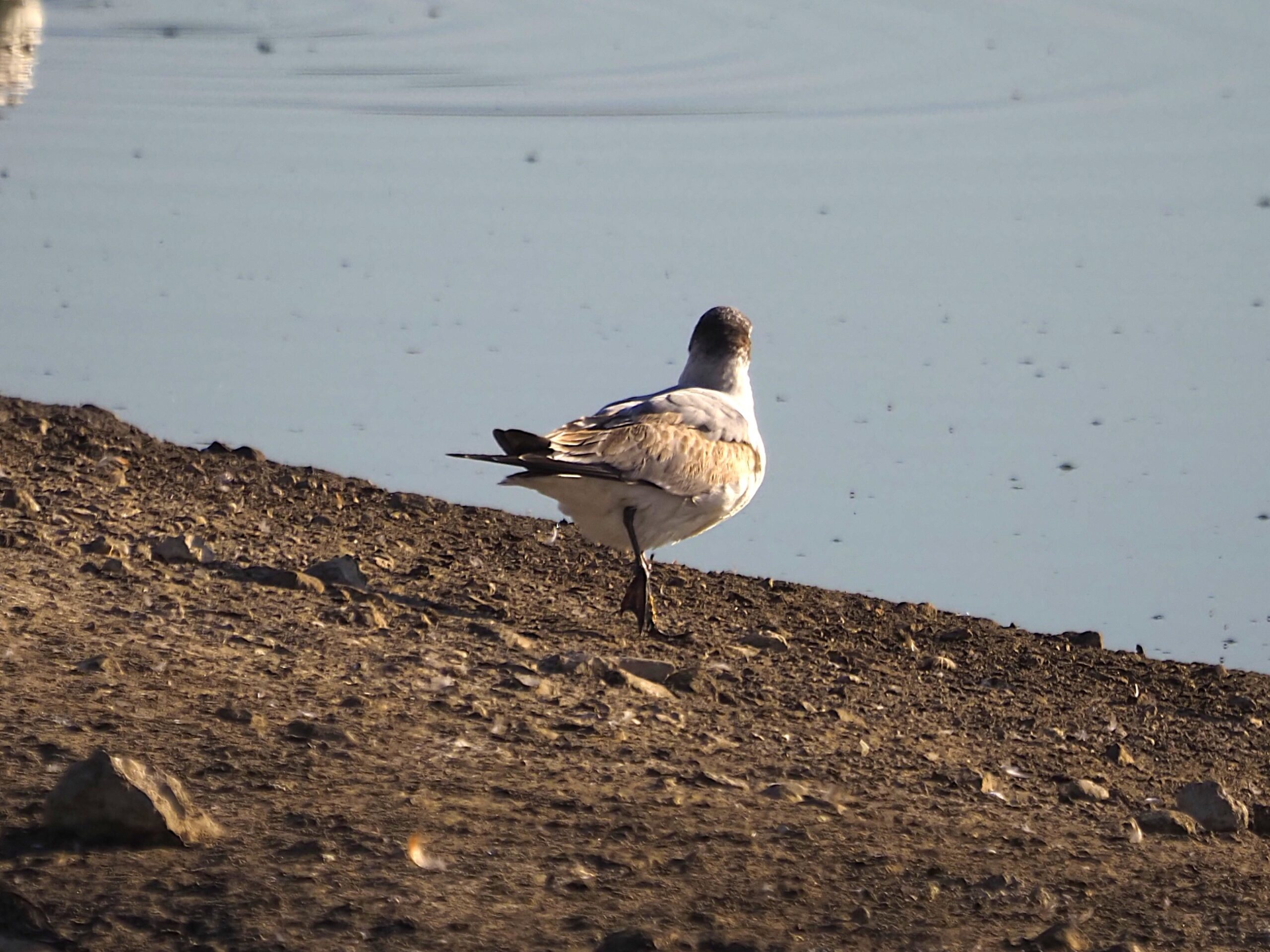
As a small gull Franklin’s begin to molt to post-juvenile scapulars prior to their arrival in Texas in mid-October to early-November. Some of the sub-adult Franklin’s I have encountered in Texas are shown in the photos below. Note the fully adult-gray mantle and scapulars and the brown juvenile wing-coverts and wings.