Contopus (pewees)
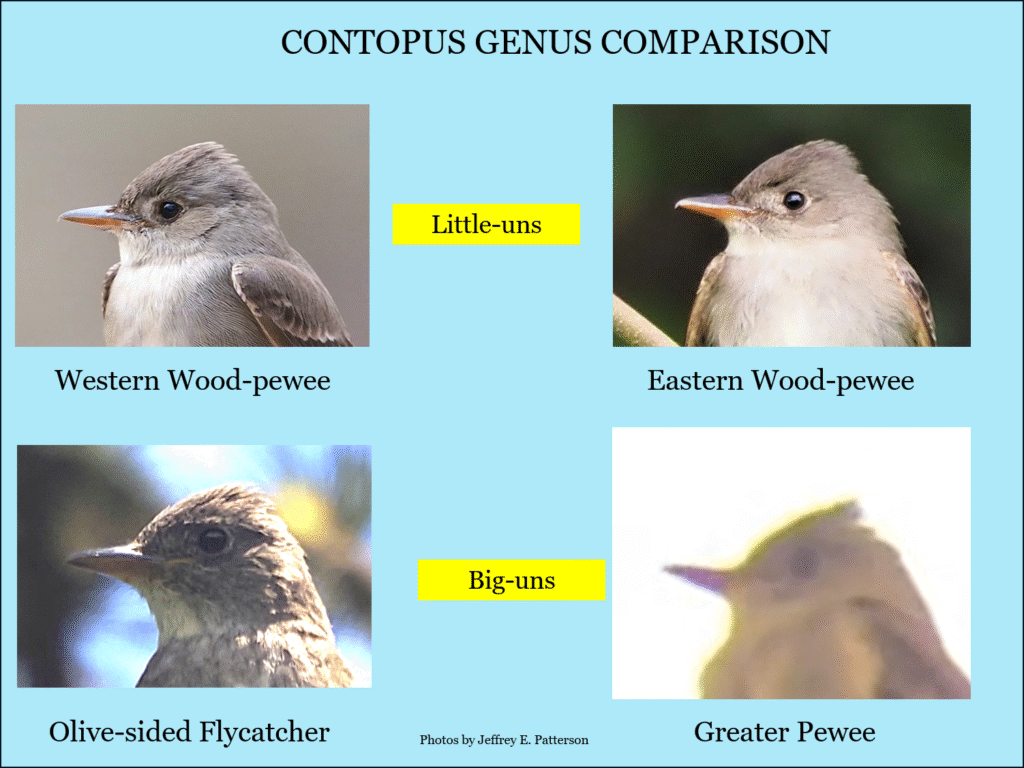
Sixteen species comprise the genus contopus. Most of these reside in Central and South America, with only four species regularly present in North America and Texas. The Greater Pewee is a TBRC Review List species with 45 accepted records. The Olive-sided Flycatcher is a fall and spring migrant and the Eastern and Western Wood-pewees are both migrants and summer nesters in Texas. These four flycatchers can be divided into “big-uns” and “little-uns” as shown below. The “little-uns”, the 2 Wood-Pewees, are the primary identification challenge in this group.
Greater Pewee
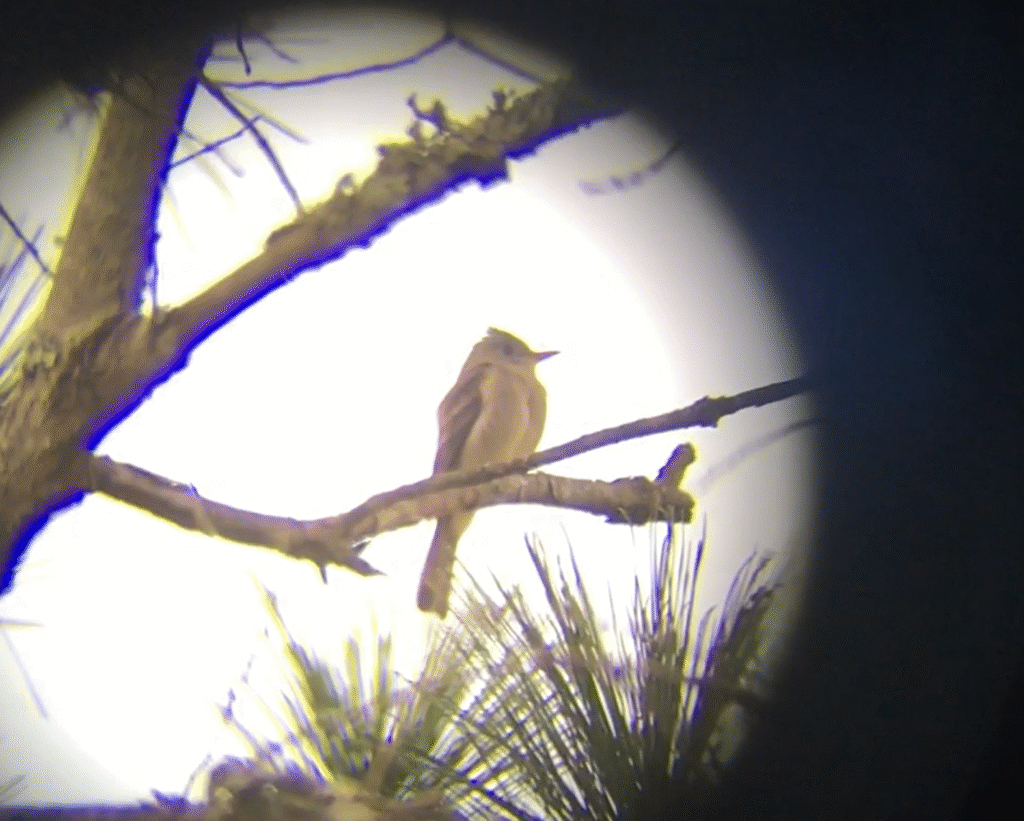
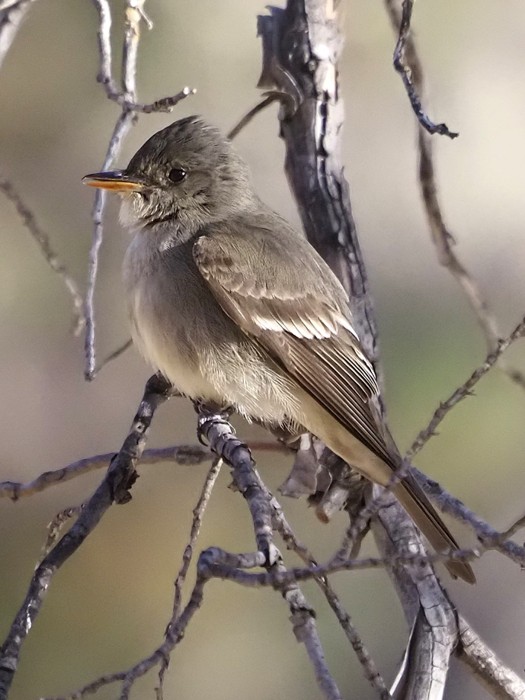
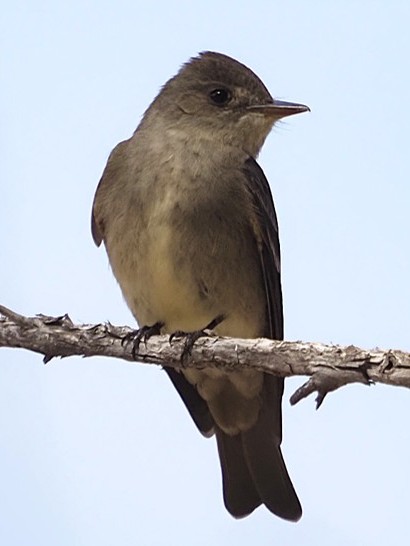
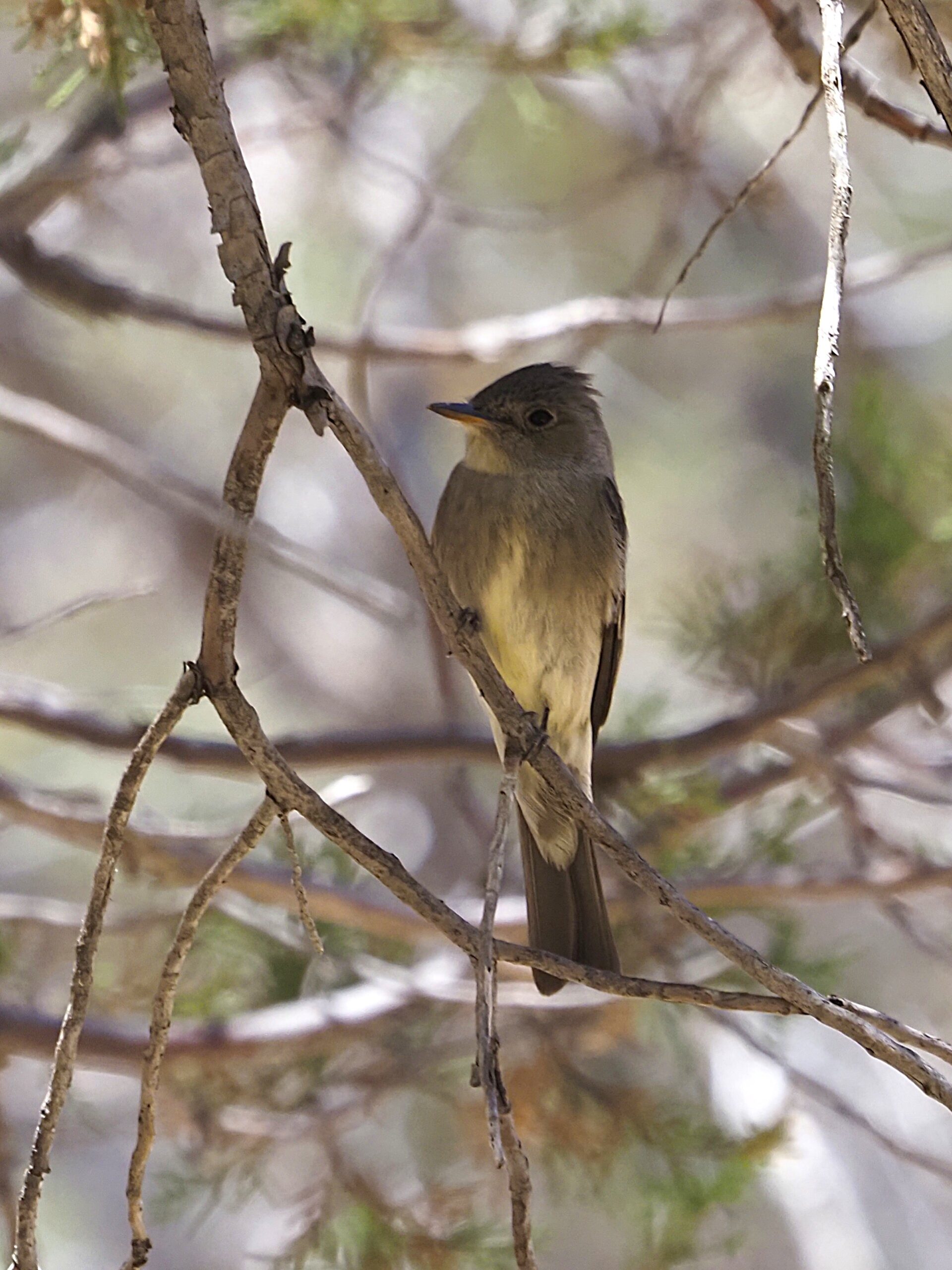
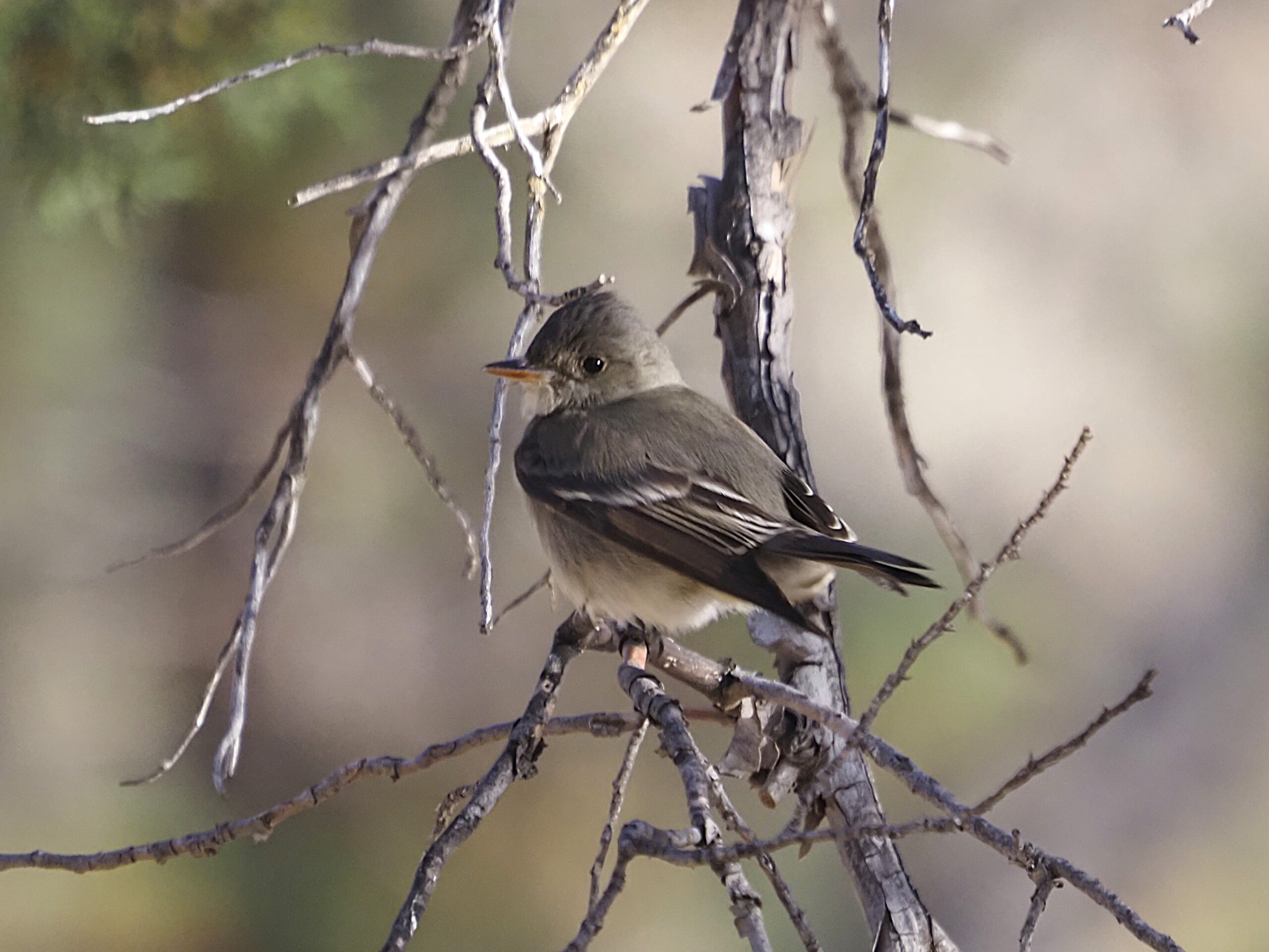
The Greater Pewee is more common in the mountains of Mexico, New Mexico and Arizona than in Texas. The most likely locations in Texas are the mountains of Big Bend and the Davis Mountains, although one has recently (2021-2023) spent several winters in a park in Houston. The Greater Pewee is distinguished by its large size, gray coloring, long primary projection and somewhat thin bill, with dull orange lower mandible. It might be confused with the similarly-sized Olive-sided Flycatcher, but it lacks the distinctive “vested” breast of that species and has a thinner bill and a longer tail. It is noticeably larger than the other 2 pewees and is known for its low, soft “pip, pip-pip-pip” call and its “jose, jose, jose maria” song. Sightings of this species in Texas should be photographed, documented and submitted to the TBRC. Because it is a rare in Texas, I only have a single poor, digi-scoped video of this species, from which I extracted the still photo below.
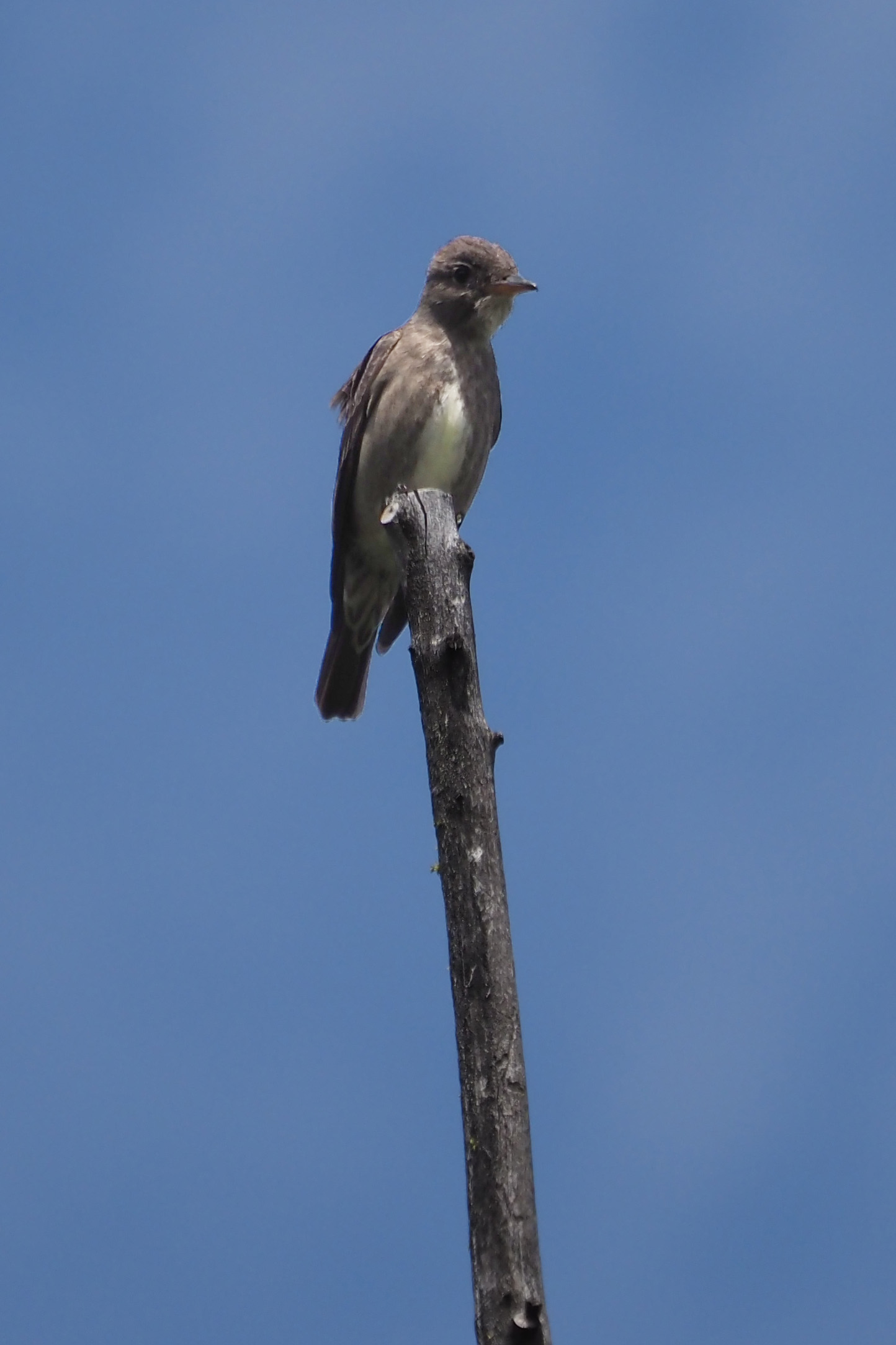
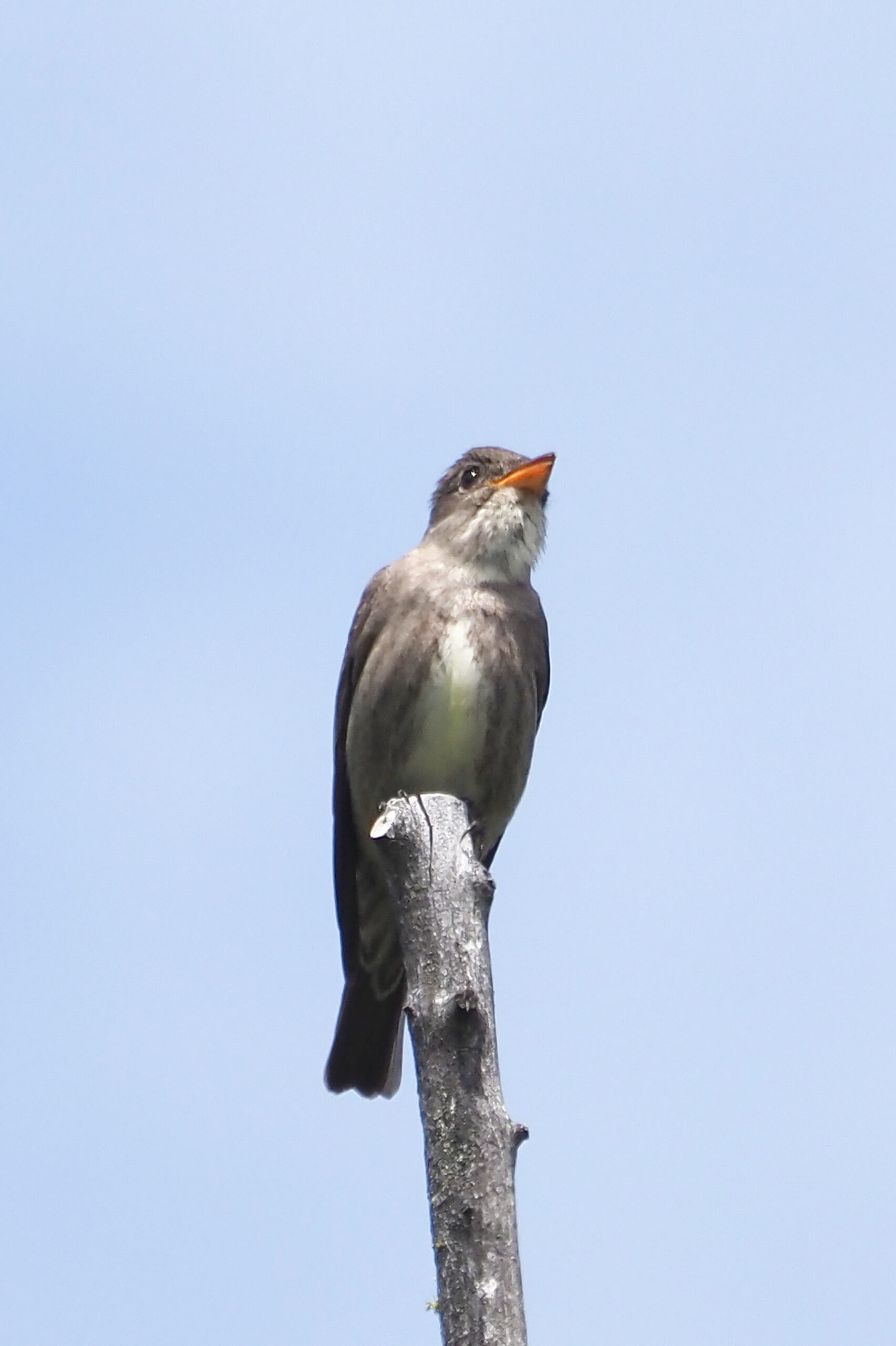
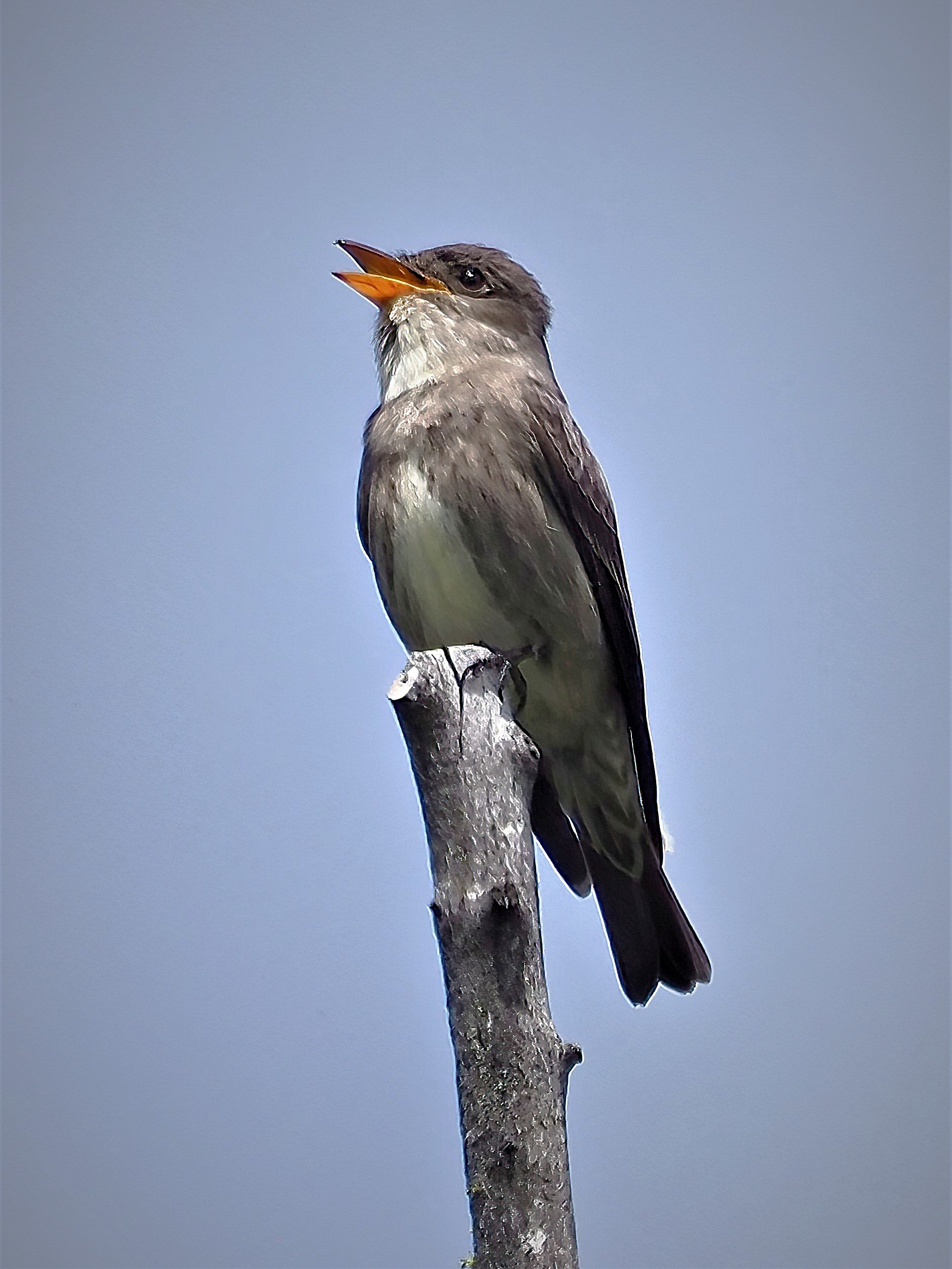
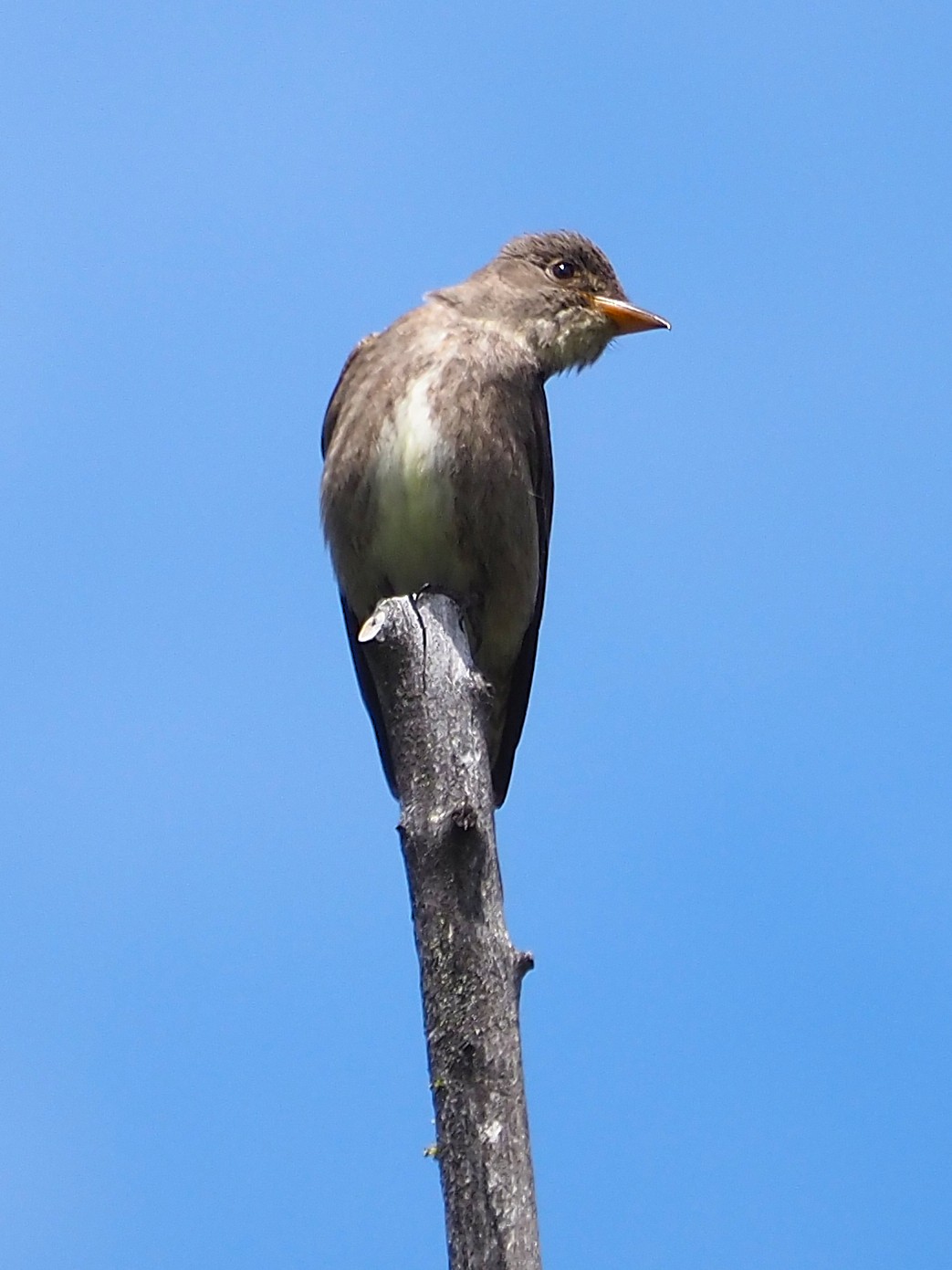
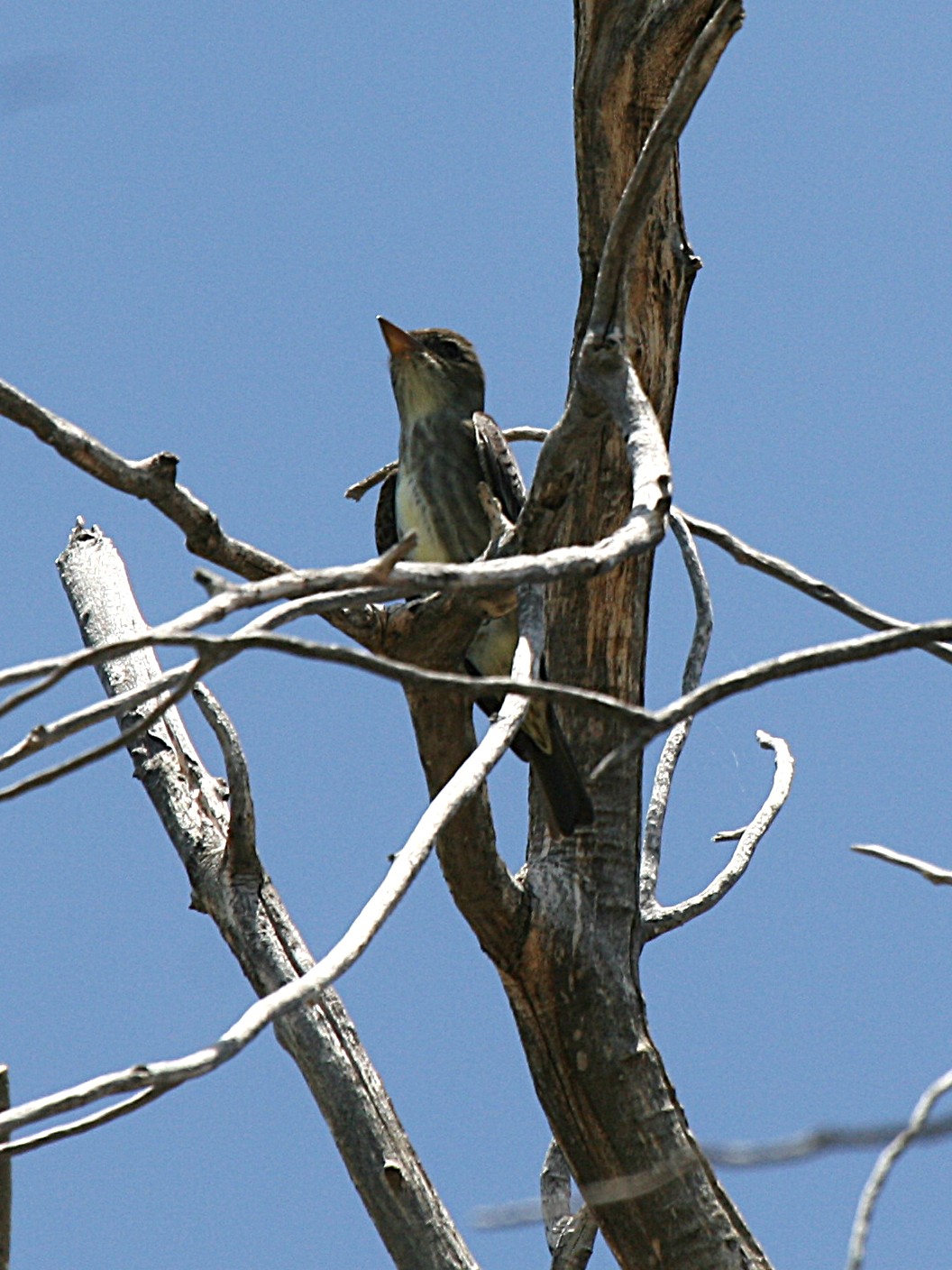
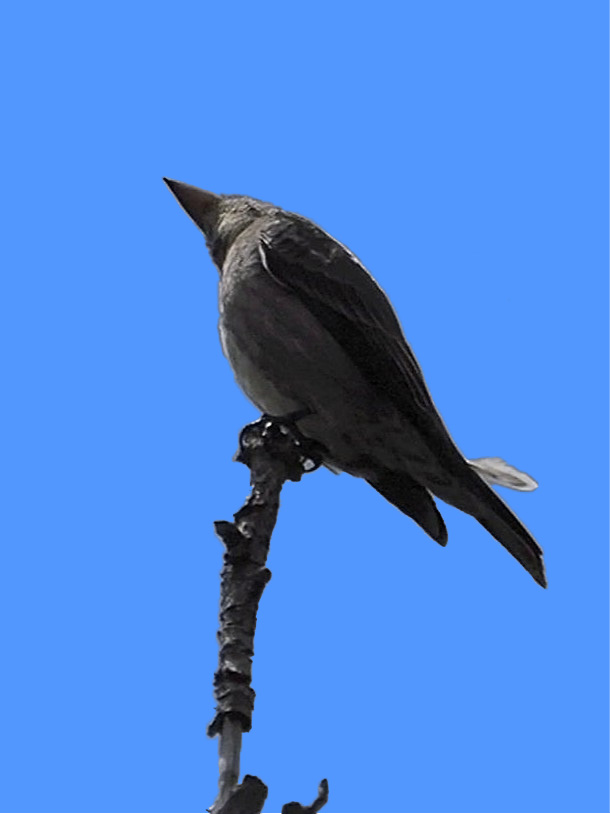
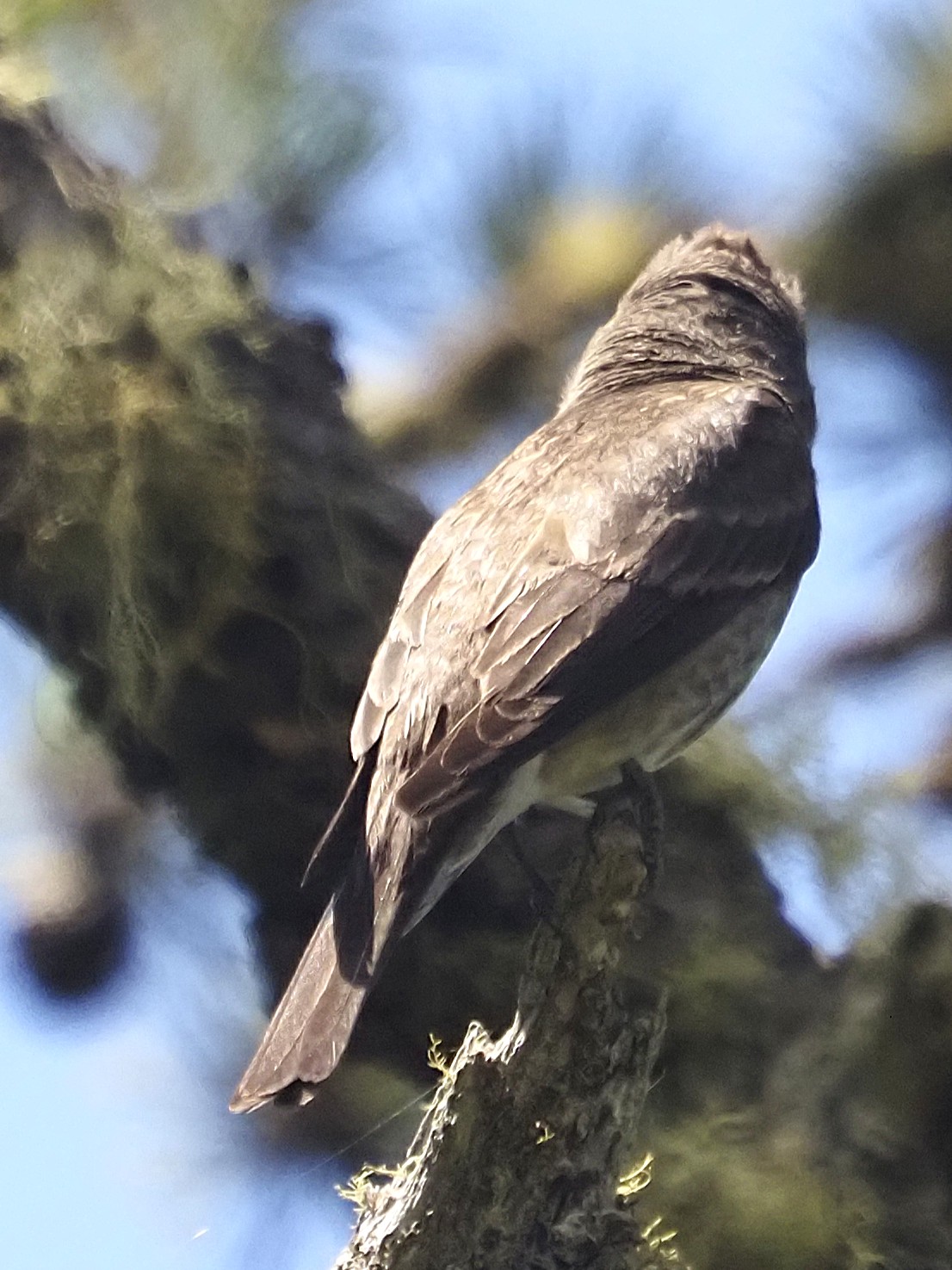
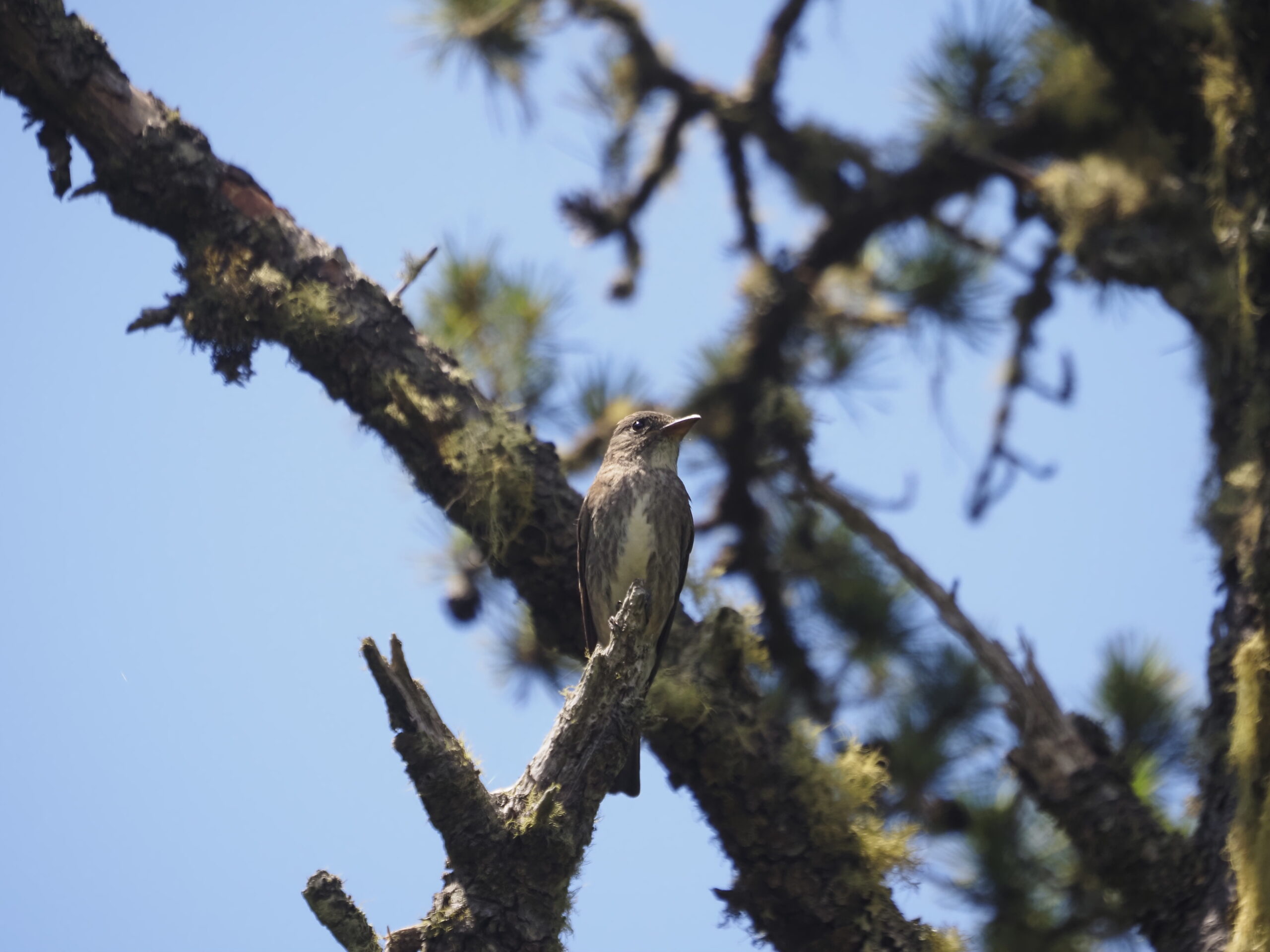
Olive-sided Flycatcher
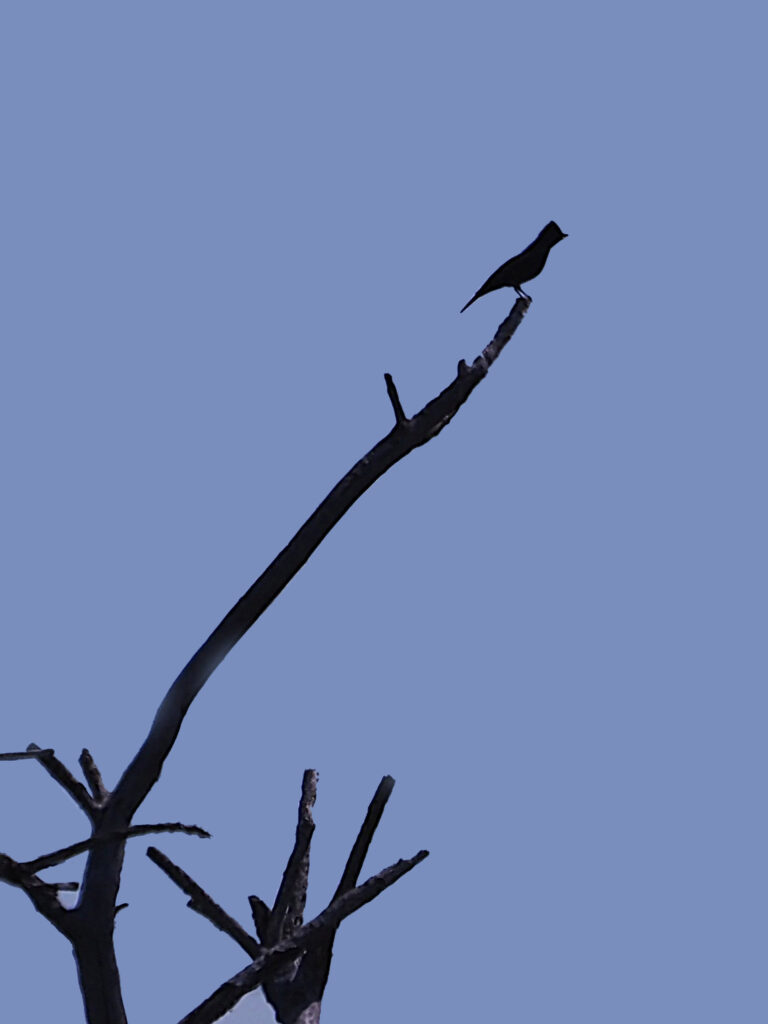
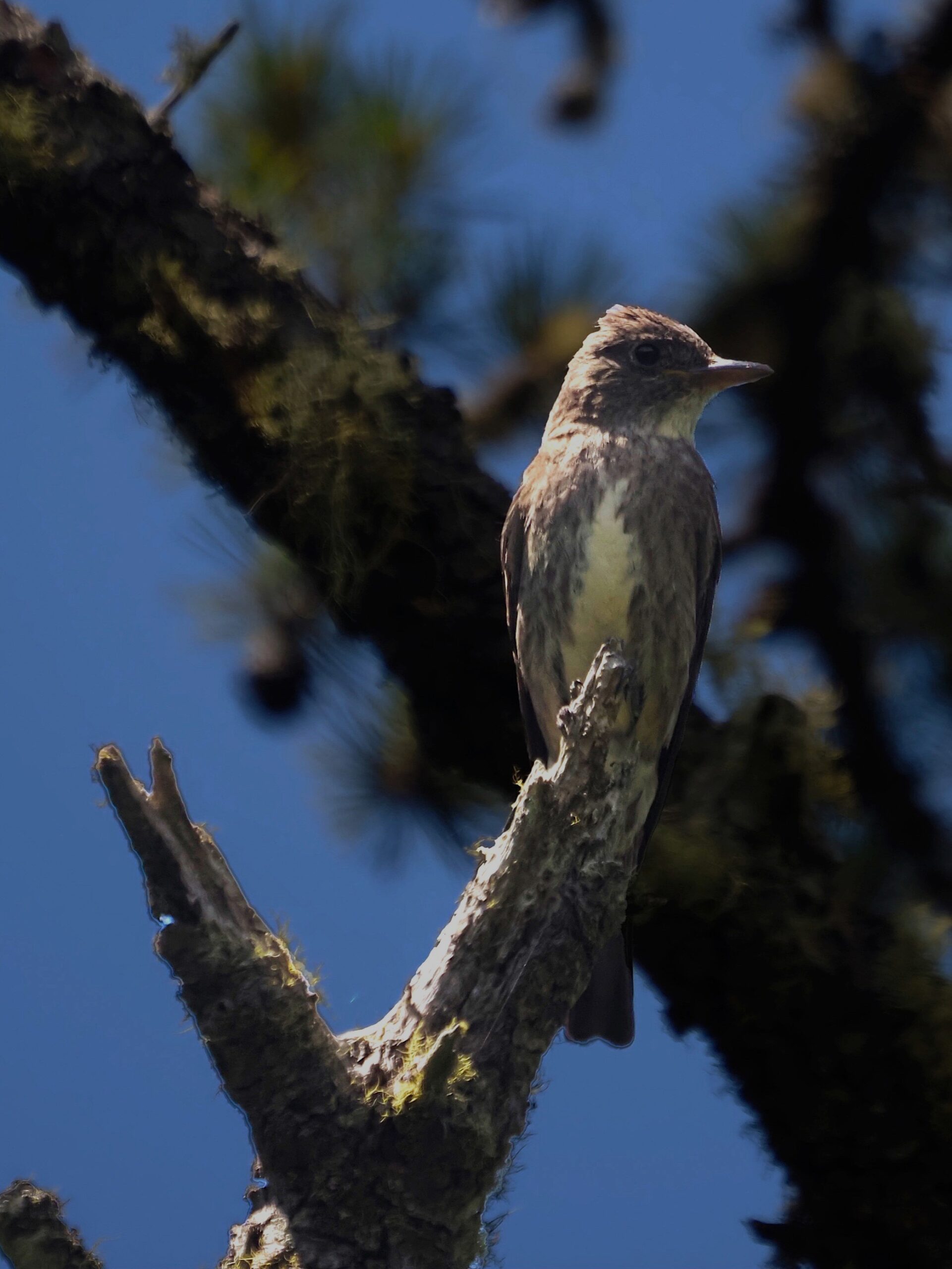
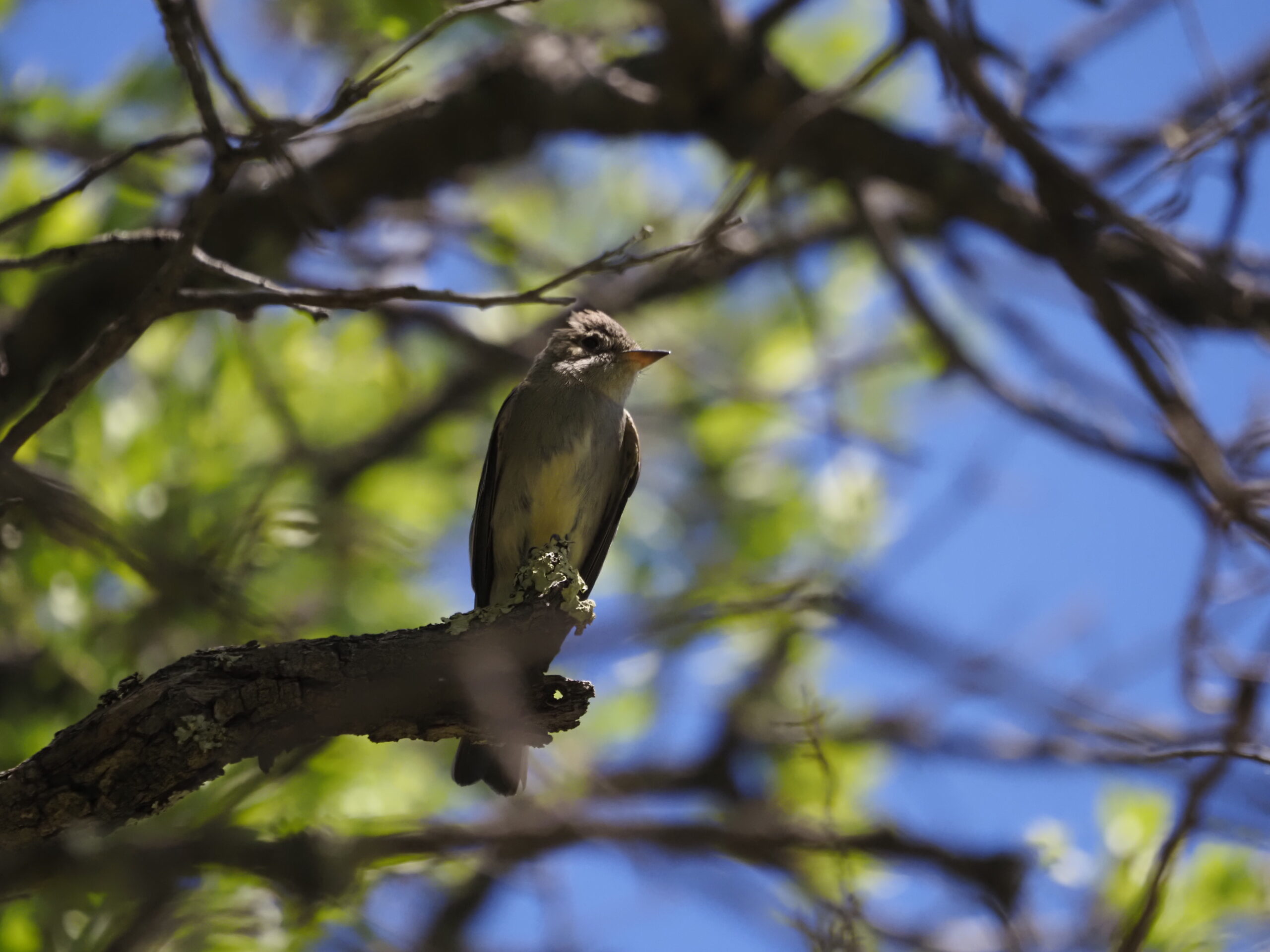
As a fairly distinctive species, the Olive-sided Flycatcher is not a difficult identification. It is a large flycatcher with a white throat and belly, a long primary projection, and a very strong “vested” look. Its bill is dark and thick and it’s lower mandible is usually a dull orangish. This species is frequently found on high exposed perches as in the photo below. Its tail is shorter that that of the similarly-sized Greater Pewee. Sometimes white patches are exposed on the back, at other times they are covered by the folded-wing. The Olive-sided’s “quick, three beers” song is diagnostic.
Wood-Pewees
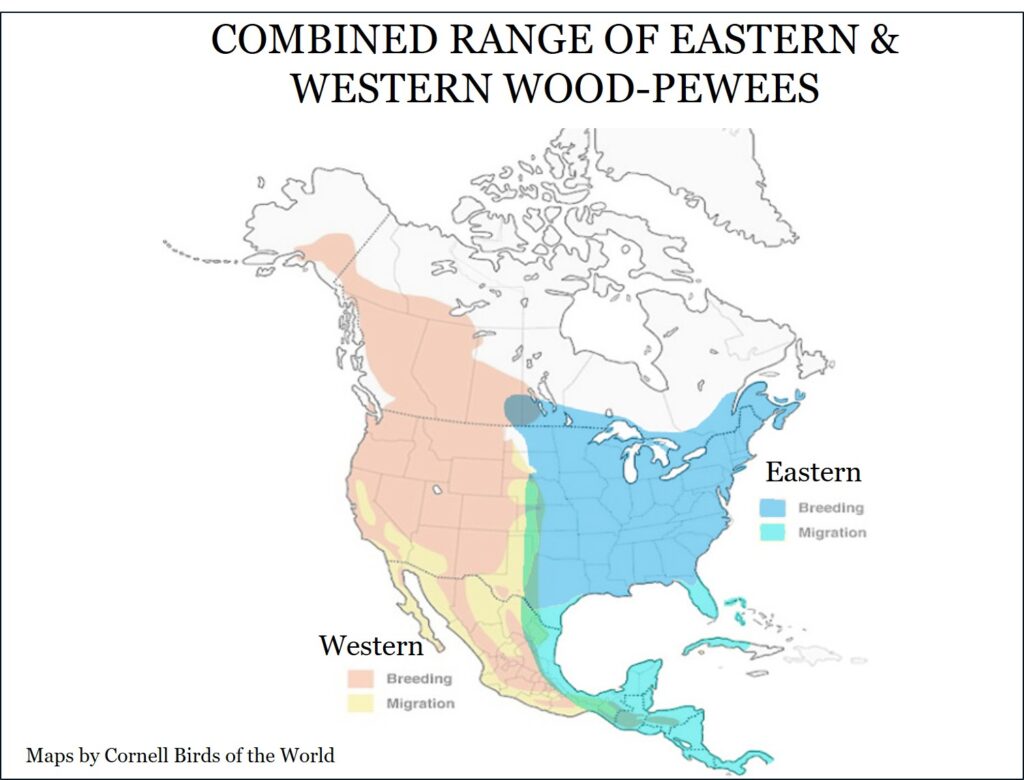
Although much of the fun of birding is finding out-of-range individuals, the normal range of species is where they are found a very large percentage of the time. So it is important to know a species range and consider it during identification. The normal range of the 2 Wood-Pewees is shown in the combined range map below.
Like other flycatchers, Pewees are best identified by vocalizations. The Eastern Wood-Pewee’s song is a long drawn out, slightly slurred “PEE-o-weeeEEE” with the last “EEE” slightly rising in pitch. I characterize the Western Wood-Pewee’s song as a quick, burry “know-what-I-mean—–Peee-weeer” frequently repeated. The halves of this song may also be given individually.
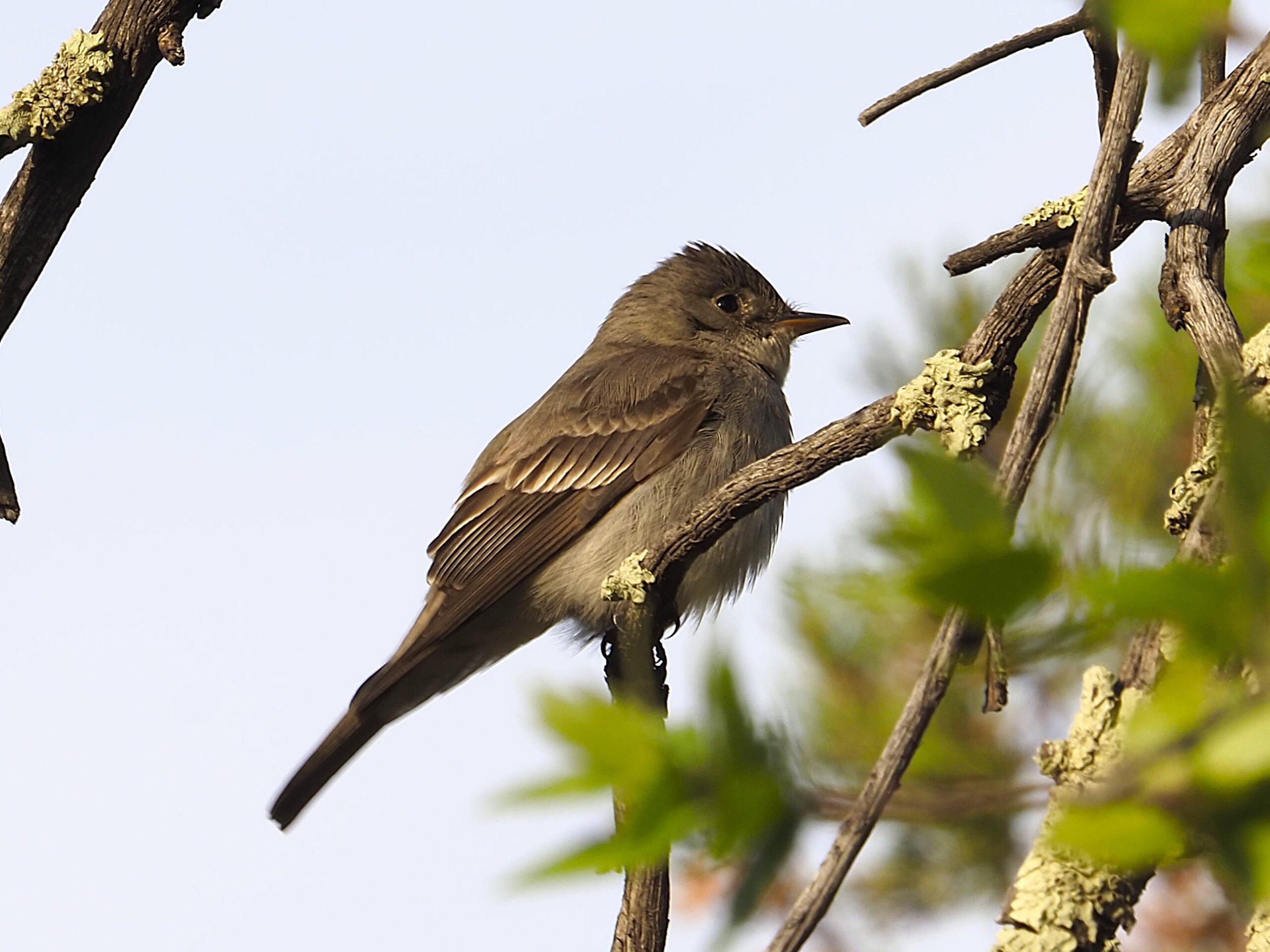
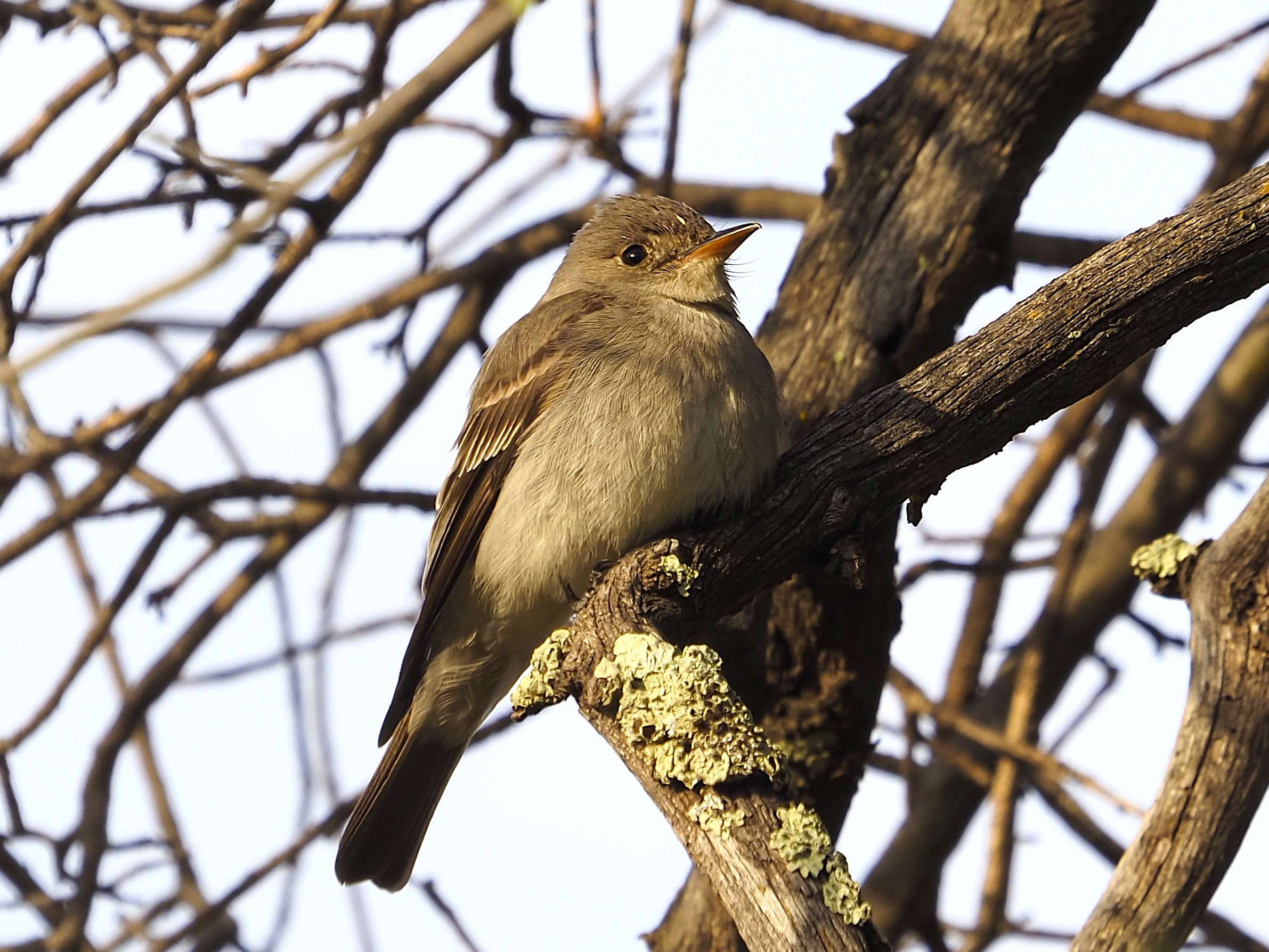
The first thing to look for with a Pewee sighting is to make sure it’s not an Empid, and the first thing to note in this regard is that Pewees have very long primary projections compared to Empids. Empids usually have more prominent wing-bars and most species have more noticeable eye-rings than Pewees. Pewees wing-bars are dull and their eye-rings are inconspicuous or non-existent. All of these points can be seen in the photos below.
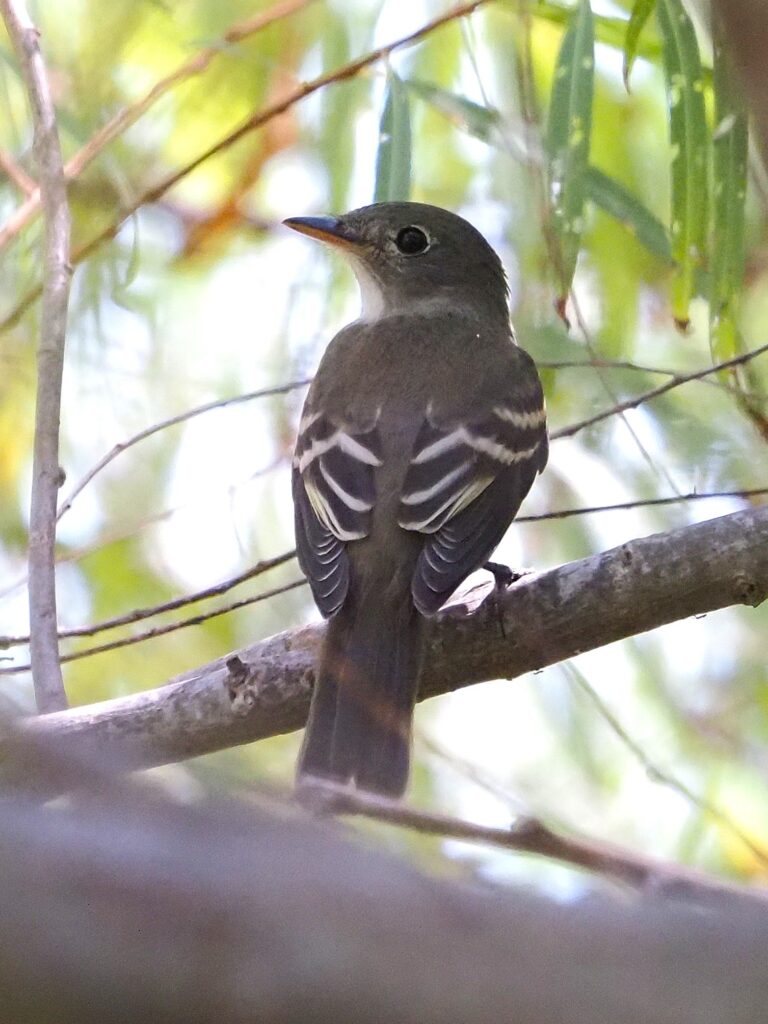
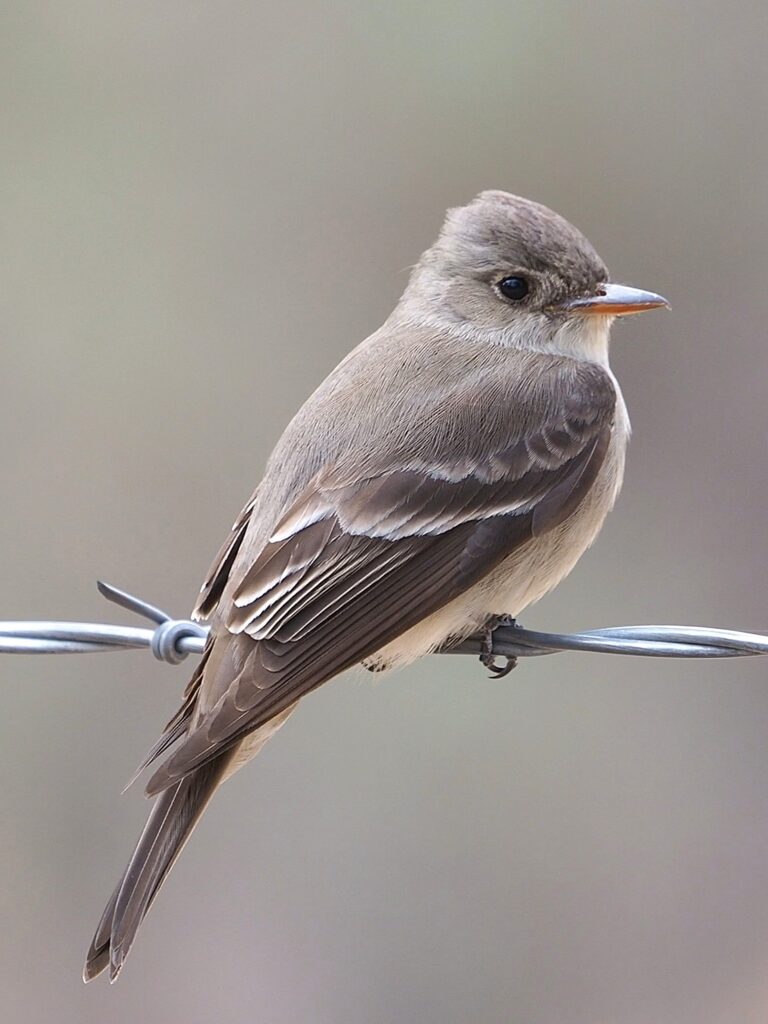
The photos in the gallery below show several of the more “pewee-like” Empid species — the Gray Flycatcher, “Trails” Flycatcher, and the Acadian Flycatcher. Note the primary projection, wing-bar and eye-ring intensity, the crest, the width of the tail, and the overall structure of Empids vs Pewees.
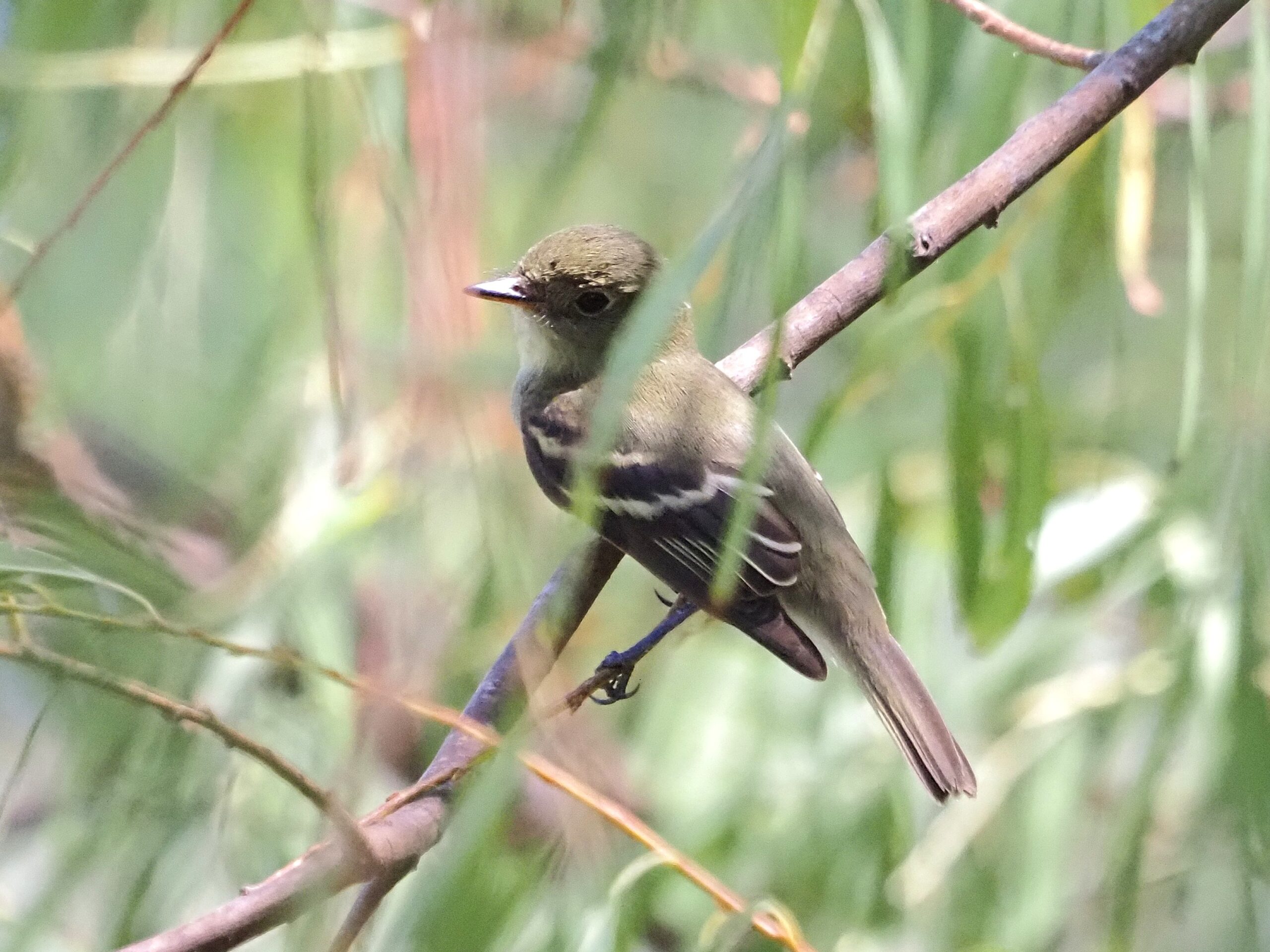
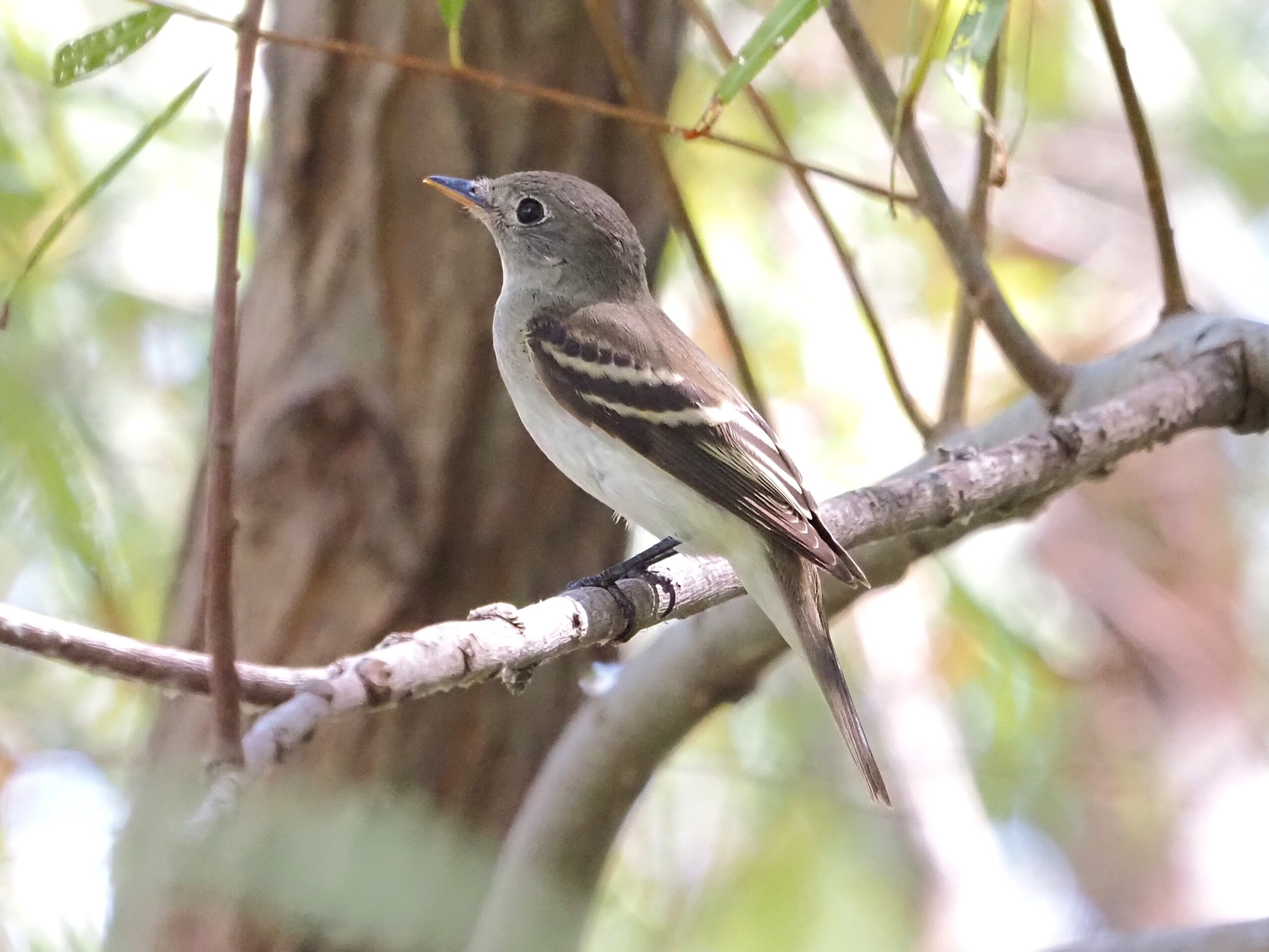
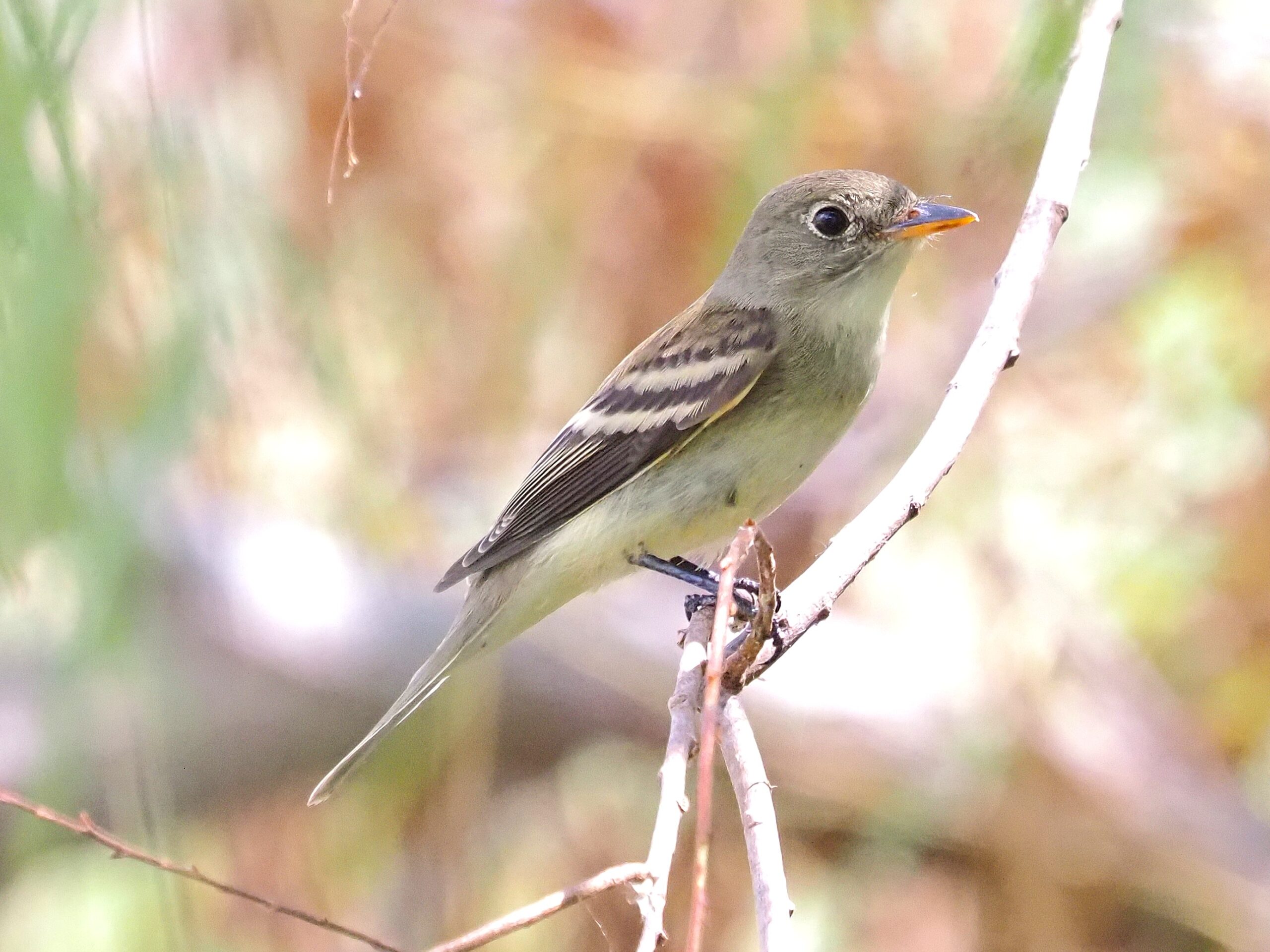
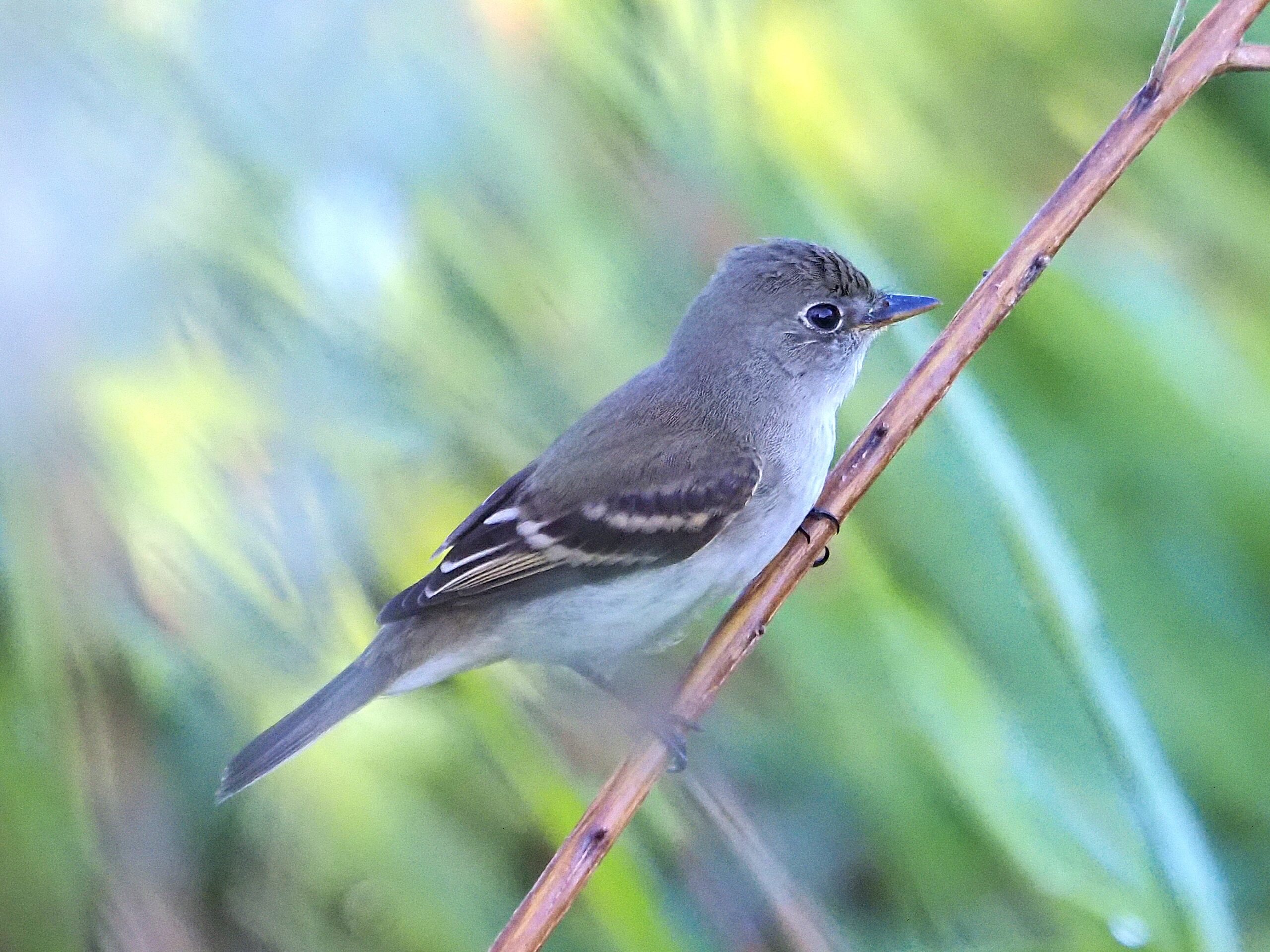
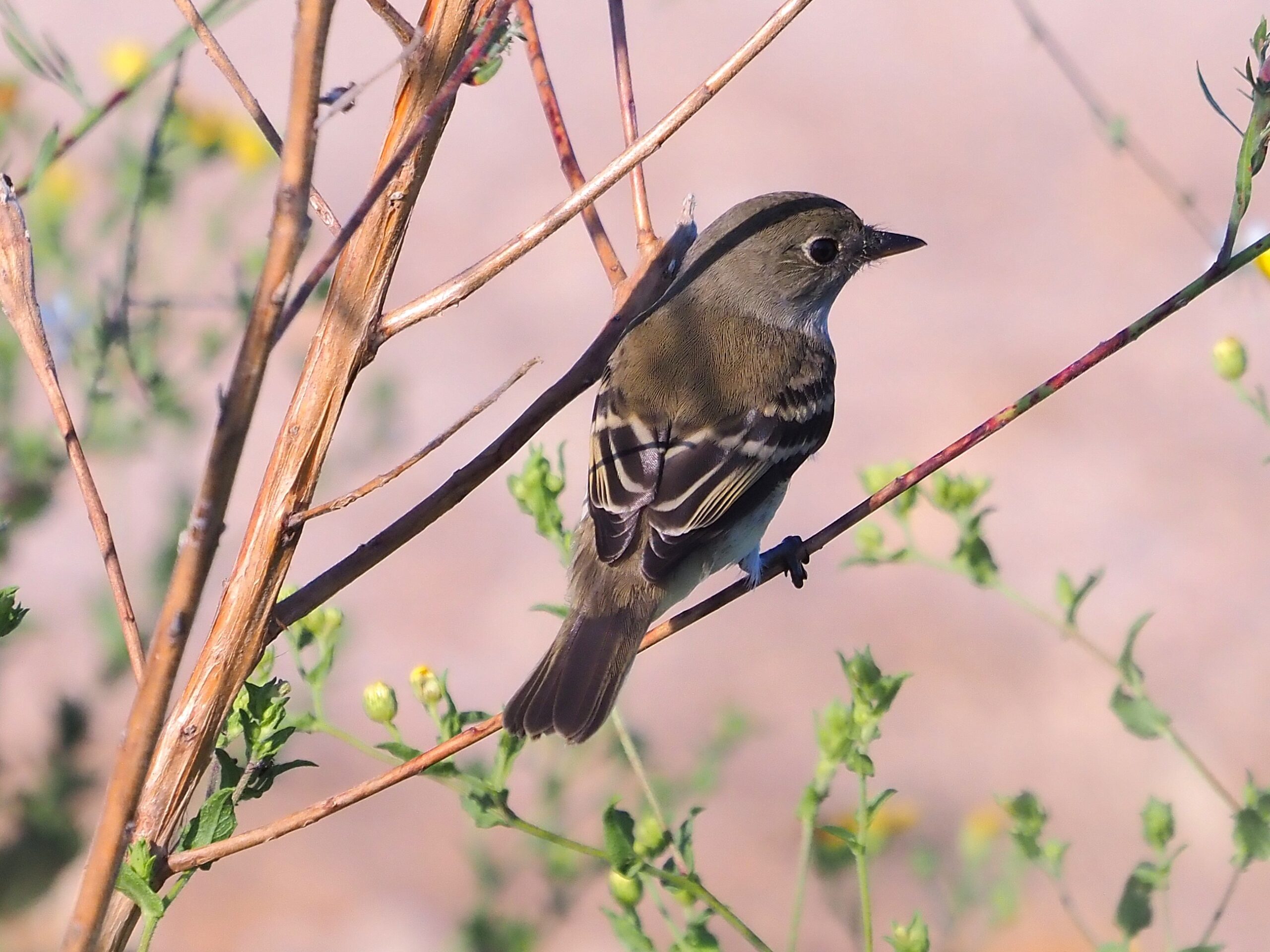
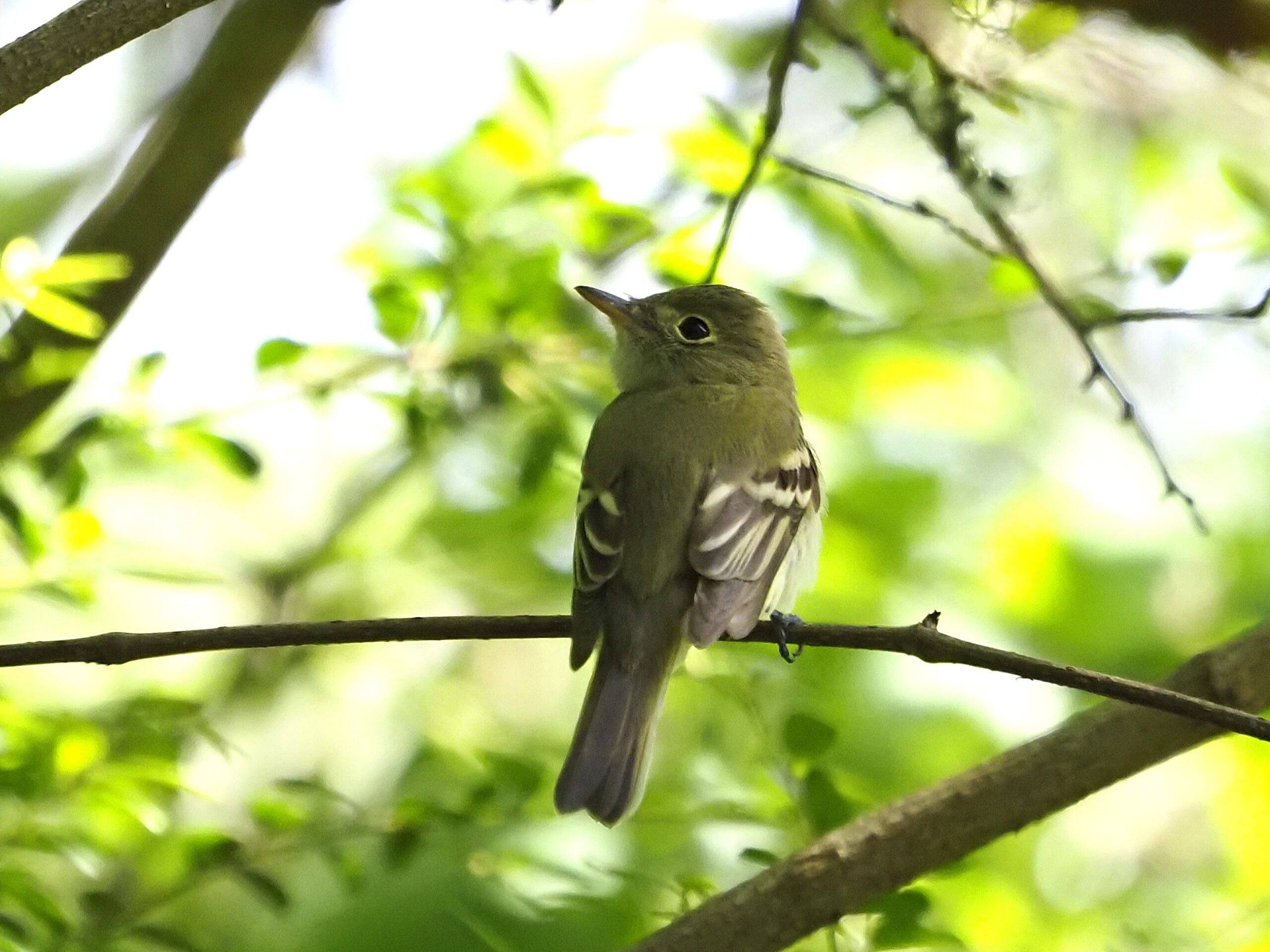
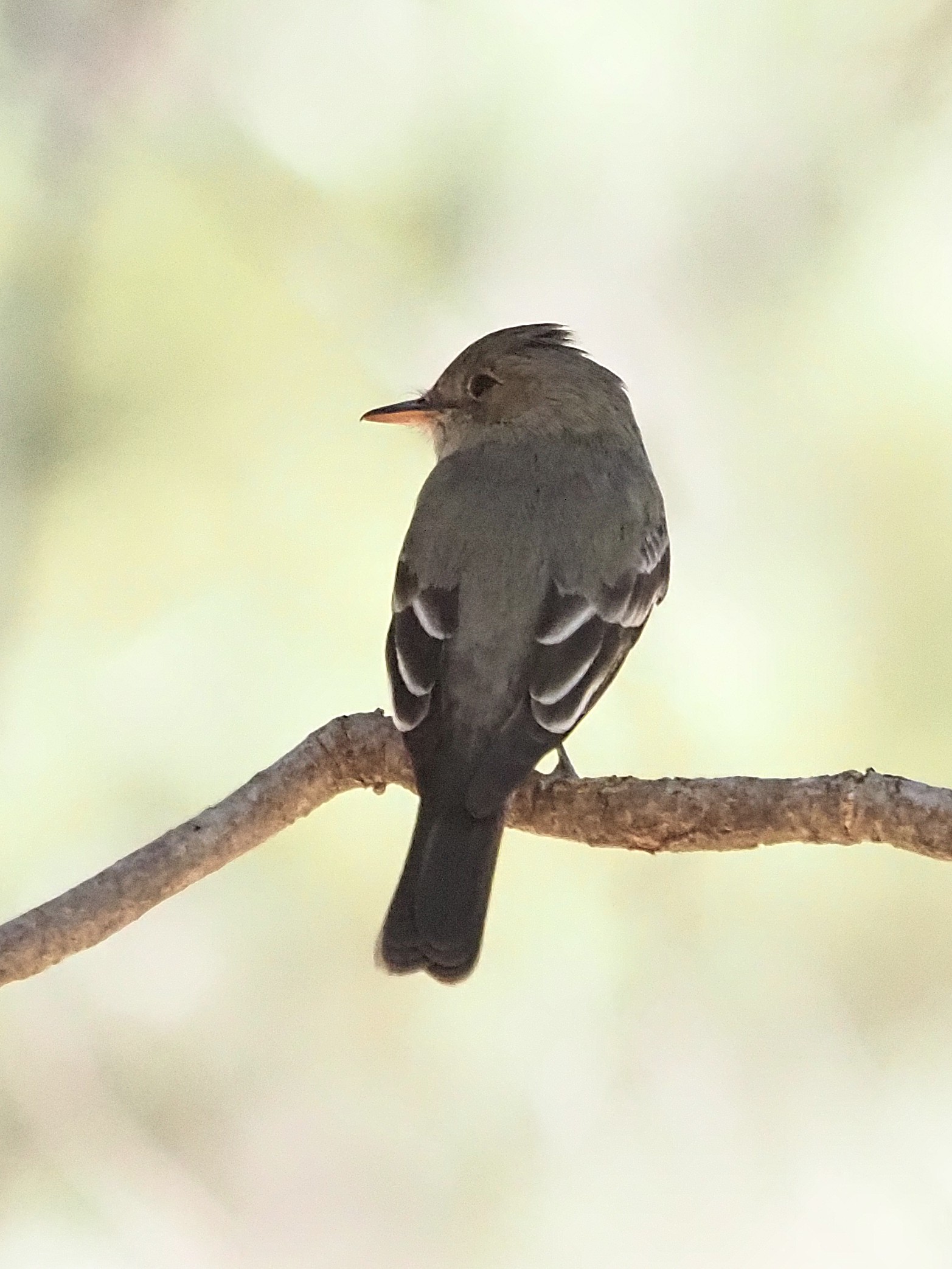
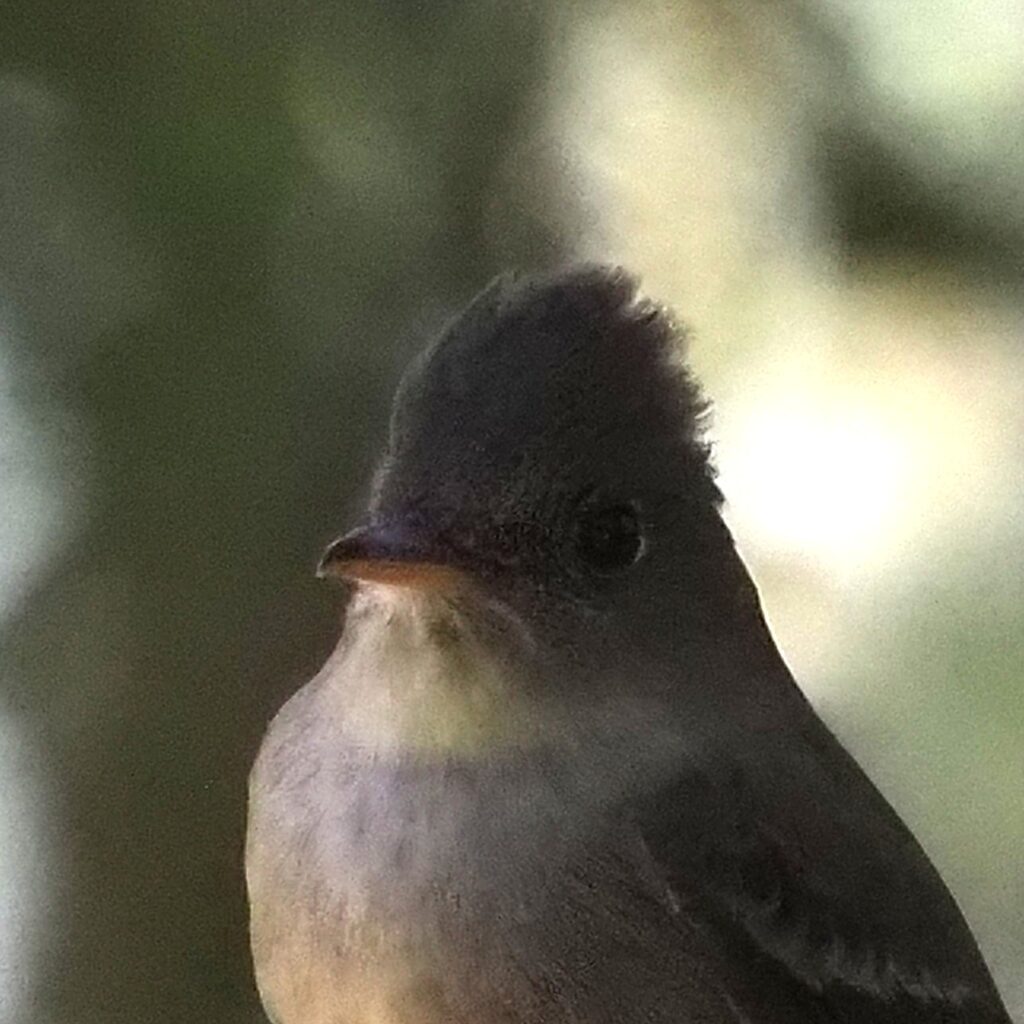
Pewees rarely flick their tail as many Empids do. They are also famous for returning repeatedly to the same perch while fly catching. Pewees often, but not always, have a faint to emphatic vested-look. All of the contopus can show a crested-look, but be aware that the crest can be raised or lowered as shown below.
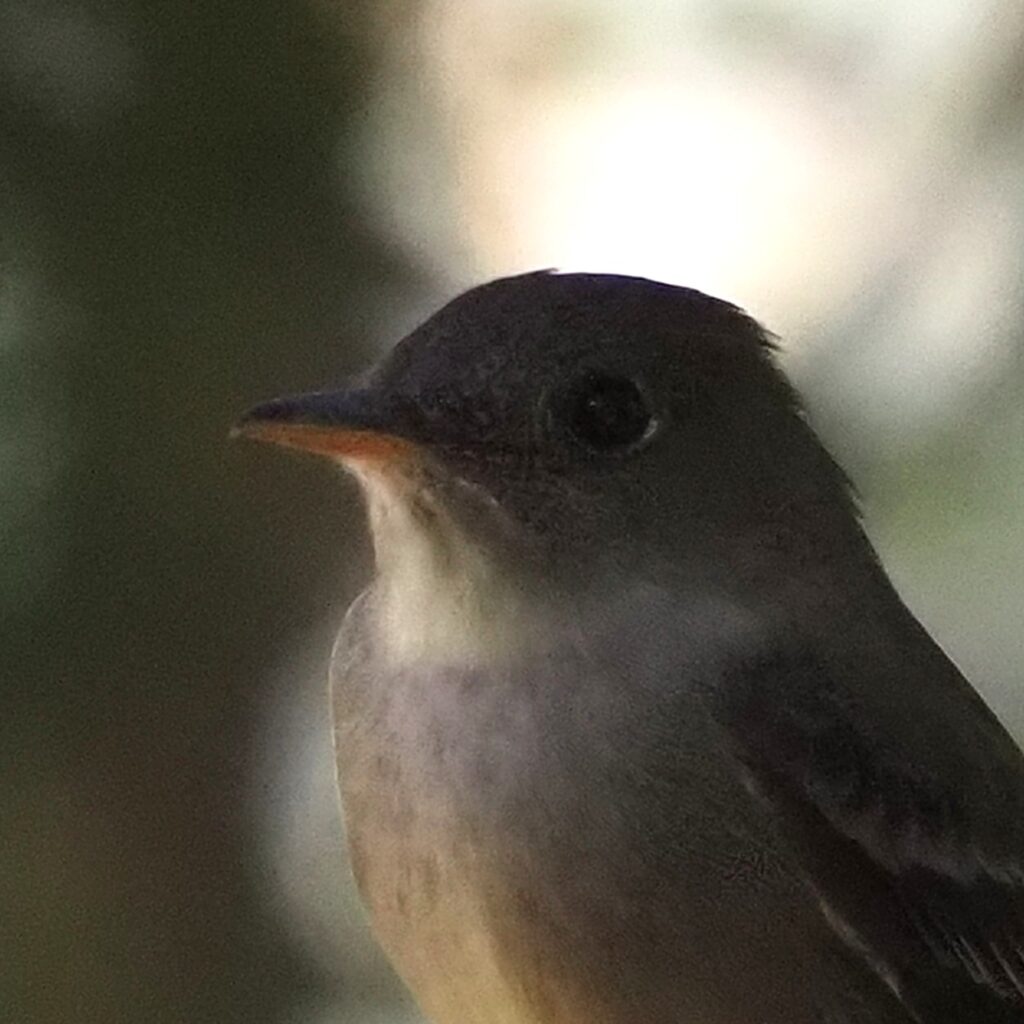
Eastern vs Western Wood-Pewee
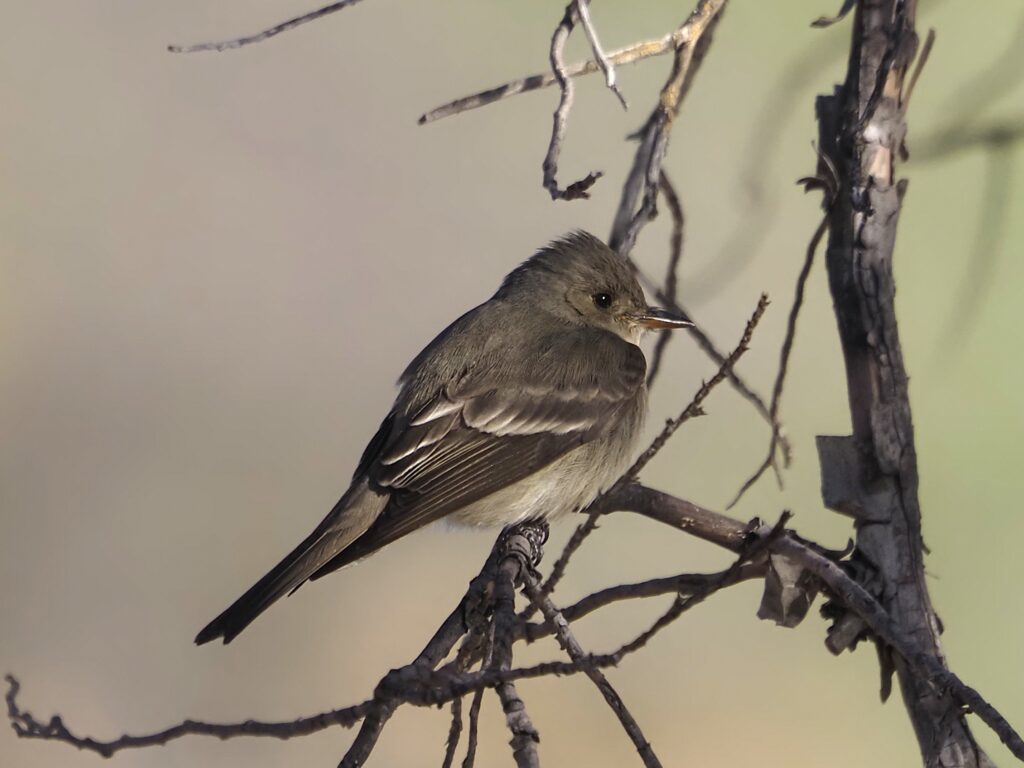
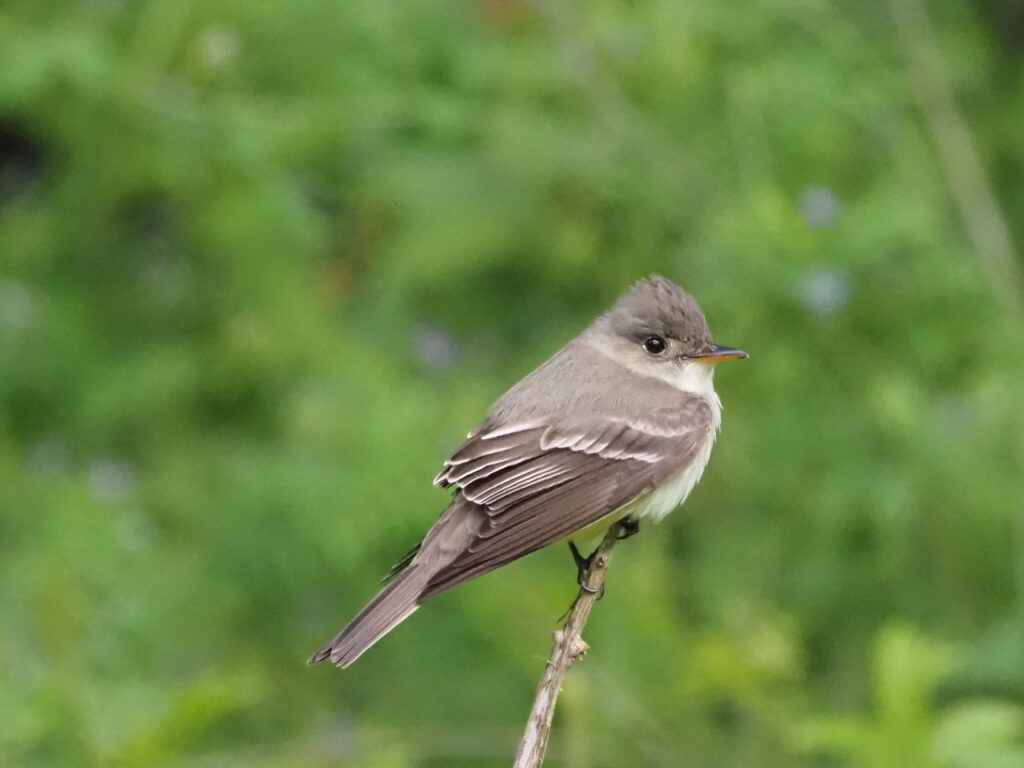
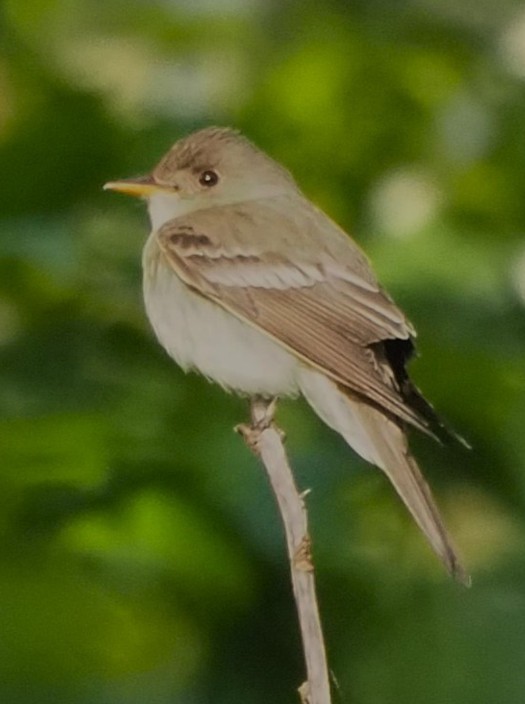
Both Wood-Pewees have dull wing-bars, however, wing-bars on the Eastern tend to be slightly brighter and are almost always of similar boldness, while the lower wing-bar is brighter than the upper on the Western.
Primary Projection & Tail Projection
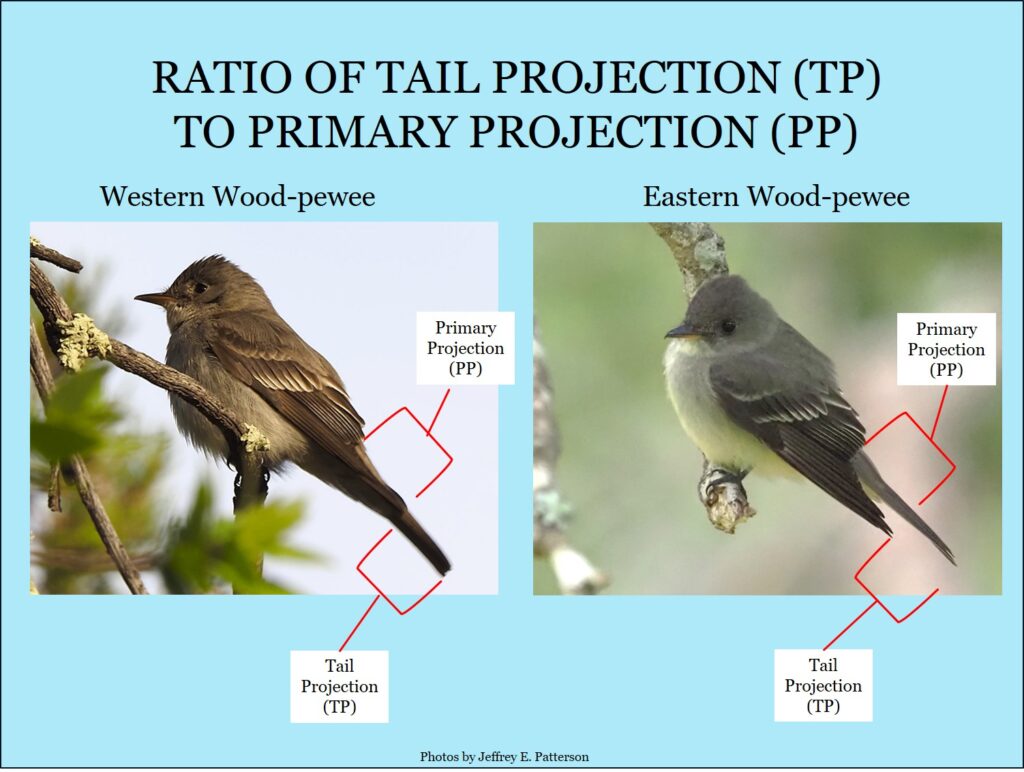
According to Lee & Birch, “although there is overlap, Eastern tends toward a slightly shorter primary projection and a longer tail than Western: ratio of the primary projection (PP) to tail projection (TP) is greater in Western than in Eastern“. However, in their 2008 article for Birding Magazine, (Field Identification of Western & Eastern Wood-pewees; Lee, Cin-Ty; Birch, Andrew; Eubanks, Ted Lee. Birding Magazine; Sept/Oct 2008) they describe this field mark as “…perhaps too subtle to be of direct use in the field…”. I find this a difficult determination to make even with photographs, therefore, this may be an in-the-hand measurement that could be made. In their more recent book they describe the Western as “…subtly shorter tailed than Eastern” which may be a more manageable field mark (with emphasis on “field”).
Color of Lower Mandible
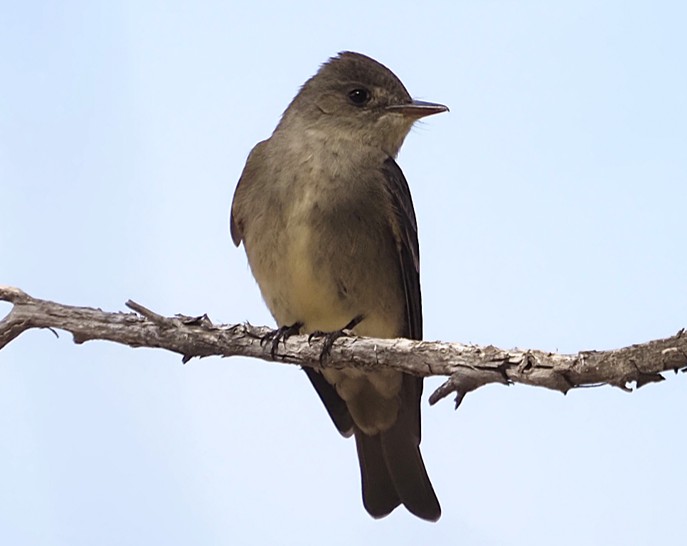
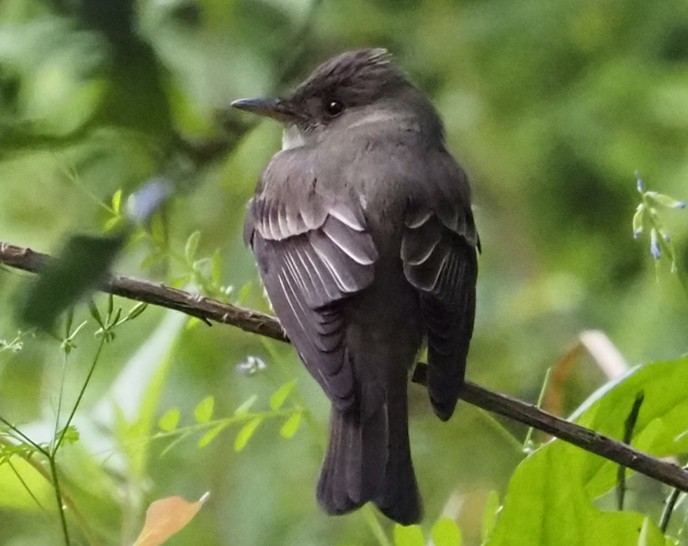
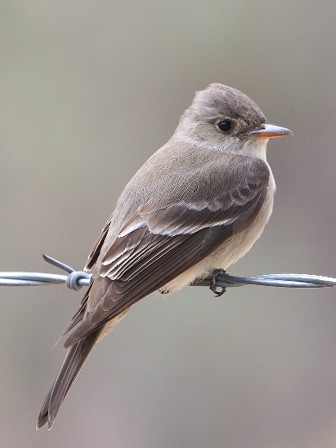
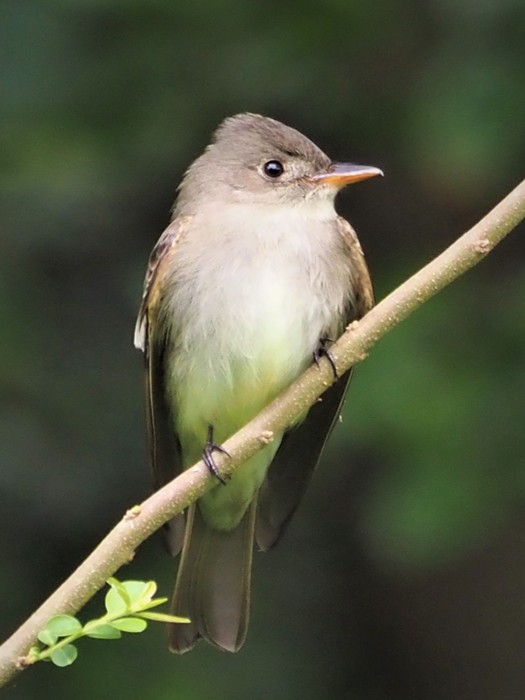
The lower mandible is said to be usually dark in Western and usually orange in Eastern. I have no doubt this is true given a large enough sample size, but I found no trouble finding counter-examples in my own photos for each species. (Note: it is possible that my photographs are miss-identified by myself. However, the individuals were photographed at the far extremes of their ranges in Texas: Western photographed in Davis Mountains, Eastern photographed in High Island).
Posture While Perched
Lee, Birch & Eubanks made a survey of photographs and introduced this field mark in their 2008 article (mentioned above). They describe that the Western tends to hold its tail in-line with its back when perched (80% of the time in photos reviewed), while the Eastern tends to hold its tail kinked-downward, or occasionally kinked-upward from the plane of its back and primaries (67% of the time in photos reviewed).
Looking at my own ~200 photos of each species (many of them multiple photos of the same individuals), I find 194 of ~200 examples of a Western holding the tail in-line with the back & wings and 24 of ~200 examples of Eastern having a kinked-tail in relation to the back & wings. So my informal survey supports Lee, Birch & Eubanks’ field mark, though at a lower percentage than they found for the kinked-tail of the Eastern.
Darkness and Contrast of Plumage
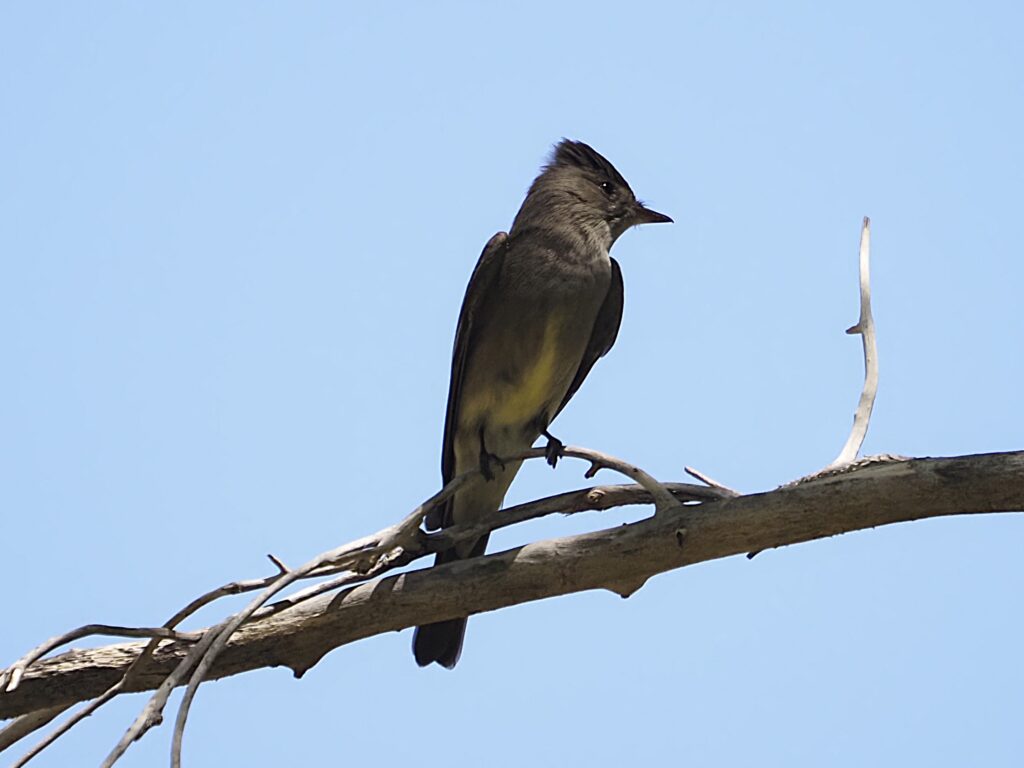
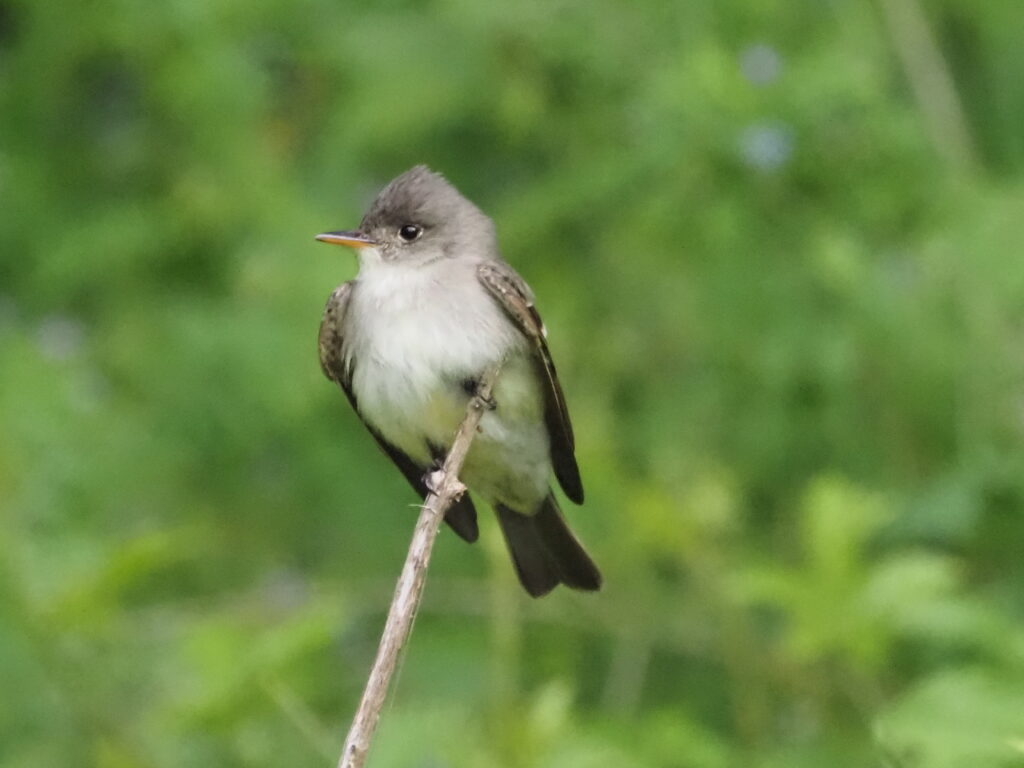
Another generalization that tends to be true, but not always, is the general coloration of the 2 pewees: Western tends to be darker and Eastern tends to be paler in the underparts (throat, chest, belly…). This results in more contrast for the Eastern between upper and lower parts.
Final Identification Points
Several final points of identification: Both Pewees have relatively short legs, dark faces and smudges on the undertail coverts.
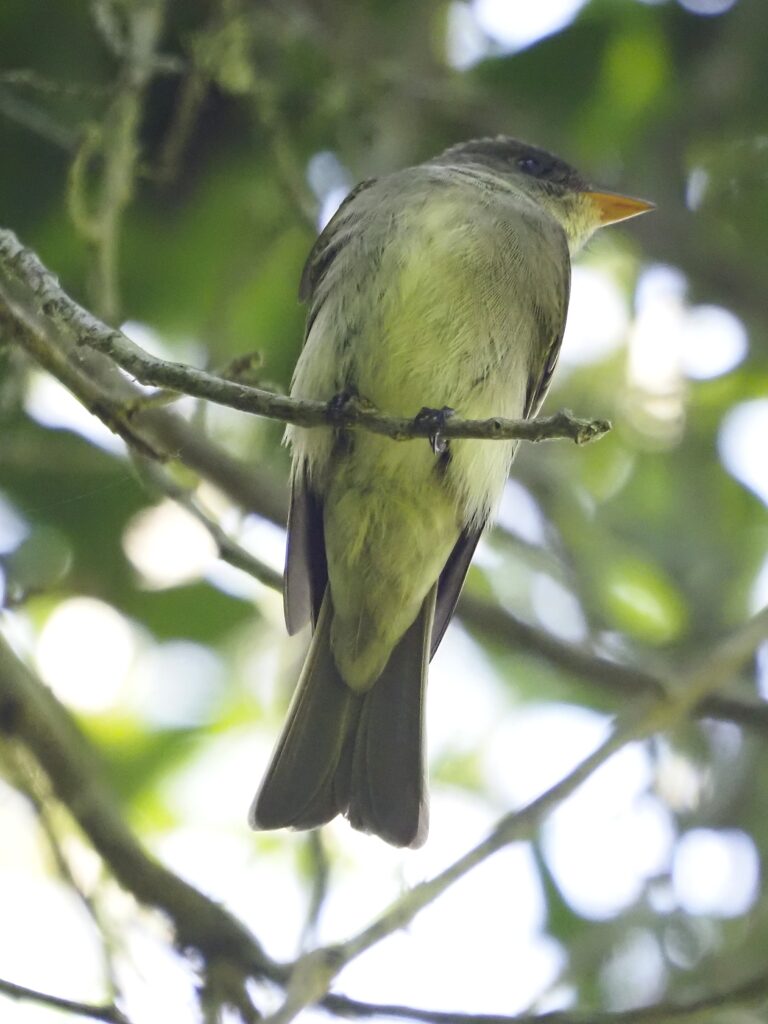
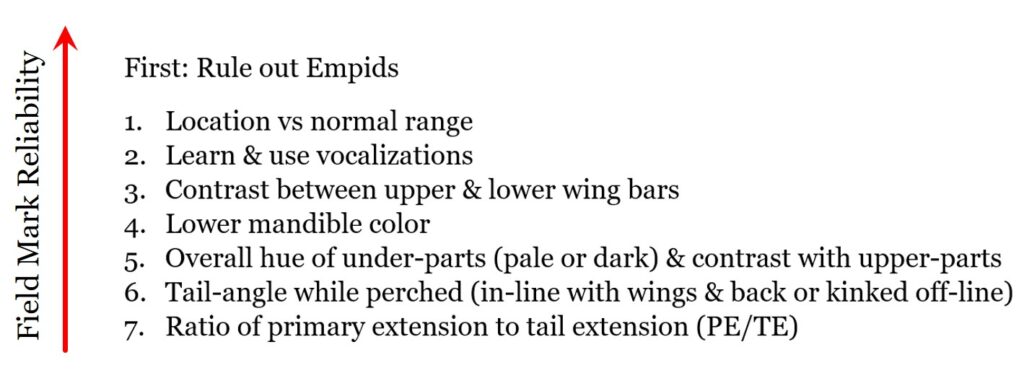
Wood-Pewee Identification Summary
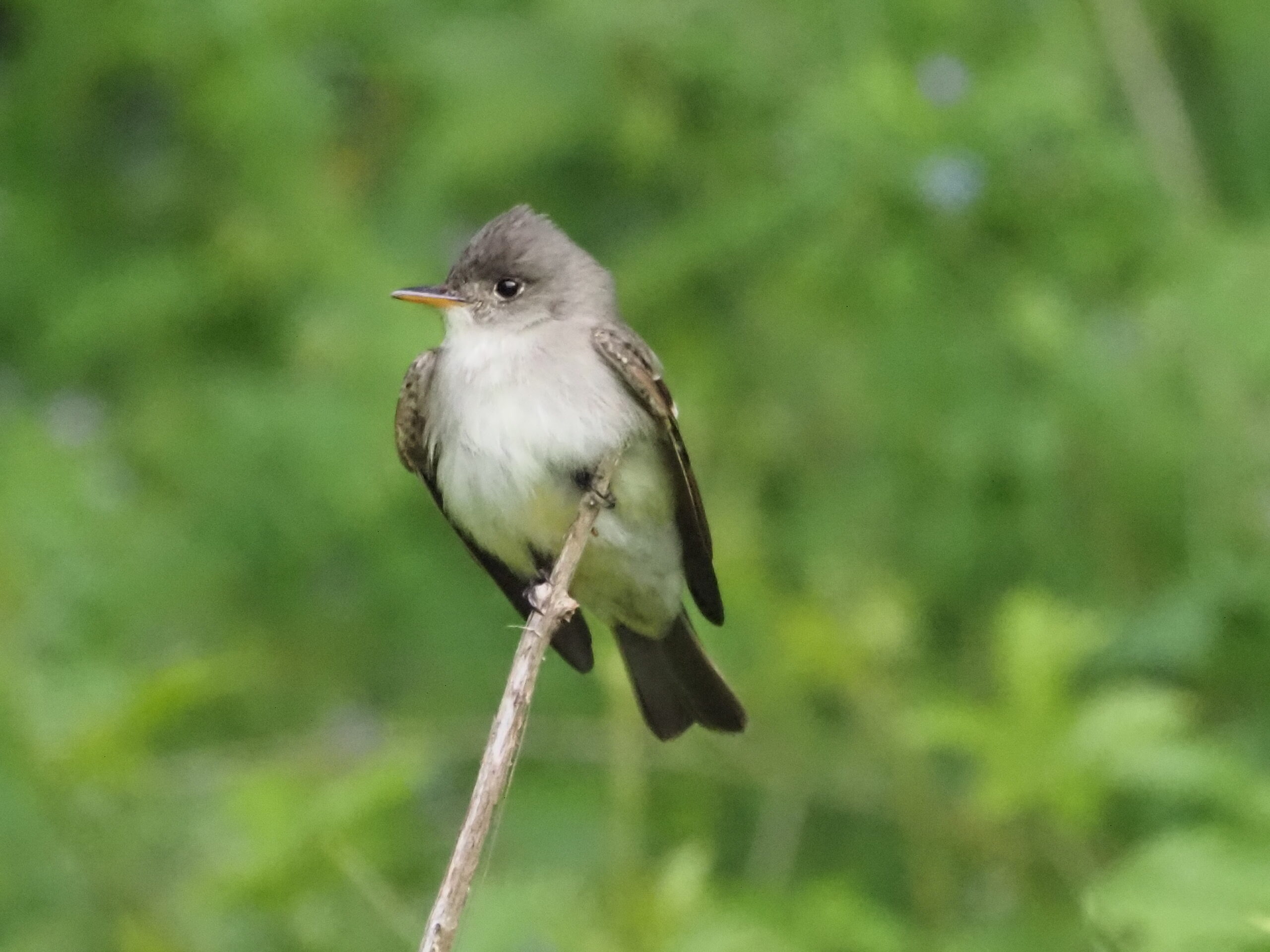
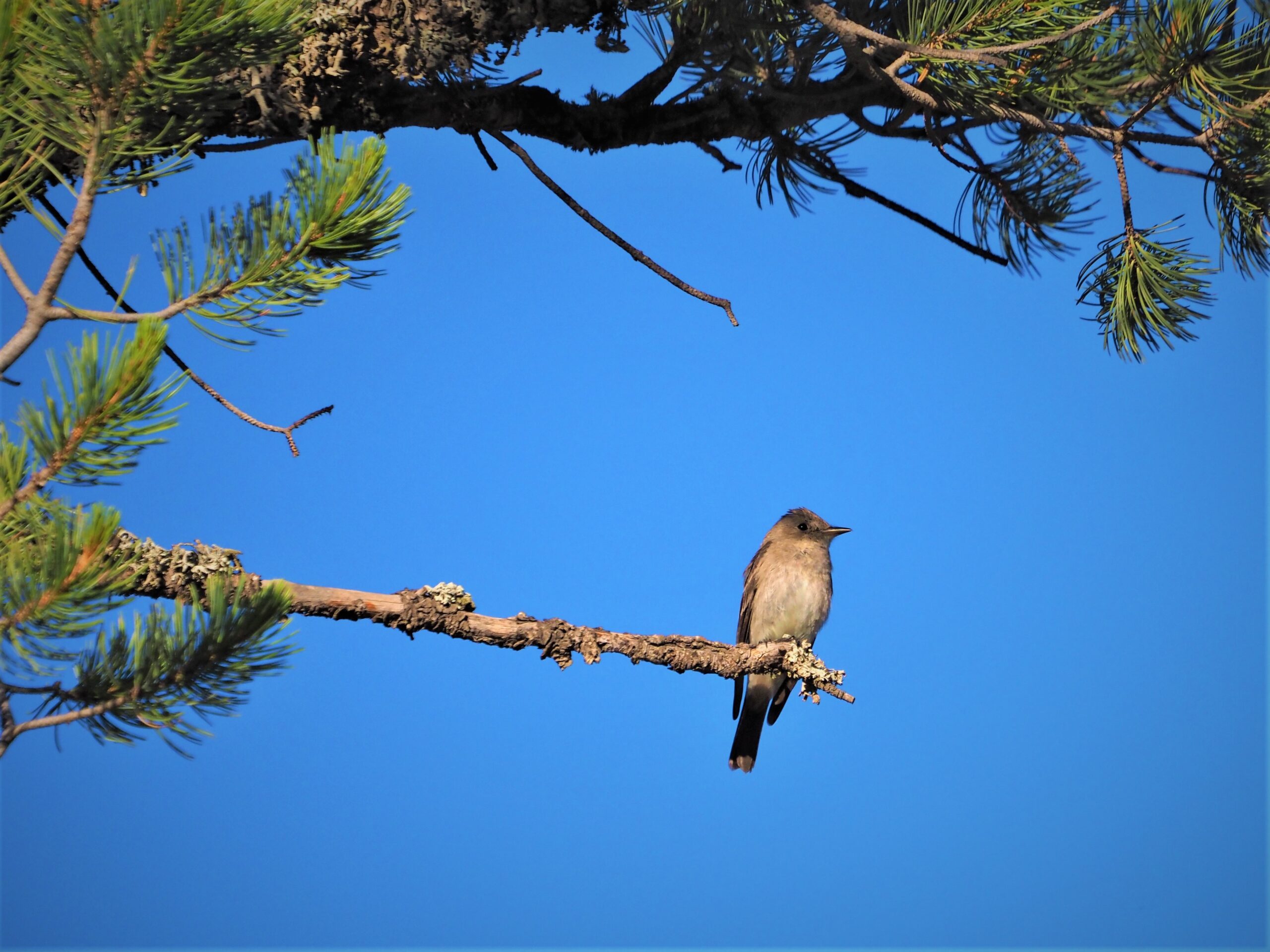
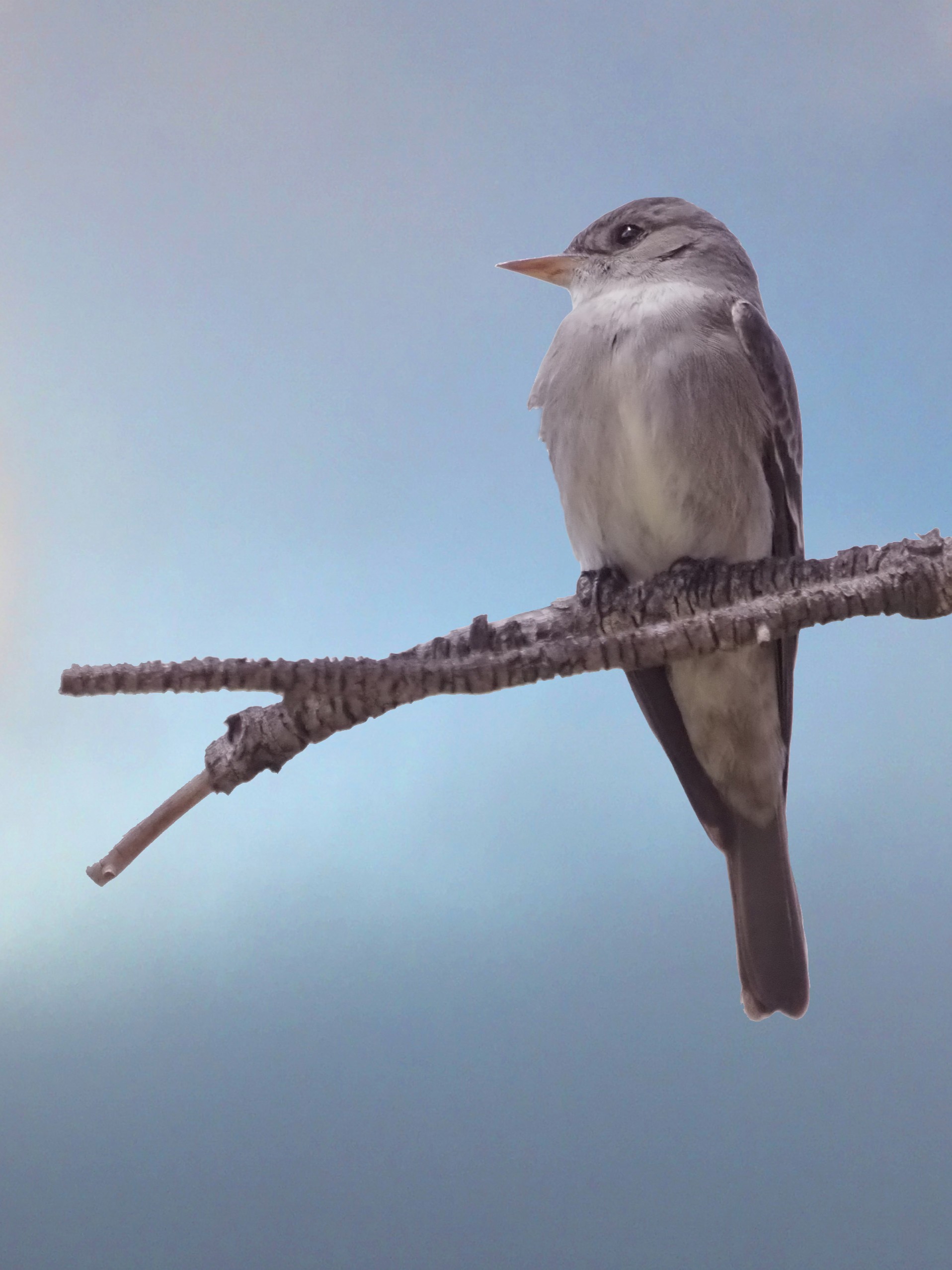
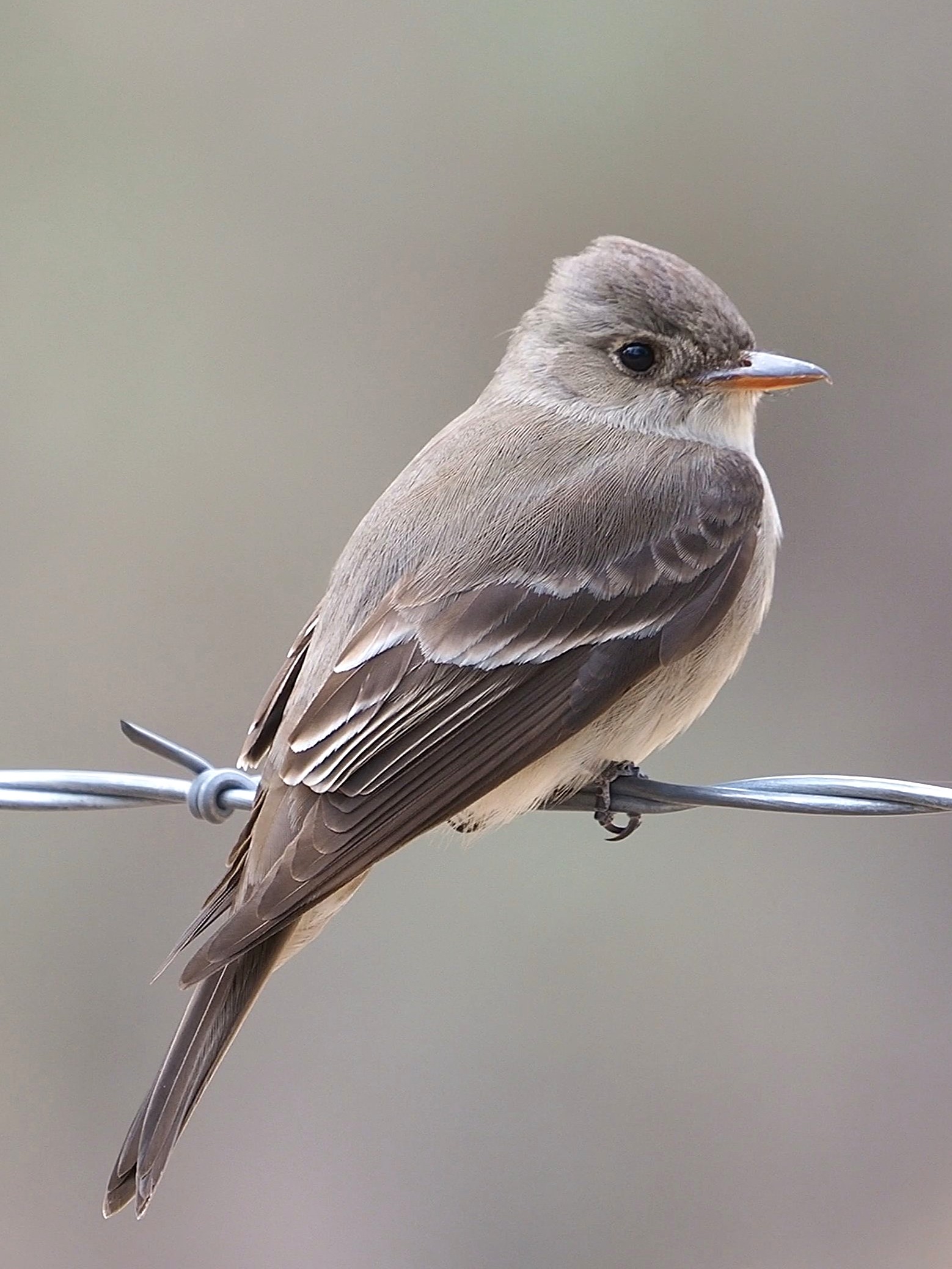
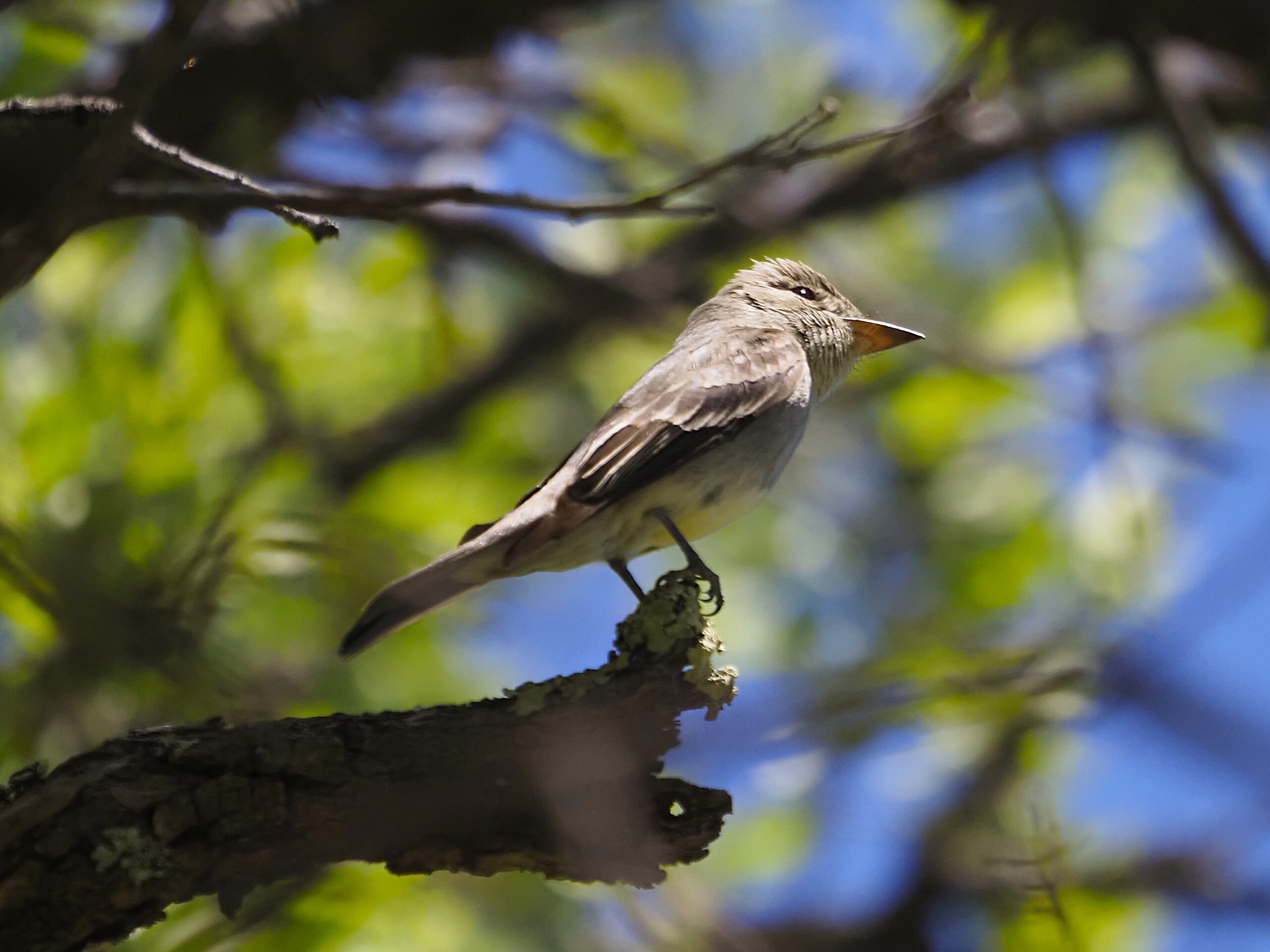
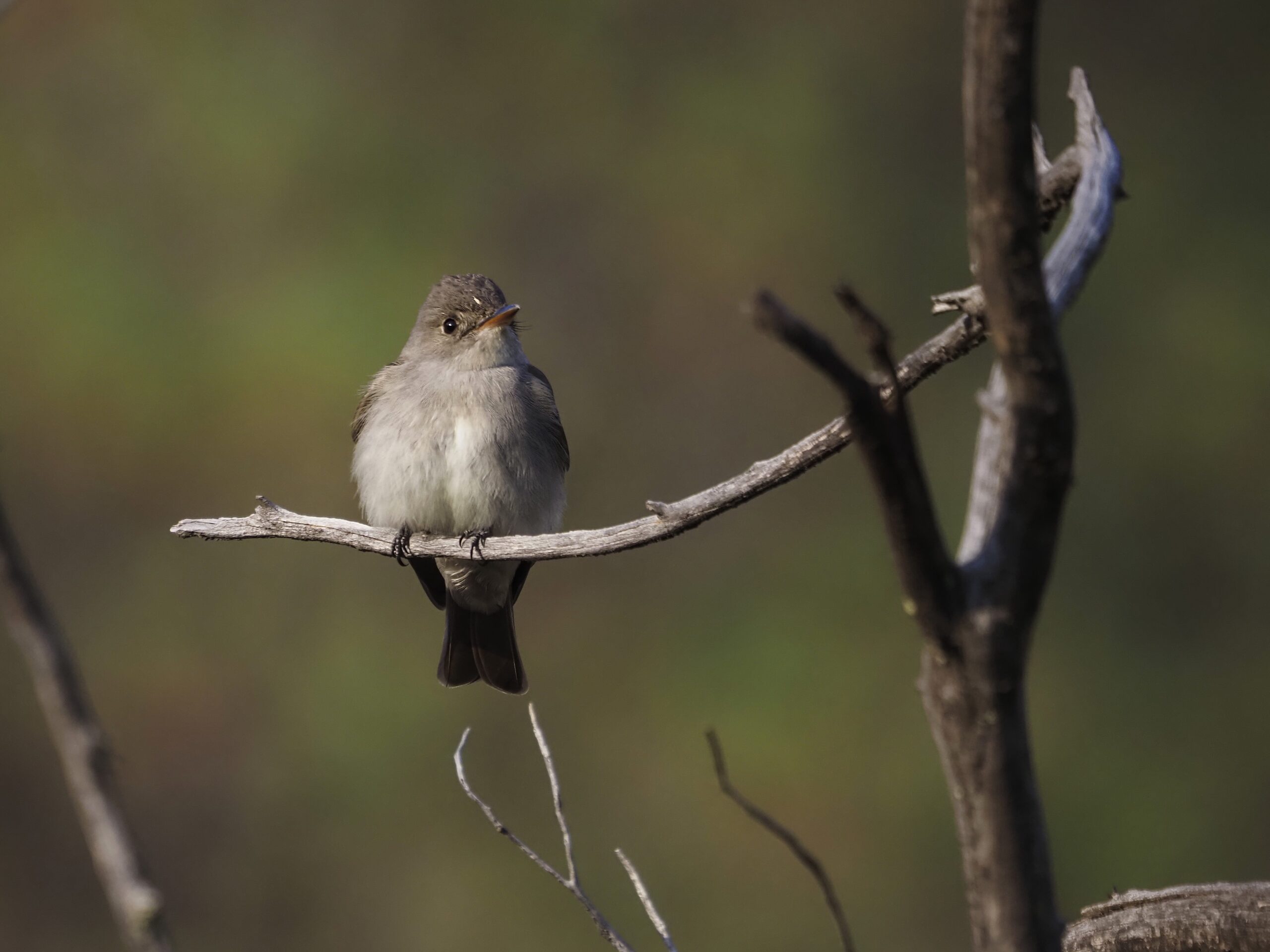
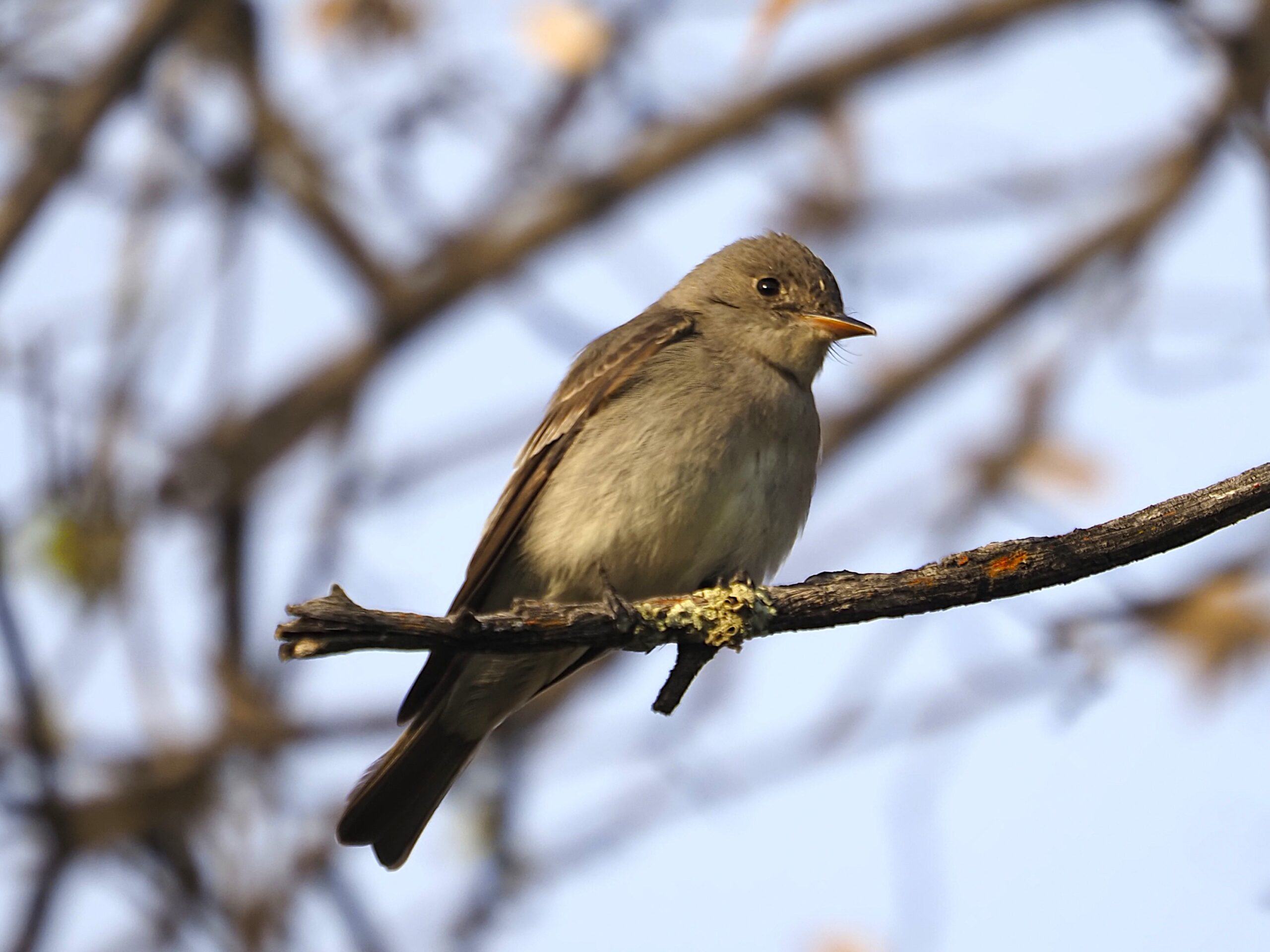
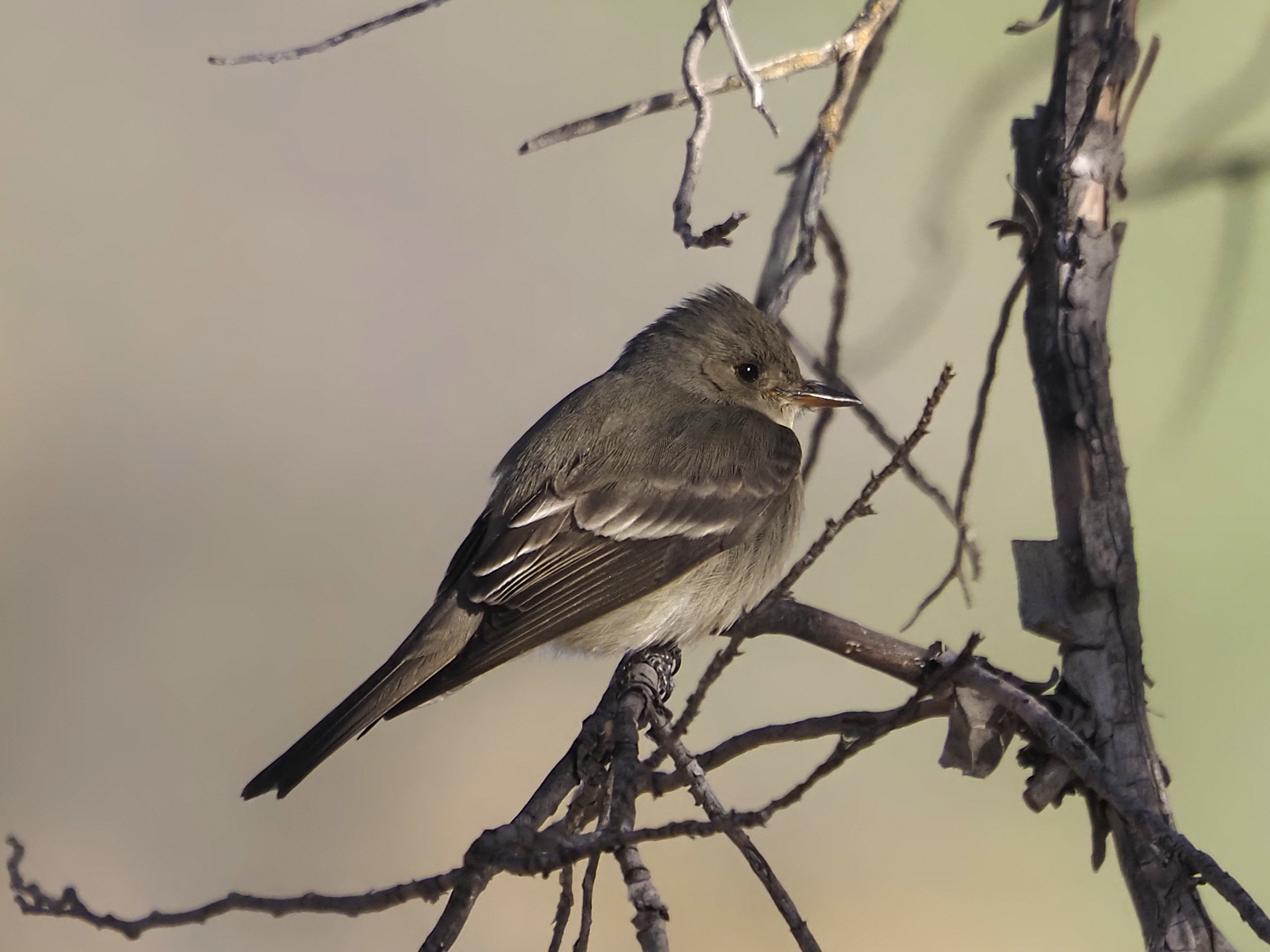
Eastern Wood-Pewee Photos
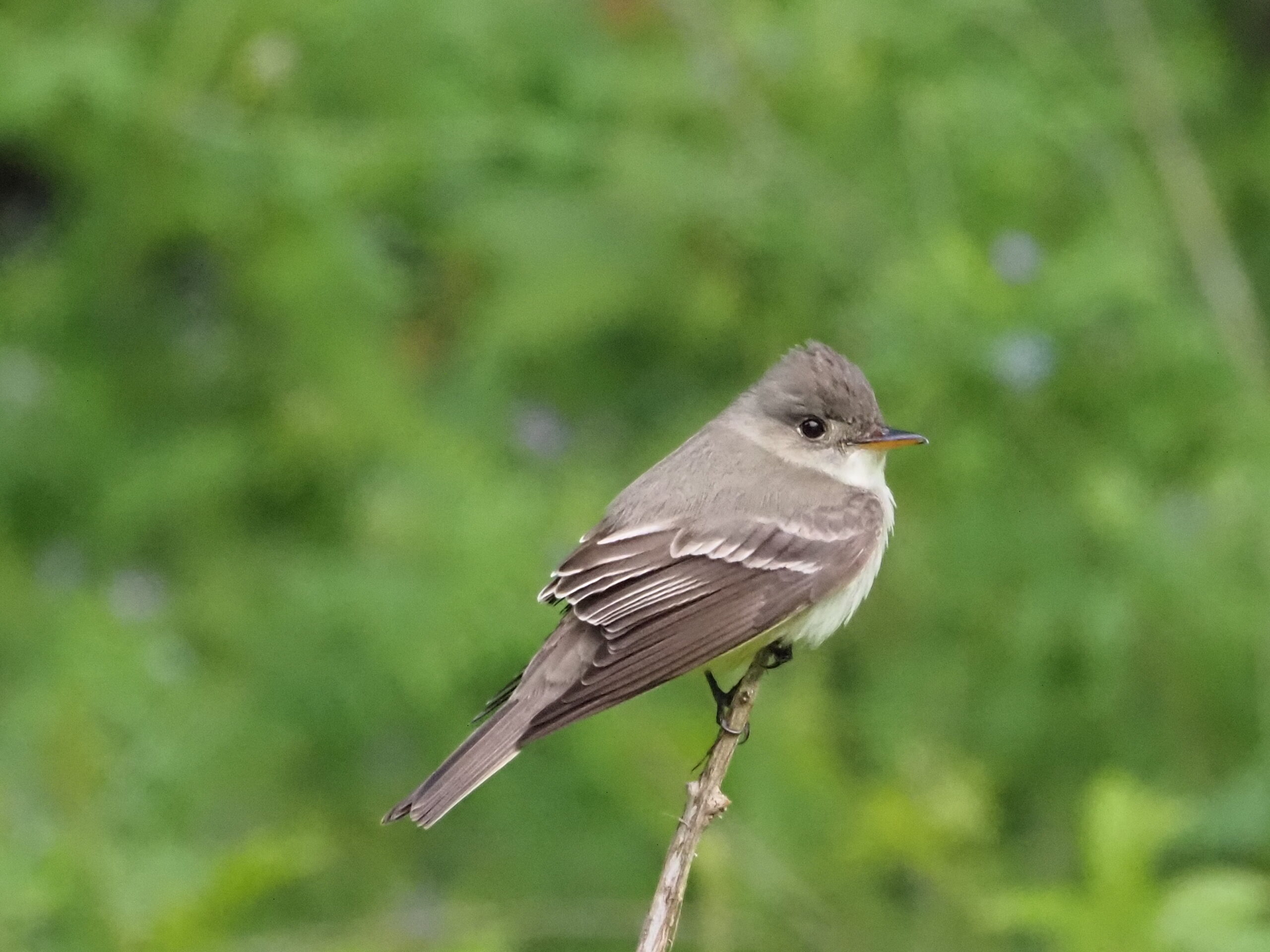
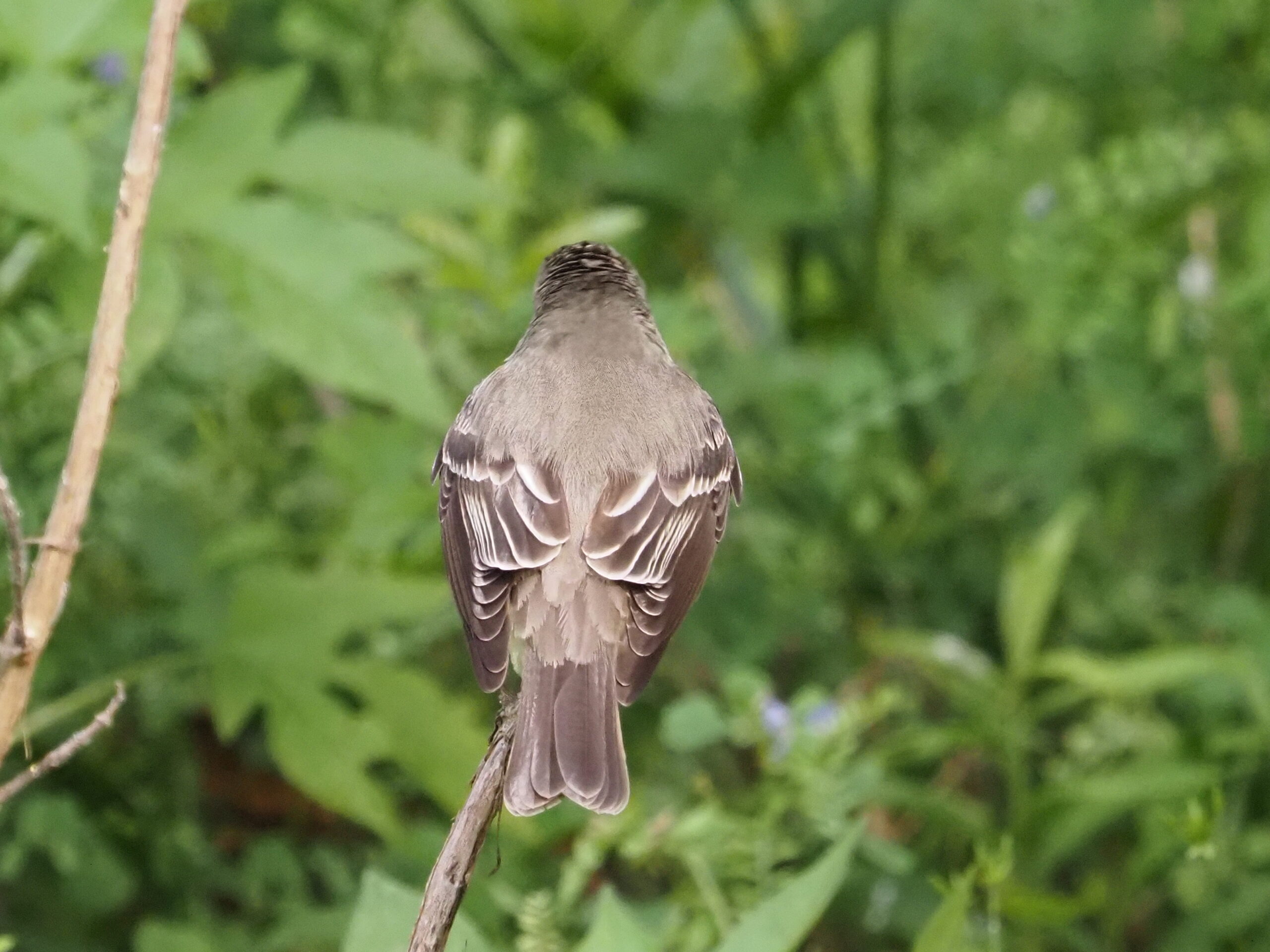
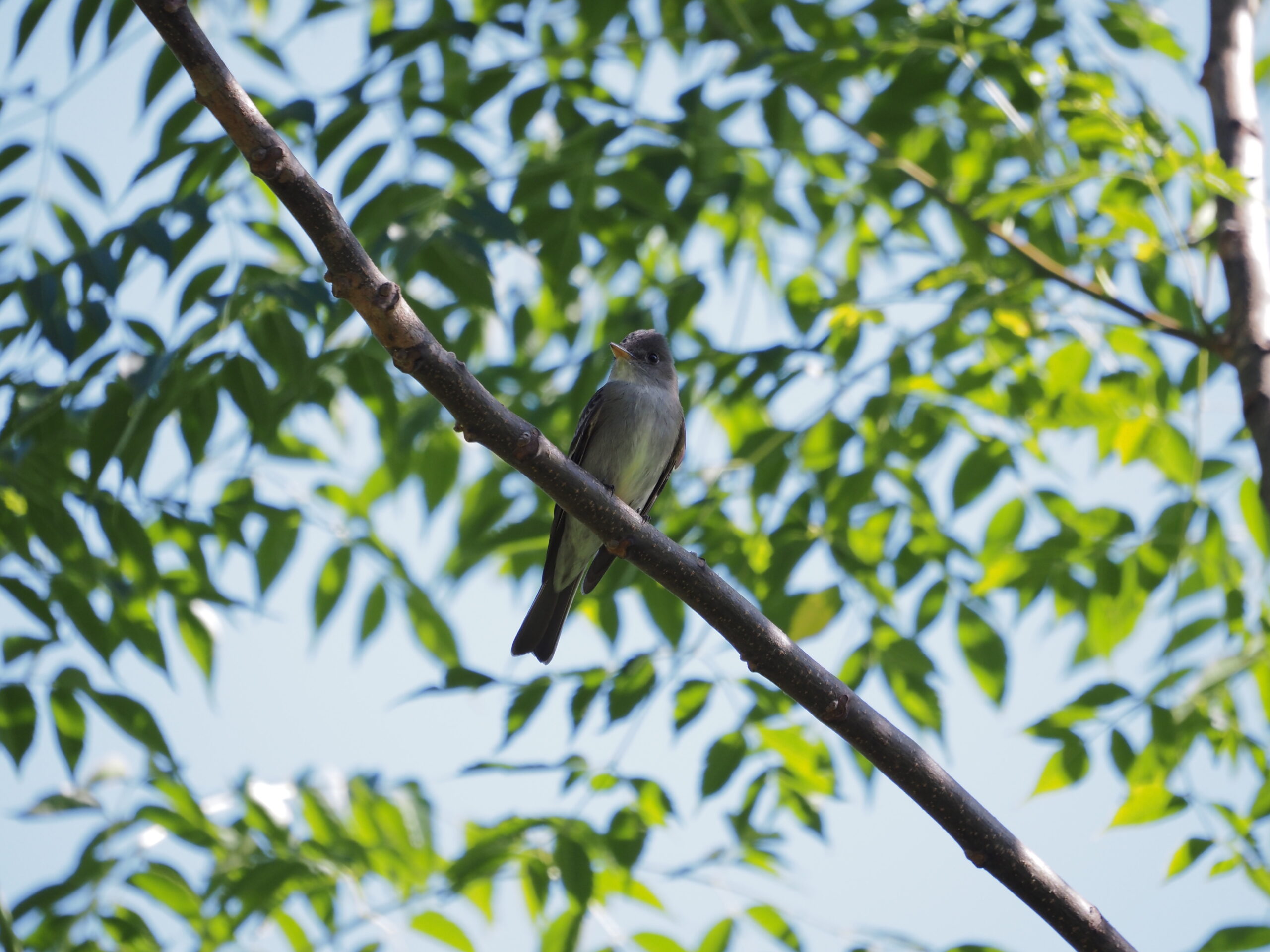
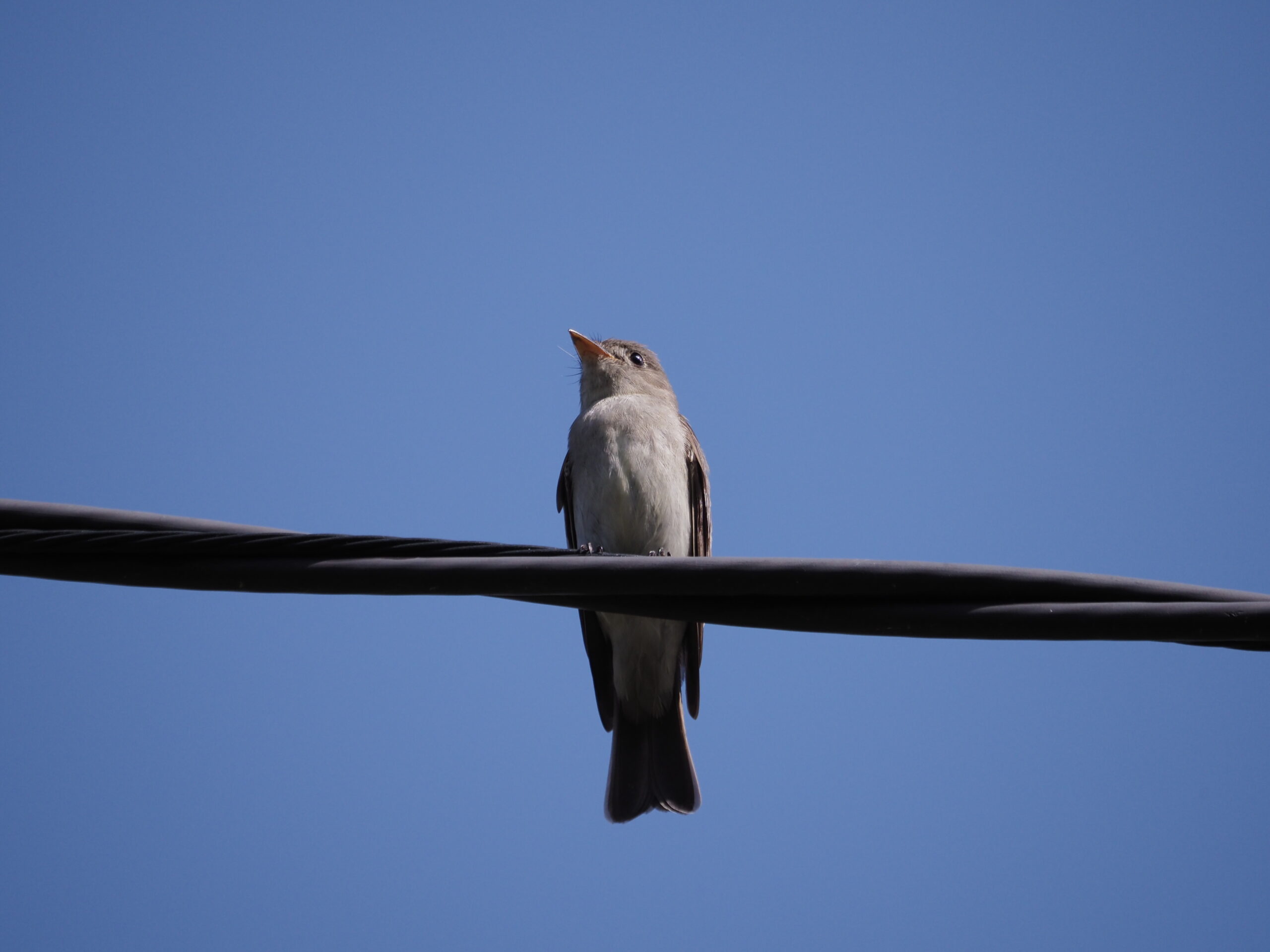
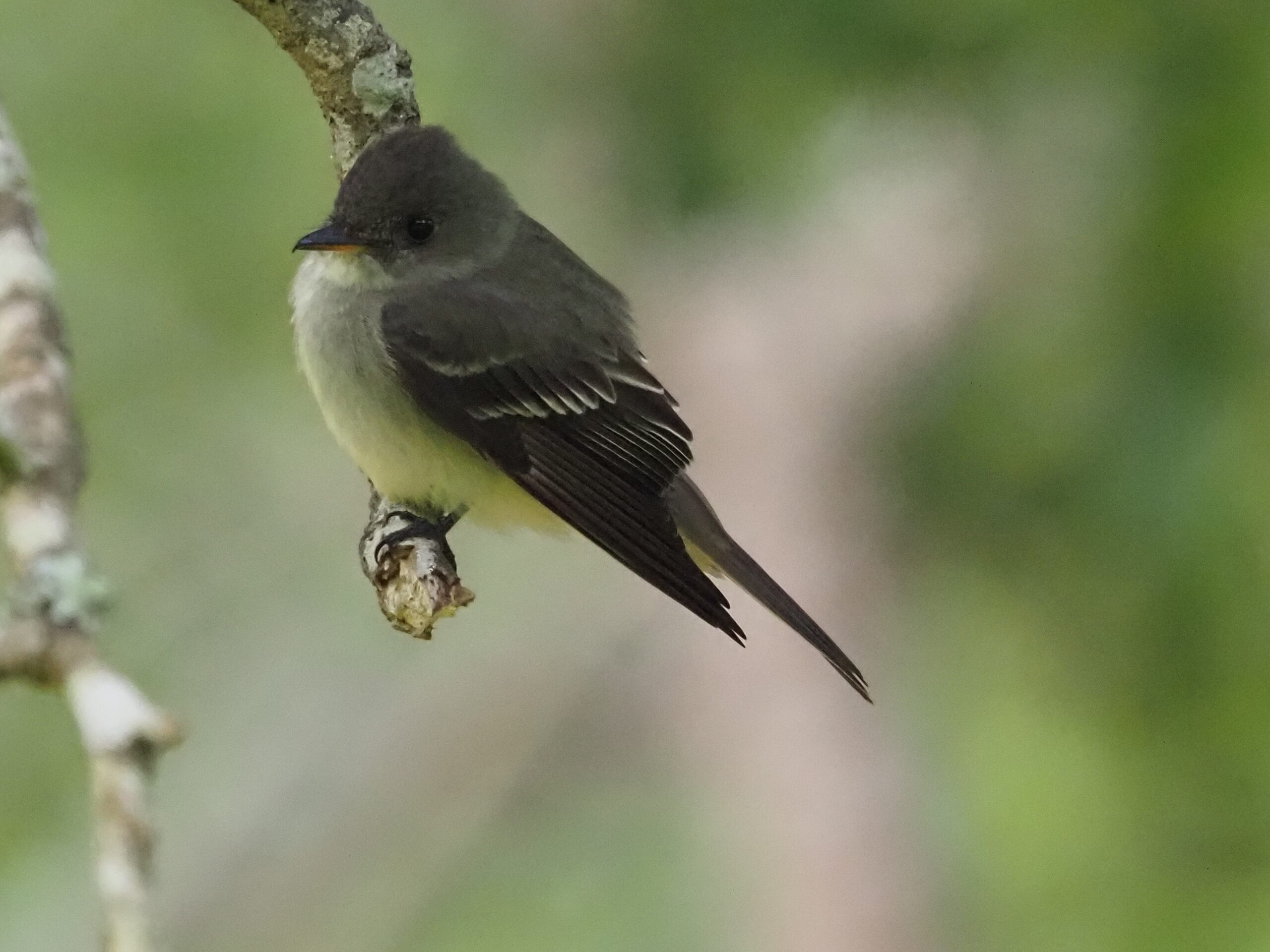
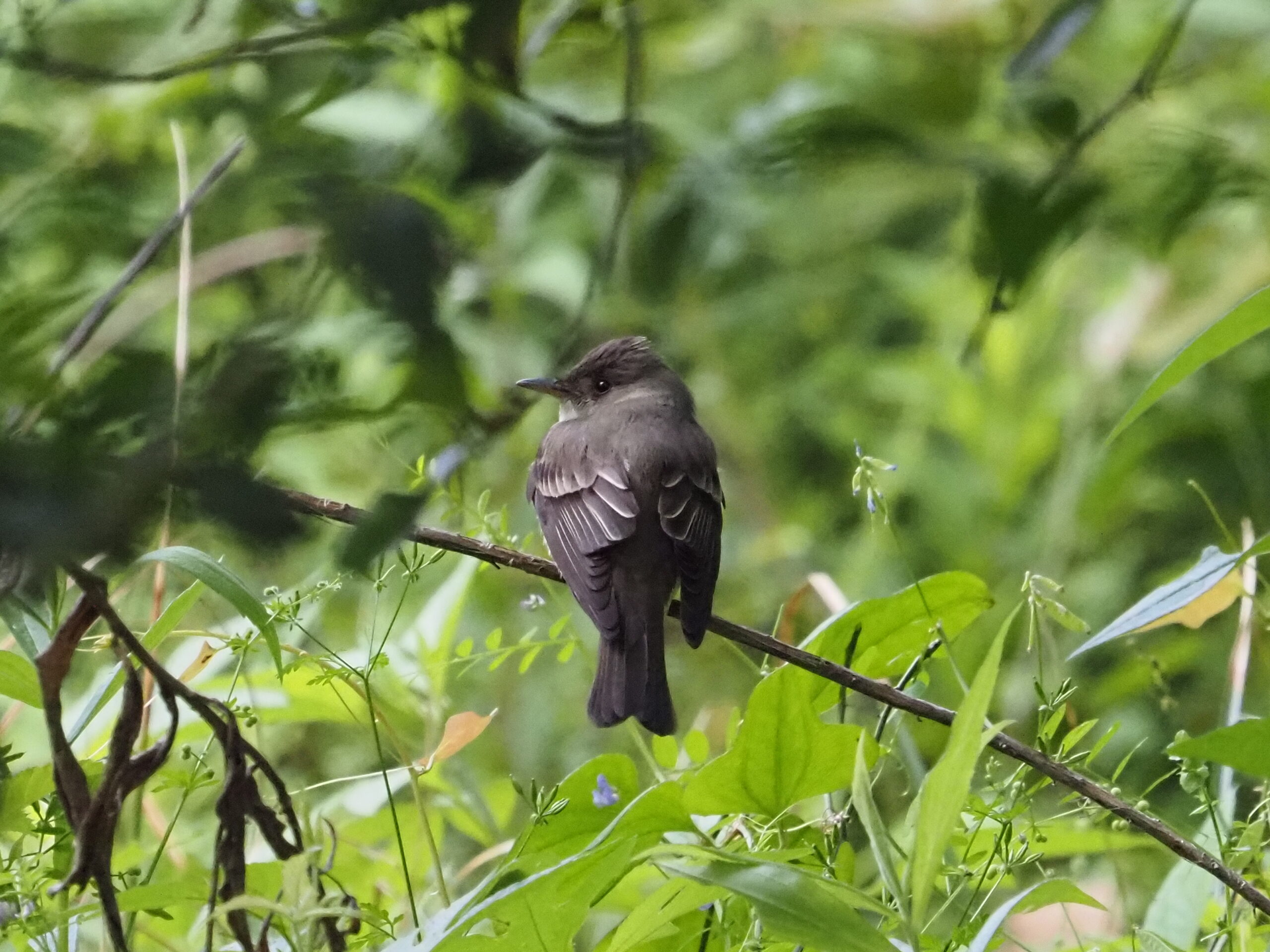
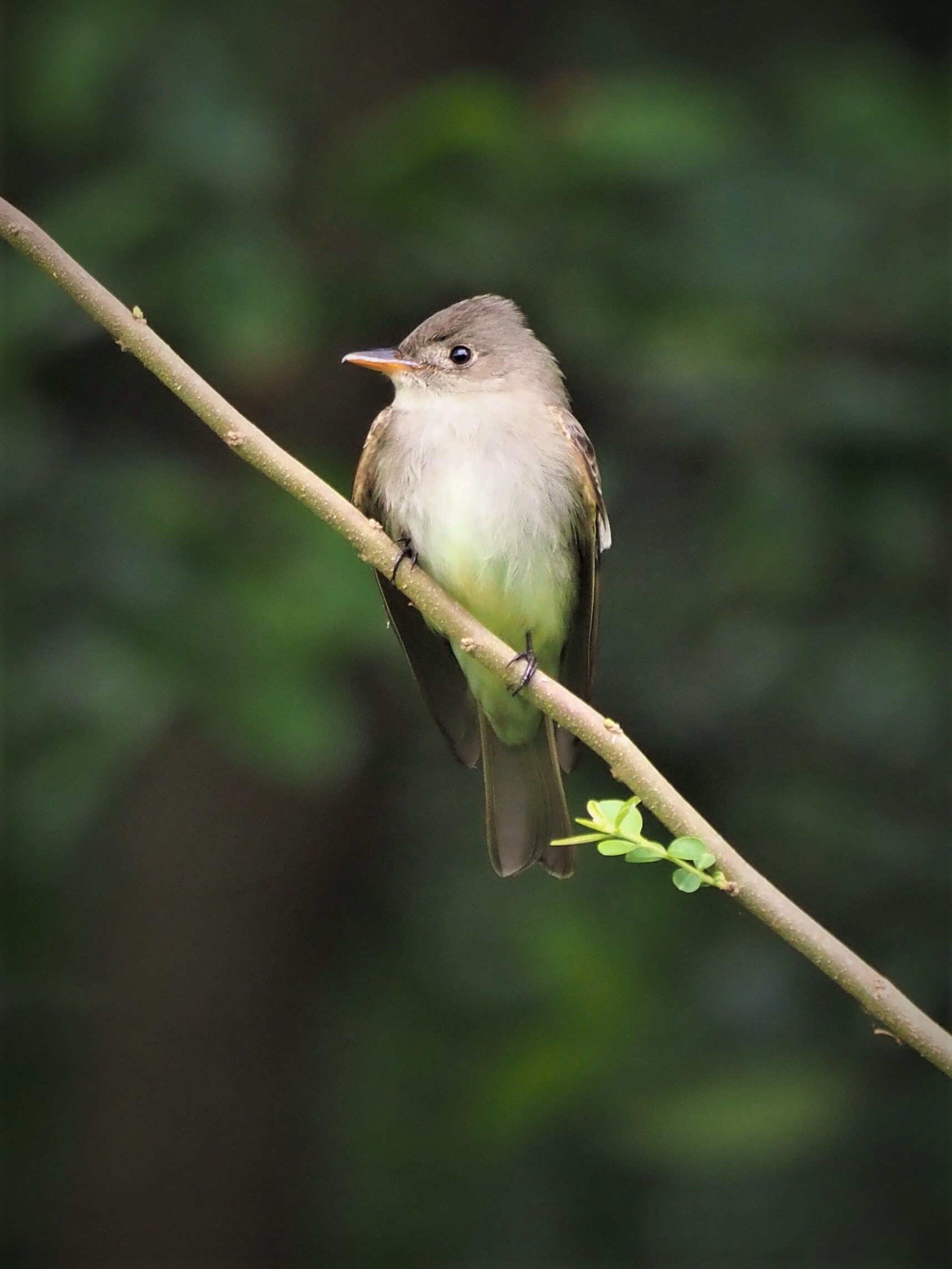
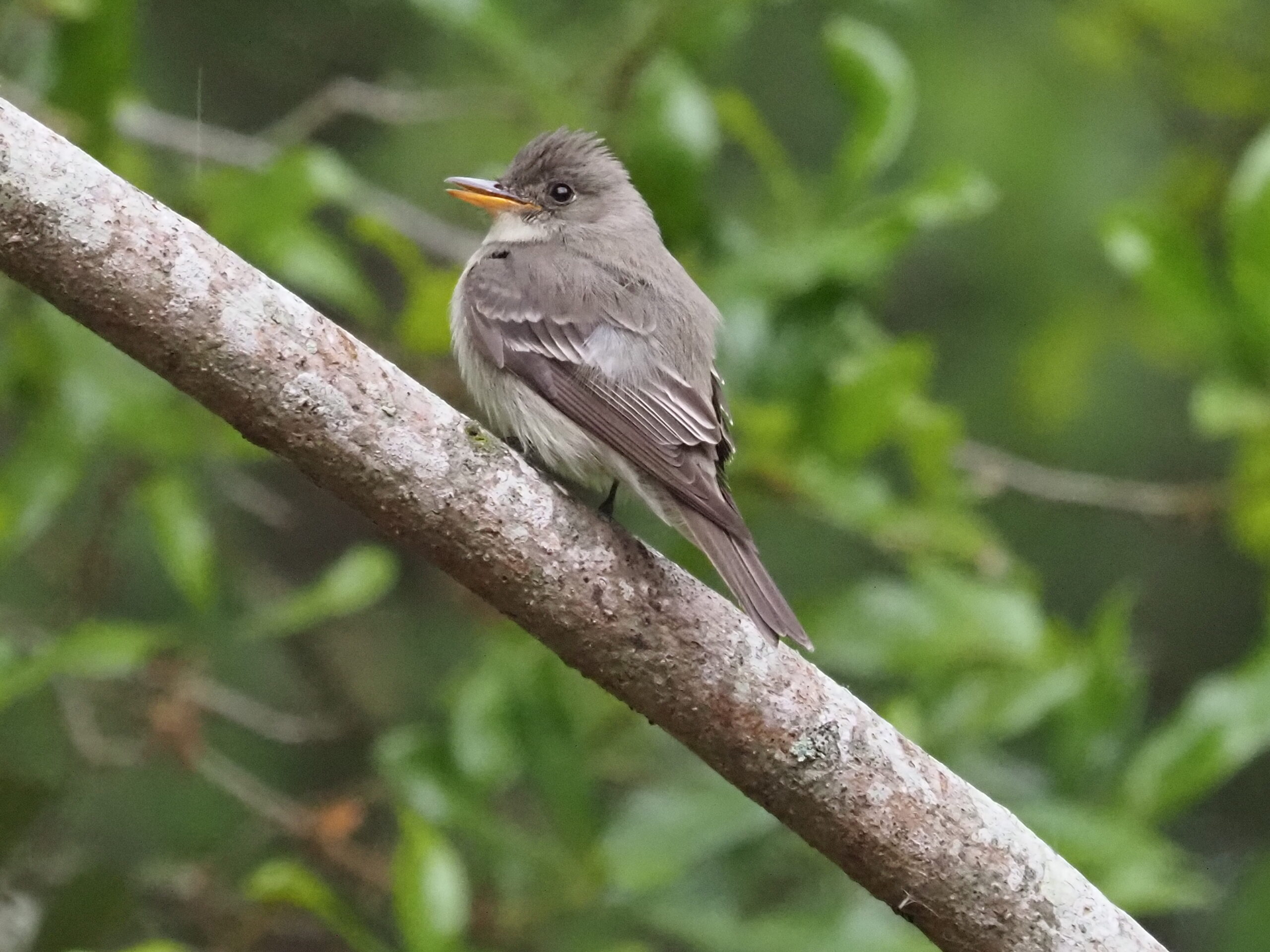
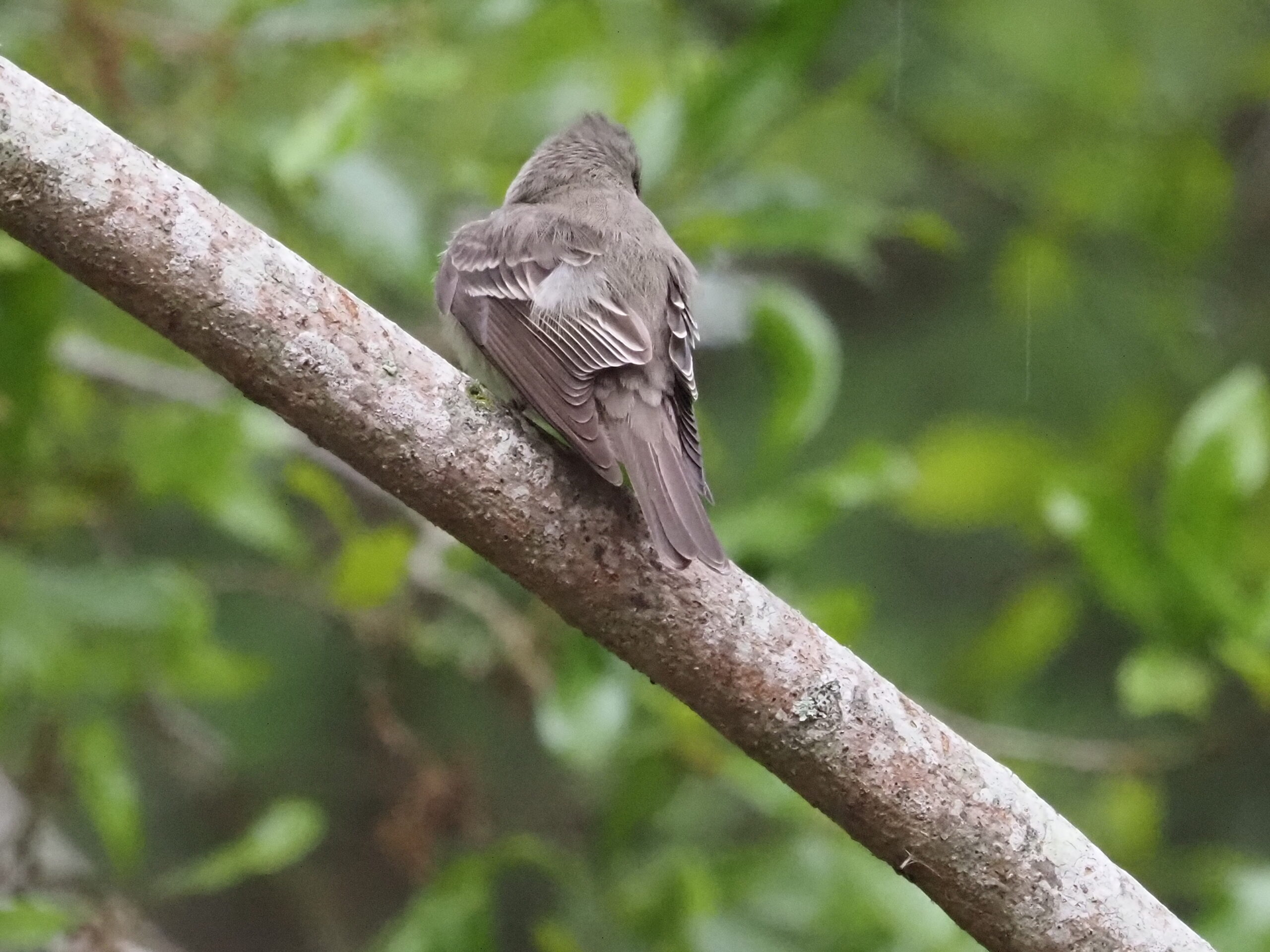
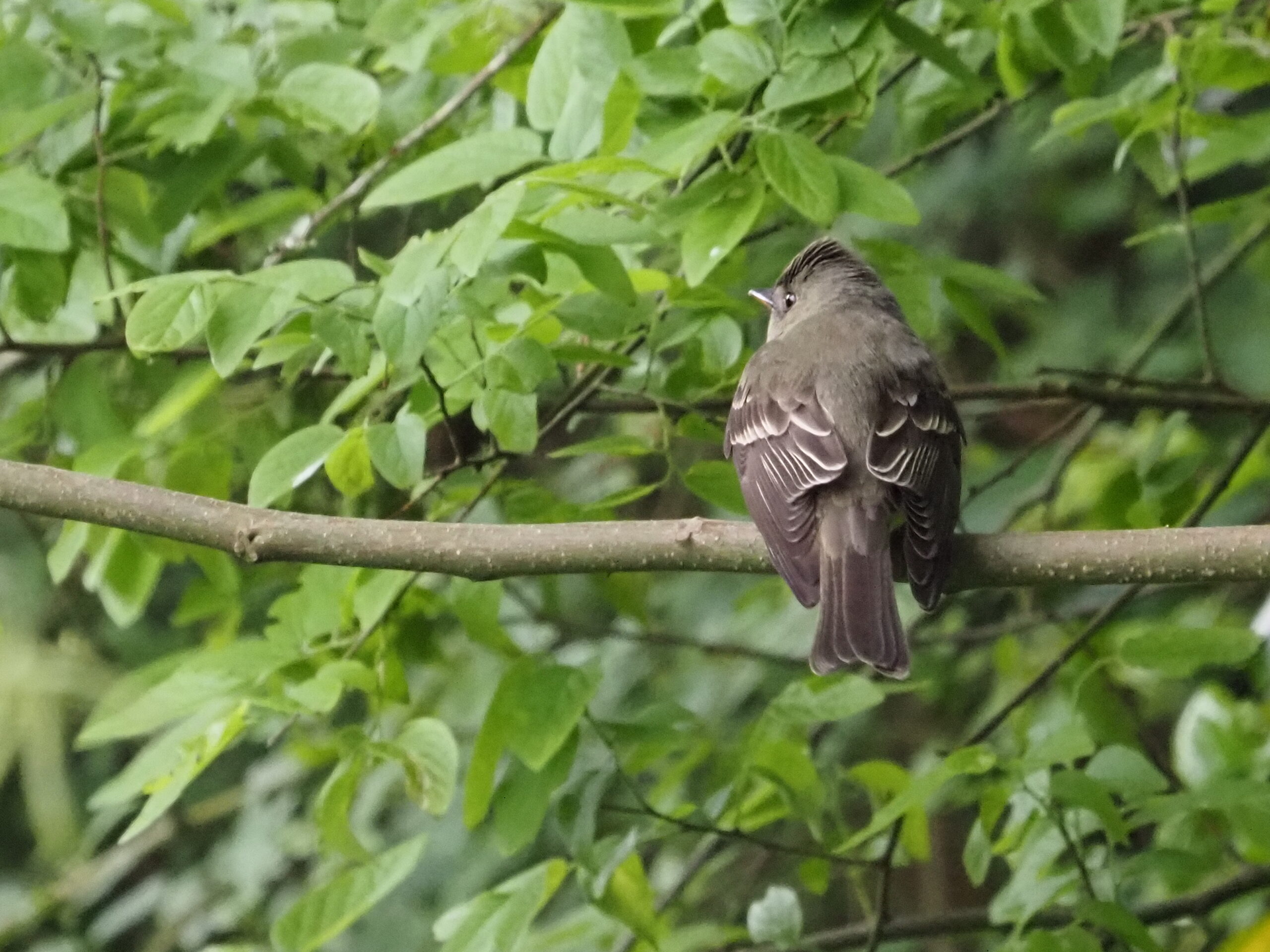
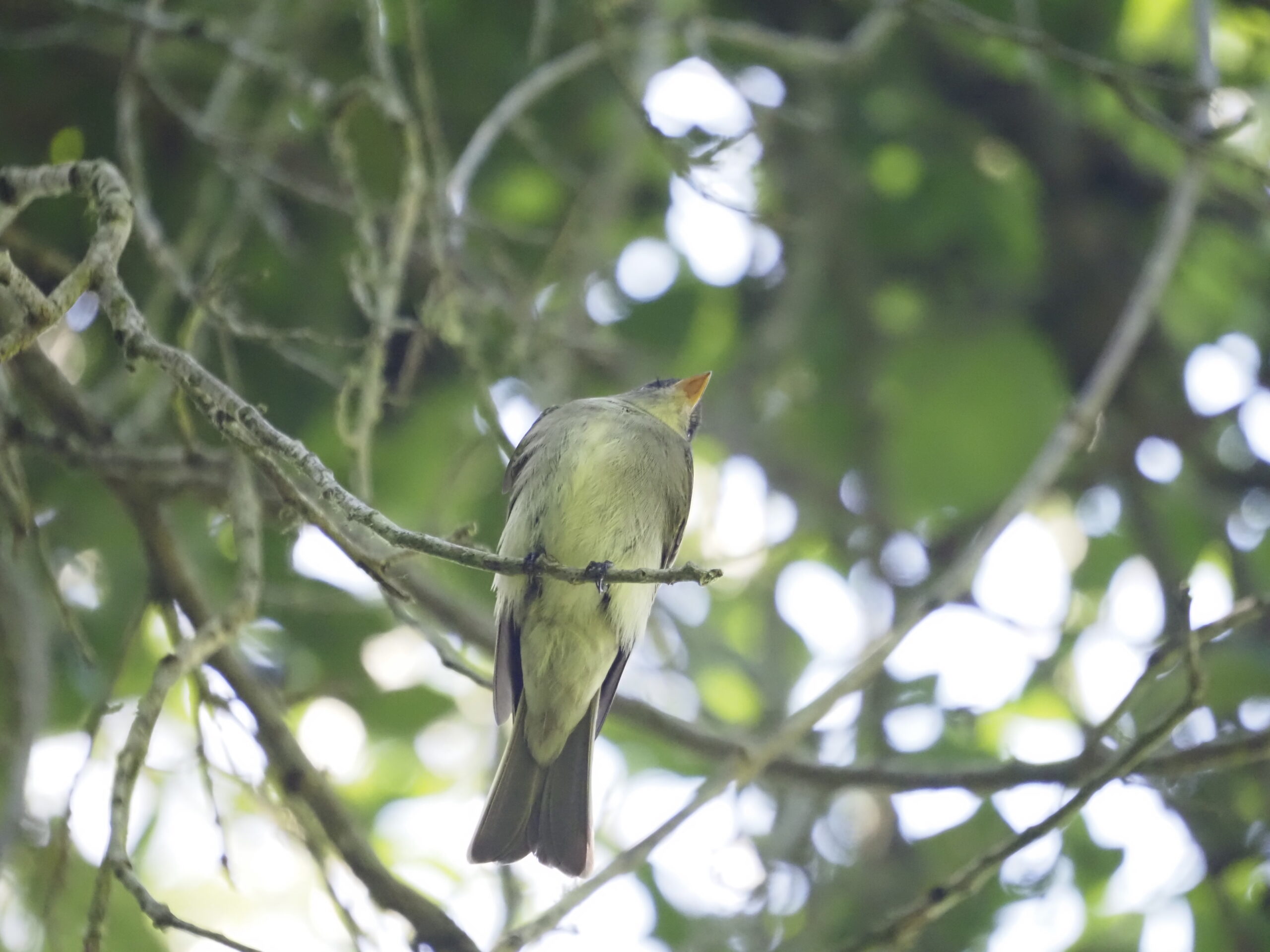
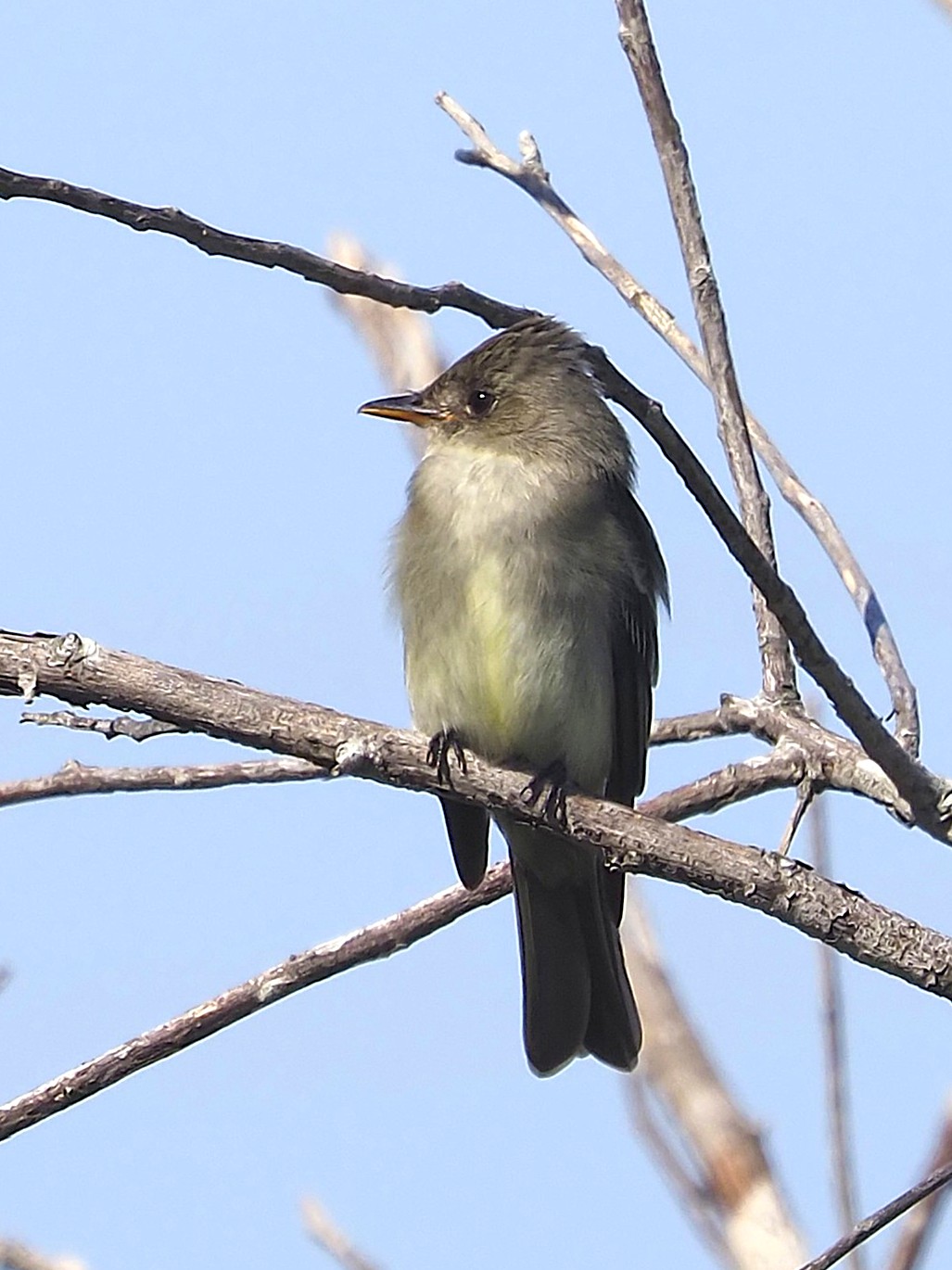
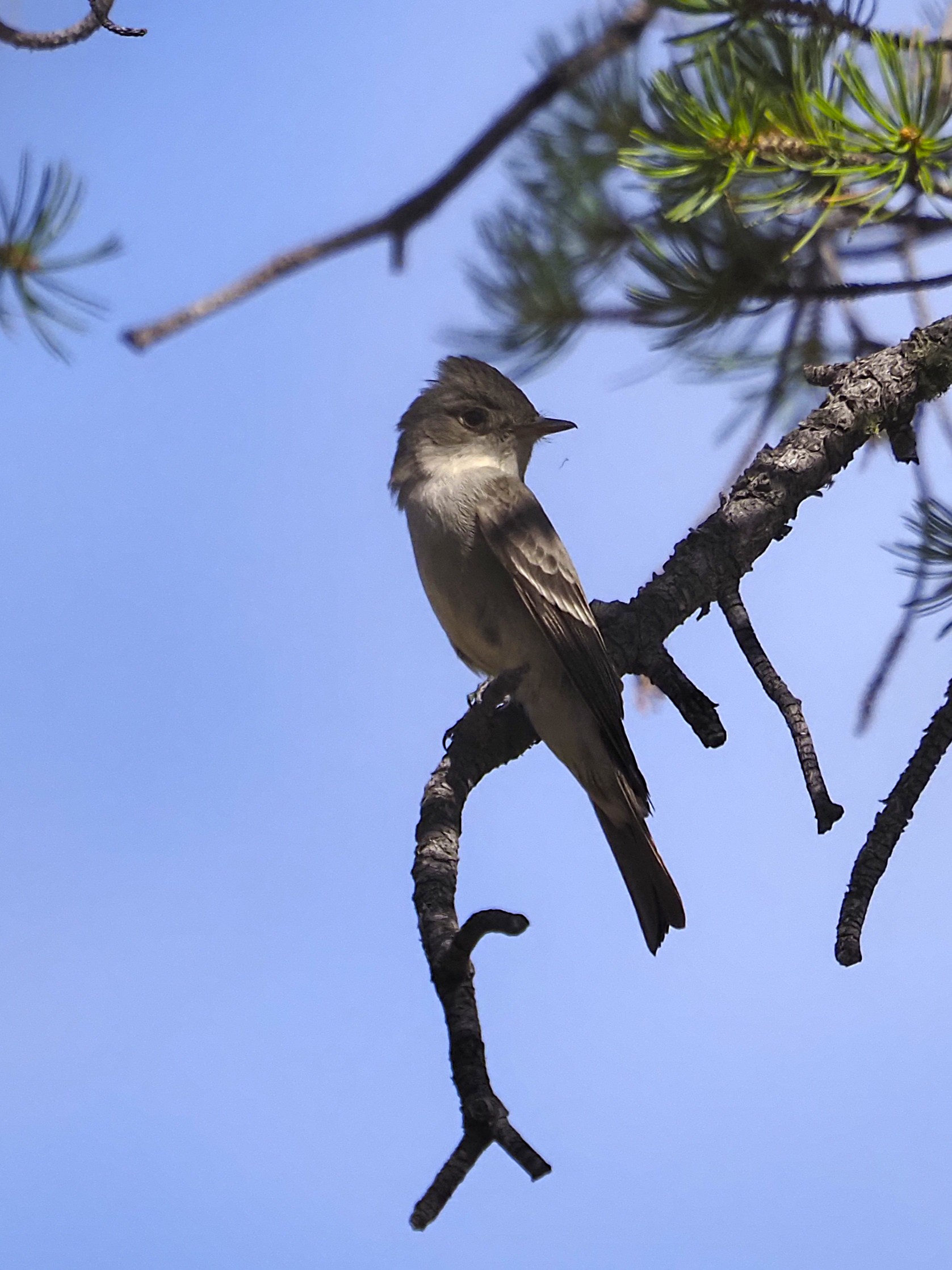
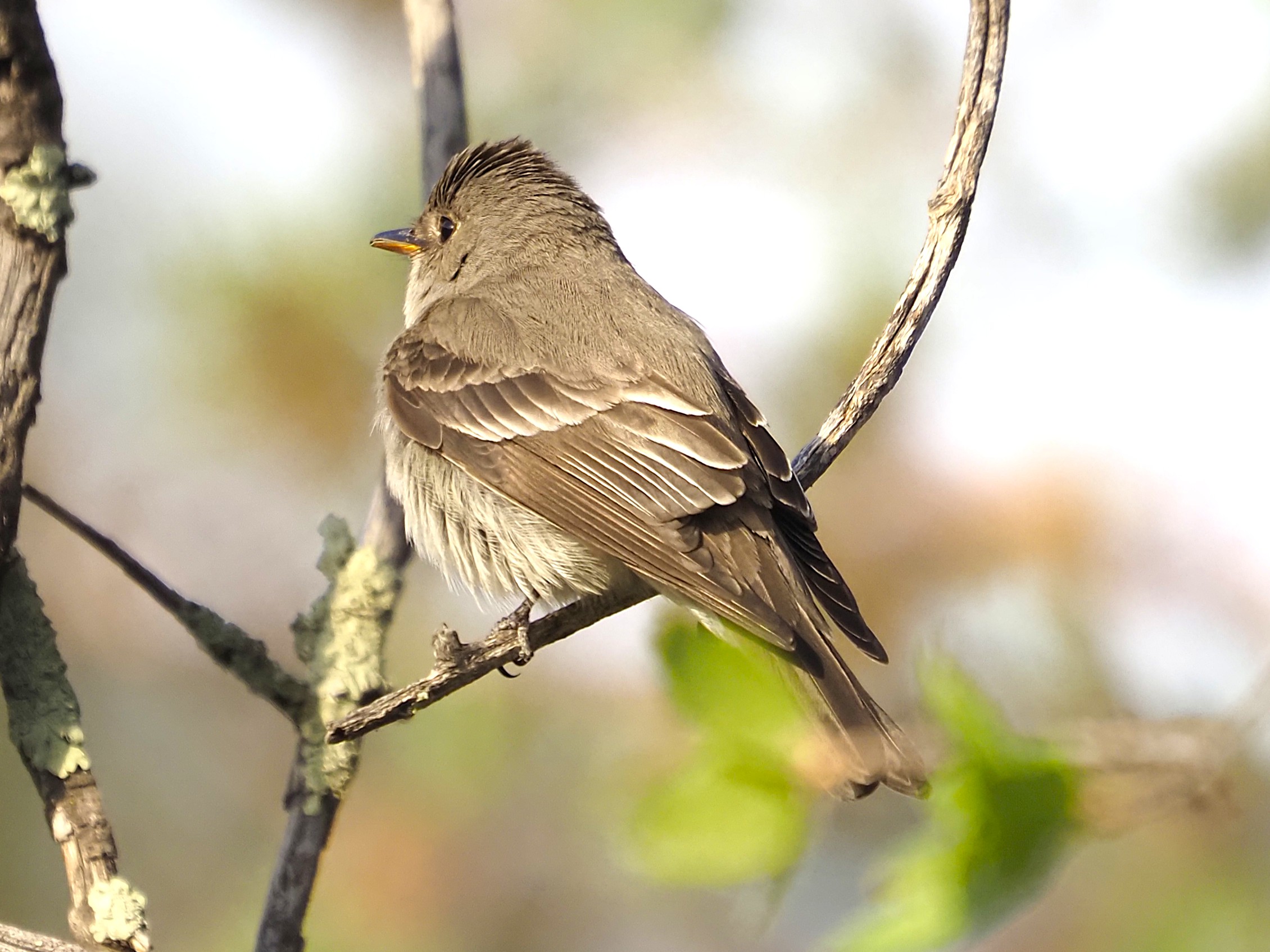
Western Wood-Pewee Photos
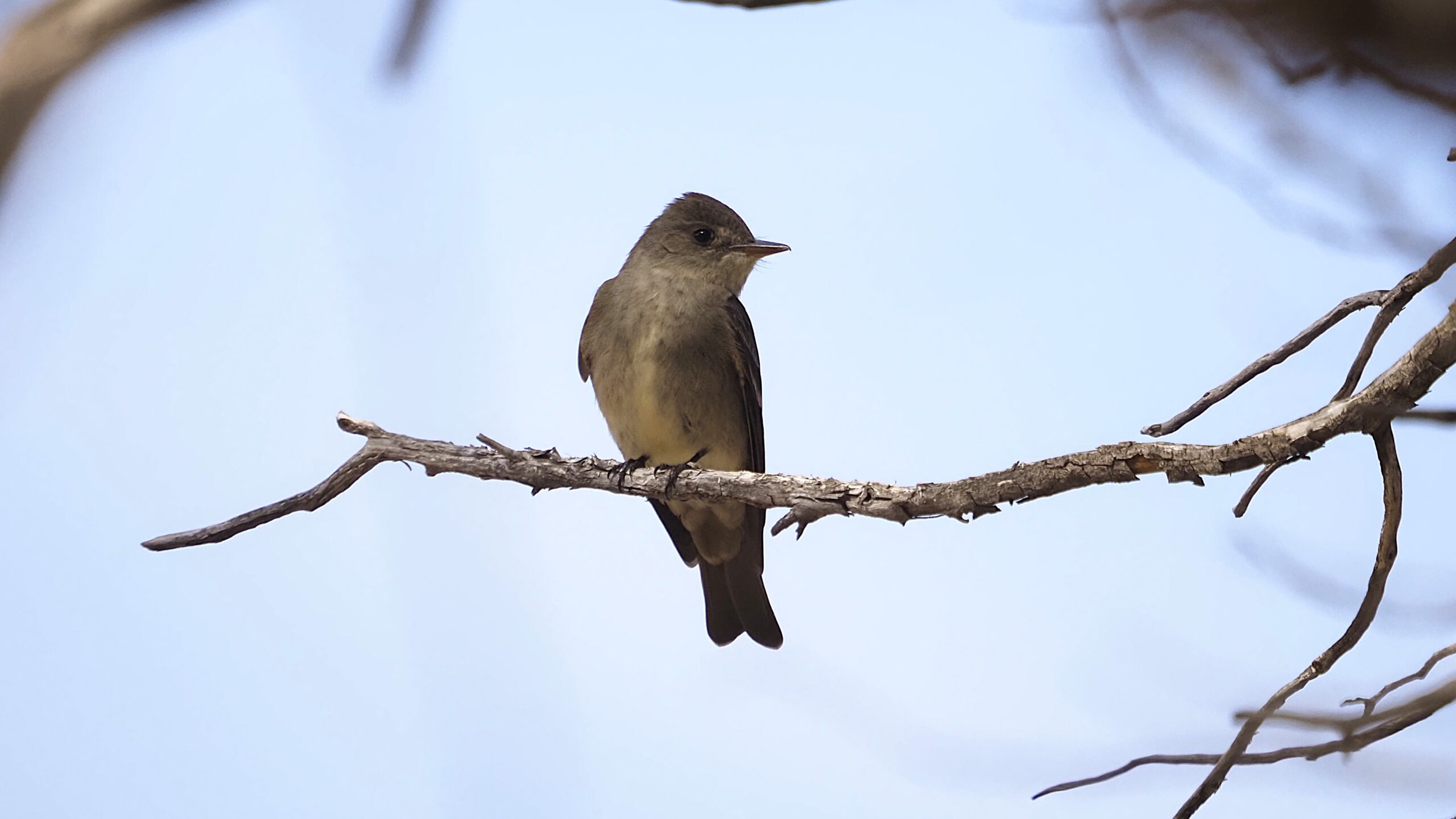
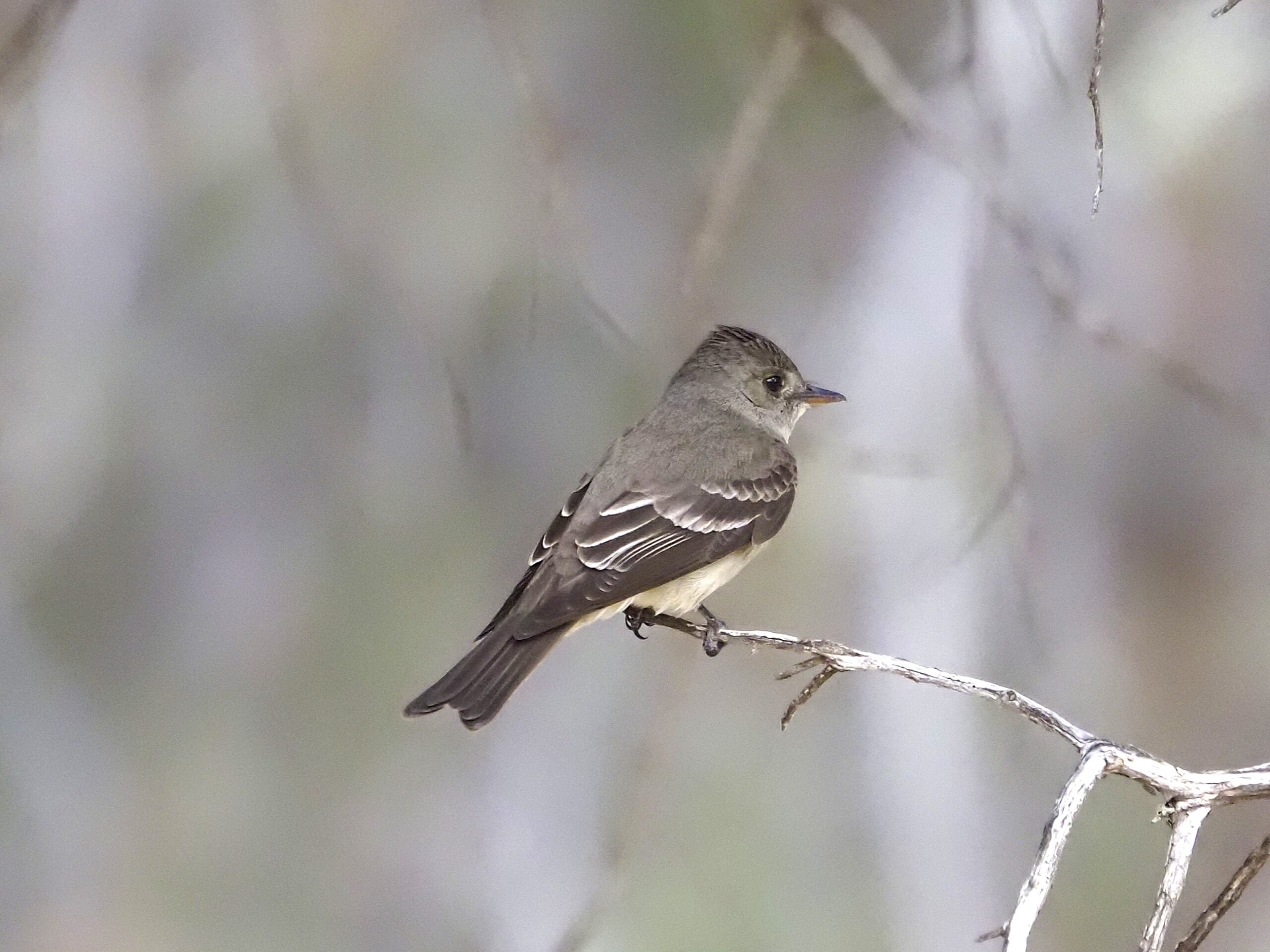
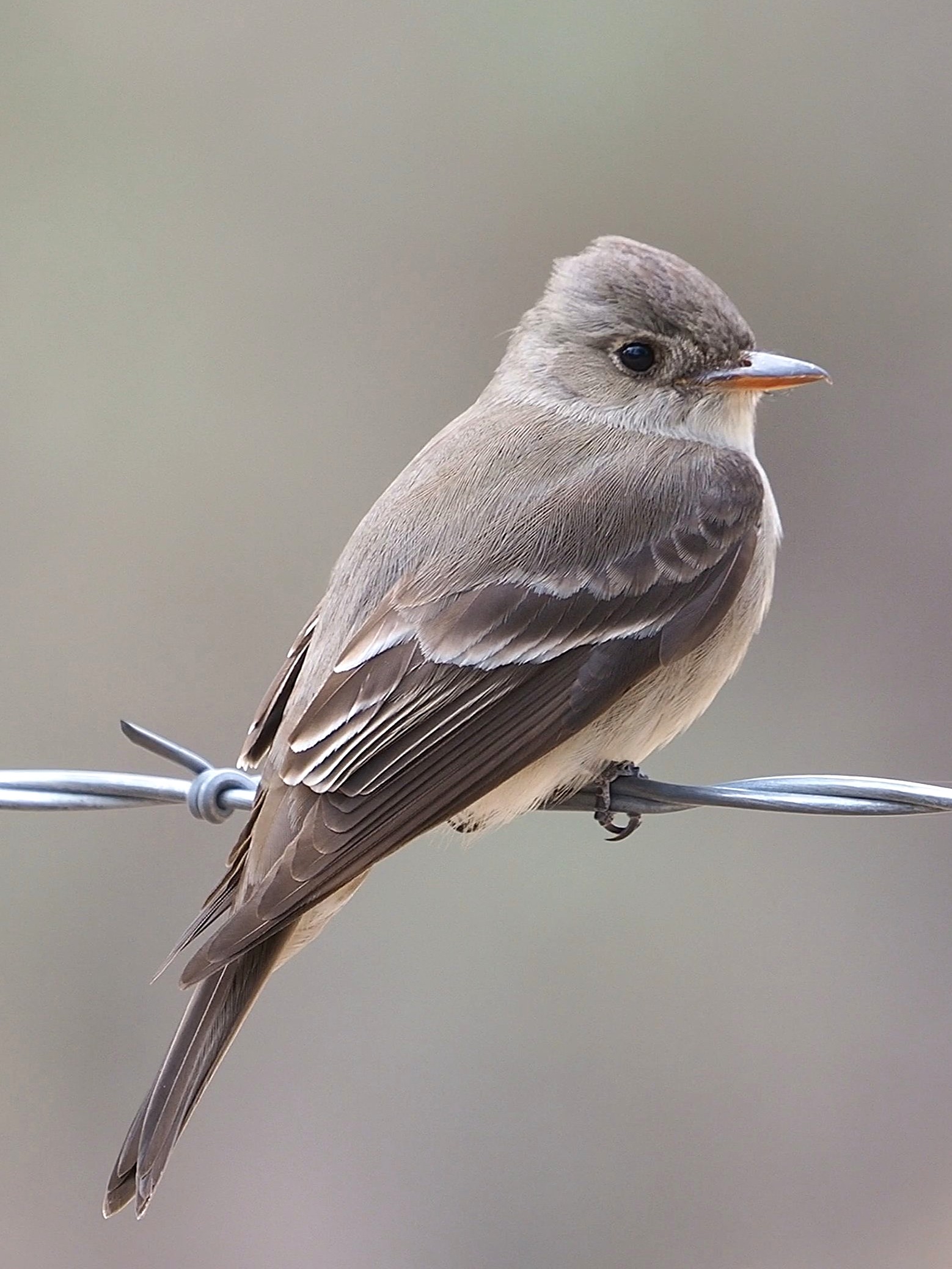
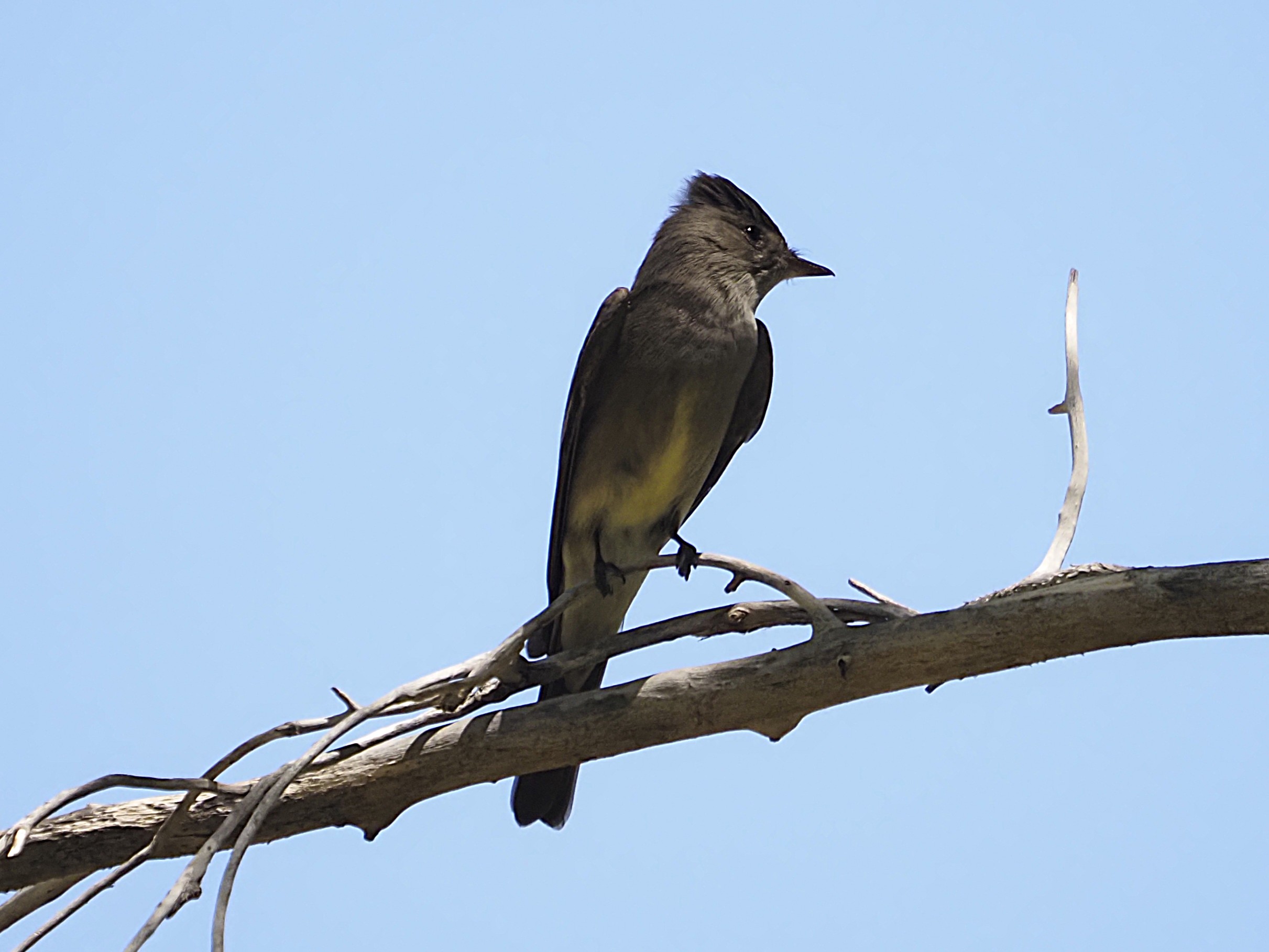
To Flycatchers Overview & Feather Groups