
“Traill’s” Flycatcher
The Willow and Alder Flycatchers are very difficult to visually distinguish. The best method to separate these two species is vocalizations. They were once considered the same species and were known as the Traill’s Flycatcher which was named by John James Audubon after his close British friend Thomas Stewart Traill. (As such I have spelled the name incorrectly for years). The Willow breeds across both Western and Eastern North America approximately above the latitude of Austin. The Alder breeds slightly further north across Canada and the Northeastern states of the U.S. The Traill’s was split into the current two species in 1963 based largely on vocalizations and breeding range. The generally slaty coloration and build of the Traill’s, make it the most likely Empid to be mistaken for a Wood-pewee. The song of the Alder is usually described as a falling wheezy fee-bee-oh and the Willow’s as a sneezy fitz-bew.
Structural Characteristics
Body Size & Shape
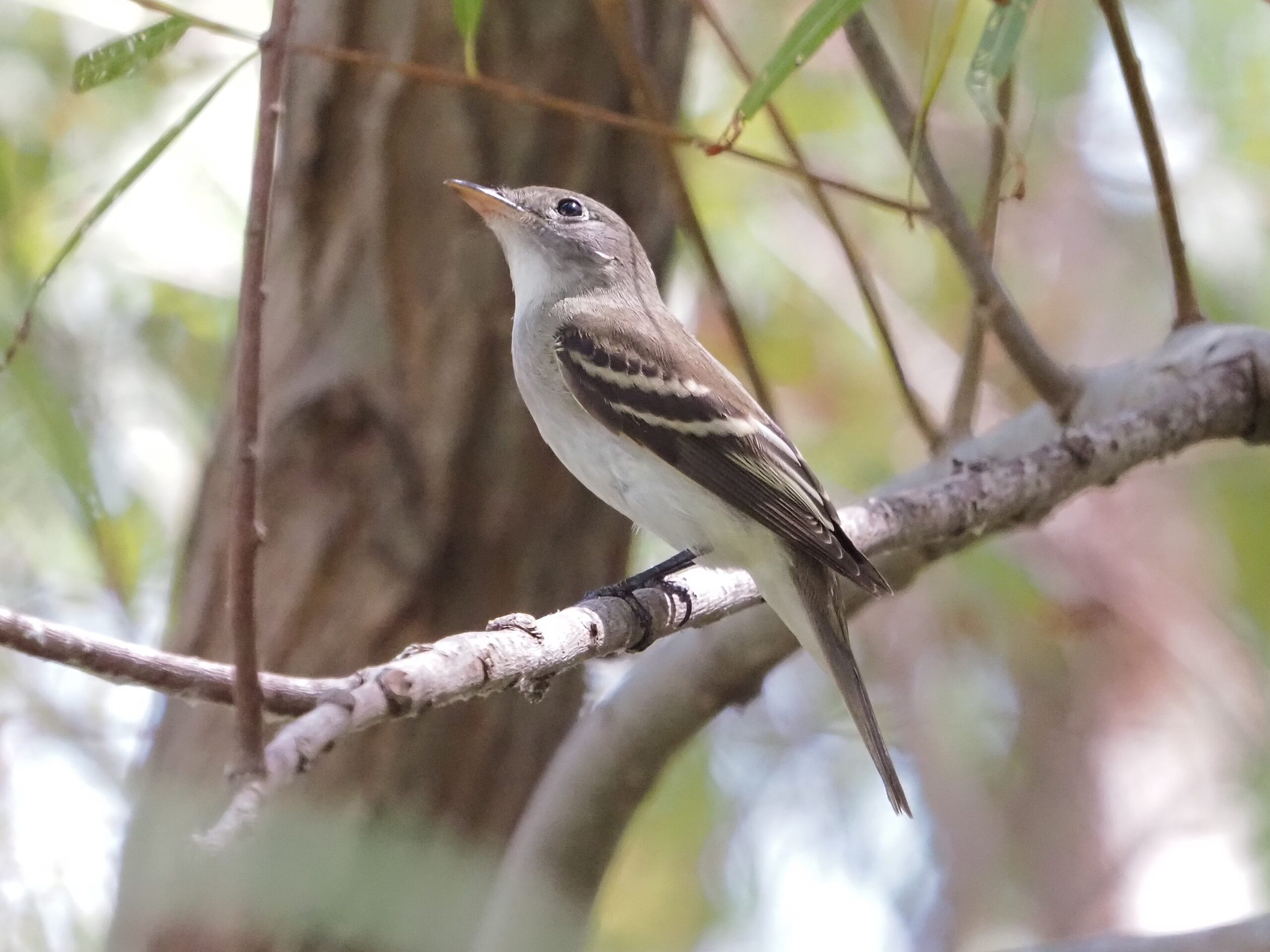
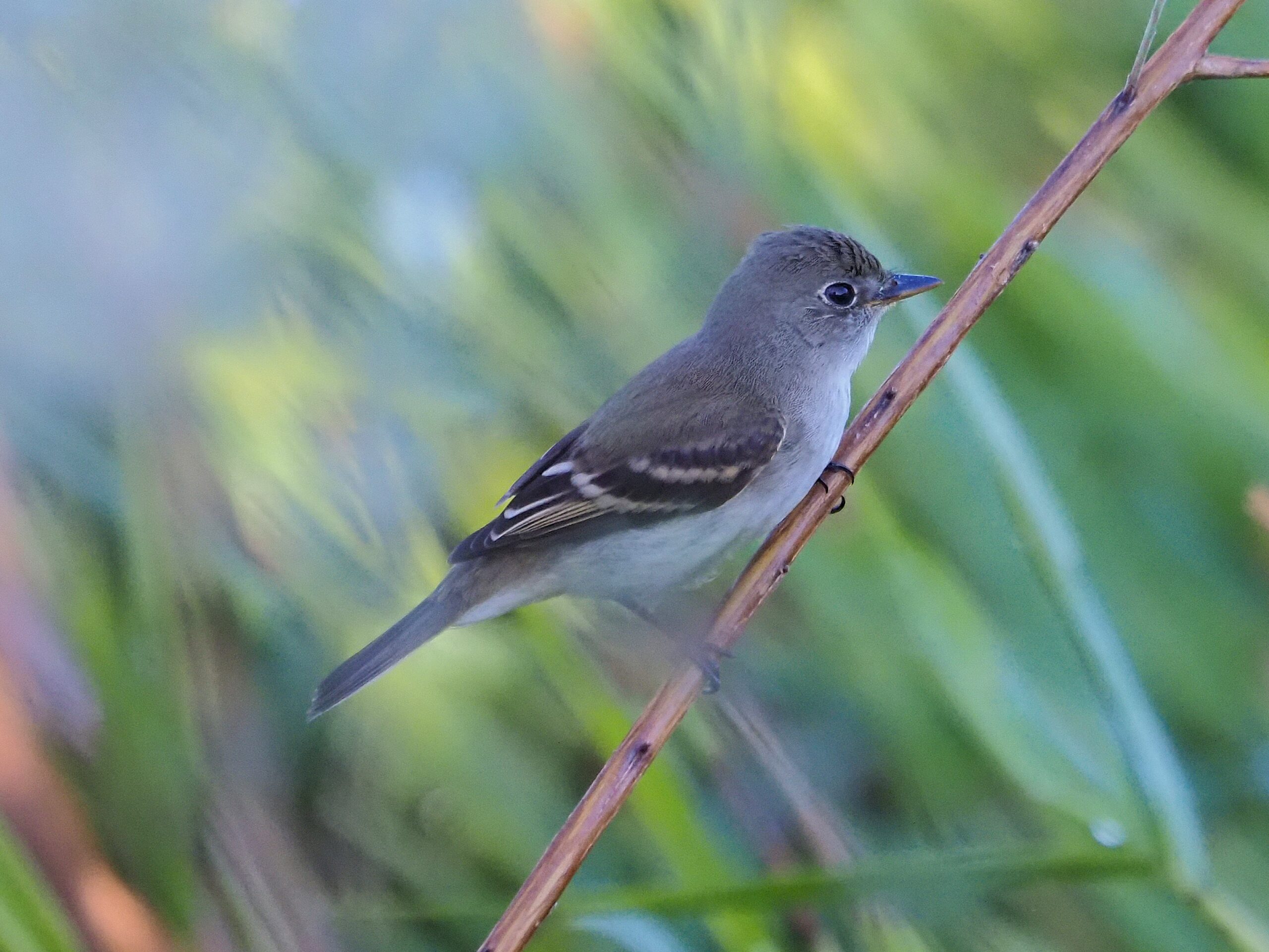
As shown on the Empid Overview page the Traill’s are in a group I call the “big-uns” of Eastern Empids. It is a lanky, plain, slaty-colored, pewee-like Empid — large and long-bodied. It never gives the impression of a small, round flycatcher, like the Least.
Bill
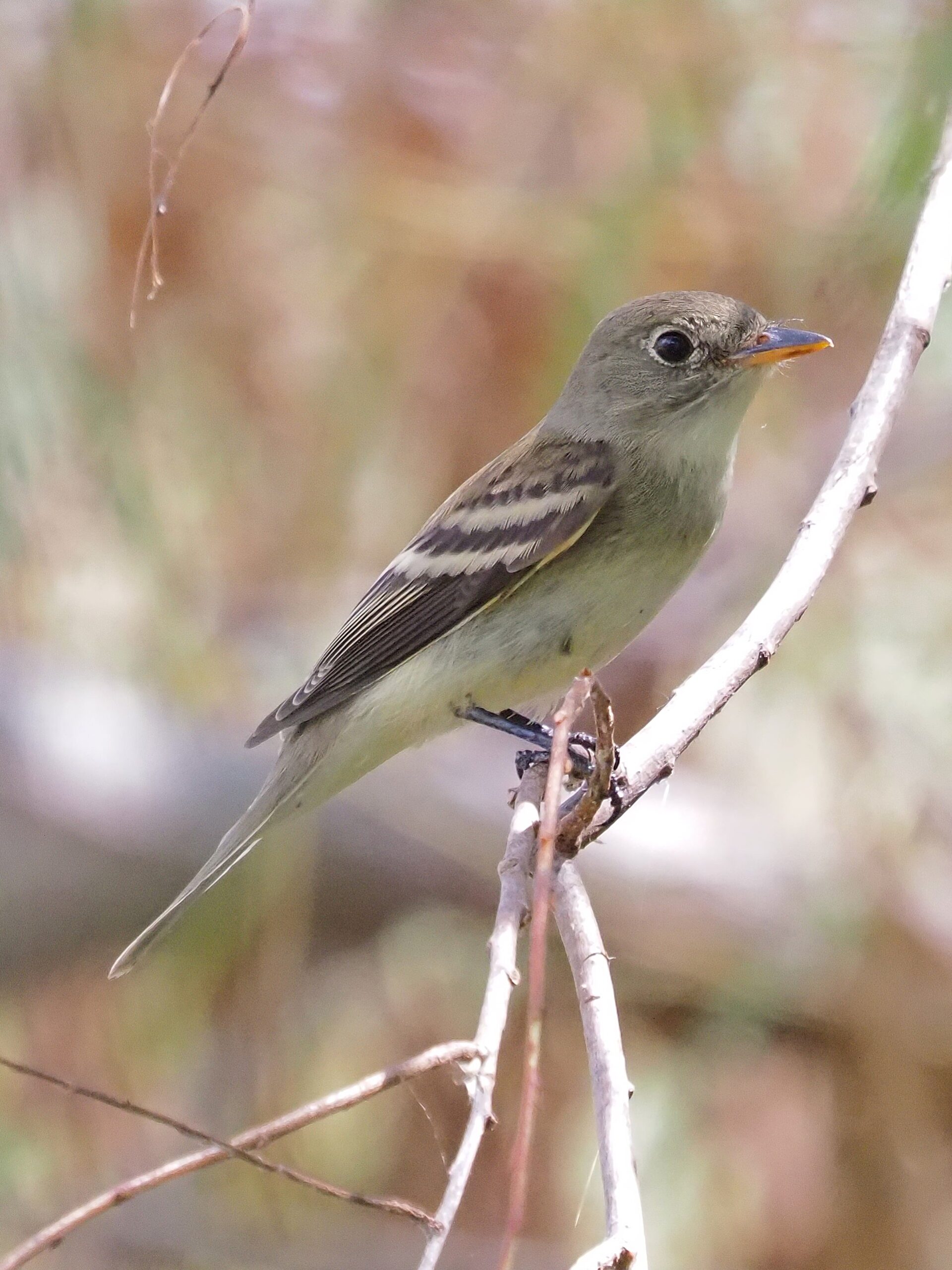
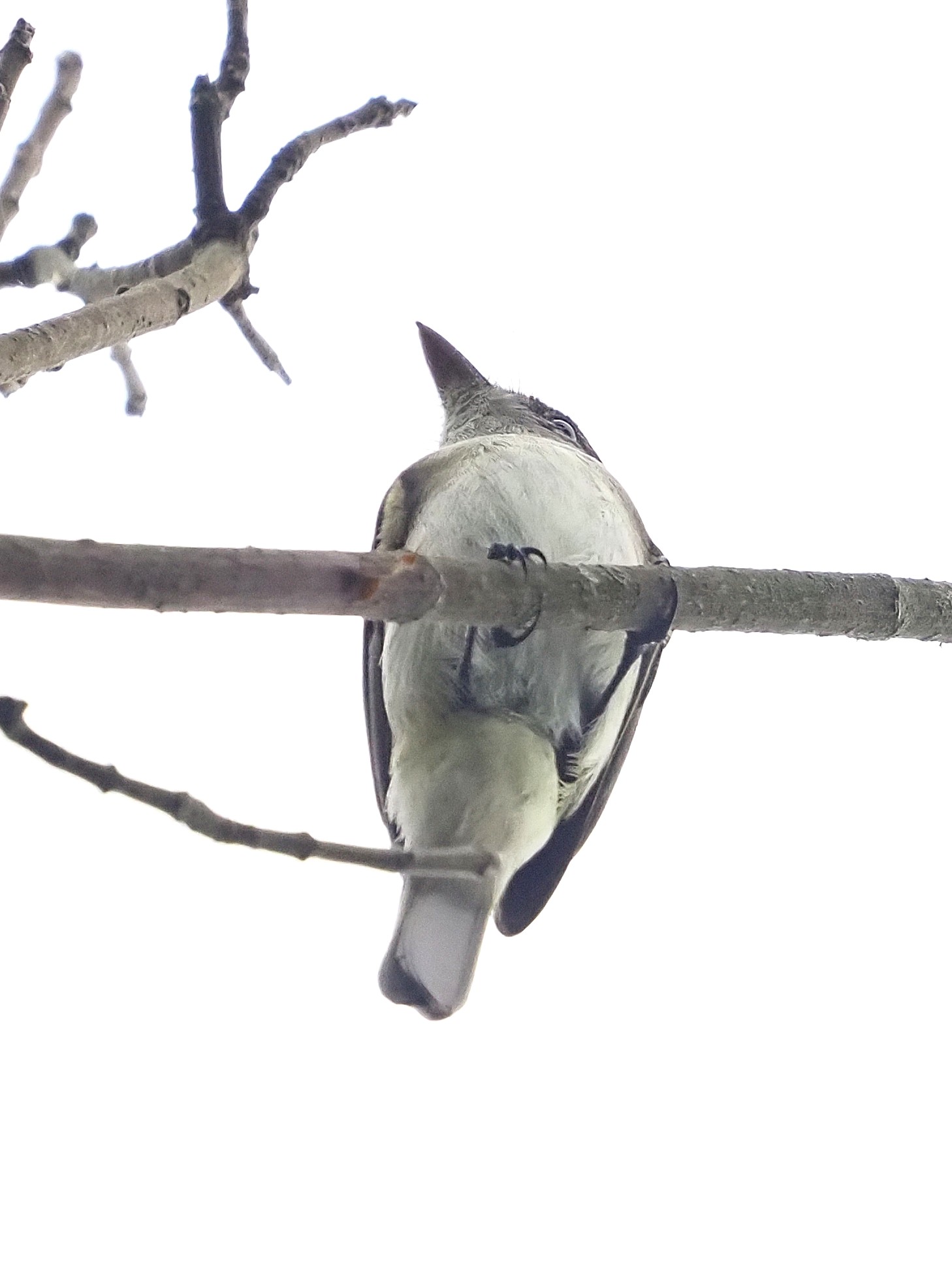
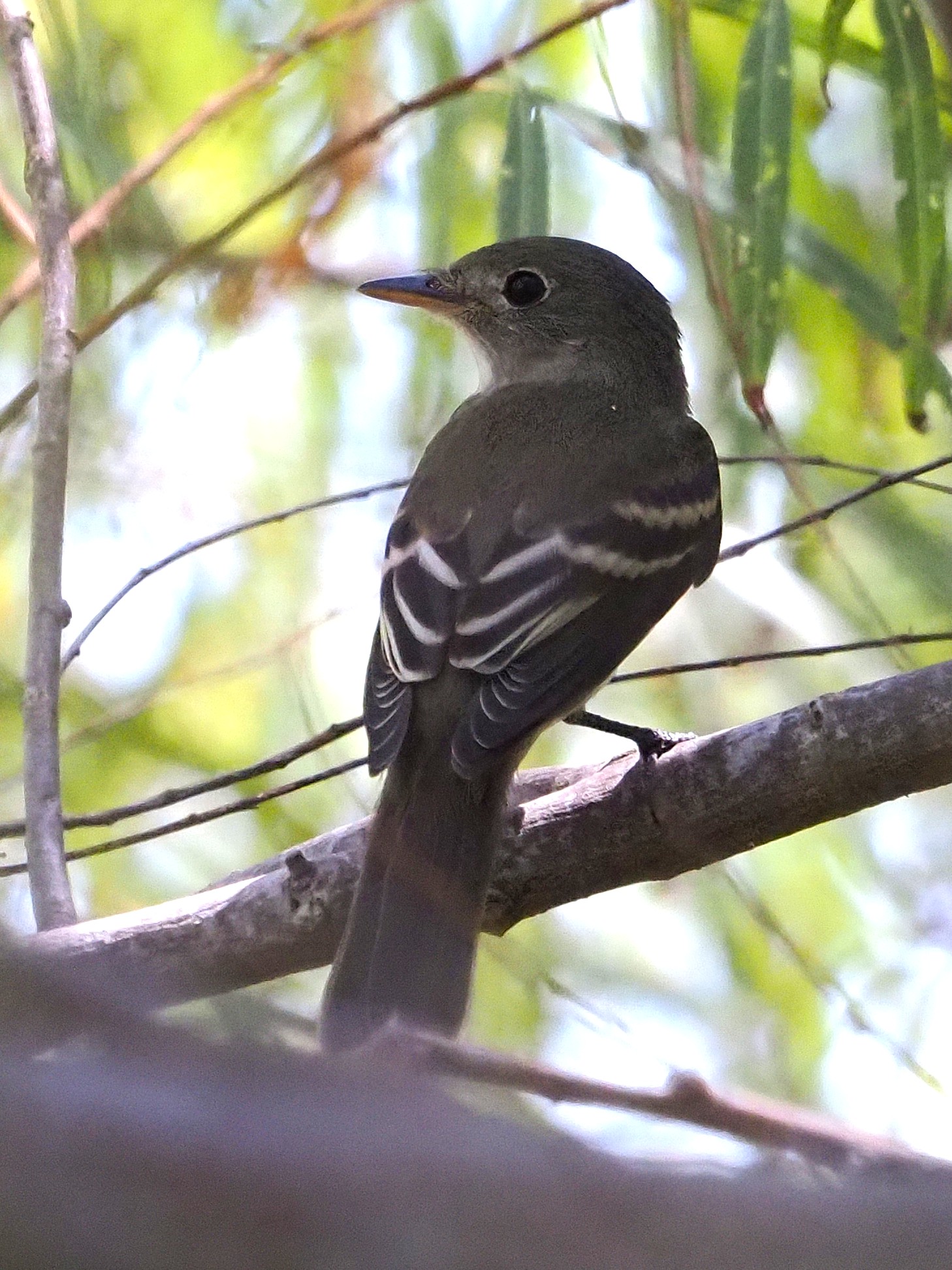
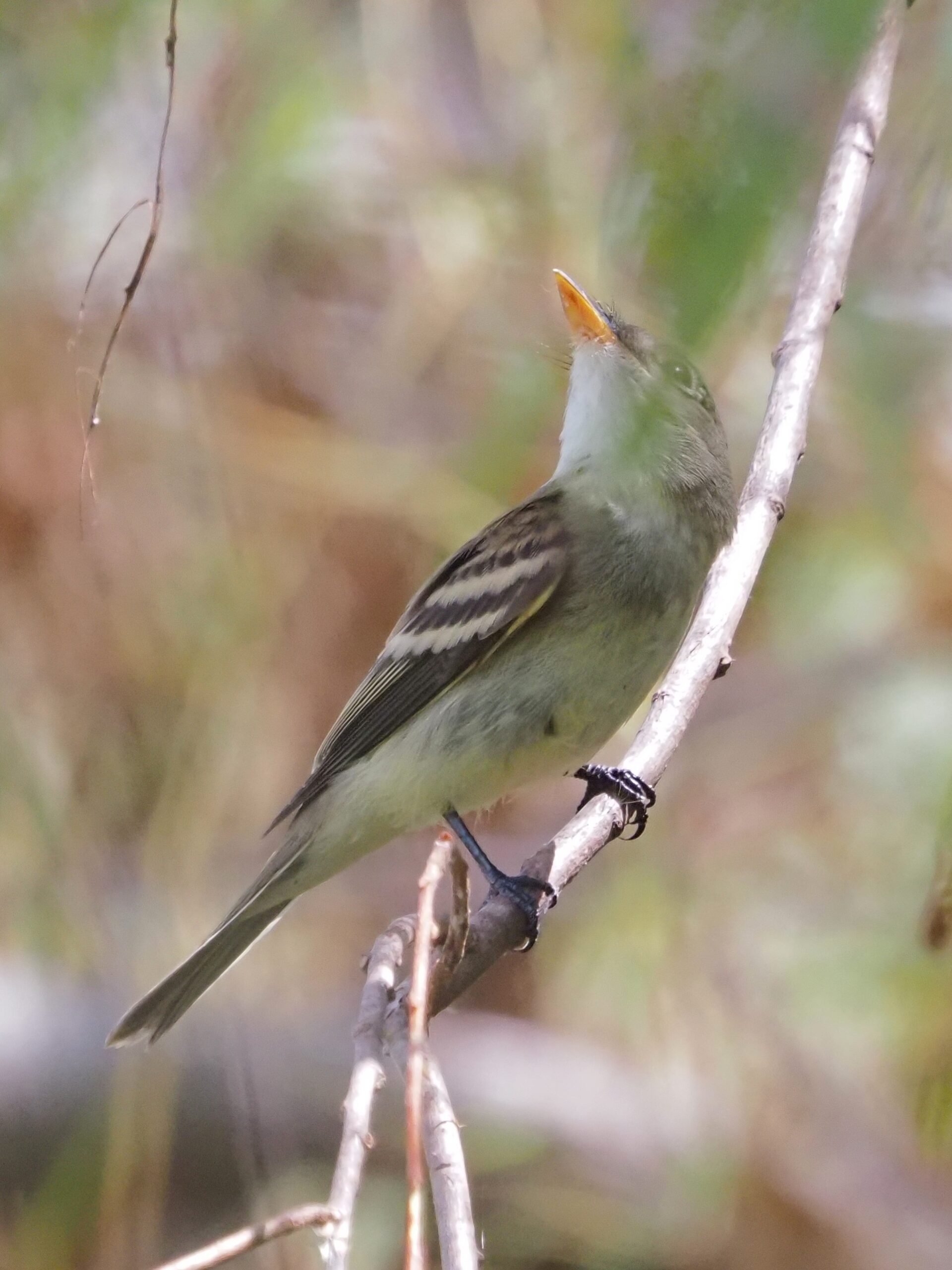
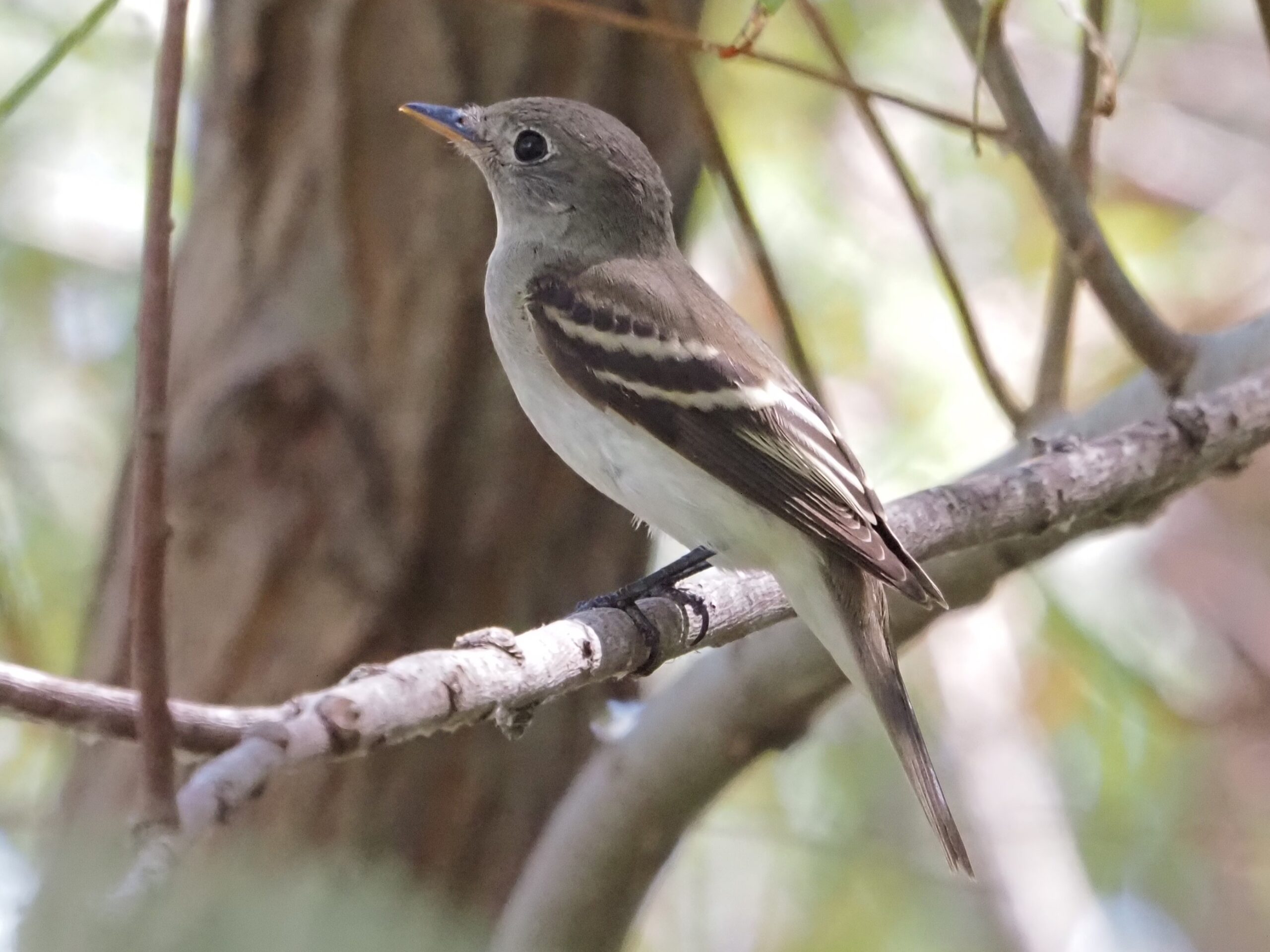
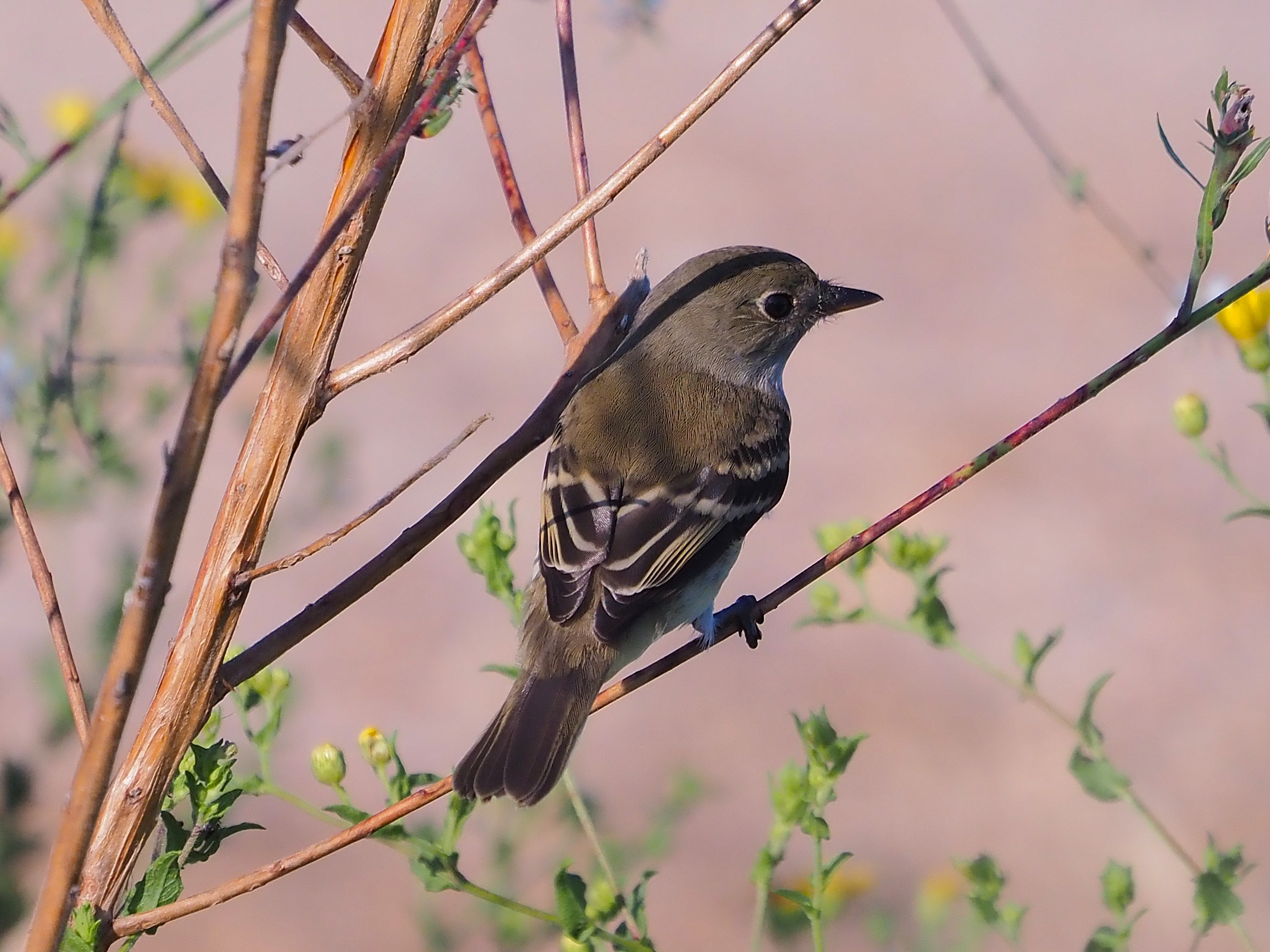
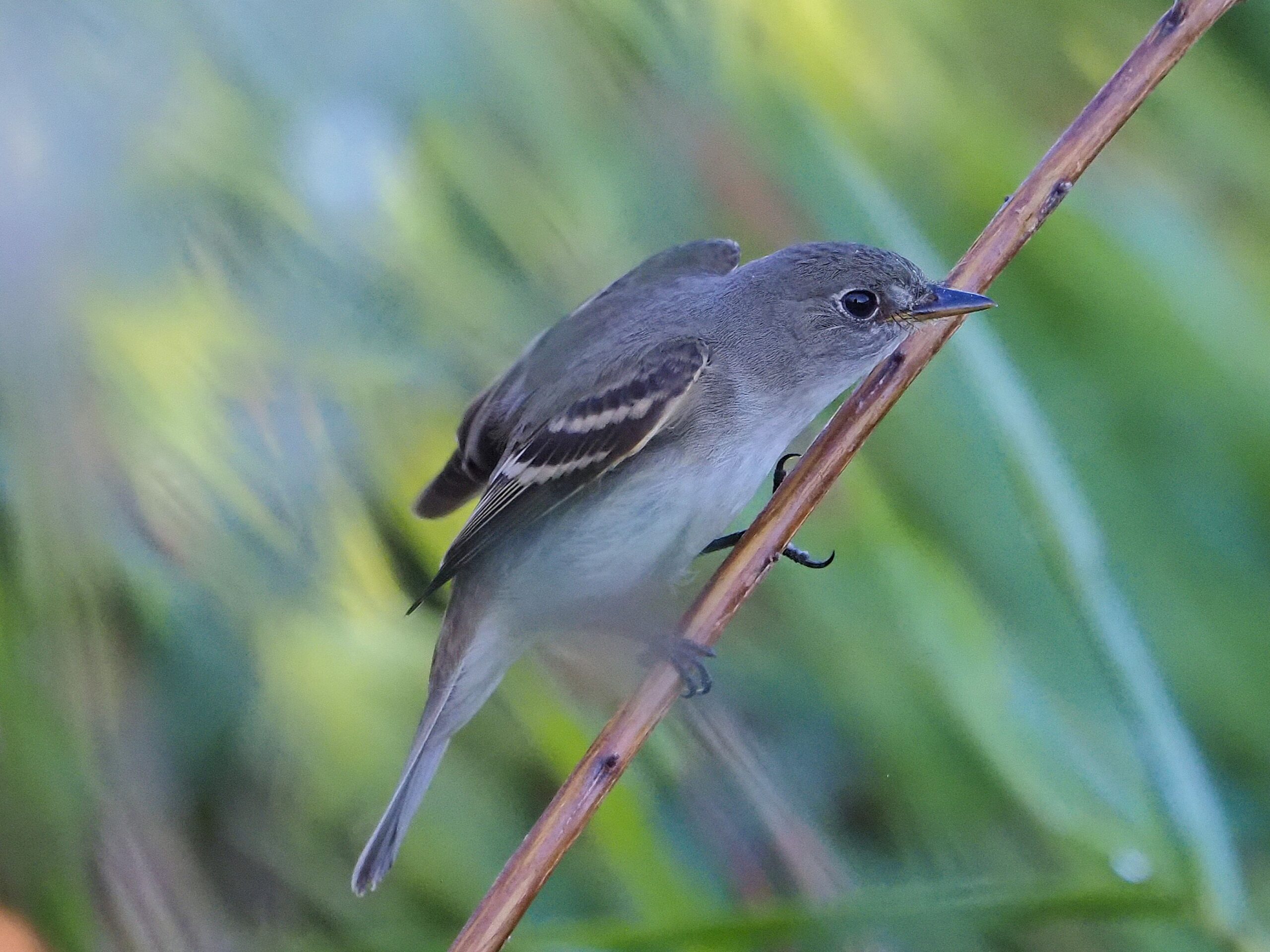
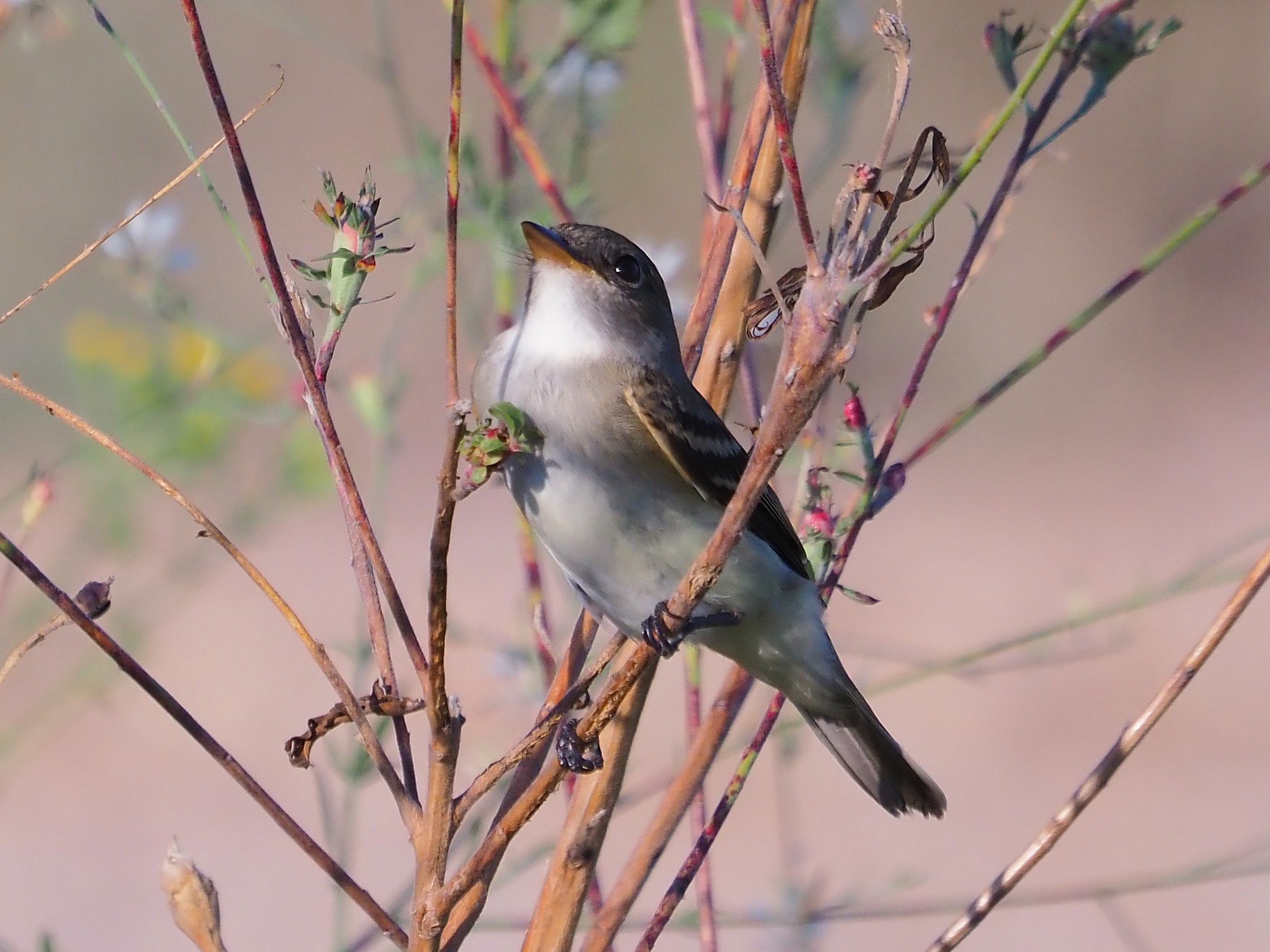
The Traill’s has a large broad-based bill (most like that of Acadian, but not as broad at the base) which may seem to have a slightly convex edge. The lower mandible is usually yellowish, though sometimes it has a small dusky tip. Several views of the bill are shown below.
Wings & Primary Projection
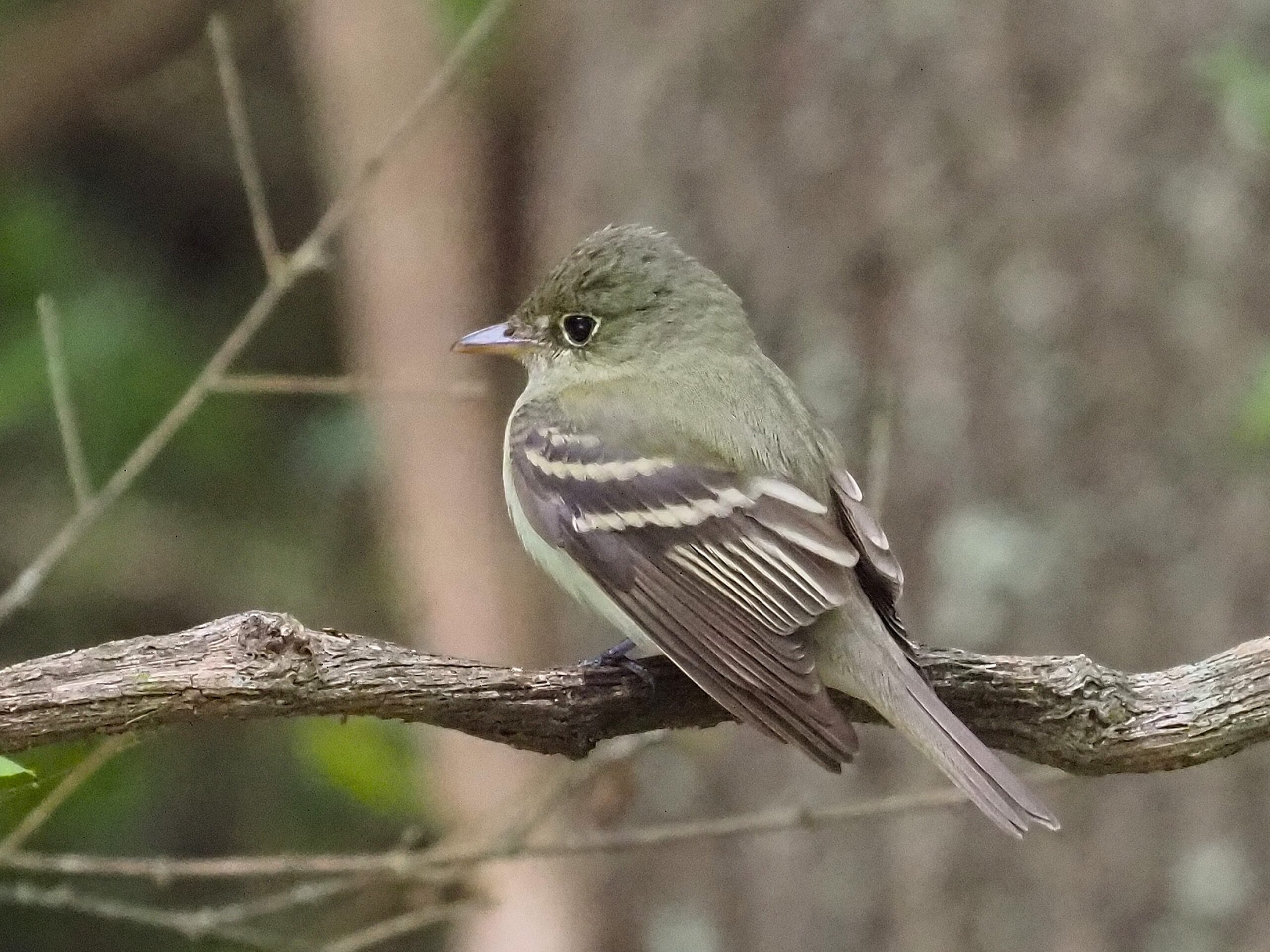
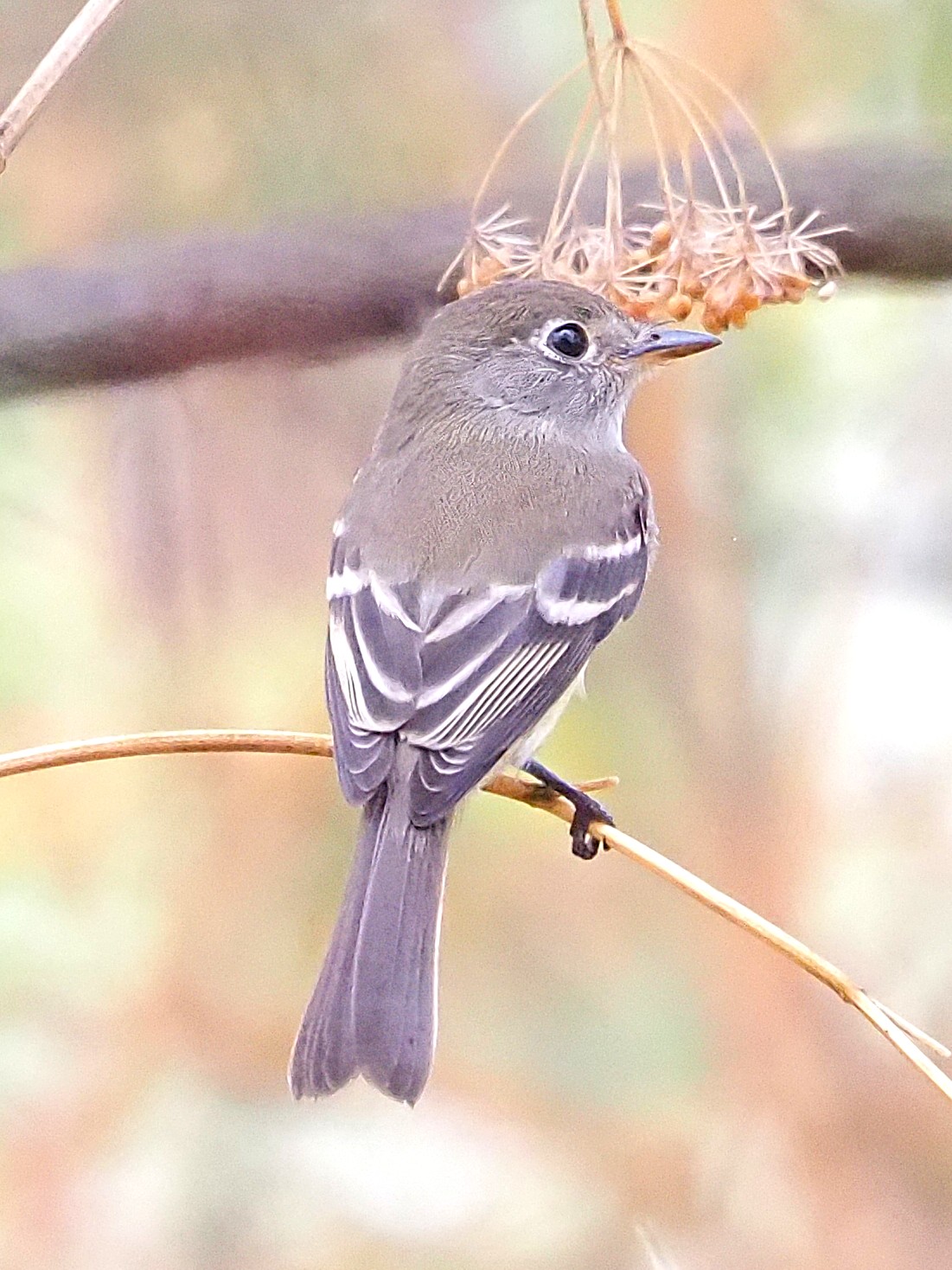
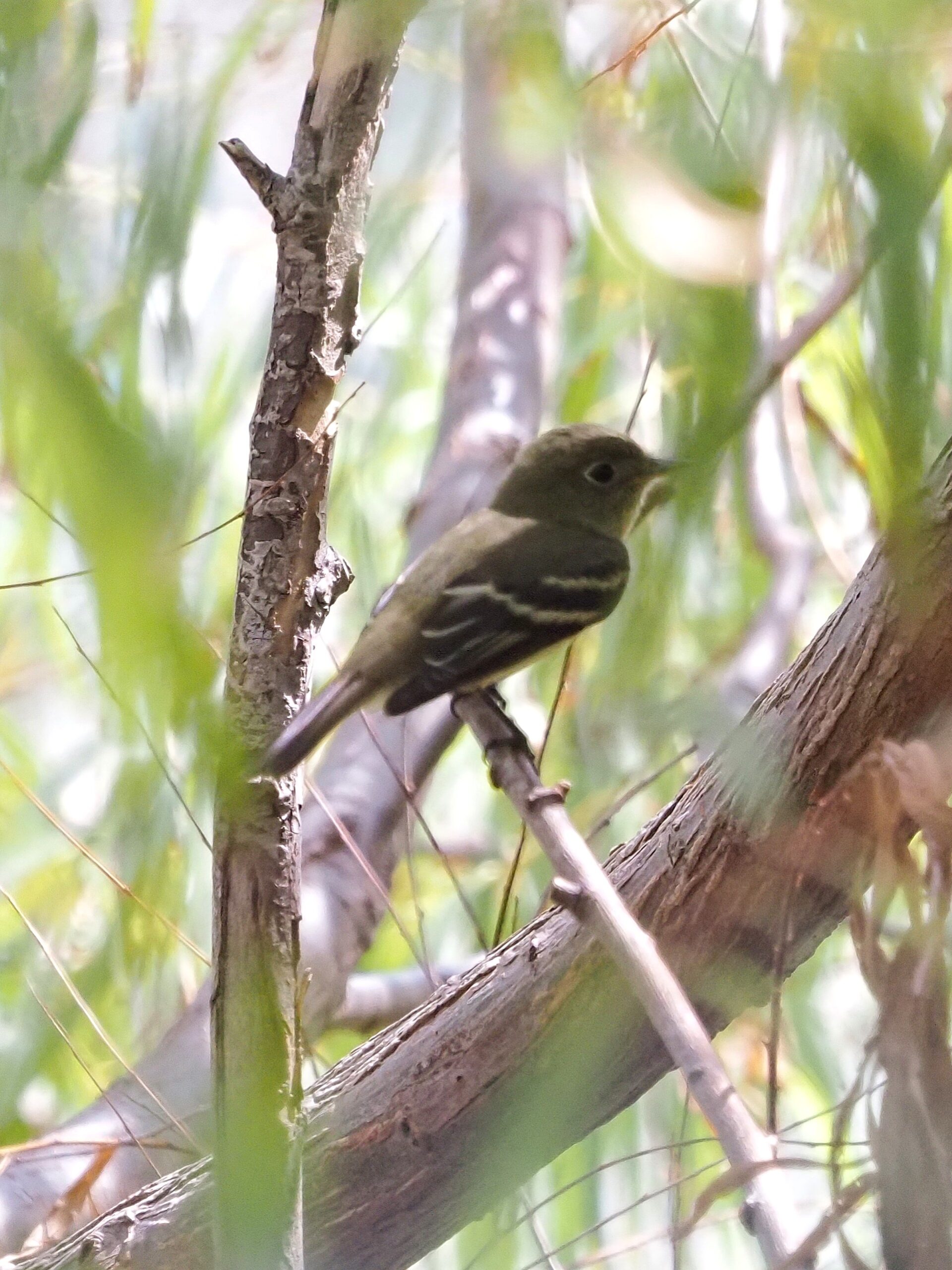
The Traill’s has a moderate primary projection and as such this attribute may not be conclusive on its own, but can be a useful clue. The Traill’s primary projection can be said to be definitely longer than the Least, but generally shorter than the Acadian. The primary projection of the Yellow-bellied is also moderate, and sometimes even long. The primary projection of all Eastern Empids are shown in the next group of photos.
Tail Proportions & Shape
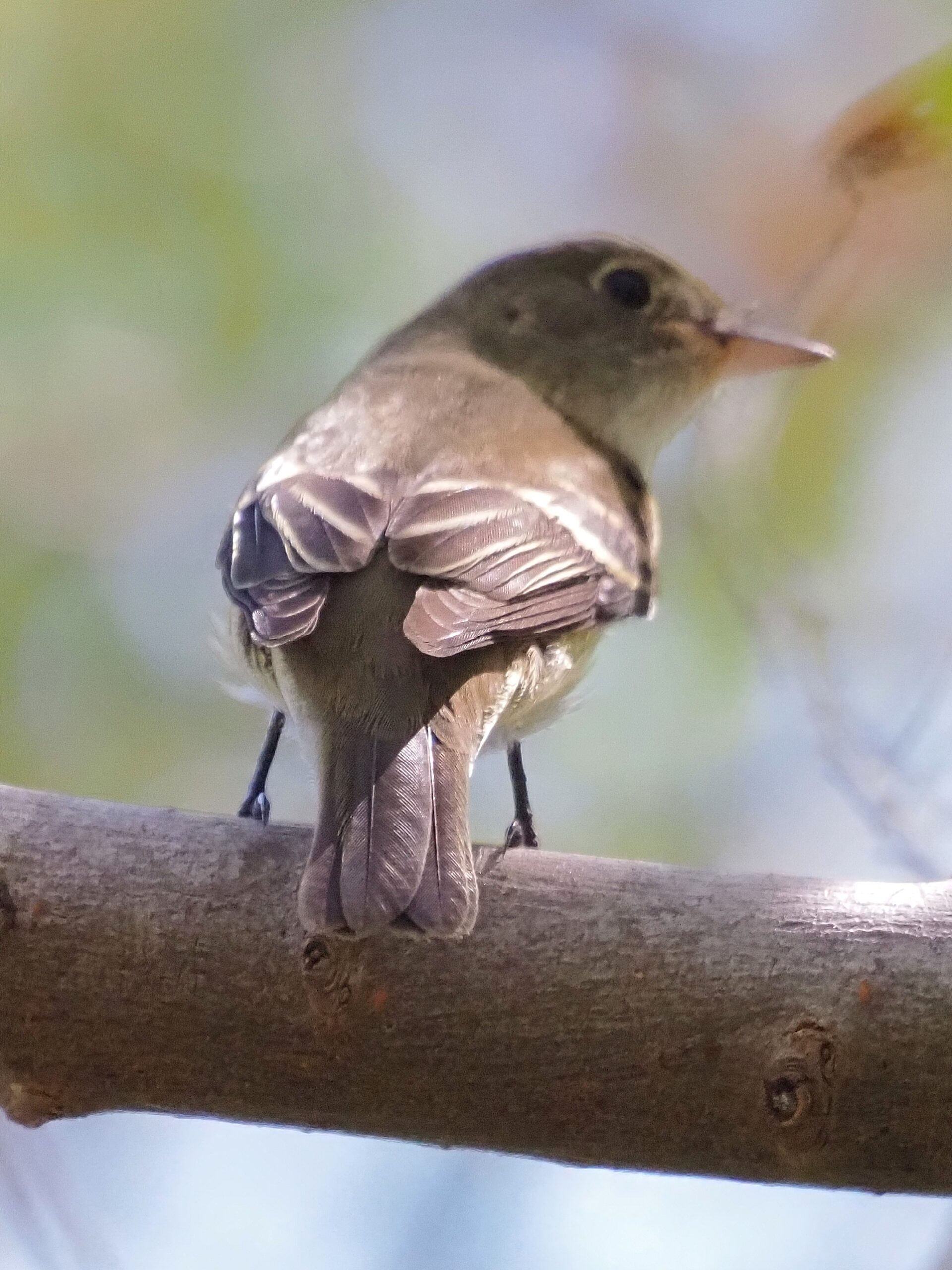
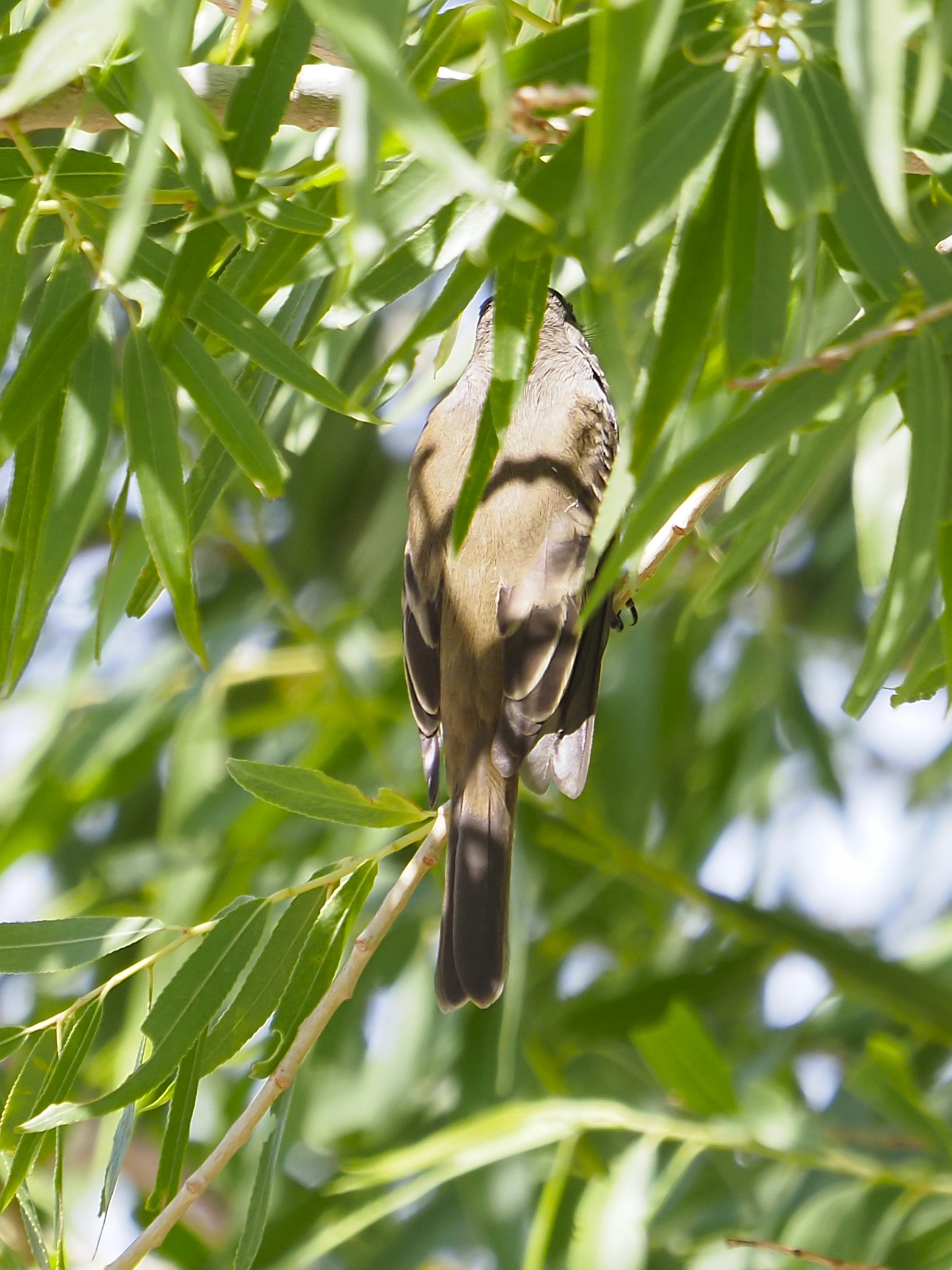
Though not unique amongst empids (the Acadian’s tail is similar), the sturdy tail of the Traill’s is one of its most distinguishing field marks. The tail is broad and rectangular, usually with no hint of narrowing at the base. See photos below and have another look at the tails of the other Eastern Empids in the gallery above.
Head Shape & Proportion to Body & Crown of Head
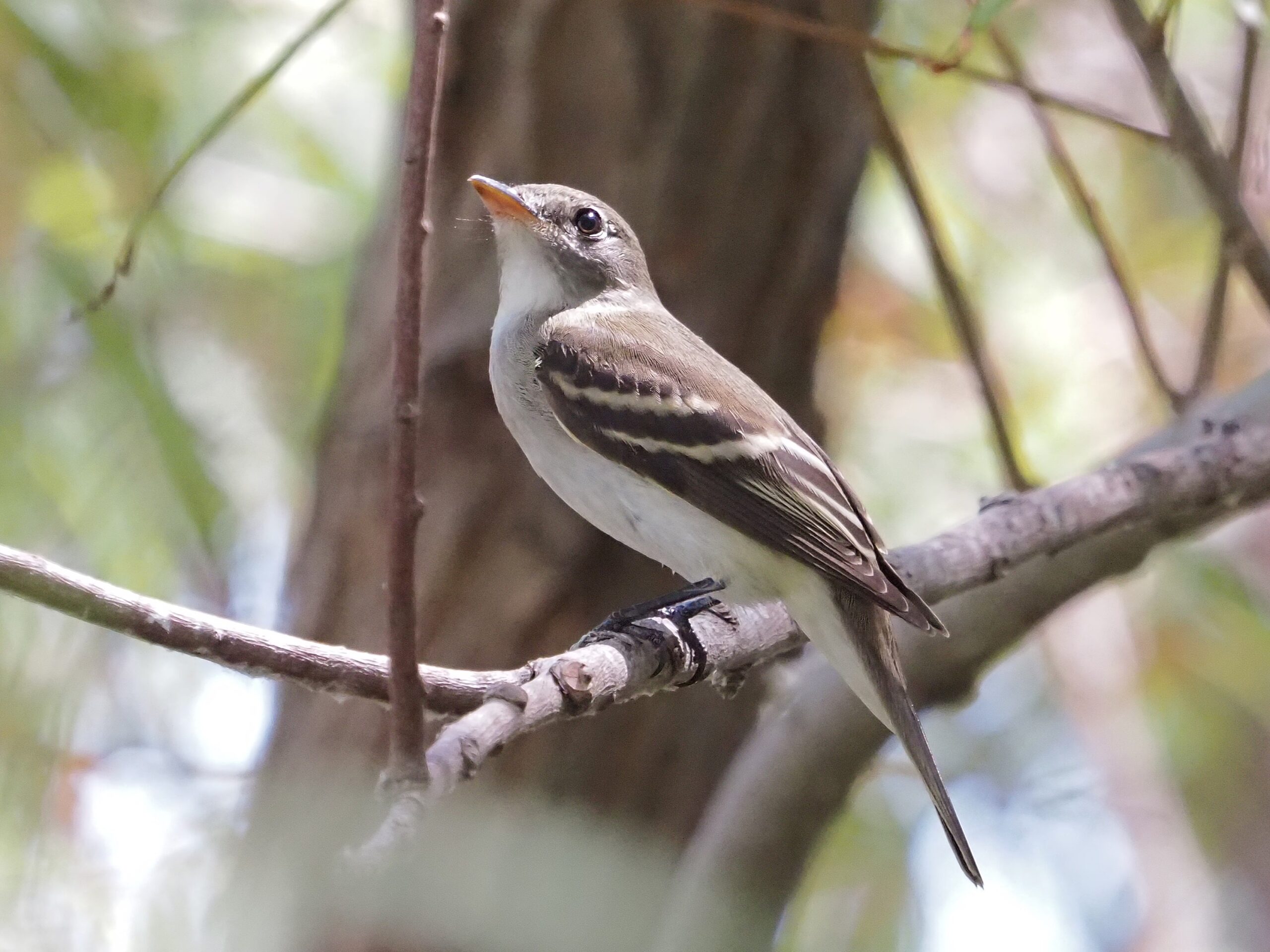
The Traill’s sports a slender head and in combination with the long bill, gives the impression of a very long-faced species, with a flat head. The crown is sometimes gently rounded, sometimes slightly peaked toward the rear, but always slender.
Plumage Characteristics
Eye-ring
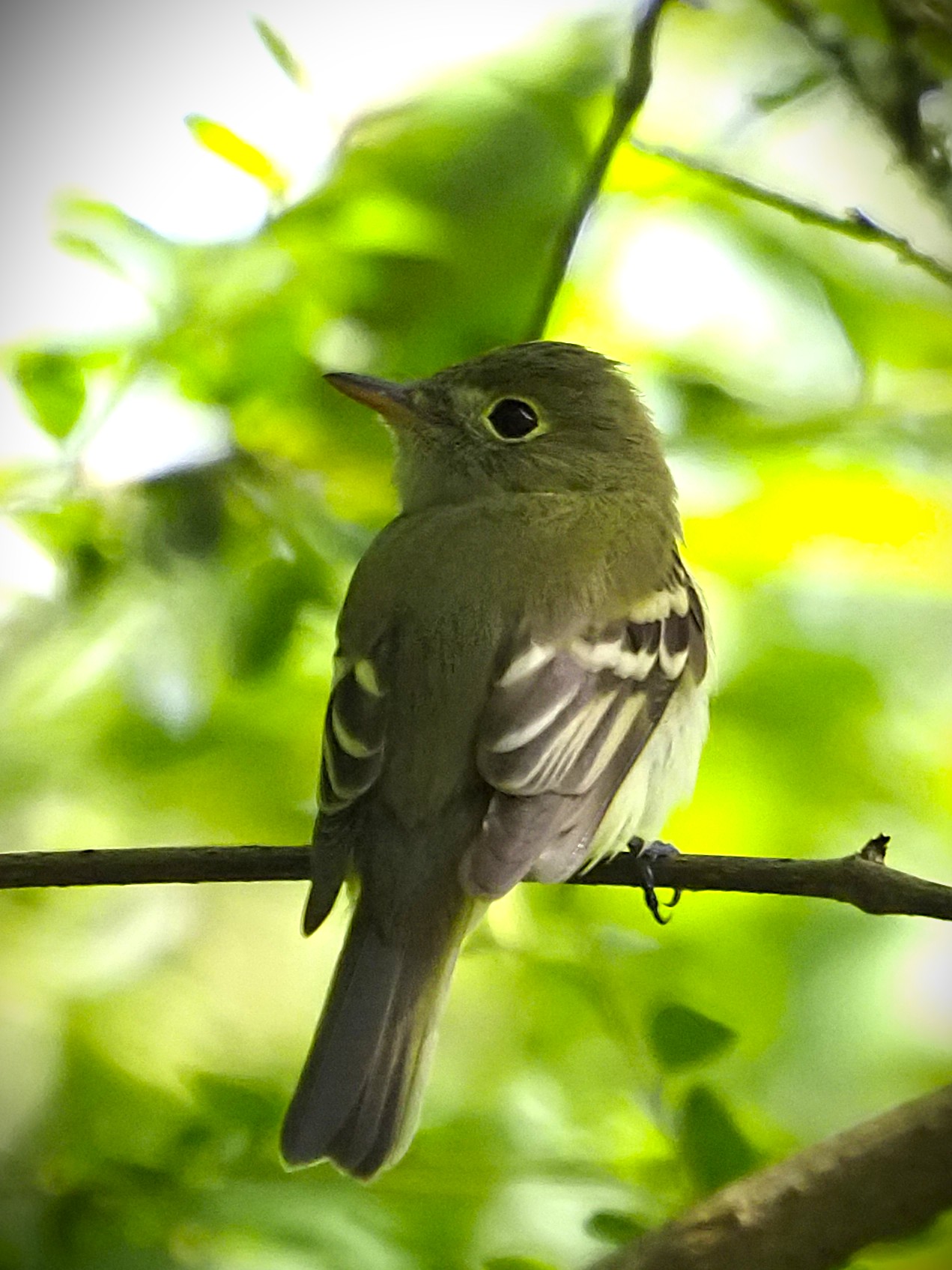
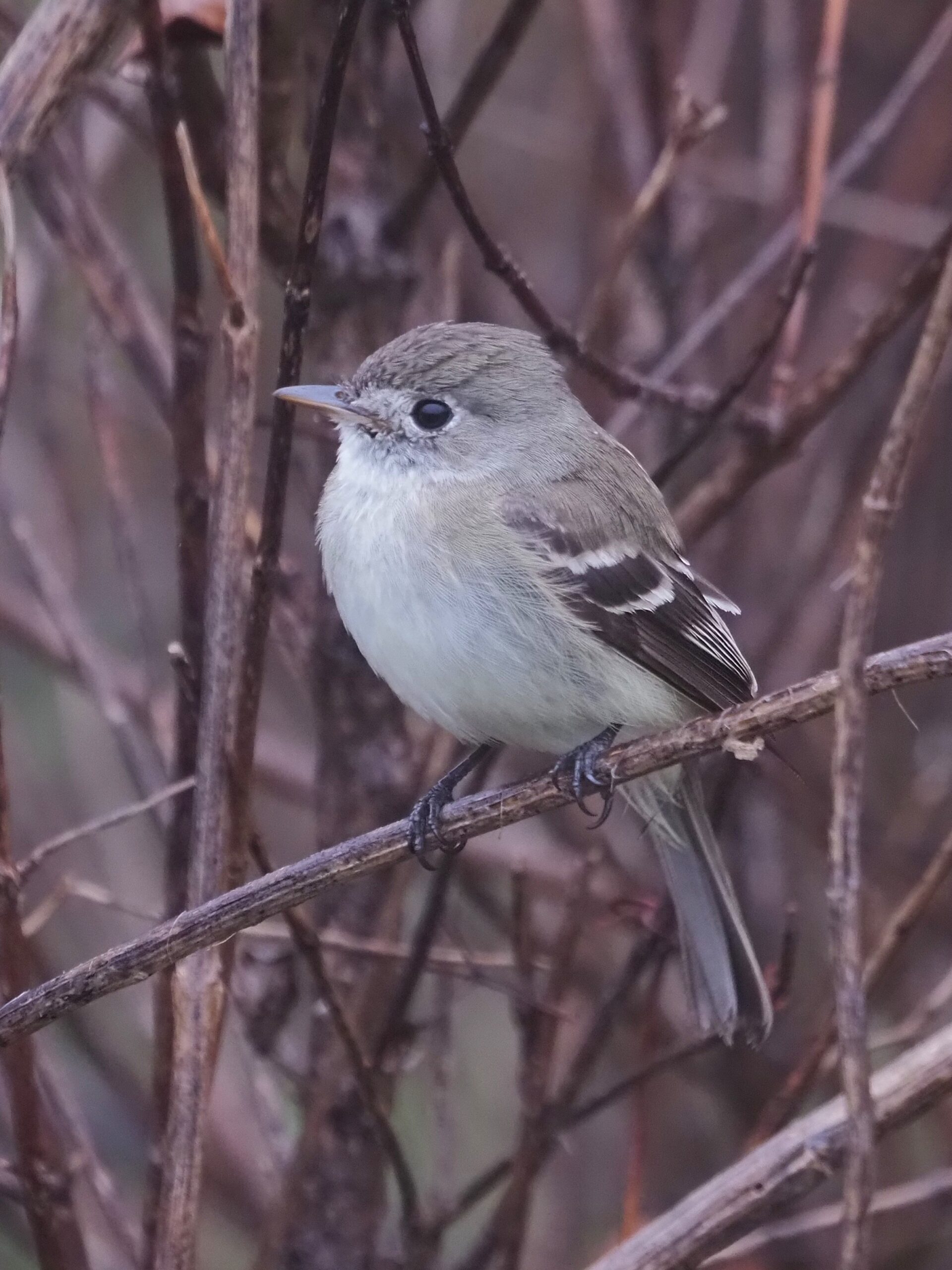
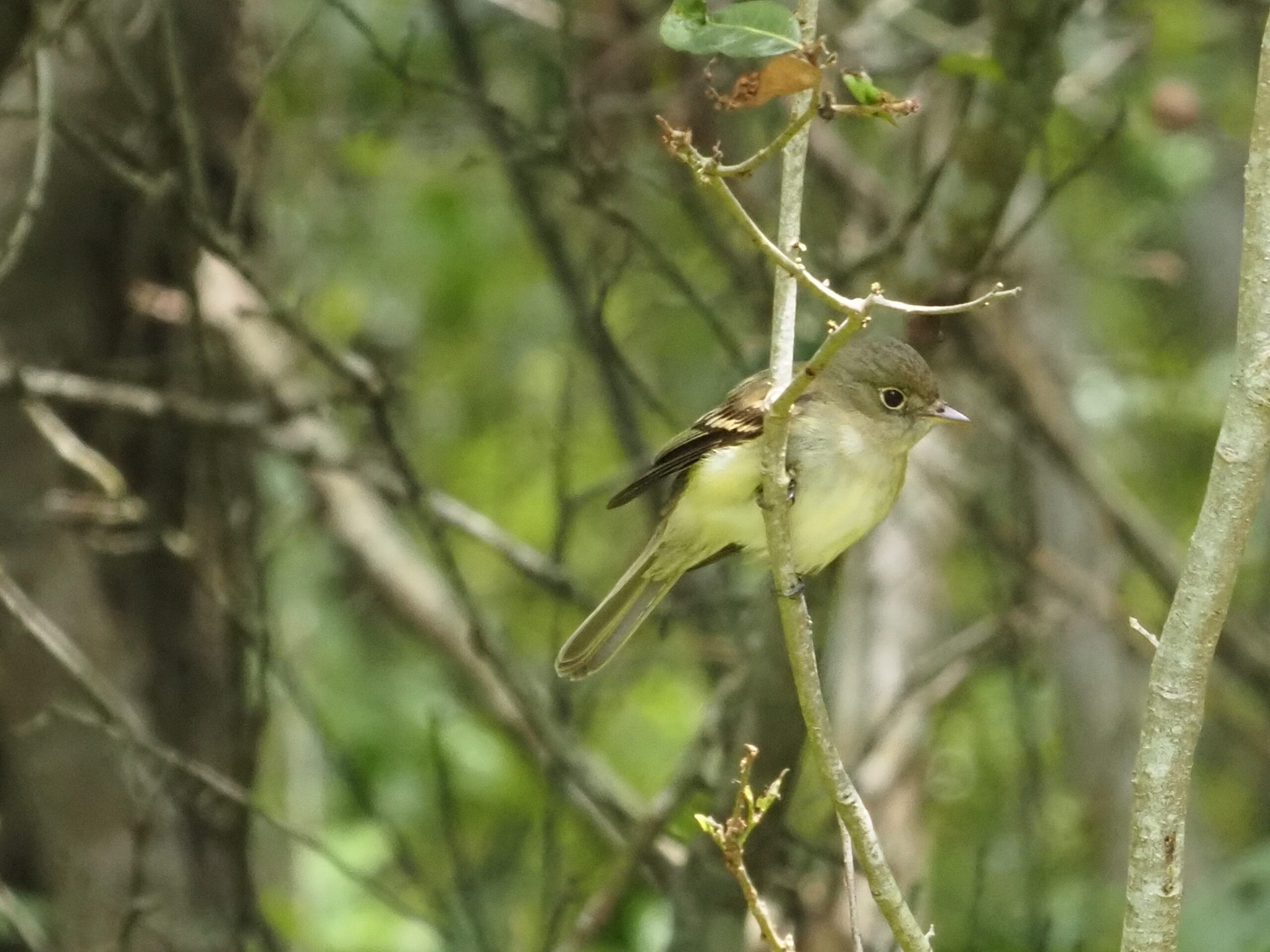
The eye-ring of the Traill’s varies from conspicuous but narrow, to virtually absent. The eye-rings of the 4 Eastern Empids are shown below starting with 3 examples of the Traill’s.
Throat Color & Contrast
The white throat of the Traill’s contrasts strongly with the dark sides of the face and often with a dusky breast band. (The throats of all 4 Eastern Empids are compared under the Acadian page).
Additional Key Points of ID
The most consistent plumage characteristic of the Traill’s is the white throat, contrasting noticeably with the face.
To Flycatchers Overview & Feather Groups