Least Flycatcher
The Least is generally the most numerous migrant Empid in most of eastern North America. It also occurs as a regular vagrant in the west. The short primary projection, compact build and bold but messy eye-ring are the first things to observe.
Structural Characteristics
Body Size & Shape
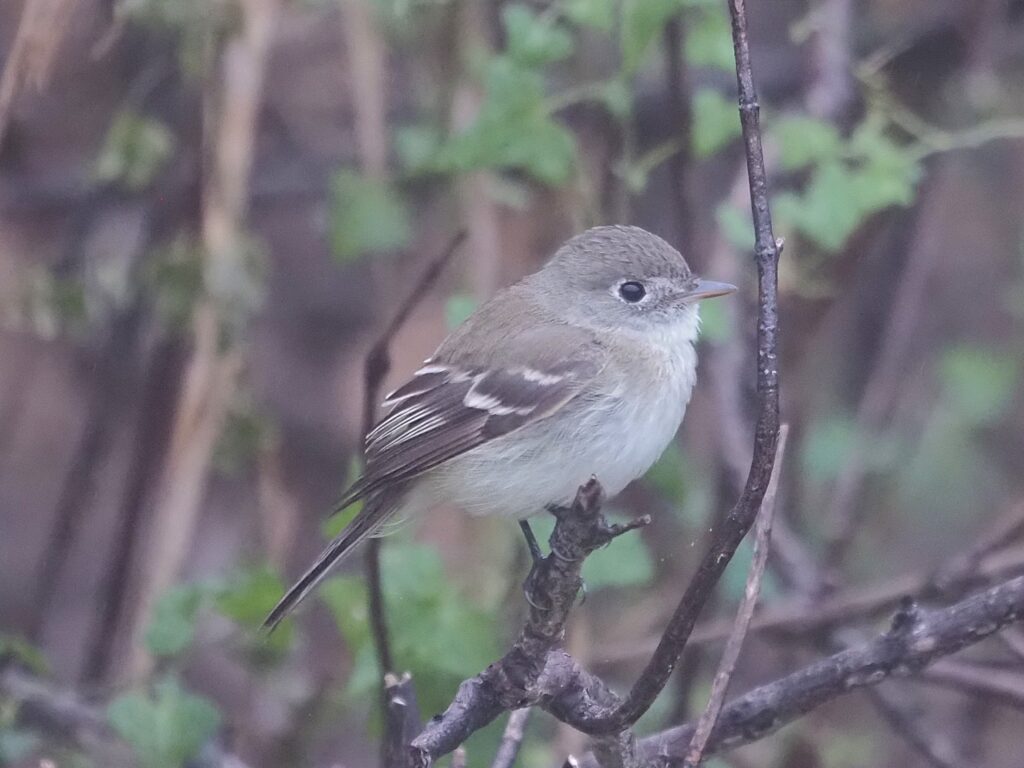
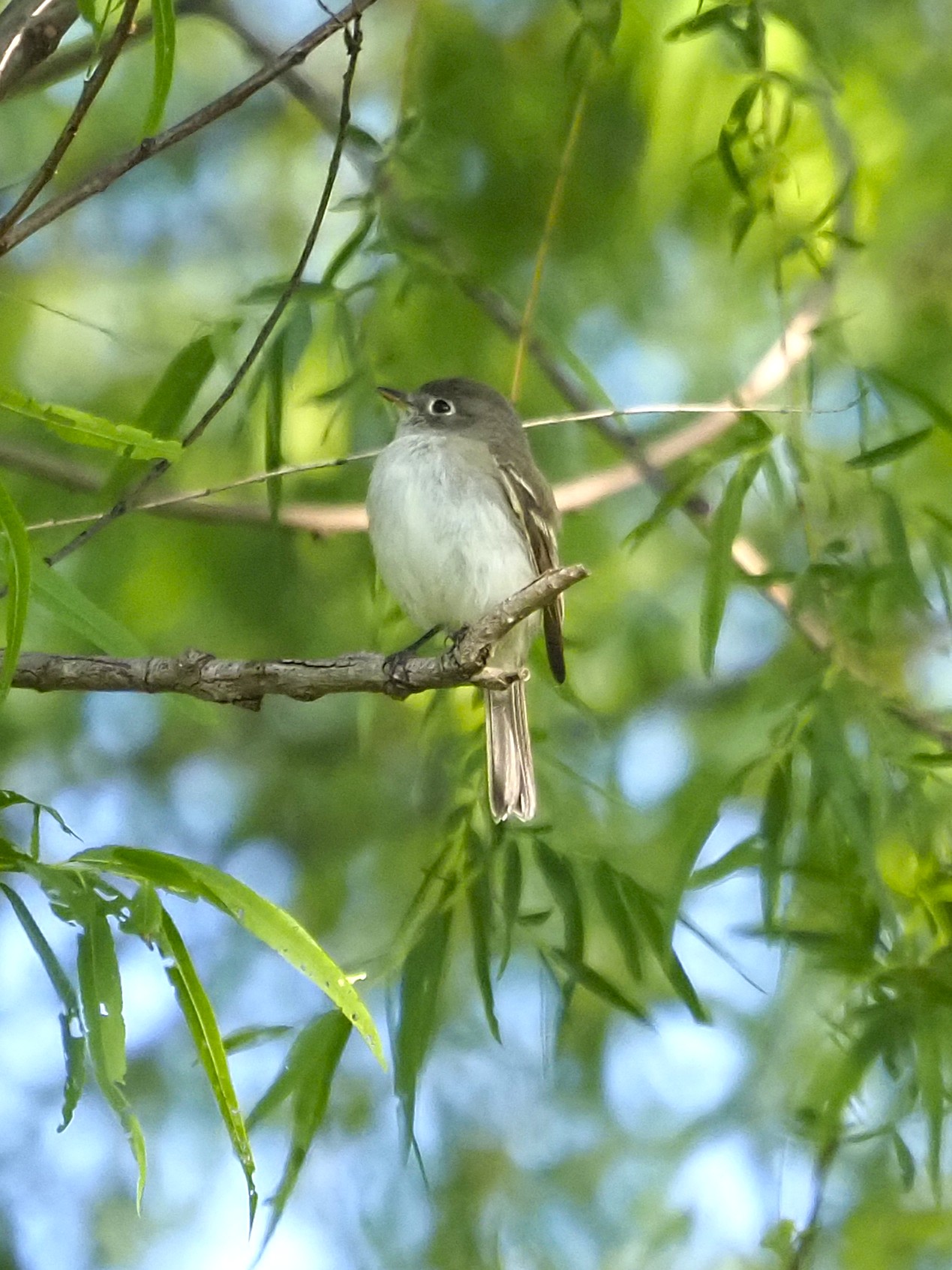
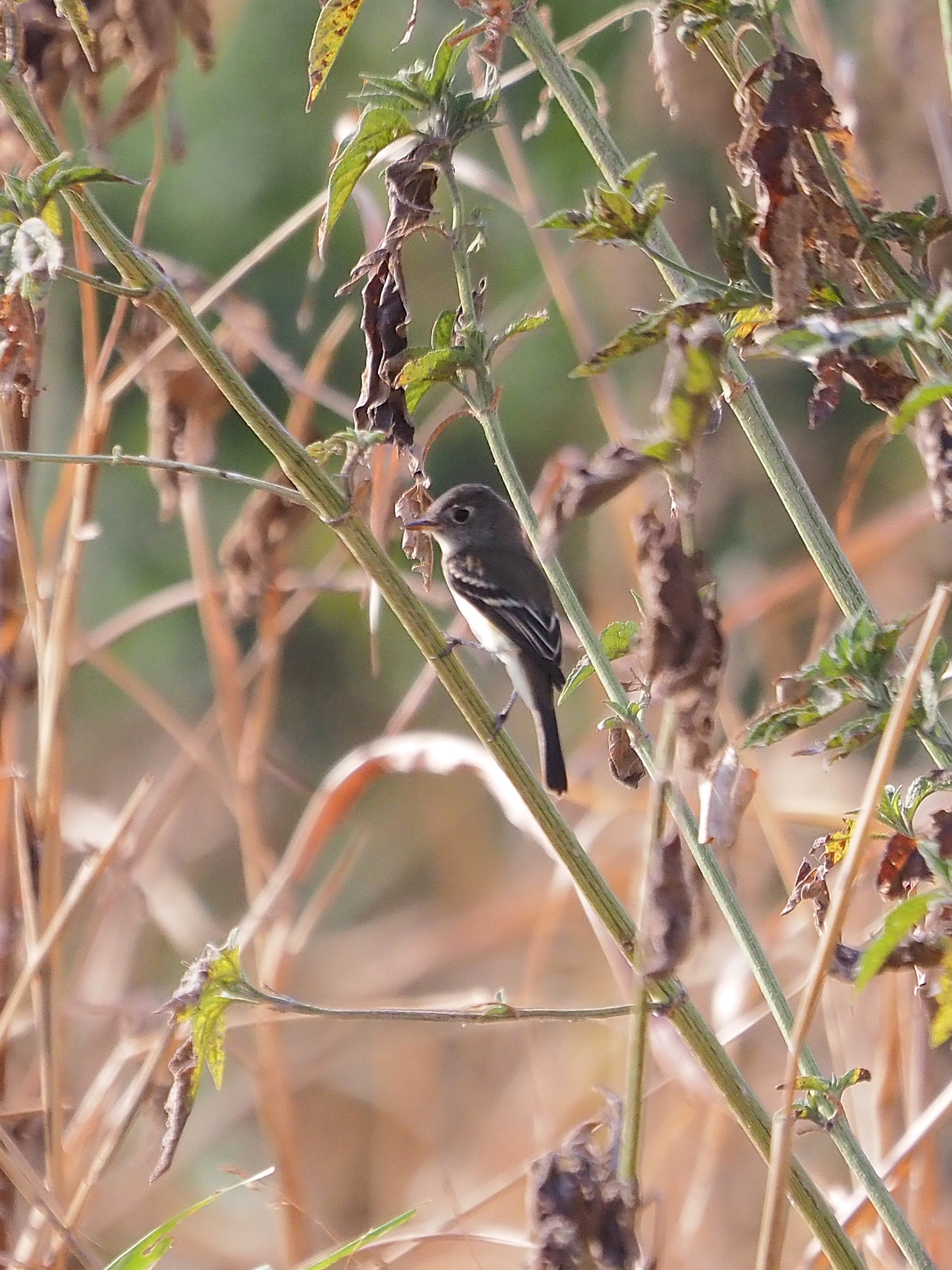
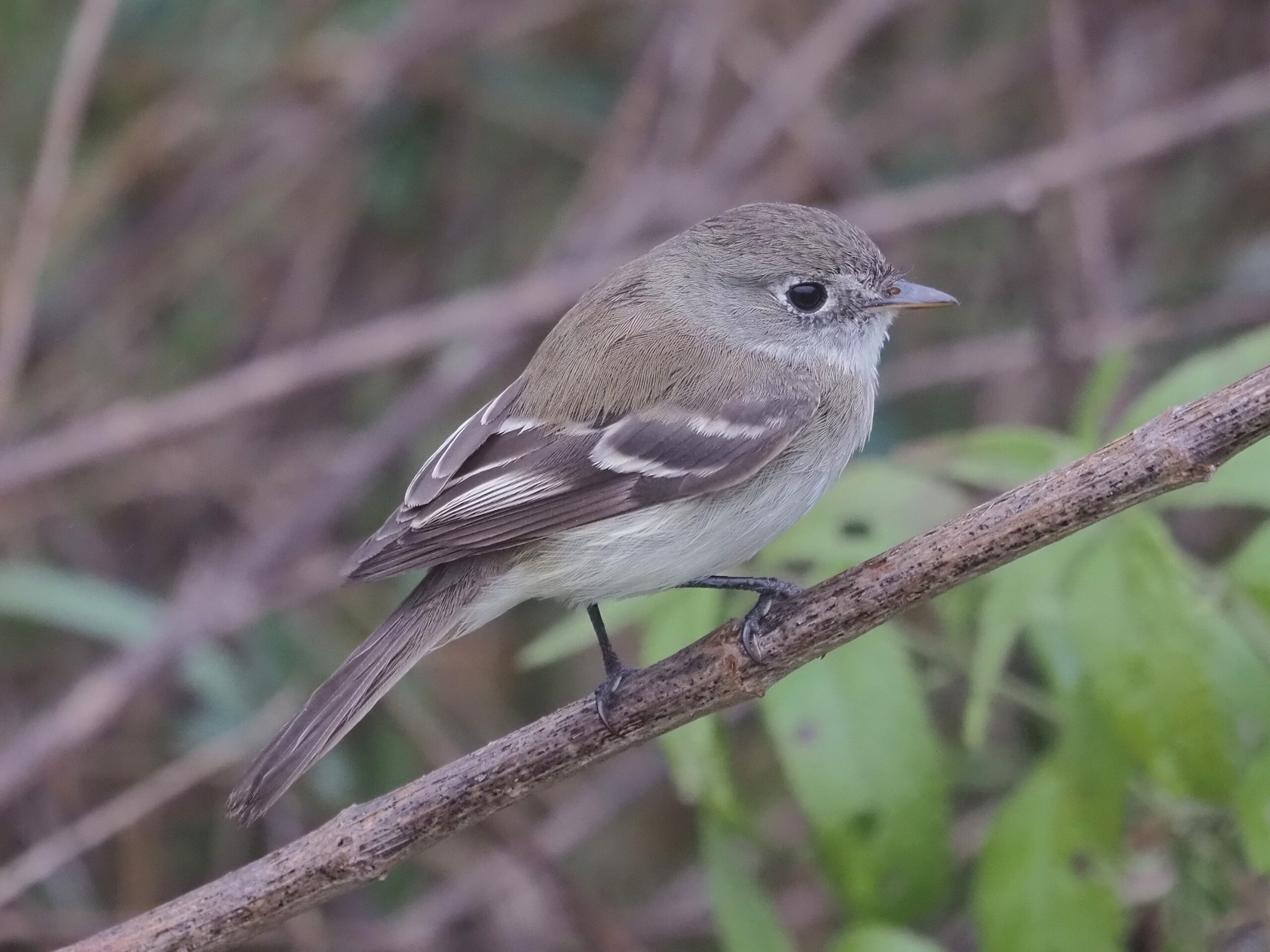
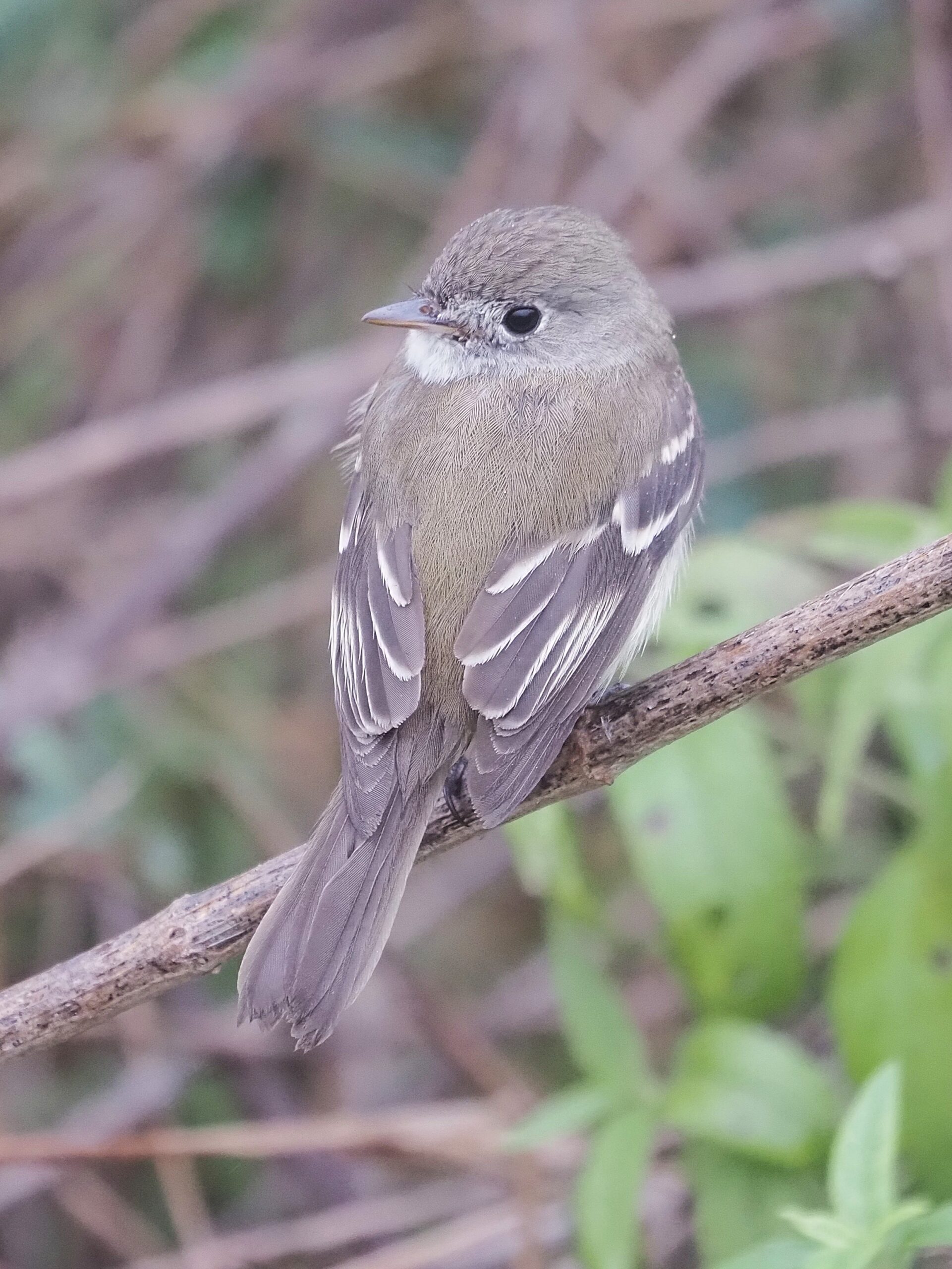
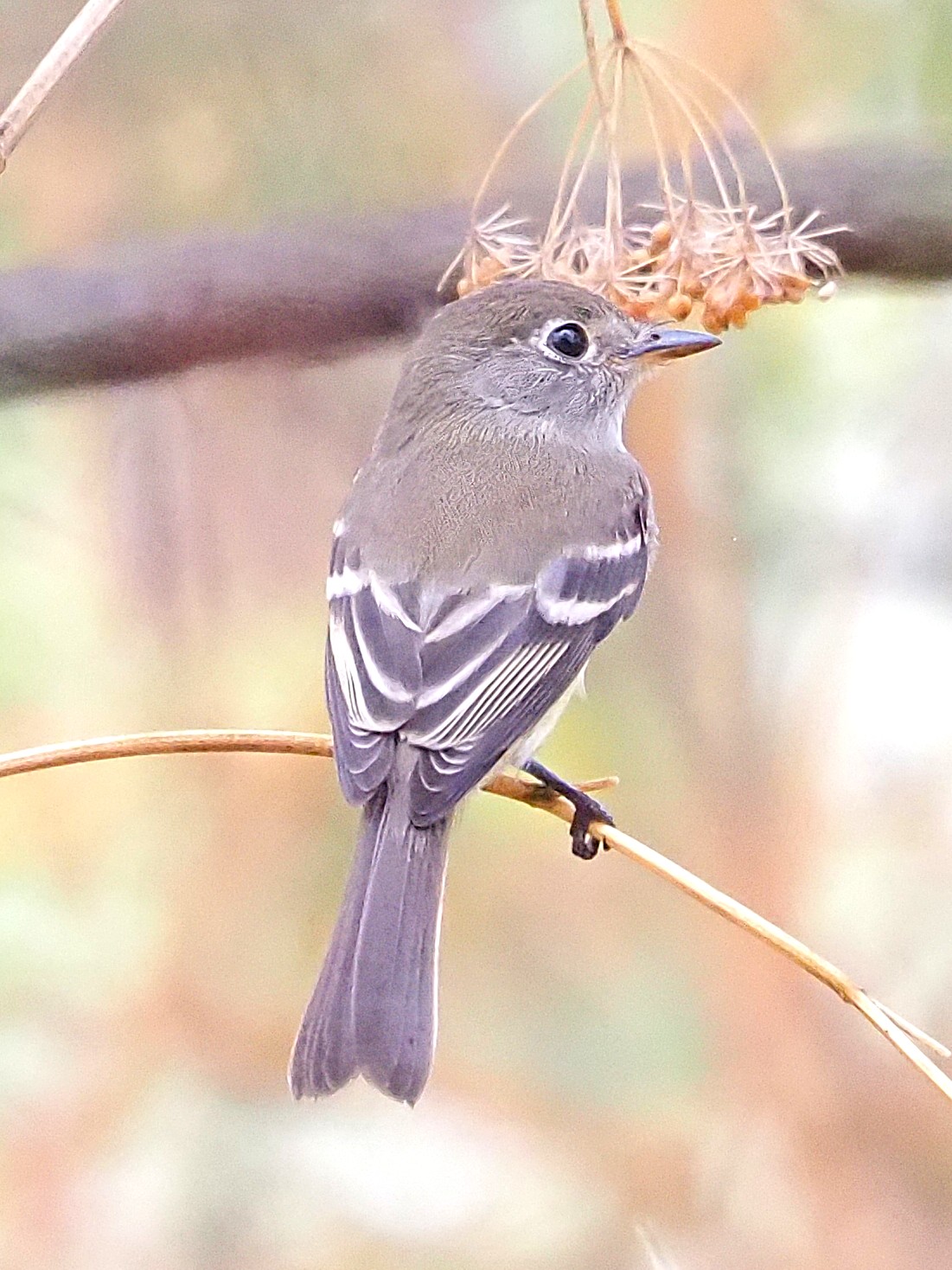
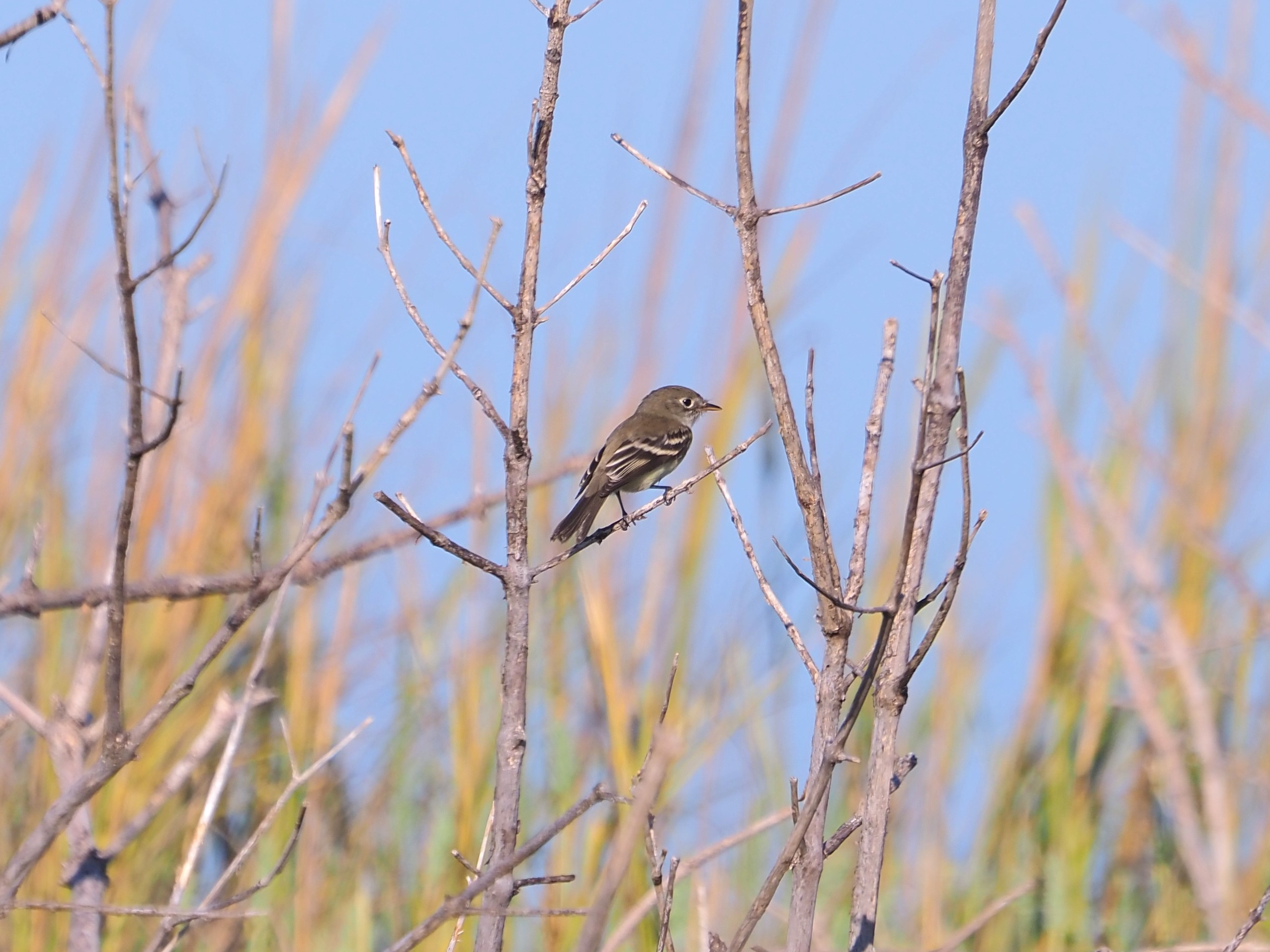
As shown under the Empids Overview page, the Least is one of what I call “the little-uns”. When compared to Acadian and Trails, the Least is usually noticeably smaller. Pictured below is a short-winged, round-bodied, round-headed, small-billed individual which is stereotypical of many of this species.
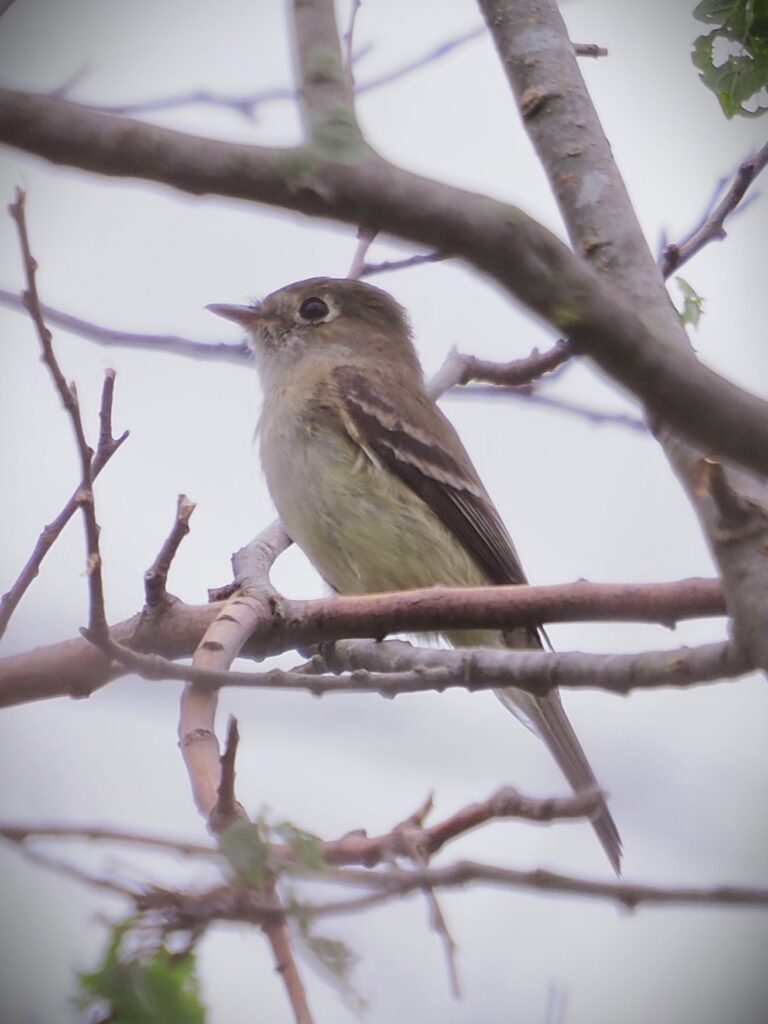
However, some Least Flycatchers can appear larger, longer-bodied, larger-billed, and with a blockier head as in this bird pictured below.
Bill
The Least has a short, intermediate-width, triangular bill with a yellow-orange lower mandible, sometimes with an ill-defined dusky tip.
Wings & Primary Projection
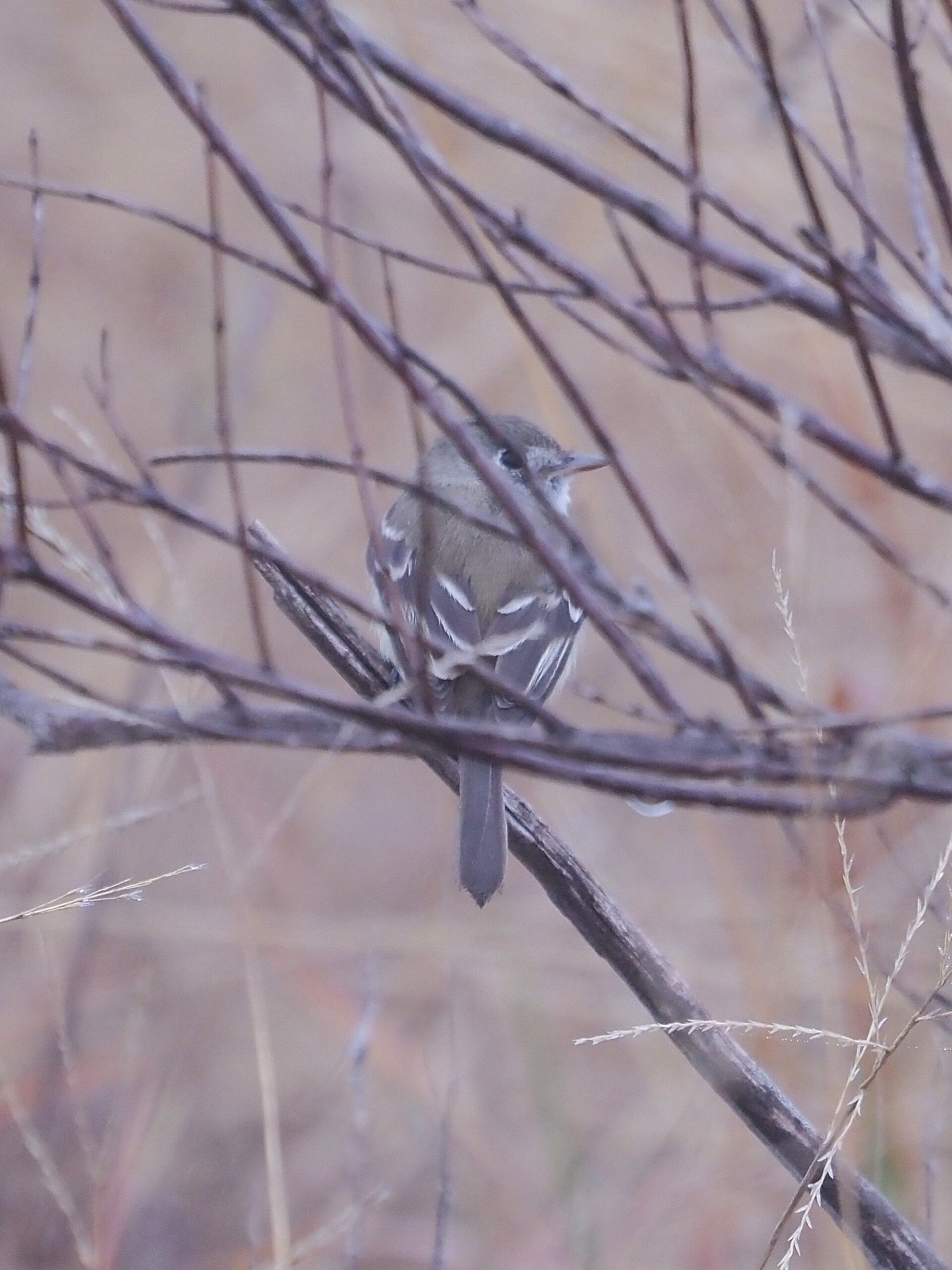
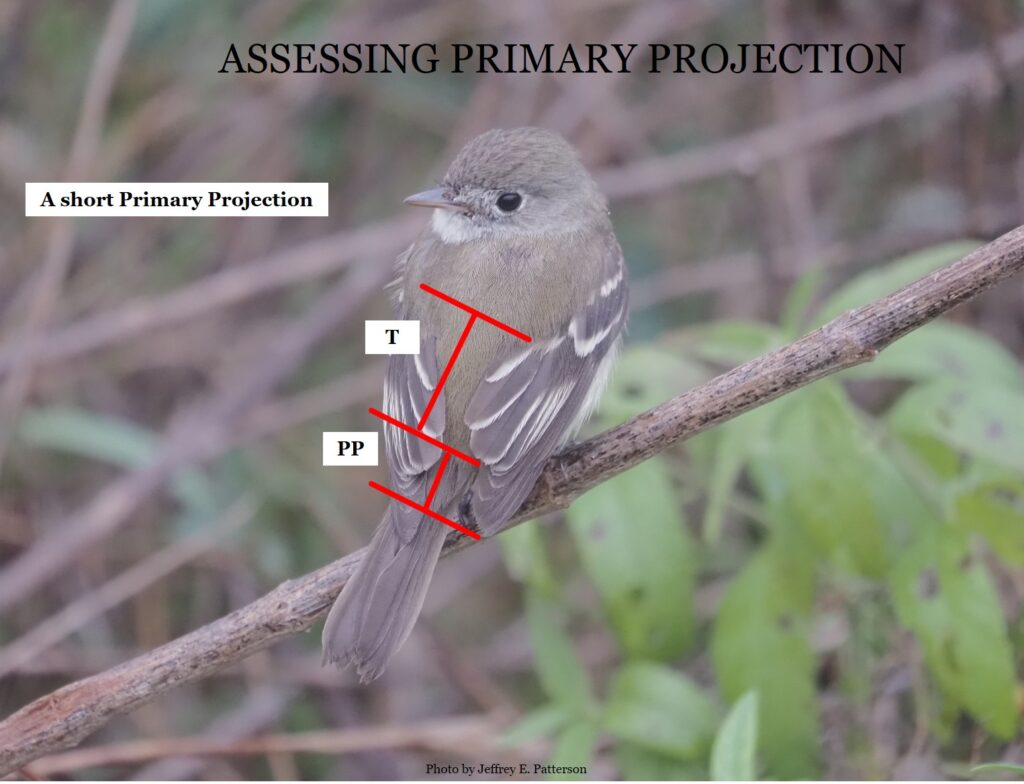
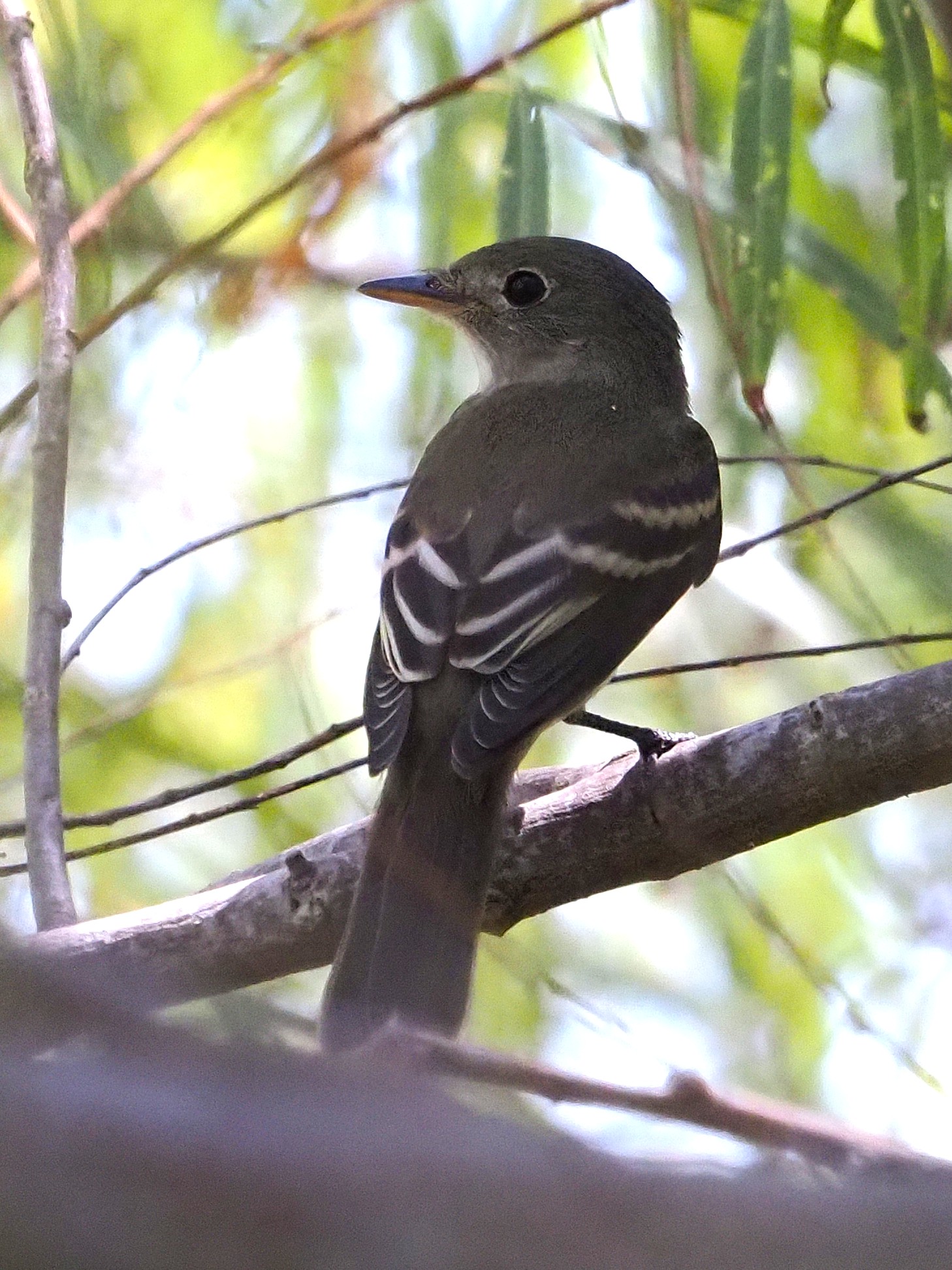
As stated above, the wings and primary projection of the Least are short. The wings generally barely project to the base of the tail. The primaries of the Least often seem to emerge from below the secondary stack (tertials + secondaries) in small, even increments as in the photo below. The secondary stack (T) of the Least is longer than the primary extension (PP) on the individual pictured below.
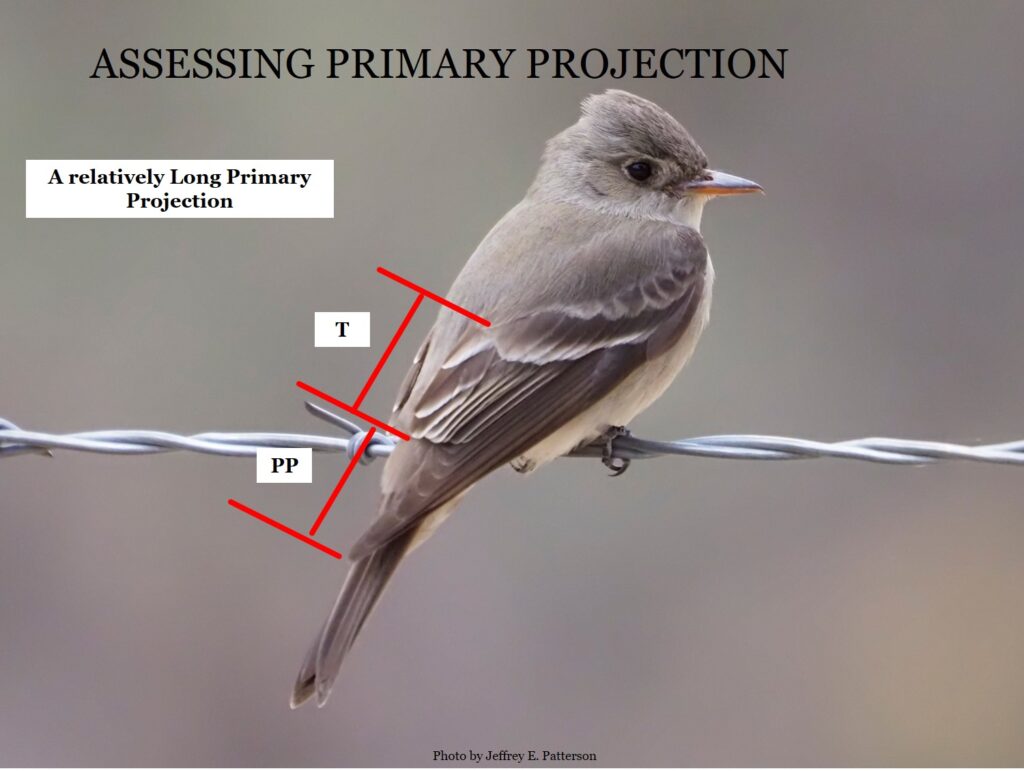
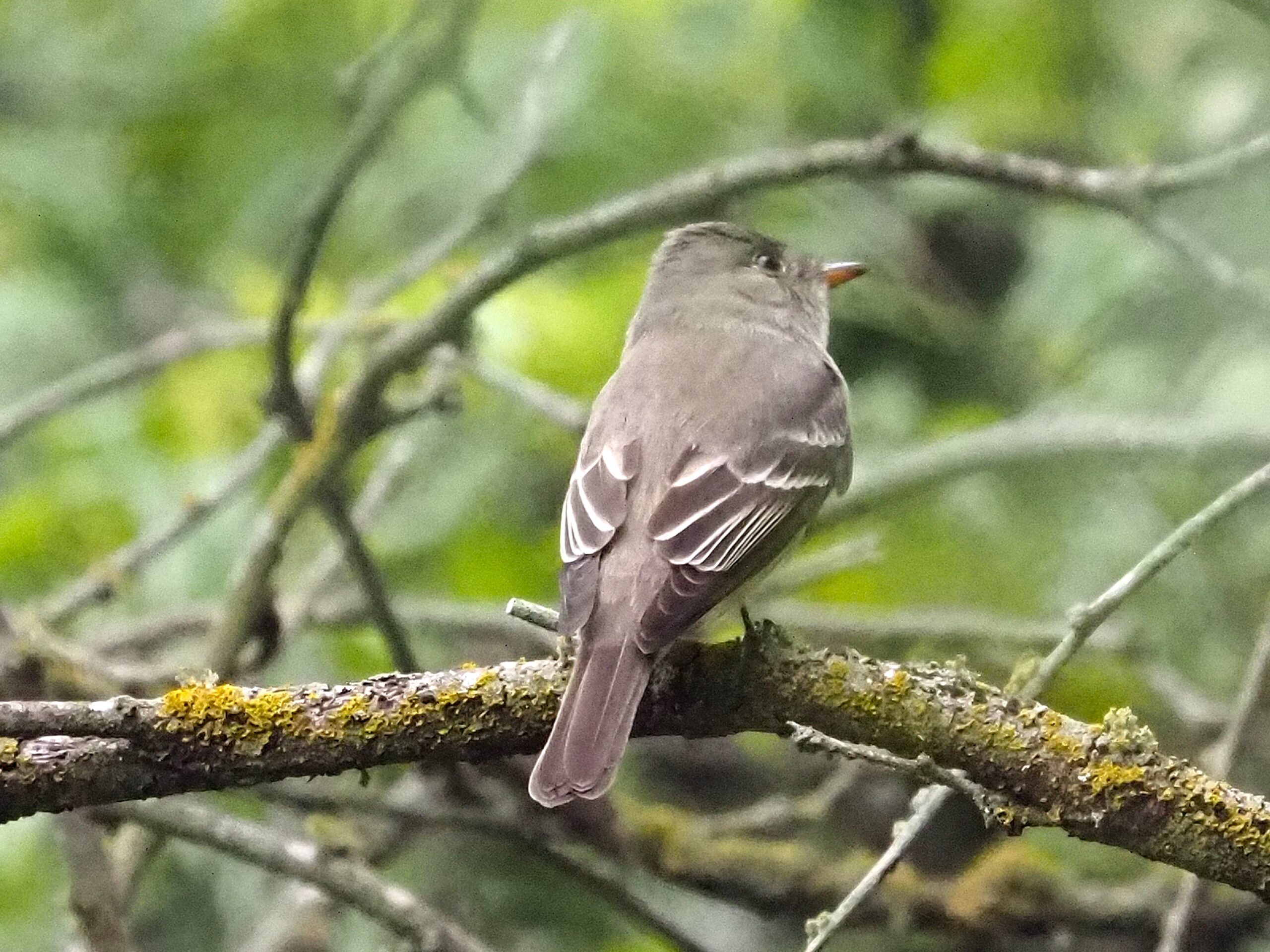
In contrast, the Western Wood-pewee has long wings and a long primary projection. The primary projection on this bird below is equal to or even longer than the secondary stack.
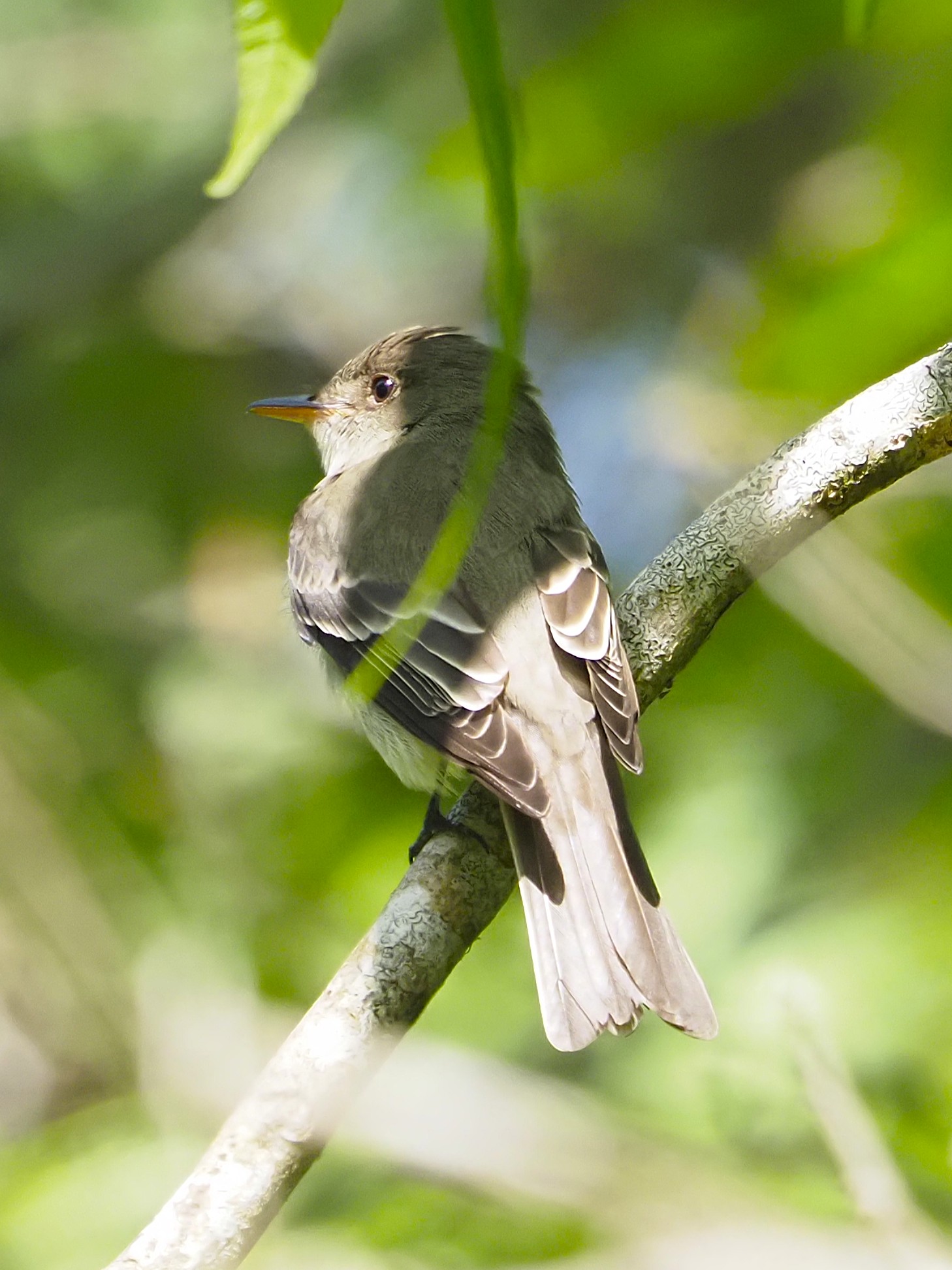
Assessing primary projection is something that requires a little experience. As with all Empid attributes, those individuals which show the most extreme examples are the easiest to characterize (e.g. short or long primary projections). Therefore, the attribute of primary projection is the most useful when dealing with the Acadian, which has the longest, and with the Least which has the shortest primary projection. The primary projection of the Acadian and Least are compared below.
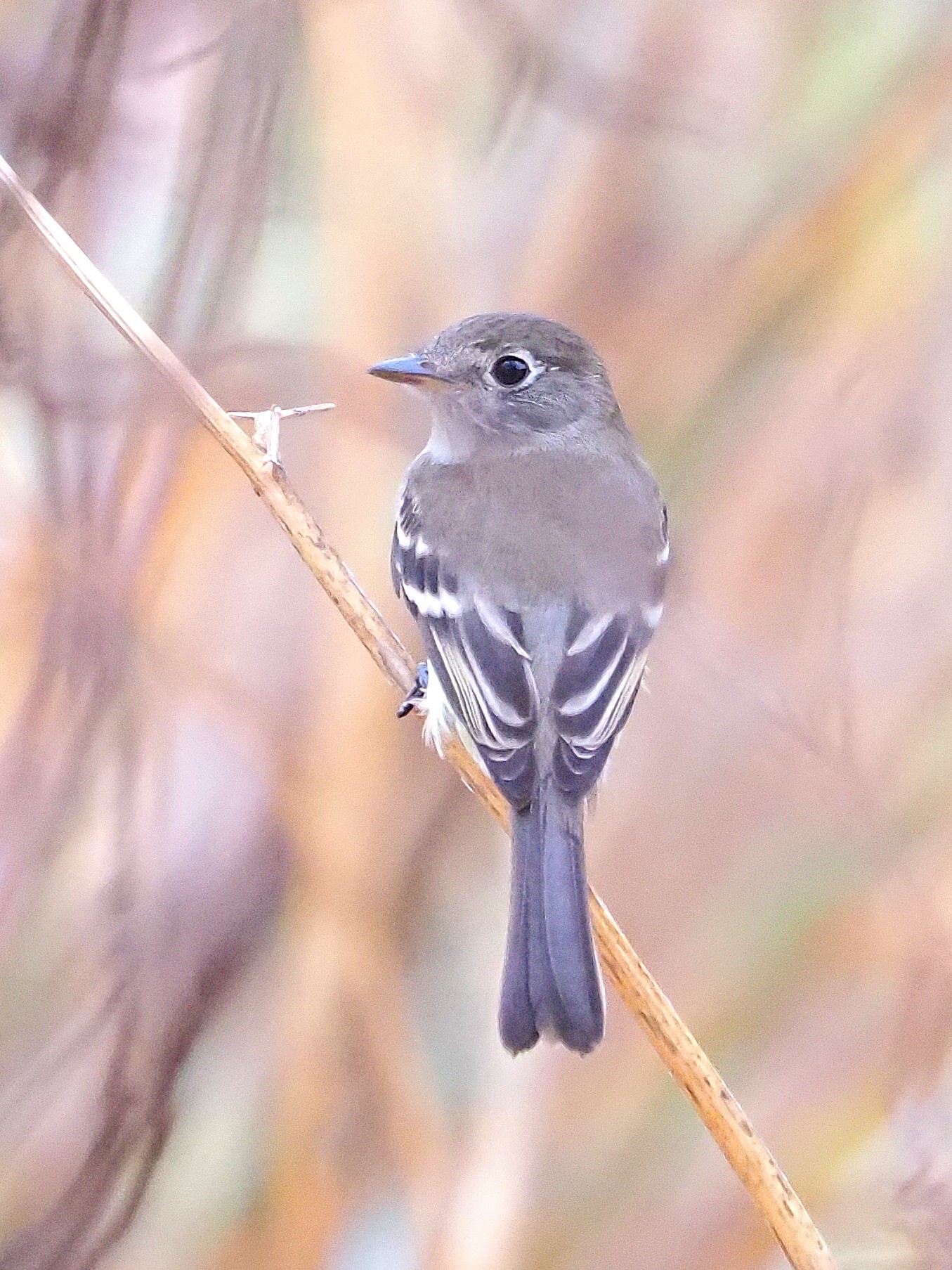
Additional examples of the primary projection of the Least are shown below.
Tail Proportions & Shape
The tail of the Least is short and narrow, with a narrow base. As shown below, “like a popsicle stick” is an excellent description of many Least’s tail. When the tail feathers are held somewhat open as in the 2nd photo below the Least’s tail usually shows a very narrow base. The last 2 photos of this group show the tail of the Acadian and the Trails for comparison to the Least (photos are labeled).
Head Shape & Proportion to Body & Crown of Head
The classic head of for the Least is small and round, proportionate to the small body. However, larger Leasts can appear to have a slightly disproportionately larger and blockier head. In some cases this may be due to a slight raise of the head feathers at the back of the crown. (Have another look at the photos under “Body Size & Shape” above for examples of these 2 cases).
Plumage Characteristics
Eye-ring
The Least’s eye-ring is often described as “bold, complete, but messy”. It is of uniform width and often shows a white “kick” or “teardrop” in the rear. The following 2 photos show what is often described as the “kick” at the rear of the eye-ring, which might also be called an “outward (rearward) inconsistency on the outer edge of the ring”.
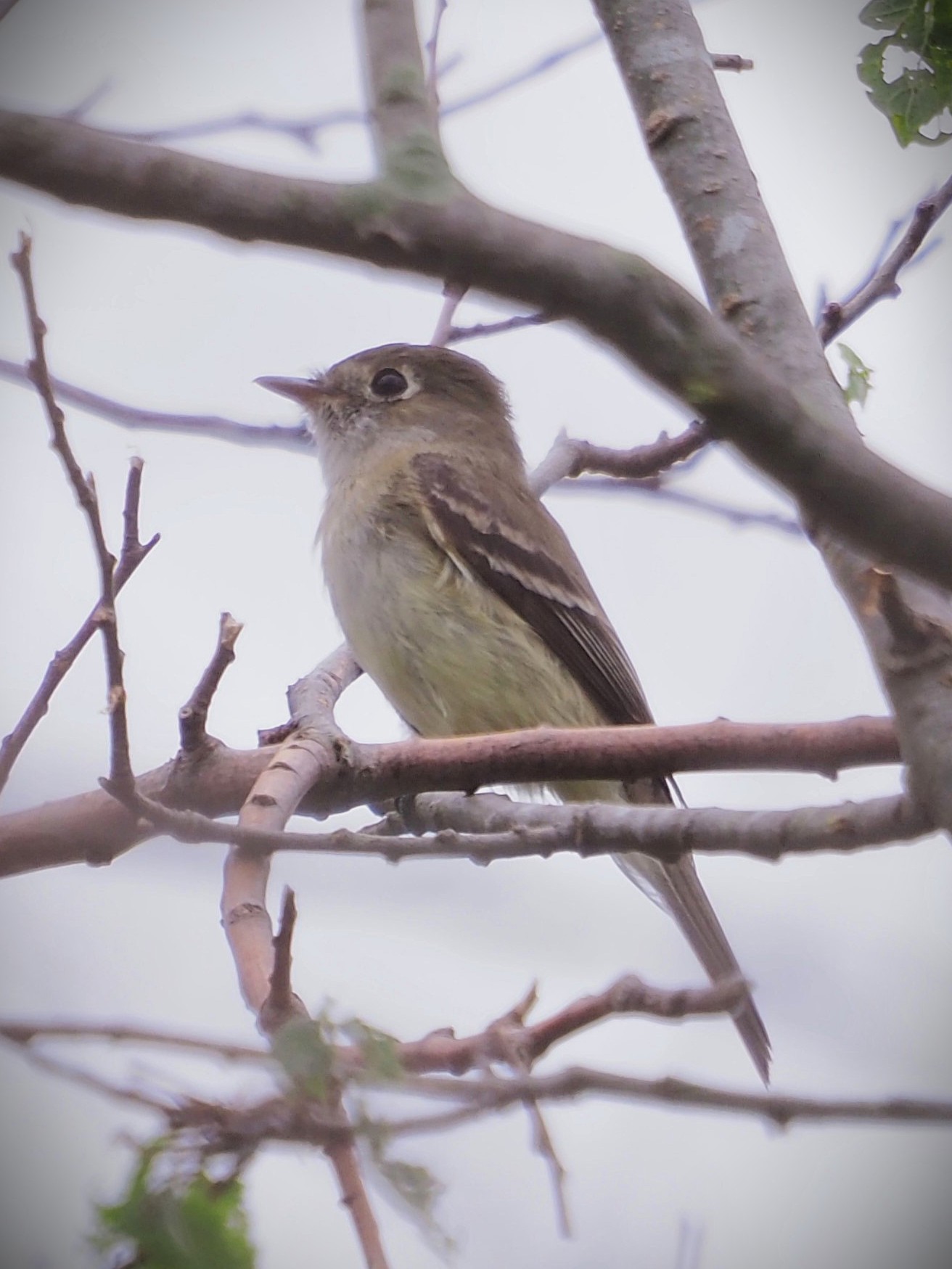
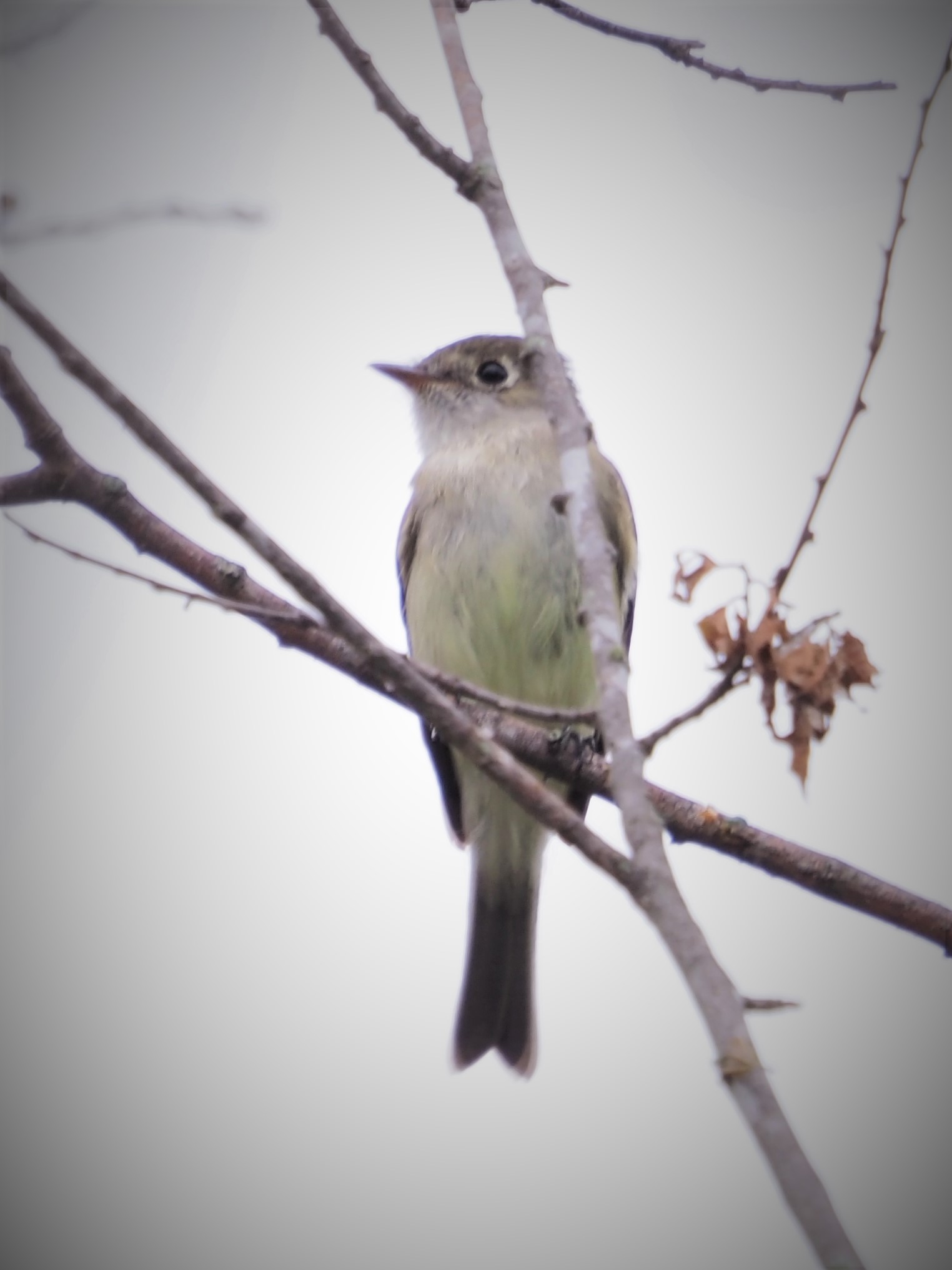
Several other examples of the bold, complete, but messy eye-ring of the Least are shown below.
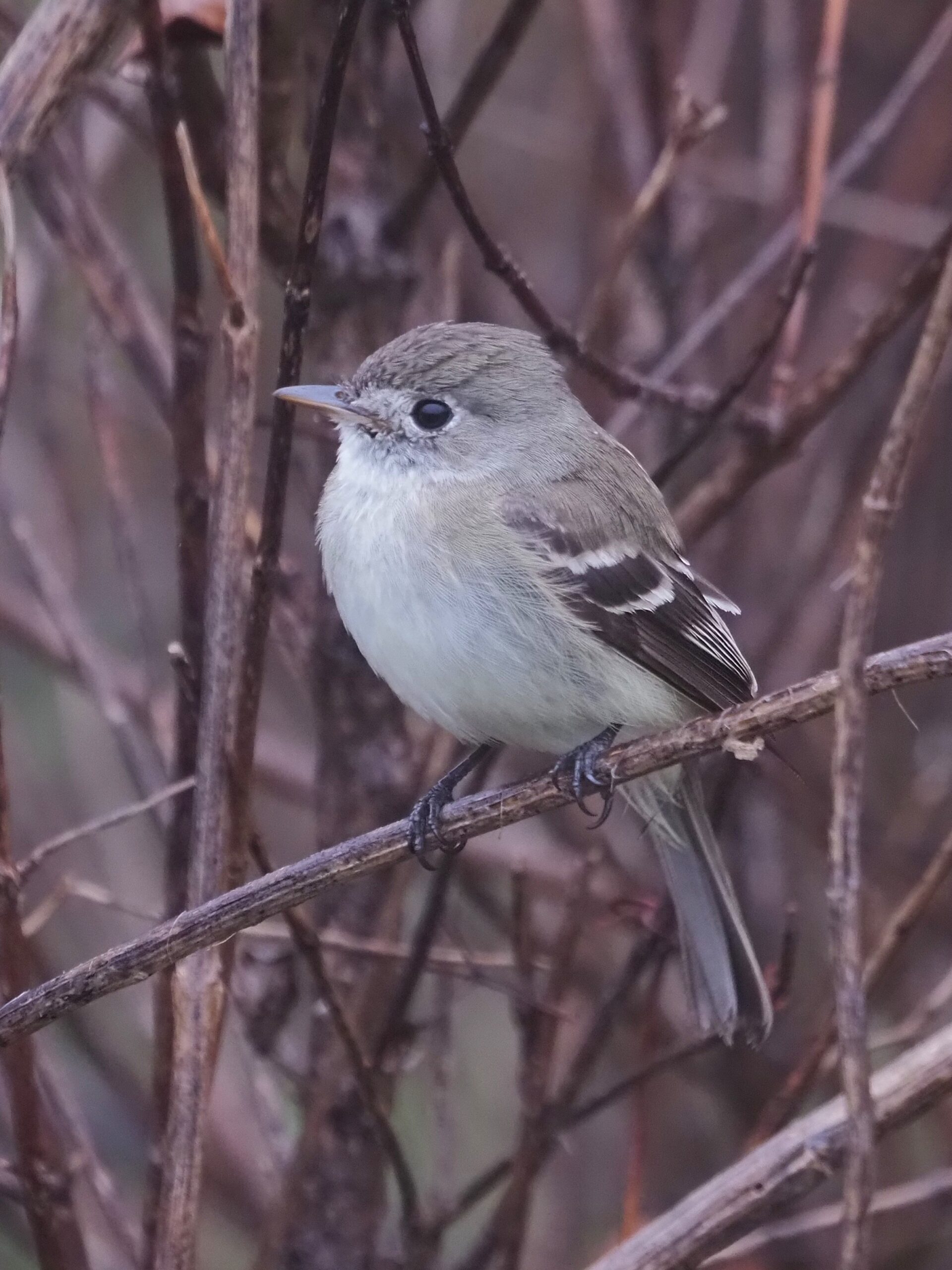
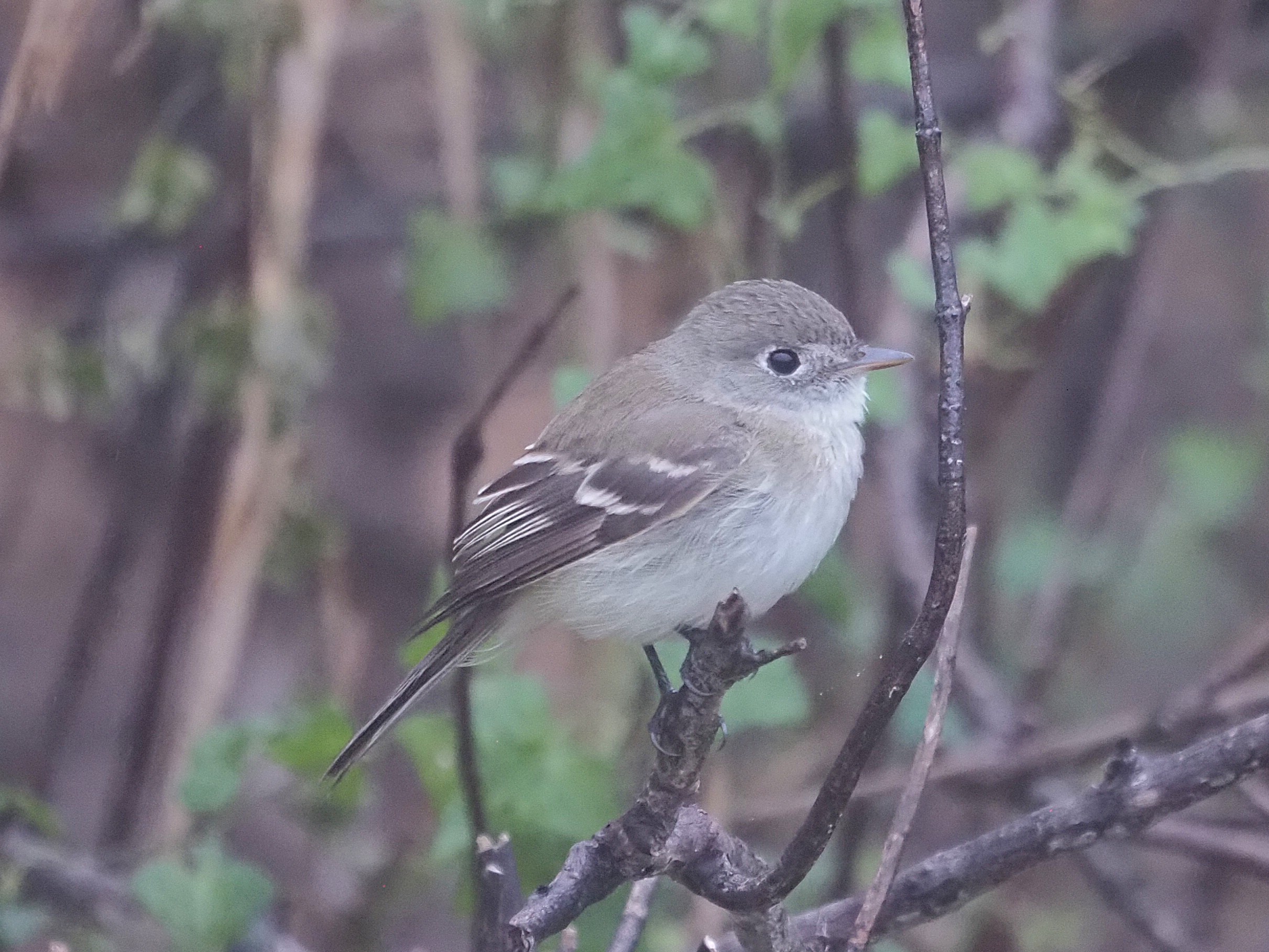
Throat Color & Contrast
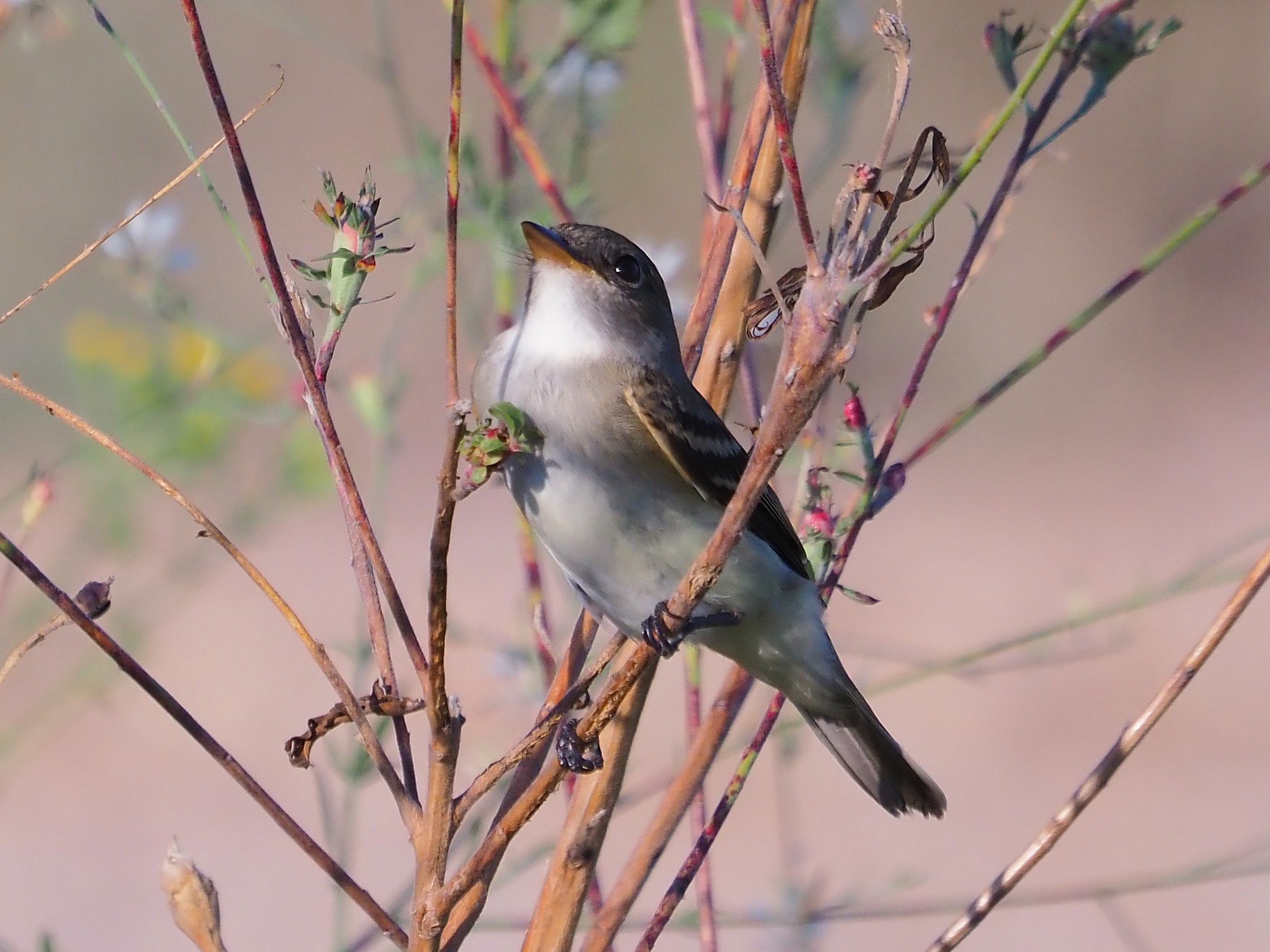
The throat of the Least is whitish or off-white (not bright white), contrasting with the darker face and gray-brown wash across the breast. Examples are shown below. Compare the throat color of the Trails (last photo below), which is a bright white, with the more subdued white of the Least. (The throats of all 4 Eastern Empids are compared under the Acadian page).
Additional Key Points of ID
The contrast in the wing panels of Leasts is usually obvious, with blackish ground color setting off white wing-bars and tertial edges.
To Flycatchers Overview & Feather Groups