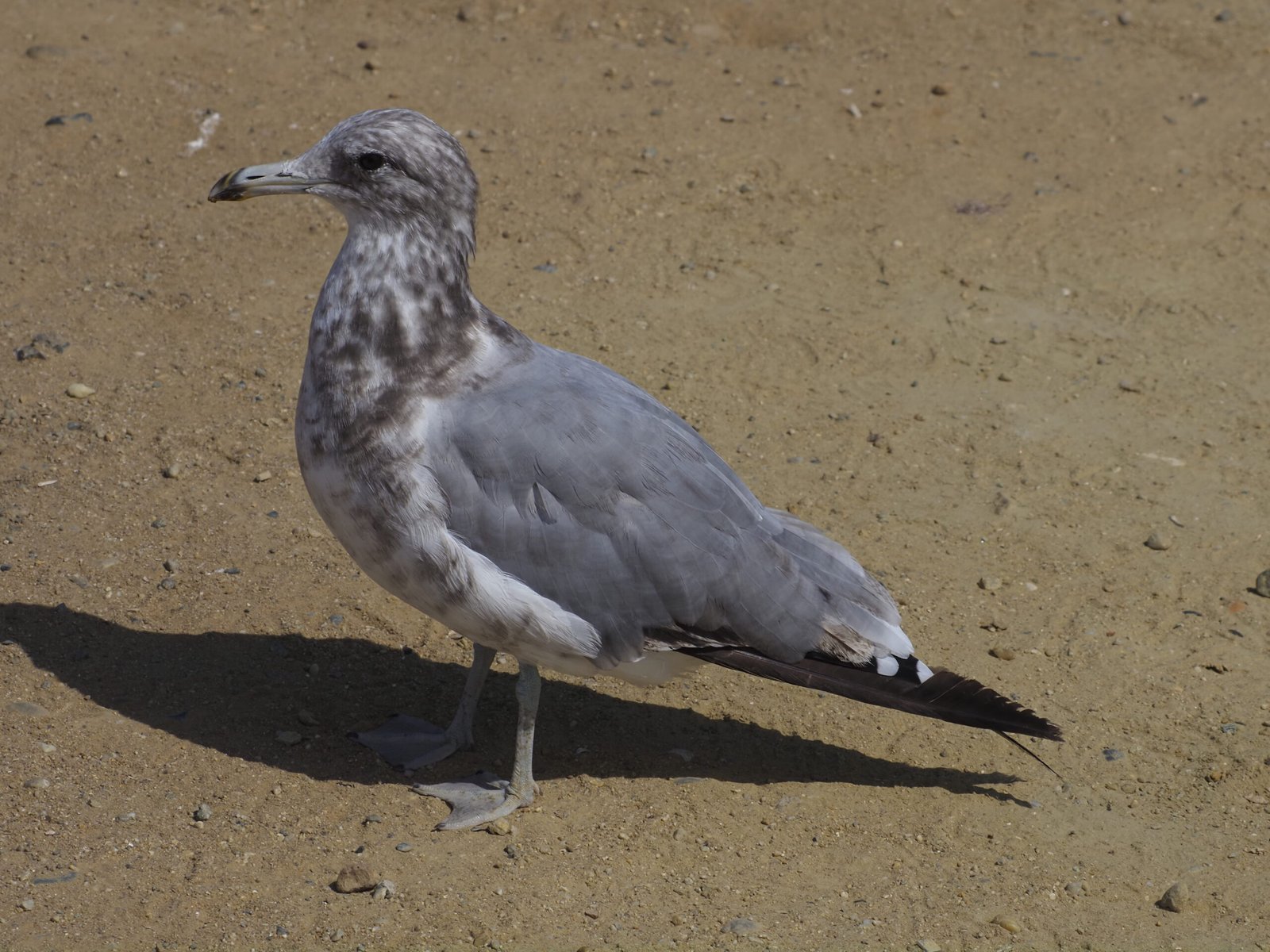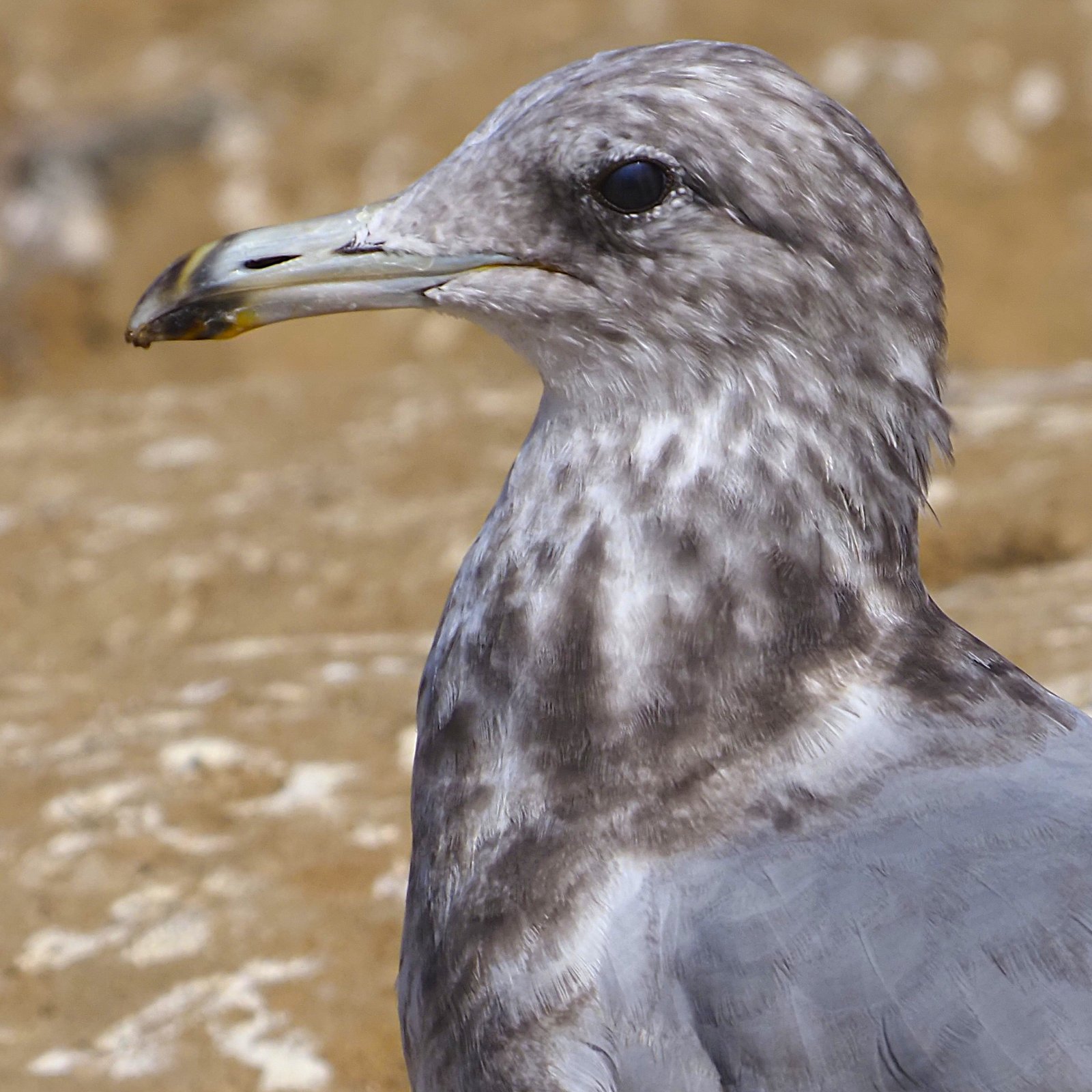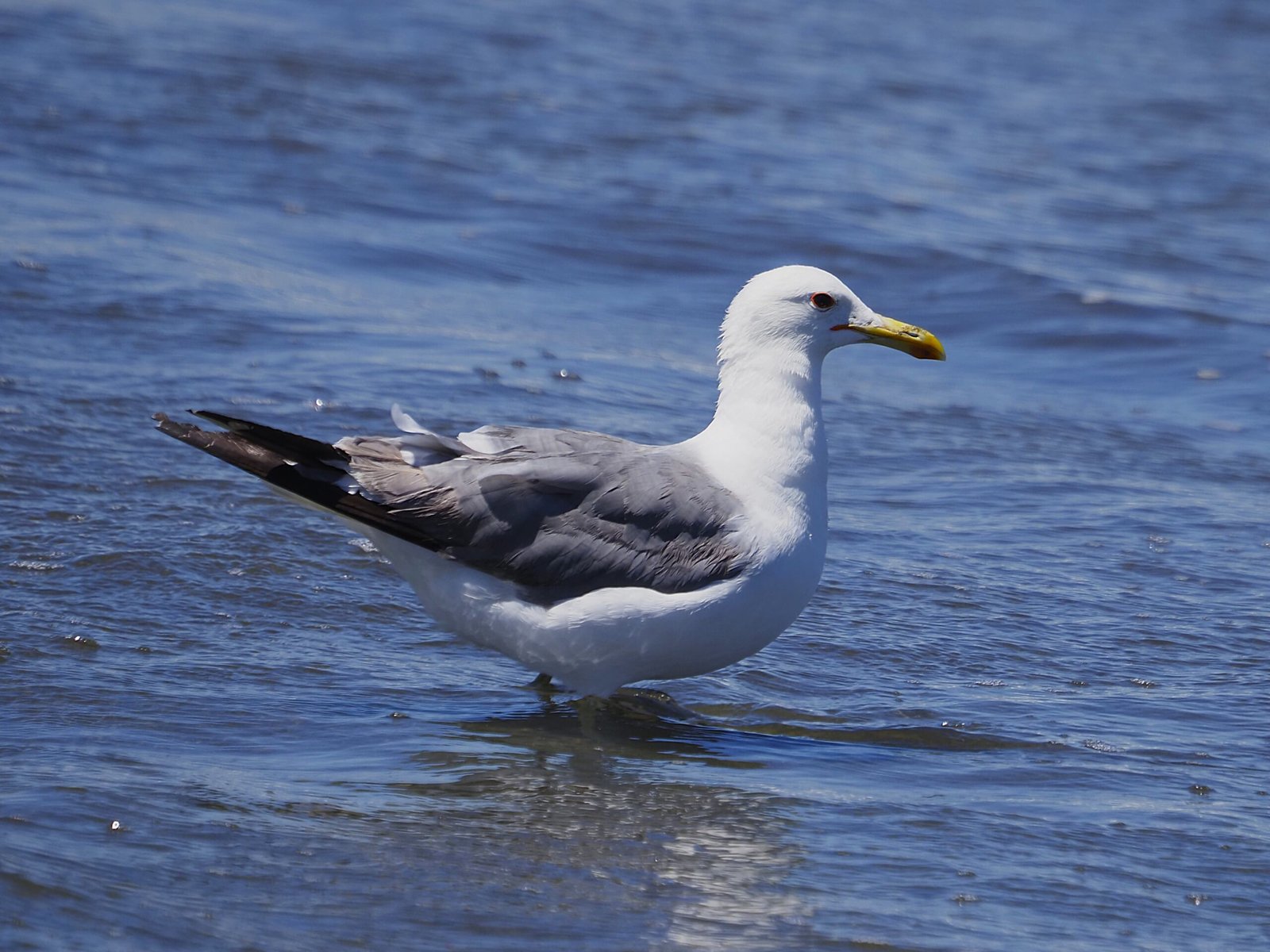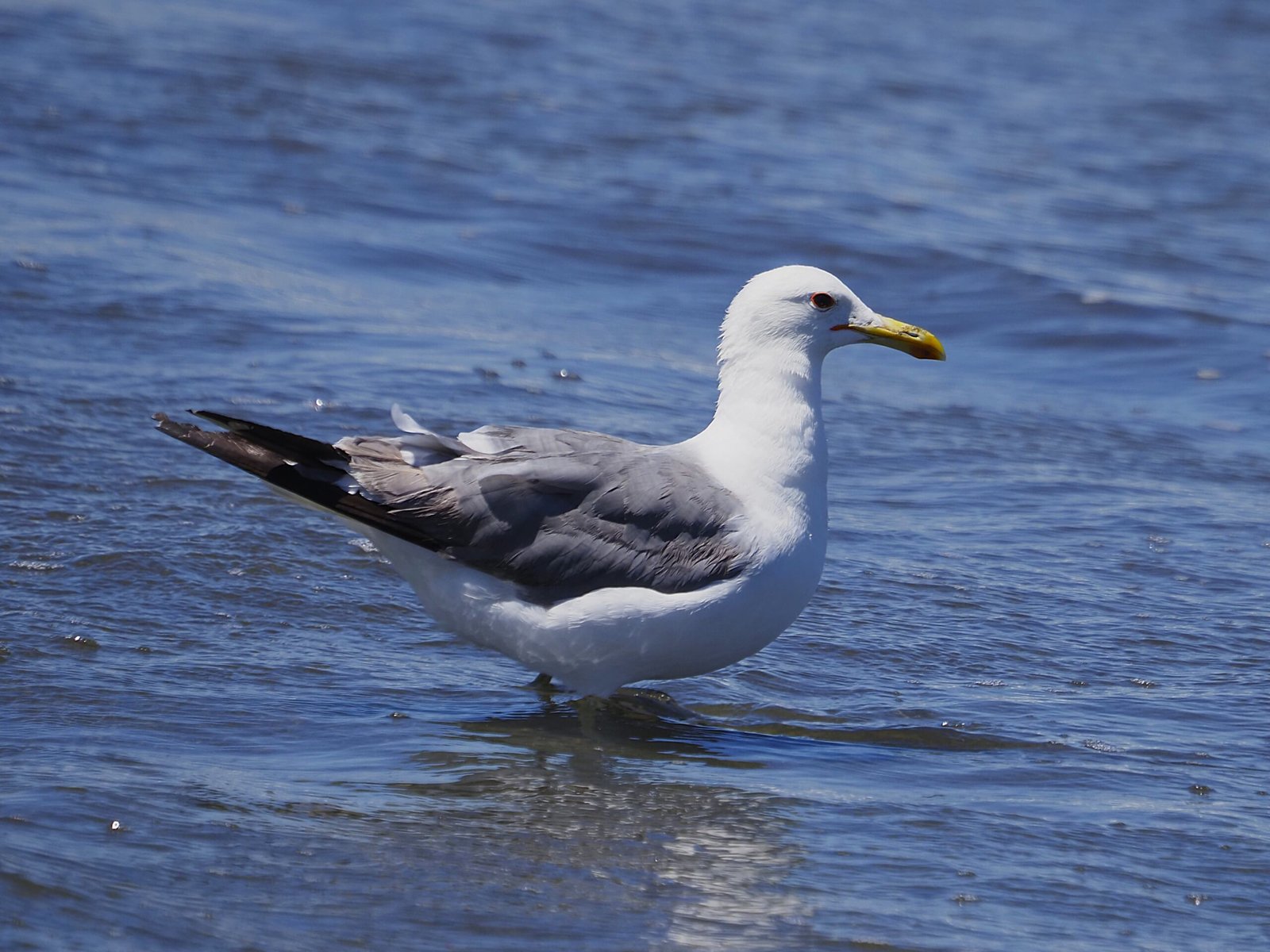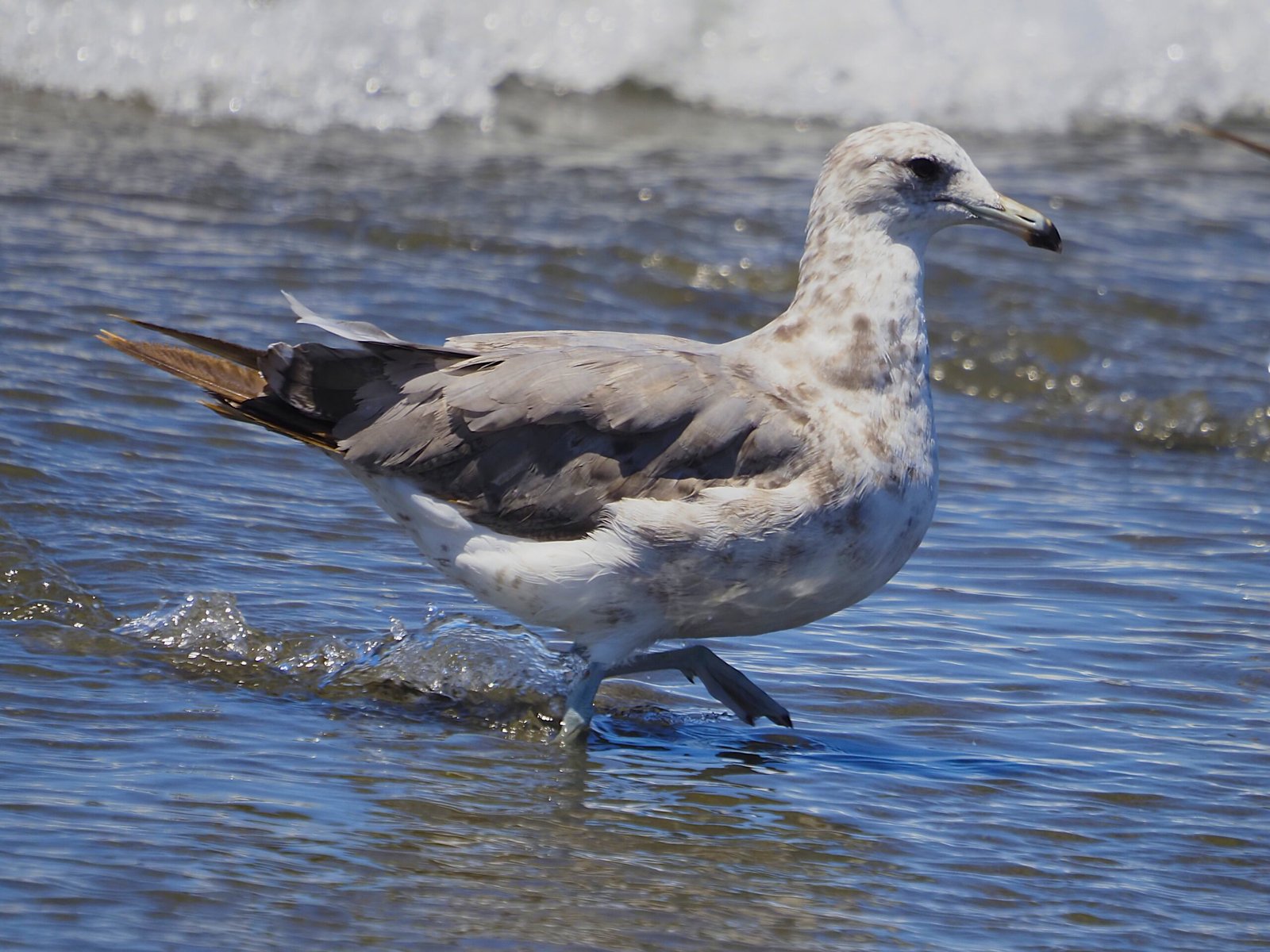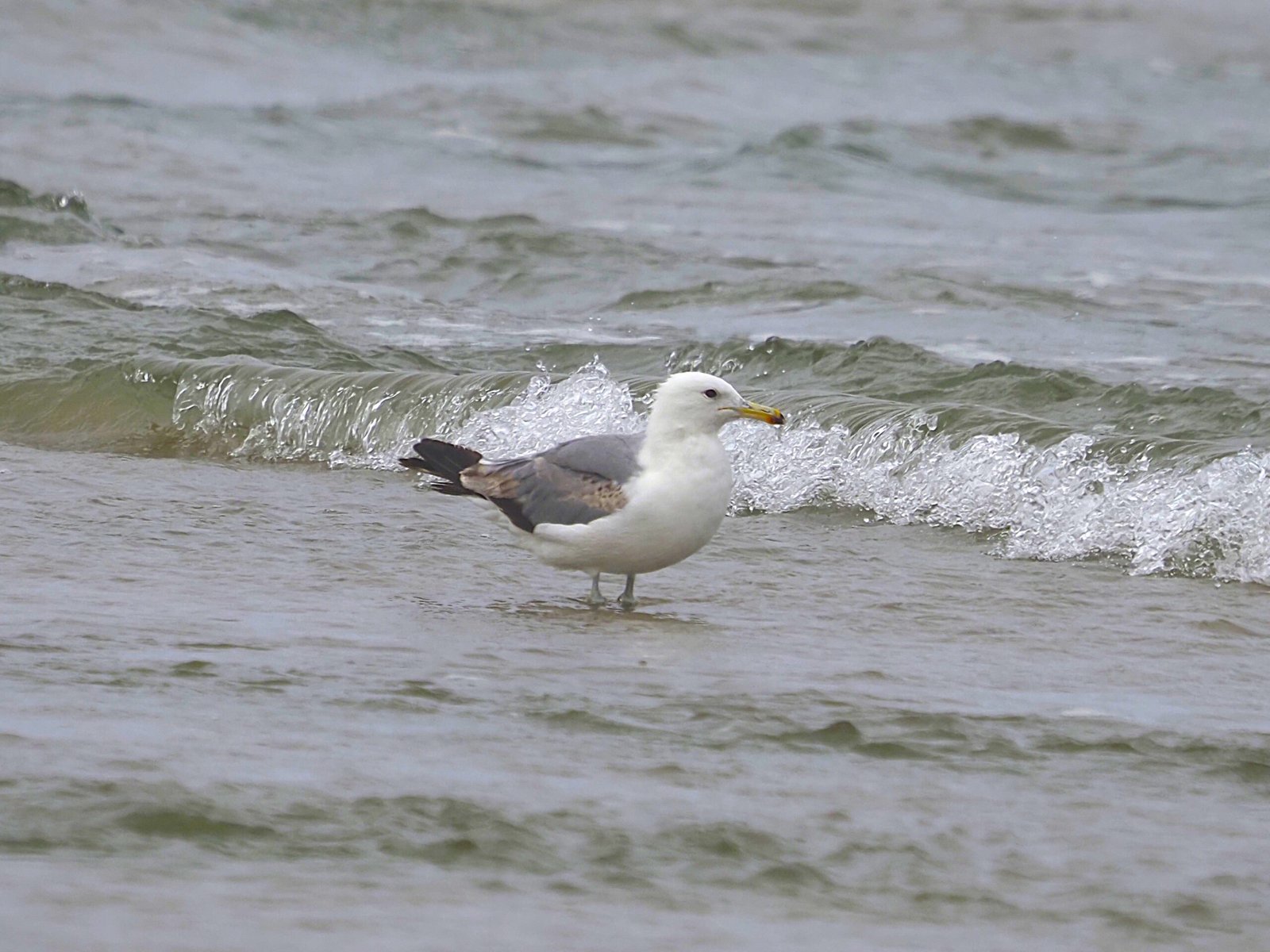

The California Gull is famous in legend for having saved the Mormons from a plague of Mormon Crickets in Utah. The California is unique in North American gulls because it nests in the northern grasslands in the middle of the continent (which explains this California in Montana in June of 2022), then migrates southwest to the west coast to winter.
The California is another gull whose size fits nicely between Ring-billed and Herring.

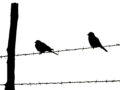
As can be seen in the silhouette above, the California has a sturdy body with bulk distributed to the chest. It has a long primary projection which usually juts well beyond the tail. The California is bulkier than the Ring-billed and slightly taller and longer.

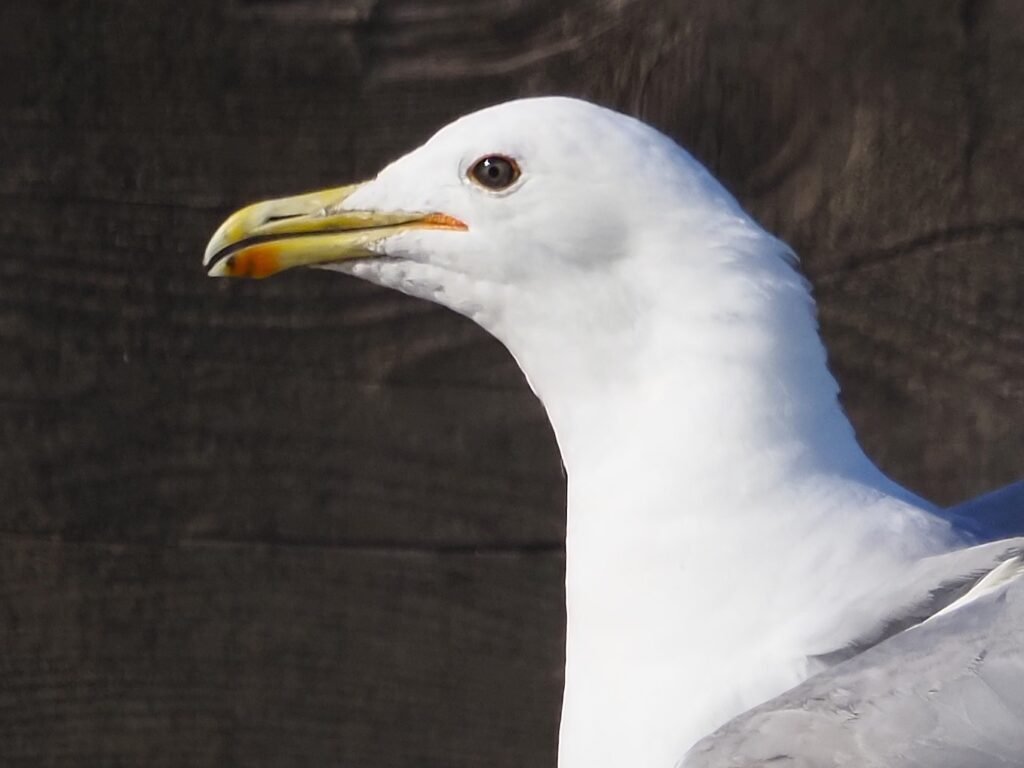
The adult California usually has a dark eye, a down-turned gape which may show red pigment during the breeding season, and both black and red markings on the bill, though each of these attributes is variable. The bill of the California is rather long and straight, and has been described as “parallel-sided”.


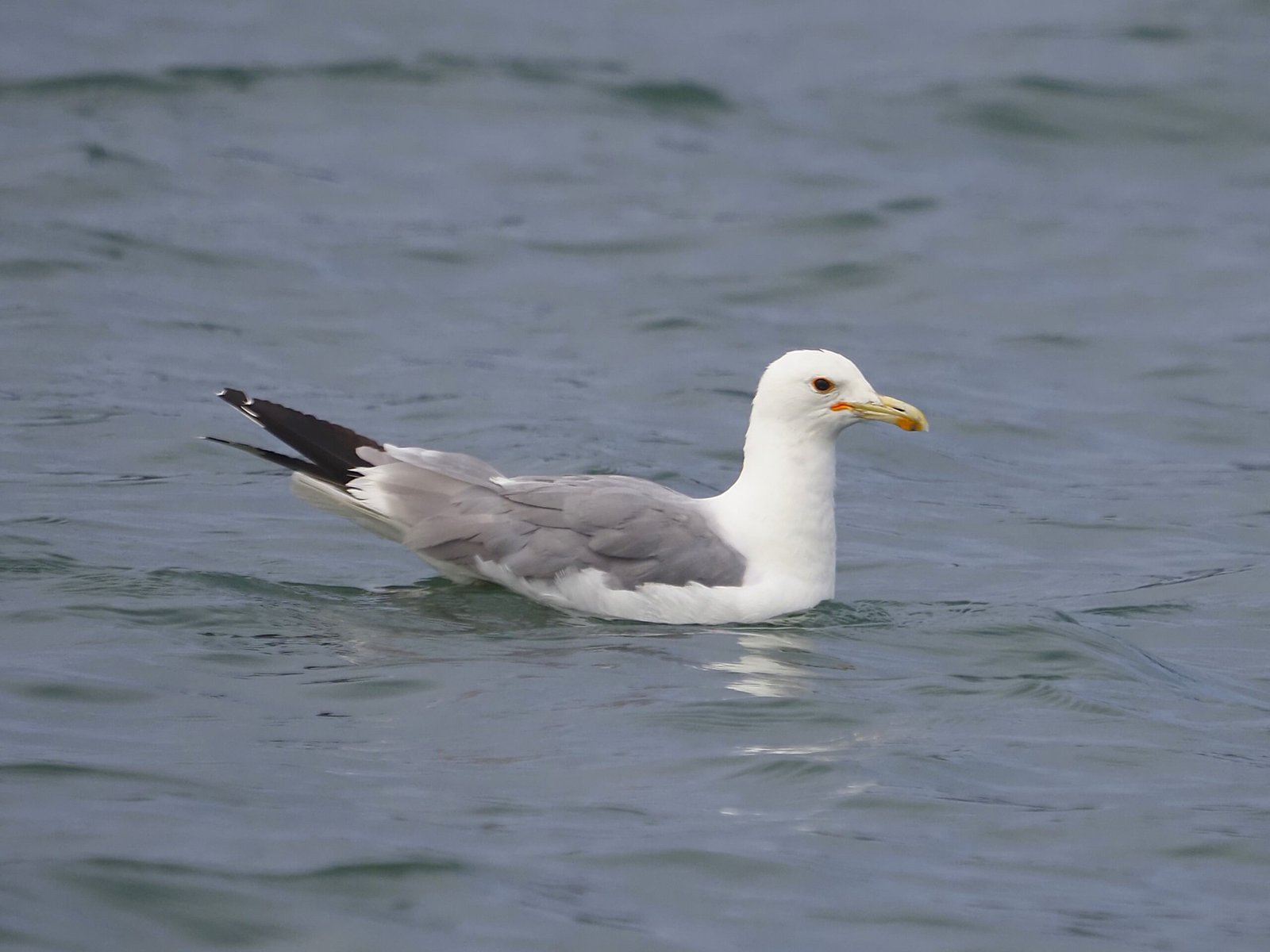

As shown below (left) the hue of the back on the California is slightly darker than Ring-billed (and Herring) and noticeably lighter than Lesser Black-backed Gull (LBBG) (right).


The California often has pale blue or blue-green legs as on this sub-adult amongst Ring-bills and a LBBG.

The outer primaries of the California (left) are more extensively black, than those of the Ring-billed (right).
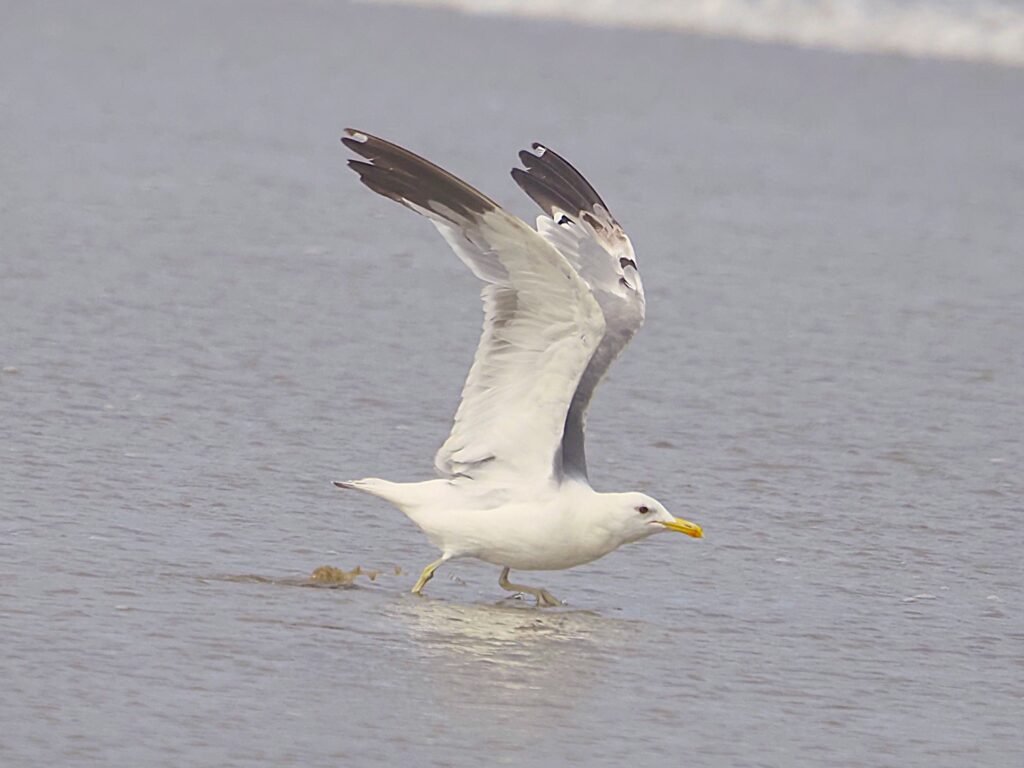


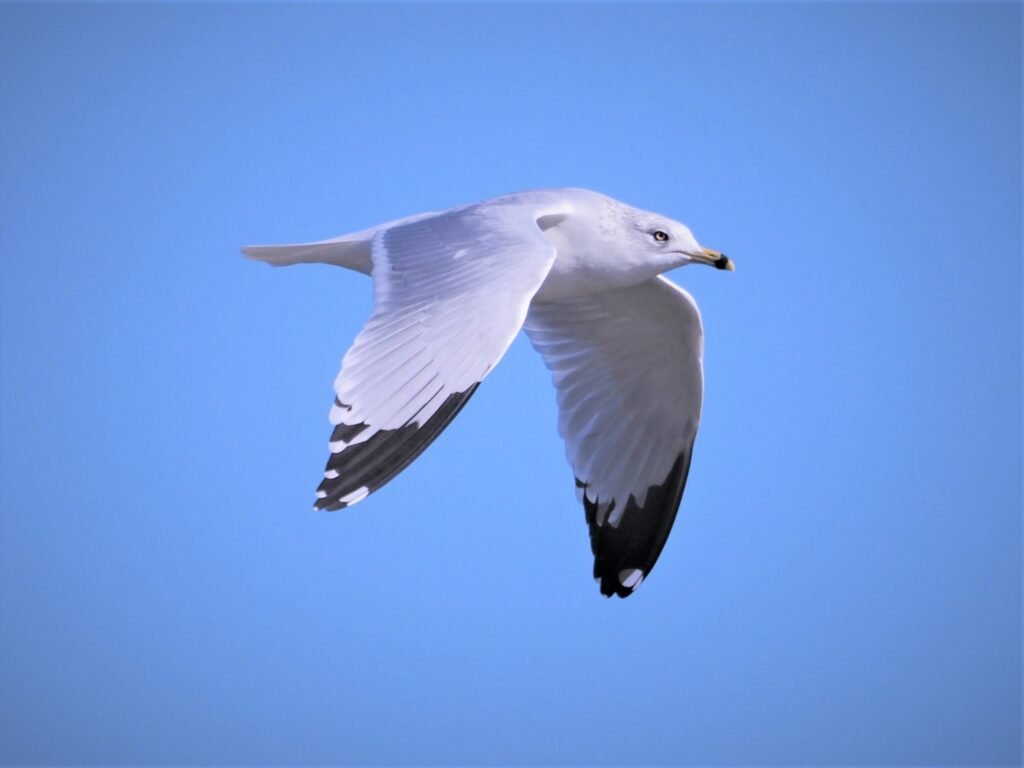
Additional photos of the California in flight are shown below.


The feathers of the juvenile California (gallery below) are usually immaculate. These photos, taken in Oregon and California in July, show gulls that hatched earlier the same summer. Note the all black primaries, long primary projection and dark greater coverts.


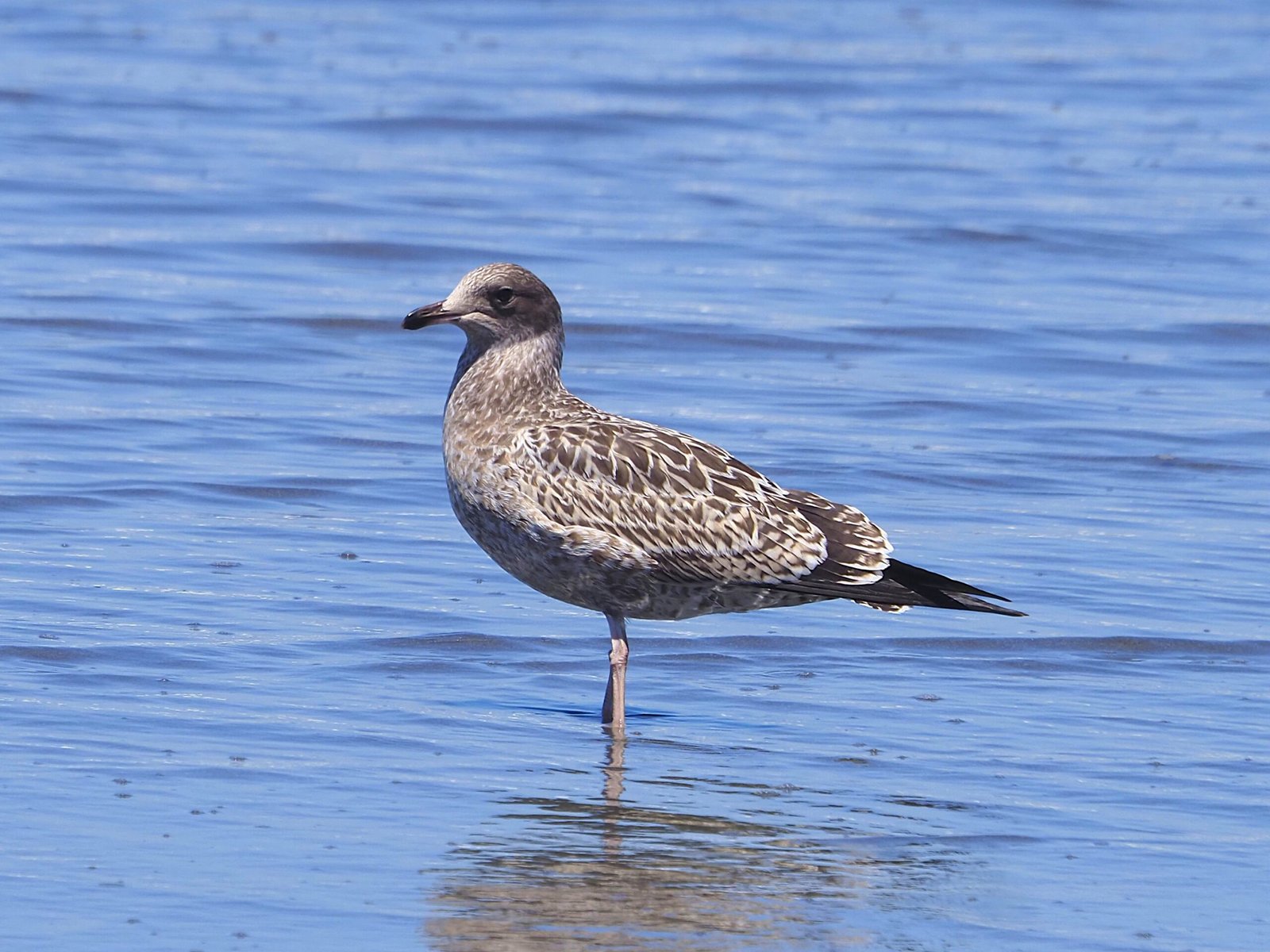
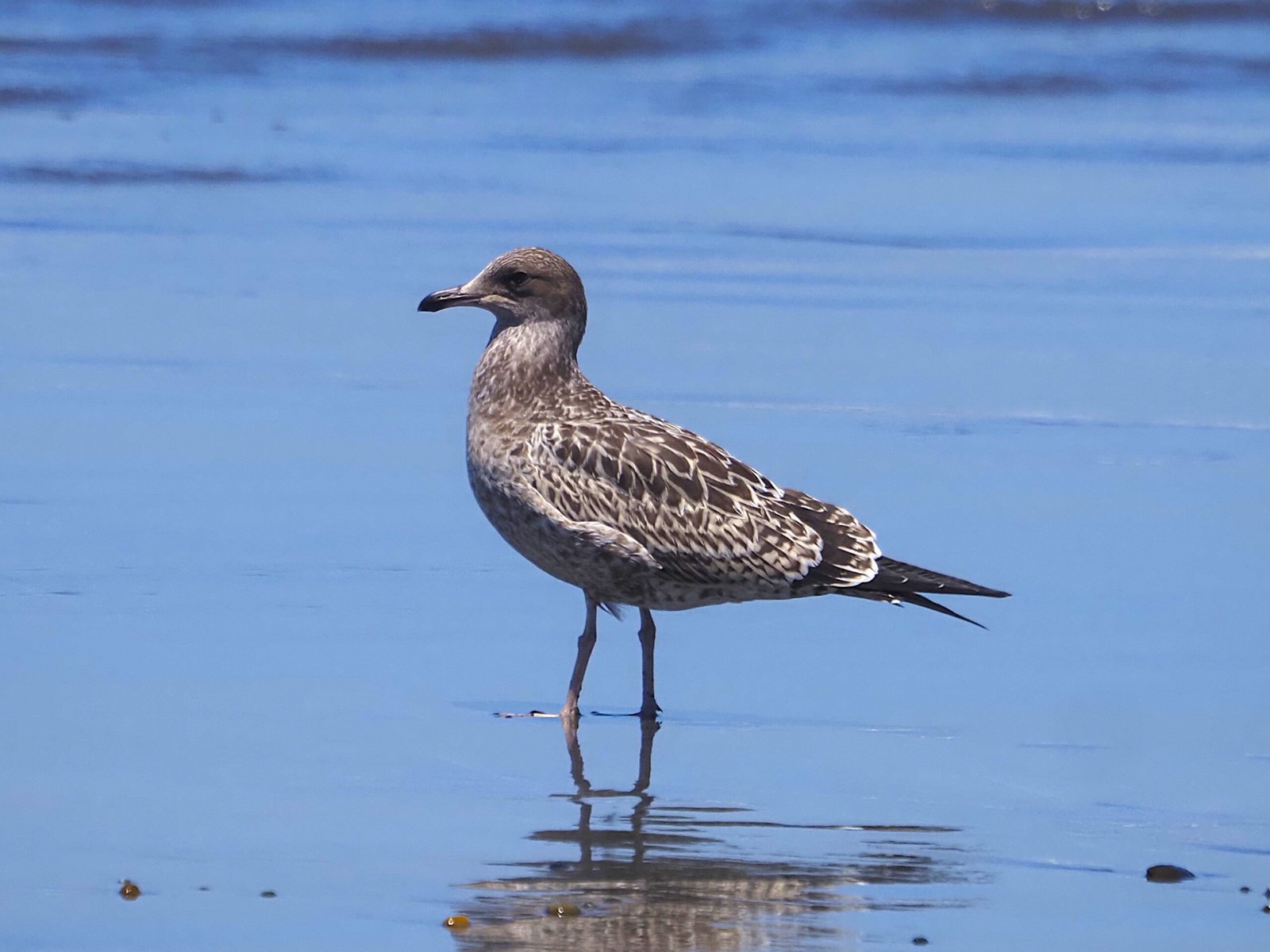
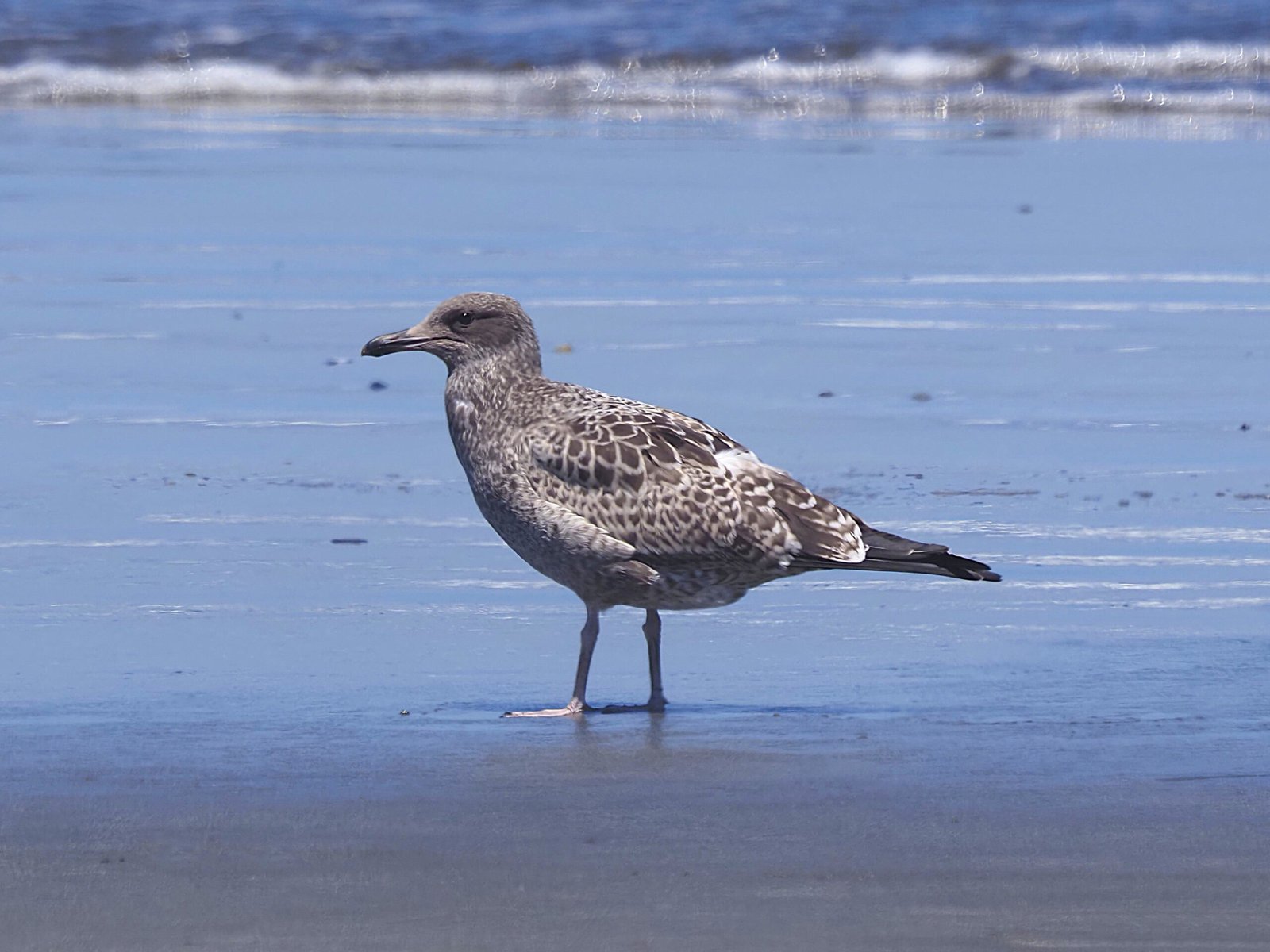
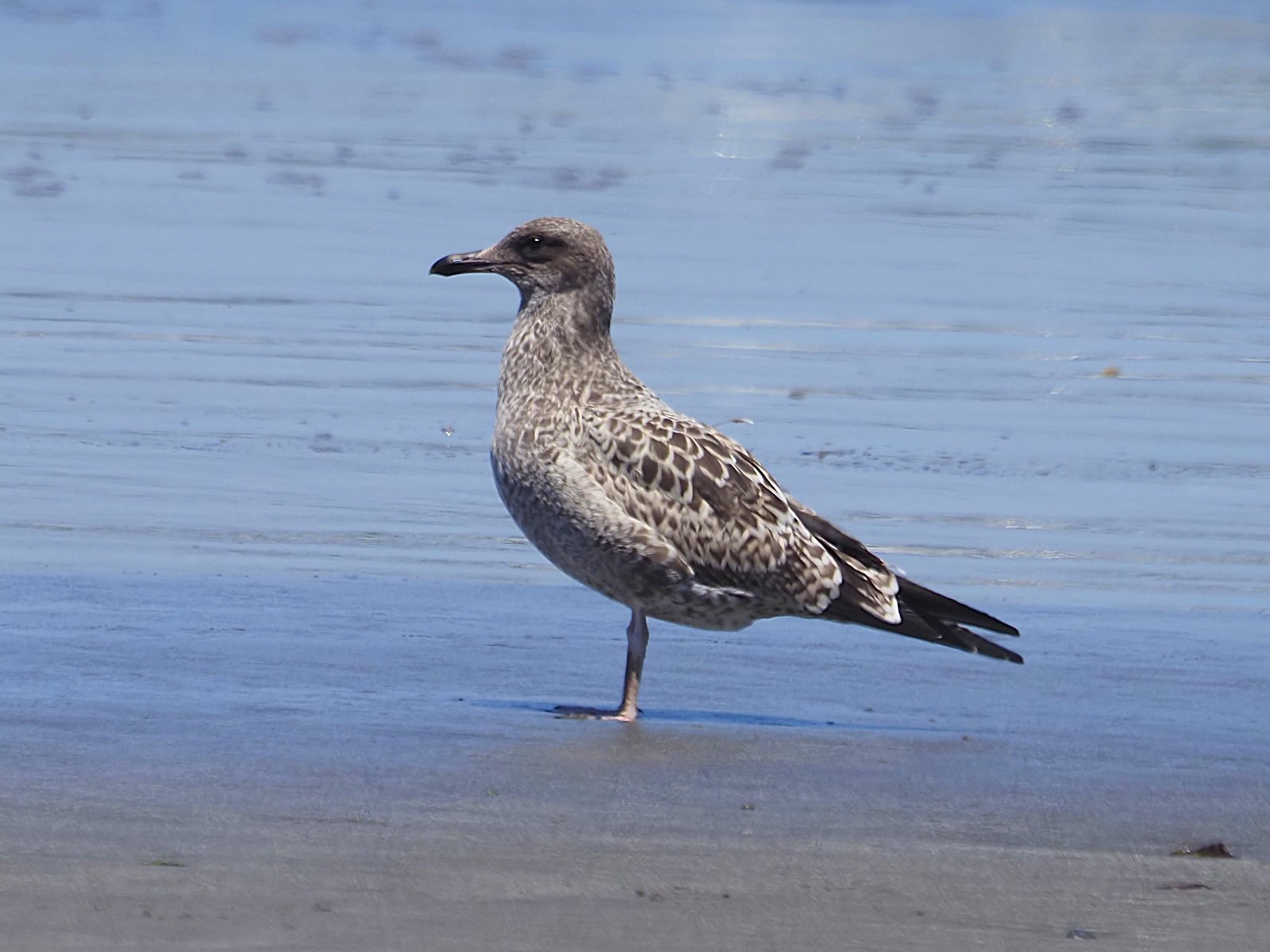
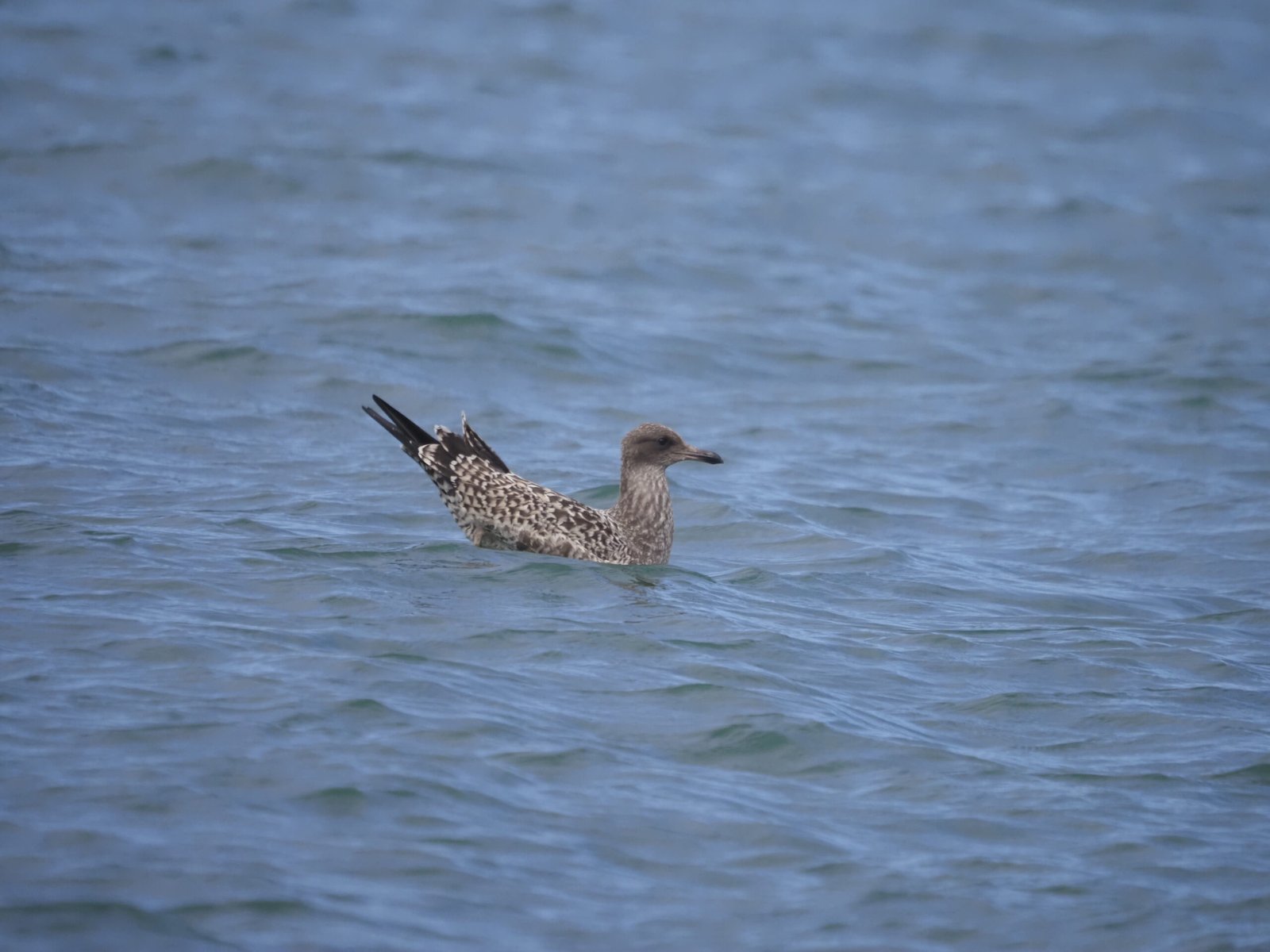
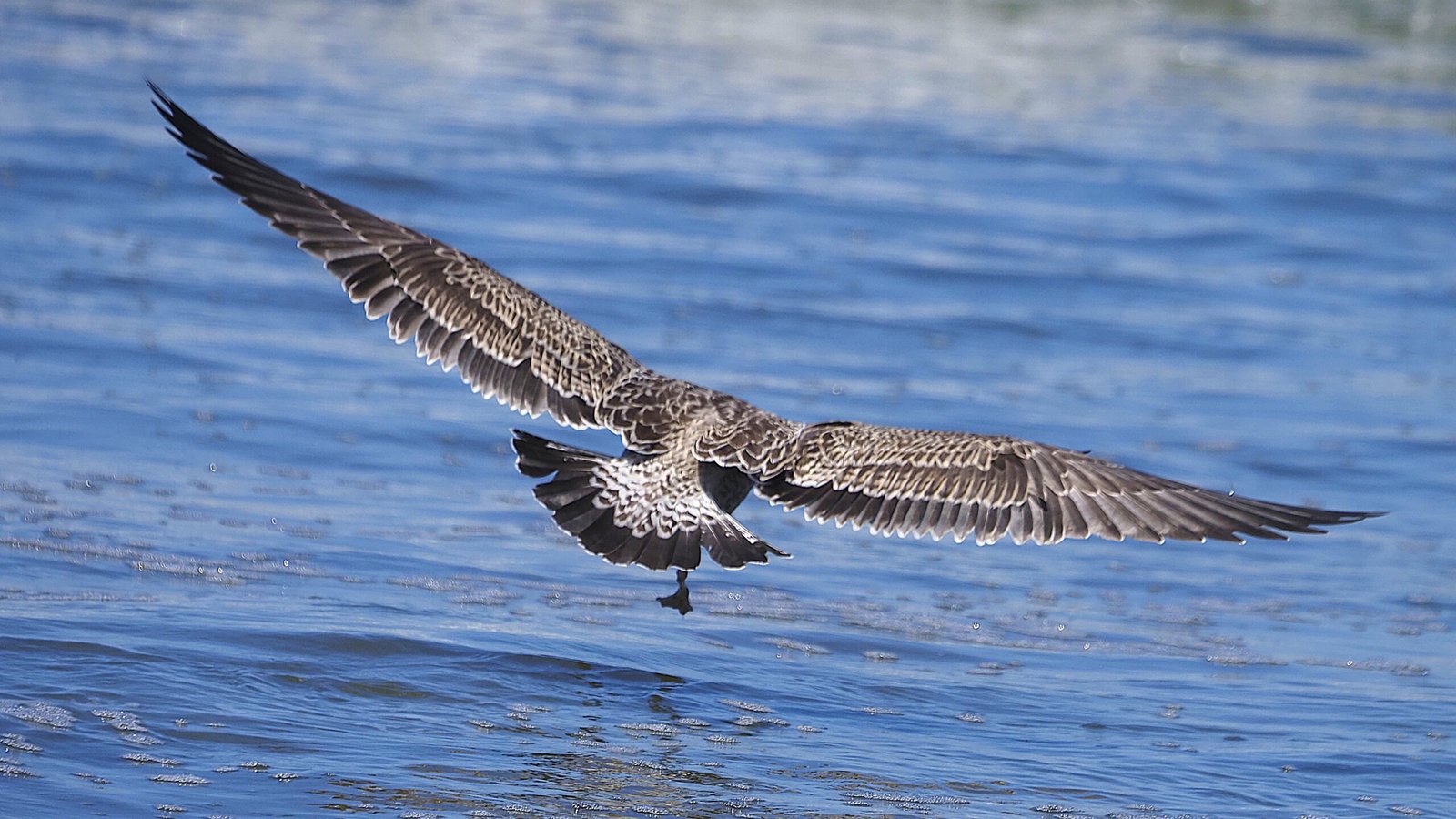
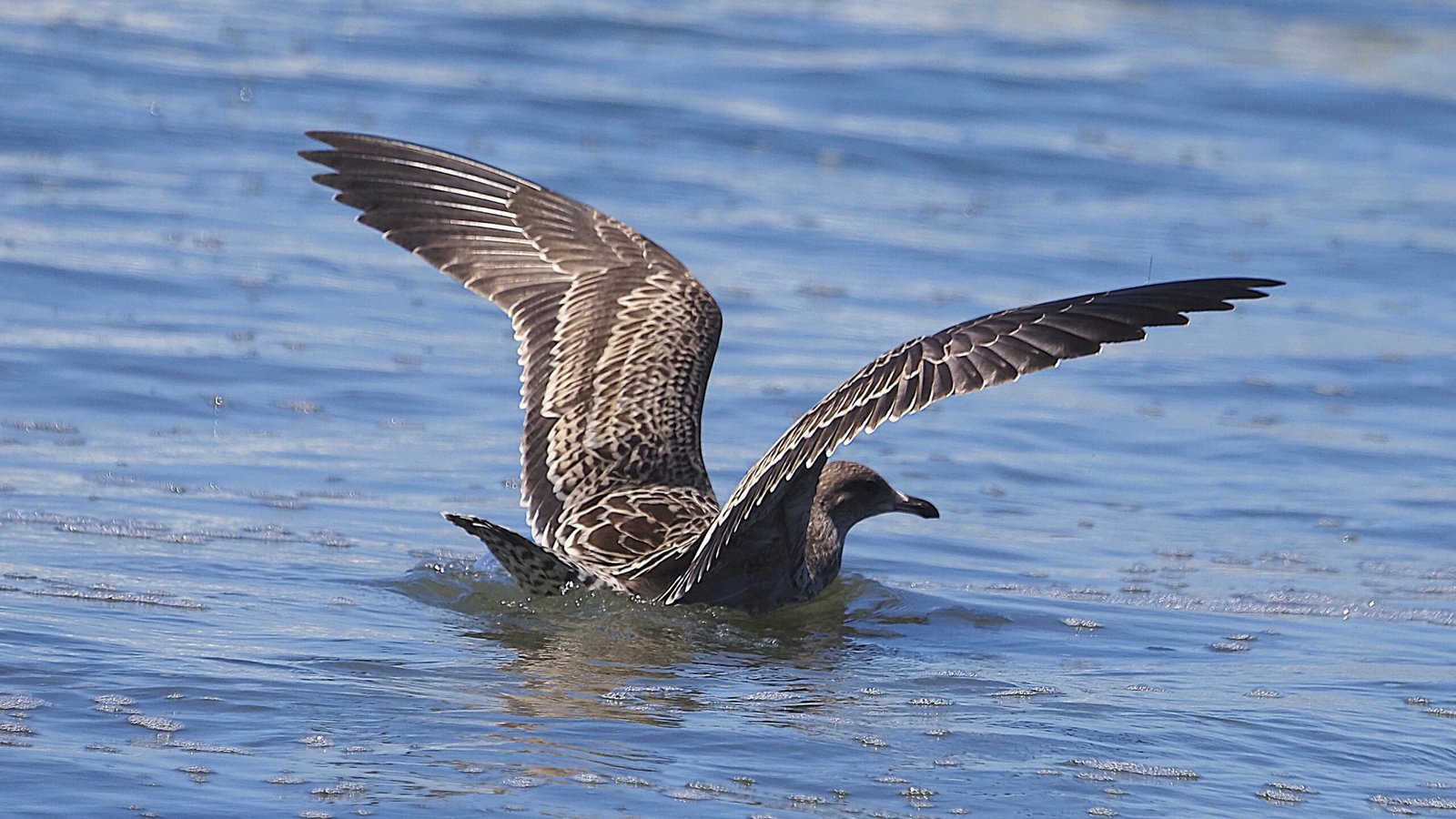
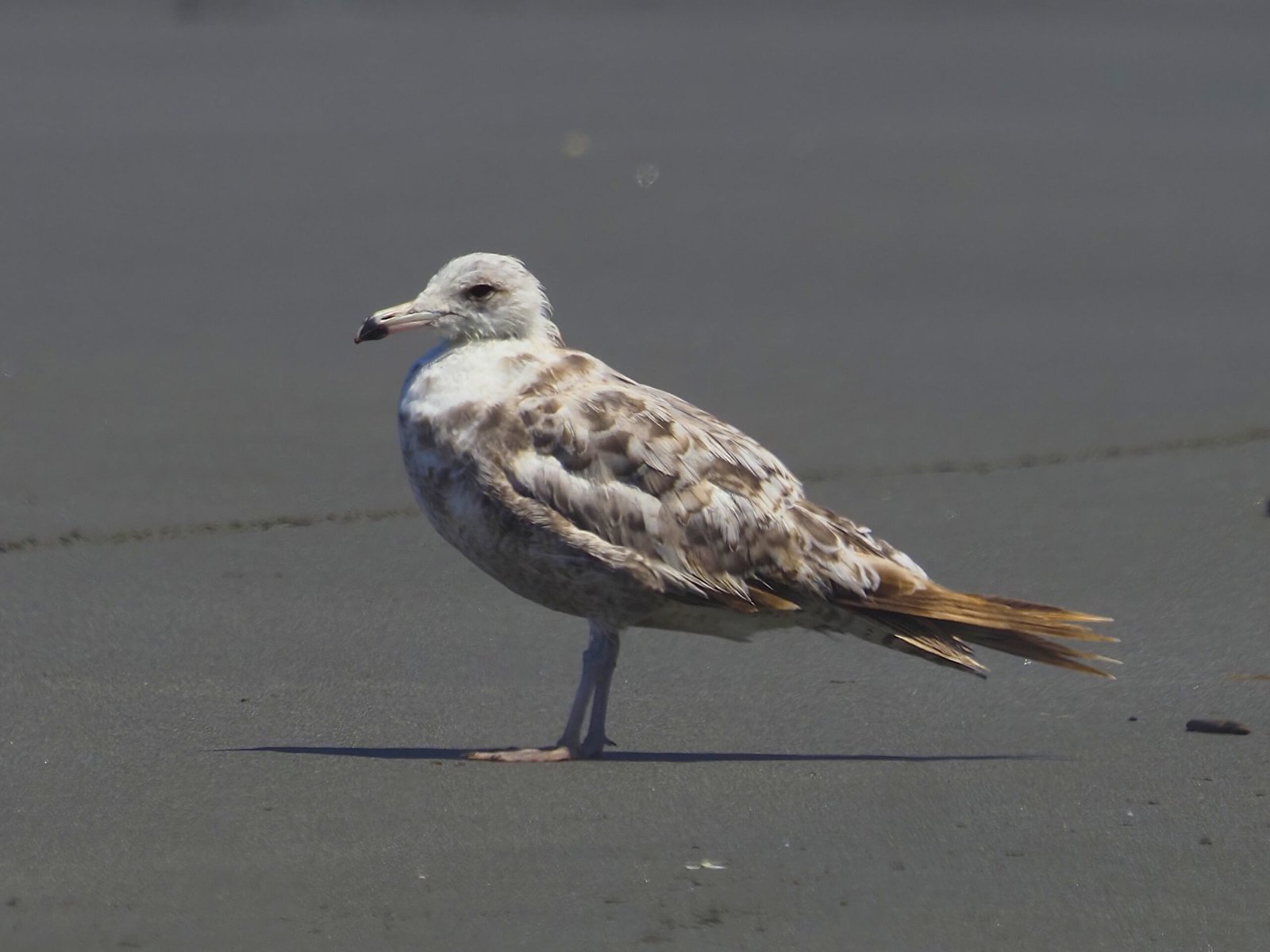
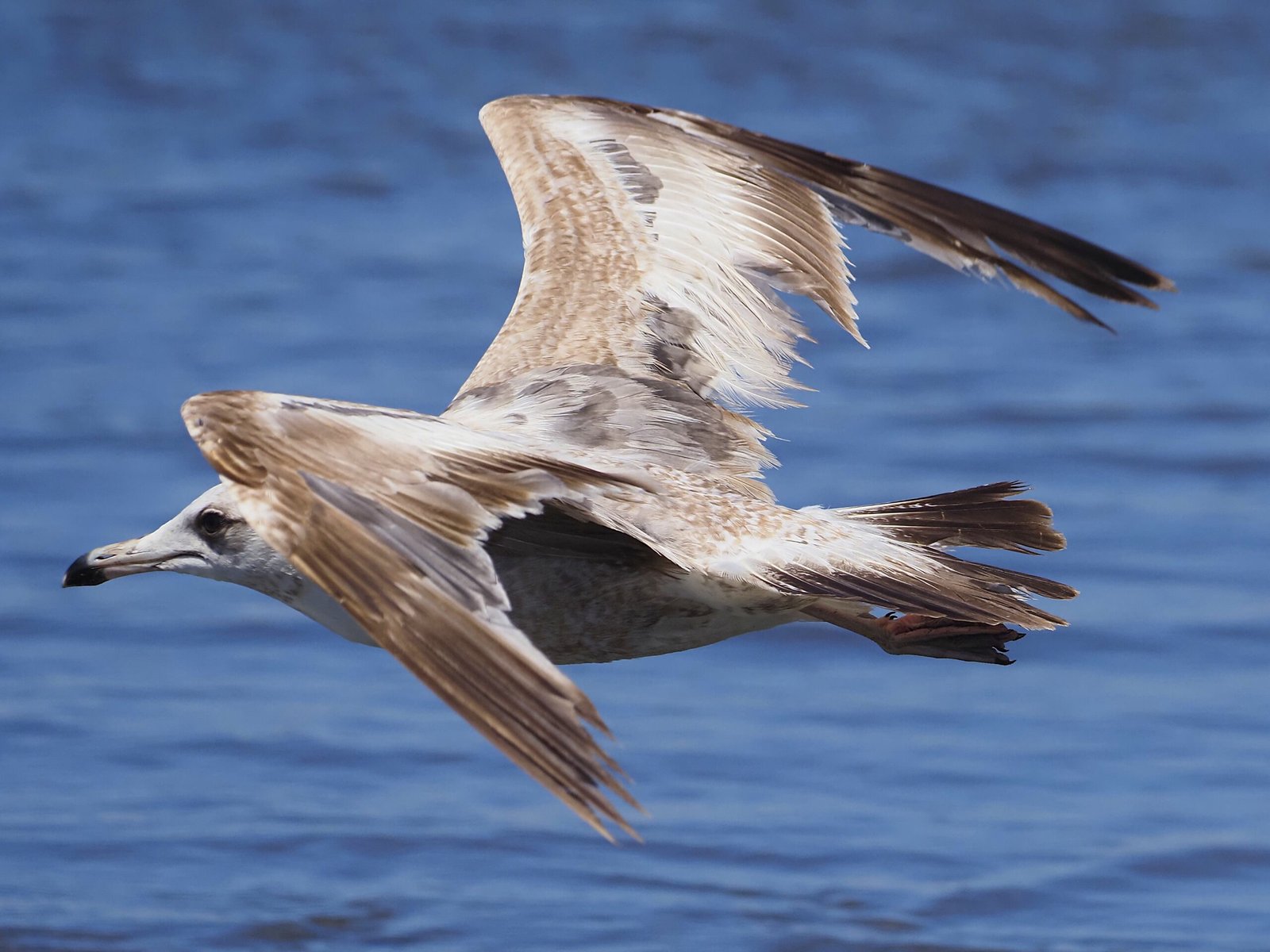
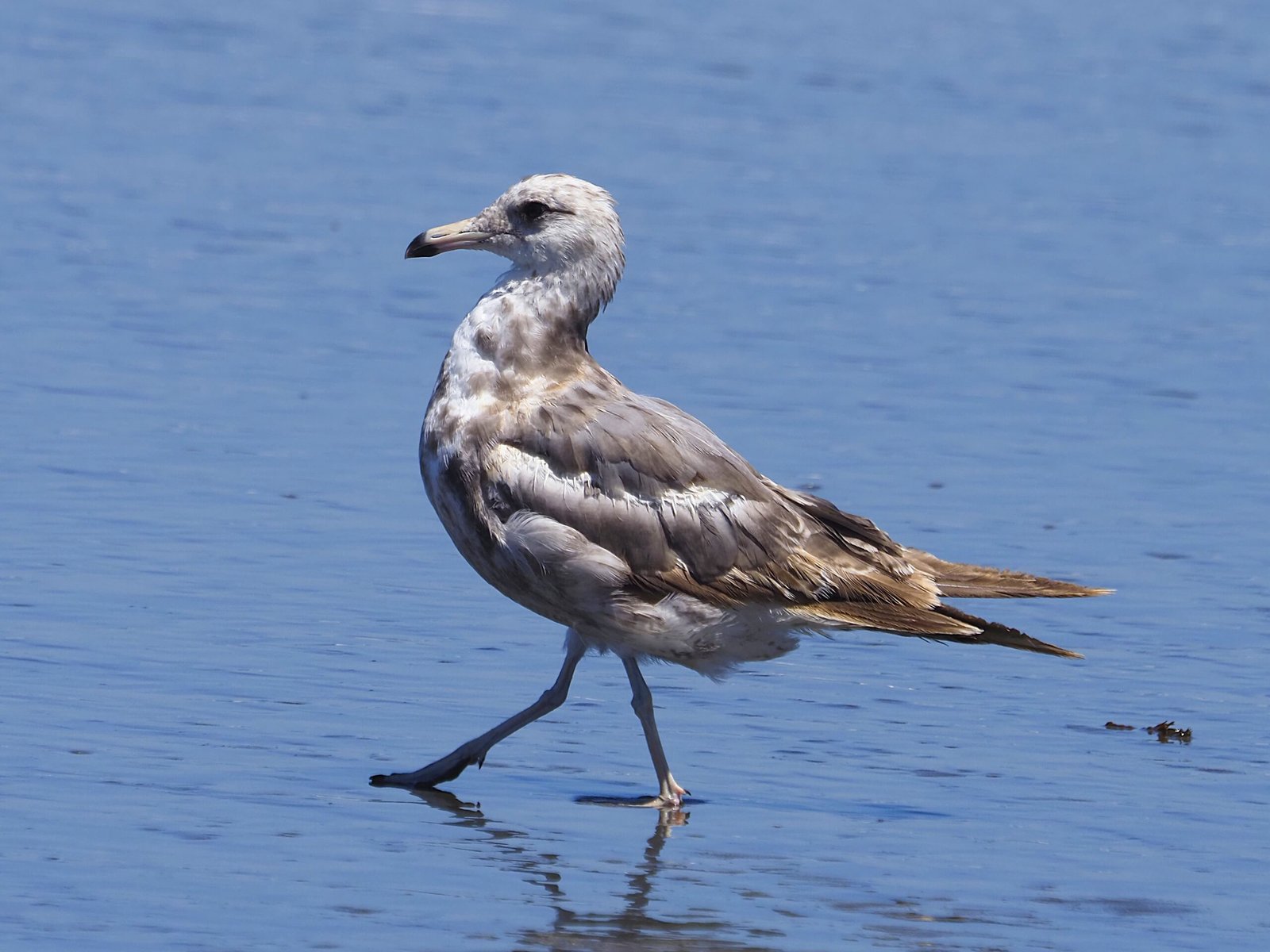
In comparison to the 1st summer (juvenile) the 2nd summer (sub adult) California is a disheveled mess!! Obviously the birds in the gallery below are molting!! They show a mixture of:
- white and gray adult body feathers (back, belly, breast, head and neck…) attained in the spring molt,
- worn juvenile body feathers (back, belly, breast, head and neck…) retained from their first molt into flight feathers about 1 year earlier (1st pre-basic molt),
- very worn juvenile flight feathers (secondaries, primaries wing coverts, tail…); and
- newly incoming adult flight feathers (secondaries, primaries wing coverts, tail…).
However, the overall structure of these gulls, long primary projection, long parallel-sided bill and bulky chest are still apparent.


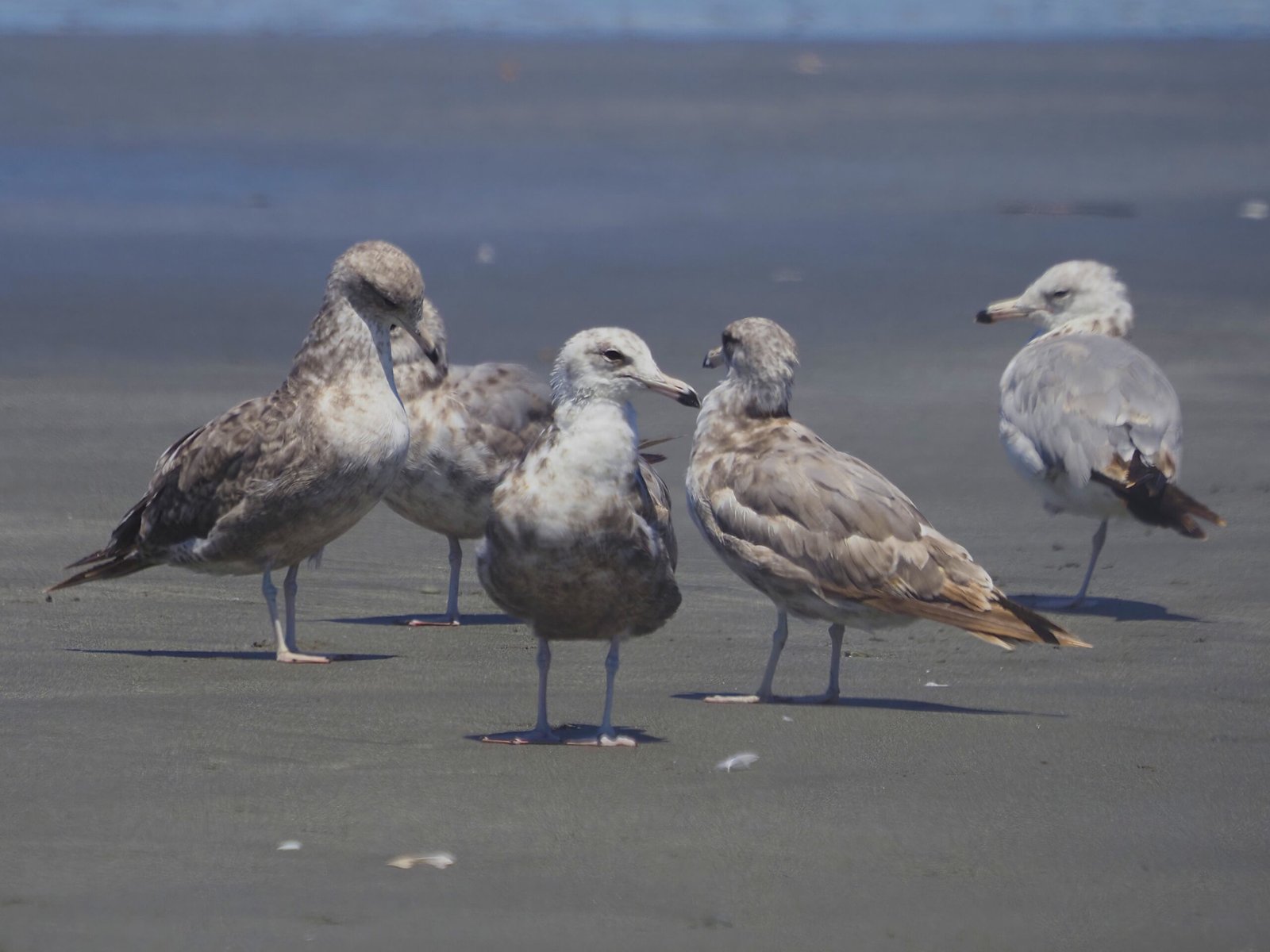
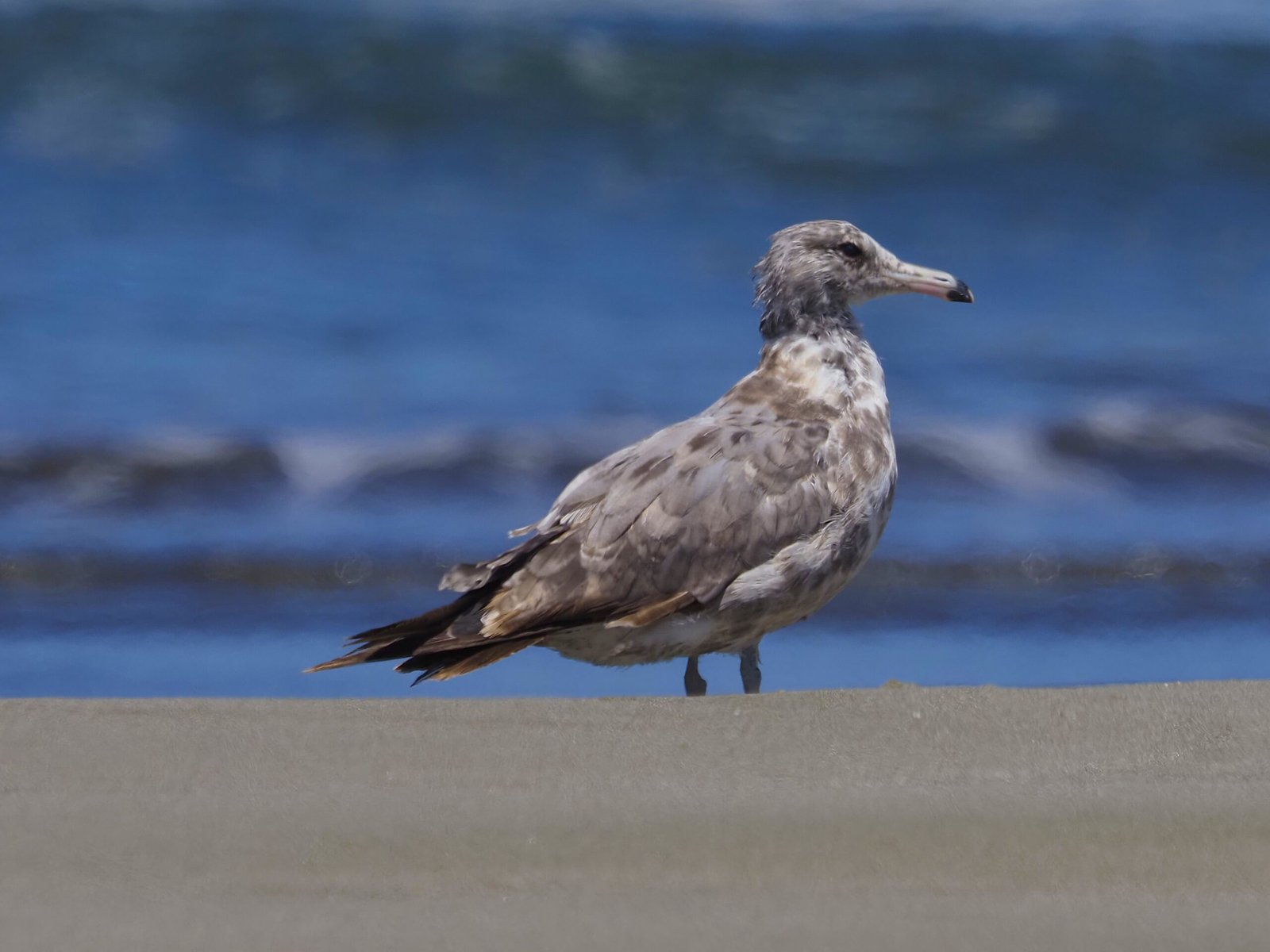
This next gallery shows approximately 3rd or early 4th year California Gulls in July on the California Coast. Their body and wings show a much greater density of adult feathers, but here and there older, more worn feathers from previous molts are still present. Note particularly that the older, worn wing coverts are still present in the birds which otherwise look mostly adult. Also note the bill in various stages of transitioning to adult colors.