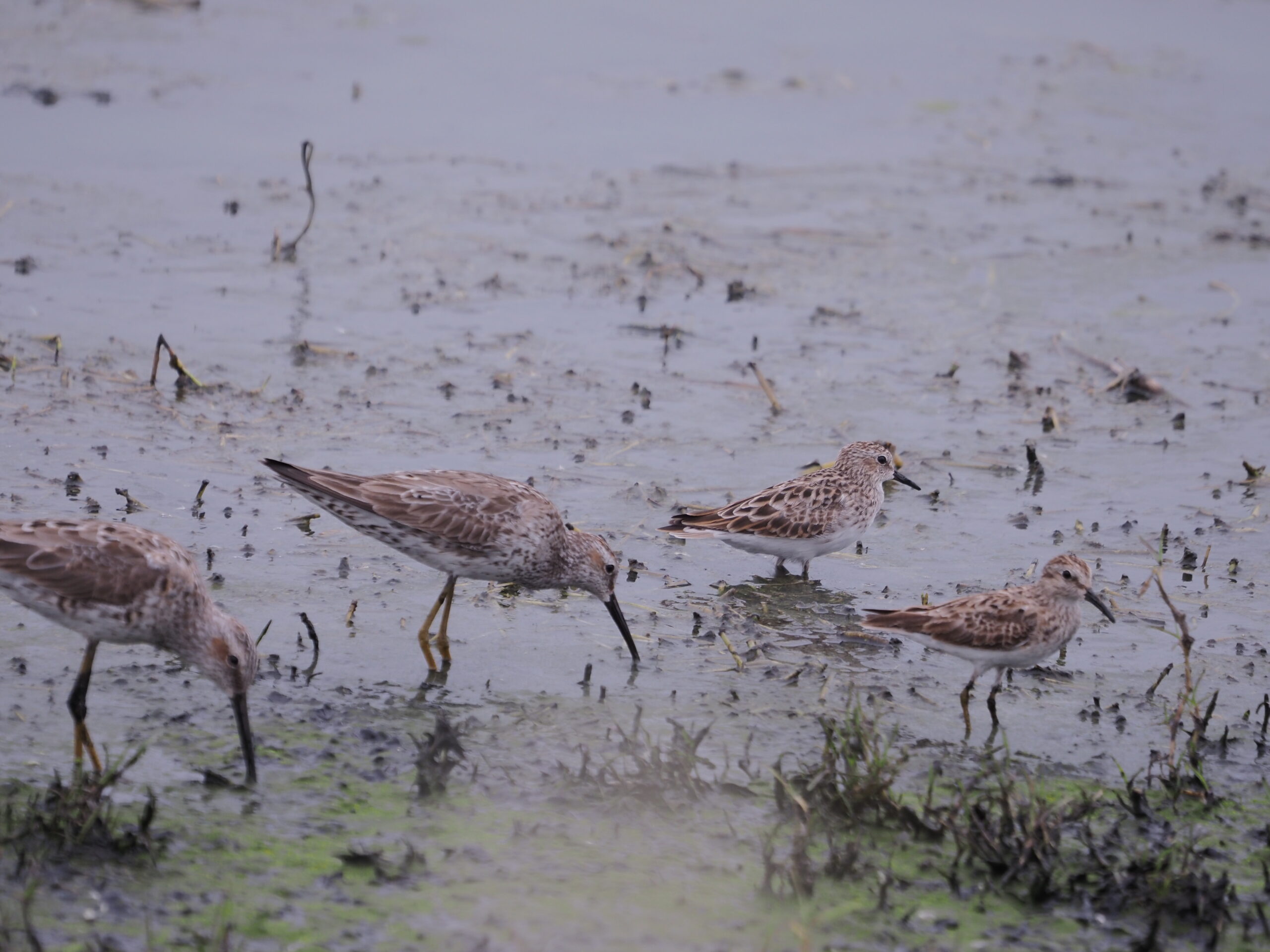
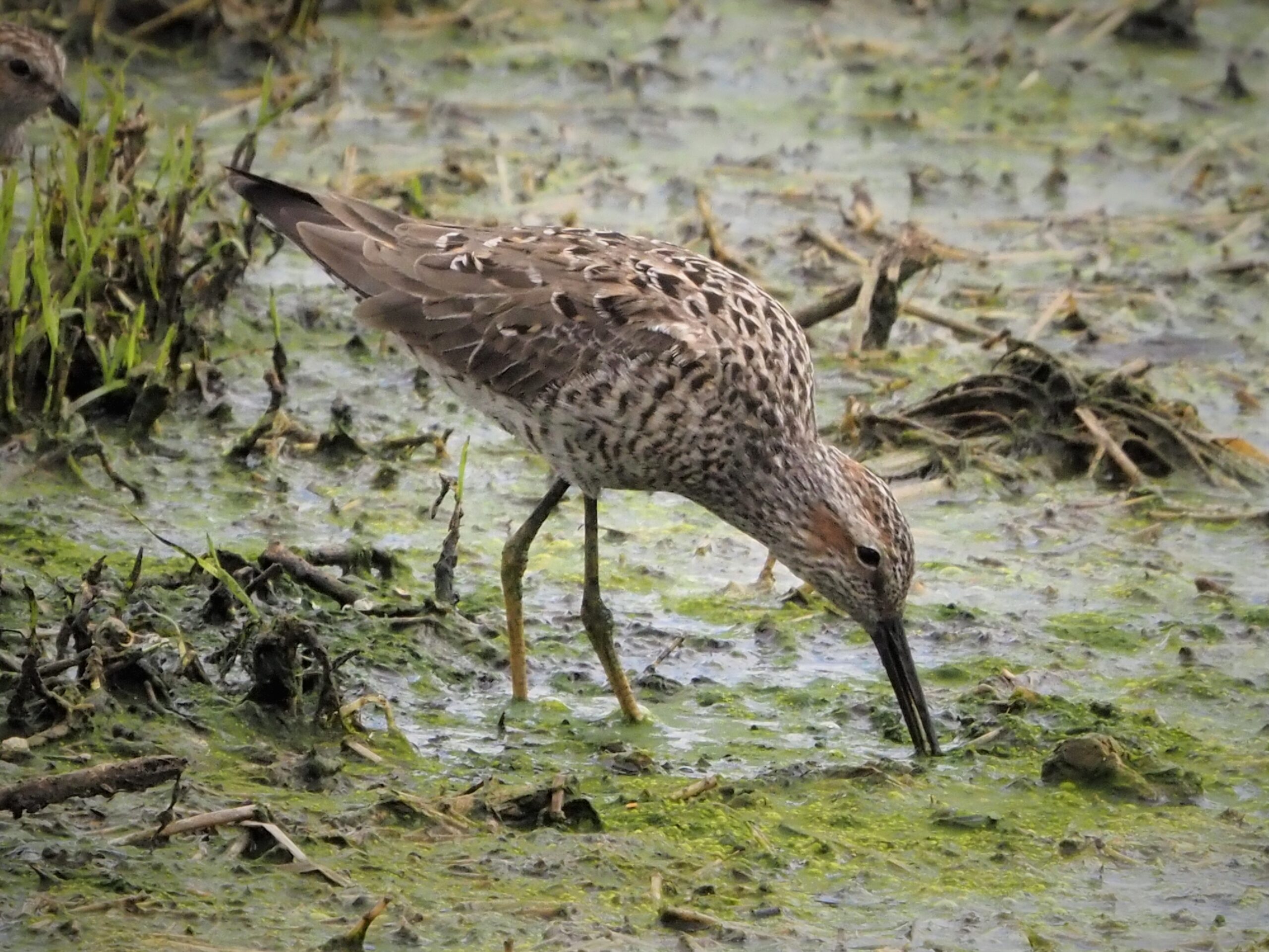
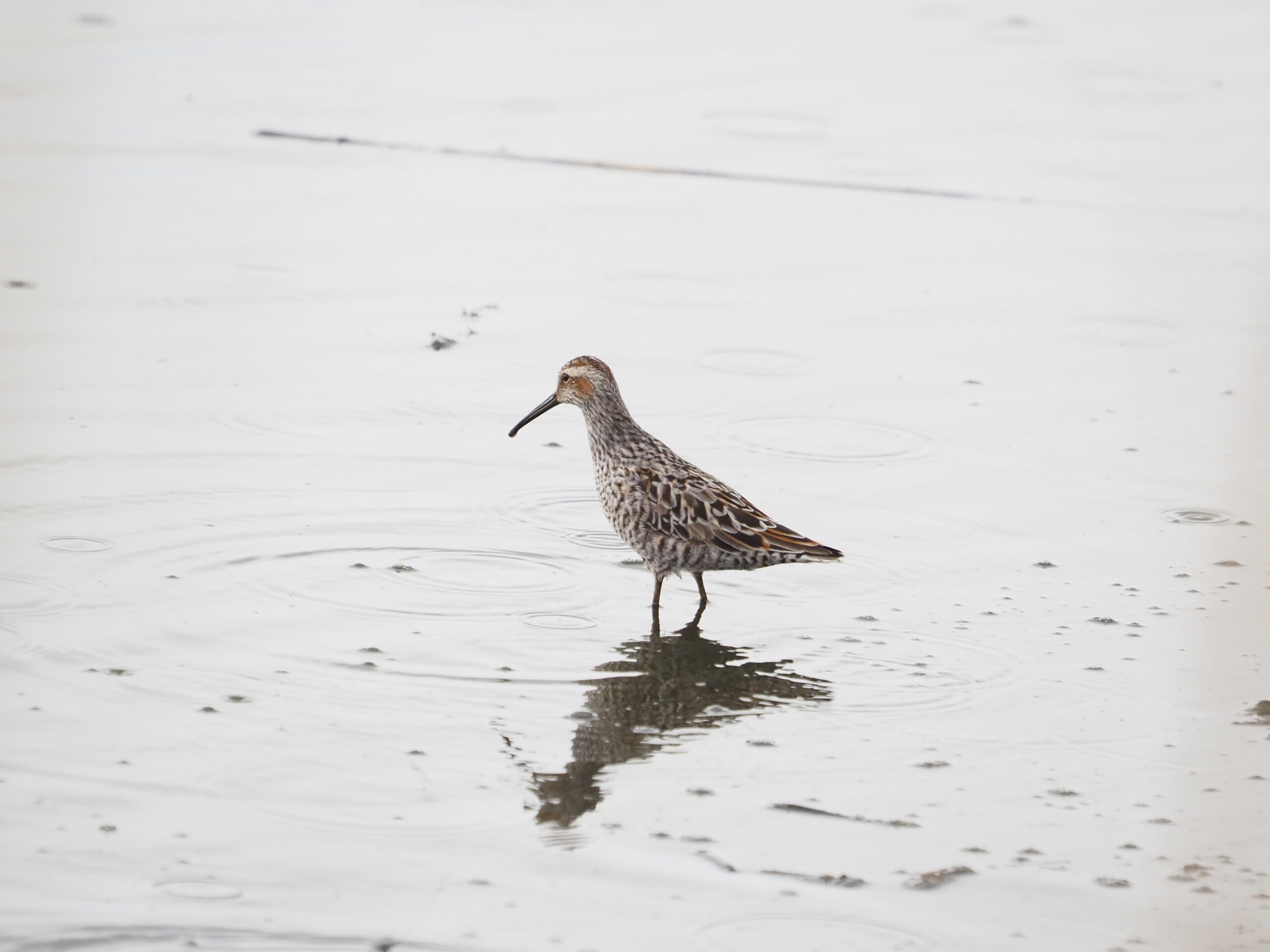
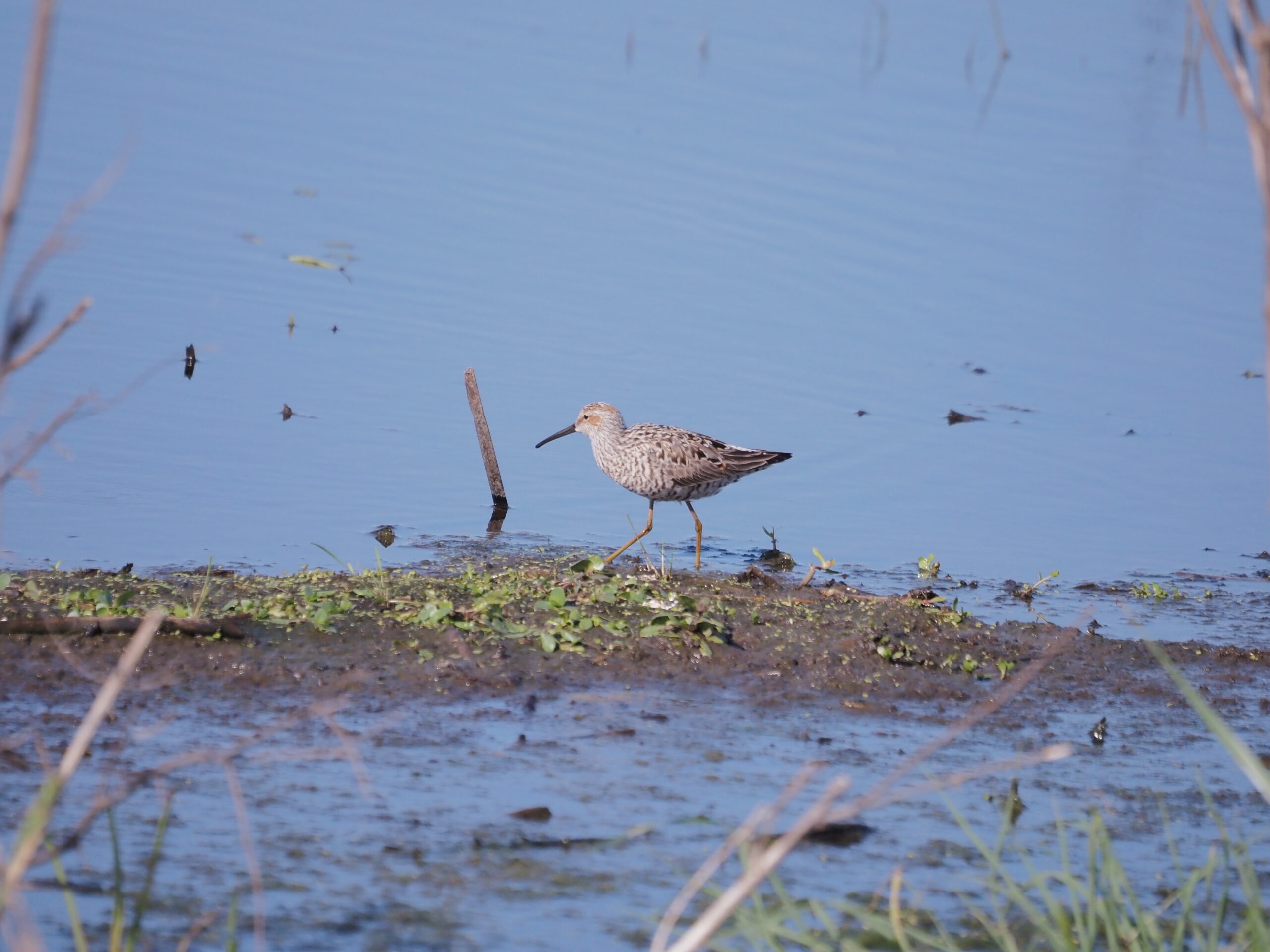
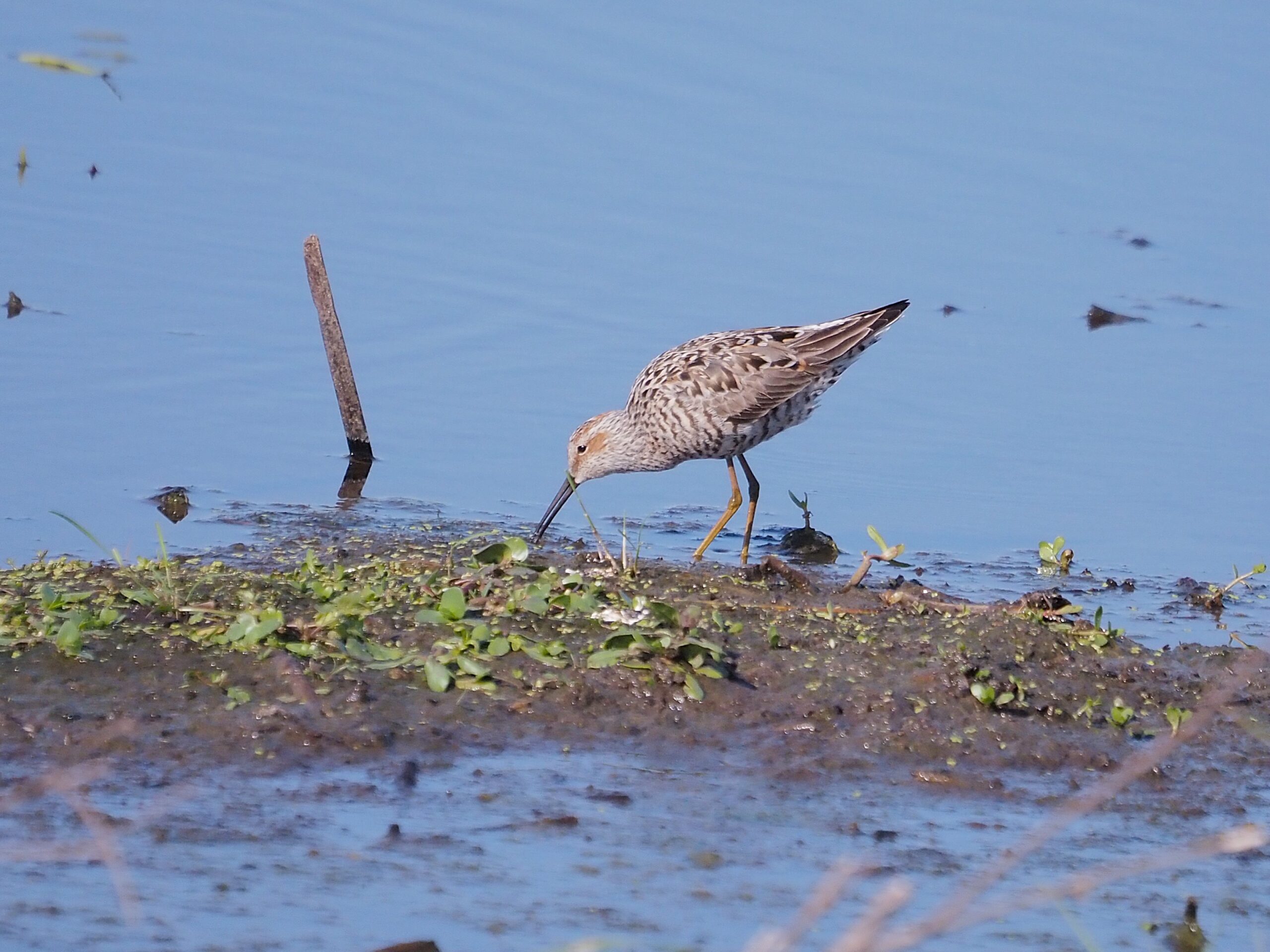
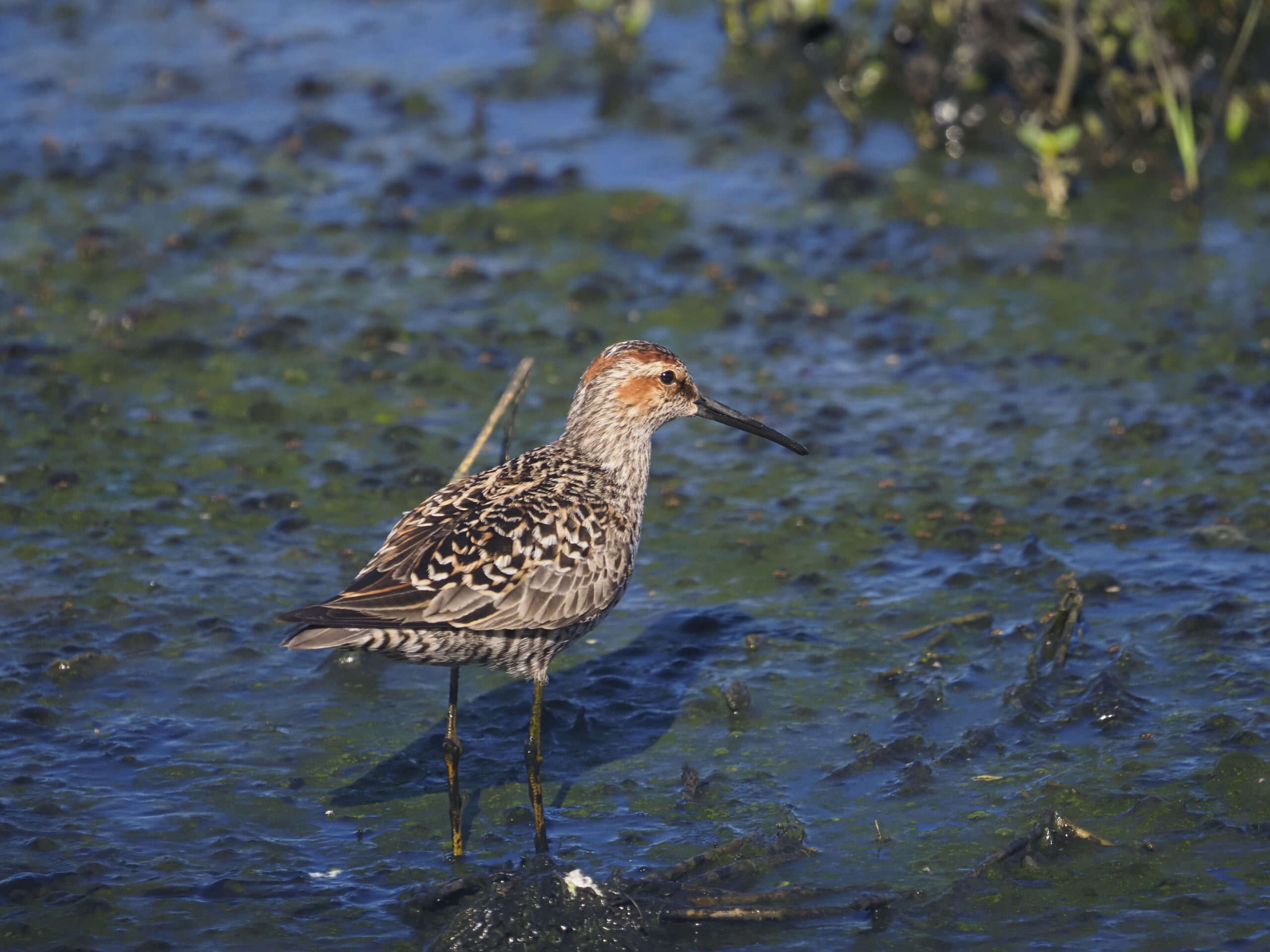
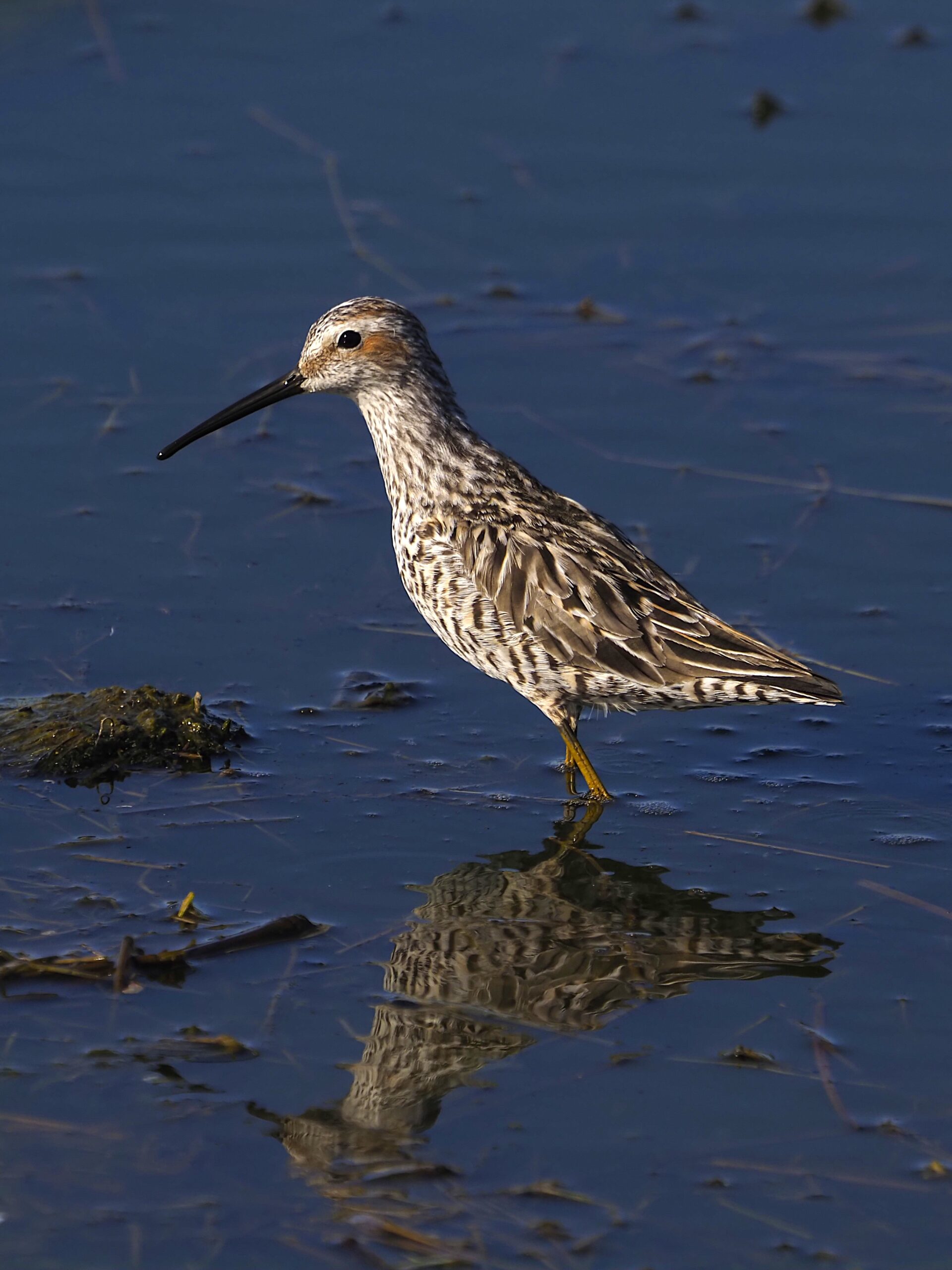
Stilt Sandpiper (alternate & molting into alternate)
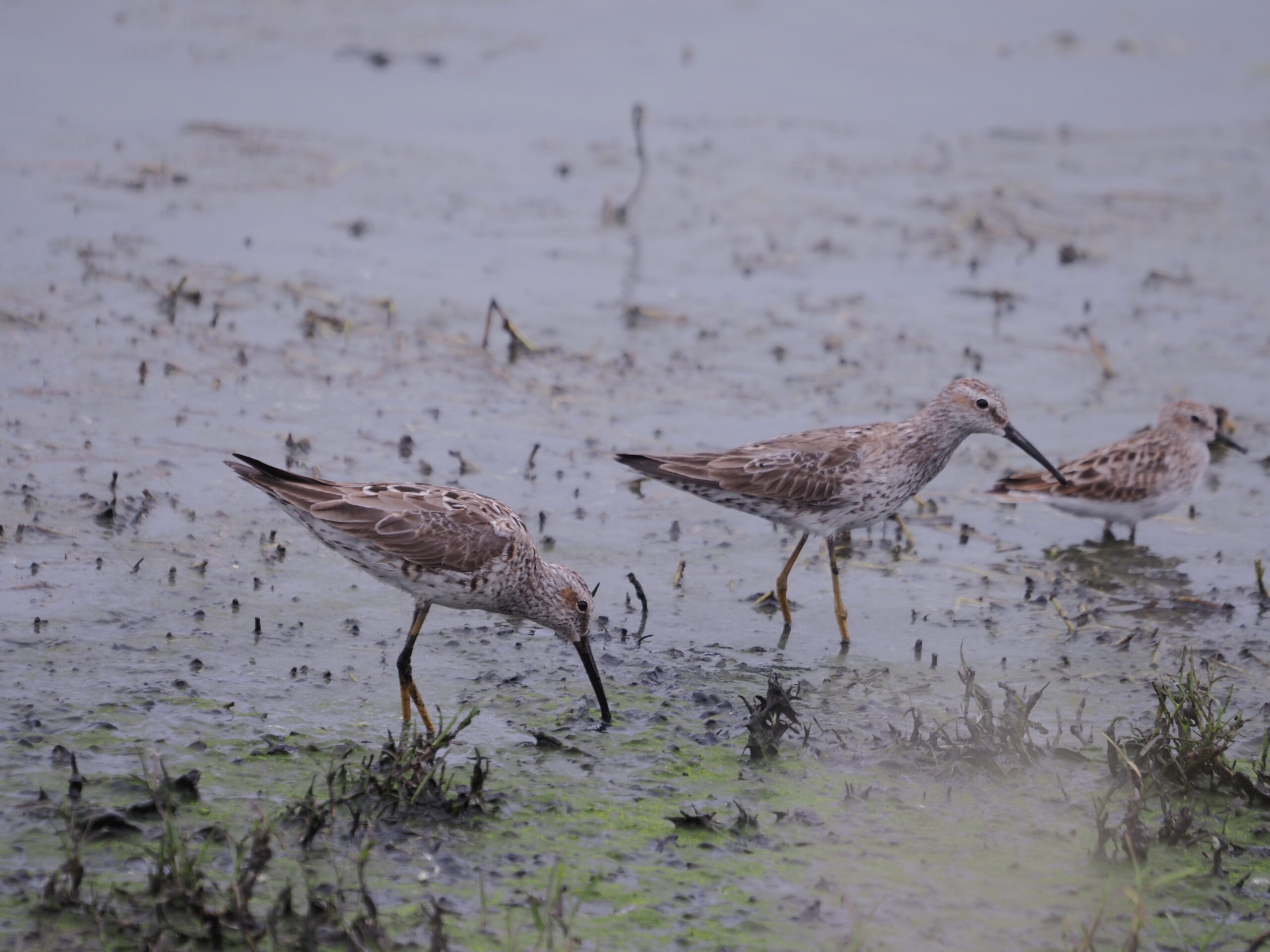
As its name implies, the Stilt Sandpiper is a very long-legged sandpiper in the genus calidris. In alternate plumage, as shown below, it is the only frequently occurring sandpiper with extensive barring on its chest and belly. The bill is medium-length and decurved noticeably at the outer third, but shorter than that of the Dowitchers. In both alternate and basic plumages the Stilt Sandpiper tends to sport a noticeable white supercilium (above the eye).
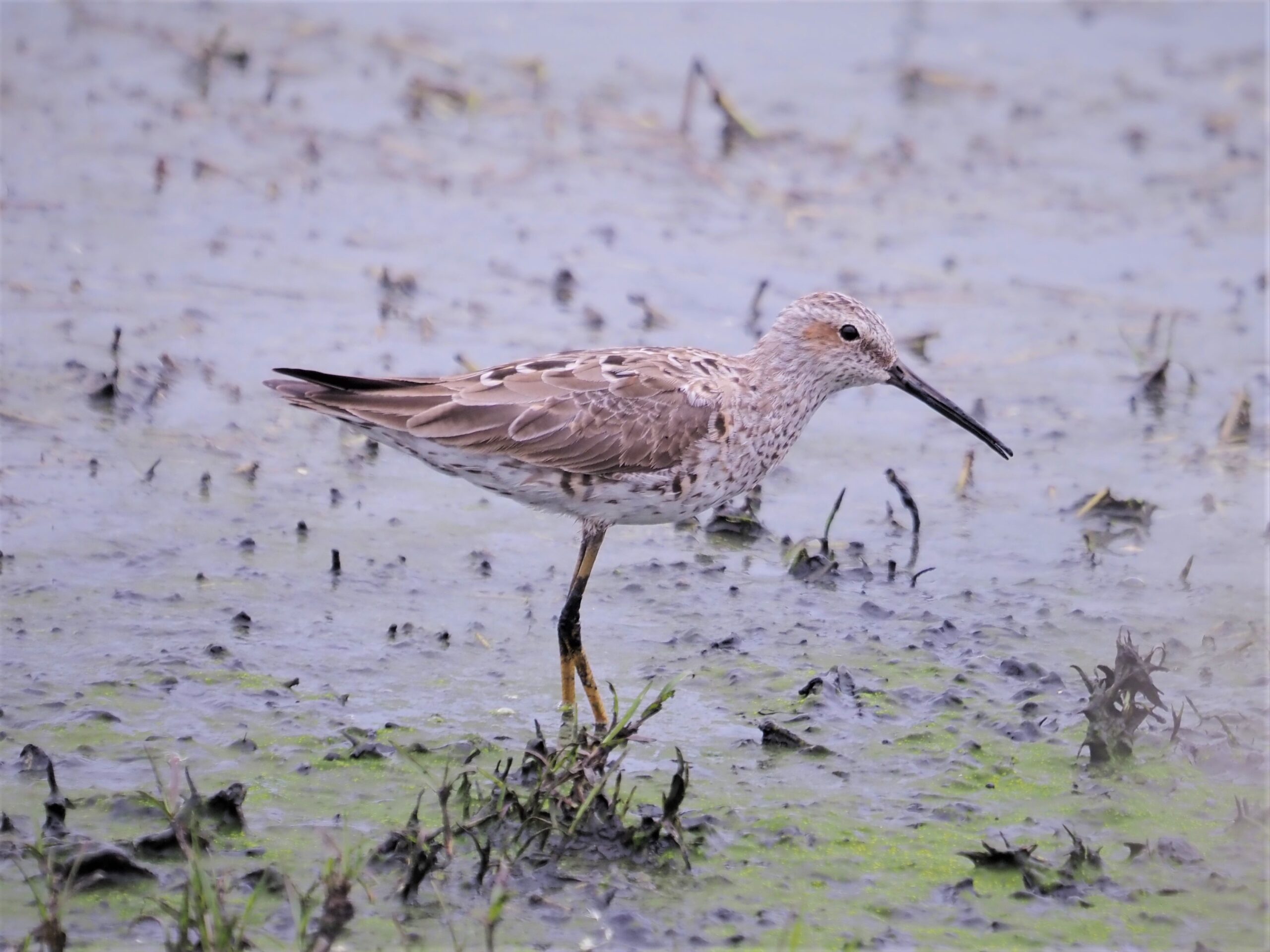
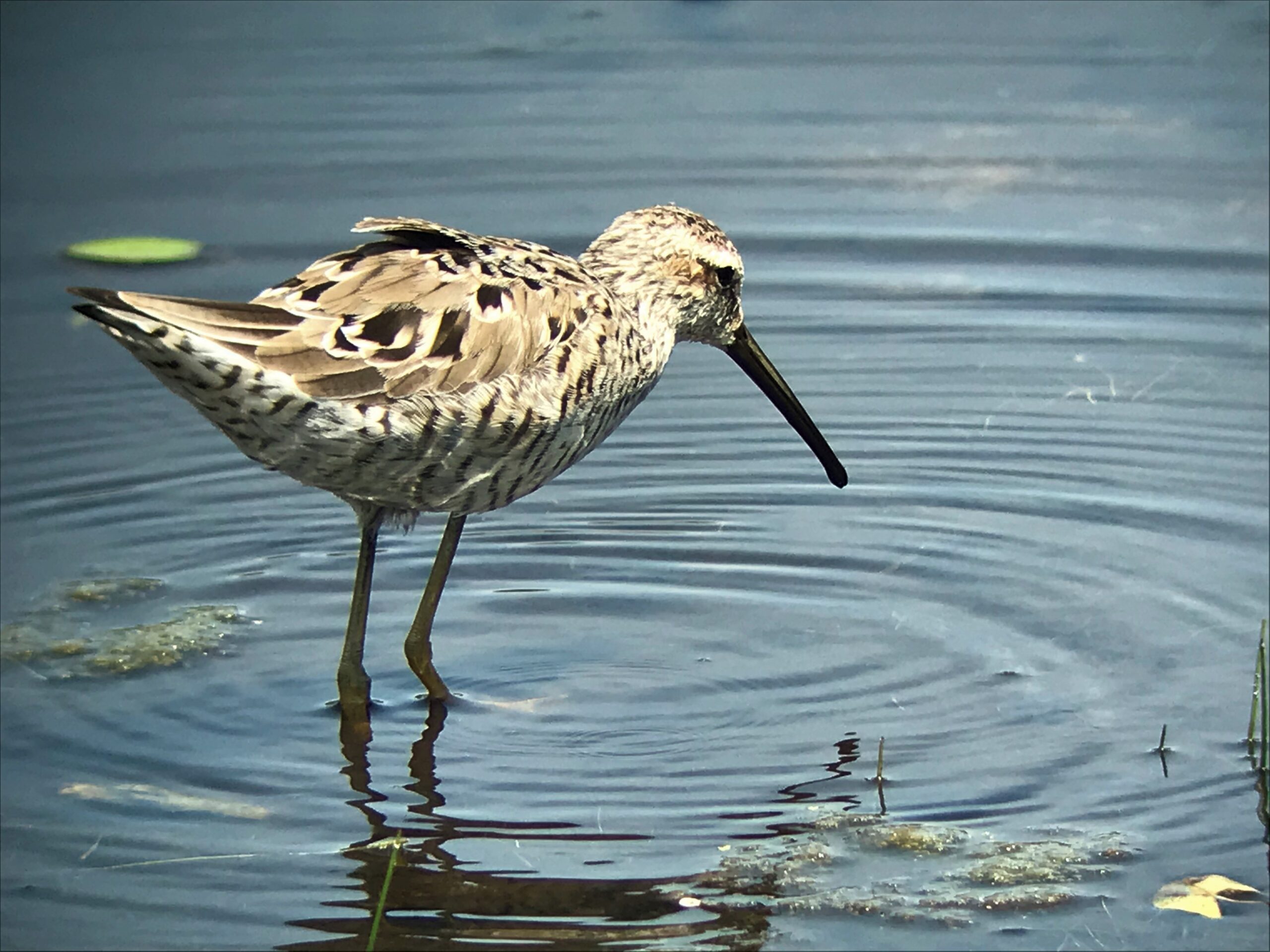
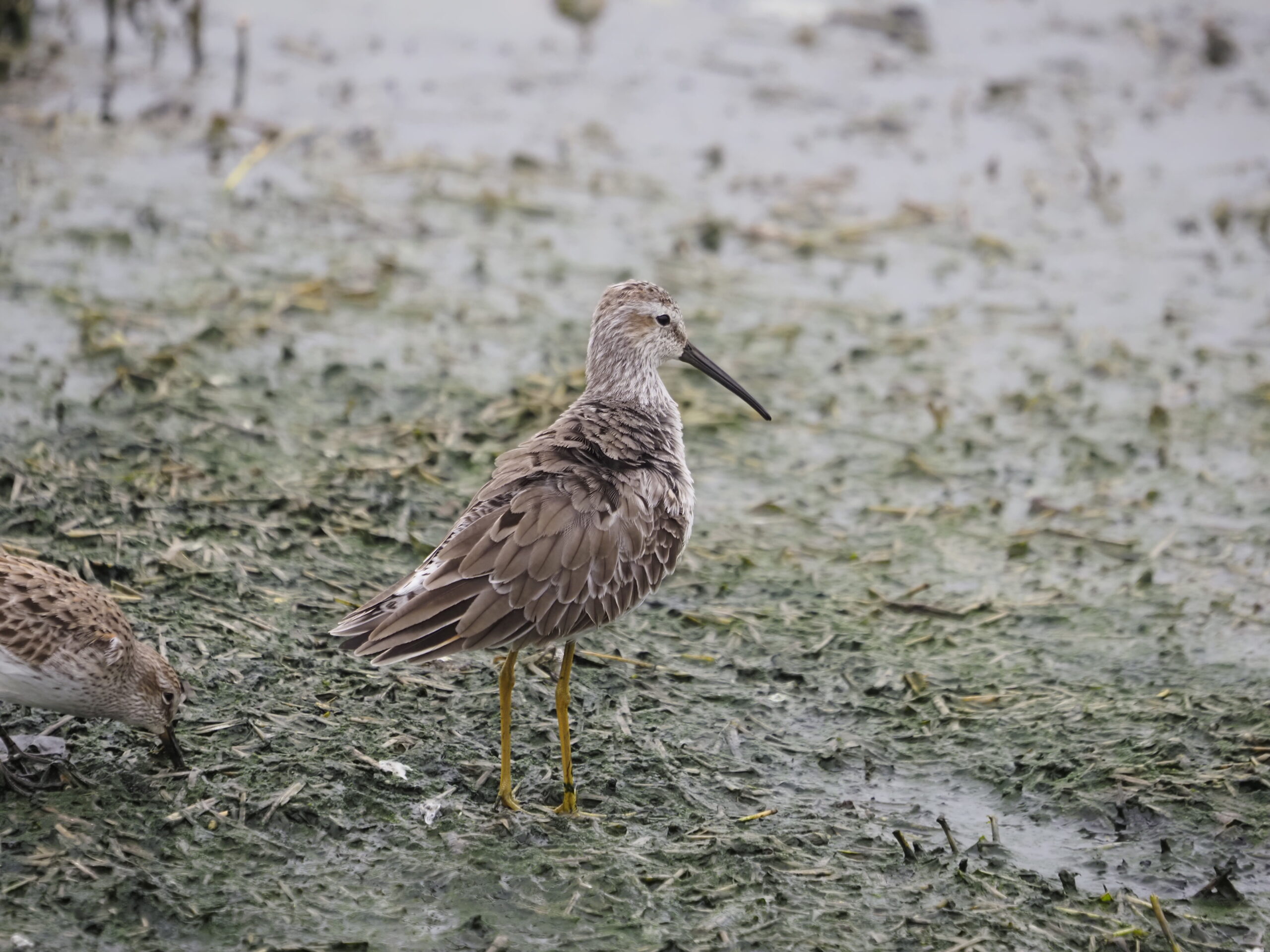
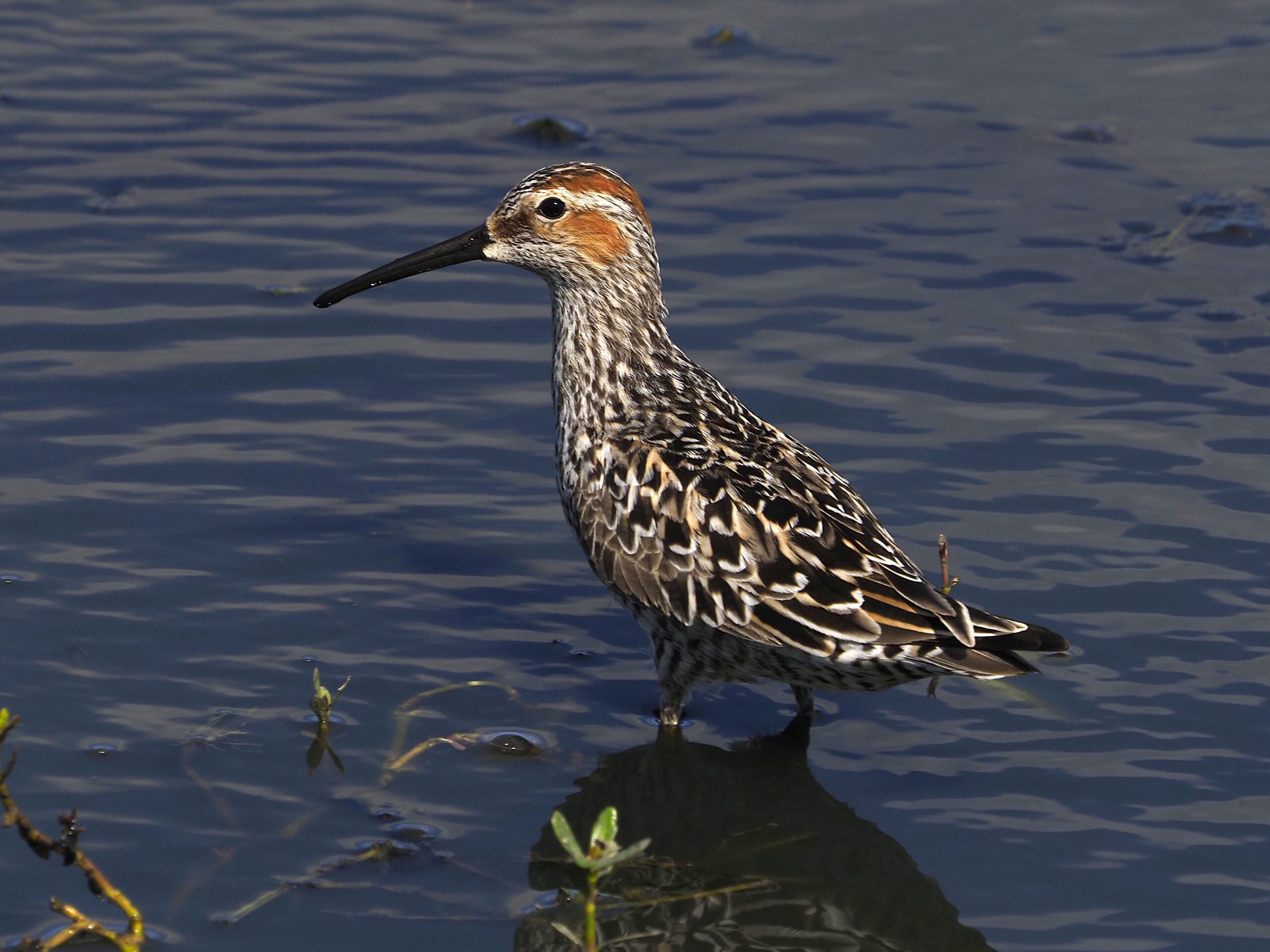
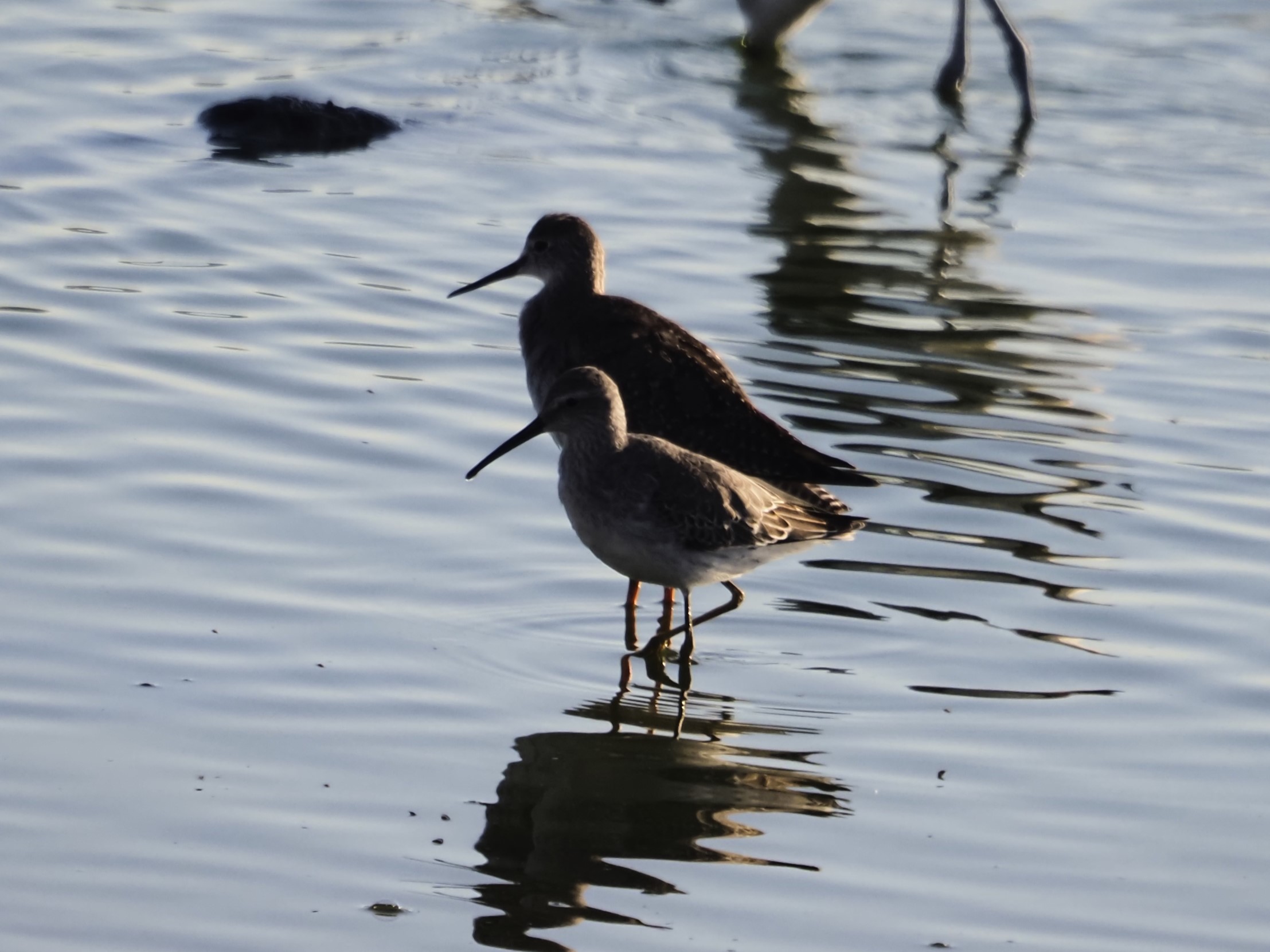
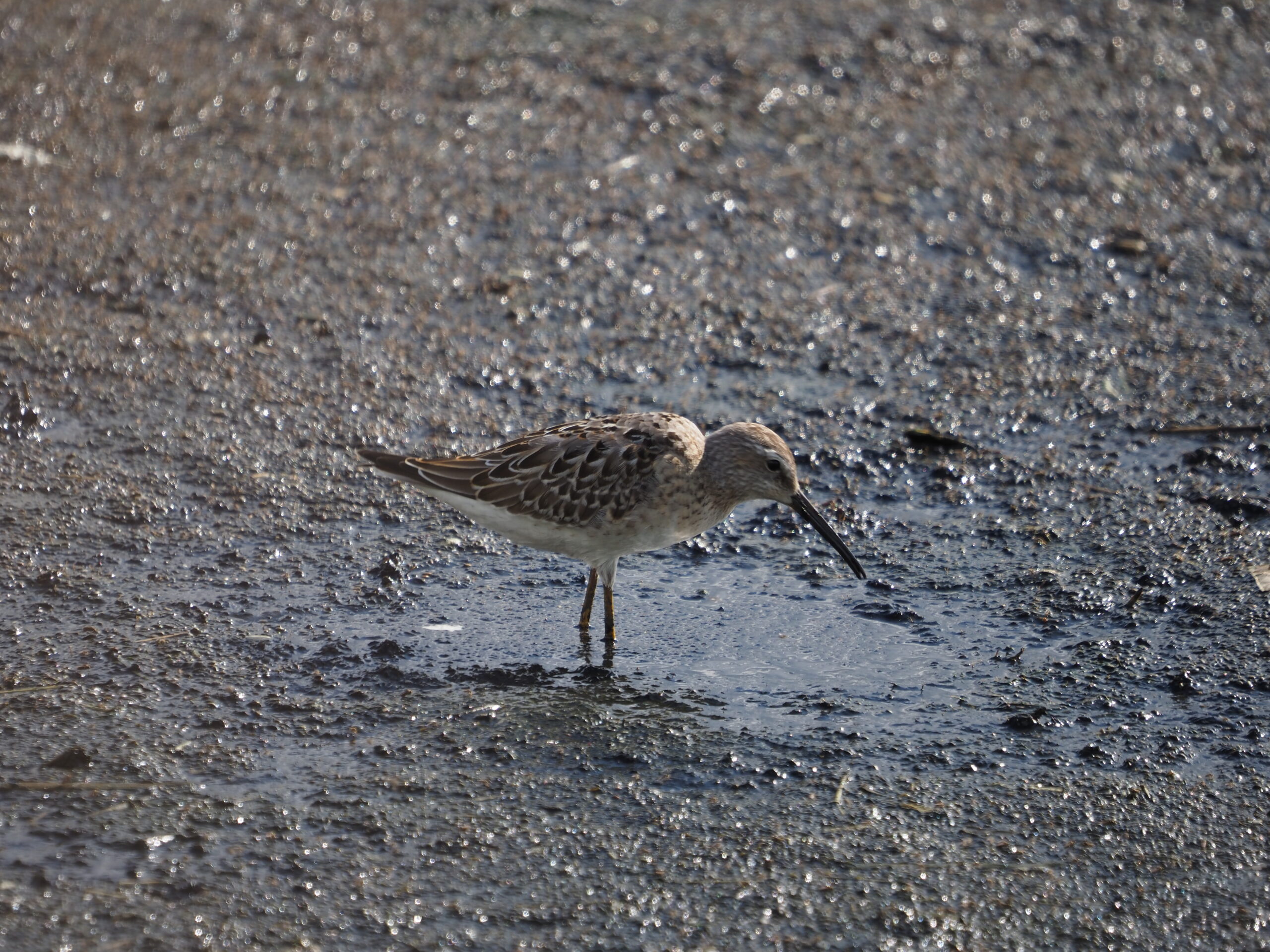
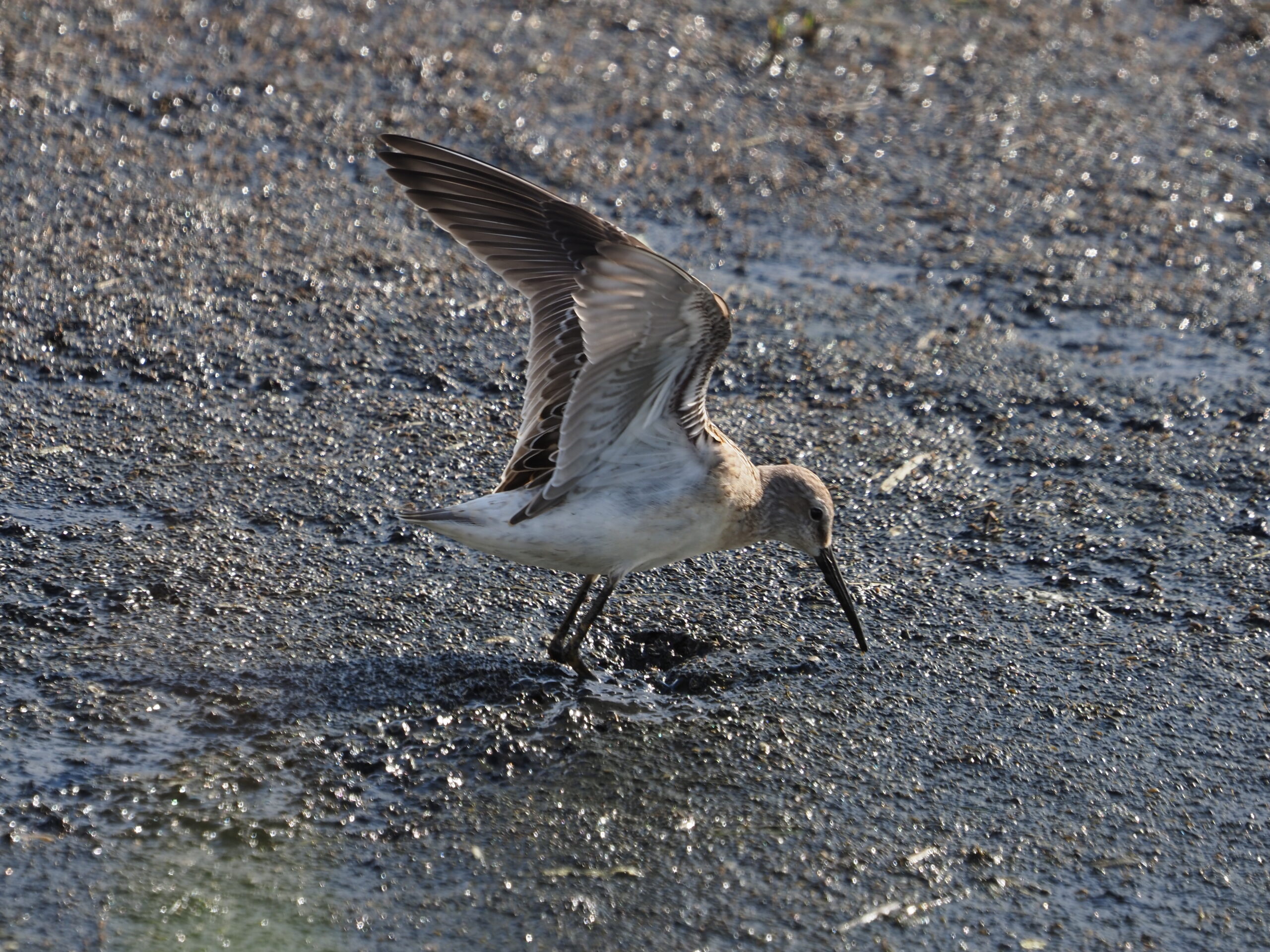
Stilt Sandpiper (basic & molting into basic)
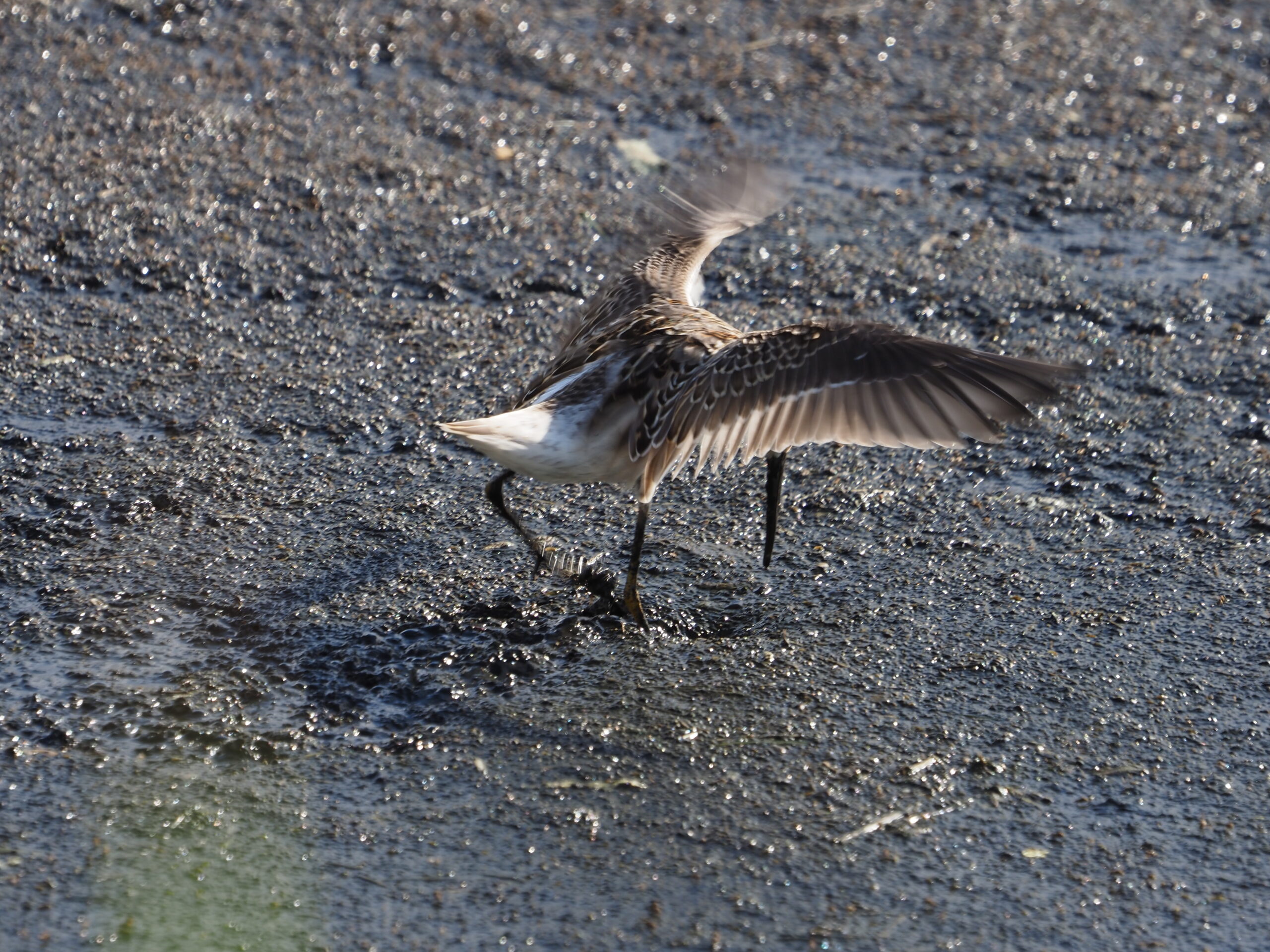
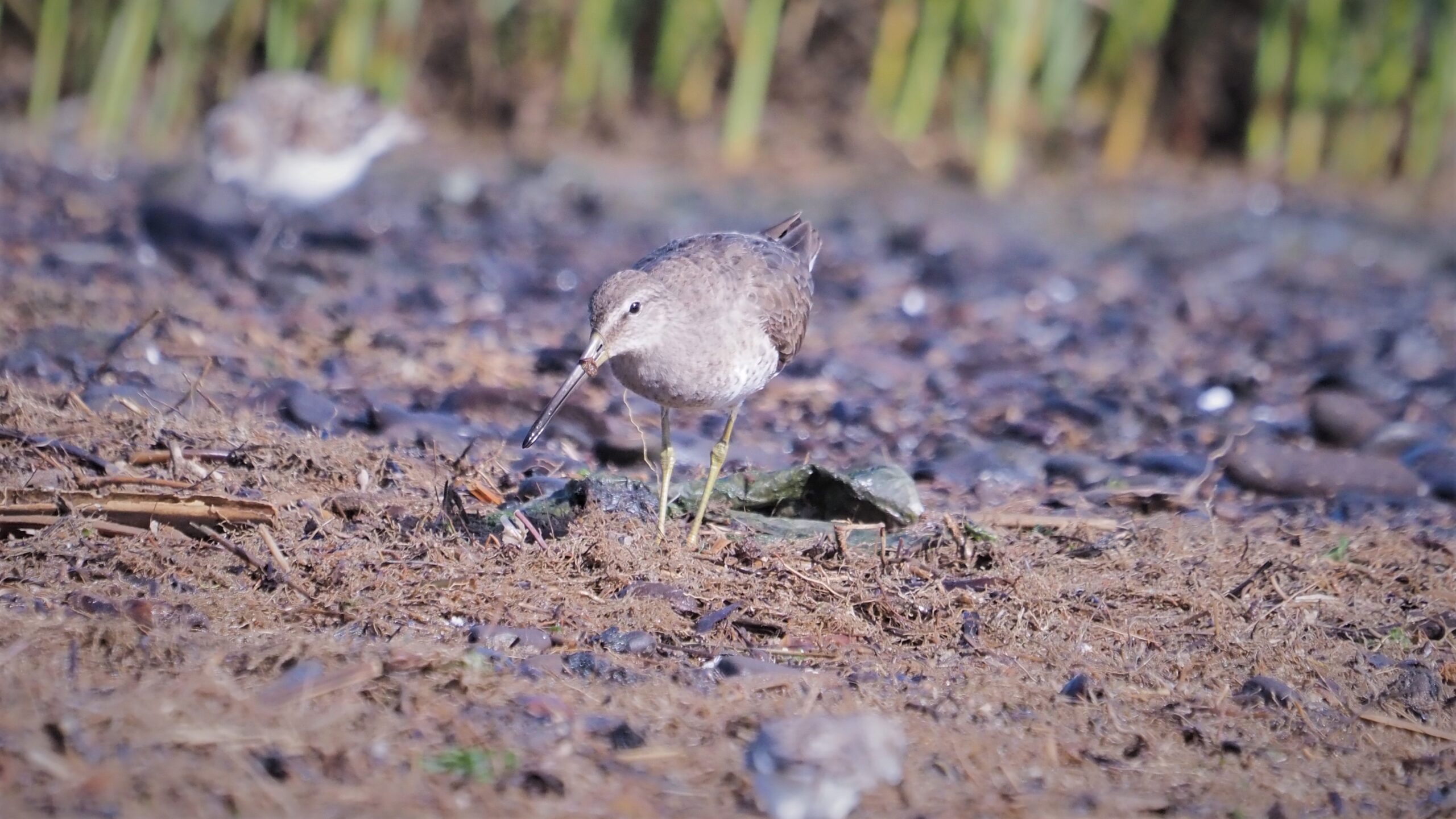
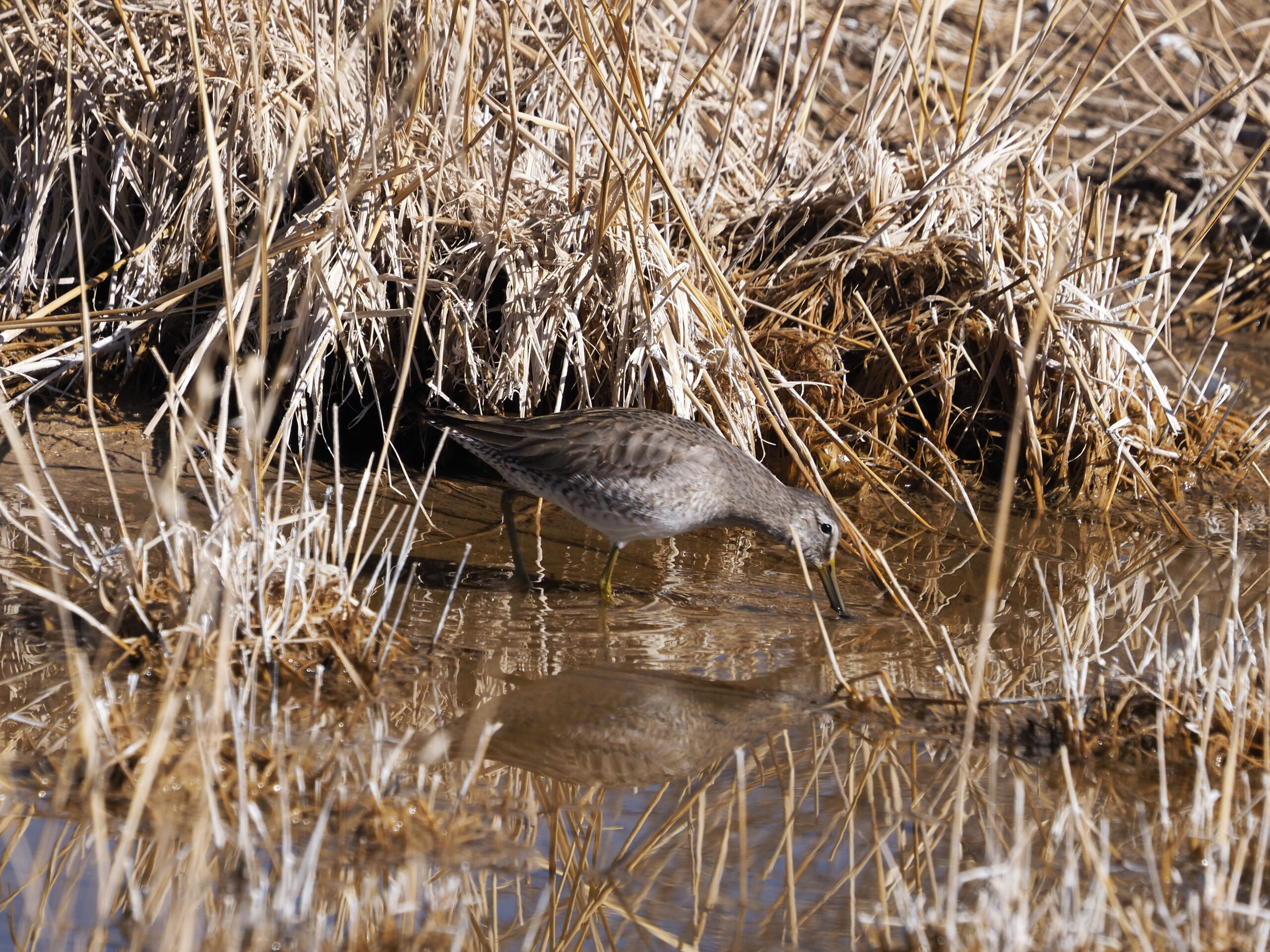
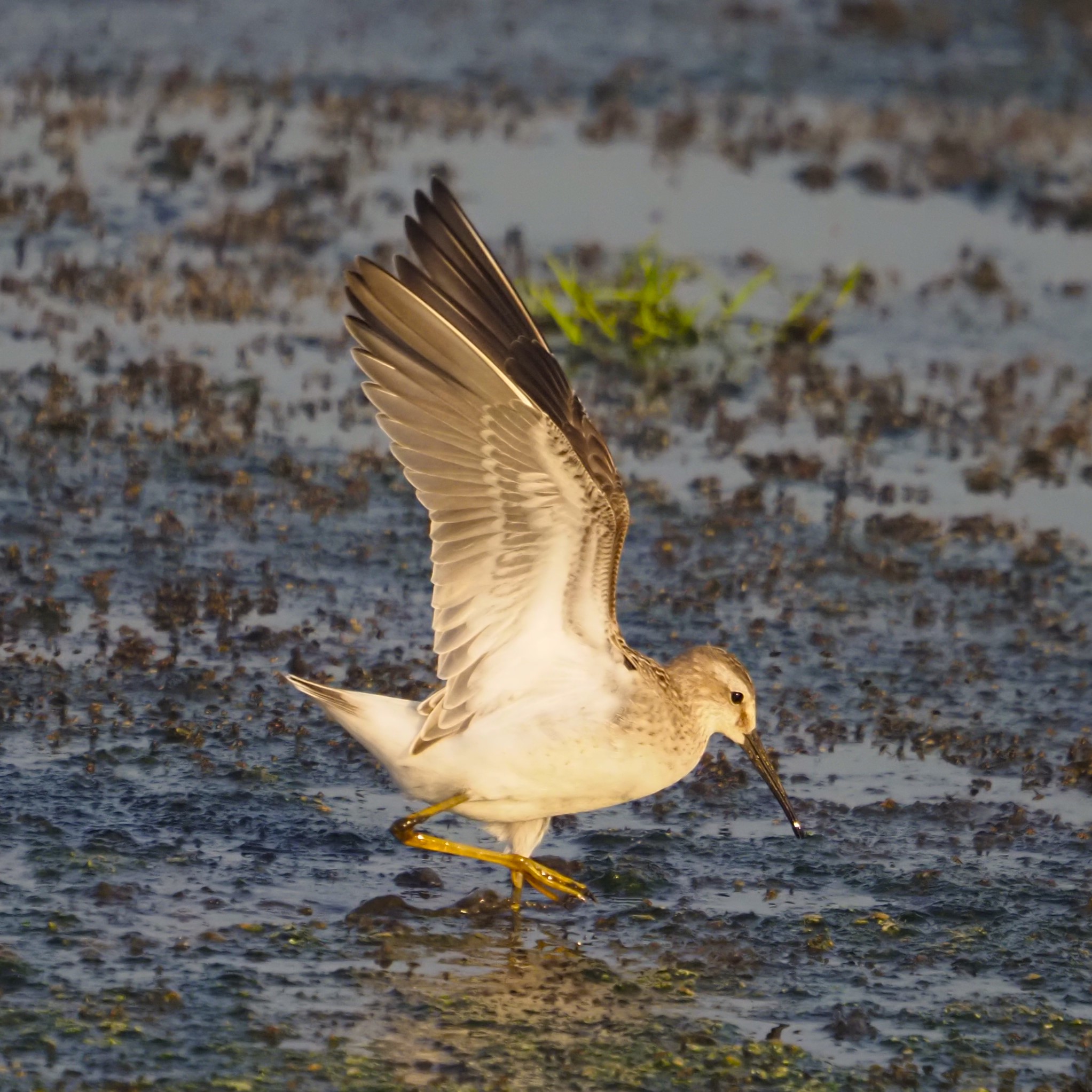
Like most shorebirds in basic plumage the Stilt Sandpiper is a gray bird. In this plumage it is best identified by its long legs and medium-length, slightly decurved bill, and its white supercilium. As seen in some of the photos below, the Stilt Sandpiper often flaps its wings to pull itself from the mud while feeding. At these times the white rump is revealed.
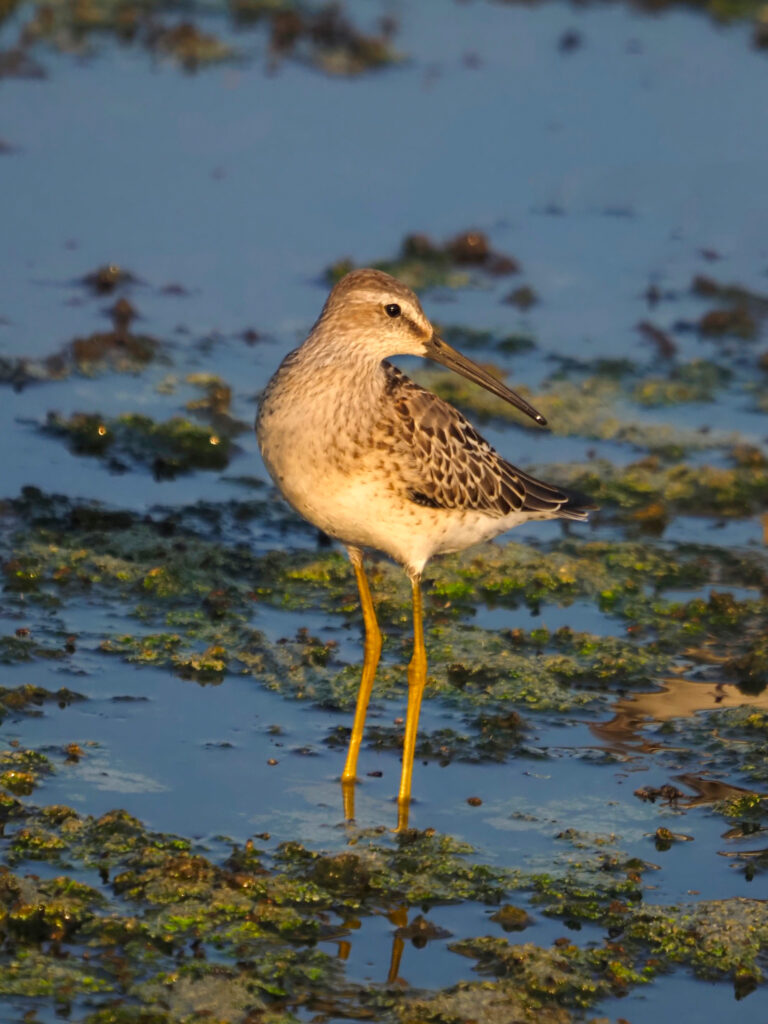
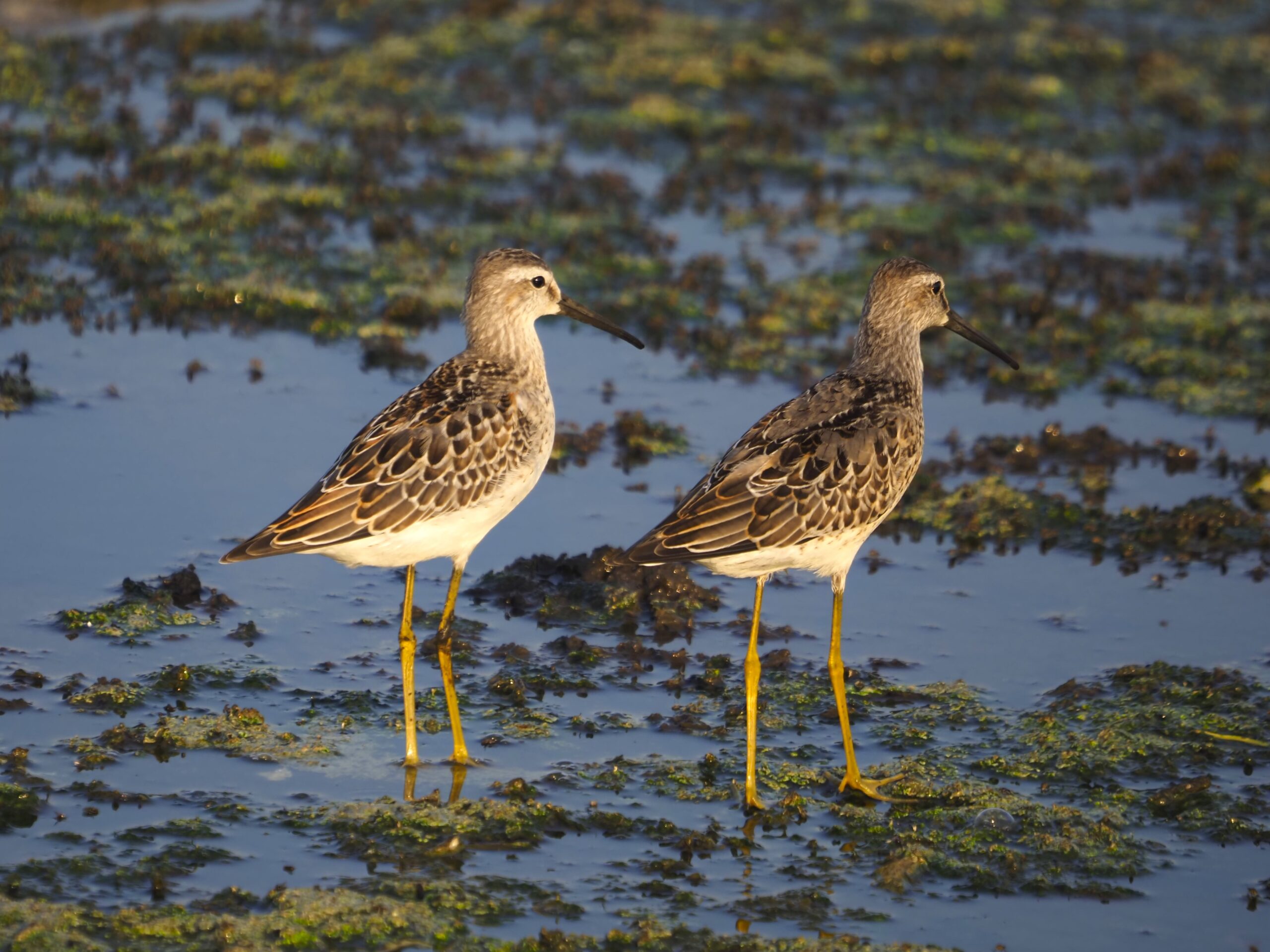
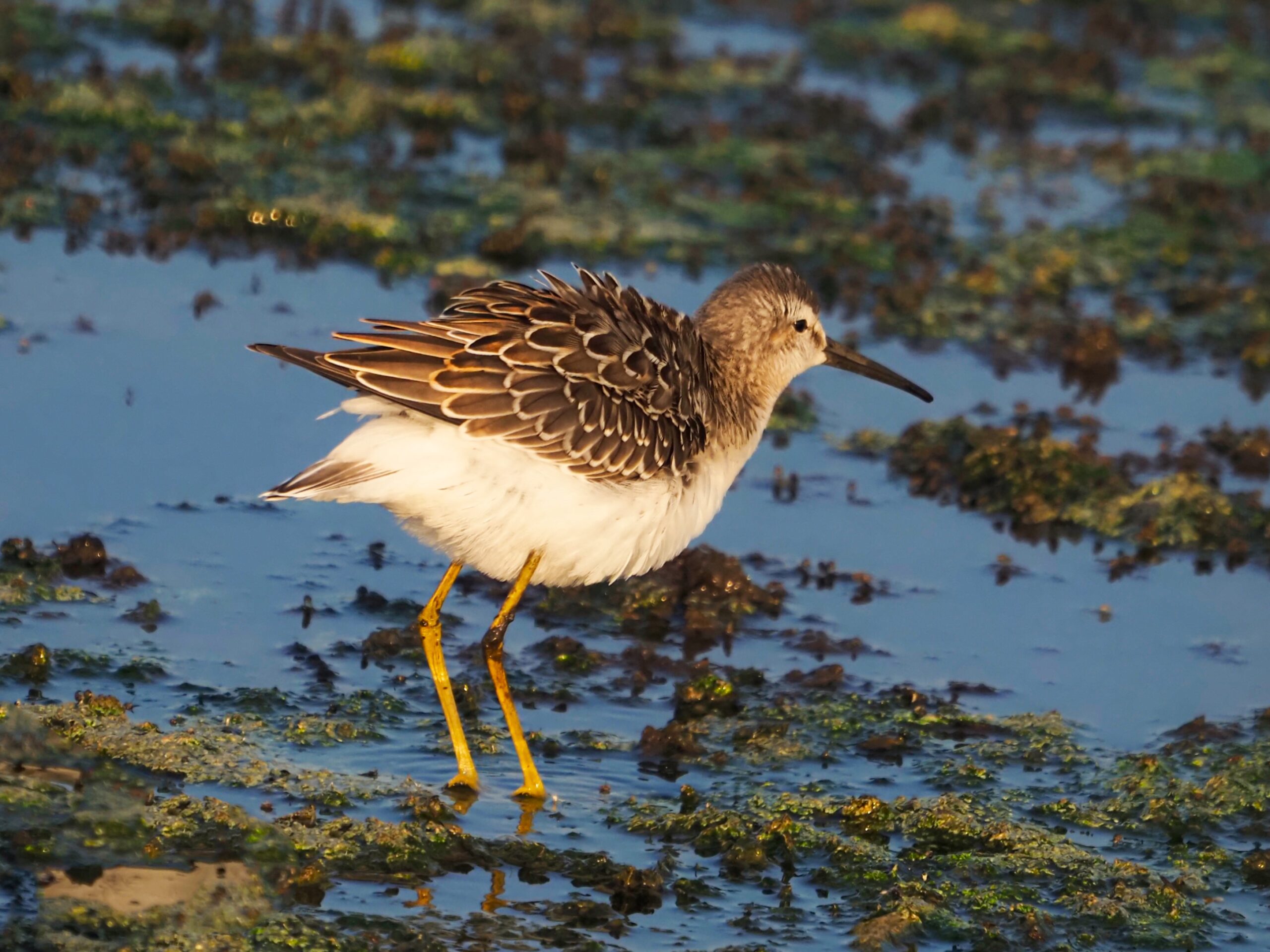
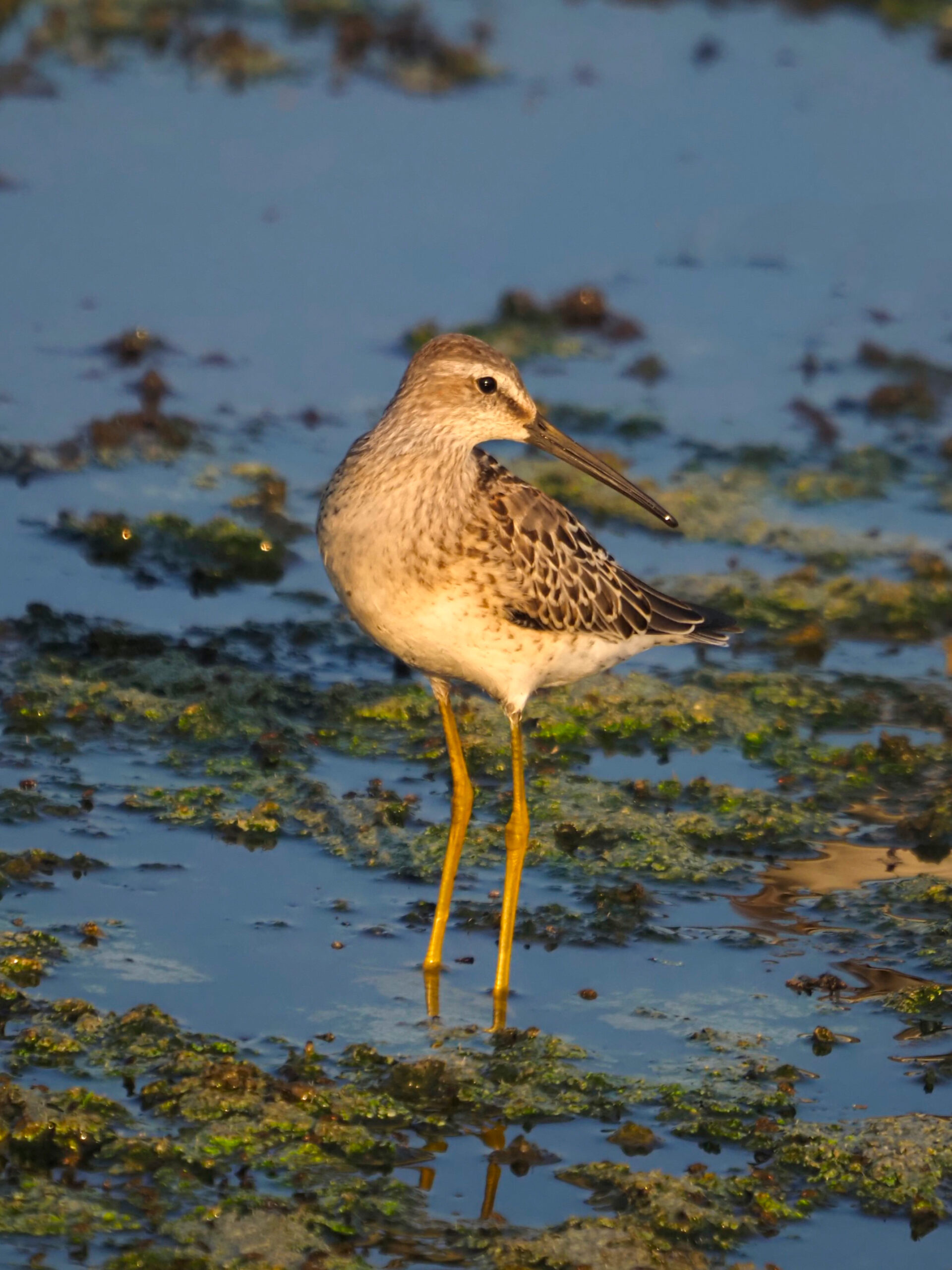
Stilt Sandpiper (juvenile)
Like other juvenile shorebirds, the first-year Stilt Sandpiper has immaculate and usually white-outlined feathers of the mantle, scapulars and coverts. The photos below were taken in late August when the juveniles are headed south for the first time. The difference in timing of molt for individuals can be seen in the photo below of the two juvenile Stilt Sandpipers. The one on the left appears to have only juvenile feathers on the back, while the one on the right has a number of basic feathers coming in.
Stilt Sandpiper Comparisons
In terms of size the Stilt Sandpiper is much taller and larger than the peeps, but is smaller than the Lesser Yellowlegs and is dwarfed by the Black-necked Stilt and the American Avocet.