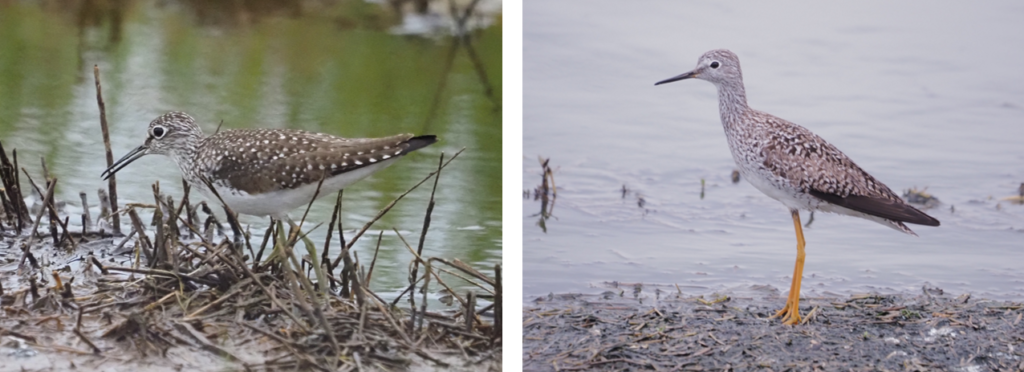
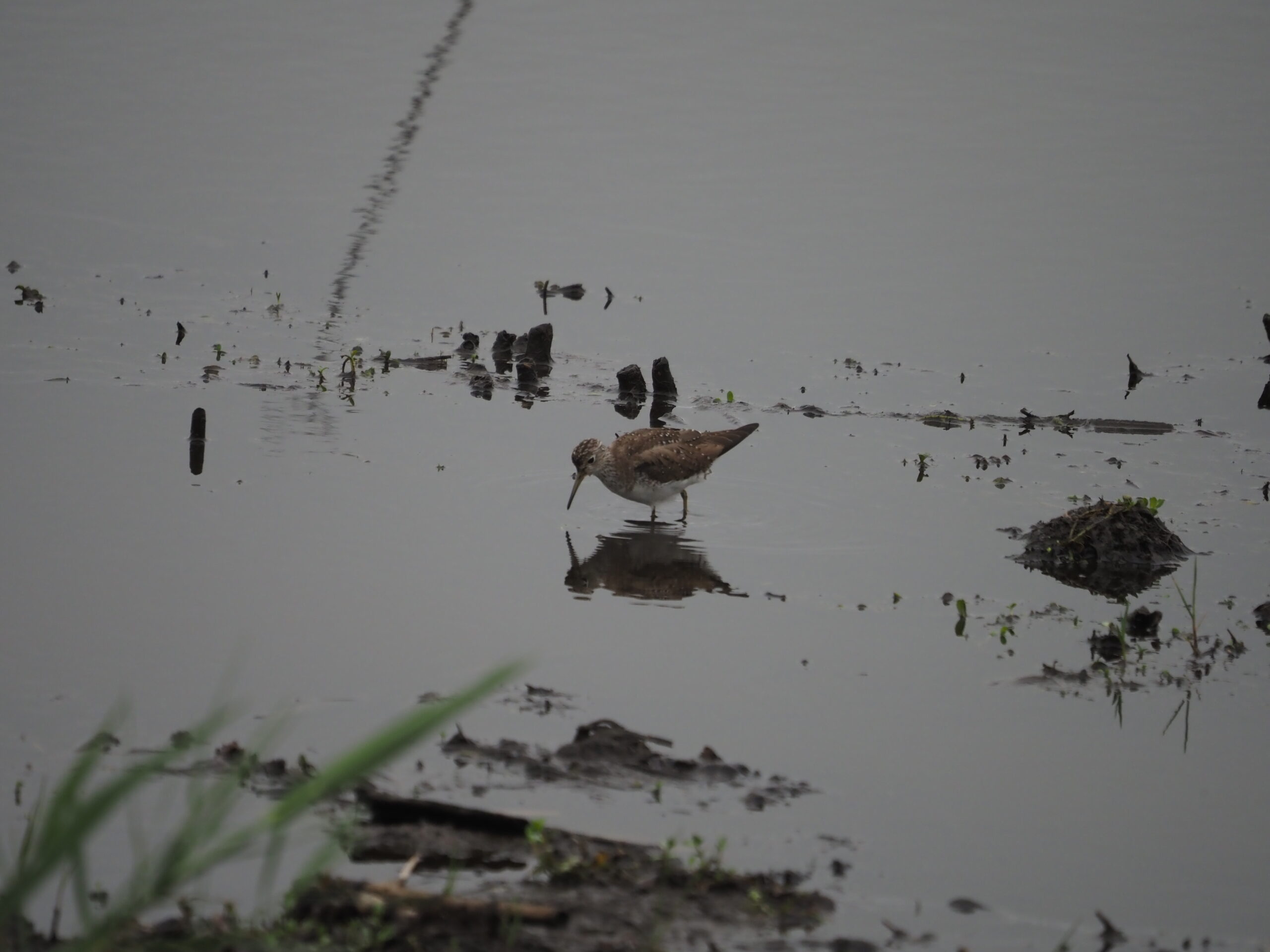
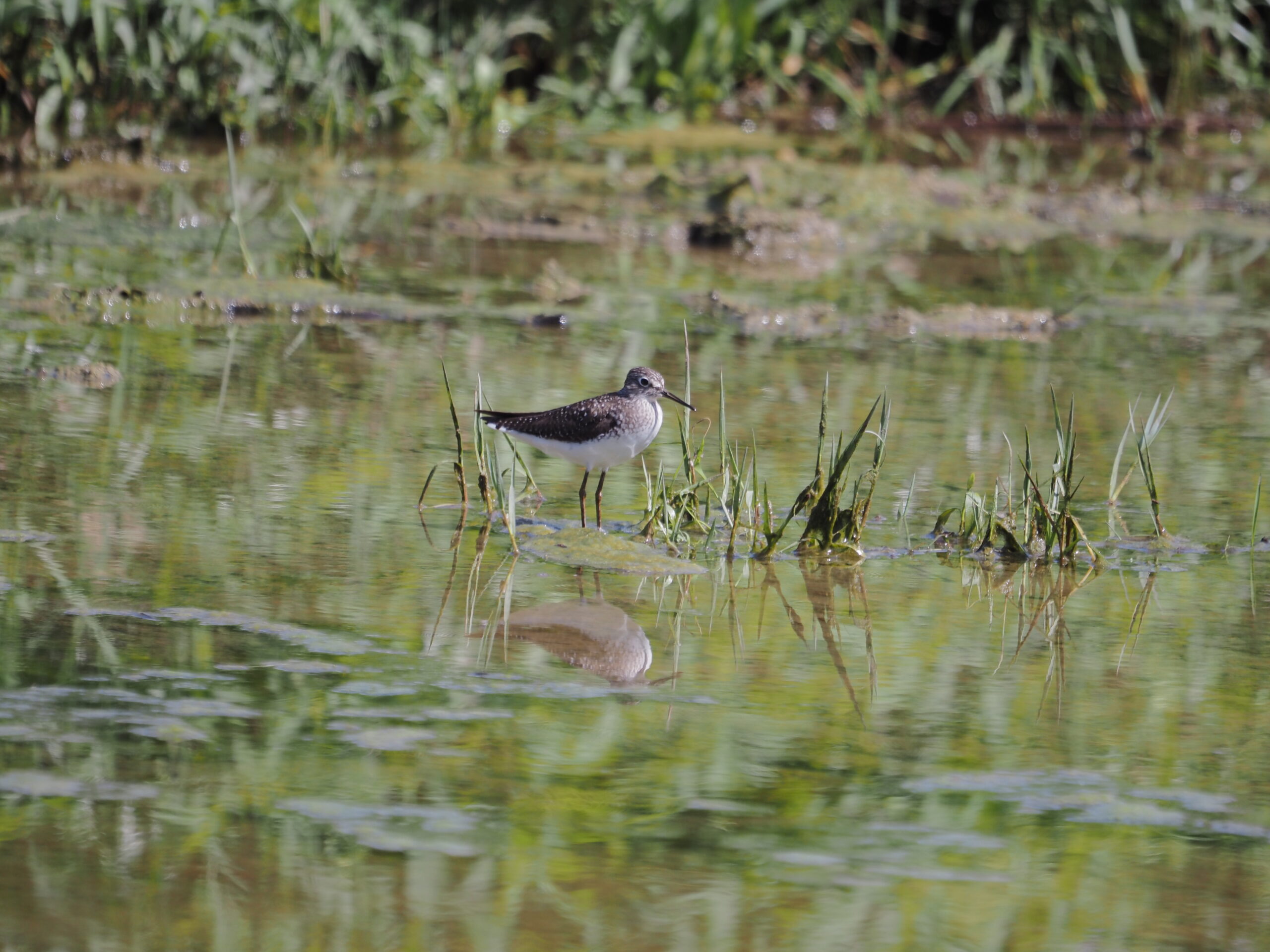
Solitary Sandpiper (alternate)
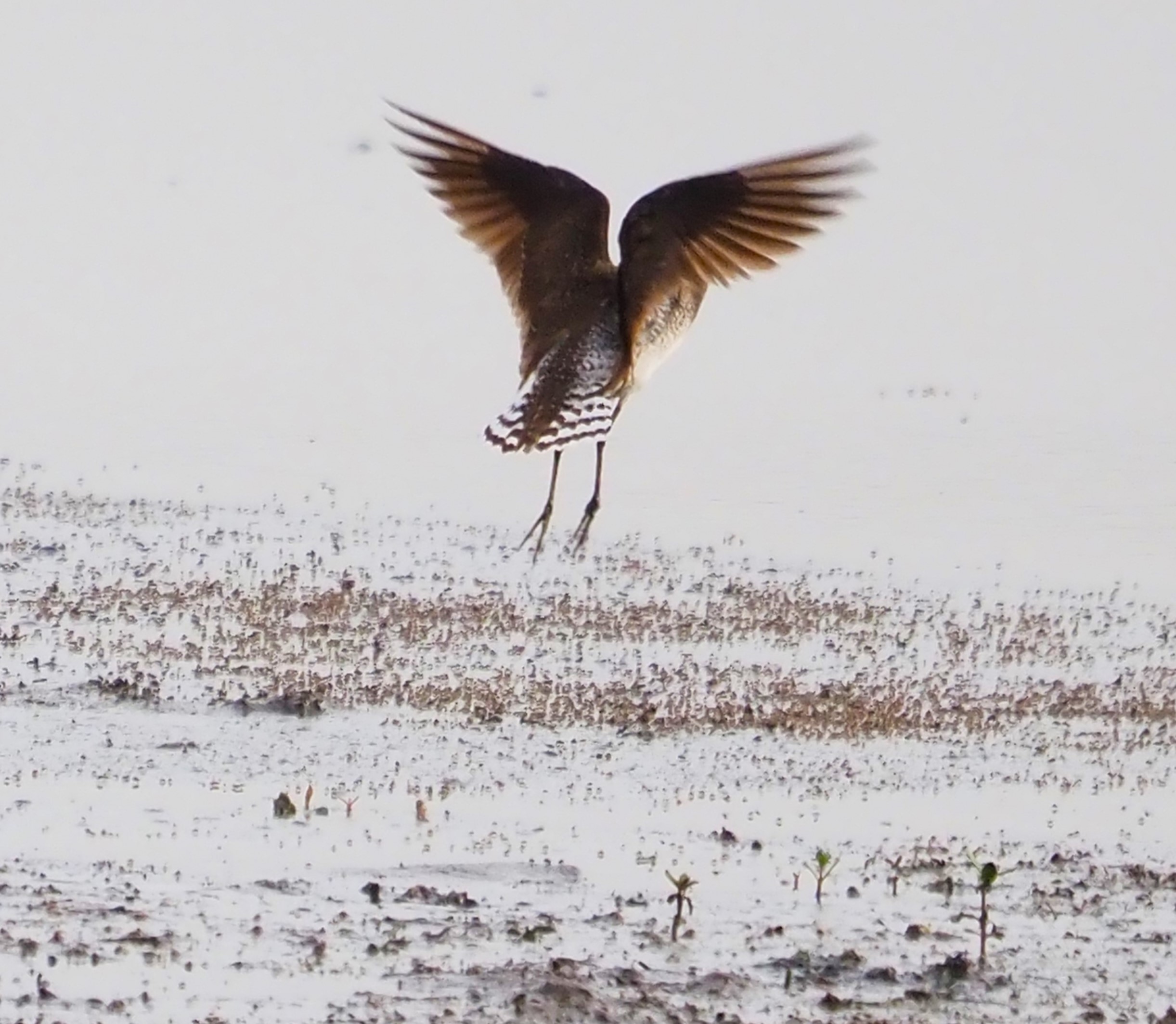
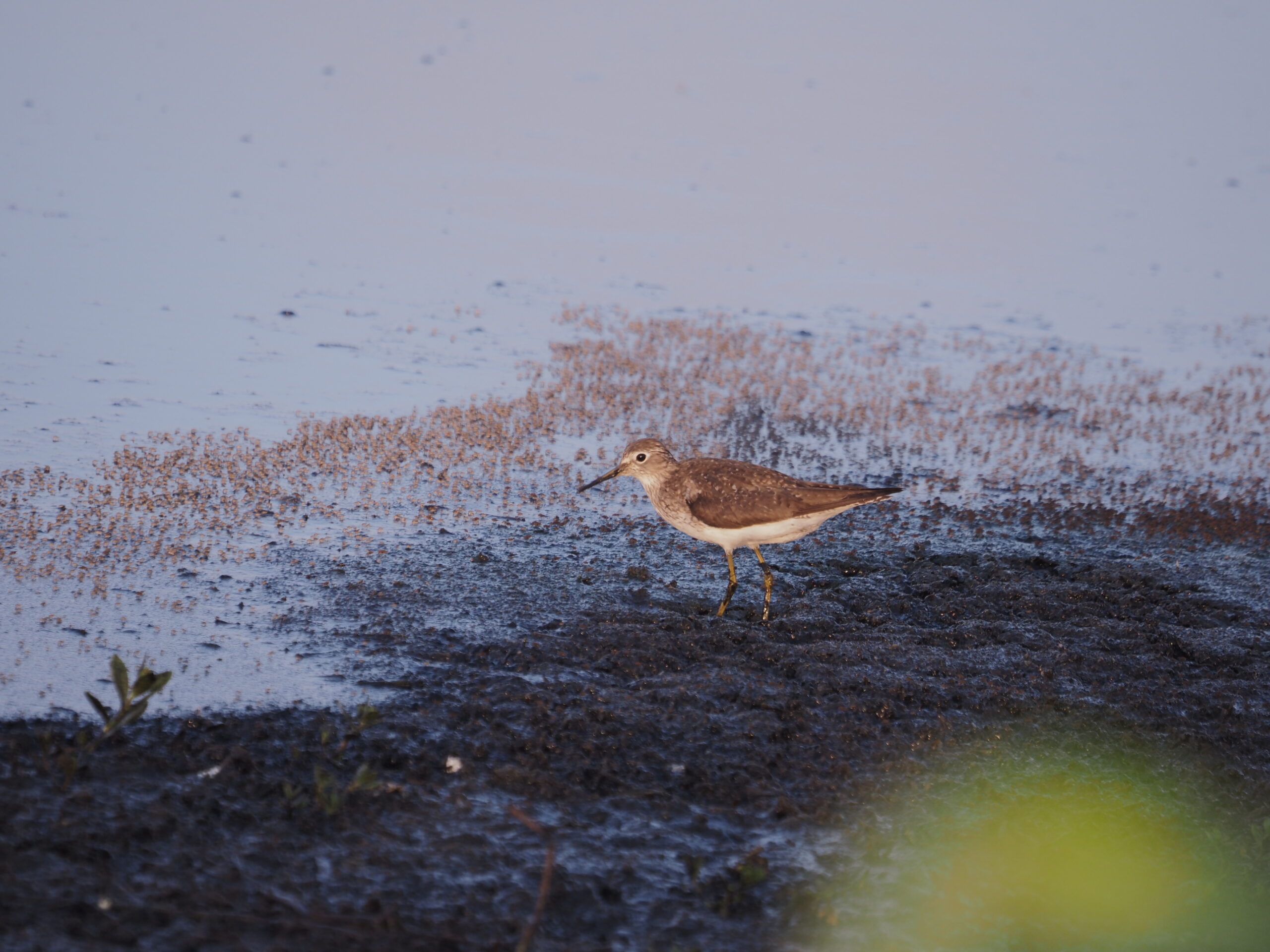
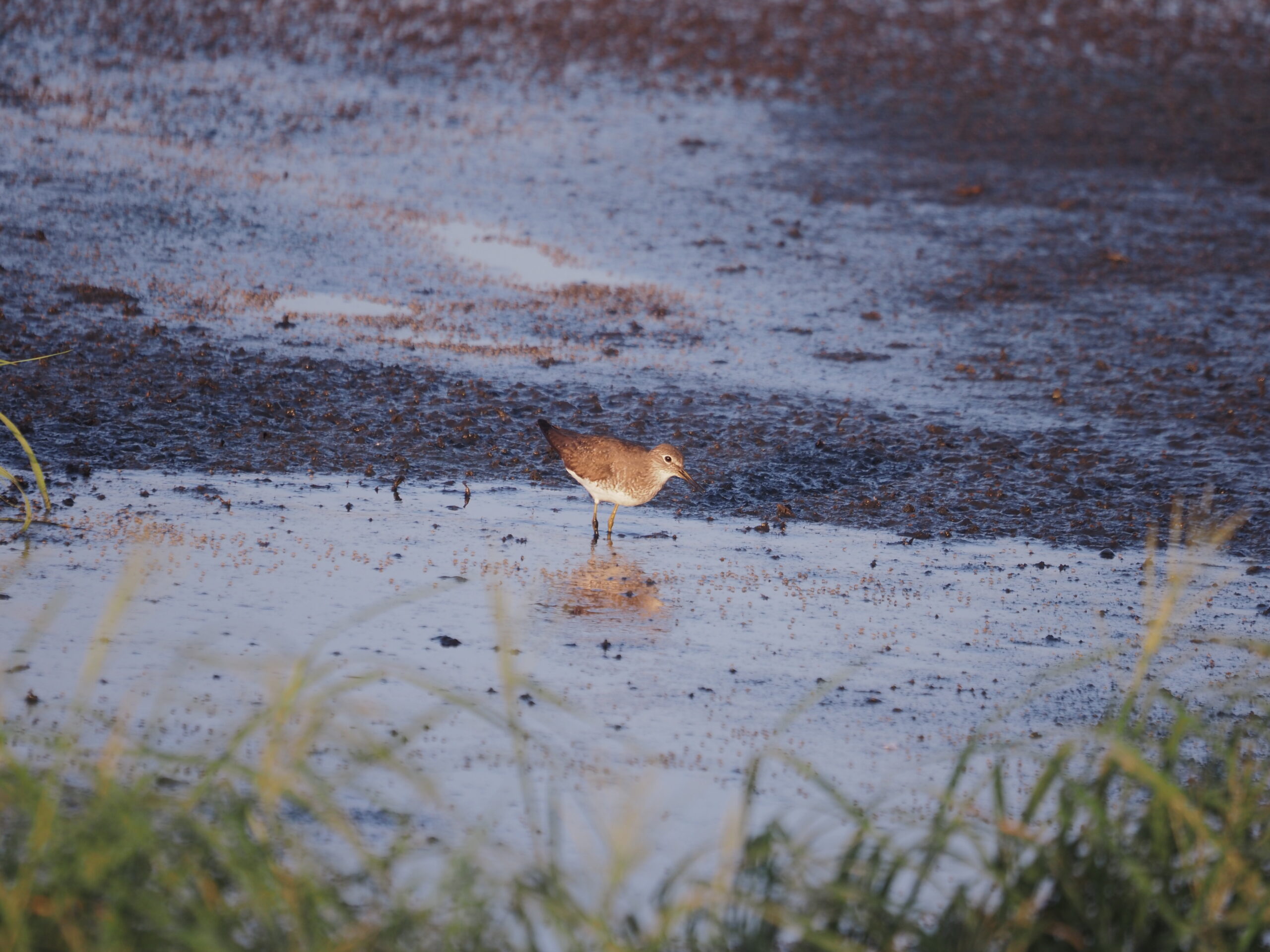
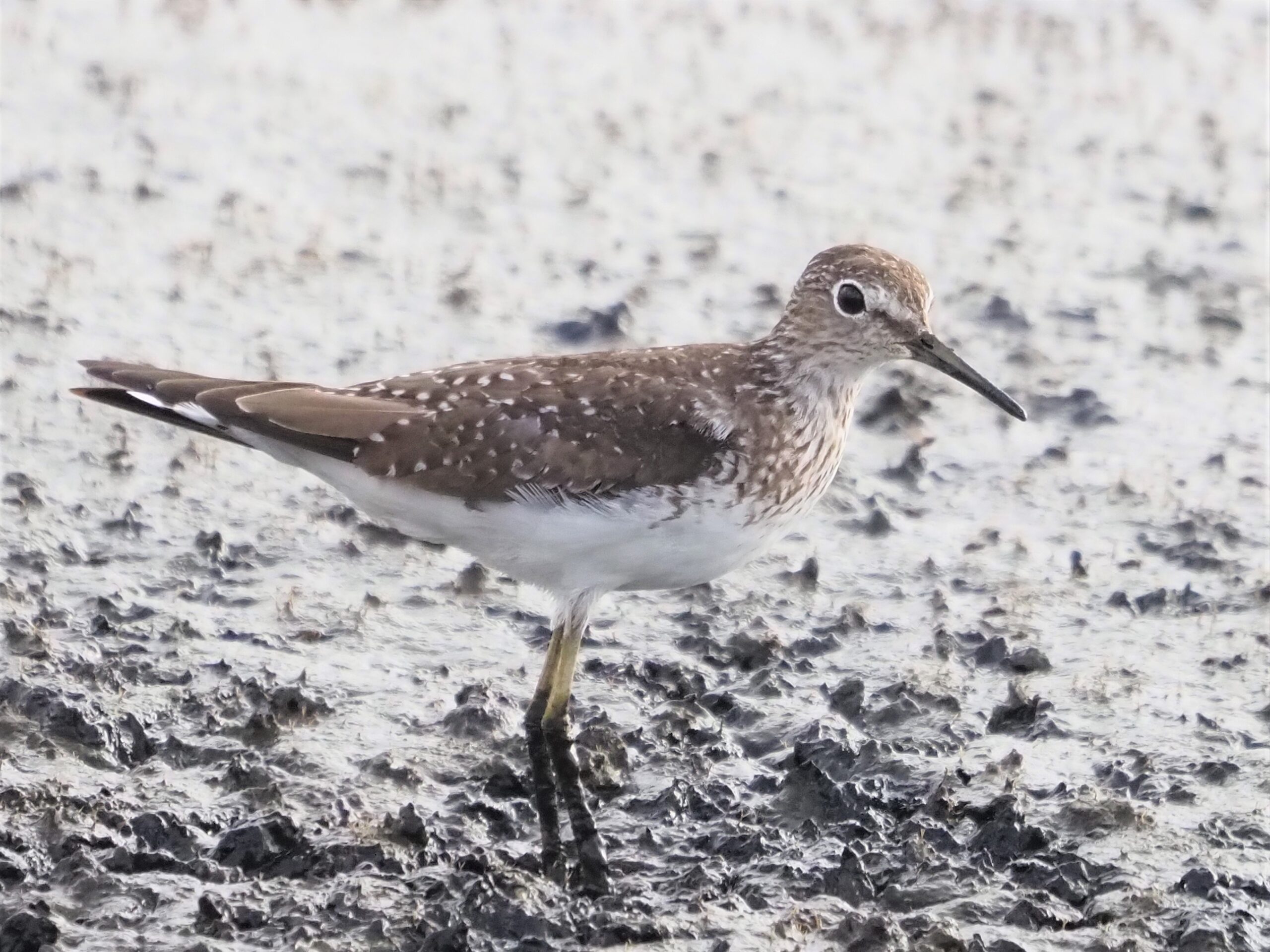
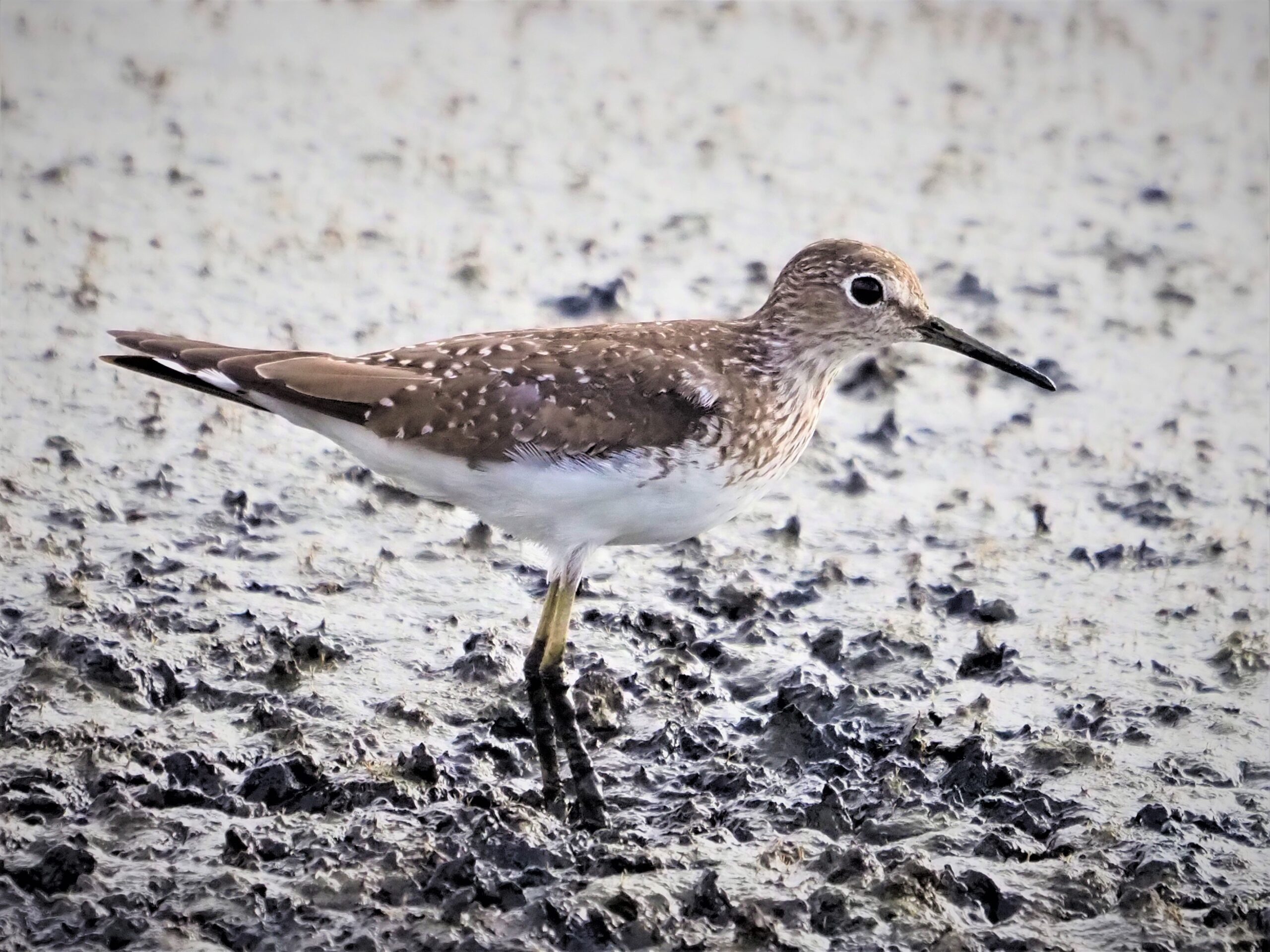
As its name implies, the Solitary Sandpiper is usually found alone, at least in Texas in the non-breeding months. It frequents the quiet edges of ponds and streams primarily. It is a medium-sized, straight-billed, somewhat chocolate-brown sandpiper with bold “spectacles” and white spots on the upper parts. The dark feathers at the bend of the closed wing are also an important field mark.
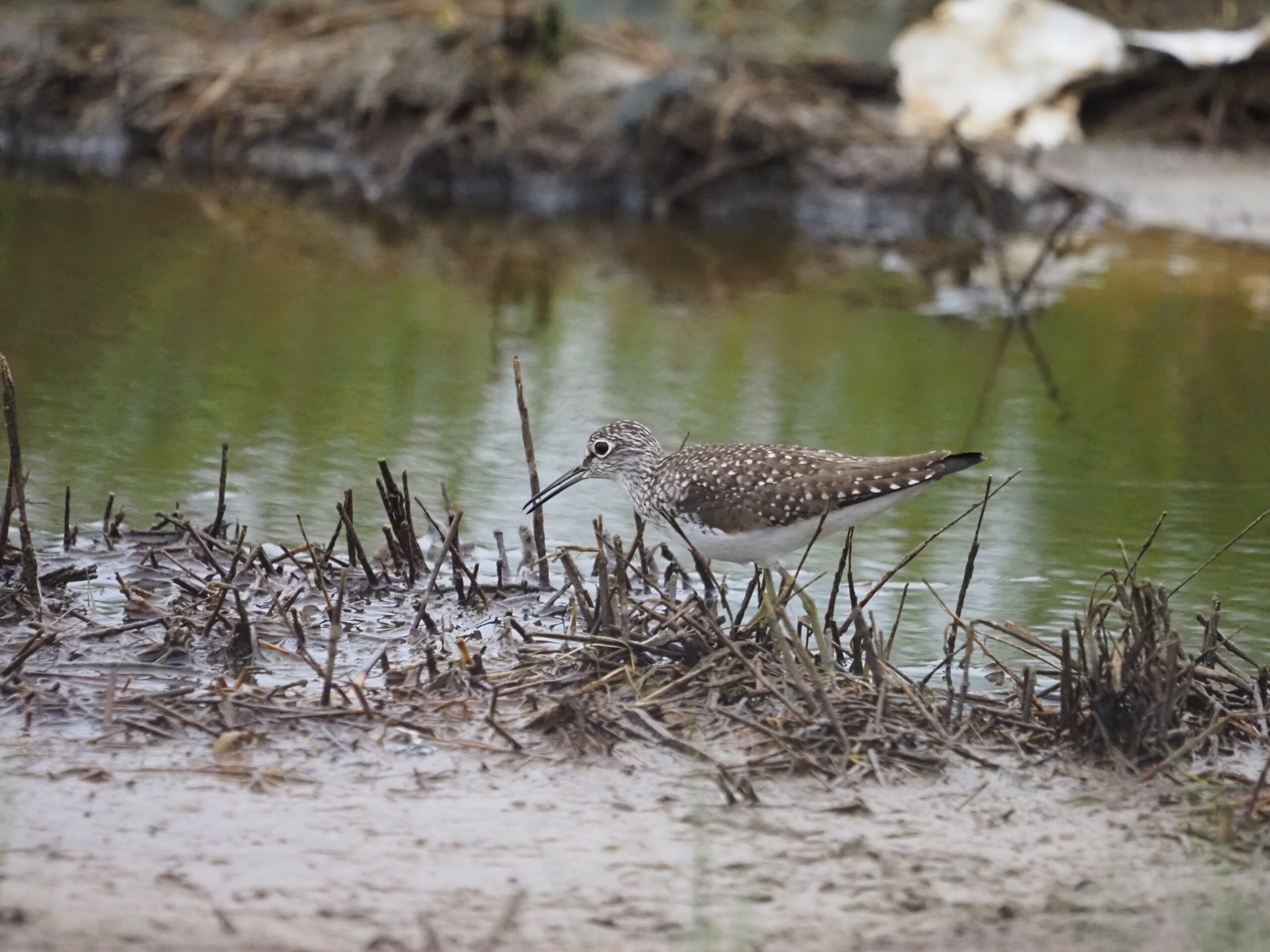
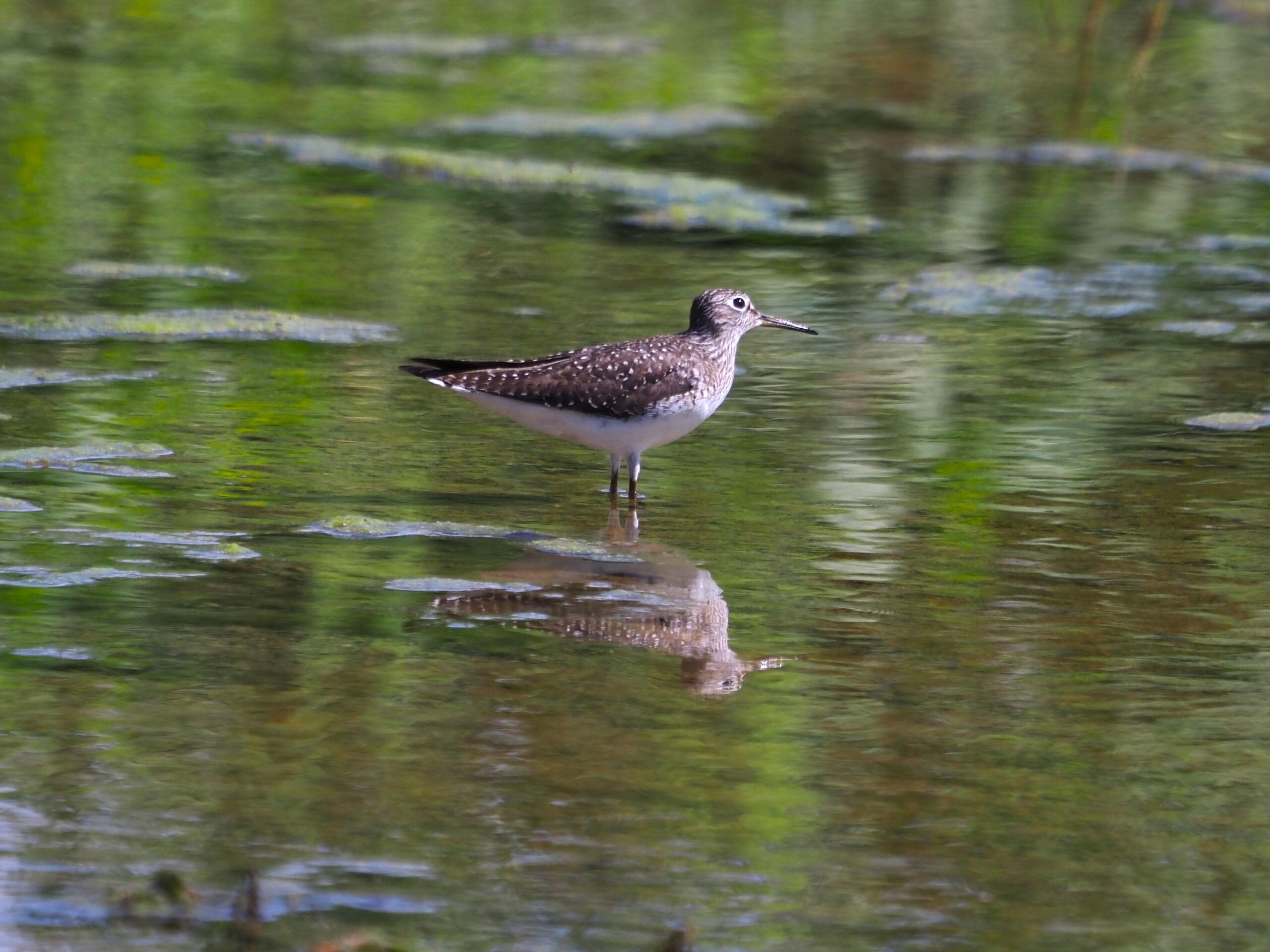
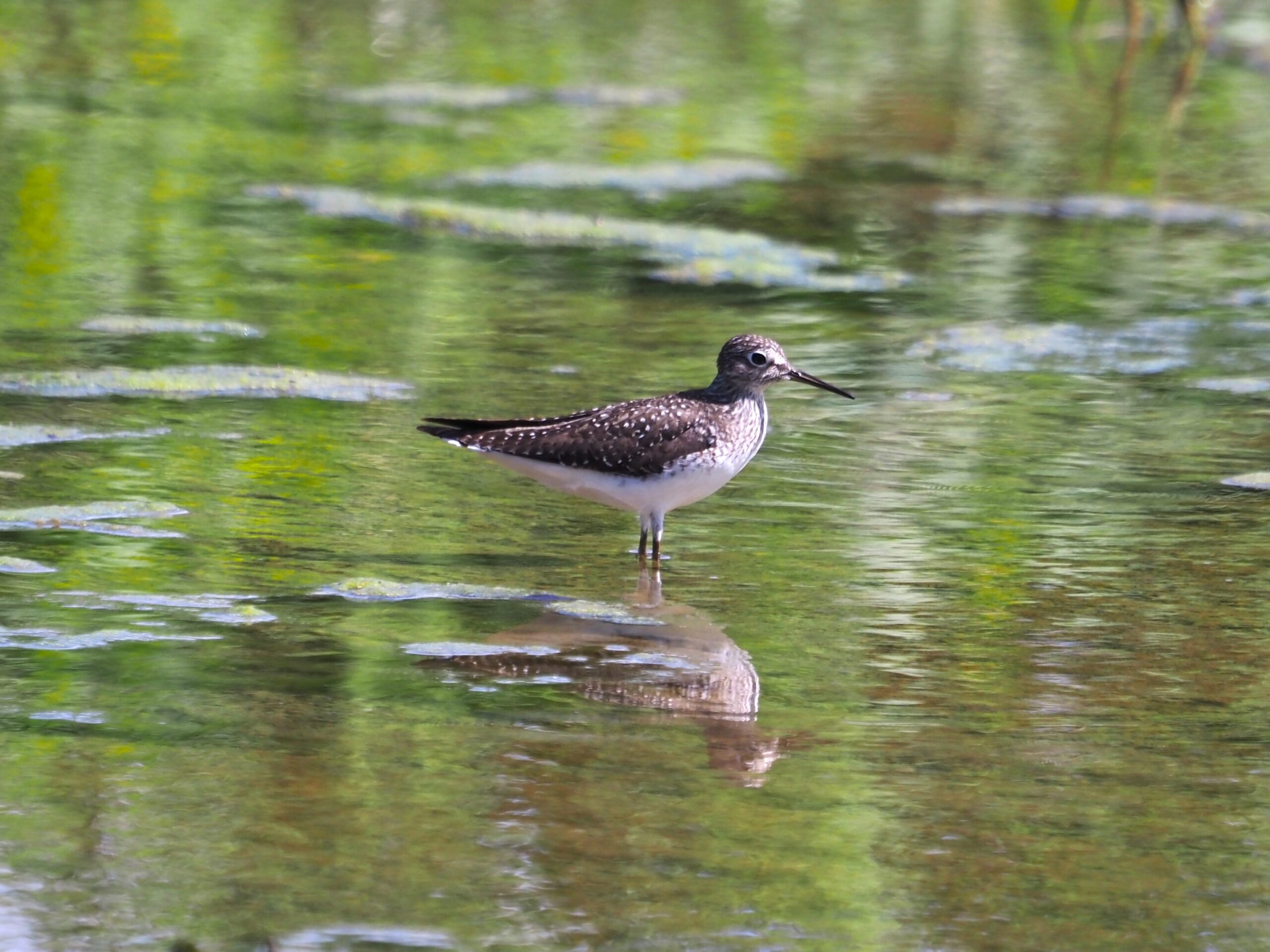
Solitary Sandpiper (basic)
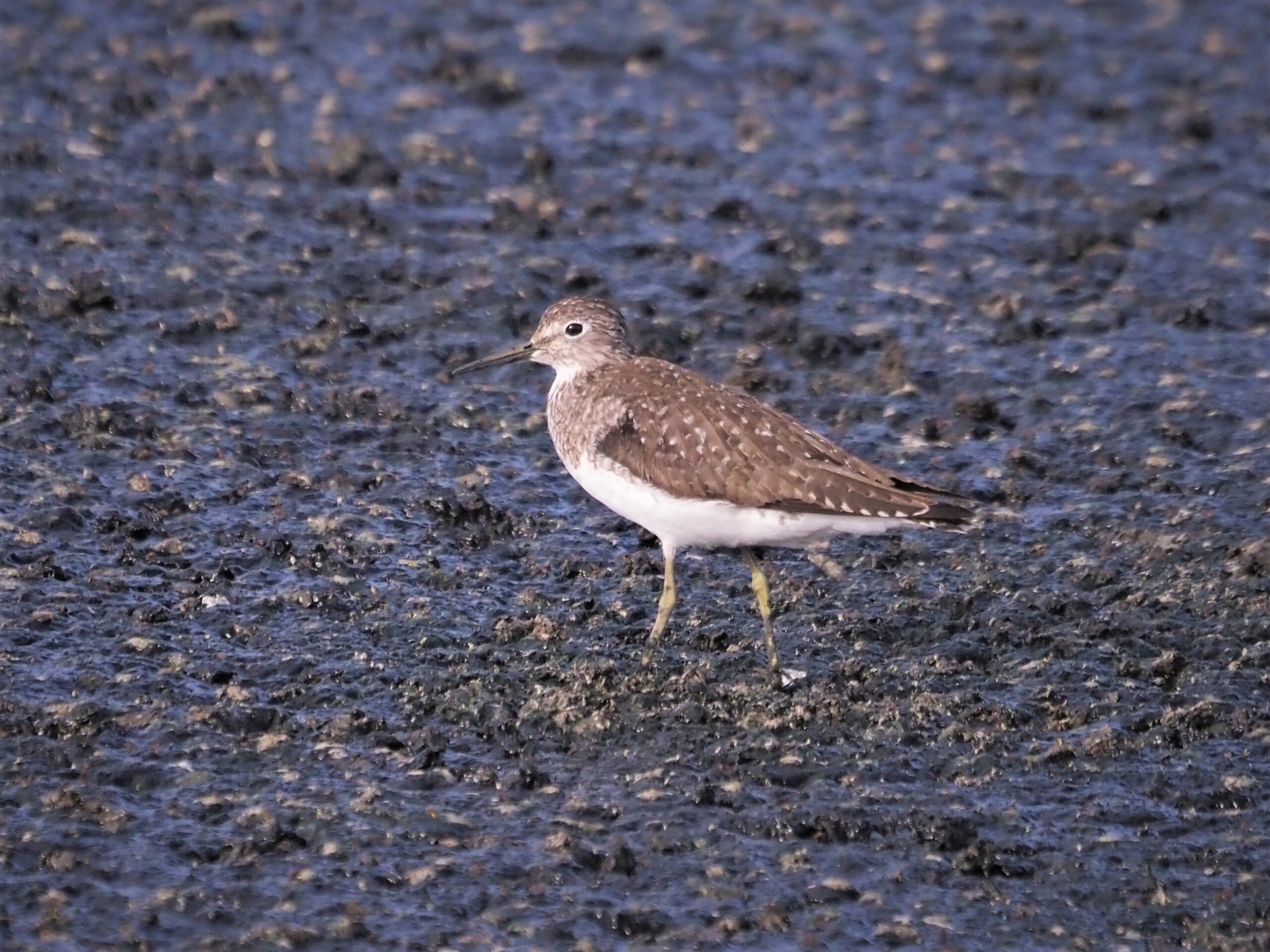
The Solitary Sandpiper’s plumage changes little from alternate to basic. Shown below in basic plumage the primary difference is the brightness of the colors and the number of white spots.
Comparisons
Solitary Sandpiper vs Spotted Sandpiper
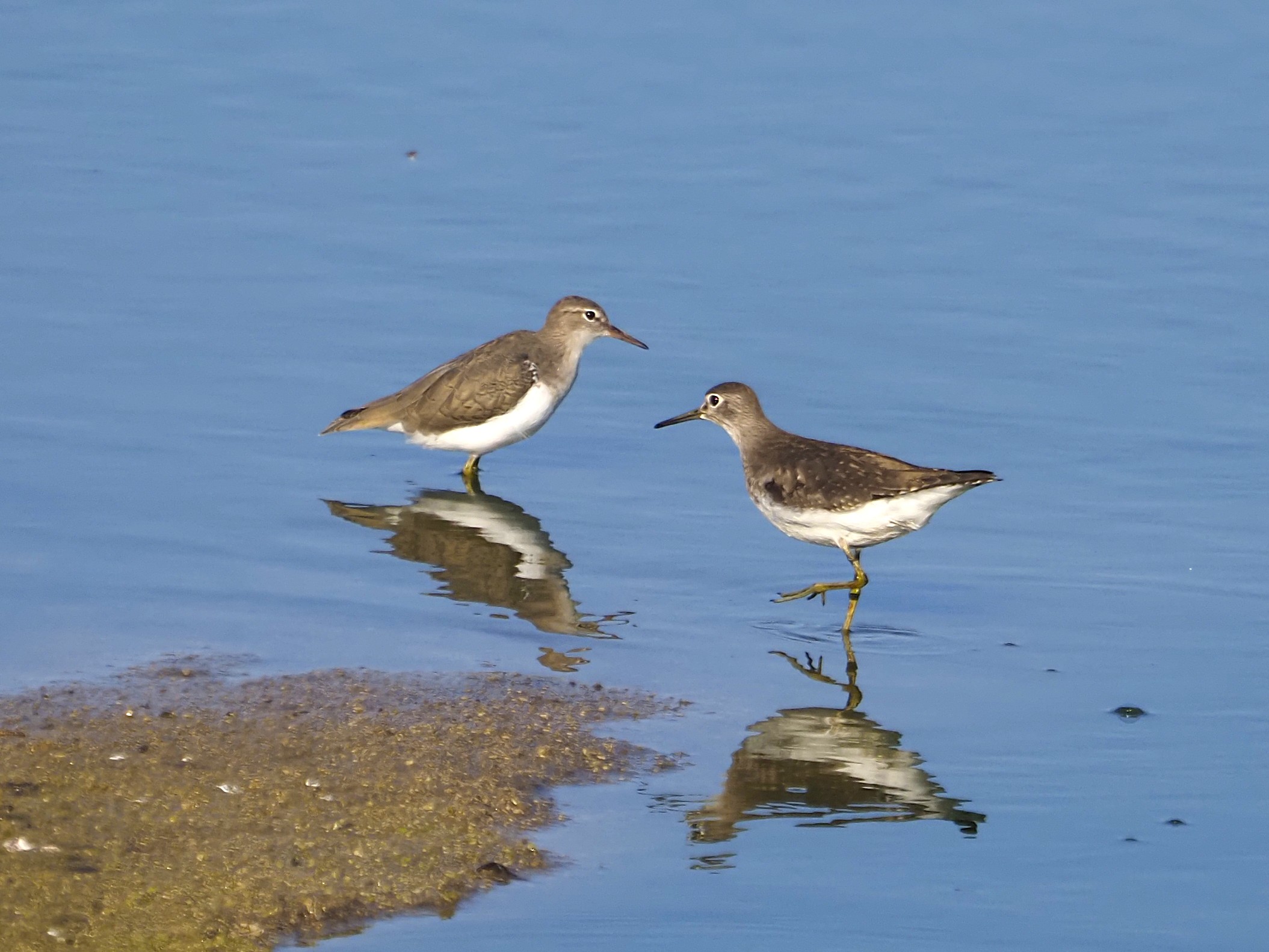
The Spotted Sandpiper may be confused with the Solitary Sandpiper. The Spotted has shorter legs, is a slightly smaller bird and lacks the white spots on the upper parts. It also has a slightly shorter bill, with a slightly thicker base. Both these birds have the habit of bobbing or teetering while standing in place, however the Spotted does this more often.

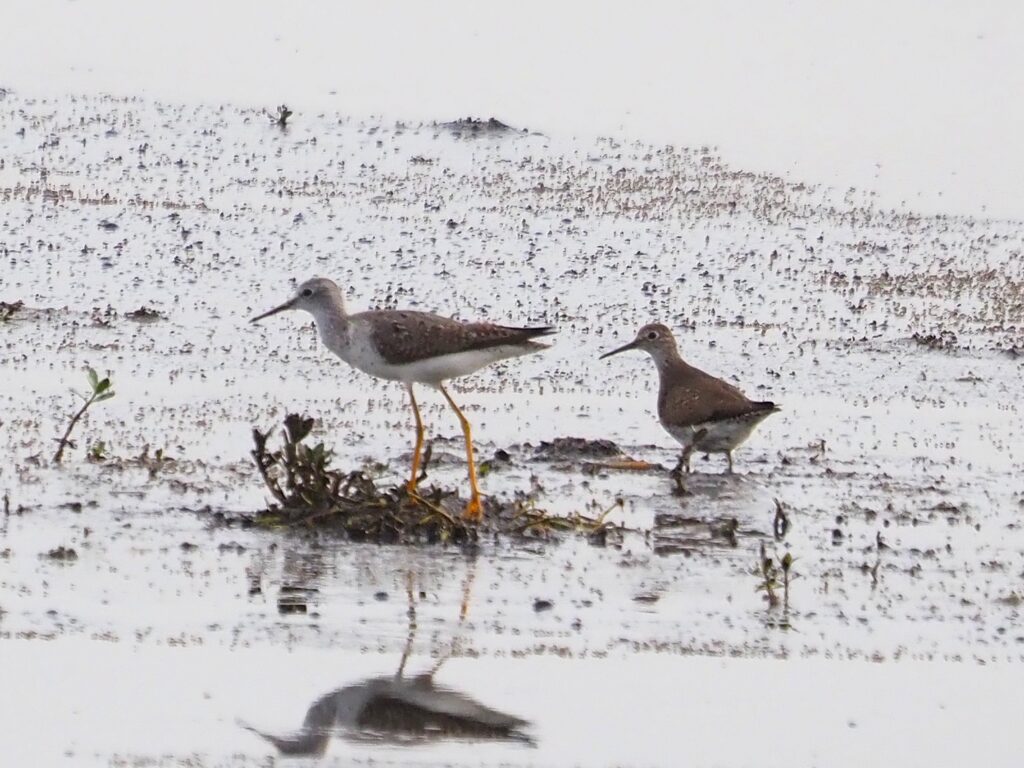
Solitary Sandpiper vs Lesser Yellowlegs
The Lesser Yellowlegs may also be mistaken for the Solitary Sandpiper. Both are medium-sized with straight, medium-length bills. The Yellowlegs is both longer-legged and longer bodied. It has white marks on its upperparts, but they are more inclined to be slashes or triangles rather than circles. Both have yellowish legs, but the Yellowlegs are a brighter yellow, while the Solitary’s are dull yellow or greenish yellow. The “spectacles” of the Solitary really stand out, whereas the Yellowlegs patterns on the face are better described as “eye-rings” and it is slightly less prominent than the Solitary. Finally, the Yellowlegs is more of a gray color whereas the Solitary is a chocolate brown.