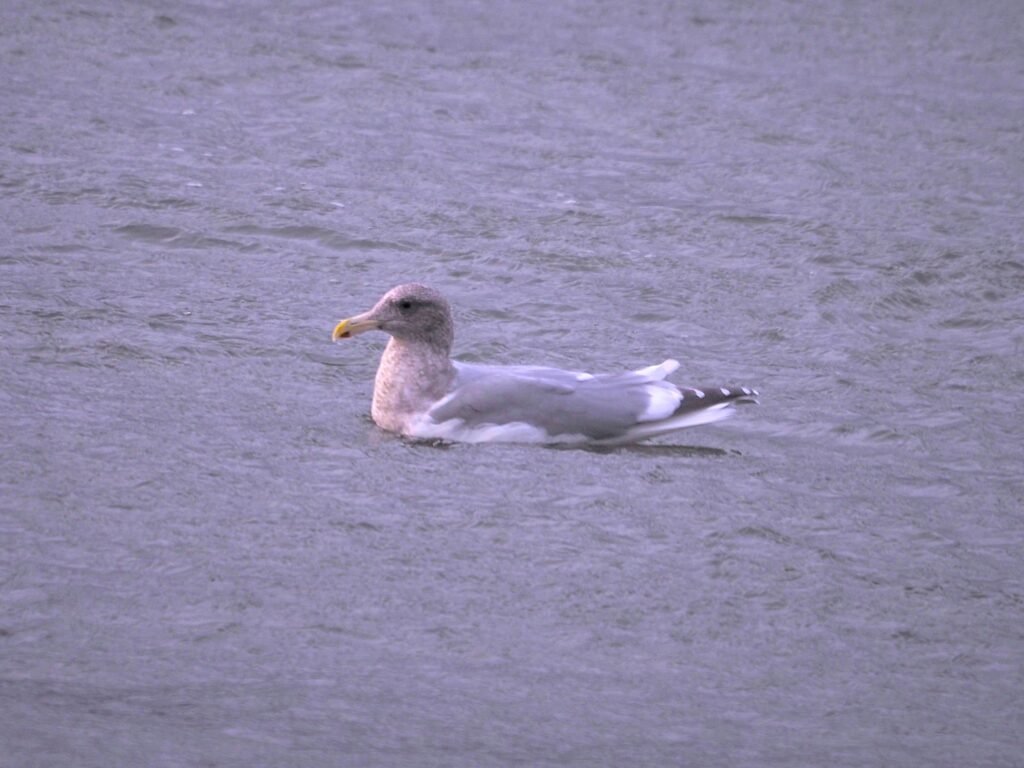

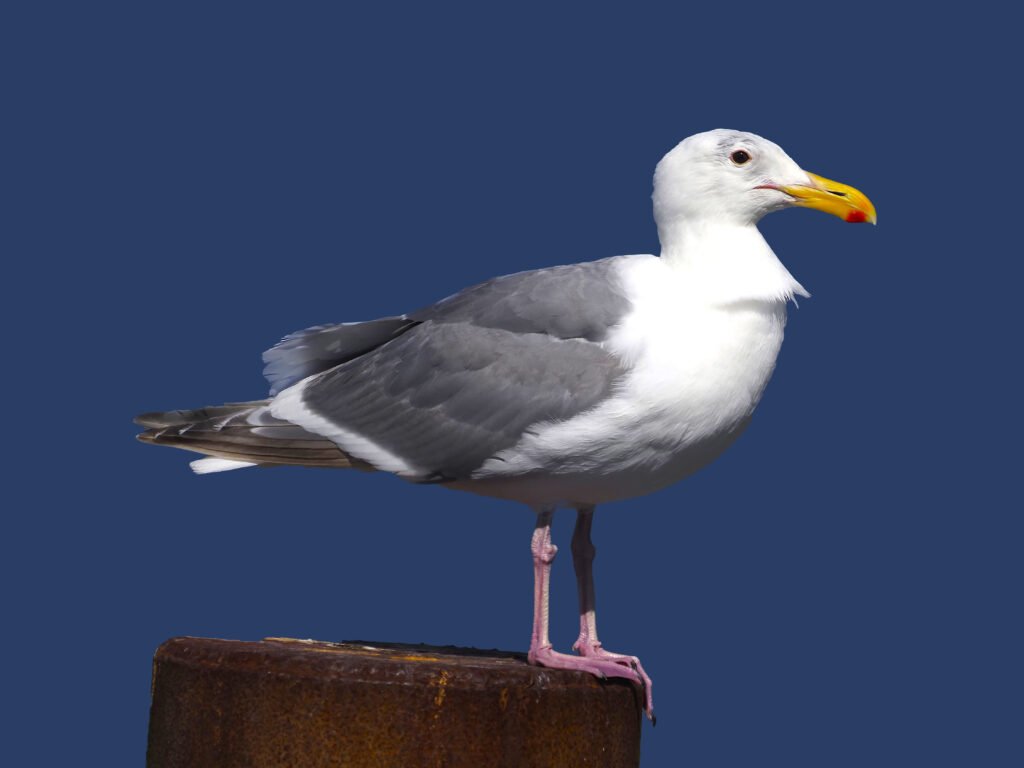
The Western Gull is the most common species of gull at many west coast locations. It is a large dark-backed gull with a heavy, even brutish, yellow bill and pink legs. Adults change little from alternate to basic plumage, only acquiring a light streaking on the hind-neck in basic. The Western has been recorded in Texas six times, most recently in Corpus Christi in 2019.
The identification of the Western is usually straight-forward. It is a heavily-built gull with a dark back, clean white head and a stout bill. It is similar to the Yellow-footed Gull, but has pink legs and feet. In flight the underwing pattern of the Western is reminiscent of the Swainson’s Hawk.


Hybrids (Olympic Gull)
Although the identification of Western is fairly straight-forward, it is complicated by the fact that Western readily hybridizes with Glaucous-winged Gulls, resulting in what are often called Olympic Gulls (which are quite prevalent on the Olympic Peninsula of Washington).
According to the Gull Research Organization (https://www.gull-research.org/):
- “Up to 75 percent of some Western Gull and Glaucous-winged Gull colonies in Wash. and Ore. Comprise hybrids (Bell 1996 & 1997; Hoffman et al. 1978). In central California (Marin County), 15-25 percent of the wintering population of Western and Glaucous-winged Gulls typically show hybrid characters, and at some sites up to 50 percent appear to be hybrids (Howell pers. obs.). Hybrids become progressively less common southward along the California coast in winter”.
Hybrids span the range of characteristics between the parent species: some look like Western, but have paler back-colors, others have brownish or grayish primaries (rather than blackish).
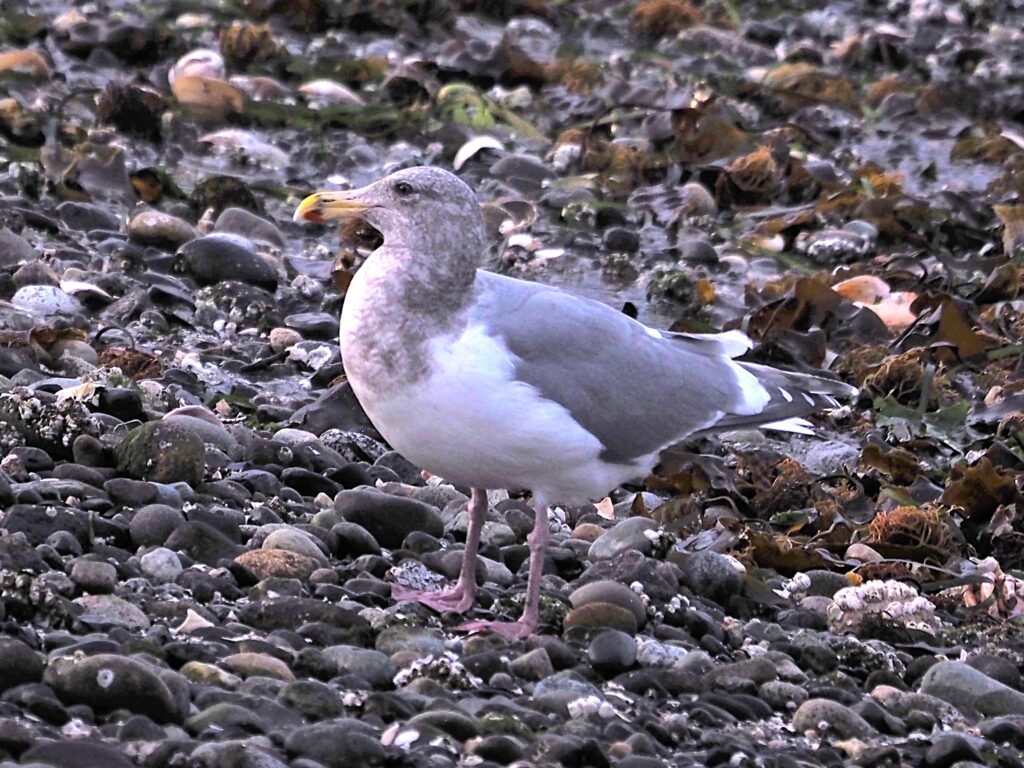
Smudgy markings on the head and neck, which can be extensive and quite dense, are also a sign of a hybrid. Other individuals look like Glaucous-winged, but with wingtips too dark.