The Laughing Gull is a ubiquitous presence on the Texas Coast. As such it is amongst the first gulls to learn. It is one of the smaller gulls, but for this species, size is not usually a determining factor in the identification.
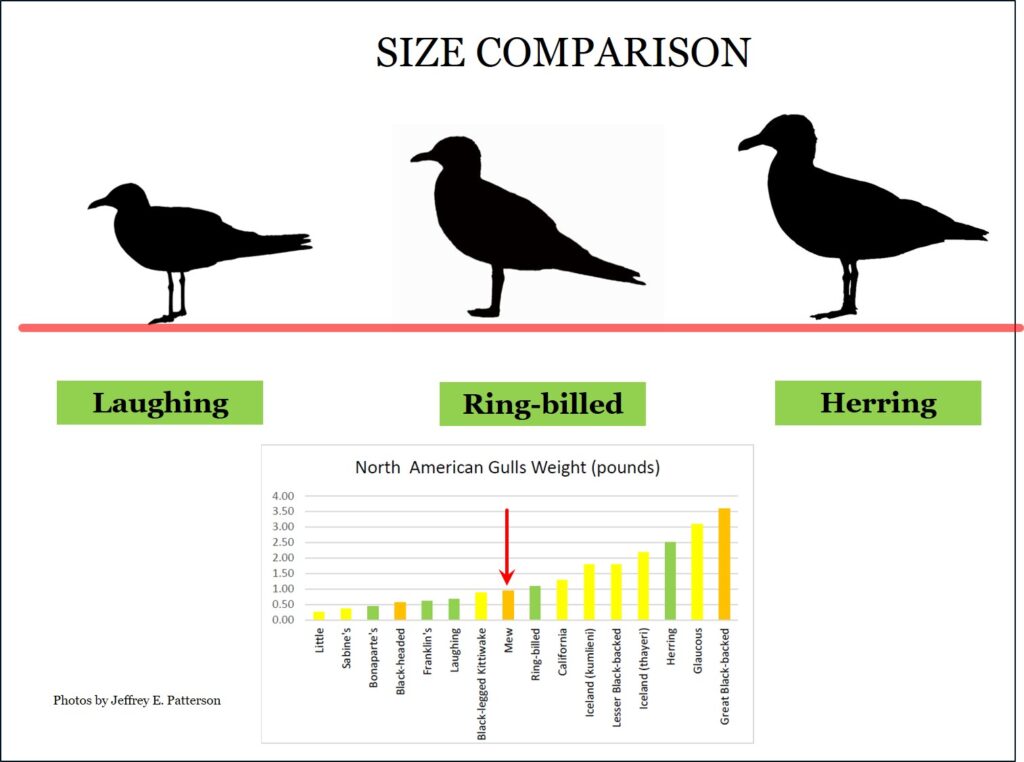
The structure of the Laughing is the key to identification. It is a horizontally laid out species with a long rear-half of wings and tail which seem to be stretched-out. The bill and head combine to form a droopy facial expression that might be called “sardonic” or “sleepy”. The white eye-arcs are most prominent during alternate plumage, but can usually be seen against the residual gray head at other times as well.
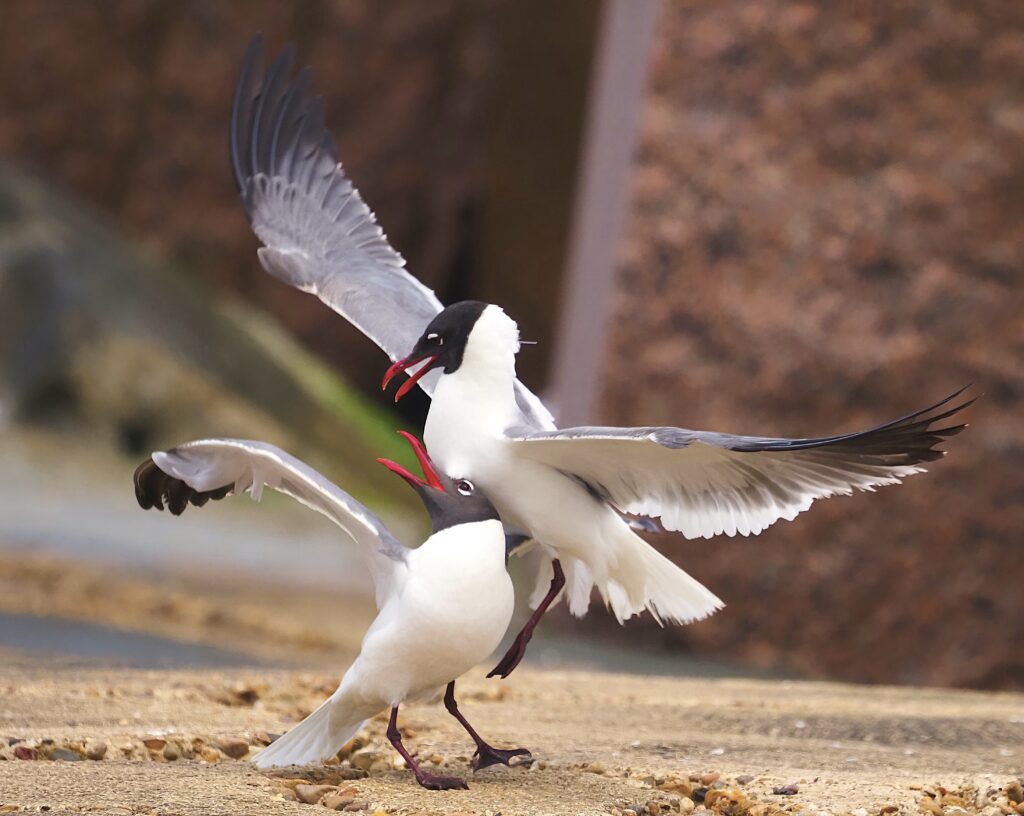
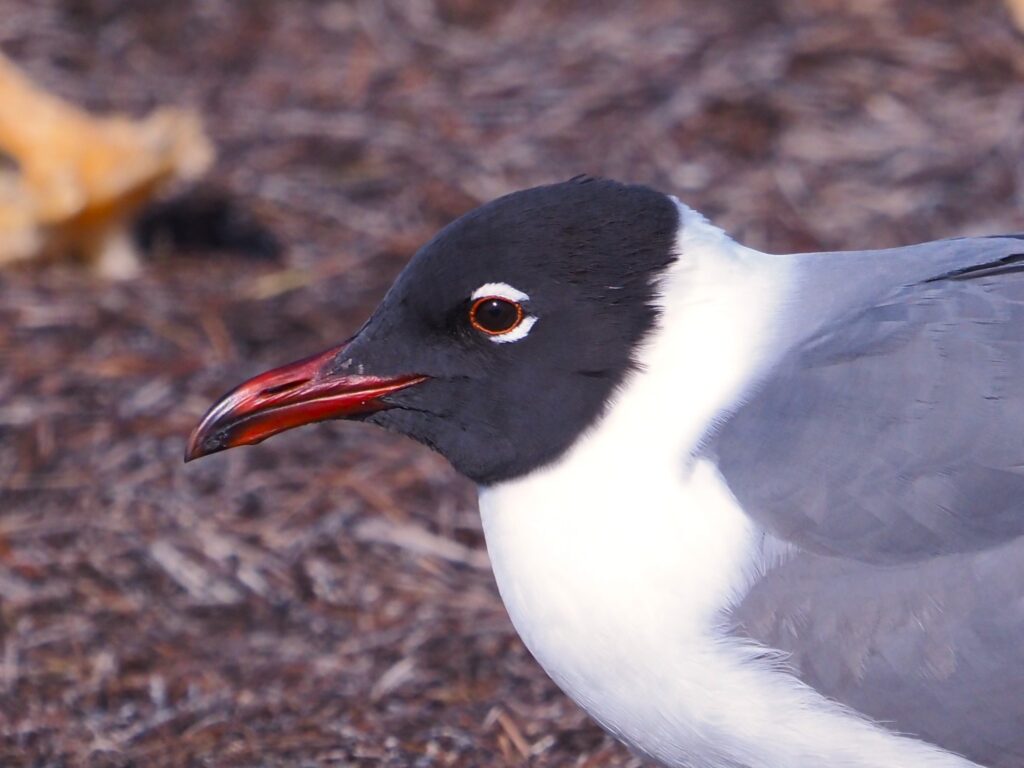
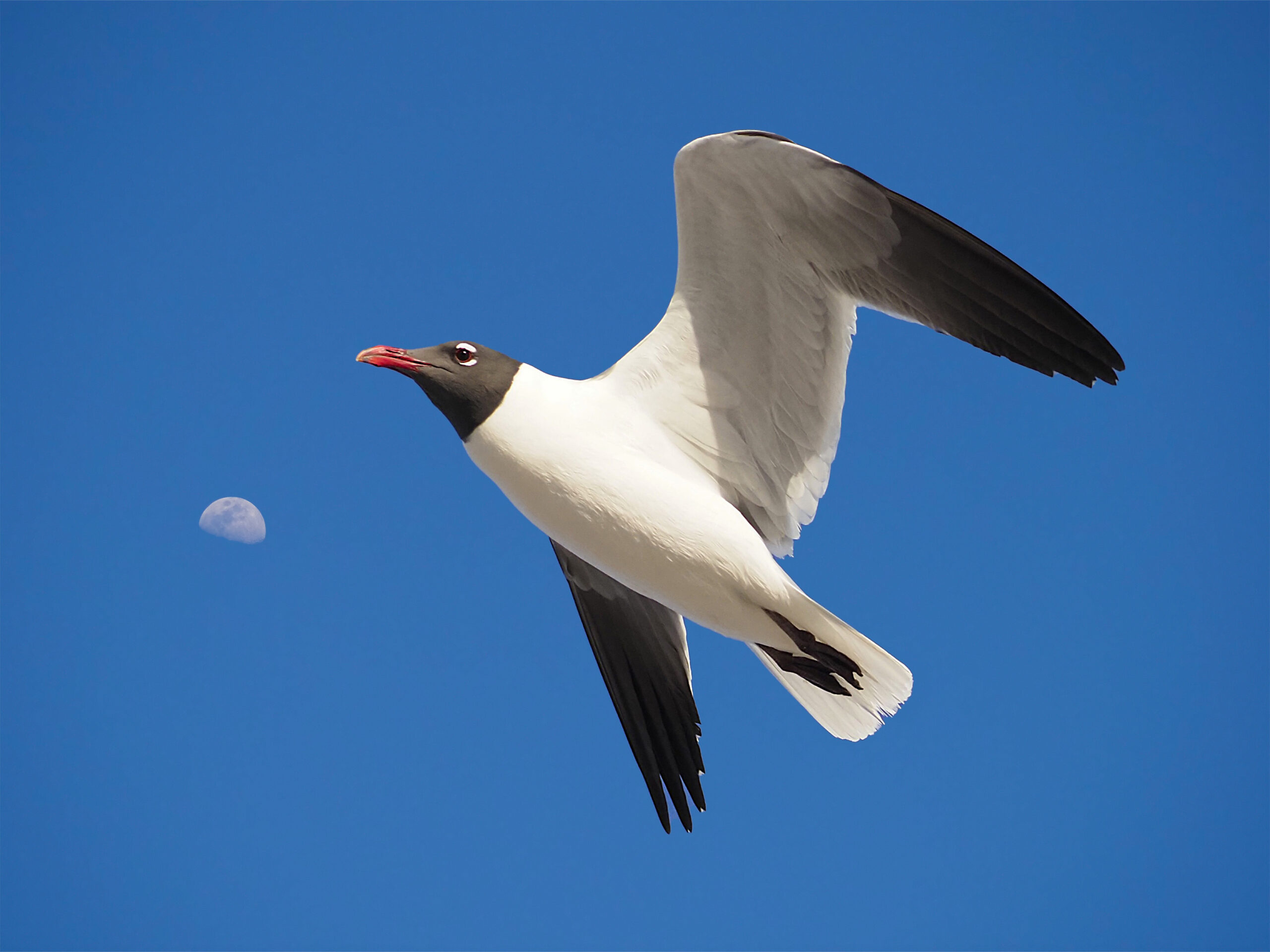
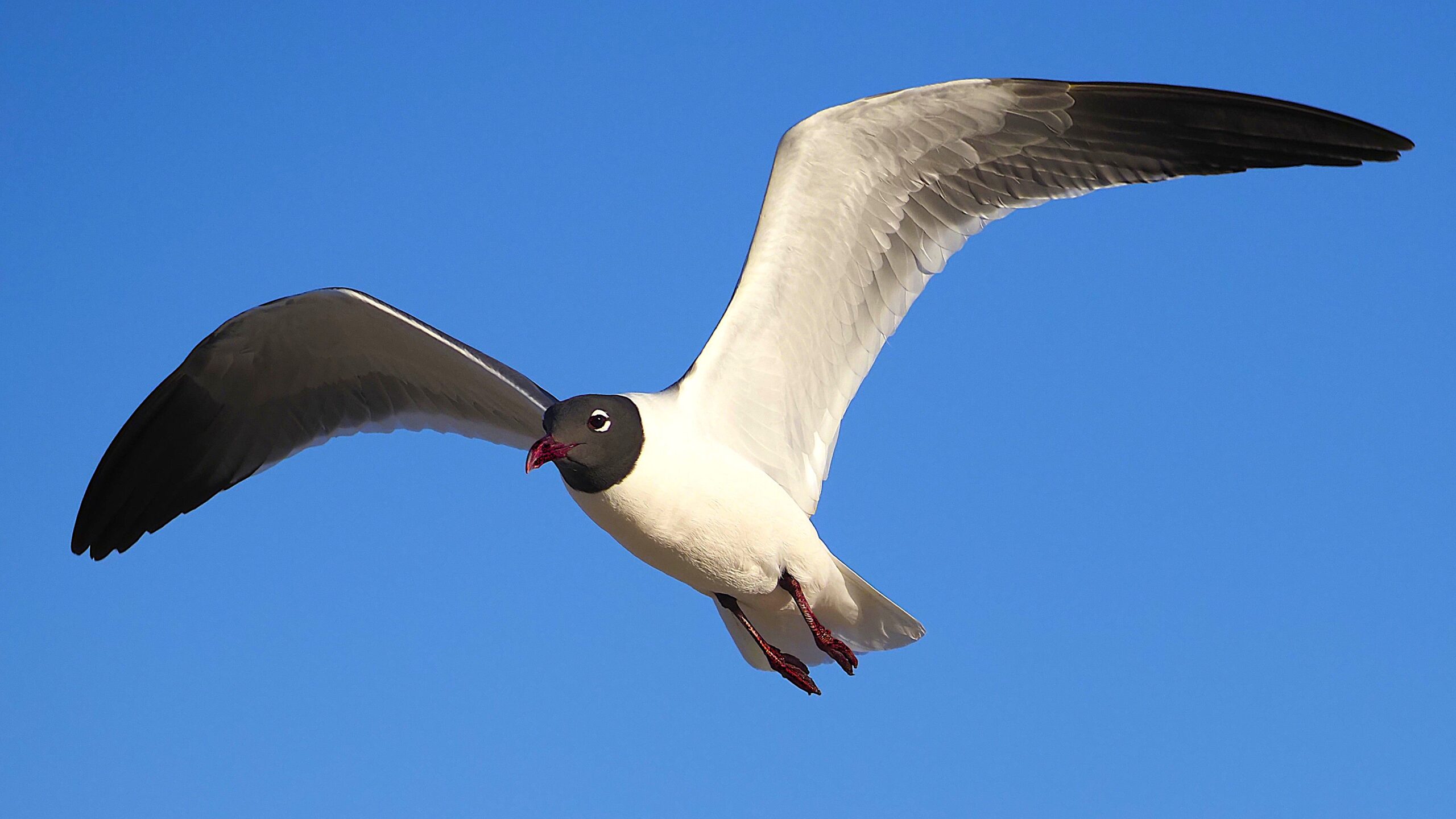
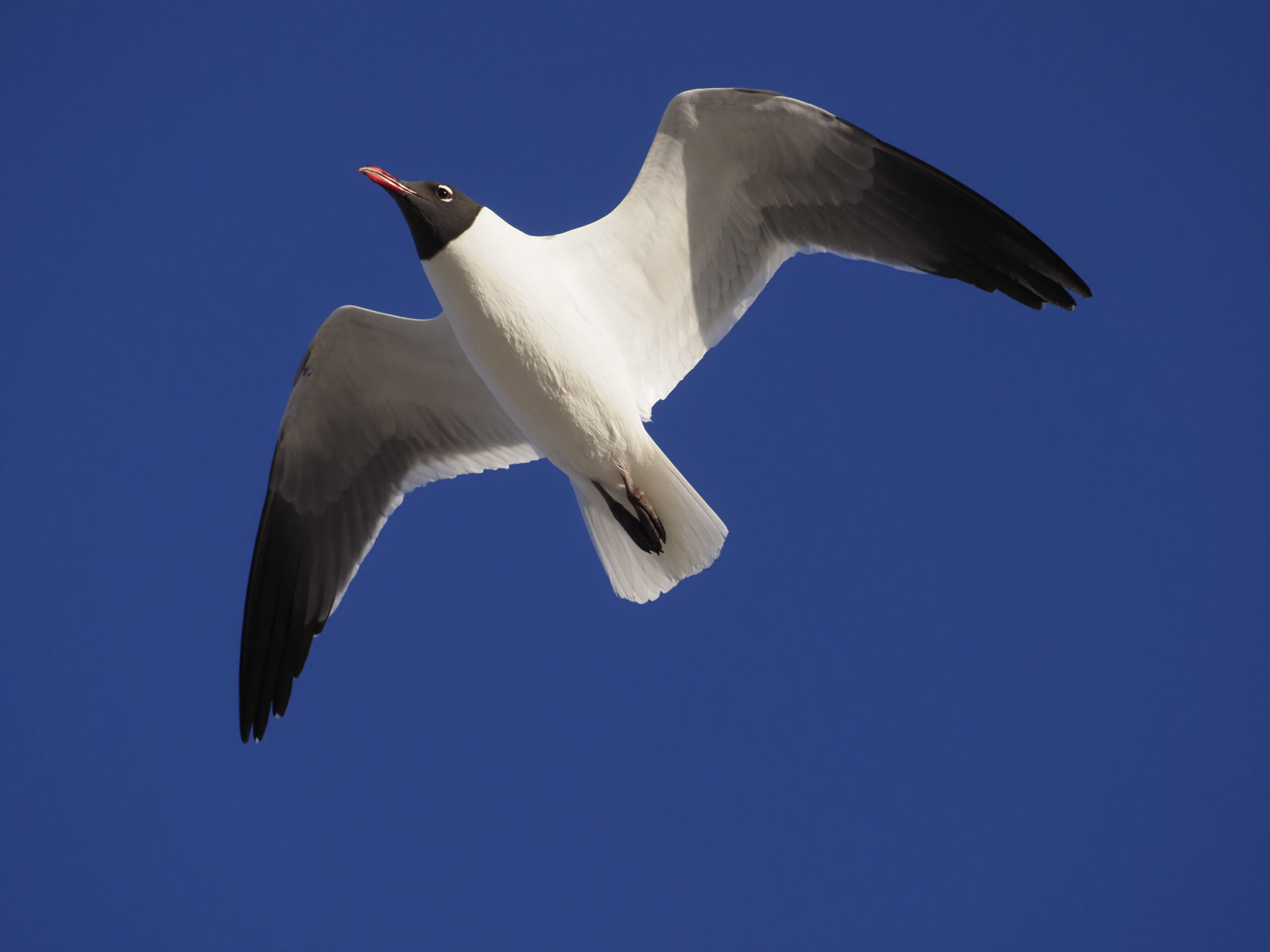
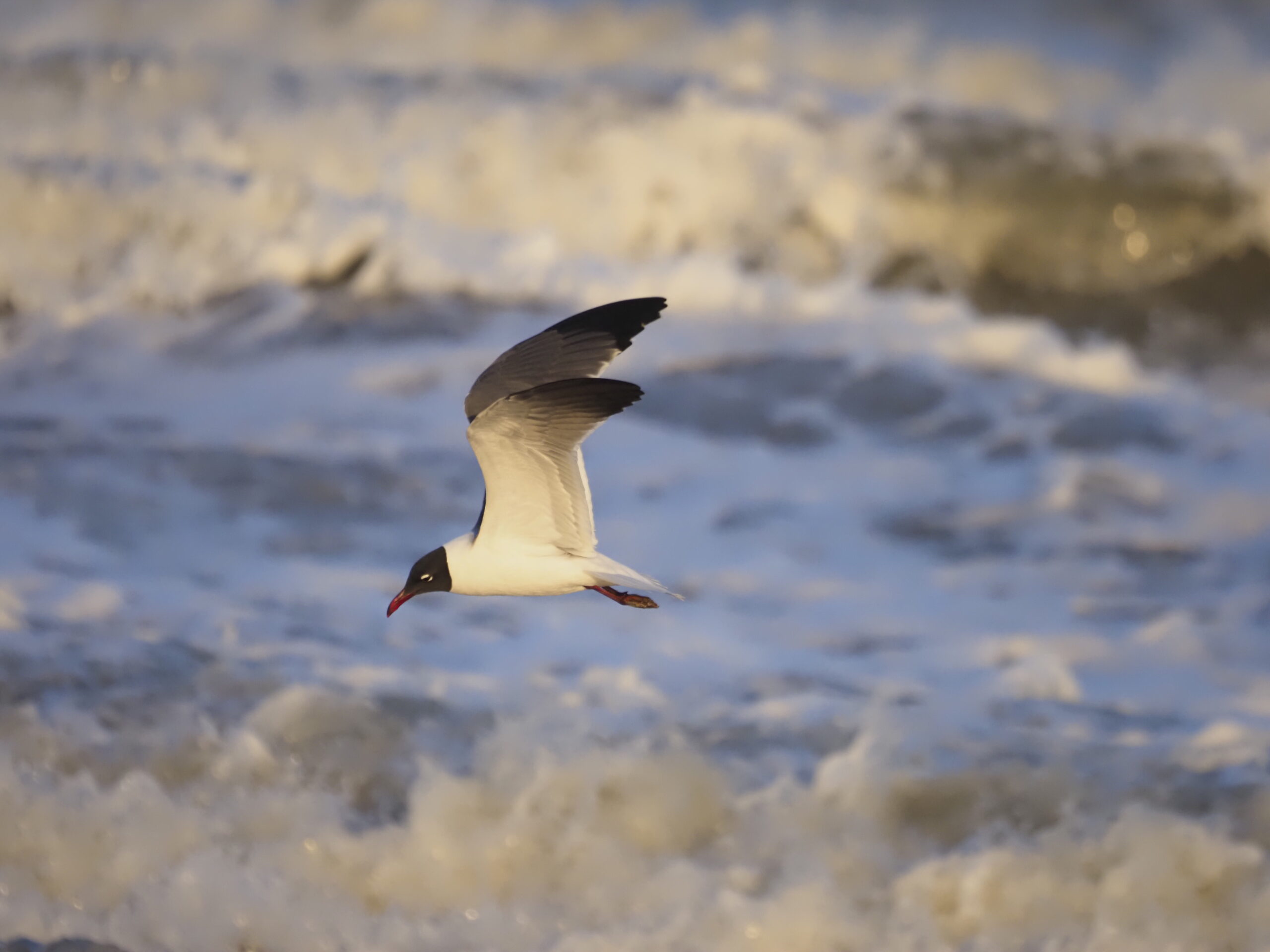
In alternate plumage the Laughing is dapper, black-headed, red-billed, and red-legged, with clean white below and medium gray above. Occasionally, the breast and belly of the Laughing take on a pink hue during high breeding plumage (see photo below).
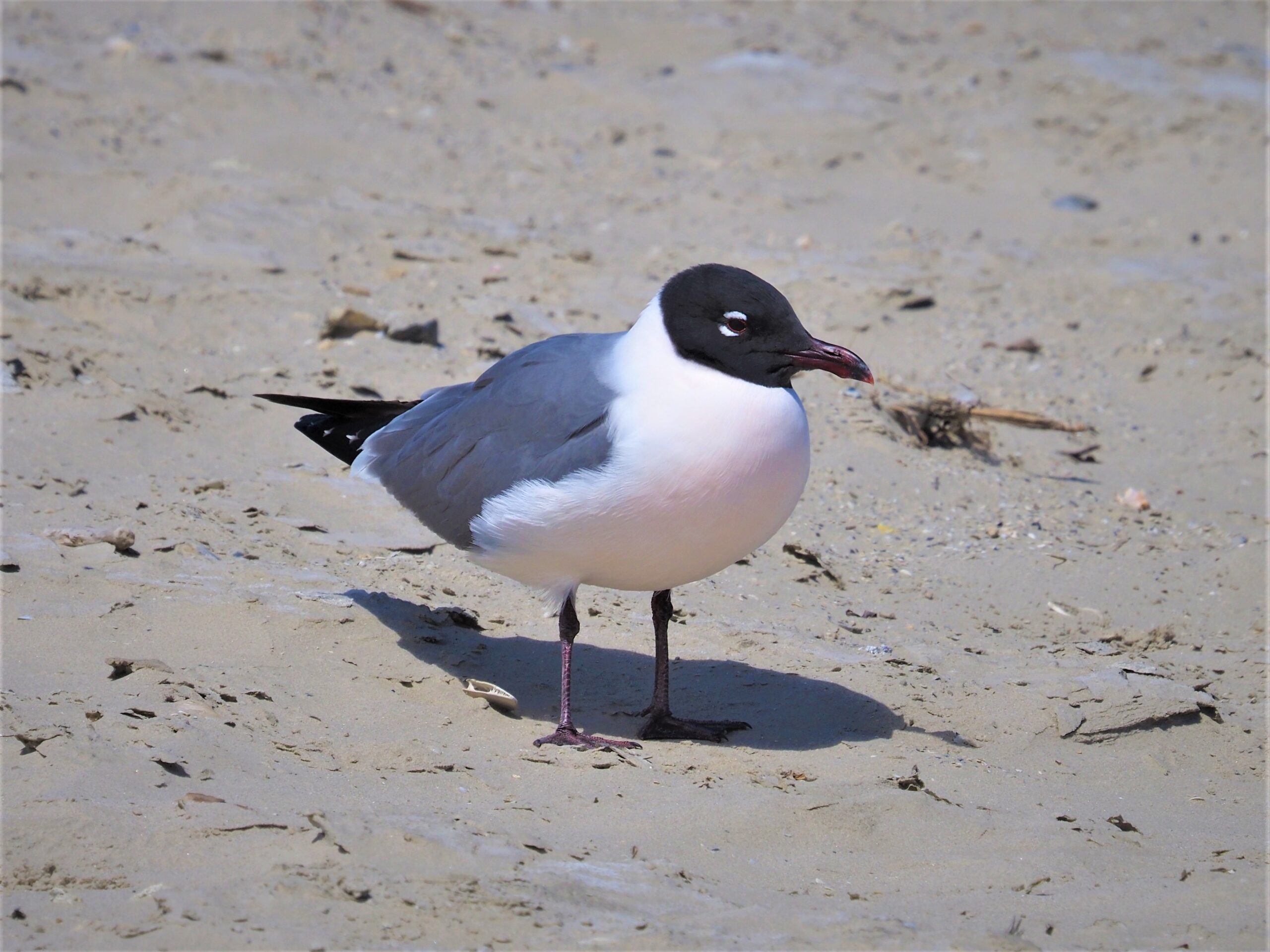
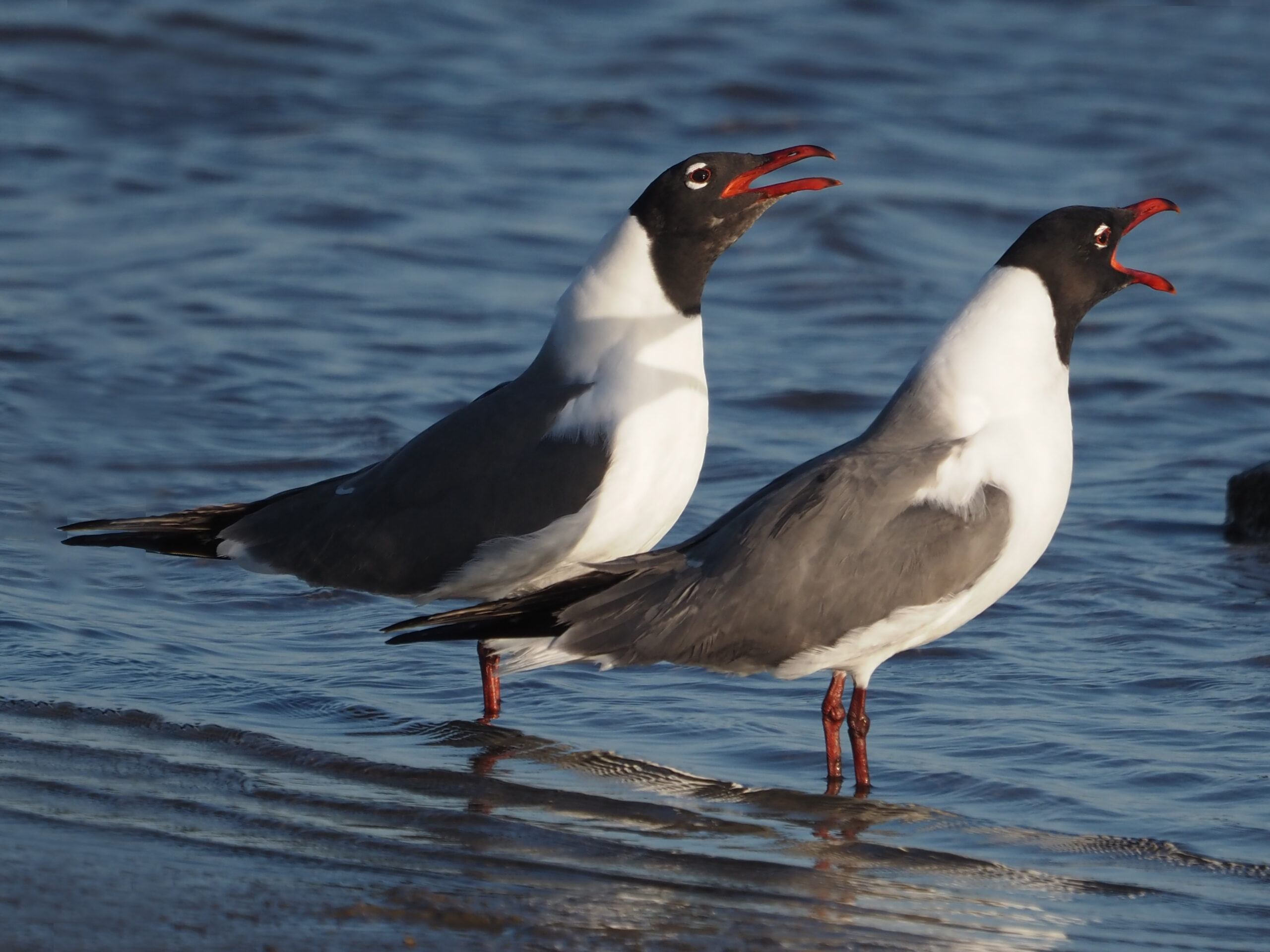
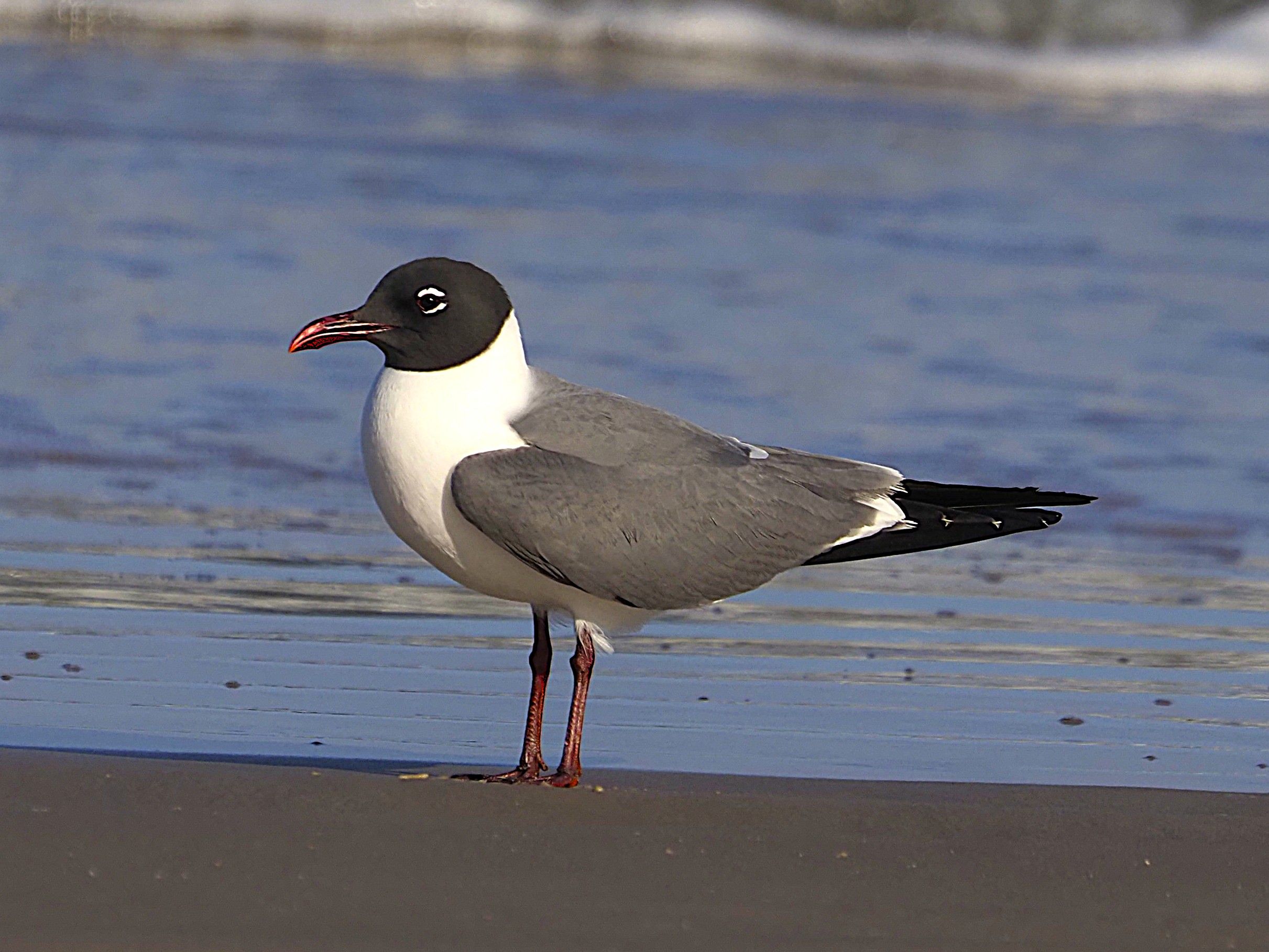
The bill of the Laughing retains its distinctive drooping shape in all plumages. In alternate plumage it can be quite bright red.
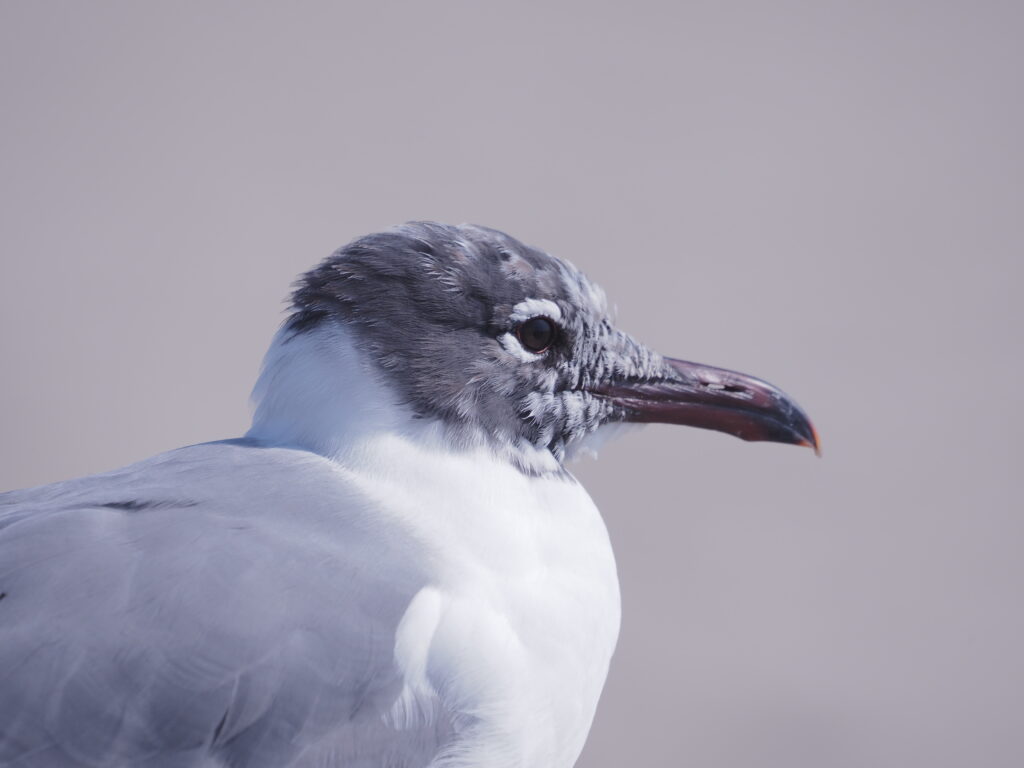
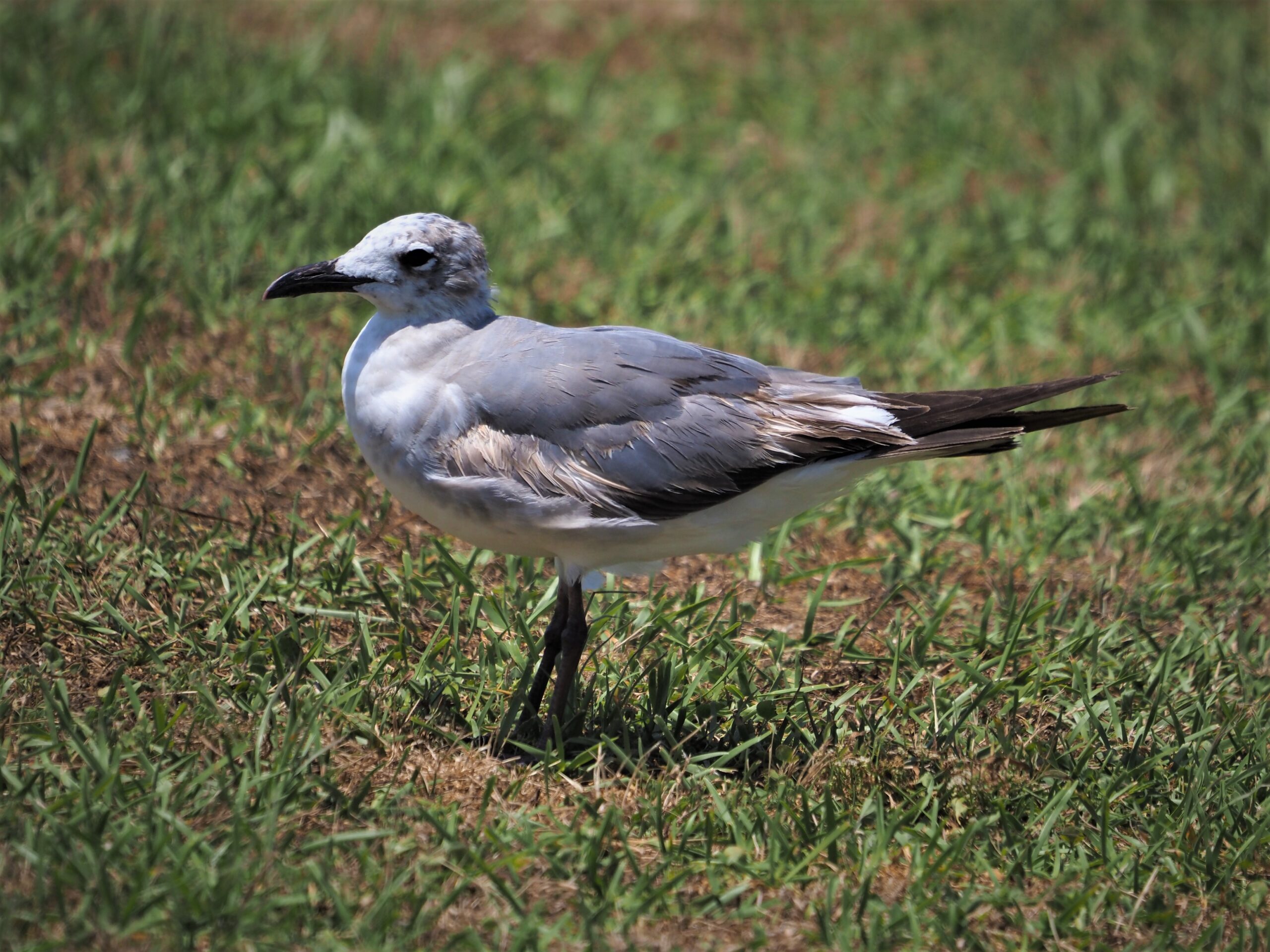
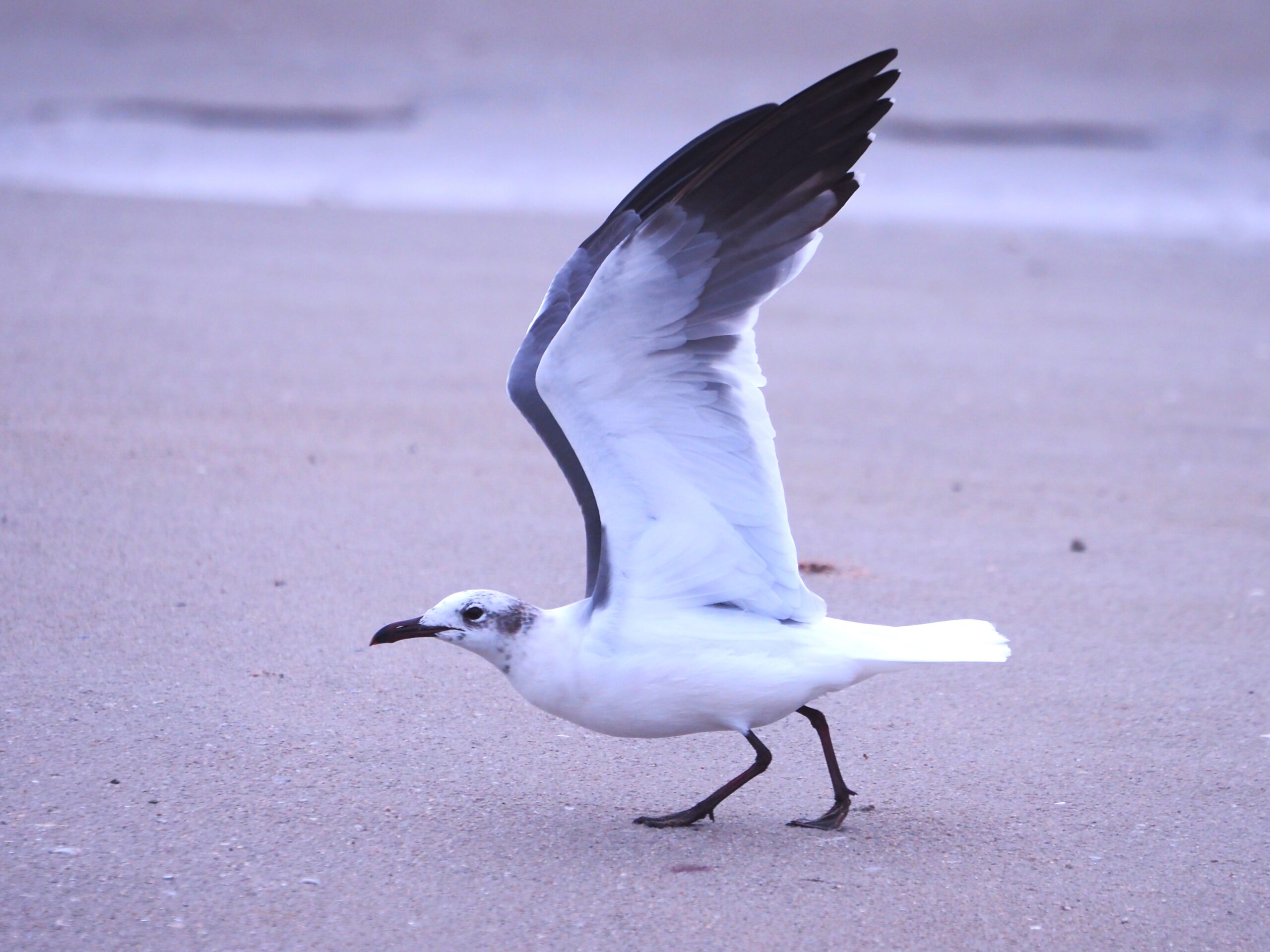
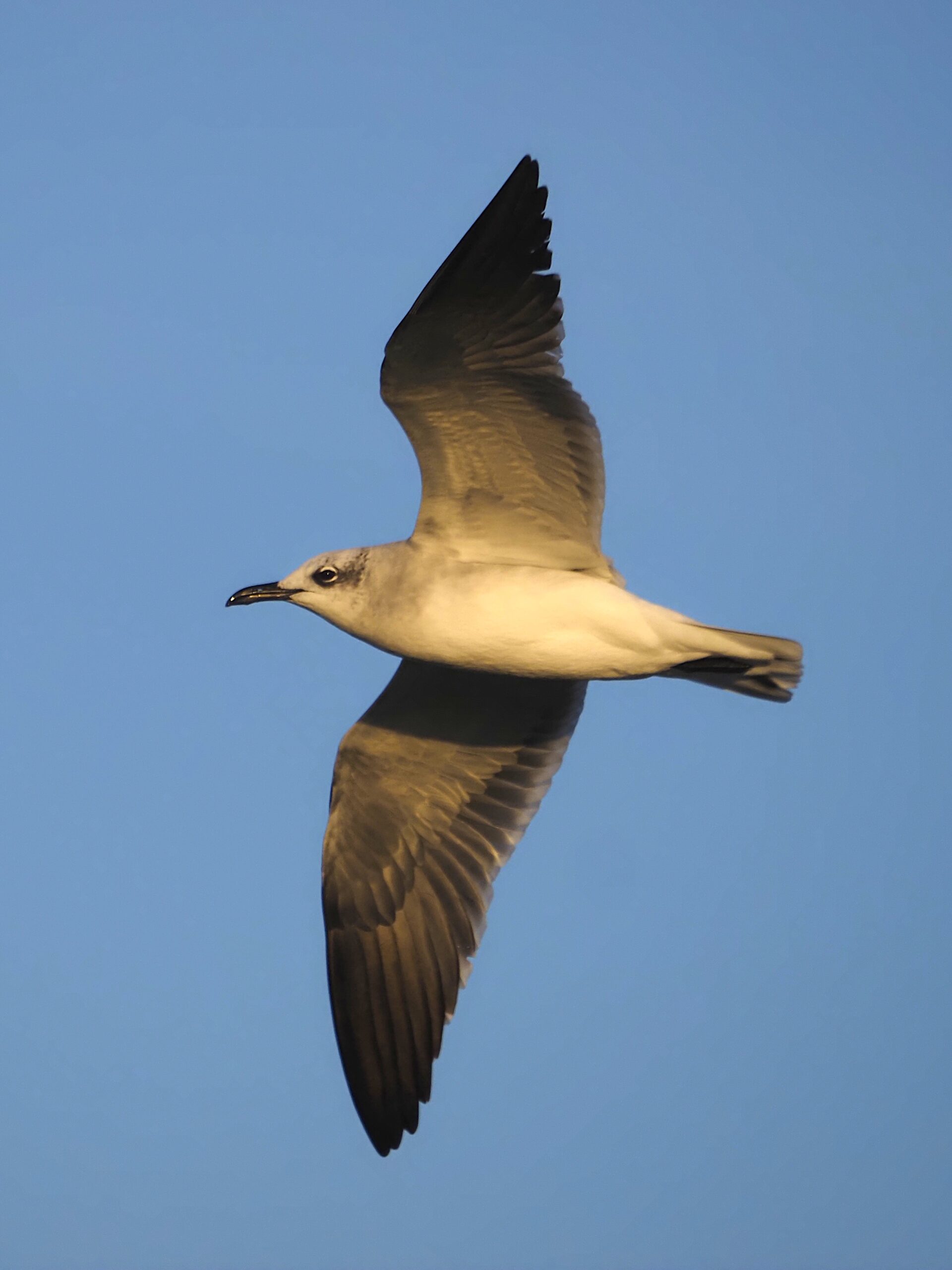
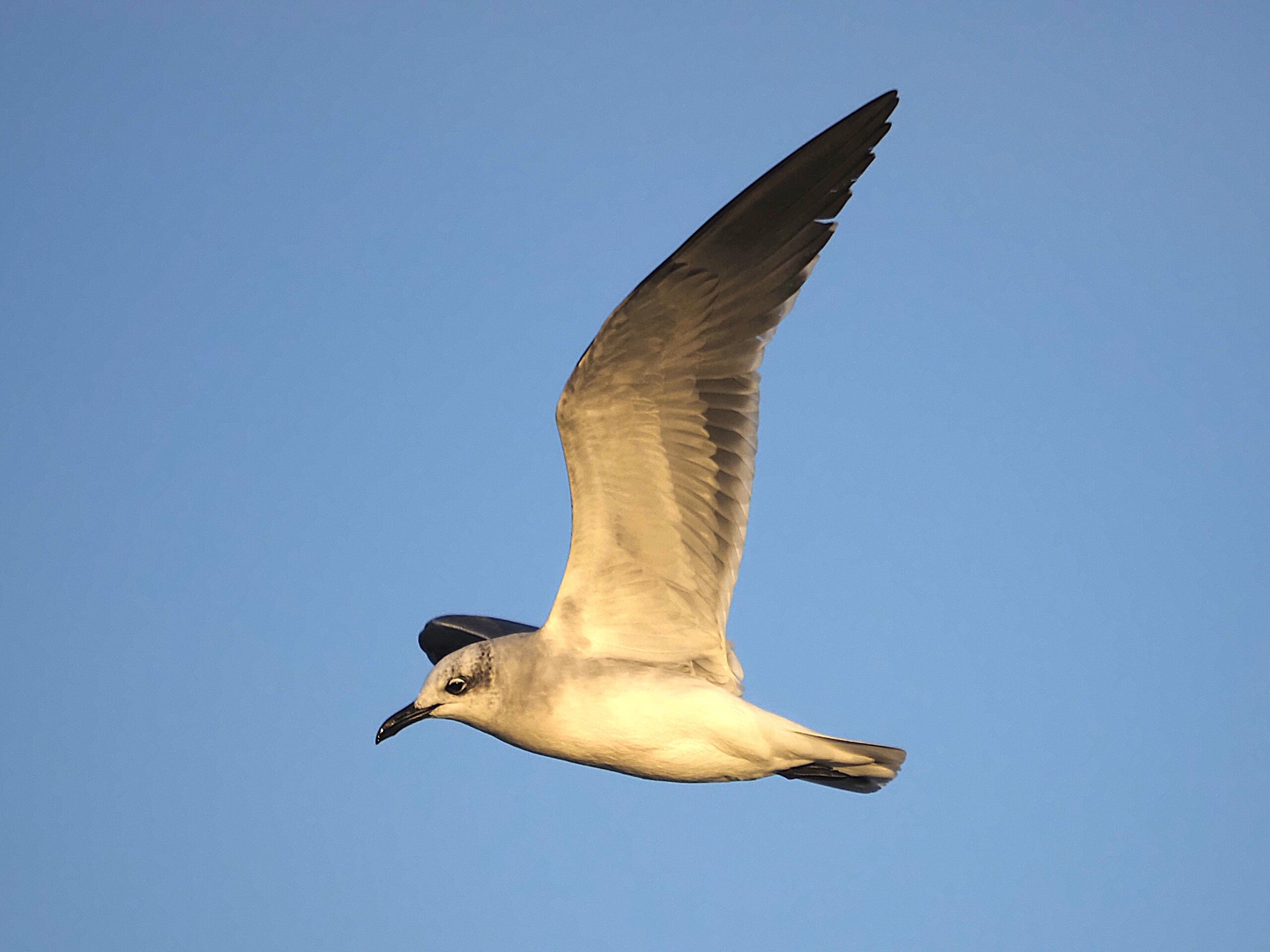
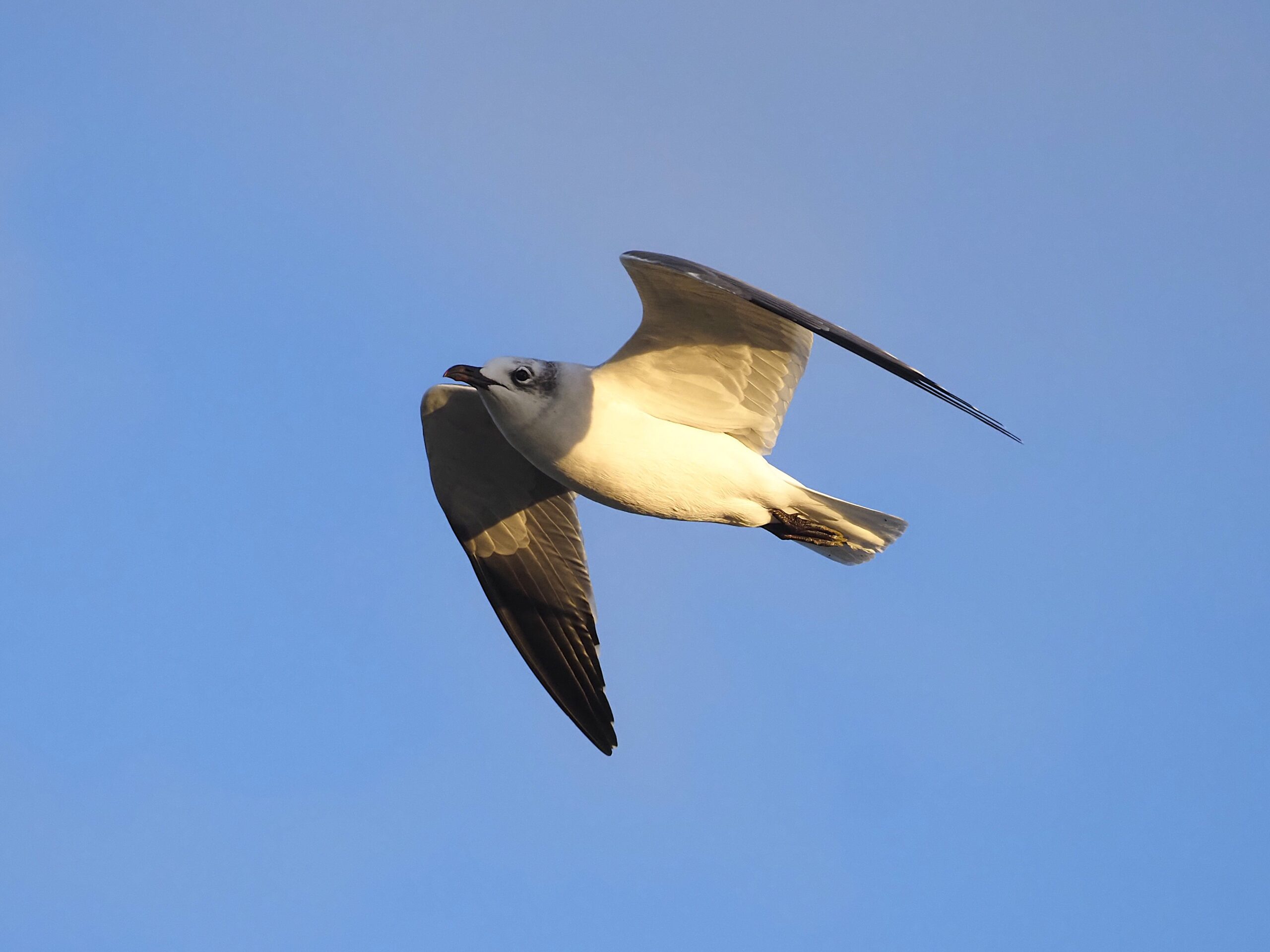
In basic plumage the Laughing loses the all-black head, but often retains some residual gray or black feathers especially on the back part of the head and neck.
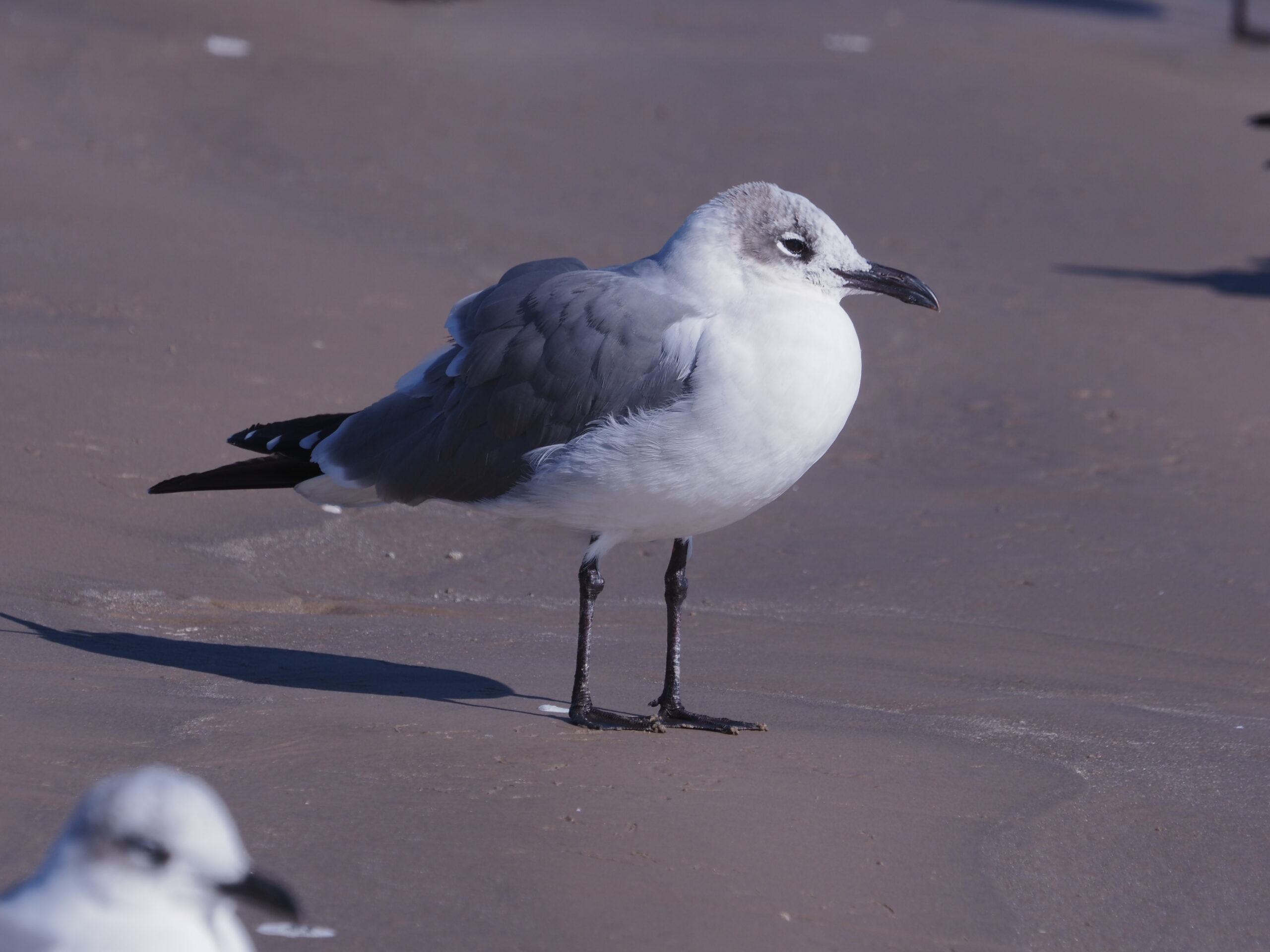
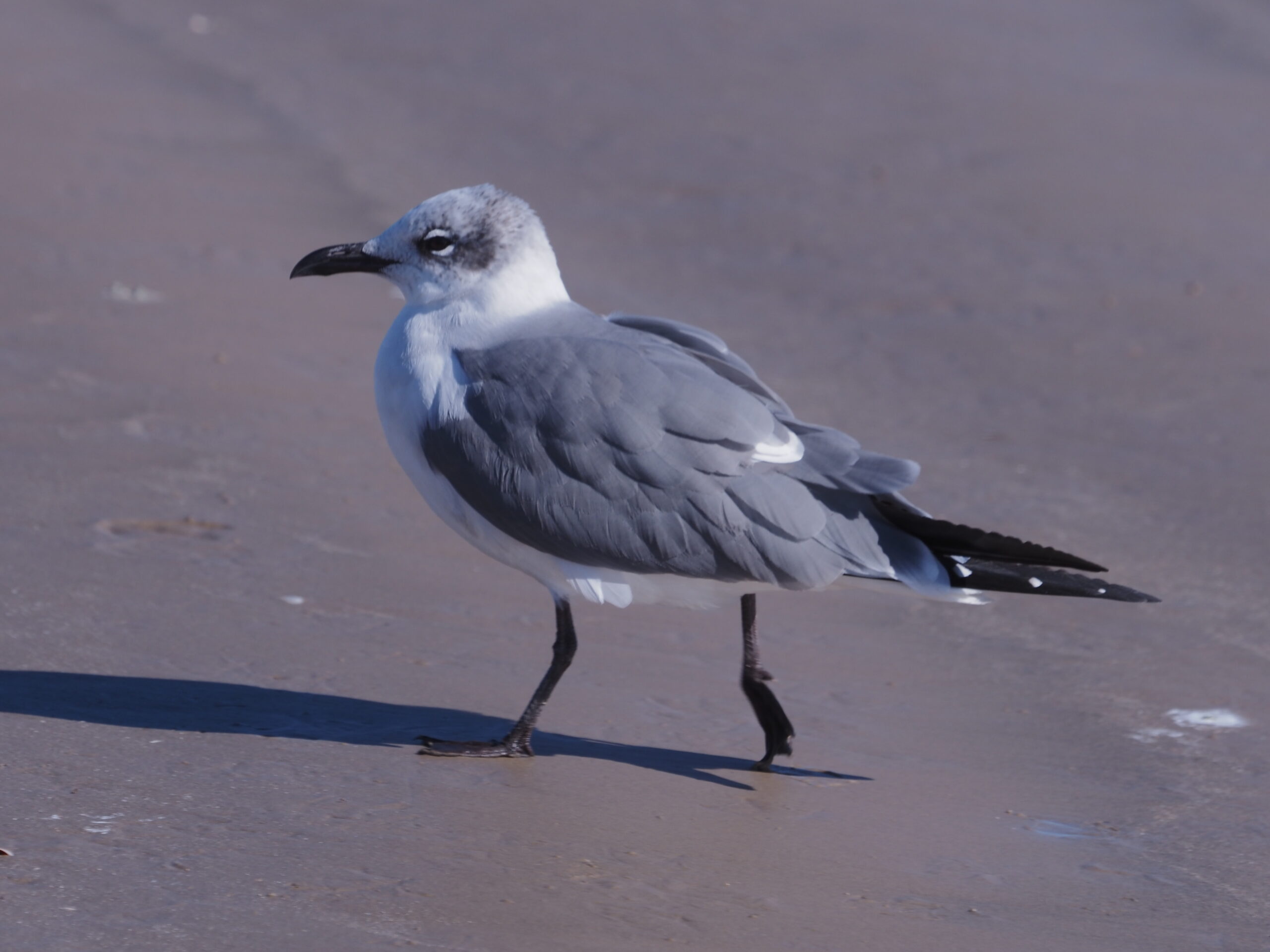
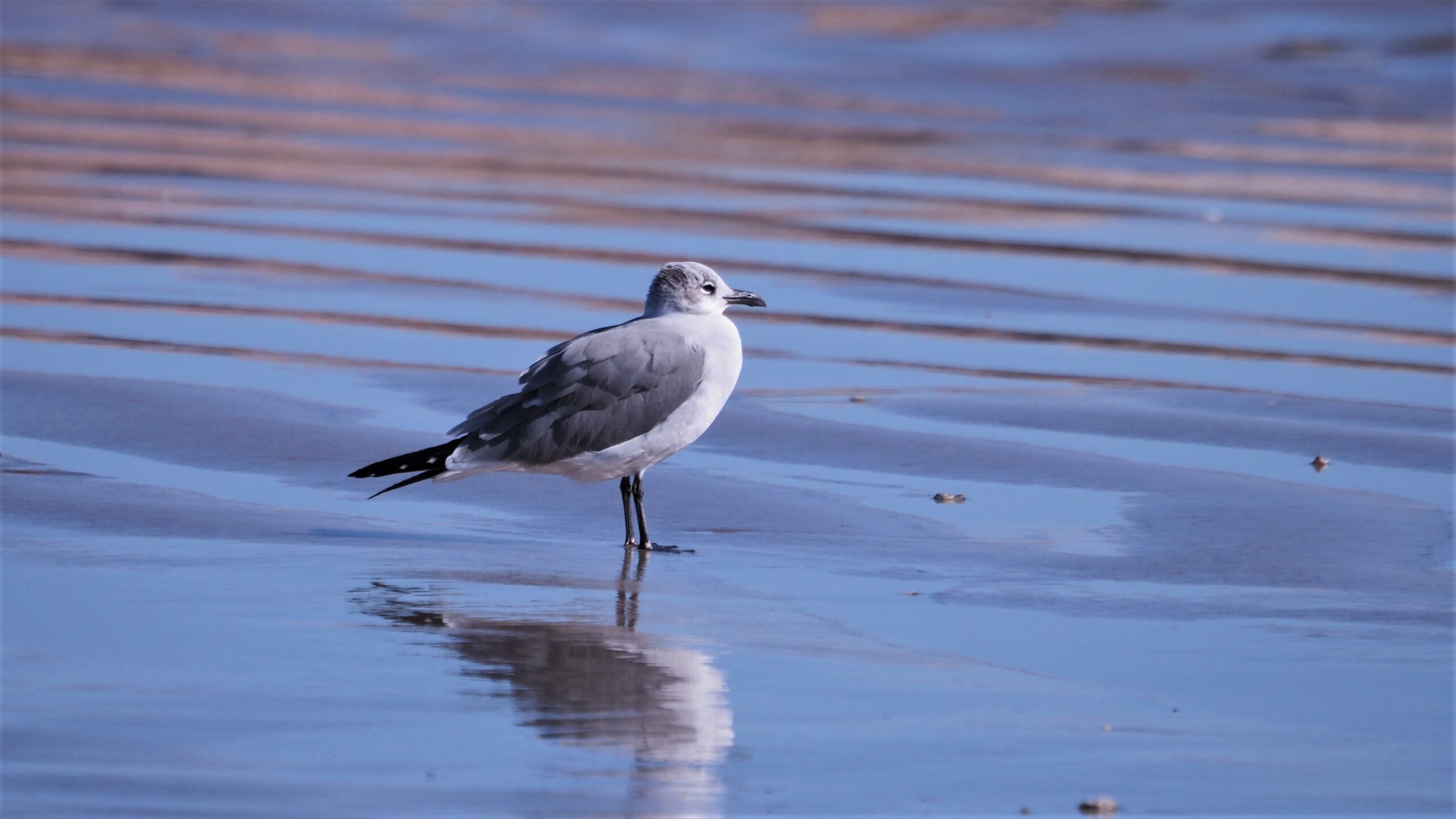
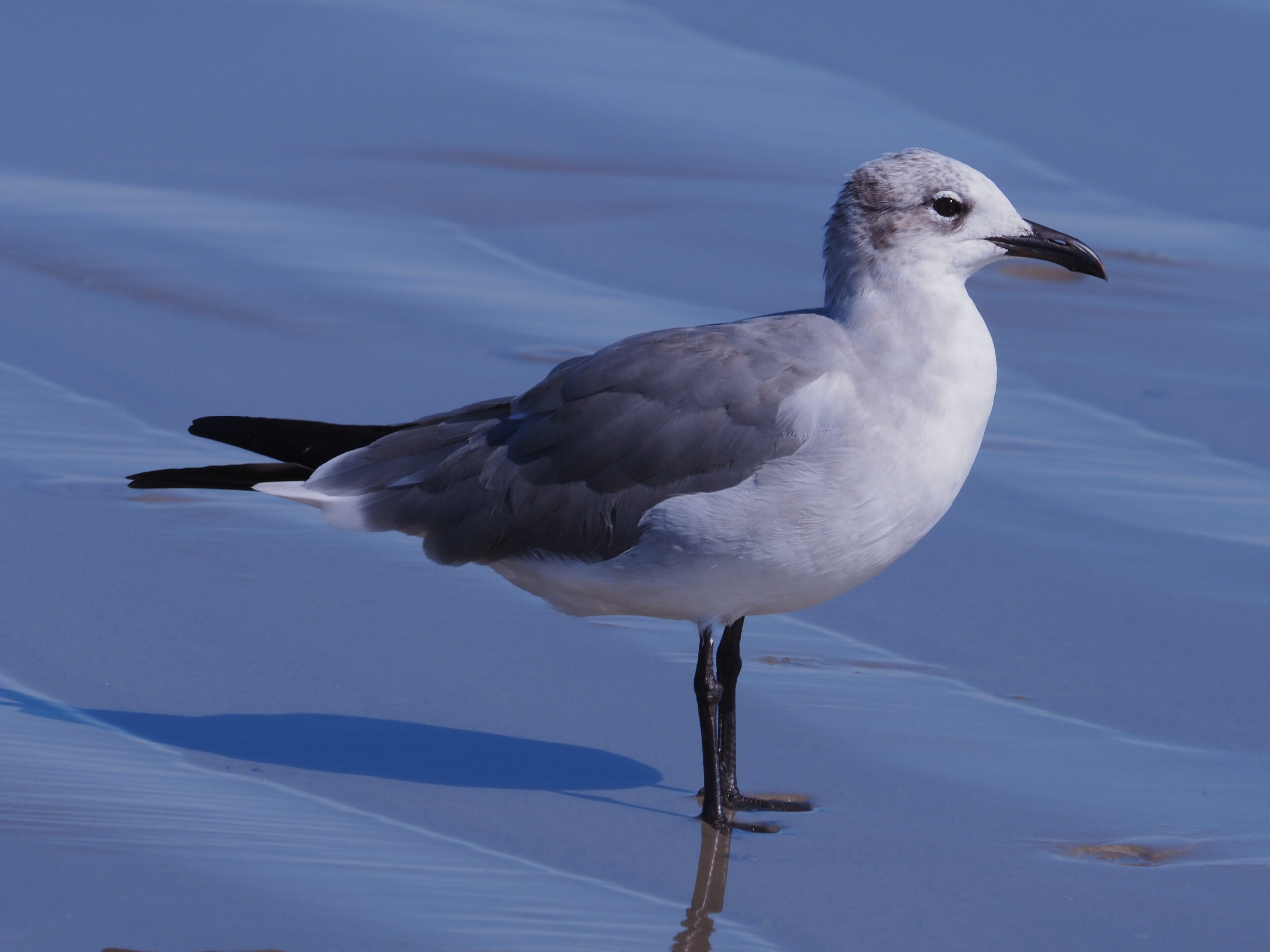
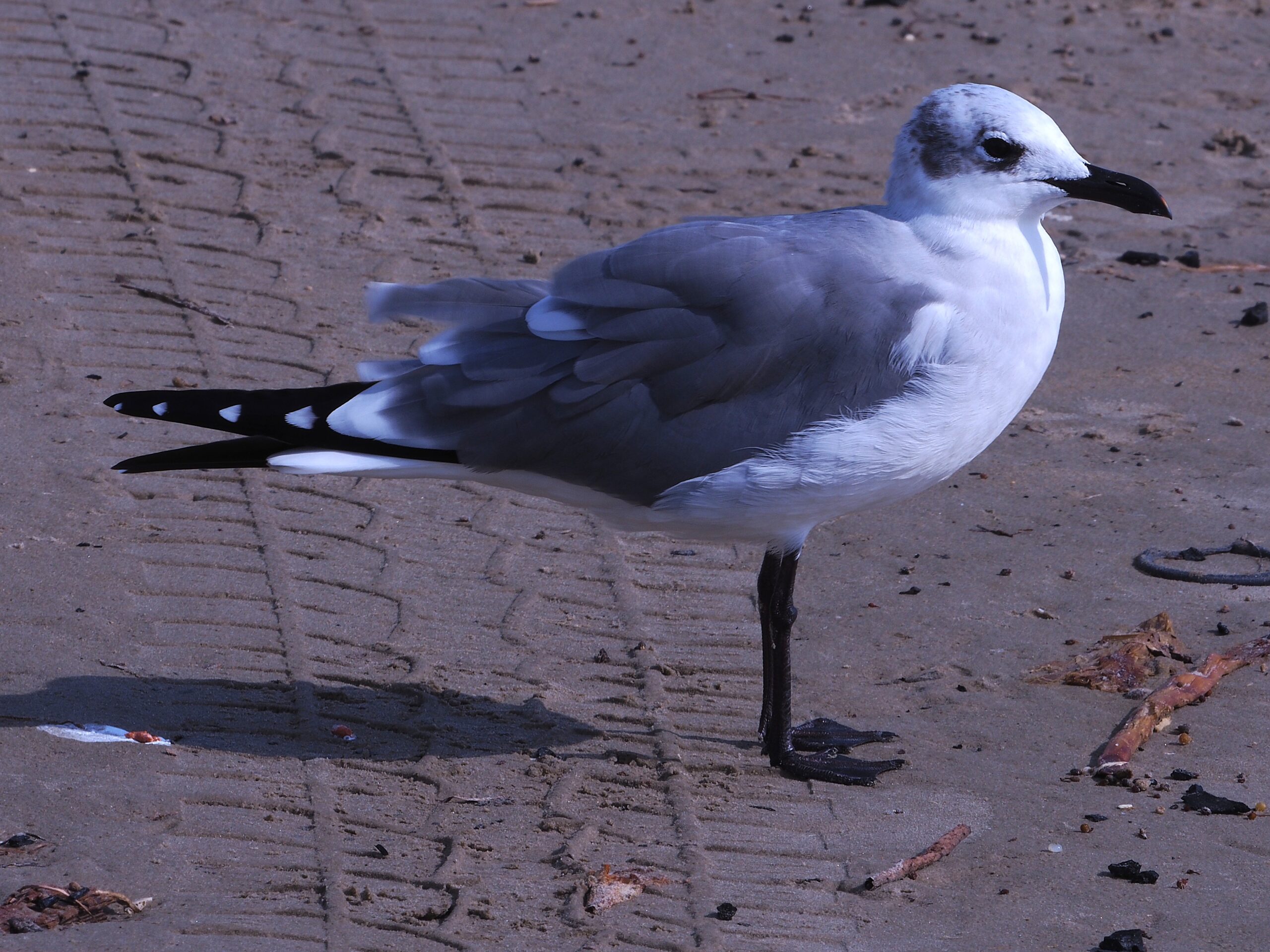
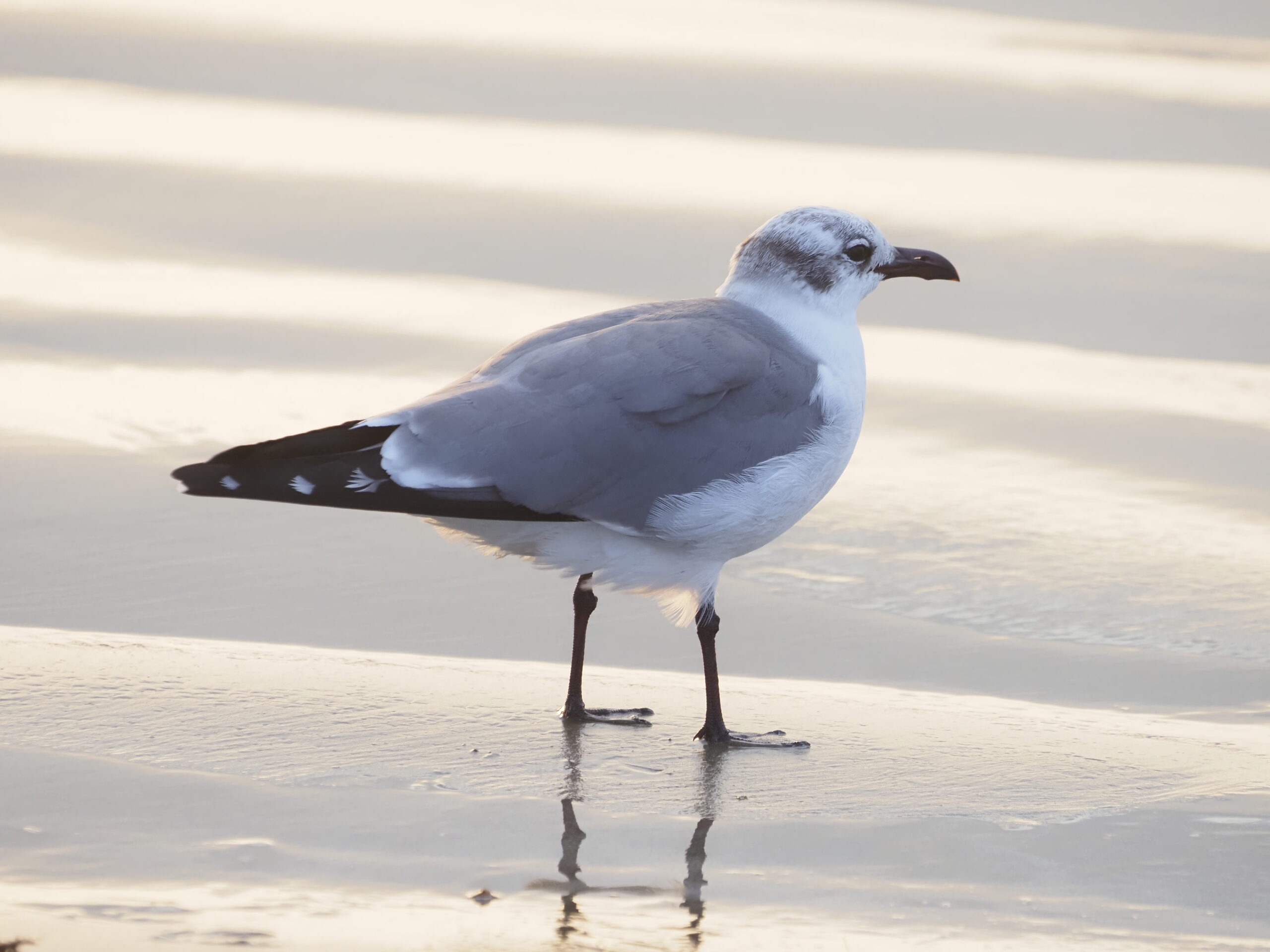
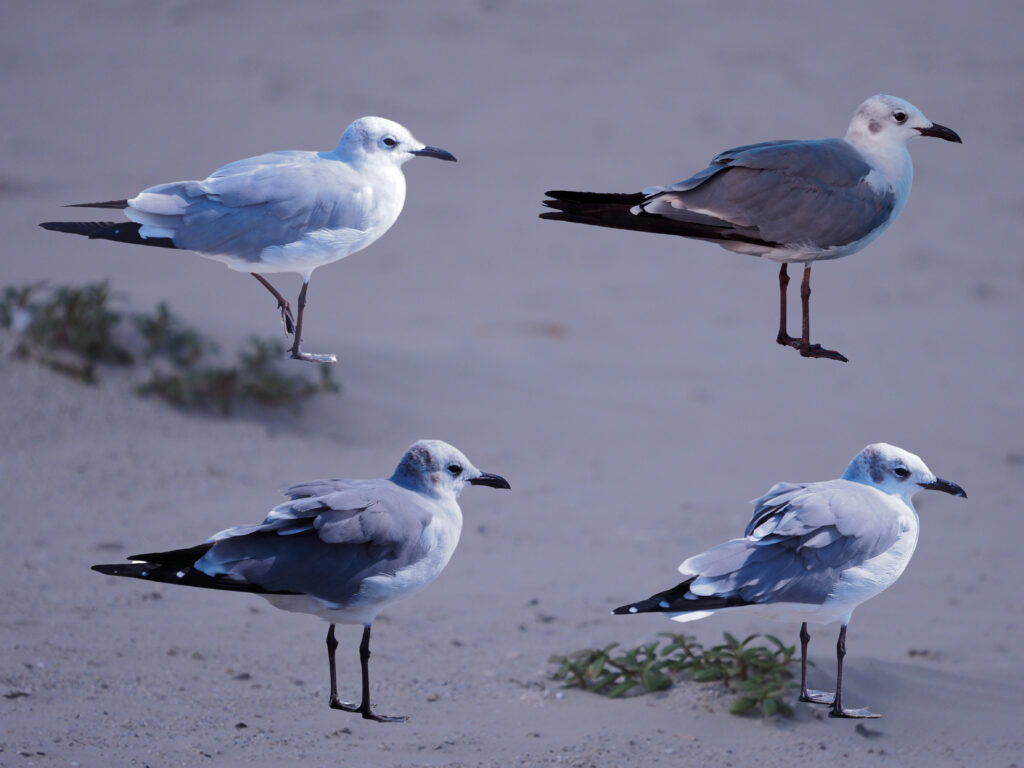
The apical spots of the Laughing are variable. Some individuals have prominent white spots in the primaries and others none at all. The four gulls pictured below were photographed on the same day (1/31/23) on the Texas Coast and all appear to be in definitive adult basic plumage. It is unclear (at least to this observer) whether the presence or absence of apical spots is age-related, or just individual variation. Many photos in Cornell’s Macaulay Library appear to show mature, breeding Laughing Gulls with, and without apical spots. What is clear is that the presence or absence of apical spots should not be relied upon as the sole field mark for identification. However, the adult Franklin’s Gull (with which the Laughing is most easily confused) usually has apical spots (see photo further below), and they are usually noticeably larger than those of the Laughing Gull.
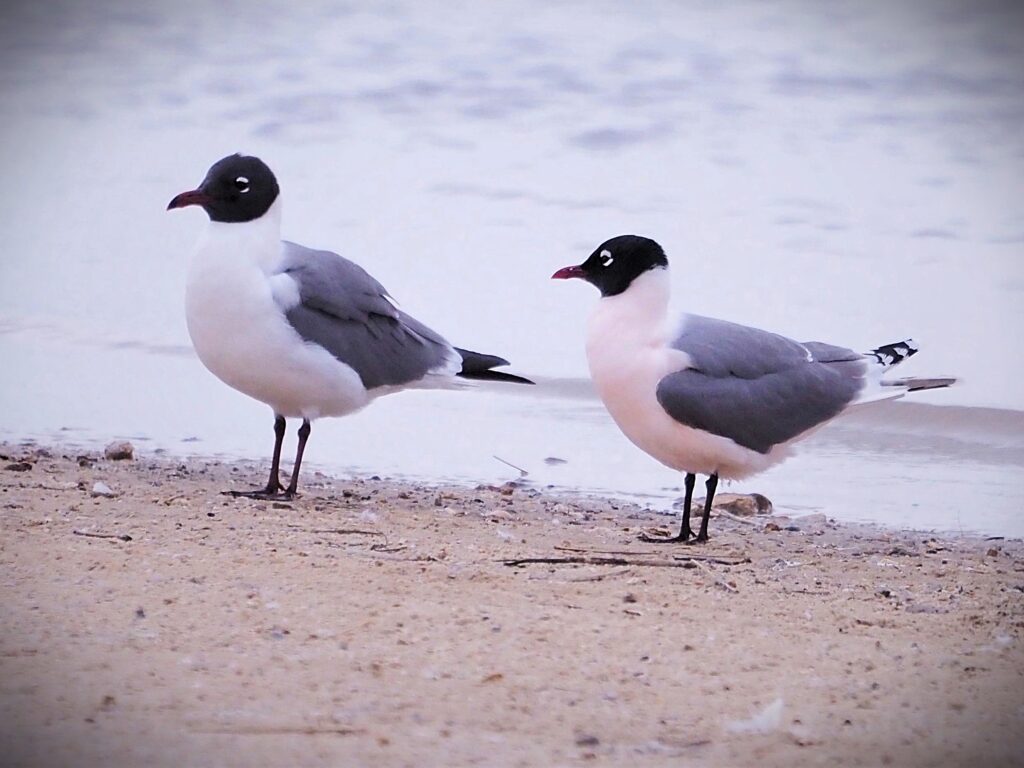
The Laughing is compared with the Franklin’s in the photo below. The Franklin’s has large apical spots, has more prominent eye-arcs, is shorter and stockier, has shorter, more rounded wings and a shorter bill. Though Laughing can show it, the Franklin’s more frequently exhibits this pink hue during high breeding plumage, as in the individual pictured below (photographed on the Texas Coast on 4/26/23).
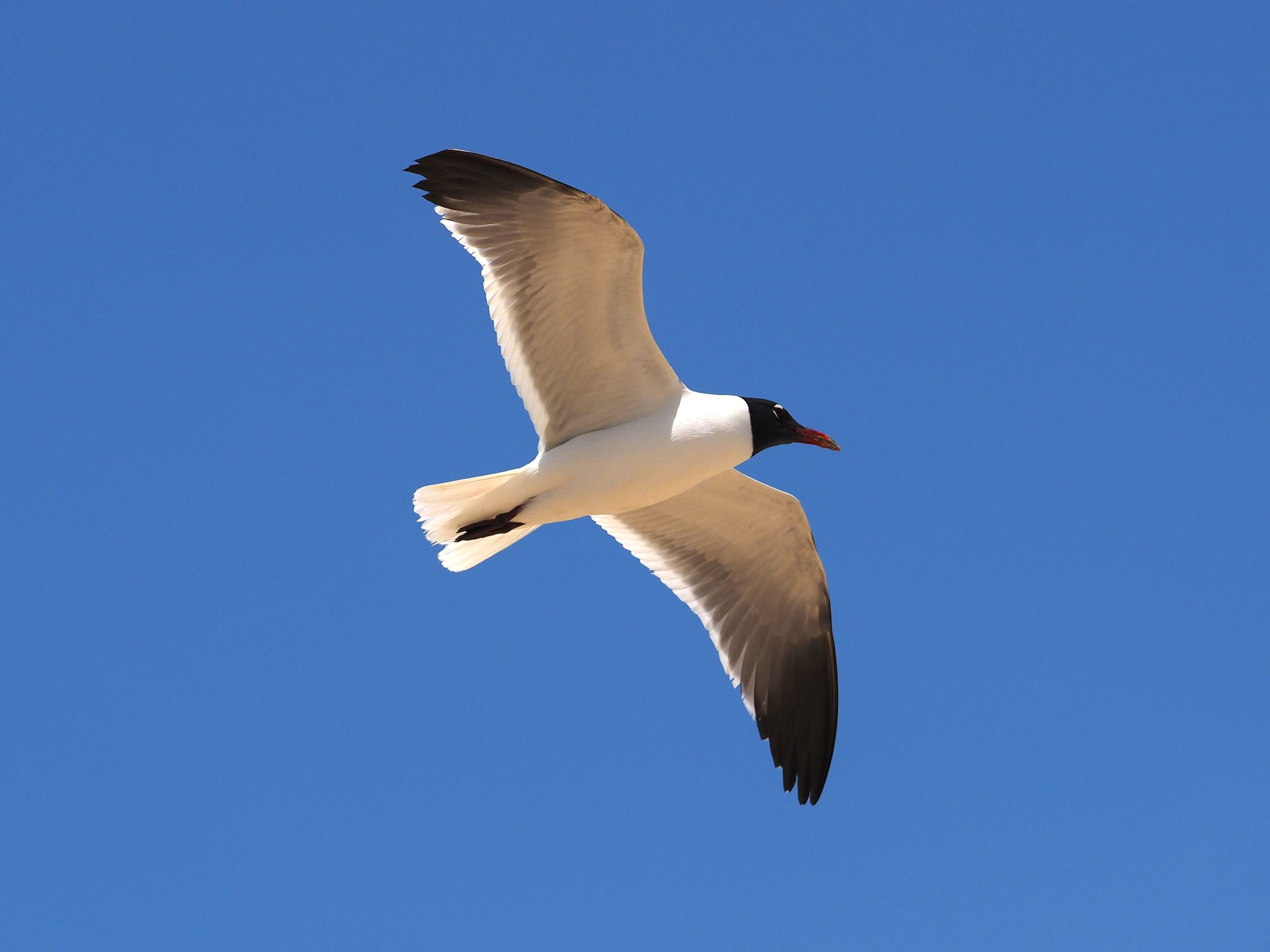
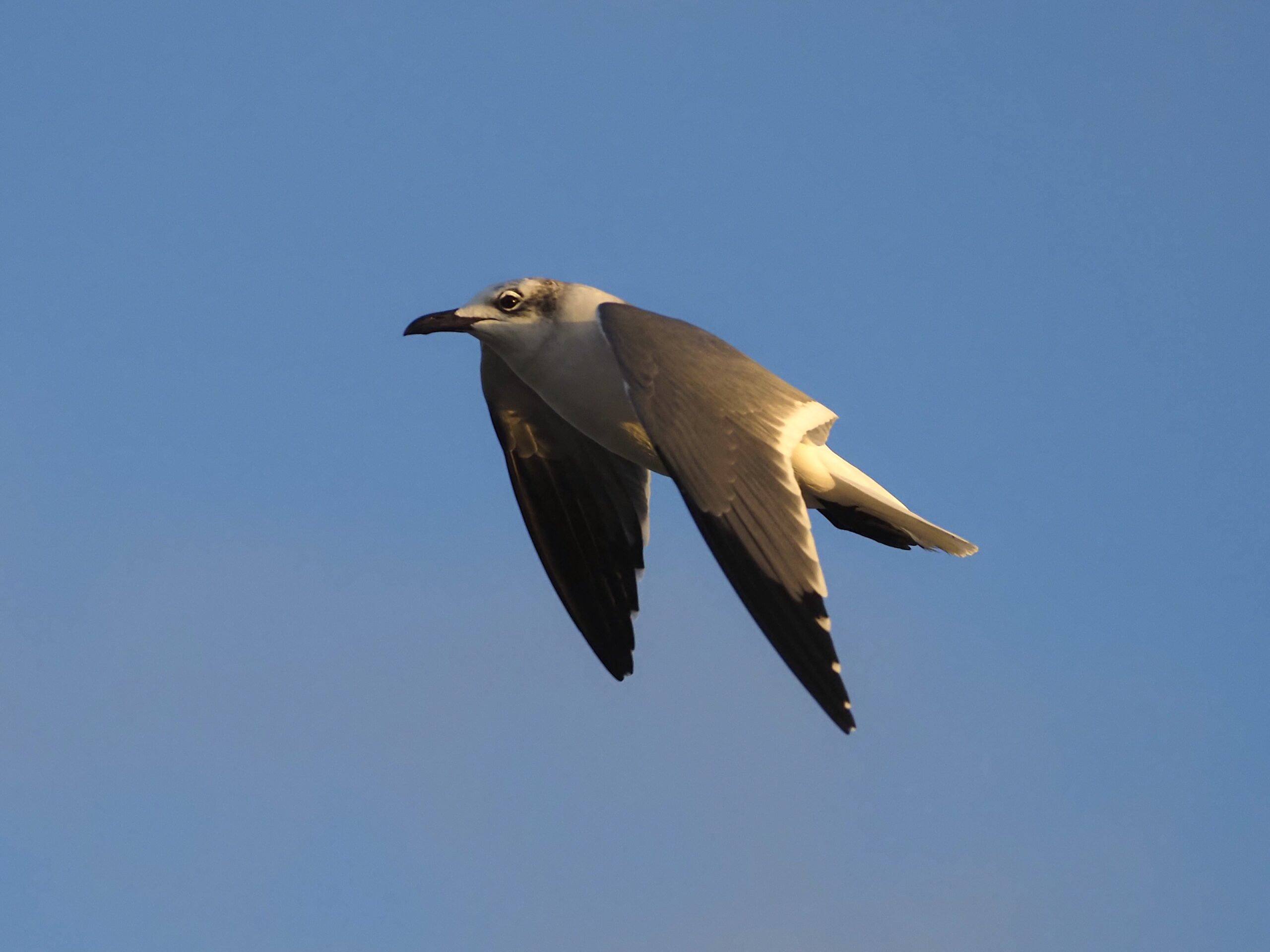
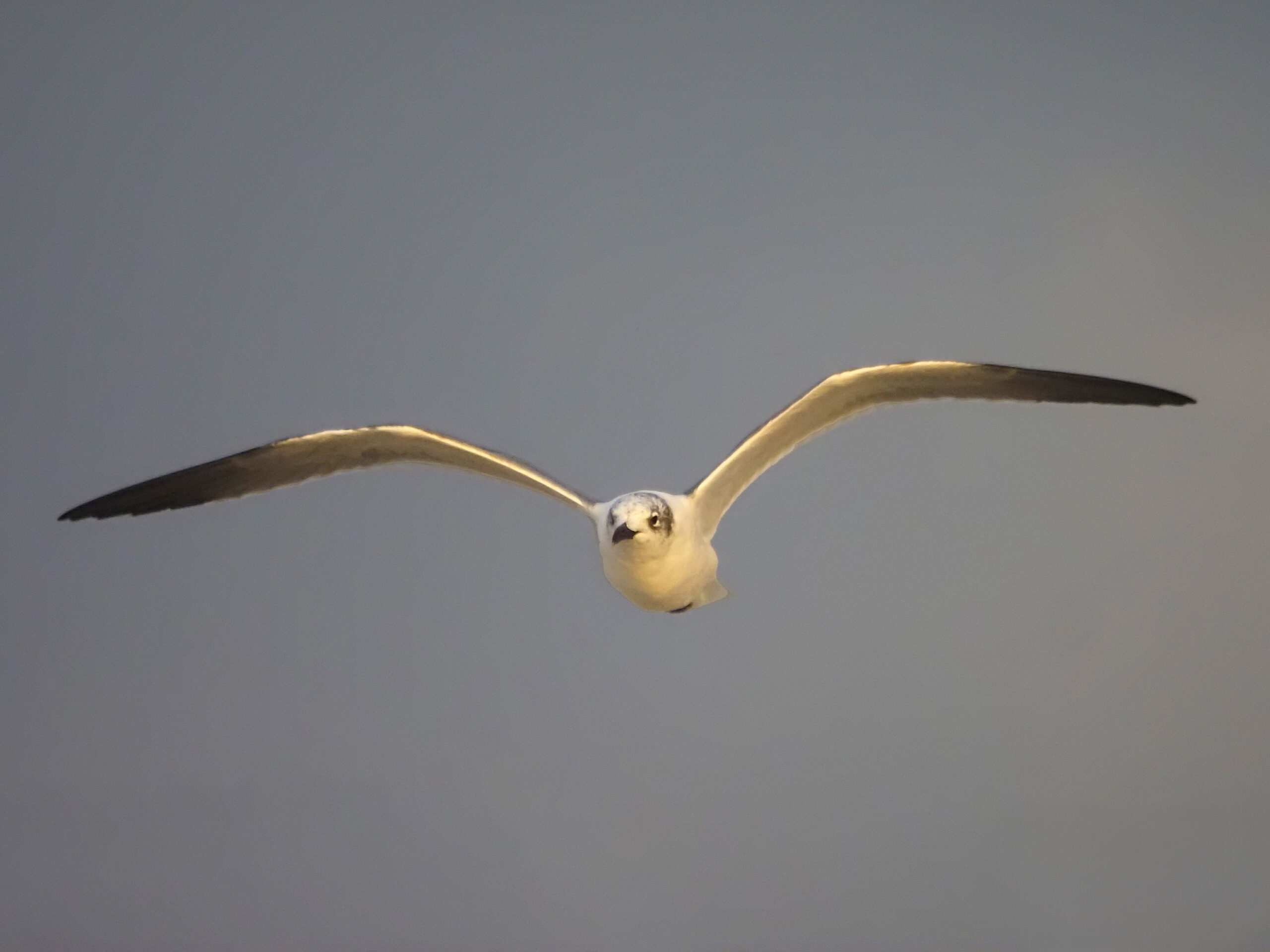
The Laughing is perhaps even more distinctive in flight. As shown below, it has long, pointed wings with extensive black on the outer quarter. Note that the black at the wingtips has no sharp demarcation where it turns white; the transition from the black outer wing to the white inner wing is gradual, from black, through dark, and then lighter gray and then to white. Also note the shape of the wings which are long, pointy and somewhat arched.
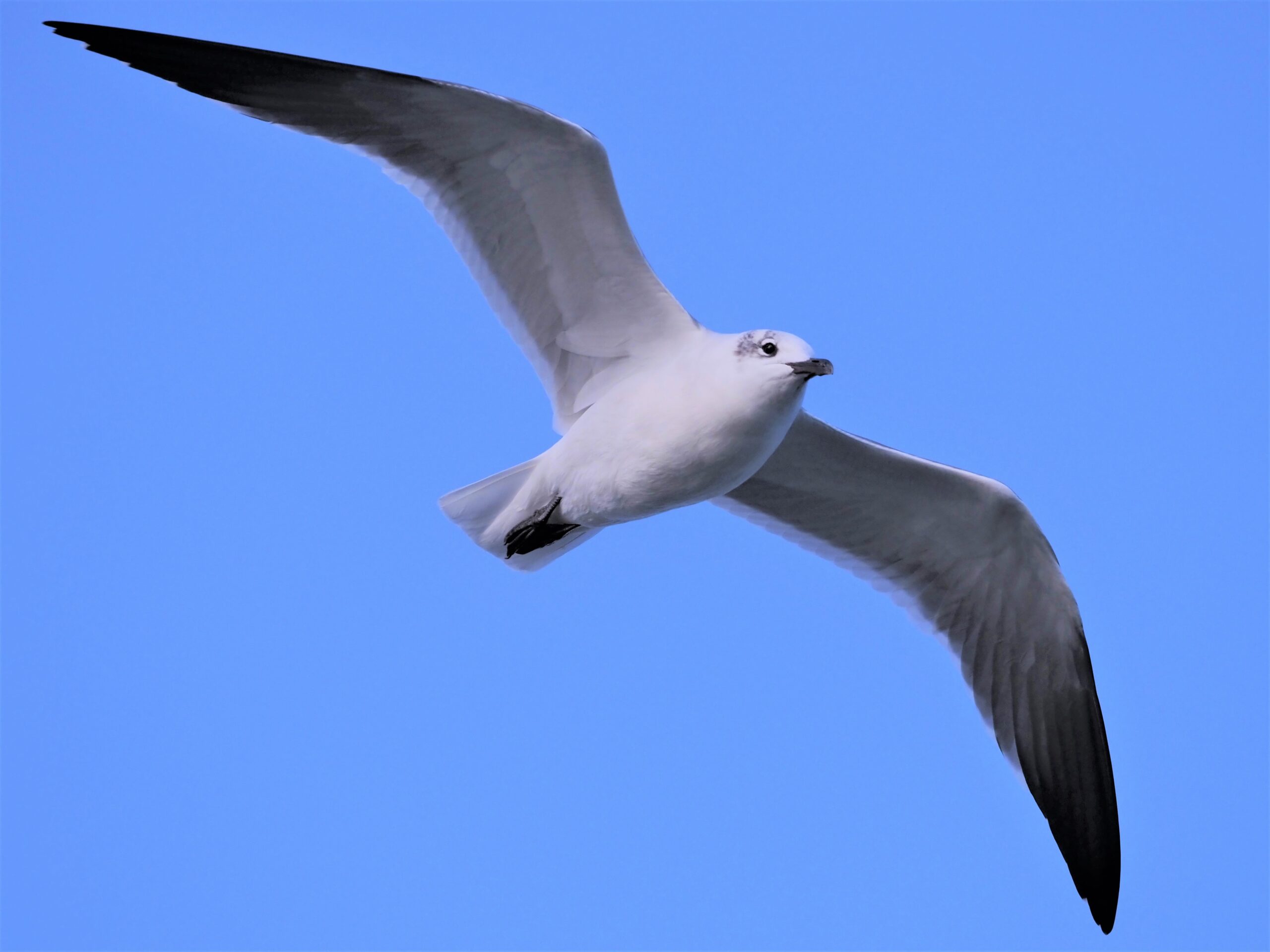
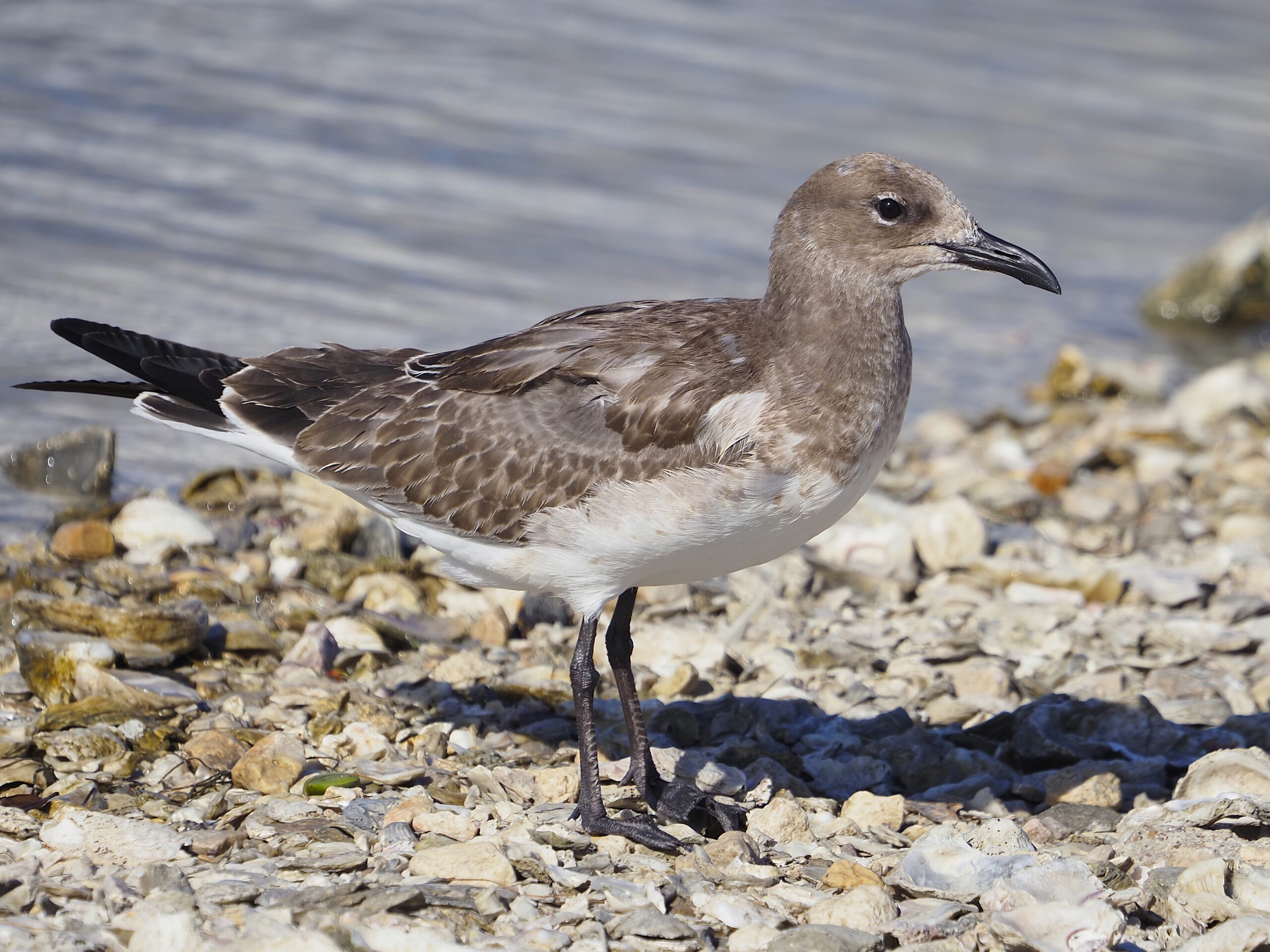
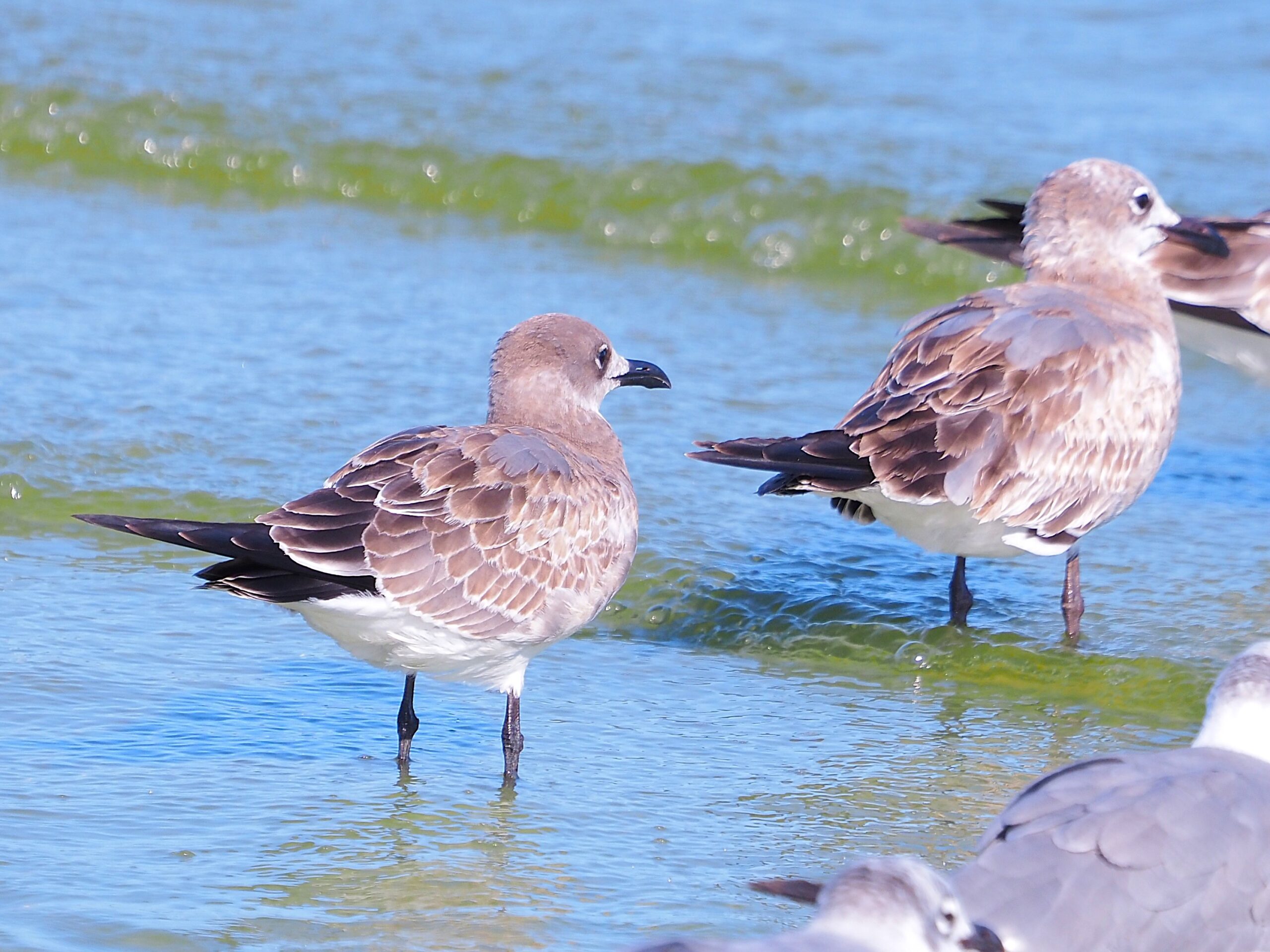
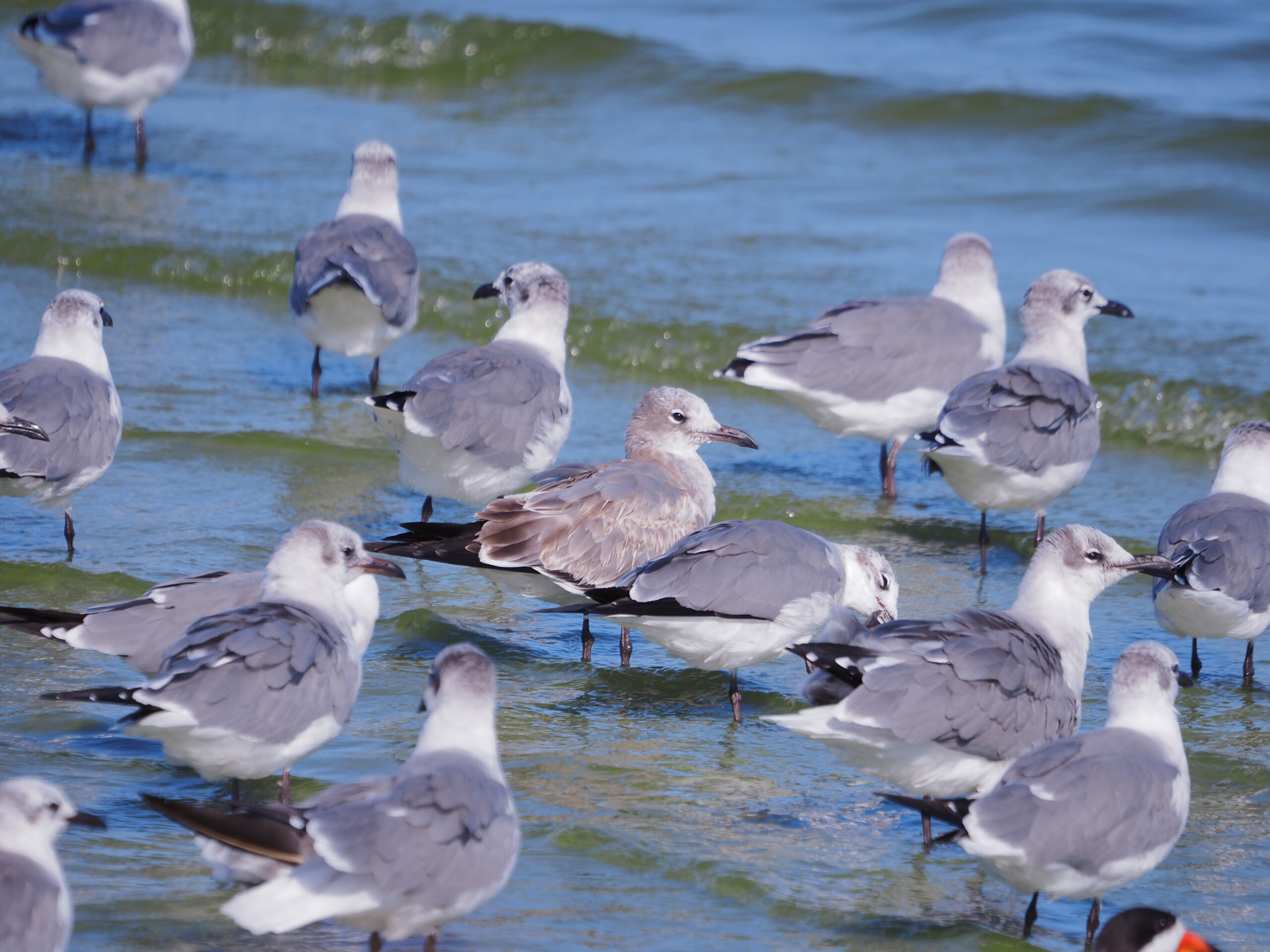
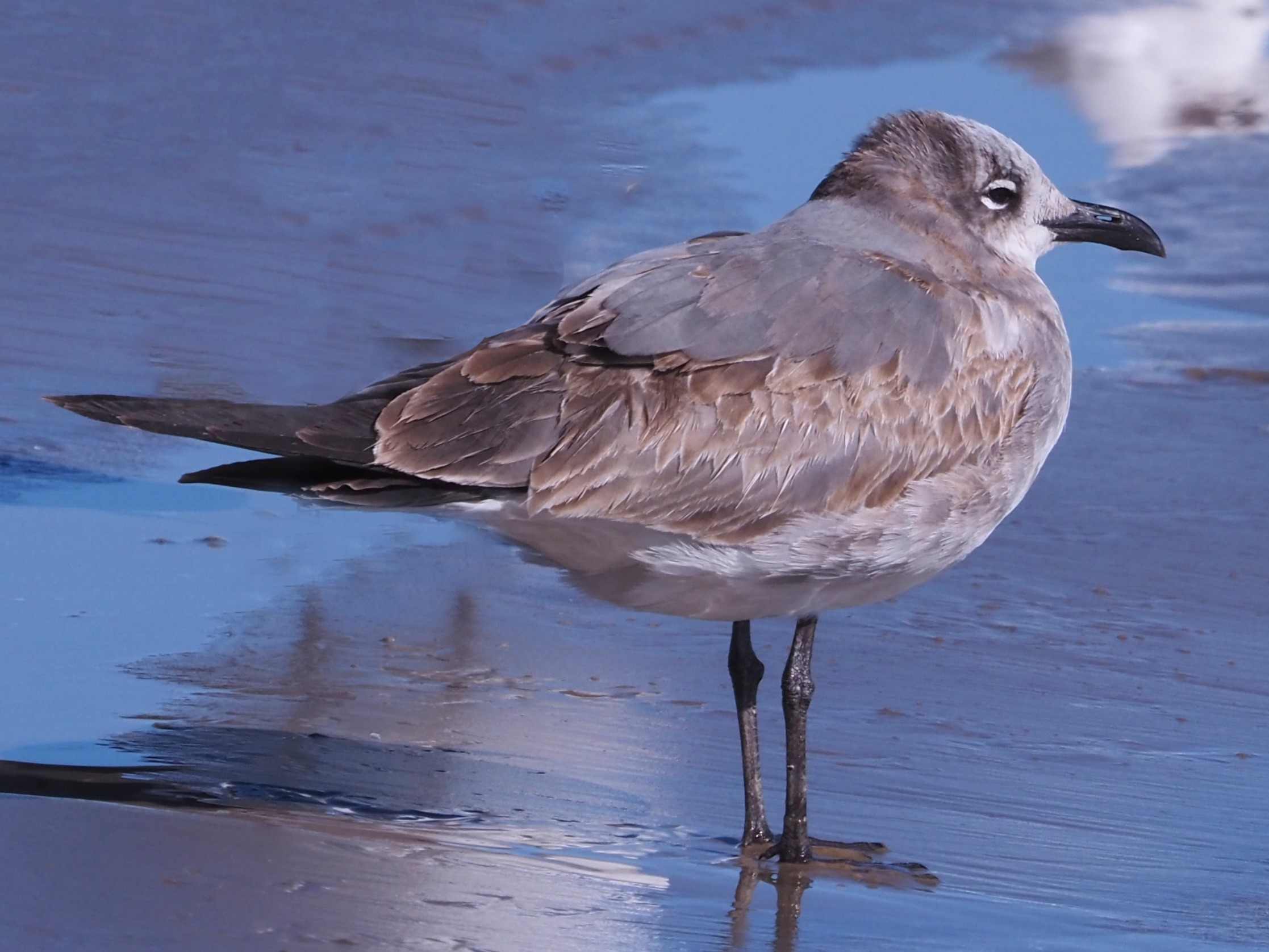
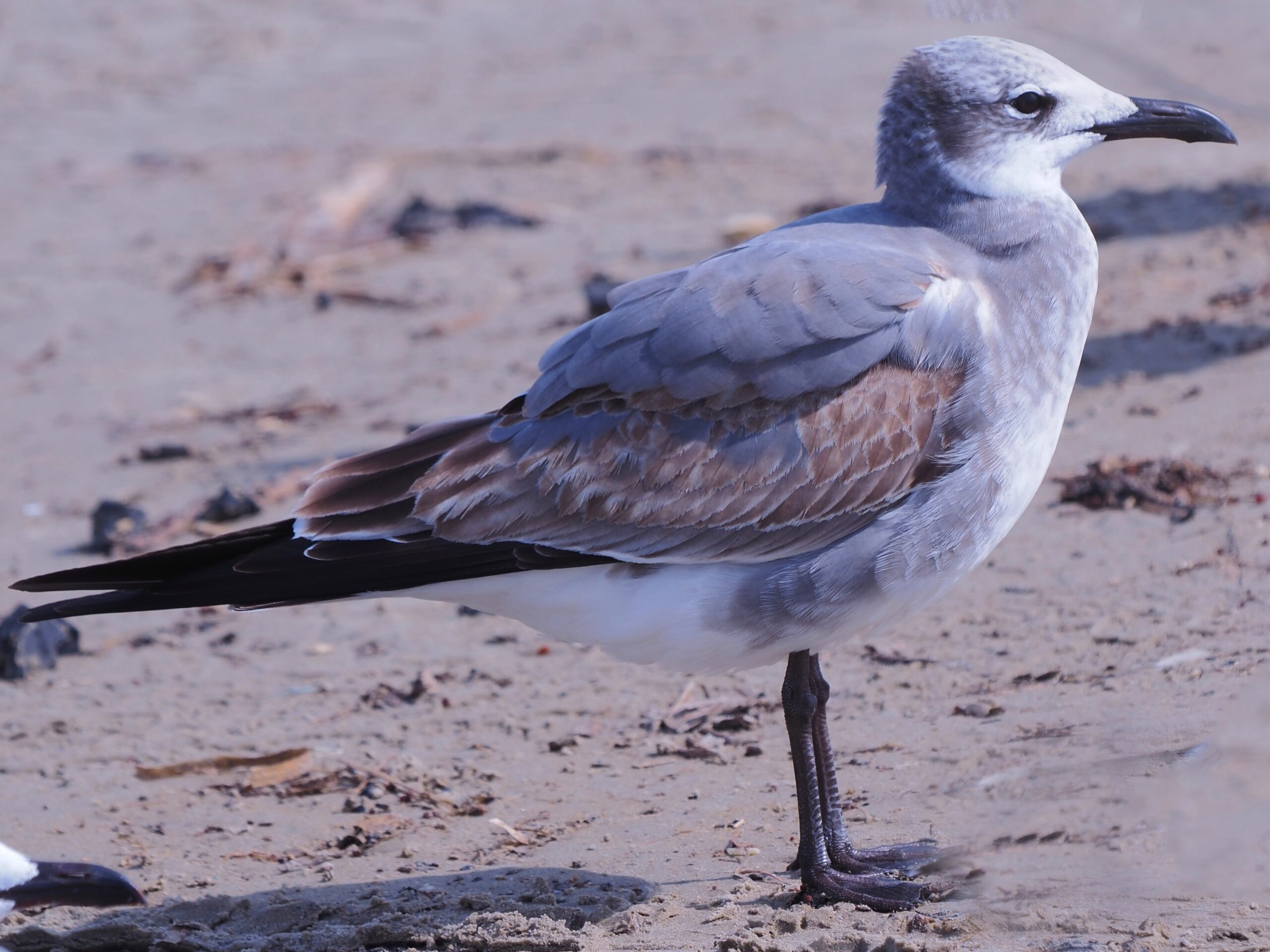
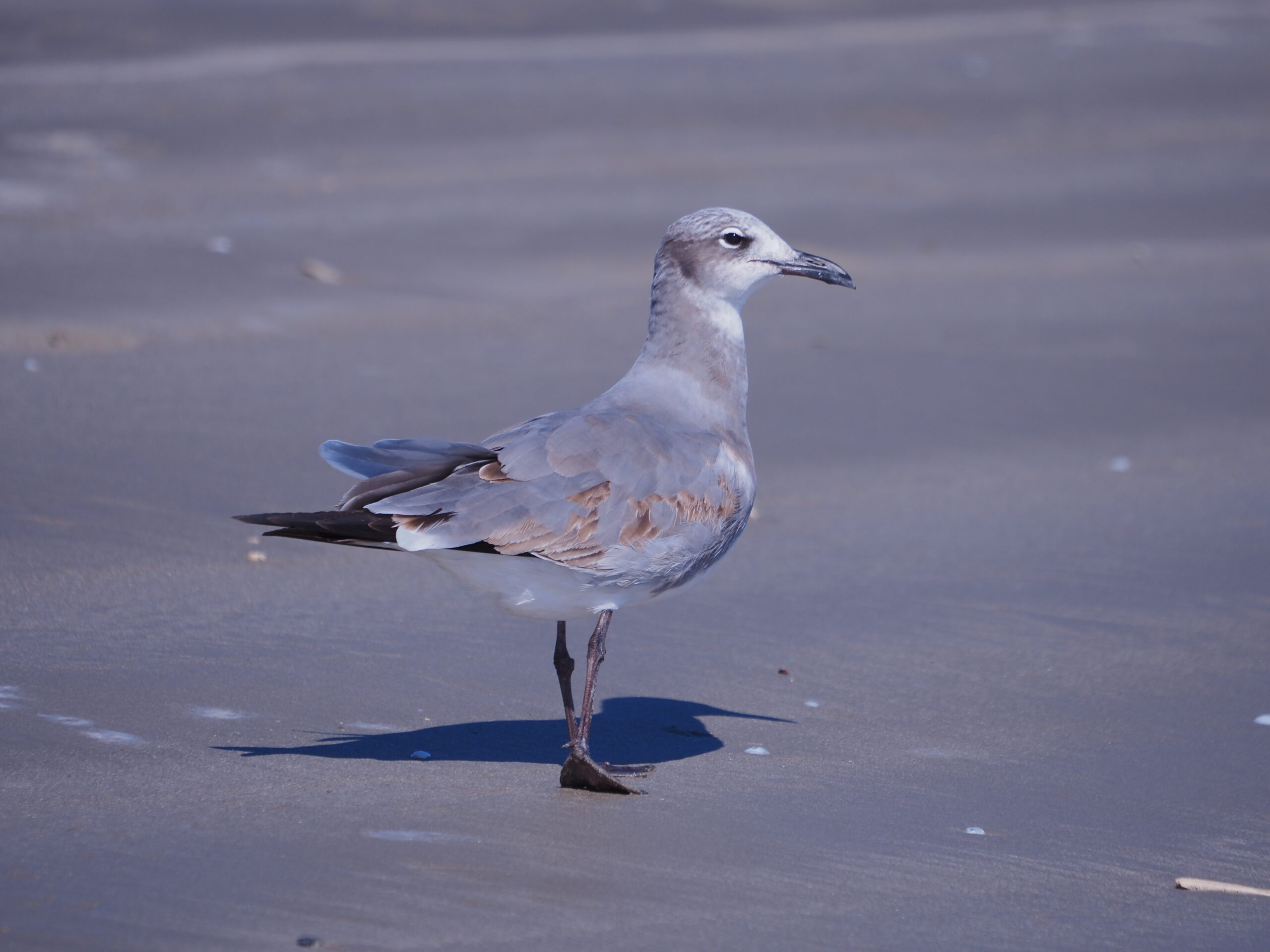
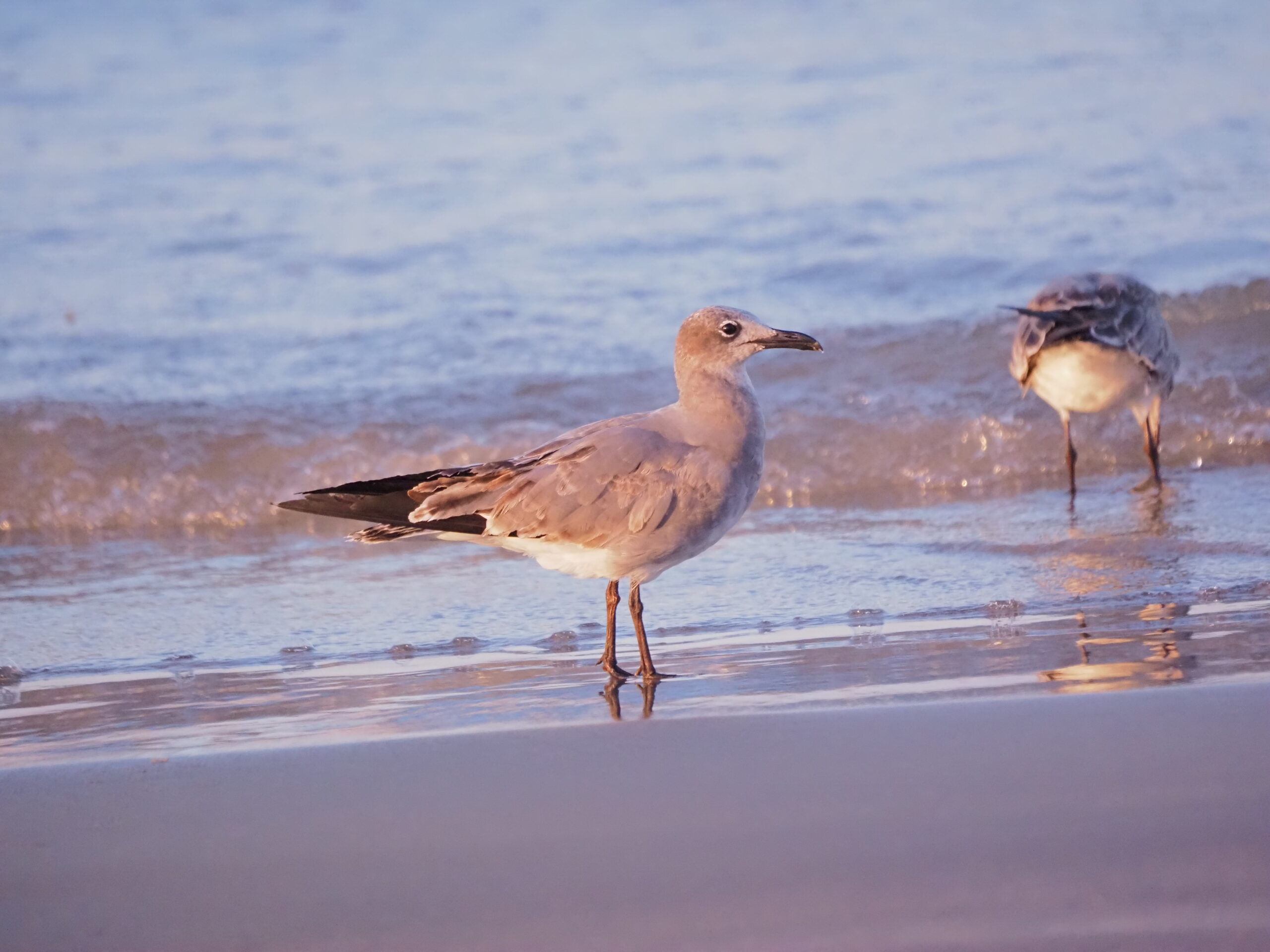
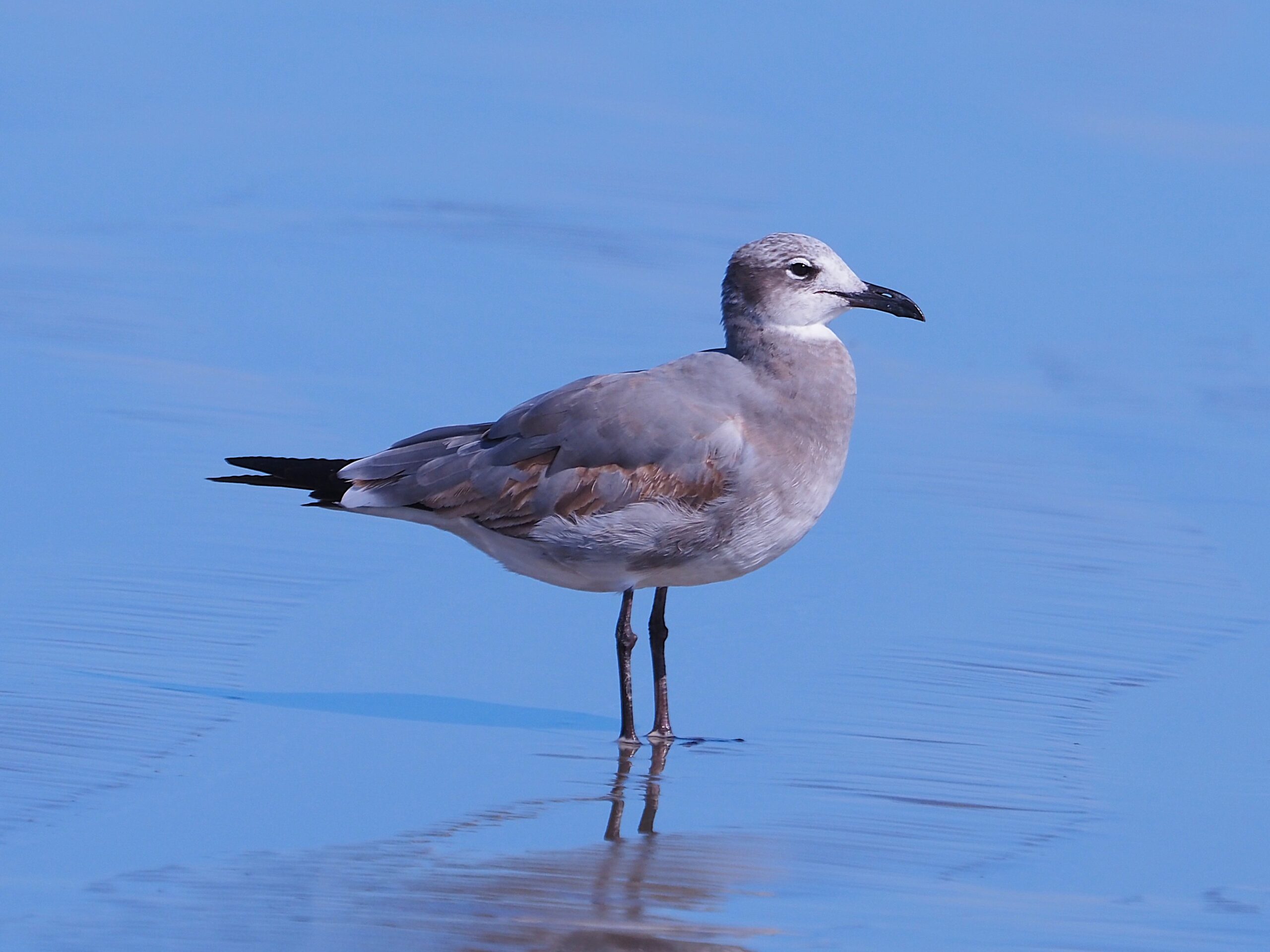
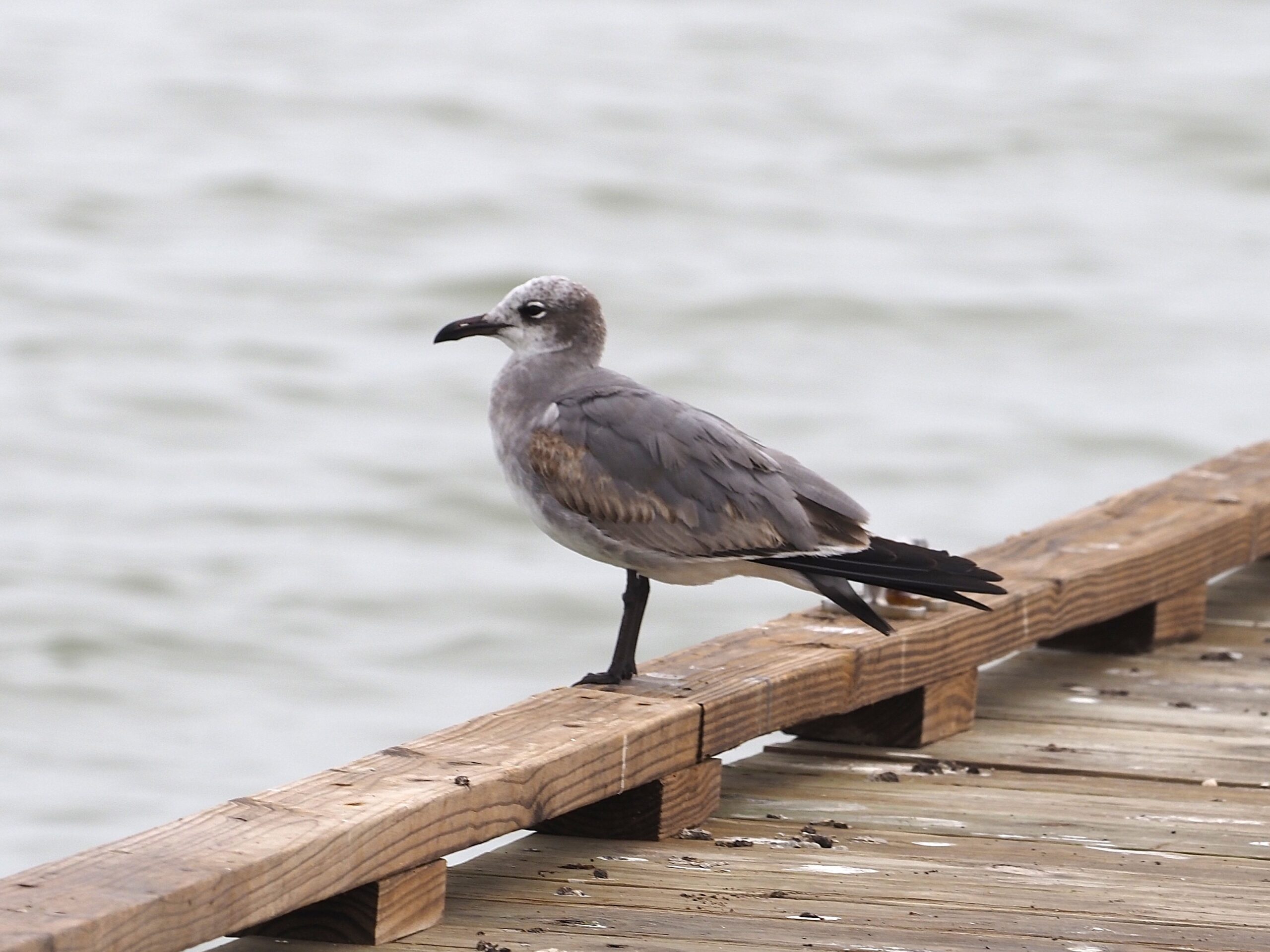
Juvenile and Sub-adult Laughing
The Laughing is the only gull that nests in Texas. As such, freshly-fledged, juvenile Laughing Gulls can be seen in Texas from approximately July through September. The development of the Laughing’s plumage proceeds in the same way as other gulls: the adult-gray appears first on the mantle, followed by the upper scapulars, the remaining scapulars, and then the wing coverts. Mature body and head feathers first emerge on individual schedules throughout the first few years of life. The Laughing reaches maturity in 3 years. The sequence of plumage maturation for the Laughing is shown in the series of photos below (although I have yet to obtain a photo of a freshly-fledged Laughing).