
The Ring-bill Gull can be considered “the standard gull” when it comes to structure. It is also one of the two most numerous gulls in Texas during the winter gulling season. Therefore, it is the first gull that should be learned and it is usually helpful to compare the structure and size of an unknown gull to that of the Ring-bill.
Most of the Ring-bill’s structural features are middle-of-the-road. It is medium-sized, and its weight is distributed fairly evenly. Its bill and head are medium-sized. The head is rounded, unlike many larger gulls which tend to have rectangular-ish heads. Its yellow legs are positioned in the middle of the body. Its build is stream-lined – neither bulky nor petite; the words “athletic” and “well-balanced” come to mind.
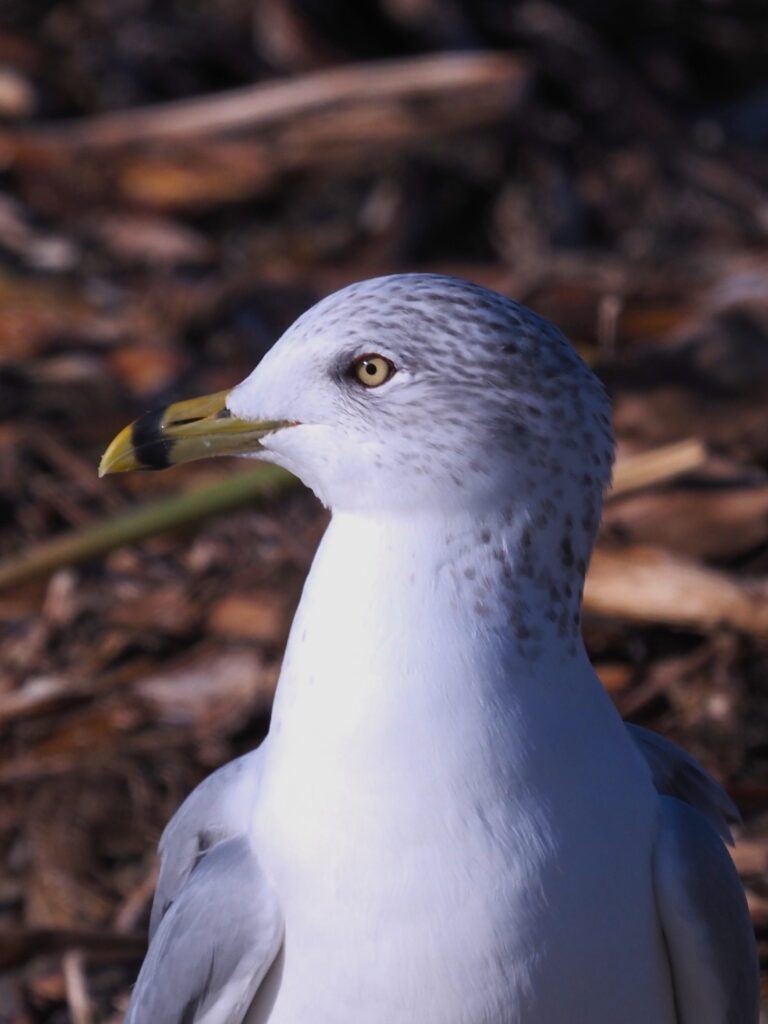
As a breeding adult (photo below) the Ring-bill is a white-headed gull, with medium-length yellow legs and a yellow eye with a reddish orbital ring. The moderately-hooked, yellow bill has the name-sake black mark near the tip, and the gape is slightly down-turned. The back is light gray, lighter than Laughing Gull, and similar to the Herring Gull.
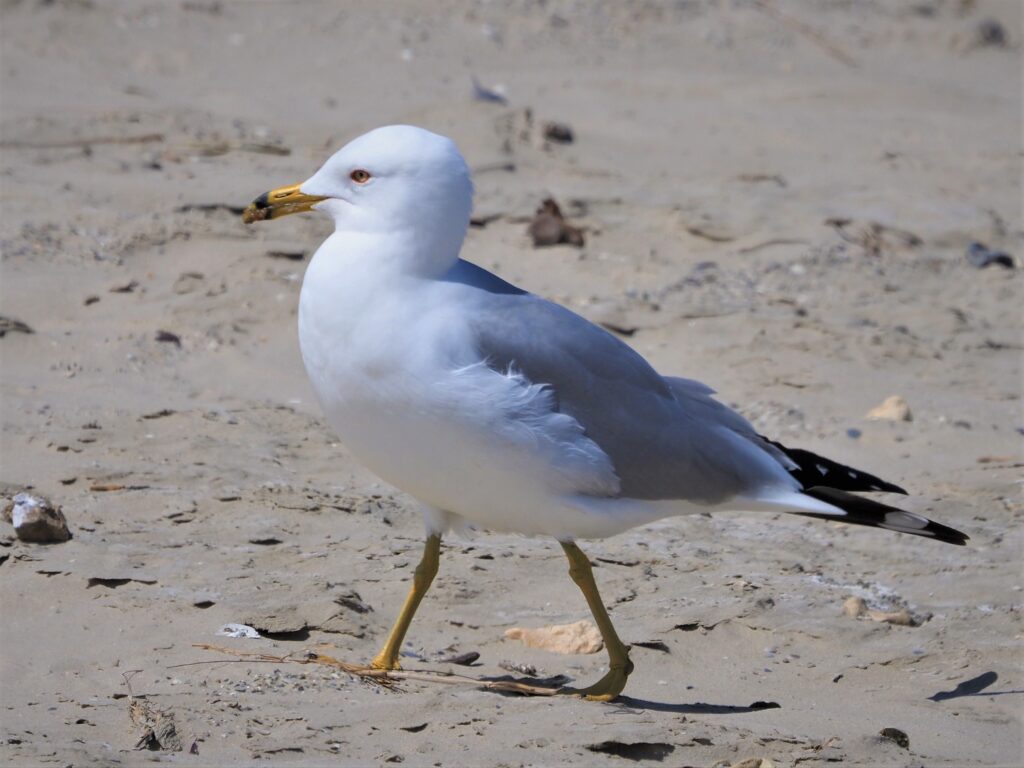
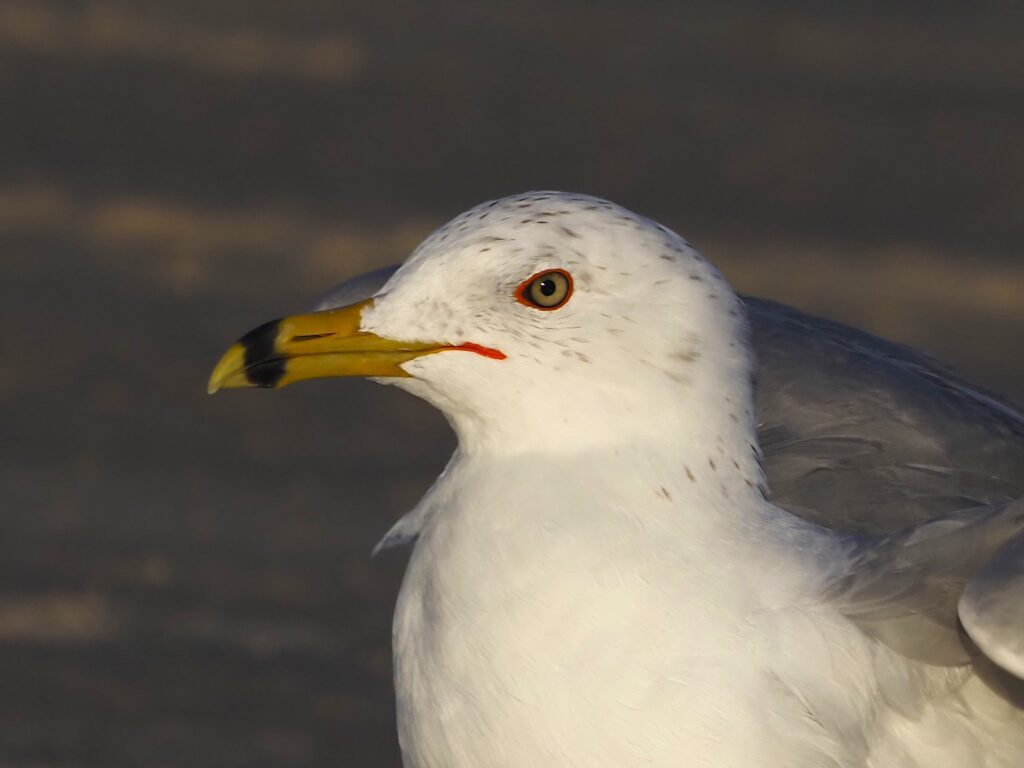

In basic (non-breeding) plumage the most noticeable difference is the fine streaking on the hind-neck and head.
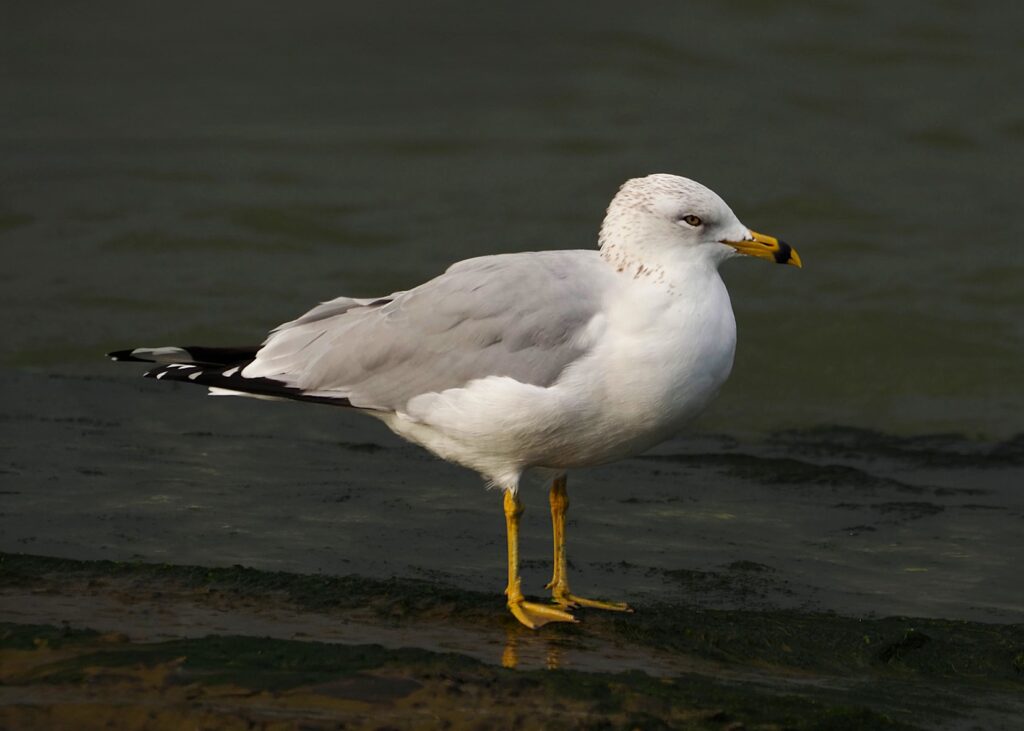
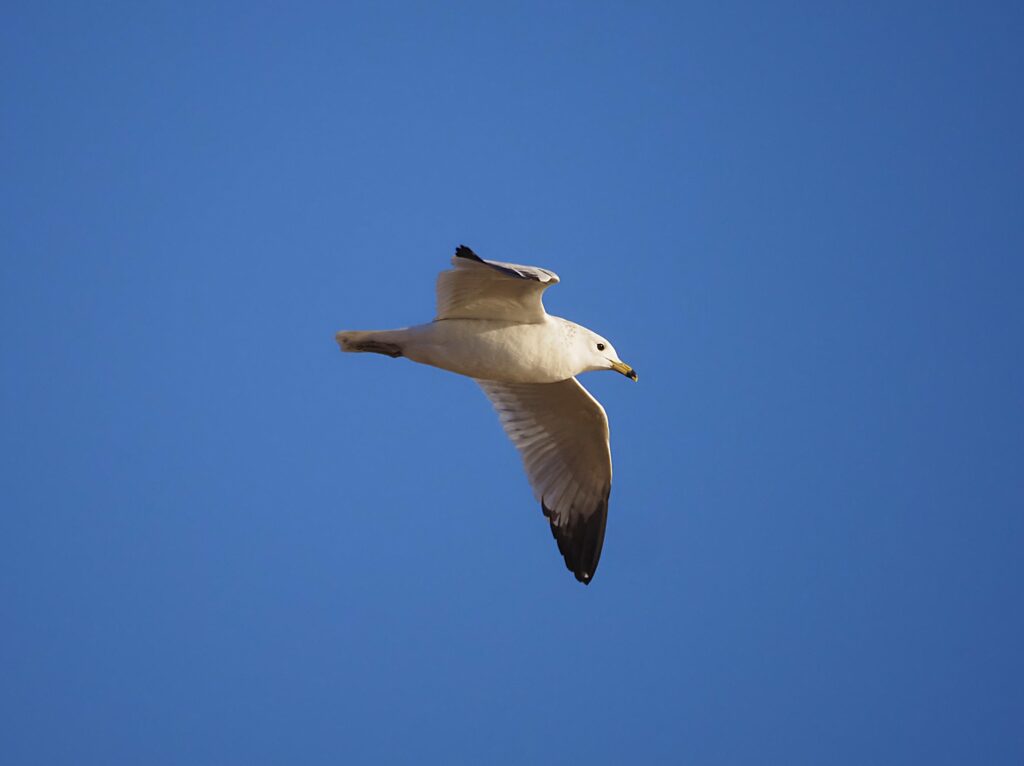
The wings are somewhat slender and the primaries jut out beyond the tail fairly long in repose. In flight (below) the black-tipped primaries are sharply demarcated from the white underwing. Full adults show white apical spots within the black wingtip.
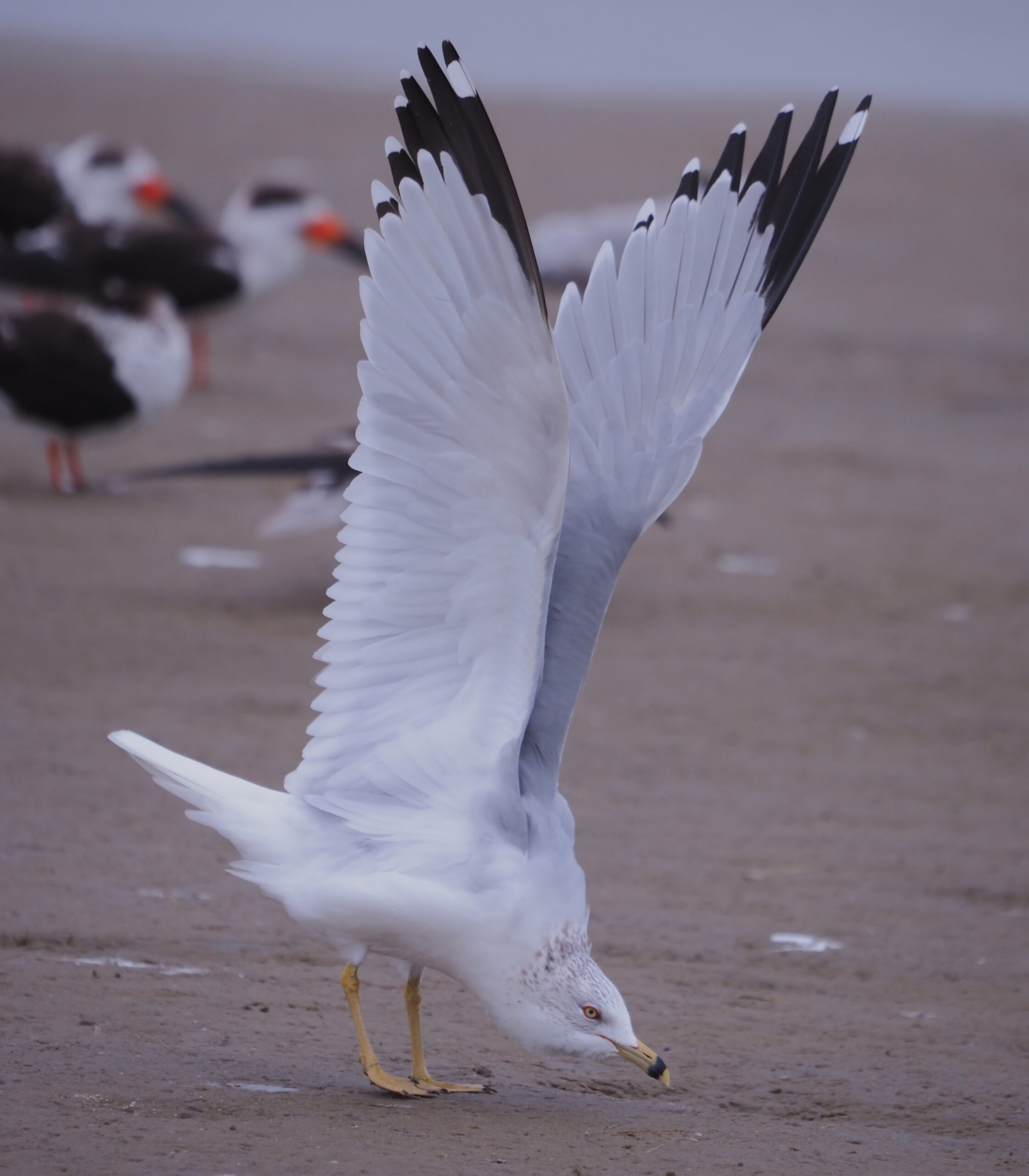
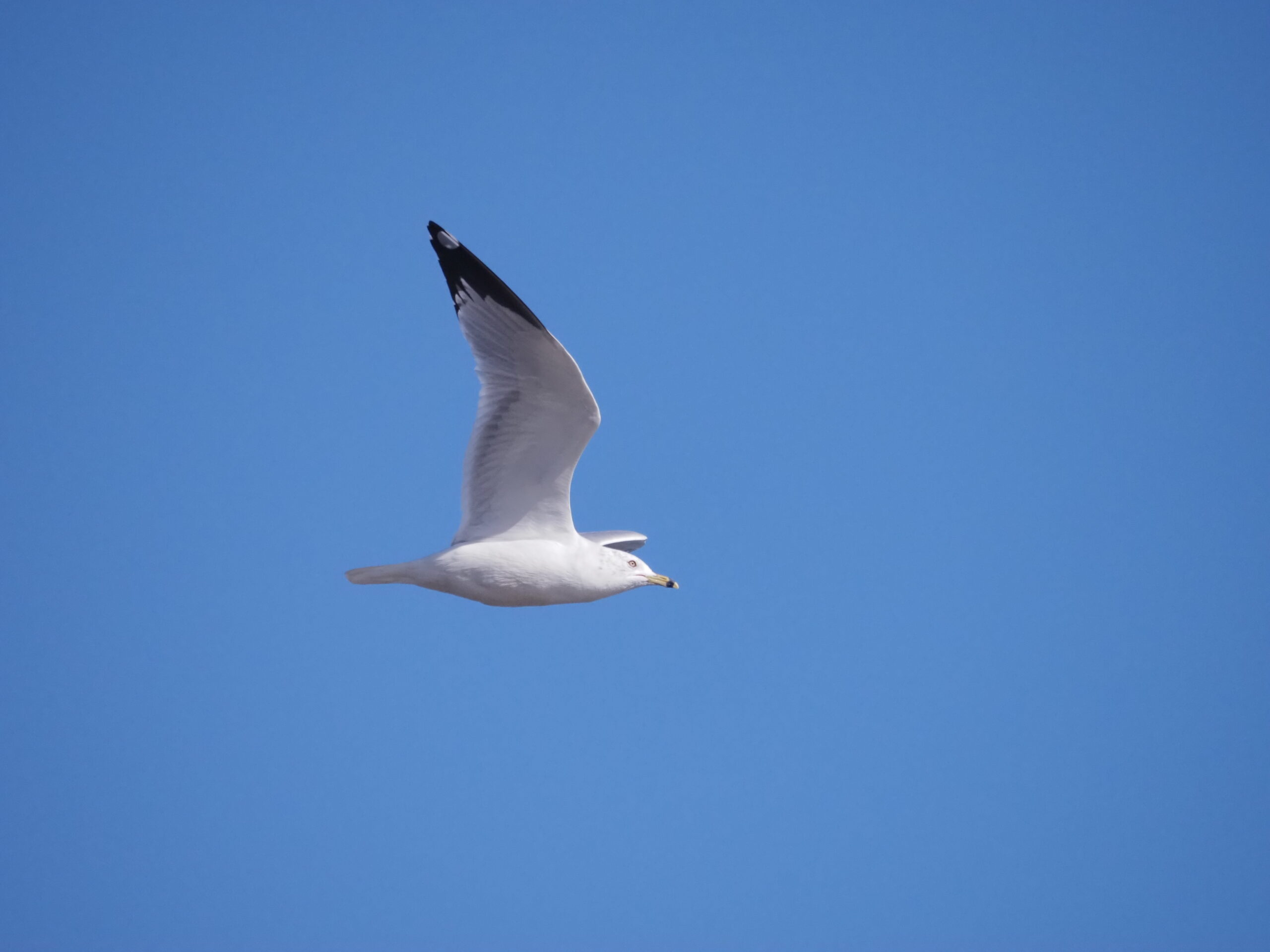
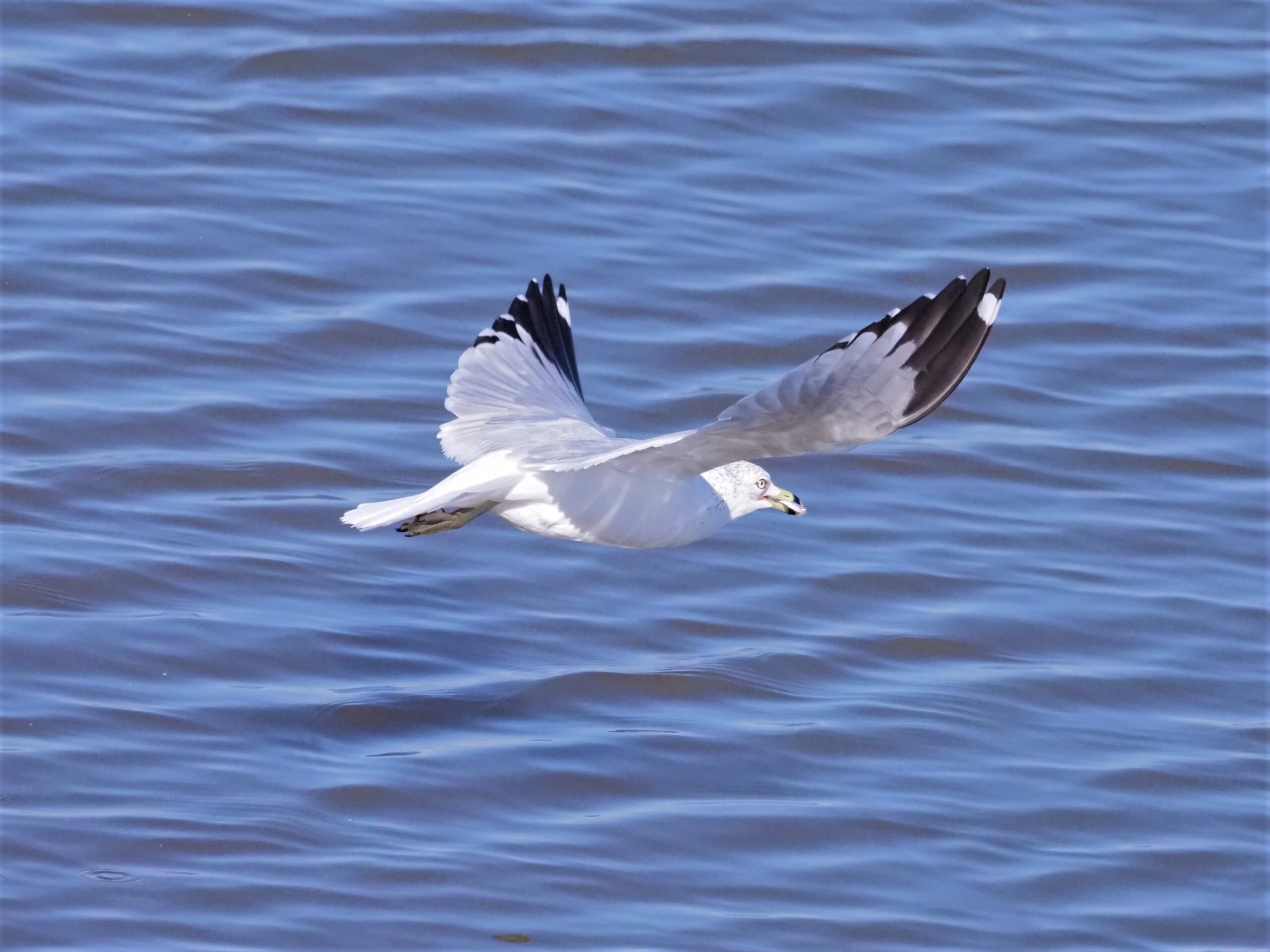
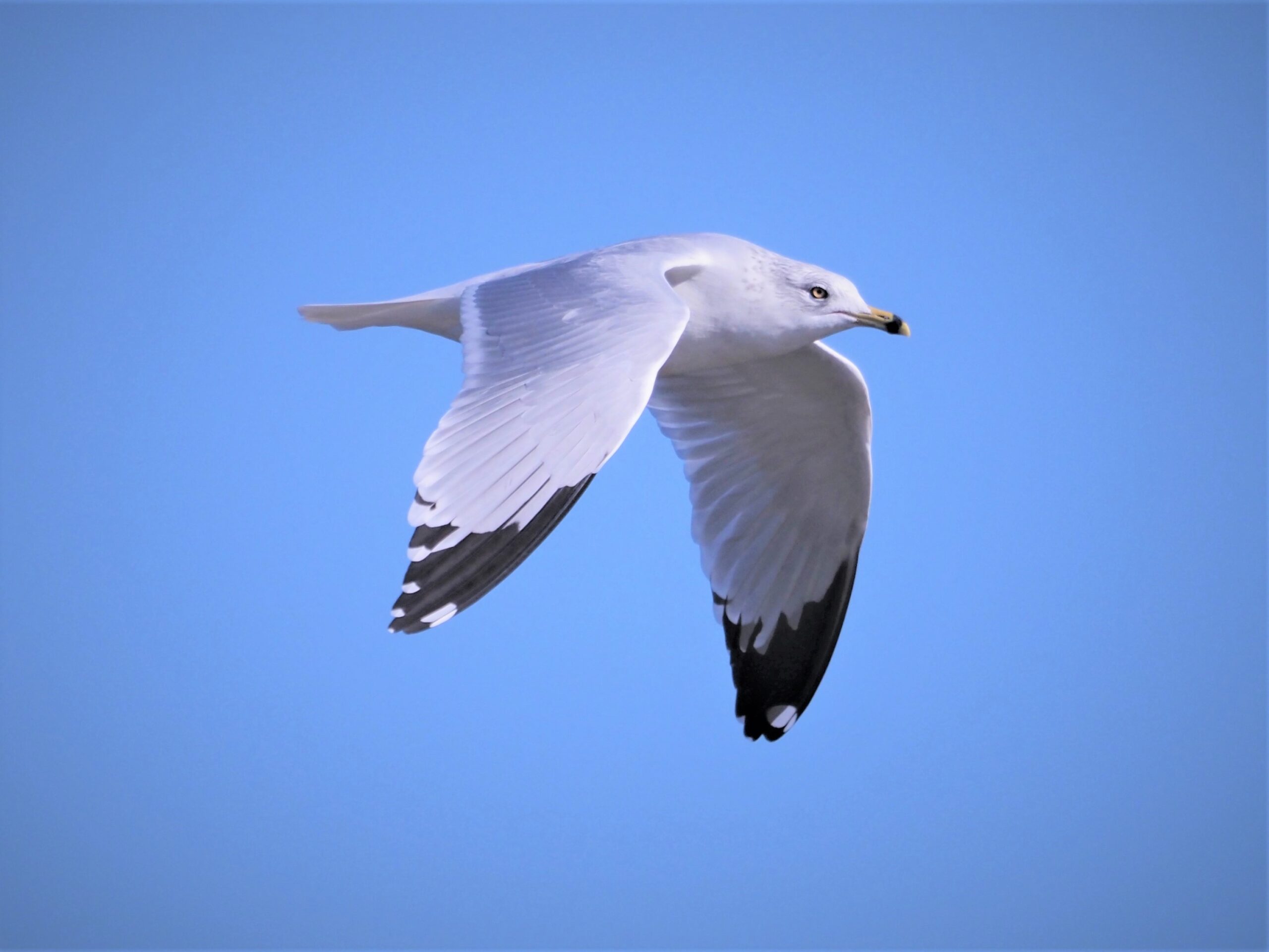


The primary change in the non-breeding plumage of the Ring-bill is the fine flecks of brown which appear on the back of the head and neck.
Juvenile and Sub-adult Ring-billed
One of the reasons many birders may be reluctant to study gulls is that gulls have many plumage variations in the first few years of life. Plumages can be slightly simplified by adopting the approach suggested in the fine book Gulls Simplified: A Comparative Approach to Identification, by Pete Dunne and Kevin T. Karlson (which can be purchased from Princeton University Press here). Three age-classes are suggested in this book: Juvenile, Sub-adult and Adult.
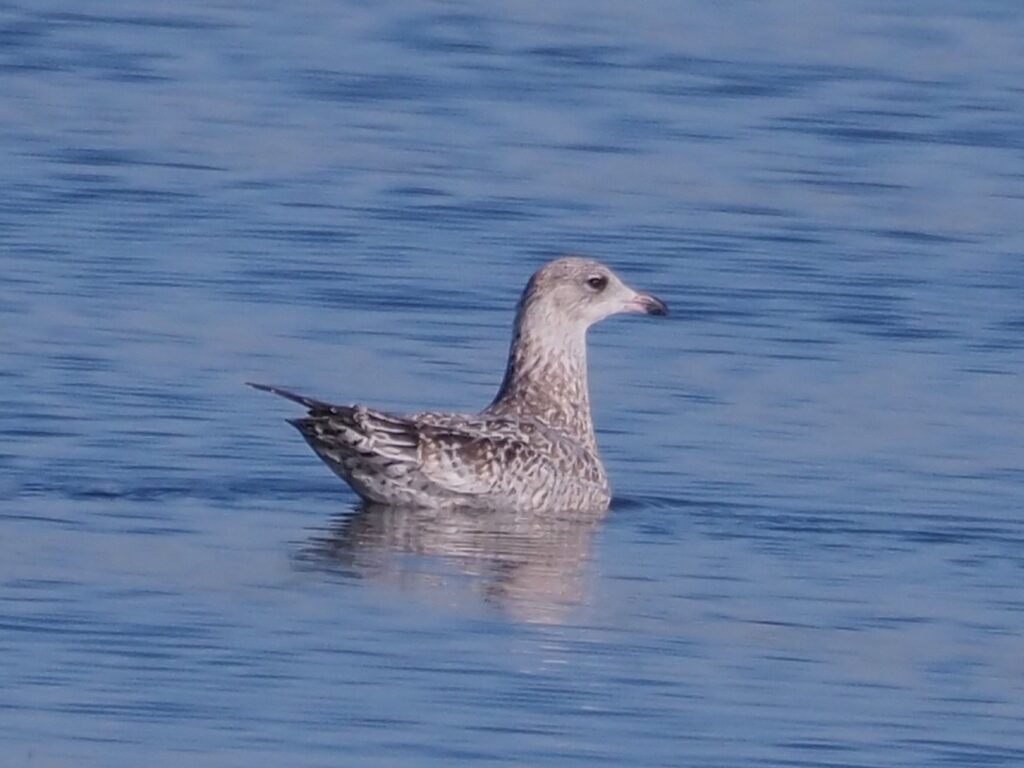
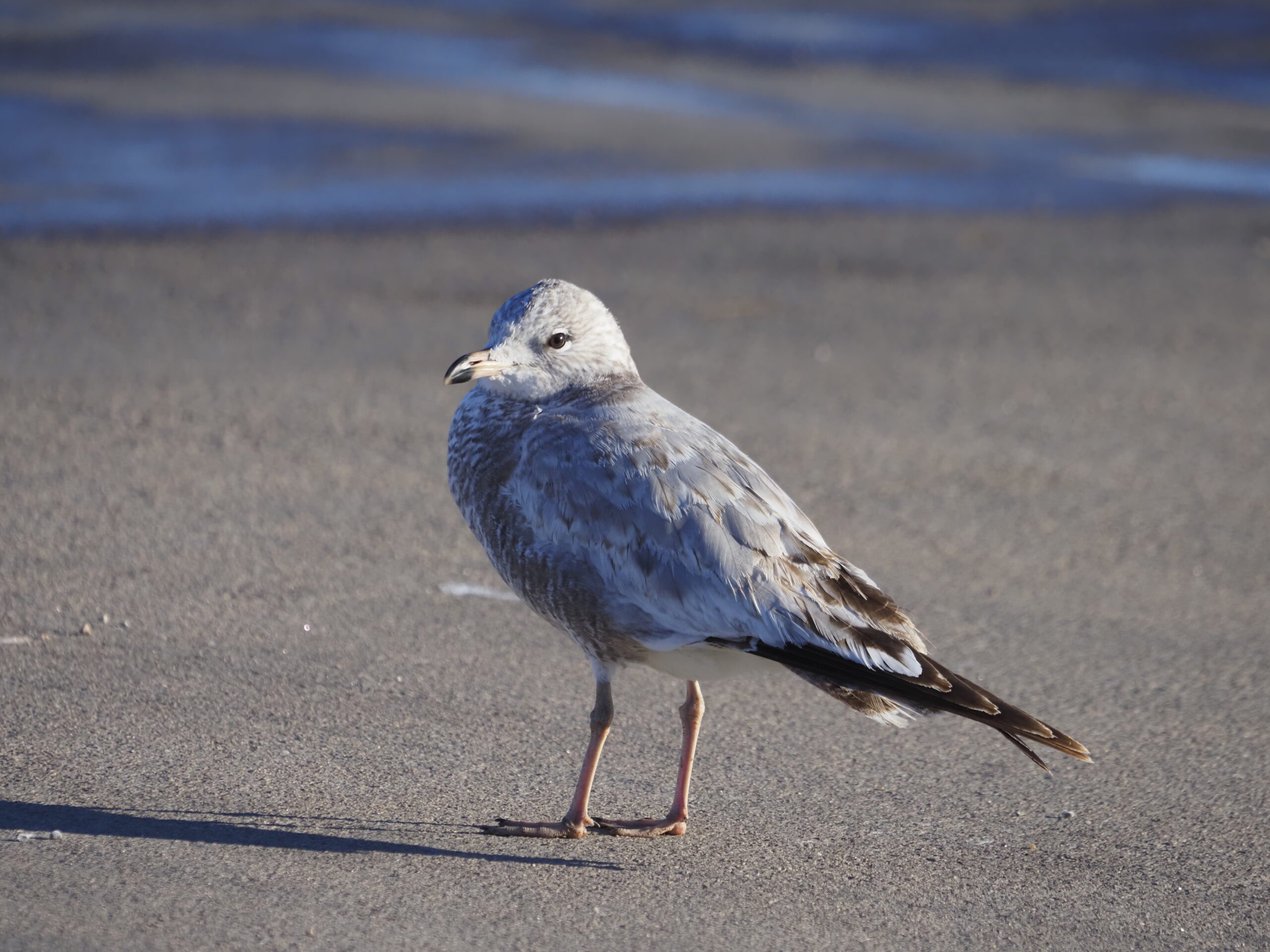
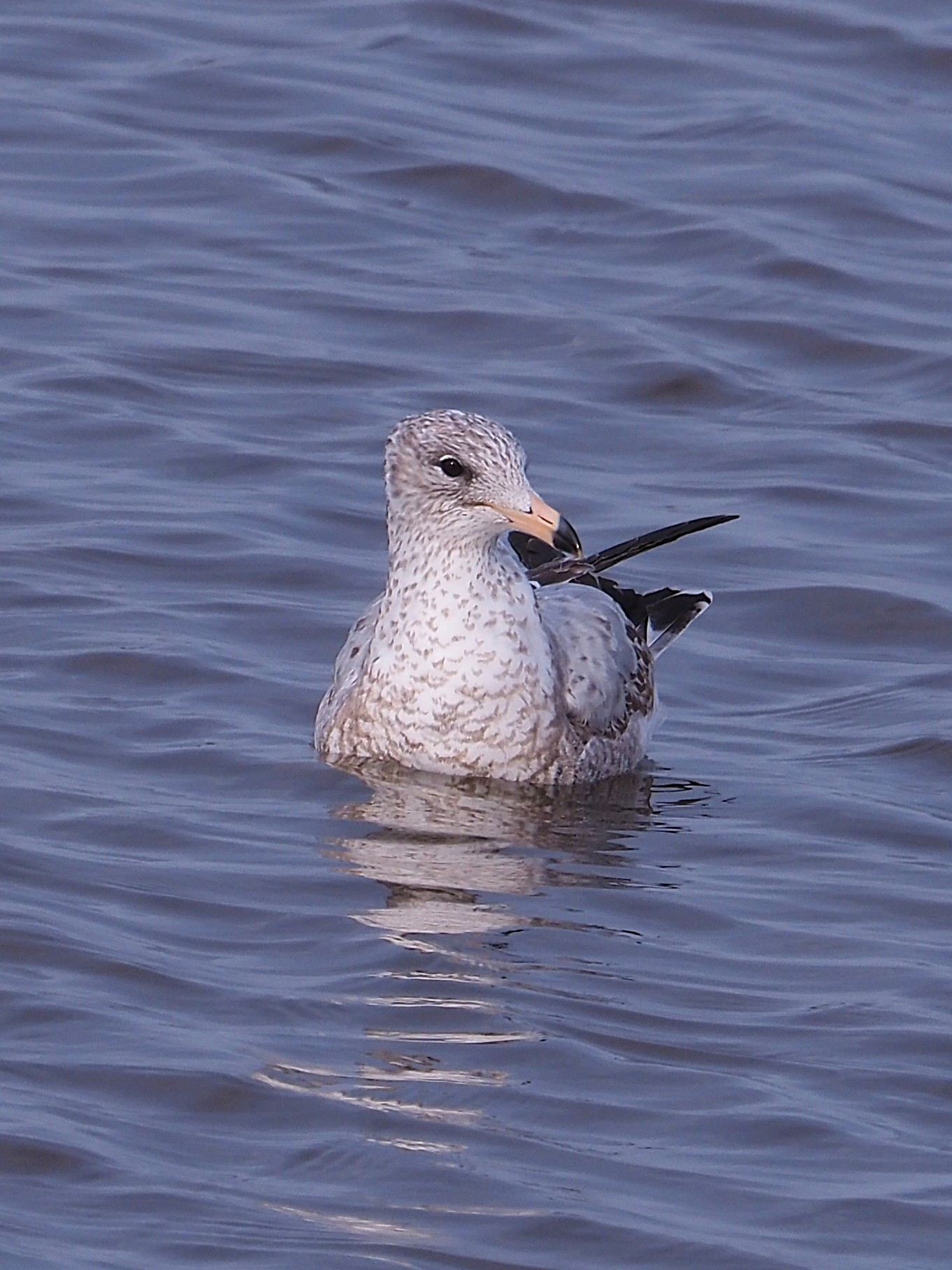
After the downy-chick stage, the first flight feathers develop in the Juvenile phase, which is characterized by mottled brown plumage in Ring-bills as pictured below.
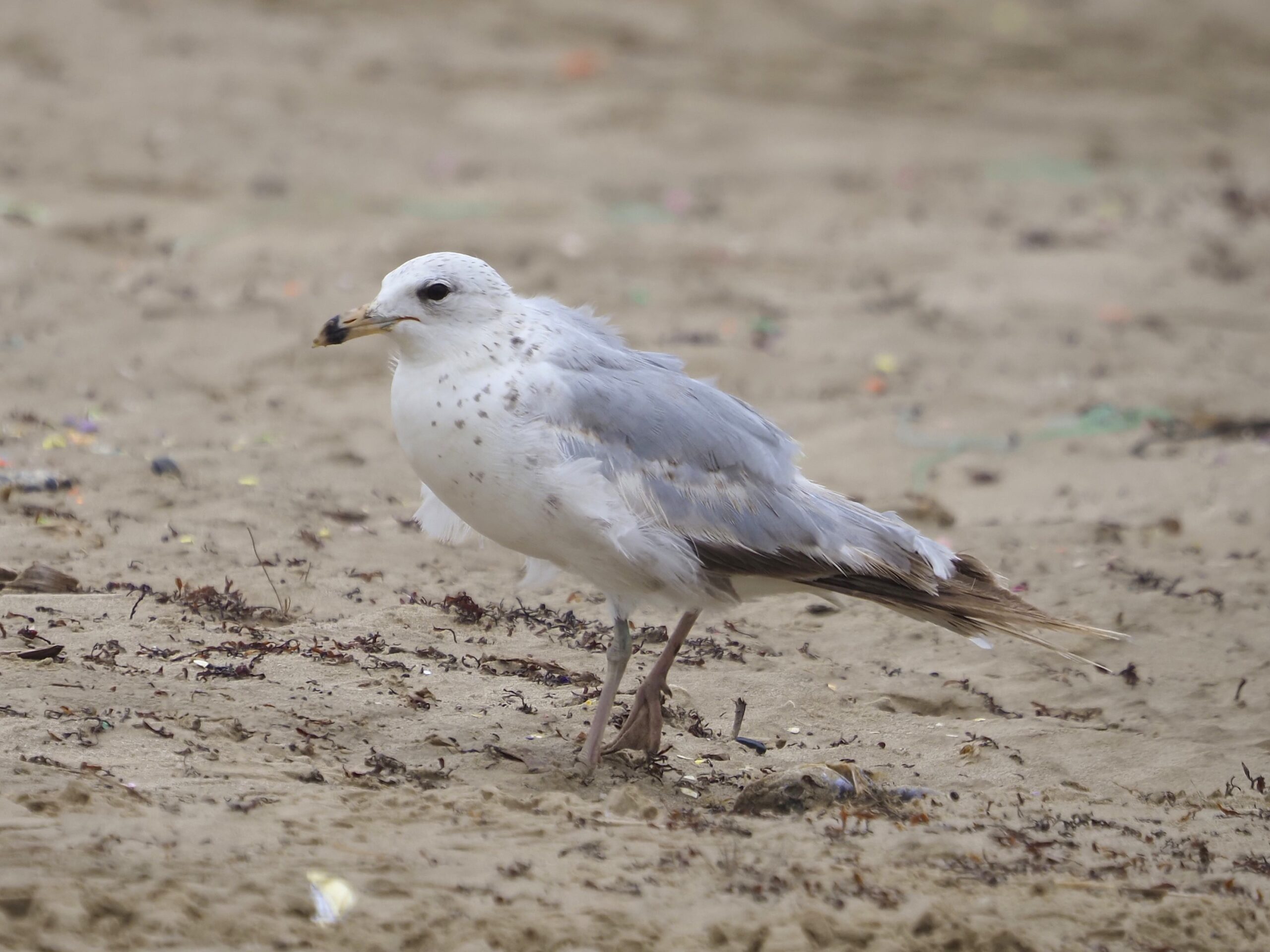
The plumage of the Ring-bill gradually matures over the first 3 years of life. So it is called a “3-year gull”. Once adult feathers begin to appear in the mantle and scapulars a gull is considered to be in the Sub-adult age-class. Other changes that occur during the Sub-adult phase include: the dark bill gets adult colors over time; the wing coverts, head and body feathers are replaced with adult versions; the eye usually changes from dark to light colors; and finally the primaries take on their adult colors, which for the Ring-bill is black-tipped with white “apical” spots. (See Texas Gulls Overview 2026 for further discussion of gull age groups). The photos below show Sub-adult Ring-bills in early stages of mantle and scapular replacement.
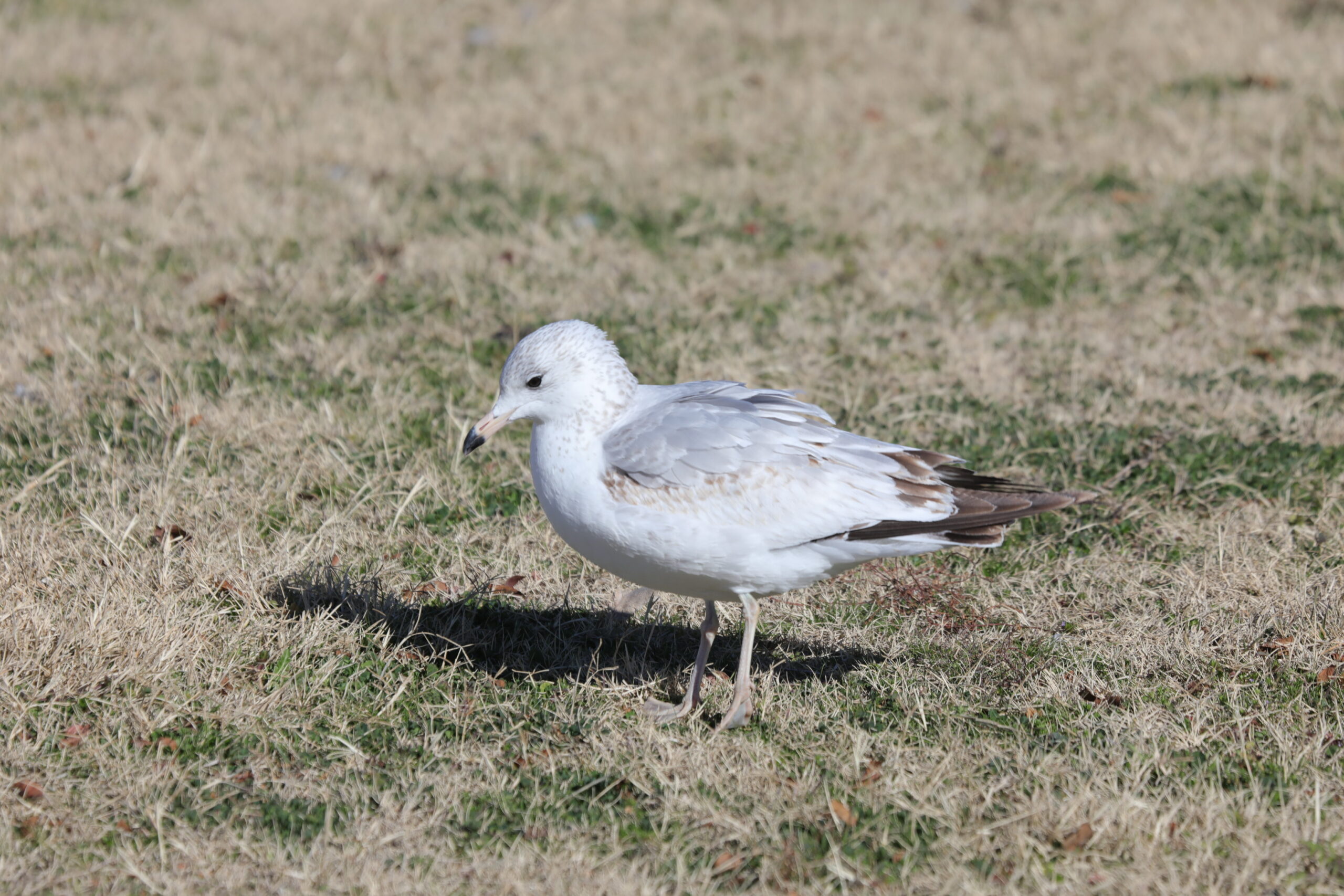
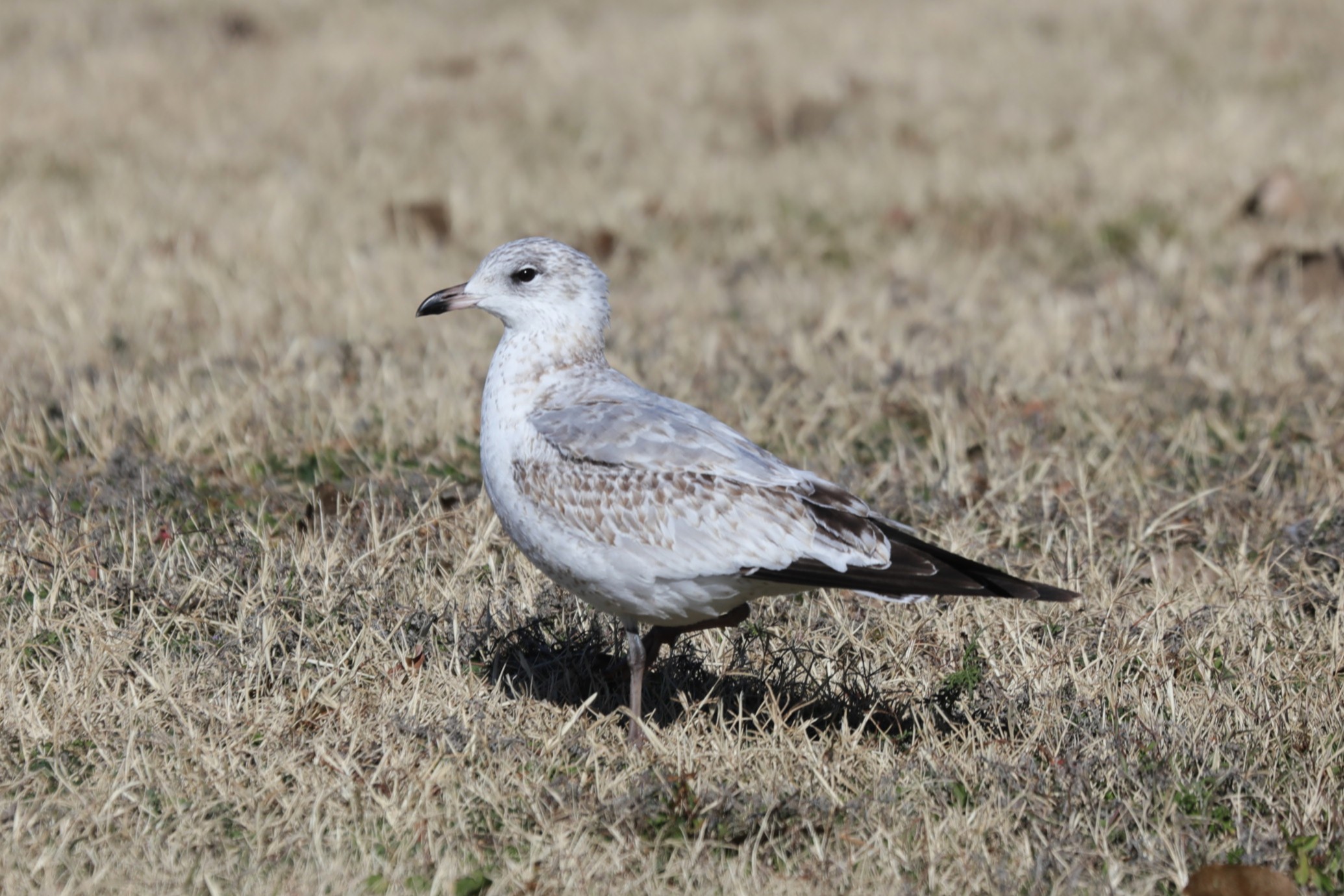
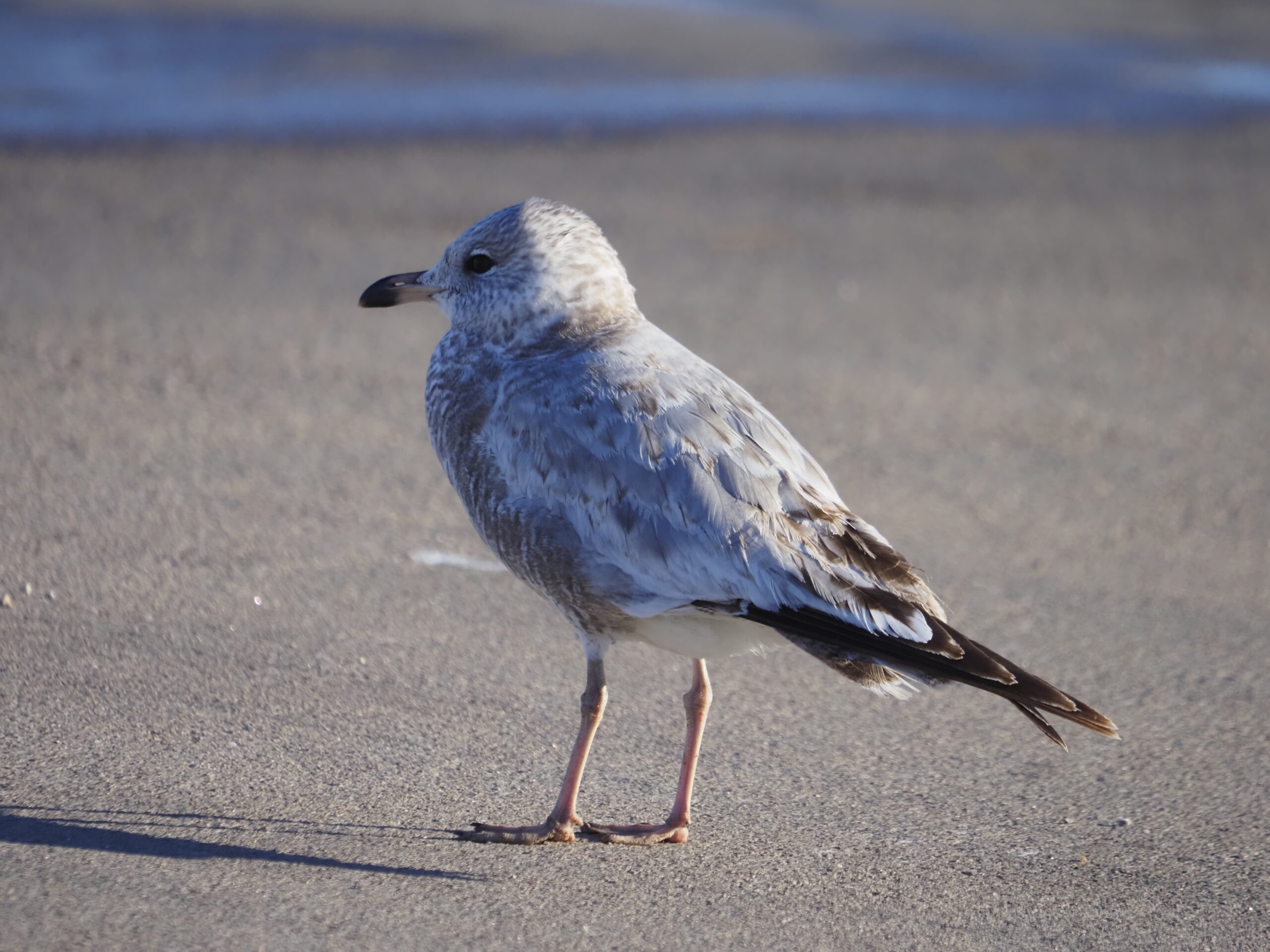
In the next group of photos most of the mantle and scapular feathers have been replaced with 2nd generation feathers in these Sub-adult Ring-bills, though some juvenile feathers are interspersed. Also note the progression of the bill-color with the tip beginning to turn yellow. Body and head are showing less brown and more white in the photos below.
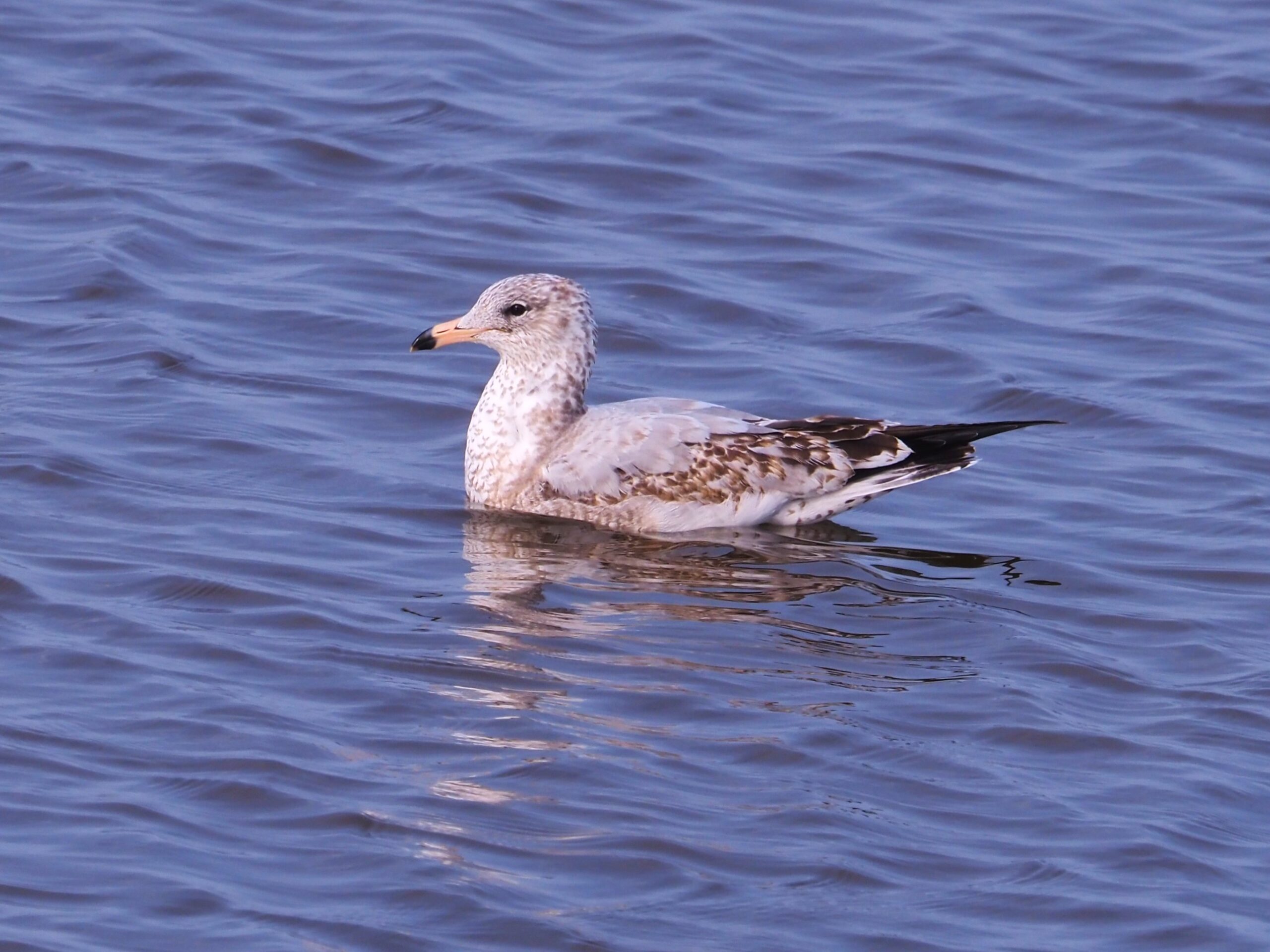
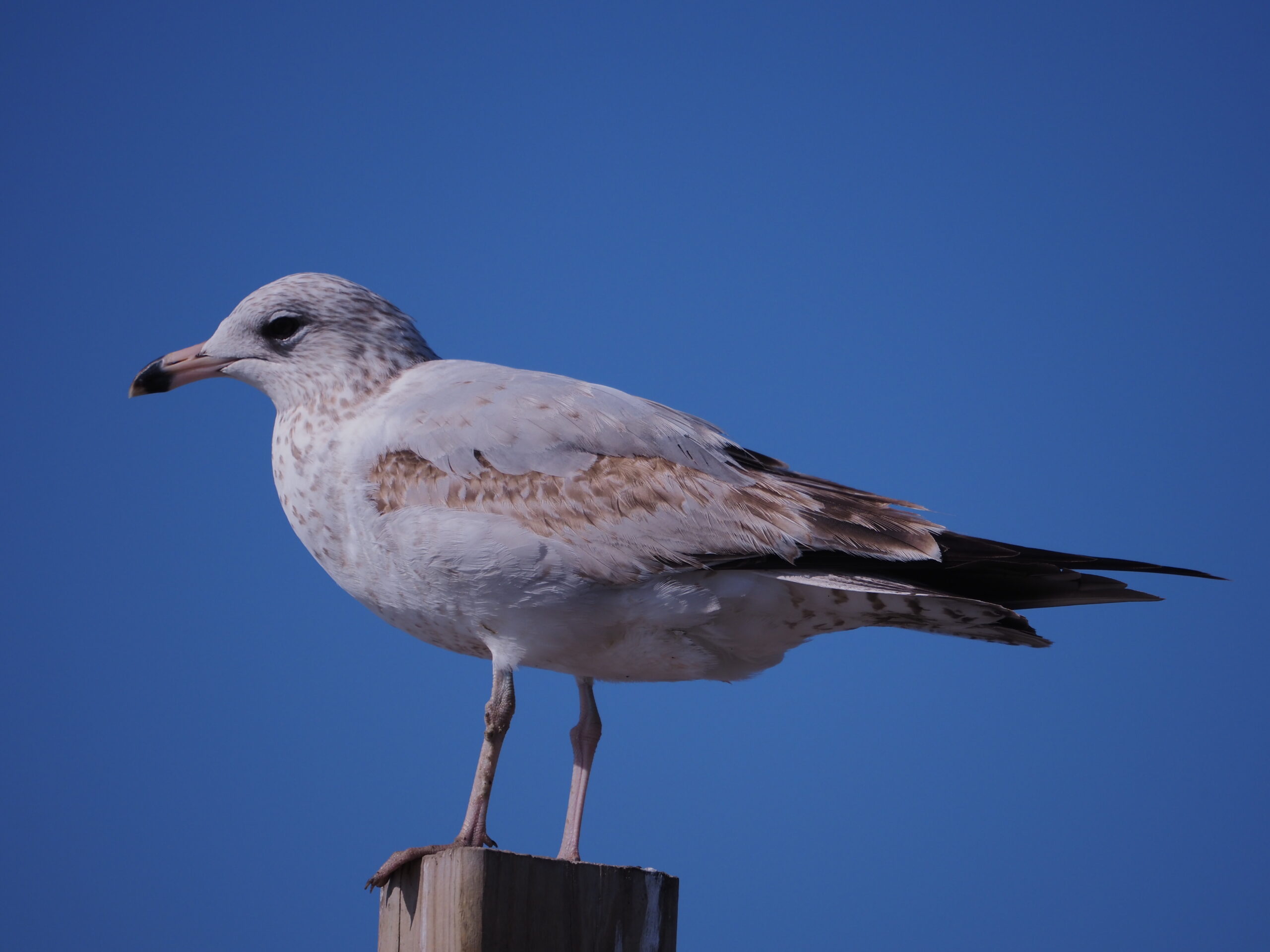
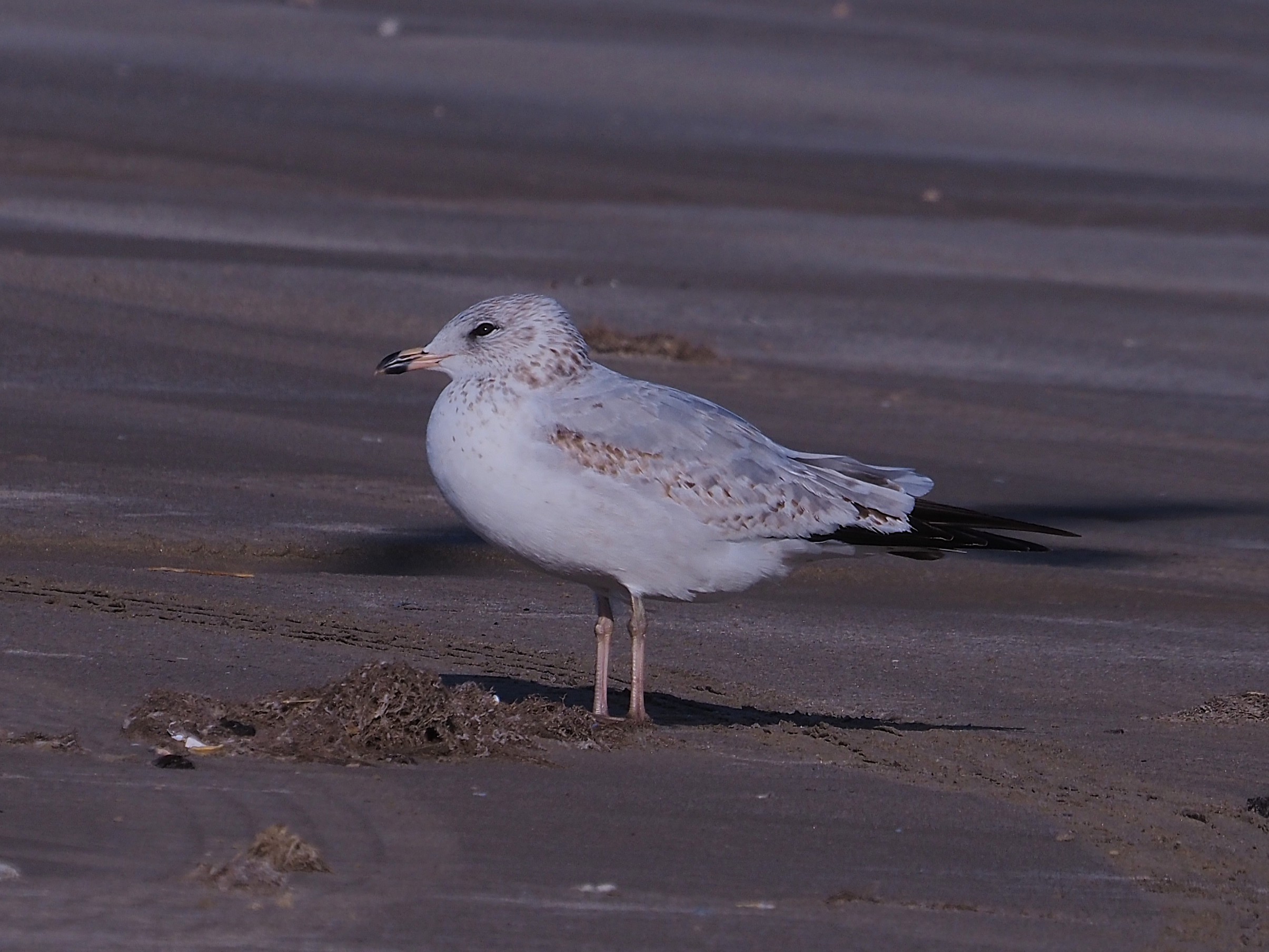
These changes continue, as in the Sub-adult Ring-bills shown below, until very few juvenile mantle and scapular feathers remain.
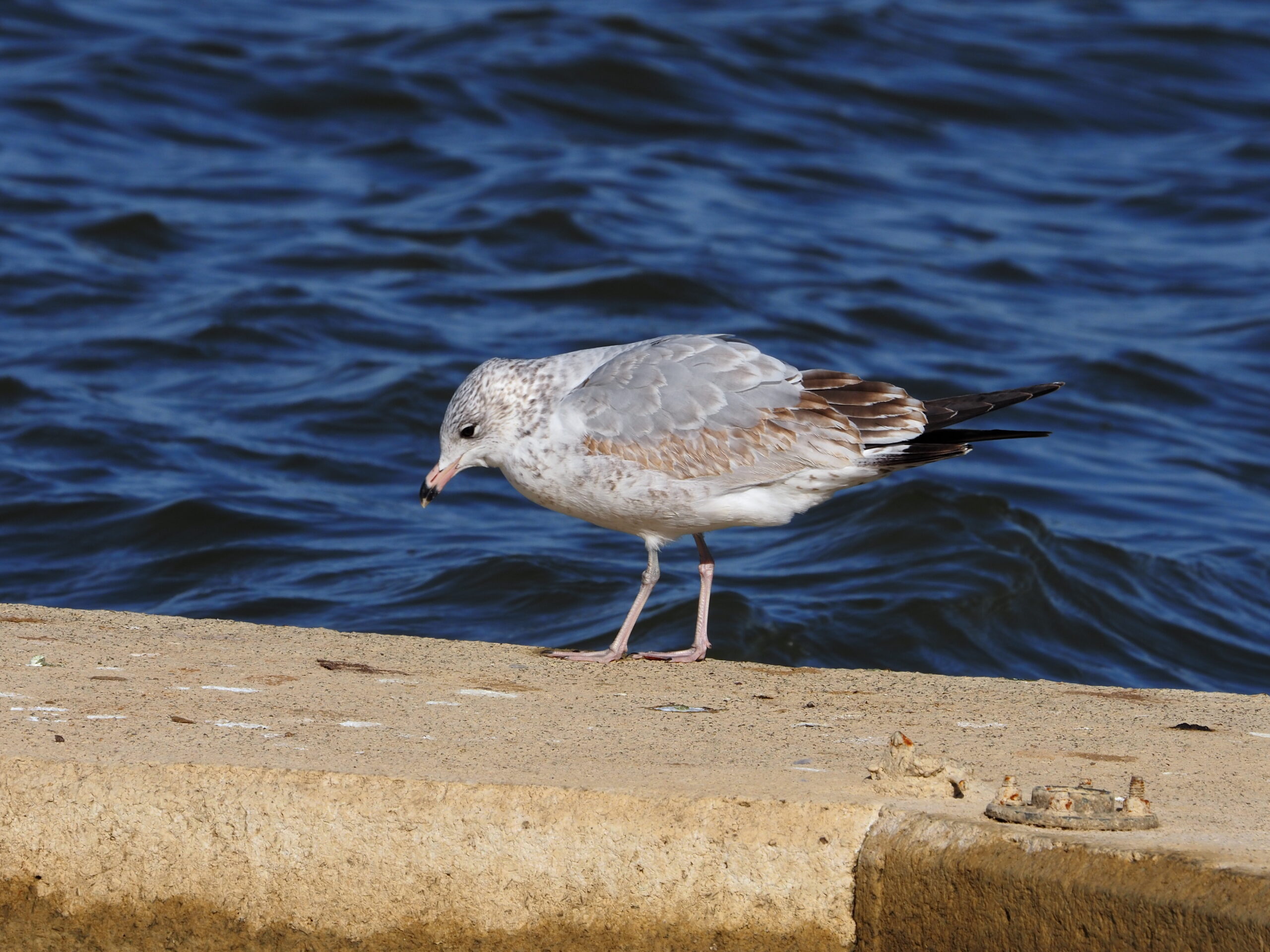
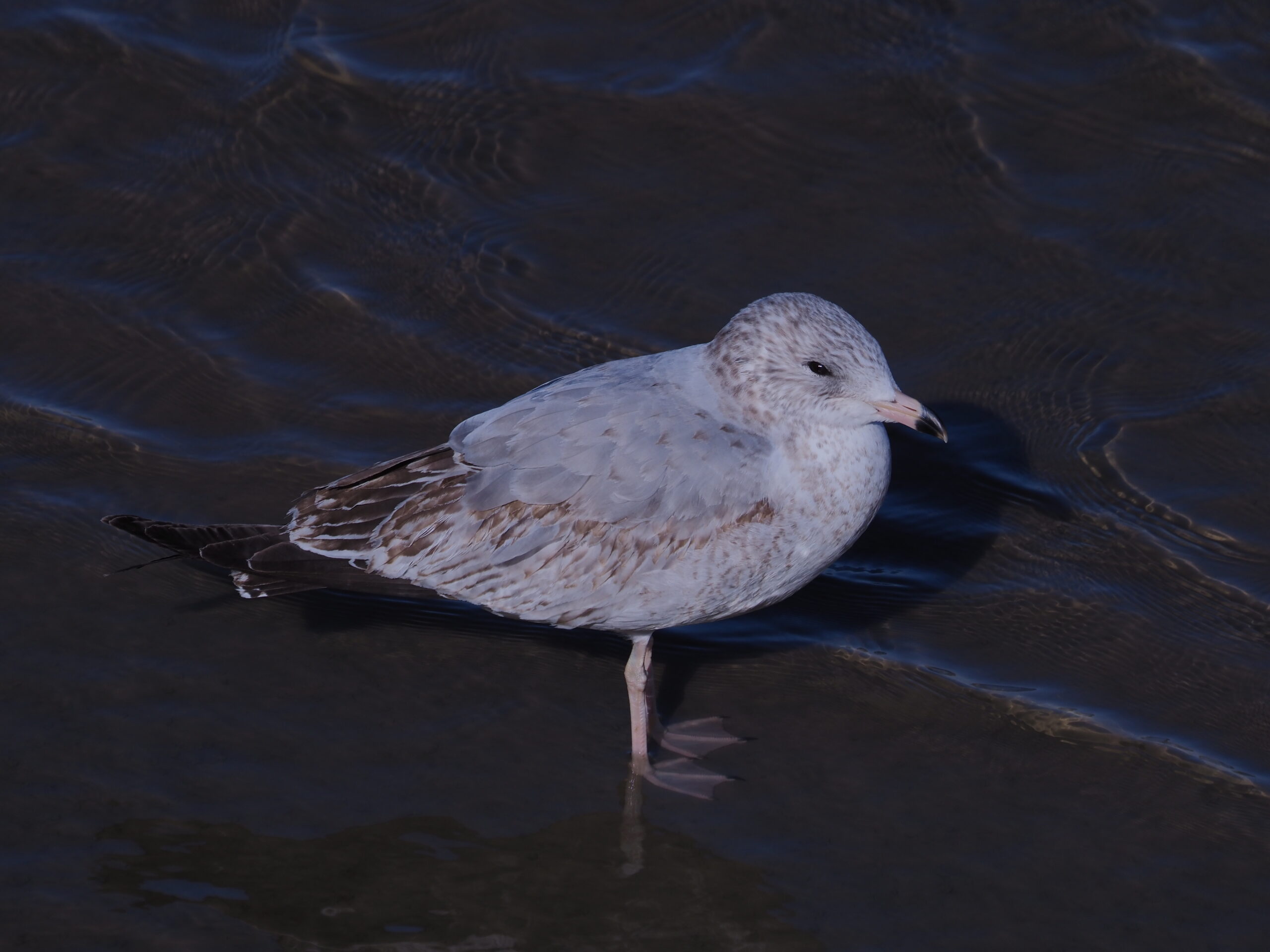

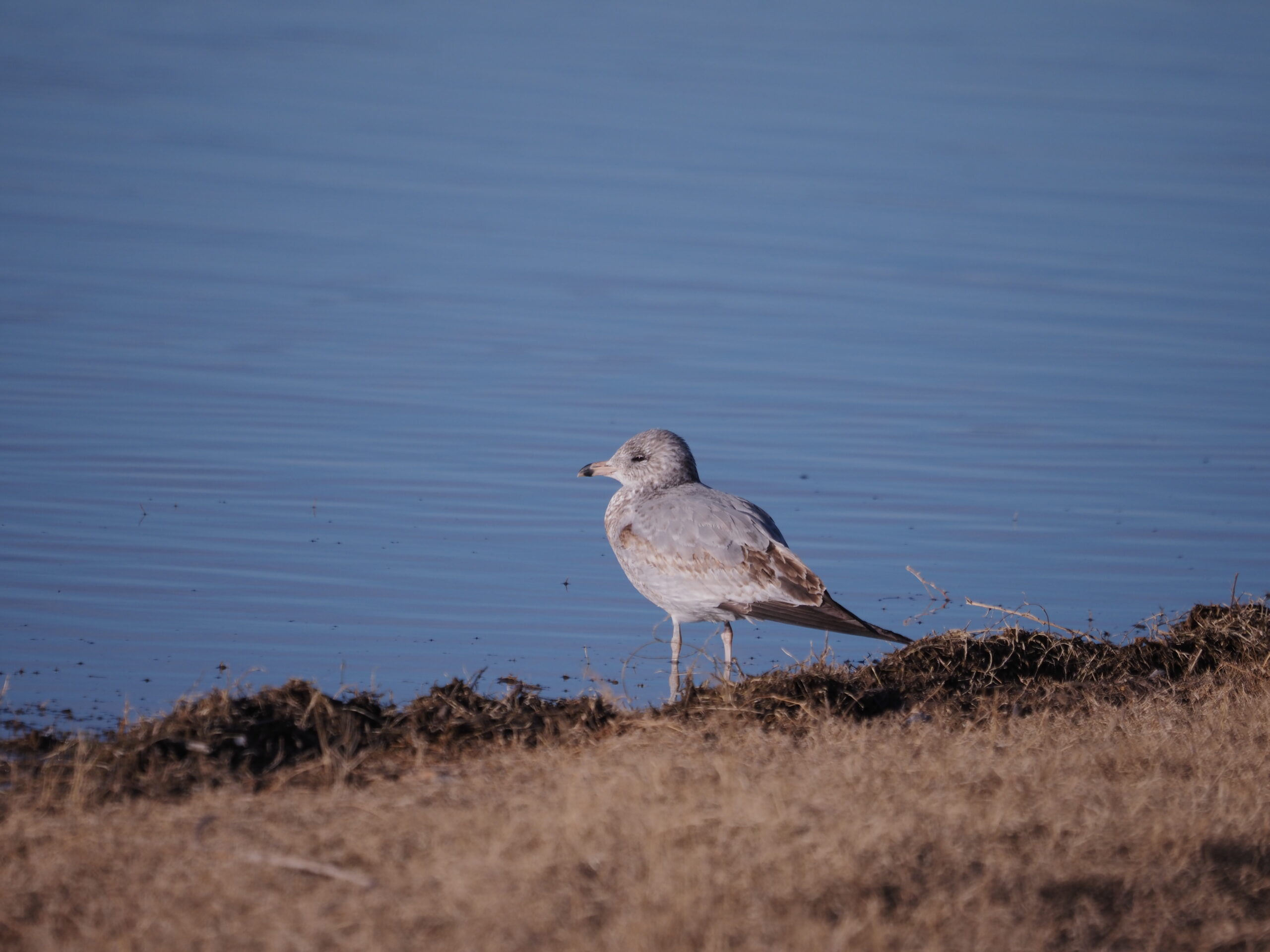
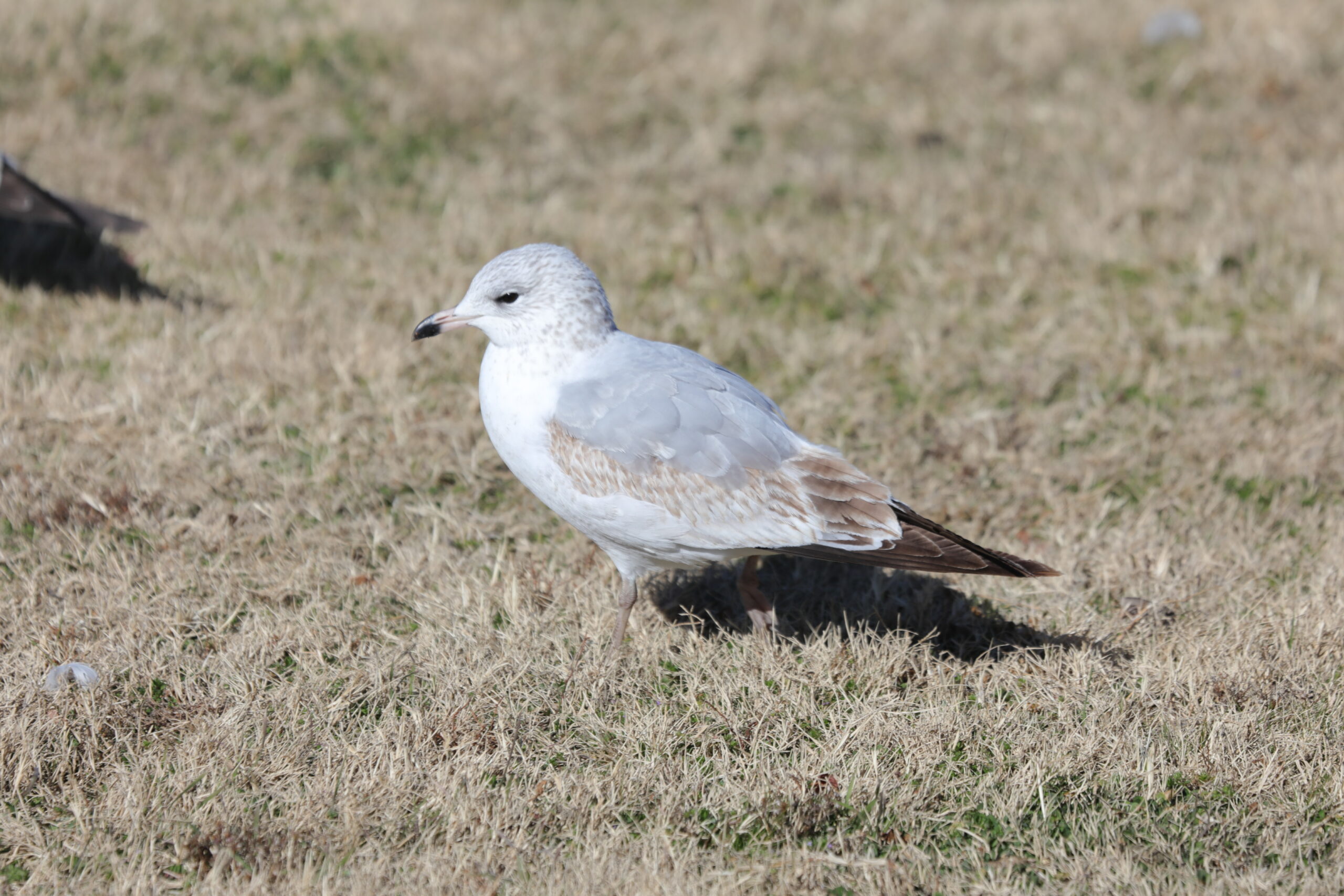
In the group of gulls shown below the mantle and scapular feathers have all been replaced and the juvenile covert and flight feathers, which have not been replaced, are becoming worn and bleached. Note the primarily white head and body feathers also.
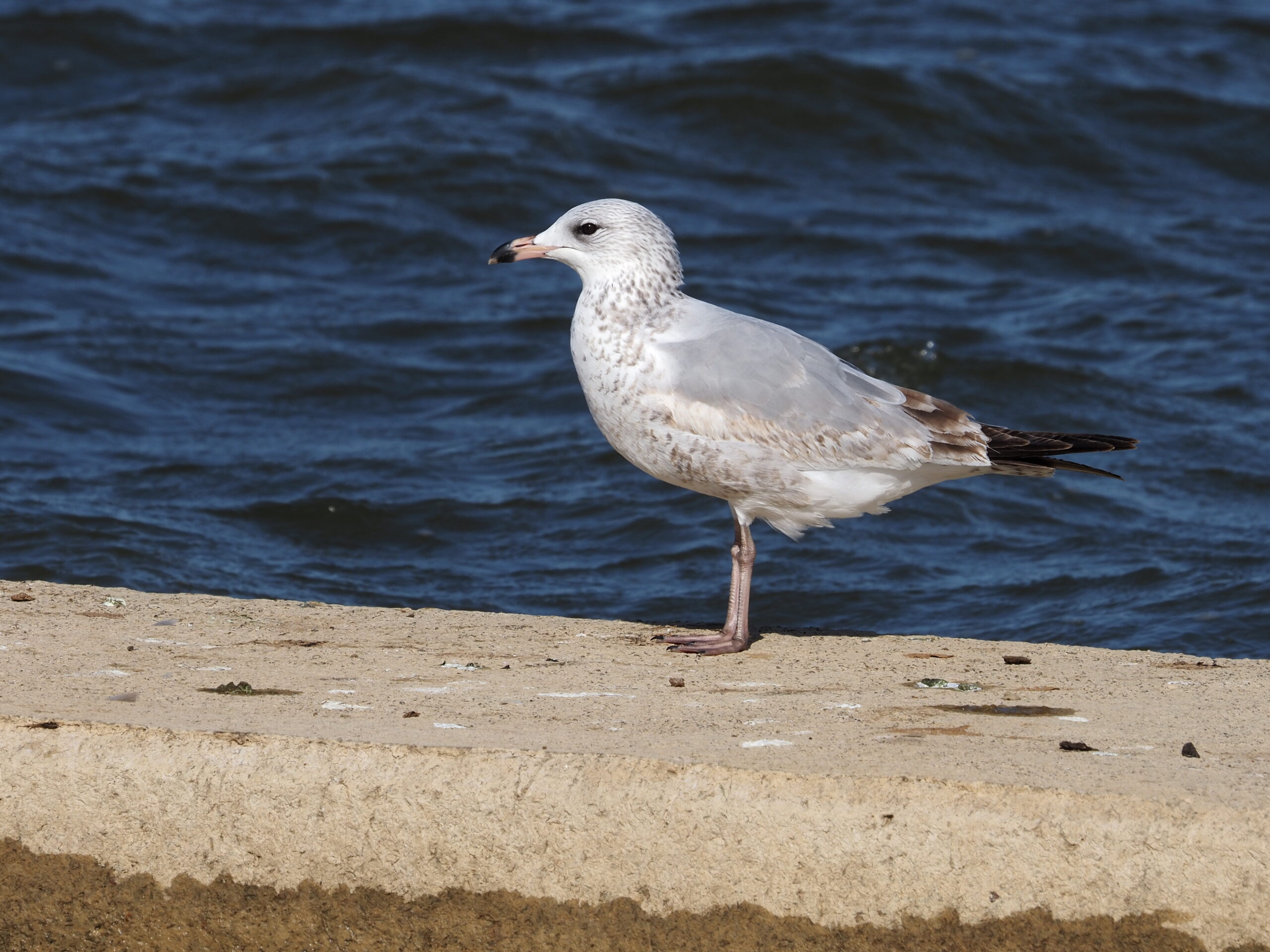
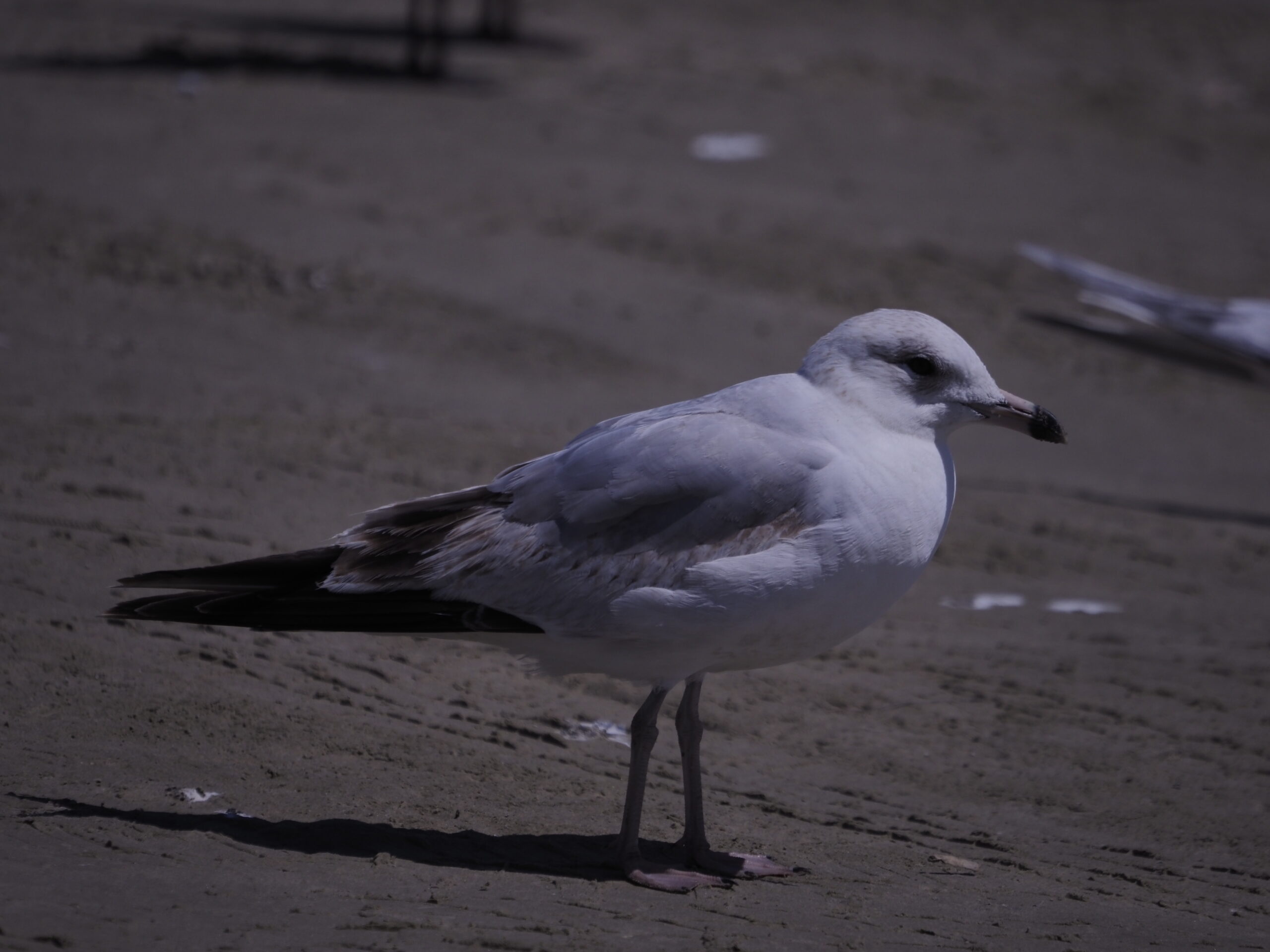

In this next group of Sub-adult Ring-bills most of the wing coverts and much of the head and body feathers have acquired their adult coloration. However, note that a few brown juvenile feathers still show through especially in the wing coverts, that the eye is still dark in some birds, and the “ring” marks on the bills are slightly thicker than they will be as adults. Also note that for some of these birds the leg and bill color are slightly greenish, rather than the yellow of full adults.
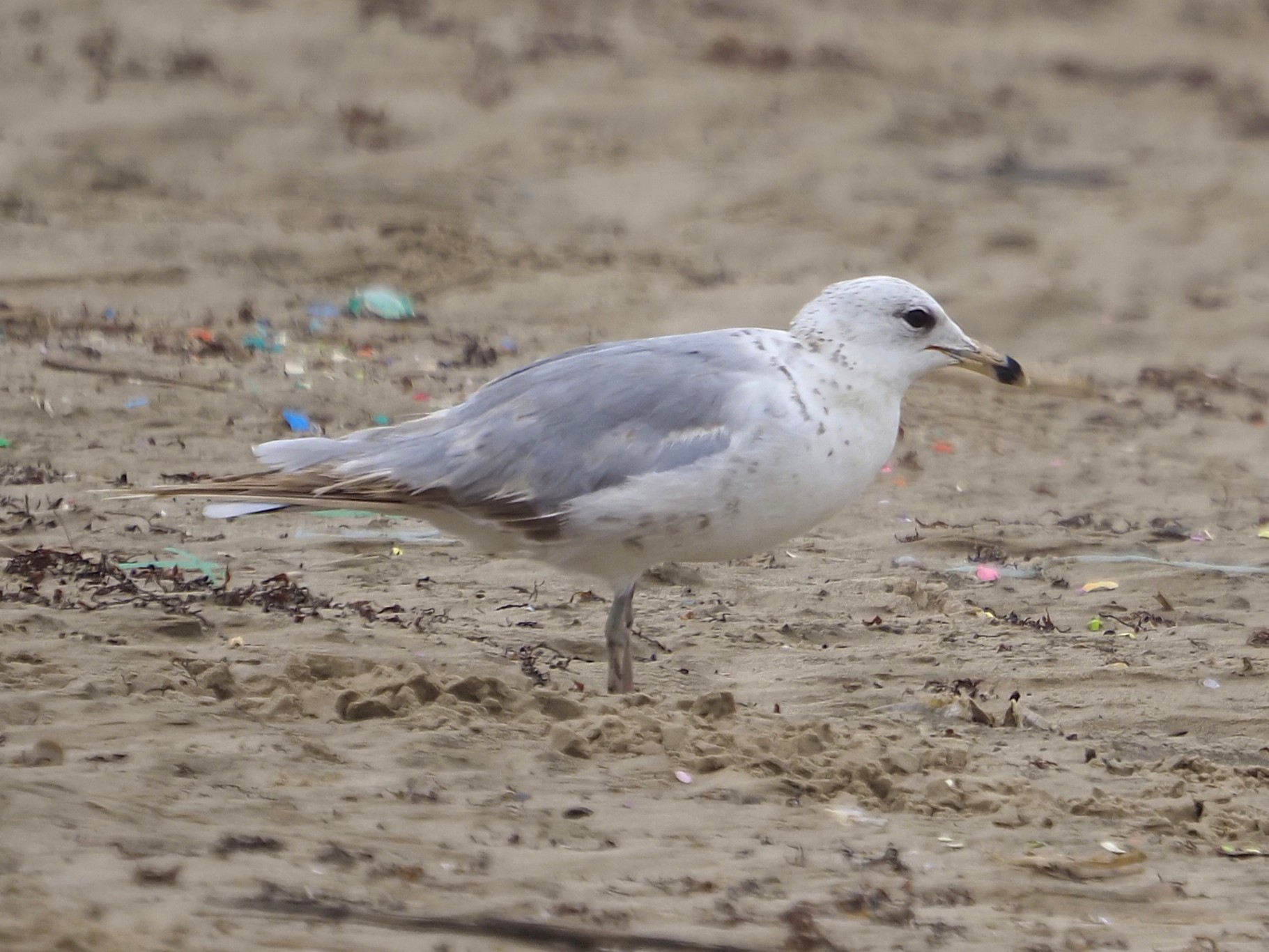

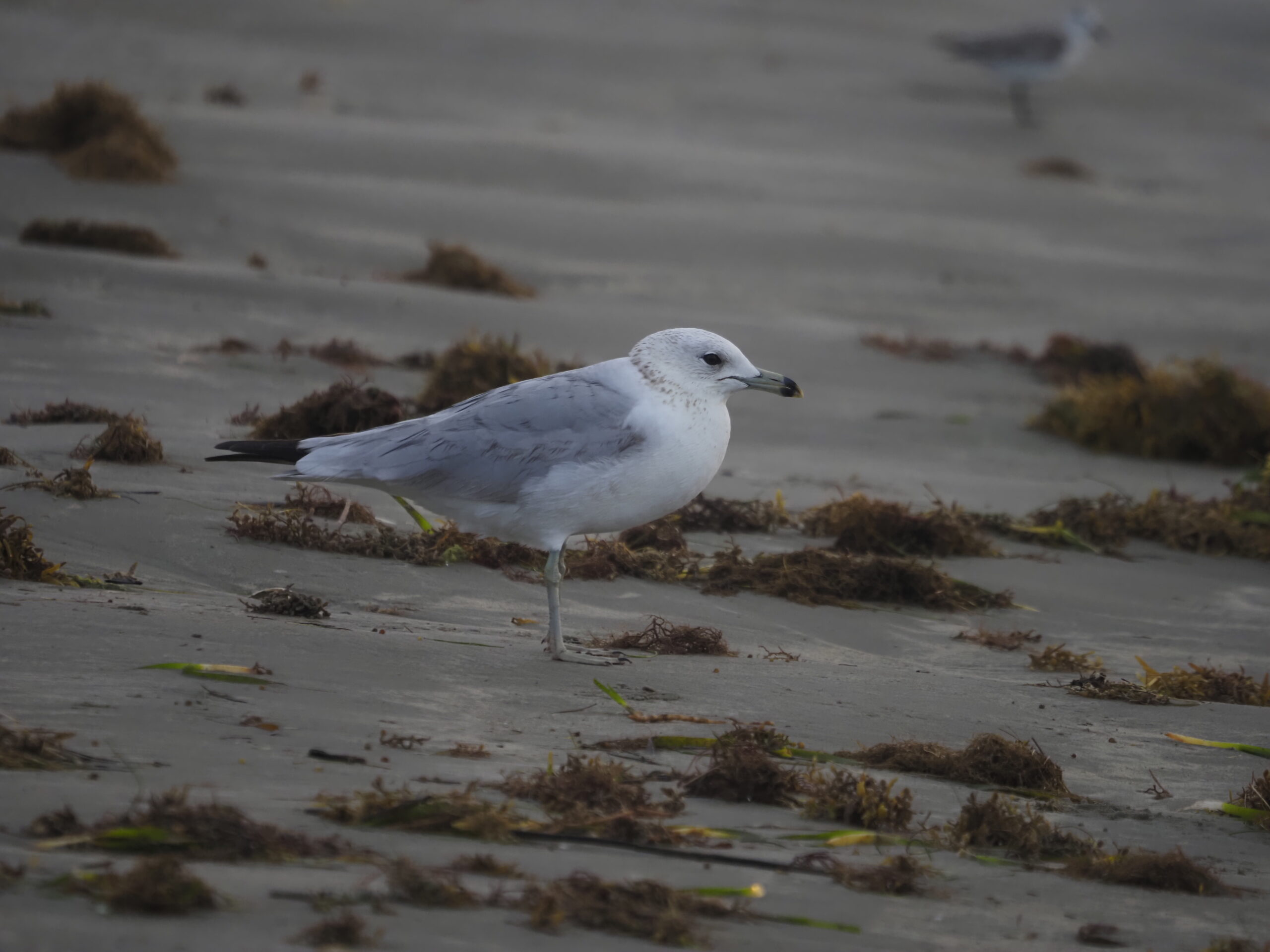
The gulls shown below would still be considered to be Sub-adult Ring-bill based on one or more of the following observations: their faint or absent apical spots in the primaries, dark eyes, overly thick “ring” mark on the bill, greenish legs and/or bill, and the hint of brown beneath the adult-gray of the wing coverts.
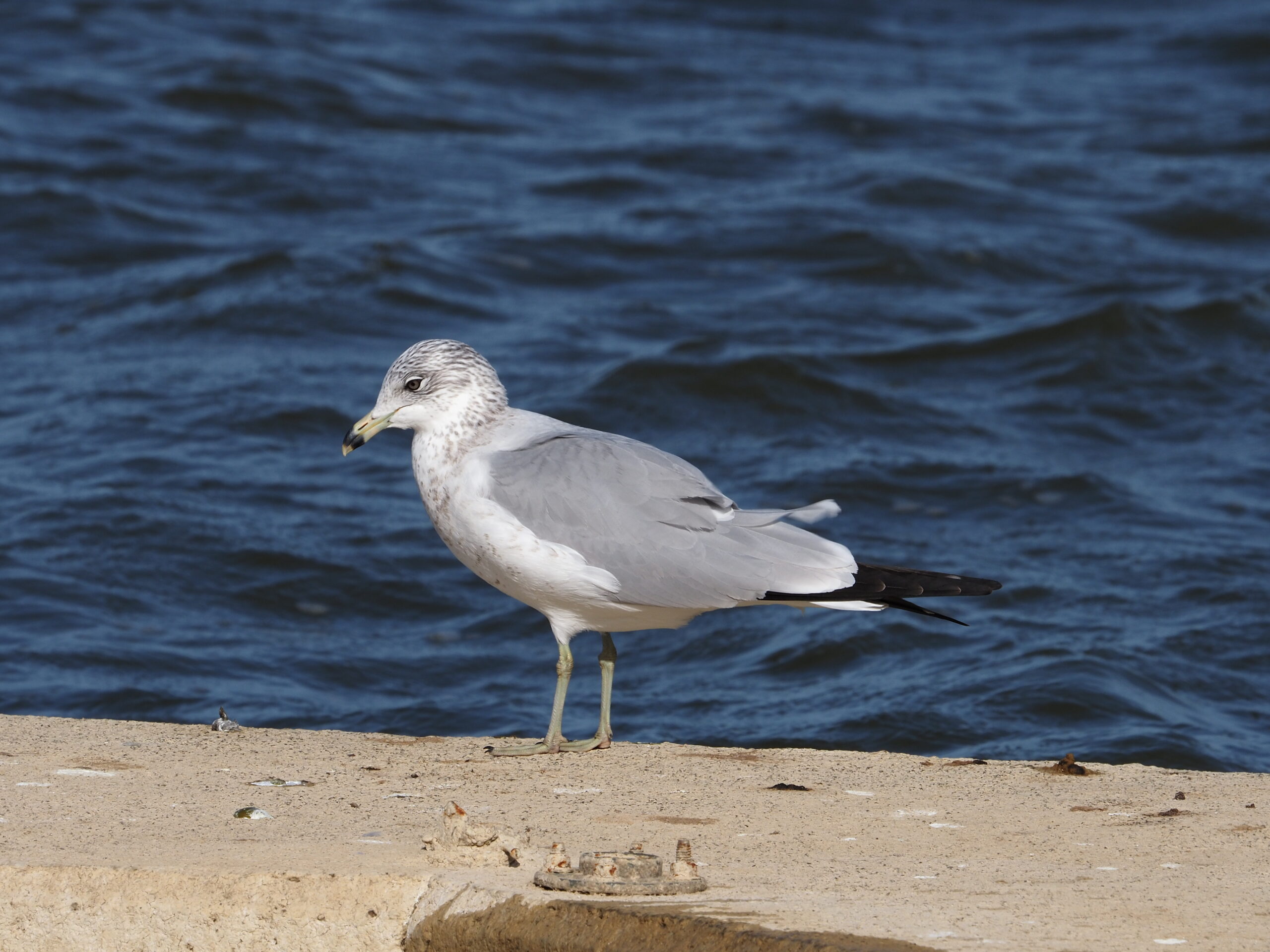

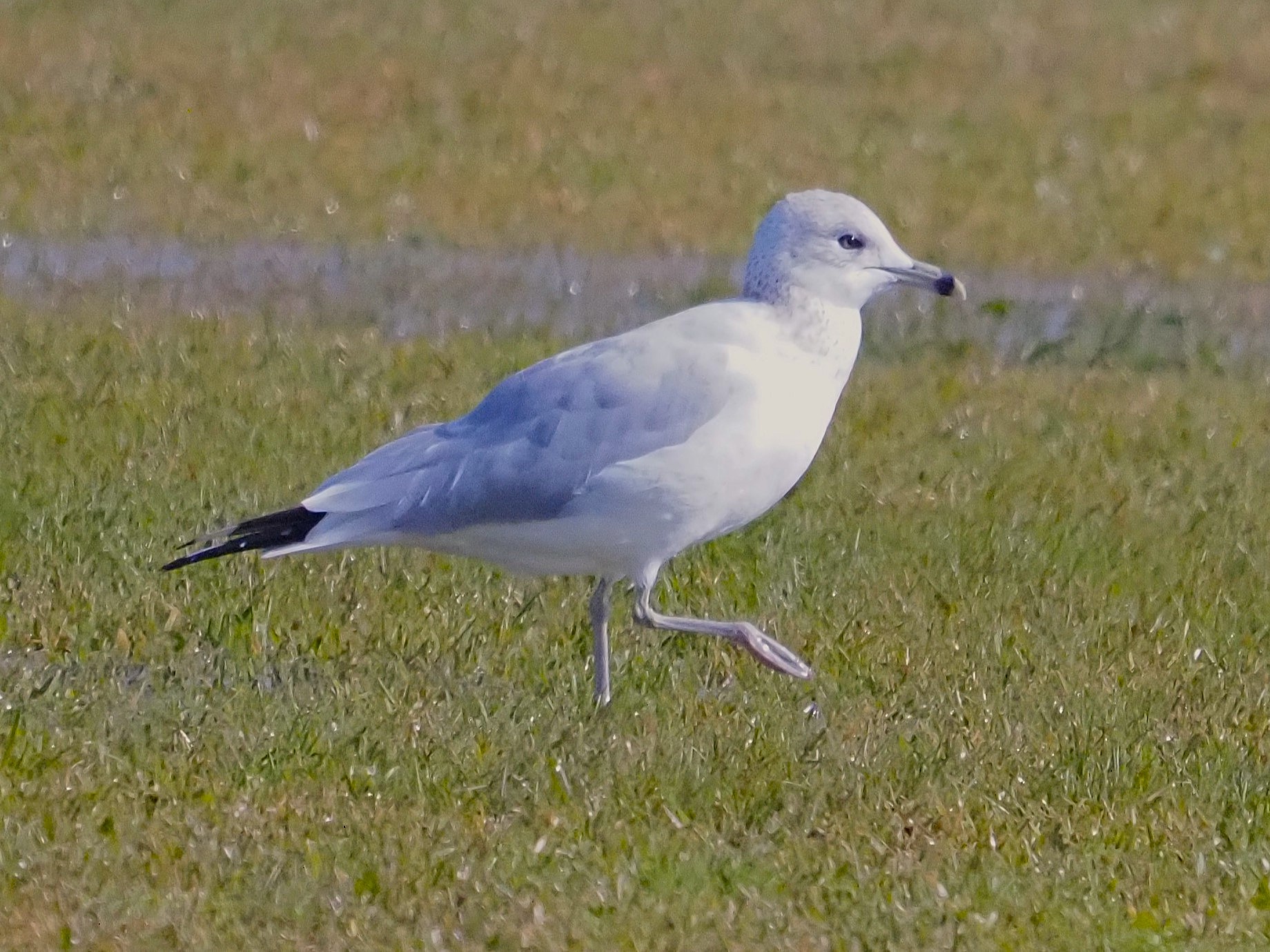
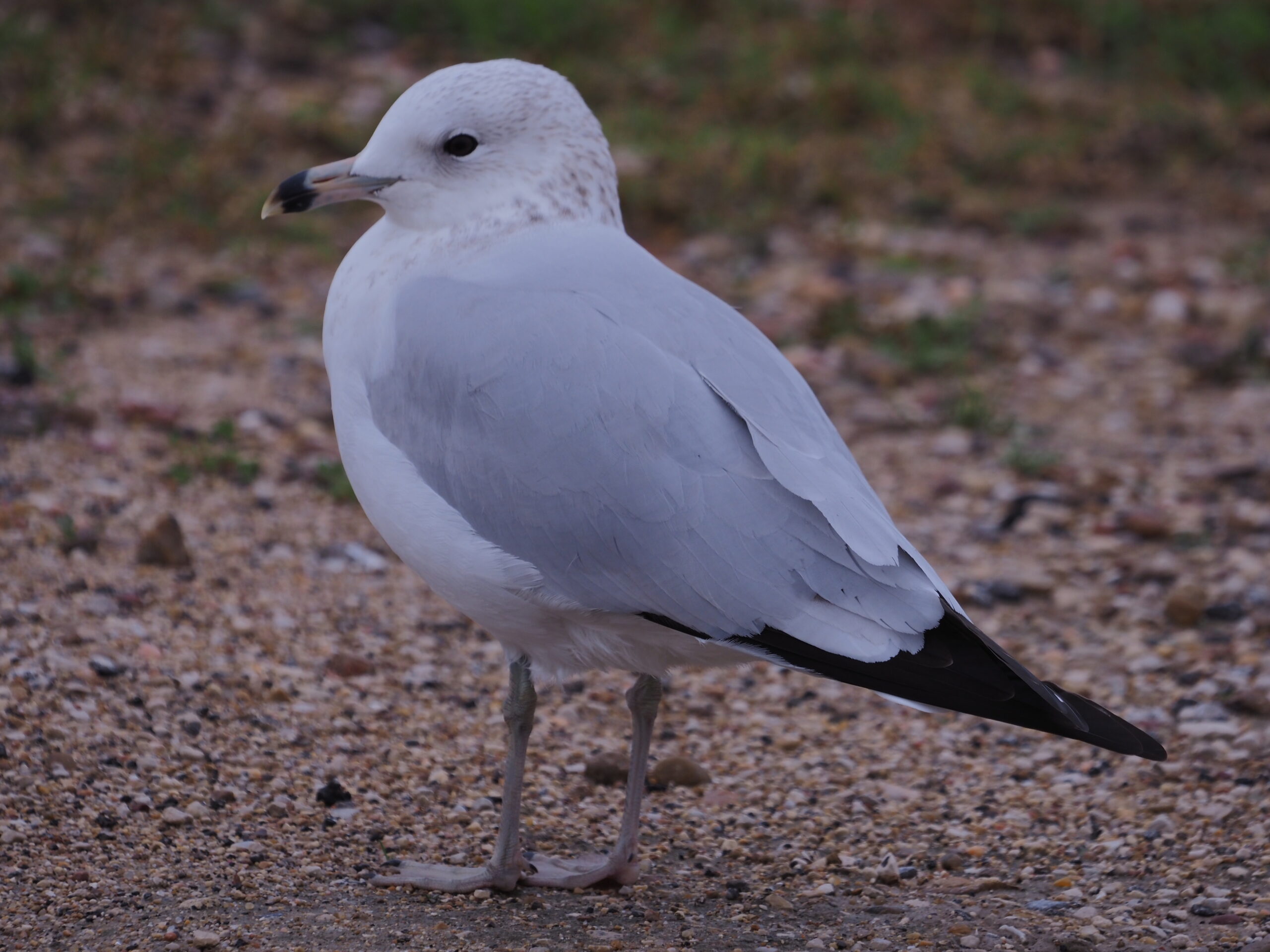

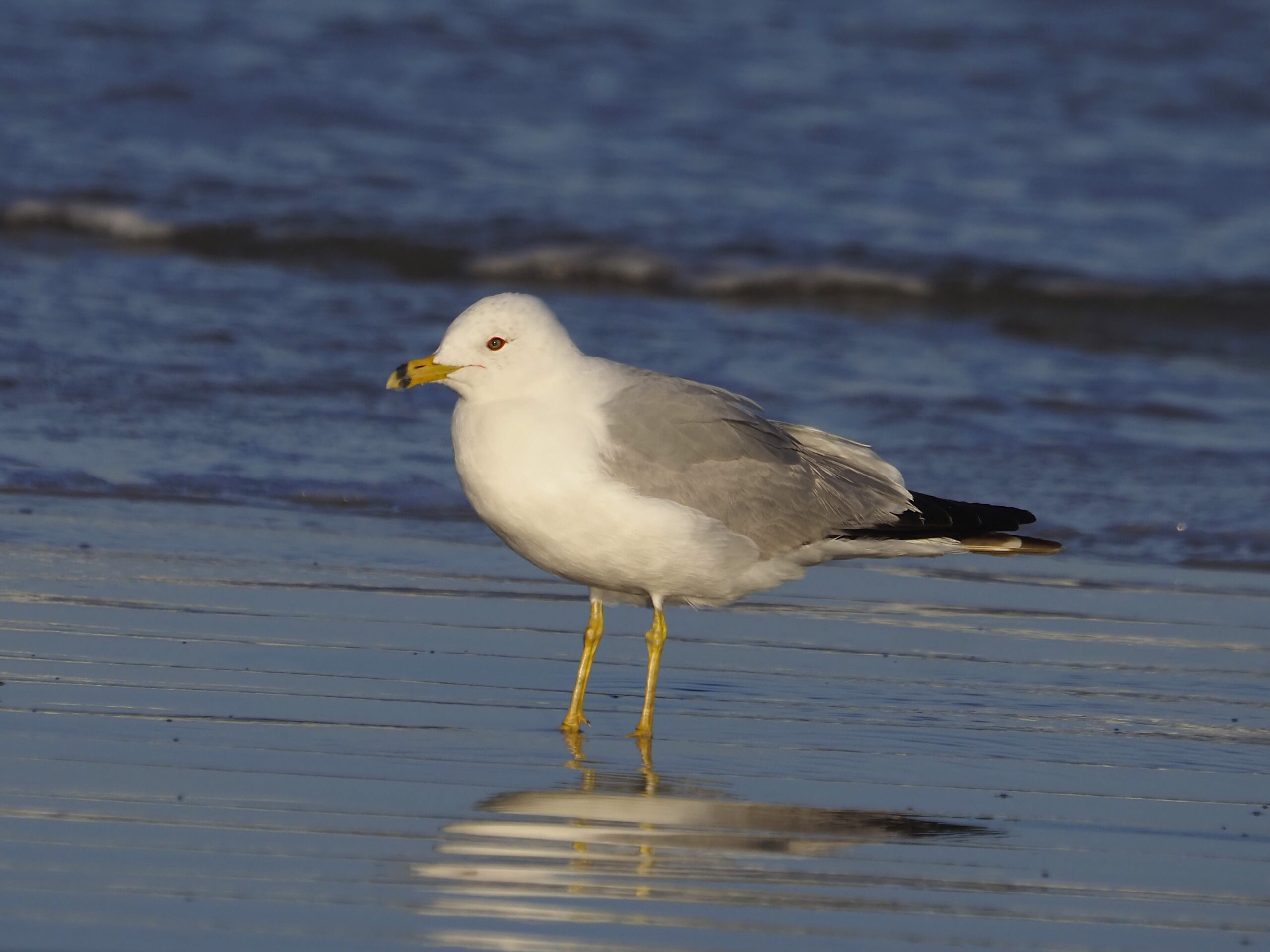
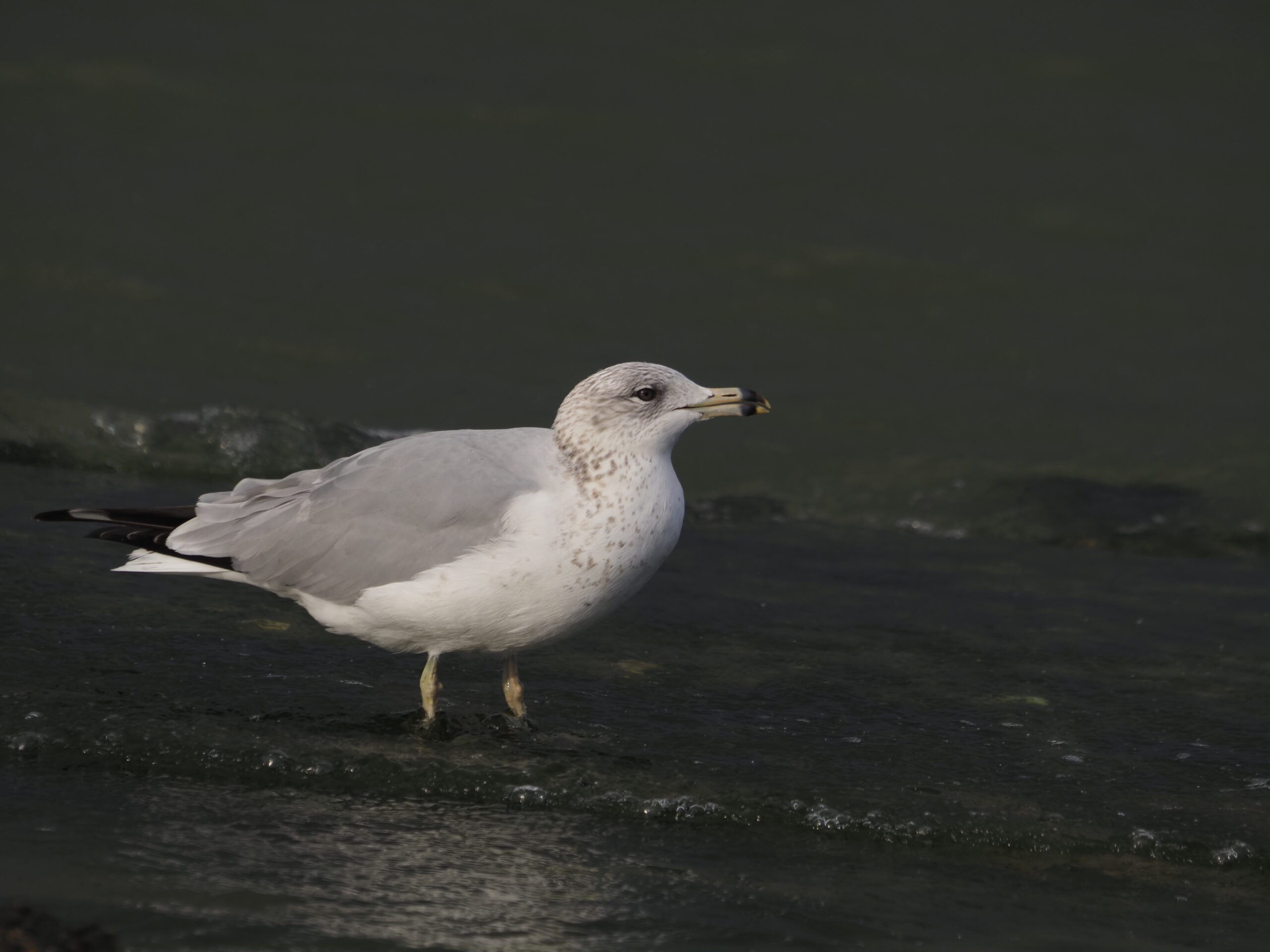
The photo below shows a late Sub-adult Ring-bill based on its lack of apical spots, dark eye, slightly-too-large “ring” mark, and tiny smudge of black remaining in the tail feathers.
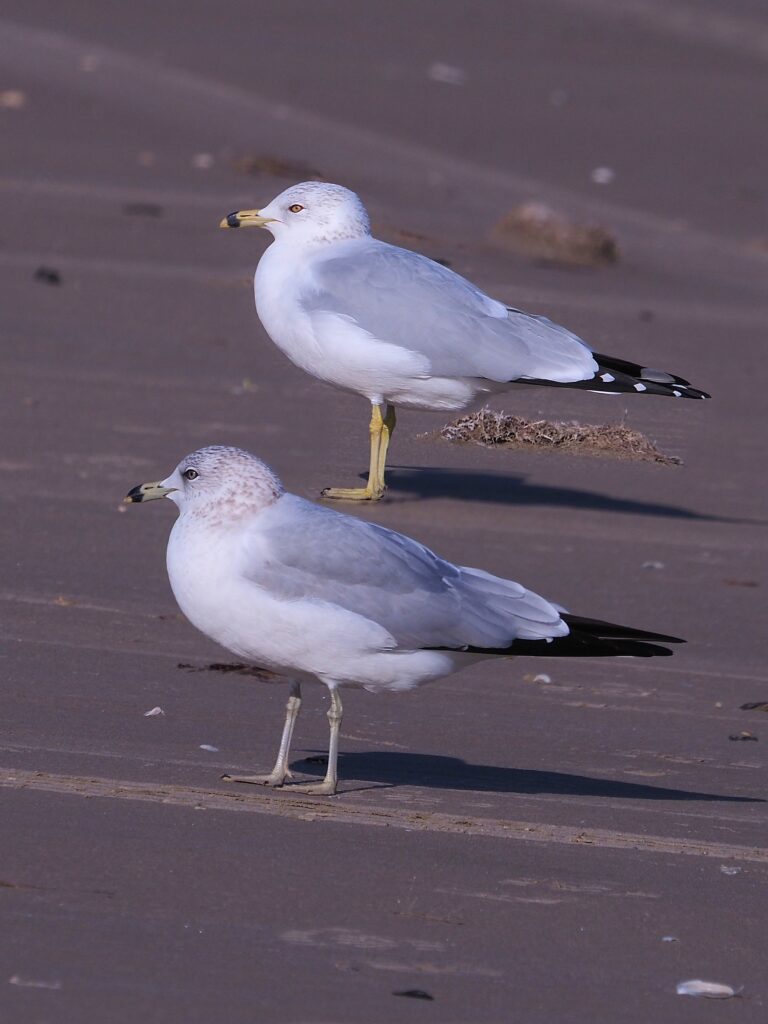
The final age-category for gulls is of course Adult in which only small changes from breeding (alternate) to non-breeding (basic) plumage occur. In the photo below a near-adult (foreground) is compared with a full Adult Ring-bill. Once again, notice the lack of apical spots, the greenish legs, the slightly dusky eye, and the slightly larger “ring” on the bill of the near-adult. Also notice that the structure is virtually identical to the adult.
Leg and Bill Color
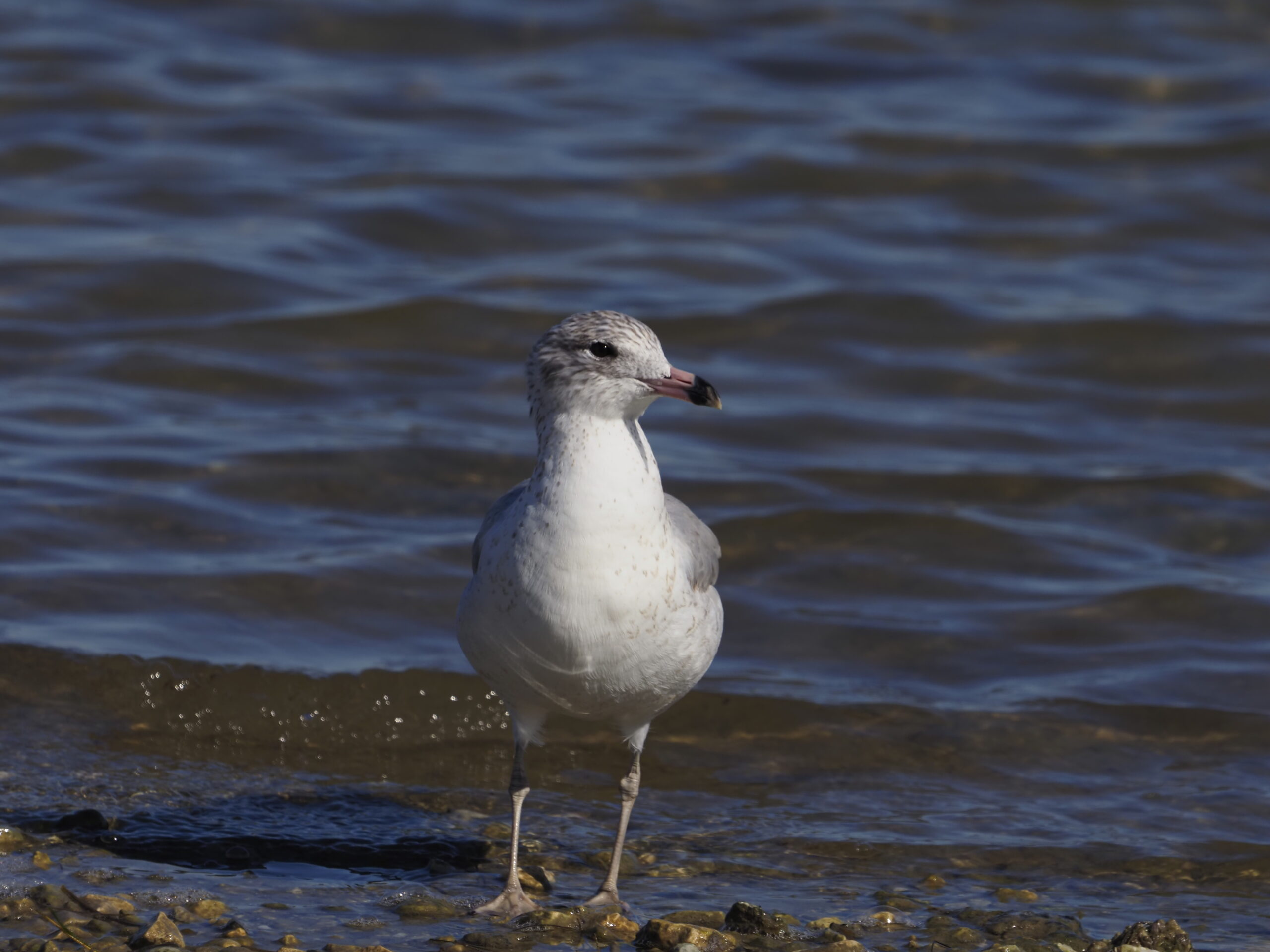
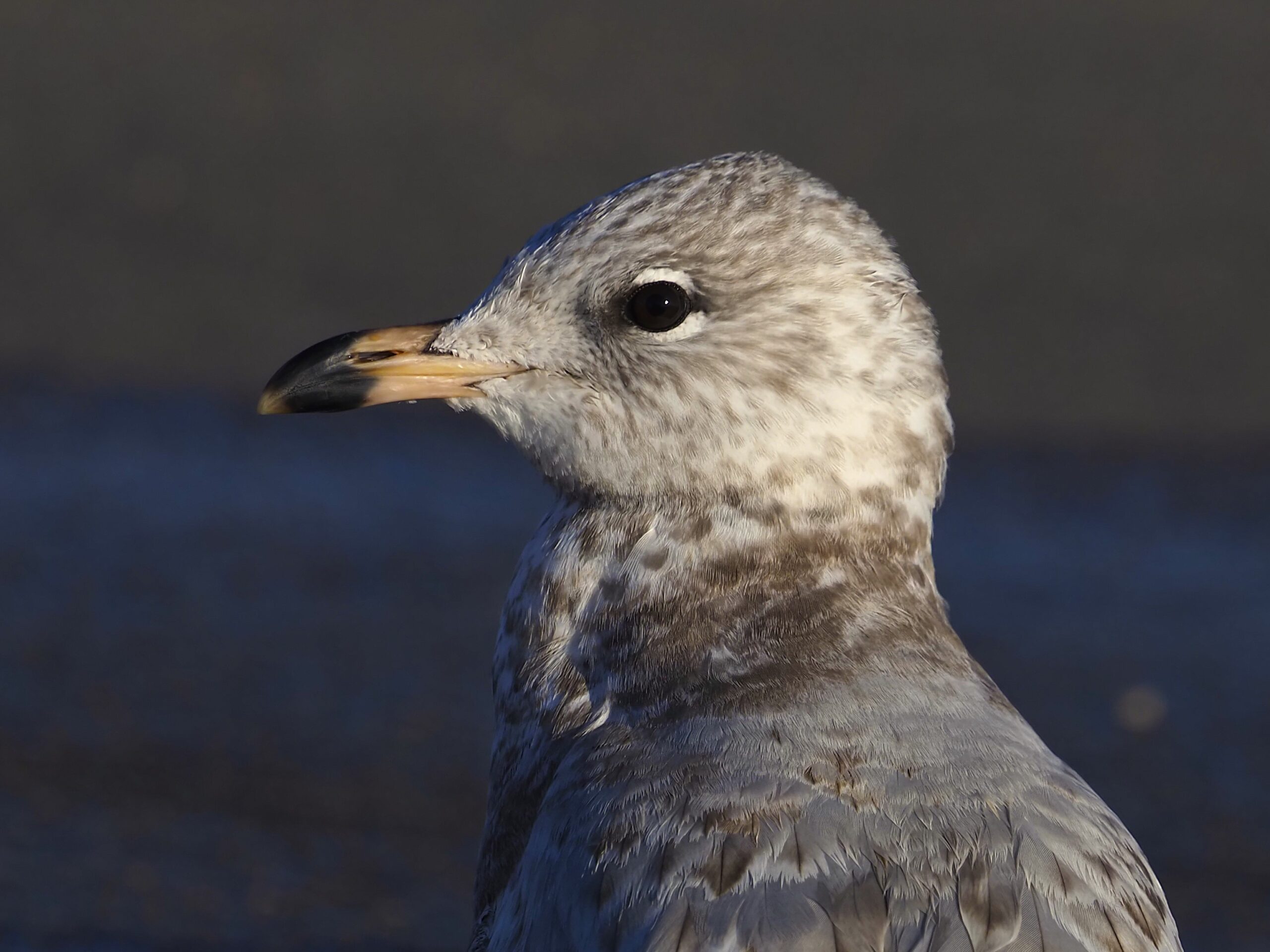
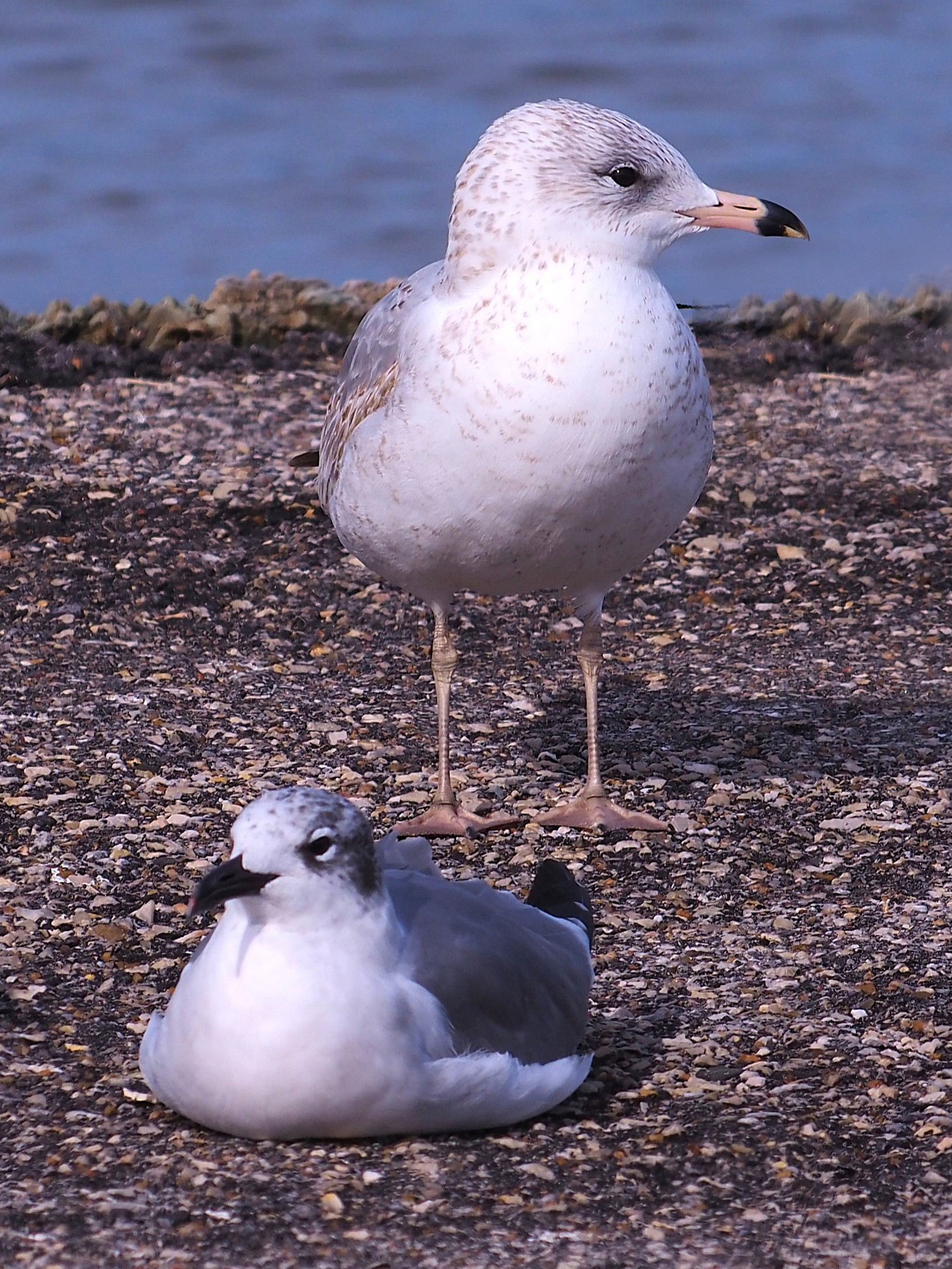
Leg and bill color should always be noted, but because they vary, especially in Sub-adult Ring-bills, they are never diagnostic by themselves. The following photos show some of the variation in leg color from pink to greenish, to grayish, to yellowish.
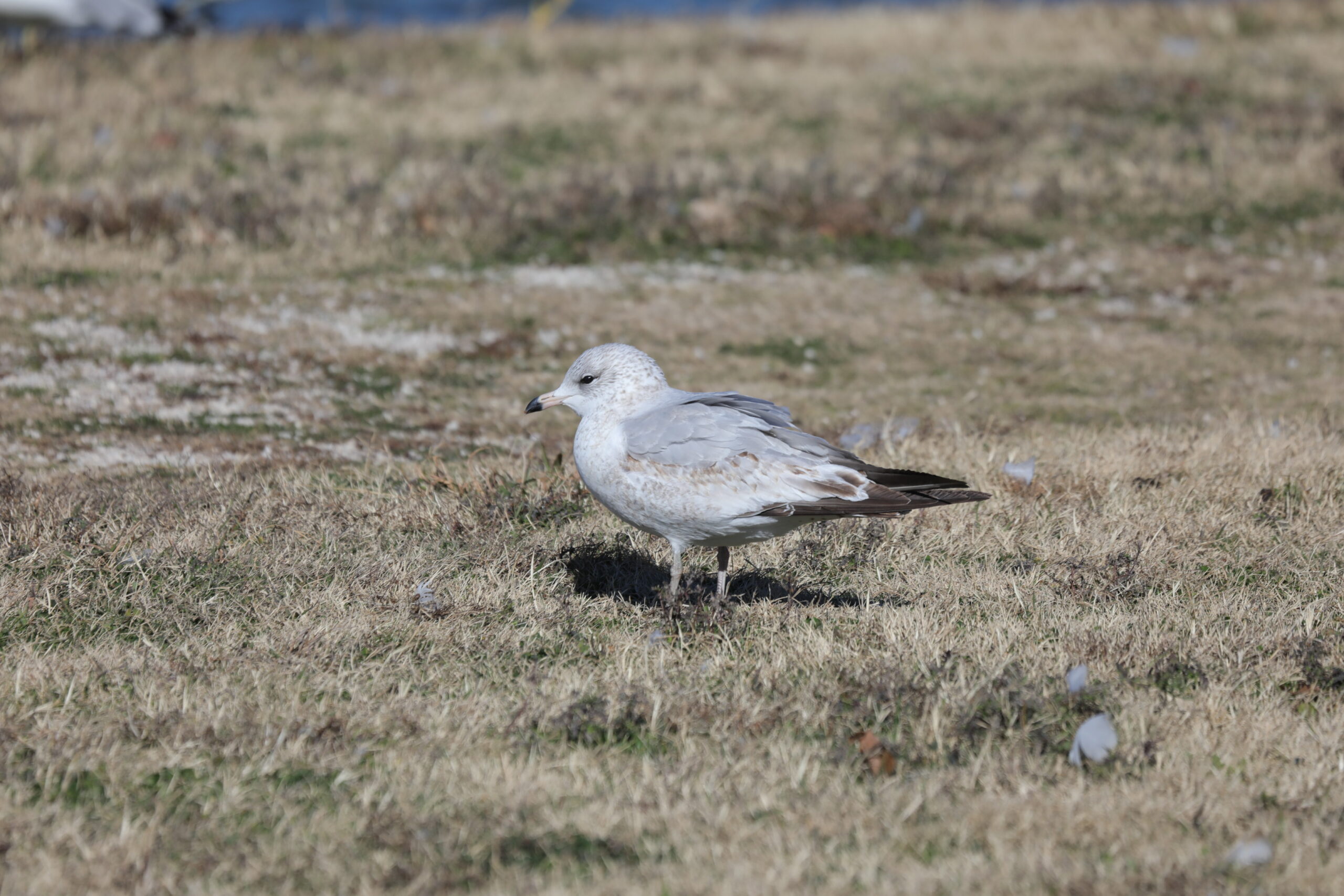
Bill color can also vary from pink, to greenish, to grayish to yellowish.
Size and Structure
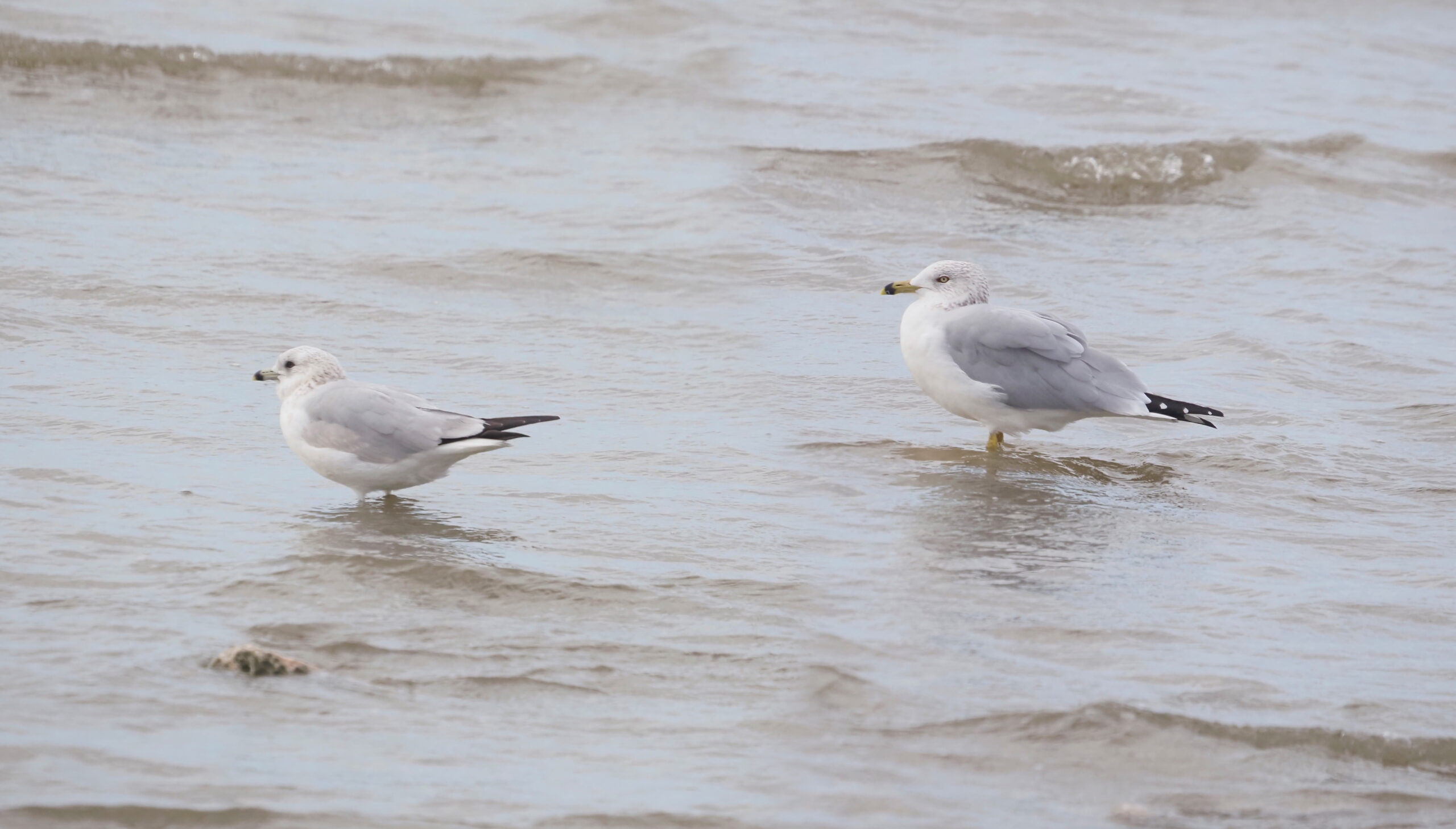
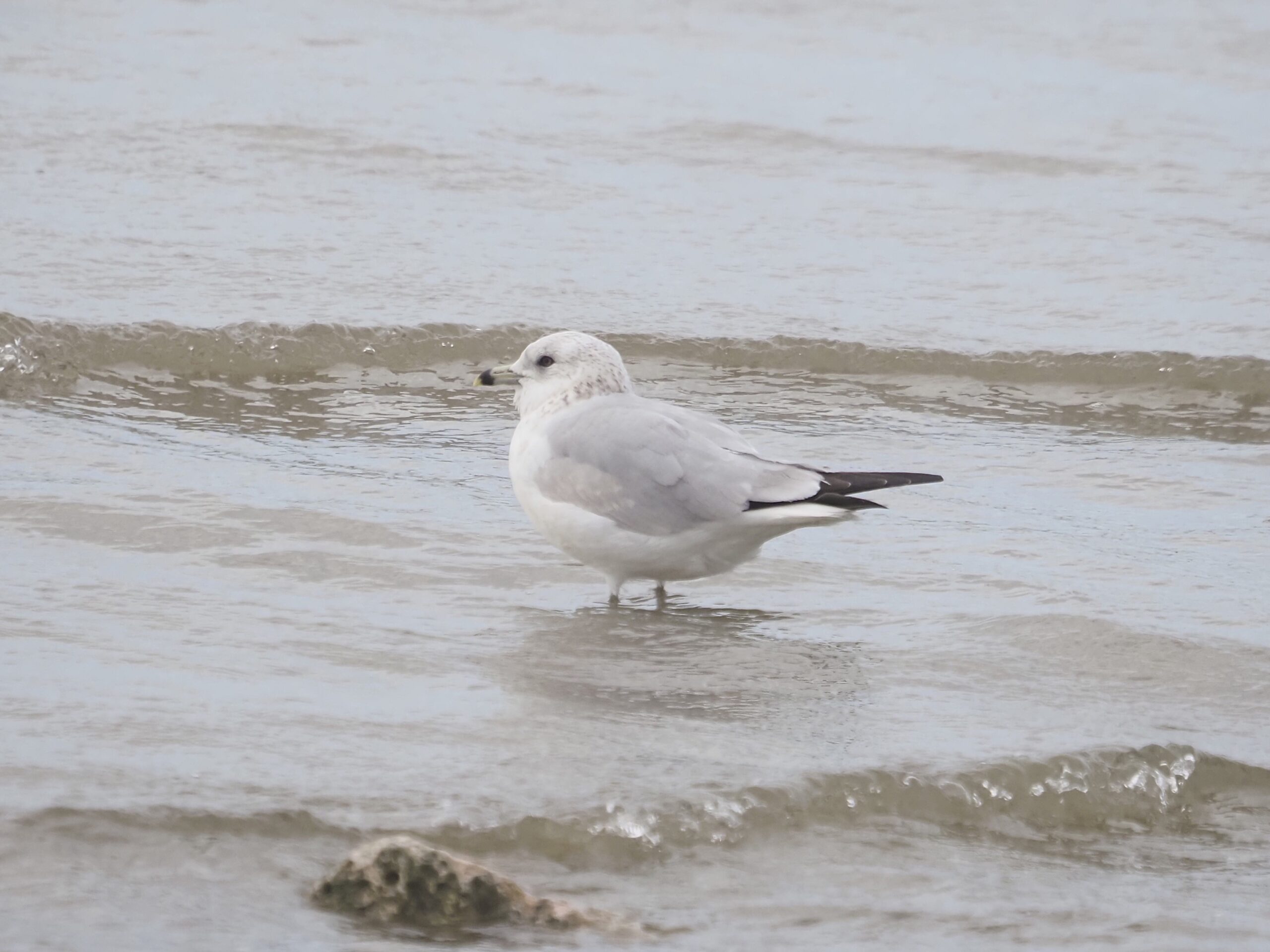
When learning gulls it is important to not get lost in the plumage details. All of the gulls in the photos above can be identified as Ring-bills based solely on their relative-size and structure. Though aberrant sizes do occur, as shown by this tiny Ring-bill below (Texas City Dike, 1/25/25), for the most part small and medium-sized gulls are fairly size and structure consistent. The larger species of gulls are more likely to show variation in size and structure.

Get to know the structure of the Ring-bill!!!