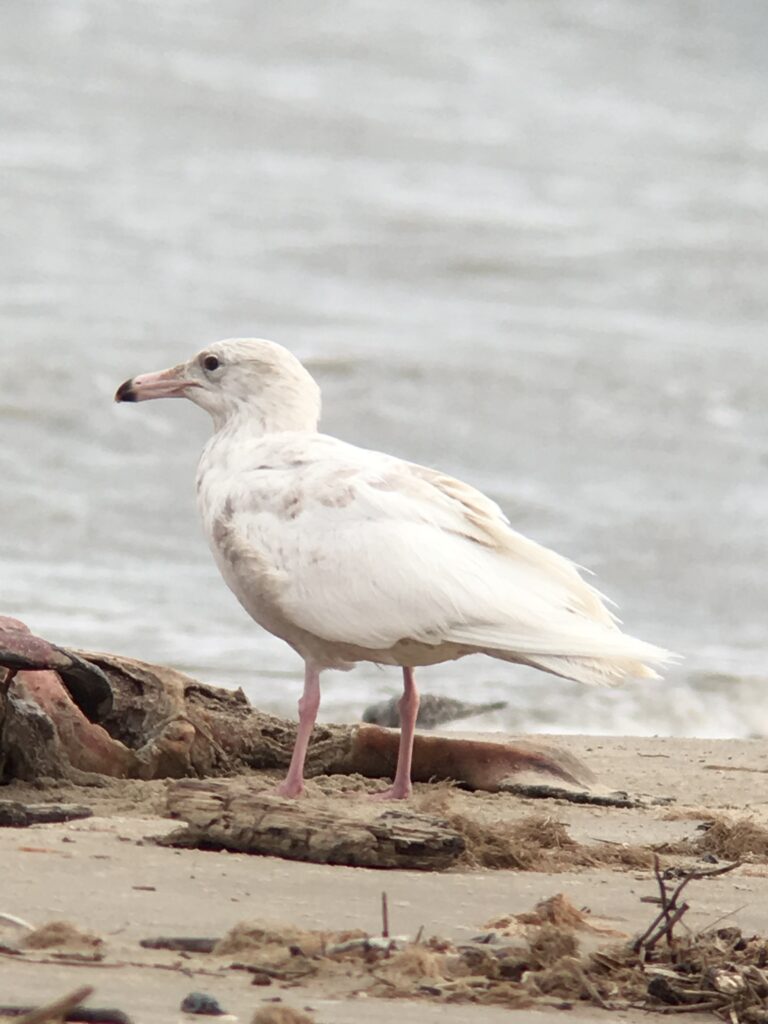
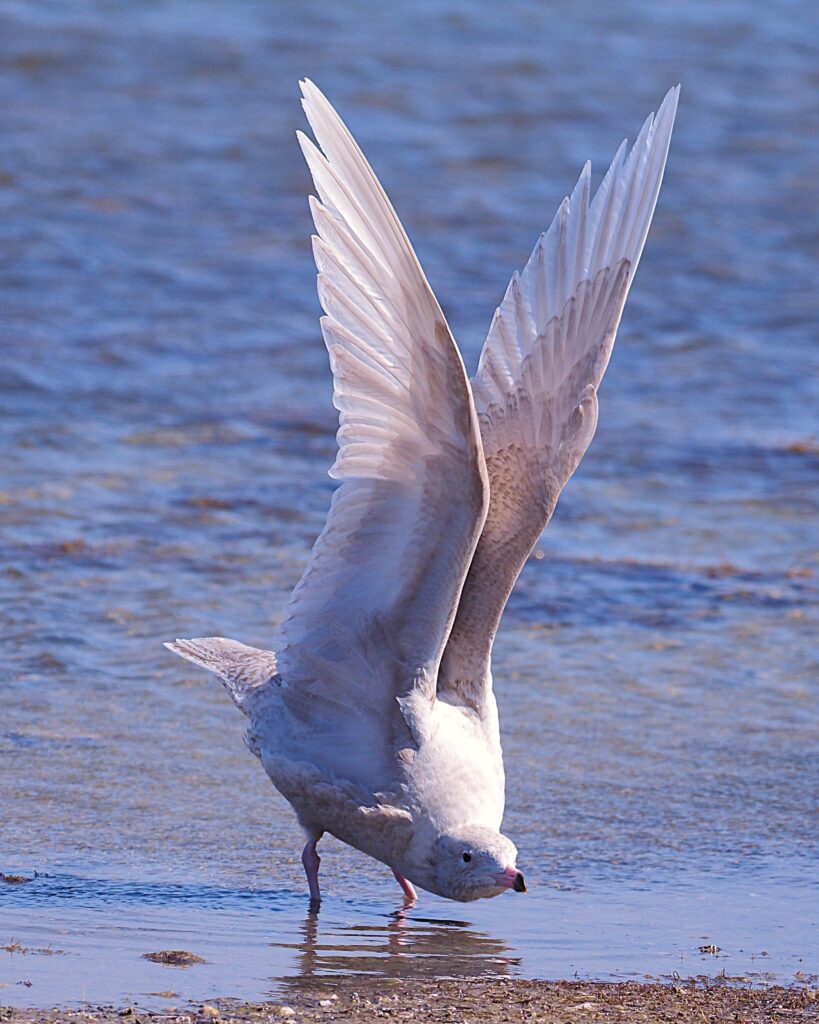
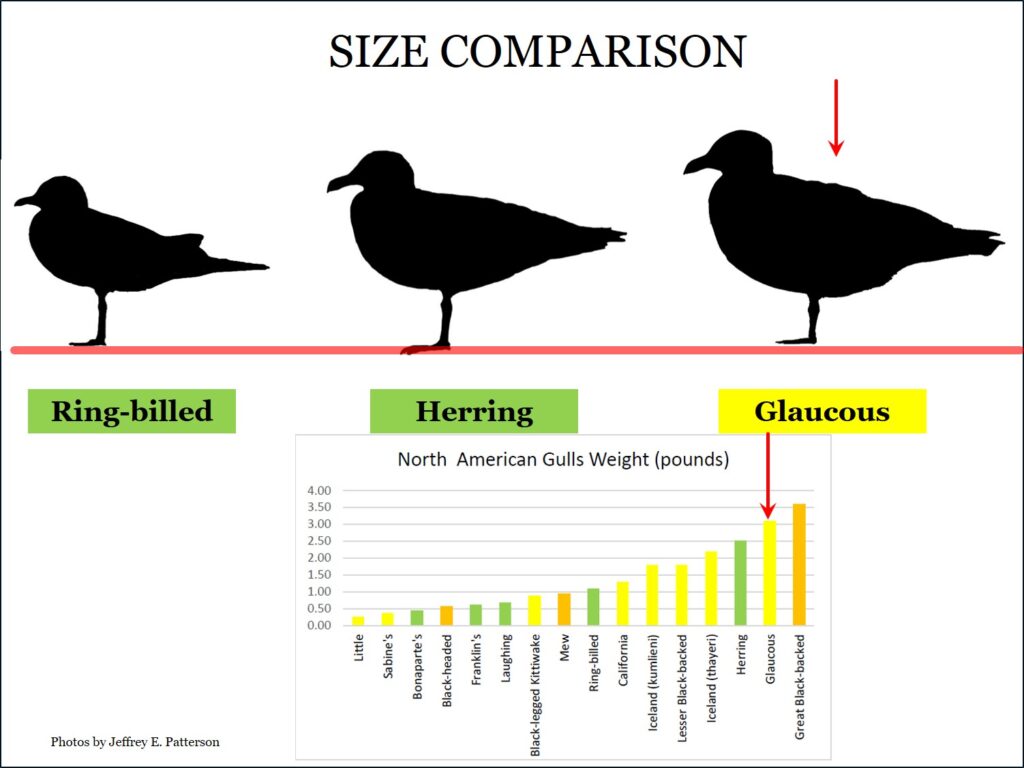
The word “glaucous” describes a light, bluish-gray color, which is apt for the adult back color of the Glaucous Gull which is the 2nd largest gull in the world; smaller than only the Great Black-backed Gull (GBBG). Some large Glaucous even exceed the size of some GBBGs. So, as usual relative size is the first clue to identification.
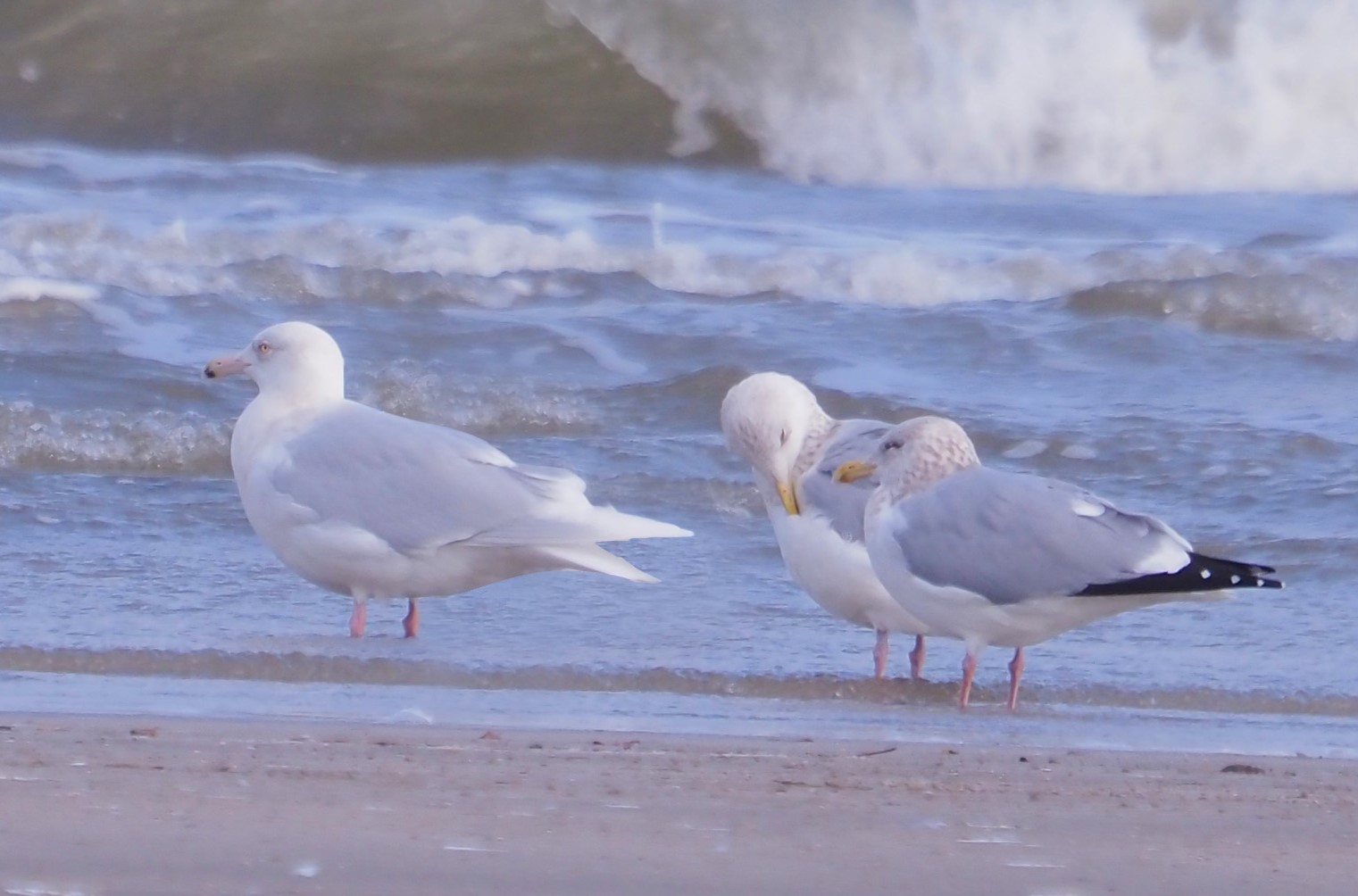
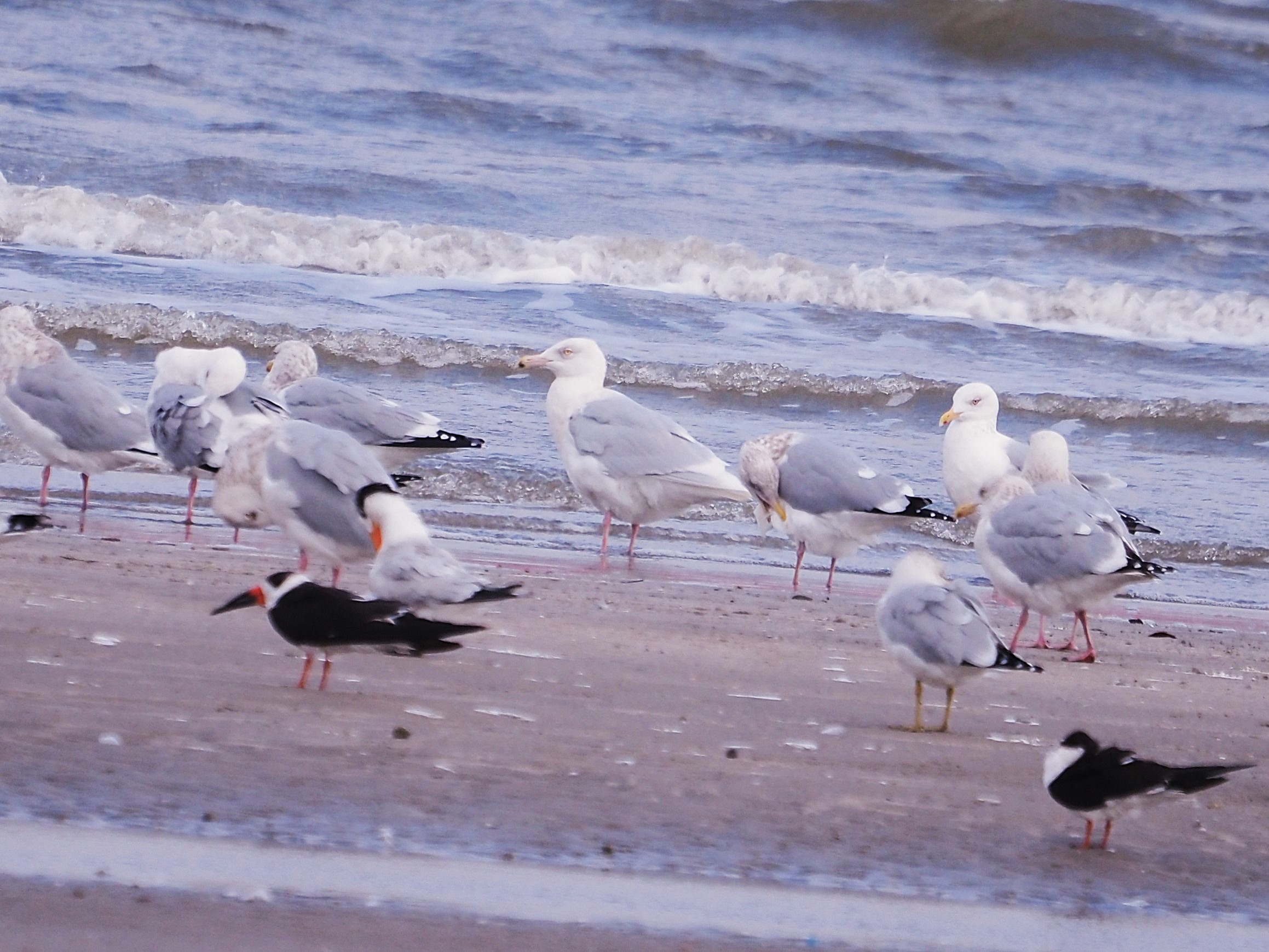
The 1st year Glaucous pictured below, spent at least February-June of 2024 in Corpus Christi. The Herring is usually considered a large gull, but the individual on the right (below) was dwarfed by this robust young Glaucous.
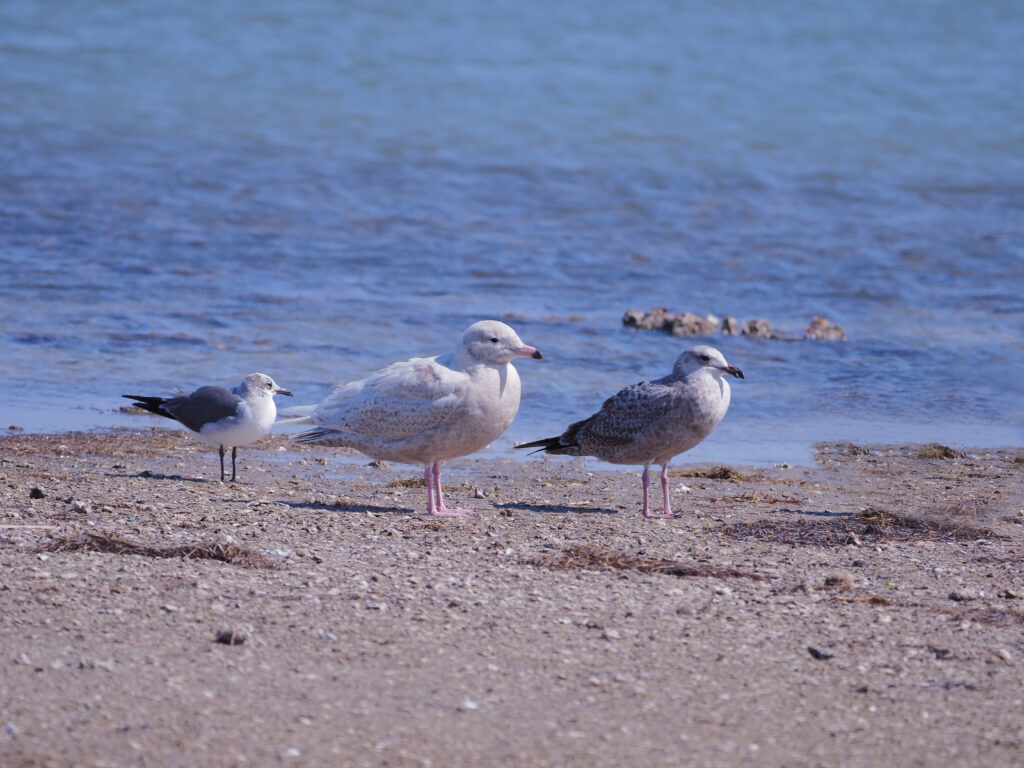
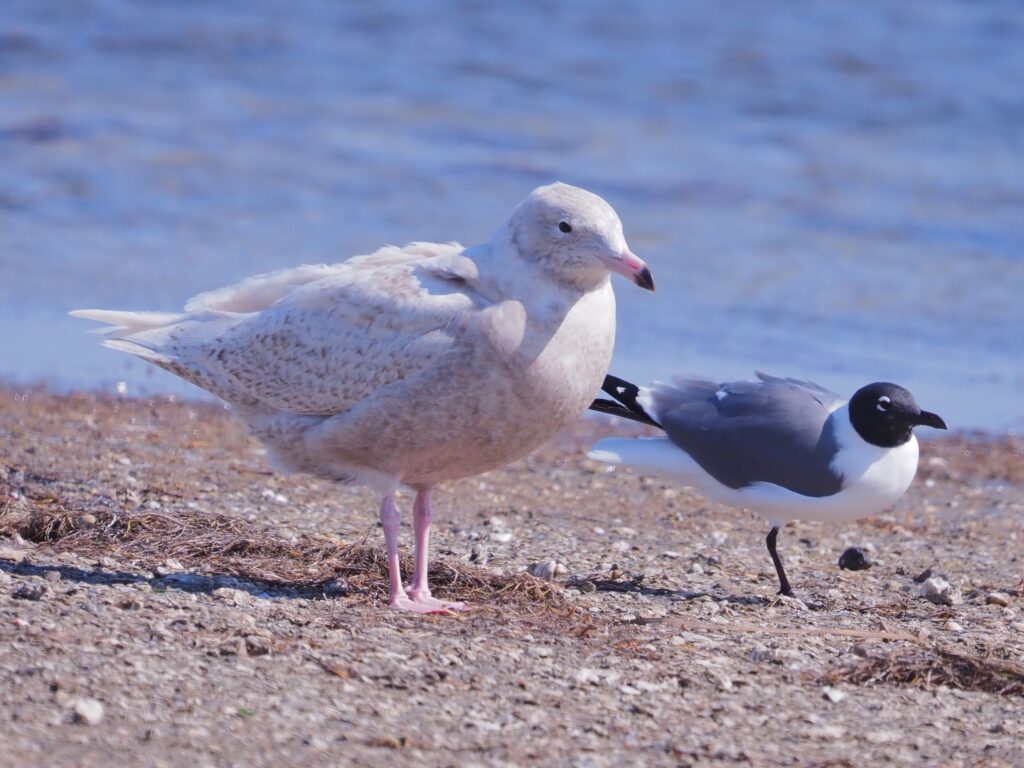
In its 1st year the Glaucous is mostly white, with faint tan blotches throughout. It has a large, rectangular head, pink legs and a sturdy bi-colored bill: pink at the base and sharply demarcated to black near the tip. The sharpness of the demarcation on the bill stands out from most other gull species. Its build is robust in chest, belly and behind the legs. Its primary projection (beyond the tail) is relatively short.
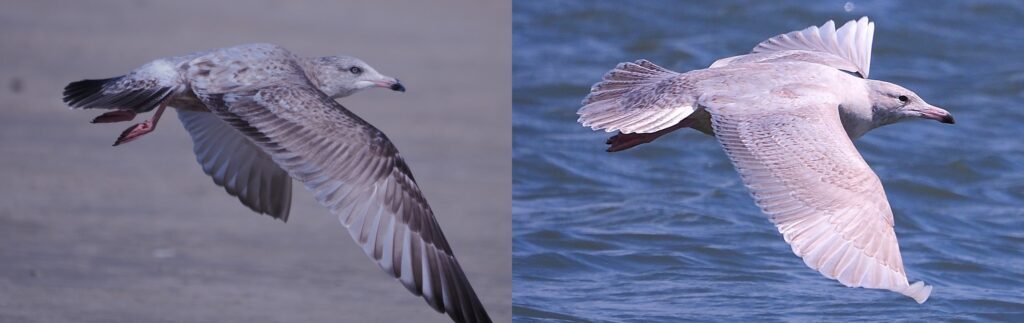
In flight the Glaucous’s wide-at-the-base wings are apparent, as compared to the Herring below.
As an adult the Glaucous retains the bulky build and assumes its adult back color of “glaucous” gray. The gull shown below was initially miss-identified as an Iceland Gull, however it is noticeably larger than the several nearby Herring; Iceland would be smaller than Herring. Note the bulk of the bird (larger than the nearby Herring), the white wing-tips, the short primary projection, and the lighter-than-Herring blue-gray back.
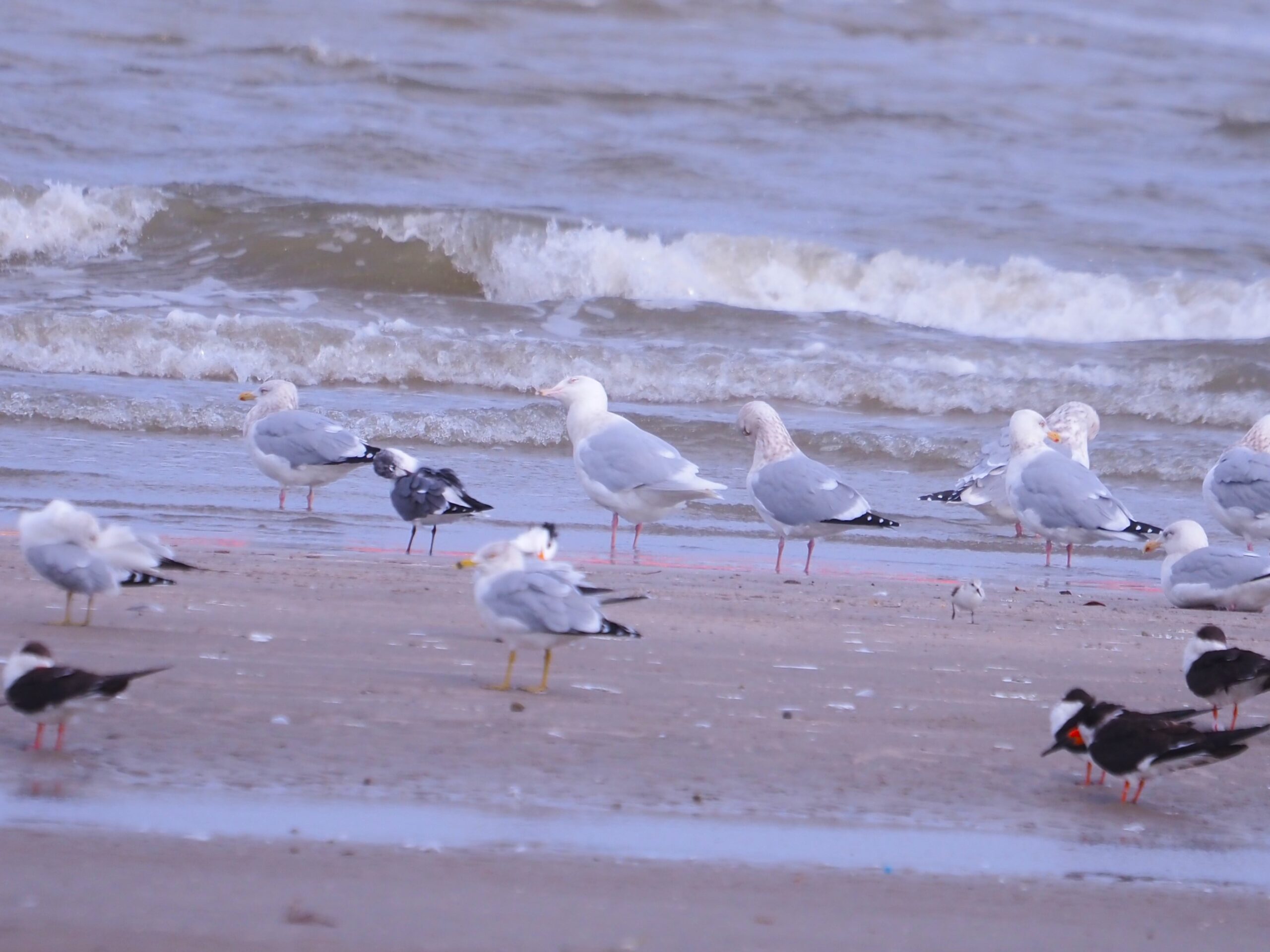
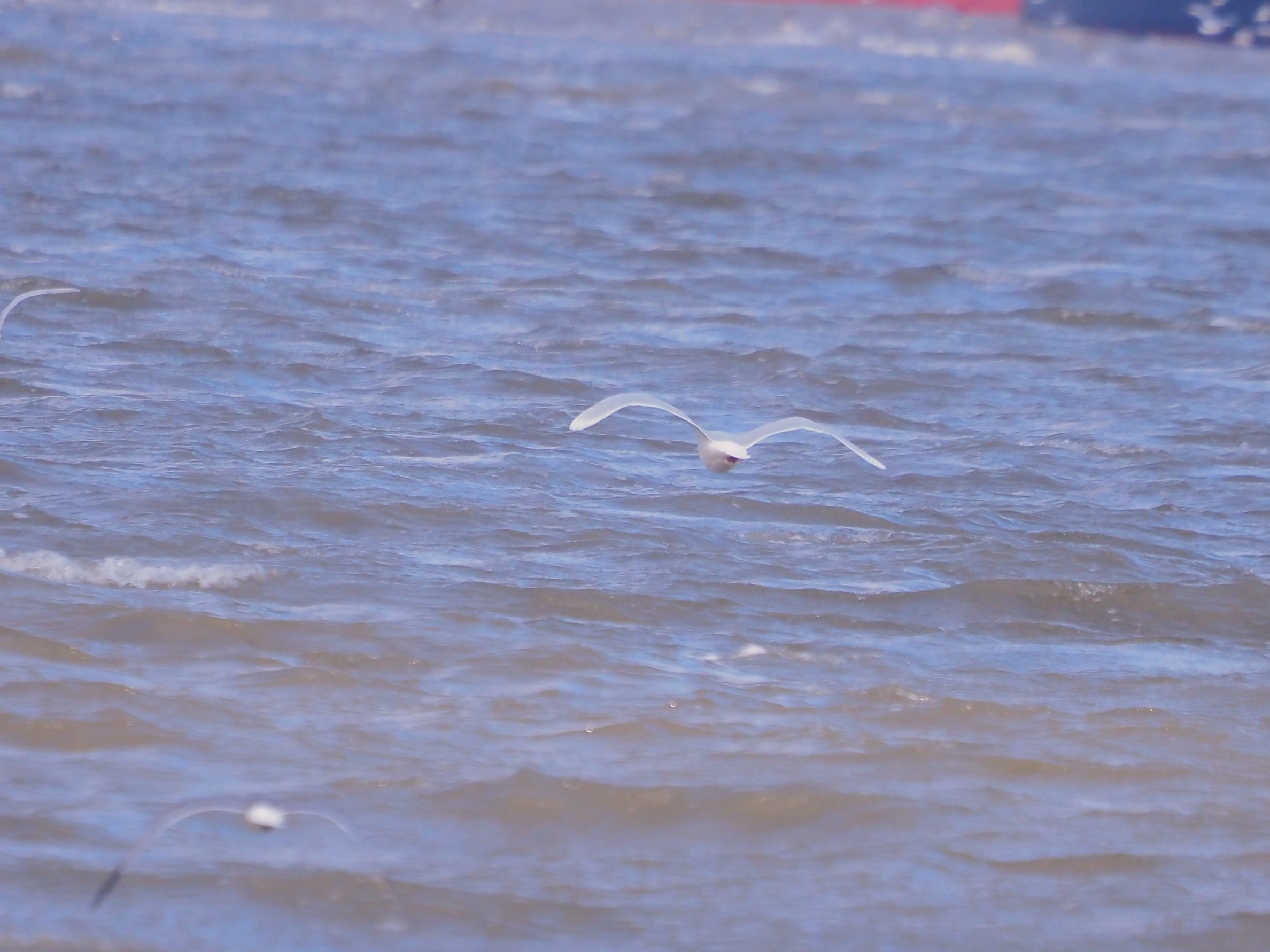
This 1st year Glaucous was present and fading fast at Bolivar Flats in mid-April 2018. Note the worn covert feathers, the pink/demarcated black bill, the bulky head and body. Also note that much of the light brown splotches on the bird have faded.