Comparison between Western & Semipalmated
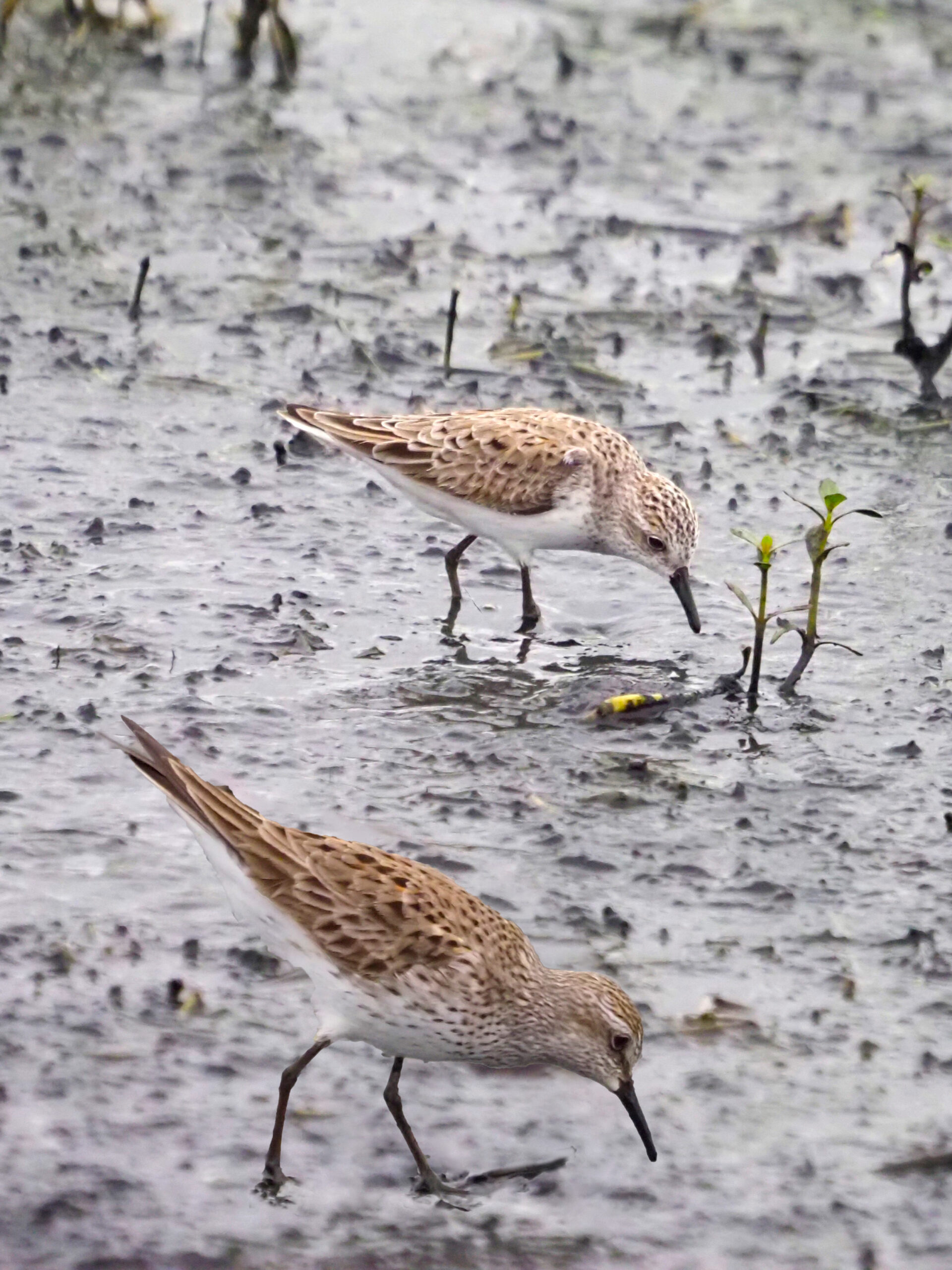
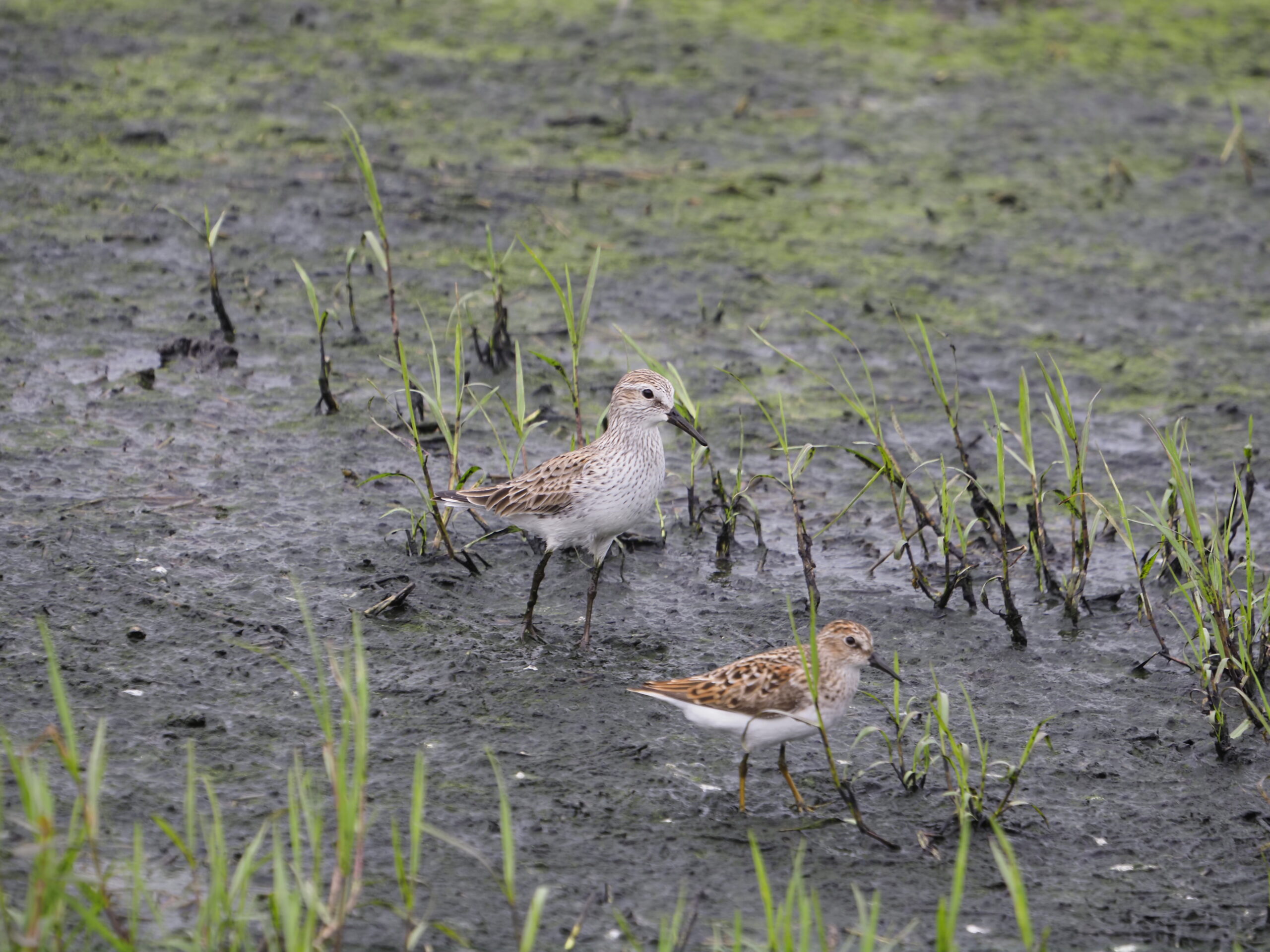
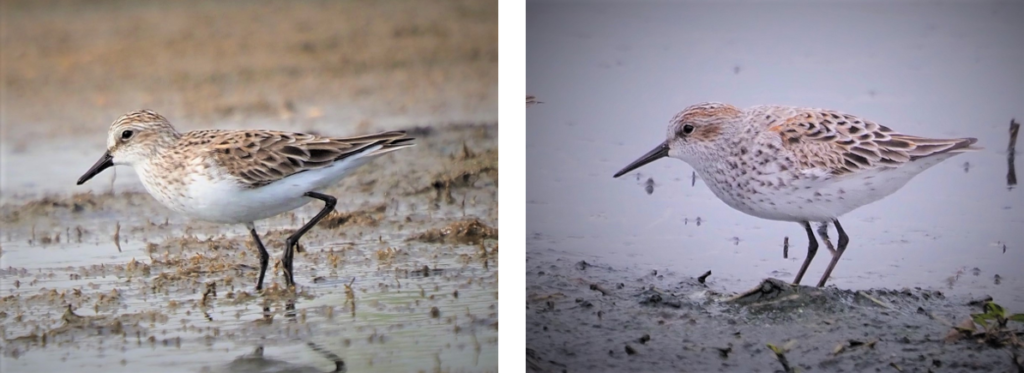
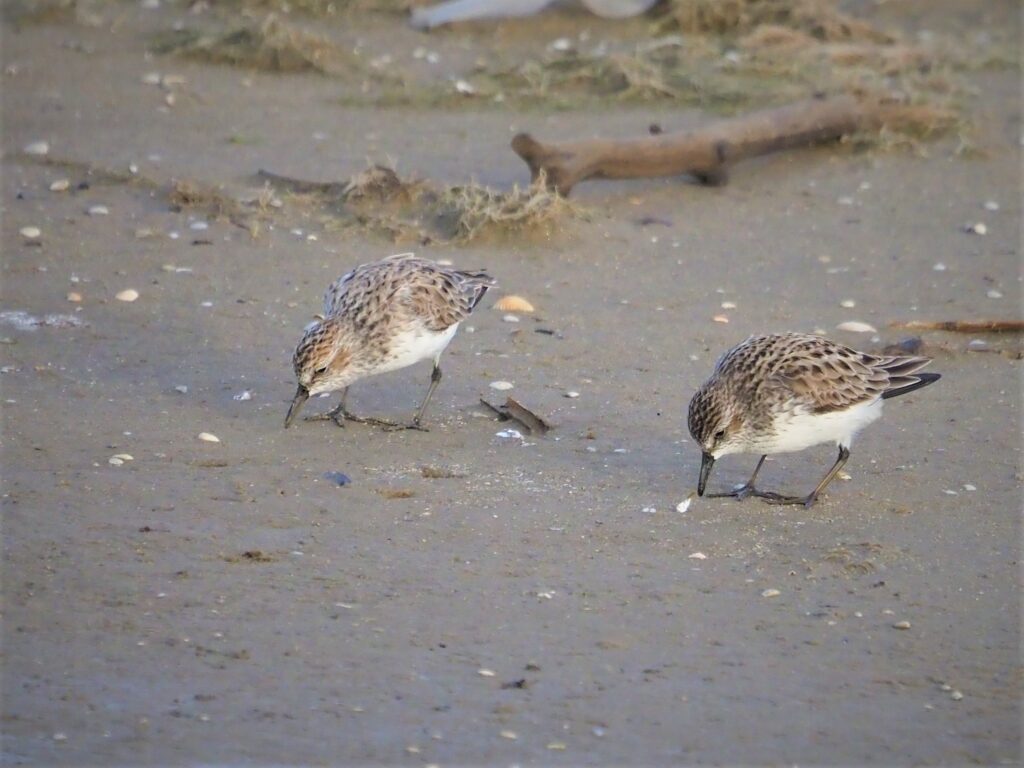
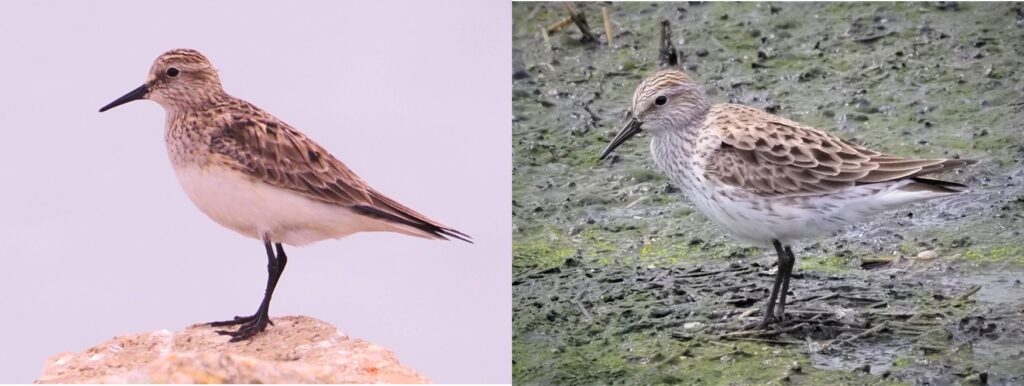
Most Western & Semipalmated Sandpipers that come through central Texas and the Texas Coast can be distinguished through differences of structure and plumage. However, as shown below some can be ambiguous. The first pair of images shows the typical structure of the Semipalmated on the left and the Western on the right. Note first the head and bill — the Semipalmated has a round head with a shorter, straighter, blunt-tipped bill, while the Western’s bill is longer, finer-tipped and usually (not so much in this individual) droops a bit at the tip. The head of the Semipalmated is round and the bird usually has a larger-looking eye due to a bolder eye-ring. The Western’s head is more blocky and its eye looks smaller. The Western is a very slightly larger and taller bird, with lankier proportions, while the Semipalmated is usually thicker in the belly and breast (although this is dependent on recent feeding).
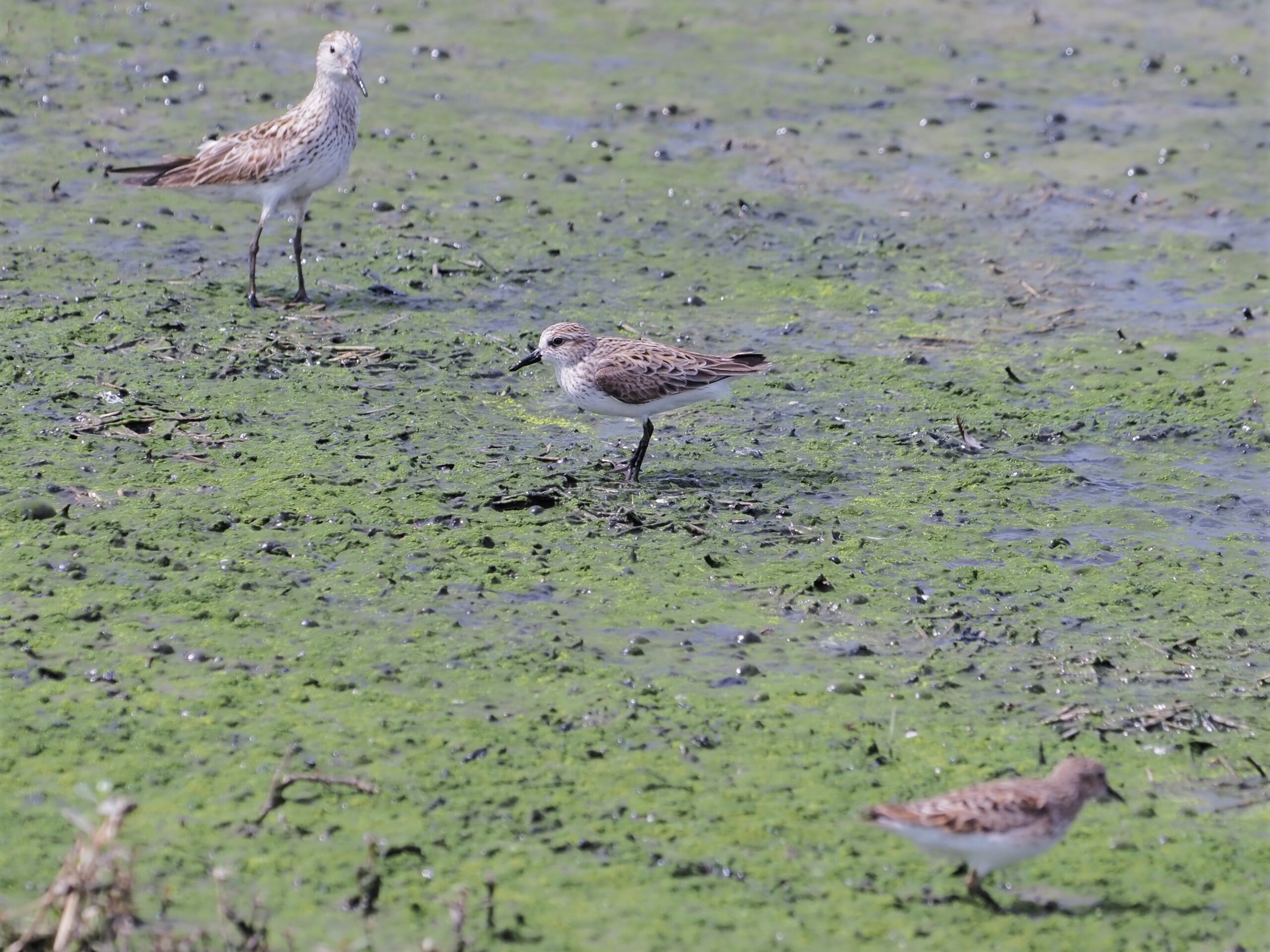
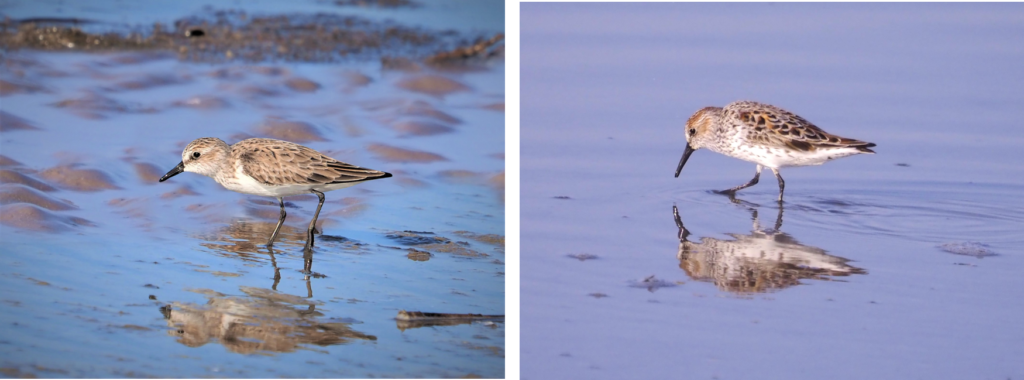
This next set of photos shows similar classic attributes of the Semipalmated and Western Sandpipers.
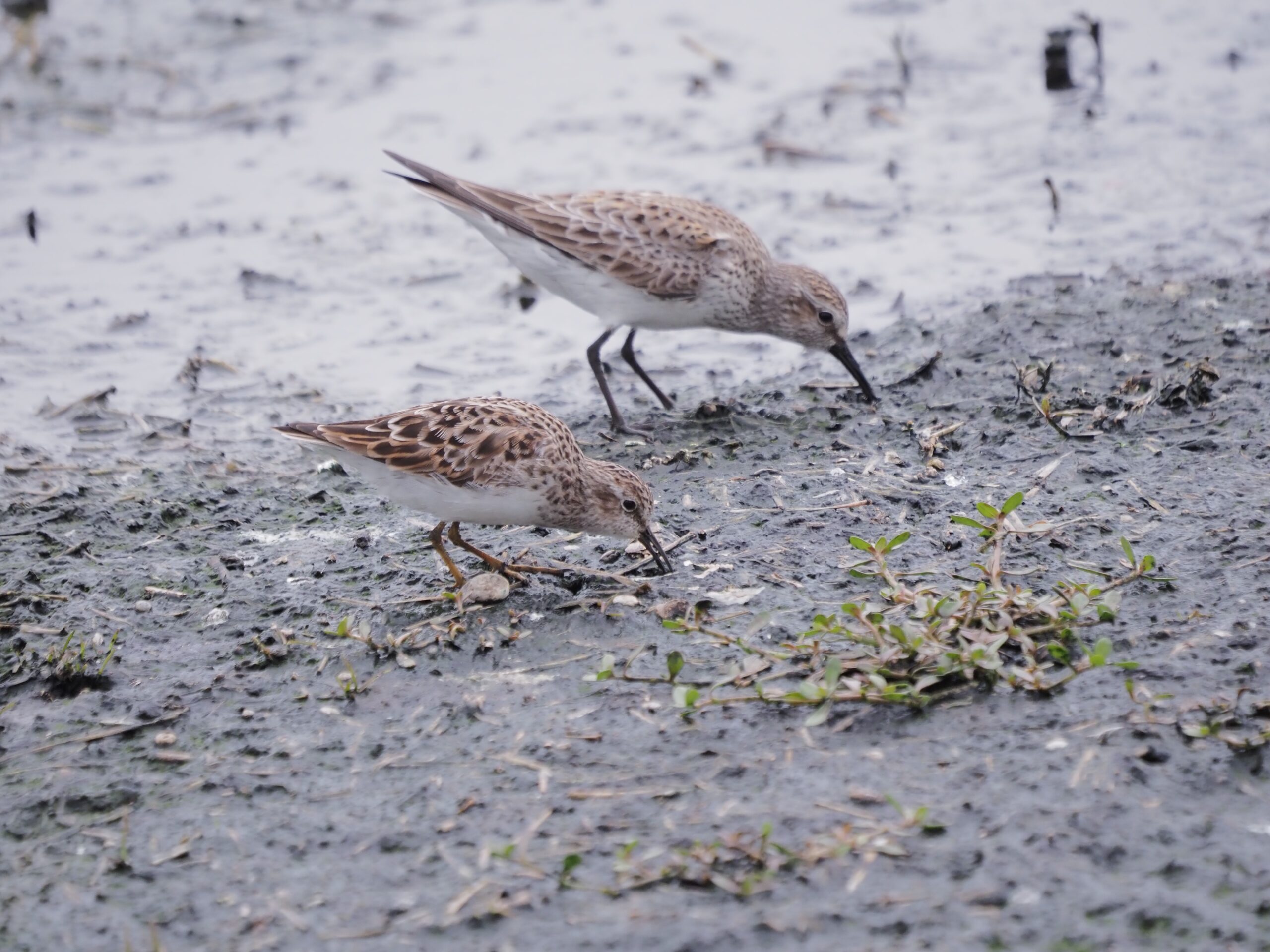
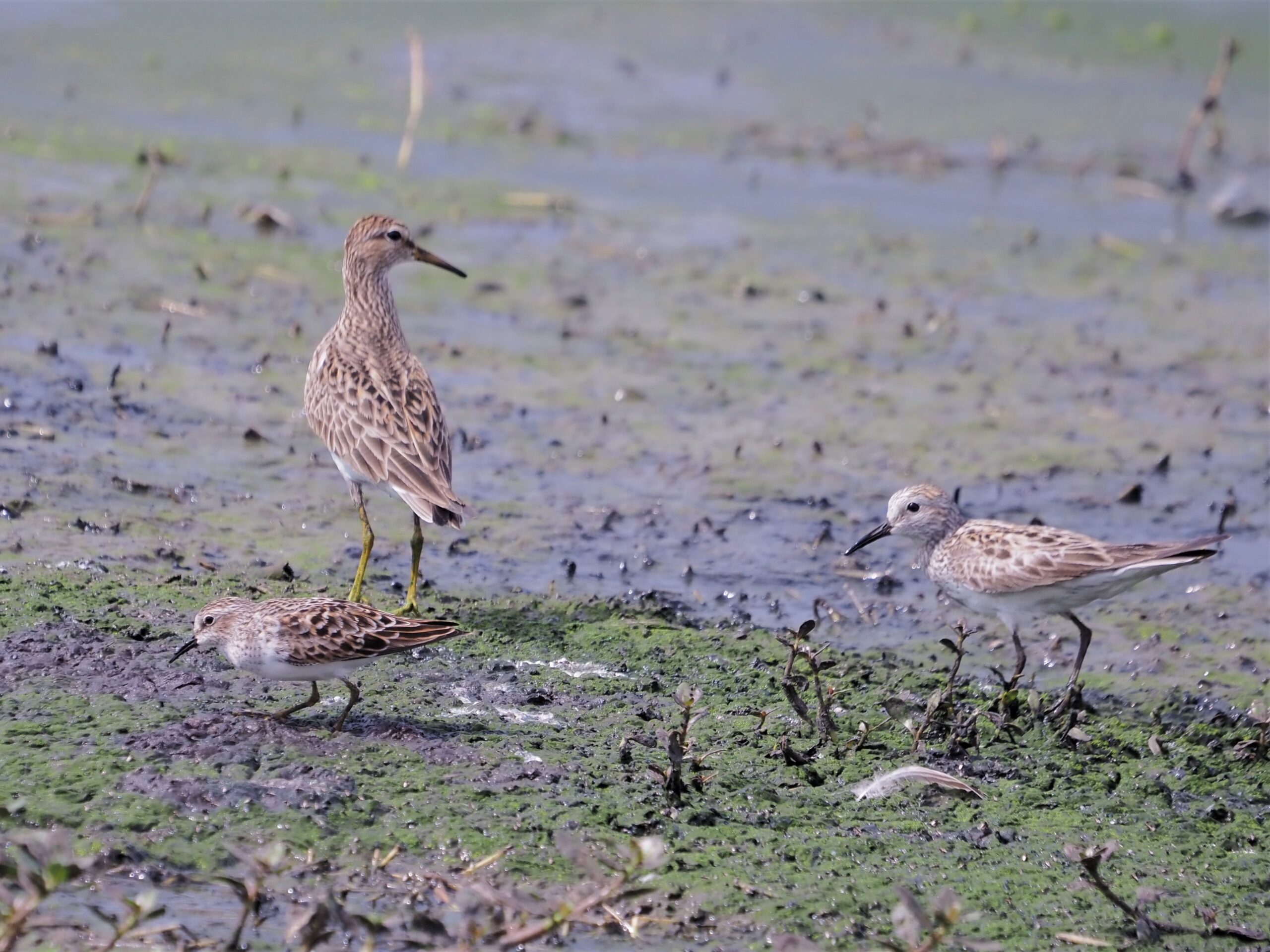
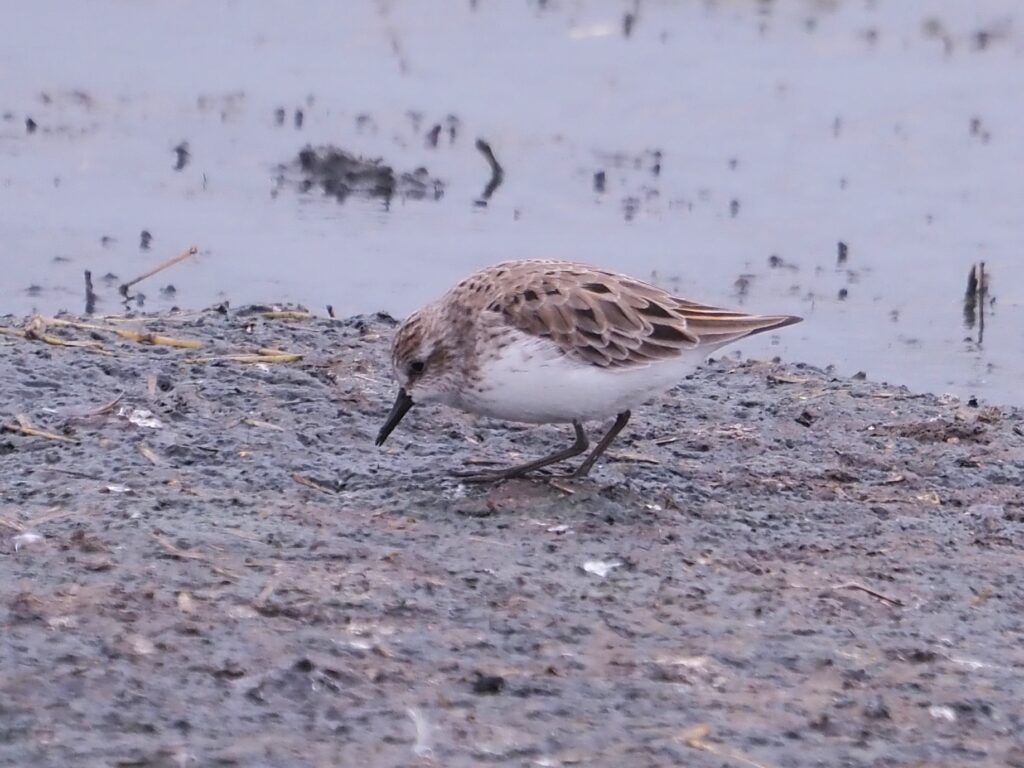
The photos above show these two peeps in their classic structures. The next two photos show more ambiguous individuals.
Comparison between Least, Semipalmated & Western Sandpipers
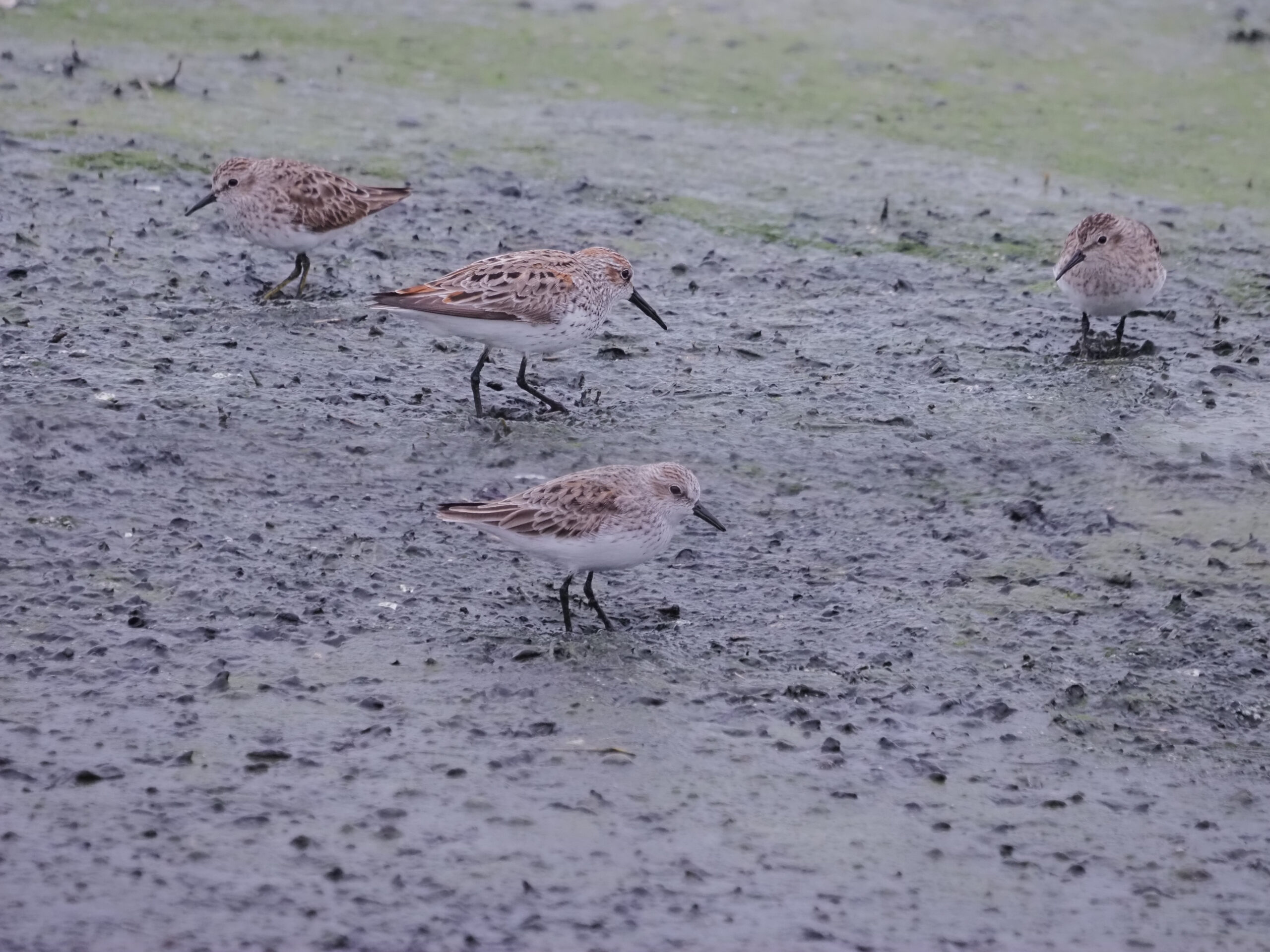
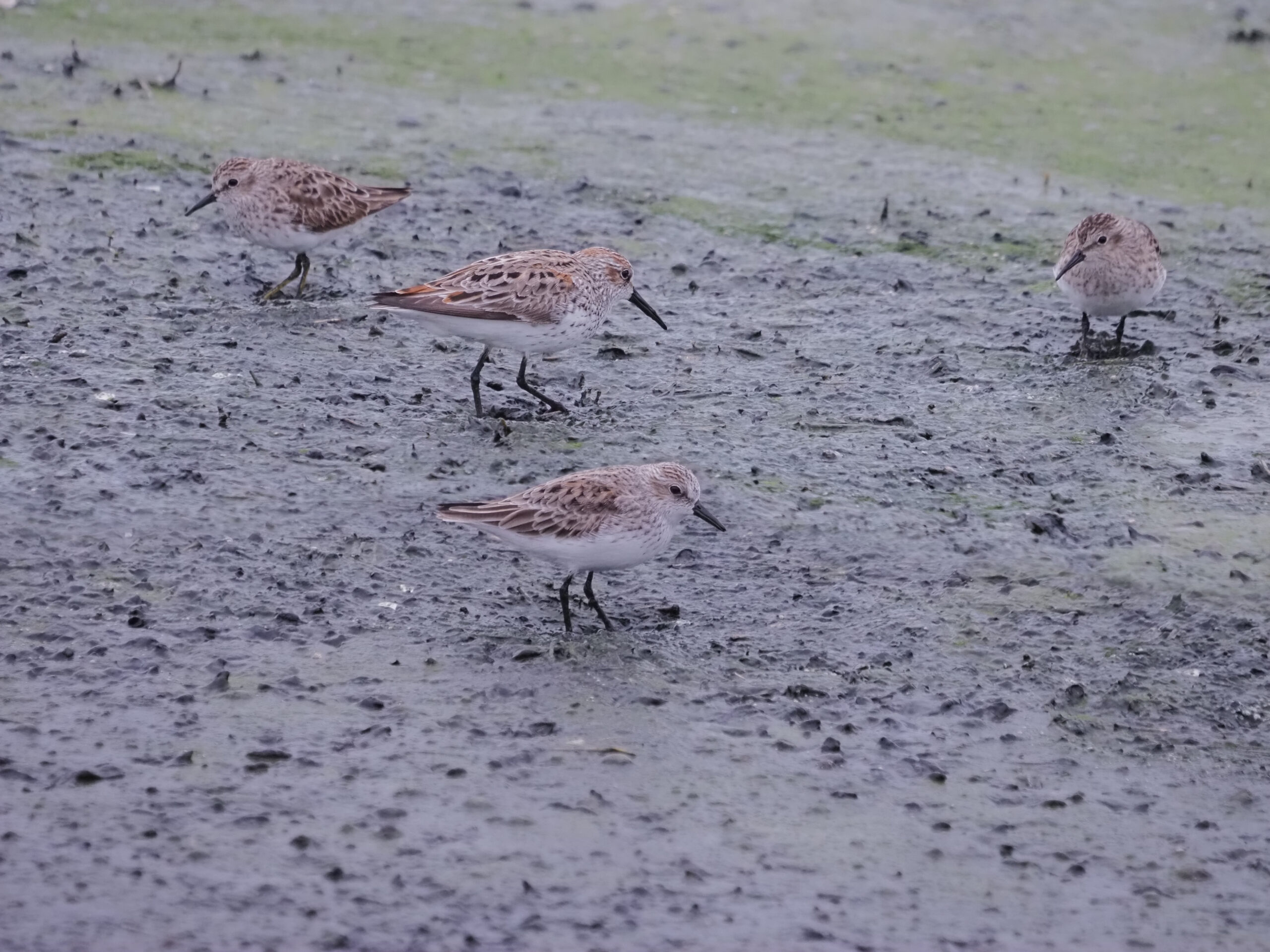
The 3 smallest peeps are compared below. Note the differences in bill shape and length as well as the fact that the Least is browner, while the Semipalmated and Western are frostier, especially the Semipalmated. Also note that the Western is generally the most colorful of the 3 in alternate plumage. These photos were taken on a cloudy day in mid April so these are breeding plumages, although the Least appears to be still molting into this plumage.

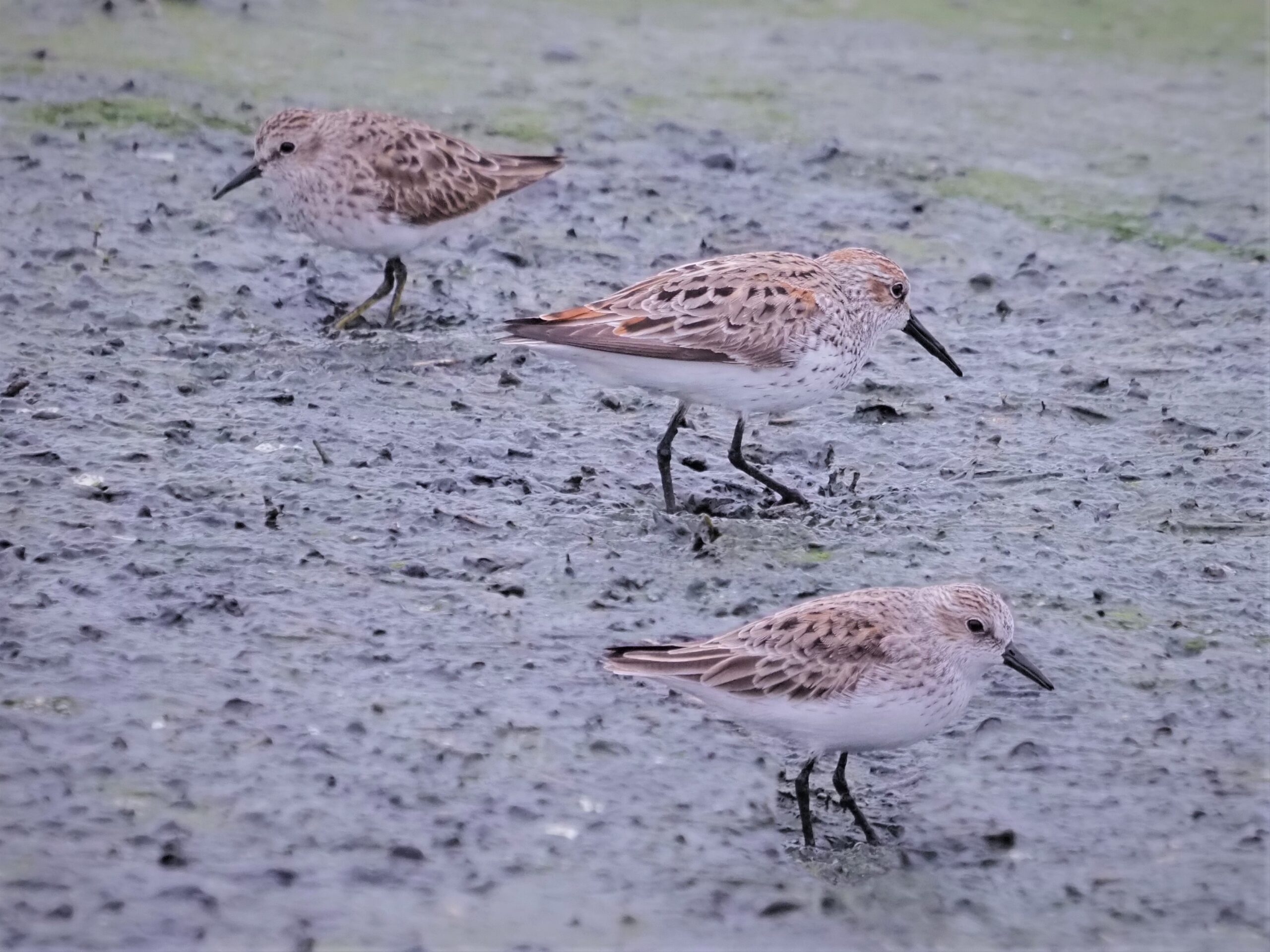
Comparisons between Least & Western Sandpipers
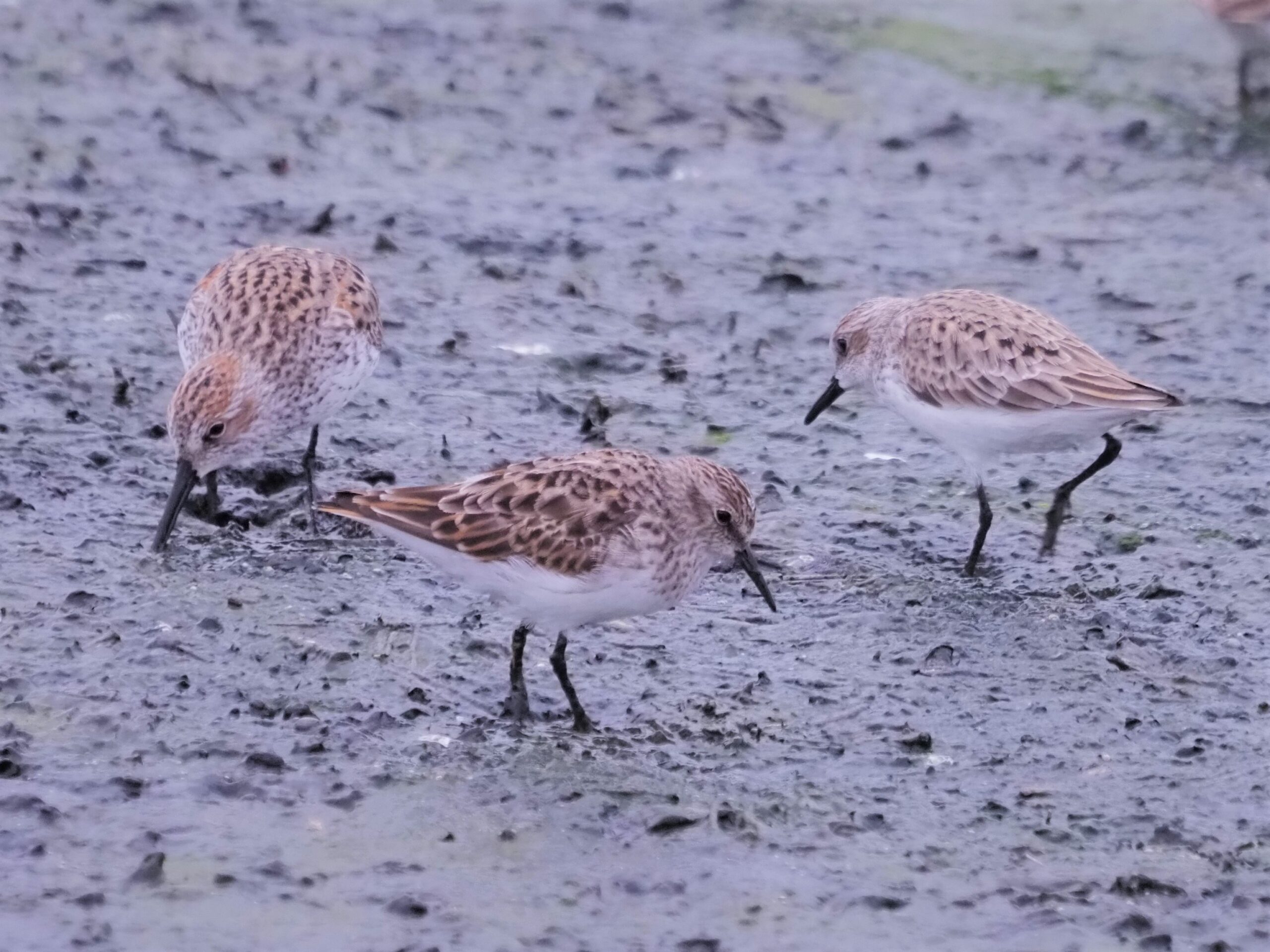
The Least Sandpiper is compared with the Western Sandpiper below. The larger species in 1 photo, which superficially resembles a Western Sandpiper is a Dunlin. In comparison with the Least, the Western has a longer, sturdier bill, a blocky head, longer legs and is wider in the shoulder area. Overall the Western is slightly larger, taller, longer and heavier than the Least. In one photo the Western is in high alternate plumage — note how pale or “frosty” the Western appears next to the browner Least.
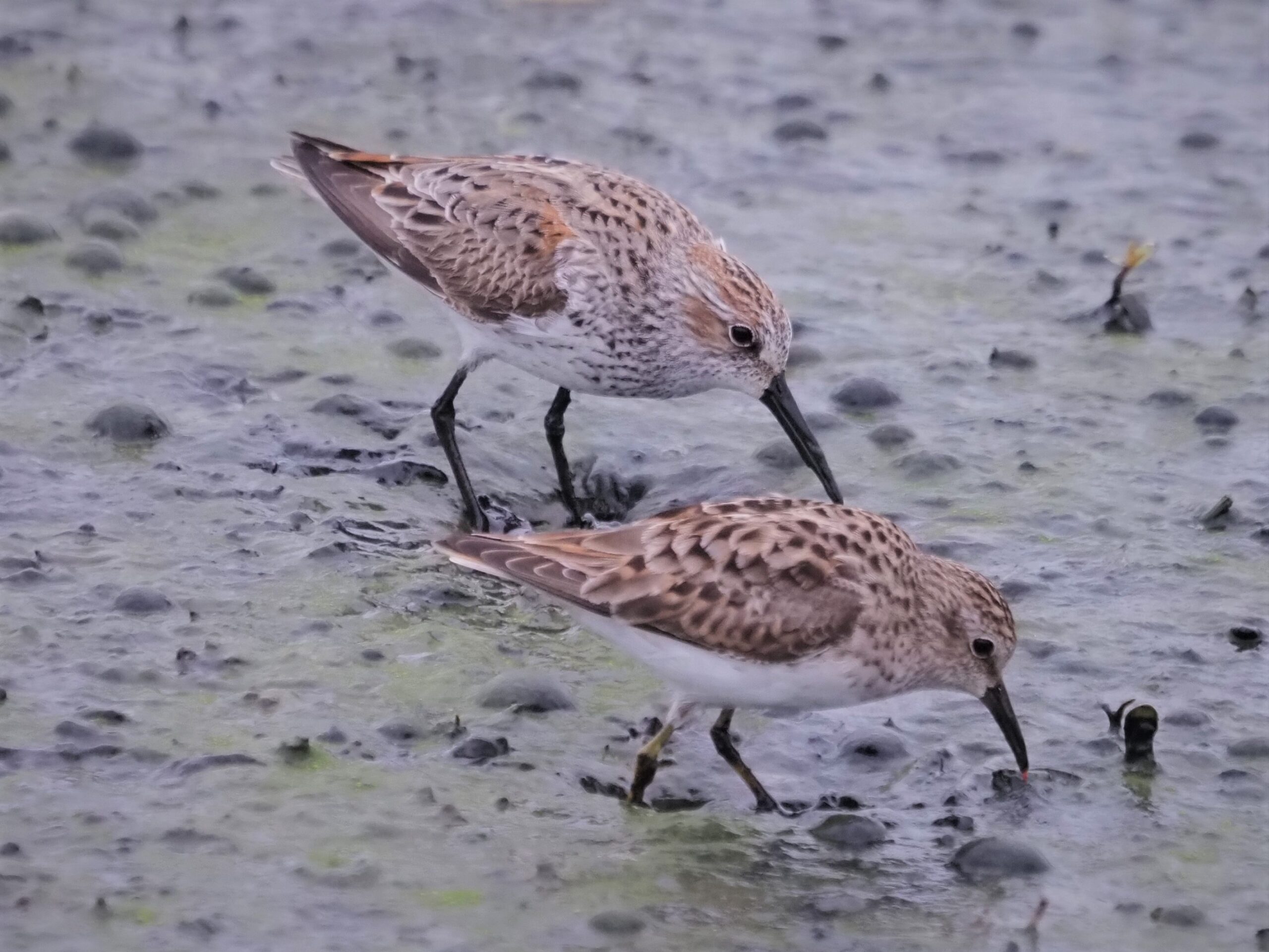
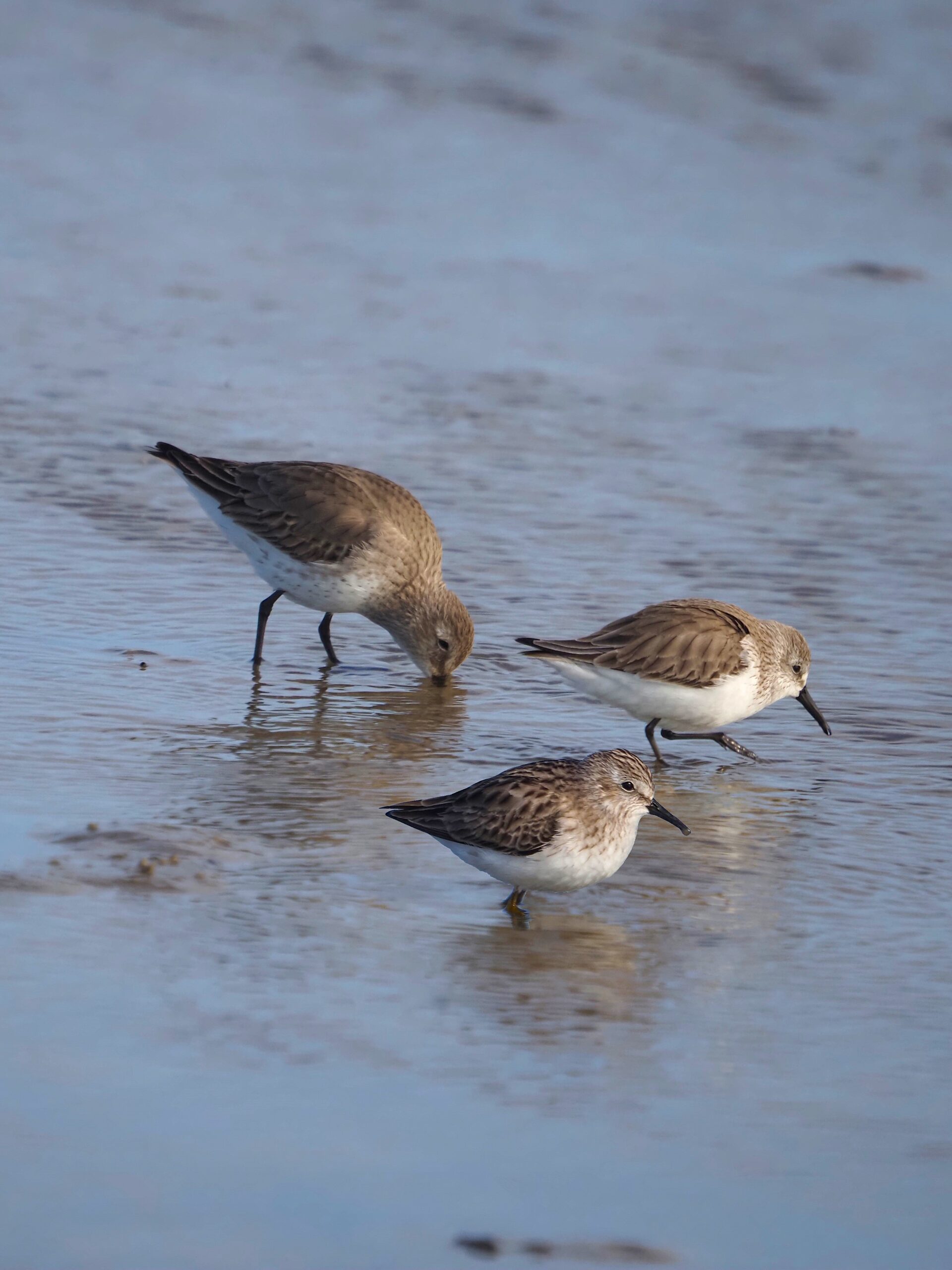
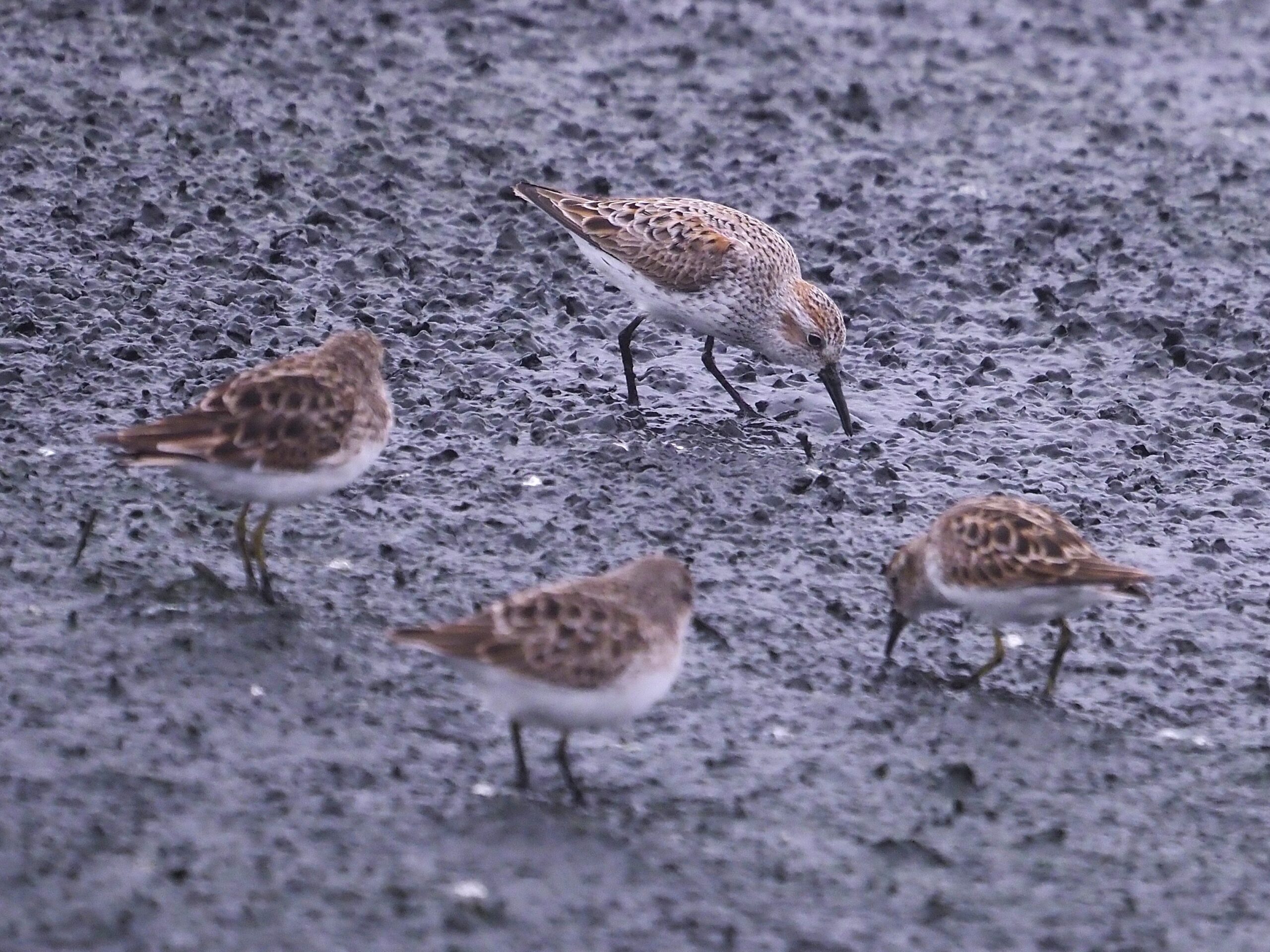
Baird’s Sandpiper Comparisons
Baird’s compared with White-rumped
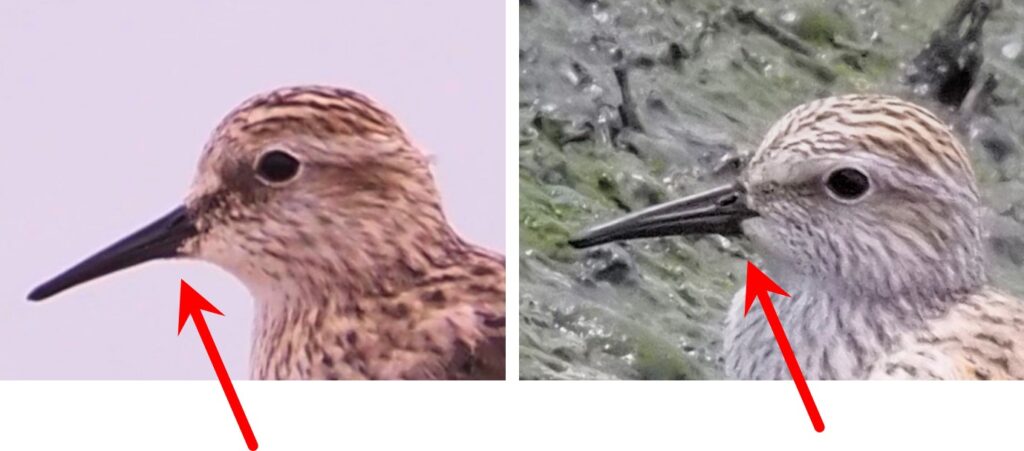
As can be seen in the photos below, Baird’s is a browner bird, while White-rumped is paler and streakier, although the streaks on the flanks are not always present. The streaks on the breast of the Baird’s are underlain by a pale, dingy brown, and are shorter, while the streaks on the breast of the White-rump have white below and are finer and longer. Though not present in the individual pictured below, most White-rumps have a more bulbous-tipped bill, while Baird’s is fine-tipped. Baird’s on the left, White-rumped on the right in both sets of photos below.
It has recently been suggested that another field mark to differentiate the Baird’s from the White-rumped is the feathers extended into the lower mandible. It is not yet known if all Baird’s exhibit this characteristic, but it is present in all of the Baird’s photos shown here and in none of the White-rumped photos.
Baird’s compared with Least
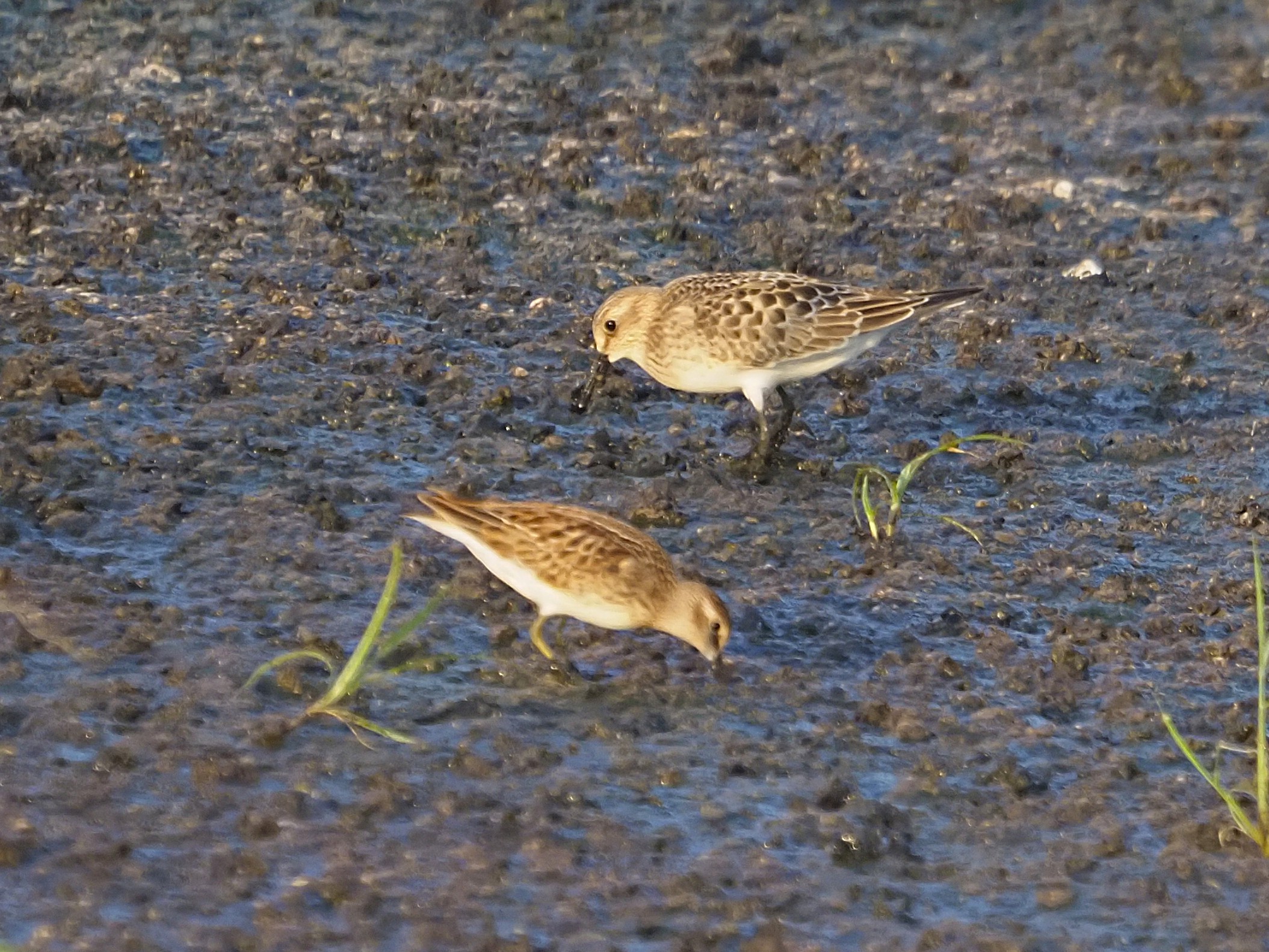
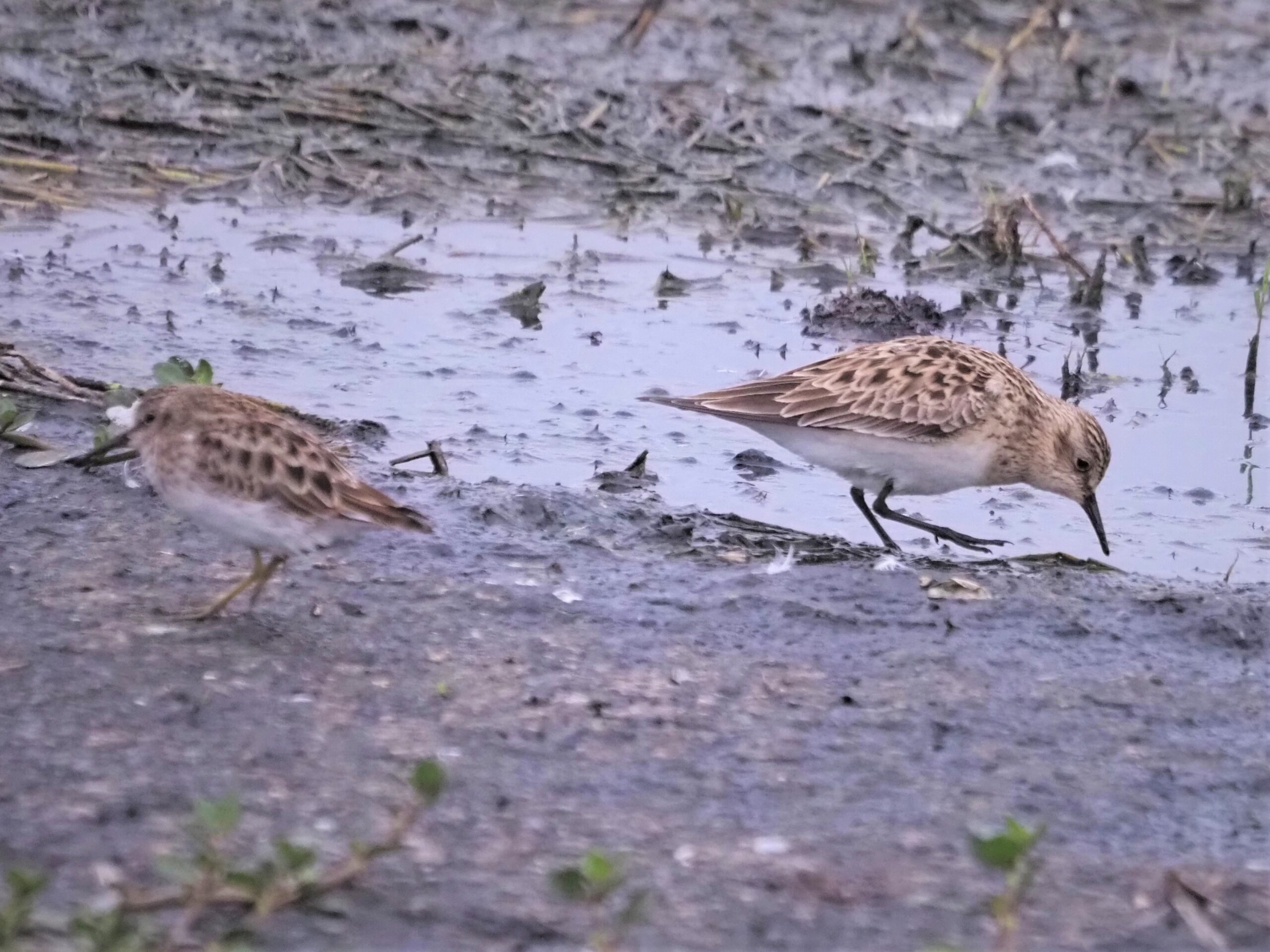
The Baird’s is not only a larger bird than the Least, but it is also more attenuated — stretched out — over the back half of the bird.
Baird’s compared with Least and Pectoral
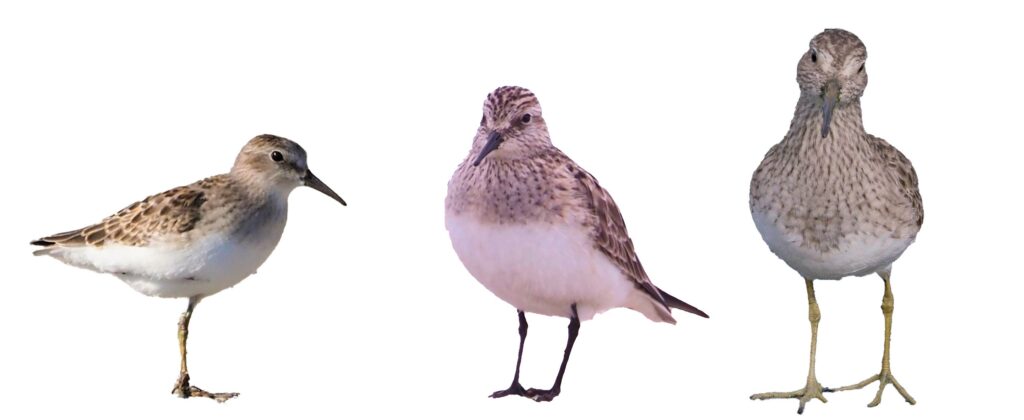
The Baird’s Sandpiper is one of the 3 brown sandpipers: Baird’s, Least, and Pectoral. Though they are much different in size, it is possible to momentarily confuse them, especially at a distance. As shown in the composite photo below, the way in which the brown of the breast transitions from the white of the belly can help to separate them. The brown of the Least’s breast transitions diffusely. Both the Baird’s and the Pectoral have a sharp transition between brown and white, however the brown on the Pectoral begins almost at the belly, while the Baird’s is higher up on the breast. The brown of the Pectoral also often comes to a point in the middle. Least, Baird’s and Pectoral are shown below from left to right.
White-rumped Sandpiper Comparisons
White-rumped Compared to Least and Baird’s
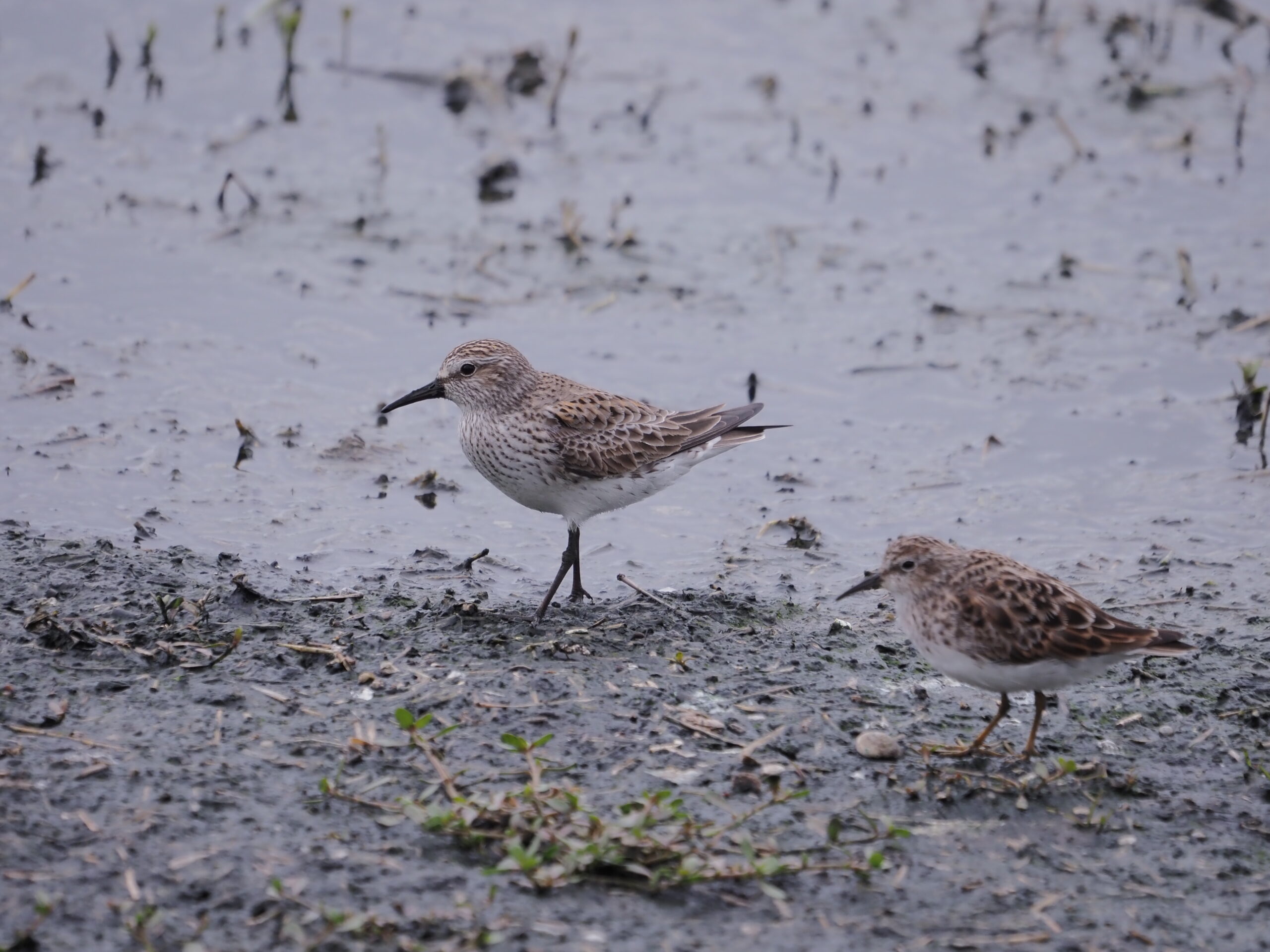
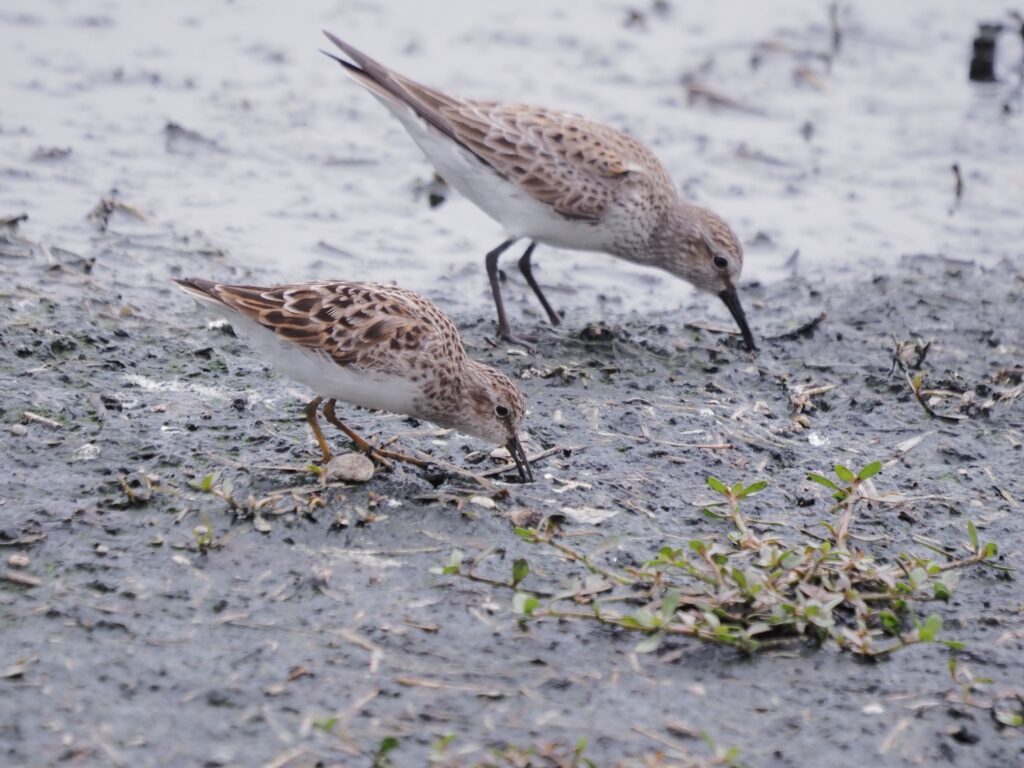
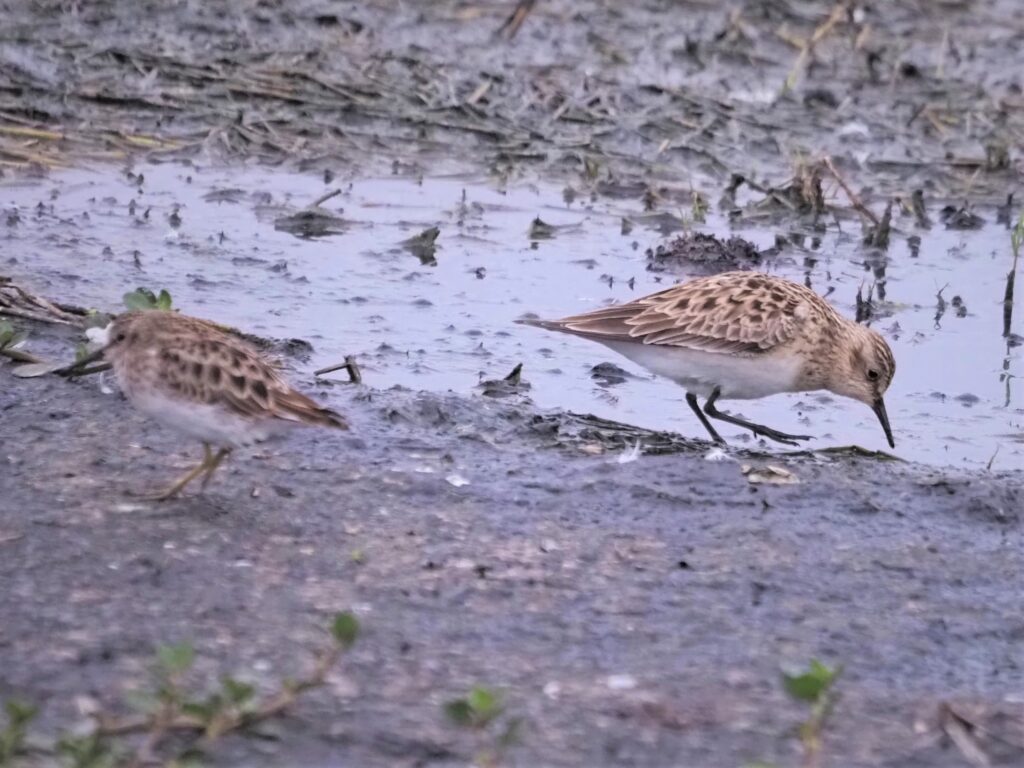
The feeding posture of the White-rumped Sandpiper is worth noting. As seen below in comparison to a Least Sandpiper, the White-rumped generally feeds at a diagonal to the ground, with its tail lifted high in the air. This posture exhibits the White-rumps long proportions and lanky build. By comparison the similarly-sized Baird’s Sandpiper generally holds its body parallel to the ground like this feeding Least below.
The feeding posture of the Baird’s Sandpiper is shown below in comparison to a Least.
White-rumped Compared to Other Species
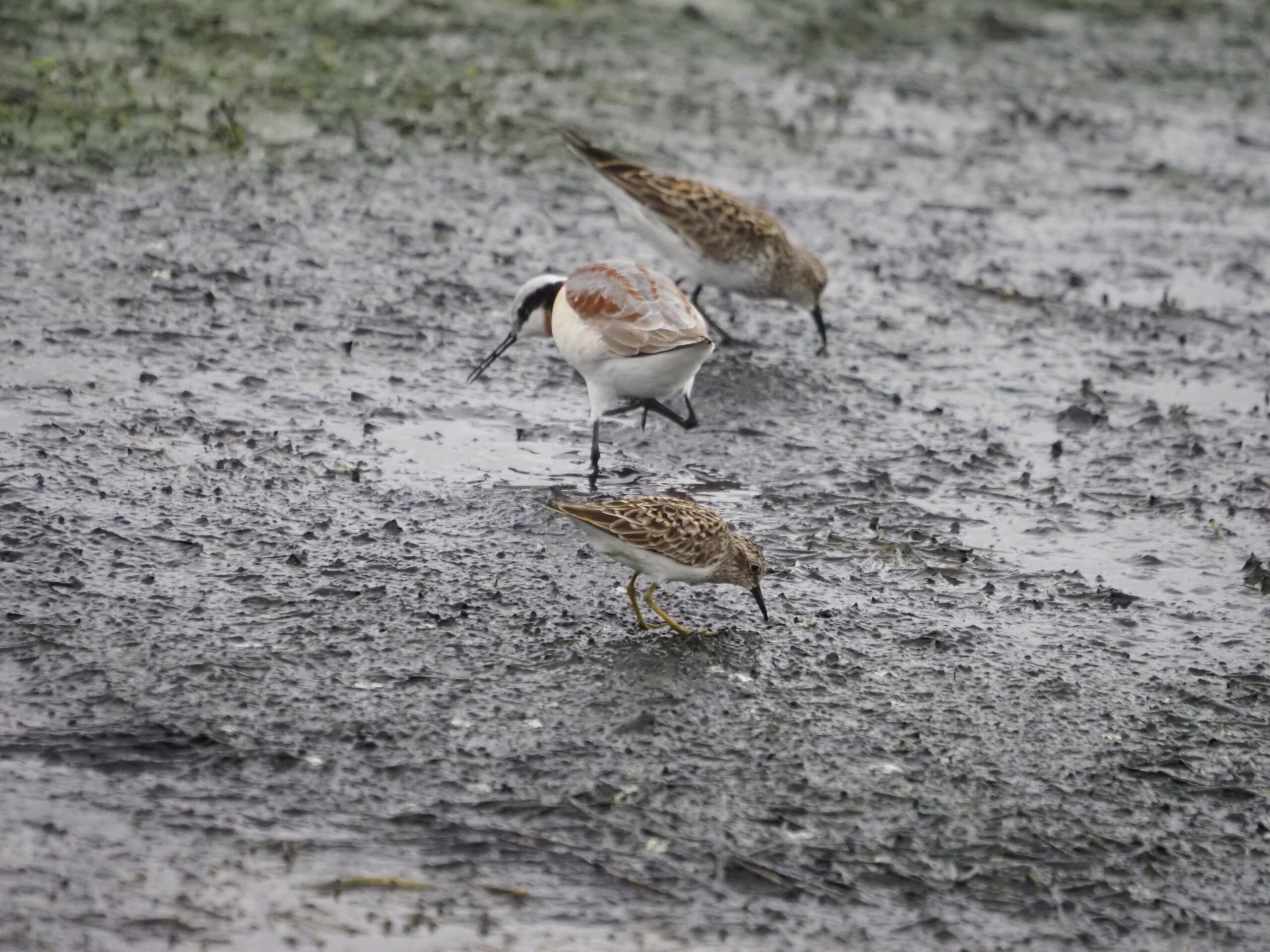
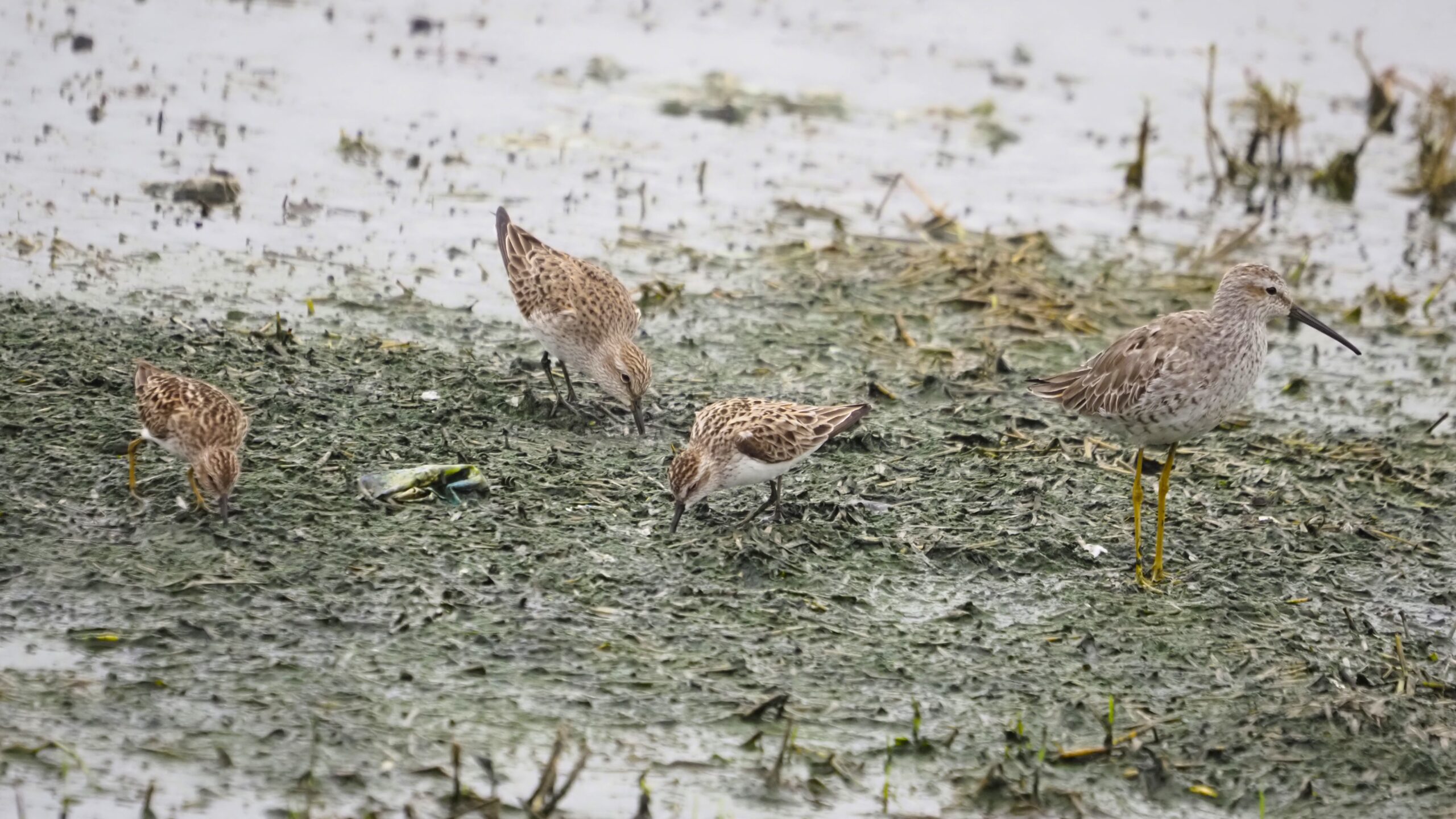
The White-rumped Sandpiper is compared with the Least, Semipalmated, Stilt and Pectoral Sandpipers as well as the Wilson’s Phalarope in the following images.