Two Texas Cormorants Comparison
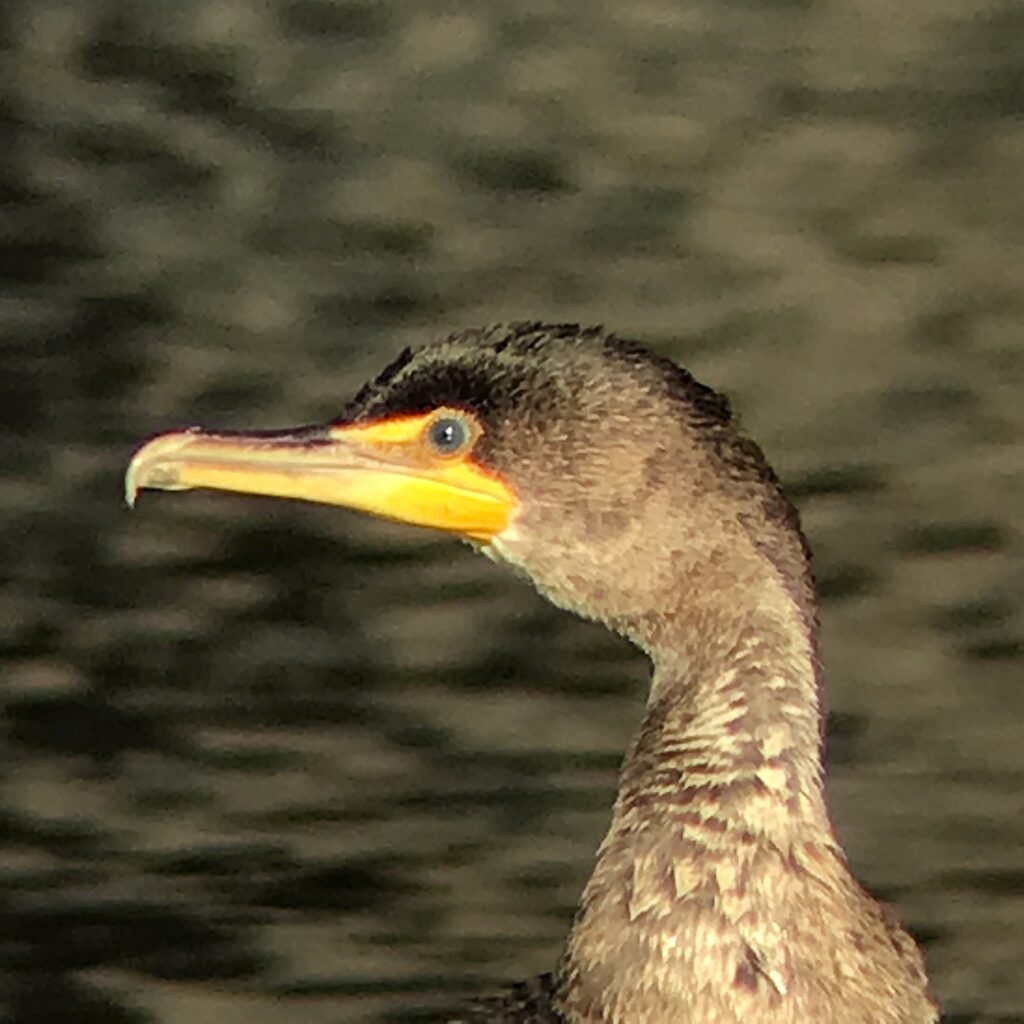
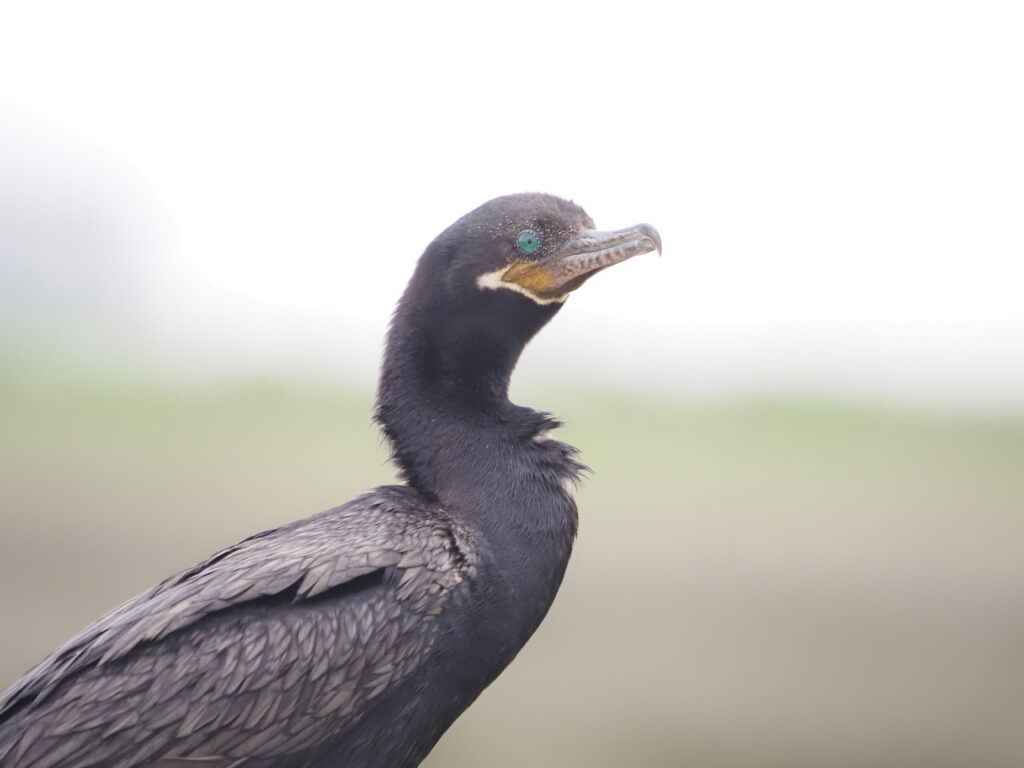
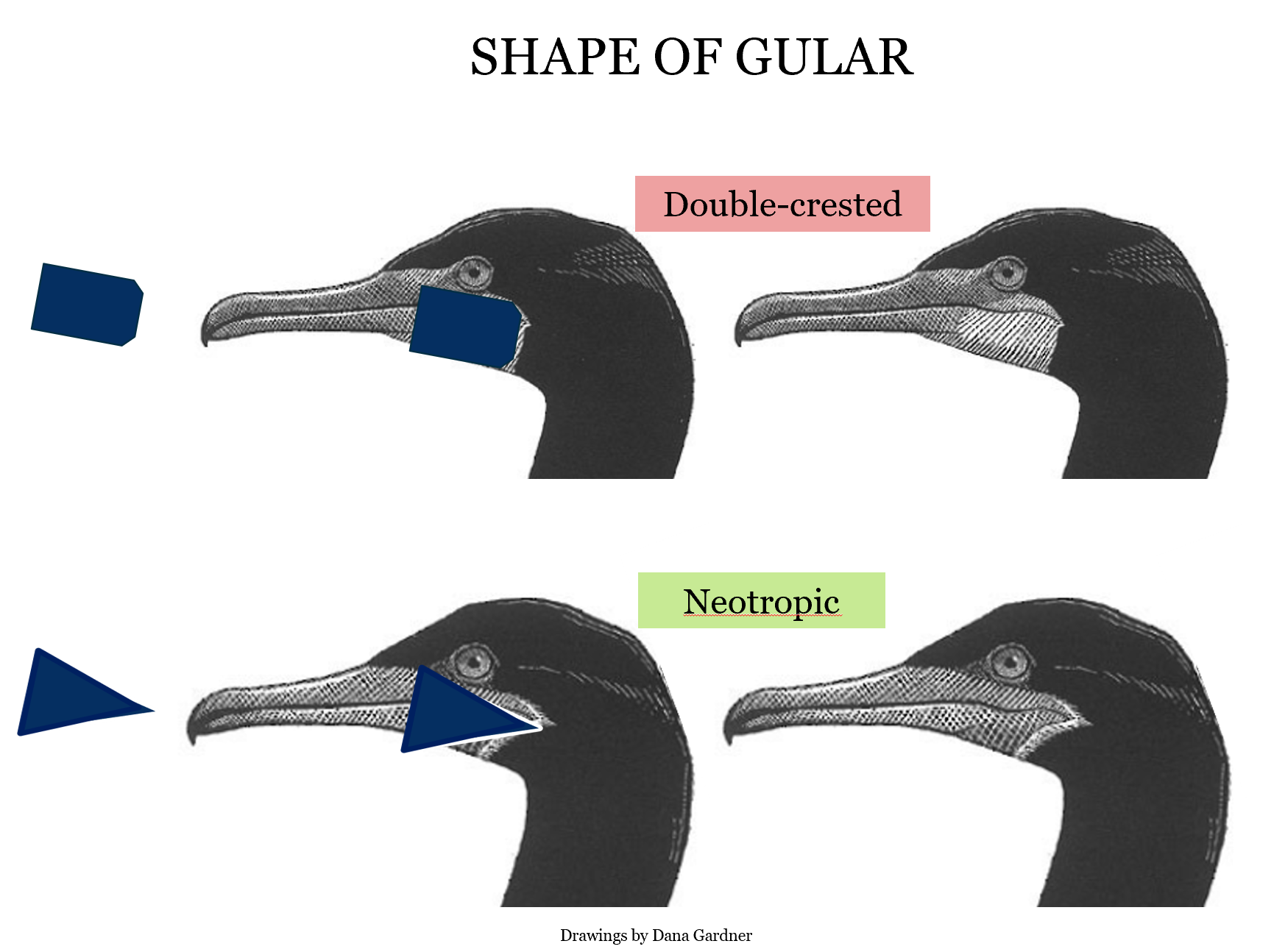
As frequently suggested, the bill & head offer the best identification clues. As shown below, the bill of the Double-crested is slightly thicker and more bulbous-tipped. The gular is the area of un-feathered skin joining the lower mandible to the neck. On the Double-crested the back of the gular is somewhat square-shaped, while that of the Neotropic is acutely pointed and in breeding plumage the back of the gular is outlined in white. Another thing to note in these photos is the yellow (bare) skin of the lores in the Double-crested, while the Neotropic’s lores are dark (the lores is the area between the eye and the nostril).
Although most field guides say that Neotropics have dark lores, in his 2007 article (Field identification of Neotropic and Double-crested Cormorants, Cin-Ty Lee July, 2007) Cin-Ty Lee points out that some juvenile Neotropics have yellow lores. In these cases the shape of the back of the gular, the tail-length and the shape of the scapular feathers should be closely observed.
Several points of identification can be seen in the photos below. The Double-crested is a chunkier bird, while the body of the Neotropic is more elegant, slender and slightly oval-shaped. The tail of the Double-crested is squared off at the bottom and broader as it meets the body, while that of the Neotropic is rounded or wedge-shaped and pinches in slightly as it meets the body. The tail of the Neotropic usually appears longer than that of the Double-crested in proportion to the body.
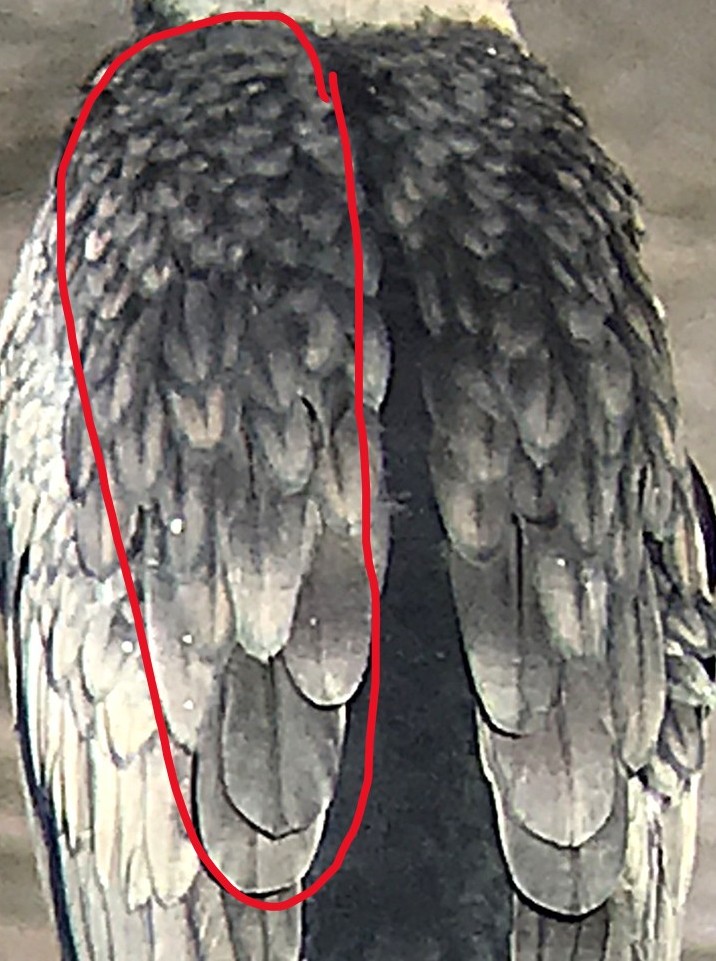
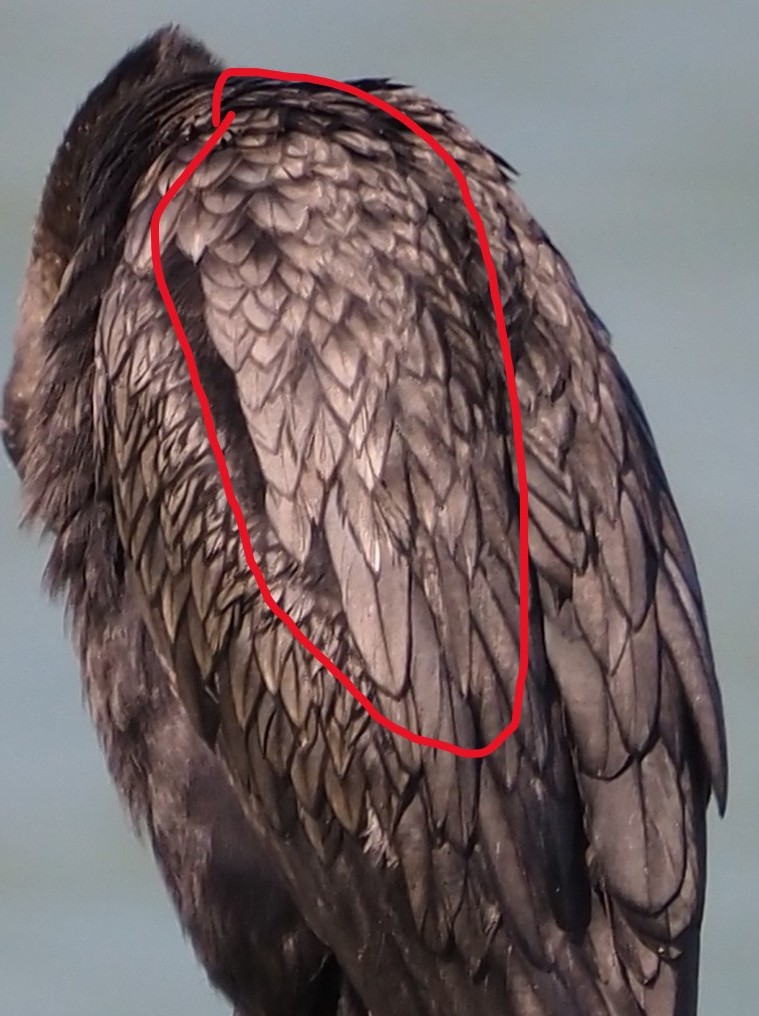
The photos below also illustrate the more rounded ends of the covert & scapular feathers of the Double-crested, while those of the Neotropic are more sharply ended.
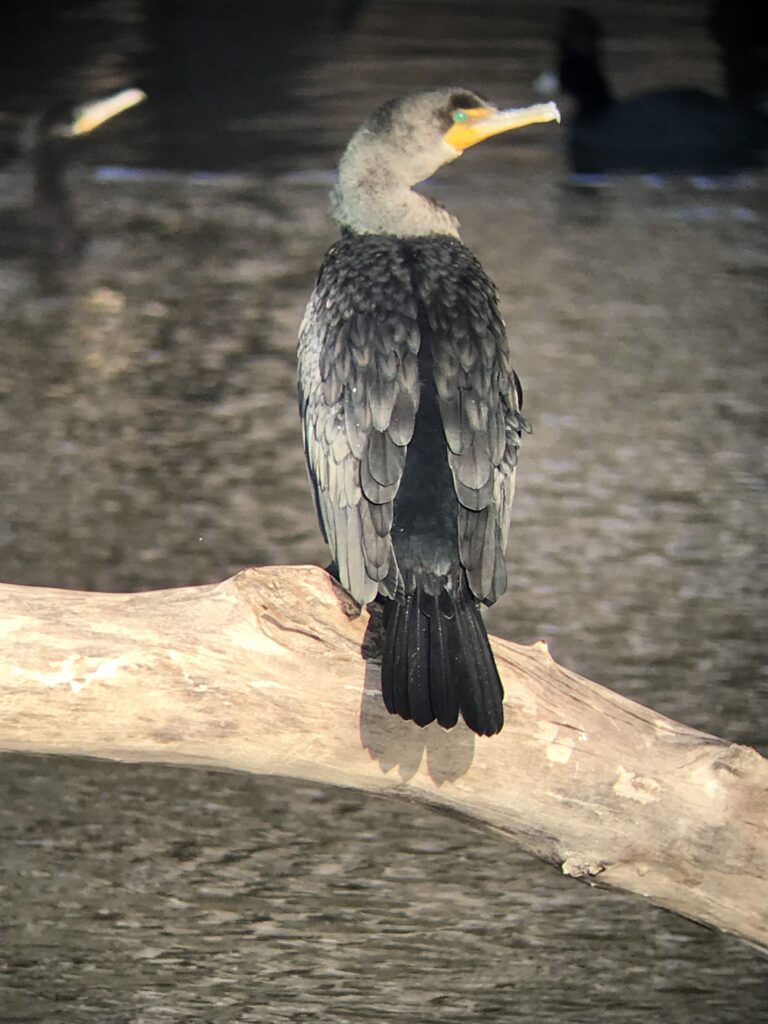
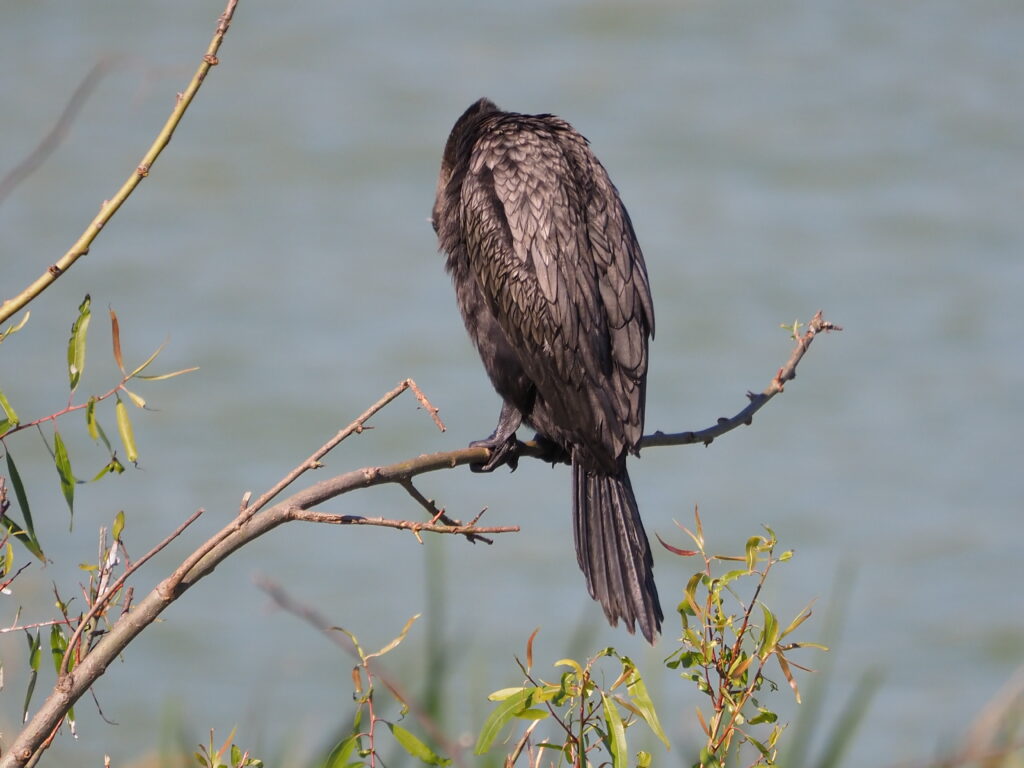
The scapulars are outlined below.
As shown in the video below, Cormorants fly in somewhat disorganized “Vs” or long lines, which shift and change. They also have noticeably slower wingbeats than ducks.
I captured about 1/2 the flock in this video!!!!!
Though sometimes ambiguous, the two Texas cormorants can often be separated in flight based on their relative tail-lengths. In the Neotropic the tail is approximately the same length as the neck/head, while the tail of the Double-crested is usually noticeably shorter than the head/neck. I like to refer to the Neotropic as the “Long-tailed Cormorant”, while I often call the Double-crested the “Short-tailed”.
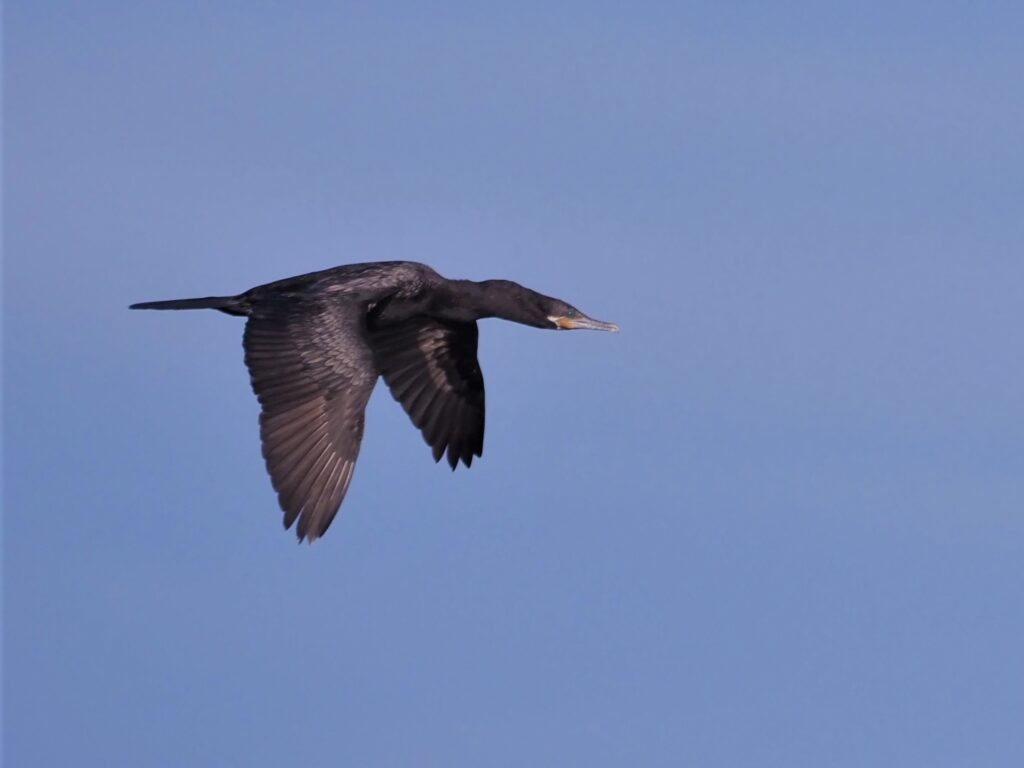
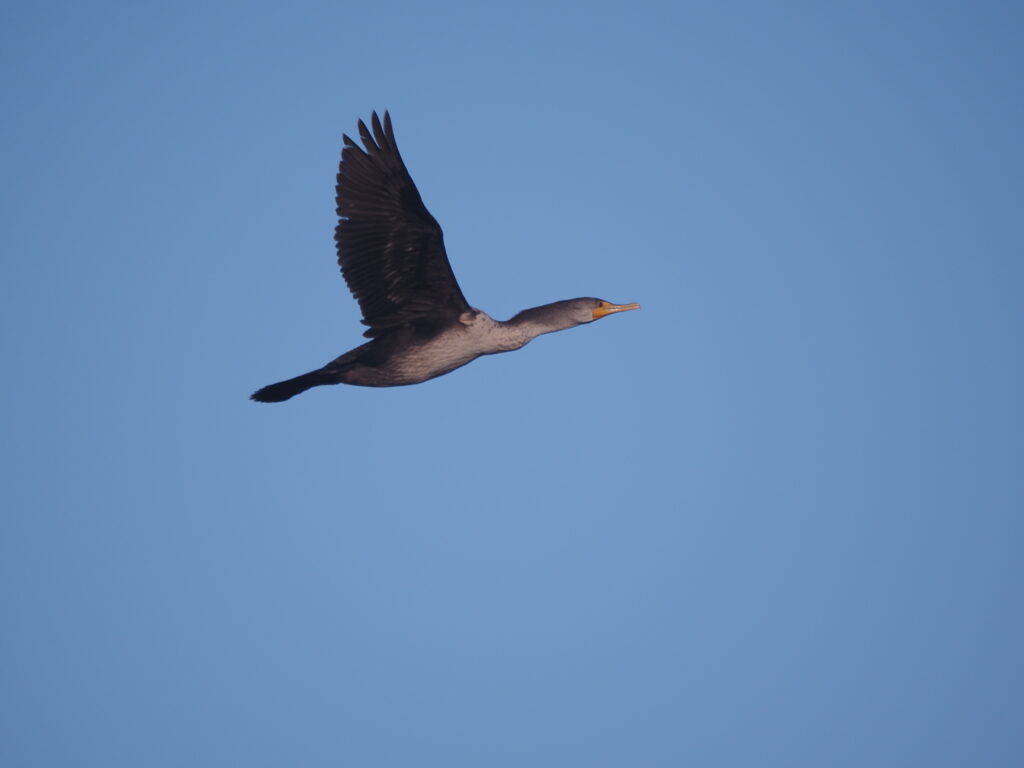
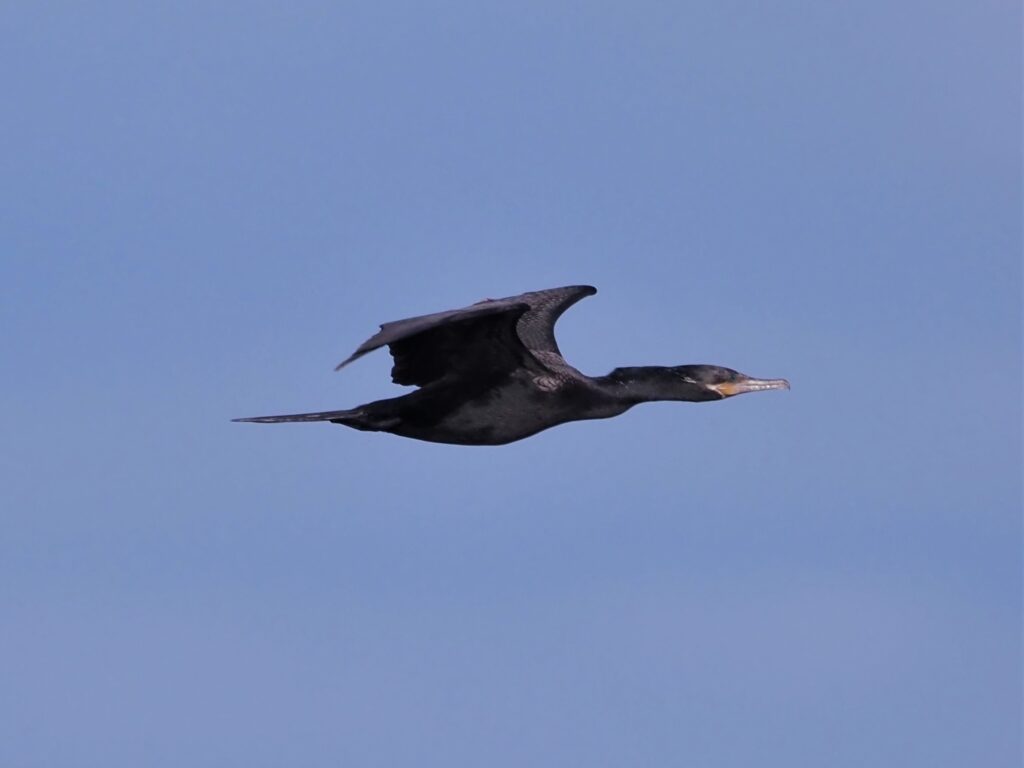
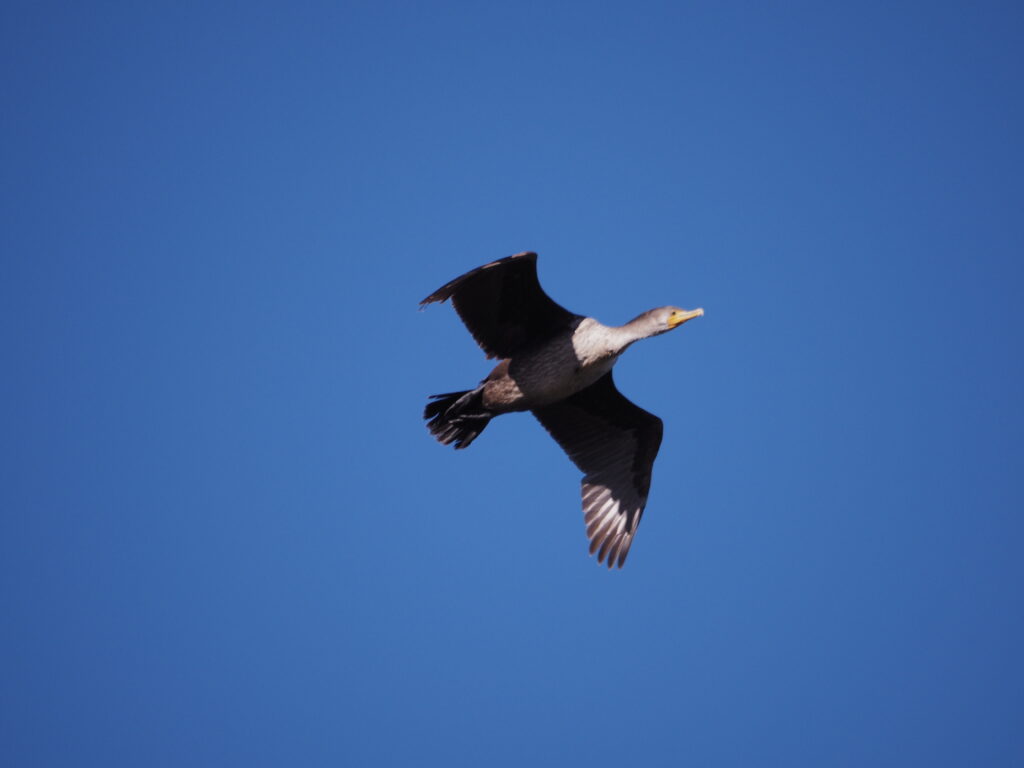
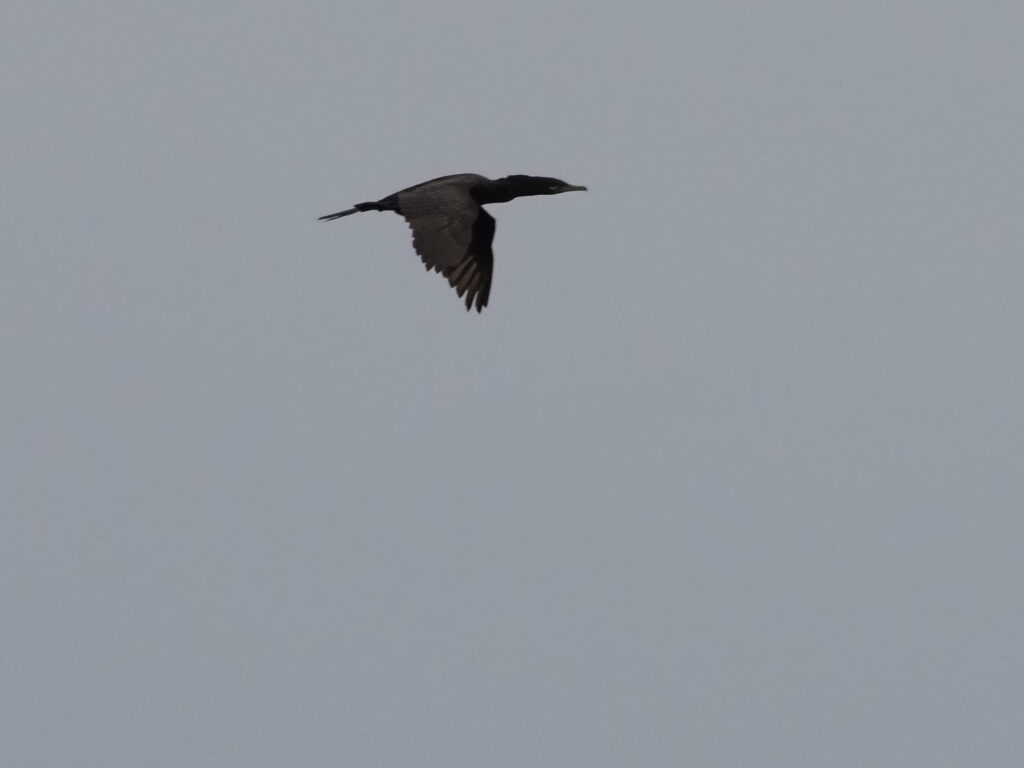
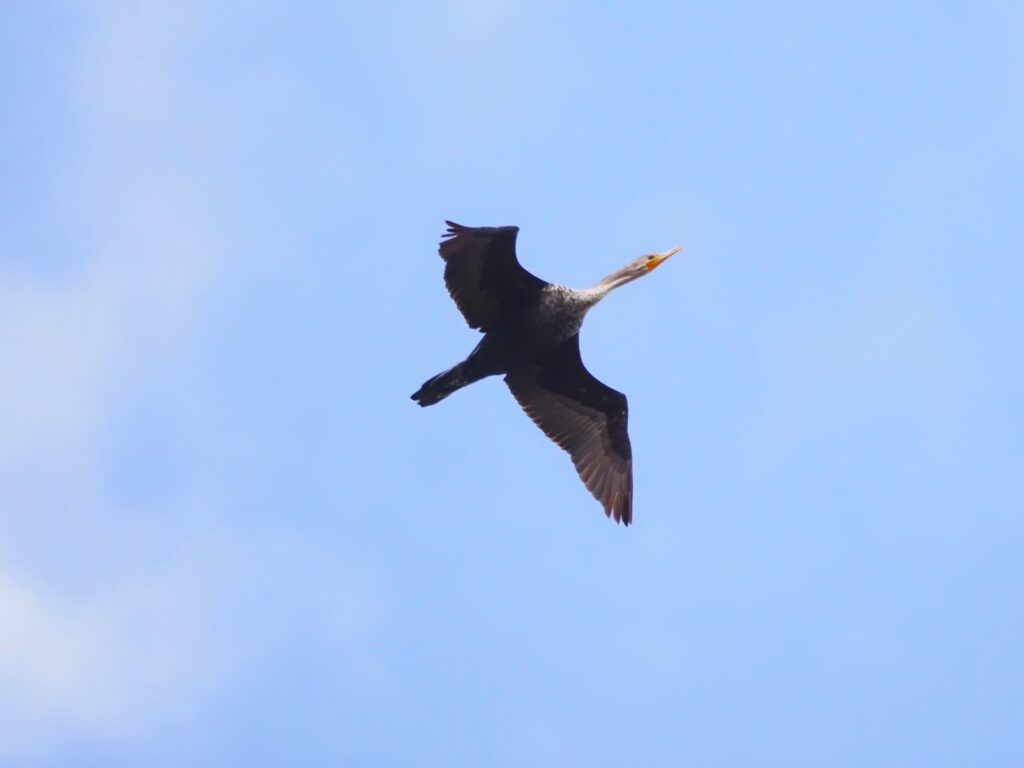
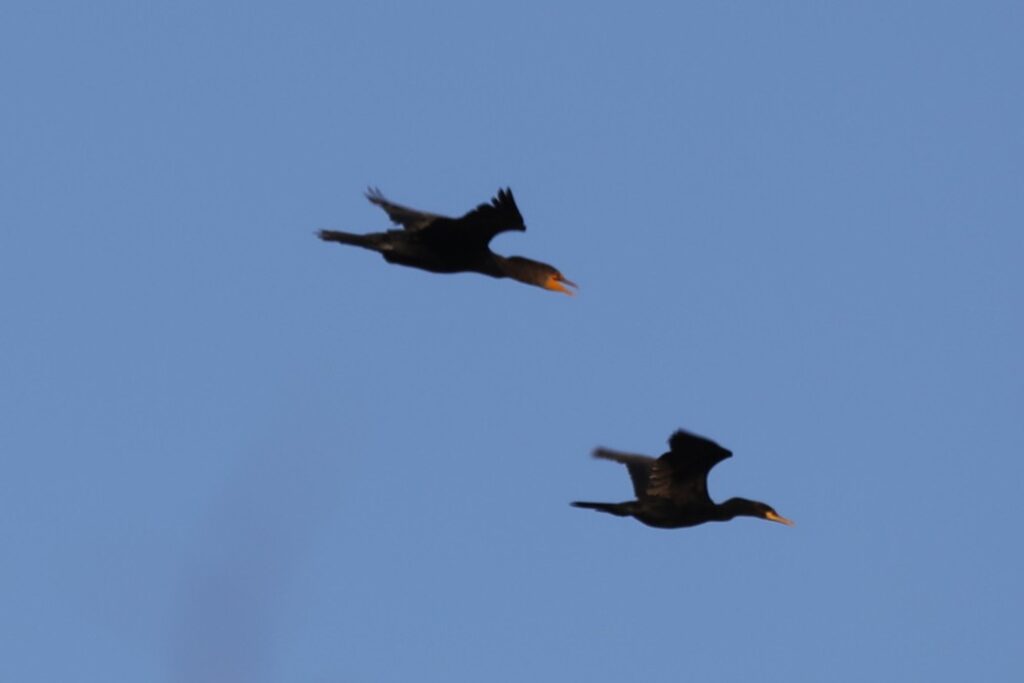
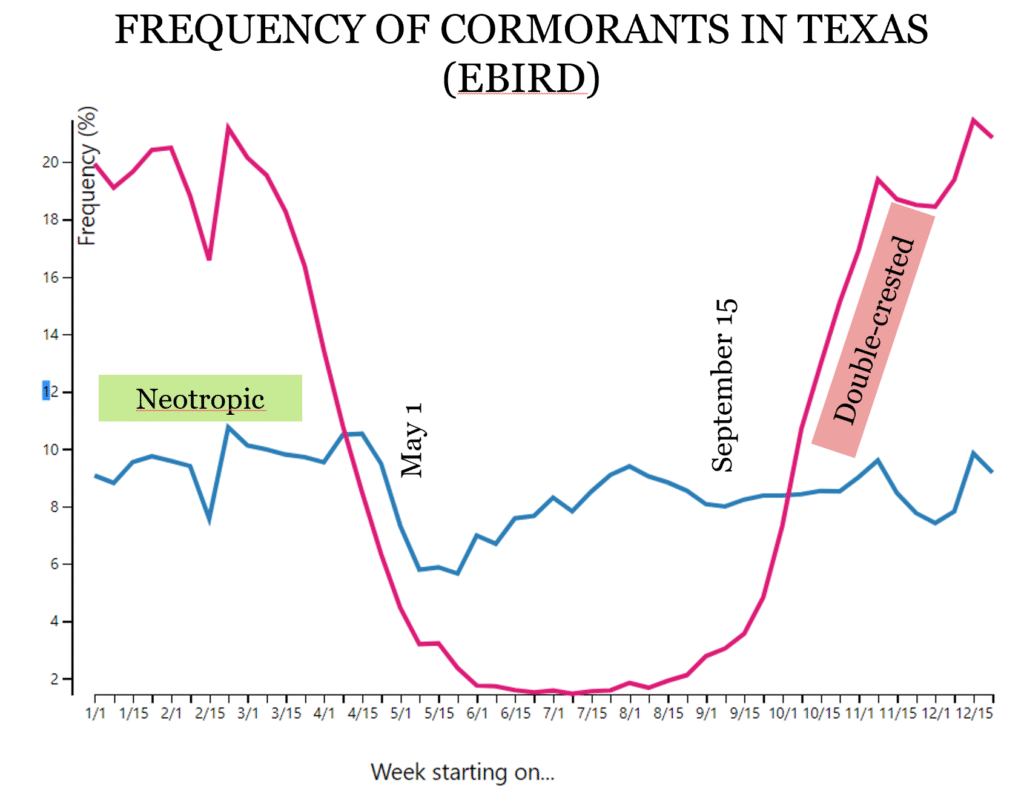
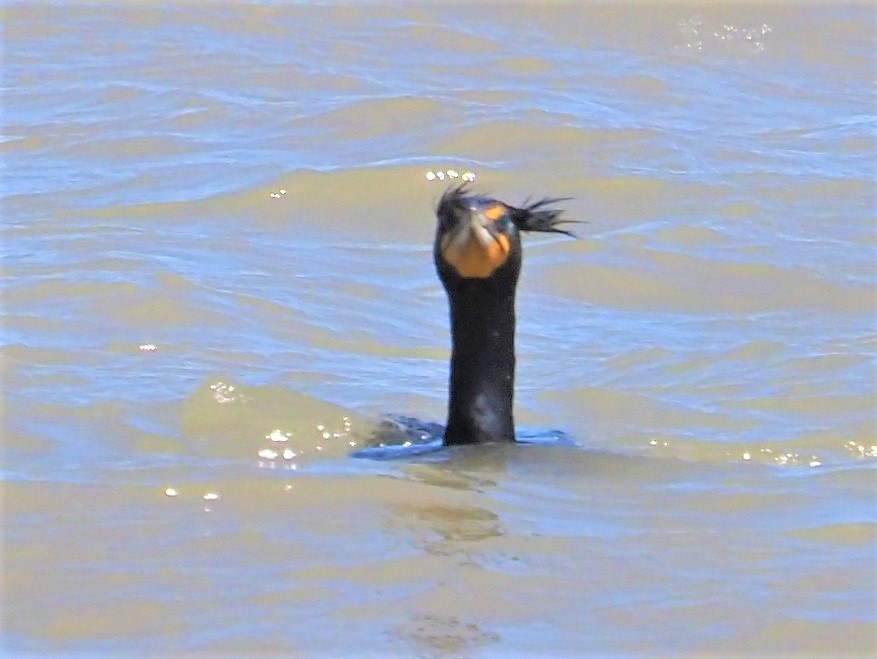
The first photo shows a Neotropic in April without any crests. The name-sake double crests of the Double-crested can be seen in the 2nd and 3rd photos below. The Double-crested retains its crests for a relatively short period; March-May.

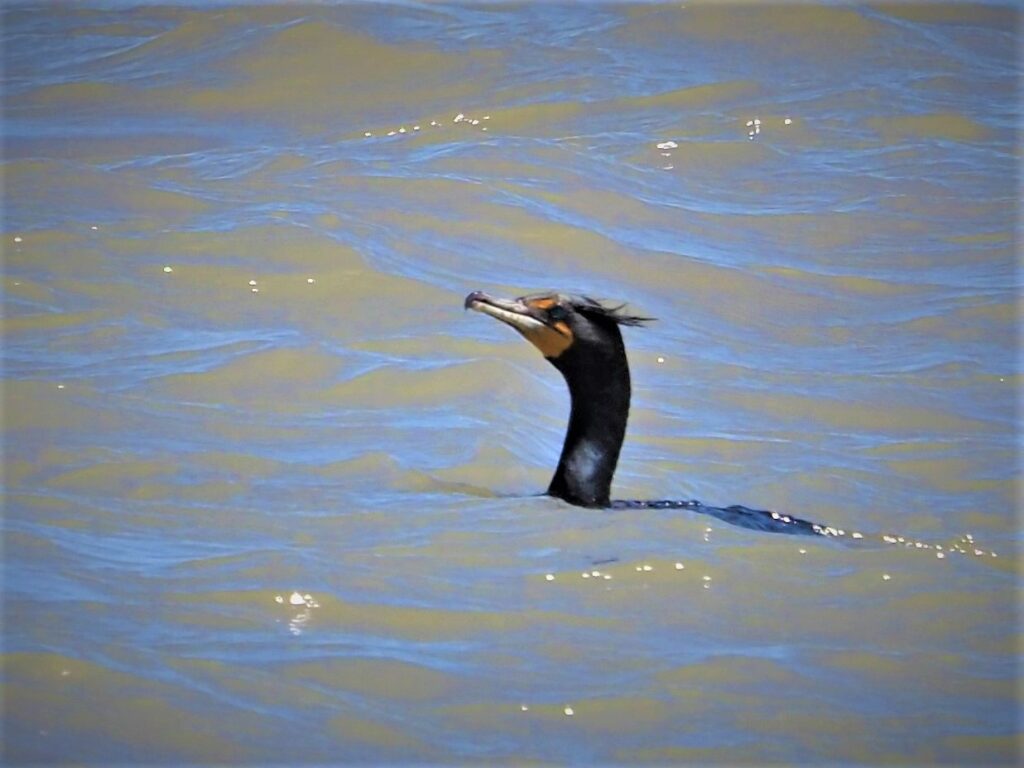
Anhinga
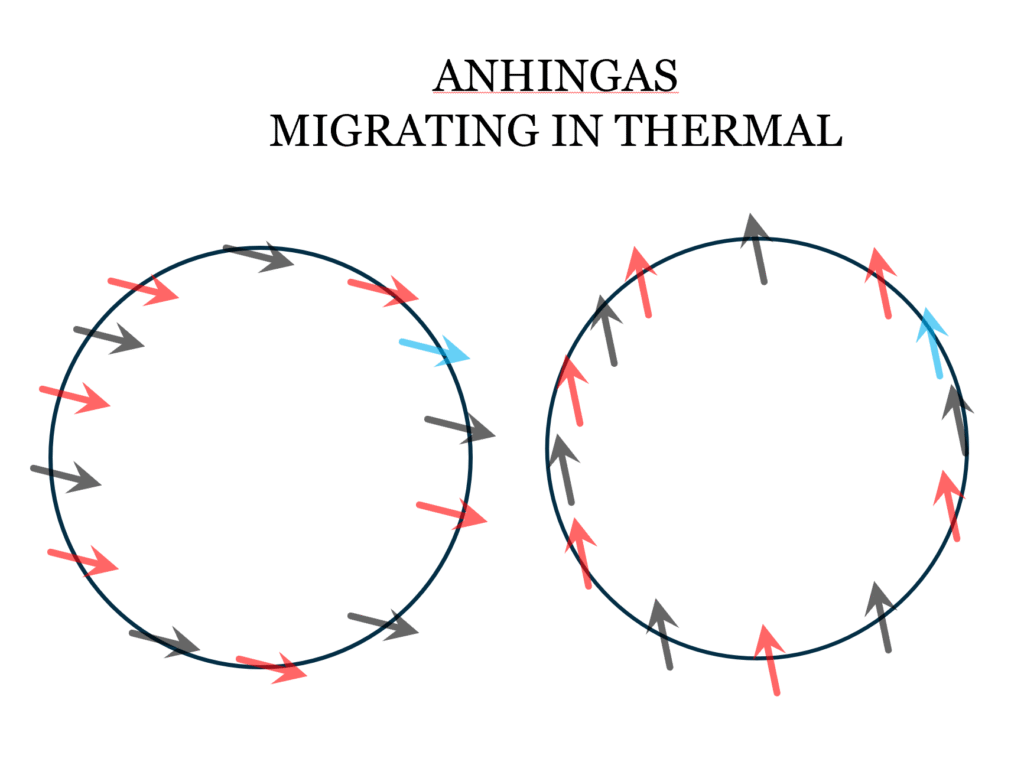
The Anhinga can be found in small numbers year-round on the Texas coast and are more numerous during migration when sometimes large flocks can be seen flying in unison (all facing the same direction) while spiraling upward in thermals (see photo below).
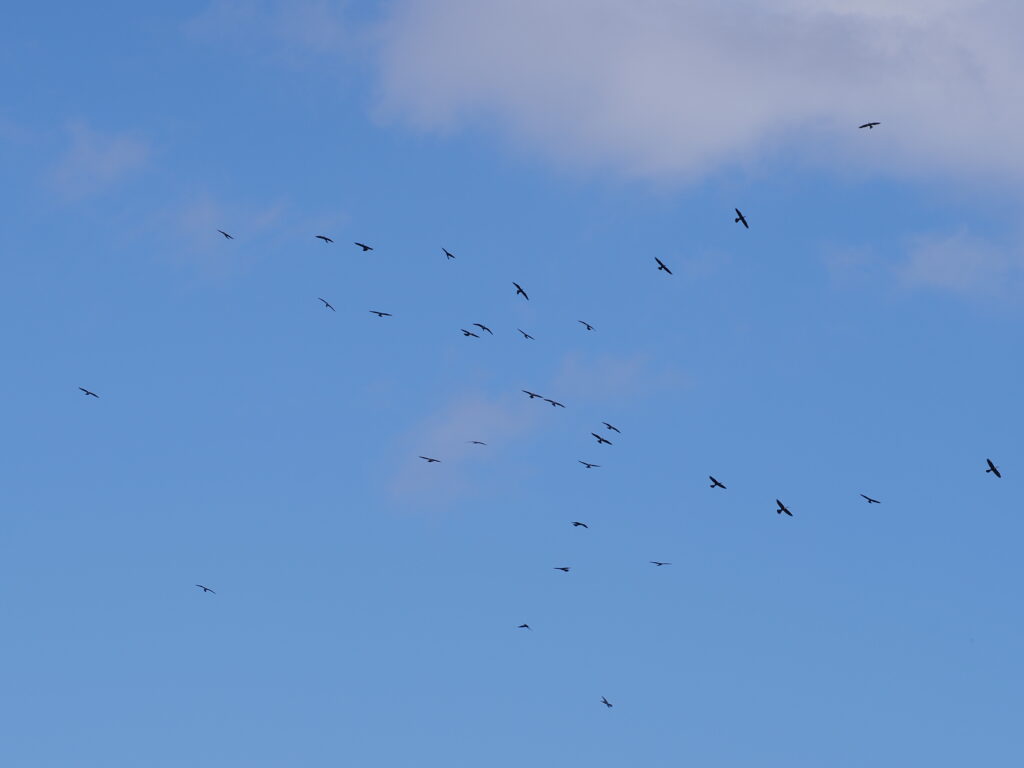
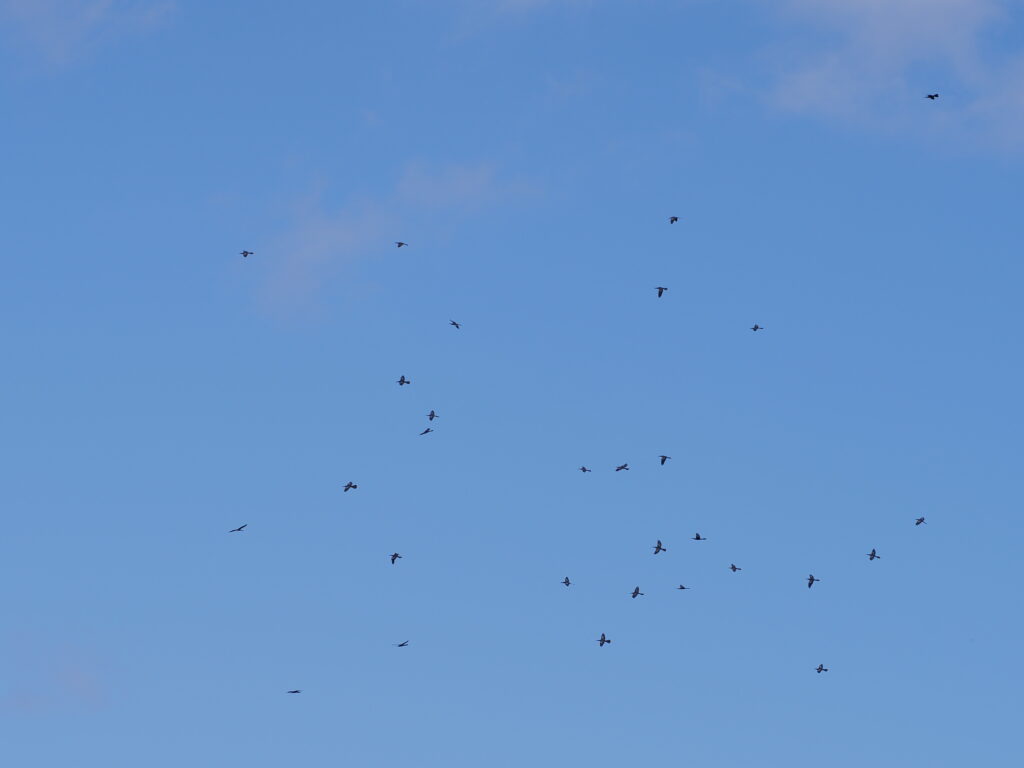
With its lengthy proportions (wings, neck, tail) and sharp, dagger-like bill, the Anhinga can easily be recognized in flight.
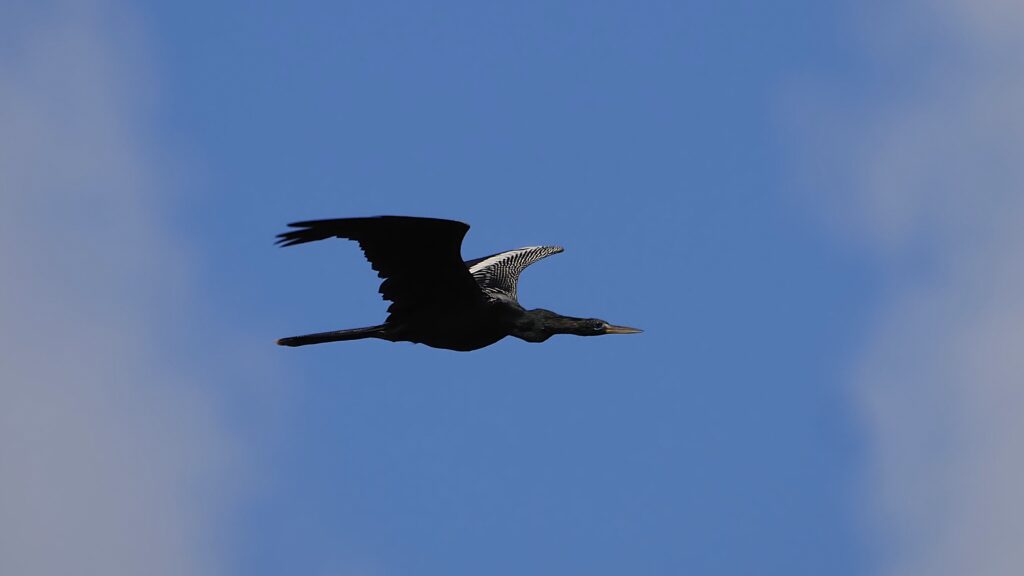
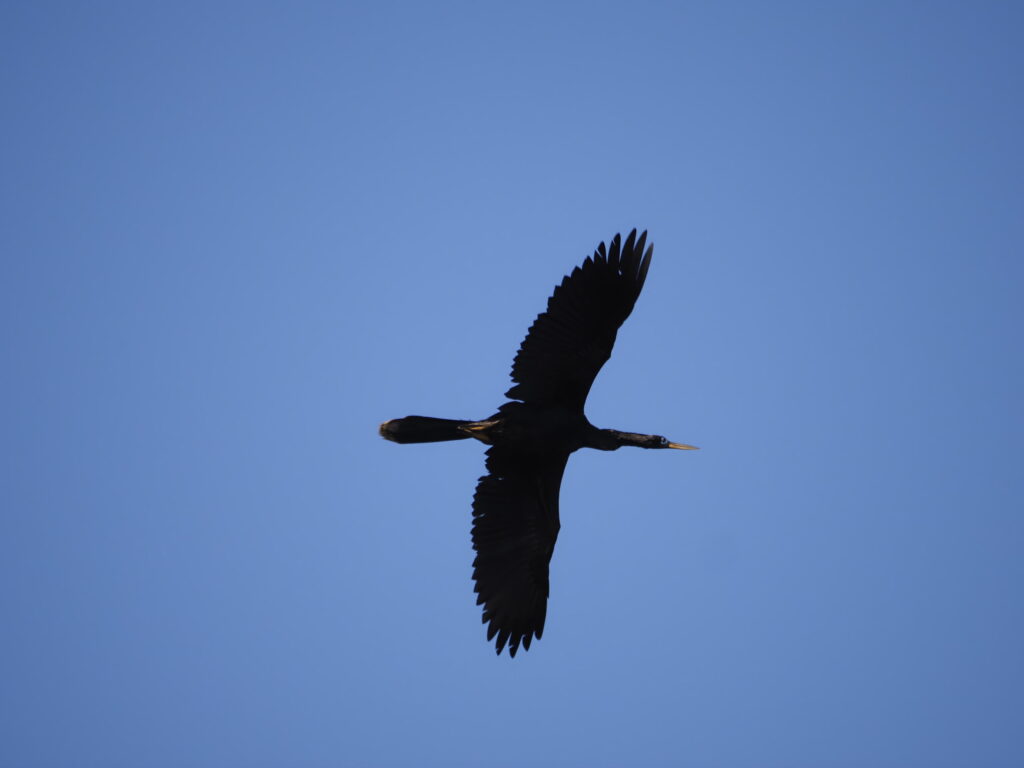
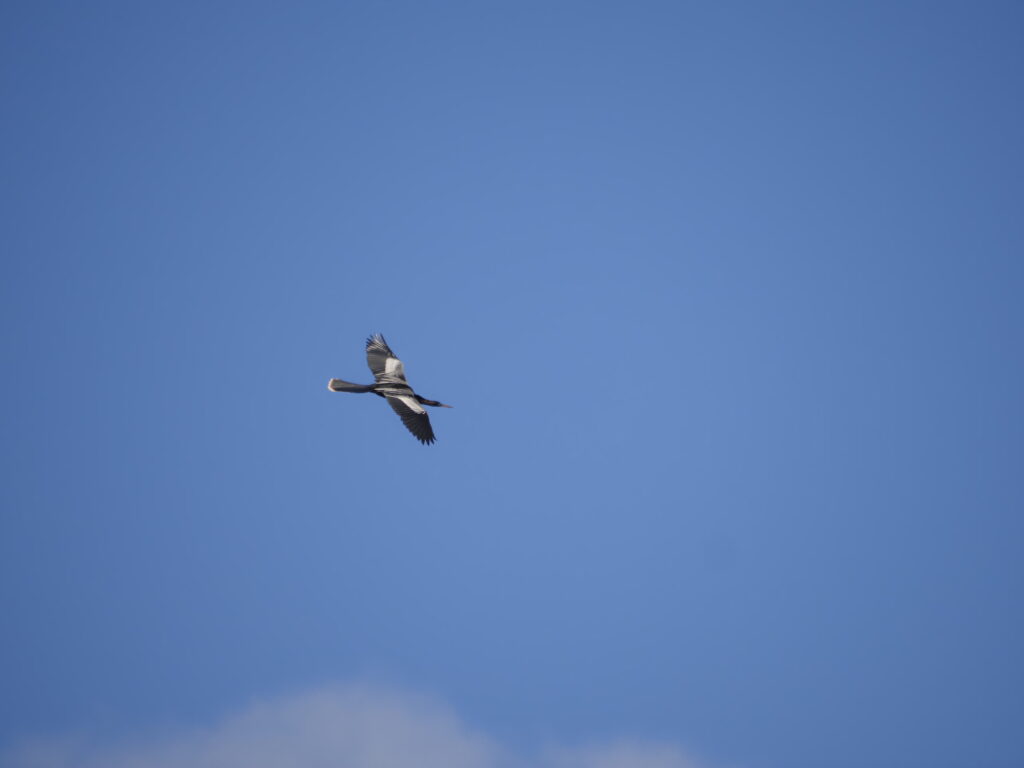
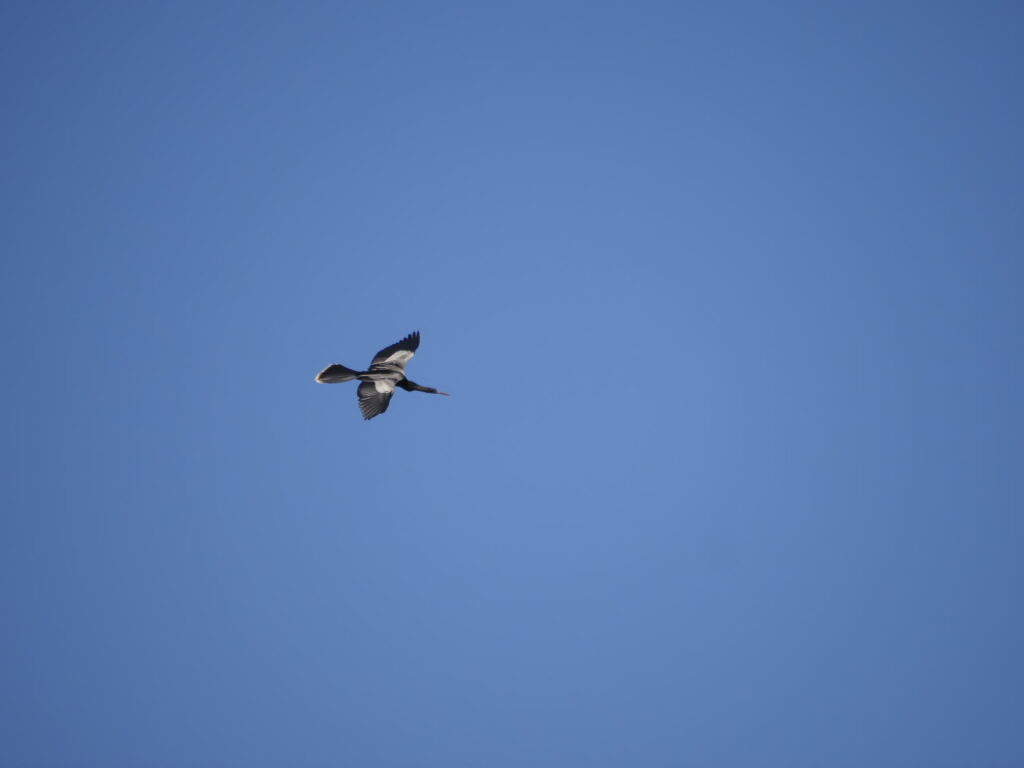
The lores and gular of the male can be spectacularly colors of aqua, green, and yellow (though not apparent in the photo below).
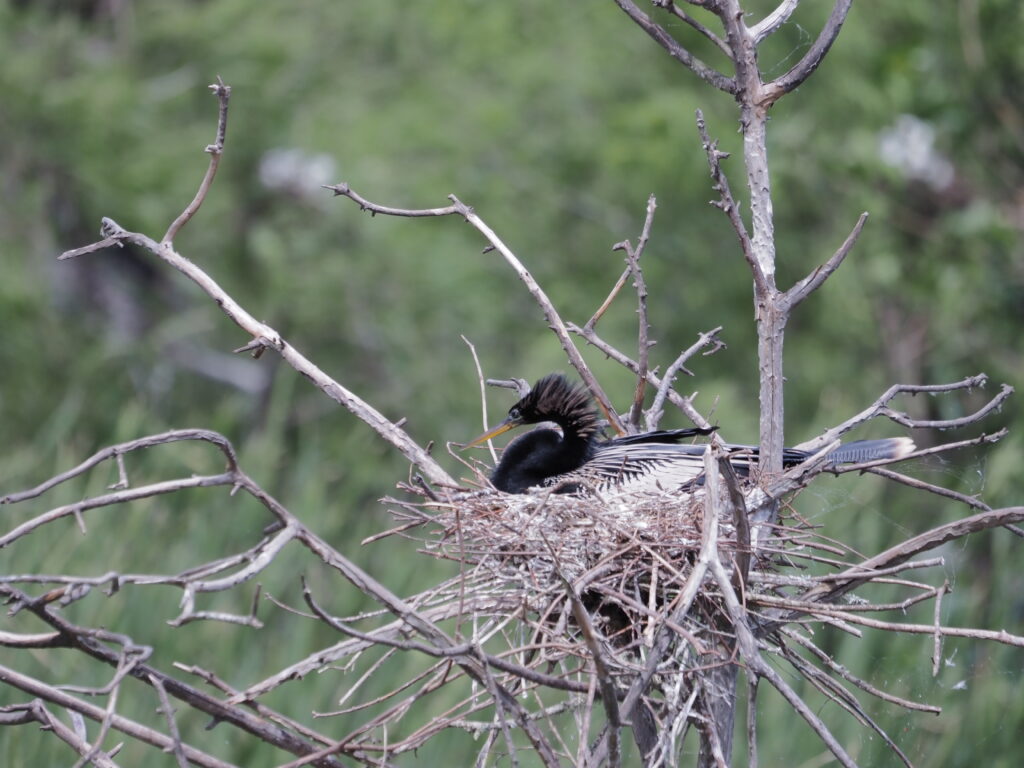
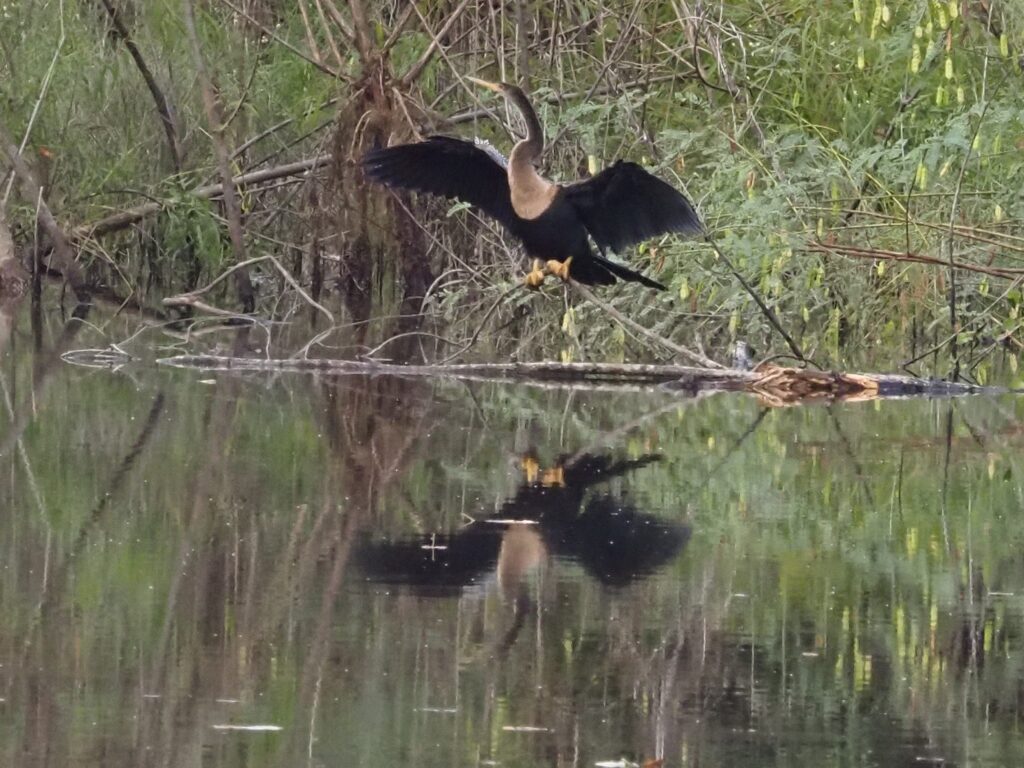
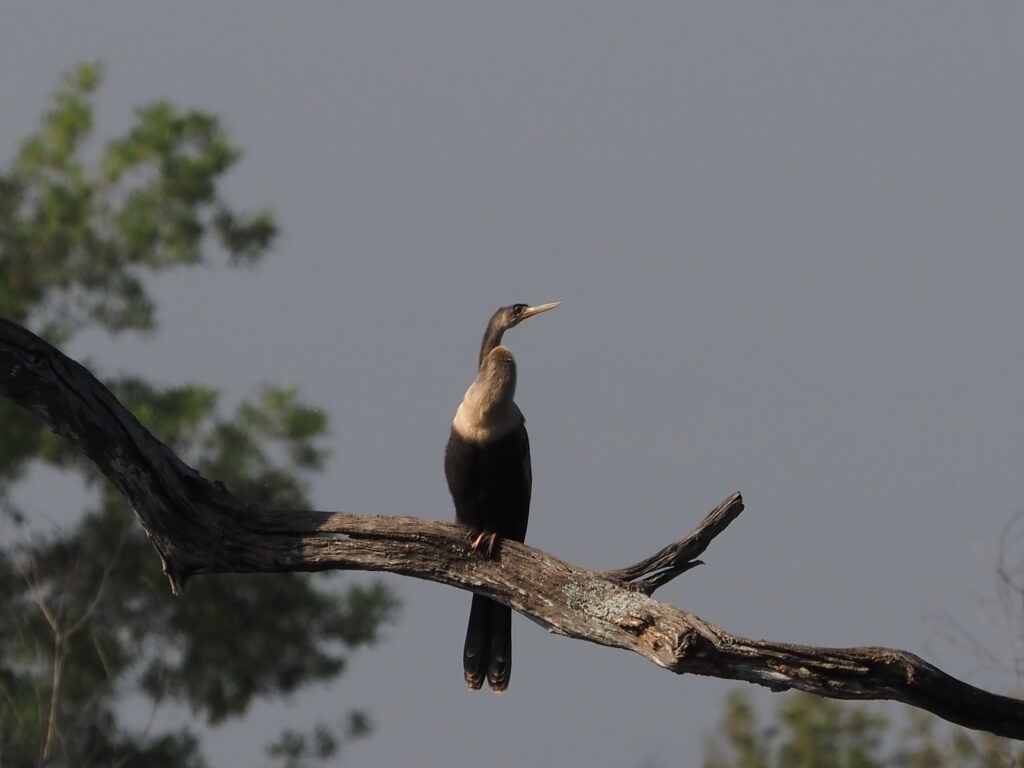
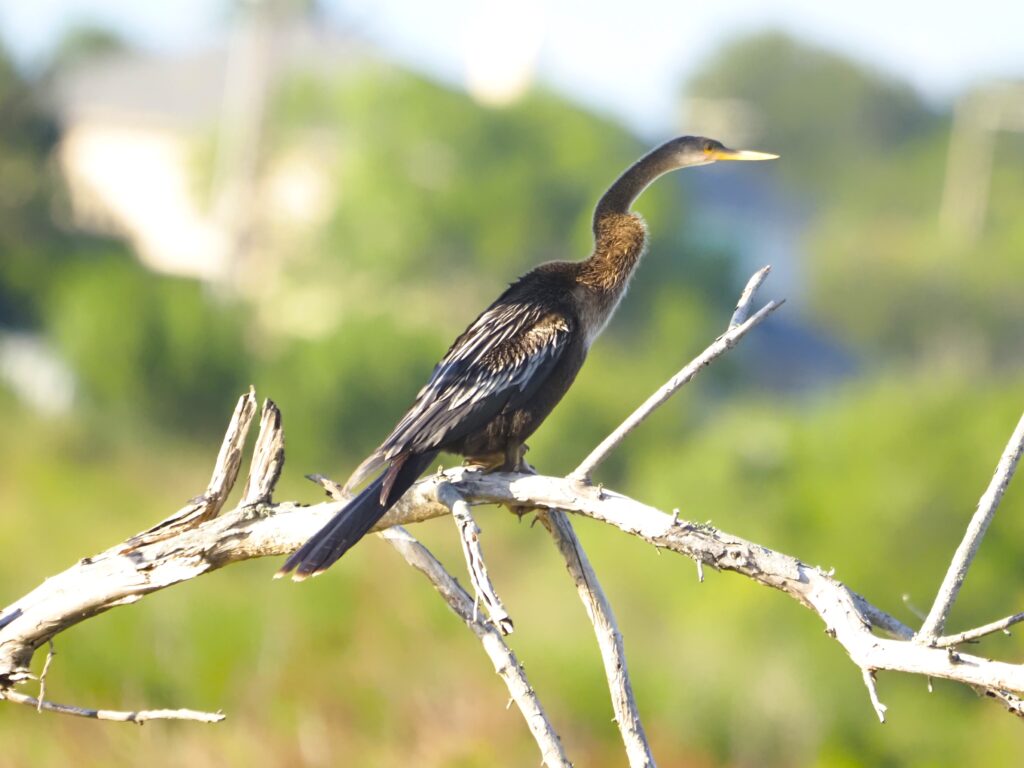
The female Anhinga is dark over most of the body, with white in the wing coverts and a dingy cream color on the neck and head. The juvenile looks similar to the female except that blackish areas are more brownish, and whitish markings on upperparts are less distinct.