Here’s a distant photo which illustrates how beneficial looking for paler hues can be. Two Wilson’s Phalaropes really stick out. A third bird to the left is also paler and may be a Semipalmated Sandpiper.

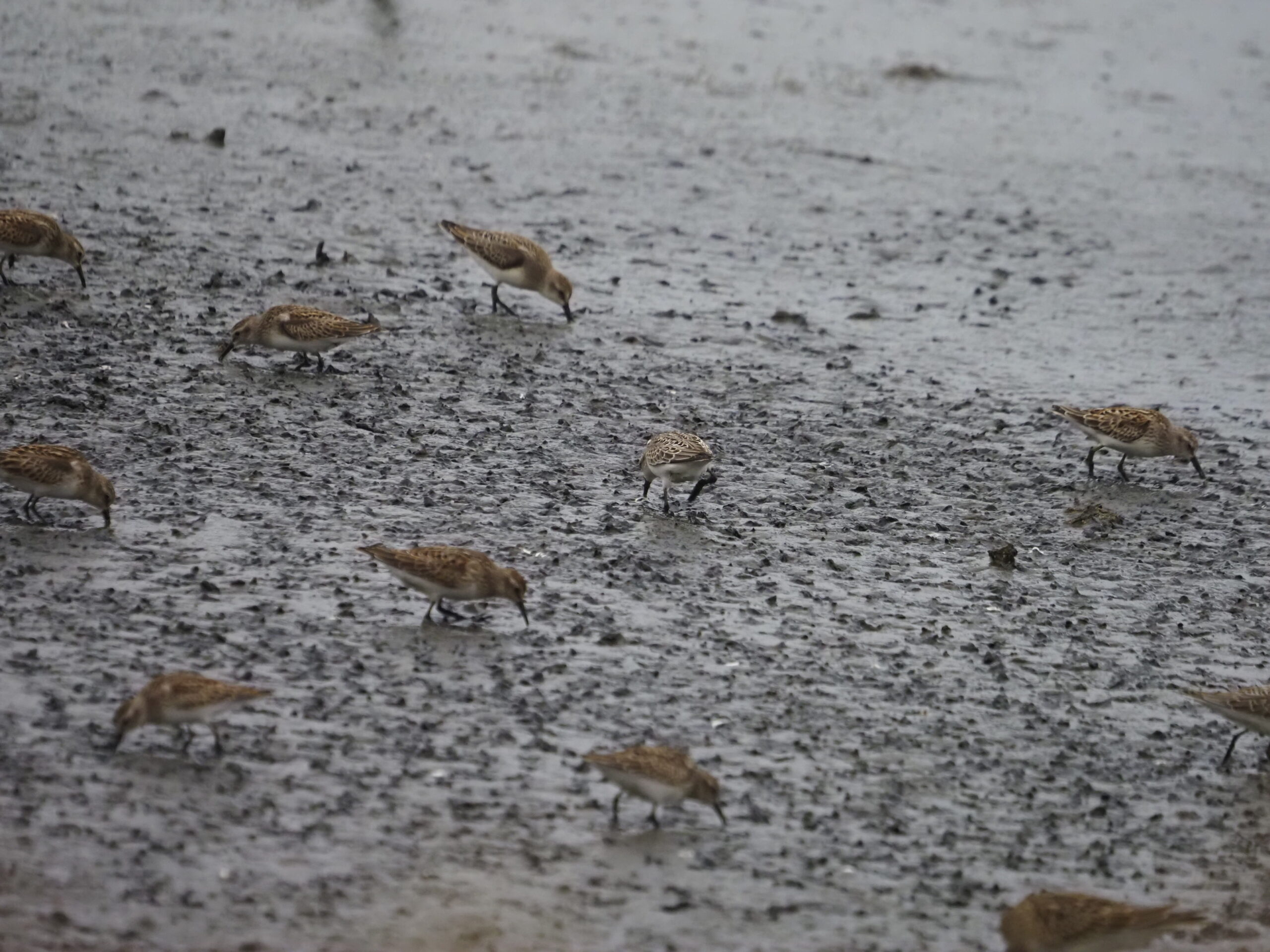
Most of the shorebirds that show up at Hornsby bend appear brownish at a distance. Therefore, some of the less-regular shorebirds can be quickly located by searching for “frosty” birds amongst the many brown shorebirds present. Cool, less-brown, tones of gray, black and white are implied by the word “frosty”.
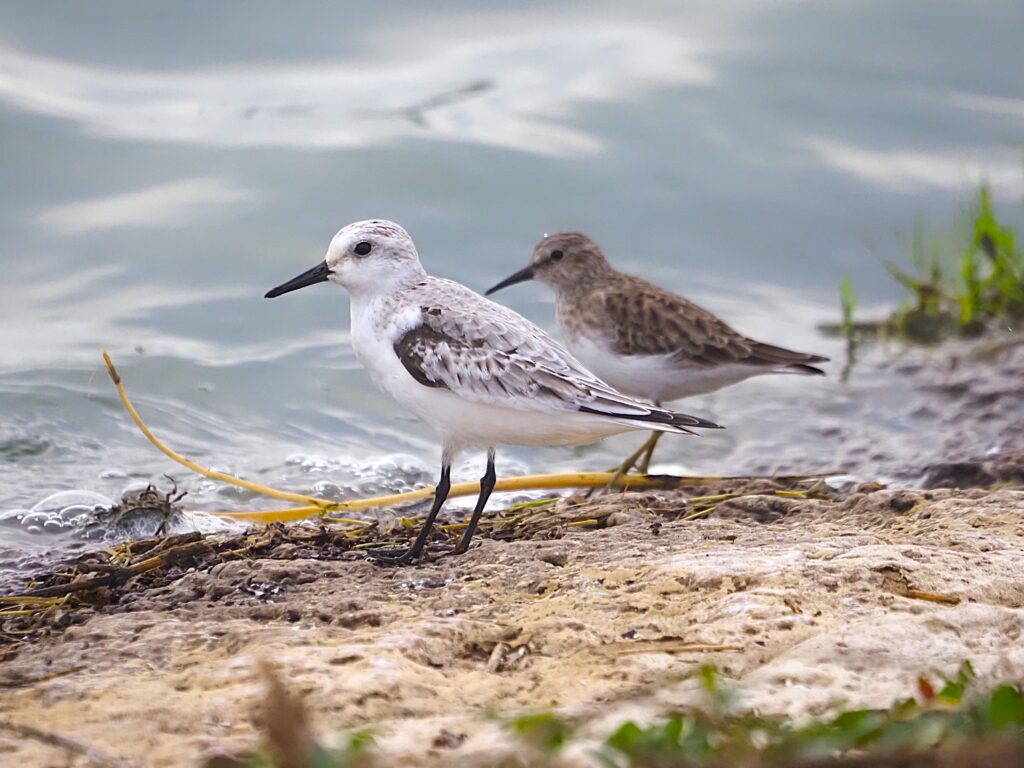
In some species the “frosty” tones are on the upper parts (head, mantle, scapulars, coverts, flight feathers). In other species these tones may show up as a brighter white of the breast and belly, as opposed to a dingy or brownish color of the breast and belly.
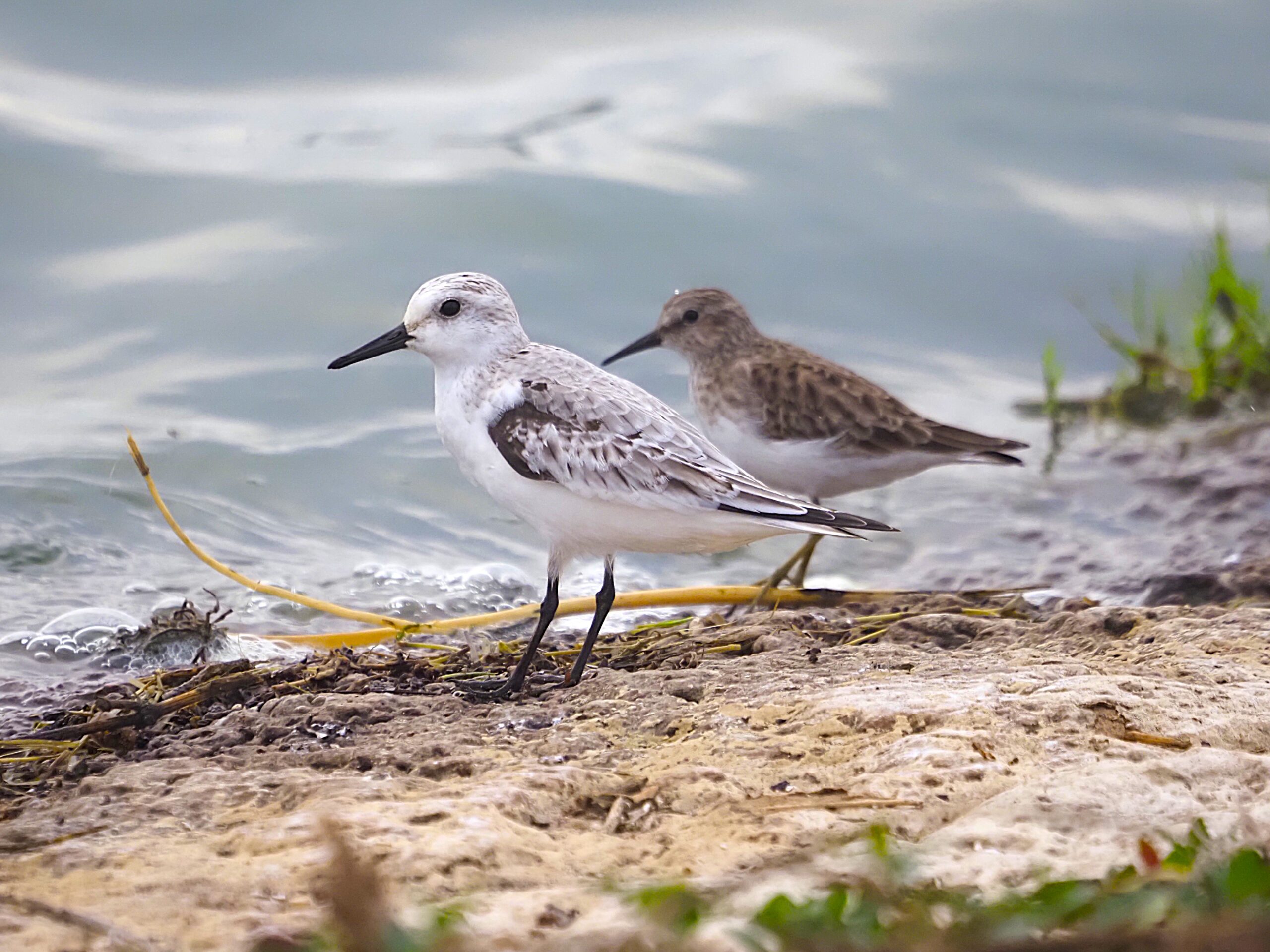
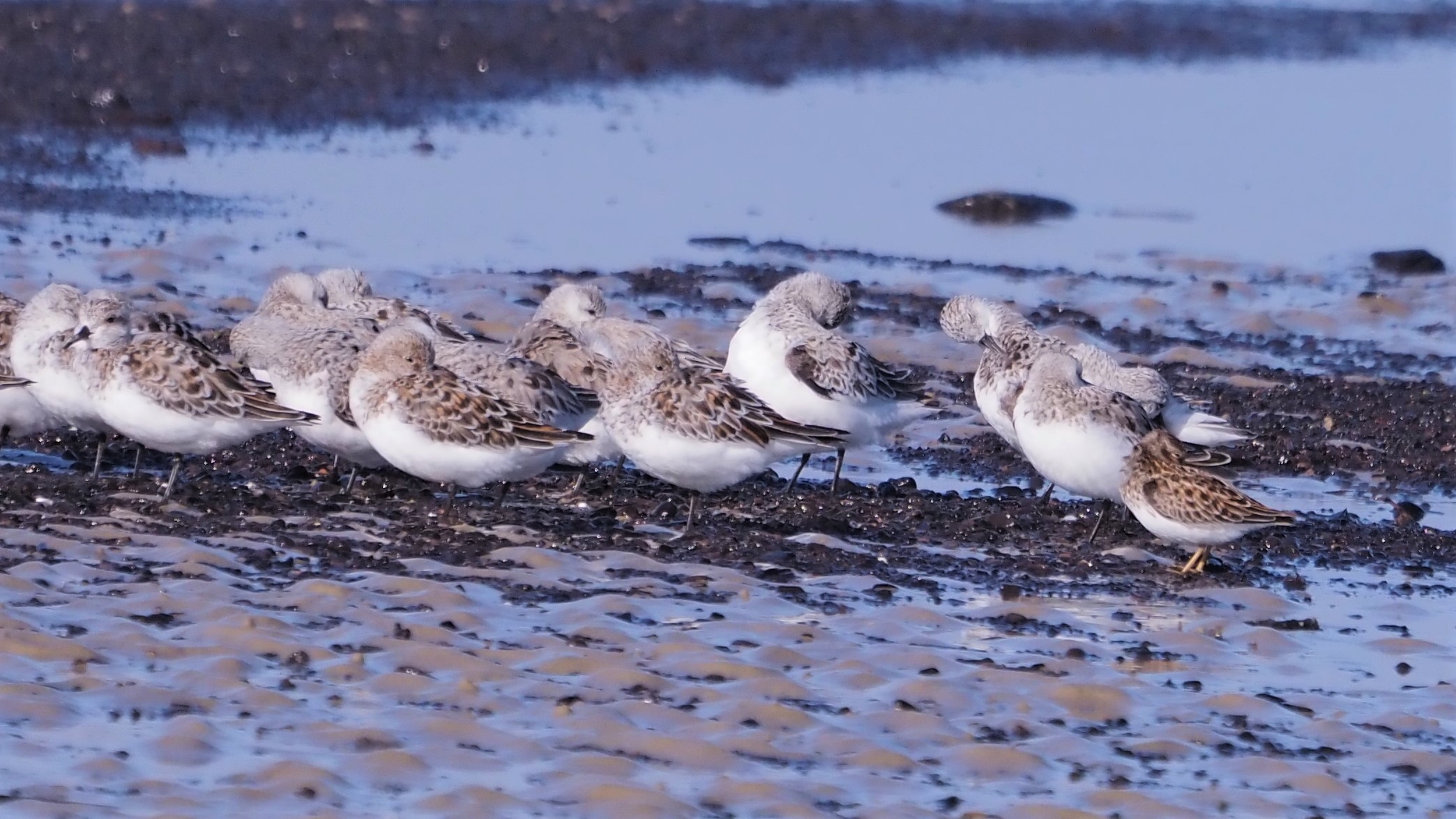
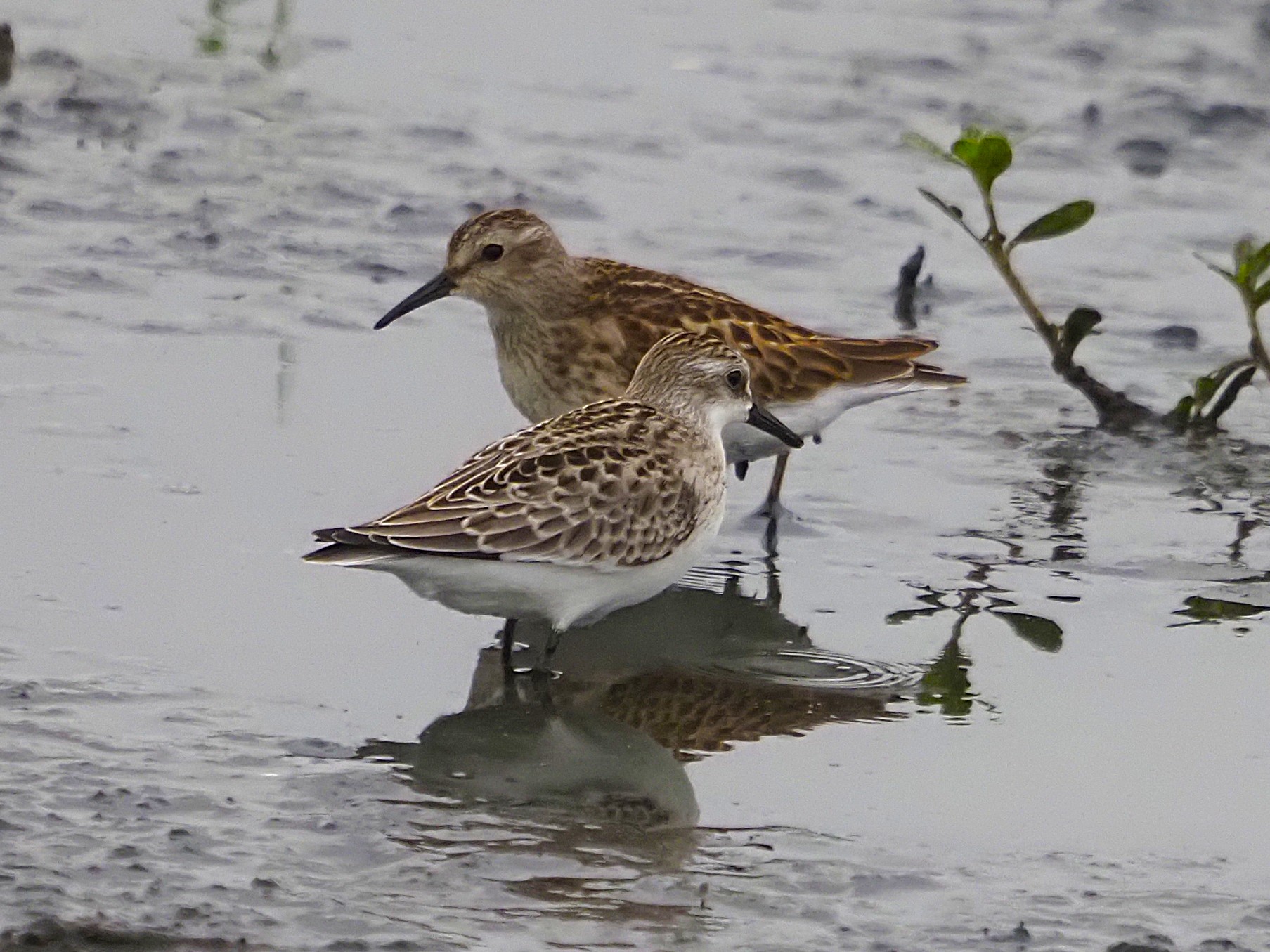
“Frostiness” is a relative term: the Semipalmated and White-rumped Sandpipers are frostier than the Least, Baird’s and Pectoral Sandpipers, however, they are less-frosty (more-brown) than the Sanderling and small plovers.
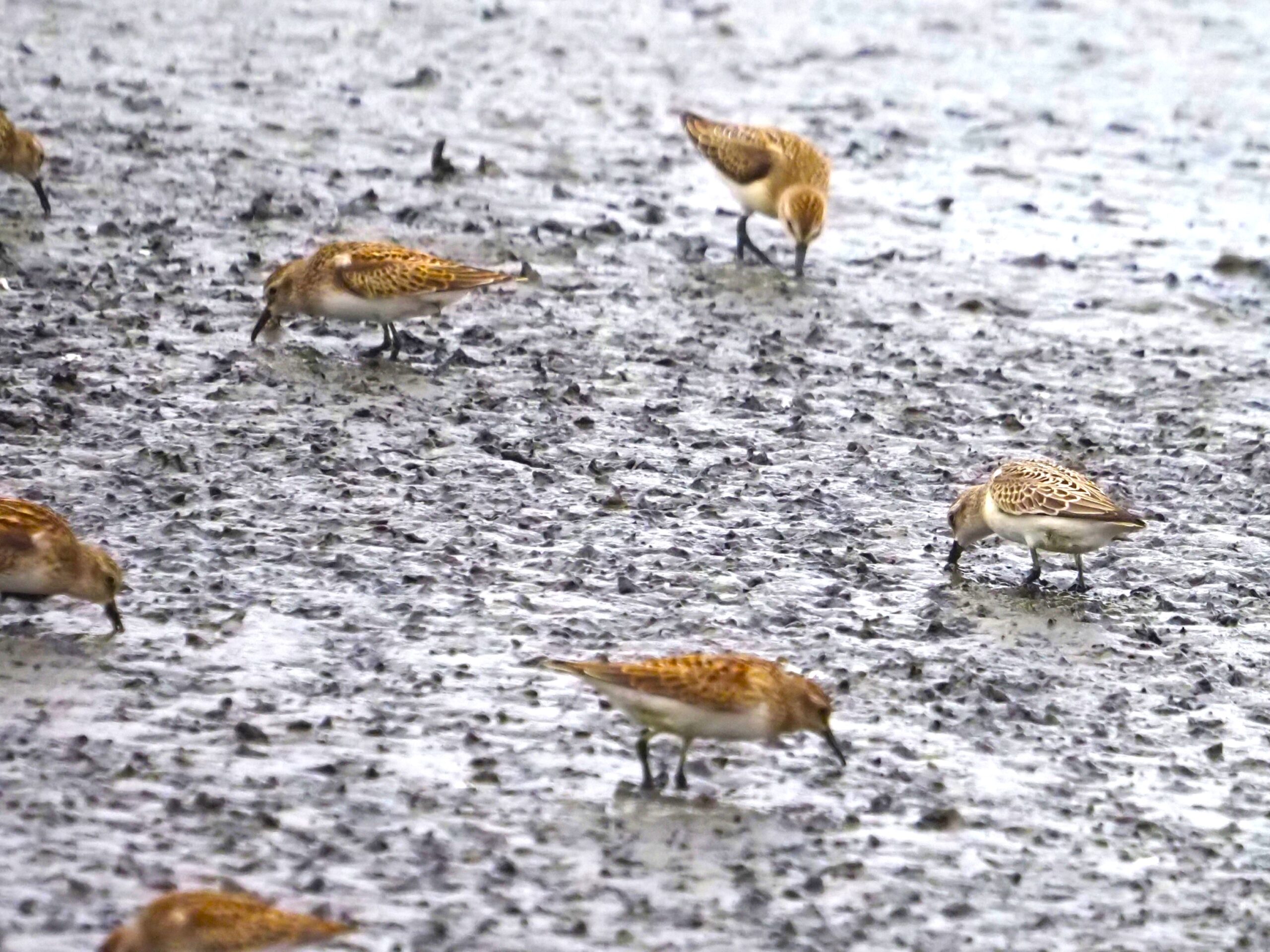
Species such as Sanderling, the phalaropes, the small plovers tend to stick out at Hornsby amongst the many Least Sandpipers because they are paler or are “frostier”. As shown above, the Least Sandpiper is the epitome of the “brown” shorebirds frequently at Hornsby, while the Sanderling in basic plumage, is probably the most “frosty”. The concept of “brown vs frosty” is further illustrated in the photos below. Note in particular how the Semipalmated Sandpiper is subtly more “frosty” than the Least Sandpiper.