
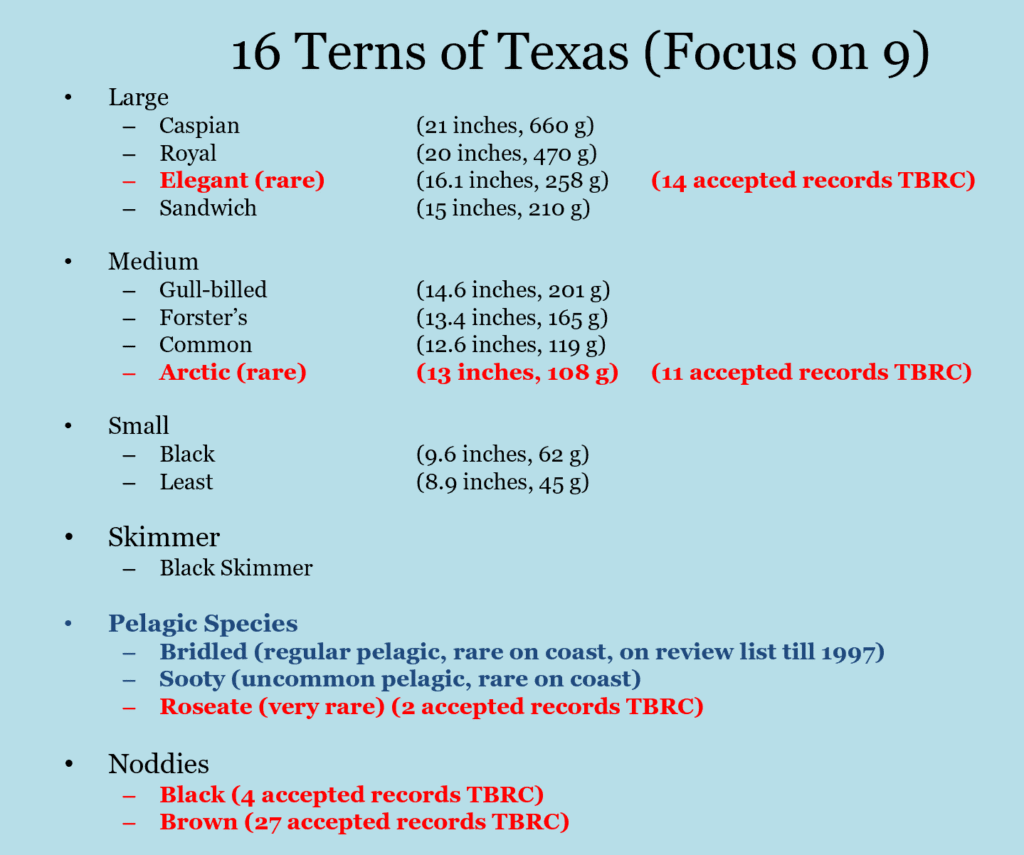
Sixteen tern species have been recorded in Texas, but as shown below only nine of these are regular. Six of these are present year-round on the Texas coast: Caspian, Royal, Sandwich, Forster’s, Gull-billed and Black Skimmer. The Common and Black are primarily migrants through Texas during fall and spring migration, however a few Common are present on the Texas Coast in winter. The Least is only present during summer.
Caspian Tern (“Prince Caspian”)
Weighing in at a hefty 1.5 pounds, the Caspian Tern (or “Prince Caspian” as I’ve dubbed them) is the largest in the world. Compared to other terns it sports a hefty neck, head and bill and has a wide wing with a shortish tail.


Bill Color
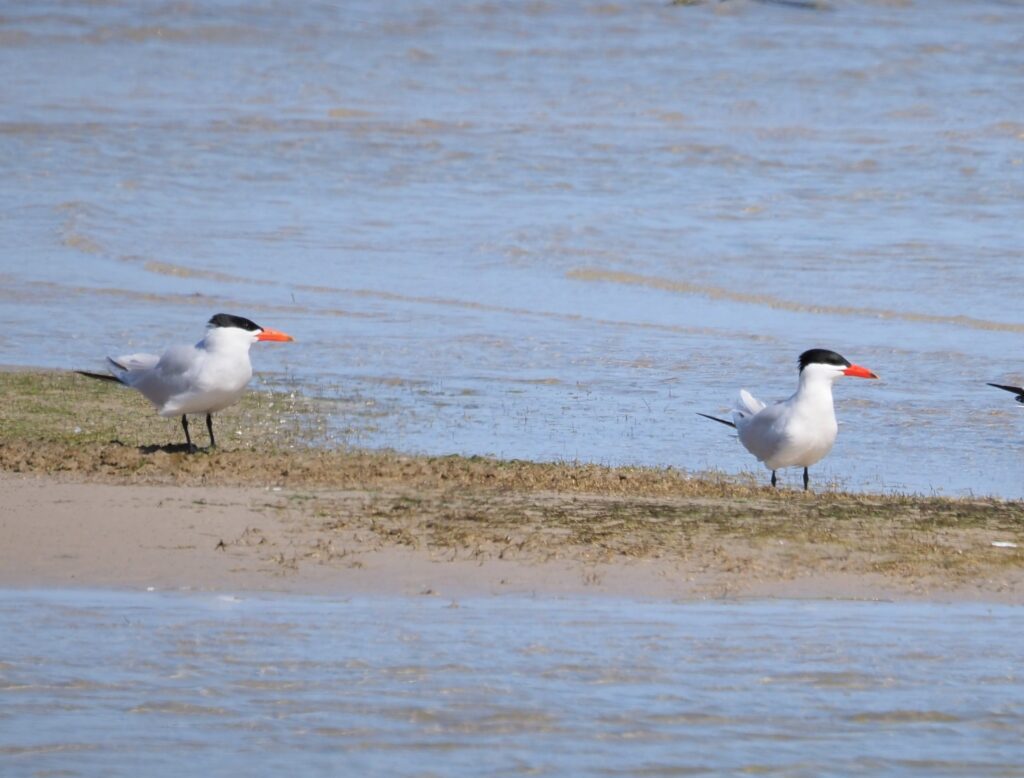
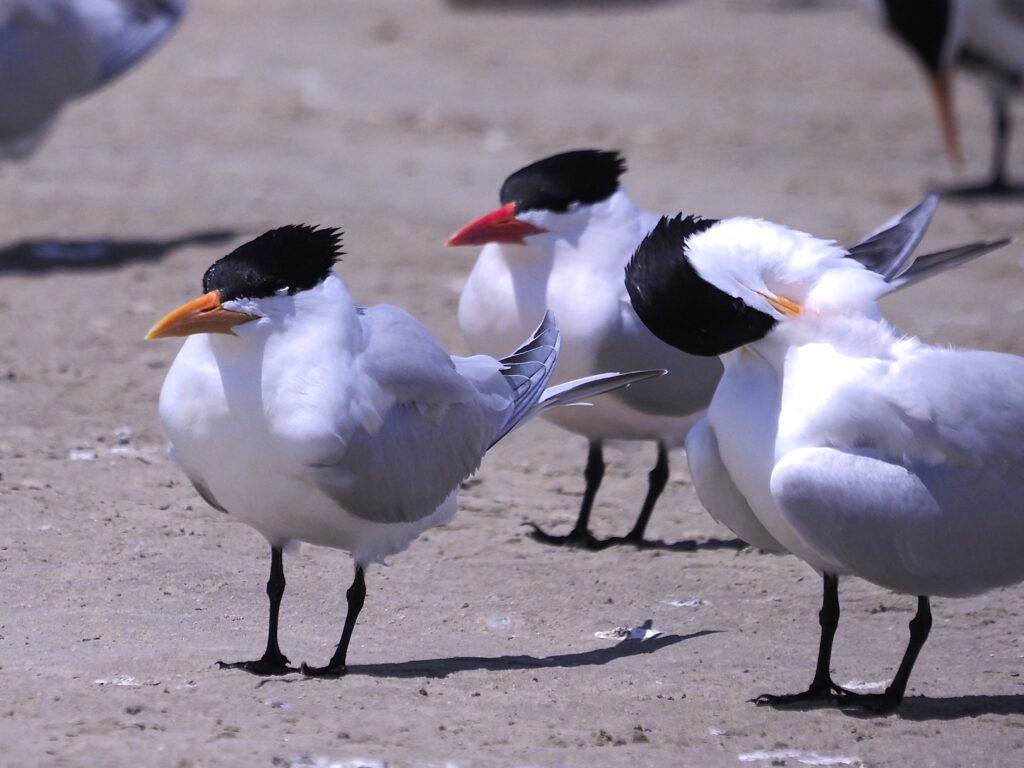
The color of the bill is often cited as one of the first field marks to differentiate the Caspian from the Royal. On the majority of birds this works well as in the photo below. However, I find that the color of both species can appear more orangey or more reddish, depending on age, lighting conditions and breeding state of the birds. Therefore, I suggest that the bill shape can be a more reliable field mark.

In Flight
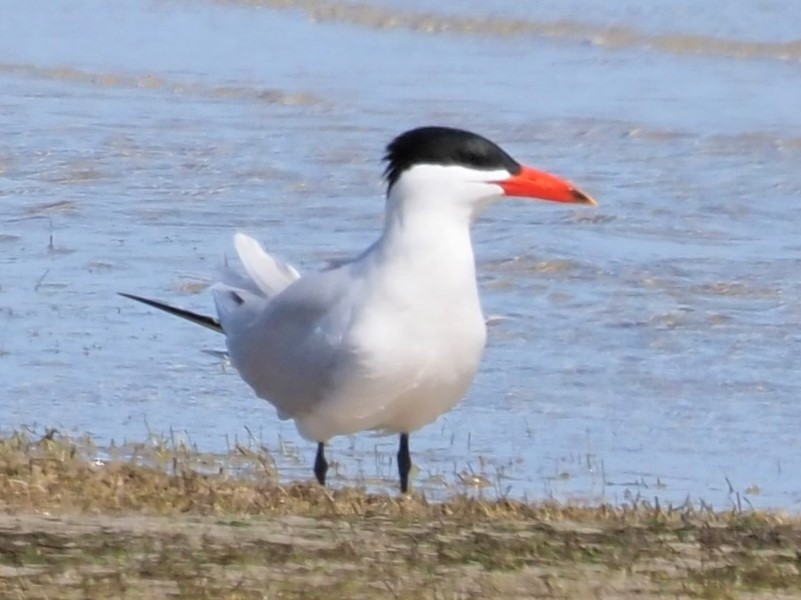
In flight the Caspian is a sturdy, almost gull-like tern, with a thicker neck, sturdier bill and wider wing-base than other terns.



Both terns in the photos above are Caspian.
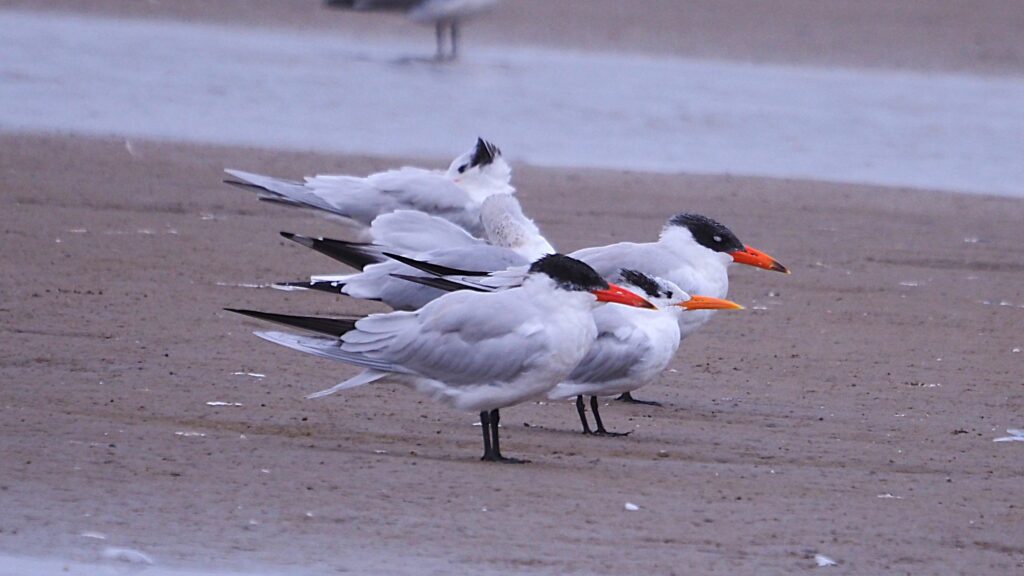
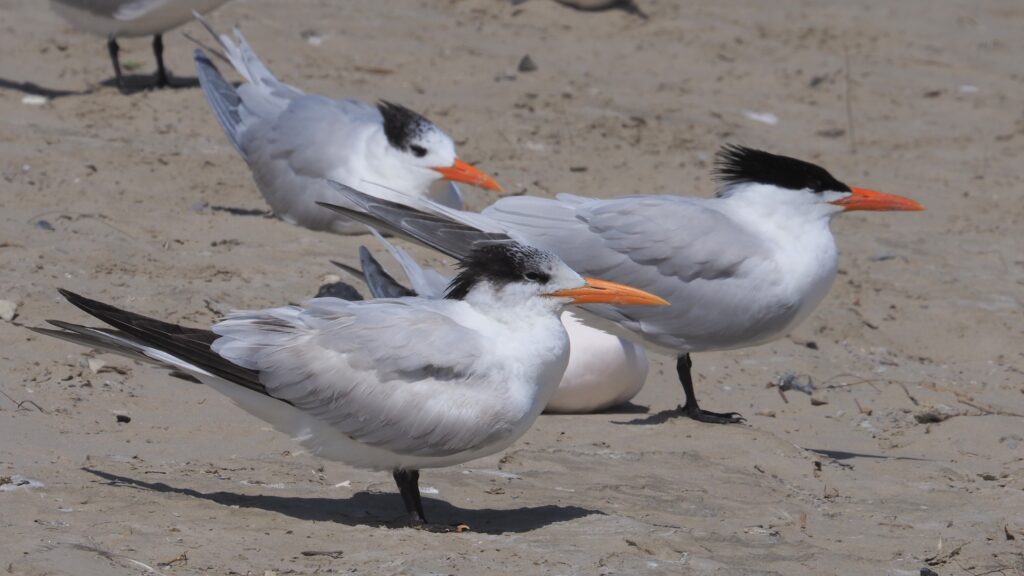
The Royal Tern in contrast sports the “friar Tuck” look during the winter months of basic plumage.
Royal Tern (aka “The Royal Carrot”)
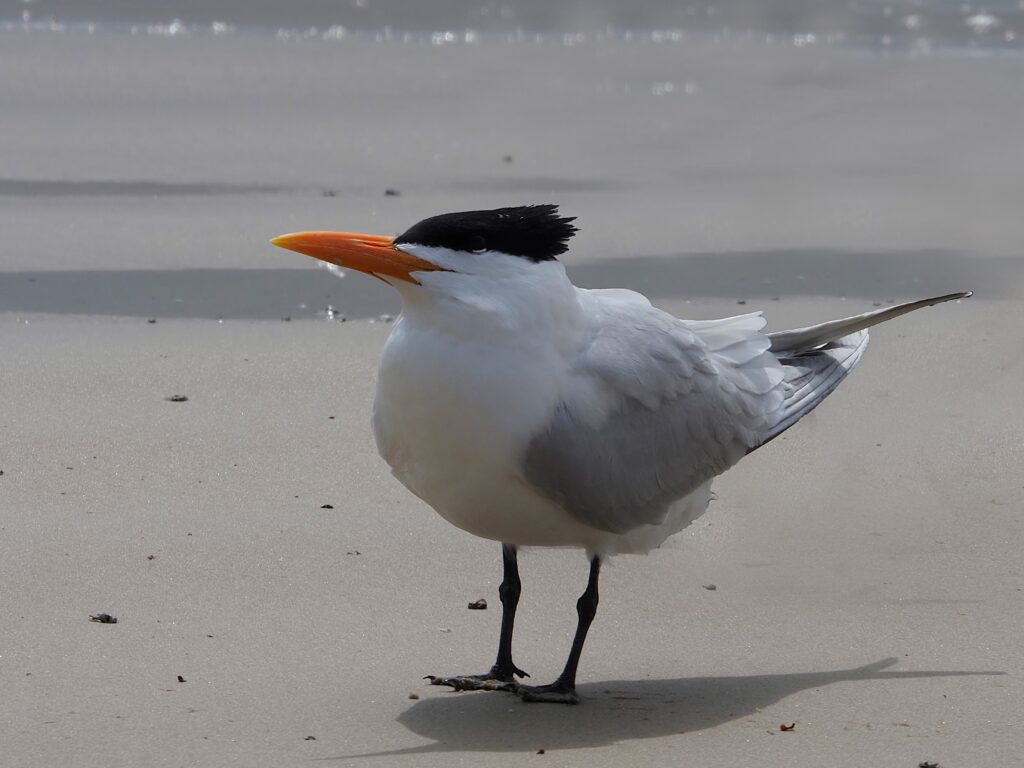
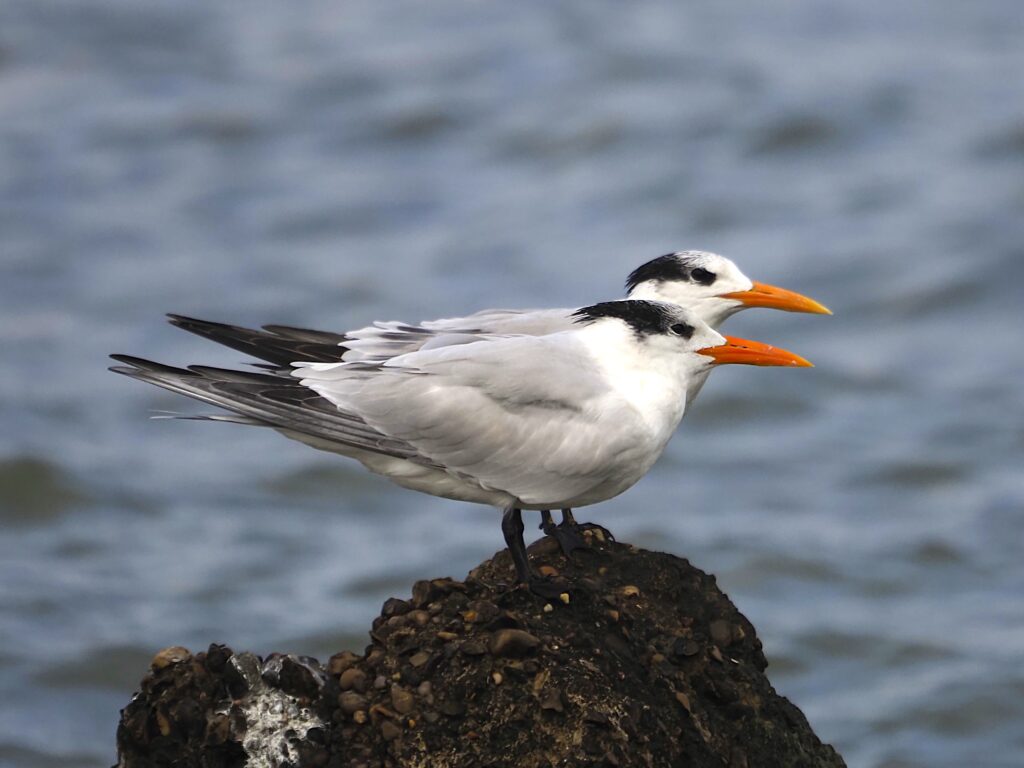
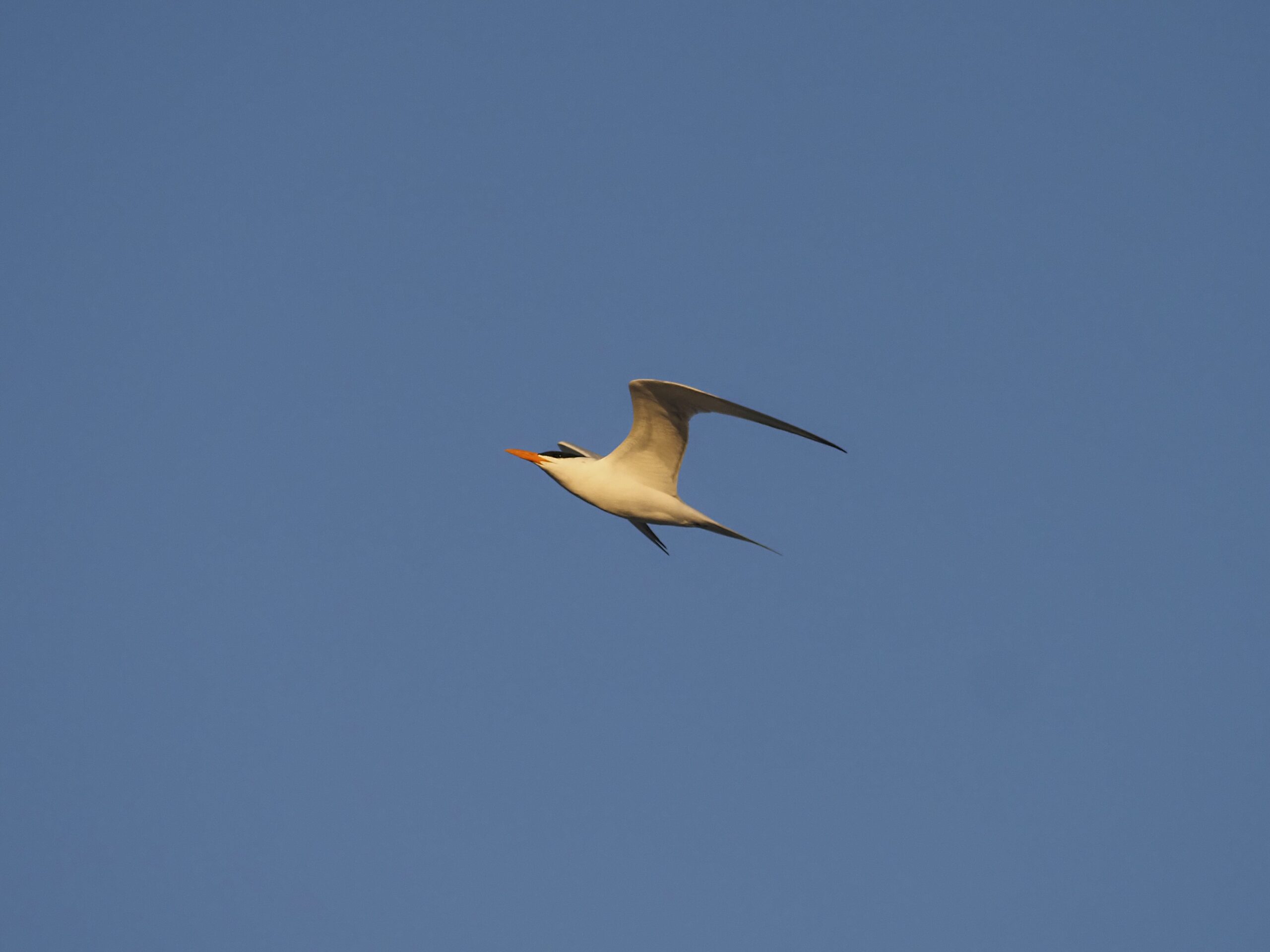
The Royal Tern (the 2nd largest) is very common year-round on the Texas Coast. It’s rolling “koorrick” call is one of the iconic sounds of Texas beaches. As a memory aid I’ve dubbed it “The Royal Carrot” for the carrot-orange bill it usually exhibits. As detailed above the Royal is usually only confused with the Caspian, although the rare in Texas Elegant Tern (see Part 3 of Tern Commentary) should also be considered.
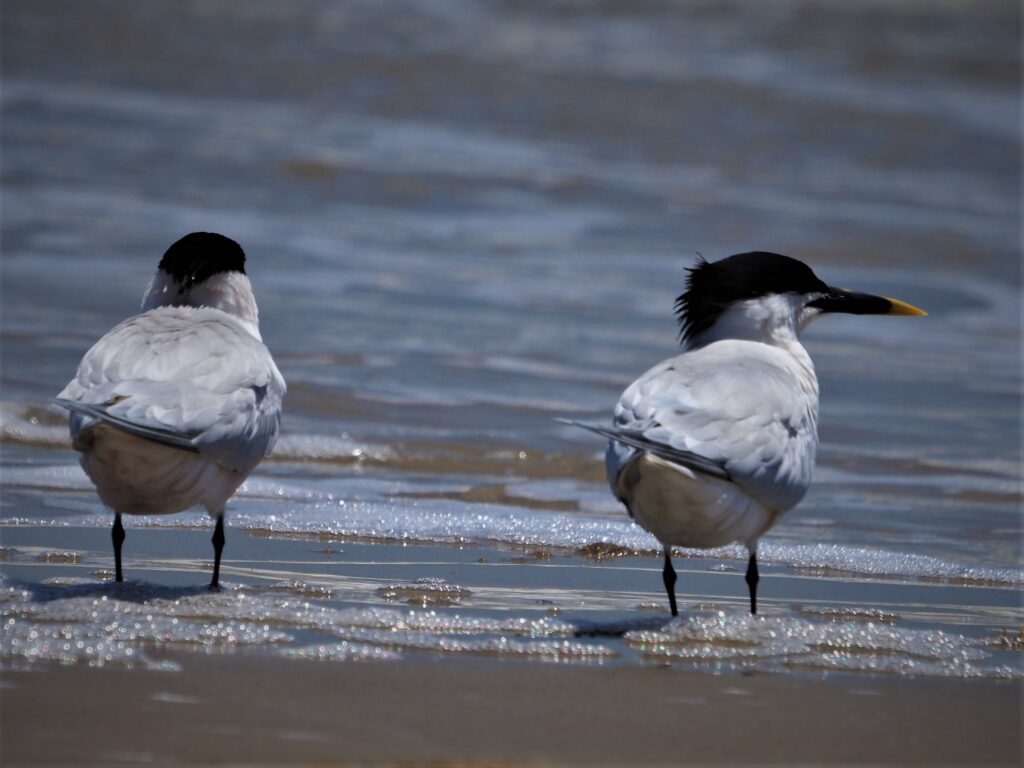
In alternate plumage the Royal shows a black cap with a shaggy crest at the back. Its size (larger than Sandwich and smaller than Caspian) is also a good thing to note.







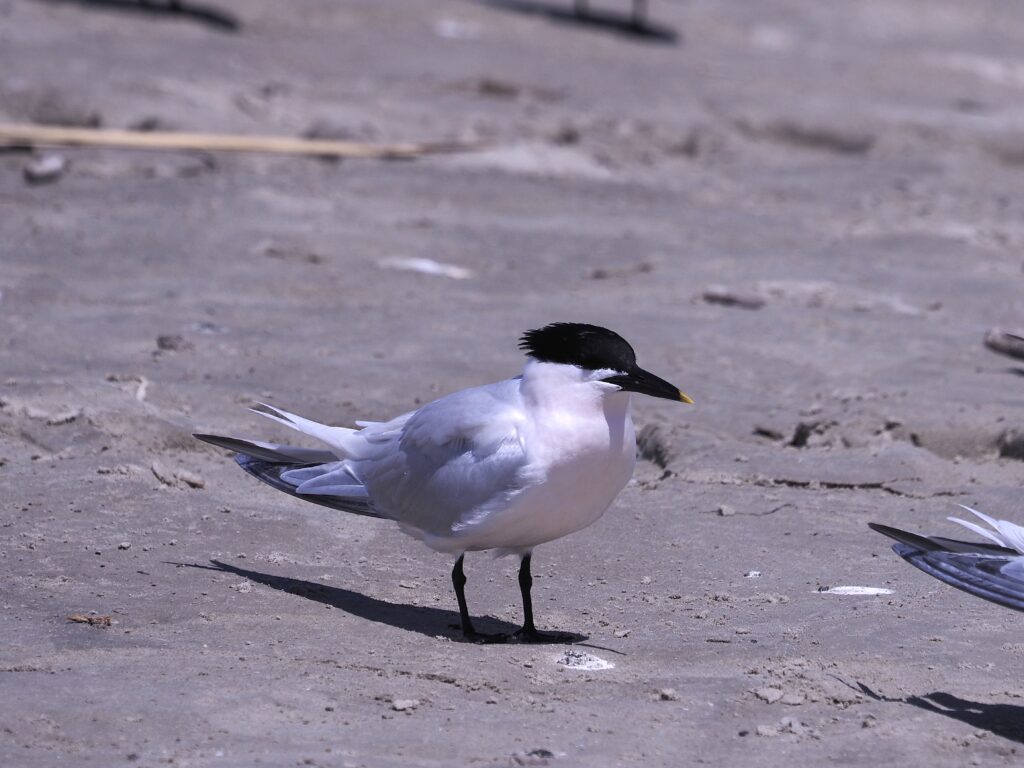
Sandwich Tern (“dipped in mustard”)
The 3rd largest tern of Texas is the Sandwich Tern. Regretfully it wasn’t named for its “mustard-tipped” bill, but “dipped in mustard” is a good mnemonic for the black bill with a yellow tip.